Control device for blades sharpening
US20170021520A1
2017-01-26
15/038,866
2014-10-30
✅ Patent granted
US 10,029,380 B2
2018-07-24
WO; PCT/IT2014/000283; 20141030
WO; WO2015/079465; 20150604
Timothy V Eley
McGlew and Tuttle, P.C.
2035-02-26
Abstract:
Device for controlling the sharpening state of a blade (2) having a cutting edge (20) delimited by two sides (21, 22) converging towards a plane (X) that contains the cutting edge itself. The device comprises two control surfaces each of which is in contact with a corresponding side (21, 22) of the cutting edge (20) and is connected with a transducer (R4), which produces an electrical displacement signal (S4) proportional to a displacement of the control surface with respect to said plane (X). Furthermore, the device comprises a processing unit (E) that receives said displacement signals (S4) and compares them, emitting an error signal if the comparison produces a value that exceeds a predetermined limit. The control surfaces are the surfaces that delimit an external groove (40) of a roller (4) that is free to translate along an axis (A4) perpendicular to said plane (X) and spaced from the blade (2) by an amount such that said cutting edge (20) passes in said groove (40).
Inventors:
- Giovacchino Giurlani 19 🇮🇹 Capannori, Italy
- Giovacchino GIURLANI 7 🇮🇹 Segromigno in Monte, Capannori, Italy
Assignee:
- FUTURA S.p.a. 5 🇮🇹 Guamo, Italy
Applicant:
Interested in similar patents?
Get notified when new applications in this technology area are published.
Classification:
B26D3/16 » CPC further
Cutting work characterised by the nature of the cut made; Apparatus therefor Cutting rods or tubes transversely
B24B3/38 » CPC further
Sharpening cutting edges, e.g. of tools; Accessories therefor, e.g. for holding the tools of cutting blades for planing wood, e.g. cutter blades
B26D7/12 » CPC main
Details of apparatus for cutting, cutting-out, stamping-out, punching, perforating, or severing by means other than cutting; Means for treating work or cutting member to facilitate cutting by sharpening the cutting member
B24B49/003 » CPC further
Measuring or gauging equipment for controlling the feed movement of the grinding tool or work; Arrangements of indicating or measuring equipment, e.g. for indicating the start of the grinding operation involving acoustic means
B24B3/463 » CPC further
Sharpening cutting edges, e.g. of tools; Accessories therefor, e.g. for holding the tools of cutting blades of disc blades of slicing machine disc blades
B24B49/04 IPC
Measuring or gauging equipment for controlling the feed movement of the grinding tool or work; Arrangements of indicating or measuring equipment, e.g. for indicating the start of the grinding operation according to the instantaneous size and required size of the workpiece acted upon, the measuring or gauging being continuous or intermittent involving measurement of the workpiece at the place of grinding during grinding operation
B24B49/045 » CPC further
Measuring or gauging equipment for controlling the feed movement of the grinding tool or work; Arrangements of indicating or measuring equipment, e.g. for indicating the start of the grinding operation according to the instantaneous size and required size of the workpiece acted upon, the measuring or gauging being continuous or intermittent involving measurement of the workpiece at the place of grinding during grinding operation Specially adapted gauging instruments
B24B3/46 IPC
Sharpening cutting edges, e.g. of tools; Accessories therefor, e.g. for holding the tools of cutting blades of disc blades
G01B7/28 » CPC further
Measuring arrangements characterised by the use of electric or magnetic means for measuring contours or curvatures
B24B49/00 IPC
Measuring; Indicating; Controlling
B24B49/00 IPC
Measuring or gauging equipment for controlling the feed movement of the grinding tool or work; Arrangements of indicating or measuring equipment, e.g. for indicating the start of the grinding operation
B24B49/12 » CPC further
Measuring or gauging equipment for controlling the feed movement of the grinding tool or work; Arrangements of indicating or measuring equipment, e.g. for indicating the start of the grinding operation involving optical means
B26D5/06 » CPC further
Arrangements for operating and controlling machines or devices for cutting, cutting-out, stamping-out, punching, perforating, or severing by means other than cutting; Means for moving the cutting member into its operative position for cutting by electrical means
Description
The present invention relates to a device for controlling the sharpening state of band blades that can be used, in particular, for the production of paper rolls.
A conventional process for the production of paper rolls requires a rewinding machine by which a paper web is wound around a cardboard core to form an intermediate product, called “log”, that is made by a paper roll obtained by winding the paper web around the cardboard tube and destined to be transversely cut to obtain shorter paper rolls, i.e. paper rolls that meet given commercial requirements.
The transverse cut of the logs is particularly critical. In fact, the cutting of the logs along planes that are not perfectly orthogonal to their longitudinal axis involves the formation of defective rolls, in which the side bases are oblique. This drawback is even more serious when the rolls are intended to be used in automatic dispensers which require, in fact, rolls with the side bases perfectly orthogonal to the axis of the rolls themselves, otherwise the rolls tend to get jammed in the dispenser.
The main object of the present invention is to provide a device that allows the elimination, or at least a great reduction, of the above-mentioned drawbacks.
This result is achieved, according to the present invention, by adopting the idea of realizing a device having the features indicated in claim 1 Other features of the invention are the subject of the dependent claims.
The present invention makes it possible to immediately check the sharpening state of the blade, checking the symmetry of the blade cutting edge and activating, when required, suitable sharpening means that can be directly or indirectly connected with the present device. Furthermore, the check is continuous and provides a check signal that can be used at any time. It is also noted that the checking process is essentially of mechanical nature, thus avoiding the negative influence of possible cutting residuals. Besides, the check does not provides negative effects on the operativeness of the checked machine. In addition, the present device can equip existing machines and can be integrated in existing production lines with relatively simple assembly operations. Further, the present device does not require major maintenance and keeps its characteristics basically unchanged even after prolonged use.
These and other advantages and features of the present invention will be best understood by anyone skilled in the art from the following description and with the help of the accompanying figures, given as a practical exemplification of the invention, but not to be considered in a limitative sense, in which:
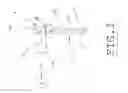
FIG. 1 schematically shows a front view of a portion of a blade on which is arranged a control device in accordance with the present invention;
FIG. 2 schematically represents a possible operational implementation of a device in accordance with the present invention.
With reference to the attached drawings, a control device (1) according to the present invention is used to verify the correct sharpening of a band blade (2) formed by a laminar body provided with a sharp edge (20) delimited by two faces (21, 22) converging towards a plane (X) in which the cutting edge lies. According to the example shown in FIG. 1, the control device comprises a roller (4) with an external annular groove (40) in which passes the cutting edge (20) of the blade (2). The roller (4) is free to translate along an axis (A4) perpendicular to the plane (X) of the cutting edge (20). Preferably, the roller (4) is also free to rotate about said axis (A4).
In the example shown in FIG. 1, the roller (4) is associated with a lateral displacement detector (R4) constituted by a linear transducer which detects any displacement of the roller (4) to the right (R) or to the left (L) due to any possible asymmetric wear of the cutting edge (20). The displacement signal (S4) produced by the transducer (4) is received by a programmable electronic unit (E) which emits an error signal if the absolute value of the signal, which can have positive or negative sign depending on whether the roller (4) moves towards the right or left, exceeds a predetermined limit.
Thus, a device in accordance with the present invention comprises two control surfaces each of which is in contact with a corresponding side (21, 22) of said cutting edge (20) and is connected with a linear transducer (R4. According to the example described above, the control surfaces are the surfaces that delimit the groove (40) of the roller (4).
For example, the roller (4) can be made of steel, coated with wear-resistant ceramic material.
Said error signal can be used to control the automatic intervention of restoring means adapted to restore the sharpening of the blade. More particularly, the intervention of said restoring means can be activated/deactivated automatically when the absolute value of the error signal is greater/less than a predetermined reference value. For example, the restoration of the sharpening of the blade can be implemented by means of motorized grinding wheels (100) suitably arranged at the two sides of the blade, that is, by means of grinding wheels each of which is driven by a rotary actuator (101); by means of the actuators (101), the speed of rotation of the grinding wheels (100) is adjusted as long as the absolute value of the error signal is greater than the predetermined reference value.
Or, for example, if the grinding wheels (100) are grinding wheels each connected to a respective motorized slide (102), the restoration of the sharpening of the blade can be implemented by using the error signal for moving the motorized slides (102) adjusting the pressure exerted by the grinding wheels (100) on the two sides of the blade as long as the absolute value of the error signal is greater than the preset reference quantity as schematically indicated by the arrows “F” in FIG. 2.
The actuators (5) and the slides (6) are represented in the diagram of FIG. 2, in which, for simplification, both the actuators (5) and the slides (6) are connected to the unit (4), although, in general, in a sharpening device it is preferred to connect both grinding wheels to rotary actuators or to motorized slides.
The automatic restoration the blade sharpening can be selective in the sense that the left or the right grinding wheel (100) can be actuated depending on the sign, positive or negative, of the aforesaid error signal.
In practice, the details of execution may vary in any equivalent way as in the shape, dimensions, elements disposition, nature of the materials used, without leaving the scope of the adopted solution and thus remaining within the limits of the protection granted by this patent.
Claims
1. A device for controlling a sharpening state of a blade having a cutting edge delimited by two sides converging towards a plane that contains the cutting edge, the device comprising:
two control surfaces, each of said two control surfaces being in contact with a corresponding side of said cutting edge and each of said two control surfaces being connected with a transducer, which produces an electrical displacement signal proportional to a displacement of the control surface with respect to said plane to provide at least a plurality of displacement signals;
a programmable electronic unit that receives said displacement signals and compares said displacement signals, said programmable electronic unit emitting an error signal if a comparison of said displacement signals produces a value that exceeds a predetermined limit, said two control surfaces being surfaces that delimit an external groove of a roller that is free to translate along an axis perpendicular to said plane and spaced from the blade by an amount such that said cutting edge passes in said groove.
2. A device according to claim 1, wherein said error signal is associated with one or more of a light signal an acoustic signal.
3. A device according to claim 1, further comprising:
a means for supporting and moving a sharpening means, said programmable electronic unit being connected to said means for supporting and moving said sharpening means.
4. A device according to claim 1, wherein said roller is free to rotate about said axis.
5. A device according to claim 2, further comprising:
a means for supporting and moving a sharpening means, said programmable electronic unit being connected to said means for supporting and moving said sharpening means.
Images & Drawings included:


Sources:
- United States Patent and Trademark Office - verify current appl. status at the USPTO↗
Similar patent applications:
Recent applications in this class:
- » 20250262787 2025-08-21
FOOD PRODUCT SLICER AND ASSOCIATED SHARPENER ASSEMBLY - » 20240109218 2024-04-04
CUTTING-OFF MACHINE FOR THE TRANSVERSAL CUTTING OF LOGS OF PAPER MATERIAL - » 20230226711 2023-07-20
Dynamic regulation of contact pressures in a blade sharpening system - » 20230182338 2023-06-15
SLICING MACHINE HAVING A KNIFE MONITORING DEVICE - » 20230166423 2023-06-01
SLICING MACHINE HAVING A KNIFE MONITORING DEVICE - » 20220402157 2022-12-22
Whetting device for a slicer comprising a guard preventing accidental contact during mounting - » 20220402156 2022-12-22
WHETTING DEVICE FOR A SLICER COMPRISING A POSITIONING AID - » 20220362959 2022-11-17
Cutting machine for transversely cutting logs of paper material - » 20220032488 2022-02-03
Dynamic regulation of contact pressures in a blade sharpening system - » 20210138679 2021-05-13
BLADE SHARPENING SYSTEM FOR A LOG SAW MACHINE
Recent applications for this Assignee:
- » 20170073160 2017-03-16
Storing unit for cardboard tubes and method for storing cardboard tubes - » 20170036316 2017-02-09
Device for sharpening blades - » 20170021521 2017-01-26
Device for controlling the sharpening state of a blade - » 20150040735 2015-02-12
Method and machine for cutting paper logs