Copper substituted compound, cathode of battery comprising same, and battery comprising such cathode
US20170077500A1
2017-03-16
14/853,382
2015-09-14
✅ Patent granted
US 10,910,645 B2
2021-02-02
-
-
Adam A Arciero
Melvin Li | Heslin Rothenberg Farley & Mesiti PC
2038-01-11
Abstract:
There is provided a compound for use as material in cathode of a battery. The compound has i) at least sodium or ii) sodium and lithium as a first ingredient, copper as a second ingredient, at least a first transition metal in a third ingredient (M) selected from a group including manganese, nickel, iron, copper, zinc, chromium, vanadium, titanium, molybdenum and tungsten, niobium; and oxygen as a fourth ingredient; and wherein the compound has a chemical formula of NayCuxM1-xO2, or LiaNabCuxMi-xO2.
Inventors:
- Chun Sing Lee 14 🇭🇰 Kowloon, Hong Kong
- Yau Wai Denis YU 1 🇭🇰 Hong Kong, Hong Kong
- Wenpei KANG 1 🇨🇳 Anyang City, China
- Wenpei Kang 1 🇨🇳 Anyang, China
Assignee:
- CITY UNIVERSITY OF HONG KONG 19 🇭🇰 Kowloon Tong, Hong Kong
- CITY UNIVERSITY OF HONG KONG 138 🇭🇰 Hong Kong, Hong Kong
Applicant:
Interested in similar patents?
Get notified when new applications in this technology area are published.
Classification:
H01M4/366 » CPC main
Electrodes; Electrodes composed of, or comprising, active material; Selection of substances as active materials, active masses, active liquids; Composites as layered products
H01M4/381 » CPC further
Electrodes; Electrodes composed of, or comprising, active material; Selection of substances as active materials, active masses, active liquids of elements or alloys Alkaline or alkaline earth metals elements
H01M4/382 » CPC further
Electrodes; Electrodes composed of, or comprising, active material; Selection of substances as active materials, active masses, active liquids of elements or alloys; Alkaline or alkaline earth metals elements Lithium
H01M4/36 » CPC further
Electrodes; Electrodes composed of, or comprising, active material Selection of substances as active materials, active masses, active liquids
H01M4/38 IPC
Electrodes; Electrodes composed of, or comprising, active material; Selection of substances as active materials, active masses, active liquids of elements or alloys
H01M4/131 » CPC further
Electrodes; Electrodes composed of, or comprising, active material; Electrodes for accumulators with non-aqueous electrolyte, e.g. for lithium-accumulators; Processes of manufacture thereof Electrodes based on mixed oxides or hydroxides, or on mixtures of oxides or hydroxides, e.g. LiCoOx
H01M4/505 » CPC further
Electrodes; Electrodes composed of, or comprising, active material; Selection of substances as active materials, active masses, active liquids of inorganic oxides or hydroxides of manganese of mixed oxides or hydroxides containing manganese for inserting or intercalating light metals, e.g. LiMnO or LiMnOxFy
C01G45/1228 » CPC further
Compounds of manganese; Manganates manganites or permanganates; Manganates or manganites with a manganese oxidation state of Mn(III), Mn(IV) or mixtures thereof of the type [MnO2]n- , e.g. LiMnO2, Li[MxMn1-x]O2
C01P2002/72 » CPC further
Crystal-structural characteristics defined by measured X-ray, neutron or electron diffraction data by d-values or two theta-values, e.g. as X-ray diagram
H01M4/525 » CPC main
Electrodes; Electrodes composed of, or comprising, active material; Selection of substances as active materials, active masses, active liquids of inorganic oxides or hydroxides of nickel, cobalt or iron of mixed oxides or hydroxides containing iron, cobalt or nickel for inserting or intercalating light metals, e.g. LiNiO, LiCoO or LiCoOxFy
H01M4/485 » CPC further
Electrodes; Electrodes composed of, or comprising, active material; Selection of substances as active materials, active masses, active liquids of inorganic oxides or hydroxides of mixed oxides or hydroxides for inserting or intercalating light metals, e.g. LiTiO or LiTiOxFy
C01G45/12 IPC
Compounds of manganese Manganates manganites or permanganates
C01P2002/76 » CPC further
Crystal-structural characteristics defined by measured X-ray, neutron or electron diffraction data by a space-group or by other symmetry indications
C01P2002/85 » CPC further
Crystal-structural characteristics defined by measured data other than those specified in group by XPS, EDX or EDAX data
C01P2004/03 » CPC further
Particle morphology depicted by an image obtained by SEM
C01P2004/04 » CPC further
Particle morphology depicted by an image obtained by TEM, STEM, STM or AFM
C01P2006/40 » CPC further
Physical properties of inorganic compounds Electric properties
H01M10/0525 » CPC further
Secondary cells; Manufacture thereof; Accumulators with non-aqueous electrolyte; Li-accumulators Rocking-chair batteries, i.e. batteries with lithium insertion or intercalation in both electrodes; Lithium-ion batteries
H01M10/054 » CPC further
Secondary cells; Manufacture thereof; Accumulators with non-aqueous electrolyte Accumulators with insertion or intercalation of metals other than lithium, e.g. with magnesium or aluminium
Description
FIELD OF THE INVENTION
The present invention is concerned with a compound for use as material in cathode of a battery, a cathode of battery comprising same, and a battery comprising such cathode.
BACKGROUND OF THE INVENTION
With the tremendous rise in usage of mobile electronics and electrical devices or otherwise apparatus without a fixedly attached electrical power cable, there is a high demand for batteries which can power these devices or apparatus. While conventional lithium-ion batteries (LIBs) have been used extensively, there exists limitations with such conventional batteries. For example, litium is not a very abundent element on earth and accordingly the cost of using lithum as a main ingredient in making essential compound in the cathode of a battery is high. Further, extracting litum from natural resources often would harm the environemnt and cause irrepairable damages to the ecosystem.
The present invention seeks to address the above problem, propose an alternative compound material which can be used as a cathode material in a battery, or at least to provide an alternative to the public.
SUMMARY OF THE INVENTION
According to a first aspect of the present invention, there is provided a compound for use as material in cathode of a battery, comprising i) at least sodium or ii) sodium and lithium as a first ingredient, copper as a second ingredient, at least a first transition metal in a third ingredient (M) selected from a group including manganese, nickel, iron, copper, zinc, chromium, vanadium, titanium, molybdenum and tungsten, niobium, and oxygen as a fourth ingredient; and wherein the compound has a chemical formula of NayCuxM1-xO2, LiaNabCuxM1-xO2.
In an embodiment, the compound may comprise only sodium as the first ingredient. In this embodiment, the chemical formula may be NayCuxM1-xO2, wherein 0.6≦y≦0.75 and 0.02≦x≦0.30.
Preferably, the compound may comprise a second transition metal (A) in the third ingredient, the second transition metal (A) selected from a group including nickel, iron, cobalt, and vanadium. In an embodiment, the first transition metal may be manganese. In this embodiment, the chemical formula may be NayCuxMn1-x-zAzO2, wherein 0.6≦y≦0.75, 0.02≦x≦0.30, and 0≦z≦0.67.
In one embodiment, the compound may comprise both sodium and lithium in the first ingredient. In this embodiment, the chemical formula may be LiaNabCuxM1-xO2, wherein 0.6≦a+b≦0.75 and 0.02≦x≦0.30.
Preferably, the compound may further comprise a second transition metal (A) in the third ingredient, the second transition metal (A) selected from a group including nickel, iron, cobalt, and vanadium. In a specific embodiment, the first transition metal is manganese, and in such embodiment the chemical formula is LiaNabCuxMn1-x-zAzO2, wherein 0.6≦a+b≦0.75, 0.02≦x≦0.30 and 0≦z≦0.67.
These values are technically significant because if the value of y or “a+b” was less than 0.6 then the material would not assume the same structure as desired. If y or “a+b” was more than 0.75 then the material would be hygroscopic and would undesirably degrade under humidity.
According to a second aspect of the present invention, there is provided a lattice structure of a compound as described above, wherein the lattice structure has a layered structure in which one layer thereof is occupied essentially by alkali metal only, and a different layer is occupied essentially by transition metal only.
Preferably, the lattice structure may have a structure of P2, P3 or O3.
Suitably, the particle size of the compound in the lattice structure may have an average width of substantially 0.05 to 10 μm.
According to a third aspect of the present invention, there is provided a lithium-ion or sodium-ion battery system comprising a compound or a lattice structure of the compound as described above.
According to a fourth aspect of the present invention, there is provided a method of manufacture of a lattice structure as described above, comprising a step of non-solid state synthesis of ingredients including the first and second ingredient free of solid state synthesis. Preferably, the step may be a sol-gel synthesis step. The use of sol-gel synthesis provides better mixing characteristics of the ingredients.
BRIEF DESCRIPTION OF DRAWINGS
Some embodiments of the present invention will now be explained, with reference to the accompanied drawings, in which:
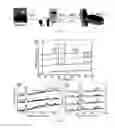
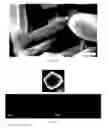
FIG. 1 is a schematic diagram showing preparation of a sample of a compound (Na0.67CuxMn1-xO2) for use as material in cathode of a battery;
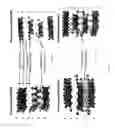
FIG. 2 includes part a), part b) and part c) being graphs of XRD, Cu2p and Mn 2P XPS core peaks for the as-prepared sample compound of FIG. 1, respectively;
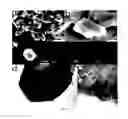
FIG. 3 includes part a), part b), part c), part d), and part e) being images of SEM, SEM, EDX mapping, TEM, and HRTEM of Na0.67MnO2, respectively;
FIG. 4 includes part a), part b), part c), part d), part e) and part f) being images of SEM, SEM, EDX mapping, TEM, SAED and HRTEM of Na0.67Cu0.14Mn0.86O2, respectively;
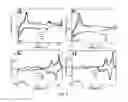
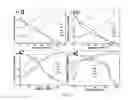
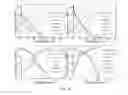
FIG. 5 includes part a), part b), part c) and part d) showing CV curves of various Na0.67CuxMn1-xO2 samples at a scan rate of 0.1 mV s−1 over the voltage range of 2.0-4.2 V, in which in a) x=0, b) x=0.14, c) x=0.25 and d) x=0.33;
FIG. 6 includes part a), part b) part c) and part d) showing representative charge-discharge curves of the samples of FIG. 5 using electrode at 200 mA g−1, in which in a) x=0, b) x=0.14, c) x=0.25 and d) x=0.33;
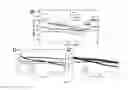
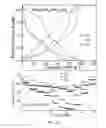
FIG. 7 includes part a), part b) and part c) showing rate capability, cycling performance at current density of 200 mA g−1, and long-term cycling at a high current density of 1000 mA g−1 for various Na0.67CuxMn1-xO2 samples, respectively;
FIG. 8 is a schematic diagram illustrating O3 (bottom right), P3 top right), O2 bottom left) and P2 (top left) types of lattice structures (diagram is extracted from Yabuuchi et al, 2014, IOP Science;
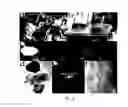
FIG. 9A, 9B are SEM images and FIG. 9C are EDX images of Na0.67Cu0.25Mn0.75O2;
FIG. 10 shows the charge-discharge curves of the electrode at different current density with various Na0.67CuxMn1-xO2 samples: (a) x=0, (b) x=0.14, (c) x=0.25 and (d) x=0.33.
FIG. 11 is a comparison of part a), representative charge-discharge curves at 10 mA g−1, and part b) the rate capabilities for Na0.67M0.20Mn0.80O2 (M=Cu, Zn and Mg) electrodes.
This patent or application file contains at least one drawing executed in color. Copies of this patent or patent application publication with color drawing(s) will be provided by the Office upon request and payment of necessary fee.
DETAILED DESCRIPTION OF THE INVENTION
The demand for efficient and cost effective batteries has been increasing. For example, the increase in popularity of harvesting energy from wind and solar means there is a corresponding increase in demand of storage for this energy harvested. The present invention is broadly concerned with sodium-ion battery (NIB) or lithium-ion battery with part of the lithium therein substituted by sodium (L/NIB). Studies leading to the present invention suggested that conventional batteries using sodium in place of lithium were not efficient due to for example insufficiently high operating voltage and specific energy/power densities. The present invention provides an unexpected novel compound for use as material in cathode of a sodium-ion or lithium/sodium-ion battery which can deliver comparable if not better performance than that of conventional lithium-ion battery (LIB). One example of such novel compound material is copper-substituted P2-type Na0.67CuxMn1-xO2 cathode material. Experiments have shown that with the incorporation of Cu in the cathode material, the average potential increases attributed to the redox couple of Cu3+/Cu2+ (3.5-4.0 V). Most importantly, cycling stability of the materials is improved with Cu substitution, even at a high current rate. More than 100 mAh g−1 can be maintained with capacity retention of about 90% after 150 cycles at current of 200 mA g−1. A capacity retention of >70% can be obtained after 500 cycles at 1000 mA g−1. The performance of this NIB P2-type cathode material of the present invention is comparable if not better than those in conventional LIB. Further illustration of the present invention is depicted in the following description.
In the past two decades, conventional lithium-ion batteries (LIBs) have been widely used to power portable devices such as laptops, cell phones and power tools because they can provide high energy and power densities. However, the limited lithium resources and the geographic locations of these reserves have led to a high price of LIBs. Despite the high cost of LIBs, much research effort is still being focused on increasing output of conventional LIB both in terms of power output and duration of power output.
Studies leading to the present invention showed that P2-, P3- and O3 type layered oxides of NaxMO2 (M=Ni, Co, Mn, Fe, Cr, etc.) were suitable candidates. (A layered structure refers to the particular configurational crystal structure of a material. Typically, a material with a layered structure is one where the alkali metal (e.g. Na and/or Li) occupies one layer of the material, and the transition metal occupies a different layer. The layered structure allows easy movement of the alkali metal (Na and/or Li) into and out of the lattice. Please see FIG. 8. P2, P3, O3 are typical names for different structures. The term “P” refers to the alkali metal (Na) sitting in a prismatic site inside the lattice, whereas the term “O” refers to the alkali metal in an octahedral site. The number “2” and “3” refers to the number of layers in a repeating unit. For example, “2” typically refers to a repetition every 2 layers in an “ABABAB” way (or some variation of it). “3” typically refers to a repetition every 3 layers in an “ABCABCABC” way. The terms P2, P3, O3 describe more details about the atomic arrangements in a layered structure.
In particular, manganese-based cathode material (P2-NaxMnyMzO2) was one of the preferred candidates becasue it could give an initial capacity of up to 210 mAh g−1 at a low current rate with a voltage plateau of around 2.0-2.2 V vs. Na/Na+ due to the redox couple of Mn3+/Mn4+. The capacities and cycle performance of some of the Na-M-O materials are listed in below Table 1.
| TABLE 1 |
| Summary of results of Na—Mn—O based cathode materials |
| Initial | Test | Capacity | |||
| capacity | current | after cycling | capacity | ||
| Material | (mAh g−1) | (mA g−1) | (mAh g−1) | retention | Ref |
| NaxMnO2+z | 140 | 200 | 84/100th | 60% | 25 |
| Na0.7MnO2 | 125 | 180 | ~70/50th | 56% | 26 |
| Na2/3Co1/2Mn1/2O2 | 123 | 30 | 85/30th | 69% | 27 |
| Na2/3Ni1/3Mn2/3O2 | 150 | 10 | 104/30th | 69% | 28 |
| Na2/3Fe1/3Mn2/3O2 | 191 | 12 | 153/40th | 80% | 29 |
| NaxFe1/2Mn1/2O2 | 185 | 6 | ~120/50th | 65% | 30 |
| Na2/3Fe1/2Mn1/2O2 | 190 | 12 | ~150/30th | 79% | 31 |
| Na2/3Fe1/2Mn1/2O2@Graph- | 91 | 12 | 60/140th | 66% | 32 |
| ene | |||||
| Na0.67Mg0.1Mn0.9O2 | 170 | 12 | ~130/25th | 76% | 33 |
| Na2/3[Mg0.28Mn0.72]O2 | 210 | 10 | ~150/30th | 71% | 34 |
| Na0.68Cu0.34Mn0.66O2 | 70 | ~20 | 43/1000th | 61% | 35 |
| Na0.5[Ni0.23Fe0.13Mn0.63]O | 175 | 100 | 120/100th | 69% | 36 |
| NaNi1/3Fe1/3Mn1/3O2 | 120 | 75 | 100/150th | 83% | 37 |
| Na0.67[Ni0.15Co0.2Mn0.65]O2 | 141 | 20 | 123/50th | 87% | 38 |
| Na2/3Ni1/9Co2/3Mn2/9O2 | 110 | 12.6 | ~100/90th | 91% | 39 |
| NaxNi0.22Co0.11Mn0.66O2 | 130 | 12 | ~99/200th | 76% | 40 |
As shown in the above Table 1, most of these NIB materials were cycled at a low current rate (typically around 10 mA g−1) with small number of cycles (<100 cycles). When the current rate and the number of cycles were increased, both capacities and cycle performance were significantly reduced. A material that can allow fast transport of sodium is therefore highly desirable for the development of NIB.
The studies showed that copper-substituted P2-type Na-M-O cathodes with a high potential of about 3.6 V vs. Na/Na+, which is attributed to Cu3+/Cu2+ reaction. These rate and cycle performances are good, with a capacity retention of about 61% after 1000 cycles at a current of C/4 (about 20 mA g−1), but the capacity is only ˜70 mAh g−1. During the course of the present invention, a composition material with the formula of Na0.67CuxMn1-xO2 (0<x<⅓) was identified in that the composite material can produce an unexpected synergetic effects of good cycling, rate performances and high capacity. Experiments using for example cyclic voltammetry (CV) and constant current charge-discharge tests, were conducted to demonstrate that the copper substituted sodium-ion composition material or copper substitued sodium/lithuim-ion composition material has a superb quality in terms of reaction potentials, capacities, and rate and cycle performances.
Experiments
Preparation of Na0.67CuxMn1-xO2(x=0, 0.14, 0.25 and 0.33)
Na0.67CuxMn1-xO2 (x=0, 0.14, 0.25 and 0.33) samples were synthesized by a sol-gel route: appropriate molar ratios of sodium citrate tribasic di-hydrate, manganese acetate tetra-hydrates and copper acetate monohydrate (both Aldrich) were first dissolved in distilled water. Then the solution was stirred at 90° C. to remove the water to form a gel-like mixture. The gel was further dried at 200° C. for 12 h to obtain a powder. The powder was ball milled for 1 h and made into a pellet for calcination in air at 900° C. for 15 h.
Materials Characterization X-ray diffraction (XRD) measurements were carried out with a Bruker D2 phaser diffractometer with Cu Ka line in a 2θ range of 10° to 90°. X-ray photoelectron spectroscopy (XPS) analysis was performed with a VG ESCALAB 220i-XL UHV surface analysis system with a monochromatic Al Kα X-ray source (1486.6 eV). Scanning electron microscopy (SEM) and transmission electron microscopy (TEM) were respectively carried out with a Philips XL30 FEG SEM (operated at 15 kV) and a Philips FEG TEM CM200 (operated at 200 kV).
Electrochemical Measurements
For the electrochemical characterization, the working electrodes were prepared by coating the obtained Na0.67CuxMn1-xO2 (x=0, 0.14, 0.25 and 0.33) samples on aluminum foil after mixing with carbon black and poly-vinylidene fluoride in N-methyl-2-pyrrolidinone solvent with a weight ratio of 80:10:10. Coated foils were dried at 80° C., pressed and then punched into discs with a diameter of 16 mm. The electrode discs were then dried at 110° C. for 4 h in a vacuum oven and transformed into an Ar-filled glove box. Sodium metal and glass microfiber (Whatman, GF/A) were used as counter electrode and separator, respectively. NaCIO4 (1 mol L−1) in propylene carbonate (PC) with 5% fluoro-ethylene carbonate (FEC) was used as the electrolyte. Galvanostatic cycling tests were measured using a Macco Instruments system at room temperature. CV measurements were carried out over a potential window of 2.0-4.2 V at a scan rate of 0.1 mV s−1 using an electrochemical workstation (CHI 660D).
| TABLE 2 |
| Lattice parameters of Na0.67CuxMn1−xO2 |
| (x = 0, 0.14, 0.25 and 0.33). |
| x = 0 | x = 0.14 | x = 0.25 | x = 0.33 | |
| Lattice | hexagonal | hexagonal | hexagonal | hexagonal |
| Space group | P63/mmc | P63/mmc | P63/mmc | P63/mmc |
| a | 2.81771 | 2.83739 | 2.83768 | 2.85053 |
| c | 11.18177 | 11.19981 | 11.19473 | 11.18888 |
| V | 76.88 | 78.09 | 78.07 | 78.74 |
| Mn3+/Mn4+ | 1.20 | 1.00 | 0.75 | 0.48 |
| Expected Cu | N/A | 2+ | 2+ | 2+ |
| state | ||||
| Expected Mn | +3.33 | +3.55 | +3.8 | +4 |
| state | ||||
The preparation process of well-crystallized Na0.67CuxMn1-xO2 (x=0, 0.14, 0.25 and 0.33) is schematically illustrated in FIG. 1. A simple sol-gel method was adopted and the components in the samples were controlled through changing the ratio of copper acetate and manganese acetate in the reaction while keeping the total amount of metal salts constant. After calcination at 900° C. in air, all diffraction peaks in the X-ray diffraction (XRD) patterns of the samples as shown in FIG. 2, part a) can be well-indexed to a hexagonal lattice with P63/mmc space group, which is in good agreement with the β-type (P2) phase NaxMnO2 previously reported. (The hexagonal lattice describes the configuration of a symmetry group that the lattice (materials) belong. It may also be monoclinic lattice, orthorhombic lattice, etc.) No P3 or O3-type phase was detected. The lattice parameters were summarized in Table 2, which shows a slight increase in the a-axis with increasing Cu content, while the c-axis is maximized at x=0.14. The presence of substituted Cu2+ ions in the Na0.67CuxMn1-xO2 plate-like particles is evidenced from the Cu2p peaks observed in the XPS profiles (FIG. 2, part b)). Substituting Mn3+ with Cu2+ in Na0.67CuxMn1-xO2 increases the oxidation state of Mn and produces an unexpected effect. Please see Table 2. The Mn3+/Mn4+ ratios in Na0.67CuxMn1-xO2 with different compositions were estimated by deconvoluting the Mn 2p XPS peaks. Please see FIG. 2, part c). It is shown that there is a consistent trend with that determined by the ingredient composition.
Results of microstructural characterizations of the Na0.67MnO2 and Na0.67Cu0.14Mn0.86O2 samples were shown in FIG. 3 and FIG. 4, respectively. FIG. 3, part a) shows that the Na0.67MnO2 sample is an aggregate of plate-like crystallite with several micrometers size. A higher magnification SEM image (FIG. 3, part b)) shows more details of the layered structure in the crystallites. FIG. 3, part c) presents corresponding energy dispersive X-ray (EDX) elemental mapping of the Na0.67MnO2 sample showing uniform distribution of Na, Mn and O. FIG. 3, part d shows a TEM image of a typical crystallite. FIG. 3, part e) is a high-resolution image of the marked region in FIG. 3, part d showing two sets of lattice fringes both with spacing of 0.230 nm and making an angle of 60°. These match well to the d-spacing of the (100) and the (010) planes of the hexagonal layered phase similar to the reported results.
FIG. 4 shows the characterization results for Na0.67Cu0.14Mn0.86O2 similar particle size and morphology compared to Na0.67MnO2 is obtained with Cu substitution. EDX mapping shows that Cu is distributed uniformly throughout the crystallite (FIG. 4, parts a) to c)). FIG. 4, part d) shows that the plate-like crystallites have hexagonal shape. FIG. 4, part e) shows a selected area electron diffraction pattern of one crystallite along the [001] zone axis. An HRTEM image (FIG. 4, part f)) further confirms (100) and the (010) planes of the hexagonal layered structure. Both the electron diffraction pattern and the clear lattice fringes in FIG. 4, parts d) and e) imply that the layered material is composed of single-crystalline particles. Na0.67CuxMn1-xO2 with x=0.25 or 0.33 also show similar structure and the images are given in FIGS. 9A, 9B and 9C.
Half cells of various Na0.67CuxMn1-xO2 electrodes are tested with Na counter electrodes to investigate the effect of Cu substitution on their electrochemical behavior. FIG. 5 shows the initial four CV profiles of Na0.67CuxMn1-xO2 electrodes with x=0, 0.14, 0.25 and 0.33 between 2.0-4.2 Vat a scan rate of 0.1 mV s−1. Na0.67MnO2 shows a pair of reversible peaks between 2.1 and 2.4 V vs. Na/Na+ and a series of small peaks in a higher potential range, which are associated with Mn4+/Mn3+ redox process and phase transformation during the Na-extraction and insertion. This observation is consistent with previous reports. With a small amount of Cu substitution (x≦0.14), the main Mn4+/Mn3+ redox peaks at ˜2.2 V remains, but the smaller peaks at higher potential disappeared, suggesting that Cu is able to stabilize the Na0.67MnO2 structure and eliminate the phase transitions. This is crucial in improving the rate performance and stability of the material. With further Cu substitution (x≧0.25), the reaction peaks shifted to 3.5-4.1 V, which are attributed to the redox couple of Cu3+/Cu2+. The difference between the oxidation and reduction peaks for Cu3+/Cu2+ is small (<0.1 V), indicating small polarization and good kinetics for the reaction. The CV curves are well-overlapped for these four tested cycles, illustrating the high reversibility of the Na0.67CuxMn1-xO2 electrodes.
Electrochemical properties of the samples were further characterized by galvanostatic charge and discharge tests in the voltage range of 2.0-4.2 V. The typical charge/discharge profiles of the Na0.67CuxMn1-xO2 electrodes at a current of 200 mA g−1 are shown in FIG. 6. First charge capacities of Na0.67CuxMn1-xO2 at a current of 200 mA g−1 are 63.1, 65.0, 72.3, 70.2 mAh g−1 for x=0, 0.14, 0.25 and 0.33, respectively. This corresponds to a removal of Na of 0.33, 0.35, 0.39 and 0.38 from the materials, respectively. The first cycle discharge capacity on the other hand decreases with increasing Cu content. The corresponding first cycle efficiencies are 180.3, 177.5, 125.5 and 116.4%. Charge-discharge profiles of the x=0.14 sample resemble those of Na0.67MnO2 except without the small undulations at higher potential, suggesting the main reactions originate from manganese oxidation state conversions. With x=0.25, the capacity is reduced, but the average potential is raised. Contributions from both higher voltage between 3.5-4.0 V (Cu3+/Cu2+) and lower voltage below 3.0 V (Mn4+/Mn3+) are observed. When Cu content is increased to x=0.33, the dominant reaction originates from Cu. The results are consistent with CV profiles in FIG. 5.
Not all of the Na in the material can be extracted from the P2 structure initially. Na0.67MnO2 only delivers a capacity of 63.1 mA h g−1 in the first charge process, which corresponds to 0.33 Na+ per formula unit. During initial discharge, there are more sites in the structure to accommodate Na+, so about 0.6 Na can be re-inserted back into the lattice, with a first cycle efficiency much bigger than 100%. Increasing Cu content allows more Na to be extracted from the lattice during initial charging from both oxidation of Cu and Mn while less Na is inserted back into the material during discharge. When the Cu content is increased to x=0.33, both charge and discharge capacities originate mainly from the Cu reaction and not from Mn reaction. As a result, the first cycle efficiency is closer to 100%.
The rate and cycling performance of the Na0.67CuxMn1-xO2 electrodes is measured and compared in FIG. 7 and Table 3.
| TABLE 3 |
| Electrochemical performance of Na0.67CuxMn1−xO2 electrodes with different compositions. |
| 10 mA g−1 | ||||||
| (3rd) | 200 mA g−1 | 1000 mA g−1 | Rate |
| Avg. | (18th) | (28th) | performance | Capacity | Capacity |
| Capacity/ | Potential/ | Capacity/ | Avg. | Capacity/ | Avg. | (1000 | retention | retention | |
| x | mAh | V | mAh | Potential/V | mAh | Potential/V | VS. 10 mA g−1) | (200 mA g−1) | (1000 mA g−1) |
| 0 | 165.7 | 2.42 | 118.4 | 2.76 | 89.6 | 2.67 | 58.2% | 61.7% | 40.8% |
| 0.1 | 149.7 | 2.61 | 115.2 | 2.76 | 94.7 | 2.73 | 63.3% | 87.8% | 63.4% |
| 0.2 | 108.9 | 3.13 | 95.8 | 3.17 | 86.4 | 3.07 | 79.3% | 93.7% | 70.5% |
| 0.3 | 83.3 | 3.37 | 79.1 | 3.38 | 60.6 | 3.29 | 72.7% | 96.9% | 76.6% |
At a low current rate of 10 mA g−1, a much higher capacity can be obtained for the material with less Cu. For example, Na0.67MnO2 can give a capacity of 165.7 mAh g−1. However, when the current rate is increased, the available capacity is reduced. The capacity of Na0.67MnO2 at 1000 mA g−1 (89.6 mAh g−1) is only 54.1% of the capacity at 10 mA g−1. Charge-discharge curves at different current rates for the four samples are shown in FIG. 10. The biggest drop in capacity at high rate originates from the 2-2.5V region, corresponding to Mn reaction. Rate performance is improved with Cu substitution. Ratios of capacity at 1000 mA g−1 and that at 10 mA g−1 increase to 63.3%, 79.3% and 72.7% with x=0.14, 0.25 and 0.33, respectively. Please see Table 3. These results give clear evidence that a rather fast kinetics of the sodium insertion/extraction electrode can be obtained through Cu-substitution. The increase in rate performance may be due to the increase in lattice constants with Cu substitution, which could lead to easier Na diffusion within the lattice, though further structural analysis is needed to verify this. After cycle tests, the current rate is returned to the initial value of 10 mA g−1. Materials made in accordance with the present invention also show excellent cycle stability, as almost all the capacity is recovered. Please see FIG. 7, part a.
Long-term cycling performances of the Na0.67CuxMn1-xO2 electrodes were also measured at high current densities of 200 mA g−1 and 1000 mA g−1 (FIG. 7, parts b) and c)). At a current density of 200 mA g−1, Na0.67MnO2 shows a high capacity of 112 mAh g−1, but only 61.7% capacity retention can be obtained after 150 cycles, indicating the structure is unstable during Na-extraction and insertion process at fast rate. Cu-substituted samples on the other hand maintain stable capacity with cycling. After 150 cycles, the Na0.67CuxMn1-xO2 electrodes with x=0.14, 0.25 and 0.33 show capacity retentions of 87.8%, 93.7% and 96.9%, respectively. Even at a higher current rate of 1000 mA g−1, the Cu-doping Na0.67CuxMn1-xO2 cathode can show excellent cycling stability within 500 cycles as shown in FIG. 7, part c).
Compared to a capacity retention of 40.8% for Na0.67MnO2, capacity retention increases to 76.6% after 500 cycles for x=0.33. Cu substitution allows the material to be charged and discharged at a higher current rate with small amount of decay per cycle.
Samples with Mg or Zn-substitution were also prepared and the results are compared as shown in FIG. 11. As opposed to the Cu-substituted sample, Mg or Zn-substitution samples do not show reactions at the higher voltage of 3.5-4.0 V (FIG. 11, part a). In addition, the rate performances of Mg or Zn-substitution materials are inferior to that of Cu-substitution materials. These results indicate that Cu is essential to provide the high potential and superior rate performance in our samples (FIG. 11, part b).
The experiments leading to the present inventon show that one of the best material (x=0.14) can give a capacity of more than 90 mAh g−1 at a current rate of 1000 mA g−1. This corresponds to a charge or discharge time of 5 mins. Average potential of our material is between 2.6-3.3 V, so the obtained energy density is 260 Wh kg−1 at a power density of about 3000 W kg−1. This is comparable with cathode materials for LIB. The improved rate and cycling performance is attributed to fast kinetics and structural stability with Cu substitution. The excellent power and stability of the material make it an attractive choice as cathode for high performance NIB.
In one example, micron-sized copper-substituted Na0.67CuxMn1-xO2 (x=0, 0.14, 0.25, 0.33) layered oxides with a P2-type structure (space group P63/mmc) was prepared with a simple sol-gel method. The increase in Cu content leads to decrease in discharge capacity but an increase in reaction potential. This is attributed to the shift in reaction from Mn3+/Mn4+to Cu2+/Cu3+. A compound with x=0.25 shows contributions from both reactions. Even though the capacity is reduced, Cu reaction has fast kinetics, and rate performance is significantly improved, despite that the particles are micron-sized. Capacity retention of more than 70% at a current rate of 1000 mA g−1 (˜12C rate) can be maintained after 500 cycles. In addition, stability of the material is improved with Cu substitution, showing good cycling performance. The high potential, high rate performance and good cycle performance makes the Cu-substituted layered material an attractive cathode for NIB.
As demonstrated above, mircon-sized plate-like copper-substituted layered cathode materials such as P2-type Na0.67CuxMn1-xO2 is demonstrated to be able to fast charge and discharge within 5 minutes while still gives a capacity of more than 90 mAh g−1. This corresponds to an energy density of 260 Wh kg−1 at a power density of 3000 W kg−1, comparable to high-power lithium ion battery cathodes. These materials show excellent stability and keeps more than 70% of its initial capacity after 500 cycles at a current of 1000 mA g−1. At a current rate of 200 mA g−1, capacity retention is improved to more than 90% after 150 cycles. The good cycling performance at high current rate is attributed to copper in the lattice, which stabilizes the crystal structure, raises the average discharge potential and improves sodium transport. This makes the material an ideal choice as cathode for high-power sodium-ion or sodium/lithium-ion batteries.
It should be understood that certain features of the invention, which are, for clarity, described in the content of separate embodiments, may be provided in combination in a single embodiment. Conversely, various features of the invention which are, for brevity, described in the content of a single embodiment, may be provided separately or in any appropriate sub-combinations. It is to be noted that certain features of the embodiments are illustrated by way of non-limiting examples. For example, in some of the aforementioned example M in the chemical formulae NayCuxM1-xO2, or LiaNabCuxM1-xO2 refers to manganese (Mn). However, other transition metal such as cobalt or iron can also be used. Also, a skilled person in the art will be aware of the prior art which is not explained in the above for brevity purpose. In this regard, the skilled person will be aware of at least the reference listed below, and contents of all these references are incorporated in their entirety.
REFERENCES
- 1 M. Armand and J. M. Tarascon, Nature, 2008, 451, 652.
- 2 N.-S. Choi, Z. Chen, S. A. Freunberger, X. Ji, Y.-K. Sun, K. Amine, G. Yushin, L. F. Nazar, J. Cho and P. G. Bruce, Angew. Chem. Int. Ed., 2012, 51, 9994.
- 3 B. Scrosati, J. Hassoun and Y. K. Sun, Energy Environ. Sci. 2011, 4, 3287.
- 4 S. W. Kim, D. H. Seo, X. H. Ma, G. Ceder and K. Kang, Adv. Energy Mater., 2012, 2, 710.
- 5 C. S. Park, H. Kim, R. A. Shakoor, E. Yang, S. Y. Lim, R. Kahraman, Y. Jung and J. W. Choi, J. Am. Chem. Soc., 2013, 135, 2787.
- 6 Y. S. Wang, X. Q. Yu, S. Y. Xu, J. M. Bai, R. J. Xiao, Y. S. Hu, H. Li, X. Q. Yang, L. Q. Chen and X. J. Huang, Nat. Commun., 2013, 4, 1870.
- 7 Z. L. Jian, W. Z. Han, X. Lu, H. X. Yang, Y. S. Hu, J. Zhou, Z. B. Zhou, J. Q. Li, W. Chen, D. F. Chen and L. Q. Chen, Adv. Energy Mater., 2013, 3, 156.
- 8 H. Pan, Y.-S. Hu and L. Chen, Energy Environ. Sci., 2013, 6, 2338.
- 9 M. D. Slater, D. Kim, E. Lee and C. S. Johnson, Adv. Funct. Mater., 2013, 23, 947.
- 10 M. H. Han, E. Gonzalo, G. Singh and T. Rojo, Energy Environ. Sci., 2015, 8, 81.
- 11 J. Billaud, R. J. Clement, A. R. Armstrong, J. Canales-Vazquez, P. Rozier, C. P. Grey and P. G. Bruce, J. Am. Chem. Soc., 2014, 136, 17243.
- 12 P. Barpanda, T. Ye, S. Nishimura, S.-C. Chung, Y. Yamada, M. Okubo, H. S. Zhou and A. Yamada, Electrochem Commun, 2012, 24, 116.
- 13 W. C. Duan, Z. Q. Zhu, H. Li, Z. Hu, K. Zhang, F. Y. Cheng and J. Chen, J. Mater. Chem. A, 2014, 2, 8668.
- 14 T. Honma, N. Ito, T. Togashi, A. Sato and T. Komatsu, J. Power Sources, 2013, 227, 31.
- 15 C. W. Mason, I. Gocheva, H. E. Hoster and D. Y. W. Yu, Chem. Commun., 2014, 50, 2249.
- 16 Y. H. Jung, C. H. Lim and D. K. Kim, J. Mater. Chem. A 2013, 1, 11350.
- 17 R. Berthelot, D. Carlier and C. Delmas, Nat. Mater., 2011, 10, 74.
- 18 S. Komaba, C. Takei, T. Nakayama, A. Ogata and N. Yabuuchi, Electrochem. Commun., 2010, 12, 355.
- 19 J. Zhao, L. Zhao, N. Dimov, S. Okada and T. Nishida, J. Electrochem. Soc., 2013, 160, A3077.
- 20 N. Yabuuchi, H. Yoshida and S. Komaba, Electrochemistry, 2012, 80, 716.
- 21 X. Ma, H. Chen and G. Ceder, J. Electrochem. Soc., 2011, 158, A1307.
- 22 C. Delmas, Y. Borthomieu and C. Faure, Solid State Ionics, 1989, 32/33, 104.
- 23 C. Delmas, C. Fouassier and P. Hagenmuller, Physica B, 1980, 99, 81.
- 24 A. Mendiboure, C. Delmas and P. Hagenmuller, J. Solid State Chem., 1985, 57, 323-331
- 25 N. Bucher, S. Hartung, A. Nagasubramanian, Y. L. Cheah, H. E. Hoster and S. Madhavi, ACS Appl. Mater. Interfaces, 2014, 6, 8059.
- 26 D. W. Su, C. Y. Wang, H. J. Ahn and G. X. Wang, Chem. Eur. J., 2013, 19, 10884.
- 27 X. F. Wang, M. Tamaru, M. Okubo and A. Yamada, J. Phys. Chem. C, 2013, 117, 15545
- 28 W. W. Zhao, H. Kirie, A. Tanaka, M. Unno, S. Yamamoto and H. Noguchi, Mater Lett., 2014, 135, 131.
- 29 J. Zhao, J. Xu, D. H. Lee, N. Dimov, Y. S. Meng and S. Okada, J. Power Sources, 2014, 264, 235.
- 30 B. M. Boisse, D. Carlier, M. Guignard, L. Bourgeois and C. Delmas, Inorg. Chem., 2014, 53, 11197.
- 31 N. Yabuuchi, M. Kajiyama, J. Iwatate, H. Nishikawa, S. Hitomi, R. Okuyama, R. Usui, Y. Yamada and S. Komaba, Nature Mater., 2012, 11, 3309.
- 32 H. L. Zhu, K. T. Lee, G. T. Hitz, X. G. Han, Y. Y. Li, J. Y. Wan, S. Lacey, A. W. Cresce, K. Xu, E. Wachsman and L. B. Hu, ACS Appl. Mater. Interfaces, 2014, 6, 4242.
- 33 J. Billaud, G. Singh, A. R. Armstrong, E. Gonzalo, V. Roddatis, M. Armand, T. Rojo and P. G. Bruce, Energy Environ. Sci., 2014, 7, 1387.
- 34 N. Yabuuchi, R. Hara, K. Kubota, J. Paulsen, S. Kumakura and S. Komaba, J. Mater. Chem. A, 2014, 2, 16851.
- 35 C.W. Mason, F. Lange, K. Saravanan, F. Lin and D. Nordlund, ECS Electrochem Lett, 2015, 4, A41-A44.
- 36 I. Hasa, D. Buchholz, S. Passerini, B. Scrosati and J. Hassoun, Adv. Energy Mater., 2014, 4, 1400083.
- 37 D. Kim, E. Lee, M. Slater, W. Lu, S. Rood and C. S. Johnson, Electrochem. Comm., 2012, 18, 66-69.
- 38 D. D. Yuan, W. He, F. Pei, F. Y. Wu, Y.Wu, J. F. Qian, Y. L. Cao, X. P. Ai and H. X. Yang, J. Mater. Chem. A, 2013, 1, 3895.
- 39 S. Doubaji, M. Valvo, I. Saadoune, M. Dahbi and K. Edstrom, J. Power Sources, 2014, 266, 275.
- 40 L. G. Chagas, D. Buchholz, C. Vaalma, L. Wu and S. Passerini, J. Mater. Chem. A, 2014, 2, 20263.
- 41 A. Caballero, L. Hernán and J. Morales, L. Sanchez, J. Santos Pena and M. A. G. Aranda, J. Mater. Chem., 2002, 12, 1142.
- 42 Z. Lu, R. A. Donaberger and J. R. Dahn, Chem. Mater., 2000, 12, 3583.
- 43 S. Y. Xu, X. Y. Wu, Y. M. Li, Y. S. Hu and L. Q. Chen, Chin. Phys. B, 2014, 23, 118202.
- 44 Y. M. Li, Z. Z. Yang, S. Y. Xu, L. Q. Mu, L. Gu, Y.-S. Hu, H. Li and L. Q. Chen. Adv. Sci., 2015, 1500031.
- 45 J. B. Goodenough, Acc. Chem. Res., 2013, 46, 1053.
- 46 R. Mukherjee, R.Krishnan, T. M. Lu and N. Koratkar, Nano Energy, 2012, 1, 518.
- 47. J. P. Parant, R. Olazcuaga, M. Devalette, C. Fouassier and P. Hagenmuller, J. Solid State Chem. 1971, 3, 1-11
Claims
1. A compound for use as material in cathode of a battery, comprising
a) i) sodium or ii) sodium and lithium as a first ingredient;
b) copper as a second ingredient;
c) at least a first transition metal in a third ingredient (M) selected from a group including manganese, nickel, iron, copper, zinc, chromium, vanadium, titanium, molybdenum and tungsten, niobium, rubidium, tin, zirconium; and
d) oxygen as a fourth ingredient;
wherein the compound has a chemical formula of NayCuxM1-xO2, or LiaNabCuxMi-xO2.
2. A compound as claimed in claim 1, comprising only sodium as the first ingredient.
3. A compound as claimed in claim 2, wherein the chemical formula is NayCuxM1-xO2.
4. A compound as claimed in claim 3, wherein 0.6≦y≦0.75 and 0.02≦x≦0.30.
5. A compound as claimed in claim 4, further comprising a second transition metal (A) in the third ingredient, the second transition metal (A) includes one or more transition metals selected from a group including nickel, iron, cobalt, titanium, zirconium, rubidium, tin and vanadium.
6. A compound as claimed in claim 5, wherein the first transition metal is manganese.
7. A compound as claimed in claim 6, wherein the chemical formula is NayCuxMn1-x-zAzO2.
8. A compound as claimed in claim 7, wherein 0.6≦y≦0.75, 0.02≦x≦0.30, and 0≦z≦0.67.
9. A compound as claimed in claim 1, comprising both sodium and lithium in the first ingredient.
10. A compound as claimed in claim 9, wherein the chemical formula is LiaNabCuxM1-xO2.
11. A compound as claimed in claim 10, wherein 0.6≦a+b≦0.75 and 0.02 ≦x≦0.30.
12. A compound as claimed in claim 10, further comprising a second transition metal (A) in the third ingredient, the second transition metal (A) selected from a group including nickel, iron, cobalt, and vanadium.
13. A compound as claimed in claim 12, wherein the first transition metal is manganese.
14. A compound as claimed in claim 13, wherein the chemical formula is LiaNabCuxMn1-x-zAzO2.
15. A compound as claimed in claim 14, wherein 0.6≦a+b≦0.75, 0.02≦x≦0.30 and 0≦z≦0.67.
16. A lattice structure of a compound as claimed in claim 1, wherein said lattice structure has a layered structure in which one layer thereof is occupied essentially by alkali metal only, and a different layer is occupied essentially by transition metal only.
17. A lattice structure as claimed in claim 16, having a structure of P2, P3 or O3.
18. A lattice structure as claimed in claim 17, wherein particle size of the compound has an average width of substantially 0.05 to 10 μm.
19. A lithium-ion or sodium-ion battery system comprising a compound as claimed in claim 1.
Images & Drawings included:
Sources:
- United States Patent and Trademark Office - verify current appl. status at the USPTO↗
Recent applications in this class:
- » 20250293248 2025-09-18
SECONDARY BATTERY, ELECTRONIC DEVICE, POWER STORAGE SYSTEM, AND VEHICLE - » 20250293247 2025-09-18
SECONDARY BATTERY, ELECTRONIC DEVICE, POWER STORAGE SYSTEM, AND VEHICLE - » 20250293246 2025-09-18
METHOD OF MANUFACTURING ELECTRODE FOR ELECTROCHEMICAL ELEMENT, ELECTRODE FOR ELECTROCHEMICAL ELEMENT, ELECTRODE LAMINATE FOR ELECTROCHEMICAL ELEMENT, ELECTROCHEMICAL ELEMENT, AND ALL SOLID STATE ELECTROCHEMICAL ELEMENT - » 20250293245 2025-09-18
COMPOSITE ACTIVE MATERIAL AND METHOD FOR PRODUCING COMPOSITE ACTIVE MATERIAL - » 20250293244 2025-09-18
NEGATIVE ACTIVE MATERIAL, METHOD OF PREPARING SAME, NEGATIVE ELECTRODE INCLUDING SAME, AND RECHARGEABLE LITHIUM BATTERY INCLUDING SAME - » 20250293243 2025-09-18
COMPOSITE ACTIVE MATERIAL AND BATTERY - » 20250293242 2025-09-18
ANODE ACTIVE MATERIAL FOR LITHIUM SECONDARY BATTERY AND METHOD FOR PREPARING SAME - » 20250286050 2025-09-11
NEGATIVE ELECTRODE MATERIAL, NEGATIVE ELECTRODE PLATE, AND BATTERY - » 20250286049 2025-09-11
ELECTROCHEMICAL DEVICE AND ELECTRONIC DEVICE - » 20250279417 2025-09-04
NEGATIVE ELECTRODE SHEET, LITHIUM BATTERY, AND ELECTRIC DEVICE
Recent applications for this Assignee:
- » 20250288206 2025-09-18
SYSTEMS AND METHODS FOR MONITORING OF DELIVERY OF LABEL-FREE DRUGS - » 20250207276 2025-06-26
METHODS OF PREPARING A CATALYST AND AN ELECTROLYTIC CELL FOR USE IN SYNTHESISING AMMONIA, AND METHODS OF SYNTHESISING AMMONIA - » 20250169265 2025-05-22
METHOD FOR SELECTIVE SURFACE ENGINEERING OF PEROVSKITE MICROWIRE ARRAYS - » 20240430075 2024-12-26
CRYPTOSYSTEM WITH UTILIZING SPLIT-RADIX DISCRETE GALOIS TRANSFORMATION - » 20240415152 2024-12-19
METHODS FOR IMPROVING HEALTH OF FISH, USE OF ZINC OXIDE PARTICLES FOR THE PREPARATION OF FISH FEED, METHODS FOR PREPARING FISH FEED FOR FISH, AND FISH FEED THEREOF - » 20240384407 2024-11-21
Method for synthesizing 2H/1T′ TMD heterophase junctions and a device based on the same - » 20240301534 2024-09-12
METHOD FOR SYNTHESIZING INTERMETALLIC ALLOY NANOPARTICLES - » 20240240277 2024-07-18
Method of forming a dynamically transformable nanotwinned structure in an austenite steel alloy - » 20240229263 2024-07-11
YOLK-SHELL NANOSTRUCTURE AND METHOD OF FABRICATING THE SAME - » 20240213391 2024-06-27
VERSATILE ANTI-AMBIPOLAR PHOTOTRANSISTORS BASED ON MIXED-DIMENSIONAL HETEROJUNCTIONS