Grapevine named 'SV22-104e-84'
US20170079173P1
2017-03-16
15/330,314
2016-09-01
Abstract:
A new and distinct variety of grapevine plant named ‘SV22-104e-84’ particularly characterized by its green berry color, very firm texture and very large, sweet berries. Additionally, berries of the new cultivar are very responsive to applications of exogenous gibberellic acid, doubling in size in comparison to untreated fruit.
Assignee:
- SUNVIEW VINEYARDS OF CALIFORNIA, INC. 13 🇺🇸 Delano, CA, United States
Interested in similar patents?
Get notified when new applications in this technology area are published.
Classification:
A01H5/08 IPC
Angiosperms, i.e. flowering plants, characterised by their plant parts; Angiosperms characterised otherwise than by their botanic taxonomy Fruits
Description
CROSS REFERENCE TO RELATED APPLICATIONS
The present application claims the benefit of Provisional Application No. 62/283,781 filed Sep. 11, 2015, which is incorporated herein by reference.
STATEMENT OF ANY FEDERALLY-SPONSORED RESEARCH AND DEVELOPMENT
The present invention is not subject of Federally-sponsored research or development.
Latin name of the genus and species of the plant claimed: The plant claimed relates to a new and distinct variety of Vitis vinifera.
Variety denomination: The plant claimed shall be known as ‘SV22-104e-84’.
BACKGROUND OF THE INVENTION
The present invention comprises a new and distinct cultivar of grapevine botanically known as Vitis vinifera and hereinafter referred to as grapevine named ‘SV22-104e-84’. As used herein, ‘grapevine’ refers to all plant parts including, vines, canes, tendrils, leaves, fruit and roots of ‘SV22-104e-84’. Grapevine named ‘SV22-104e-84’ is the result of an effort to produce a late ripening, green, seedless table grape with fruit characteristics superior to currently available green grape cultivar ‘Thompson Seedless’ (unpatented) and ‘Autumn King’ (U.S. Plant Pat. No. 16,284). This new cultivar originated from a cross conducted in May 2001 near McFarland, Calif. between pistillate grapevine plant selection ‘13-2-138’(unpatented) and pollen parent ‘Princess’ (unpatented). Resultant ovules from the cross were harvested 42 days after pollination and cultured on agar substrate containing ‘McCown's Woody Plant Medium’. Embryonic plants were dissected from those cultured ovules after twelve weeks and were transferred to culture tubes containing the same medium in the laboratory under twelve hours of light from standard fluorescent lamps at 27° C. The seedlings from this effort were transplanted to the greenhouse in November of 2001 and grown in the greenhouse at 29° C. with 12 hours illumination under high pressure sodium vapor lamps. The seedling population of 127 plants was planted in the field in the spring of 2002 near Delano, Calif. The new grapevine was selected from this seedling population on Oct. 6, 2006. It was then propagated by cuttings and grafted to ‘Freedom’ (unpatented) rootstock in 2007. The present invention has been found to retain its distinctive characteristics through four successive asexual propagations.
Grapevine named ‘SV22-104e-84’ differs from the female parent grapevine ‘SV13-2-138’ (unpatented) in that ‘SV22-104e-84’ has ellipsoidal shaped, seedless berries and flowers with functional pollen, whereas ‘SV13-2-138’ has spherical shaped berries with partially lignified seed traces and flowers that are pistillate (functionally female).
Grapevine named ‘SV22-104e-84’ differs from its male parent, ‘Princess’ (unpatented) in that ‘SV22-104e-84’ has ellipsoidal shaped, bright green berries that do not brown internally while in cold storage, whereas ‘Princess’ has oblong shaped, yellow berries which may brown internally while in cold storage.
Grapevine named ‘SV22-104e-84’ differs from the commercial cultivar ‘Thompson Seedless’ in that ‘SV22-104e-84’ has ellipsoidal shaped, bright green berries, whereas ‘Thompson Seedless’ has elongate shaped, light green berries. The berries of ‘SV22-104e-84’ have a superior eating quality and larger berries at harvest after standard vineyard practices of application of exogenous gibberellic acid and girdling of the vine trunks as compared to ‘Thompson Seedless’. Additionally, ‘SV22-104e-84’ has fruitful shoots with spur pruning to two buds, whereas ‘Thompson Seedless’ lacks fruitfulness with spur pruning. ‘SV22-104e-84’ is most similar to its sibling grapevine named ‘SV21-66-158’ (U.S. Plant Pat. No. 24,510), from which it can be distinguished by lower fruitfulness (1 cluster on most shoots versus 2 clusters on most shoots of ‘SV21-66-158’), higher plant vigor and later ripening.
SUMMARY OF THE INVENTION
The following are the most outstanding and distinguishing characteristics of this new variety when grown under normal horticultural practices near McFarland, Calif.:
1. Green skinned;
2. Very firm berry texture; and
3. Very large, ellipsoidal shaped berries with sweet taste.
BRIEF DESCRIPTION OF THE DRAWINGS
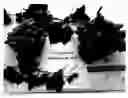
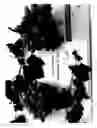
This new grapevine is illustrated by the accompanying photographs which show fruit clusters, leaves, canes, and tendrils. The colors shown are as true as can be reasonably obtained by conventional photographic procedures. The photographs were taken from a plant about 8 years-old, grown in a field near McFarland, Calif. in 2015.
FIG. 1 Fruit clusters on the vine.
FIG. 2 Natural fruit cluster on left, gibberellic acid treated fruit cluster on the right with shoots, leaves and tendrils.
DETAILED BOTANICAL DESCRIPTION OF THE PLANT
The following detailed description sets forth the distinctive characteristics of ‘SV22-104e-84’. Descriptions of the new invention apply to vines of ‘SV22-104e-84’ grown on ‘Freedom’ rootstock at a density of 1,537 vines per hectare grown near McFarland, Calif. in 2015. These vines were in their eighth year of full production having been grafted to existing rootstock ‘Freedom’ in 2007. These descriptions are believed to apply generally to the new variety grown under similar circumstances elsewhere. Color references are primarily to The Royal Horticultural Society's Colour Chart, The Royal Horticultural Society, London, United Kingdom. Descriptors used herein conform to those set forth by the International Board for Plant Genetic Resources Institute Grape Descriptors (Vitis spp.) of 1983 and/or 1997 which were developed in collaboration with the Office International de la Vigne et du Vin (OIV) and the International Union for the Protection of New Varieties of Plants (UPOV) and published in Descriptors for Grapevine (Vitis spp.) (Anonymous, International Plant Genetic Resources Institute, 1997, ISBN 92-9043-352-3).
- Classification:
-
- Family.—Vitaceae.
- Botanical name.—Vitis vinifera.
- Variety name.—‘SV22-104e-84’.
-
- Plant:
-
- Vigor.—Medium; vines spur-pruned and shoot thinned to 32 shoots average 289.5 cm of growth per cane.
- Density of foliage.—Moderate.
- Productivity.—Very productive when spur pruned, up to 32,000 kg/hectare.
- Hardiness.—Hardiness observed to 0° C.
- Rootstock.—‘Freedom’ (unpatented).
-
- Trunk:
-
- Shape.—Broadly elliptical.
- Straps.—Long, split.
- Surface texture.—Shaggy.
- Trunk circumference.—46.0 cm at 1.0 m of height.
- Inner bark color.—RHS 166D (greyed orange group).
- Outer bark color.—RHS N187C (greyed purple group).
-
- Mature leaves:
-
- Average blade length.—14.7 cm.
- Average blade width.—16.1 cm.
- Size of blade.—Large.
- Shape.—Pentagonal.
- Anthocyanin coloration of main veins on the upper side of the blade.—Absent.
- Mature leaf profile.—Cupped upwards around entire margin.
- Blistering (upper surface).—Absent.
- Leaf blade tip.—Curved upward.
- Margins.—Lobed, serrated, undulating.
- Apex.—Broadly acuminate.
- Bases.—Sagittate.
- Thickness.—Medium.
- Undulation of blade between main and lateral veins.—Slight.
- Shape of teeth.—Broadly conical, both sides convex.
- Length of teeth.—3.0 mm to 10.0 mm.
- Ratio length/width of teeth.—About 1:1.
- General shape of petiole sinus.—Mostly open.
- Tooth at petiole sinus.—Absent.
- Petiole sinus limited by veins.—Absent.
- Shape of upper lateral sinus.—Closed.
- Prostrate hairs between veins (lower surface).—Absent.
- Erect hairs between veins (lower surface).—Absent.
- Prostrate hairs on main veins (lower surface).—Absent.
- Density of erect hairs on main veins (lower surface).—Medium at the base of main veins; sparse at junctions of smaller veins branching from man veins.
- Prostrate hairs on main veins (upper surface).—Absent.
- Upper surface.—Summer color: RHS 135A (green group) Autumn color: RHS 12B (yellow group) Surface texture: Smooth Surface appearance: Dull Coffering of blade: Absent.
- Lower surface.—Summer color: RHS 143A (green group) Autumn color: RHS 12A (yellow group) Anthocyanin coloration of main veins on lower leaf surface: Absent Anthocyanin coloration on laterals: Absent. Glossiness: Low Pubescence: Absent Surface texture: Rough Surface appearance: Dull.
- Petiole.—Length: 11.6 cm Length of petiole compared to middle vein: Shorter than middle vein Density of prostrate hairs: Absent Density of erect hairs: Absent Shape of base of petiole sinus: Open; outline is broadly saggitate Color: In shade: RHS 144B (yellow green group) In sun: RHS 144A (yellow green group).
-
- Tendrils:
-
- Number.—Bifurcated and trifurcated; forming at all nodes above node 5.
- Length.—18.0 cm to 25.0 cm.
- Diameter.—3.0 mm.
- Texture.—Smooth.
- Color.—RHS 144C (yellow green group).
-
- Growing tips (young shoot):
-
- Pubescence.—Sparse, prostrate.
- Color.—RHS 144B (yellow green group).
- Anthocyanins.—Absent.
- Shape.—Rounded.
- Apex.—Fully open.
- Shoot attitude.—Semi-erect.
-
- Woody shoot:
-
- Canes.—Shape: Broadly elliptical Internode length: About 13.7 cm Width at node: 1.5 cm Cross section: Circular Surface: Smooth Main color: RHS 166C (greyed orange group) Lenticels: Inconspicuous Erect hairs on nodes: Absent Erect hairs on internodes: Absent.
- Laterals.—Shape: Broadly elliptical Number: Numerous, forming at all nodes above node 8 Length: 2 cm to 50 cm Diameter: 5.2 mm to 10.3 mm Internode length: 2.1 cm to 8.1 cm Color: RHS 165B (greyed orange group).
- Buds.—Shape: Slightly pointed Cane bud fruitfulness: Basal buds fruitful, usually 1 cluster per shoot Length: 3.9 mm Width: 3.5mm Height: 4.7 mm Color: RHS 165A (greyed orange group) Texture: Smooth.
-
- Flowers:
-
- Flower sex.—Perfect.
- Position of first flowering nodes.—Third or fourth node.
- Number of inflorescences per shoot.—Usually 1.
- Calyptra color.—RHS N144C (yellow green group).
- Ovary length.—2.9 mm.
- Ovary width.—6 mm.
- Ovary color.—RHS 143B (green group).
- Filament length.—2.0 mm.
- Filament color.—Translucent, absence of pigmentation.
- Anther length.—1.0 mm.
- Anther color.—RHS 8C (yellow group).
- Date of full bloom.—May 4.
-
- Fruit:
-
- Ripening period.—Around the fourth week of August at McFarland, Calif.
- Date of ripening.—August 28 McFarland, Calif.
- Use.—Fresh market.
- Keeping quality.—Very good.
- Shipping quality.—Good, some clusters have few berries with slight bruising.
- Date of first harvest.—Aug. 28, 2015.
- Solids-sugar.—High, about 20 brix at full maturity.
- Refractometer test.—20.0 brix.
- Cluster.—
- Bunch.—Size: Medium Length (peduncle excluded): About 17.4 cm Width: About 14 cm Weight: Natural, without gibberellic acid treatment: 900.0 g With gibberellic acid treatment and trunk girdling: 1,520.0 g Density: Compact, requiring hand thinning Number of berries: 148 Form: Conical.
- Peduncle.—Length: About 4 cm to 9 cm. Lignification: Medium Color: RHS 166C (greyed orange group).
- Berry.—Size: Large Uniformity of size: Uniform Weight Natural, without gibberellic acid treatment: 5.6 g With gibberellic acid treatment and trunk girdling: 10.3 g Shape: Natural, without gibberellic acid treatment: Elliptical With gibberellic acid treatment: Elliptical Presence of seeds: Seedless; most berries develop one or two small, soft rudimentary seeds less than 1.0 mm in length Cross section: Circular Dimensions: Longitudinal axis: About 3.0 cm Horizontal axis: About 2.0 cm. Skin color (without bloom): RHS 144C (yellow green group) Coloration of flesh: Translucent; RHS 150B (yellow green group) Juiciness of flesh: Very juicy Berry firmness: Very firm Particular flavor: Neutral, typical vinifera Bloom (cuticular wax): Medium Pedicel length: 5 mm Berry separation from pedicel; With difficulty.
- Skin.—Thickness: Medium Texture: Tender Reticulation: Absent Roughness: Absent Tenacity: Tenacious to flesh Tendency to crack: Resistant.
-
- Disease and insect resistance: No particular resistance or susceptibility has been observed. Normal disease control practices can be used.
Claims
Having thus described and illustrated our new variety of grapevine, we claim:1. A new and distinct variety of grapevine plant named ‘SV22-104e-84’, and parts thereof, substantially as illustrated and described herein.
Images & Drawings included:
Sources:
- United States Patent and Trademark Office - verify current appl. status at the USPTO↗
Recent applications in this class:
- » 20240292771 2024-08-29
Campanula plant named 'Twilight' - » 20240251691 2024-07-25
HYDRANGEA PLANT NAMED 'HYLV17520' - » 20240251690 2024-07-25
Vaccinium Plant Named 'BWPBLUE02' - » 20240251689 2024-07-25
BLUEBERRY PLANT NAMED 'FC13-113' - » 20240251688 2024-07-25
BLUEBERRY PLANT NAMED 'FCM14-057' - » 20240237567 2024-07-11
PONGAMIA VARIETIES - » 20240224827 2024-07-04
PELARGONIUM PLANT NAMED 'PEQZ0103' - » 20240215470 2024-06-27
Agapanthus plant named 'Monsapho' - » 20240215469 2024-06-27
plant named ‘LOCORA3519’ - » 20240206359 2024-06-20
CORYLUS PLANT NAMED 'BWM01'
Recent applications for this Assignee:
- » 20250081869 2025-03-06
Grapevine named 'SV34-130-92' - » 20250081868 2025-03-06
Grapevine named 'SV35-179-125' - » 20240415035 2024-12-12
Grapevine plant named ‘SV36-61-150’ - » 20210092889 2021-03-25
Grapevine Named 'SV30-27-602' - » 20200196502 2020-06-18
Grapevine named 'SV28-100-202' - » 20200187400 2020-06-11
Grapevine named ‘SV27-104-114’ - » 20200187399 2020-06-11
Grapevine named ‘SV30-14-12’ - » 20190335636 2019-10-31
Grapevine Named 'SV22-88e-124' - » 20190029155 2019-01-24
Grapevine named 'SV28-100-849 - » 20170105324 2017-04-13
Grapevine named 'SV21-61-373'