Crystalline microporous material mediated conversion of C1-3 oxygenate compounds to C4 oxygenate compounds
US20170129913A1
2017-05-11
15/319,332
2015-06-18
✅ Patent granted
US 11,034,713 B2
2021-06-15
WO; PCT/EP2015/063774; 20150618
WO; WO2015/193461; 20151223
Bahar Craigo
Blank Rome LLP
2035-10-28
Abstract:
A process for the preparation of C4 oxygenate compounds such as threose, erythrose or erythrulose starting from a composition comprising C1-3 oxygenate compounds such as formaldehyde, glycolaldehyde, glyoxal, pyruvaldehyde or acetol, wherein the process is carried out in the presence of a crystalline microporous material having a ring pore structure selected from an eight-membered ring pore structure or a ten-membered ring pore structure.
Inventors:
- Esben Taarning 26 🇩🇰 Frederiksberg, Denmark
- Martin Spangsberg Holm 7 🇬🇧 Oxford, United Kingdom
- Irantzu Sadaba Zubiri 9 🇩🇰 Frederiksberg, Denmark
- Saravanamurugan Shunmugavel 2 🇩🇰 Lyngby, Denmark
- Irantzu Sandaba Zubiri 1 🇩🇰 Frederiksberg, Denmark
Assignee:
- Haldor Topsoe A/S 178 🇩🇰 Kgs. Lyngby, Denmark
- Haldor Topsoe A/S 285 🇩🇰 Lyngby, Denmark
Applicant:
Interested in similar patents?
Get notified when new applications in this technology area are published.
Classification:
B01J29/041 » CPC further
Catalysts comprising molecular sieves having base-exchange properties, e.g. crystalline zeolites Mesoporous materials having base exchange properties, e.g. Si/Al-MCM-41
B01J29/7049 » CPC further
Catalysts comprising molecular sieves having base-exchange properties, e.g. crystalline zeolites; Crystalline aluminosilicate zeolites; Isomorphous compounds thereof of types characterised by their specific structure not provided for in groups - containing rare earth elements, titanium, zirconium, hafnium, zinc, cadmium, mercury, gallium, indium, thallium, tin or lead
B01J29/7057 » CPC further
Catalysts comprising molecular sieves having base-exchange properties, e.g. crystalline zeolites; Crystalline aluminosilicate zeolites; Isomorphous compounds thereof of types characterised by their specific structure not provided for in groups - containing rare earth elements, titanium, zirconium, hafnium, zinc, cadmium, mercury, gallium, indium, thallium, tin or lead Zeolite Beta
B01J37/0018 » CPC further
Processes, in general, for preparing catalysts; Processes, in general, for activation of catalysts; Use of binding agents; Moulding; Pressing; Powdering; Granulating; Addition of materials ameliorating the mechanical properties of the product catalyst Addition of a binding agent or of material, later completely removed among others as result of heat treatment, leaching or washing,(e.g. forming of pores; protective layer, desintegrating by heat)
B01J37/0201 » CPC further
Processes, in general, for preparing catalysts; Processes, in general, for activation of catalysts; Impregnation, coating or precipitation Impregnation
C01B37/005 » CPC further
Compounds having molecular sieve properties but not having base-exchange properties Silicates, i.e. so-called metallosilicalites or metallozeosilites
C01B39/026 » CPC further
Compounds having molecular sieve and base-exchange properties, e.g. crystalline zeolites; Their preparation; After-treatment, e.g. ion-exchange or dealumination; Crystalline aluminosilicate zeolites; Isomorphous compounds thereof; Direct preparation thereof; Preparation thereof starting from a reaction mixture containing a crystalline zeolite of another type, or from preformed reactants; After-treatment thereof After-treatment
B01J2229/186 » CPC further
Aspects of molecular sieve catalysts not covered by; After treatment, characterised by the effect to be obtained to introduce other elements into or onto the molecular sieve itself not in framework positions
A23L27/34 » CPC further
Spices; Flavouring agents or condiments; Artificial sweetening agents; Table salts; Dietetic salt substitutes; Preparation or treatment thereof; Artificial sweetening agents containing sugars or derivatives Sugar alcohols
A23V2002/00 » CPC further
Food compositions, function of food ingredients or processes for food or foodstuffs
B01J37/02 IPC
Processes, in general, for preparing catalysts; Processes, in general, for activation of catalysts Impregnation, coating or precipitation
C01B39/02 IPC
Compounds having molecular sieve and base-exchange properties, e.g. crystalline zeolites; Their preparation; After-treatment, e.g. ion-exchange or dealumination Crystalline aluminosilicate zeolites; Isomorphous compounds thereof; Direct preparation thereof; Preparation thereof starting from a reaction mixture containing a crystalline zeolite of another type, or from preformed reactants; After-treatment thereof
C07D307/36 » CPC further
Heterocyclic compounds containing five-membered rings having one oxygen atom as the only ring hetero atom not condensed with other rings having two or three double bonds between ring members or between ring members and non-ring members with only hydrogen atoms or radicals containing only hydrogen and carbon atoms, directly attached to ring carbon atoms
C07H1/00 » CPC main
Processes for the preparation of sugar derivatives
A23L27/30 IPC
Spices; Flavouring agents or condiments; Artificial sweetening agents; Table salts; Dietetic salt substitutes; Preparation or treatment thereof Artificial sweetening agents
B01J37/00 IPC
Processes, in general, for preparing catalysts; Processes, in general, for activation of catalysts
A23L33/10 » CPC further
Modifying nutritive qualities of foods; Dietetic products; Preparation or treatment thereof using additives
B01J2229/37 » CPC further
Aspects of molecular sieve catalysts not covered by; After treatment, characterised by the means used Acid treatment
B01J29/04 IPC
Catalysts comprising molecular sieves having base-exchange properties, e.g. crystalline zeolites
B01J29/70 IPC
Catalysts comprising molecular sieves having base-exchange properties, e.g. crystalline zeolites; Crystalline aluminosilicate zeolites; Isomorphous compounds thereof of types characterised by their specific structure not provided for in groups -
B01J29/89 » CPC further
Catalysts comprising molecular sieves Silicates, aluminosilicates or borosilicates of titanium, zirconium or hafnium
B01J37/10 » CPC further
Processes, in general, for preparing catalysts; Processes, in general, for activation of catalysts; Heat treatment in the presence of water, e.g. steam
C07C67/08 » CPC further
Preparation of carboxylic acid esters by reacting carboxylic acids or symmetrical anhydrides with the hydroxy or O-metal group of organic compounds
C01B37/00 IPC
Compounds characterised primarily by their physical or chemical properties, rather than by their chemical constitution
C01B37/00 IPC
Compounds having molecular sieve properties but not having base-exchange properties
B01J37/04 » CPC further
Processes, in general, for preparing catalysts; Processes, in general, for activation of catalysts Mixing
C07C51/16 » CPC further
Preparation of carboxylic acids or their salts, halides or anhydrides by oxidation
C07H3/02 » CPC further
Compounds containing only hydrogen atoms and saccharide radicals having only carbon, hydrogen, and oxygen atoms Monosaccharides
B01J29/40 IPC
Catalysts comprising molecular sieves having base-exchange properties, e.g. crystalline zeolites; Crystalline aluminosilicate zeolites; Isomorphous compounds thereof of the pentasil type, e.g. types ZSM-5, ZSM-8 or ZSM-11, as exemplified by patent documents US3702886, GB1334243 and US3709979, respectively
B01J29/405 » CPC further
Catalysts comprising molecular sieves having base-exchange properties, e.g. crystalline zeolites; Crystalline aluminosilicate zeolites; Isomorphous compounds thereof of the pentasil type, e.g. types ZSM-5, ZSM-8 or ZSM-11, as exemplified by patent documents US3702886, GB1334243 and US3709979, respectively containing rare earth elements, titanium, zirconium, hafnium, zinc, cadmium, mercury, gallium, indium, thallium, tin or lead
C01B39/085 » CPC further
Compounds having molecular sieve and base-exchange properties, e.g. crystalline zeolites; Their preparation; After-treatment, e.g. ion-exchange or dealumination; Crystalline aluminosilicate zeolites; Isomorphous compounds thereof; Direct preparation thereof; Preparation thereof starting from a reaction mixture containing a crystalline zeolite of another type, or from preformed reactants; After-treatment thereof; Preparation of isomorphous zeolites characterised by measures to replace the aluminium or silicon atoms in the lattice framework by atoms of other elements, i.e. by direct or secondary synthesis the aluminium atoms being wholly replaced Group IVB- metallosilicates
C01B39/08 IPC
Compounds having molecular sieve and base-exchange properties, e.g. crystalline zeolites; Their preparation; After-treatment, e.g. ion-exchange or dealumination; Crystalline aluminosilicate zeolites; Isomorphous compounds thereof; Direct preparation thereof; Preparation thereof starting from a reaction mixture containing a crystalline zeolite of another type, or from preformed reactants; After-treatment thereof; Preparation of isomorphous zeolites characterised by measures to replace the aluminium or silicon atoms in the lattice framework by atoms of other elements, i.e. by direct or secondary synthesis the aluminium atoms being wholly replaced
C01B39/40 » CPC further
Compounds having molecular sieve and base-exchange properties, e.g. crystalline zeolites; Their preparation; After-treatment, e.g. ion-exchange or dealumination; Crystalline aluminosilicate zeolites; Isomorphous compounds thereof; Direct preparation thereof; Preparation thereof starting from a reaction mixture containing a crystalline zeolite of another type, or from preformed reactants; After-treatment thereof; Pentasil type, e.g. types ZSM-5, ZSM-8 or ZSM-11; Type ZSM-5 using at least one organic template directing agent
C01B39/46 » CPC further
Compounds having molecular sieve and base-exchange properties, e.g. crystalline zeolites; Their preparation; After-treatment, e.g. ion-exchange or dealumination; Crystalline aluminosilicate zeolites; Isomorphous compounds thereof; Direct preparation thereof; Preparation thereof starting from a reaction mixture containing a crystalline zeolite of another type, or from preformed reactants; After-treatment thereof Other types characterised by their X-ray diffraction pattern and their defined composition
Description
BACKGROUND
The selective and high yielding preparation of C4 oxygenate compounds, e.g. C4 sugars such as erythrose, threose and erythrulose, could prove valuable for their use in the chemical industry for the preparation of, for example: C4 polyols; methyl vinyl glycolate or products obtainable therefrom; 2-hydroxy-4-methoxybutanoic acid or salts or esters thereof such as methyl 2-hydroxy-4-methoxybutanoate.
Known methods for preparing C4 oxygenate compounds include the aldol self-condensation of glycolaldehyde. It has been observed that aldol condensations are not selective for the preparation of C4 oxygenate compounds; a mix of products is observed as the C4 product continues to react to form oxygenate compounds with a greater number of carbon atoms. In order to control the reaction's selectivity for C4 oxygenate compounds, the formation of C4-oxygenate and silicate or borate complexes, or the use of C4-oxygenate selective catalysts is required.
An example of the use of a silicate complex for the selective formation of C4 oxygenate compounds includes the aldol condensation of glycolaldehyde in the presence of aqueous sodium silicate; Science (2010) 327, pp 984-986. During the reaction a silicate-C4-sugar complex is formed, consequently controlling the selectivity of the reaction. A further example includes the condensation of glycolaldehyde in the presence of a borate buffer. A high yield of C4 oxygenate compounds (C4 sugars) is obtained (86%); J. Am. Chem. Soc. (2011) 133, pp 9457-9468.
An example of a C4-oxygenate selective catalyst includes the preparation of C4 oxygenate compounds by the aldol condensation of glycolaldehyde in the presence of a homochiral dipeptide catalyst. The yield of C4 oxygenate compound products was up to 63%; PNAS (2006) 103, pp 12712-12717. Alternatively, a zinc-proline catalyst may be used. The total yield of the C4-sugar products was approximately 51%. C6-sugars were formed in a yield of approximately 30%; Org. Biomol. Chem. (2005), 3, pp 1850-1855.
Alternative preparations of C4 oxygenate compounds from glycolaldehyde include the proposed tetrose transient intermediate in the preparation of 2-hydroxy-4-methoxy-butanoate (C4) and methyl vinyl glycolate (C4). The reaction proceeds in the presence of a zeotype catalyst. The zeotype material was Sn-BEA, a twelve-membered ring pore structure; Green Chemistry (2012), 14, pp 702-706.
An alternative zeotype material, such as a ten-membered ring pore structured zeotype (e.g. Sn-MFI or Ti-MFI), may be used to isomerise C2 oxygenate compounds. Such a zeotype has been used for the isomerisation of glyoxal to glycolic acid. The yield of glycolic acid was approximately 90%; Green Chemistry (2014), 16, pp 1176-1186.
It is an object of the present invention to provide a process for the preparation of C4 oxygenate compounds from a composition comprising C1-3 oxygenate compounds, wherein the process is selective for the production of C4 oxygenate compounds and the product is obtained in high yields.
DISCLOSURE OF THE INVENTION
It has now been discovered that glycolaldehyde may be selectively transformed into C4 oxygenate compounds in the presence of a crystalline microporous material comprising a small- or medium-pore structure. The reaction proceeds in a high yield. Additionally, it is possible for the reaction to proceed in the presence of additional compounds to selectively form the desired C4 oxygenate compounds.
The invention is further defined by a process for the preparation of C4 oxygenate compounds from a composition comprising C1-3 oxygenate compounds, wherein the process is carried out in the presence of a crystalline microporous material comprising a small- or medium-pore structure.
C4 oxygenate compounds may be known as C4 sugars or oxygenated compounds with a carbon chain length of four carbon atoms. The molecular formula of the C4 oxygenate compounds may be C4H8O4. C4 oxygenate compounds may also be described as tetroses. The C4 oxygenate compounds are selected from one or more of the group consisting of threose, erythrose and erythrulose.
In one embodiment of the invention compositions comprising C1-3 oxygenate compounds comprise one or more oxygenate compounds selected from the group consisting of C1 oxygenate compounds, C2 oxygenate compounds and C3 oxygenate compounds. C1, C2 and C3 oxygenate compounds means compounds that have a carbon chain length of one, two or three carbon atoms respectively. The molecular formulae of the C1-3 oxygenate compounds are formulae selected from one or more of the group consisting of: CH2O; C2H4O2; C2H2O2; C3H6O2 and C3H4O2. Preferably, the composition comprising C1-3 oxygenate compounds is a composition comprising one or more compounds selected from the group consisting of formaldehyde, glyoxal, glycolaldehyde, pyruvaldehyde and acetol. In a second embodiment, preferably the composition comprising C1-3 oxygenate compounds is a composition comprising one or more C2 oxygenate compounds selected from the group consisting of glycolaldehyde (2-hydroxyacetaldehyde) and glyoxal. Glycolaldehyde is a compound with a carbon chain length of two carbon atoms, also known as a C2 oxygenate compound or C2 sugar.
The composition comprising C1-3 oxygenate compounds may be in the form of a solution, wherein the solvent is selected from the group consisting of water, methanol and a water and methanol mixture. For example, the composition comprising C1-3 oxygenate compounds may be an aqueous or methanolic solution of glycolaldehyde or an aqueous or methanolic solution of a composition comprising one or more compounds selected from the group consisting of formaldehyde, glyoxal, glycolaldehyde, pyruvaldehyde and acetol.
Compositions comprising C1-3 oxygenate compounds are obtainable by pyrolysis of biomass or pyrolysis of one or more oxygenate compounds selected from the group consisting of C5 oxygenate compounds, C6 oxygenate compounds and sucrose. C5 oxygenate compounds and C6 oxygenate compounds means one or more compounds selected from the group consisting of glucose, fructose, xylose and isomers thereof. Exemplary pyrolysis reactions are provided in U.S. Pat. No. 7,094,932 B2 and PCT/EP2014/053587.
Crystalline microporous material includes zeolite materials and zeotype materials. Zeolite materials are crystalline alumino-silicates with a microporous crystalline structure, according to Corma et al., Chem. Rev. 1995, 95 pp 559-614. The aluminum atoms of the zeolite material may be partly or fully substituted by a metal (metal atoms) such as zirconium (Zr), titanium (Ti) and tin (Sn), these materials are known as zeotype materials.
Crystalline microporous material comprising a small-pore structure means a crystalline microporous material comprising an eight-membered ring pore structure; crystalline microporous material comprising a medium-pore structure means a crystalline microporous material comprising a ten-membered ring pore structure. Examples of crystalline microporous materials with a small- or medium-pore structure are provided in Chem. Rev. 1995, 95 pp 559-614 and include structures such as LTA, CHA, MFI (ZSM-5), MEL, MTT, MWW, TON, HEU, AEL, AFO, MWW and FER.
The crystalline microporous material with a structure of BEA comprises a large, twelve-membered ring pore structure (Chem. Rev. 1995, 95 pp 559-614), and is not considered a feature of the present invention.
Examples of zeotype materials with a medium pore size include structures such as Sn-MFI, Ti-MFI and Zr-MFI. An example of a zeotype material with a small pore size is Sn-LTA.
Crystalline microporous materials comprising a small- or medium-pore structure may be considered to behave as a catalyst.
The percentage yield of C4 oxygenate compounds prepared by the process of the present invention is equal to or greater than 20%, equal to or greater than 24%, equal to or greater than 27%, equal to or greater than 30%, equal to or greater than 35%.
The content of metal (metal atoms) in the crystalline microporous material comprising a small- or medium-pore structure is present from 0.1 to 15 wt %, from 0.5 to 5.0 wt %, from 0.5 to 1.5 wt %.
The process may be carried out in a solvent; wherein the solvent may be selected from one or more of the group consisting of water, alcohol and a water and alcohol mixture (water and alcohol). Alcohol may be selected from one or more of the group consisting of methanol and ethanol.
The process may be carried out at a temperature of from 25 to 150° C., from 50 to 120° C., and from 70 to 100° C.
The C4 oxygenate compounds produced by the present invention may be converted to C4-polyols by hydrogenation. Such hydrogenation reactions may be performed in the presence of a supported metal catalyst, wherein the metal is for example copper, nickel, molybdenum, cobalt, iron, chromium, zinc, and the platinum group metals. In a preferred embodiment the metal catalyst is selected from the group consisting of palladium or ruthenium supported on carbon or Raney nickel. Exemplary hydrogenation reaction conditions are disclosed in U.S. Pat. No. 6,300,494 B1 and U.S. Pat. No. 4,487,980 B1. Examples of further suitable metal catalysts and reaction conditions for use in hydrogenation reactions are disclosed in Ullmann's Encyclopaedia of Industrial Chemistry: Hydrogenation and Dehydrogenation.
The C4 oxygenate compounds produced by the process of the present invention may be converted to methyl vinyl glycolate and 2-hydroxy-4-methoxybutanoic acid or salts or esters thereof. Science (2010) 328, pp 602 - 605 and Green Chemistry (2012) 14, pp 702-706 disclose appropriate synthetic procedures. Additionally, α-hydroxy-γ-butyrolactone may be prepared from the C4 oxygenate compounds under the same conditions or conditions as described in ACS Catal., 2013, 3 (8), pp 1786-1800
The methyl vinyl glycolate compound may further react to form α-hydroxy methinonine analogues; an example of this transformation is disclosed in WO 98/32735. α-hydroxy methinonine analogues include compounds selected from the group consisting of 2-hydroxy-4-(C1-5alkylthio)butanoic acid, salts and esters thereof.
C1-5alkylthio means an alkyl thiol selected from the group consisting of methane thiol, ethane thiol, straight or branched chain propane thiol, straight or branched chain butane thiol and straight or branched chain pentane thiol.
C1-8 alkyl esters means esters comprising the alkyl group selected from the group consisting of methyl, ethyl, propyl, butyl, isopropyl, isobutyl, pentyl, hexyl, heptyl, octyl and 2-ethylhexyl.
In one embodiment of the invention the methionine α-hydroxy analogues is 2-hydroxy-4-(methylthio)butanoic acid.
In a second embodiment of the invention the methionine α-hydroxy analogues is selected from the group consisting of 2-hydroxy-4-(methylthio)butanoic acid methyl ester, 2-hydroxy-4-(methylthio)butanoic acid ethyl ester, 2-hydroxy-4-(methylthio)butanoic acid propyl ester, 2-hydroxy-4-(methylthio)butanoic acid butyl ester, 2-hydroxy-4-(methylthio)butanoic acid isopropyl ester, 2-hydroxy-4-(methylthio)butanoic acid pentyl ester, 2-hydroxy-4-(methylthio)butanoic acid hexyl ester, 2-hydroxy-4-(methylthio)butanoic acid heptyl ester, 2-hydroxy-4-(methylthio)butanoic acid octyl ester and 2-hydroxy-4-(methylthio)butanoic acid 2-ethylhexyl ester.
The C4 oxygenate compounds produced by the process of the present invention may be converted into butanediols as described in ChemSusChem (2012) 5, pp 1991-1999.
The process for preparing C4 oxygenate compounds from C1-3 oxygenate compounds may also be carried out concomitantly with the hydrogenation reaction of the C4 oxygenate compounds to form C4 polyols. The reactions therefore may be conducted in one step, i.e. a ‘one pot’ reaction. A ‘one-step’ or ‘one-pot’ reaction means that the crystalline microporous material for the conversion of glycolaldehyde to C4 oxygenate compounds and the metal catalyst for the hydrogenation of the C4 oxygenate compounds are present in the reaction vessel simultaneously. The reaction is quenched when the hydrogenated product (C4 polyols) is present.
C4 polyol means C4 oxygenate compounds that comprise compounds of a chain length of four carbon atoms and each carbon atom is bonded to an alcohol (OH) functional group. C4 polyols may also be known as four carbon sugar alcohols and have the molecular formula of C4H10O4. C4 polyols are compounds selected from one or more of the group consisting of erythritol and threitol. Erythritol and threitol include all stereoisomers such as D- and L-threitol. Erythritol may be used as a foodstuff, a sweetener and for the preparation of butanediols. ChemSusChem (2012) 5, pp 1991-1999 illustrates the preparation of butanediols from erythritol.
EXAMPLE 1
Crystalline Microporous Material (Sn-MFI, Ti-MFI, Sn-BEA and Sn-LTA) Preparation:
Sn-MFI:
200 Sn-MFI (Si/Sn=200) is prepared according to the method described by Mal et al. (Mal, N. K.; Ramaswamy, V.; Ra-jamohanan, P. R.; Ramaswamy, A. V. Sn-MFI molecular sieves: Synthesis methods, 29Si liquid and solid MAS-NMR, 119Sn static and MAS NMR studies. Microporous Mater., 1997, 12, 331-340). According to this procedure NH4F (5.35 g) is dissolved in demineralized water (25.0 g). A solution of SnCl4.5H2O (0.25 g) in H2O (10.0 g) is added under rapid stirring. After this, of tetrapropylammonium bromide [TPABr (9.8 g)] in H2O (56.0 g) is added slowly. Fumed silica (8.6 g) is dissolved in the mixture. The mixture is stirred for 3 hours and the gel is then transferred to a Teflon lined autoclave and crystallized at 200° C. for 6 days. The product is then suction filtrated with ample water and dried over-night at 80° C. Recovered powder is calcined at 550° C. (2° C./min) for 6 hours. 400Sn-MFI (Si/Sn=400) is prepared following the same procedure but adjusting the amount of SnCl4.5H2O.
Sn-MFI (Alternative Preparation):
200 Sn-MFI (Si/Sn=200) can be prepared from ZSM-5 (Ze-ochem, ZEOcat® PZ-2 100H). ZSM-5 is treated under steam at 450° C. for 6 h, acid washed with HCl 1 M at 100° C. for 16 h, and washed with ample water. The solid is dried at 120° C. for 16 h, impregnated with an aqueous solution of SnCl2 and calcined at 550° C. (2° C./min) for 6 h.
Ti-MFI:
200 Ti-MFI (Si/Ti=200) is prepared according to a modification of the method described by Mal et al. (Mal, N. K.; Ramaswamy, V.; Rajamohanan, P. R.; Ramaswamy, A. V. Sn-MFI molecular sieves: Synthesis methods, 29Si liquid and solid MAS-NMR, 119Sn static and MAS NMR studies. Microporous Mater., 1997, 12, 331-340). According to this procedure NH4F (5.35 g) is dissolved in demineralized water (25.0 g). A solution of Ti (IV) ethoxide (0.17 g) in H2O (3.5 g) and H2O2 (6.5 g) is added under rapid stirring. After this, a solution of tetrapropylammonium bromide [TPABr (9.8 g)] in H2O (56.0 g) is added slowly. Fumed silica (8.6 g) is dissolved in the mixture. The mixture is stirred for 20 hours and the gel is then transferred to a Teflon lined autoclave and crystallized at 200° C. for 6 days. The product is then suction filtrated with ample water and dried overnight at 80° C. Recovered powder is calcined at 550° C. (2° C./min) for 6 hours.
Sn-BEA:
Sn-BEA was prepared according to the method described in EP 2184270 B1.
Sn-LTA:
125 Sn-LTA with (Si/Sn=125) can be prepared from LTA zeolite (Sigma-Aldrich, Molecular sieves, 4Å). LTA is treated under steam at 450° C. for 6 h, acid washed with HCl 1 M at 100° C. for 16 h, and washed with ample water. The solid is dried at 120° C. for 16 h, impregnated with an aqueous solution of SnCl2 and calcined at 550° C. (2° C./min) for 6 h.
Preparation of C4 oxygenate compounds from glycolaldehyde:
EXAMPLE 2
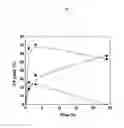
Crystalline microporous material (0.15 g) prepared according to Example 1, glycolaldehyde dimer [SAFC, 0.25 g] and deionized water (5 g) are added in a 20 mL vial (Ace pressure tube) and heated at 80° C. under vigorous stirring (600 rpm). Samples of the reaction are taken at selected times (0.5-24 h). Analysis of the liquid samples after filtration is carried out using a HPLC Agilent 1200 equipped with a BIORAD Amminex HPX-87H column at 65° C. and 0.004 M H2SO4 solution in water at 0.6 ml min−1.
| TABLE 1 |
| The percentage yield of C4 oxygenate compounds produced |
| from an aqueous glycolaldehyde solution over time |
| with various crystalline microporous materials. |
| Percentage yield (%) of C4-oxygenate compounds |
| Time (h) | 400Sn-MFI | 200Sn-MFI | Ti-MFI | Sn-BEA | Sn-LTA |
| 1 | 30.8 | 66.3 | 18.5 | 26.1 | 37.5 |
| 3 | 59.2 | 70.8 | 34.5 | 23.9 | 51.17 |
| 24 | 73.4 | 53.6 | 57.7 | 0 | 55.58 |
EXAMPLE 3
Compositions comprising C1-3 oxygenate compounds may be prepared by pyrolysis of biomass or C5-6 sugars (C5-6 oxygenate compounds) such as glucose, sucrose, fructose or xylose. Exemplary pyrolysis reactions are provided in U.S. Pat. No. 7,094,932 B2 and PCT/EP2014/053587. The C1-3 oxygenate compositions comprise 5 wt % glycolaldehyde or greater, such as between 5 wt % and 65 wt %.
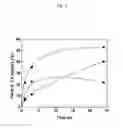
A composition comprising C1-3 oxygenate compounds obtained from the pyrolysis of glucose according to U.S. Pat. No. 7,094,932 B2 is diluted in water to obtain 5 g of a solution comprising 8 wt % glycolaldehyde. Crystalline microporous material (0.15 g), prepared according to Example 1 is added to the mixture in a 20 mL vial (Ace pressure tube) and the reaction is heated at 80° C. under vigorous stirring (600 rpm). Samples of reaction are taken at selected times (0.5-24 h). Analysis of the liquid samples after filtration is carried out as previously explained.
| TABLE 2 |
| The percentage yield of C4 oxygenate compounds produced |
| from an aqueous solution of a C1-3 oxygenate mixture |
| according to Example 2 versus time. Various crystalline |
| microporous materials are shown. |
| Percentage yield (%) of C4 oxygenate compounds |
| Time (h) | 400Sn-MFI | 200Sn-MFI | Ti-MFI | Sn-BEA |
| 1 | 7.7 | 21.7 | 6.7 | 7.4 |
| 3 | 13.1 | 35.5 | 11.2 | 22.5 |
| 24 | 39.4 | 52.9 | 40.2 | 21.8 |
EXAMPLE 4
Hydrogenation of C4 oxygenate compounds is carried out in an autoclave reactor at pressures 30-90 bar of H2. The reaction is carried out by addition of a composition comprising C4 oxygenate compounds (15 g), prepared according to Example 2 or 3, into a Parr autoclave (50 mL) together with of Ru/C catalyst (0.2 g; 5% on activated charcoal from Aldrich). The reactor is heated at 80° C. and stirred at 500 rpm for 3 h.
EXAMPLE 5
Concomitant conversion of glycolaldehyde to C4 oxygenate compounds and subsequent hydrogenation. (‘one-pot’ or ‘one-step’ conversion and hydrogenation).
Glycolaldehyde dimer (SAFC, 0.25 g), Sn-MFI (0.1 g) prepared according to Example 1, Ru/C catalyst (0.075 g; 5% on activated charcoal from Aldrich) and water (15 g) are added in a 50 mL Parr autoclave. The first condensation reaction is carried out at 80° C. in air atmosphere. After 3 h of reaction, the autoclave is pressurized with hydrogen at 90 bar and the reaction is allowed to proceed for 3 h. Samples of the products are obtained after the condensation step and the hydrogenation and analyzed after filtration in an HPLC as previously explained.
Alternatively, vinyl glycolic acid or methyl vinyl glycolate (MVG) can be obtained by reaction of a composition comprising C4 oxygenate compounds prepared according to Examples 1 or 2 with Sn-BEA catalyst in water or methanol respectively; Green Chemistry (2012) 14, pp 702-706.
FIG. 1: The percentage yield of C4 oxygenate compounds prepared according to Example 2 versus time. Various crystalline microporous materials are shown. The crystalline microporous materials are:
Squares: 200Sn-MFI;
Circles: Ti-MFI;
Triangles: Sn-BEA.
FIG. 2: The percentage yield of C4 oxygenate compounds prepared according to Example 3 versus time. Various crystalline microporous materials are shown.
The crystalline microporous materials are:
Squares: 200Sn-MFI;
Circles: Ti-MFI;
Triangles: Sn-BEA.
Claims
1. A process for the preparation of one or more C4 oxygenate compounds from a composition comprising C1-3 oxygenate compounds, wherein the process is carried out in the presence of a crystalline microporous material comprising a ring pore structure selected from one or more of the group consisting of an eight-membered ring pore structure and a ten-membered ring pore structure.
2. A process according to claim 1, wherein the C4 oxygenate compounds are compounds selected from one or more of the group consisting of threose, erythrose and erythrulose.
3. A process according to claim 1, wherein the composition comprising C1-3 oxygenate compounds comprises one or more compounds selected from the group consisting of formaldehyde, glycolaldehyde, glyoxal, pyruvaldehyde and acetol.
4. A process according to claim 1, wherein the composition comprising C1-3 oxygenate compounds is obtainable from the pyrolysis of biomass or one or more oxygenate compounds selected from the group consisting of fructose, glucose, sucrose, xylose or isomers thereof.
5. A process according to claim 1, wherein the composition comprising C1-3 oxygenate comprises a solvent selected from one or more of the groups consisting of water, alcohol and a water and alcohol mixture.
6. A process according to claim 1, wherein the alcohol is selected from one or more of the group consisting of methanol and ethanol.
7. A process according to claim 1, wherein the crystalline microporous material comprising a small or medium pore structure comprises a metal selected from one or more of the group consisting of zirconium, aluminium, tin or titanium.
8. A process according to claim 1, wherein the crystalline microporous material comprising a small or medium pore structure comprises from 0.1 wt % to 15 wt % of the metal.
9. A process according to claim 1, wherein the zeotype material comprising an eight- or ten-membered ring structure has a structure selected from the group consisting of CHA, LTA, MFI, MEL, MTT, MWW, TON, HEU, AEL, AFO, and FER structure.
10. A process according to claim 1, wherein the process is carried out at a temperature between 25° C. and 150° C.
11. A process according to claim 1, wherein the C4 oxygenate compounds are hydrogenated.
12. A process according to claim 1, wherein the process is a one-step process.
13. A process according to claim 1, wherein the C4 oxygenate compounds are isomerised and esterified in the presence of Sn-BEA.
14. A process according to claim 1, wherein the C4 oxygenate compounds are converted to one or more compounds selected from the group consisting of erythritol and threitol.
15. Use of erythritol prepared according to the process of claim 14, for one or more of the group consisting of a foodstuff, a sweetener and the preparation of furan.
16. Use of C4 oxygenate compounds prepared according to claim 1, for the preparation of one or more of the compounds selected from the group consisting of methyl vinyl glycolate, 2-hydroxy-4-methoxybutanoate, 2-hydroxy-4-methoxybutanoic acid, 1,4-butandiol and α-hydroxy-γ-butyrolactone.
17. Use of C4 oxygenate compounds prepared according to claim 1, for the preparation of one or more α-hydroxy methionine analogues.
Images & Drawings included:
Sources:
- United States Patent and Trademark Office - verify current appl. status at the USPTO↗
Recent applications in this class:
- » 20250223310 2025-07-10
SYSTEM AND METHOD TO CONVERT CELLULOSIC MATERIALS INTO SUGAR - » 20250154187 2025-05-15
COMPOSITIONS AND METHODS RELATED TO MODIFICATION AND DETECTION OF PSEUDOURIDINE AND 5-HYDROXYMETHYLCYTOSINE - » 20250136632 2025-05-01
METHOD FOR PRODUCING OLIGONUCLEOTIDE - » 20250101055 2025-03-27
PROCESS FOR PREPARING GLUCOPYRANOSYL-SUBSTITUTED BENZYL-BENZENE DERIVATIVES - » 20250092075 2025-03-20
Glycosylation method involving trivalent iodine reagent - » 20250066406 2025-02-27
Methyl Fructoside Polyether Amine, Preparation Method Therefor and Use Thereof - » 20250034192 2025-01-30
COMPOSITIONS AND METHODS FOR LIQUID PHASE OLIGONUCLEOTIDE SYNTHESIS - » 20240327443 2024-10-03
TRITERPENE SAPONIN ANALOGUES - » 20240262854 2024-08-08
Process for preparing imetelstat - » 20240228525 2024-07-11
GLUCOSAMINE DERIVATIVE NANOPARTICLE AND PREPARATING METHOD AND USE THEREOF
Recent applications for this Assignee:
- » 20250128244 2025-04-24
SHELL IMPREGNATED CATALYST AND PROCESS FOR PRODUCING A SHELL IMPREGNATED CATALYST BODY - » 20250121344 2025-04-17
ENDOTHERMIC REACTIONS HEATED BY RESISTANCE HEATING - » 20250091862 2025-03-20
CHEMICAL SYNTHESIS PLANT - » 20230032787 2023-02-02
ENDOTHERMIC REACTION OF A FEED GAS HEATED BY RESISTANCE HEATING - » 20220328858 2022-10-13
Solid oxide cell stack with a pressure difference between anode and cathode compartments - » 20220298428 2022-09-22
HALIDES REMOVAL WASHING SYSTEM FOR A HYDROCARBON STREAM - » 20220280904 2022-09-08
Multiple-bed catalytic reactor comprising a mixing device - » 20220212155 2022-07-07
Catalytic reactor with floating particle catcher - » 20220048854 2022-02-17
PROCESS FOR THE PRODUCTION OF UREA FORMALDEHYDE CONCENTRATE - » 20220048853 2022-02-17
Process for the production of urea formaldehyde concentrate