AN ALUMINUM ALLOY AND THE PREPARATION PROCESS THEREOF
US20170137918A1
2017-05-18
15/320,032
2014-08-13
Abstract:
The present invention relates to an aluminium alloy and a process of producing the same, wherein the aluminium alloy comprises Al, Si, Fe, Mg, Cu, Ti and optionally other impurities, characterized in that the components are comprised in amounts by weight of: Si: 0.04-0.1%, Fe: 0.2-0.4%, Mg: 0.055-0.12%, Cu: 0.004-0.01%, Ti: 0.003-0.02%; any one of the other impurities is in an amount by weight of no more than 0.03%; and the balance is Al. The present invention also relates an article comprising the aluminium alloy, the use of the aluminium alloy article for printing plate, and a process of producing an aluminium alloy sheet/strip/foil for printing plate using the aluminium alloy.
Inventors:
- Syewai CHAN 1 🇨🇳 Xiamen, Fujian, China
- Jianguo WANG 1 🇨🇳 Xiamen, Fujian, China
- Xiguang WANG 1 🇨🇳 Xiamen, Fujian, China
- Jianlin NING 1 🇨🇳 Xiamen, Fujian, China
Interested in similar patents?
Get notified when new applications in this technology area are published.
Classification:
C22C1/026 » CPC further
Making alloys by melting Alloys based on aluminium
C22C21/00 » CPC main
Alloys based on aluminium
C22F1/04 » CPC further
Changing the physical structure of non-ferrous metals or alloys by heat treatment or by hot or cold working of aluminium or alloys based thereon
C22C1/02 IPC
Making alloys by melting
Description
TECHNICAL FIELD
The present invention relates to an aluminium alloy, which is useful for printing plate making, especially for (computer) direct-to-plate. The invention also relates to an article produced from the alloy, which article is, e.g., in the form of sheet, strip or foil, and to a process of producing same.
BACKGROUND
In the recent years, as the development of the printing technology, the printing plate is changing from pre-sensitized plate (PS plate) to computer-to-plate (CTP plate). Meanwhile, the printing requires stringently on the plate, where the CTP technology requires particularly stringently on the CTP plate and the properties of the aluminium alloy sheet, strip or foil to produce the CTP plate, such as the appearance properties, physical properties and adaptability to electrolysis. In particular, the current CTP plates are generally used for high grade of color printing plate-making. In order to ensure the plate quality, the properties of the plate substrate are the foundation. The printing field generally requires the follows:
1) requirements on dimensions of the aluminium alloy sheet/strip/foil;
a) thickness and tolerance
The aluminium alloy sheet/strip/foil useful for CTP plate requires a thickness of 0.14 mm-0.50 mm, and a tolerance of ±0.005 mm;
b) tolerance of width
The aluminium alloy sheet/strip/foil requires a tolerance of width of ≦±0.5 mm; and
c) uniformity in the longitudinal and transversal directions
The aluminium alloy sheet/strip/foil requires tolerances of thickness in both longitudinal and transverse directions of ≦±0.005 mm. The current plate-making machine sets generally a thickness of 0.280 mm or 0.275 mm for the plate, then the variation in the longitudinal or transverse direction will affect adversely to the plate-making. Also, the settings of the CTP plate-making device are usually unallowable for adjustment arbitrarily.
2) requirements on appearance of the aluminium alloy sheet/strip/foil
The appearance of the aluminium alloy sheet/strip/foil is required to be clean and smooth; have no defects of crack, corrosion hole, corrosion spot, through hole, scratch, fold, impression, peeling, pine pattern mark or oil mark; have no press-in mark by a non-metal, sticking mark, peeling or wave on the surface; have no chromatic aberration or highlighting band; and have no swelling or wavy edges.
3) requirements on the mechanical properties of the aluminium alloy sheet/strip/foil
a) the aluminium sheet for the CTP plate must have good mechanical properties and good properties after baking.
b) the CTP plate usually uses an automatic plate loading and an automatic positioning and punching device, requiring the plate with a stiffness. If the plate is too soft, the stiffness is lower, and the plate is readily bent to affect adversely the going up of edition material. If the aluminium sheet is too hard, it is difficult to level the plate.
4) requirements on the electrolytic properties of the aluminium alloy sheet/strip/foil
As the CTP plate is usually used for high grade color printing, the grain of the substrate of the CTP plate is lower than that of the PS plate. In particular, the CTP plate-making device generally uses a FM screening or FM/AM mixed screening, such that the reduction of fine screen dot and screen line is associated directly with the surface roughness of the substrate, i.e., the grain of the substrate. The greater the grain is, the worse the reduction of the screen dot and screen line is. In order to obtain a layer with fine and uniform grain through electrolysis, the appearance quality and the surface roughness of the substrate should be focused. If the appearance quality of the substrate is too bad, the defects of the plate surface cannot be eliminated without a strengthened electrolysis, resulting in a greater grain. If the substrate has a Ra≧0.30 μm, it is difficult to obtain a lower grain.
In order to obtain a layer with fine and uniform grain, the inherent composition of the aluminium substrate is the core. That is, the components of the aluminium alloy to produce the aluminium plate are interested, which, in turn, are associated with the composition and contents of the specific metals of the aluminium alloy. The process of preparing or treating the aluminium alloy is also concerned.
A good aluminium alloy sheet/strip/foil requires not only good mechanical properties but also good adaptability to electrolysis, so as to be useful for electrolysis with hydrochloric acid or nitric acid electrolyte. A sensitivity of grain corresponding to the electrolysis is also required, so as to form a layer with fine and uniform grain without a strengthened treatment.
5) requirements on the planeness of the aluminium alloy sheet/strip/foil
The aluminium alloy sheet/strip/foil for the CTP requires a high planeness, as most of the CTP apparatuses use scanning imaging, different from the printing-down for the PS plate where a vacuum is applied to tight the plate with the film. Then, if the plate has a poor planeness, the quality of the imaging by laser will be affected adversely. Therefore, the aluminium alloy sheet/strip/foil for CTP requires stringently on the planeness.
For the production of an aluminium alloy sheet/strip/foil, some factors are generally controlled, comprising:
Controlling the contents of the trace elements, so as to improve the mechanical properties and the grain properties by electrolysis;
Using a homogenous annealing at a high temperature, so as to improve the internal structure of the product; and
Using appropriate intermediate annealing temperature and period for cold rolling, for the desired mechanical properties of the product.
Currently, in the market of aluminium alloy sheet/strip/foil for CTP print, the AA1050 alloy is popularly used. For the AA1050 alloy, those skilled persons can refer to “Quality Requirements and Typical Defects Analysis of Aluminium Material for CTP”, Aluminium Fabrication, 2008.3, Vol. 182, such as the aluminium substrate introduced. The quality of electrochemical roughening is affected by a plurality of factors, such as the electric current density, the linear velocity, the chemical components and the like. In order to obtain a better roughened surface, an AA1050 alloy is generally used, where the content of aluminium is controlled to be 99.5% or more.
For the currently usual AA1050 alloy, the components of the alloy are controlled as follows:
| Si (Max) | 0.25 | |
| Fe (Max) | 0.4 | |
| Cu (Max) | 0.05 | |
| Mn (Max) | 0.05 | |
| Mg (Max) | 0.05 | |
| Zn (Max) | 0.05 | |
| V (Max) | 0.05 | |
| Ti (Max) | 0.03 | |
| Other Each (Max) | 0.03 | |
| Others Total | — | |
| Al(Min) | 99.50 | |
The controlling standard can refer to the International Designations Chemical Composition Limits for Unalloyed Aluminium, 2003, edited by The Aluminium Association, USA, see www.aluminium.org.
The CTP substrate prepared according to the Table above comprises the typical mechanical properties of: a tensile strength of 130-150 MPa, a yield strength of 120-140 MPa, and an elongation of 1.0-3.0%, at room temperature; and a tensile strength of 120-130 MPa, a yield strength of 110-120 MPa, and an elongation of 2.0-3.5%, at a baking temperature. It can be seen that the properties are not so stable, decreasing the printing quality.
As the CTP plate is usually used for high grade color printing, the grain of the substrate of the CTP plate is lower than that of the PS plate. In particular, the CTP plate-making device generally uses a FM screening or FM/AM mixed screening, such that the reduction of fine screen dot and screen line is associated directly with the surface roughness of the substrate, i.e., the grain of the substrate. The greater the grain is, the worse the reduction of the screen dot and screen line is. The AA1050 alloy has poor uniformity for the internal structure, such that the electrolysis properties are undesirable, and the grains after electrolytic roughening are not uniform, resulting too poor reduction to satisfy the requirement by the high grade of CTP plate.
SUMMARY OF THE INVENTION
Regarding the problems of the prior art above, it is one of the objects of the present invention to provide a process of producing aluminium sheet/strip/foil for printing plate. The aluminium sheet/strip/foil has a uniform internal structure, such that besides the high surface quality and good planeness of the plate, the sheet/strip/foil has improved mechanical properties at room temperature and improved mechanical properties at a baking temperature, and also can generate an excellent grain structure through electrolysis.
Accordingly, the present invention provides an aluminium alloy for printing plate, comprising Al, Si, Fe, Mg, Cu, Ti and other impurities, characterized in that the components are comprised in amounts by weight of: Si: 0.04-0.1%, Fe: 0.2-0.4%, Mg: 0.055-0.12%, Cu: 0.004-0.01%, Ti: 0.003-0.02%; any one of the other impurities is in an amount by weight of no more than 0.03%; and the balance is Al. Mg/Fe>=0.125.
The present invention also provides a process of producing an aluminium alloy article for printing plate, characterized in comprising the steps of:
-
- 1) adding raw materials of the alloy into a remelting furnace, melting, refining, inclusion removing, degassing and filtering, followed by casting into a sheet ingot with a thickness of about 500 to about 650 mm;
- 2) sawing the head and butt of the sheet ingot, scalping, and then heating to a temperature of about 500 to about 600 degrees centigrade for about 2 to about 12 hours; and hot rolling the sheet ingot into a strip with a thickness of about 2.0 to about 5.0 mm at a finish rolling temperature of about 250 to about 320 degrees centigrade;
- 3) cold rolling the strip to a thickness of about 1 to about 3 mm, wherein the roll has a roughness, Ra, of about 0.30 to about 0.80 μm;
- 4) annealing the cold rolled strip from step 3) in an annealing furnace at a temperature of about 350 to about 450 degrees centigrade, and holding the temperature for about 2 to about 4 hours;
- 5) continuing rolling the strip from step 4) on a cold rolling machine to a thickness of about 0.14 to about 0.4 mm, with a Ra of about 0.15 to about 0.30 μm; and
- 6) cleaning the strip from step 5), edge trimming, and tension leveling, to obtain the aluminium alloy article for printing plate according to the present invention, which is in the form of, e.g., strip, foil or sheet.
Accordingly, the present invention also provides an aluminium alloy sheet/strip/foil for printing plate produced by the process above, which sheet/strip/foil comprises the aluminium alloy according to the present invention.
The aluminium alloy sheet/strip/foil has a thickness of about 0.14 mm to about 0.50 mm, preferably 0.20 to 0.38 mm, such as about 0.220 mm to about 0.275 mm.
The aluminium alloy article (such as an aluminium alloy strip) according to the present invention has a tensile strength of about 175 to about 210 MPa, a yield strength of about 170 to about 200 MPa, and/or an elongation of about 2% to about 6%, at room temperature.
Through a simulated baking condition treatment at a temperature of 240 degrees centigrade for 10 minutes, the aluminium alloy article, after cooling, has a tensile strength of about 145 to about 170 MPa, a yield strength of about 135 to about 155 MPa, and/or an elongation of about 3% to about 8%.
DESCRIPTION OF DRAWINGS
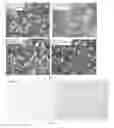
FIG. 1: comparison of crystal grains in the as-cast state and grains after annealing between the alloy strip produced by Example 1 according to the present invention and an alloy sheet produced by AA1050 alloy from prior art.
FIG. 2: comparison of grain precipitation of the intermetallic compounds (the second phase) between the alloy strip produced by Example 1 according to the present invention and an alloy sheet produced by AA1050 alloy from prior art.
FIG. 3: comparison of grains between the alloy strip produced by Example 1 according to the present invention and an alloy sheet produced by AA1050 alloy from prior art.
FIG. 4: comparison of article etching between the alloy strip produced by Example 1 according to the present invention and an alloy sheet produced by AA1050 alloy from prior art.
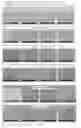
FIG. 5: comparison of images after graining between the alloy strip produced by Examples 1 to 5 according to the present invention and an alloy sheet produced by AA1050 alloy from prior art; under the test conditions of SEM×250, and a line speed of 50 m/min, 60 m/min, 70 m/min, and 80 m/min, respectively.
FIG. 6: comparison of images after graining between the alloy strip produced by Examples 1 to 5 according to the present invention and an alloy sheet produced by AA1050 alloy from prior art; under the test conditions of SEM×1000, and a line speed of 50 m/min, 60 m/min, 70 m/min, and 80 m/min, respectively.
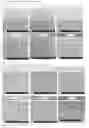
FIG. 7: comparison of etching in the graining electrolytes between the alloy strip produced by Examples 1 to 5 according to the present invention and an alloy sheet produced by AA1050 alloy from prior art; under the test conditions of: etching after 5 seconds of deoiling, SEM×40 magnifications.
FIG. 8: comparison of corrosion etching in the graining electrolytes between the alloy strip produced by Examples 1 to 5 according to the present invention and an alloy sheet produced by AA1050 alloy from prior art; under the test conditions of: etching after 5 seconds of deoiling, SEM×250 magnifications.
EMBODIMENTS OF THE INVENTION
The present invention provides an aluminium alloy for printing plate, comprising Al, Si, Fe, Mg, Cu, Ti and other impurities, characterized in that the components are comprised in amounts by weight of: Si: 0.04-0.1%, Fe: 0.2-0.4%, Mg: 0.055-0.12%, Cu: 0.004-0.01%, Ti: 0.003-0.02%; any one of the other impurities is in an amount by weight of no more than 0.03%; and the balance is Al. Mg/Fe>=0.125.
In an embodiment, Si is preferably used in an amount of not less than 0.05%, more preferably not less than 0.06%. In an embodiment, Si is preferably used in an amount of not more than 0.10%, more preferably not more than 0.08%.
In an embodiment, Fe is used in an amount of not less than 0.21%, preferably not less than 0.25%, more preferably not less than 0.3%. In an embodiment, Fe is preferably used in an amount of not more than 0.39%, more preferably not more than 0.38%.
In an embodiment, Mg is preferably used in an amount of not less than 0.06%, more preferably not less than 0.07%. In an embodiment, Mg is preferably used in an amount of not more than 0.11%, more preferably not more than 0.10%.
In an embodiment, Cu is preferably used in an amount of not less than 0.0045%, more preferably not less than 0.005%. In an embodiment, Cu is preferably used in an amount of not more than 0.009%, more preferably not more than 0.008%.
In an embodiment, Ti is preferably used in an amount of not less than 0.004%, more preferably not less than 0.005%. In an embodiment, Ti is preferably used in an amount of not more than 0.017%, more preferably not more than 0.015%.
The aluminium alloy according to the present invention may comprise the typical impurities in the art, such as Li, Na, Pb, Be, Zn, or V, where the amount of any one impurity is in an amount by weight of not more than 0.03%. Preferably, the total amount of the impurities is at most 0.1 wt %. The aluminium alloy according to the present invention comprises Al in an amount of not less than 99.30%.
The aluminium alloy according to the present invention can be produced by a process known in the art, according to the formulation above. A typical producing process comprises, for example:
-
- 1) melt casting-scalping-annealing-hot rolling-cold rolling-annealing-cold rolling-tension leveling-packaging; or
- 2) cast rolling-cold rolling-tension leveling-packaging.
The aluminium alloy sheet/strip/foil according to the present invention can be used for CTP printing plate, bottle cap, sheet for soft tube, curtain wall panel, decoration board, case of an electric equipment, heat exchanger, wrapper of electric cable, extrusion coil, powder for fireworks, nameplate, light-reflecting device, thermal isolation aluminium foil and so on.
The aluminium alloy according to the present invention can be particularly used to produce an aluminium alloy sheet/strip/foil for printing plate (including a treatment-free printing plate). Accordingly, the present invention also provides a process of producing an aluminium alloy sheet/strip/foil for printing plate, characterized in comprising the steps of:
-
- 1) adding raw materials of the alloy into a remelting furnace, melting, holding, refining, degassing and filtering, followed by casting into a sheet ingot with a thickness of about 500 to about 650 mm;
- 2) sawing the head and butt of the sheet ingot, scalping, and then heating to a temperature of about 500 to about 600 degrees centigrade for about 2 to about 12 hours; and hot rolling the sheet ingot into a strip with a thickness of about 2.0 to about 5.0 mm at a temperature of about 250 to about 320 degrees centigrade;
- 3) cold rolling the strip obtained in step 2) to a thickness of about 1 to about 3 mm, wherein the roll has a roughness, Ra, of about 0.30 to about 0.80 μm;
- 4) annealing the cold rolled strip from step 3) in an annealing furnace at a temperature of about 350 to about 450 degrees centigrade for an intermediate annealing, and holding the temperature for about 2 to about 4 hours;
- 5) continuing rolling the strip from step 4) on a cold roller to a thickness of about 0.14 to about 0.50 mm, to provide a sheet, strip or foil with a Ra of about 0.15 to about 0.30 μm; and
- 6) cleaning the sheet, strip or foil from step 5), edge trimming, and tension leveling, to obtain the aluminium alloy sheet/strip/foil for printing plate according to the present invention.
In an embodiment, the remelting furnace has a temperature of about 720 to 740 degrees centigrade. The sheet ingot has preferably a thickness of not less than about 520 mm. The sheet ingot has preferably a thickness of not more than about 620 mm.
Accordingly, the present invention also provides an aluminium alloy article produced by the process above for printing plate, such as in the form of sheet/strip/foil, which comprises the aluminium alloy according to the present invention.
In an embodiment, the alloy strip has a thickness of about 0.27 mm.
In an embodiment, the aluminium alloy strip has a tensile strength at room temperature of about 175 to about 210 MPa, preferably about 185 MPa. In an embodiment, the aluminium alloy strip has a yield strength at room temperature of about 170 to about 200 MPa, preferably about 180 MPa. In an embodiment, the aluminium alloy strip has an elongation at room temperature of about 2 to about 6%, preferably about 2 to about 3.5%.
In an embodiment, through a simulated baking condition treatment at a temperature of 240 degrees centigrade for 10 minutes, the aluminium alloy strip, after cooling, has a tensile strength of about 145 to about 175 MPa, preferably about 160 to about 175 MPa or about 160 to about 170 MPa; a yield strength of about 135 to about 155 MPa, preferably about 140 to about 150 MPa; and/or an elongation of about 3 to about 8%, preferably about 3 to about 6%.
The technical solution of the present invention can achieve beneficial technical effects, including, but not limited to, for example, the present invention capable of using a relatively lower homogenizing temperature to achieve a complete transition between a non-equilibrium phase and a equilibrium phase, which increases the utilization efficiency of heating furnace and saves the energy consumption; according to the present invention, homogeneously dispersed intermetallic compounds being precipitated, such that the electrolytic roughening occurs at more positions homogeneously and rapidly, the electrolyzing voltage is decreased and the electrolysis energy consumption is saved; the technical solution according to the present invention resulting in a clean surface, which can improve greatly the treatment efficiency before electrolysis and save the consumption of acid and base; and the technical solution according to the present invention resulting in high mechanical properties, such that a rapid plate loading can be achieved, the production efficiency can be increased, and the excellent baking performances improves greatly the durability.
EXAMPLES
The present invention will be illustrated through the following examples, which are exemplary but not restrictive.
Material:
-
- Electrolytic aluminium ingot Al99.70, available from Aluminium Corporation of China Limited.
- AMG grain refiner, available from London and Scandinavian metallurgical Co., Ltd. Company.
- Intermediate alloy, 80Fe, 20Si, 50Cu, Ti5, available from Yongte Master Alloys Co., Ltd., Jiangxi.
Instruments and Testing Methods:
-
- Hydrogen gauge: HMA0100D, available from ABB, used to measure the hydrogen content of the melt.
- Inclusion measuring instrument: PZM0700D, available from ABB, used to measure the slag content of the melt.
- Scanning electron microscope: EVO18, available from Zeiss, Germany, with a test method of secondary electron, backscattering.
- Microscope: Zeiss Imager.A2m, available from Zeiss, Germany, with a test method of light field, polarized light.
- Roughometer: Hommel Tester W55, available from Hommel, Germany, used for the roughness and Burr measurement.
- Micrometer: Mitutoyo, available from Japan, used for thickness measurement.
- Tensile testing machine: CMT6203/6503 electronic universal tensile testing machine, available from MTS, USA, referring to “GB 228-2002 Standard Test Method for tensile testing of metallic materials at room temperature”.
Example 1
An aluminium alloy strip according to the present invention was produced according to the process illustrated below, referring to the example formulation as shown in Table 1:
-
- (1) providing materials of: 108000 kg of 99.7 aluminium ingot (containing 40 kg of Si, 194 kg of Fe, 1.1 kg of Mg, 0.5 kg of Cu), 15 kg of AlSi20 alloy, 230 kg of 80Fe agent, 63.5 kg of Mg ingot, and 7.6 kg of AlCu50 alloy; adding into a remelting furnace having a remelting temperature of 750 degrees centigrade, refining, inclusion removing, stirring, and analyzing and regulating the components, the composition listed in Table 1, adding into a stewing furnace, stewing, refining, degassing, inclusion removing, adding Al-5Ti-1B rods (1.2˜1.4 kg/t molten aluminium) and casting into a cast ingot in a casting machine at a casting temperature of 705 degrees centigrade;
- (2) controlling the holding temperature for hot rolling at 580 degrees centigrade, for holding the metal for 2 hours;
- (3) hot rolling with an initial rolling temperature of 520 degrees centigrade and a finish rolling temperature of 320 degrees centigrade, to obtain a finishing rolled blank with a thickness of 4.2 mm;
- (4) subjecting the hot rolled blank to a secondary rolling to a intermediate thickness of 2.0 mm;
- (5) interannealing the 2.0 mm blank at a temperature of 450 degrees centigrade, with holding the metal for 2 hours; and
- (6) subjecting the blank to three times of further rolling to an article thickness of 0.27 mm.
Example 2
An aluminium alloy strip according to the present invention was produced according to the process illustrated below, referring to the example formulation as shown in Table 1:
-
- (1) providing materials of: 104000 kg of 99.7 aluminium ingot (containing 52 kg of Si, 198 kg of Fe, 1.5 kg of Mg), 156 kg of AlSi20 alloy, 220 kg of 80Fe agent, 102 kg of Mg ingot, and 8.3 kg of AlCu50 alloy; adding into a remelting furnace having a remelting temperature of 750 degrees centigrade, refining, inclusion removing, stirring, and analyzing and regulating the components, the composition listed in Table 1, adding into a stewing furnace, stewing, refining, degassing, inclusion removing, adding Al-5Ti-1B wires (1.2˜1.4 kg/t molten aluminium) and casting into a cast ingot in a casting machine at a casting temperature of 705 degrees centigrade;
- (2) controlling the holding temperature for hot rolling at 550 degrees centigrade, for holding the metal for 2 hours;
- (3) hot rolling with an initial rolling temperature of 500 degrees centigrade and a finish rolling temperature of 320 degrees centigrade, to obtain a finishing rolled blank with a thickness of 4.2 mm;
- (4) subjecting the hot rolled blank to a further rolling to an intermediate thickness of 2.0 mm;
- (5) interannealing the 2.0 mm blank at a temperature of 420 degrees centigrade, with holding the metal for 2 hours; and
- (6) subjecting the blank to three times of further rolling to an article thickness of 0.27 mm.
Example 3
An aluminium alloy strip according to the present invention was produced according to the process illustrated below, referring to the example formulation as shown in Table 1:
-
- (1) providing materials of: 116000 kg of 99.7 aluminium ingot (containing 58 kg of Si, 224 kg of Fe, 1.2 kg of Mg, 1.6 kg of Cu), 116 kg of AlSi20 alloy, 184 kg of 80Fe agent, 91.6 kg of Mg ingot, and 15.3 kg of AlCu50 alloy; adding into a remelting furnace having a remelting temperature of 770 degrees centigrade, refining, inclusion removing, stirring, and analyzing and regulating the components, the composition listed in Table 1, adding into a stewing furnace, stewing, refining, degassing, inclusion removing, adding Al-5Ti-1B wires (1.2˜1.4 kg/t molten aluminium) and casting into a cast ingot in a casting machine at a casting temperature of 720 degrees centigrade;
- (2) controlling the holding temperature for hot rolling at 520 degrees centigrade, for holding the metal for 4 hours;
- (3) hot rolling with an initial rolling temperature of 480 degrees centigrade and a finish rolling temperature of 320 degrees centigrade, to obtain a finishing rolled blank with a thickness of 4.5 mm;
- (4) subjecting the hot rolled blank to a further rolling to a intermediate thickness of 2.2 mm;
- (5) interannealing the 2.2 mm blank at a temperature of 390 degrees centigrade, with holding the metal for 4 hours; and
- (6) subjecting the blank to three times of further rolling to an article thickness of 0.27 mm.
Example 4
An aluminium alloy strip according to the present invention was produced according to the process illustrated below, referring to the example formulation as shown in Table 1:
-
- (1) providing materials of: 110000 kg of 99.7 aluminium ingot (containing 53 kg of Si, 208 kg of Fe, 0.7 kg of Mg, 0.6 kg of Cu), 175 kg of AlSi20 alloy, 235 kg of 80Fe agent, 98 kg of Mg ingot, and 20.5 kg of AlCu50 alloy; adding into a remelting furnace having a remelting temperature of 770 degrees centigrade, refining, inclusion removing, stirring, and analyzing and regulating the components, the composition listed in Table 1, adding into a stewing furnace, stewing, refining, degassing, inclusion removing, adding Al-5Ti-1B wires (1.2˜1.4 kg/t molten aluminium) and casting into a cast ingot in a casting machine at a casting temperature of 720 degrees centigrade;
- (2) controlling the holding temperature for hot rolling at 520 degrees centigrade, for holding the metal for 6 hours;
- (3) hot rolling with an initial rolling temperature of 480 degrees centigrade and a finish rolling temperature of 320 degrees centigrade, to obtain a finishing rolled blank with a thickness of 4.5 mm;
- (4) subjecting the hot rolled blank to a further rolling to a intermediate thickness of 2.2 mm;
- (5) interannealing the 2.2 mm blank at a temperature of 360 degrees centigrade, with holding the metal for 6 hours; and
- (6) subjecting the blank to three times of further rolling to an article thickness of 0.27 mm.
Example 5
An aluminium alloy strip according to the present invention was produced according to the process illustrated below, referring to the example formulation as shown in Table 1:
-
- (1) providing materials of: 108000 kg of 99.7 aluminium ingot (containing 42 kg of Si, 198 kg of Fe, 1.7 kg of Mg, 0.6 kg of Cu), 276 kg of AlSi20 alloy, 238 kg of 80Fe agent, 127 kg of Mg ingot, 18.2 kg of AlCu50 alloy, and 73 kg of AlTi20 alloy; adding into a remelting furnace having a remelting temperature of 770 degrees centigrade, refining, inclusion removing, stirring, and analyzing and regulating the components, the composition listed in Table 1, adding into a stewing furnace, stewing, refining, degassing, inclusion removing, adding Al-5Ti-1B wires (1.2˜1.4 kg/t molten aluminium) and casting into a cast ingot in a casting machine at a casting temperature of 720 degrees centigrade;
- (2) controlling the holding temperature for hot rolling at 520 degrees centigrade, for holding the metal for 8 hours;
- (3) hot rolling with an initial rolling temperature of 480 degrees centigrade and a finish rolling temperature of 320 degrees centigrade, to obtain a finishing rolled blank with a thickness of 4.5 mm;
- (4) subjecting the hot rolled blank to a further rolling to a intermediate thickness of 2.5 mm;
- (5) interannealing the 2.5 mm blank at a temperature of 380 degrees centigrade, with holding the metal for 8 hours; and
- (6) subjecting the blank to three times of further rolling to an article thickness of 0.27 mm.
| TABLE 1 | |||||||
| Any one of the | |||||||
| other | |||||||
| Ex. | Si | Fe | Mg | Ti | Cu | impurities | Al |
| 1 | 0.04 | 0.35 | 0.06 | 0.015 | 0.004 | <0.03 | balance |
| 2 | 0.08 | 0.36 | 0.10 | 0.015 | 0.004 | <0.03 | balance |
| 3 | 0.07 | 0.32 | 0.08 | 0.015 | 0.008 | <0.03 | balance |
| 4 | 0.08 | 0.36 | 0.09 | 0.012 | 0.01 | <0.03 | balance |
| 5 | 0.09 | 0.36 | 0.12 | 0.020 | 0.009 | <0.03 | balance |
Example 6
The aluminium strips obtained from examples 1 to 5 were analyzed for the grained texture (analysis of roughness). The product of the invention was tailed to 500 mm×the width of the aluminium web, and measured for the roughness in an direction perpendicular to the rolling direction using the Hommel Tester W55 roughometer, and calculated the average value of a plurality of measured values.
With testing experiments, the products according to the present invention showed results as listed in Table 2 below:
| TABLE 2 | |||||||
| Rpk | Rvk | ||||||
| Sample | Ra (um) | Rz (um) | Rsk | Rku | (um) | Rk (um) | (um) |
| 1050 | 0.23 | 2.21 | 0.60 | 3.40 | 0.39 | 0.70 | −0.18 |
| Ex. 1 | 0.19 | 1.51 | 0.45 | 3.01 | 0.33 | 0.64 | −0.17 |
| Ex. 2 | 0.19 | 1.24 | 0.57 | 3.05 | 0.38 | 0.68 | −0.18 |
| Ex. 3 | 0.20 | 1.60 | 0.55 | 2.98 | 0.34 | 0.62 | −0.15 |
| Ex. 4 | 0.17 | 1.35 | 0.49 | 3.12 | 0.34 | 0.69 | −0.17 |
| Ex. 5 | 0.18 | 1.58 | 0.60 | 2.99 | 0.37 | 0.69 | −0.16 |
Example 7
The aluminium alloy strips obtained from examples 1-5 were compared with
the control alloy strip prepared from the 1050 alloy from prior art for the grained images, using SEM and interferometer.
The test conditions comprised: electrolytically graining the product obtained according to the present invention and the 1050 alloy from prior art with various electrolytic parameters, simulating line speeds of 50 m/min, 60 m/min, 70 m/min, and 80 m/min, respectively, to provide various surfaces with different grains, where the experimental results at SEM*250 were showed in FIG. 5. Another test condition comprised: providing electrolytically grained surfaces with the same process above, except for SEM*1000, where the experimental result were showed in FIG. 6.
It can be seen clearly that under the test conditions simulating line speeds of 50 and 60 m/minute, the strip according to the present invention had less flattops, deeper extent of graining, and more structure details, compared with the control 1050 alloy.
The MPA and MPD results from analyzing the grained images were summarized in Table 3 below:
| TABLE 3 | ||
| Graining area (um2) | Graining depth (um) |
| Testing | Standard | Standard | |||
| Sample | condition | Median | Deviation | Median | Deviation |
| 1050 | 50 m/min | 26.6 | 41.2 | 1.87 | 0.52 |
| Ex. 1 | 24.2 | 37.7 | 1.88 | 0.45 | |
| Ex. 2 | 25.5 | 39.3 | 1.67 | 0.49 | |
| Ex. 3 | 25.0 | 39.6 | 1.72 | 0.48 | |
| Ex. 4 | 26.1 | 40.6 | 1.77 | 0.43 | |
| Ex. 5 | 24.8 | 36.2 | 1.83 | 0.47 | |
| 1050 | 60 m/min | 22.1 | 46.0 | 2.08 | 0.42 |
| Ex. 1 | 20.2 | 32.9 | 1.94 | 0.37 | |
| Ex. 2 | 23.2 | 36.4 | 1.95 | 0.44 | |
| Ex. 3 | 20.9 | 35.5 | 1.94 | 0.43 | |
| Ex. 4 | 20.4 | 35.9 | 1.72 | 0.48 | |
| Ex. 5 | 21.3 | 37.2 | 1.78 | 0.45 | |
| 1050 | 70 m/min | 33.9 | 59.8 | 2.50 | 0.59 |
| Ex. 1 | 28.3 | 51.5 | 2.17 | 0.49 | |
| Ex. 2 | 27.3 | 50.3 | 2.02 | 0.45 | |
| Ex. 3 | 27.5 | 46.9 | 2.06 | 0.45 | |
| Ex. 4 | 26.8 | 47.4 | 1.97 | 0.42 | |
| Ex. 5 | 28.1 | 48.6 | 2.10 | 0.46 | |
| 1050 | 80 m/min | 52.5 | 70.1 | 3.06 | 0.82 |
| Ex. 1 | 45.4 | 63.6 | 2.41 | 0.73 | |
| Ex. 2 | 44.3 | 60.7 | 2.66 | 0.77 | |
| Ex. 3 | 43.9 | 61.4 | 2.52 | 0.74 | |
| Ex. 4 | 43.6 | 61.8 | 2.73 | 0.71 | |
| Ex. 5 | 44.4 | 62.6 | 2.67 | 0.75 | |
Example 8
The aluminium alloy strips obtained from examples 1-5 were compared with
the control alloy strip prepared from the 1050 alloy from prior art for etching in electrolyte, using SEM and interferometer. The product obtained according to the present invention and the 1050 alloy from prior art were immersed into a 34 g/L NaOH solution, washed with tap water and added with 15 g/l (HCl)+15 g/l (SO42-) solution for etching.
The test condition comprised: corrosion etching after 5 seconds of deoiling treatment, SEM*40, experimental result being showed in FIG. 7. Another test condition comprised: corrosion etching after 5 seconds of deoiling treatment, SEM*250: experimental results being showed in FIG. 8.
The images at different magnifications in FIGS. 7 and 8 showed, the product obtained according to the present invention had less etched points and relatively lighter etched channels on the surface, compared with the 1050 alloy from prior art.
Example 9
The aluminium alloy strips obtained from examples 1-5 were compared with
the control alloy strip prepared from the 1050 alloy from prior art for open circuit potential (OCP). The product obtained according to the present invention and the 1050 alloy product were placed in an electrolyte for etching, and measured the open circuit potential and etching potential difference through the polarization curve.
The results were showed in Table 4 below:
| TABLE 4 | ||||
| Sample | OCP | Median | ||
| AA1050 | A | −0.68 | −0.69 | |
| B | −0.70 | |||
| Ex. 1 | A | −0.67 | −0.67 | |
| B | −0.67 | |||
| Ex. 2 | A | −0.69 | −0.68 | |
| B | −0.68 | |||
| Ex. 3 | A | −0.66 | −0.67 | |
| B | −0.68 | |||
| Ex. 4 | A | −0.65 | −0.65 | |
| B | −0.66 | |||
| Ex. 5 | A | −0.66 | −0.66 | |
| B | −0.67 | |||
Example 10
The aluminium alloy strips obtained from examples 1-5 were compared with
the control alloy strip prepared from the 1050 alloy from prior art for mechanical properties. The tensile property and the crack resistance were tested using an electronic universal tensile testing machine and cold bending test. The unbaked mechanical properties were tested according to GB/T 228-2002 at room temperature, and the baked properties were tested according to the GB method after baking the sample at 240 degrees centigrade*10 min and cooling the same; while the cold bending test was carried out according To GB/T 15825.2-2008 at room temperature.
The results were showed in Tables 5 and 6 below:
| TABLE 5 |
| tensile properties: baked and unbaked |
| Yield | Tensile | |||||||||
| Length | Thickness | Width | Strength | Standard | Strength | Standard | Elongation | Standard | ||
| Sample | Form | mm | mm | mm | MPa | Deviation | MPa | Deviation | % | Deviation |
| 1050 | Unbaked | 50 | 0.27 | 12.55 | 142 | 3.7 | 165 | 2.0 | 1.7 | 0.23 |
| Baked | 50 | 0.27 | 12.54 | 121 | 5.6 | 149 | 1.9 | 2.4 | 0.14 | |
| Ex. 1 | Unbaked | 50 | 0.27 | 12.53 | 189 | 2.5 | 196 | 1.5 | 4.2 | 0.19 |
| Baked | 50 | 0.27 | 12.54 | 168 | 2.2 | 175 | 1.7 | 3.3 | 0.16 | |
| Ex. 2 | Unbaked | 50 | 0.27 | 12.55 | 186 | 2.5 | 192 | 1.9 | 3.9 | 0.20 |
| Baked | 50 | 0.27 | 12.55 | 166 | 2.3 | 172 | 1.8 | 3.0 | 0.19 | |
| Ex. 3 | Unbaked | 50 | 0.27 | 12.53 | 185 | 2.4 | 190 | 2.1 | 4.5 | 0.19 |
| Baked | 50 | 0.27 | 12.55 | 164 | 2.4 | 171 | 2.0 | 3.3 | 0.19 | |
| Ex. 4 | Unbaked | 50 | 0.27 | 12.54 | 181 | 2.7 | 189 | 1.6 | 4.2 | 0.18 |
| Baked | 50 | 0.27 | 12.54 | 160 | 2.6 | 169 | 1.8 | 3.1 | 0.16 | |
| Ex. 5 | Unbaked | 50 | 0.27 | 12.55 | 182 | 2.6 | 191 | 1.6 | 3.7 | 0.19 |
| Baked | 50 | 0.27 | 12.54 | 163 | 2.6 | 170 | 1.7 | 3.2 | 0.18 | |
| TABLE 6 |
| crack resistance |
| Testing | Cyclic | Standard | ||||||
| Sample | direction | Test 1 | Test 2 | Test 3 | Test 4 | Test 5 | median | Deviation |
| 1050 | longitudinal | 6568 | 6321 | 6111 | 6520 | 5881 | 6063 | 1066 |
| transverse | 5124 | 5493 | 5055 | 5556 | 5085 | 5493 | 666 | |
| Ex. 1 | longitudinal | 8445 | 8252 | 8294 | 8383 | 8409 | 8251 | 600 |
| transverse | 7403 | 7411 | 7158 | 7268 | 7352 | 7277 | 388 | |
| Ex. 2 | longitudinal | 8555 | 8358 | 8299 | 8634 | 8640 | 8379 | 663 |
| transverse | 7676 | 7915 | 7842 | 7776 | 7993 | 7705 | 419 | |
| Ex. 3 | longitudinal | 8561 | 8441 | 8396 | 8787 | 8702 | 8533 | 672 |
| transverse | 7468 | 7502 | 7532 | 7661 | 7580 | 7466 | 408 | |
| Ex. 4 | longitudinal | 8609 | 8477 | 8692 | 8699 | 8543 | 8605 | 647 |
| transverse | 7556 | 7638 | 7458 | 7705 | 7691 | 7573 | 442 | |
| Ex. 5 | longitudinal | 8809 | 8792 | 8715 | 8268 | 8544 | 8641 | 694 |
| transverse | 7374 | 7706 | 7519 | 7688 | 7551 | 7536 | 462 | |
Example 11
The aluminium alloy strips obtained from examples 1-5 were compared with
the control alloy strip prepared from the 1050 alloy from prior art for deoiling ability. A unit area of the product obtained according to the present invention and that of the 1050 alloy product were weighed, placed into a sodium hydroxide emulsion for etching, taken out, then rinsed with water, dried and weighed. The weight loss in a unit period was calculated. The testing conditions comprised: a clean surface of the sample being required, the etching solution being 34 g/l NaOH at 70 degrees centigrade, and etching period of 5 seconds.
The results were showed in Table 7 below:
| TABLE 7 | ||||||||
| Weight | Weight | |||||||
| before | after | |||||||
| deoiling | deoiling | Δ | Δ | ΔMedian | Standard | Standard | ||
| Sample | No. | (g) | (g) | (g/dm2) | (g/dm2) | (g/dm2) | derivation | derivation % |
| 1050 | 1 | 7.3500 | 7.3197 | 0.0151 | 1.51 | 1.48 | 0.05 | 3.1 |
| 2 | 7.3498 | 7.3208 | 0.0145 | 1.45 | ||||
| Ex. 1 | 3 | 7.5265 | 7.4935 | 0.0165 | 1.65 | 1.66 | 0.01 | 0.85 |
| 4 | 7.4998 | 7.4664 | 0.0167 | 1.67 | ||||
| Ex. 2 | 5 | 7.5502 | 7.5170 | 0.0166 | 1.66 | 1.67 | 0.01 | 0.94 |
| 6 | 7.5499 | 7.5163 | 0.0168 | 1.68 | ||||
| Ex. 3 | 7 | 7.5156 | 7.4818 | 0.0169 | 1.69 | 1.67 | 0.03 | 0.99 |
| 8 | 7.5151 | 7.4823 | 0.0164 | 1.64 | ||||
| Ex. 4 | 9 | 7.4999 | 7.4665 | 0.0167 | 1.67 | 1.67 | 0.02 | 0.95 |
| 10 | 7.4998 | 7.4666 | 0.0166 | 1.66 | ||||
| Ex. 5 | 11 | 7.5067 | 7.4731 | 0.0168 | 1.68 | 1.68 | 0.02 | 0.96 |
| 12 | 7.5059 | 7.4723 | 0.0168 | 1.68 | ||||
Claims
1. An aluminium alloy, comprising Al, Si, Fe, Mg, Cu, Ti and optionally other impurities, characterized in that the components are comprised in amounts by weight of: Si: 0.04-0.1%, Fe: 0.25-0.4%, Mg: 0.055-0.12%, Cu: 0.004-0.01%, Ti: 0.003-0.02%; any one of the other impurities is in an amount by weight of no more than 0.03%; and the balance is Al.
2. The aluminium alloy according to claim 1, characterized in that Mg/Fe>=0.125.
3. The aluminium alloy according to claim 1, characterized in that Mg is comprised in an amount of not less than 0.06%, preferably not less than 0.07%; and/or Mg is comprised in an amount of not more than 0.11%, preferably not more than 0.10%.
4. The aluminium alloy according to claim 1, characterized in that Cu is comprised in an amount of not less than 0.0045%, preferably not less than 0.005%; and/or Cu is comprised in an amount of not more than 0.009%, preferably not more than 0.008%.
5. The aluminium alloy according to claim 1, characterized in that Ti is comprised in an amount of not less than 0.004%, preferably not less than 0.005%; and/or Ti is comprised in an amount of not more than 0.019%, preferably not more than 0.017%.
6. The aluminium alloy according to claim 1, characterized in that the impurities comprise Li, Na, Pb, Be, Zn and/or V.
7. The aluminium alloy according to claim 1, characterized in that the total amount of the impurities is at most 0.1 wt %.
8. The aluminium alloy according to claim 1, characterized in that Al is comprised in an amount of not less than 99.30%.
9. An article comprising the aluminium alloy according to claim 1.
10. The article according to claim 9, characterized in being in the form of strip, foil or sheet.
11. The article according to claim 10, characterized in that the aluminium sheet/strip/foil has a thickness of about 0.14 mm to about 0.5 mm, preferably about 0.18 mm to about 0.38 mm.
12. The article according to claim 9, characterized in having a tensile strength of about 175 to about 210 MPa, a yield strength of about 170 to about 200 MPa, and/or an elongation of about 2% to about 6%, at room temperature; and
in that through a simulated baking condition treatment at a temperature of 240 degrees centigrade for 10 minutes, the aluminium alloy article, after cooling, has a tensile strength of about 145 to about 170 MPa, a yield strength of about 135 to about 155 MPa, and/or an elongation of about 3% to about 8%.
13. Use of the article according to claim 9 for computer-to-plate.
14. A process of producing an aluminium alloy sheet/strip/foil for printing plate using the alloy according to claim 1, characterized in comprising the steps of:
1) adding the alloy components as defined in claim 1 into a remelting furnace, melting, refining, inclusion removing, degassing and filtering, followed by casting into a sheet ingot with a thickness of about 500 to about 650 mm;
2) sawing the head and butt of the sheet ingot, scalping, and then heating to a temperature of about 500 to about 600 degrees centigrade for about 2 to about 12 hours; and hot rolling the sheet ingot into a strip with a thickness of about 2.0 to about 5.0 mm at a temperature of about 250 to about 320 degrees centigrade;
3) cold rolling the strip to a thickness of about 1 to about 3 mm, wherein the roll has a roughness, Ra, of about 0.30 to about 0.80 μm;
4) annealing the cold rolled strip from step 3) in an annealing furnace at a temperature of about 350 to about 450 degrees centigrade, and holding the temperature for about 2 to about 4 hours;
5) continuing rolling the strip from step 4) on a cold roller to a thickness of about 0.14 to about 0.4 mm, with a Ra of about 0.15 to about 0.30 μm; and
6) cleaning the strip from step 5), edge trimming, and tension leveling, to obtain the aluminium alloy sheet, strip or foil.
Images & Drawings included:


Sources:
- United States Patent and Trademark Office - verify current appl. status at the USPTO↗
Recent applications in this class:
- » 20250163546 2025-05-22
HIGH TEMPERATURE ALUMINUM ALLOYS - » 20250051883 2025-02-13
PRODUCTION METHOD OF AN ALUMINUM ALLOY MATERIAL SUITABLE FOR USE IN THE FOOD INDUSTRY - » 20250027187 2025-01-23
ALUMINUM ALLOY FOR IMPACT EXTRUDED CONTAINERS AND METHOD OF MAKING THE SAME - » 20250019800 2025-01-16
Thermo-mechanical Processing Of High-Performance Al-RE Alloys - » 20240376571 2024-11-14
Aluminum Alloy with Ultra-High Thermal Conductivity and Manufacturing Method Thereof - » 20240287652 2024-08-29
HIGH TEMPERATURE LIGHTWEIGHT AL-FE-SI BASED ALLOYS - » 20240279778 2024-08-22
ALUMINUM ALLOY PLATE SHEET FOR PARALLELEPIPED BATTERY HOUSING - » 20240254594 2024-08-01
ALUMINUM ALLOY, METHOD FOR MANUFACTURING SAME, AND PARTS USING SAME - » 20240191325 2024-06-13
High-Recycled Content Beverage End Stock - » 20240191324 2024-06-13
High-toughness heat-resistant aluminum alloy armature material and preparation method thereof