HEATSINK WITH NANOTWINNED COPPER WALL
US20170142862A1
2017-05-18
15/346,799
2016-11-09
Abstract:
A heatsink fabricated through metal plating is disclosed. The heatsink is built to have at least a nanotwinned copper wall. A top metal sheet is directly bonded onto a top surface of the nanotwinned copper wall at a temperature roughly between 150˜250 degree Celsius.
Interested in similar patents?
Get notified when new applications in this technology area are published.
Classification:
H05K7/20254 » CPC main
Constructional details common to different types of electric apparatus; Modifications to facilitate cooling, ventilating, or heating using a liquid coolant without phase change in electronic enclosures Cold plates transferring heat from heat source to coolant
H05K7/20254 » CPC main
Constructional details common to different types of electric apparatus; Modifications to facilitate cooling, ventilating, or heating using a liquid coolant without phase change in electronic enclosures Cold plates transferring heat from heat source to coolant
H05K7/2039 » CPC further
Constructional details common to different types of electric apparatus; Modifications to facilitate cooling, ventilating, or heating characterised by the heat transfer by conduction from the heat generating element to a dissipating body
H05K7/2039 » CPC further
Constructional details common to different types of electric apparatus; Modifications to facilitate cooling, ventilating, or heating characterised by the heat transfer by conduction from the heat generating element to a dissipating body
F28F21/085 » CPC further
Constructions of heat-exchange apparatus characterised by the selection of particular materials of metal; Heat exchange elements made from metals or metal alloys from copper or copper alloys
F28F9/0075 » CPC further
Casings; Header boxes; Auxiliary supports for elements; Auxiliary members within casings; Auxiliary supports for elements Supports for plates or plate assemblies
F28F3/022 » CPC further
Plate-like or laminated elements; Assemblies of plate-like or laminated elements; Elements or assemblies thereof with means for increasing heat-transfer area, e.g. with fins, with recesses, with corrugations the means being wires or pins
F28F2255/20 » CPC further
Heat exchanger elements made of materials having special features or resulting from particular manufacturing processes with nanostructures
H05K7/20 IPC
Constructional details common to different types of electric apparatus Modifications to facilitate cooling, ventilating, or heating
H05K7/20 IPC
Constructional details common to different types of electric apparatus Modifications to facilitate cooling, ventilating, or heating
F28F9/007 IPC
Casings; Header boxes; Auxiliary supports for elements; Auxiliary members within casings Auxiliary supports for elements
F28F3/02 IPC
Plate-like or laminated elements; Assemblies of plate-like or laminated elements Elements or assemblies thereof with means for increasing heat-transfer area, e.g. with fins, with recesses, with corrugations
F28F21/08 IPC
Constructions of heat-exchange apparatus characterised by the selection of particular materials of metal
Description
BACKGROUND
Technical Field
The present invention relates to a heatsink; especially relates to a high strength Heatsink with Nanotwinned Copper Wall.
Description of Related Art
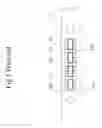
FIG. 1 Shows a Prior Art.
FIG. 1 shows a first prior art U.S. Pat. No. 8,441,794 where an aluminum (Al) heatsink is disclosed. The aluminum heatsink has a plurality of internal fins 112 and a cavity 118. The aluminum heatsink is fabricated by metal extrusion because of the ductility feature for aluminum.
The heat sink comprises an inlet conduit 130 and an outlet conduit 132 for the cooling liquid and a plurality of liquid channels serving as supply 120 and return 122 passages for the liquid. The inlet and outlet conduit 130, 132 may be of circular cross section or may have any other shape. Preferably the inlet and outlet conduits are of a different shape than the other conduits. The liquid channels serving as said supply and return passages 120, 122 are formed by creating during extrusion at least two internal cavities provided with a plurality of internal fins 112 directed into and along the cavities respectively. The fins 112 extends the cooling surface and gives a more efficient cooling than would a single passage having the same cross sectional area.
The channels 20, 22 formed in one cavity 18 are separated from the channels 20, 22 formed in a neighbouring cavity 18 by dividing walls 16, whereby a serpentine cooling system of the channels formed in the cavities is accomplished. The formation of the channels 20, 22 of a cavity 18 is established by an insert 14 being introduced into the central part of the cavity along its extension, whereby the tops of the fins 12 are blocked in a fluid-tight manner and said channels 20, 22 for the liquid is formed between the insert 14 and the hollow body 10. The fins 12 form internal walls of the liquid channels.
A second prior art, U.S. Pat. No. 8,557,507 shows a Fabrication of Nanotwinned Nonapillars where no heatsink has been disclosed.
BRIEF DESCRIPTION OF THE DRAWINGS
FIG. 1 shows a prior art.
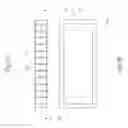
FIGS. 2A˜2E shows a fabricating process according to the present invention.
FIGS. 3A˜3B show a section views for a product of FIG. 2E.
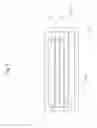
FIG. 4 shows a modified heatsink according to the present invention.
DETAILED DESCRIPTION OF THE INVENTION
Metals with a high density of nanometre-scale twins have demonstrated simultaneous high strength and good ductility, attributed to the interaction between lattice dislocations and twin boundaries. Nature Communications 6, Article number: 7648 doi: 10.1038/ncomms8648
Direct Cu-to-Cu bonding was achieved at temperatures of 150-250° C. using a compressive stress of 100 psi (0.69 MPa) held for 10-60 min at 10(−3) torr. The key controlling parameter for direct bonding is rapid surface diffusion on (111) surface of Cu. Instead of using (111) oriented single crystal of Cu, oriented (111) texture of extremely high degree, exceeding 90%, was fabricated using the oriented nano-twin Cu. The bonded interface between two (111) surfaces forms a twist-type grain boundary. Scientific reports 5:09734|DOI: 10.1038/srep09734.
| TABLE 1 |
| Surface Diffusivity (cm2/sec) for Cu lattice 111 oriented, Cu |
| (100), and Cu (110): |
| DSurf. |
| Temp. | (111) | (100) | (110) | |
| 300° C. | 1.51 × 10⁻⁵ | 1.48 × 10⁻⁸ | 1.55 × 10⁻⁹ | |
| 250° C. | 1.22 × 10⁻⁵ | 4.74 × 10⁻⁹ | 3.56 × 10⁻¹⁰ | |
| 200° C. | 9.42 × 10⁻⁶ | 1.19 × 10⁻⁹ | 5.98 × 10⁻¹¹ | |
| 150° C. | 6.85 × 10⁻⁶ | 2.15 × 10⁻¹⁰ | 6.61 × 10⁻¹² | |
| *Agrawal, P. M. et al. Predicting trends in rate parameters for self-diffusion on FCC metal surfaces. Surf. Sci. 515, 21-35 (2003). |
At 300° C., a surface diffusivity of 1.51×10⁻⁵ for Cu(111) is roughly one thousand times than 1.48×10⁻⁸ for Cu (100), and roughly ten thousand times than 1.55×10⁻⁹ for Cu (110).
At 250° C., a surface diffusivity of 1.22×10⁻⁵ for Cu(111) is roughly ten thousand times than 4.74×10⁻⁹ for Cu (100), and roughly one hundred thousand times than 3.56×10⁻¹⁰ for Cu (110).
At 200° C., a surface diffusivity of 9.42×10⁻⁶ for Cu(111) is roughly one thousand times than 1.19×10⁻⁹ for Cu (100), and roughly one hundred thousand times than 5.98×10⁻¹¹ for Cu (110).
At 150° C., a surface diffusivity of 6.85×10⁻⁶ for Cu(111) is roughly ten thousand times than 2.15×10⁻¹⁰ for Cu (100), and roughly one million times than 6.61×10⁻¹² for Cu (110).
With the above information, a high strength heatsink made with nanotwinned copper is disclosed according to the present invention.
FIGS. 2A˜2E Shows a Fabricating Process According to the Present Invention.
FIG. 2A shows: applying a patterned photoresist PR on a top surface of a bottom copper sheet 21; where a rectangular trenches 22 for building a peripheral wall and a plurality of trenches 222 for building copper pillars are formed. A top surface of the copper sheet 21 is exposed on each bottom of the trenches 22, 222;
FIG. 2B shows: plating to form a nanotwinned copper wall 23 and a plurality of nanotwinned copper pillars 232;
FIG. 2C shows: stripping the photoresist PR;
FIG. 2D shows: bonding a top copper sheet 24 directly on a top surface of the copper wall 23 and the plurality of copper pillars 232, through copper to copper direct bonding (Cu-to-Cu bonding); and
FIG. 2E shows: trimming to form a heat sink with nanotwinned copper wall 23 and a plurality of nanotwinned copper pillars 232 enclosed by the nanotwinned copper wall 23.
The Copper bonding for the top copper sheet 24 bonded to the wall copper 23 and to the plurality of copper pillars 232 is copper to copper direct bonding under a temperature between 150˜250 Celsius degree.
FIGS. 3A˜3B Show a Section Views for a Product of FIG. 2E.
FIG. 3A shows the same product of FIG. 2E, which shows a side perspective view of a first embodiment according to the present invention.
FIG. 3B shows a section view according to line AA′ of FIG. 3A.
FIG. 3B shows a plurality of nanotwinned copper pillars 232 are formed within the heatsink and enclosed by the nanotwinned copper wall 23; each of the copper pillars has a top end directly bonded to the top copper sheet 24.
A first opening 251 and a second opening 252 are formed passing through the copper wall 23. During operation of the heatsink, a coolant 26 (not shown) passes the heatsink to carry away heat generated from an electronic device (not shown) attached to the heatsink. The first opening 251 can be an entrance for the coolant to flow in and the second opening 252 can be an exit for the coolant to flow out. The plurality of copper pillars 232 are disturbs to homogenize the coolant (not shown).
FIG. 4 Shows a Modified Heatsink According to the Present Invention.
FIG. 4 shows a plurality of nanotwinned copper partitions 233 formed within the heatsink. The plurality of copper partitions 233 are enclosed by the nanotwinned copper wall 23. A passage 262 is formed by the partitions 233 and the wall 23 for the coolant (not shown) to flow. Each of the nanotwinned copper partitions 233 has a top end directly bonded to the top copper sheet 24 through direct copper to copper bonding.
While several embodiments have been described by way of example, it will be apparent to those skilled in the art that various modifications may be configured without departs from the spirit of the present invention. Such modifications are all within the scope of the present invention, as defined by the appended claims.
NUMERICAL SYSTEM
- 21, 24 copper sheets
- 22, 222 trenches
- 23 copper wall
- 232 copper pillars
- 233 copper partitions
- 251, 252 opening
- 26 coolant
- passage
Claims
What is claimed is:1. A heatsink fabricating process, comprising:
applying a patterned photoresist on a bottom metal sheet;
plating to form at least a metal wall;
stripping the photoresist;
bonding a top metal sheet on a top of the metal wall; and
trimming to form a metal heatsink.
2. A heatsink fabricating process as claimed in claim 1, wherein the metal comprising copper.
3. A heatsink fabricating process as claimed in claim 2, wherein the copper comprising nanotwinned copper.
4. A heatsink fabricating process as claimed in claim 3, wherein the nanotwinned copper comprising copper with lattice 111 oriented.
5. A heatsink fabricating process, comprising:
applying a patterned photoresist on a bottom copper sheet;
plating to form at least a nanotwinned copper wall;
stripping the photoresist;
bonding a top copper sheet on a top of the copper wall; and
trimming to form a copper heatsink.
6. A heatsink fabricating process as claimed in claim 5, further comprising:
forming a plurality of nanotwinned copper pillars enclosed by the nanotwinned copper wall; and
each of the copper pillars has a top end directly bonded to the top copper sheet.
7. A heatsink fabricating process as claimed in claim 5, further comprising:
forming a plurality of nanotwinned copper partitions enclosed by the nanotwinned copper wall; and
each of the nanotwinned copper partitions has a top end directly bonded to the top copper sheet.
8. A heatsink fabricating process as claimed in claim 5, wherein the nanotwinned copper is Cu lattice 111 oriented.
9. A heatsink fabricating process as claimed in claim 5, wherein the bonding is copper to copper direct bonding.
10. A heatsink fabricating process as claimed in claim 9, wherein the bonding is under a temperature roughly between 150˜250 degree Celsius.
11. A heatsink with a nanotwinned copper wall, comprising:
a bottom copper sheet;
a nanotwinned copper wall, configured on a top surface of the bottom copper sheet; and
a top copper sheet, directly bonded on a top surface of the nanotwinned copper wall.
12. A heatsink as claimed in claim 11, further comprising:
a plurality of nanotwinned copper pillars, configured on a top surface of the bottom copper sheet, enclosed by the nanotwinned copper wall; and
each of the nanotwinned copper pillars has a top end directly bonded to the top copper sheet.
13. A heatsink as claimed in claim 11, further comprising:
a plurality of nanotwinned copper partitions, configured on a top surface of the bottom copper sheet, enclosed by the nanotwinned copper wall; and
each of the nanotwinned copper partitions has a top end directly bonded to the top copper sheet.
14. A heatsink as claimed in claim 11, wherein the nanotwinned copper is with copper lattice 111 oriented.
Images & Drawings included:


Sources:
- United States Patent and Trademark Office - verify current appl. status at the USPTO↗
Similar patent applications:
- » 20180228054
HEATSINK WITH NANOTWINNED COPPER WALL
Recent applications in this class:
- » 20250176132 2025-05-29
COOLING DEVICE - » 20250176131 2025-05-29
TWO-STAGE COOLING OF HEAT GENERATING COMPONENTS - » 20250169032 2025-05-22
OPTICAL MODULE COOLING APPARATUS, OPTICAL MODULE SYSTEM, AND OPTICAL COMMUNICATION APPARATUS - » 20250169031 2025-05-22
HEAT EXCHANGER FOR HIGH PERFORMANCE HEAT CHIP SETS - » 20250169030 2025-05-22
APPARATUS AND SYSTEM FOR COOLING ELECTRONIC DEVICES - » 20250142771 2025-05-01
COOLING PLATE AND COOLING SYSTEM - » 20250142770 2025-05-01
THERMAL PAD SERVICE KIT - » 20250133693 2025-04-24
MICROCHANNEL HEAT SINK DEVICE - » 20250133692 2025-04-24
ORTHOGONAL COLD PLATE FOR USE IN ACTIVE LIQUID IMMERSION COOLING - » 20250133691 2025-04-24
DUAL FLOW LOW PROFILE COOLANT DISTRIBUTION MANIFOLD