Multilayer environmental barrier coatings
US20170144939A1
2017-05-25
15/424,041
2017-02-03
✅ Patent granted
US 10,351,480 B2
2019-07-16
-
-
Seth Dumbris
Shumaker & Sieffert, P.A.
2038-01-06
Abstract:
A method of making a multilayer environmental barrier coating for a ceramic matrix composite is provided, comprising the steps of: plasma spray coating an oxide-based bond coat over top of the ceramic matrix composite and depositing a columnar top coat over the oxide-based bond coat.
Assignee:
- ROLLS-ROYCE CORPORATION 1,426 🇺🇸 INDIANAPOLIS, IN, United States
Applicant:
Interested in similar patents?
Get notified when new applications in this technology area are published.
Classification:
C04B35/00 » CPC further
Shaped ceramic products characterised by their composition ; Ceramics compositions ; Processing powders of inorganic compounds preparatory to the manufacturing of ceramic products
C04B35/622 IPC
Shaped ceramic products characterised by their composition ; Ceramics compositions ; Processing powders of inorganic compounds preparatory to the manufacturing of ceramic products Forming processes; Processing powders of inorganic compounds preparatory to the manufacturing of ceramic products
C04B35/62222 » CPC further
Shaped ceramic products characterised by their composition ; Ceramics compositions ; Processing powders of inorganic compounds preparatory to the manufacturing of ceramic products; Forming processes; Processing powders of inorganic compounds preparatory to the manufacturing of ceramic products obtaining ceramic coatings
C04B41/4527 » CPC further
After-treatment of mortars, concrete, artificial stone or ceramics; Treatment of natural stone; Coating or impregnating e.g. injection in masonry, partial coating of green or fired ceramics, organic coating compositions for adhering together two concrete elements, characterised by the method of application applied from the molten state ; Thermal spraying, e.g. plasma spraying Plasma spraying
C04B41/4529 » CPC further
After-treatment of mortars, concrete, artificial stone or ceramics; Treatment of natural stone; Coating or impregnating e.g. injection in masonry, partial coating of green or fired ceramics, organic coating compositions for adhering together two concrete elements, characterised by the method of application applied from the gas phase
C04B41/5024 » CPC further
After-treatment of mortars, concrete, artificial stone or ceramics; Treatment of natural stone; Coating or impregnating e.g. injection in masonry, partial coating of green or fired ceramics, organic coating compositions for adhering together two concrete elements, with inorganic materials Silicates
C04B41/45 IPC
After-treatment of mortars, concrete, artificial stone or ceramics; Treatment of natural stone Coating or impregnating e.g. injection in masonry, partial coating of green or fired ceramics, organic coating compositions for adhering together two concrete elements,
C04B41/5032 » CPC further
After-treatment of mortars, concrete, artificial stone or ceramics; Treatment of natural stone; Coating or impregnating e.g. injection in masonry, partial coating of green or fired ceramics, organic coating compositions for adhering together two concrete elements, with inorganic materials with ceramic materials; Alumina Aluminates
C04B41/5035 » CPC further
After-treatment of mortars, concrete, artificial stone or ceramics; Treatment of natural stone; Coating or impregnating e.g. injection in masonry, partial coating of green or fired ceramics, organic coating compositions for adhering together two concrete elements, with inorganic materials with ceramic materials Silica
C04B2235/3217 » CPC further
Aspects relating to ceramic starting mixtures or sintered ceramic products; Composition of constituents of the starting material or of secondary phases of the final product; Constituents and secondary phases not being of a fibrous nature; Metal oxides, mixed metal oxides, or oxide-forming salts thereof, e.g. carbonates, nitrates, (oxy)hydroxides, chlorides Aluminum oxide or oxide forming salts thereof, e.g. bauxite, alpha-alumina
C04B2235/3244 » CPC further
Aspects relating to ceramic starting mixtures or sintered ceramic products; Composition of constituents of the starting material or of secondary phases of the final product; Constituents and secondary phases not being of a fibrous nature; Metal oxides, mixed metal oxides, or oxide-forming salts thereof, e.g. carbonates, nitrates, (oxy)hydroxides, chlorides; Refractory metal oxides, their mixed metal oxides, or oxide-forming salts thereof Zirconium oxides, zirconates, hafnium oxides, hafnates, or oxide-forming salts thereof
C04B2235/3418 » CPC further
Aspects relating to ceramic starting mixtures or sintered ceramic products; Composition of constituents of the starting material or of secondary phases of the final product; Constituents and secondary phases not being of a fibrous nature; Non-metal oxides, non-metal mixed oxides, or salts thereof that form the non-metal oxides upon heating, e.g. carbonates, nitrates, (oxy)hydroxides, chlorides Silicon oxide, silicic acids, or oxide forming salts thereof, e.g. silica sol, fused silica, silica fume, cristobalite, quartz or flint
C04B2235/3427 » CPC further
Aspects relating to ceramic starting mixtures or sintered ceramic products; Composition of constituents of the starting material or of secondary phases of the final product; Constituents and secondary phases not being of a fibrous nature; Non-metal oxides, non-metal mixed oxides, or salts thereof that form the non-metal oxides upon heating, e.g. carbonates, nitrates, (oxy)hydroxides, chlorides Silicates other than clay, e.g. water glass
C04B2235/428 » CPC further
Aspects relating to ceramic starting mixtures or sintered ceramic products; Composition of constituents of the starting material or of secondary phases of the final product; Constituents and secondary phases not being of a fibrous nature; Non metallic elements added as constituents or additives, e.g. sulfur, phosphor, selenium or tellurium Silicon
F01D25/005 » CPC further
Component parts, details, or accessories, not provided for in, or of interest apart from, other groups Selecting particular materials
C04B41/52 » CPC main
After-treatment of mortars, concrete, artificial stone or ceramics; Treatment of natural stone; Coating or impregnating e.g. injection in masonry, partial coating of green or fired ceramics, organic coating compositions for adhering together two concrete elements, Multiple coating or impregnating multiple coating or impregnating with the same composition or with compositions only differing in the concentration of the constituents, is classified as single coating or impregnation
C09D1/00 » CPC further
Coating compositions, e.g. paints, varnishes or lacquers, based on inorganic substances
C23C28/042 » CPC further
Coating for obtaining at least two superposed coatings either by methods not provided for in a single one of groups - or by combinations of methods provided for in subclasses and or only coatings of inorganic non-metallic material including a refractory ceramic layer, e.g. refractory metal oxides, ZrO, rare earth oxides
C04B41/50 IPC
After-treatment of mortars, concrete, artificial stone or ceramics; Treatment of natural stone; Coating or impregnating e.g. injection in masonry, partial coating of green or fired ceramics, organic coating compositions for adhering together two concrete elements, with inorganic materials
C04B41/00 IPC
After-treatment of mortars, concrete, artificial stone or ceramics; Treatment of natural stone
C23C4/11 » CPC further
Coating by spraying the coating material in the molten state, e.g. by flame, plasma or electric discharge characterised by the coating material; Oxides, borides, carbides, nitrides or silicides; Mixtures thereof Oxides
C04B41/009 » CPC further
After-treatment of mortars, concrete, artificial stone or ceramics; Treatment of natural stone characterised by the material treated
C04B41/4515 » CPC further
After-treatment of mortars, concrete, artificial stone or ceramics; Treatment of natural stone; Coating or impregnating e.g. injection in masonry, partial coating of green or fired ceramics, organic coating compositions for adhering together two concrete elements, characterised by the method of application application under vacuum or reduced pressure
C23C14/08 » CPC further
Coating by vacuum evaporation, by sputtering or by ion implantation of the coating forming material characterised by the coating material Oxides
F01D5/288 » CPC further
Blades; Blade-carrying members ; Heating, heat-insulating, cooling or antivibration means on the blades or the members; Blades; Selecting particular materials; Particular measures relating thereto; Measures against erosion or corrosion Protective coatings for blades
F05D2220/32 » CPC further
Application in turbines in gas turbines
F05D2300/6033 » CPC further
Materials; Properties thereof; Properties or characteristics given to material by treatment or manufacturing; Composites; e.g. fibre-reinforced Ceramic matrix composites [CMC]
B32B18/00 IPC
Layered products essentially comprising ceramics, e.g. refractory products
C23C28/04 IPC
Coating for obtaining at least two superposed coatings either by methods not provided for in a single one of groups - or by combinations of methods provided for in subclasses and or only coatings of inorganic non-metallic material
C23C16/40 » CPC further
Chemical coating by decomposition of gaseous compounds, without leaving reaction products of surface material in the coating, i.e. chemical vapour deposition [CVD] processes characterised by the deposition of inorganic material, other than metallic material; Deposition of compounds, mixtures or solid solutions, e.g. borides, carbides, nitrides Oxides
F01D5/28 IPC
Blades; Blade-carrying members ; Heating, heat-insulating, cooling or antivibration means on the blades or the members; Blades Selecting particular materials; Particular measures relating thereto; Measures against erosion or corrosion
F01D25/00 IPC
Component parts, details, or accessories, not provided for in, or of interest apart from, other groups
C04B41/89 » CPC further
After-treatment of mortars, concrete, artificial stone or ceramics; Treatment of natural stone of only ceramics; Coating or impregnation for obtaining at least two superposed coatings having different compositions
C04B35/14 » CPC further
Shaped ceramic products characterised by their composition ; Ceramics compositions ; Processing powders of inorganic compounds preparatory to the manufacturing of ceramic products based on oxide ceramics based on silica
C01B33/20 » CPC further
Silicon; Compounds thereof Silicates
Description
RELATED APPLICATIONS
This application is a continuation of U.S. patent application Ser. No. 14/178,437, filed Feb. 12, 2014, which claims priority to U.S. Provisional Patent Application Ser. No. 61/777,054, filed on Mar. 12, 2013. The contents of U.S. patent application Ser. No. 14/178,437 and U.S. Provisional Patent Application Ser. No. 61/777,054 are hereby expressly incorporated by reference in their entirety.
SUMMARY
This present disclosure relates to methods of fabricating multilayer environmental barrier coatings for substrates such as ceramic matrix composites, and in particular, to methods of fabrication that include the combination of plasma spraying and either electron beam physical vapor deposition or directed vapor deposition.
An illustrative embodiment of the present disclosure includes a method of making a multilayer environmental barrier coating for a ceramic matrix composite, comprising the steps of: plasma spray coating an oxide-based bond coat over top of the ceramic matrix composite; selecting a method of applying a columnar top coat over the oxide-based bond coat, wherein the method of applying the columnar top coat is selected from the group consisting of electron beam physical vapor deposition and directed vapor deposition; and depositing a columnar top coat over the oxide-based bond coat according to the selected method of applying the columnar top coat.
In the above and other embodiments, the method of making the multilayer, environmental barrier coating may further include: selecting the method of applying the columnar top coat, being decided by evaluating the benefits and detriments of either the electron beam physical vapor deposition and the directed vapor deposition methods and how those benefits and detriments affect the columnar top coat when sprayed on the oxide-based bond coat; the oxide-based bond coat is selected from the group consisting of mullite, mullite +Si, HfSiO4+SiO2+Si, HfSiO4+SiO2+Al2O3+Si, RE2Si2O7+Al2O3+Si, RE2Si2O7+Al2O3+SiO2+Si, HfSiO4+Al2O3+Si, HfSiO4+Si, and SiO2+Al2O3+Si, (wherein RE is selected from the group consisting of at least one of lutetium, ytterbium, thulium, erbium, holmium, dysprosium, terbium, gadolinium, europium, samarium, promethium, neodymium, praseodymium, cerium, lanthanum, yttrium, and scandium), the columnar top coat is selected from the group consisting of RE2Si2O7 and RE2SiO5 (wherein RE is selected from the group consisting of at least one of lutetium, ytterbium, thulium, erbium, holmium, dysprosium, terbium, gadolinium, europium, samarium, promethium, neodymium, praseodymium, cerium, lanthanum, yttrium, and scandium), RE2O3-stabilized ZrO2 (wherein RE is selected from the group consisting of at least one of lutetium, ytterbium, thulium, erbium, holmium, dysprosium, terbium, gadolinium, europium, samarium, promethium, neodymium, praseodymium, cerium, lanthanum, yttrium, and scandium), and RE2O3-stabilized HfO2 (wherein RE is selected from the group consisting of at least one of lutetium, ytterbium, thulium, erbium, holmium, dysprosium, terbium, gadolinium, europium, samarium, promethium, neodymium, praseodymium, cerium, lanthanum, yttrium, and scandium); the oxide-based bond coat being the mullite +Si, wherein the Si is present in an amount between about 10 wt % and about 40 wt %, with the balance being mullite; the oxide-based bond coat being the HfSiO4+SiO2+Si, wherein the Si is present in an amount between about 10 wt % and about 40 wt %, the SiO2 is present in an amount between about 10 wt % and about 30 wt %, and the balance being HfSiO4; the oxide-based bond coat being the HfSiO4+SiO2+Al2O3+Si, wherein the Si is present in an amount between about 10 wt % and about 40 wt %, the SiO2 is present in an amount between about 10 wt % and about 30 wt %, the Al2O3 is present in an amount between about 0.1 wt % and about 10 wt %, and the balance being HfSiO4; the oxide-based bond coat being the RE2Si2O7+Al2O3+Si, wherein the Si is present in an amount between about 10 wt % and about 40 wt %, the Al2O3 is present in an amount between about 0.1 wt % and about 10 wt %, and the balance being RE2Si2O7; the oxide-based bond coat being the RE2Si2O7+Al2O3+SiO2+Si, wherein the Si is present in an amount between about 10 wt % and about 40 wt %, the SiO2 is present in an amount between about 10 wt % and about 30 wt %, the Al2O3 is present in an amount between about 0.1 wt % and about 10 wt %, and the balance being RE2Si2O7; the oxide-based bond coat being the SiO2+Al2O3+Si, wherein the Si is present in an amount between about 10 wt % and about 40 wt %, the Al2O3 is present in an amount between about 0.1 wt % and about 10 wt %, and the balance being SiO2; the oxide-based bond coat being HfSiO4+Al2O3+Si; wherein the Si is present in an amount between about 10 wt % and about 40 wt %, the Al2O3 is present in an amount between about 0.1 wt % and about 10 wt %, and the balance is HfSiO4; and the oxide-based bond coat being HfSiO4+Si, wherein the Si is present in an amount between about 10 wt % and about 40 wt %, and the balance being HfSiO4.
Additional features and advantages of these methods will become apparent to those skilled in the art upon consideration of the following detailed description of the illustrated embodiment exemplifying the best mode of carrying out these methods as presently perceived.
BRIEF DESCRIPTION OF DRAWINGS
The present disclosure will be described hereafter with reference to the attached drawing which is given as a non-limiting example only, in which:
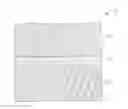
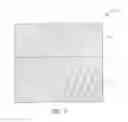
FIG. 1 is a cross-sectional diagram of a ceramic matrix composite material with an oxide-based bond coat deposited thereon and a columnar top coat deposited on the oxide-based bond coat.
The exemplification set out herein illustrates embodiments of the methods and such exemplification is not to be construed as limiting the scope of the methods in any manner.
DETAILED DESCRIPTION
This present disclosure is directed to methods of fabricating multilayer environmental barrier coatings (EBCs) to suit the characteristics of certain materials such as Silicon-containing ceramics including ceramic matrix composites (CMCs). Plasma spraying, electron beam physical vapor deposition (EB-PVD), or directed vapor deposition (DVD) are three methods of coating CMCs.
Each deposition method has its own benefits and detriments. One embodiment may use plasma spraying and electron beam physical vapor deposition. Another embodiment may use plasma spraying and directed vapor deposition. By combining layers using these different methods, the benefits of each create distinctive properties to the coatings. For example, an EBC may be formed by combining a plasma sprayed layer which provides the capability to fabricate complex chemistry coatings, with a layer formed by either DVD or EB-PVD which provides the capability to fabricate highly strain-tolerant columnar microstructures and smooth surface finishes. The results are high performance EBCs with a multiple oxide-based bond coat having >2700F temperature capability and a top coat having -3000F temperature capability. The following table identifies the benefits and detriments of the various coating processes.
| Process | Benefits | Detriments |
| Plasma | Amenability to complex | Inability to coat non- |
| Spraying | coating chemistries | line-of-sight areas |
| Relatively low | Rough coating surface | |
| manufacturing cost | finish | |
| Low deposition | ||
| efficiency | ||
| Low erosion resistance | ||
| EB-PVD | Smooth coating surface | Inability to coat non- |
| (Conventional) | finish | line-of-sight areas |
| Ability to create highly | Difficulty in fabricating | |
| strain-tolerant | complex coating | |
| columnar microstructures | chemistries | |
| High erosion resistance | Low deposition | |
| efficiency | ||
| High manufacturing | ||
| cost | ||
| DVD | Smooth coating surface | Difficulty in fabricating |
| (Enhanced | finish | complex coating |
| EB-PVD) | Ability to create highly | chemistries |
| strain-tolerant | High manufacturing | |
| columnar microstructures | cost, but likely | |
| Ability to coat non-line- | lower than conventional | |
| of-sight areas | EB-PVD | |
| High deposition | ||
| efficiency | ||
| High erosion resistance | ||
The benefits of plasma spraying include amenability to complex coating chemistries and relatively low manufacturing cost, while its detriments include the inability to coat non-line-of-sight areas, rough coating surface finish, low deposition efficiency, and low erosion resistance. In contrast, the benefits of EB-PVD include smooth coating surface finish, ability to create highly strain-tolerant columnar microstructures and high erosion resistance. Its detriments include an inability to coat non-line-of-sight areas, difficulty in fabricating complex coating chemistries, low deposition efficiency and high manufacturing cost. The DVD (or enhanced EB-PVD) has non-line-of-sight coating capabilities and improved deposition efficiency as compared to conventional EB-PVD.
Again, the fabrication method for each coating layer is selected by considering the benefits and detriments of each process in conjunction with the complexity of the chemistry and the function of each layer. EB-PVD or DVD may be used for the top coat of airfoils because of their smooth surface finish for aerodynamic performance and better erosion resistance as compared to plasma spraying. EB-PVD or DVD may also be used for layers with high coefficient of thermal expansion (CTE) mismatch with CMC. Layers having high CTE mismatch with CMC may cause high residual stresses and therefore experience short thermal cycling life. CTE mismatch stresses can be significantly mitigated by creating a highly strain tolerant columnar microstructure using the EB-PVD or DVD processes. Plasma spraying may be used for layers with a complex chemistry. Multiple phases react at high temperatures to form glass-containing reaction products that create strong chemical bonding for long steam cycling life.
An illustrative embodiment provides a combination of a plasma-sprayed, complex oxide-based bond coat and either an EB-PVD or DVD-based rare earth silicate, stabilized zirconia or stabilized hafnia top coat. This combination provides the EBCs with a high temperature bond coat with a temperature capability exceeding the temperature capability of current Silicon (Si) bond coats (−2460F), along with a highly strain-tolerant and water-vapor-resistant, low thermal conductivity top coat. The high temperature bond coat enables the implementation of high temperature CMCs (2700F CMC) in gas turbines, while the highly strain-tolerant and water-vapor-resistant, low thermal conductivity top coat increases the EBC surface temperature capability to about −3000F.
Examples of plasma sprayed layers include oxide-based high temperature bond coats with complex chemistry, such as mullite (3Al2O3-2SiO2), mullite +Si, HfSiO4+SiO2+Si, HfSiO4+Al2O3+SiO2+Si, RE2Si2O7+Al2O3+Si, RE2Si2O7+Al2O3+SiO2+Si, HfSiO4+Al2O3+Si, HfSiO4+Si, and SiO2+Al2O3+Si, (where RE is selected from the group consisting of at least one of lutetium, ytterbium, thulium, erbium, holmium, dysprosium, terbium, gadolinium, europium, samarium, promethium, neodymium, praseodymium, cerium, lanthanum, yttrium, and scandium). When the oxide-based bond coat is mullite +Si—the Si is present in an amount between about 10 wt % and about 40 wt % and the balance is mullite. When the oxide-based bond coat is HfSiO4+SiO2+Si—the Si is present in an amount between about 10 wt % and about 40 wt %, the SiO2 is present in an amount between about 10 wt % and about 30 wt %, and the balance is HfSiO4. When the oxide-based bond coat is HfSiO4+SiO2+Al2O3+Si—the Si is present in an amount between about 10 wt % and about 40 wt %, the SiO2 is present in an amount between about 10 wt % and about 30 wt %, the Al2O3 is present in an amount between about 0.1 wt % and about 10 wt %, and the balance is HfSiO4. When the oxide-based bond coat is RE2Si2O7+Al2O3+Si—the Si is present in an amount between about 10 wt % and about 40 wt %, the Al2O3 is present in an amount between about 0.1 wt % and about 10 wt %, and the balance is RE2Si2O7. When the oxide-based bond coat is RE2Si2O7+Al2O3+SiO2+Si—the Si is present in an amount between about 10 wt % and about 40 wt %, the SiO2 is present in an amount between about 10 wt % and about 30 wt %, the Al2O3 is present in an amount between about 0.1 wt % and about 10 wt %, and the balance is RE2Si2O7. When the oxide-based bond coat is HfSiO4+Al2O3+Si;—the Si is present in an amount between about 10 wt % and about 40 wt %, the Al2O3 is present in an amount between about 0.1 wt % and about 10 wt %, and the balance is HfSiO4. When the oxide-based bond coat being HfSiO4+Si—the Si is present in an amount between about 10 wt % and about 40 wt %, and the balance is HfSiO4. Lastly, when the oxide-based bond coat is SiO2+Al2O3+Si—the Si is present in an amount between about 10 wt % and about 40 wt %, the Al2O3 is present in an amount between about 0.1 wt % and about 10 wt %, and the balance is SiO2.
Examples of EB-PVD or DVD layers include EBC top coats of rare earth silicate (RE2Si2O7 and RE2SiO5), RE2O3-stabilized ZrO2 and RE2O3-stabilized HfO2 (where RE is selected from the group consisting of at least one of lutetium, ytterbium, thulium, erbium, holmium, dysprosium, terbium, gadolinium, europium, samarium, promethium, neodymium, praseodymium, cerium, lanthanum, yttrium, and scandium). Rare earth monosilicate (RE2SiO5), RE2O3-stabilized ZrO2 and RE2O3-stabilized HfO2, have CTEs substantially higher than CMC and therefore are desirable to be fabricated in low modulus, strain tolerant columnar microstructure to mitigate CTE mismatch stresses.
The substrate may include any of the following: a Si-containing ceramic, such as silicon carbide (SiC), silicon nitride (Si3N4), a CMC having a SiC or Si3N4 matrix, silicon oxynitride, and silicon aluminum oxynitride; a Si-containing metal alloy, such as molybdenum-silicon alloys (e.g. MoSi2) and niobium-silicon alloys (e.g. NbSi2); and an oxide-oxide CMC. CMCs comprise a matrix reinforced with ceramic fibers, whiskers, platelets, and chopped or continuous fibers.
A cross-sectional diagram of a ceramic matrix composite material with an oxide-based bond coat deposited thereon, and a columnar top coat deposited on the oxide-based bond coat is shown in FIG. 1. An illustrative example of an EBC that combines plasma sprayed, high temperature oxide-based bond coat 4 and either a DVD or EB-PVD processed, highly strain-tolerant columnar top coat 6, on a CMC or other Si-containing ceramic 8. The choice of whether columnar top coat 6 is formed from either DVD or EB-PVD is determined by the particular benefits one or the other imparts, as shown in the table above.
Although the present disclosure has been described with reference to particular means, materials and embodiments, from the foregoing description, one skilled in the art can easily ascertain the essential characteristics of the present disclosure and various changes and modifications may be made to adapt the various uses and characteristics without departing from the spirit and scope of the present invention as set forth in the following claims.
Claims
What is claimed is:1. An article comprising:
a ceramic matrix composite;
an oxide-based bond coat over the ceramic matrix composite, wherein the oxide-based bond coat consists of HfSiO4+SiO2+Al2O3+Si, and wherein the Si is present in the oxide-based bond coat in an amount between about 10 wt. % and about 40 wt. %, the SiO2 is present in the oxide-based bond coat in an amount between about 10 wt. % and about 30 wt. %, the Al2O3 is present in the oxide-based bond coat in an amount between about 0.1 wt. % and about 10 wt. %, and the balance of the oxide-based bond coat is HfSiO4; and
a top coat over the oxide-based bond coat.
2. The article of claim 1, wherein the top coat is selected from the group consisting of RE2Si2O7 and RE2SiO5 (wherein RE is selected from the group consisting of at least one of lutetium, ytterbium, thulium, erbium, holmium, dysprosium, terbium, gadolinium, europium, samarium, promethium, neodymium, praseodymium, cerium, lanthanum, yttrium, and scandium), RE2O3-stabilized ZrO2 (wherein RE is selected from the group consisting of at least one of lutetium, ytterbium, thulium, erbium, holmium, dysprosium, terbium, gadolinium, europium, samarium, promethium, neodymium, praseodymium, cerium, lanthanum, yttrium, and scandium), and RE2O3-stabilized HfO2 (wherein RE is selected from the group consisting of at least one of lutetium, ytterbium, thulium, erbium, holmium, dysprosium, terbium, gadolinium, europium, samarium, promethium, neodymium, praseodymium, cerium, lanthanum, yttrium, and scandium).
3. The article of claim 1, wherein the top coat has a columnar microstructure.
4. An article comprising:
a ceramic matrix composite;
an oxide-based bond coat over the ceramic matrix composite, wherein the oxide-based bond coat consists of HfSiO4+Al2O3+Si, and wherein the Si is present in the oxide-based bond coat in an amount between about 10 wt. % and about 40 wt. %, the Al2O3 is present in the oxide-based bond coat in an amount between about 0.1 wt. % and about 10 wt. %, and the balance of the oxide-based bond coat is HfSiO4; and
a top coat over the oxide-based bond coat.
5. The article of claim 4, wherein the top coat is selected from the group consisting of RE2Si2O7 and RE2SiO5 (wherein RE is selected from the group consisting of at least one of lutetium, ytterbium, thulium, erbium, holmium, dysprosium, terbium, gadolinium, europium, samarium, promethium, neodymium, praseodymium, cerium, lanthanum, yttrium, and scandium), RE2O3-stabilized ZrO2 (wherein RE is selected from the group consisting of at least one of lutetium, ytterbium, thulium, erbium, holmium, dysprosium, terbium, gadolinium, europium, samarium, promethium, neodymium, praseodymium, cerium, lanthanum, yttrium, and scandium), and RE2O3-stabilized HfO2 (wherein RE is selected from the group consisting of at least one of lutetium, ytterbium, thulium, erbium, holmium, dysprosium, terbium, gadolinium, europium, samarium, promethium, neodymium, praseodymium, cerium, lanthanum, yttrium, and scandium).
6. The article of claim 4, wherein the top coat has a columnar microstructure.
7. An article comprising:
a ceramic matrix composite;
an oxide-based bond coat over the ceramic matrix composite, wherein the oxide-based bond coat consists of HfSiO4+Si; and wherein the Si is present in the oxide-based bond coat in an amount between about 10 wt. % and about 40 wt. %, and the balance of the oxide-based bond coat is HfSiO4; and
a top coat over the oxide-based bond coat.
8. The article of claim 7, wherein the top coat is selected from the group consisting of RE2Si2O7 and RE2SiO5 (wherein RE is selected from the group consisting of at least one of lutetium, ytterbium, thulium, erbium, holmium, dysprosium, terbium, gadolinium, europium, samarium, promethium, neodymium, praseodymium, cerium, lanthanum, yttrium, and scandium), RE2O3-stabilized ZrO2 (wherein RE is selected from the group consisting of at least one of lutetium, ytterbium, thulium, erbium, holmium, dysprosium, terbium, gadolinium, europium, samarium, promethium, neodymium, praseodymium, cerium, lanthanum, yttrium, and scandium), and RE2O3-stabilized HfO2 (wherein RE is selected from the group consisting of at least one of lutetium, ytterbium, thulium, erbium, holmium, dysprosium, terbium, gadolinium, europium, samarium, promethium, neodymium, praseodymium, cerium, lanthanum, yttrium, and scandium).
9. The article of claim 7, wherein the top coat has a columnar microstructure.
Images & Drawings included:
Sources:
- United States Patent and Trademark Office - verify current appl. status at the USPTO↗
Similar patent applications:
- » 20190093498
Multilayer environmental barrier coating - » 20140272168
METHOD FOR FABRICATING MULTILAYER ENVIRONMENTAL BARRIER COATINGS - » 20140272169
Method for fabricating multilayer environmental barrier coatings - » 20060154093
Multilayered environmental barrier coating and related articles and methods - » 20160376691
MULTILAYERED THERMAL AND ENVIRONMENTAL BARRIER COATING (EBC) FOR HIGH TEMPERATURE APPLICATIONS AND METHOD THEREOF - » 20170218501
Plasma spray physical vapor deposition deposited in multilayer, multi-microstructure environmental barrier coating - » 20210404050
Plasma spray physical vapor deposition deposited in multilayer, multi-microstructure environmental barrier coating
Recent applications in this class:
- » 20240417339 2024-12-19
CMC materials with integrated thermocouple - » 20240417338 2024-12-19
PART MADE OF COMPOSITE MATERIAL, HAVING CONTROLLED CREEP - » 20240376018 2024-11-14
METHOD FOR PROTECTING A CARBON/CARBON COMPOSITE MATERIAL PART FROM OXIDATION - » 20240228389 2024-07-11
A METHOD FOR PRODUCING CERAMIC TILES, AND CERAMIC TILES - » 20240043350 2024-02-08
CERAMIC MATRIX COMPOSITE ARTICLE AND METHOD OF MAKING THE SAME - » 20230150893 2023-05-18
POROUS CERAMIC LAMINATE AND PROCESS FOR PRODUCING THE SAME - » 20210269370 2021-09-02
Antimicrobial Glaze and Porcelain Enamel via Double Layer Glaze with High Zinc Content - » 20210155558 2021-05-27
Slurry infiltration heat treatment method - » 20200331817 2020-10-22
Component protected by an environmental barrier - » 20200277237 2020-09-03
Compositions for erosion and molten dust resistant environmental barrier coatings
Recent applications for this Assignee:
- » 20250179928 2025-06-05
TURBINE SHROUD ASSEMBLY WITH ANGLED COOLING HOLES - » 20250163821 2025-05-22
TRAVEL STOP FOR A TIP CLEARANCE CONTROL SYSTEM - » 20250163820 2025-05-22
ADJUSTABLE POSITION IMPELLER SHROUD FOR CENTRIFUGAL COMPRESSORS - » 20250074613 2025-03-06
Aircraft Override For An Energy Storage System - » 20250067223 2025-02-27
Uncommanded or Uncontrollable High Thrust Detection and Mitigation - » 20250067222 2025-02-27
Fuel unit health monitoring system - » 20250044168 2025-02-06
TEMPERATURE MEASUREMENT SYSTEM - » 20250044159 2025-02-06
TEMPERATURE MEASUREMENT SYSTEM - » 20250035045 2025-01-30
MOTOR AND MOTOR CONTROLLER THERMAL MANAGEMENT FEATURES - » 20240380295 2024-11-14
ELECTRICAL ENERGY SYSTEM HAVING ACTIVE SEGMENTS FOR VARIABLE VOLTAGE GENERATION