SYNERGISTIC SURFACTANT COMPOSITION
US20170145346A1
2017-05-25
15/313,022
2015-05-15
Abstract:
This invention refers to a synergistic composition of surfactants containing glycerine, monopropyleneglycol and organosilicone, to the procedure for preparing it and to the use of this composition as a superwetting agent.
Interested in similar patents?
Get notified when new applications in this technology area are published.
Classification:
A23V2002/00 » CPC further
Food compositions, function of food ingredients or processes for food or foodstuffs
C11D1/825 » CPC main
Detergent compositions based essentially on surface-active compounds; Use of these compounds as a detergent; Non-ionic compounds Mixtures of compounds all of which are non-ionic
A61K47/24 » CPC further
Medicinal preparations characterised by the non-active ingredients used, e.g. carriers or inert additives; Targeting or modifying agents chemically bound to the active ingredient; Organic compounds, e.g. natural or synthetic hydrocarbons, polyolefins, mineral oil, petrolatum or ozokerite containing atoms other than carbon, hydrogen, oxygen, halogen, nitrogen or sulfur, e.g. cyclomethicone or phospholipids
A23L33/10 » CPC further
Modifying nutritive qualities of foods; Dietetic products; Preparation or treatment thereof using additives
A01N25/30 » CPC further
Biocides, pest repellants or attractants, or plant growth regulators, characterised by their forms, or by their non-active ingredients or by their methods of application, e.g. seed treatment or sequential application ; Substances for reducing the noxious effect of the active ingredients to organisms other than pests characterised by the surfactants
A61K47/10 » CPC further
Medicinal preparations characterised by the non-active ingredients used, e.g. carriers or inert additives; Targeting or modifying agents chemically bound to the active ingredient; Organic compounds, e.g. natural or synthetic hydrocarbons, polyolefins, mineral oil, petrolatum or ozokerite containing oxygen, e.g. ethers, acetals, ketones, quinones, aldehydes, peroxides Alcohols; Phenols; Salts thereof, e.g. glycerol; Polyethylene glycols [PEG]; Poloxamers; PEG/POE alkyl ethers
C11D1/82 » CPC further
Detergent compositions based essentially on surface-active compounds; Use of these compounds as a detergent; Non-ionic compounds Compounds containing silicon
Description
FIELD OF THE INVENTION
This invention lies within the general field of chemistry and refers in particular to a synergistic surfactant composition.
STATE OF THE ART
“Wetting agents” are substances that lower the surface tension of water and “superwetting agents” are those substances that reduce surface tension of water below a value of 25 mN/m.
Currently, surfactants are widely used in most industries (cosmetics, agriculture, pharmaceuticals, et.) as described in U.S. Pat. No. 6,653,288 and in patent application CN102440250.
However, despite the large number of compounds that act as surfactants, reducing surface tension below 25 mN/m is very complicated with substances that are not organosilicones.
There is therefore a need to provide a composition that has a “superwetting” effect and that can lower surface tension to below 25 mN/m.
DESCRIPTION OF THE INVENTION
This invention solves the problems of the state of the art since it provides a composition with which a surface tension can be achieved with values of around 20 mN/m by taking advantage of the synergy of three components.
Thus, in a first aspect this invention refers to a synergistic composition of surfactants (hereinafter, the composition of this invention), featuring glycerine, glycol and organosilicone.
In a preferred embodiment, the glycerine in the composition of this invention is glycerine from the synthesis of bio Diesel.
In a preferred embodiment, the glycol in the composition of this invention is monopropyleneglycol.
In a preferred embodiment, the composition of this invention comprises:
-
- 10-90% by weight of glycerine
- 10-70% by weight of monopropyleneglycol
- 1-30% by weight of organosilicone.
In another aspect, this invention refers to the use of the composition of this invention as a superwetting agent.
In this invention, superwetting is understood to refer to those substances that lower the surface tension of water below a value of 25 mN/m.
In another aspect, this invention refers to the use of this invention in compositions for insecticides, herbicides, fungicides, food, bio stimulants and fertilisers.
DESCRIPTION OF THE FIGURES
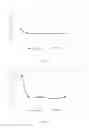
FIG. 1 shows the surface tension reduction graph of composition B and of composition C. The vertical axis shows the surface tension value of the water solution in mN/m and the horizontal axis shows the concentration value as % p/p of composition B or composition C dissolved in water.
FIG. 2 shows the surface tension reduction graph of composition B and of composition A. The vertical axis shows the surface tension value of the water solution in mN/m and the horizontal axis shows the concentration value as % p/p of composition B or composition A dissolved in water.
DETAILED DESCRIPTION OF THE INVENTION
Example 1: Synergistic Effect of the Compositions of this Invention
To prepare the composition of this invention, unrefined glycerine from the synthesis of bio Diesel was used and was mixed with organosilicone and monopropyleneglycol (MPG). The mixing was produced by simple addition and homogenising of the three components, the preparation of the product being independent of the order in which they are added.
To check the synergistic effect, the surface tension was measured of each individual component, combined two by two and finally the three components of the product together.
The surface tension was measured by preparing the appropriate solutions with mains water and measuring the surface tension value at room temperature (25±2° C.) in a Kruss K9ET plate tensiometer (Wilhelmy platinum plate method). This method is based on measuring the maximum force needed in the vertical direction on a plate in contact with the surface of a liquid in the measuring container so that the liquid separates from the surface. This plate is connected to electronic scales to determine the surface tension value.
The measurement process involves the following steps:
-
- Fill the sample container with the sample to be analysed and place it in the tensiometer equipped with a platinum plate connected to the scales.
- Raise the sample container until the surface of the liquid is just below the bottom face of the plate.
- Rate the equipment.
- Continue to raise the sample container slowly until the plate makes first contact with the surface of the liquid. Stop it as soon as there is a first contact with the liquid.
- Turn the gauge wheel until the wheel's indication matches the fixed mark on the equipment. This leaves a reference of the point at which the first contact occurred between the sample and the platinum plate.
- Raise the sample 5 mm, submerging the plate and checking that the plate is wetted with the product to be analysed.
- Lower the sample container slowly to remove the plate from the product solution until the reference mark aligns with the fixed mark on the equipment again (first contact of the platinum plate with the sample).
The results are shown in the following tables.
| TABLE 1 |
| Reduction of surface tension values |
| at concentrations of 0.025% p/p. |
| Surface tension | |||
| Glycerine | MPG | Organosilicone | (mN/m) |
| 0.025% p/p | 71.7 | ||
| 0.025% p/p | 72.3 | ||
| 0.025% p/p | 29.0 | ||
| 0.025% p/p | 0.025% p/p | 28.6 | |
| 0.025% p/p | 0.025% p/p | 28.9 | |
| 0.025% p/p | 0.025% p/p | 68.1 | |
| 0.025% p/p | 0.025% p/p | 0.025% p/p | 28.7 |
| TABLE 2 |
| Reduction of surface tension values |
| at concentrations of 0.050% p/p. |
| Surface tension | |||
| Glycerine | MPG | Organosilicone | (mN/m) |
| 0.050% p/p | 68.7 | ||
| 0.050% p/p | 70.3 | ||
| 0.050% p/p | 25.2 | ||
| 0.050% p/p | 0.050% p/p | 24.1 | |
| 0.050% p/p | 0.050% p/p | 24.3 | |
| 0.050% p/p | 0.050% p/p | 66.0 | |
| 0.050% p/p | 0.050% p/p | 0.050% p/p | 22.5 |
| TABLE 3 |
| Reduction of surface tension values |
| at concentrations of 0.100% p/p. |
| Surface tension | |||
| Glycerine | MPG | Organosilicone | (mN/m) |
| 0.100% p/p | 67.0 | ||
| 0.100% p/p | 69.5 | ||
| 0.100% p/p | 20.9 | ||
| 0.100% p/p | 0.100% p/p | 22.2 | |
| 0.100% p/p | 0.100% p/p | 22.9 | |
| 0.100% p/p | 0.100% p/p | 70.6 | |
| 0.100% p/p | 0.100% p/p | 0.100% p/p | 20.3 |
As can be seen in Tables 1-3, the effect of the organosilicone prevails over the other individual components at equal concentrations. Even so, an additional reduction of surface tension is achieved to reach 20.3 mN/m, taking advantage of the synergistic effect of the mixture of the three components. Note that it is necessary to use a combination of three components to achieve an additional reduction of surface tension of approximately 10%, compared to organosilicone alone.
To confirm the effect of the reduction of surface tension of composition B and that this effect is maintained in the presence of the three components, two different compositions for the product were tested and the effect of these new formulas (B1 and B2) measured.
| TABLE 4 |
| Table for composition of formulas B and variations B1 and B2. |
| Glycerine | Monopropyleneglycol | Organosilicone | |
| Composition | (% p/p) | (% p/p) | (% p/p) |
| B | 56 | 34 | 10 |
| B1 | 53 | 32 | 15 |
| B2 | 58 | 35 | 7 |
Surface tension at 0.2% p/p:
B: 20.3 mN/m
B1: 20.2 mN/m
B2: 20.6 mN/m
At this point it can be seen that composition B is the optimal one, taking into account the compromise between the synergistic effect seen (lowering of surface tension) and the amount of organosilicone to be used.
The composition of this invention (composition B) was then compared with other compositions (composition A and composition C) containing organosilicone mixed with other non-ionic surfactants. In fact, it is known that these substances can improve the effectiveness of organosilicone but from the point of view of reducing the dose.
Table 5 shows that the composition of this invention not only improves the effectiveness in the sense of reducing the dose but also improves it in the sense of achieving a reduction in the surface tension of water, in absolute value terms, attaining a lower surface tension value than that achieved with organosilicone alone or using other potentially synergistic substances in the general sense.
It is thus shown that the new superwetting and synergistic effect is due to the mix of the three compounds of this invention.
| TABLE 5 |
| Reduction of surface tension values compared with |
| other products containing organosilicone. |
| Solution | Solution | Solution | |
| at 0.1% | at 0.2% | at 0.3% | |
| in water | in water | in water | |
| Surface tension | Surface tension | Surface tension | |
| Composition | (mN/m) | (mN/m) | (mN/m) |
| A (repetition 1) | 21.4 | 20.8 | 20.8 |
| A (repetition 2) | 21.3 | 20.9 | 20.7 |
| B (repetition 1) | 20.4 | 20.3 | 20.0 |
| B (repetition 2) | 20.5 | 20.4 | 20.2 |
| C (repetition 1) | 31.4 | 31.7 | 31.0 |
| C (repetition 2) | 31.6 | 31.5 | 31.1 |
Composition A, containing 60% organosilicone, 30% monoethylenglycol and 10% sodium lauryl sulphate.
The composition of this invention, containing 56% glycerine, 34% monopropyleneglycol and 10% organosilicone.
Composition C consisted of 90% canola oil and 10% organosilicone.
As shown by the results in Tables 4 and 5, the composition of this invention (composition B) shows the best reduction of surface tension. Composition B generates lower surface tension values than combination A, although it contains a sixth less of the same organosilicone.
When diluted in water with the same dose (0.2%), composition B generates the same range of water surface tension reduction as composition A. It is important to note that at surface tension levels approaching 20 mN/m, achieving a reduction of 0.5 mN/m is really complicated even though the difference in absolute value may appear small, but it must be remembered that it is not since this is very close to the cancellation of the dosage effect. The same occurs when composition B is compared with composition C.
Extending the range of concentrations comparing composition B and composition A and the same composition B compared to composition C, it can be seen that:
-
- compared with a product containing the same quantity of organosilicone (combination C, 10% organosilicone), the reduction of the surface tension is significantly sharper for the case of this invention (combination B).
| TABLE 6 |
| Reduction of surface tension B vs C |
| Concentration | ||
| in water | ||
| (% p/p) | Composition B | Composition C |
| 0.05 | 23.1 | 33.6 |
| 0.10 | 20.4 | 31.5 |
| 0.20 | 20.3 | 31.6 |
| 0.30 | 20.1 | 31.1 |
| 0.40 | 20.3 | 31.1 |
-
- compared with composition A (with a concentration six times greater of organosilicone) it can be seen that a concentration of 0.1% p/p in water has already exceeded the effect of composition A and maintains this reduction at higher concentrations.
| TABLE 7 |
| Reduction of surface tension B vs A |
| Concentration | ||
| in water | Invention | |
| (% p/p) | (B) | Other A |
| 0.05 | 23.1 | 21.9 |
| 0.10 | 20.4 | 21.3 |
| 0.20 | 20.3 | 20.8 |
| 0.30 | 20.1 | 20.7 |
| 0.40 | 20.3 | 20.9 |
It should be noted that with composition A, water surface tension values below 20.5 mN/m are never generated. On the other hand, all the values generated by composition B are below this value.
Claims
1.-6. (canceled)
7. Synergistic composition of surfactants consisting of glycerine, a glycol and organosilicone.
8. Composition of claim 7, which contains:
10-90% by weight of glycerine
10-70% by weight of monopropyleneglycol
1-30% by weight of organosilicone.
9. Use of composition of claim 7 as a superwetting agent.
10. Use according to claim 9 in compositions for insecticides, herbicides, fungicides, food, bio stimulants or fertilisers.
11. Composition of claim 7, wherein the glycerine is glycerine from the synthesis of bio Diesel.
12. Composition of claim 11, which contains:
10-90% by weight of glycerine
10-70% by weight of monopropyleneglycol
1-30% by weight of organosilicone.
13. Use of composition of claim 11 as a superwetting agent.
14. Use according to claim 13 in compositions for insecticides, herbicides, fungicides, food, bio stimulants or fertilisers.
15. Composition of claim 7, wherein the glycol is monopropyleneglycol.
16. Composition of claim 15, which contains:
10-90% by weight of glycerine
10-70% by weight of monopropyleneglycol
1-30% by weight of organosilicone.
17. Use of composition of claim 15 as a superwetting agent.
18. Use according to claim 17 in compositions for insecticides, herbicides, fungicides, food, bio stimulants or fertilisers.
Images & Drawings included:
Sources:
- United States Patent and Trademark Office - verify current appl. status at the USPTO↗
Similar patent applications:
- » 20130252856
SYNERGISTIC SURFACTANT COMPOSITIONS FOR UNLOADING FLUIDS FROM OIL AND GAS WELLS - » 20070181307
Synergistic surfactant compositions for unloading fluids from oil and gas wells - » 20100144582
Green compositions containing synergistic blends of surfactants and linkers - » 20180116213
SYNERGISTIC COMPOSITION CONTAINING HERBICIDE, ORGANIC ACID AND SURFACTANT - » 20050053672
Synergistic metal salt-cationic surfactant-organic biocide composition - » 20200016102
Synergistic compositions to stimulate the synthesis of human lung and sinus surfactants to decrease coughing, increase FEV-1/FVC ratios, decrease lung fibrosis, by increasing apoptosis of myofibroblasts - » 20120238485
Surfactant composition with a reduction of surface tension, interfacial tension, and critical micelle concentration using a protein-based surfactant synergist - » 20060270583
Surfactant composition with a reduction of surface tension, interfacial tension, and critical micelle concentration using a protein-based surfactant synergist - » 20100113324
Surfactant composition with a reduction of surface tension, interfacial tension, and critical micelle concentration using a protein-based surfactant synergist - » 20150072917
SURFACTANT COMPOSITION WITH A REDUCTION OF SURFACE TENSION, INTERFACIAL TENSION, AND CRITICAL MICELLE CONCENTRATION USING A PROTEIN-BASED SURFACTANT SYNERGIST
Recent applications in this class:
- » 20240400939 2024-12-05
DETERGENT COMPOSITIONS FOR MACHINE DISHWASHING COMPRISING ETHOXYLATED GLYCEROL ESTERS AND MODIFIED FATTY ALCOHOL ALKOXYLATES - » 20240287407 2024-08-29
CHEMICAL COMPOSITION FOR REMOVING BUG SPLATTER FROM VEHICLE WINDSHIELDS - » 20240218288 2024-07-04
EFFICIENT SURFACTANT SYSTEM ON PLASTIC AND ALL TYPES OF WARE - » 20240199984 2024-06-20
METHODS AND COMPOSITIONS FOR RESTORING AND MAINTAINING HARD SURFACES - » 20240199983 2024-06-20
FABRIC SERUM COMPOSITION - » 20240002749 2024-01-04
DETERGENT COMPOSITIONS FOR CLEANING IN THE COSMETIC AND PHARMACEUTICAL INDUSTRY - » 20230365890 2023-11-16
FLOOR STRIPPING COMPOSITIONS FREE OF FLUORINATED SURFACTANTS AND METHODS OF USING THE SAME - » 20230143002 2023-05-11
SPRAY CONTAINER COMPRISING A DETERGENT COMPOSITION - » 20230130852 2023-04-27
METHOD FOR REMOVING SILVER MIRRORING FROM SURFACE OF BLACK-AND-WHITE NEGATIVE FILM - » 20230016792 2023-01-19
Fine mist hard surface cleaning spray