Drug carrier and method of using the same
US20170157252A1
2017-06-08
15/211,853
2016-07-15
✅ Patent granted
US 10,046,051 B2
2018-08-14
-
-
Rebecca E Eisenberg
Lynette Wylie | Apex Juris, pllc.
2036-12-08
Abstract:
A drug carrier and a method of using the same are provided, wherein the drug carrier includes a base made of a carbon fiber which is magnetic and has a first polarity, a positioning member connected to the base, and is adapted to be positioned and move to a target location by guiding of at least an energy field, and a connector connected to the positioning member and a drug with two ends respectively, wherein the connector has a second polarity opposite to the first polarity, and is recognized by an organism and digested in the organism. The method includes the steps of: injecting the drug carrier into an organism; positioning the drug carrier to a target location within the organism by an equipment; and releasing the drug from the drug carrier by an external energy.
Assignee:
- LINKWIN TECHNOLOGY CO., LTD. 2 🇹🇼 TAICHUNG CITY, Taiwan
- LinkWin Technology Co., Ltd. 2 🇹🇼 Taichung, Taiwan
Applicant:
Interested in similar patents?
Get notified when new applications in this technology area are published.
Classification:
A61K41/0042 » CPC further
Medicinal preparations obtained by treating materials with wave energy or particle radiation ; Therapies using these preparations Photocleavage of drugs , e.g. cleavage of photolabile linkers by UV radiation for releasing the pharmacologically-active agent from the administered agent; photothrombosis or photoocclusion
A61K51/0491 » CPC further
Preparations containing radioactive substances for use in therapy or testing characterised by the carrier, i.e. characterised by the agent or material covalently linked or complexing the radioactive nucleus; Organic compounds Sugars, nucleosides, nucleotides, oligonucleotides, nucleic acids, e.g. DNA, RNA, nucleic acid aptamers
A61M37/0092 » CPC further
Other apparatus for introducing media into the body ; Percutany, i.e. introducing medicines into the body by diffusion through the skin using ultrasonic, sonic or infrasonic vibrations, e.g. phonophoresis
A61K47/6953 » CPC further
Medicinal preparations characterised by the non-active ingredients used, e.g. carriers or inert additives; Targeting or modifying agents chemically bound to the active ingredient the non-active ingredient being chemically bound to the active ingredient, e.g. polymer-drug conjugates the conjugate being characterised by physical or galenical forms, e.g. emulsion, particle, inclusion complex, stent or kit the form being a fibre, a textile, a slab or a sheet
A61B5/0515 » CPC further
Measuring for diagnostic purposes ; Identification of persons; Detecting, measuring or recording for diagnosis by means of electric currents or magnetic fields; Measuring using microwaves or radio waves Magnetic particle imaging
A61K9/0009 » CPC further
Medicinal preparations characterised by special physical form; Galenical forms characterised by the drug release technique; Application systems commanded by energy involving or responsive to electricity, magnetism or acoustic waves; Galenical aspects of sonophoresis, iontophoresis, electroporation or electroosmosis
A61K9/0019 » CPC further
Medicinal preparations characterised by special physical form; Galenical forms characterised by the site of application Injectable compositions; Intramuscular, intravenous, arterial, subcutaneous administration; Compositions to be administered through the skin in an invasive manner
A61K47/6923 » CPC further
Medicinal preparations characterised by the non-active ingredients used, e.g. carriers or inert additives; Targeting or modifying agents chemically bound to the active ingredient the non-active ingredient being chemically bound to the active ingredient, e.g. polymer-drug conjugates the conjugate being characterised by physical or galenical forms, e.g. emulsion, particle, inclusion complex, stent or kit the form being a particulate, a powder, an adsorbate, a bead or a sphere the form being an inorganic particle, e.g. ceramic particles, silica particles, ferrite or synsorb
A61N1/306 » CPC further
Electrotherapy; Circuits therefor; Applying electric currents by contact electrodes continuous direct currents; Apparatus for iontophoresis, i.e. transfer of media in ionic state by an electromotoric force into the body , or cataphoresis; Constructional details Arrangements where at least part of the apparatus is introduced into the body
A61N2/002 » CPC further
Magnetotherapy in combination with another treatment
A61N5/022 » CPC further
Radiation therapy using microwaves Apparatus adapted for a specific treatment
A61N5/062 » CPC further
Radiation therapy using light; Apparatus adapted for a specific treatment Photodynamic therapy, i.e. excitation of an agent
A61B6/037 » CPC further
Apparatus for radiation diagnosis, e.g. combined with radiation therapy equipment; Devices for diagnosis sequentially in different planes; Stereoscopic radiation diagnosis; Computerised tomographs Emission tomography
A61N5/0625 » CPC further
Radiation therapy using light; Apparatus adapted for a specific treatment Warming the body, e.g. hyperthermia treatment
A61N5/1001 » CPC further
Radiation therapy; X-ray therapy; Gamma-ray therapy; Particle-irradiation therapy using radiation sources introduced into or applied onto the body; brachytherapy
A61N2005/0659 » CPC further
Radiation therapy using light characterised by the wavelength of light used infra-red
A61N2005/1087 » CPC further
Radiation therapy; X-ray therapy; Gamma-ray therapy; Particle-irradiation therapy characterised by the type of particles applied to the patient Ions; Protons
A61N2005/1098 » CPC further
Radiation therapy; X-ray therapy; Gamma-ray therapy; Particle-irradiation therapy; Details Enhancing the effect of the particle by an injected agent or implanted device
A61N1/30 » CPC further
Electrotherapy; Circuits therefor; Applying electric currents by contact electrodes continuous direct currents Apparatus for iontophoresis, i.e. transfer of media in ionic state by an electromotoric force into the body , or cataphoresis
A61K41/00 » CPC main
Medicinal preparations obtained by treating materials with wave energy or particle radiation ; Therapies using these preparations
A61B5/055 » CPC further
Measuring for diagnostic purposes ; Identification of persons; Detecting, measuring or recording for diagnosis by means of electric currents or magnetic fields; Measuring using microwaves or radio waves involving electronic [EMR] or nuclear [NMR] magnetic resonance, e.g. magnetic resonance imaging
A61K9/00 IPC
Medicinal preparations characterised by special physical form
A61K47/02 » CPC further
Medicinal preparations characterised by the non-active ingredients used, e.g. carriers or inert additives; Targeting or modifying agents chemically bound to the active ingredient Inorganic compounds
A61K47/10 » CPC further
Medicinal preparations characterised by the non-active ingredients used, e.g. carriers or inert additives; Targeting or modifying agents chemically bound to the active ingredient; Organic compounds, e.g. natural or synthetic hydrocarbons, polyolefins, mineral oil, petrolatum or ozokerite containing oxygen, e.g. ethers, acetals, ketones, quinones, aldehydes, peroxides Alcohols; Phenols; Salts thereof, e.g. glycerol; Polyethylene glycols [PEG]; Poloxamers; PEG/POE alkyl ethers
A61K51/04 IPC
Preparations containing radioactive substances for use in therapy or testing characterised by the carrier, i.e. characterised by the agent or material covalently linked or complexing the radioactive nucleus Organic compounds
A61M37/00 IPC
Other apparatus for introducing media into the body ; Percutany, i.e. introducing medicines into the body by diffusion through the skin
A61N2/00 IPC
Magnetotherapy
A61N5/02 IPC
Radiation therapy using microwaves
A61N5/06 IPC
Radiation therapy using light
A61N5/10 » CPC further
Radiation therapy X-ray therapy; Gamma-ray therapy; Particle-irradiation therapy
A61B5/05 IPC
Measuring for diagnostic purposes ; Identification of persons Detecting, measuring or recording for diagnosis by means of electric currents or magnetic fields; Measuring using microwaves or radio waves
A61K47/69 IPC
Medicinal preparations characterised by the non-active ingredients used, e.g. carriers or inert additives; Targeting or modifying agents chemically bound to the active ingredient the non-active ingredient being chemically bound to the active ingredient, e.g. polymer-drug conjugates the conjugate being characterised by physical or galenical forms, e.g. emulsion, particle, inclusion complex, stent or kit
A61B6/03 IPC
Apparatus for radiation diagnosis, e.g. combined with radiation therapy equipment; Devices for diagnosis sequentially in different planes; Stereoscopic radiation diagnosis Computerised tomographs
A61N5/067 IPC
Radiation therapy using light using laser light
Description
BACKGROUND OF THE INVENTION
1. Technical Field
The present invention relates generally to a drug delivery system without any active principle, and more particularly to a drug carrier and a method of using the same.
2. Description of Related Art
In addition to the desired therapeutic effect of a drug or medication, a side effect usually occurs and is regarded as an undesirable secondary effect. Take chemotherapeutic agents for example, the powerful drug toxicity not only kills rapidly growing cancer cells but also harm perfectly healthy cells, which seriously damages the immune system of patients. Accordingly, target therapy and drug delivery systems are developing in recent years to deliver drugs to the lesion for reducing side effects.
However, some specific structures in human body hinder drugs from reaching the lesions. For example, the blood-brain barrier (BBB) limits drugs to enter the lesion in the brain. Actually, less than 20% of drugs can penetrate through the BBB into the brain, and even some molecules are severely restricted to pass across the BBB. Therefore, there are still many difficulties in the treatment of brain diseases.
In light of this, the applicant is devoted to seek useful materials and methods as a possible drug delivery system to improve the drug targeting efficiency, and reduce the adverse drug reactions.
BRIEF SUMMARY OF THE INVENTION
In view of the above, the primary objective of the present invention is to provide a drug carrier and a method of use the same, which carries and exactly delivers drugs to the lesions in the human body.
The present invention provides a drug carrier for carrying and delivering a drug to a target location, including a base, a positioning member, and a connector. The base is made of a carbon fiber, which is magnetic and has a first polarity. The positioning member is connected to the base, wherein the positioning member is adapted to be positioned and move to the target location by guiding of at least an energy field. The connector is connected to the positioning member with an end thereof and the drug with another end thereof, wherein the connector has a second polarity which is opposite to the first polarity; the connector is adapted to be recognized by an organism and digested in the organism.
The present invention further provides a method of using a drug carrier which is connected to a drug, including the steps of: injecting the drug carrier into an organism, wherein the drug carrier includes a nanographite; positioning the drug carrier to a target location within the organism by an equipment, wherein the equipment provides at least an energy field; and releasing the drug from the drug carrier by an external energy. Whereby, the drug act on the target location.
Whereby, with the nanographite and the connector, the drug carrier can release the drug to precise target locations, wherein drugs were not easy to reach the locations by conventional drug delivery systems.
BRIEF DESCRIPTION OF THE SEVERAL VIEWS OF THE DRAWINGS
The present invention will be best understood by referring to the following detailed description of some illustrative embodiments in conjunction with the accompanying drawings, in which
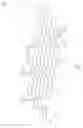
FIG. 1 is a perspective view of a first embodiment of the present invention, showing the drug carrier; and
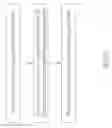
FIG. 2 is a flow chart of the method of using the drug carrier in FIG. 1.
DETAILED DESCRIPTION OF THE INVENTION
As shown in FIG. 1, the drug carrier 100 is adapted to carry and deliver a drug 1 to a target location in an organism, and includes a base, a positioning member, and a connector. The base, the positioning member, and the connector in the first embodiment are nanographite oxide 10, magnetic bead 20, and polyethylene glycol (PEG) 30.
The nanographite oxide 10 is made of a carbon fiber which is a carbon fiber fabric, wherein the applicant has disclosed the manufacturing method and the carbonizing device of said carbon fiber fabric in an issued patent 1445661. The nanographite oxide 10 is manufactured by the steps below. First, carbonize the carbon fiber under 1600° C. to 2500° C. or 3000° C. to generate a nanographite with the features of the diamond like carbon, wherein the nanographite has a polarity, and is structurally stable to prevent being connecting to other molecules. Accordingly, the nanographite would not be digested in the organism. Next, chemically bind a plurality of oxide groups to the surface of the nanographite to generate the nanographite oxide 10. After being oxidized, the polarity and the electric conductivity of the nanographite oxide 10 is lowered, which makes the nanographite oxide 10 stable. Moreover, the nanographite oxide 10 is magnetic, and has a first polarity. In another embodiment, the base is nanographite without being oxidized, or has multi-layered structure.
The positioning member is adapted to be positioned and move to the target location by guiding of at least an energy field. In the embodiment, the magnetic bead 20 magnetically attracts the nanographite oxide 10. When an equipment such as a nuclear magnetic resonance equipment provides an energy field (e.g. A magnetic field), the magnetic bead 20 can be positioned and move to the target location by guiding of the magnetic field, which positions the drug carrier 100 to the target location. Furthermore, the positioning member causes a part of the volume in the drug carrier 100 to promote the digestion of the drug carrier 100 by the organism. In more details, if the volume of the drug carrier 100 is too small, the drug carrier 100 could easily accumulate in lungs of the organism because the alveoli are unable to filter the drug carriers 100.
The connector is connected to the positioning member with an end thereof and the drug with another end thereof, wherein the connector has a second polarity which is opposite to the first polarity. In the embodiment, the end of the polyethylene glycol 30 is connected to the magnetic bead 20, and the another end is connected to the drug 1. The polarity and the electrical conductivity of the polyethylene glycol 30 are opposite to that of the nanographite oxide 10 to reduce the polarity and the electrical conductivity of the nanographite oxide 10, and further to increase the stability of the drug carrier 100.
The connector is adapted to release the drug 1 from the drug carrier 100 to the target location after being broken by an external energy, wherein the external energy includes infrared, microwave, laser, ultrasound, or other invisible lights with similar wavelength and energy level to infrared, such as far-infrared. The type of the external energy is selected according to the depth of the target location within the organism. In the first embodiment, the external energy is infrared. Moreover, the connector is also a biomarker, which could be recognized by the organism, and digested with the organism.
The method of using the drug carrier 100 in treating patients includes the steps shown in FIG. 2. First, intravenously inject the drug carrier 100 and the drug 1 connected to the drug carrier 100 into a patient. Next, position the drug carrier 100 and the drug 1 to the target location within the organism by the magnetic field provide by the nuclear magnetic resonance equipment, wherein the target location is the lesion. Finally, break the connector by an infrared, and release the drug 1 from the drug carrier 100. In addition, said infrared can not only break the connector but also be helpful to kill the abnormal cells at the lesion with the heat energy thereof.
In a second embodiment, the positioning member is a positron-emitting agent instead of the magnetic bead 20, wherein the commonly used positron-emitting agent includes 2-fluoro-2-deoxy-D-glucose (FDG). Additionally, based on the type of the positioning member, the equipment for positioning the drug carrier is a positron emission tomography scanner, which detects tumor lesions according to the characteristic of tumor cells. In more details, the metabolism of glucose in tumor cells is increased.
In addition, the positioning member in a third embodiment is a proton in a high energy state. Similarly, based on the type of the positioning member, the equipment for positioning the drug carrier is a proton radiation therapy equipment, which provides a magnetic field and an electric field. The drug delivery system in the embodiment destroys tumor cells by emitting radiation to the tumor cells. In more details, the magnetic field positions the proton to the target location, while the electric field accelerates the proton.
However, the types of the positioning member and the corresponding equipment are not limited to what described in the abovementioned embodiments.
Furthermore, nanographite is the thinnest but hardest nanomaterial. Therefore, the volume of the drug carrier can be effectively decreased. The overall maximum diameter of the drug carrier in the described embodiments is smaller than 200 nm such that the drug carrier could penetrate some specific structures to reach lesions such as pancreas and brain. Whereby, the drug carrier can act as a novel drug delivery system to solve the conventional problem, and can be specifically applied in diseases in pancreas and brain which were difficult to treat.
It must be pointed out that the embodiments described above are only some preferred embodiments of the present invention. All equivalent structures and methods which employ the concepts disclosed in this specification and the appended claims should fall within the scope of the present invention.
Claims
What is claimed is:1. A drug carrier for carrying and delivering a drug to a target location, comprising:
a base made of a carbon fiber, which is magnetic and has a first polarity;
a positioning member connected to the base, wherein the positioning member is adapted to be positioned and move to the target location by guiding of at least an energy field; and
a connector connected to the positioning member with an end thereof and the drug with another end thereof, wherein the connector has a second polarity which is opposite to the first polarity; the connector is adapted to be recognized by an organism and digested in the organism.
2. A drug carrier of claim 1, wherein the base comprises a nanographite, which is manufactured by carbonizing the carbon fiber.
3. A drug carrier of claim 1, wherein the base comprises a nanographite oxide, which is manufactured by the steps of: carbonizing the carbon fiber to a nanographite, and chemically binding a plurality of oxide groups to the nanographite.
4. A drug carrier of claim 2, wherein the positioning member comprises a magnetic bead;
the at least an energy field comprises a magnetic field.
5. A drug carrier of claim 3, wherein the positioning member comprises a magnetic bead;
the at least an energy field comprises a magnetic field.
6. A drug carrier of claim 2, wherein the positioning member comprises a positron-emitting agent.
7. A drug carrier of claim 3, wherein the positioning member comprises a positron-emitting agent.
8. A drug carrier of claim 6, wherein the positron-emitting agent comprises a 2-fluoro-2-deoxy-D-glucose.
9. A drug carrier of claim 7, wherein the positron-emitting agent comprises a 2-fluoro-2-deoxy-D-glucose.
10. A drug carrier of claim 2, wherein the positioning member comprises a proton in a high energy state; the at least an energy field comprises a magnetic field and an electric field.
11. A drug carrier of claim 3, wherein the positioning member comprises a proton in a high energy state; the at least an energy field comprises a magnetic field and an electric field.
12. A drug carrier of claim 1, wherein the connector is adapted to release the drug to the target location after being broken by an external energy.
13. A drug carrier of claim 12, wherein the connector comprises a polyethylene glycol.
14. A method of using a drug carrier which is connected to a drug, comprising the steps of:
injecting the drug carrier into an organism, wherein the drug carrier comprises a nanographite;
positioning the drug carrier to a target location within the organism by an equipment, wherein the equipment provides at least an energy field; and
releasing the drug from the drug carrier by an external energy;
whereby, the drug act on the target location.
15. The method of claim 14, wherein the external energy comprises infrared, microwave, laser, or ultrasound.
16. The method of claim 15, wherein the drug carrier comprises a connector connected to the nanographite with an end thereof and the drug with another end thereof; the connector is adapted to release the drug to the target location after being broken by the external energy, and is adapted to be recognized by the organism and digested in the organism.
17. The method of claim 14, wherein the drug carrier comprises a magnetic member connected to the nanographite; the equipment comprises a nuclear magnetic resonance equipment, and the at least an energy field comprises a magnetic field.
18. The method of claim 14, wherein the drug carrier comprises a positron-emitting agent connected to the nanographite; the equipment comprises a positron emission tomography scanner.
19. The method of claim 14, wherein the drug carrier comprises a proton in a high energy state connected to the nanographite; the equipment comprises a proton radiation therapy equipment, wherein the at least an energy field comprises a magnetic field and an electric field.
Images & Drawings included:

Sources:
- United States Patent and Trademark Office - verify current appl. status at the USPTO↗
Similar patent applications:
- » 20170360949
Polypeptide complex of titin-telethonin beta-pleated sheet structure as polypeptide drug carrier, method of using the polypeptide complex, and fusion protein complex thereof - » 20180071505
Ultrasonic device for transversely manipulating drug delivery carriers and method using the same - » 20100210543
Aldehyde-tagged protein-based drug carriers and methods of use - » 20160160206
Aldehyde-tagged protein-based drug carriers and methods of use - » 20120121711
MICROSPHERE DRUG CARRIER, PREPARATION METHOD, COMPOSITION AND USE THEREOF - » 20130280330
MICROSPHERE DRUG CARRIER, PREPARATION METHOD, COMPOSITION AND USE THEREOF - » 20240408547
MICROFLUIDIC DIALYSIS MODULE AND CONTINUOUS PURIFICATION METHOD FOR DRUG CARRIERS OR BIOMEDICINE USING THE SAME - » 20060019911
Drug-carrier complexes and methods of use thereof - » 20100047258
Drug Carriers, Their Synthesis, and Methods of Use Thereof - » 20100022481
Drug Carriers, Their Synthesis, and Methods of Use Thereof
Recent applications in this class:
- » 20250242027 2025-07-31
Magnetic Delivery System and Hydrogel Fixative for Therapeutic Cells - » 20240398952 2024-12-05
PLASMA ACTIVATED PRODUCT - » 20240382594 2024-11-21
MAGNETIC PARTICLE CONTROL AND VISUALIZATION - » 20240358836 2024-10-31
DEVICES FOR CONTROLLING MAGNETIC NANOPARTICLES TO TREAT FLUID OBSTRUCTIONS - » 20240350633 2024-10-24
PLASMA-ACTIVATED MEDIA FOR USE THEREOF IN THE TREATMENT OF RESPIRATORY DISEASES - » 20240277846 2024-08-22
MAGNETIC BIOMOLECULE-METAL ION SELF-ASSEMBLED COMPLEX FOR TREATMENT - » 20240269286 2024-08-15
METHODS AND COMPOSITIONS FOR DECREASING CHRONIC PAIN - » 20240091362 2024-03-21
CITRATE-CONTAINING COMPOSITION, PRODUCTION METHOD AND DRY METHOD THEREFOR, AND TABLET CONTAINING SAID COMPOSITION - » 20230398221 2023-12-14
SYSTEM FOR FOCUSED TARGETING OF MAGNETO-AEROTACTIC-RESPONSIVE BACTERIA AND METHOD OF USE THEREOF - » 20230398220 2023-12-14
SIRNA-NANOBOWL-MEDIATED INTERVENTION OF COVID-19
Recent applications for this Assignee:
- » 20180036341 2018-02-08
METHOD OF USING CARBONIZED MATERIAL TO INHIBIT BACTERIA - » 20170298980 2017-10-19
Carbon fiber washer