Method for fabrication of a timepiece balance spring
US20170159145A1
2017-06-08
15/292,403
2016-10-13
✅ Patent granted
US 10,138,529 B2
2018-11-27
-
-
Jessee R Roe
Oblon, McClelland, Maier & Neustadt, L.L.P.
2037-03-31
Abstract:
Method for fabrication of an antiferromagnetic and temperature compensated timepiece balance spring, including the steps of:
-
- selecting an amagnetic iron-chromium-nickel-manganese-beryllium compensating alloy, comprising, by mass percent, between and including:
- from 21.0% to 25.0% of manganese,
- from 9.0% to 13.0% of nickel,
- from 6.0% to 15.0% of chromium,
- from 0.2% to 2.0% of beryllium,
- the remainder iron,
- the total of nickel and manganese being higher than or equal to 33.0%,
- working the alloy to obtain a blank,
- shaping the blank by casting and/or forging and/or wire drawing and/or rolling and/or drawing, to obtain a blank of spring wire;
- winding the wire on a winder to obtain a balance spring,
- subjecting the spiral spring to at least a heat setting treatment, by annealing at a temperature comprised between 540° C. and 650° C., for a duration of 30 to 200 minutes, to obtain a balance spring.
- selecting an amagnetic iron-chromium-nickel-manganese-beryllium compensating alloy, comprising, by mass percent, between and including:
Inventors:
- Christian CHARBON 78 🇨🇭 Chezard-St-Martin, Switzerland
- Guido PLANKERT 10 🇨🇭 Boppelsen, Switzerland
Assignee:
- Nivarox-FAR S.A. 219 🇨🇭 Le Locle, Switzerland
Applicant:
Interested in similar patents?
Get notified when new applications in this technology area are published.
Classification:
C21D6/004 » CPC further
Heat treatment of ferrous alloys containing Cr and Ni
C21D8/06 IPC
Modifying the physical properties by deformation combined with, or followed by, heat treatment during manufacturing of rods or wires
C21D8/065 » CPC further
Modifying the physical properties by deformation combined with, or followed by, heat treatment during manufacturing of rods or wires of ferrous alloys
C22C38/002 » CPC further
Ferrous alloys, e.g. steel alloys containing In, Mg, or other elements not provided for in one single group -
C21D6/00 IPC
Heat treatment of ferrous alloys
C22C38/00 IPC
Ferrous alloys, e.g. steel alloys
C22C38/58 » CPC further
Ferrous alloys, e.g. steel alloys containing chromium with nickel with more than 1.5% by weight of manganese
C22C38/38 » CPC further
Ferrous alloys, e.g. steel alloys containing chromium with more than 1.5% by weight of manganese
G04B17/06 IPC
Mechanisms for stabilising frequency; Oscillators acting by spring tension Oscillators with hairsprings, e.g. balance
G04B17/066 » CPC further
Mechanisms for stabilising frequency; Oscillators acting by spring tension; Oscillators with hairsprings, e.g. balance Manufacture of the spiral spring
C22C38/08 » CPC further
Ferrous alloys, e.g. steel alloys containing nickel
G04B17/227 » CPC further
Mechanisms for stabilising frequency; Compensation of mechanisms for stabilising frequency for the effect of variations of temperature composition and manufacture of the material used
G04B43/007 » CPC further
Protecting clockworks by shields or other means against external influences, e.g. magnetic fields Antimagnetic alloys
C22C38/04 » CPC further
Ferrous alloys, e.g. steel alloys containing manganese
G04B17/22 IPC
Mechanisms for stabilising frequency; Compensation of mechanisms for stabilising frequency for the effect of variations of temperature
G04B43/00 IPC
Protecting clockworks by shields or other means against external influences, e.g. magnetic fields
C21D9/02 » CPC main
Heat treatment, e.g. annealing, hardening, quenching or tempering, adapted for particular articles; Furnaces therefor for springs
Description
This application claims priority from European Patent application 15197406.0 of Dec. 02, 2015, the entire disclosure of which is hereby incorporated herein by reference.
FIELD OF THE INVENTION
The invention concerns a method for fabrication of an antiferromagnetic and temperature compensated timepiece balance spring.
The invention concerns the field of timepiece components affecting the rate of movements, in particular the components of escapement mechanisms.
BACKGROUND OF THE INVENTION
Temperature compensation of the sprung balance oscillator has traditionally been obtained through the use of a bimetallic balance wheel and a steel balance spring. The discovery of Elinvar by Ch. Ed Guillaume made it possible to simplify the oscillator by associating a monometallic balance with a compensated balance spring made of Elinvar. Different variants of the alloy then appeared under various different trade names such as “Nivarox”, “Isoval”, “Durinval”, “Ni-span C”, etc.
All these alloys have the drawback of reacting strongly to magnetic fields since they are ferromagnetic in nature.
It is an object of the present invention to propose a compensating alloy that is insensitive to magnetic fields.
Horological research has always sought to develop new alloys, having particular specifications, as regards temperature resistance, or the non-magnetic or antiferromagnetic nature of the alloys.
For example, CH Patent 286912 in the name of ELGIN discloses a spring made of a cobalt-chromium-nickel alloy with 20 to 60% cobalt, 15 to 30% chromium, less than 18% iron, from 0.01 to 0.09% beryllium, from 0.05 to 0.30% carbon, with a nickel-iron total comprised between 20 and 40%, and a nickel content greater than that of iron. U.S. Pat. No. 2,419,825 in the name of DINERSTEIN also discloses a spring alloy with a high elastic limit, with 30% nickel, 9% chromium, 1.5% manganese, 1% silicon, 0.3% tungsten, 0.06% carbon in the form of chromium carbide, 0.5% beryllium, traces of calcium, and the remainder iron, with a very particular production cycle. CH Patent 196408 in the name of INSTITUT STRAUMANN discloses a temperature compensating spring made of a heat-treatable alloy of nickel-iron-molybdenum-beryllium, in different compositions always having more than 35% nickel, more than 7% molybdenum, quite a variable percentage of beryllium within the range of 0.1% to 1%, and always less than 3% chromium.
Alloys of the iron-manganese-nickel-chromium type are acceptable for theoretically having good antiferromagnetic qualities, and, more specifically, iron-manganese-nickel-chromium-beryllium alloys. However, it is very difficult to determine compositions and methods of production that can ensure, in a reproducible manner, good temperature compensation characteristics, with as flat a range as possible, within the usual watchmaking temperatures, typically from 8° C. to 38° C., to avoid the use of the bimetallic materials normally used to compensate for thermal drifts.
Indeed, even if a particular composition should be capable of particular thermal properties, the production of such alloys proves extremely difficult, and very slight differences in certain parameters lead to a wide range of results. Routine testing cannot possibly lead a metallurgist to the desired performance.
Cold forming the components only adds to the complexity of the task, because of the large number of operating parameters relating, on the one hand, to the production of the alloy, and on the other hand, to the shaping thereof.
SUMMARY OF THE INVENTION
The invention therefore proposes to define a method for fabrication of an antiferromagnetic and temperature compensated timepiece balance spring, according to claim 1.
BRIEF DESCRIPTION OF THE DRAWINGS
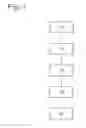
Other features and advantages of the invention will appear upon reading the following detailed description, with reference to the annexed drawings, in which the only FIG. 1 is a block diagram illustrating the steps of the method according to the invention.
DETAILED DESCRIPTION OF PREFERRED EMBODIMENTS
The invention concerns a method for fabrication of an antiferromagnetic and temperature compensated timepiece balance spring.
According to the invention, the method includes the following steps:
(10) selecting an amagnetic compensating alloy, of the iron-chromium-nickel-manganese-beryllium type, comprising, by mass percent, between and including the range limit values:
-
- from 21.0% to 25.0% of manganese,
- from 9.0% to 13.0% of nickel,
- from 6.0% to 15.0% of chromium,
- from 0.2% to 2.0% of beryllium,
- the remainder iron,
- the total of nickel and manganese being higher than or equal to 33.0%,
(11) working said alloy to obtain a blank,
(12) shaping said blank by casting and/or forging and/or wire drawing and/or rolling and/or drawing, to obtain a blank of spring wire;
(13) winding said wire on a winder to obtain a spiral spring,
(14) subjecting said spiral spring to at least a heat setting treatment, by annealing at a temperature comprised between 540° C. and 650° C., for a duration of 30 to 200 minutes, to obtain a balance spring.
In a particular implementation of this method, the alloy contains, by mass percent, from 10.5% to 13.0% of nickel.
More particularly, this alloy contains, by mass percent, from 11.0% to 13.0% of nickel.
In a particular implementation of this method, the alloy contains, by mass percent, more than 7.5% of chromium.
More particularly, the alloy contains, by mass percent, more than 10.5% of chromium.
In a particular implementation of the method, the alloy contains, by mass percent, from 21.0% to 23.0% of manganese.
In a particular implementation of the method, the alloy contains, by mass percent, a total of nickel and manganese greater than or equal to 33.0%.
More particularly, the alloy contains, by mass percent, a total of nickel and manganese greater than or equal to 34.0%.
More particularly still, the alloy contains, by mass percent, a total of nickel and manganese less than or equal to 35.5%.
Claims
What is claimed is:1. A method for fabrication of an antiferromagnetic and temperature compensated timepiece balance spring, wherein said method includes the following steps:
(10) selecting an amagnetic compensating alloy, of the iron-chromium-nickel-manganese-beryllium type, comprising, by mass percent, between and including the range limit values:
from 21.0% to 25.0% of manganese,
from 9.0% to 13.0% of nickel,
from 6.0% to 15.0% of chromium,
from 0.2% to 2.0% of beryllium,
the remainder iron,
the total of nickel and manganese being higher than or equal to 33.0%,
(11) working said alloy to obtain a blank,
(12) shaping said blank by casting and/or forging and/or wire drawing and/or rolling and/or drawing, to obtain a blank of spring wire;
(13) winding said wire on a winder to obtain a spiral spring,
(14) subjecting said spiral spring to at least a heat setting treatment, by annealing at a temperature comprised between 540° C. and 650° C., for a duration of 30 to 200 minutes, to obtain a balance spring.
2. The method according to claim 1, wherein said alloy contains, by mass percent, from 10.5% to 13.0% of nickel.
3. The method according to claim 2, wherein said alloy contains, by mass percent, from 11.0% to 13.0% of nickel.
4. The method according to claim 1, wherein said alloy contains, by mass percent, more than 7.5% of chromium.
5. The method according to claim 4, wherein said alloy contains, by mass percent, more than 10.5% of chromium.
6. The method according to claim 1, wherein said alloy contains, by mass percent, from 21.0% to 23.0% of manganese.
7. The method according to claim 1, wherein said alloy contains, by mass percent, a total of nickel and manganese greater than or equal to 33.0%.
8. The method according to claim 7, wherein said alloy contains, by mass percent, a total of nickel and manganese greater than or equal to 34.0%.
9. The method according to claim 1, wherein said alloy contains, by mass percent, a total of nickel and manganese less than or equal to 35.5%.
Images & Drawings included:
Sources:
- United States Patent and Trademark Office - verify current appl. status at the USPTO↗
Similar patent applications:
Recent applications in this class:
- » 20250207214 2025-06-26
HEATING METHOD AND HEATING SYSTEM - » 20240392404 2024-11-28
ULTRA-HIGH STRENGTH SPRING STEEL AND PREPARATION METHOD THEREOF - » 20230340631 2023-10-26
STEEL FOR LEAF SPRINGS OF AUTOMOBILES AND A METHOD OF MANUFACTURING OF A LEAF THEREOF - » 20220251675 2022-08-11
WIRE ROD AND STEEL WIRE FOR HIGH STRENGTH SPRING, AND MANUFACTURING METHOD THEREFOR - » 20200270714 2020-08-27
Softening method for high-strength Q and P steel hot roll - » 20200190614 2020-06-18
Nitrogen-containing microalloyed spring steel and preparation method thereof - » 20200080166 2020-03-12
Canted coil spring and connector - » 20190352732 2019-11-21
Electric Induction System and Method for Metallurgically Heat Treating Coil Springs - » 20190233912 2019-08-01
STEEL WIRE FOR SPRING, SPRING, METHOD FOR MANUFACTURING STEEL WIRE FOR SPRING, AND METHOD FOR MANUFACTURING SPRING - » 20190032165 2019-01-31
High strength spring, method of manufacturing the same, steel for high strength spring, and method of manufacturing the same
Recent applications for this Assignee:
- » 20250208573 2025-06-26
BALANCE SPRING FOR A HOROLOGICAL REGULATING MEMBER PROVIDED WITH TEMPERATURE-DEPENDENT ADJUSTMENT MEANS - » 20250199481 2025-06-19
METHOD FOR MANUFACTURING WATCH COMPONENTS IN BATCHES - » 20250199476 2025-06-19
METHOD FOR MANUFACTURING HOROLOGICAL BALANCE SPRINGS - » 20250199475 2025-06-19
DEVICE FOR SEPARATING WOUND IN BALANCE SPRINGS AFTER AN EXPANSION CYCLE, AND METHOD FOR MANUFACTURING A BALANCE SPRING COMPRISING A SEPARATION STEP CARRIED OUT BY SUCH A DEVICE - » 20250176306 2025-05-29
TRANSPARENT SOLAR CELL FOR AN ELECTRONIC DEVICE AND METHOD FOR MANUFACTURING SAID SOLAR CELL - » 20250164930 2025-05-22
METHOD FOR MANUFACTURING A SPRUNG BALANCE OSCILLATOR FOR HIGH TORQUE VARIATION BALANCE SPRINGS - » 20250138486 2025-05-01
BALANCE FOR A HOROLOGICAL MOVEMENT - » 20250076812 2025-03-06
TOOL AND METHOD FOR THE SEPARATION OF BALANCE SPRINGS AFTER WINDING IN AND HEAT TREATMENT - » 20250044741 2025-02-06
BALANCE SPRING AND METHOD FOR MANUFACTURING THE SAME - » 20240393744 2024-11-28
METHOD FOR TREATING A BALANCE SPRING FOR A HOROLOGICAL MOVEMENT