IMAGE PROCESSING APPARATUS, IMAGE PROCESSING METHOD, AND IMAGE PROCESSING PROGRAM
US20170161920A1
2017-06-08
15/433,671
2017-02-15
Abstract:
Provided is an image processing apparatus including a high-luminance-pixel identifying unit that identifies pixels having luminance values equal to or greater than a prescribed threshold in an input image; a frequency-distribution creating unit that creates a frequency distribution of the luminance values of all of the pixels identified by the high-luminance-pixel identifying unit; a storage unit that stores a target frequency distribution; and a luminance correcting unit that corrects the luminance values of the pixels identified by the high-luminance-pixel identifying unit so that the frequency distribution created by the frequency-distribution creating unit approaches the target frequency distribution stored in the storage unit.
Assignee:
- OLYMPUS CORPORATION 9,760 🇯🇵 Tokyo, Japan
Interested in similar patents?
Get notified when new applications in this technology area are published.
Classification:
G06T11/001 » CPC main
2D [Two Dimensional] image generation Texturing; Colouring; Generation of texture or colour
G06T2207/10024 » CPC further
Indexing scheme for image analysis or image enhancement; Image acquisition modality Color image
G06T11/00 IPC
2D [Two Dimensional] image generation
G06T7/90 » CPC further
Image analysis Determination of colour characteristics
Description
CROSS-REFERENCE TO RELATED APPLICATIONS
This is a continuation of International Application PCT/JP2015/072449 which is hereby incorporated by reference herein in its entirety.
This application is based on Japanese Patent Application No. 2014-169409, the contents of which are incorporated herein by reference.
TECHNICAL FIELD
The present invention relates to an image processing apparatus, an image processing method, and an image processing program.
BACKGROUND ART
In the related art, with the aim of improving, in an image, the contrast representation of a portion that should be displayed at high luminance, there is a known technique in which high-luminance gamma correction is performed on a high-luminance region or a region in which the amount of change in luminance is large, in order to further increase the luminance, and in which basic gamma correction is performed on regions other than these regions (for example, see Patent Literature 1).
CITATION LIST
Patent Literature
Japanese Unexamined Patent Application, Publication No. 2010-38954
SUMMARY OF INVENTION
An aspect of the present invention provides: an image processing apparatus comprising: a high-luminance-pixel identifying unit that identifies pixels having luminance values equal to or greater than a prescribed threshold in an input image; a frequency-distribution creating unit that creates a frequency distribution of the luminance values of all of the pixels identified by the high-luminance-pixel identifying unit; a storage unit that stores a target frequency distribution; and a luminance correcting unit that corrects the luminance values of the pixels identified by the high-luminance-pixel identifying unit so that the frequency distribution created by the frequency-distribution creating unit approaches the target frequency distribution stored in the storage unit.
Another aspect of the present invention provides an image processing method comprising: a high-luminance-pixel identifying step of identifying pixels having a luminance value equal to or greater than a prescribed threshold in an input image; a frequency-distribution creating step of creating a frequency distribution of the luminance values of all of the pixels identified in the high-luminance-pixel identifying step; and a luminance correcting step of correcting the luminance values of the pixels identified in the high-luminance-pixel identifying step so that the frequency distribution created in the frequency-distribution creating step approaches a target frequency distribution.
Another aspect of the present invention provides an image processing program that enables a computer to execute: a high-luminance-pixel identifying step of identifying pixels having a luminance value equal to or greater than a prescribed threshold in an input image; a frequency-distribution creating step of creating a frequency distribution of the luminance values of all of the pixels identified in the high-luminance-pixel identifying step; and a luminance correcting step of correcting the luminance values of the pixels identified in the high-luminance-pixel identifying step so that the frequency distribution created in the frequency-distribution creating step approaches a target frequency distribution.
BRIEF DESCRIPTION OF DRAWINGS
FIG. 1 is a diagram showing the overall configuration of an image processing apparatus according to an embodiment of the present invention.
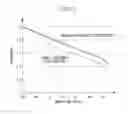
FIG. 2 is a graph showing a frequency distribution created by the frequency-distribution creating unit in the image processing apparatus in FIG. 1 and a target frequency distribution stored in a storage unit.
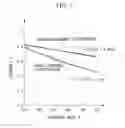
FIG. 3 is a graph showing a state in which the frequency distribution in FIG. 2 is approximated by a straight line.
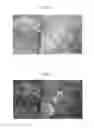
FIG. 4 is a diagram showing an endoscope image before image processing.
FIG. 5 is a diagram showing an endoscope image after image processing by the image processing apparatus in FIG. 1.
DESCRIPTION OF EMBODIMENT
An image processing apparatus and an image processing method according to an embodiment of the present invention will be described below with reference to the drawings.
An image processing apparatus 1 according to this embodiment is applied to processing of an image obtained by an endoscope or the like and, as shown in FIG. 1, includes: a high-luminance-pixel identifying unit 2 that identifies, in an input image, pixels having a luminance value equal to or greater than a prescribed threshold; a frequency-distribution creating unit 3 that creates a frequency distribution of the luminance values of all of the identified pixels; a storage unit 4 that stores a target frequency distribution; and a luminance correcting unit 5 that corrects luminance values of the pixels identified by the high-luminance-pixel identifying unit 2 so that the frequency distribution created by the frequency-distribution creating unit 3 approaches the target frequency distribution stored in the storage unit 4.
The high-luminance-pixel identifying unit 2 compares the input image with a prescribed threshold to identify pixels having a luminance value greater than or equal to the threshold. In this embodiment, for example, an image signal in which the luminance is represented by 8 bits is input, and in the high-luminance-pixel identifying unit 2, by binarizing the image with a gradation value of 190 serving as the threshold, pixels having a high luminance greater than or equal to a gradation value of 190 are extracted.
For all pixels identified in the high-luminance-pixel identifying unit 2, the frequency-distribution creating unit 3 counts the numbers of pixels having a luminance value equal or greater than the threshold while gradually varying the threshold and stores the numbers in association with the thresholds. Accordingly, it is possible to obtain a frequency distribution of the luminance values of high-luminance pixels. An example of the frequency distribution created by the frequency-distribution creating unit 3 is shown by the solid line in FIG. 2. FIG. 2 is a frequency distribution in which the frequencies of the luminances are normalized to the frequency at a gradation value of 190.
The storage unit 4 stores a target frequency distribution, as shown by the broken line in FIG. 2, for example. This frequency distribution is a frequency distribution of an image considered to be a low-glare, high-quality vivid image by processing an image obtained from the same observed scene.
The luminance correcting unit 5 corrects the coefficient of gamma correction to be applied to the image so that the frequency distribution created by the frequency-distribution creating unit 3 approaches the target frequency distribution stored in the storage unit 4. More specifically, as shown in FIG. 3, only the luminance band that influences the amount of glare is approximated by a straight line. Here, as an example, the 200-210 nm range is approximated by a straight line.
As a result, the gradient of the approximating straight line (broken line) in the above wavelength range of the created frequency distribution (solid line) was −0.0079, whereas the gradient of the approximating straight line (broken line) for the target frequency distribution (solid line) became −0.0175.
Thus, the luminance correcting unit 5 is configured to set the gamma correction coefficient so that the gradient of the approximating straight line of the created frequency distribution approaches the gradient of the approximating straight line of the target frequency distribution.
In other words, the luminance correcting unit 5 compares the gradient of the approximating straight line of the created frequency distribution and the gradient of the approximating straight line of the target frequency distribution and calculates an adjustment amount for the gamma correction coefficient according to the difference therebetween.
In other words, when the difference between the gradients of the approximating straight lines is large, by correcting the gamma curve so that the change in the gamma correction coefficient in the high-luminance band becomes larger, a clear difference can be provided between the frequency distribution at a wavelength of 200 nm and the frequency distribution at a wavelength of 210 nm, and by means of the luminance difference, it is possible to correct the gamma curve to produce a vivid image. In the example shown in FIG. 3, before correction, because the difference between the frequency distribution at the wavelength of 200 nm and the frequency distribution at the wavelength of 210 nm is small, the image is not vivid and has the impression that white bright points are spread throughout the entire screen.
An image processing method used in the thus-configured image processing apparatus 1 according to this embodiment will be described below.
To perform image processing using the image processing apparatus 1 according to this embodiment, the acquired image is input to the high-luminance-pixel identifying unit 2, and pixels having gradation values of 190 and higher are extracted (high-luminance-pixel identifying step). Next, the extracted high-luminance pixels are input to the frequency-distribution creating unit 3, and a frequency distribution for each gradation value is created (frequency-distribution creating step).
In the case of an endoscope image, as shown in FIG. 4, illumination light emitted from the endoscope onto indentations and projections on blood vessels or tissue is reflected, causing small, high-luminance bright spots, and thus, a low-quality endoscope image is obtained. The frequency distribution of such an endoscope image is represented by the solid line in FIG. 2.
The created frequency distribution is sent to the luminance correcting unit 5. The target frequency distribution stored in the storage unit 4 is also input to the luminance correcting unit 5.
The luminance correcting unit 5 compares the frequency distribution created by the frequency-distribution creating unit 3 and the target frequency distribution stored in the storage unit 4, and sets the gamma correction coefficient so that the created frequency distribution approaches the target frequency distribution. Then, the input endoscope image is processed in accordance with the set gamma correction coefficient (luminance correcting step). Accordingly, it is possible to obtain a corrected image by image processing, as shown in FIG. 5.
This corrected endoscope image is a high-quality image having few high-luminance bright spots and no glare. In other words, with the image processing apparatus and the image processing method according to this embodiment, high-luminance bright spots do not disappear, but frequency changes in the high-luminance region are large, while high-luminance bright spots remain at about the same level; that is to say, an advantage is afforded in that, it is possible to produce a vivid final image by reducing the fraction of the number of glare points having the same luminance in the high-luminance region.
In this embodiment, although high-luminance pixels in the entire input image are counted, instead of this, a specific region in the image may be specified, high-luminance pixels in the specified region may be counted, and the coefficient for gamma correction to be applied only to that region may be set, and processing carried out.
In this embodiment, although the luminance correcting unit determines the gamma correction coefficient according to the gradient of the frequency distribution created by the frequency-distribution creating unit, it may determine the gamma correction coefficient according to the frequency distribution itself.
In addition, the image processing method according to this embodiment can also be realized in the form of an image processing program that can be executed on a computer.
The above-described embodiment leads to the following invention.
An aspect of the present invention provides: an image processing apparatus comprising: a high-luminance-pixel identifying unit that identifies pixels having luminance values equal to or greater than a prescribed threshold in an input image; a frequency-distribution creating unit that creates a frequency distribution of the luminance values of all of the pixels identified by the high-luminance-pixel identifying unit; a storage unit that stores a target frequency distribution; and a luminance correcting unit that corrects the luminance values of the pixels identified by the high-luminance-pixel identifying unit so that the frequency distribution created by the frequency-distribution creating unit approaches the target frequency distribution stored in the storage unit.
With this aspect, pixels having luminance values equal to or greater than a prescribed threshold are identified from the input image by the high-luminance-pixel identifying unit, and a frequency distribution of the luminance values of all of the identified pixels is created by the frequency-distribution creating unit. Then, with the luminance correcting unit, the created frequency distribution and the target frequency distribution stored in the storage unit are compared, and the luminance values of the pixels identified by the high-luminance-pixel identifying unit are corrected so that the created frequency distribution approaches the target frequency distribution.
It is possible to make the frequency distribution of the luminance values of the identified high-luminance pixels approach the target frequency distribution, and it is possible to obtain a high-quality image in which glare due do high-luminance points is suppressed, while maintaining the sense of sharpness and resolution of the image as a whole.
In the above-described aspect, the luminance correcting unit may perform gamma correction on the basis of the frequency distribution created by the frequency-distribution creating unit.
In the above-described aspect, the luminance correcting unit may perform gamma correction on the basis of the gradient of the frequency distribution created by the frequency-distribution creating unit.
Another aspect of the present invention provides an image processing method comprising: a high-luminance-pixel identifying step of identifying pixels having a luminance value equal to or greater than a prescribed threshold in an input image; a frequency-distribution creating step of creating a frequency distribution of the luminance values of all of the pixels identified in the high-luminance-pixel identifying step; and a luminance correcting step of correcting the luminance values of the pixels identified in the high-luminance-pixel identifying step so that the frequency distribution created in the frequency-distribution creating step approaches a target frequency distribution.
In the above-described aspect, in the luminance correcting step, gamma correction may be performed on the basis of the frequency distribution created in the frequency-distribution creating step.
In the above-described aspect, in the luminance correcting step, gamma correction may be performed on the basis of the gradient of the frequency distribution created in the frequency-distribution creating step.
Another aspect of the present invention provides an image processing program that enables a computer to execute: a high-luminance-pixel identifying step of identifying pixels having a luminance value equal to or greater than a prescribed threshold in an input image; a frequency-distribution creating step of creating a frequency distribution of the luminance values of all of the pixels identified in the high-luminance-pixel identifying step; and a luminance correcting step of correcting the luminance values of the pixels identified in the high-luminance-pixel identifying step so that the frequency distribution created in the frequency-distribution creating step approaches a target frequency distribution.
REFERENCE SIGNS LIST
1 image processing apparatus
2 high-luminance-pixel identifying unit
3 frequency-distribution creating unit
4 storage unit
5 luminance correcting unit
Claims
1. An image processing apparatus comprising:
a high-luminance-pixel identifying unit that identifies pixels having luminance values equal to or greater than a prescribed threshold in an input image;
a frequency-distribution creating unit that creates a frequency distribution of the luminance values of all of the pixels identified by the high-luminance-pixel identifying unit;
a storage unit that stores a target gradient of the frequency distribution; and
a luminance correcting unit that corrects the luminance values of the pixels identified by the high-luminance-pixel identifying unit so that a gradient of the frequency distribution created by the frequency-distribution creating unit approaches the target gradient of the frequency distribution stored in the storage unit.
2. An image processing method comprising:
a high-luminance-pixel identifying step of identifying pixels having a luminance value equal to or greater than a prescribed threshold in an input image;
a frequency-distribution creating step of creating a frequency distribution of the luminance values of all of the pixels identified in the high-luminance-pixel identifying step; and
a luminance correcting step of correcting the luminance values of the pixels identified in the high-luminance-pixel identifying step so that a gradient of the frequency distribution created in the frequency-distribution creating step approaches a target gradient of the frequency distribution.
3. An image processing program that enables a computer to execute:
a high-luminance-pixel identifying step of identifying pixels having a luminance value equal to or greater than a prescribed threshold in an input image;
a frequency-distribution creating step of creating a frequency distribution of the luminance values of all of the pixels identified in the high-luminance-pixel identifying step; and
a luminance correcting step of correcting the luminance values of the pixels identified in the high-luminance-pixel identifying step so that a gradient of the frequency distribution created in the frequency-distribution creating step approaches a target gradient of the frequency distribution.
Images & Drawings included:
Sources:
- United States Patent and Trademark Office - verify current appl. status at the USPTO↗
Similar patent applications:
- » 20120002069
IMAGING APPARATUS, IMAGING METHOD, IMAGING PROGRAM, IMAGE PROCESSING APPARATUS, IMAGE PROCESSING METHOD, AND IMAGE PROCESSING PROGRAM - » 20060227160
Printing apparatus, printing program, printing method, image processing apparatus, image processing program, image processing method, and recording medium having the program recorded therein - » 20070057986
Printing apparatus, printing program, printing method, image processing apparatus, image processing program, image processing method, and recording medium having the program recorded thereon - » 20210120181
Image display system, information processing apparatus, image display method, image display program, image processing apparatus, image processing method, and image processing program - » 20180013957
Image display system, information processing apparatus, image display method, image display program, image processing apparatus, image processing method, and image processing program - » 20070126887
Image processing method, image processing program, image processing apparatus, imaging apparatus, imaging method, and imaging program - » 20230421715
INFORMATION PROCESSING SYSTEM, INFORMATION PROCESSING APPARATUS, INFORMATION PROCESSING METHOD, INFORMATION PROCESSING PROGRAM, IMAGING APPARATUS, METHOD OF CONTROLLING IMAGING APPARATUS, AND CONTROL PROGRAM - » 20240331146
IMAGE PROCESSING APPARATUS, IMAGE PROCESSING METHOD, IMAGE PROCESSING PROGRAM, LEARNING APPARATUS, LEARNING METHOD, AND LEARNING PROGRAM - » 20090116705
Image processing apparatus, image processing method, image processing program, image capturing apparatus, and controlling method thereof - » 20080174699
Image determination apparatus, image determination method, and program, and image processing apparatus, image processing method, and program
Recent applications in this class:
- » 20250173922 2025-05-29
METHOD AND SYSTEM FOR COMPRESSING DATA REPRENTATIVE OF A MAPPING FOR USE IN IMAGE PROCESSING - » 20250173921 2025-05-29
METHOD FOR CONVERTING ENDOSCOPE IMAGES TO NARROW BAND IMAGES - » 20250166245 2025-05-22
AUGMENTING HUMAN VISION USING EXTENDED SPECTRAL DETECTION AND PROCESSING - » 20250166244 2025-05-22
METHOD AND APPARATUS FOR PROCESSING EFFECT IMAGE, ELECTRONIC DEVICE, AND STORAGE MEDIUM - » 20250166243 2025-05-22
MULTI-ATTRIBUTE INVERSION FOR TEXT-TO-IMAGE SYNTHESIS - » 20250157096 2025-05-15
SMILE SIMULATION WITH ACCURATE COLOR - » 20250157095 2025-05-15
METHOD FOR CONTENT DETECTION, STORAGE MEDIUM, AND ELECTRONIC DEVICE - » 20250157094 2025-05-15
SYSTEM AND METHOD FOR EMPLOYING ADAPTIVE PIXEL SELECTOR TECHNIQUES FOR CALCULATING COLOR CONTRAST RATIO WITH DEAD PIXEL MITIGATION - » 20250148660 2025-05-08
TECHNIQUES FOR ENABLING ON-DEVICE INK STROKE PROCESSING - » 20250139850 2025-05-01
Method of making images of rattlesnake scales into camouflage patterns
Recent applications for this Assignee:
- » 20250169842 2025-05-29
BILE DUCT/PANCREATIC DUCT TREATMENT METHOD AND ENDOSCOPIC INSTRUMENT - » 20250161086 2025-05-22
DRUG SUPPLY DEVICE - » 20250161084 2025-05-22
MEDICAL STENT AND STENT DELIVERY DEVICE - » 20250160623 2025-05-22
ENDOSCOPE CAP, ENDOSCOPE TREATMENT TOOL, AND ENDOSCOPE SYSTEM - » 20250152138 2025-05-15
ULTRASOUND IMAGING SYSTEM, OPERATION METHOD OF ULTRASOUND IMAGING SYSTEM, AND COMPUTER-READABLE RECORDING MEDIUM - » 20250151995 2025-05-15
MEDICAL SYSTEM, ENERGY CONTROL METHOD, AND PROCESSOR - » 20250151987 2025-05-15
ENDOSCOPE TREATMENT TOOL AND ENDOSCOPE SYSTEM - » 20250143595 2025-05-08
METHOD FOR DIAGNOSING GASTRO ESOPHAGEAL REFLUX DISEASE - » 20250127377 2025-04-24
ENDOSCOPE APPARATUS, OPERATING METHOD OF ENDOSCOPE APPARATUS, AND INFORMATION STORAGE MEDIUM - » 20250120574 2025-04-17
ENDOSCOPE HOOD AND ENDOSCOPE SYSTEM