Semiconductor structures and methods with high mobility and high energy bandgap materials
US20170186871A1
2017-06-29
15/456,190
2017-03-10
✅ Patent granted
US 10,269,969 B2
2019-04-23
-
-
Tucker J Wright
Slater Matsil, LLP
2037-03-10
Abstract:
An embodiment is a structure comprising a substrate, a high energy bandgap material, and a high carrier mobility material. The substrate comprises a first isolation region and a second isolation region. Each of first and second isolation regions extends below a first surface of the substrate between the first and second isolation regions. The high energy bandgap material is over the first surface of the substrate and is disposed between the first and second isolation regions. The high carrier mobility material is over the high energy bandgap material. The high carrier mobility material extends higher than respective top surfaces of the first and second isolation regions to form a fin.
Inventors:
- Chih-Hsin Ko 165 🇹🇼 Fongshan City, Taiwan
- Clement Hsingjen Wann 279 🇺🇸 Carmel, NY, United States
- Chih-Hsin Ko 164 🇹🇼 Fongshan, Taiwan
- Cheng-Hsien Wu 108 🇹🇼 Hsinchu, Taiwan
Assignee:
- TAIWAN SEMICONDUCTOR MANUFACTURING COMPANY, LTD. 15,428 🇹🇼 Hsinchu, Taiwan
- TAIWAN SEMICONDUCTOR MANUFACTURING COMPANY, LTD. 8,890 🇹🇼 Hsin-Chu, Taiwan
Applicant:
Interested in similar patents?
Get notified when new applications in this technology area are published.
Classification:
H01L21/02636 » CPC further
Processes or apparatus adapted for the manufacture or treatment of semiconductor or solid state devices or of parts thereof; Manufacture or treatment of semiconductor devices or of parts thereof; Forming layers; Forming inorganic semiconducting materials on a substrate; Formation types; Deposition types Selective deposition, e.g. simultaneous growth of mono- and non-monocrystalline semiconductor materials
H01L21/76224 » CPC further
Processes or apparatus adapted for the manufacture or treatment of semiconductor or solid state devices or of parts thereof; Manufacture or treatment of devices consisting of a plurality of solid state components formed in or on a common substrate or of parts thereof; Manufacture of integrated circuit devices or of parts thereof; Manufacture of specific parts of devices defined in group; Making of isolation regions between components; Dielectric regions, e.g. EPIC dielectric isolation, LOCOS; Trench refilling techniques, SOI technology, use of channel stoppers using trench refilling with dielectric materials
H01L29/205 » CPC further
Semiconductor devices adapted for rectifying, amplifying, oscillating or switching, or capacitors or resistors with at least one potential-jump barrier or surface barrier, e.g. PN junction depletion layer or carrier concentration layer; Details of semiconductor bodies or of electrodes thereof; Multistep manufacturing processes therefor; Semiconductor bodies ; Multistep manufacturing processes therefor characterised by the materials of which they are formed including, apart from doping materials or other impurities, only AB compounds including two or more compounds, e.g. alloys in different semiconductor regions, e.g. heterojunctions
H01L29/0649 » CPC further
Semiconductor devices adapted for rectifying, amplifying, oscillating or switching, or capacitors or resistors with at least one potential-jump barrier or surface barrier, e.g. PN junction depletion layer or carrier concentration layer; Details of semiconductor bodies or of electrodes thereof; Multistep manufacturing processes therefor; Semiconductor bodies ; Multistep manufacturing processes therefor characterised by their shape; characterised by the shapes, relative sizes, or dispositions of the semiconductor regions ; characterised by the concentration or distribution of impurities within semiconductor regions characterised by particular constructional design considerations, e.g. for preventing surface leakage, for controlling electric field concentration or for internal isolations regions; Isolation within the component, i.e. internal isolation Dielectric regions, e.g. SiO regions, air gaps
H01L29/10 IPC
Semiconductor devices adapted for rectifying, amplifying, oscillating or switching, or capacitors or resistors with at least one potential-jump barrier or surface barrier, e.g. PN junction depletion layer or carrier concentration layer; Details of semiconductor bodies or of electrodes thereof; Multistep manufacturing processes therefor; Semiconductor bodies ; Multistep manufacturing processes therefor characterised by their shape; characterised by the shapes, relative sizes, or dispositions of the semiconductor regions ; characterised by the concentration or distribution of impurities within semiconductor regions with semiconductor regions connected to an electrode not carrying current to be rectified, amplified or switched and such electrode being part of a semiconductor device which comprises three or more electrodes
H01L29/7786 » CPC further
Semiconductor devices adapted for rectifying, amplifying, oscillating or switching, or capacitors or resistors with at least one potential-jump barrier or surface barrier, e.g. PN junction depletion layer or carrier concentration layer; Details of semiconductor bodies or of electrodes thereof; Multistep manufacturing processes therefor; Types of semiconductor device ; Multistep manufacturing processes therefor controllable by only the electric current supplied, or only the electric potential applied, to an electrode which does not carry the current to be rectified, amplified or switched; Unipolar devices, e.g. field effect transistors; Field effect transistors with two-dimensional charge carrier gas channel, e.g. HEMT ; with two-dimensional charge-carrier layer formed at a heterojunction interface with direct single heterostructure, i.e. with wide bandgap layer formed on top of active layer, e.g. direct single heterostructure MIS-like HEMT
H01L29/66 IPC
Semiconductor devices adapted for rectifying, amplifying, oscillating or switching, or capacitors or resistors with at least one potential-jump barrier or surface barrier, e.g. PN junction depletion layer or carrier concentration layer; Details of semiconductor bodies or of electrodes thereof; Multistep manufacturing processes therefor Types of semiconductor device ; Multistep manufacturing processes therefor
H01L29/78 IPC
Semiconductor devices adapted for rectifying, amplifying, oscillating or switching, or capacitors or resistors with at least one potential-jump barrier or surface barrier, e.g. PN junction depletion layer or carrier concentration layer; Details of semiconductor bodies or of electrodes thereof; Multistep manufacturing processes therefor; Types of semiconductor device ; Multistep manufacturing processes therefor controllable by only the electric current supplied, or only the electric potential applied, to an electrode which does not carry the current to be rectified, amplified or switched; Unipolar devices, e.g. field effect transistors; Field effect transistors with field effect produced by an insulated gate
H01L29/267 » CPC further
Semiconductor devices adapted for rectifying, amplifying, oscillating or switching, or capacitors or resistors with at least one potential-jump barrier or surface barrier, e.g. PN junction depletion layer or carrier concentration layer; Details of semiconductor bodies or of electrodes thereof; Multistep manufacturing processes therefor; Semiconductor bodies ; Multistep manufacturing processes therefor characterised by the materials of which they are formed including, apart from doping materials or other impurities, elements provided for in two or more of the groups , , , , , e.g. alloys in different semiconductor regions, e.g. heterojunctions
H01L29/778 IPC
Semiconductor devices adapted for rectifying, amplifying, oscillating or switching, or capacitors or resistors with at least one potential-jump barrier or surface barrier, e.g. PN junction depletion layer or carrier concentration layer; Details of semiconductor bodies or of electrodes thereof; Multistep manufacturing processes therefor; Types of semiconductor device ; Multistep manufacturing processes therefor controllable by only the electric current supplied, or only the electric potential applied, to an electrode which does not carry the current to be rectified, amplified or switched; Unipolar devices, e.g. field effect transistors; Field effect transistors with two-dimensional charge carrier gas channel, e.g. HEMT ; with two-dimensional charge-carrier layer formed at a heterojunction interface
H01L21/762 IPC
Processes or apparatus adapted for the manufacture or treatment of semiconductor or solid state devices or of parts thereof; Manufacture or treatment of devices consisting of a plurality of solid state components formed in or on a common substrate or of parts thereof; Manufacture of integrated circuit devices or of parts thereof; Manufacture of specific parts of devices defined in group; Making of isolation regions between components Dielectric regions, e.g. EPIC dielectric isolation, LOCOS; Trench refilling techniques, SOI technology, use of channel stoppers
H01L21/8252 » CPC further
Processes or apparatus adapted for the manufacture or treatment of semiconductor or solid state devices or of parts thereof; Manufacture or treatment of devices consisting of a plurality of solid state components formed in or on a common substrate or of parts thereof; Manufacture of integrated circuit devices or of parts thereof; Manufacture or treatment of devices consisting of a plurality of solid state components or integrated circuits formed in, or on, a common substrate with subsequent division of the substrate into plural individual devices to produce devices, e.g. integrated circuits, each consisting of a plurality of components the substrate being a semiconductor, using III-V technology
H01L21/0259 » CPC further
Processes or apparatus adapted for the manufacture or treatment of semiconductor or solid state devices or of parts thereof; Manufacture or treatment of semiconductor devices or of parts thereof; Forming layers; Forming inorganic semiconducting materials on a substrate; Deposited layers; Structure Microstructure
H01L21/02658 » CPC further
Processes or apparatus adapted for the manufacture or treatment of semiconductor or solid state devices or of parts thereof; Manufacture or treatment of semiconductor devices or of parts thereof; Forming layers; Forming inorganic semiconducting materials on a substrate; Special treatments Pretreatments
H01L29/785 » CPC further
Semiconductor devices adapted for rectifying, amplifying, oscillating or switching, or capacitors or resistors with at least one potential-jump barrier or surface barrier, e.g. PN junction depletion layer or carrier concentration layer; Details of semiconductor bodies or of electrodes thereof; Multistep manufacturing processes therefor; Types of semiconductor device ; Multistep manufacturing processes therefor controllable by only the electric current supplied, or only the electric potential applied, to an electrode which does not carry the current to be rectified, amplified or switched; Unipolar devices, e.g. field effect transistors; Field effect transistors with field effect produced by an insulated gate having a channel with a horizontal current flow in a vertical sidewall of a semiconductor body, e.g. FinFET, MuGFET
H01L29/7842 » CPC further
Semiconductor devices adapted for rectifying, amplifying, oscillating or switching, or capacitors or resistors with at least one potential-jump barrier or surface barrier, e.g. PN junction depletion layer or carrier concentration layer; Details of semiconductor bodies or of electrodes thereof; Multistep manufacturing processes therefor; Types of semiconductor device ; Multistep manufacturing processes therefor controllable by only the electric current supplied, or only the electric potential applied, to an electrode which does not carry the current to be rectified, amplified or switched; Unipolar devices, e.g. field effect transistors; Field effect transistors with field effect produced by an insulated gate means for exerting mechanical stress on the crystal lattice of the channel region, e.g. using a flexible substrate
H01L29/06 IPC
Semiconductor devices adapted for rectifying, amplifying, oscillating or switching, or capacitors or resistors with at least one potential-jump barrier or surface barrier, e.g. PN junction depletion layer or carrier concentration layer; Details of semiconductor bodies or of electrodes thereof; Multistep manufacturing processes therefor; Semiconductor bodies ; Multistep manufacturing processes therefor characterised by their shape; characterised by the shapes, relative sizes, or dispositions of the semiconductor regions ; characterised by the concentration or distribution of impurities within semiconductor regions
H01L21/02 IPC
Processes or apparatus adapted for the manufacture or treatment of semiconductor or solid state devices or of parts thereof Manufacture or treatment of semiconductor devices or of parts thereof
Description
This application is a divisional of U.S. patent application Ser. No. 14/598,378, filed on Jan. 16, 2015, entitled “Semiconductor Structures and Methods with High Mobility and High Energy Bandgap Materials,” which is a continuation of U.S. patent application Ser. No. 14/460,105, now U.S. Pat. No. 8,969,156, filed on Aug. 14, 2014, entitled “Semiconductor Structures and Methods with High Mobility and High Energy Bandgap Materials,” which is a divisional of U.S. patent application Ser. No. 13/415,339, now U.S. Pat. No. 8,836,016, filed on Mar. 8, 2012, entitled “Semiconductor Structures and Methods with High Mobility and High Energy Bandgap Materials,” which applications are hereby incorporated herein by reference in their entireties.
BACKGROUND
With the increasing down-scaling of integrated circuits and increasingly demanding requirements to the speed of integrated circuits, transistors need to have higher drive currents with smaller dimensions. Fin Field-Effect Transistors (finFETs) were thus developed. FinFETs generally have increased channel widths. The increase in the channel widths is achieved by forming channels that include portions on the sidewalls of semiconductor fins and portions on the top surfaces of the semiconductor fins. Since the drive currents of transistors are proportional to the channel widths, the drive currents of the finFETs are increased.
In an existing finFET formation process, shallow trench isolation (STI) regions are first formed in a silicon substrate. The STI regions are then recessed to form silicon fins, which comprise portions of the silicon substrate that are over the recessed STI regions. Next, a gate dielectric, a gate electrode, and source and drain regions are formed to finish the formation of the FinFET.
BRIEF DESCRIPTION OF THE DRAWINGS
For a more complete understanding of the present embodiments, and the advantages thereof, reference is now made to the following descriptions taken in conjunction with the accompanying drawings, in which:
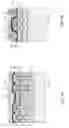
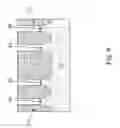
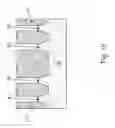
FIGS. 1 through 8B are a method of forming a fin field effect transistor (finFET) according to an embodiment;
FIG. 9 is an example of recessed surfaces that can be substituted into the method of FIGS. 1 through 8B according to an embodiment; and
FIG. 10 is another example of recessed surfaces that can be substituted into the method of FIGS. 1 through 8B according to an embodiment.
DETAILED DESCRIPTION OF ILLUSTRATIVE EMBODIMENTS
The making and using of the present embodiments are discussed in detail below. It should be appreciated, however, that the present disclosure provides many applicable inventive concepts that can be embodied in a wide variety of specific contexts. The specific embodiments discussed are merely illustrative of specific ways to make and use the disclosed subject matter, and do not limit the scope of the different embodiments.
Embodiments will be described with respect to a specific context, namely fin field effect transistors (finFETs) and methods for forming finFETs. Other embodiments may also be applied, however, to planar transistors or other devices. Although embodiments of methods for forming finFETs are disclosed with steps performed in a particular order, embodiments contemplate methods in which steps are performed in any logical order.
FIG. 1 illustrates a substrate 10 with isolation regions 12. The substrate 10, in this embodiment, is a bulk silicon substrate, and in other embodiments can be a bulk semiconductor substrate, such as germanium or the like, a semiconductor on insulator (SOI), or the like. The isolation regions 12, in this embodiment, are each a trench oxide formed, for example, by etching trenches and filling the trenches with silicon oxide using a high density plasma chemical vapor deposition (HDP-CVD). The isolation regions 12 define subsequently formed active regions, such as fins for finFETs. Top surfaces of the substrate 10 between adjacent isolation regions 12 can be rectangular, oval, or the like. Other acceptable methods and materials for forming isolation regions 12 may also be used.
FIG. 2 illustrates the substrate 10 having recessed surfaces 13 between the isolation regions 12. In this embodiment, each recessed surface 13 is a singular planar surface and is at a depth, for example, between approximately 40 nm and approximately 100 nm from a top surface of an adjacent isolation region 12. The substrate 10 can be recessed by anisotropically etching the substrate 10 using an etchant with a selectivity that etches the substrate 10 and substantially not the isolation regions 12. The isolation regions 12 extend to a depth below the recessed surfaces, for example, between approximately 110 nm and approximately 150 nm. Each recessed surface 13 is a crystalline surface of the substrate 10, such as a surface of a monocrystalline semiconductor material of the substrate 10.
FIG. 3 shows the epitaxial growth of a high energy bandgap material 14 on the recessed surfaces 13 of the substrate 10 between the isolation regions 12. The high energy bandgap material 14 can have an energy bandgap, for example, greater than 1 eV. Example high energy bandgap materials include InP, InGaP, AlInAs, AlAs, GaAs, GaP, the like, or a combination thereof. The high energy bandgap material 14 is, for example, a crystalline semiconductor material formed by selective epitaxial growth (SEG). Top surfaces of the high energy bandgap material 14 can include facets such as illustrated, can be planar, or can have a planar surface and facets, which can be formed by controlling appropriate process parameters during the epitaxial growth. The high energy bandgap material 14 can also include defects that arise from a mismatch of lattices between the crystalline materials of the substrate 10 and the high energy bandgap material 14. The high energy bandgap material 14 can have a thickness greater than its critical thickness and can be fully relaxed. For example, the high energy bandgap material 14 can have a thickness between approximately 10 nm and approximately 60 nm. The high energy bandgap material 14 can be selected to cause a desired stress, such as tensile or compressive, in a material subsequently grown over the high energy bandgap material 14.
FIG. 4 shows the epitaxial growth of a high carrier mobility material 16 on the high energy bandgap material 14 and in the recesses between the isolation regions 12. An electron mobility of the high carrier mobility material 16 can be greater than approximately 8,500 cm2/V-s in embodiments where n-type devices, such as n-type finFETs, are to be formed. A hole mobility of the high carrier mobility material 16 can be greater than approximately 1,500 cm2/V-s in embodiments where p-type devices, such as p-type fin FETs, are to be formed. The high carrier mobility material 16 can include a stress, such as tensile or compressive, which can change a carrier mobility of the high carrier mobility material 16. The stress can be induced in the high carrier mobility material 16 by a mismatch of crystalline lattice spacing between the high carrier mobility material 16 and the adjoining underlying material, which is the high energy bandgap material 14 in this embodiment. Other layers can be disposed between the high energy bandgap material 14 and the high carrier mobility material 16.
Example high carrier mobility materials include InAs, InSb, InGaAs, InAsSb, InGaSb, SiGe, Ge, the like, or a combination thereof. In embodiments, InAs, InSb, InGaAs, InAsSb, InGaSb, or the like can be used for an n-type finFET, and Si1−xGex, where x>0.5, can be used for a p-type finFET. The high carrier mobility material 16 is, for example, a monocrystalline semiconductor material formed by SEG. The high carrier mobility material 16 is grown to fill the recesses between the isolation regions 12. The high carrier mobility material 16 can cover portions of the isolation regions 12 and can coalesce from out of multiple recesses over an isolation region 12.
In FIG. 5, a planarization process is performed to remove portions of the high carrier mobility material 16 from above top surfaces of the isolation regions 12. A chemical mechanical polish (CMP) can be used as the planarization process. The isolation regions 12 and the high carrier mobility material 16 have top surfaces that are co-planar.
FIG. 6 shows the isolation regions 12 recessed using, for example, an etch selective to the isolation regions 12. The recessing of the isolation regions 12 results in fins extending a height h above top surfaces of the isolation regions 12. The height h is less than the distance the high carrier mobility material 16 extends along a sidewall such that a lower sidewall portion of the high carrier mobility material 16 is covered by an adjacent isolation region 12. In this manner, the high energy bandgap material 14 in the sidewall is covered by an adjacent isolation region 12, and the high carrier mobility material 16 can serve as a channel in the fin along exposed exterior surfaces of the fin.
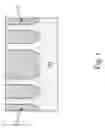
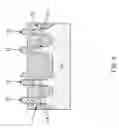
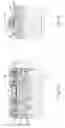
FIGS. 7A and 7B illustrate cross sectional views of the formation of a gate structure and source/drain regions 26. FIG. 7B is a cross sectional view of FIG. 7A along line B-B, and FIG. 7A is a cross sectional view of FIG. 7B along line A-A. In these figures, a gate dielectric layer and gate electrode layer are sequentially and conformally deposited over the fins and the isolation regions 12, such as by CVD, atomic layer deposition (ALD), the like, or a combination thereof. The gate dielectric layer and gate electrode layer are then patterned into a gate dielectric 20 and a gate electrode 22 using, for example, acceptable photolithography techniques. The gate dielectric 20 can comprise any acceptable dielectric material, and the gate electrode 22 can comprise any acceptable conductive material, such as polysilicon, a metal, a silicide, or the like.
Extension regions of the source/drain regions 26 are then formed in the high carrier mobility material 16. The extension regions can be implanted into the high carrier mobility material 16, e.g., the fin, using an acceptable implantation of a p-type or n-type dopant according to the application. Gate spacers 24 are then formed. A gate spacer dielectric layer is deposited conformally, such as by CVD, ALD, the like, or a combination thereof, over the substrate 10, including over the gate electrode 22 and gate dielectric 20 and along their sidewalls. Portions of the gate spacer dielectric layer are removed such that gate spacers 24 remain, such as by an anisotropic etch. The gate spacers 24 can be any acceptable material, such as silicon nitride or the like. After forming the gate spacers 24, the deep drain/source regions 26 are formed, for example, by an acceptable implantation into the high carrier mobility material 16, e.g., the fin, using a p-type or n-type dopant according to the application.
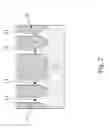
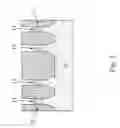
FIGS. 8A and 8B are cross sectional views of the formation of an etch stop layer (ESL) 28, an inter-layer dielectric (ILD) 30 and contacts 32. The ESL 28 is deposited over the substrate 10, fins, and gate structures by an acceptable deposition process, such as CVD, ALD, or the like. The ESL 28 can be any acceptable material, such as silicon nitride or the like. The ILD 30 is deposited over the ESL 28 by an acceptable deposition process, such as CVD, ALD, or the like. The ILD 30 can be planarized, such as by a CMP. The ILD 30 can be any acceptable material, such as silicon oxide, borophosphosilicate glass (BPSG), phosphosilicate glass (PSG), the like, or a combination thereof. Contact openings are then etched in the ILD 30 and ESL 28 to the source/drain regions 26 using, for example, a photolithography process. Conductive materials, such as a metal, doped polysilicon, or the like, are deposited in the contact openings. A CMP can be used to remove any excess conductive materials. The remaining conductive materials in the contact openings form the contacts 32.
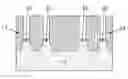
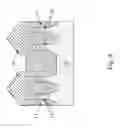
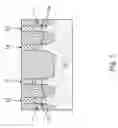
FIGS. 9 and 10 illustrate different recessed surfaces 40 and 42, respectively, which can be used in the place of the recessed surfaces 13 of FIG. 2. In FIG. 9, the recessed surfaces 40 are curved surfaces, such as meniscus-type surfaces, between adjacent isolation regions 12. The curved surfaces of the recessed surfaces 40 can be formed by using, for example, an isotropic etch where a mask or photoresist covers portions of the substrate 10 adjoining the isolation regions 12. An example isotropic etch includes a plasma dry etch. In FIG. 10, the recessed surfaces 42 are faceted between adjacent isolation regions 12. The faceted surfaces of the recessed surfaces 42 can be formed using an etch that is selective to appropriate crystalline surfaces of the substrate 10. For example, the crystalline surfaces can be adjacent {111} planes, with an included angle of 70.5, which can be formed by a wet etch using potassium hydroxide (KOH), tetramethylammonium hydroxide (TMAH), ammonium hydroxide (NH4OH), or the like. The recessed surfaces 40 or 42 of FIG. 9 or 10 can be substituted in the process and structure previously discussed.
Embodiments can achieve advantages. By including the high energy bandgap material between the fin and the substrate, a leakage current can be reduced. The high energy bandgap material may require a higher energy for carriers to travel to the underlying substrate from the device in the fin, which can reduce leakage current. Further, by appropriately selecting the material used as the high energy bandgap material, a stress can be caused in the high carrier mobility material of the fin increasing the carrier mobility of the fin and corresponding device.
An embodiment is a structure comprising a substrate, a high energy bandgap material, and a high carrier mobility material. The substrate comprises a first isolation region and a second isolation region. Each of first and second isolation regions extends below a first surface of the substrate between the first and second isolation regions. The high energy bandgap material is over the first surface of the substrate and is disposed between the first and second isolation regions. The high carrier mobility material is over the high energy bandgap material. The high carrier mobility material extends higher than respective top surfaces of the first and second isolation regions to form a fin.
Another embodiment is a structure comprising a semiconductor substrate, a first semiconductor material on the substrate, and a fin comprising a second semiconductor material on the first semiconductor material. The first semiconductor material is disposed between the semiconductor substrate and the second semiconductor material. The first semiconductor material has an energy bandgap greater than 1 eV. The second semiconductor material has an electron mobility greater than 8,500 cm2/V-s or a hole mobility greater than 1,500 cm2/V-s.
A further embodiment is method for forming a structure. The method comprises epitaxially growing a first semiconductor material on a semiconductor substrate. The semiconductor substrate includes a first isolation region and a second isolation region extending to a depth below a first surface of the semiconductor substrate. The first surface is between the first isolation region and the second isolation region. The first isolation region and the second isolation region extend higher than the first surface of the semiconductor substrate. The method further comprises forming a fin extending higher than the first isolation region and the second isolation region. Forming the fin includes epitaxially growing a second semiconductor material on the first semiconductor material. The first semiconductor material has a bandgap energy greater than 1 eV, and the second semiconductor material has a hole mobility greater than 1,500 cm2/V-s or an electron mobility greater than 8,500 cm2/V-s.
Although the present embodiments and their advantages have been described in detail, it should be understood that various changes, substitutions and alterations can be made herein without departing from the spirit and scope of the disclosure as defined by the appended claims. Moreover, the scope of the present application is not intended to be limited to the particular embodiments of the process, machine, manufacture, composition of matter, means, methods and steps described in the specification. As one of ordinary skill in the art will readily appreciate from the disclosure, processes, machines, manufacture, compositions of matter, means, methods, or steps, presently existing or later to be developed, that perform substantially the same function or achieve substantially the same result as the corresponding embodiments described herein may be utilized according to the present disclosure. Accordingly, the appended claims are intended to include within their scope such processes, machines, manufacture, compositions of matter, means, methods, or steps.
Claims
What is claimed is:1. A structure comprising:
a fin having a first source/drain region and a second source/drain region in a high carrier mobility material, the high carrier mobility material being over a high energy bandgap material, the high energy bandgap material having facets at an interface with the high carrier mobility material, the high energy bandgap material being over a substrate; and
a gate structure comprising a gate dielectric on a sidewall surface of the fin disposed between the first source/drain region and the second source/drain region, the gate structure further comprising a gate electrode on the gate dielectric.
2. The structure of claim 1, wherein the fin protrudes from between neighboring isolation regions on the substrate, the fin protruding above the neighboring isolation regions.
3. The structure of claim 1, wherein the high energy bandgap material induces a stress in the high carrier mobility material.
4. The structure of claim 1, wherein the high energy bandgap material is selected from the group consisting essentially of InP, InGaP, AlInAs, AlAs, GaAs, GaP, or a combination thereof.
5. The structure of claim 1, wherein the high carrier mobility material is selected from the group consisting essentially of InAs, InSb, InGaAs, InAsSb, InGaSb, SiGe, Ge, or a combination thereof.
6. The structure of claim 1, wherein the gate structure defines a channel region in the high carrier mobility material between the first source/drain region and the second source/drain region.
7. The structure of claim 1, wherein a surface of the substrate interfacing with the high energy bandgap material is a planar surface.
8. The structure of claim 1, wherein a surface of the substrate interfacing with the high energy bandgap material is a meniscus-type surface.
9. The structure of claim 1, wherein a surface of the substrate interfacing with the high energy bandgap material is a faceted surface.
10. A structure comprising:
a substrate;
a gate structure over the substrate; and
a first source/drain region and a second source/drain region on opposing sides of the gate structure, the first source/drain region and the second source/drain region comprising a high carrier mobility material, the high carrier mobility material being over a high energy bandgap material, the high energy bandgap material having facets at an interface with the high carrier mobility material, the high energy bandgap material being over the substrate.
11. The structure of claim 10, wherein the high carrier mobility material and the high energy bandgap material extends completely under the gate structure.
12. The structure of claim 10, wherein the high energy bandgap material has an energy bandgap greater than 1 eV, and the high carrier mobility material has an electron mobility greater than 8,500 cm2/V-s or a hole mobility greater than 1,500 cm2/V-s.
13. The structure of claim 10, wherein the high carrier mobility material extends continuously to another separated region of the high energy bandgap material.
14. The structure of claim 10, wherein a surface of the substrate interfacing with the high energy bandgap material is a planar surface.
15. The structure of claim 10, wherein a surface of the substrate interfacing with the high energy bandgap material is non-planar.
16. A structure comprising:
a high energy bandgap material over a substrate;
a high carrier mobility material over the high energy bandgap material, an interface between the high energy bandgap material and the high carrier mobility material being non-planar;
a first source/drain region in the high carrier mobility material;
a second source/drain region in the high carrier mobility material,
a channel region interposed between the first source/drain region and the second source/drain region; and
a gate structure over the channel region.
17. The structure of claim 16, wherein the high energy bandgap material has a faceted upper surface.
18. The structure of claim 16, wherein the high energy bandgap material has an energy bandgap greater than 1 eV.
19. The structure of claim 16, wherein the high carrier mobility material has an electron mobility greater than 8,500 cm2/V-s or a hole mobility greater than 1,500 cm2/V-s.
20. The structure of claim 16, further comprising isolation regions on opposing sides of the first source/drain region and the second source/drain region.
Images & Drawings included:
Sources:
- United States Patent and Trademark Office - verify current appl. status at the USPTO↗
Similar patent applications:
- » 20130234147
Semiconductor structures and methods with high mobility and high energy bandgap materials - » 20140357049
Semiconductor structures and methods with high mobility and high energy bandgap materials - » 20150123144
Semiconductor structures and methods with high mobility and high energy bandgap materials - » 20190252546
Semiconductor structures and methods with high mobility and high energy bandgap materials - » 20200328307
Semiconductor structures and methods with high mobility and high energy bandgap materials
Recent applications in this class:
- » 20250072041 2025-02-27
INTEGRATED CIRCUIT DEVICES - » 20250072040 2025-02-27
SEMICONDUCTOR DEVICE AND METHOD OF FORMING SAME - » 20250072039 2025-02-27
FILTER FINS IN A GATE CONNECTOR REGION BETWEEN TRANSISTORS FOR SIGNAL FILTERING - » 20250072038 2025-02-27
FINFET DEVICE STRUCTURE WITH EXTRA FIN - » 20250022959 2025-01-16
METHOD OF MANUFACTURING SEMICONDUCTOR DEVICES - » 20250022958 2025-01-16
SEMICONDUCTOR DEVICE AND METHOD OF FABRICATING THE SAME - » 20250015187 2025-01-09
TRANSISTOR STRUCTURE WITH MULTIPLE VERTICAL THIN BODIES - » 20250015186 2025-01-09
Semiconductor structure - » 20240429317 2024-12-26
SEMICONDUCTOR DEVICES AND METHODS OF FABRICATING THE SAME - » 20240405126 2024-12-05
SEMICONDUCTOR DEVICE AND MANUFACTURING METHOD THEREOF
Recent applications for this Assignee:
- » 20250294856 2025-09-18
STACKED TRANSISTORS AND METHOD OF FORMING THE SAME - » 20250294853 2025-09-18
SEMICONDUCTOR DEVICE STRUCTURE WITH METAL GATE STACK - » 20250294838 2025-09-18
SEMICONDUCTOR DEVICES AND METHODS OF FABRICATING THE SAME - » 20250294819 2025-09-18
METHOD OF MANUFACTURING A SEMICONDUCTOR DEVICE AND A SEMICONDUCTOR DEVICE - » 20250294814 2025-09-18
SEMICONDUCTOR DEVICE WITH OXIDE-BASED SEMICONDUCTOR CHANNEL - » 20250294731 2025-09-18
NOVEL METAL FUSE STRUCTURE BY VIA LANDING - » 20250293173 2025-09-18
CHIP PACKAGE AND METHOD OF FORMING THE SAME - » 20250293148 2025-09-18
DECOUPLING CAPACITORS WITH BACK SIDE POWER RAILS - » 20250293106 2025-09-18
SEMICONDUCTOR PACKAGE - » 20250293104 2025-09-18
PACKAGE ASSEMBLY AND MANUFACTURING METHOD THEREOF