Static plant for preparing feed mixes for ruminant livestock
US20170188620A1
2017-07-06
15/316,388
2015-06-30
✅ Patent granted
US 10,532,362 B2
2020-01-14
WO; PCT/ES2015/070507; 20150630
WO; WO2016/001467; 20160107
Faye Francis
Notaro, Michalos & Zaccaria P.C.
2036-04-06
Abstract:
Static plant for preparing feed mixes for ruminant livestock, having a conveyor unit for conveying the feed mix ingredients, chain and/or screw feeders, feeders with weight sensors and supplementary conveyor belt, silos of solid ingredients, and silos of liquid ingredients, independently supplying two or more high-capacity mixers, via the conveyor unit by a dual flow, the mixers including weight control means, laser sensors and strain gauges. The invention allows for mixing to be controlled with increased accuracy and, consequently, improving the quality of the mix, using fully automated continuous operating cycles, the resulting mix being discharged onto any type of known device using discharging means, for its distribution.
Inventors:
- Fernando TORRES ASO 1 🇪🇸 Monzon, Huesca, Spain
- Ramon MALLADA ALBIOL 1 🇪🇸 Monzon, Huesca, Spain
- Fernando Torres Aso 1 🇪🇸 Huesca, Spain
- Ramon Mallada Albiol 1 🇪🇸 Huesca, Spain
Assignee:
- GRUPO TATOMA, S.L. 1 🇪🇸 Monzon, Huesca, Spain
Applicant:
Interested in similar patents?
Get notified when new applications in this technology area are published.
Classification:
A23N17/007 » CPC main
Apparatus specially adapted for preparing animal feeding-stuffs for mixing feeding-stuff components
A23N17/00 IPC
Apparatus specially adapted for preparing animal feeding-stuffs
B02C19/0056 » CPC further
Other disintegrating devices or methods specially adapted for specific materials not otherwise provided for
B02C18/22 » CPC further
Disintegrating by knives or other cutting or tearing members which chop material into fragments with rotating knives; Details Feed or discharge means
B02C2018/147 » CPC further
Disintegrating by knives or other cutting or tearing members which chop material into fragments with rotating knives within horizontal containers of the plural stage type
B02C19/00 IPC
Other disintegrating devices or methods
B02C18/14 IPC
Disintegrating by knives or other cutting or tearing members which chop material into fragments with rotating knives within horizontal containers
B02C25/00 » CPC main
Control arrangements specially adapted for crushing or disintegrating
B02C23/02 » CPC further
Auxiliary methods or auxiliary devices or accessories specially adapted for crushing or disintegrating not provided for in preceding groups or not specially adapted to apparatus covered by a single preceding group Feeding devices
Description
OBJECT OF THE INVENTION
Static plant for preparing feed mixes for ruminant livestock, comprising a conveyor unit for conveying feed mix ingredients, chain and/or screw feeders, feeders with weight sensors and with supplementary conveyor belt, silos of solid ingredients and silos of liquid ingredients, independently supplying two or more mixers that incorporate weight control means to improve the accuracy of the ingredient mix, which, once carried out, is discharged onto any type of known device using discharging means, for the distribution of the mix.
The object of the invention is to obtain, by means of a static plant configured on different levels, a high degree of productivity, sufficient to feed more than 1,500 heads of livestock/hour, since, by establishing a dual flow of feed onto the mixer with the supplementary conveyor belt, when one discharge cycle of the conveyor unit comes to an end, a new, totally automated cycle begins, achieving the optimization of mixing times, accuracy in the batching of ingredients and assuring product quality.
BACKGROUND OF THE INVENTION
At present, different types of plants for obtaining homogenous mixes to feed ruminant livestock are already known.
Patent WO2014021716 describes a “processing of blocks or bales of feed”, consisting of a movable mixing bin and a platform with a fixed floor to contain one or more rows of blocks or bales of feed, which are cut and deposited in a mixing bin to be weighed, with the drawback that this type of plant is only configured for mixes of different types of baled forage for use on small farms, and with the added drawback that there are no means for incorporating solid and liquid additives to the mix via silos.
Another example of similar characteristics can be found in patent NL1023476, which describes a mechanically controlled feeding system for hay that receives complete bales that are methodically broken up into servings for animal feed, with the drawback that this setup can only handle mixes of hay forage, with no means of adding other ingredients.
Patent EP1938682 describes an apparatus and method for separating and mixing feed for livestock consisting of several conveyor belts, positioned in line, receiving one or more feed bales that are cut into pieces by a moving cutting unit and directed to a moving mixing bin which, after carrying out mixing, distributes the mix to the ruminant livestock, but with the same drawback as in the previous examples, namely that this type of plant is only effective on small family-type farms.
Patent EP1625787 describes apparatuses for separating and mixing feed for livestock, consisting of at least two conveyor belts positioned in line and equipped with a weight sensor, intended for supplying a mixing space, and delivery means for delivering a feed mix from the mixing space, or, by means of a moving mixer to subsequently distribute the mix, but with the drawback that productivity is reduced considerably when the mixer is withdrawn to distribute the mix made, and that furthermore, there is no means of incorporating concentrated and liquid ingredients from silos.
Patent EP2140758 describes an apparatus for separating and mixing feed for livestock, consisting of several conveying alleys with means for discharging bales of feed from a supply side to a discharge side, corresponding to a conveyor belt that is directly connected to a moving mixer which, as in the previous cases, is designed to share out or distribute the mix, but which notably reduces productivity, this type of plants being especially useful on small livestock farms.
DESCRIPTION OF THE INVENTION
The present invention aims to eliminate the aforementioned problems by means of a static plant for preparing feed mixes for ruminant livestock, in response to new market needs that require more efficient systems from the point of view of cost and energy-saving, systems that are more reliable and capable of ensuring homogeneous, high quality mixes, contributing to the correct physiological development of livestock in terms of milk production and diet in general, affording better qualities and production, and also in terms of livestock fertility and genetics, which comprises a conveyor unit for conveying the feed mixes, chain and/or screw feeders, feeders with weight sensors and with supplementary conveyor belt, silos of solid ingredients and silos of liquid ingredients that independently supply two or more mixers, which incorporate weight control means to improve the accuracy of the mix of ingredients, which, once carried out, is discharged, using discharging means, over any type of known device, for the distribution of the mix.
This static plant is configured on different levels, affording a high level of productivity, sufficient to feed more than 1,500 heads of livestock/hour, since by establishing a dual flow of feed onto the mixer with the supplementary conveyor belt, when one discharge cycle of the conveyor unit comes to an end, a new totally automated cycle begins.
The conveyor unit comprises a horizontal conveyor belt with a weighing system, equipped at one end with a cross belt, the horizontal conveyor belt being fitted on both sides with reinforcements to facilitate guidance of the ingredients to be mixed, which are gradually deposited via the different feeders, positioned on either side of the said conveyor belt.
The horizontal conveyor belt incorporates, at the discharging end of the ingredients to be mixed contained on it, a cross belt that directs the ingredients to the different mixers.
The feeders, with weight sensors incorporating a cutting mill in their discharge zone, positioned at either side of the horizontal conveyor belt and opposite each other, are linked together by means of a supplementary conveyor belt, parallel to the horizontal conveyor belt and positioned at a higher level, supplying the cross belt separately from the conveyor unit.
All of the chain and/or screw feeders and the feeders with weight sensors and with supplementary conveyor belt integrated in the plant are filled using wheel loaders due to their large capacity content, enabling continuous mixing cycles to be carried out.
The silos of solid ingredients incorporate a hopper equipped with weight control means, which controls the ingredients before they are discharged onto the cross belt via a screw feeder.
The silos of liquid ingredients include a piping installation with flow gauge, allowing direct and controlled discharge of the liquid ingredients onto the mixer that is active at that moment.
The mixers are horizontal or vertical type mixers, fitted with one or more screw feeders, all being of the same type or a combination of both types, with a high capacity, incorporating weight sensors, laser sensors to measure distances to determine a map of level curves that can be compared with a reference map previously defined in mixes analyzed and considered to be of a very high quality, in order to control the mix obtained; also incorporating strain gauges placed at different points on the drum to determine deformation of the said drum on the three spatial axes, indicating the degree to which ingredients are flowing and mixing and whether or not immediate corrective measures are required.
The mixers include a slewing discharge conveyor belt for discharge and distribution of the mix and they are positioned at a lower level in relation to the horizontal conveyor belt and feeder unit, to facilitate discharge of ingredients.
Operating Cycle:
-
- Sequentially, batching of ingredients onto the horizontal conveyor belt of the conveyor unit begins, the said conveyor belt being in a stopped state. The ingredients located in the feeders are batch-discharged, being emptied onto the cross belt that directs the ingredients to the different mixers that make up the system, the said mixers being activated when the ingredients begin to be discharged into them.
- At the same time, the ingredients in the feeders with supplementary conveyor belt, equipped with weight sensors, begin to be batched and discharged onto a supplementary conveyor belt, parallel to the main conveyor belt unit and raised.
- In turn, the supplementary conveyor belt discharges onto the cross belt, which directs the ingredients to the different mixers. This produces a separate, dual flow of ingredients onto the mixer.
- Simultaneously, the ingredients in the silo of solid ingredients are also batched onto a weighing hopper. Once the process has been completed, the entire contents of the hopper are directed by a screw conveyor to the cross belt.
- The ingredients located in the silos of liquid ingredients, which comprises a piping installation with flow gauge, are discharged directly onto the active mixer.
- The mixers are fitted with a weighing system, laser sensors and strain gauges to control mixing, enabling greater accuracy and hence a better quality mix.
- When all of the ingredients have been mixed, they are distributed, by means of a slewing discharge conveyor belt, either directly for storage or for distribution using any type of known device (tractor plus trailer, sacks, delivery trucks, self-guided or automated systems, pressed into bales . . . )
- As soon as the horizontal conveyor belt of the conveyor unit finishes discharging ingredients, a new cycle begins, thus optimizing mixing times, the accuracy of ingredient batching and assuring product quality.
ADVANTAGES OF THE INVENTION
The static plant for preparing feed mixes for ruminant livestock presented, affords numerous advantages with respect to those currently available, the most important being that it enables a high level of productivity, sufficient to feed more than 1,500 heads of livestock/hour, since by establishing a dual flow of feed onto the mixer with the supplementary conveyor belt, when one discharge cycle of the horizontal conveyor belt of the conveyor unit comes to an end, a new totally automated cycle begins, thus optimizing mixing times, the accuracy of ingredient batching and assuring product quality.
Another basic advantage is the incorporation of a conveyor unit comprising a horizontal conveyor belt fitted, at one of its ends, with a cross belt to supply the mixers, emptying the ingredients onto them, with weight control means.
Likewise, another important advantage is the incorporation of feeders with weight sensors and with supplementary conveyor belt, affording the plant greater production capacity.
Another noteworthy advantage is that the quality of the ingredient mix is enhanced by incorporating solid ingredients and liquid ingredients, added from the corresponding silos.
A further advantage is that the mixers incorporate weight sensors, laser sensors and strain gauges which, when placed at different points on the drum, allow the control and homogeneity of the mix.
Lastly, an added advantage is that, since this is a totally automated static plant, there is a considerable reduction in work times and labour.
DESCRIPTION OF THE FIGURES
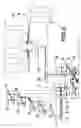
To afford a better understanding of this invention a preferred practical embodiment is shown in the drawing attached.
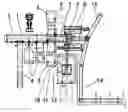
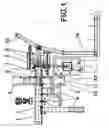
In the drawing, FIG. 1—shows a plan view of the static plant for preparing feed mixes for ruminant livestock.
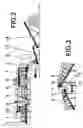
FIG. 2—shows an elevation view of the static plant for preparing feed mixes for ruminant livestock, showing the difference in level.
FIG. 3—shows an elevation view of the feeders, positioned with the conveyor belts.
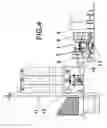
FIG. 4—shows an elevation view of the static plant for preparing feed mixes for ruminant livestock.
FIG. 5—shows a flow diagram of the static plant for preparing feed mixes for ruminant livestock.
PREFERRED EMBODIMENT OF THE INVENTION
The composition, characteristics and procedure of the static plant for preparing feed mixes for ruminant livestock that is the subject matter of the present invention, can be better understood in the following description, referring to a preferred embodiment shown in the attached figures.
FIG. 1 shows a plan view of the invention, comprising a conveyor unit (1), comprised by a horizontal conveyor belt (3), fitted at its discharge end with a cross belt (2), intended to supply one or more mixers (9).
It also shows the chain and/or screw feeders (4), intended for supplying their contents to the horizontal conveyor belt (3), in a measured manner, being located on one or both sides of the said conveyor belt.
Very near to the discharge zone and positioned opposite each other, are the feeders with weight sensors (5), characteristic of the invention, which incorporate a cutting mill (6) in their discharge zone, the said feeders being positioned on either side of the horizontal conveyor belt (3) and opposite each other, being linked together by means of a supplementary conveyor belt (7), parallel to the horizontal conveyor belt (3) and positioned at a higher level, supplying the cross belt (2).
Also depicted alongside the different feeders is a wheel loader to supply the contents of feeders that have a large capacity, unlike existing plants in which the feeders have a small capacity and can be loaded with hand shovels.
Sideways to the conveyor unit there is also enough space for the wheel loader to discharge directly, so that in the event of one or several of the feeders breaking down, loading of all the solid ingredients can be carried out manually.
The silos of liquid ingredients (8) are shown positioned very near to the mixers (9), since these silos have a piping installation (10) with flow gauge allowing direct and controlled discharge of the liquid ingredients onto the mixer (9) that is active at that moment.
The silos of solid ingredients (11) are also shown, having a weighing hopper (12) to release the exact amount of ingredients onto the cross belt (2) that discharges them into the corresponding mixer (9).
In FIG. 1, although two mixers (9) are shown, the static plant can be configured with more mixers (9), in anticipation of possible repairs or maintenance on one of the mixers, in order to maintain the level of productivity.
The mixers (9) include weight sensors, laser sensors to measure distances and determine a level curve map to control the mix obtained, also incorporating strain gauges placed at different points on the drum to determine its deformation on the three spatial axes. The mixers (9) are positioned at a lower level in relation to the horizontal conveyor belt (3) and feeders (4 and 5), to facilitate the discharge of ingredients.
The slewing discharge conveyor belt (13) of the mixers (9) is shown discharging the mix obtained onto a circuit of conveyor belts (14), envisaged for the distribution of the mix by known means.
FIG. 2 shows an elevation view of the static plant for preparing feed mixes for ruminant livestock, showing the difference in level between the conveyor unit (1) and feeders (4 and 5), in relation to the mixers (9), located at a lower level.
This FIG. 2 shows the guiding sides (15) of the horizontal conveyor belt (3), incorporating at its end a cross belt (2) to supply the mixers (9) with the ingredients.
It also shows the supplementary conveyor belt (7) linked to the feeders with weight sensors (5), in which its raised position in relation to the conveyor unit (1) can be seen.
On the lower level, the position of the mixers (9) is shown and the slewing discharge conveyor belt (13) discharging the mix onto any of the different known devices, for storage and for distribution of the mix.
FIG. 3 shows a front detail of the positioning of the chain and/or screw feeders (4) at different heights in relation to the feeders with weight sensors (5), characteristic of the invention.
This view shows the horizontal conveyor belt (3) with its guiding sides (15) and the raised supplementary conveyor belt (7), linked to the feeder with weight sensors (5).
FIG. 4 provides an elevation view of the static plant for preparing feed mixes for ruminant livestock, showing the difference in height between the different devices that form it, showing the silos of solid ingredients (11) equipped with a hopper (12) with weight control means, to discharge the ingredients onto the cross belt (2) by means of a screw feeder (16).
It also shows the silos of liquid ingredients (8) directly connected to the mixers (9) via a piping installation (10) with flow gauges to control discharges.
Furthermore it depicts, on a lower level, the mixers (9) equipped with slewing discharge conveyor belts (13), showing the position of the horizontal conveyor belt (3) fitted with a cross belt (2).
FIG. 5 shows a flow diagram in which the height difference of the plant can be seen and, on one side, the chain and/or screw feeders (4) and the feeders with weight sensors (5), discharging ingredients onto the supplementary conveyor belt (7), and the rest of the conventional chain and/or screw feeders, discharging ingredients onto the horizontal conveyor belt (3) of the conveyor unit (1).
In addition, it shows the horizontal conveyor belt (3) linked to the cross belt (2), positioned between both mixers (9) with its slewing discharge conveyor belt (13)
The silos of solid ingredients (11) are also shown schematically, discharging ingredients onto a hopper (12) so that, once weighed, they can be discharged onto the cross belt (2) via a screw feeder (16).
Likewise, the silos of liquid ingredients (8) are shown connected to a piping installation (10) with flow gauge, directly connected to the mixer (9) that is active at the time that discharging takes place.
Claims
1. Static plant for preparing feed mixes for ruminant livestock, characterised in that it comprises:
a conveyor unit (1) which in turn comprises a horizontal conveyor belt (3) onto which the ingredients of the feed mixes are discharged, the horizontal conveyor belt (3) being equipped with guiding sides (15) on either side, incorporating, at its discharge end, a cross belt (2), for supplying the said mixes,
chain and/or screw feeders (4), for supplying the horizontal conveyor belt (3) of the conveyor unit (1),
feeders with weight sensors (5) with cutting mill (6) in their discharge zone, positioned on either side of the conveyor unit (1) and opposite each other, being linked together via a supplementary conveyor belt (7), parallel to the conveyor unit (1) and positioned on a higher level, supplying the cross belt (2),
silos of solid ingredients (11), with hopper (12) equipped with weight control means, connected via a screw feeder (16) to the cross belt (2),
silos of liquid ingredients (8), connected by means of a piping installation (10) with flow gauge, and
at least two mixers (9), supplied by chain and/or screw feeders (4), feeders with weight sensors (5), the silos of solid ingredients (11) and the silos of liquid ingredients (8) with direct discharge onto the active mixer (9).
2. Static plant for preparing feed mixes for ruminant livestock, according to claim 1 wherein the mixers (9) are high-capacity horizontal or vertical type mixers, installed all of the same type or combined, including a slewing discharge conveyor belt (13), weight sensors, laser sensors and strain gauges placed at different points, to keep control of the mix obtained; the said mixers (9) are positioned at a lower level in relation to the conveyor unit (1), chain and/or screw feeders (4) and feeders with weight sensors (5).
3. Mixing procedure carried out by means of the static plant for preparing feed mixes for ruminant livestock, described in claim 1, wherein the operating cycle is as follows:
sequential batching of ingredients onto the horizontal conveyor belt (3) of the conveyor unit (1) in a stopped state and onto the raised supplementary conveyor belt (7), via the chain and/or screw feeders (4) and feeders with weight sensors (5),
emptying of ingredients onto the cross belt (2), batched via the horizontal conveyor belt (3), supplementary conveyor belt (7) and silos of solid ingredients (11) by means of a screw feeder (16),
discharge of ingredients into a mixer (9) and direct batching of liquid ingredients into it via the silos (8),
once the mix has been made, it is distributed by means of the slewing discharge conveyor belt (13) of the mixer (9), and
the new mixing cycle starts as soon as the horizontal conveyor belt (3) of the conveyor unit (1) finishes discharging the ingredients.
Images & Drawings included:
Sources:
- United States Patent and Trademark Office - verify current appl. status at the USPTO↗
Recent applications in this class:
- » 20250160383 2025-05-22
PET FOOD COOKER AND MIXER - » 20230397644 2023-12-14
FEED MIXER AND LINER THEREFOR - » 20220053812 2022-02-24
Pet food and manufacturing method thereof - » 20200077694 2020-03-12
Control system for a livestock feed mixer - » 20200068941 2020-03-05
HAY-BASED MATERIAL FREE OF RESPIRABLE DUST EMISSION: PROCESS FOR ITS PREPARATION, USE AND ASSOCIATED MACHINE - » 20190335799 2019-11-07
Appliance for preparing animal feed - » 20190335798 2019-11-07
Apparatus for preparing feed for animals - » 20180255823 2018-09-13
Control system for a livestock feed mixer - » 20180160718 2018-06-14
Fodder mixing wagon - » 20110261641 2011-10-27
Method for controlling loading of foods in a food mixing unit and corresponding control apparatus