BRICK INSULATION COMPOSITE AND METHOD FOR MANUFACTURING SAME
US20170191264A1
2017-07-06
15/314,002
2015-05-26
Abstract:
Provided is a brick thermal insulation composite including a surface layer and an internal layer, wherein the surface layer is a brick material, the internal layer is formed with a heat curing foam insulation material, and the heat curing foam insulation material includes a foam resin and a fibrous reinforcement material.
Inventors:
- Chul-June Choi 8 🇰🇷 Daejeon, South Korea
- Ji Mun Kim 7 🇰🇷 Seoul, South Korea
- Min Hee Lee 6 🇰🇷 Gunpo-si, Gyeonggi-do, South Korea
- Seung Wook JI 2 🇰🇷 Yeosu-si, Jeollanam-do, South Korea
- Eung Kee LEE 4 🇰🇷 Anyang-si, Gyeonggi-do, South Korea
- Myeong Hee KIM 4 🇰🇷 Anyang-si, Gyeonggi-do, South Korea
- Byung Joo JEON 5 🇰🇷 Seoul, South Korea
- Gun-Pyo PARK 3 🇰🇷 Seoul, South Korea
- Kwon-Bin SONG 2 🇰🇷 Incheon, South Korea
Interested in similar patents?
Get notified when new applications in this technology area are published.
Classification:
B32B13/045 » CPC further
Layered products comprising a a layer of water-setting substance, e.g. concrete, plaster, asbestos cement, or like builders' material comprising such substance as the main or only constituent of a layer, next to another layer of a of foam
B32B2250/03 » CPC further
Layers arrangement 3 layers
B32B2262/062 » CPC further
Composition or structural features of fibres which form a fibrous or filamentary layer or are present as additives; Vegetal fibres Cellulose fibres, e.g. cotton
B32B2266/0285 » CPC further
Composition of foam; Organic; Materials belonging to Condensation resins of aldehydes, e.g. with phenols, ureas, melamines
B32B2255/10 » CPC further
Coating on the layer surface on synthetic resin layer or on natural or synthetic rubber layer
B32B2255/26 » CPC further
Coating on the layer surface Polymeric coating
B32B2307/304 » CPC further
Properties of the layers or laminate having particular thermal properties Insulating
B32B2419/02 » CPC further
Buildings or parts thereof Bricks
E04C1/41 » CPC main
Building elements of block or other shape for the construction of parts of buildings built-up from parts of different materials, e.g. composed of layers of different materials or stones with filling material or with insulating inserts composed of insulating material and load-bearing concrete, stone or stone-like material
B32B13/04 IPC
Layered products comprising a a layer of water-setting substance, e.g. concrete, plaster, asbestos cement, or like builders' material comprising such substance as the main or only constituent of a layer, next to another layer of a
B32B7/12 » CPC further
Layered products characterised by the relation between layers; Layered products characterised by the relative orientation of features between layers, or by the relative values of a measurable parameter between layers, i.e. products comprising layers having different physical, chemical or physicochemical properties; Layered products characterised by the interconnection of layers; Interconnection of layers using interposed adhesives or interposed materials with bonding properties
E04B1/78 » CPC further
Constructions in general; Structures which are not restricted either to walls, e.g. partitions, or floors or ceilings or roofs; Insulation or other protection; Elements or use of specified material therefor; Heat, sound or noise insulation, absorption, or reflection . Other building methods affording favourable thermal or acoustical conditions, e.g. accumulating of heat within walls specifically with respect to heat only Heat insulating elements
B32B5/20 » CPC further
Layered products characterised by the non- homogeneity or physical structure, i.e. comprising a fibrous, filamentary, particulate or foam layer; Layered products characterised by having a layer differing constitutionally or physically in different parts characterised by features of a layer of foamed material foamed
Description
FIELD OF THE INVENTION
The present disclosure relates to a brick thermal insulation composite and a method of preparing the same.
BACKGROUND OF THE INVENTION
In traditional building constructions, concrete and bricks are used for external wall finishing. However, bricks are heavy providing inconvenience in terms of construction, and have a poor heat insulation property, and accordingly, houses made of bricks are highly influenced by external climates leading to a disadvantage of being hot in summer and cold in winter.
SUMMARY OF THE INVENTION
One embodiment of the present disclosure is directed to providing a lightweight brick thermal insulation composite having an enhanced heat insulation property.
Another embodiment of the present disclosure is directed to providing a method of preparing the brick thermal insulation composite.
One embodiment of the present disclosure provides a brick thermal insulation composite including a surface layer and an internal layer, wherein the surface layer is a brick material, the internal layer is formed with a heat curing foam insulation material, and the heat curing foam insulation material includes a foam resin and a fibrous reinforcement material.
The heat curing foam insulation material may include the fibrous reinforcement material in the content of 5% by weight to 60% by weight.
The fibrous reinforcement material may include at least one selected from the group consisting of cellulose fibers, polyester fibers, polyamide fibers, polyurethane fibers, acrylic fibers, glass fibers, carbon fibers and combinations thereof.
The foam resin may include at least one selected from the group consisting of urethane, phenol, melamine and combinations thereof.
The heat curing foam insulation material may have density of 30 Kg/m3 to 65 Kg/m3.
The heat curing foam insulation material may be integrated into the brick thermal insulation composite without an adhesive by being foamed and cured inside the surface layer, or may adhere to the surface layer with an adhesive.
The adhesive may be an acryl-based adhesive or an ethylvinyl acrylate-based adhesive.
The internal layer may occupy 30% by volume to 70% by volume of the brick thermal insulation composite.
The brick thermal insulation composite may have a cuboid-shaped brick size.
Another embodiment of the present disclosure provides a method of preparing a brick thermal insulation composite having a heat curing foam insulation material as an internal layer by separating and fixing two surface layers prepared from brick cutting, then introducing a composition for forming a heat curing foam insulation material into the space that has been made from the separation of the two surface layers, and then foaming and curing the composition for forming a heat curing foam insulation material.
The composition for forming a heat curing foam insulation material includes a foam resin and a fibrous reinforcement material, and the heat curing foam insulation material may include the fibrous reinforcement material in the content of 5% by weight to 60% by weight after the foaming and the curing.
Still another embodiment of the present disclosure provides a method of preparing a brick thermal insulation composite including preparing a heat curing foam insulation material including a foam resin and a fibrous reinforcement material; preparing surface layers by cutting a brick; cutting the heat curing foam insulation material so as to obtain a specific brick shape by adhering each of the surface layers to both sides of the heat curing foam insulation material; and attaching the surface layers to the both sides of the cut heat curing foam insulation material by applying an adhesive on the both sides.
The method of preparing a heat curing foam insulation material further includes preparing a composition for forming a heat curing foam insulation material including a foam resin and cellulose, and foaming and curing the composition for forming a heat curing foam insulation material to prepare the heat curing foam insulation material, and the heat curing foam insulation material may include the fibrous reinforcement material in the content of 5% by weight to 60% by weight after the foaming.
BRIEF DESCRIPTION OF THE DRAWINGS
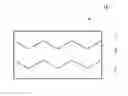
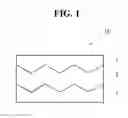
FIG. 1 illustrates an exemplary sectional structure of a brick thermal insulation composite according to one embodiment of the present disclosure.
DETAILED DESCRIPTION OF THE EMBODIMENTS
Hereinafter, embodiments of the present disclosure will be described in detail. However, these are for illustrative purposes only, and the scope of the present disclosure is not limited thereto, and the scope of the present disclosure is defined by the appended claims.
In the drawing of the present specification, thicknesses are enlarged in order to clearly show various layers and regions. In the drawing, thicknesses of some layers and regions are exaggerated for the convenience of description.
Meaning of an arbitrary constitution forming at the “top (or bottom)” of a substrate or “above (or below)” a substrate includes formation of the arbitrary constitution adjoining a top surface (or bottom surface) of the substrate, and also includes constitutions having another constitution between the substrate and the arbitrary constitution formed above (or below) the substrate.
One embodiment of the present disclosure provides a brick thermal insulation composite including a surface layer and an internal layer, wherein the surface layer is a brick material, the internal layer is formed with a heat curing foam insulation material, and the heat curing foam insulation material includes a foam resin and a fibrous reinforcement material.
The brick thermal insulation composite has an excellent heat insulation property and is light weight, and therefore, is readily used as building materials, and accordingly, is capable of providing convenience in terms of construction.
The brick thermal insulation composite may be prepared to shapes identical to the shapes of bricks, that is, to cuboid-shaped brick sizes, and may be used in the same application as bricks. In addition, the brick thermal insulation composite may be formed including an internal layer formed with a heat curing foam insulation material, and accordingly, has an advantage of, compared to bricks, exhibiting a more superior heat insulation property and providing convenience in terms of construction due to its lightweight.
In one embodiment, the heat curing foam insulation material may have density of approximately 30 Kg/m3 to approximately 65 Kg/m3. When the heat curing foam insulation material has density of less than approximately 30 Kg/m3, compression strength and flexural rigidity of the brick thermal insulation composite are reduced causing concern of the brick thermal insulation composite being readily crushed. When the heat curing foam insulation material has density of greater than approximately 65 Kg/m3, the heat curing foam insulation material materials are excessively used causing a cost increase, and a problem of heat insulation property decline may also occur.
The heat curing foam insulation material includes a foam resin and a fibrous reinforcement material. By the heat curing foam insulation material including a fibrous reinforcement material, strength may be enhanced. Accordingly, the brick thermal insulation composite including such a heat curing foam insulation material as an internal layer may obtain properties of excellent compression strength and flexural rigidity while including a thermal insulation material as an internal layer. As a result, the brick thermal insulation composite may not be readily crushed while having an excellent thermal insulation effect.
The fibrous reinforcement material may include at least one selected from the group consisting of, for example, cellulose fibers, polyester fibers, polyamide fibers, polyurethane fibers, acrylic fibers, glass fibers, carbon fibers and combinations thereof. The fibrous reinforcement material may be properly used considering its properties depending on the use, and for example, cellulose fibers as the fibrous reinforcement material are lighter and have relatively excellent effects in supplementing durability and enhancing a heat insulation property considering the weight.
The heat curing foam insulation material may be prepared by preparing a composition for forming a heat curing foam insulation material including a foam resin and a fibrous reinforcement material, and then foaming and curing the composition for forming a heat curing foam insulation material.
Examples of the foam resin may include urethane, phenol, melamine and the like, or combinations thereof.
The fibrous reinforcement material may have a fibriform having an average length of, specifically, approximately 10 mm to approximately 40 mm, and may use those having an average section diameter of approximately 15 deniers to approximately 100 deniers. The fibrous reinforcement material may be included in the content of 5% by weight to 60% by weight in the heat curing foam insulation material formed after foaming and curing the composition for forming a heat curing foam insulation material.
When the heat curing foam insulation material includes the fibrous reinforcement material in less than 5% by weight, an effect of strength reinforcement is insignificant leading to an insignificant effect in improving compression strength of the brick thermal insulation composite, and an effect of suppressing composite crushing is difficult to expect. When the fibrous reinforcement material is included in greater than 60% by weight, a heat insulation property may decline, and in addition thereto, viscosity of a foam resin increases leading to a disadvantage of making a foaming process itself difficult.
The internal layer may occupy approximately 30% by volume to approximately 70% by volume of the brick thermal insulation composite. The brick thermal insulation composite formed with a surface layer and an internal layer in the above mentioned volume ratio may have excellent mechanical strength of compression strength and flexural rigidity while having an excellent heat insulation effect.
The shape of the heat curing foam insulation material is not limited. In other words, the brick thermal insulation composite may be prepared using any method as long as the heat curing foam insulation material is not exposed to the surface as an internal layer, and is capable of being formed inside so as to have a volume ratio in the above-mentioned range.
For example, the heat curing foam insulation material may be integrated into the brick thermal insulation composite without an adhesive by being foamed and cured inside the surface layer.
As another example, the brick thermal insulation composite may be prepared by adhering the heat curing foam insulation material to a surface layer using an adhesive.
*37 Examples of the adhesive may include, but are not limited to, acryl-based adhesives or ethylvinyl acrylate-based adhesives.
FIG. 1 illustrates an exemplary sectional structure of the brick thermal insulation composite.
In FIG. 1, the brick thermal insulation composite 10 shows a section in which surface layers 1 are formed on both sides, and an internal layer 2 formed with a heat curing foam insulation material is formed inside.
Another embodiment of the present disclosure provides a method of preparing a brick thermal insulation composite having a heat curing foam insulation material as an internal layer by separating and fixing two surface layers prepared from brick cutting, then introducing a composition for forming a heat curing foam insulation material to space made from the separation of the two surface layers, and then foaming and curing the composition for forming a heat curing foam insulation material.
As described above, the brick thermal insulation composite formed as a composite integrated without an adhesive by being foamed and cured inside the surface layer may be prepared using the above-mentioned method.
The content of the fibrous reinforcement material in the composition for forming a heat curing foam insulation material may be adjusted so that the heat curing foam insulation material includes the fibrous reinforcement material in the content of approximately 5% by weight to approximately 60% by weight after the foaming and the curing.
Still another embodiment of the present disclosure provides a method of preparing a brick thermal insulation composite including preparing a heat curing foam insulation material including a foam resin and a fibrous reinforcement material; preparing surface layers by cutting a brick; cutting the heat curing foam insulation material so as to obtain a specific brick shape by adhering each of the surface layers to both sides of the heat curing foam insulation material; and attaching the surface layers to the both sides of the cut heat curing foam insulation material by applying an adhesive on the both sides.
Using the above-mentioned method, the brick thermal insulation composite formed by adhering the heat curing foam insulation material to the surface layer using an adhesive may be prepared.
The method of preparing a brick thermal insulation composite may further include preparing the heat curing foam insulation material by preparing a composition for forming a heat curing foam insulation material including a foam resin and cellulose, and then foaming and curing the composition for forming a heat curing foam insulation material.
Likewise, the content of the fibrous reinforcement material in the composition for forming a heat curing foam insulation material may be adjusted so that the heat curing foam insulation material includes the fibrous reinforcement material in the content of approximately 5% by weight to approximately 60% by weight after the foaming.
Hereinafter, examples and comparative examples of the present disclosure will be described. However, the following examples are for illustrative purposes only, and the scope of the present disclosure is not limited to the following examples.
EXAMPLE
Example 1
As main components, clay formed with 60% of silica and 23% of alumina was mixed and ground, and was discharged from a pug mill through a mold while maintaining 17% of moisture. The result was cut with a cutting M/C to be formed to a brick shape, was placed in a tunnel dryer, and then dried with heated air of 200° C. to 300° C. coming from a furnace wall so that the moisture content became 1% or less. The result was placed in a furnace, then baked at a high temperature of 1,100° C. to 1,300° C., and then cooled to prepare a brick with 2 parallel surface layers to a thickness of 20 mm.
Separately, a composition for forming a heat curing foam insulation material including 100 parts by weight of a phenol resin and 30 parts by weight of a cellulose fiber was prepared.
The composition for forming a heat curing foam insulation material was foamed and cured at 70° C. to prepare an internal layer having a thickness of 25 mm.
A brick thermal insulation composite was prepared by applying an ethylvinyl acetate (EVA) adhesive on both sides of the prepared internal layer, and attaching the prepared surface layers thereto.
Example 2
A brick with two surface layers was prepared in the same manner as in Example 1, and a brick thermal insulation composite was prepared in the same manner as in Example 1 except that the internal layer was prepared by preparing a composition for forming a heat curing foam insulation material including 100 parts by weight of a phenol resin and 70 parts by weight of a cellulose fiber.
Comparative Example 1
A brick having a thickness of 65 mm was prepared in the same manner as the surface layer of Example 1.
Comparative Example 2
A brick with two surface layers was prepared in the same manner as in Example 1, and a brick thermal insulation composite was prepared in the same manner as in Example 1 except that the internal layer was prepared by preparing a composition for forming a heat curing foam insulation material without including a cellulose fiber.
Evaluation
For the bricks of Examples 1 and 2, and Comparative Example 1, and the brick thermal insulation composite prepared in Comparative Example 2, performance analyses were carried out on each of the following.
<Density>
For the brick thermal insulation composites of Examples 1 and 2, the brick of Comparative Example 1 and the brick thermal insulation composite prepared in Comparative Example 2, exact dimensions and weights were measured to measure density, and the results are shown in the following Table 1.
<Compression Strength>
For the brick thermal insulation composites of Examples 1 and 2, the brick of Comparative Example 1 and the brick thermal insulation composite prepared in Comparative Example 2, compression strength was measured using a universal testing machine (UTM). As for the measurement condition, a maximum load was measured when the sample was destroyed with strength of 5 kgf/cm2 per second, and the results are shown in the following Table 1.
<Thermal Conductivity>
For the brick thermal insulation composites of Examples 1 and 2, the brick of Comparative Example 1 and the brick thermal insulation composite prepared in Comparative Example 2, thermal conductivity was measured in accordance with the test method of KS L 3121, and the results are shown in the following Table 1.
| TABLE 1 | |||
| Compression | Thermal | ||
| Density | Strength | Conductivity | |
| Category | [unit: kg/m3] | [unit: kg/cm2] | [unit: W/mK] |
| Example 1 | 446.9 | 100 | 0.0432 |
| Example 2 | 450.0 | 103 | 0.0528 |
| Comparative | 700.0 | 120 | 0.6825 |
| Example 1 | |||
| Comparative | 444.6 | 86 | 0.0421 |
| Example 2 | |||
From the results of Table 1, it was identified that the brick thermal insulation composites of Examples 1 and 2 exhibited excellent levels of compression strength and heat insulation property while accomplishing a light weight with significantly lower density compared to Comparative Example 1.
In addition, the brick thermal insulation composites of Examples 1 and 2 exhibited more superior compression strength while accomplishing a light weight with an equal level of density compared to Comparative Example 2 by further including a cellulose fiber in the internal layer.
The brick thermal insulation composite is lightweight while securing a heat insulation property, and accordingly, is capable of providing convenience in terms of brick construction.
While preferred embodiments of the present disclosure have been described in detail, the scope of the present disclosure is not limited thereto, and various modifications and improvements made by those skilled in the art using fundamental concepts of the present disclosure defined in the appended claims are also included in the scope of the present disclosure.
REFERENCE NUMERAL
1: Surface Layer
2: Internal Layer
10: Brick Thermal Insulation Composite
Claims
What is claimed is:1. A brick thermal insulation composite comprising:
a surface layer; and
an internal layer,
wherein the surface layer is a brick material, the internal layer is formed with a heat curing foam insulation material, and the heat curing foam insulation material includes a foam resin and a fibrous reinforcement material.
2. The brick thermal insulation composite of claim 1, wherein the heat curing foam insulation material includes the fibrous reinforcement material in a content of 5% by weight to 60% by weight.
3. The brick thermal insulation composite of claim 1, wherein the fibrous reinforcement material includes at least one selected from the group consisting of a cellulose fiber, a polyester fiber, a polyamide fiber, a polyurethane fiber, an acrylic fiber, a glass fiber, a carbon fiber and a combination thereof.
4. The brick thermal insulation composite of claim 1, wherein the foam resin includes at least one selected from the group consisting of urethane, phenol, melamine and a combination thereof.
5. The brick thermal insulation composite of claim 1, wherein the heat curing foam insulation material has density of 30 Kg/m3 to 65 Kg/m3.
6. The brick thermal insulation composite of claim 1, wherein the heat curing foam insulation material is integrated into the brick thermal insulation composite without an adhesive by being foamed and cured within the surface layer, or adheres to the surface layer with an adhesive.
7. The brick thermal insulation composite of claim 6, wherein the adhesive is an acryl-based adhesive or an ethylvinyl acrylate-based adhesive.
8. The brick thermal insulation composite of claim 1, wherein the internal layer occupies 30% by volume to 70% by volume of the brick thermal insulation composite.
9. The brick thermal insulation composite of claim 1, which has a cuboid-shaped brick size.
10. A method of preparing a brick thermal insulation composite having a heat curing foam insulation material as an internal layer by separating and fixing two surface layers prepared from brick cutting, then introducing a composition for forming a heat curing foam insulation material into space made from the separation of the two surface layers, and then foaming and curing the composition for forming a heat curing foam insulation material.
11. The method of preparing a brick thermal insulation composite of claim 10, wherein the composition for forming a heat curing foam insulation material includes a foam resin and a fibrous reinforcement material, and the heat curing foam insulation material includes the fibrous reinforcement material in a content of 5% by weight to 60% by weight after the foaming and the curing.
12. A method of preparing a brick thermal insulation composite comprising:
preparing a heat curing foam insulation material including a foam resin and a fibrous reinforcement material;
preparing surface layers by cutting a brick;
cutting the heat curing foam insulation material so as to obtain a specific brick shape by adhering each of the surface layers to both sides of the heat curing foam insulation material; and
attaching the surface layers to the both sides of the cut heat curing foam insulation material by applying an adhesive on the both sides.
13. The method of preparing a brick thermal insulation composite of claim 12, further comprising preparing a composition for forming a heat curing foam insulation material including a foam resin and cellulose, and foaming and curing the composition, wherein the heat curing foam insulation material includes the fibrous reinforcement material in a content of 5% by weight to 60% by weight after the foaming.
Images & Drawings included:
Sources:
- United States Patent and Trademark Office - verify current appl. status at the USPTO↗
Recent applications in this class:
- » 20250137254 2025-05-01
PRE-INSULATED BLOCK - » 20250012079 2025-01-09
BRICK WITH INTERNAL SUPPORT STRUCTURE - » 20230279660 2023-09-07
STRUCTURALLY INSULATED BUILDING BLOCK - » 20220081902 2022-03-17
Pre-insulated block - » 20220074204 2022-03-10
A BUILDING ELEMENT - » 20210230873 2021-07-29
INSULATED CEMENTACEOUS BUILDING BLOCK SYSTEM AND BLOCKS - » 20210230872 2021-07-29
Insulated cementitious building block system - » 20210156147 2021-05-27
Foam as modular support - » 20210131102 2021-05-06
METHOD FOR THE PRODUCTION OF THERMAL BARRIER BLOCKS - » 20210102376 2021-04-08
Tall Wall Insulatable Building Block