System and electronic device
US20170194689A1
2017-07-06
15/399,417
2017-01-05
✅ Patent granted
US 10,276,918 B2
2019-04-30
-
-
Dieu Hien T Duong | Bamidele A Jegede
Rutan & Tucker, LLP
2037-03-30
Abstract:
According to certain embodiments, a system includes a first electronic device and a second electronic device. The first electronic device is detachably and rotatably connected to the second electronic device. The at least two pairs of antennae are arranged such that each antenna exclusively used for transmission respectively faces each corresponding antenna exclusively used for reception between the first and second electronic devices, and the antennae are bilaterally symmetrical with respect to an axis of rotation of the first and second electronic devices.
Assignee:
- TOSHIBA CLIENT SOLUTIONS CO., LTD. 55 🇯🇵 Tokyo, Japan
Applicant:
Interested in similar patents?
Get notified when new applications in this technology area are published.
Classification:
H01Q1/2258 » CPC main
Details of, or arrangements associated with, antennas; Supports; Mounting means by structural association with other equipment or articles used with computer equipment
H01Q1/22 IPC
Details of, or arrangements associated with, antennas; Supports; Mounting means by structural association with other equipment or articles
H01Q3/24 » CPC further
Arrangements for changing or varying the orientation or the shape of the directional pattern of the waves radiated from an antenna or antenna system varying the orientation by switching energy from one active radiating element to another, e.g. for beam switching
H01Q1/2266 » CPC further
Details of, or arrangements associated with, antennas; Supports; Mounting means by structural association with other equipment or articles used with computer equipment disposed inside the computer
Description
CROSS-REFERENCE TO RELATED APPLICATIONS
This application claims the benefit of U.S. Provisional Application No. 62/275,748, filed Jan. 6, 2016, the entire contents of which are incorporated herein by reference.
FIELD
Embodiments described herein relate generally to a system and an electronic device.
BACKGROUND
Recently, as a method for transmitting a signal between a plurality of devices at high speed, millimeter-wave communication using millimeter waves as carrier waves has become widespread. For example, millimeter-wave communication is used to transmit an interface signal in a detachable computer which detachably connects a tablet terminal and a keyboard. Some detachable computers can be selectively used as a notebook computer and a tablet computer by attaching one of the tablet terminal and the keyboard in reverse.
In millimeter-wave communication, the distance between a transmitting antenna for transmitting a signal and a receiving antenna for receiving a signal must be short to realize high-speed signal transmission because of the characteristics of millimeter waves. When millimeter-wave communication is used to transmit the interface signal between the tablet terminal and the keyboard in the detachable computer, the transmitting and receiving antennae for transmitting and receiving the interface signal are provided in both the tablet terminal and the keyboard within a distance in which high-speed signal transmission can be realized by millimeter-wave communication.
However, as described above, in the detachable computer, one of the tablet terminal and the keyboard may be reversed and connected. In this case, the transmitting and receiving antennae in the tablet terminal may be located away from those in the keyboard in a manner that the transmitting or receiving antenna in the tablet terminal cannot maintain the distance for realizing high-speed signal transmission in accordance with millimeter-wave communication with that in the keyboard. Thus, at least one of the tablet terminal and the keyboard comprises transmitting and receiving antennae used in a normal connection state, and transmitting and receiving antennae used in a reverse connection state. In this structure, even when one of the tablet terminal and the keyboard is reversed, the transmitting and receiving antennae provided in the tablet terminal and the keyboard can be located within a distance in which high-speed signal transmission can be realized in accordance with millimeter-wave communication. However, this structure increases the cost for producing the tablet terminal and the keyboard.
New technology is needed to solve the above problem.
BRIEF DESCRIPTION OF THE DRAWINGS
A general architecture that implements the various features of the embodiments will now be described with reference to the drawings. The drawings and the associated descriptions are provided to illustrate the embodiments and not to limit the scope of the invention.
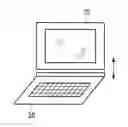
FIG. 1 is shown to explain a detachable computer according to certain embodiments.
FIG. 2 is shown to explain the detachable computer according to certain embodiments.
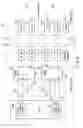
FIG. 3 shows an example of arrangement of antenna-integrated wireless transmitting and receiving chips according to a first embodiment.
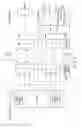
FIG. 4 is shown to explain signal transmission when a tablet terminal and a keyboard dock are in a normal connection state according to the first embodiment.
FIG. 5 is shown to explain signal transmission when the tablet terminal and the keyboard dock are in a reverse connection state according to the first embodiment.
FIG. 6 shows an example of arrangement of antenna-integrated wireless communication chips according to a second embodiment.
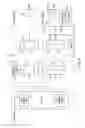
FIG. 7 is shown to explain signal transmission when a tablet terminal and a keyboard dock are in a normal connection state according to the second embodiment.
FIG. 8 is shown to explain signal transmission when the tablet terminal and the keyboard dock are in a reverse connection state according to the second embodiment.
DETAILED DESCRIPTION
Various embodiments will be described hereinafter with reference to the accompanying drawings.
According to certain embodiments, a system includes a first electronic device and a second electronic device. The first electronic device is detachably and rotatably connected to the second electronic device. Each of the first and second electronic devices includes at least two pairs of antennae in order to transmit and receive a plurality of types of signals in accordance with millimeter-wave communication. The antennae has an antenna exclusively used for transmission and an antenna exclusively used for reception. The at least two pairs of antennae are arranged such that each antenna exclusively used for transmission respectively faces each corresponding antenna exclusively used for reception between the first and second electronic devices, and the antennae are bilaterally symmetrical with respect to an axis of rotation of the first and second electronic devices.
First Embodiment
FIG. 1 and FIG. 2 are shown to explain a detachable computer according to certain embodiments. The detachable computer is an electronic device which can be selectively used as a notebook computer and a tablet computer. The detachable computer (a millimeter-wave communication system) comprises a tablet terminal 10 and a keyboard dock 20. The tablet terminal 10 and the keyboard dock 20 are detachably connected to each other.
When the detachable computer is used as the notebook computer as shown in FIG. 1, the form is called a clamshell form. In the following explanation, a state of connection between the tablet terminal 10 and the keyboard dock 20 in the clamshell form is called a normal connection state. When the detachable computer is used as the tablet computer as shown in FIG. 2, the form is called a tablet form. In the following explanation, a state of connection between the tablet terminal 10 and the keyboard dock 20 in the tablet form is called a reverse connection state. The state of connection is called in this way for the following reason. To cause the detachable computer to transition from the clamshell form to the tablet form (or from the tablet form to the clamshell form), the tablet terminal 10 must be disconnected from the keyboard dock 20, and one of the devices 10 and 20 must be reversed. Further, they must be detachably connected to each other again.
The tablet terminal 10 and the keyboard dock 20 comprise antenna-integrated wireless transmitting and receiving chips (in other words, wireless transmitting and receiving chips having antennae built-in) for performing millimeter-wave communication. Various interface signals are transmitted in accordance with millimeter-wave communication using the antenna-integrated wireless transmitting and receiving chips between the tablet terminal 10 and the keyboard dock 20. Millimeter-wave communication is a communication system using millimeter waves as carrier waves. In general, it is known that millimeter waves have a very large absorption loss by atmospheric molecules, and a very large absorption loss and scattering loss by rain. Thus, in millimeter-wave communication using antennae, high-speed signal transmission can be realized only when the distance between the antennae is short. Specifically, the distance between the antennae is preferably less than or equal to 10 mm.
Now, this specification explains the arrangement of antenna-integrated wireless transmitting and receiving chips for realizing the high-speed transmission of interface signals in accordance with millimeter-wave communication in either the clamshell form shown in FIG. 1 or the tablet form shown in FIG. 2 when a plurality of types of interface signals are transmitted between the tablet terminal 10 and the keyboard dock 20. In the present embodiment, as a plurality of types of interface signals, a USB signal related to an interface conforming to the Universal Serial Bus (USB) standard and a PCIe signal related to an interface conforming to the PCI Express standard are transmitted using millimeter-wave communication.
FIG. 3 shows an example of arrangement of antenna-integrated wireless transmitting and receiving chips according to the first embodiment.
The tablet terminal 10 and the keyboard dock 20 comprise fixation mechanisms 12 and 22, respectively, for detachably connecting the devices 10 and 20. The tablet terminal 10 and the keyboard dock 20 comprise antenna-integrated wireless transmitting and receiving chips 11a to 11d and 21a to 21d used for transmitting and receiving the interface signal on the fixation mechanisms 12 and 22 sides, respectively. In the following explanation, of the antenna-integrated wireless transmitting and receiving chips, the chips exclusively used to transmit the interface signal are called TX chips. The chips exclusively used to receive the interface signal are called RX chips.
As explained above, because of the characteristics of millimeter-wave communication, the distance between antennae must be short (specifically, less than or equal to 10 mm) to transmit the interface signal at high speed in accordance with millimeter-wave communication. Thus, the TX chips must be provided so as to face the RX chips between the tablet terminal 10 and the keyboard dock 20. In a case of the detachable computer, the TX chips must face the RX chips between the tablet terminal 10 and the keyboard dock 20 in both the clamshell form and the tablet form. In consideration of the above matters, in the present embodiment, the TX chips and the RX chips are arranged as shown in FIG. 3.
Specifically, as shown in FIG. 3, the TX chips face the RX chips between the tablet terminal 10 and the keyboard dock 20 such that they are bilaterally symmetrical with respect to the axis of rotation (the chips are arranged at regular intervals). For example, in the tablet terminal 10, as shown in FIG. 3, the antenna-integrated wireless transmitting and receiving chips are arranged in the order of TX chip 11a, RX chip 11b, RX chip 11c and TX chip 11d from the right side of the figure. In the keyboard dock 20, as shown in FIG. 3, the antenna-integrated wireless transmitting and receiving chips are arranged in the order of RX chip 21a, TX chip 21b, TX chip 21c and RX chip 21d from the right side of the figure. With this structure, the TX chips face the RX chips between the tablet terminal 10 and the keyboard dock 20 in both the clamshell form (normal connection state) and the tablet form (reverse connection state). Thus, the short distance between antennae can be maintained. In this way, it is possible to transmit the interface signal at high speed in accordance with millimeter-wave communication.
The arrangement of the TX and RX chips for realizing the high-speed transmission of the interface signal in accordance with millimeter-wave communication is not limited to that of FIG. 3. Specifically, the arrangement of the TX and RX chips on the tablet terminal 10 side may be replaced with that on the keyboard dock 20 side. In other words, in the tablet terminal 10, the antenna-integrated wireless transmitting and receiving chips may be provided in the order of an RX chip, a TX chip, a TX chip and an RX chip. In the keyboard dock 20, the antenna-integrated wireless transmitting and receiving chips may be provided in the order of a TX chip, an RX chip, an RX chip and a TX chip.
Now, this specification explains the structures of the tablet terminal 10 and the keyboard dock 20 in more detail with reference to FIG. 4 and FIG. 5. Further, the signal transmission between the devices 10 and 20 is explained in detail. FIG. 4 is shown to explain signal transmission when the tablet terminal 10 and the keyboard dock 20 are in the normal connection state. FIG. 5 is shown to explain signal transmission when the tablet terminal 10 and the keyboard dock 20 are in the reverse connection state.
As shown in FIG. 4 and FIG. 5, the tablet terminal 10 comprises a magnetic sensor 13, a first selector 14a, a second selector 14b and a chip set 15 in addition to antenna-integrated wireless transmitting and receiving chips 11a to 11d and fixation mechanisms 12 shown in FIG. 3. As shown in FIG. 4 and FIG. 5, the keyboard dock 20 comprises a magnet 23 in addition to antenna-integrated wireless transmitting and receiving chips 21a to 21d and fixation mechanisms 22 shown in FIG. 3.
The magnetic sensor 13 of the tablet terminal 10 is provided so as to face the magnet 23 of the keyboard dock 20 in one of the normal connection state and the reverse connection state. In the present embodiment, as shown in FIG. 4 and FIG. 5, the magnetic sensor 13 of the tablet terminal 10 is provided so as to face the magnet 23 of the keyboard dock 20 in the normal connection state.
Each of selectors 14a and 14b is connected to a corresponding antenna-integrated wireless transmitting and receiving chip pair 11. Specifically, as shown in FIG. 4 and FIG. 5, the first selector 14a is connected to TX chip 11a and RX chip 11b. The second selector 14b is connected to RX chip 11c and TX chip 11d. Each of selectors 14a and 14b is connected to the chip set 15 via a signal line 16. Specifically, as shown in FIG. 4 and FIG. 5, selectors 14a and 14b are connected to signal lines 16a and 16f for transmitting a TX signal related to an interface conforming to the USB standard, signal lines 16b and 16e for transmitting an RX signal related to an interface conforming to the USB standard, signal lines 16c and 16h for transmitting an RX signal related to an interface conforming to the PCI Express standard, and signal lines 16d and 16g for transmitting a TX signal related to an interface conforming to the PCI Express standard, respectively.
As shown in FIG. 4 and FIG. 5, the chip set 15 comprises a USB-compatible portion 15a which manages (controls) the operation of the interface conforming to the USB standard, and a PCIe-compatible portion 15b which manages (controls) the operation of the interface conforming to the PCI Express standard. The USB-compatible portion 15a is connected to signal lines 16a and 16f for transmitting the TX signal related to the interface conforming to the USB standard, and signal lines 16b and 16e for transmitting the RX signal related to the interface conforming to the USB standard. The PCIe-compatible portion 15b is connected to signal lines 16c and 16h for transmitting the RX signal related to the interface conforming to the PCI Express standard, and signal lines 16d and 16g for transmitting the TX signal related to the interface conforming to the PCI Express standard.
As shown in FIG. 4, when the state of connection between the tablet terminal 10 and the keyboard dock 20 is the normal connection state, the magnetic sensor 13 of the tablet terminal 10 detects a magnetic force produced by the magnet of the keyboard dock 20. The magnetic sensor 13 determines that the state of connection between the tablet terminal 10 and the keyboard dock 20 is the normal connection state, and outputs switching signals to the respective selectors 14a and 14b in accordance with the normal connection state. Specifically, the magnetic sensor 13 outputs a first switching signal for selecting the USB-compatible portion 15a of the chip set 15 to the first selector 14a. The magnetic sensor 13 outputs a second switching signal for selecting the PCIe-compatible portion 15b of the chip set 15 to the second selector 14b.
When the first selector 14a receives the input of the first switching signal from the magnetic sensor 13, the first selector 14a selects the USB-compatible portion 15a (specifically, the signal line connected to the USE-compatible portion 15a) compatible with the interface conforming to the USB standard. Thus, the TX signal related to the interface conforming to the USB standard is transmitted to the keyboard dock 20 by TX chip 11a via signal line 16a, and is received by RX chip 21a of the keyboard dock 20. The RX signal related to the interface conforming to the USB standard is transmitted from TX chip 21b of the keyboard dock 20, is received by RX chip 11b of the tablet terminal 10, and is transmitted to the USB-compatible portion 15a of the chip set 15 via signal line 16b.
When the second selector 14b receives the input of the second switching signal from the magnetic sensor 13, the second selector 14b selects the PCIe-compatible portion 15b (specifically, the signal line connected to the PCIe-compatible portion 15b) compatible with the interface conforming to the PCI Express standard. Thus, the RX signal related to the interface conforming to the PCI Express standard is transmitted from TX chip 21c of the keyboard dock 20, is received by RX chip 11c of the tablet terminal 10, and is transmitted to the PCIe-compatible portion 15b of the chip set 15 via signal line 16g. The TX signal related to the interface conforming to the PCI Express standard is transmitted to the keyboard dock 20 by TX chip 11d via signal line 16h, and is received by RX chip 21d of the keyboard dock 20.
As described above, when the state of connection between the tablet terminal 10 and the keyboard dock 20 is the normal connection state, the interface signal can be transmitted at high speed in accordance with millimeter-wave communication.
Now, this specification explains the reverse connection state with reference to FIG. 5.
When the state of connection between the tablet terminal 10 and the keyboard dock 20 is the reverse connection state as shown in FIG. 5, the magnetic sensor 13 of the tablet terminal 10 does not detect a magnetic force produced by the magnet of the keyboard dock 20 although the tablet terminal 10 is connected to the keyboard dock 20. The magnetic sensor 13 determines that the state of connection between the tablet terminal 10 and the keyboard dock 20 is the reverse connection state, and outputs switching signals to the respective selectors 14a and 14b in accordance with the reverse connection state. Specifically, the magnetic sensor 13 outputs the second switching signal for selecting the PCIe-compatible portion 15b of the chip set 15 to the first selector 14a. The magnetic sensor 13 outputs the first switching signal for selecting the USB-compatible portion 15a of the chip set 15 to the second selector 14b.
When the first selector 14a receives the input of the second switching signal from the magnetic sensor 13, the first selector 14a selects the PCIe-compatible portion 15b (specifically, the signal line connected to the PCIe-compatible portion 15b) compatible with the interface conforming to the PCI Express standard. Thus, the TX signal related to the interface conforming to the PCI Express standard is transmitted to the keyboard dock 20 by TX chip 11a via signal line 16c, and is received by RX chip 21d of the keyboard dock 20. The RX signal related to the interface conforming to the PCI Express standard is transmitted from TX chip 21c of the keyboard dock 20, is received by RX chip 11b of the tablet terminal 10, and is transmitted to the PCIe-compatible portion 15b of the chip set 15 via signal line 16d.
When the second selector 14b receives the input of the first switching signal from the magnetic sensor 13, the second selector 14b selects the USB-compatible portion 15a (the signal line connected to the USB-compatible portion 15a) compatible with the interface conforming to the USB standard. Thus, the RX signal related to the interface conforming to the USB standard is transmitted from TX chip 21b of the keyboard dock 20, is received by RX chip 11c of the tablet terminal 10, and is transmitted to the USB-compatible portion 15a of the chip set 15 via signal line 16e. The TX signal related to the interface conforming to the USB standard is transmitted to the keyboard dock 20 by TX chip 11d via signal line 16f, and is received by RX chip 21a of the keyboard dock 20.
As described above, even when the state of connection between the tablet terminal 10 and the keyboard dock 20 is the reverse connection state, the interface signal can be transmitted at high speed in accordance with millimeter-wave communication.
In the present embodiment, as shown in FIG. 5, the reverse connection state is explained with an example in which the keyboard dock 20 is reversed instead of the tablet terminal 10. However, even when the tablet terminal 10 is reversed, the interface signal can be transmitted at high speed in accordance with millimeter-wave communication in the same manner.
In the present embodiment, as shown in FIG. 4 and FIG. 5, the magnetic sensor 13 is provided in the tablet terminal 10, and further, the magnet 23 is provided in the keyboard dock 20. The determination of whether the magnetic sensor 13 detects a magnetic force produced by the magnet 23 is used to determine whether the state of connection between the tablet terminal 10 and the keyboard dock 20 is the normal connection state or the reverse connection state. However, the method for determining the state of connection is not limited to this example, and may be realized by an arbitrary known method.
In the present embodiment, as shown in FIG. 4 and FIG. 5, the first selector 14a and the second selector 14b are provided in the tablet terminal 10. However, selectors 14a and 14b may be provided on the keyboard dock 20 side. In this case, in place of the magnetic sensor 13, the magnet 23 is provided in the tablet terminal 10. In place of the magnet 23, the magnetic sensor 13 is provided in the keyboard dock 20.
In the present embodiment, the device detachably connected to the tablet terminal 10 is the keyboard dock 20. However, the device is not limited to this example, and may be an arbitrary device as long as it exchanges the interface signal with the tablet terminal 10.
In the detachable computer of the first embodiment explained above, the TX chips face the RX chips between the tablet terminal 10 and the keyboard dock 20 such that they are bilaterally symmetrical with respect to the axis of rotation. With this structure, the TX chips (RX chips) provided in the tablet terminal 10 and the RX chips (TX chips) provided in the keyboard dock 20 are allowed to be located within a distance in which the interface signal can be transmitted at high speed in accordance with millimeter-wave communication when the state of connection between the tablet terminal 10 and the keyboard dock 20 is either the normal connection state or the reverse connection state. Thus, the interface signal can be transmitted at high speed in accordance with millimeter-wave communication.
Second Embodiment
Now, this specification explains a second embodiment. In the present embodiment, each TX chip is not a separate element from an RX chip for transmitting an interface signal in accordance with millimeter-wave communication. Instead, the present embodiment comprises antenna-integrated wireless communication chips each having both the transmitting function of TX chips and the receiving function of RX chips. In this respect, the present embodiment is different from the first embodiment. Moreover, in the present embodiment, the interface signals transmittable between the tablet terminal 10 and the keyboard dock 20 are the USB signal related to the interface conforming to the USB standard, and an HDMI signal related to an interface conforming to the High-Definition Multimedia Interface (HDMI) standard. The present embodiment is different from the first embodiment in this respect as well. Further, the present embodiment is different from the first embodiment in respect that the antenna-integrated wireless communication chips are allowed to switch the transmission mode between a USB signal transmission mode for transmitting the USB signal and an HDMI signal transmission mode for transmitting the HDMI signal. Thus, the present embodiment has the advantage that there is no need to provide the first or second selector 14a or 14b in the tablet terminal 10.
FIG. 6 shows an example of arrangement of antenna-integrated wireless communication chips according to the second embodiment.
As shown in FIG. 6, antenna-integrated wireless communication chips 17a, 17b, 24a and 24b which are allowed to switch the transmission mode between the USB signal transmission mode and the HDMI signal transmission mode are provided on the fixation mechanism (12, 22) sides of the tablet terminal 10 and the keyboard dock 20. In this case, similarly, because of the characteristics of millimeter-wave communication, the distance between antennae must be short to transmit the interface signal at high speed in accordance with millimeter-wave communication. Thus, transmitting antenna portions (antenna portions exclusively used for transmission or TX antenna portions) must be provided so as to face receiving antenna portions (antenna portions exclusively used for reception or RX antenna portions) in antenna-integrated wireless communication chips 17a, 17b, 24a and 24b between the tablet terminal 10 and the keyboard dock 20. In a case of the detachable computer, as explained above, the transmitting antenna portions must face the receiving antenna portions in antenna-integrated wireless communication chips 17a, 17b, 24a and 24b between the tablet terminal 10 and the keyboard dock 20 in both the clamshell form and the tablet form. In consideration of the above matters, in the present embodiment, the antenna-integrated wireless communication chips are arranged as shown in FIG. 6.
Specifically, as shown in FIG. 6, the transmitting antenna portions face the receiving antenna portions in the antenna-integrated wireless communication chips between the tablet terminal 10 and the keyboard dock 20 such that they are bilaterally symmetrical with respect to the axis of rotation (the antenna portions are arranged at regular intervals). For example, two antenna-integrated wireless communication chips 17a and 17b are provided in the tablet terminal 10 to transmit two types of interface signals, specifically, the USB signal and the HDMI signal. As shown in FIG. 6, in antenna-integrated wireless communication chip 17a on the right side of the figure, the transmitting antenna portion and the receiving antenna portion are provided in the order of the transmitting antenna portion and the receiving antenna portion from the right side of the figure. In antenna-integrated wireless communication chip 17b on the left side of the figure, the transmitting antenna portion and the receiving antenna portion are provided in the order of the receiving antenna portion and the transmitting antenna portion from the right side of the figure. In the keyboard dock 20, in a manner similar to that of the tablet terminal 10, two antenna-integrated wireless communication chips 24a and 24b are provided to transmit two types of interface signals, specifically, the USB signal and the HDMI signal. As shown in FIG. 6, in antenna-integrated wireless communication chip 24a on the right side of the figure, the transmitting antenna portion and the receiving antenna portion are provided in the order of the receiving antenna portion and the transmitting antenna portion from the right side of the figure. In antenna-integrated wireless communication chip 24b on the left side of the figure, the transmitting antenna portion and the receiving antenna portion are provided in the order of the transmitting antenna portion and the receiving antenna portion from the right side of the figure. With this structure, the transmitting antenna portions face the receiving antenna portions in the antenna-integrated wireless communication chips between the tablet terminal 10 and the keyboard dock 20 in both the clamshell form (normal connection state) and the tablet form (reverse connection state). Thus, the short distance between antennae can be maintained. In this way, the interface signal can be transmitted at high speed in accordance with millimeter-wave communication.
The arrangement of the antenna-integrated wireless communication chips for transmitting the interface signal at high speed in accordance with millimeter-wave communication is not limited to that shown in FIG. 6. Specifically, the arrangement of the transmitting antenna portions and the receiving antenna portions in the antenna-integrated wireless communication chips on the tablet terminal 10 side may be replaced with that on the keyboard dock 20 side. In other words, in the tablet terminal 10, the antenna-integrated wireless communication chips may be arranged in the order of a receiving antenna portion, a transmitting antenna portion, a transmitting antenna portion and a receiving antenna portion. In the keyboard dock 20, the antenna-integrated wireless communication chips may be arranged in the order of a transmitting antenna portion, a receiving antenna portion, a receiving antenna portion and a transmitting antenna portion.
Now, this specification explains the details of signal transmission between the tablet terminal 10 and the keyboard dock 20 in the present embodiment with reference to FIG. 7 and FIG. 8. FIG. 7 is shown to explain signal transmission when the tablet terminal 10 and the keyboard dock 20 are in the normal connection state. FIG. 8 is shown to explain signal transmission when the tablet terminal 10 and the keyboard dock 20 are in the reverse connection state.
As shown in FIG. 7 and FIG. 8, the tablet terminal 10 comprises fixation mechanisms 12, a magnetic sensor 13, a chip set 15, and antenna-integrated wireless communication chips 17a and 17b. The chip set 15 further comprises a USB-compatible portion 15a which controls (manages) the operation of the interface conforming to the USB standard, and an HDMI-compatible portion 15c which controls (manages) the operation of an interface conforming to the HDMI standard. Antenna-integrated wireless communication chips 17a and 17b are connected to the USB-compatible portion 15a and the HDMI-compatible portion 15c, in the chip set 15. Chips 17a and 17b switch the signal transmission mode in accordance with a mode switching signal from the magnetic sensor 13, and exchange the interface signal with the USB-compatible portion 15a and the HDMI-compatible portion 15c in the chip set 15.
As shown in FIG. 7 and FIG. 8, the keyboard dock 20 comprises fixation mechanisms 22, a magnet 23, antenna-integrated wireless communication chips 24a and 24b, a USB hub 25, USB ports 26a and 26b, a keyboard 27, a touchpad 28, and an HDMI port 29. The USB hub 25 is connected to antenna-integrated wireless communication chip 24a. The HDMI port 29 is connected to antenna-integrated wireless communication chip 24b. Thus, the signal transmission mode of antenna-integrated wireless communication chip 24a is fixed to a USE signal transmission mode. The signal transmission mode of antenna-integrated wireless communication chip 24b is fixed to an HDMI signal transmission mode. USB ports 26a and 26b, the keyboard 27 and the touchpad 28 are connected to the USB hub 25.
As shown in FIG. 7, when the state of connection between the tablet terminal 10 and the keyboard dock 20 is the normal connection state, the magnetic sensor 13 of the tablet terminal 10 detects a magnetic force produced by the magnet 23 of the keyboard dock 20. In this manner, the magnetic sensor 13 determines that the state of connection between the tablet terminal 10 and the keyboard dock 20 is the normal connection state, and outputs mode switching signals to the respective antenna-integrated wireless communication chips 17a and 17b in accordance with the normal connection state. Specifically, the magnetic sensor 13 outputs a first mode switching signal for switching the signal transmission mode to the USB signal transmission mode to antenna-integrated wireless communication chip 17a. The magnetic sensor 13 outputs a second mode switching signal for switching the signal transmission mode to the HDMI signal transmission mode to antenna-integrated wireless communication chip 17b.
When antenna-integrated wireless communication chip 17a receives the input of the above first mode switching signal from the magnetic sensor 13, antenna-integrated wireless communication chip 17a sets the signal transmission mode to the USB signal transmission mode. In this way, the signal transmission mode of antenna-integrated wireless communication chip 17a can be the USB signal transmission mode in the same manner as the opposite antenna-integrated wireless communication chip 24a on the keyboard dock 20 side as shown in FIG. 7. Thus, the USB signal can be transmitted at high speed in accordance with millimeter-wave communication between the tablet terminal 10 and the keyboard dock 20.
When antenna-integrated wireless communication chip 17b receives the input of the above second mode switching signal from the magnetic sensor 13, antenna-integrated wireless communication chip 17b sets the signal transmission mode to the HDMI signal transmission mode. In this way, the signal transmission mode of antenna-integrated wireless communication chip 17b can be the HDMI signal transmission mode in the same manner as the opposite antenna-integrated wireless communication chip 24b on the keyboard dock 20 side as shown in FIG. 7. Thus, the HDMI signal can be transmitted at high speed in accordance with millimeter-wave communication between the tablet terminal 10 and the keyboard dock 20.
As described above, when the state of connection between the tablet terminal 10 and the keyboard dock 20 is the normal connection state, the interface signal can be transmitted at high speed in accordance with millimeter-wave communication.
This specification further explains a case of reverse connection state with reference to FIG. 8.
When the state of connection between the tablet terminal 10 and the keyboard dock 20 is the reverse connection state as shown in FIG. 8, the magnetic sensor 13 of the tablet terminal 10 does not detect a magnetic force produced by the magnet 23 of the keyboard dock 20 although the tablet terminal 10 is connected to the keyboard dock 20. In this manner, the magnetic sensor 13 determines that the state of connection between the tablet terminal 10 and the keyboard dock 20 is the reverse connection state, and outputs mode switching signals to the respective antenna-integrated wireless communication chips 17a and 17b in accordance with the reverse connection state. Specifically, the magnetic sensor 13 outputs the second mode switching signal for switching the signal transmission mode to the HDMI signal transmission mode to antenna-integrated wireless communication chip 17a. The magnetic sensor 13 outputs the first mode switching signal for switching the signal transmission mode to the USB signal transmission mode to antenna-integrated wireless communication chip 17b.
When antenna-integrated wireless communication chip 17a receives the input of the above second mode switching signal from the magnetic sensor 13, antenna-integrated wireless communication chip 17a sets the signal transmission mode to the HDMI signal transmission mode. In this way, the signal transmission mode of antenna-integrated wireless communication chip 17a can be the HDMI signal transmission mode in the same manner as the opposite antenna-integrated wireless communication chip 24b on the keyboard dock 20 side as shown in FIG. 8. Thus, the HDMI signal can be transmitted at high speed in accordance with millimeter-wave communication between the tablet terminal 10 and the keyboard dock 20.
When antenna-integrated wireless communication chip 17b receives the input of the above first mode switching signal from the magnetic sensor 13, antenna-integrated wireless communication chip 17b sets the signal transmission mode to the USB signal transmission mode. In this way, the signal transmission mode of antenna-integrated wireless communication chip 17b can be the USB signal transmission mode in the same manner as the opposite antenna-integrated wireless communication chip 24a on the keyboard dock 20 side as shown in FIG. 8. Thus, the USB signal can be transmitted at high speed in accordance with millimeter-wave communication between the tablet terminal 10 and the keyboard dock 20.
As described above, when the state of connection between the tablet terminal 10 and the keyboard dock 20 is the reverse connection state, the interface signal can be transmitted at high speed in accordance with millimeter-wave communication.
In the present embodiment, as shown in FIG. 8, the reverse connection state is explained with an example in which the tablet terminal 10 is reversed instead of the keyboard dock 20. However, even when the keyboard dock 20 is reversed, the interface signal can be transmitted at high speed in accordance with millimeter-wave communication in the same manner.
The detachable computer of the second embodiment explained above comprises the antenna-integrated wireless communication chips in which the transmitting antenna portions face the receiving antenna portions between the tablet terminal 10 and the keyboard dock 20 such that they are bilaterally symmetrical with respect to the axis of rotation. With this structure, when the state of connection between the tablet terminal 10 and the keyboard dock 20 is either the normal connection state or the reverse connection state, the transmitting antenna portions (receiving antenna portions) of the antenna-integrated wireless communication chips provided in the tablet terminal 10 and the receiving antenna portions (transmitting antenna portions) of the antenna-integrated wireless communication chips provided in the keyboard dock 20 can be located within a distance allowed to transmit the interface signal at high speed in accordance with millimeter-wave communication. Thus, the interface signal can be transmitted at high speed in accordance with millimeter-wave communication.
According to at least one of the above embodiments, even when one of the tablet terminal 10 and the keyboard dock 20 does not comprise transmitting and receiving antennae for the normal connection state and transmitting and receiving antennae for the reverse connection state, the interface signal can be transmitted at high speed in accordance with millimeter-wave communication in either connection state. In this way, it is possible to decrease the cost for manufacturing the tablet terminal 10 and the keyboard dock 20.
While certain embodiments have been described, these embodiments have been presented by way of example only, and are not intended to limit the scope of the inventions. Indeed, the novel embodiments described herein may be embodied in a variety of other forms; furthermore, various omissions, substitutions and changes in the form of the embodiments described herein may be made without departing from the spirit of the inventions. The accompanying claims and their equivalents are intended to cover such forms or modifications as would fall within the scope and spirit of the inventions.
Claims
What is claimed is:1. A system which includes a first electronic device and a second electronic device, the first electronic device being detachably and rotatably connected to the second electronic device, wherein
each of the first and second electronic devices includes at least two pairs of antennae in order to transmit and receive a plurality of types of signals in accordance with millimeter-wave communication, and the antennae has an antenna exclusively used for transmission and an antenna exclusively used for reception, and
the at least two pairs of antennae are arranged such that each antenna exclusively used for transmission respectively faces each corresponding antenna exclusively used for reception between the first and second electronic devices, and the antennae are bilaterally symmetrical with respect to an axis of rotation of the first and second electronic devices.
2. The system of claim 1, wherein
the two pairs of antennae included in the first electronic device are arranged in an order of the antenna exclusively used for transmission, the antenna exclusively used for reception, the antenna exclusively used for reception and the antenna exclusively used for transmission from an end of the first electronic device, and
the two pairs of antennae included in the second electronic device are arranged in an order of the antenna exclusively used for reception, the antenna exclusively used for transmission, the antenna exclusively used for transmission and the antenna exclusively used for reception from an end of the second electronic device facing the end of the first electronic device.
3. The system of claim 1, wherein
the two pairs of antennae included in the first electronic device are arranged in an order of the antenna exclusively used for reception, the antenna exclusively used for transmission, the antenna exclusively used for transmission and the antenna exclusively used for reception from an end of the first electronic device, and
the two pairs of antennae included in the second electronic device are arranged in an order of the antenna exclusively used for transmission, the antenna exclusively used for reception, the antenna exclusively used for reception and the antenna exclusively used for transmission from an end of the second electronic device facing the end of the first electronic device.
4. The system of claim 1, wherein
the first electronic device further comprises the same number of selectors as the number of types of signals, and a magnetic sensor,
the second electronic device further comprises a magnet,
when the magnetic sensor detects a magnetic force produced by the magnet provided in the second electronic device, the magnetic sensor determines that a state of connection between the first and second electronic devices is a first connection state, and outputs switching signals to the respective selectors in accordance with the first connection state, and
when the magnetic sensor does not detect a magnetic force produced by the magnet provided in the second electronic device, the magnetic sensor determines that the state of connection between the first and second electronic devices is a second connection state, and outputs switching signals to the respective selectors in accordance with the second connection state.
5. The system of claim 4, wherein
the selectors include a first selector which selects the antenna exclusively used for transmission and the antenna exclusively used for reception in a first pair included in the first electronic device as antennae for transmitting a first signal of the plurality of types of signals based on the switching signal output from the magnetic sensor, and
the selectors include a second selector which selects the antenna exclusively used for transmission and the antenna exclusively used for reception in a second pair included in the first electronic device as antennae for transmitting a second signal of the plurality of types of signals based on the switching signal output from the magnetic sensor.
6. The system of claim 1, wherein
the first electronic device further comprises a magnetic sensor,
the second electronic device further comprises a magnet,
when the magnetic sensor detects a magnetic force produced by the magnet provided in the second electronic device, the magnetic sensor determines that a state of connection between the first and second electronic devices is a first connection state, and switches a mode of the antenna exclusively used for transmission and the antenna exclusively used for reception in a first pair included in the first electronic device to a first mode for transmitting a first signal of the plurality of types of signals, and
when the magnetic sensor does not detect a magnetic force produced by the magnet provided in the second electronic device, the magnetic sensor determines that the state of connection between the first and second electronic devices is a second connection state, and switches a mode of the antenna exclusively used for transmission and the antenna exclusively used for reception in a second pair included in the first electronic device to a second mode for transmitting a second signal of the plurality of types of signals.
7. The system of claim 1, wherein
the first electronic device is a tablet terminal, and
the second electronic device is a keyboard dock.
8. A electronic device detachably and rotatably connected to an external device, wherein
the electronic device includes at least two pairs of antennae in order to transmit and receive a plurality of types of signals in accordance with millimeter-wave communication, and the antennae has an antenna exclusively used for transmission and an antenna exclusively used for reception,
each antenna exclusively used for transmission respectively faces each corresponding antenna exclusively used for reception provided in the external device, and each antenna exclusively used for reception respectively faces each corresponding antenna exclusively used for transmission provided in the external device, and
the at least two pairs of antennae are arranged such that the antennae are bilaterally symmetrical with respect to an axis of rotation of the electronic device and the external devices.
9. The electronic device of claim 8, wherein
the two pairs of antennae are arranged in an order of the antenna exclusively used for transmission, the antenna exclusively used for reception, the antenna exclusively used for reception and the antenna exclusively used for transmission from an end of the electronic device,
the two pairs of antennae provided in the external device are arranged in an order of the antenna exclusively used for reception, the antenna exclusively used for transmission, the antenna exclusively used for transmission and the antenna exclusively used for reception from an end facing the end of the electronic device so as to correspond to the two pairs of antennae provided in the electronic device.
10. The electronic device of claim 8, wherein
the two pairs of antennae are arranged in an order of the antenna exclusively used for reception, the antenna exclusively used for transmission, the antenna exclusively used for transmission and the antenna exclusively used for reception from an end of the electronic device, and
the two pairs of antennae provided in the external device are arranged in an order of the antenna exclusively used for transmission, the antenna exclusively used for reception, the antenna exclusively used for reception and the antenna exclusively used for transmission from an end facing the end of the electronic device so as to correspond to the two pairs of antennae provided in the electronic device.
11. The electronic device of claim 8, further comprising the same number of selectors as the number of types of signals, and a magnetic sensor, wherein
when the magnetic sensor detects a magnetic force produced by a magnet provided in the external device, the magnetic sensor determines that a state of connection to the external device is a first connection state, and outputs switching signals to the respective selectors in accordance with the first connection state, and
when the magnetic sensor does not detect a magnetic force produced by the magnet provided in the external device, the magnetic sensor determines that the state of connection to the external device is a second connection state, and outputs switching signals to the respective selectors in accordance with the second connection state.
12. The electronic device of claim 11, wherein
the selectors include a first selector which selects the antenna exclusively used for transmission and the antenna exclusively used for reception in a first pair from the two pairs of antennae as antennae for transmitting a first signal of the plurality of types of signals based on the switching signal output from the magnetic sensor, and
the selectors include a second selector which selects the antenna exclusively used for transmission and the antenna exclusively used for reception in a second pair from the two pairs of antennae as antennae for transmitting a second signal of the plurality of types of signals based on the switching signal output from the magnetic sensor.
13. The electronic device of claim 8, further comprising a magnetic sensor, wherein
when the magnetic sensor detects a magnetic force produced by a magnet provided in the external device, the magnetic sensor determines that a state of connection to the external device is a first connection state, and switches a mode of the antenna exclusively used for transmission and the antenna exclusively used for reception in a first pair included in the two pairs of antennae to a first mode for transmitting a first signal of the plurality of types of signals, and
when the magnetic sensor does not detect a magnetic force produced by the magnet provided in the external device, the magnetic sensor determines that the state of connection to the external device is a second connection state, and switches a mode of the antenna exclusively used for transmission and the antenna exclusively used for reception in a second pair included in the two pairs of antennae to a second mode for transmitting a second signal of the plurality of types of signals.
14. The electronic device of claim 8, wherein
the electronic device is a tablet terminal.
Images & Drawings included:



Sources:
- United States Patent and Trademark Office - verify current appl. status at the USPTO↗
Similar patent applications:
- » 20070123163
Electronic device system, electronic device, display device, and communication control method of electronic device system - » 20160066126
ELECTRONIC DEVICE SYSTEM, ELECTRONIC DEVICE AND METHOD - » 20170024026
Electronic device system, electronic device cover, and electronic device - » 20130155447
ELECTRONIC DEVICE SYSTEM, ELECTRONIC DEVICE, AND STORAGE MEDIUM - » 20130117508
ELECTRONIC DEVICE SYSTEM, ELECTRONIC DEVICE, AND STORAGE MEDIUM - » 20080227493
ELECTRONIC DEVICE SYSTEM, ELECTRONIC DEVICE, AND PROCESSING METHOD - » 20200293262
Electronic device, system of electronic device, and system operating method of electronic device - » 20210208065
Electronic device testing system, electronic device production system including same and method of testing an electronic device - » 20150271753
Electronic device system, terminal device, electronic device system control method, and control program - » 10018270
Electronic device, electronic device system control method and electronic device system
Recent applications in this class:
- » 20250210848 2025-06-26
Electronic Device Handle Antenna - » 20250141088 2025-05-01
ANTENNA SECTIONS - » 20250112355 2025-04-03
INTERACTIVE BOARD - » 20240222845 2024-07-04
Antenna Array, Antenna Module, and Electronic Device - » 20240030586 2024-01-25
System and method for operating an hinged adjustable antenna that is adjusted in a rotating hinge mechanism - » 20230216173 2023-07-06
Electronic device and antenna structure - » 20230215622 2023-07-06
Tablet computer stand and combined stand keyboard system - » 20230060719 2023-03-02
Foldable antenna - » 20230009962 2023-01-12
NFC Antenna Structure for Radiation Enhancement - » 20220320711 2022-10-06
ADJUSTABLE SLOT ANTENNAS
Recent applications for this Assignee:
- » 20210336853 2021-10-28
Control system, electronic device, and control method - » 20210048862 2021-02-18
Electric power supply system - » 20210042084 2021-02-11
Electronic device, control system and control method - » 20200141535 2020-05-07
Electronic device holder - » 20200099121 2020-03-26
Electronic device - » 20200073550 2020-03-05
Electronic device and control method - » 20200067764 2020-02-27
Electronic apparatus and control method - » 20200042304 2020-02-06
Electronic device, update program confirmation method and non-transitory computer-readable storage medium - » 20200006977 2020-01-02
Electronic device and charging control method - » 20190392694 2019-12-26
Antenna device, electronic device, and wireless communication method