Unit dose fabric softener
US20170342347A1
2017-11-30
15/533,485
2014-12-22
✅ Patent granted
US 10,428,296 B2
2019-10-01
WO; PCT/US2014/071828; 20141222
WO; WO2016/105333; 20160630
John R Hardee
2035-01-08
Abstract:
A unit dose fabric conditioner that contains a combination of a polyol, alkoxylated alcohol, and dispersing polymer to allow for incorporation of encapsulated fragrance slurries into unit dose fabric conditioners to disperse the encapsulated fragrance and fabric conditioner active during laundering.
Inventors:
- Katie Truong 11 🇺🇸 Piscataway, NJ, United States
- Charles Schramm, JR. 2 🇺🇸 Hillsborough, NJ, United States
Assignee:
- Colgate-Palmolive Company 2,208 🇺🇸 New York, NY, United States
Applicant:
Interested in similar patents?
Get notified when new applications in this technology area are published.
Classification:
C11D3/3773 » CPC main
Other compounding ingredients of detergent compositions covered in group; Organic compounds; Polymers; Macromolecular compounds obtained by reactions only involving carbon-to-carbon unsaturated bonds (Co)polymerised monomers containing nitrogen, e.g. carbonamides, nitriles or amines in liquid compositions
C11D3/00 IPC
Other compounding ingredients of detergent compositions covered in group
C11D3/0015 » CPC further
Other compounding ingredients of detergent compositions covered in group; Other compounding ingredients characterised by their effect; Softening compositions liquid
C11D3/2065 » CPC further
Other compounding ingredients of detergent compositions covered in group; Organic compounds containing oxygen; Alcohols; Phenols Polyhydric alcohols
C11D3/20 IPC
Other compounding ingredients of detergent compositions covered in group; Organic compounds containing oxygen
C11D3/2068 » CPC further
Other compounding ingredients of detergent compositions covered in group; Organic compounds containing oxygen Ethers
C11D3/3738 » CPC further
Other compounding ingredients of detergent compositions covered in group; Organic compounds; Polymers; Macromolecular compounds obtained otherwise than by reactions only involving carbon-to-carbon unsaturated bonds containing silicones Alkoxylated silicones
C11D3/3749 » CPC further
Other compounding ingredients of detergent compositions covered in group; Organic compounds; Polymers; Macromolecular compounds obtained by reactions only involving carbon-to-carbon unsaturated bonds Polyolefins; Halogenated polyolefins; Natural or synthetic rubber; Polyarylolefins or halogenated polyarylolefins
C11D17/043 » CPC further
Detergent materials or soaps characterised by their shape or physical properties combined with or containing other objects; Compositions releasably affixed on a substrate or incorporated into a dispensing means; Water soluble or water disintegrable containers or substrates containing cleaning compositions or additives for cleaning compositions Liquid or thixotropic (gel) compositions
C11D1/62 » CPC further
Detergent compositions based essentially on surface-active compounds; Use of these compounds as a detergent; Cationic compounds Quaternary ammonium compounds
C11D3/50 IPC
Other compounding ingredients of detergent compositions covered in group Perfumes
C11D17/04 IPC
Detergent materials or soaps characterised by their shape or physical properties combined with or containing other objects
C11D3/2041 » CPC further
Other compounding ingredients of detergent compositions covered in group; Organic compounds containing oxygen; Alcohols; Phenols Dihydric alcohols
C11D3/505 » CPC further
Other compounding ingredients of detergent compositions covered in group; Perfumes; Protected perfumes encapsulated or adsorbed on a carrier, e.g. zeolite or clay
C11D17/00 IPC
Detergent materials or soaps characterised by their shape or physical properties
C11D3/43 » CPC further
Other compounding ingredients of detergent compositions covered in group Solvents
C11D1/72 » CPC further
Detergent compositions based essentially on surface-active compounds; Use of these compounds as a detergent; Non-ionic compounds Ethers of polyoxyalkylene glycols
C11D1/835 » CPC further
Detergent compositions based essentially on surface-active compounds; Use of these compounds as a detergent; Non-ionic compounds Mixtures of non-ionic with cationic compounds
C11D3/37 IPC
Other compounding ingredients of detergent compositions covered in group; Organic compounds Polymers
Description
BACKGROUND
Unit dose products provide convenience to consumers to be able to quickly and easily add a desired amount of product to laundry. One such product is fabric conditioner. To improve on fabric conditioners, it would be desirable to add encapsulated fragrances that can be delivered during the wash. A problem with encapsulated fragrances is that they are typically supplied in a suspension with more than 50 weight % water. This water creates instability in the water soluble pouch that contains the product. Also, there is a need to disperse fragrance capsules to obtain a more evenly distributed deposition of the fragrance capsules on fabric. Also, there is a need to disperse the fabric conditioner throughout the wash.
BRIEF SUMMARY
It has been found that a combination of a polyol, alkoxylated alcohol, and dispersing polymer allows for incorporation of encapsulated fragrance slurries into unit dose fabric conditioners to disperse the encapsulated fragrance and fabric conditioner active during laundering.
In one embodiment, a unit dose fabric conditioner comprising a fabric conditioner composition contained within a water soluble pouch, wherein the composition is liquid at 25° C. and comprises:
a cationic fabric softening active;
at least 50% by weight of the composition of a C3-C12 polyol that is liquid at 25° C.;
a C9-C15 alkoxylated alcohol having an average of 3 to 8 EO per mole and which is liquid at 25° C.;
a dispersing polymer for dispersing the cationic fabric softening active; and
encapsulated fragrance.
Also, a method of laundering fabric with the unit dose fabric conditioner.
Further areas of applicability of the present invention will become apparent from the detailed description provided hereinafter. It should be understood that the detailed description and specific examples, while indicating the preferred embodiment of the invention, are intended for purposes of illustration only and are not intended to limit the scope of the invention.
DETAILED DESCRIPTION
The following description of the preferred embodiment(s) is merely exemplary in nature and is in no way intended to limit the invention, its application, or uses.
As used throughout, ranges are used as shorthand for describing each and every value that is within the range. Any value within the range can be selected as the terminus of the range. In addition, all references cited herein are hereby incorporated by referenced in their entireties. In the event of a conflict in a definition in the present disclosure and that of a cited reference, the present disclosure controls.
Unless otherwise specified, all percentages and amounts expressed herein and elsewhere in the specification should be understood to refer to percentages by weight. The amounts given are based on the active weight of the material.
The cationic softener can be any cationic softener. In certain embodiments, the cationic softener is an esterquat, tallow esterquat, triolyeyl esterquat, and diolyeyl esterquat. In one embodiment, the esterquat is diolyel esterquat. In one embodiment, the tallow esterquat is described in WO2011149475.
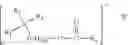
The esterquats can be represented by the following structure:
wherein R4 represents an aliphatic hydrocarbon group having from 8 to 22 carbon atoms, R2 and R3 represent (CH2)s—R5 where R5 represents an alkoxy carbonyl group containing from 8 to 22 carbon atoms, benzyl, phenyl, (C1-C4)-alkyl substituted phenyl, OH or H; R1 represents (CH2)t R6 where R4 represents benzyl, phenyl, (C1-C4)-alkyl substituted phenyl, OH or H; q, s, and t, each independently, represent an integer from 1 to 3; and X′ is a softener compatible anion.
The composition contains encapsulated fragrance. The encapsulated fragrance can be supplied as a suspension containing water. In certain embodiments, the encapsulated fragrance can be included in the composition in an amount of 1 to 10% by weight of the composition.
The water soluble pouch can be any material that is typically used for making a unit dose film. These materials include, but are not limited to polyvinyl alcohol. The thickness of the film that makes the pouch can be any desired thickness. In certain embodiment, the thickness is 25 to 150 microns. The thickness is chosen based on the desired dissolvability of the film.
In one embodiment, provided is Composition 1 that is a unit dose fabric conditioner comprising a fabric conditioner composition contained within a water soluble pouch, wherein the composition is liquid at 25° C. and comprises:
a cationic fabric softening active;
at least 50% by weight of the composition of a C3-C12 polyol that is liquid at 25° C.;
a C9-C15 alkoxylated alcohol having an average of 3 to 8 EO per mole and which is liquid at 25° C.;
a dispersing polymer for dispersing the cationic fabric softening active; and
encapsulated fragrance.
- 1.1 The unit dose fabric conditioner of any preceding Composition, wherein the water soluble pouch comprises polyvinyl alcohol.
- 1.2 The unit dose fabric conditioner of any preceding Composition, wherein the composition further comprises free fragrance.
- 1.3 The unit dose fabric conditioner of Composition 1.2, wherein the free fragrance is present in an amount of 0.5 to 7% by weight of the composition.
- 1.4 The unit dose fabric conditioner of any preceding Composition, wherein the encapsulated fragrance is present in an amount of 1 to 10% by weight of the composition.
- 1.5 The unit dose fabric conditioner of any preceding Composition, wherein the cationic fabric softening active is at least one active chosen from esterquat, tallow esterquat, triolyeyl esterquat, and diolyeyl esterquat.
- 1.6 The unit dose fabric conditioner of any preceding Composition, wherein the cationic fabric softener is present in an amount of 10 to 30% by weight of the composition.
- 1.7 The unit dose fabric conditioner of any preceding Composition, wherein the cationic fabric softener is liquid at 25° C.
- 1.8 The unit dose fabric conditioner of any preceding Composition, wherein the cationic fabric softener is diolyeyl esterquat.
- 1.9 The unit dose fabric conditioner of any preceding Composition, wherein the polyol is at least one polyol chosen from glycerin, propylene glycol, diglycerol, triglycerol, and quadraglycerol.
- 1.10 The unit dose fabric conditioner of any preceding Composition, wherein the polyol is present in an amount of 50 to 90% by weight of the composition.
- 1.11 The unit dose fabric conditioner of any preceding Composition, wherein the polyol is present in an amount of 50 to 80% by weight of the composition.
- 1.12 The unit dose fabric conditioner of any preceding Composition, wherein the polyol is present in an amount of 60 to 80% by weight of the composition.
- 1.13 The unit dose fabric conditioner of any preceding Composition, wherein the polyol is present in an amount of 60 to 70% by weight of the composition.
- 1.14 The unit dose fabric conditioner of any preceding Composition, wherein the alkoxylated alcohol is present in an amount of 2 to 8 weight % by weight of the composition.
- 1.15 The unit dose fabric conditioner of any preceding Composition, wherein the alkoxylated alcohol is present in an amount of 6 weight % by weight of the composition.
- 1.16 The unit dose fabric conditioner of any preceding Composition, wherein the alkoxylated alcohol is at least one alkoxylated alcohol chosen from a C9-C11 alkoxylated alcohol with an average of 8 EO, C12-C13 alkoxylated alcohol with an average of 5 EO, and C12-C13 alkoxylated alcohol with an average of 7 EO.
- 1.17 The unit dose fabric conditioner of any preceding Composition, wherein the alkoxylated alcohol is a C9-C11 alkoxylated alcohol with an average of 8 EO.
- 1.18 The unit dose fabric conditioner of any preceding Composition, wherein the dispersing polymer is a water soluble cross-linked cationic polymer derived from the polymerization of from 5 to 100 mole percent of cationic vinyl addition monomer, from 0 to 95 mole percent of acrylamide, and from 70 to 300 ppm of a difunctional vinyl addition monomer cross-linking agent. Examples of these types of polymers are available from SNF Floerger.
- 1.19 The unit dose fabric conditioner of any preceding Composition, wherein the dispersing polymer is present in an amount of 0.2 to 2% by weight of the composition.
- 1.20 The unit dose fabric conditioner of any preceding Composition, wherein the dispersing polymer is present in an amount of 0.2 to 0.5% by weight of the composition.
- 1.21 The unit dose fabric conditioner of any preceding Composition, wherein the dispersing polymer is present in an amount of 0.3 to 0.35% by weight of the composition.
- 1.22 The unit dose fabric conditioner of any preceding Composition, wherein the composition contains water in an amount of 0 to 10% by weight of the composition.
- 1.23 The unit dose fabric conditioner of Composition 1.22, wherein the amount of water is 0 to 7% by weight of the composition, and the water soluble pouch has a thickness of 35 to 40 microns.
- 1.24 The unit dose fabric conditioner of Composition 1.22, wherein the amount of water is 0 to 9% by weight of the composition, and the water soluble pouch has a thickness of 70 to 80 microns.
- 1.25 The unit dose fabric conditioner of any preceding Composition, wherein the composition further comprises at least one material chosen from PPG-2-myristyl ether propionate, propylene/hexene maleic terminated copolymer with a weight average molecular weight of about 800, and a polyether-alkyl-polymethyl-siloxane copolymer.
- 1.26 The unit dose fabric conditioner of any preceding Composition, wherein the composition is non-Newtonian and has a viscosity of 200 to 1000 mPas as measured on a Brookfield LVT viscometer with spindle 4 at 12 rpm, optionally 200 to 800 mPas.
- 1.27 The unit dose fabric conditioner of any of Compositions 1 to 1.25, wherein the composition is Newtonian and has a viscosity of 200 to 1000 mPas as measured on a Brookfield LVT viscometer with spindle 2 at 30 rpm, optionally 200 to 800 mPas.
Any of the preceding unit dose fabric conditioners can be used in a laundry process to condition fabrics. The unit dose can be added to the wash cycle, the rinse cycle, or both.
Liquid at 25° C. refers to the ordinary definition of a liquid in which the material conforms to the shape of the container that it is in. In certain embodiments, liquid at 25° C. refers to a material that is liquid and when added to the composition, the composition has a viscosity of 200 to 1000 or 200 to 800 mPas as measured above.
The compositions can contain any typical additive, such as coloring agents, pH adjusting agents, preservatives, antifoams, and silicones.
Examples
Exemplary compositions were prepared as detailed in the tables below. The compositions were prepared by mixing of the materials.
| Material | A | B | C | D | E | F | G | H |
| Soft Tallow Triesterquat | 19.1% | 19.2% | 19.4% | 19.1% | 14.8% | 19.9% | 20.7% | 20.8% |
| TriOleyl Esterquat | ||||||||
| DiOleyl Esterquat | ||||||||
| 50/50 Hard/Soft Esterquat | ||||||||
| from WO2011149475 | ||||||||
| Glycerin | 58.7% | 59% | 59.7% | 58.6% | 61.8% | 61.2% | 63.7% | 64% |
| Free Fragrance | 5.1% | 5.1% | 5.2% | 5.1% | 5.4% | 4% | 2.6% | 1.8% |
| Neodol 91-8 C9-C11 | 2.6% | 2.6% | 2.6% | 3.3% | 2.7% | 3.5% | 3.6% | 3.6% |
| alkoxylated alcohol with an | ||||||||
| average of 8EO | ||||||||
| Water soluble cross-linked | 2.1% | 2.1% | 2.1% | 1.6% | 2.2% | 2.2% | 2.3% | 2.3% |
| cationic polymer from SNF | ||||||||
| Floerger 2243-5 polymer | ||||||||
| Propylene/Hexene Maleic | 0.5% | 0.5% | 0.5% | |||||
| Terminated copolymer with | ||||||||
| 800 MW from Baker Hughes | ||||||||
| Deionized water | 2.4% | 2.4% | 2.5% | 2.4% | 2.6% | 2.5% | 2.6% | 2.6% |
| Fragrance Capsules | 8.1% | 8.1% | 8.2% | 8.1% | 8.5% | 6.3% | 4.1% | 2.9% |
| Tegopren 7008 polyether- | 1.1% | 1.1% | 1.1% | 1.2% | ||||
| alkyl-polymethyl-siloxane | ||||||||
| copolymer from Evonik | ||||||||
| Minors (color and pH adjust) | Q.S. | Q.S. | Q.S. | Q.S. | Q.S. | Q.S. | Q.S. | Q.S. |
| Crodamol PMP PPG-2 | 1.6% | |||||||
| myristyl ether propionate | ||||||||
| Material | I | J | K | L | M | N | O | P |
| Soft Tallow Triesterquat | ||||||||
| TriOleyl Esterquat | 38.8% | |||||||
| DiOleyl Esterquat | 14.8% | 38.8% | ||||||
| 50/50 Hard/Soft Esterquat | 20.8% | 20.5% | 21% | 20.7% | 20.5% | |||
| from WO2011149475 | ||||||||
| Glycerin | 64% | 61.8% | 63.2% | 64.5% | 63.7% | 63% | ||
| Free Fragrance | 1.8% | 14.1% | 5.4% | 14.1% | 1.8% | 1% | 1% | 0.8% |
| Neodol 91-8 C9-C11 | 3.6% | 7.1% | 2.7% | 7.1% | 3.6% | 3.7% | 3.6% | 3.6% |
| alkoxylated alcohol with an | ||||||||
| average of 8EO | ||||||||
| Water soluble cross-linked | 2.3% | 5.8% | 2.2% | 5.8% | 2.3% | 2.3% | 2.3% | 2.3% |
| cationic polymer from SNF | ||||||||
| Floerger 2243-5 polymer | ||||||||
| Propylene/Hexene Maleic | 1.4% | 0.5% | 1.4% | |||||
| Terminated copolymer with | ||||||||
| 800 MW from Baker Hughes | ||||||||
| Deionized water | 2.6% | 6.7% | 2.6% | 6.7% | 2.6% | 2.7% | 2.6% | 2.6% |
| Fragrance Capsules | 2.9% | 22.2% | 8.5% | 22.2% | 4.2% | 2.9% | 4.1% | 5.4% |
| Tegopren 7008 polyether- | 3% | 1.2% | 3% | |||||
| alkyl-polymethyl-siloxane | ||||||||
| copolymer from Evonik | ||||||||
| Minors (color and pH adjust) | Q.S. | Q.S. | Q.S. | Q.S. | Q.S. | Q.S. | Q.S. | Q.S. |
| Crodamol PMP PPG-2 | 1.6% | 1.5% | 1.6% | 1.6% | 1.5% | |||
| myristyl ether propionate | ||||||||
| Material | Q | R | S | T | U | V | W | X |
| Soft Tallow Triesterquat | 21% | 16.6% | 21% | 20.8% | ||||
| TriOleyl Esterquat | ||||||||
| DiOleyl Esterquat | ||||||||
| 50/50 Hard/Soft Esterquat | 20.8% | 16.4% | 21% | 20.8% | ||||
| from WO2011149475 | ||||||||
| Glycerin | 63.9% | 67.4% | 64.5% | 68.1% | 64.5% | 64.6% | 63.9% | 63.9% |
| Free Fragrance | 1.8% | 1.9% | 1.1% | 1.1% | 1.4% | 1.4% | 1.8% | 1.8% |
| Neodol 91-8 C9-C11 | 3.6% | 3.8% | 3.7% | 3.9% | 3.7% | 3.7% | 3.6% | 3.6% |
| alkoxylated alcohol with an | ||||||||
| average of 8EO | ||||||||
| Water soluble cross-linked | 2.3% | 2.4% | 2.3% | 2.4% | 2.3% | 2.3% | 2.3% | 2.3% |
| cationic polymer from SNF | ||||||||
| Floerger 2243-5 polymer | ||||||||
| Propylene/Hexene Maleic | ||||||||
| Terminated copolymer with | ||||||||
| 800 MW from Baker Hughes | ||||||||
| Deionized water | 2.7% | 2.8% | 1.3% | 1.3% | 1.3% | 1.3% | ||
| Fragrance Capsules | 4.2% | 4.4% | 2.9% | 3.1% | 3.6% | 3.6% | 4.2% | 4.2% |
| Tegopren 7008 polyether- | ||||||||
| alkyl-polymethyl-siloxane | ||||||||
| copolymer from Evonik | ||||||||
| Minors (color and pH adjust) | Q.S. | Q.S. | Q.S. | Q.S. | Q.S. | Q.S. | Q.S. | Q.S. |
| Crodamol PMP PPG-2 | 1.6% | 1.6% | 1.6% | 1.7% | 1.6% | 1.6% | 1.6% | 1.6% |
| myristyl ether propionate | ||||||||
Each of compositions A to X was able to disperse the esterquat and fragrance capsules.
Without either, the alkoxylated alcohol (C9-C11 alkoxylated alcohol with an average of 8 EO) or the dispersing polymer (water soluble cross-linked cationic polymer), dispersability of the esterquat and fragrance capsules was not observed.
PEG 400 and PEG 600 were tested in place of the polyol. Dispersability was not observed with these PEGs.
Claims
What is claimed is:1. A unit dose fabric conditioner comprising a fabric conditioner composition contained within a water soluble pouch, wherein the composition is liquid at 25° C. and comprises:
a) a cationic fabric softening active;
b) at least 50% by weight of the composition of a C3-C12 polyol that is liquid at 25° C.;
c) a C9-C15 alkoxylated alcohol having an average of 3 to 8 EO per mole and which is liquid at 25° C.;
d) a dispersing polymer for dispersing the cationic fabric softening active; and
e) encapsulated fragrance.
2. The unit dose fabric conditioner of claim 1, wherein the water soluble pouch comprises polyvinyl alcohol.
3. The unit dose fabric conditioner of claim 1, wherein the composition further comprises free fragrance, and wherein the free fragrance is present in an amount of 0.5 to 7% by weight of the composition.
4. (canceled)
5. The unit dose fabric conditioner of claim 1, wherein the encapsulated fragrance is present in an amount of 1 to 10% by weight of the composition.
6. The unit dose fabric conditioner of claim 1, wherein the cationic fabric softening active is at least one active chosen from esterquat, tallow esterquat, triolyeyl esterquat, and diolyeyl esterquat.
7. The unit dose fabric conditioner of claim 1, wherein the cationic fabric softener is present in an amount of 10 to 30% by weight of the composition.
8. (canceled)
9. The unit dose fabric conditioner of claim 1, wherein the cationic fabric softener is diolyeyl esterquat and wherein the cationic fabric softener is liquid at 25° C.
10. The unit dose fabric conditioner of claim 1, wherein the polyol is at least one polyol chosen from glycerin, propylene glycol, diglycerol, triglycerol, and quadraglycerol.
11. The unit dose fabric conditioner of claim 1, wherein the polyol is present in an amount of 50 to 90% by weight of the composition.
12. (canceled)
13. (canceled)
14. The unit dose fabric conditioner of claim 1, wherein the polyol is present in an amount of 60 to 70% by weight of the composition.
15. The unit dose fabric conditioner of claim 1, wherein the alkoxylated alcohol is present in an amount of 2 to 8 weight % by weight of the composition.
16. (canceled)
17. The unit dose fabric conditioner of claim 1, wherein the alkoxylated alcohol is at least one alkoxylated alcohol chosen from a C9-C11 alkoxylated alcohol with an average of 8 EO, C12-C13 alkoxylated alcohol with an average of 5 EO, and C12-C13 alkoxylated alcohol with an average of 7 EO.
18. (canceled)
19. The unit dose fabric conditioner of claim 1, wherein the dispersing polymer is a water soluble cross-linked cationic polymer derived from the polymerization of from 5 to 100 mole percent of cationic vinyl addition monomer, from 0 to 95 mole percent of acrylamide, and from 70 to 300 ppm of a difunctional vinyl addition monomer cross-linking agent.
20. The unit dose fabric conditioner of claim 1, wherein the dispersing polymer is present in an amount of 0.2 to 2% by weight of the composition.
21. (canceled)
22. The unit dose fabric conditioner of claim 1, wherein the dispersing polymer is present in an amount of 0.3 to 0.35% by weight of the composition.
23. (canceled)
24. The unit dose fabric conditioner of claim 1, wherein the composition contains water in an amount of 0 to 7% by weight of the composition, and the water soluble pouch has a thickness of 35 to 40 microns.
25. (canceled)
26. The unit dose fabric conditioner of claim 1, wherein the composition further comprises at least one material chosen from PPG-2-myristyl ether propionate, propylene/hexene maleic terminated copolymer with a weight average molecular weight of about 800, and a polyether-alkyl-polymethyl-siloxane copolymer.
27. The unit dose fabric conditioner of claim 1, wherein the composition is non-newtonian and has a viscosity of 200 to 1000 mPas as measured on a Brookfield LVT viscometer with spindle 4 at 12 rpm.
28. The unit dose fabric conditioner of claim 1, wherein the composition is newtonian and has a viscosity of 200 to 800 mPas as measured on a Brookfield LVT viscometer with spindle 2 at 30 rpm.
29. Method of conditioning fabrics comprising adding the unit dose fabric conditioner of claim 1 to laundry during at least one of wash and rinse.
Images & Drawings included:
Sources:
- United States Patent and Trademark Office - verify current appl. status at the USPTO↗
Similar patent applications:
Recent applications in this class:
- » 20250236816 2025-07-24
SURFACE TREATMENT COMPOSITION, METHOD FOR MANUFACTURING SURFACE TREATMENT COMPOSITION, SURFACE TREATMENT METHOD, AND METHOD FOR MANUFACTURING SEMICONDUCTOR SUBSTRATE - » 20240376404 2024-11-14
Polymeric Active Ingredients which Allow the Removal of Dirt - » 20230027432 2023-01-26
SURFACE TREATMENT COMPOSITION, METHOD FOR PRODUCING SURFACE TREATMENT COMPOSITION, SURFACE TREATMENT METHOD, AND METHOD FOR PRODUCING SEMICONDUCTOR SUBSTRATE - » 20220348847 2022-11-03
Method for preparing an inverse emulsion comprising two cationic polymers - » 20220315865 2022-10-06
SURFACE TREATMENT COMPOSITION, METHOD FOR MANUFACTURING SURFACE TREATMENT COMPOSITION, SURFACE TREATMENT METHOD, AND METHOD FOR MANUFACTURING SEMICONDUCTOR SUBSTRATE - » 20220098523 2022-03-31
Surface treatment composition, method for producing surface treatment composition, surface treatment method, and method for producing semiconductor substrate - » 20210171876 2021-06-10
Detergent composition comprising an inverse latex combining an EDDS sequestrant and an ethoxy/propoxy nonionic surfactant - » 20210071111 2021-03-11
Surface treatment composition, method for producing surface treatment composition, surface treatment method, and method for producing semiconductor substrate - » 20210024856 2021-01-28
Textile Care Product Having An Optionally Cross-Linked Copolymer And Method For Finishing Textiles - » 20200063070 2020-02-27
COPOLYMERS AND THEIR USE IN DETERGENT COMPOSITIONS
Recent applications for this Assignee:
- » 20250262137 2025-08-21
Films and Oral Care Compositions - » 20250228754 2025-07-17
Oral Care Compositions - » 20250221900 2025-07-10
Oral Care Compositions and Methods of Use - » 20250220301 2025-07-03
TOOTHBRUSH MANUFACTURING CONTROL USING KINETIC IMAGING - » 20250216337 2025-07-03
Light Imaging for Tube Sideseam Inspection - » 20250213449 2025-07-03
Oral Care Product And Methods Of Use And Manufacture Thereof - » 20250213340 2025-07-03
Sustainably Powered Personal Care Devices and Methods - » 20250204848 2025-06-26
System And Method For Oral Health Monitoring Using Electrical Impedance Tomography - » 20250197768 2025-06-19
Concentrated Multi-Purpose Cleaning Composition - » 20250195382 2025-06-19
Personal Care Compositions