WINGLESS AIRCRAFT
US20170355435A1
2017-12-14
14/999,667
2016-06-10
Abstract:
Wings do not produce lift. It is the thrust provided by an engine (or engines) that enable an aircraft to rise off the ground.
Interested in similar patents?
Get notified when new applications in this technology area are published.
Classification:
B64C1/16 » CPC main
Fuselages; Constructional features common to fuselages, wings, stabilising surfaces and the like specially adapted for mounting power plant
B64C9/00 » CPC further
Adjustable control surfaces or members, e.g. rudders
B64C25/04 » CPC further
Alighting gear; Undercarriages Arrangement or disposition on aircraft
Description
CROSS REFERENCE TO RELATED PUBLICATIONS
Not applicable
STATEMENT REGARDING FEDERALLY SPONSORED RESEARCH OR DEVELOPMENT
Not applicable
REFERENCE TO SEQUENCE LISTING, A TABLE, OR A COMPUTER PROGRAM LISTING COMPACT DISC APPENDIX
Not applicable
BACKGROUND OF THE INVENTION
Since the beginning of manned flight, engineers have assumed that wings were necessary to provide lift for an aircraft.
However, wing failures are a frequent cause of plane crashes.
Also, wings add considerable weight.
Finally, wings add unnecessary friction when the aircraft is in flight.
BRIEF SUMMARY OF THE INVENTION
This type of aircraft differs from common airplane designs in that it has no wings, and that engine(s) and landing gear are appended to the fuselage.
BRIEF DESCRIPTION OF THE SEVERAL VIEWS OF THE DRAWING
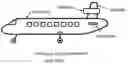
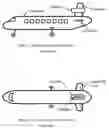
FIG. 1 shows the side view of a typical wingless aircraft design
FIG. 2 shows the top view of a typical wingless aircraft design.
DETAILED DESCRIPTION OF THE INVENTION
Wings are totally unnecessary for flight. It is the thrust provided by an engine that forces an aircraft off the ground and into the air.
When an aircraft is moving down the runway, it doesn't life off until the pilot pulls back on the wheel. This causes the elevator flap to tilt up. Air pressure on the elevator flap then forces the tail of the aircraft down. Consequently, the nose of the aircraft is pointed up and, if thrust produced by the engine is great enough, the aircraft will rise off the ground. After that, the aircraft rises or falls in accordance with the elevator flap position.
Without wings, air travel would be safer, cost of aircraft would be much lower and fuel consumption would be much lower.
Claims
1. This type of aircraft has an elongated fuselage, rudder, elevator and engine, but does not have wings.
Images & Drawings included:
Sources:
- United States Patent and Trademark Office - verify current appl. status at the USPTO↗
Similar patent applications:
- » 20190118969
Wingless aircraft
Recent applications in this class:
- » 20250083793 2025-03-13
THRUST VECTORING PYLON ARRANGEMENT AND METHOD THEREFOR - » 20240253763 2024-08-01
SYSTEM FOR PROVIDING A FAVORABLE ENVIRONMENT FOR PROPULSION SYSTEM OF A BLENDED WING BODY AIRCRAFT AND A METHOD OF MANUFACTURING - » 20230339594 2023-10-26
Aircraft with articulatable tail section - » 20210403139 2021-12-30
Rotary wing aircraft with a firewall arrangement - » 20200339241 2020-10-29
Nacelle for a boundary layer ingestion propulsor - » 20200290718 2020-09-17
UNMANNED AERIAL VEHICLE - » 20200172224 2020-06-04
Aircraft of a modular type, and a method of preparing such an aircraft for a specific mission - » 20200094938 2020-03-26
AIRCRAFT SYSTEM WITH INTERCHANGEABLE DRIVE MODULE UNITS - » 20190263498 2019-08-29
AIRCRAFT WITH ELECTRIC BATTERIES, IN PARTICULAR A HYBRID AIRCRAFT - » 20190241248 2019-08-08
Aircraft having an AFT engine