Tibetan Spelling Check Method And Device Based On Automata
US20170357630A1
2017-12-14
15/337,047
2016-10-28
Abstract:
The present invention discloses a Tibetan spelling check method and device based on automata, and relates to the field of natural language processing. The present invention is proposed to solve the problem in the prior art that as the application range is relatively narrow, some Tibetan characters with special structures cannot be recognized. The technical solution provided by the embodiments of the present invention includes: S10, segmenting a Tibetan text to be checked with an character as a unit to acquire at least one Tibetan character; S20, using the at least one Tibetan character as the input of a preset finite state automaton group; and S30, judging whether the Tibetan text to be checked is correctly spelled through the finite state automaton group.
Interested in similar patents?
Get notified when new applications in this technology area are published.
Classification:
Description
CROSS-REFERENCE TO RELATED APPLICATIONS
This application claims the benefit and priority of Chinese Patent Application No. 201610409221.3 filed Jun. 13, 2016. The entire disclosure of the above application is incorporated herein by reference.
FIELD
The present invention relates to the field of natural language processing, in particular to a Tibetan spelling check method and device based on automata.
BACKGROUND
In natural language processing technology, large data processing technology and some word processing software, in order to solve the problem of misspellings generated by users in a writing process, a spelling check function is usually available to enable the users to check the misspellings in the writing process.
In the prior art, a spelling check method used in the Tibetan field is mainly to establish a model corresponding to Tibetan character rules, and Tibetan spelling check is carried out via the model.
However, when the model is applied to the spelling check, as the application range of the model is relatively narrow, some Tibetan characters with special structures cannot be recognized.
SUMMARY
The present invention provides a Tibetan character spelling check method and device based on automata, which can expand the application range of spelling check and improve the recognition rate of Tibetan characters.
On one aspect, a Tibetan character spelling check method based on automata is provided, including: S10, segmenting a Tibetan text to be checked with an character as a unit to acquire at least one Tibetan character; S20, using the at least one Tibetan character as the input of a preset finite state automaton group; and S30, judging whether the Tibetan text to be checked is correctly spelled through the finite state automaton group, wherein the finite state automaton group includes 37 finite state automata, and any finite state automaton Mi=(Σi, Qi, δi, qi, Fi); the Σi represents a finite set of terminal symbols of a preset Tibetan spelling formal grammar Gi; the Qi represents a union of a finite set Vi of non-terminal symbols of the Tibetan spelling formal grammar Gi and the Fi; the δi represents a state transition function of the finite state automaton Mi acquired by mapping from a direct product Qi*Σi of Qi and Σi to Qi; the qi represents an initial state of the finite state automaton Mi; qiεQi; the Fi represents a finite set of termination states of the finite state automaton Mi, and Fi⊂Qi; and the i is a positive integer, and i≦37.
On the other aspect, a Tibetan character spelling check device based on automata is provided, including:
a segmenting module, used for segmenting a Tibetan text to be checked with an character as a unit to acquire at least one Tibetan character;
an input module, used for using the at least one Tibetan character as the input of a preset finite state automaton group;
a spelling check module, used for judging whether the Tibetan text to be checked is correctly spelled through the finite state automaton group;
the finite state automaton group includes 37 finite state automata, wherein any finite state automaton Mi=(Σi, Qi, δi, qi, Fi); the Σi represents a finite set of terminal symbols of a preset Tibetan spelling formal grammar Gi; the Qi represents a union of a finite set Vi of non-terminal symbols of the Tibetan spelling formal grammar Gi and the Fi; the δi represents a state transition function of the finite state automaton Mi acquired by mapping from a direct product Qi*Σi of Qi and Σi to Qi; the qi represents an initial state of the finite state automaton Mi; qiεQi; the Fi represents a finite set of termination states of the finite state automaton Mi, and Fi ⊂Qi; and the i is a positive integer, and i≦37.
The present invention has the following beneficial effects: the Tibetan text to be checked is used as the input of the finite state automaton group to achieve Tibetan spelling check. As the finite state automaton group corresponds to the Tibetan spelling formal grammar, the technical solutions provided by the embodiments of the present invention can solve the problem in the prior art that when the spelling check is carried out by a model, as the application range of the model is relatively narrow, some Tibetan characters with special structures cannot be recognized.
DRAWINGS
FIG. 1 is a flowchart of a Tibetan spelling check method based on automata provided by a first embodiment of the present invention;
FIG. 2 is a flowchart of a Tibetan spelling check method based on automata provided by a second embodiment of the present invention;
FIG. 3 is a flowchart of a Tibetan spelling check method based on automata provided by a third embodiment of the present invention;
FIG. 4 is a schematic diagram of a structure of a Tibetan spelling check device based on automata provided by a fourth embodiment of the present invention.
DETAILED DESCRIPTION
The present invention will be further illustrated below in combination with accompanying drawings and embodiments. But the usage and the objective of these exemplary implementations are merely used for citing the present invention, but do not constitute any form of limitation to the actual protection scope of the present invention, let alone limit the protection scope of the present invention hereto.
First Embodiment
As shown in FIG. 1, the embodiment of the present invention provides a Tibetan spelling check method based on automata, including the following steps.
Step 101, a Tibetan text to be checked is segmented with an character as a unit to acquire at least one Tibetan character.
In the embodiment, in the step 101, the Tibetan text to be checked can be segmented with an character as a unit according to a Tibetan character separator, a vertical character, a double-vertical character and a space character to acquire at least one Tibetan character.
Wherein, the Tibetan text to be checked can only contain one Tibetan character and can also contain a plurality of Tibetan characters, and this is not limited herein.
Step 102, the at least one Tibetan character is used as the input of a preset finite state automaton group.
In the embodiment, the finite state automaton group includes 37 finite state automata, wherein any finite state automaton Mi=(Σi, Qi, δi, qi, Fi); the Σi represents a finite set of terminal symbols of a preset Tibetan spelling formal grammar Gi; the Qi represents a union of a finite set Vi of non-terminal symbols of the Tibetan spelling formal grammar Gi and the Fi; the δi represents a state transition function of the finite state automaton M1 acquired by mapping from a direct product Qi*Σi of Qi and Σi to Qi; the qi represents an initial state of the finite state automaton Mi; qiεQi; the Fi represents a finite set of termination states of the finite state automaton Mi, and Fi⊂Qi; and the is a positive integer, and i≦37.
In the embodiment, 37 Tibetan spelling formal grammars are preset, and each Tibetan spelling formal grammar corresponds to one finite state automaton; and the at least one Tibetan character is used as the input of each finite state automaton in sequence. The finite set of the terminal symbols of the Tibetan spelling formal grammar Gi is a subset of a set L consisting of 30 Tibetan consonants, 5 reverse scripts, 4 vowel symbols and 1 long vowel symbol, and includes characters (symbols) actually occurring in a sentence (a Tibetan character belonging to a certain structure) of the language; the set of the non-terminal symbols of the Tibetan spelling formal grammar Gi includes words that do not actually occur in the sentence of the language, but play the function of variables in deduction, and are equivalent to the grammatical category in the language. For example, the non-terminal symbol can be a variable of an SVO (Subject Verb Object) word order of the Chinese, the SOV (Subject Object Verb) word order of the Tibetan and other grammars, but it does not occur in a specific sentence, that is, it implicitly works, but cannot be seen.
Elements in the finite set of the terminal symbols and the finite set of the non-terminal symbols correspond to specific Tibetan spelling formal grammars. The initial state of the finite state automaton Mi is a state in which the automation just starts to work, and this state is a state in which the automaton primarily receives input characters; and the termination state refers to a final state of the automaton. Specifically, the automata in the finite state automaton group can be a determined type and can also be an undetermined type; and to facilitate the understanding and improve the implementation efficiency, the automata of the determined types provided by the embodiment are taken as an example for illustration.
Step 103, whether the Tibetan text to be checked is correctly spelled is judged through the finite state automaton group.
In the embodiment, the process in the step 103 of judging whether the Tibetan text to be checked is correctly spelled can include: each finite state automaton in the finite state automaton group sequentially receives at least one Tibetan character from the initial state and transfers the state; if a certain finite state automaton in the finite state automaton group can enter the termination state after transferring the state, the Tibetan text to be checked is correctly spelled; if none of the finite state automata in the finite state automaton group can enter the termination state after transferring the state, the Tibetan text to be checked is wrongly spelled. For example, the operation of transferring the state can be as follows: the finite state automaton Mi receives a certain input character at a certain state, for example, qm(qmεQi), if x (xεΣi), if the state transition function δm (qm, x)ε(δi, then the automaton enters the state qm+1(qm+1ε(qm, x)), and otherwise, the state of the automaton is not changed.
The present invention has the following beneficial effects: the Tibetan text to be checked is used as the input of the finite state automaton group to achieve Tibetan spelling check. As the finite state automaton group corresponds to the Tibetan spelling formal grammar, the technical solutions provided by the embodiments of the present invention can solve the problem in the prior art that when the spelling check is carried out by a model, as the application range of the model is relatively narrow, some Tibetan characters with special structures cannot be recognized.
Second Embodiment
As shown in FIG. 2, the embodiment of the present invention provides a Tibetan spelling check method based on automata. The method is similar to the method as shown in FIG. 1, the difference lies in that, to complete the spelling check of the entire Tibetan text, the Tibetan spelling check method provided by the embodiment further includes:
step 104, whether the Tibetan text to be checked is completely checked is judged.
In the embodiment, when it is determined that the Tibetan text to be checked is completely checked in the step 104, the current Tibetan spelling check is terminated; when it is determined that the Tibetan text to be checked is not completely checked in the step 104, step 102 is continuously executed on the unchecked part of the Tibetan text to be checked until the Tibetan text to be checked is completely checked.
The present invention has the following beneficial effects: the Tibetan text to be checked is used as the input of the finite state automaton group to achieve Tibetan spelling check. As the finite state automaton group corresponds to the Tibetan spelling formal grammar, the technical solutions provided by the embodiments of the present invention can solve the problem in the prior art that when the spelling check is carried out by a model, as the application range of the model is relatively narrow, some Tibetan characters with special structures cannot be recognized.
Third Embodiment
As shown in FIG. 3, the embodiment of the present invention provides a Tibetan spelling check method based on automata, including the following steps.
Step 301, a Tibetan text to be checked is segmented with an character as a unit to acquire at least one Tibetan character. The process is similar to the step 101 as shown in FIG. 1, and thus will not be repeated redundantly herein.
Step 302, a Tibetan spelling formal grammar Gi is acquired.
In the embodiment, in the step 302, the Tibetan spelling formal grammar Gi=(Ti, Vi, Si, Pi). The process of acquiring the Tibetan spelling formal grammar through the step 302 includes: acquiring a finite set Ti of terminal symbols, wherein the Ti is a subset of a set L, and the set L includes 30 Tibetan consonants, 5 reverse scripts, 4 vowel symbol s and 1 long vowel symbol; acquiring a finite set Vi of non-terminal symbols; acquiring a start symbol Si, wherein SiεVi; acquiring a finite set Pi of production rules; and acquiring the corresponding Tibetan spelling formal grammar Gi according to the Ti, Vi, Si and Pi. Wherein, the process of acquiring the finite set Pi of the production rules can include: at first, acquiring a preset Tibetan spelling grammar formal description system; and then acquiring the finite set Pi of the production rules according to the Tibetan spelling grammar formal description system.
In the embodiment, the preset Tibetan spelling grammar formal description system can be established according to a set theory method, and the specific form is as follows:
Tibetan spelling grammar 1: elements in a set Root={b1, b2, b3, b4, b5, . . . , b30, b31, b32, b33, b34, b35} respectively correspond to 30 Tibetan consonants and 5 Tibetan reverse scripts, and then any Tibetan character corresponding to biεRoot can constitute a root of a Tibetan character.
Tibetan spelling grammar 2: for a set Prefix={b3, b11, b15, b16, b23}, Prefix⊂Root, any Tibetan character corresponding to biεPrefix, (j=3, 11, 15, 16, 23) can constitute a prefix of the Tibetan character.
Tibetan spelling grammar 3: for a set Suffix={b3, b4, b11, b12, b15, b16, b23, b25, b26, b28}, Suffix⊂Root, any Tibetan character corresponding to biεSuffix, (j=3, 4, 11, 12, 15, 16, 23, 25, 26, 28) can constitute a suffix of the Tibetan character.
Tibetan spelling grammar 4: for a set Postfix={b11, b28}, Postfix⊂Suffix ⊂Root, any Tibetan character corresponding to biεPostfix, (j=11, 28) can constitute a postfix of the Tibetan character.
Tibetan spelling grammar 5: for a set Superfix={b25, b26, b28}, Superfix⊂Root, any Tibetan character corresponding to biεSuperfix, (j=25, 26, 28) can constitute a superfix of the Tibetan character.
Tibetan spelling grammar 6: for a set Subfix={b20, b24, b25, b26}, Subfix⊂Root, any Tibetan character corresponding to biεSubfix, (j=20, 24, 25, 26) can constitute a subfix of the Tibetan character.
Tibetan spelling grammar 7: for a set Vowel=Vowel1{a}, Vowel1={i, u, e, o} corresponds to 4 Tibetan vowel characters, and a represents a Tibetan long vowel character. The Tibetan roots corresponding to bjεRoot, (j=1, 23, 5, 7, . . . , 33, 34, 35) can be spelled with vowel characters corresponding to vεVowel, u and a can only be spelled below consonants, and the rest 3 vowel characters can only be spelled above the consonants.
Tibetan spelling grammar 8: when the Tibetan roots corresponding to bjεRoot, (j=1, 3, 4, 5, 7, 8, 9, 11, 12, 13, 15, 16, 17, 19, 29) are spelled with the superfixes corresponding to biεSuperfix, (i=25, 26, 28), the following grammar rules must be satisfied:
1. bjεRoot, (j=1, 3, 4, 7, 8, 9, 11, 12, 15, 16, 17, 19) can only be spelled with b25εSuperfix.
2. bjεRoot, (j=1, 3, 4, 5, 7, 9, 11, 13, 15, 29) can only be spelled with b26εSuperfix.
3. bjεRoot, (j=1, 3, 4, 8, 9, 11, 12, 13, 15, 16, 17) can only be spelled with b28εSuperfix.
Tibetan spelling grammar 9: when the Tibetan roots corresponding to bjεRoot, (j=1, 2, 3, 8, 9, 10, 11, 13, 14, 15, 16, 18, 21, 22, 25, 26, 27, 28, 29) are spelled with the subfixes corresponding to biεSubfix, (i=20, 24, 25, 26), the following grammar rules must be satisfied:
1. bjεRoot, (j=1, 2, 3, 8, 11, 18, 21, 22, 25, 26, 27, 29) can only be spelled with b20εSubfix.
2. bjεRoot, (j=1, 2, 3, 13, 14, 15, 16) can only be spelled with b24εSubfix.
3. bjεRoot, (j=1, 2, 3, 9, 10, 11, 13, 14, 15, 16, 28, 29) can only be spelled with b25εSubfix.
4. bjεRoot, (j=1, 3, 15, 22, 25, 28) can only be spelled with b26εSubfix.
5. bjεRoot, (j=29) can only be spelled with b14εSubfix.
(Note: to spell the [1] phonetic symbol in other languages, b29 and b14 spelling forms occur in the modern Tibetan. According to the traditional Tibetan spelling grammar, b29 cannot be used as the superfix, and b14 cannot be used as the subfix neither, therefore, as a special condition, when b29 is spelled with b14, b14 is deemed as the “subfix”.)
Tibetan spelling grammar 10: when the Tibetan roots corresponding to biεRoot, (i=1, 3, 12, 13, 15, 16, 17) are simultaneously spelled with the superfixes corresponding to bjεSuperfix, (j=25, 28) and the subfixes corresponding to bkεSubfix, (k=20, 24, 25), the following grammar rules must be satisfied:
1. when being spelled with b25εSuperfix, b1εRoot can be simultaneously spelled with b24εSubfix; and when being spelled with b28εSuperfix, b1εRoot can be simultaneously spelled with bkεSubfix, (k=24, 25).
2. When being spelled with b25εSuperfix, b3εRoot can be simultaneously spelled with b24εSubfix; and when being spelled with b28εSuperfix, b3εRoot can be simultaneously spelled with bkεSubfix, (k=24, 25).
3. When being spelled with b28εSuperfix, b12εRoot can be simultaneously spelled with b25εSubfix.
4. When being spelled with b28εSuperfix, b13εRoot can be simultaneously spelled with bkεSubfix, (k=24, 25).
5. When being spelled with b28εSuperfix, b15εRoot can be simultaneously spelled with bkεSubfix, (k=24, 25).
6. When being spelled with b25εSuperfix, b16εRoot can be simultaneously spelled with b24εSubfix; and when being spelled with b28εSuperfix, b16εRoot can be simultaneously spelled with bkεSubfix, (k=24, 25).
7. When being spelled with b25εSuperfix, b17εRoot can be simultaneously spelled with b20εSubfix.
Tibetan spelling grammar 11: when the Tibetan roots corresponding to biεRoot, (i=1, 3, 4, 7, 8, 9, 11, 12, 17, 19) are simultaneously spelled with the prefixes corresponding to b15εPrefix and the superfixes corresponding to bjεSuperfix, (j=25, 26, 28), the following grammar rules must be satisfied:
1. biεRoot, (i=1, 3, 4, 7, 8, 9, 11, 12, 17, 19) can be spelled with b25εSuperfix.
2. biεRoot, (i=9,11) can be spelled with b26εSuperfix.
3. biεRoot, (i=1, 3, 4, 8, 9, 11, 12, 17) can be spelled with b28εSuperfix.
Tibetan spelling grammar 12: when the Tibetan roots corresponding to biεRoot, (i=1, 2, 3, 11, 13, 14, 15, 16, 22, 25, 28) are simultaneously spelled with the prefixes corresponding to bjεPrefix, (j=11, 15, 16, 23) and the subfixes corresponding to bkεSubfix, (k=20, 24, 25, 26), the following grammar rules must be satisfied:
1. biεRoot, (i=1, 3, 13, 15, 16) can be spelled with b11εPrefix and b24εSubfix.
2. biεRoot, (i=1, 3, 13, 15) can be spelled with b11εPrefix and b25εSubfix.
3. biεRoot, (i=1, 3) can be spelled with b15εPrefix and b24εSubfix.
4. biεRoot, (i=1, 3, 28) can be spelled with b15εPrefix and b25εSubfix.
5. biεRoot, (i=1, 22, 25, 28) can be spelled with b15εPrefix and b26εSubfix.
6. biεRoot, (i=2, 3) can be spelled with b16εPrefix and bkεSubfix, (k=24,25).
7. biεRoot, (i=2, 3, 14, 15) can be spelled with b23εPrefix and b24εSubfix.
8. biεRoot, (i=2, 3, 11, 14, 15) can be spelled with b23εPrefix and b25εSubfix.
Tibetan spelling grammar 13: when the Tibetan roots corresponding to biεRoot, (i=1, 3) are spelled with the prefixes corresponding to b15εPrefix, the superfixes corresponding to bjεSuperfix, (i=25, 28) and the subfixes corresponding to bkεSubfix, (i=24, 25), the following grammar rules must be satisfied:
1. biεRoot, (i=1, 3) can be spelled with b15εPrefix, b25εSuperfix and b24εSubfix.
2. biεRoot, (i=1, 3) can be spelled with b15εPrefix, b28εSuperfix and b25εSubfix.
3. biεRoot, (i=1, 3) can be spelled with b15εPrefix, b28εSuperfix and b24εSubfix.
Tibetan spelling grammar 14: when being spelled with the prefixes corresponding to bjεPrefix, (j=3, 11, 15, 16, 23), the Tibetan roots corresponding to biεRoot, (i=1, 2, 3, 4, 5, 6, 7, 8, 9, 10, 11, 12, 13, 14, 15, 16, 17, 18, 19, 21, 22, 24, 27, 28) must be simultaneously spelled with the vowel symbols corresponding to vεVowel, Vowel={i, u, e, o}, or one suffix corresponding to bkεSuffix, (k=3, 4, 11, 12, 15, 16, 23, 25, 26, 28), and the following grammar rules must be satisfied:
1. biεRoot, (i=5, 8, 9, 11, 12, 17, 21, 22, 24, 27, 28) can only be spelled with b3εPrefix.
2. biεRoot, (i=1, 3, 4, 13, 15, 16) can only be spelled with b11εPrefix.
3. biεRoot, (i=1, 3, 5, 9, 11, 17, 21, 22, 27, 28) can only be spelled with b15εPrefix.
4. biεRoot, (i=2, 3, 4, 6, 7, 8, 10, 11, 12, 18, 19) can only be spelled with b16εPrefix.
5. biεRoot, (i=2, 3, 6, 7, 10, 11, 14, 15, 18, 19) can only be spelled with b23εPrefix.
Tibetan spelling grammar 15: the Tibetan roots corresponding to biεRoot, (j=1, 2, 3, 4, 5, 6, 7, 8, 9, 10, . . . , 21, 22, 23, 24, 25, 26, 27, 28, 29, 30) can be spelled with any suffix corresponding to biεSuffix, (i=3, 4, 11, 12, 15, 16, 23, 25, 26, 28).
Tibetan spelling grammar 16: the use of the Tibetan postfixes is only related to the suffixes. The Tibetan suffixes corresponding to biεSuffix, (i=3, 4, 12, 15, 16, 25, 26) can be spelled with the postfixes corresponding to bjεPostfix, (j=11, 28), and the following grammar rules must be satisfied:
1. b11εPostfix can only be spelled with biεSuffix, (i=12, 25, 26).
2. b28εPostfix can only be spelled with biεSuffix, (i=3, 4, 15, 16).
Tibetan spelling grammar 17: when being spelled with the Tibetan subfixes corresponding to biεSubfix, (j=24, 25), the Tibetan roots corresponding to biεRoot, (i=3, 11, 14) can be simultaneously spelled with the Tibetan subfixes corresponding to b20εSubfix. The specific rules are as follows:
1. when being spelled with b25εSubfix, biεRoot, (i=3, 11) can be simultaneously spelled with b20εSubfix.
2. When being spelled with b24εSubfix, b14εRoot can be simultaneously spelled with b20εSubfix.
Tibetan spelling grammar 18: the Tibetan consonants corresponding to b29εRoot can be spelled with the Tibetan consonants corresponding to b14εRoot, and b14εRoot is correspondingly located below b29εRoot.
Tibetan spelling grammar 19: when being spelled with the Tibetan consonants corresponding to b14εRoot, the Tibetan consonants corresponding to b29εRoot can be simultaneously spelled with the Tibetan suffixes corresponding to biεSuffix, (i=3, 4, 11, 12, 15, 16, 23, 25, 26, 28).
Tibetan spelling grammar 20: the Tibetan characters having no suffix can be spelled with the Tibetan consonants corresponding to b23εRoot, and at this time, the Tibetan consonants corresponding to b23εRoot must be spelled with the vowel symbols (i, e, u, o) corresponding to vεVowel, Vowel={i, u, e, o}.
Tibetan spelling grammar 21: besides the special spelling in the grammars 17, 18, 19 and 20, the Tibetan characters are spelled according to the sequence of the prefixes, the superfixes, the roots, the subfixes, the vowel symbols, the suffixes and the postfixes.
In the embodiment, Ti represents the finite set of the terminal symbols of the Tibetan spelling formal grammar Gi; Si represents the start symbol of the Tibetan spelling formal grammar Gi; SiεVi; λ represents a null character; the finite set Σi of the input characters of the finite state automaton A is equivalent to the finite set Ti of the terminal symbols of the Tibetan spelling formal grammar Gi; and the initial state qi of the finite state automaton Mi is equivalent to the start symbol Si of the Tibetan spelling formal grammar Gi. Wherein, Si represents any possible sentence (it is a Tibetan character in the application herein) in the language L (Gi) generated by the grammar Si, so Si is a special non-terminal symbol.
Specifically, the specific forms of the 37 Tibetan spelling formal grammars G1 to G37 are as follows:
Tibetan spelling formal grammar G1: the spelling formal grammar G1 of the Tibetan roots and the vowel symbols is a quadruple (T1, V1, S1, P1), wherein:
(1) terminal symbol
T1=TB∪To, wherein:
TB={b1, b2, b3, b4, b5, . . . , b35}, the elements thereof correspond to the Tibetan consonant characters; and To={i,u,e,o,a}, the elements thereof correspond to the Tibetan vowel characters;
(2) non-terminal symbol set
V1={S1,B1,1,B1,2};
(3) S1 is a non-terminal symbol in V1 and is a start symbol; and
(4) a production set of the grammar G1 is: P1={
S1→b1|b2|b3|b4|b5| . . . |b30|b31|b32|b33|b34|b35,
S1→b1B1,1|b2B1,1|b3B1,1|b4B1,1|b5B1,1| . . . |b30B1,1,
S1→b31B1,2|b32B1,2|b33B1,2|b34B1,2|b35B1,2,
B1,1→i|u|e|o|a,
B1,2→i|u|e|o}
With respect to a Tibetan spelling structure 2:
Tibetan spelling formal grammar G2 the spelling formal grammar G2 of the Tibetan superfixes, the roots and the vowels is a quadruple (T2, V2, S2, P2), wherein:
(1) terminal symbol
T2=TB∪To, wherein:
TB={b1,b3,b4,b5,b7,b8,b9,b11,b12,b13,b15,b16,b17,b19,b25,b26,b28,b29}, the elements thereof correspond to the Tibetan consonant characters; and To={i,u,e,o}, the elements thereof correspond to the Tibetan vowel characters;
(2) non-terminal symbol set
V2={S2,B2,1,B2,2,B2,3,B2,4}
(3) S2 is a non-terminal symbol in V2 and is the start symbol;
(4) the production set of the grammar G2 is: P2={
S2→b25B2,1|b26B2,2|b28B2,3,
B2,1→b1|b3|b4|b7|b8|b9|b11|b12|b15|b16|b17|b19,
B2,1→b1B2,4|b3B2,4|b4B2,4|b7B2,4|b8B2,4|b9B2,4|b11B2,4|b12B2,4|b15B2,4|b16B2,4|b17B2,4|b19B2,4,
B2,2→b1|b3|b4|b5|b7|b9|b11|b13|b15|b29,
B2,2→b1B2,4|b3B2,4 b4B2,4|b5B2,4|b7B2,4|b9B2,4|b11B2,4|b13B2,4|b15B2,4|b29B2,4,
B2,3→b1|b3|b4|b8|b9|b11|b12|b13|b15|b16|b17,
B2,3→b1B2,4|b3B2,4|b4B2,4|b8B2,4|b9B2,4|b11B2,4|b12B2,4|b13B2,4|b15B2,4|b16B2,4|b17B2,4,
B2,4→i|u|e|o}
With respect to a Tibetan spelling structure 3:
Tibetan spelling formal grammar G3: the spelling formal grammar G3 of the Tibetan roots, the subfixes and the vowel symbols is a quadruple (T3, V3, S3, P3), wherein:
(1) terminal symbol
T3=TB∪To, wherein:
TB={b1,b2,b3,b8,b9,b10,b11,b13,b14,b15,b16,b18,b20,b22,b22,b24,b25,b26,b27,b28,b29}, the elements thereof correspond to the Tibetan consonant characters; and To={i,u,e,o}, the elements thereof correspond to the Tibetan vowel characters;
(2) non-terminal symbol set
V3={S3,B3,1,B3,2,B3,3,B3,4,B3,5,B3,6,B3,7,B3,8,B3,9,B3,10},
(3) S3 is a non-terminal symbol in V3 and is the start symbol; and
(4) the production set of the grammar G3 is: P3={
S3→b1B3,1|b3B3,1,
S3→b2B3,2,
S3→b11B3,3|b29B3,3,
S3→b8B3,4|b18B3,4 b21B3,4 b26B3,4|b27B3,4,
S3→b9B3,5|b10B3,5,
S3→b13B3,6|b14B3,6|b16B3,6,
S3→b22B3,7|b25B3,7,
S3→b28B3,8,
S3→b15B3,9,
B3,1→b20|b24|b25|b26,
B3,1→b20B3,10|b24B3,10|b25B3,10|b26B3,10,
B3,2→b20|b24|b25,
B3,2→b20B3,10|b24B3,10|b25B3,10,
B3,3→b20|b25,
B3,3→b20B3,10|b25B3,10,
B3,4→b20,
B3,4→b20B3,10,
B3,5→b25,
B3,5→b25B3,10,
B3,6→b24|b25,
B3,6→b24B3,10|b25B3,10,
B3,7→b20|b26,
B3,7→b20B3,10|b26B3,10,
B3,8→b25|b26,
B3,8→b25B3,10|b26B3,10,
B3,9→b24|b25|b26,
B3,9→b24B3,10|b25B3,10|b26B3,10,
B3,10→i|u|e|o}
With respect to a Tibetan spelling structure 4:
Tibetan spelling formal grammar G4: the spelling formal grammar G4 of the superfixes, the Tibetan roots, the subfixes and the vowel symbols is a quadruple (T4, V4, S4, P4), wherein:
(1) terminal symbol
T4=TB∪To, wherein TB={b1,b3,b12,b13,b15,b16,b20,b24,b25,b28}, the elements thereof correspond to the Tibetan consonant characters; and To={i,u,e,o}, the elements thereof correspond to the Tibetan vowel characters;
(2) non-terminal symbol set
V4={S4,B4,1,B4,2,B4,3,B4,4,B4,5,B4,6,B4,7};
(3) S4 is a non-terminal symbol in V4 and is the start symbol; and
(4) the production set of the grammar G4 is: P4={
S4→b25B4,1,
S4→b28B4,2,
B4,1→B4,3|b3B4,3|b16B4,3,
B4,1→b17B4,4,
B4,2→b12B4,5|b3B4,5|b13B4,5|b15B4,5|b16B4,5,
B4,2→b12B4,6,
B4,3→b24,
B4,3→b24B4,7,
B4,4→b20,
B4,4→b20B4,7,
B4,5→b24|b25,
B4,5→b24B4,7|b25B4,7,
B4,6→b25,
B4,6→b25B4,7,
B4,7→i|u|e|o}
With respect to a Tibetan spelling structure 5:
Tibetan spelling formal grammar G5: the spelling formal grammar G5 of the Tibetan prefixes, the superfixes, the roots and the vowel symbols is a quadruple (T5, V5, S5, P5), wherein:
(1) terminal symbol
T5=TB∪To, wherein:
TB={b1,b3,b4,b7,b8,b9,b11,b12,b15,b17,b19,b25,b26,b28}, the elements thereof correspond to the Tibetan consonant characters; and To={i,u,e,o}, the elements thereof correspond to the Tibetan vowel characters;
(2) non-terminal symbol set
V5={S5,B5,1,B5,2,B5,3,B5,4,B5,5};
(3) S5 is a non-terminal symbol in V5 and is the start symbol; and
(4) the production set of the grammar G5 is: P5={
S5→b15B5,1,
B5,1→b28B5,2,
B5,1→b26B5,3,
B5,1→b25B5,4,
B5,2→b1|b3|b4|b8|b9|b11|b12|b17,
B5,2→b1B5,5|b3B5,5|b4B5,5|b8B5,5|b9B5,5|b11B5,5|b12B5,5|b17B5,5,
B5,3→b9|b11,
B5,3→b9B5,5|b11B5,5,
B5,4→b1|b3|b4|b7|b8|b9|b11|b12|b17|b19,
B5,4→b1B5,5|b3B5,5|b4B5,5|b7B5,5|b8B5,5|b9B5,5|b11B5,5|b12B5,5|b17B5,5|b19B5,5,
B5,5→i|u|e|o}
With respect to a Tibetan spelling structure 6:
Tibetan spelling formal grammar G6: the spelling formal grammar G6 of the Tibetan prefixes, the roots, the subfixes and the vowels is a quadruple (T6, V6, S6, P6), wherein:
(1) terminal symbol
T6=TB∪To, wherein:
TB={4b2,b3,b11,b13,b14,b15,b16,b22,b23,b24,b25,b26,b28}, the elements thereof correspond to the Tibetan consonant characters; and To={i,u,e,o}, the elements thereof correspond to the Tibetan vowel characters;
(2) non-terminal symbol set
V6={S6,B6,1,B6,2,B6,3,B6,4,B6,5,B6,6,B6,7,B6,8,B6,9,B6,10,B6,11};
(3) S6 is a non-terminal symbol in V6 and is the start symbol; and
(4) the production set of the grammar G6 is: P6={
S6→b11B6,1|b15B6,2|b16B6,3|b23B6,4,
B6,1→b16B6,5,
B6,1→b1B6,9|b3B6,9|b13B6,9|b15B6,9,
B6,2→b1B6,6,
B6,2→b22B6,7|b25B6,7,
B6,2→b28B6,8,
B6,2→b3B6,9,
B6,3→b2B6,9|b3B6,9,
B6,4→b2B6,9|b3B6,9|b14B6,9|b15B6,9,
B6,4→b11B6,10,
B6,5→b24,
B6,5→b24B6,11,
B6,6→b24|b25|b26,
B6,6→b24B6,11|b25B6,11|b26B6,11,
B6,7→b26,
B6,7→b26B6,11,
B6,8→b25|b26,
B6,8→b25B6,11|b26B6,11,
B6,9→b24|b25,
B6,9→b24B6,11|b25B6,11,
B6,10→b25,
B6,10→b25B6,11,
B6,11→i|u|e|o}
With respect to a Tibetan spelling structure 7:
Tibetan spelling formal grammar G7 the spelling formal grammar G7 of the Tibetan prefixes, the superfixes, the roots, the subfixes and the vowel symbols is a quadruple (T7, V7, S7, P7), wherein:
(1) terminal symbol
T7=TB∪To, wherein:
TB={b1,b3,b15,b24,b25,b28}, the elements thereof correspond to the Tibetan consonant characters; and To={i,u,e,o}, the elements thereof correspond to the Tibetan vowel characters;
(2) non-terminal symbol set
V7={S7,B7,2,B7,3,B7,4,B7,5,B7,6};
(3) S7 is a non-terminal symbol in V7 and is the start symbol; and
(4) the production set of the grammar G7 is: P7={
S7→b15B7,1,
B7,1→b28B7,2,
B7,1→b25B7,3,
B7,2→b1B7,4|b3B7,4,
B7,3→b1B7,5|b3B7,5,
B7,4→b24|b25,
B7,4→b24B7,6|b25B7,6,
B7,5→b24,
B7,5→b24B7,6,
B7,6→i|u|e|o}
With respect to a Tibetan spelling structure 8:
Tibetan spelling formal grammar G8; the spelling formal grammar G8 of the Tibetan prefixes, the roots and the vowel symbols is a quadruple (T8, V8, S8, P8), wherein:
(1) terminal symbol
T8=TB∪To, wherein:
TB={b1,b2,b3,b4,b5,b6,b7,b8,b9,b10,b11,b12,b13,b14,b15,b16,b17,b18,b19,b21,b22,b23,b24,b27,b28}, the elements thereof correspond to the Tibetan consonant characters; and To={i,u,e,o}, the elements thereof correspond to the Tibetan vowel characters;
(2) non-terminal symbol set
V8={S8,B8,1,B8,2,B8,3,B8,4,B8,5,B8,6};
(3) S8 is a non-terminal symbol in V8 and is the start symbol; and
(4) the production set of the grammar G8 is: P8={
S8→b3B8,1|b11B8,2|b15B8,3|b16B8,4|b23B8,5,
B8,1→b5B8,6|b8B8,6|b9B8,6|b11B8,6|b12B8,6|b17B8,6|b21B8,6|b22B8,6|b24B8,6|b27B8,6|b28B8,6,
B8,2→b1B8,6|b3B8,6|b4B8,6|b13B8,6|b15B8,6|b16B8,6,
B8,3→b1B8,6|b3B8,6|b5B8,6|b9B8,6|b11B8,6|b17B8,6|b21B8,6|b22B8,6|b27B8,6|b28B8,6,
B8,4→b2B8,6|b3B8,6|b4B8,6|b6B8,6|b7B8,6|b8B8,6|b10B8,6|b11B8,6|b12B8,6|b18B8,6|b19B8,6,
B8,5→b2B8,6|b3B8,6|b6B8,6|b7B8,6|b10B8,6|b11B8,6|b4B8,6|b15B8,6|b18B8,6|b19B8,6,
B8,6→i|u|e|o}
With respect to a Tibetan spelling structure 9:
Tibetan spelling formal grammar G9; the spelling formal grammar G9 of the Tibetan prefixes, the roots, the vowel characters and the suffixes is a quadruple (T9, V9, S9, P9), wherein:
(1) terminal symbol
T9=TB∪To, wherein:
TB={b1,b2,b3,b4,b5,b6,b7,b8,b9,b10,b11|b12,b13,b15,b16,b15,b19,b22,b23,b24,b25,b26,b27,b28}, the elements thereof correspond to the Tibetan consonant characters; and To={i,u,e,o}, the elements thereof correspond to the Tibetan vowel characters;
(2) non-terminal symbol set
V9={S9,B9,1,B9,2,B9,3,B9,4,B9,5,B9,7};
(3) S9 is a non-terminal symbol in V9 and is the start symbol; and
(4) the production set of the grammar G9 is: P9={
S9→b3B9,1|b11B9,2|b15B9,3|b16B9,4|b23B9,5, B9,1→b5B9,7|b8B9,7|b9B9,7|b11B9,7|b12B9,7|b17B9,7|b21B9,7|b22B9,7|b24B9,7|b27B9,7|b28B9,7,
B9,1→b5B9,6|b8B9,6|b9B9,6|b11B9,6|b12B9,6|b17B9,6|b21B9,6|b22B9,6|b24B9,6|b27B9,6|b28B9,6,
B9,2→B9,7|b3B9,7|b4B9,7 b13B9,7|b15B9,7|b16B9,7,
B9,2→b1B9,6|b3B9,6|b4B9,6|b13B9,6|b15B9,6|b16B9,6,
B9,3→b1B9,7|b3B9,7|b5B9,7|b9B9,7|b1B9,7|b17B9,7|b21B9,7|b22B9,7|b27B9,7|b28B9,7,
B9,3→b1B9,6|b3B9,6|b5B9,6|b9B9,6|b11B9,6|b17B9,6|b21B9,6|b22B9,6|b27B9,6|b28B9,6,
B9,4→b2B9,7|b3B9,7|b4B9,7|b6B9,7|b7B9,7|b8B9,7|b10B9,7|b11B9,7|b12B9,7 b18B9,7|b19B9,7,
B9,4→b2B9,6|b3B9,6|b4B9,6|b6B9,6|b7B9,6|b8B9,6|b10B9,6|b11B9,6|b12B9,6|b18B9,6|b19B9,6,
B9,5→b2B9,7|b3B9,7|b6B9,7|b7B9,7|b10B9,7 i b1B9,7|b14B9,7|b15B9,7|b18B9,7|b19B9,7,
B9,5→b2B9,6|b3B9,6|b6B9,6|b7B9,6|b10B9,6|b11B9,6|b14B9,6|b15B9,6|b18B9,6|b19B9,6,
B9,6→iB9,7|iB9,7|uB9,7|oB9,7,
B9,7→b3|b4|b11|b12|b15|b16|b23|b25|b26|b28}
With respect to a Tibetan spelling structure 10:
Tibetan spelling formal grammar G10: the spelling formal grammar G10 of the Tibetan prefixes, the superfixes, the roots, the vowel symbols and the suffixes is a quadruple (T10, V10, S10,B10), wherein:
(1) terminal symbol
T10=TB∪To, wherein:
TB={b1,b3,b4,b7,b8,b9,b11,b12,b15,b16,b17,b19,b23,b25,b26,b28}, the elements thereof correspond to the Tibetan consonant characters; and To={i,u,e,o}, the elements thereof correspond to the Tibetan vowel characters;
(2) non-terminal symbol set
(3) S10 is a non-terminal symbol in V10 and is the start symbol; and
(4) the production set of the grammar G10 is: P10={
S10→b15B10,1,
B10,1→b28B10,2|b26B10,3|b25B10,4,
B10,2→b1B10,6|b3B10,6|b4B10,6|b8B10,6|b9B10,6|b11B10,6|b12B10,6|b17B10,6,
B10,2→b1B10,5|b3B10,5|b4B10,5|b8B10,5|b9B10,5|b11B10,5|b12B10,5|b17B10,5,
B10,3→b9B10,6|b11B10,6,
B10,3→b9B10,5|b11B10,5,
B10,4→b1B10,6|b3B10,6|b4B10,6|b7B10,6|b8B10,6|b9B10,6|b11B10,6|b12B10,6|b17B10,6|b19B10,6,
B10,4→b1B10,5|b3B10,5|b4B10,5|b7B10,5|b8B10,5|b9B10,5|b11B10,5|b12B10,5|b17B10,5|b19B10,5,
B10,6→b3|uB10,6|eB10,6|oB10,6,
B10,6→b3|b4|b11|b12|b15|b16|b23|b25|b26|b28}
With respect to a Tibetan spelling structure 11:
Tibetan spelling formal grammar G11 the spelling formal grammar G11 of the Tibetan prefixes, the roots, the subfixes, the vowel symbols and the suffixes is a quadruple (T11, V11, S11, P11), wherein:
(1) terminal symbol
T11=TB∪To, wherein:
TB={b1,b2,b3,b4,b11,b12,B13,b14,b15,b16,b22,b23,b24,b25,b26,b28}, the elements thereof correspond to the Tibetan consonant characters; and To={i,u,e,o}, the elements thereof correspond to the Tibetan vowel characters;
(2) non-terminal symbol set
V11={S11,B11,1,B11,2,B11,3,B11,4,B11,B11,6,B11,7,B11,8,B11,9,B11,10B11,11,B11,12};
(3) S11 is a non-terminal symbol in V11 and is the start symbol; and
(4) the production set of the grammar G11 is: P11={
S11→b11B11,1|b15B11,2|b16B11,3|b23B11,4,
B11,1→b6B11,5,
B11,1→b1B11,9|b3B11,9|b13B11,9|b15B11,9,
B11,2→b1B11,6,
B11,2→b22B11,7|b25B11,7,
B11,2→b28B11,8,
B11,2→b3B11,9,
B11,3→b2B11,9|b3B11,9,
B11,4→b2B11,9|b3B11,9|b14B11,9|b15B11,9,
B11,4→b11B11,10,
B11,5→b24B12,
B11,5→b24B11,11,
B11,6→b24B11,12|b25B11,12|b26B11,12,
B11,6→b25B11,11|b26B11,11,
B11,7→b26B11,12,
B11,8→b25B11,12|b26B11,12,
B11,8→b25B11,11|b26B11,11,
B11,9→b24B11,12|b25B11,12,
B11,9→b24B11,11|b25B11,11,
B11,10→b25B11,12,
B11,10→b25B11,11,
B11,11→iB11,12|iB11,12|eB11,12|oB11,12,
B11,12→b3|b4|b11|b12|b15|b16|b23|b25|b26|b28}
With respect to a Tibetan spelling structure 12:
Tibetan spelling formal grammar G12: the spelling formal grammar G12 of the Tibetan prefixes, the superfixes, the roots, the subfixes, the vowel symbols and the suffixes is a quadruple (T12, V12, S12, P12), wherein:
(1) terminal symbol
T12=TB∪To, wherein:
TB={b1,b3,b4,b11,b12,b15,b16,b23,b24,b25,b26,b28}, the elements thereof correspond to the Tibetan consonant characters; and To={i,u,e,o}, the elements thereof correspond to the Tibetan vowel characters;
(2) non-tell final symbol set
V12={S12,B12,1,B12,2,B12,3B12,4,B12,5,B12,6,B12,7};
(3) S12 is a non-terminal symbol in V12 and is the start symbol; and
(4) the production set of the grammar G12 is: P12={
S12→b15B12,1,
B12,1→b28B12,2,
B12,1→b25B12,3,
B12,2→b1B12,4|b3B12,4,
B12,3→b1B12,5|b3B12,5,
B12,4→b24B12,7|b25B12,7,
B12,4→b24B12,6|b25B12,6,
B12,5→b24B12,7,
B12,5→b24B12,6,
B12,6→iB12,7|uB12,7|eB12,7|oB12,7,
B12,7→b3|b4|b11|b12|b15|b16|b23|b25|b26|b28}
With respect to a Tibetan spelling structure 13:
Tibetan spelling formal grammar G13 the spelling formal grammar G13 of the Tibetan prefixes, the roots, the vowel symbols, the suffixes and the postfixes is a quadruple (T13, V13, S13, P13), wherein:
(1) terminal symbol
T13=TB∪To, wherein:
TB={b1,b2,b3,b4,b5,b6,b7,b8,b9,b10,b11,b12,b13,b14,b15,b10,b17,b18,b19,b21,b22,b23,b24,b25,b26,b27,b28}, the elements thereof correspond to the Tibetan consonant characters; and To={i,u,e,o}, the elements thereof correspond to the Tibetan vowel characters;
(2) non-terminal symbol set
V13={S13,B13,1,B13,2,B13,3B13,4,B13,5,B13,6,B13,7,B13,8,B13,9};
(3) S13 is a non-terminal symbol in V13 and is the start symbol; and
(4) the production set of the grammar G13 is: P13={
S13→b3B13,1|b11B13,2|b15B13,3|b16B13,4|b23B13,5,
B13,1→b5B13,6|b8B13,6|b9B13,6|b11B13,6|b12B13,6|b17B13,6|b21B13,6|b22B13,6|b24B13,6|b27B13,6|b28B13,6,
B13,2→b1B13,6|b3B13,6|b4B13,6|b13B13,6|b15B13,6|b16B13,6,
B13,3→b1B13,6|b3B13,6|b5B13,6|b9B13,6|b11B13,6|b17B13,6|b21B13,6|b22B13,6|b27B13,6|b28B13,6,
B13,4→b2B13,6|b3B13,6|b4B13,6|b6B13,6|b7B13,6|b8B13,6|b10B13,6|b11B13,6|b12B13,6|b18B13,6|b19B13,6,
B13,5→b2B13,6|b3B13,6|b6B13,6|b7B13,6|b10B13,6|b11B13,6|b14B13,6|b15B13,6|b18B13,6|b19B13,6,
B13,6→iB13,7|uB13,7|eB13,7 oB13,7,
B13,6→b3B13,8|b4B13,8|b15B13,8|b16B13,8,
B13,6→b12B13,9|b25B13,9|b26B13,9,
B13,7→b3B13,8 b4B13,8|b15B13,8 b16B13,8,
B13,7→b12B13,9|b25B13,9|b26B13,9,
B13,8→b28,
B13,9→b11}
With respect to a Tibetan spelling structure 14:
Tibetan spelling formal grammar G14: the spelling formal grammar G14 of the Tibetan prefixes, the superfixes, the roots, the vowel symbols, the suffixes and the postfixes is a quadruple (T14, V14, S14, P14), wherein:
(1) terminal symbol
T14=TB∪To, wherein:
TB={b1,b3,b4,b11,b12,b13,b15,b10,b17,b20,b24,b25,b26,b28}, the elements thereof correspond to the Tibetan consonant characters; and To={i,u,e,o}, the elements thereof correspond to the Tibetan vowel characters;
(2) non-terminal symbol set
V14={S14,B14,1,B14,2,B14,3,B14,4,B14,5,B14,6,B14,7,B14,8};
(3) S14 is a non-terminal symbol in V14 and is the start symbol; and
(4) the production set of the grammar G14 is: P14={
S14→b15B14,1,
B14,1→b28B14,2|b26B14,3|b25B14,4,
B14,2→b1B14,5|b3B14,5|b4B14,5|b8B14,5|b9B14,5|b14B14,5|b12B14,5|b17B14,5,
B14,3→b9B14,5|b11B14,5,
B14,4→b1B14,5|b3B14,5|b4B14,5|b7B14,5|b8B14,5|b9B14,5|b11B14,5|b12B14,5|b17B14,5|b19B14,5,
B14,5→b3B14,6|uB14,6|eB14,6|oB14,6,
B14,5→b3B14,7|b4B14,7|b15B14,7|b16B14,7,
B14,5→b12B14,8|b25B14,8|b26B14,8,
B14,6→b3B14,7|b4B14,7|b15B14,7|b16B14,7,
B14,6→b12B14,8|b25B14,8|b26B14,8,
B14,7→b28,
B14,8→b11}
With respect to a Tibetan spelling structure 15:
Tibetan spelling formal grammar G15: the spelling formal grammar G15 of the Tibetan prefixes, the roots, the subfixes, the vowel symbols, the suffixes and the postfixes is a quadruple (T15, V15, S15, P15), wherein:
(1) terminal symbol
T5=TB∪To, wherein:
TB={b1,b2,b3,b4,b11,b12,b13,b14,b15,b16,b22,b23,b24,b25,b26,b28}, the elements thereof correspond to the Tibetan consonant characters; and To={i,u,e,o}, the elements thereof correspond to the Tibetan vowel characters;
(2) non-terminal symbol set
V15={S15,B15,1,B15,2,B15,3,B15,4,B15,5,B15,6,B15,7,B15,8,B15,9,B15,10,B15,11,B15,12,B15,13,B15,14};
(3) S15 is a non-terminal symbol in V15 and is the start symbol; and
(4) the production set of the grammar G15 is: P15={
S15→b11B15,1 b15B15,2|b16B15,3|b23B15,4,
B15,1→b16B15,5,
B15,1→b1B15,9|b3B15,9|b13B15,9|b15B15,9,
B15,2→b1B15,6,
B15,2→b22B15,7|b25B15,7,
B15,2→b28B15,8,
B15,2→b3B15,9,
B15,3→b2B15,9|b3B15,9,
B15,4→b2B15,9|b3B15,9|b14B15,9|b15B15,9,
B15,4→b11B15,10,
B15,5→b24B15,11,
B15,6→b24B15,11|b25B15,11|b26B15,11,
B15,7→b26B15,11,
B15,8→b25B15,11|b26B15,11,
B15,9→b24B15,11|b25B15,11,
B15,10→b25B15,11,
B15,11→iB15,12|uB15,12|eB15,12|oB15,12,
B15,11→b3B15,13|b4B15,13|b15B15,13|b16B15,13,
B15,11→b12B15,4|b25B15,14|b26B15,14,
B15,12→b3B15,13|b4B15,13|b15B15,13|b16B15,13,
B15,12→b12B15,14|b25B15,14|b26B15,14,
B15,13→b28,
B15,14→b11}
With respect to a Tibetan spelling structure 16:
Tibetan spelling formal grammar G16 the Tibetan character spelling grammar G16 of the Tibetan prefixes, the superfixes, the roots, the subfixes, the vowel symbols, the suffixes and the postfixes is a quadruple (T16, V16, S16, P16), wherein:
(1) terminal symbol
T16=TB∪To, wherein:
TB={b1,b3,b4,b11,b12,b15,b16,b24,b25,b26,b28}, the elements thereof correspond to the Tibetan consonant characters; and To={i,u,e,o}, the elements thereof correspond to the Tibetan vowel characters;
(2) non-terminal symbol set
V16={S16,B16,1,B16,2,B16,3,B10,4,B16,5,B16,6,B16,7,B16,8,B16,9};
(3) S16 is a non-terminal symbol in V16 and is the start symbol; and
(4) the production set of the grammar G16 is: P16={
S16→b15B16,1,
B16,1→b28B16,2,
B16,1→b25B16,3,
B16,2→b1B16,4|b3B16,4,
B16,3→b1B16,5|b3B16,5,
B16,4→b24B16,6|b25B16,6,
B16,5→b24B16,6,
B16,6→iB16,7|uB16,7|eB16,7|oB16,7,
B16,6→b3B16,8|b4B16,8|b15B16,8|b16B16,8,
B16,6→b12B16,9|b25B16,9|b26B16,9,
B16,7→b3B16,8|b4B16,8|b15B16,8|b16B16,8,
B16,7→b12B16,9|b25B16,9|b26B16,9,
B16,8→b28,
B16,9→b11}
With respect to a Tibetan spelling structure 17:
Tibetan spelling formal grammar G17: the spelling formal grammar G17 of the Tibetan roots, the vowel symbols and the suffixes is a quadruple (T17, V17, S17, P17), wherein:
(1) terminal symbol
T17=TB∪To, wherein:
TB={b1, b2, b3, b4, b5, . . . , b30}, the elements thereof correspond to the Tibetan consonant characters; and To={i,u,e,o}, the elements thereof correspond to the Tibetan vowel characters;
(2) non-terminal symbol set
V17={S17,B17,1B17,2};
(3) S17 is a non-terminal symbol in V17 and is the start symbol; and
(4) the production set of the grammar G17 is: P17={
S17→b1B17,1|b2B17,1|b3B17,1|b4B17,1|b5B17,1| . . . |b30B17,1,
S17→b1B17,2|b2B17,2|b3B17,2|b4B17,2|b5B17,2|b30B17,2,
B17,1→iB17,2|uB17,2|eB17,2|oB17,2,
B17,2→b3|b4|b11|b12|b15|b16|b23|b25|b26|b28}
With respect to a Tibetan spelling structure 18:
Tibetan spelling formal grammar G18; the spelling formal grammar G18 of the Tibetan superfixes, the roots, the vowel symbols and the suffixes is a quadruple (T18,V18, S18, P18), wherein:
(1) terminal symbol
T18=TB∪To, wherein:
TB={b1,b3,b4,b5,b7,b8,b9,b11,b12,b13,b15,b16,b17,b19,b23,b25,b26,b28,b29}, the elements thereof correspond to the Tibetan consonant characters; and To={i,u,e,o}, the elements thereof correspond to the Tibetan vowel characters;
(2) non-terminal symbol set
V18={S18,B18,1,B18,2,B18,3,B18,4,B18,5};
(3) S18 is a non-terminal symbol in V18 and is the start symbol; and
(4) the production set of the grammar G18 is: P18={
S18→b25B18,1|b26B18,2|b28B18,3,
B18,1→b1B18,5|b3B18,5|b4B18,5|b7B18,5|b8B18,5|b9B18,5|b11B18,5|b12B18,5|b15B18,5|b16B18,5|b17B18,5|b19B18,5,
B18,1→b1B18,4|b3B18,4|b4B18,4|b7B18,4|b8B18,4|b9B18,4|b11B18,4|b12B18,4|b15B18,4|b16B18,4|b17B18,4|b19B18,4,
B18,2→b1B18,5|b3B18,5|b4B18,5|b5B18,5|b7B18,5|b9B18,5|b11B18,5|b13B18,5|b15B18,5|b29B18,5,
B18,2→b1B18,4|b3B18,4|b4B18,4|b5B18,4|b7B18,4|b9B18,4|b11B18,4|b13B18,4|b15B18,4|b29B18,4,
B18,3→b1B18,5|b3B18,5|b4B18,5|b8B18,5|b9B18,5|b11B18,5|b12B18,5|b13B18,5|b15B18,5|b16B18,5|b17B18,5,
B18,3→b1B18,4|b3B18,4|b4B18,4|b8B18,4|b9B18,4|b11B18,4|b12B18,4|b13B18,4|b15B18,4|b16B18,4|b17B18,4,
B18,4→iB18,5|uB18,5|eB18,5|oB18,5,
B18,5→b3|b4|b11|b12|b15|b16|b23|b25|b26|b28}
With respect to a Tibetan spelling structure 19:
Tibetan spelling formal grammar G19: the spelling formal grammar G19 of the Tibetan roots, the subfixes, the vowel symbols and the suffixes is a quadruple (T6, V6, S6, P6), wherein:
(1) terminal symbol
T19=TB∪To, wherein:
TB={b1,b2,b3,b4,b8,b9,b10,b11,b12,b13,b14,b15,b16,b18,b20,b21,b22,b23,b24,b25,b26,b27,b28,b29}, the elements thereof correspond to the Tibetan consonant characters; and To={i,u,e,o}, the elements thereof correspond to the Tibetan vowel characters;
(2) non-terminal symbol set
V19={S19,B19,1,B19,2,B19,B19,4,B19,5,B19,6,B19,7,B19,s,B19,9,B19,10,B19,11};
(3) S19 is a non-terminal symbol in V19 and is the start symbol; and
(4) the production set of the grammar G19 is: P19={
S19→b1B19,1|b3B19,1,
S19→b2B19,21
S19→b11B19,3|b29B19,3,
S19→b8B19,4|b18B19,4|b21B19,4|b26B19,4|b27B19,4,
S19→b9B19,5|b10B19,5,
S19→b13B19,6|b14B19,6|b16B19,6,
S19→b22B19,7|b25B19,7,
S19→b28B19,8,
S19→b15B19,9,
B19,1→b20B19,11|b24B19,11|b25B19,11|b26B19,11,
B19,1→b20B19,10|b24B19,10|b25B19,10|b26B19,10,
B19,2→b20B19,11|b24B19,11|b25B19,11,
B19,2→b20B19,10|b24B19,10|b25B19,10,
B19,3→b20B19,11|b25B19,11,
B19,3→b20B19,10|b25B19,10,
B19,4→b20B19,11,
B19,4→b20B19,10,
B19,5→b25B19,11,
B19,5→b25B19,10,
B19,6→b24B19,11|b25B19,11,
B19,6→b24B19,10|b25B19,10,
B19,7→b20B19,11|b26B19,11,
B19,7→b20B19,10|b26B19,10,
B19,8→b25B19,11|b26B19,11,
B19,8→b25B19,10|b26B19,10,
B19,9→b24B19,11|b25B19,11|b26B19,11,
B19,9→b24B19,10 b25B19,10|b26B19,10,
B19,10→iB19,11|uB19,11|eB19,11|oB19,11,
B19,11→b3|b4|b11|b12|b15|b16|b23|b25|b26|b28}
With respect to a Tibetan spelling structure 20:
Tibetan spelling formal grammar G20 the spelling formal grammar G20 of the superfixes, the Tibetan roots, the subfixes, the vowel symbols and the suffixes is a quadruple (T20, V20, S20, P20), wherein:
(1) terminal symbol
T20=TB∪To, wherein:
TB={b1,b3,b4,b11,b12,b13,b15,b16,b17,b20,b23,b24,b25,b26,b28}, the elements thereof correspond to the Tibetan consonant characters; and To={i,u,e,o}, the elements thereof correspond to the Tibetan vowel characters;
(2) non-terminal symbol set
V20={S20,B20,1,B20,2,B20,3,B20,4,B20,5,B20,6,B20,7,B20,8};
(3) S20 is a non-terminal symbol in V20 and is the start symbol; and
(4) the production set of the grammar G20 is: P20={
S20→b25B20,1,
S20→b28B20,2,
B20,1→b1B20,3|b3B20,3|b16B20,3,
B20,1→b17B20,4,
B20,2→b1B20,5|b3B20,5|b13B20,5|b15B20,5|b16B20,5,
B20,2→b12B20,6,
B20,3→b24B20,8,
B20,3→b24B20,7,
B20,4→b20B20,8,
B20,4→b20B20,7,
B20,5→b24B20,8|b25B20,8,
B20,5→b24B20,7|b25B20,7,
B20,6→b25B20,8,
B20,6→|b25B20,7,
B20,7→iB20,8|uB20,8|eB20,8|oB20,8,
B20,8→b3|b4|b11|b12|b15|b16|b23|b25|b26|b28}
With respect to a Tibetan spelling structure 21:
Tibetan spelling formal grammar G21: the spelling formal grammar G21 of the Tibetan roots, the vowel symbols, the suffixes and the postfixes is a quadruple (T21, V21, S21, P21), wherein:
(1) terminal symbol
T21=TB∪To, wherein:
TB={b1, b2, b3, b4, b5, . . . , b30}, the elements thereof correspond to the Tibetan consonant characters; and To={i,u,e,o}, the elements thereof correspond to the Tibetan vowel characters;
(2) non-terminal symbol set
V21={S21,B21,1,B21,2,B21,3,B21,4,B21,5,B21,6,B21,7};
(3) S21 is a non-terminal symbol in V21 and is the start symbol; and
(4) the production set of the grammar G21 is: P21={
S21→b1B21,1|b2B21,1| . . . |b10B21,1|b12B21,1|b13B21,1|b22B21,1|b24B21,1|b25B21,1| . . . |b30B21,1,
S21→b1B21,2,
S21→|b23B21,3,
B21,1→iB21,4|uB21,4|eB21,4|oB21,4,
B21,1→b3B21,7|b4B21,7|b15B21,7|b16B21,7,
B21,2→iB21,5|uB21,5|eB21,5 oB21,55,
B21,3→b4B21,7|b16B21,7,
B21,3→iB21,6|uB21,6|eB21,6|oB21,6,
B21,4→b3B21,7|b4B21,7|b15B21,7|b16B21,7,
B21,5→b3B21,7|b4B21,7|b15B21,7|b16B21,7,
B21,6→b3B21,7|b4B21,7|b15B21,7|b16B21,7,
B21,7→b28}
With respect to a Tibetan spelling structure 22:
Tibetan spelling formal grammar G22: the spelling formal grammar G22 of the Tibetan superfixes, the roots, the vowel symbols, the suffixes and the postfixes is a quadruple (T22, V22, S22, P22), wherein:
(1) terminal symbol
T22=TB∪To, wherein:
TB={b1,b3,b4,b5,b7,b8,b9,b11,b12,b13,b15,b16,b17,b19,b25,b26,b28,b29}, the elements thereof correspond to the Tibetan consonant characters; and To={i,u,e,o}, the elements thereof correspond to the Tibetan vowel characters;
(2) non-terminal symbol set
V22={S22,B22,1,B22,2,B22,3,B22,4,B22,5};
(3) S22 is a non-terminal symbol in V22 and is the start symbol; and
(4) the production set of the grammar G22 is: P22={
S22→b25B22,1|b26B22,2|b28B22,3,
B22,1→b1B22,4|b3B22,4|b4B22,4|b7B22,4|b8B22,4|b9B22,4|b11B22,4|b12B22,4|b15B22,4|b16B22,4|b17B22,4|b19B22,4,
B22,2→b1B22,4|b3B22,4|b4B22,4|b5B22,4|b7B22,4|b9B22,4|b11B22,4|b13B22,4|b15B22,4|b29B22,4,
B22,3→b1B22,4|b3B22,4 b4B22,4|b8B22,4|b9B22,4|b11B22,4 b12B22,4|b13B22,4|b15B22,4|b16B22,4|b17B22,4,
B22,4→iB22,7|uB22,7|eB22,7|oB22,7,
B22,4→b12B22,5|b25B22,5|b26B22,5,
B22,4→b3B22,6|b4B22,6|b15B22,6|b16B22,6,
B22,7→b12B22,5|b25B22,5|b26B22,5,
B22,7→b3B22,6|b4B22,6|b15B22,6|b16B22,6,
B22,5→b11,
B22,6→b18}
With respect to a Tibetan spelling structure 23:
Tibetan spelling formal grammar G23: the Tibetan character spelling grammar G23 of the Tibetan roots, the subfixes, the vowel symbols, the suffixes and the postfixes is a quadruple (T23, V23, 523, P23), wherein:
(1) terminal symbol
T23=TB∪To, wherein:
TB={b1,b2,b3,b4,b8,b9,b10,b11,b12,b13,b14,b15,b16,b18,b20,b21,b22,b24,b25,b26,b27,b28,b29}, the elements thereof correspond to the Tibetan consonant characters; and To={i,u,e,o}, the elements thereof correspond to the Tibetan vowel characters;
(2) non-terminal symbol set
V23={S23,B23,1,B23,2,B23,3,B23,4,B23,5,B23,6,B23,7,B23,8,B23,9,B23,10,B23,11,B23,12,B23,13};
(3) S23 is a non-terminal symbol in V23 and is the start symbol; and
(4) the production set of the grammar G23 is: P23={
S23→b1B23,1|b3B23,1,
S23→b2B23,2,
S23→b11B23,3|b29B23,3,
S23→b8B23,4|b18B23,4|b21B23,4|b26B23,4|b27B23,4,
S23→b9B23,5|b10B23,5,
S23→b13B23,6|b14B23,6|b16B23,6,
S23→b22B23,7|b25B23,7,
S23→b28B23,8,
S23→b15B23,9,
B23,1→b20B23,10|b24B23,10|b25B23,10|b26B23,10,
B23,2→b20B23,10|b24B23,10|b25B23,10,
B23,3→b20B23,10|b25B23,10,
B23,4→b20B23,10,
B23,5→b25B23,10,
B23,6→b24B23,10|b25B23,10,
B23,7→b20B23,10|b26B23,10,
B23,8→b25B23,10|b26B23,10,
B23,9→b24B23,10|b25B23,10|b26B23,10,
B23,10→iB23,11|uB23,11|eB23,11|oB23,11,
B23,10→b12B23,12|b25B23,12|b26B23,12,
B23,10→b3B23,13|b4B23,13|b15B23,13|b16B23,13,
B23,11→b12B23,12|b25B23,12|b26B23,12,
B23,11→b3B23,13|b4B23,13|b15B23,13|b16B23,13,
B23,12→b11,
B23,13→b18}
With respect to a Tibetan spelling structure 24:
Tibetan spelling formal grammar G24: the spelling formal grammar G24 of the Tibetan superfixes, the roots, the suffixes, the vowel symbols, the suffixes and the postfixes is a quadruple (T24, V24, S24, P24), wherein:
(1) terminal symbol
T24=TB∪To, wherein:
TB={b1,b3,b4,b11,b12,b13,b15,b16,b17,b20,b24,b25,b26,b28}, the elements thereof correspond to the Tibetan consonant characters; and To={i,u,e,o}, the elements thereof correspond to the Tibetan vowel characters;
(2) non-terminal symbol set
V24={S24,B24,1,B24,2,B24,3,B24,4,B24,B24,6,B24,7,B24,8,B24,9,B24,10};
(3) S24 is a non-terminal symbol in V24 and is the start symbol; and
(4) the production set of the grammar G24 is: P24={
S24→b25B24,1;
S24→b28B24,2,
B24,1→b1B24,3|b3B24,3|b16B24,3,
B24,1→b17B24,4,
B24,2→b1B24,5|b3B24,5|b13B24,5|b15B24,5|b16B24,5,
B24,2→b12B24,6,
B24,3→b24B24,7,
B24,4→b20B24,7,
B24,5→b24B24,7|b25B24,7,
B24,6|b25B24,7,
B24,7→iB24,8|uB24,8|eB24,8|oB24,8,
B24,7→b12B24,9|b25B24,9|b26B24,9,
B24,7→b3B24,10|b4B24,10|b15B24,10|b16B24,10,
B24,8→b12B24,9|b25B24,9|b26B24,9,
B24,8→b3B24,10|b4B24,10|b15B24,10|b16B24,10,
B24,9→b11,
B24,10→b18}
With respect to a Tibetan spelling structure 25:
Tibetan spelling formal grammar G25: the spelling formal grammar G25 of the Tibetan roots, the subfixes and the subfixes is a quadruple (T25, V25, S25, P25), wherein:
(1) terminal symbol
T25={b3,b11,b14,b20,b24,b25}, the elements thereof correspond to the Tibetan consonant characters;
(2) non-terminal symbol set
V25={S25,B25,1,B25,2,B25,3};
(3) S25 is a non-terminal symbol in V25 and is the start symbol; and
(4) the production set of the grammar G25 is: P25={
S25→b3B25,1|b11B25,1,
S25→b14B25,2,
B25,1→b25B25,3,
B25,2→b24B25,3,
B25,3→b20}
With respect to a Tibetan spelling structure 26:
Tibetan spelling formal grammar G26 the spelling formal grammar G26 of the Tibetan consonant characters, the consonant characters and the vowel symbols is a quadruple (T26, V26, S26, P26), wherein:
(1) terminal symbol
T26=TB∪To, wherein:
TB={b14,b29}, the elements thereof correspond to the Tibetan consonant characters; and To={i,u,e,o}, the elements thereof correspond to the Tibetan vowel characters;
(2) non-terminal symbol set
V26={S26,B26,1,B26,2};
(3) S26 is a non-terminal symbol in V26 and is the start symbol; and
(4) the production set of the grammar G26 is: P26={
S26→b29B26,1,
B26,1→b14,
B26,1→b14B26,2,
B26,2→i|u|e|o}
With respect to a Tibetan spelling structure 27:
Tibetan spelling formal grammar G27: the spelling formal grammar G27 of the Tibetan consonant characters, the consonant characters, the vowel symbols and the suffixes is a quadruple (T27, V27, S27, P27), wherein:
(1) terminal symbol
T27=TB∪To, wherein:
TB={b3,b4,b11,b12,b14,b15,b16,b23,b25,b26,b28,b29}, the elements thereof correspond to the Tibetan consonant characters; and To={i,u,e,o}, the elements thereof correspond to the Tibetan vowel characters;
(2) non-terminal symbol set
V27={S27,B27,1,B27,2,B27,3;
(3) S27 is a non-terminal symbol in V27 and is the start symbol; and
(4) the production set of the grammar G27 is: P27={
S27→b29B27,1,
B27,1→b14B27,3,
B27,1b14B27,2,
B27,2→iB27,3|uB27,3|eB27,3|oB27,3,
B27,3→b3|b4|b11|b12|b15|b16|b23|b25|b26|b28}
With respect to a Tibetan spelling structure 28:
Tibetan spelling formal grammar G28: the simultaneous spelling formal grammar G28 of the Tibetan roots and the vowel symbols, and of the Tibetan roots and the vowel symbols is a quadruple (T28, V28, S28, P28), wherein:
(1) terminal symbol
T28=TB∪To, wherein:
TB={b1, b2, b3, b4, b5, . . . , b30}, the elements thereof correspond to the Tibetan consonant characters; and To={i,u,e,o}, the elements thereof correspond to the Tibetan vowel characters;
(2) non-terminal symbol set
V28={S28,B28,1,B28,2,B28,3};
(3) S28 is a non-terminal symbol in V28 and is the start symbol; and
(4) the production set of the grammar G28
S28→b1B28,1|b2B28,1|b3B28,1|b4B28,1|b5B28,1| . . . |b30B28,1,
B28,1→iB28,2|uB28,2|eB28,2|oB28,25,
B28,1→b23B28,3,B28,2→b23B28,3,
B28,3→i|u|e|o}
With respect to a Tibetan spelling structure 29:
Tibetan spelling formal grammar G29: the simultaneous spelling formal grammar G29 of the Tibetan superfixes, the roots and the vowels, and of the roots and the vowel symbols is a quadruple (T29, V29, S29, P29), wherein:
(1) terminal symbol
T29=TB∪To, wherein:
TB={b1,b3,b4,b5,b7,b8,b9,b11,b12,b13,b15,b16,b17,b19,b23,b25,b20,b28,b29}, the elements thereof correspond to the Tibetan consonant characters; and To={i,u,e,o}, the elements thereof correspond to the Tibetan vowel characters;
(2) non-terminal symbol set
V29={S29,B29,1,B29,2,B29,3,B29,4B29,5,B29,6};
(3) S29 is a non-terminal symbol in V29 and is the start symbol; and
(4) the production set of the grammar G29 is: P29={
S29→b25B29,1|b26B29,2|b28B29,3,
B29,1→b1B29,4|b3B29,4|b4B29,4|b7B29,4|b8B29,4|b9B29,4|b11B29,4 b12B29,4|b15B29,4|b16B29,4|b17B29,4|b19B29,4,
B29,2→b1B29,4|b3B29,4|b4B29,4|b5B29,4|b7B29,4|b9B29,4|b11B29,4|b13B29,4|b15B29,4|b29B29,4,
B29,3→b1B29,4|b3B29,4|b4B29,4|b8B29,4|b9B29,4|b11B29,4|b12B29,4|b13B29,4|b15B29,4|b16B29,4|b17B29,4,
B29,4→iB29,5|iB29,5|eB29,5|oB29,5,
B29,4→b23B29,6,
B29,5→b23B29,6,
B29,6→i|u|e|o}
With respect to a Tibetan spelling structure 30:
Tibetan spelling formal grammar G30: the simultaneous spelling formal grammar G30 of the Tibetan roots, the subfixes and the vowel symbols, and of the roots and the vowel symbols is a quadruple (T30, V30, S30, P30), wherein:
(1) terminal symbol
T30=TB∪To, wherein:
TB={b1,b2,b3,b8,b9,b10,b11,b13,b14,b15,b16,b18,b20,b21,b22,b23,b24,b25,b26,b27,b28,b29}, the elements thereof correspond to the Tibetan consonant characters; and To={i,u,e,o}, the elements thereof correspond to the Tibetan vowel characters;
(2) non-terminal symbol set
V30={S30,B30,1,B30,2,B30,3,B30,4,B30,5,B30,6,B30,7,B30,8,B30,9,B30,10,B30,11,B30,12};
(3) S30 is a non-terminal symbol in V30 and is the start symbol; and
(4) the production set of the grammar G30 is: P30={
S30→b1B30,1|b3B30,1,
S30→b2B30,2,
S30→b11B30,3|b29B30,3,
S30→b8B30,4|b1B30,4|b21B30,4|b26B30,4|b27B30,4,
S30→b9B30,5|b10B30,5,
S30→b13B30,6|b14B30,6|b16B30,6,
S30→b22B30,7|b25B30,7,
S30→b28B30,8,
S30→b15B30,9,
B30,1→b20B30,10|b24B30,10|b25B30,10|b26B30,10,
B30,2→b20B30,10|b24B30,10|b25B30,10,
B30,3→b20B30,10|b25B30,10,
B30,4→b20B30,10,
B30,5→b25B30,10,
B30,6→b24B30,10|b25B30,10,
B30,7→b20B30,10|b26B30,10,
B30,8→b25B30,10|b26B30,10,
B30,9→b24B30,10|b25B30,10|b26B30,10,
B30,10→iB30,11|uB30,11|eB30,11|oB30,11,
B30,10→b23B30,12,
B30,11→b23B30,12,
B30,12→i|u|e|o}
With respect to a Tibetan spelling structure 31:
Tibetan spelling formal grammar G31: the simultaneous spelling formal grammar G31 of the superfixes, the Tibetan roots, the subfixes and the vowel symbols, and of the roots and the vowel symbols is a quadruple (T31, V31, S31, P31), wherein:
(1) terminal symbol
T31=TB∪To, wherein:
TB={b1,b3,b12,b13,b15,b16,b17,b20,b23,b24,b25,b28}, the elements thereof correspond to the Tibetan consonant characters; and To={i,u,e,o}, the elements thereof correspond to the Tibetan vowel characters;
(2) non-terminal symbol set
V31={S31,B31,1,B31,2,B31,3,B31,4,B31,5,B31,6,B31,7,B31,8,B31,9};
(3) S31 is a non-terminal symbol in V31 and is the start symbol; and
(4) the production set of the grammar G31 is: P31={
S31→b25B31,1,
S31→b28B31,2,
B31,1→b1B31,3|b3B31,3|b16B31,3,
B31,1→b17B31,4,
B31,2→b1B31,5|b3B31,5|b13B31,5|b15B31,5|b16B31,5,
B31,2→b12B31,6,
B31,3→b24B31,7,
B31,4→b20B31,7,
B31,5→b24B31,7|b25B31,75,
B31,6→b25B31,7,
B31,7→iB31,8|uB31,8|eB31,8|oB31,8,
B31,7→b23B31,9,
B31,8→b23B31,9,
B31,9*i|u|e|o}
With respect to a Tibetan spelling structure 32:
Tibetan spelling formal grammar G32: the simultaneous spelling formal grammar G32 of the Tibetan prefixes, the superfixes, the roots and the vowel symbols, and of the roots and the vowel symbols is a quadruple (T32, V32, S32, P32), wherein:
(1) terminal symbol
T32=TB∪To, wherein:
TB={b1,b3,b4,b7,b8,b9,b11,b12,b15,b17,b19,b23,b25,b26,b28}, the elements thereof correspond to the Tibetan consonant characters; and To{i,u,e,o}, the elements thereof correspond to the Tibetan vowel characters;
(2) non-terminal symbol set
V32={S32,B32,1,B32,2,B32,3,B32,4,B32,5,B32,6,B32,7};
(3) S32 is a non-terminal symbol in V32 and is the start symbol; and
(4) the production set of the grammar G32 is: P32={
S32→b15B32,1,
B32,1→b28B32,2,
B32,1→b26B32,3,
B32,1→b25B32,4,
B32,2→b1B32,5|b3B32,5|b4B32,5|b8B32,5|b9B32,5|b11B32,5|b12B32,5|b17B32,5,
B32,3→b9B32,5|b1 B32,5,
B32,4→b1B32,5|b3B32,5|b4B32,5|b7B32,5|b8B32,5|b9B32,5|b11B32,5|b12B32,5|b17B32,5|b19B32,5,
B32,5→iB32,6|uB32,6|eB32,6|oB32,6,
B32,5→b23B32,7,
B32,6→b23B32,7,
B32,7*i|u|e|o}
With respect to a Tibetan spelling structure 33:
Tibetan spelling formal grammar G33: the simultaneous spelling formal grammar G32 of the Tibetan prefixes, the roots, the subfixes and the vowel symbols, and of the roots and the vowel symbols is a quadruple (T33, V33, S33, P33), wherein:
(1) terminal symbol
T33=TB∪To, wherein:
TB={b1,b2,b3,b11,b13,b14,b15,b16,b22,b23,b24,b25,b26,b28}, the elements thereof correspond to the Tibetan consonant characters; and To={i,u,e,o}, the elements thereof correspond to the Tibetan vowel characters;
(2) non-terminal symbol set
V33={S33,B33,1,B33,2,B33,31B33,4,B33,5,B33,6,B33,7,B33,8,B33,9,B33,10,B33,11,B33,12,B33,13}
(3) S33 is a non-terminal symbol in V33 and is the start symbol; and
(4) the production set of the grammar G33 is: P33={
S33→b11B33,1|b15B33,2|b16B33,3|b23B33,4,
B33,1→b16B33,5,
B33,1→b1B33,9|b3B33,9|b13B33,9|b15B33,9,
B33,2→b1B33,6,
B33,2→b22B33,7|b25B33,7,
B33,2→b28B33,8,
B33,2→b3B33,9,
B33,3→b2B33,9|b3B33,9,
B33,4→b2B33,9|b3B33,9|b14B33,9|b15B33,9,
B33,4→b11B33,10,
B33,5→b24B33,11,
B33,6→b24B33,11|b25B33,11|b26B33,11,
B33,7→b26B33,11,
B33,8→b25B33,11|b26B33,11,
B33,9→b24B33,11|b25B33,11,
B33,10→b25B33,11,
B33,11→iB33,12|uB33,12|eB33,12|oB33,12,
B33,11→b23B33,13,
B33,12→b23B33,13,
B33,13→i|u|e|o}
With respect to a Tibetan spelling structure 34:
Tibetan spelling formal grammar G34: the simultaneous spelling formal grammar G34 of the Tibetan prefixes, the superfixes, the roots, the subfixes and the vowel symbols, and of the roots and the vowel symbols is a quadruple (T34, V34, S34, P34), wherein:
(1) terminal symbol
T34=TB∪To, wherein:
TB={b1,b3,b15,b23,b24,b25,b28}, the elements thereof correspond to the Tibetan consonant characters; and To={i,u,e,o}, the elements thereof correspond to the Tibetan vowel characters;
(2) non-terminal symbol set
V34={S34,B34,1,B34,2,B34,3,B34,4,B34,5,B34,6,B34,7,B34,8};
(3) S34 is a non-terminal symbol in V34 and is the start symbol; and
(4) the production set of the grammar G34 is: P34={
S34→b15B34,1,
B34,1→b28B34,2,
B34,1→b25B34,3,
B34,2→b1B34,4|b3B34,4,
B34,3→b1B34,5|b3B34,5,
B34,4→b24B34,6|b25B34,6,
B34,5→b24B34,6,
B34,6→iB34,7|uB34,7|eB34,7|oB34,7,
B34,6→b23B34,8,
B34,7→b23B34,8,
B34,8÷i|u|e|o}
With respect to a Tibetan spelling structure 35:
Tibetan spelling formal grammar G35: the simultaneous spelling formal grammar G35 of the Tibetan prefixes, the roots and the vowel symbols, and of the roots and the vowel symbols is a quadruple (T35, V35, S35, P35), wherein:
(1) terminal symbol
T35=TB∪To, wherein:
TB={b1,b2,b3,b4,b5,b6,b7,b8,b9,b10,b11,b12,b13,b14,b15,b16,b17,b18,b19,b21,b22,b23,b24,b27,b28}, the elements thereof correspond to the Tibetan consonant characters; and To={i,u,e,o}, the elements thereof correspond to the Tibetan vowel characters;
(2) non-terminal symbol set
V35={S35,B35,1,B35,2,B35,3,B35,4,B35,5,B35,6,B35,7,B35,8};
(3) S35 is a non-terminal symbol in V35 and is the start symbol; and
(4) the production set of the grammar G35 is: P35={
S35→b3B35,1|b11B35,2|b15B35,3|b16B35,4|b23B35,5,
B35,1→b5B35,6|b8B35,6|b9B35,6|b11B35,6|b12B35,6|b17B35,6|b21B35,6|b22B35,6|b24B35,6|b27B35,6|b28B35,6,
B35,2→b1B35,6|b3B35,6|b4B35,6|b13B35,6|b15B35,6|b16B35,6,
B35,3→b1B35,6|b3B35,6|b5B35,6|b9B35,6|b11B35,6|b17B35,6|b21B35,6|b22B35,6|b27B35,6|b28B35,6,
B35,4→b2B35,6|b3B35,6|b4B35,6|b6B35,6|b7B35,6|b8B35,6|b10B35,6|b11B35,6|b12B35,6|b18B35,6|b19B35,6,
B35,5→b2B35,6|b3B35,6|b6B35,6|b7B35,6|b10B35,6|b11B35,6|b14B35,6|b15B35,6|b18B35,6|b19B35,6,
B35,6→iB35,7|uB35,7|eB35,7 oB35,77,
B35,7→b23B35,8,
B35,8→i|u|e|o}
With respect to a Tibetan spelling structure 36:
Tibetan spelling formal grammar G36: the simultaneous spelling formal grammar G36 of the Tibetan roots, the subfixes and the subfixes, and of the roots and the vowel symbols is a quadruple (T36, V36, S36, P36), wherein:
(1) terminal symbol
T36=TB∪To, wherein:
T8={b3,b11,b14,b20,b23,b24,b25}, the elements thereof correspond to the Tibetan consonant characters; and To={i,u,e,o}, the elements thereof correspond to the Tibetan vowel characters;
(2) non-terminal symbol set
V36={S36,B36,1,B36,2,B36,B36,4,B36,5};
(3) S36 is a non-terminal symbol in V36 and is the start symbol; and
(4) the production set of the grammar G36 is: P36={
S36→b3B36,1|b11B36,1,
S36→b14B36,2,
B36,1→b25B36,3,
B36,2→b24B36,3,
B36,3→b20B36,4,
B36,4→b23B36,5,
B36,5→i|u|e|o}
With respect to a Tibetan spelling structure 37:
Tibetan spelling formal grammar G37 the simultaneous spelling formal grammar G37 of the Tibetan consonant characters, the consonant characters and the vowel symbols, and of the roots and the vowel symbols is a quadruple (T37, V37, S37, P37), wherein:
(1) terminal symbol
T37=TB∪To, wherein:
TB={b14,b23,b29}, the elements thereof correspond to the Tibetan consonant characters; and To={i,u,e,o}, the elements thereof correspond to the Tibetan vowel characters;
(2) non-terminal symbol set
V37={S37,B37,1,B37,2,B37,3,B37,4};
(3) S37 is a non-terminal symbol in V37 and is the start symbol; and
(4) the production set of the grammar G37 is: P37={
S37→b29B37,1,
B37,1→b14B37,2,
B37,2→iB37,3|uB37,3|eB37,3 oB37,3,
B37,2→b23B37,4,
B37,3→b23B37,4,
B37,4→i|u|e|o}.
Step 303, a termination state identifier Ei of the finite state automaton Mi is acquired.
In the embodiment, the process of acquiring a newly added non-terminal symbol Ei through the step 303 includes: judging whether the finite set Pi of the production rules of the Tibetan spelling formal grammar Gi contains a production rule B→x, wherein BεVi, and xεTi; and if so, acquiring Eiεδi (B, x), wherein δi (B, x)=φ.
In the embodiment, Ei belongs to one of the non-terminal symbols.
Step 304, whether the finite set Pi of the production rules of the Tibetan spelling formal grammar Gi contains a production rule Si→λ is judged.
In the embodiment, if is determined that the finite set Pi of the production rules of the Tibetan spelling formal grammar Gi contains the production rule Si→λ in the step 304, step 307 is executed after step 305 is executed; and otherwise, step 306 is executed.
Step 305, Fi with values of Si and Ei is acquired.
Step 306, Fi with a value Ei is acquired.
Step 307, the finite state automaton Mi is acquired according to Ti, Vi, Si and Fi.
Step 308 to step 309, at least one Tibetan character is used as the input of the finite state automaton group, and whether the Tibetan text to be checked is correctly spelled is judged. The process is similar to the step 102 to the step 103 as shown in FIG. 1, and thus will not be repeated redundantly herein.
The present invention has the following beneficial effects: the Tibetan text to be checked is used as the input of the finite state automaton group to achieve Tibetan spelling check. As the finite state automaton group corresponds to the Tibetan spelling formal grammar, the technical solutions provided by the embodiment of the present invention can solve the problem in the prior art that when the spelling check is carried out by a model, as the application range of the model is relatively narrow, some Tibetan characters with special structures cannot be recognized.
Fourth Embodiment
As shown in FIG. 4, a Tibetan spelling check device based on automata provided by the embodiment of the present invention includes:
a segmenting module 401, used for segmenting a Tibetan text to be checked with an character as a unit to acquire at least one Tibetan character;
an input module 402, used for using the at least one Tibetan character as the input of a preset finite state automaton group;
a spelling check module 403, used for judging whether the Tibetan text to be checked is correctly spelled through the finite state automaton group;
the finite state automaton group includes 37 finite state automata, wherein any finite state automaton Mi=(Σi, Qi, qi, Fi); the Σi represents a finite set of terminal symbols of a preset Tibetan spelling formal grammar G1; the Qi represents a union of a finite set Vi of non-terminal symbols of the Tibetan spelling formal grammar Gi and the Fi; the δi represents a state transition function of the finite state automaton Mi acquired by mapping from a direct product Qi*Σi of Qi and Σi to Qi; the qi represents an initial state of the finite state automaton Mi; qiεQi; the Fi represents a finite set of termination states of the finite state automaton Mi, and Fi⊂Qi; and the i is a positive integer, and i≦37.
In the embodiment, the process of implementing the Tibetan spelling check through the segmenting module, the input module and the spelling check module is similar to that provided by the first embodiment to the third embodiment of the present invention, and thus will not be repeated redundantly herein.
The present invention has the following beneficial effects: the Tibetan text to be checked is used as the input of the finite state automaton group to achieve Tibetan spelling check. As the finite state automaton group corresponds to the Tibetan spelling formal grammar, the technical solutions provided by the embodiments of the present invention can solve the problem in the prior art that when the spelling check is carried out by a model, as the application range of the model is relatively narrow, some Tibetan characters with special structures cannot be recognized.
The order of the above embodiments is only for the purpose of convenient description, and does not represent the advantages and disadvantages of the embodiments.
Finally, it should be noted that the above embodiments are merely used for illustrating the technical solutions of the present invention, rather than limiting them; although the present invention has been described in detail with reference to the foregoing embodiments, those of ordinary skill in the art should understand that they could still make modifications to the technical solutions recorded in the foregoing embodiments or make equivalent substitutions to a part of technical features therein; and these modifications or substitutions do not make the essence of the corresponding technical solutions depart from the spirit and the scope of the technical solutions of the embodiments of the present invention.
Claims
1. A Tibetan spelling check method based on automata, comprising:
S10, segmenting a Tibetan text to be checked with an character as a unit to acquire at least one Tibetan character;
S20, using the at least one Tibetan character as the input of a preset finite state automaton group; and
S30, judging whether the Tibetan text to be checked is correctly spelled through the finite state automaton group;
wherein the finite state automaton group comprises 37 finite state automata, and any finite state automaton Mi=(Σi, Qi, δi, qi, Fi); the Σi represents a finite set of terminal symbols of a preset Tibetan spelling formal grammar Gi; the Qi represents a union of a finite set Vi of non-terminal symbols of the Tibetan spelling formal grammar Gi and the Fi; the δi represents a state transition function of the finite state automaton Mi acquired by mapping from a direct product Qi*Σi of Qi and Σi to Qi; the qi represents an initial state of the finite state automaton Mi; qiεQi; the Fi represents a finite set of termination states of the finite state automaton Mi, and Fi⊂Qi; and the i is a positive integer, and i≦37.
2. The Tibetan spelling check method based on the automata of claim 1, wherein after the S30, the method further comprises:
S40, judging whether the Tibetan text to be checked is completely checked; and if not, the S20 is continuously executed on the unchecked part of the Tibetan text to be checked.
3. The Tibetan spelling check method based on the automata of claim 1, wherein the S10 comprises:
segmenting the Tibetan text to be checked with an character as a unit according to a Tibetan character separator, a vertical character, a double-vertical character and a space character to acquire at least one Tibetan character.
4. The Tibetan spelling check method based on the automata of claim 1, wherein before the S20, the method further comprises:
S11, acquiring the Tibetan spelling formal grammar Gi, wherein the Gi=(Ti, Vi, Si, Pi);
S12, acquiring a termination state identifier Ei of the finite state automaton group Mi;
S13, judging whether a finite set Pi of production rules of the Tibetan spelling formal grammar Gi contains a production rule Si→λ;
S14, if so, acquiring Fi with values of Si and Ei;
S15, if not, acquiring Fi with a value Ei; and
S16, acquiring the finite state automaton Mi according to the Ti, Vi, Si and Fi;
Ti represents the finite set of the terminal symbols of the Tibetan spelling formal grammar Gi; Si represents a start symbol of the Tibetan spelling formal grammar Gi; SiεVi; λ represents a null character; and
a finite set Σi of the input characters of the finite state automaton Mi is equivalent to the finite set Ti of the terminal symbols of the Tibetan spelling formal grammar Gi; and the initial state qi of the finite state automaton Mi is equivalent to the start symbol Si of the Tibetan spelling formal grammar Gi.
5. The Tibetan spelling check method based on the automata of claim 4, wherein the S11 comprises:
S111, acquiring the finite set Ti of the terminal symbols, wherein Ti is a subset of a set L, and the set L comprises 30 Tibetan consonants, 5 reverse scripts, 4 vowel symbols and 1 long vowel symbol;
S112, acquiring the finite set Vi of the non-terminal symbols;
S113, acquiring the start symbol Si, wherein SiεVi;
S114, acquiring the finite set Pi of the production rules; and
S115, acquiring the corresponding Tibetan spelling formal grammar Gi according to the Ti, Vi, Si and Pi.
6. The Tibetan spelling check method based on the automata of claim 5, wherein the S114 comprises:
S1141, acquiring a preset Tibetan spelling grammar formal description system; and
S1142, acquiring the finite set Pi of the production rules according to the Tibetan spelling grammar formal description system.
7. The Tibetan spelling check method based on the automata of claim 4, wherein the S12 comprises:
S121, judging whether the finite set Pi of the production rules of the Tibetan spelling formal grammar Gi contains a production rule B→x, wherein BεVi, and xεTi; and
S122, if so, acquiring Eiεδi (B, x), wherein δi (B, x)=φ.
8. The Tibetan spelling check method based on the automata of claim 1, wherein the S30 comprises:
S301, sequentially receiving, by each finite state automaton in the finite state automaton group, the at least one Tibetan character from the initial state and transferring the state;
S302, if a certain finite state automaton in the finite state automaton group can enter the termination state after transferring the state, indicating that the Tibetan text to be checked is correctly spelled; and
S303, if none of the finite state automata in the finite state automaton group can enter the termination state after transferring the state, indicating that the Tibetan text to be checked is wrongly spelled.
9. A Tibetan spelling check device based on automata, comprising:
a segmenting module, used for segmenting a Tibetan text to be checked with an character as a unit to acquire at least one Tibetan character;
an input module, used for using the at least one Tibetan character as the input of a preset finite state automaton group;
a spelling check module, used for judging whether the Tibetan text to be checked is correctly spelled through the finite state automaton group;
the finite state automaton group comprises 37 finite state automata, wherein any finite state automaton Mi=(Σi, Qi, δi, qi, Fi); the Σi represents a finite set of terminal symbols of a preset Tibetan spelling formal grammar Gi; the Qi represents a union of a finite set Vi of non-terminal symbols of the Tibetan spelling formal grammar Gi and the Fi; the δi represents a state transition function of the finite state automaton Mi acquired by mapping from a direct product Qi*Σi of Qi and Σi to Qi; the qi represents an initial state of the finite state automaton Mi; qiεQi; the Fi represents a finite set of termination states of the finite state automaton Mi, and Fi⊂Qi; and the i is a positive integer, and i≦37.
Images & Drawings included:
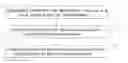
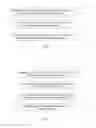
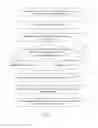
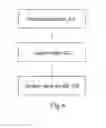
Sources:
- United States Patent and Trademark Office - verify current appl. status at the USPTO↗
Recent applications in this class:
- » 20210141860 2021-05-13
Artificial intelligence based context dependent spellchecking - » 20210097137 2021-04-01
Content context aware message intent checker - » 20210064696 2021-03-04
Determining canonical content for a game - » 20210056166 2021-02-25
Chinese composition reviewing system - » 20200372105 2020-11-26
Systems and methods for seamless application of autocorrection and provision of review insights through adapted user interface - » 20200356626 2020-11-12
ENHANCED SPELLING CORRECTION - » 20200349224 2020-11-05
Automated feedback in online language exercises - » 20200293615 2020-09-17
Dynamic text correction based upon a second communication containing a correction command - » 20200226211 2020-07-16
Responsive spell checking for web forms - » 20200226210 2020-07-16
Responsive spell checking for web forms