Membrane
US20170362841A1
2017-12-21
15/589,385
2017-05-08
✅ Patent granted
US 10,190,324 B2
2019-01-29
-
-
Brent W Herring
Sean O'Connell, PLLC
2037-05-08
Abstract:
The membrane is for use with a planar surface and includes a generally planar member and a plurality of resilient tabs. The generally planar member, in use, is disposed in parallel relation to and adjacent the planar surface and, at least in use, defines a plurality of troughs, the troughs being interconnected to define a planar network of troughs that is disposed parallel to the surface, each trough presenting away from the surface in use and terminating in a common plane that is parallel to and spaced from the surface. The tabs are provided for each of one or more of the troughs, the tab lying in the common plane and spanning at least in part across said each trough.
Applicant:
Interested in similar patents?
Get notified when new applications in this technology area are published.
Classification:
E04F15/225 » CPC main
Flooring; Resiliently-mounted floors, e.g. sprung floors Shock absorber members therefor
E04F15/02044 » CPC further
Flooring; Flooring or floor layers composed of a number of similar elements Separate elements for fastening to an underlayer
E04F15/185 » CPC further
Flooring; Separately-laid insulating layers; Other additional insulating measures; Floating floors Underlayers in the form of studded or ribbed plates
E04F15/186 » CPC further
Flooring; Separately-laid insulating layers; Other additional insulating measures; Floating floors Underlayers covered with a mesh or the like
E04F2290/023 » CPC further
Specially adapted covering, lining or flooring elements not otherwise provided for for accommodating service installations or utility lines, e.g. heating conduits, electrical lines, lighting devices or service outlets for heating
F24D13/024 » CPC further
Electric heating systems solely using resistance heating, e.g. underfloor heating resistances incorporated in construction elements in walls, floors, ceilings
E04F15/18 IPC
Flooring Separately-laid insulating layers; Other additional insulating measures; Floating floors
E04F15/22 IPC
Flooring Resiliently-mounted floors, e.g. sprung floors
F24D13/02 IPC
Electric heating systems solely using resistance heating, e.g. underfloor heating
E04F15/02 IPC
Flooring Flooring or floor layers composed of a number of similar elements
Description
CROSS-REFERENCE TO RELATED APPLICATION
This application is a continuation-in-part of U.S. Ser. No. 14/934,105, PCT/CA2015051147 and U.S. Ser. No. 29/591,162
FIELD OF THE INVENTION
The invention relates to the field of uncoupling membranes.
BACKGROUND OF THE INVENTION
It is well known to use an uncoupling membrane on a subfloor when installing tiles, to ensure that motion in the subfloor does not propagate to the tile.
SUMMARY OF THE INVENTION
Forming one aspect of the invention is a membrane for use with a planar surface. The membrane comprises a generally planar member and one or more resilient tabs. The member, in use, is disposed in parallel relation to and adjacent the planar surface and, at least in use, defines a plurality of troughs, the troughs being interconnected to define a planar network of troughs that is disposed parallel to the surface, each trough presenting away from the surface in use and terminating in a common plane that is parallel to and spaced from the surface. The resilient tabs are provided for each of one or more of the troughs, each tab lying in the common plane and spanning at least in part across said each trough.
According to another aspect of the invention, the member can define a plurality of protuberances separated one from another by the troughs.
According to another aspect of the invention, each protuberance can be tubular, can have a base surface that lies in the common plane, an end surface that is disposed parallel to and adjacent the planar surface and tubular walls that define the inner and outer walls of the tubular protuberance and extend between the base surface and the end surface.
According to another aspect of the invention, the plurality of protuberances can form rows and columns of protuberances, the rows being parallel to and equally spaced apart from one another, the columns being parallel to and equally spaced apart from one another and the rows being perpendicular to the columns.
According to another aspect of the invention, a pair of tabs can be provided for each protuberance, one of the pair being a first tab which projects in the direction of the rows, the other of the pair being a second tab which projects from the protuberance in the direction by which the rows are spaced apart.
According to another aspect of the invention, the first tabs can all project in a first direction parallel to the rows and the second tabs can all project in a second direction perpendicular to the rows.
According to another aspect of the invention, each protuberance can be cylindrical, the base surface of each protuberance can be circular and the end surface of each protuberance can be annular
According to another aspect of the invention, the inner wall can have a diameter of 15 mm, the outer wall can have a diameter of 24 mm and the outer walls of adjacent protuberances can be 6 mm apart.
According to another aspect of the invention, the membrane can further comprise a mesh layer which is secured to the planar surface in use.
According to another aspect of the invention, the planar member can be defined by a sheet; and each protuberance can define a socket that presents towards the planar surface and is occluded by the mesh layer.
According to another aspect of the invention, each trough can have a concave surface that presents away from the surface.
Forming another aspect of the invention is membrane for use with a planar surface, the membrane comprising a base layer defining: [I] a notional network of lines that cross each other to form a series of rectangles; [II] centrally of each rectangle, a dome having a convex surface presenting away from the base layer; [III] a lip peripherally surrounding each dome and being defined by: an annular concave surface presenting away from the base layer and immediately surrounding the dome; a top surface peripherally surrounding the concave surface; and a tubular surface extending from the base layer to the top surface, the tubular surface having: (i) portions that are orientated generally parallel to the sides of the rectangle in which said each dome is situate and generally perpendicular to the base layer; and (ii) adjacent each corner of the rectangle in which said each dome is situate, a portion that is angled relative to the base layer, thereby to define overhanging corners of the ridge; [IV] at each intersection, a protuberance, the protuberances being disposed in spaced relation to one another and to the ridges and each having: a top surface generally aligned with the surfaces of the lips; a sidewall extending from the base layer to the top surface, the sidewall having, for each of the lips immediately adjacent to such protuberance, a concave portion presenting towards such lip; and four corners defined by the junctions of the concave portions of the sidewall; and [V] ridges defined in the base layer, each ridge connecting, in respect of a pair of adjacent protuberances, the immediately adjacent corners.
According to another aspect, the top surface of the lip can be generally planar and the top surface of the protuberance can be generally coplanar therewith.
According to another aspect: the top surface of the lip can slope downwardly to the concave surface; each protuberance can have a dome and a generally frustoconical surface surrounding the dome and extending upwardly and outwardly therefrom; and the top surface of the protuberance can slope downwardly towards the frustoconical surface.
BRIEF DESCRIPTION OF THE DRAWINGS
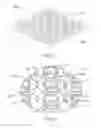
FIG. 1 is a perspective view of a membrane according to an exemplary embodiment of the invention;
FIG. 2 is an enlarged view of encircled area 2 of FIG. 1;
FIG. 3 is a plan view of the membrane of FIG. 1;
FIG. 4 is a side view of the membrane of FIG. 1;
FIG. 5 is a view along section 5-5 of FIG. 3;
FIG. 6 is a view of encircled area 6 of FIG. 5;
FIG. 7 is a view along section 7-7 of FIG. 3;
FIG. 8 is a view of encircled area 8 of FIG. 7;
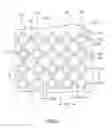
FIG. 9 is a plan view of a membrane according to a further exemplary embodiment of the invention;
FIG. 10 is a view along 10-10 of FIG. 9;
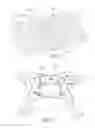
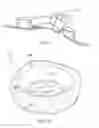
FIG. 11 is a perspective view of a membrane according to a further exemplary embodiment of the invention;
FIG. 12 is an enlarged view of the structure of encircled area 12 of FIG. 11
FIG. 13 is a cross-sectional view of a portion of the structure of FIG. 12;
FIG. 14 is an enlarged view of the structure of encircled area 14 of FIG. 11;
FIG. 15 is view of the underside of the structure of FIG. 11
FIG. 16 is a view, similar to FIG. 12, of yet another embodiment;
FIG. 17 is a view, similar to FIG. 13, of the structure of FIG. 16; and
FIG. 18 is a view, similar to FIG. 14, of yet another embodiment.
DETAILED DESCRIPTION
A first exemplary embodiment of the invention, in the form of a membrane 20, is shown in FIG. 9
The membrane 20 comprises a generally planar member 22, resilient tabs 24 and a mesh layer 26.
The planar member 22 is defined by a sheet 28 and is formed, by vacuum forming or the like, to define a plurality of troughs 30 and a plurality of protuberances 32.
Each trough 30 is generally linear and has a concave interior surface 34.
Each protuberance 32:
-
- is tubular, specifically cylindrical
- has a circular base surface 36;
- has an annular end surface 38;
- has tubular walls 40, 42 that define the inner 40 and outer 42 walls of the tubular protuberance and extend between the base surface and the end surface; and
- defines a socket 44
The inner wall 40 has a diameter D1 of 15 mm. The outer wall 42 has a diameter D2 of 24 mm.
The troughs 30 are interconnected to define a planar network of troughs 46, each trough terminating in a common plane X-X.
The protuberances 32 are separated one from another by the troughs 30 and form rows 50 and columns 52 of protuberances wherein:
-
- the rows 50 are parallel to and equally spaced apart from one another;
- the columns 52 are parallel to and equally spaced apart from one another;
- the rows 50 are perpendicular to the columns 52;
- the outer walls of adjacent protuberances are a distance D3 of 6 mm apart.
The plurality of tabs is provided such that a pair of tabs is provided for each protuberance: one 56 of the pair is a first tab which projects in a first direction, parallel to the rows; the other 58 of the pair is a second tab which projects from the protuberance in a second direction, perpendicular to the rows, i.e. in the direction by which the rows are spaced apart.
The mesh layer 26 is secured to the planar surface such that the sockets 44 are occluded by the mesh layer.
The membrane is for use with a planar surface, such as a subfloor.
In use (not shown), the membrane is positioned such that
-
- the sockets 44 present in a common direction, towards the planar surface
- the member 22 is disposed in parallel relation to and adjacent the planar surface
- each trough 30 presents away from the surface
- the common plane X-X is parallel to and spaced from the surface.
More particularly, in use (not shown):
-
- a layer of mortar is laid upon the subfloor and the membrane is applied thereto such that the mortar grips the mesh;
- heating cable is laid upon the membrane and forced beneath the tabs for securement; and
- a layer of mortar is laid upon the membrane (and the heating cable) and used as a tile bed
Persons of ordinary skill will readily appreciate that this structure provides the advantages of uncoupling membranes along with the advantages of heating cable securement membranes. By providing the resilient tabs, heating cables of varying diameters can be interfitted into the troughs, the diameter varying from a minimum diameter slightly larger than any gap between the tabs and the adjacent protuberances and a maximum slightly smaller than the width/depth of the trough.
A further exemplary embodiment of the invention in the form of a membrane 100 is shown in FIGS. 1-8
The membrane 100 comprises a sheet 102 and a mesh layer 104.
The sheet 102 is formed, by vacuum forming or the like, to define a base layer 106, domes 108, lips 110, protuberances 112 and ridges 114.
The base layer 106 defines a notional network of lines Y-Y and Z-Z that cross each other to form a series of rectangles (not shown).
The domes 108 are defined one for each rectangle and centrally thereof, each dome 108 having a convex 116 surface presenting away from the base layer.
The lips 110 are defined such that a lip peripherally surrounds each dome and is defined by a concave surface 118, a top surface 120 and a tubular surface 122. The concave surface 118 is annular, presents away from the base layer 106 and immediately surrounds the dome 108. The top surface 120 is planar and peripherally surrounds the concave surface 118.
The tubular surface 122 extends from the base layer 106 to the planar surface 120 and has
-
- portions that are orientated generally parallel to the sides of the rectangle in which said each dome is situate and generally perpendicular to the base layer adjacent each corner of the rectangle in which said each dome is situate, a portion 126 that is angled relative to the base layer, thereby to define overhanging corners of the lip
The protuberances 112 are defined one for each intersection, are disposed in spaced relation to one another and to the ridges and each has: a top surface 128 coplanar with the surfaces of the lips; a sidewall 130 extending from the base layer to the top surface, the sidewall having, for each of the lips immediately adjacent to such protuberance, a concave portion 132 presenting towards such lip; and four corners 134 defined by the junctions of the concave portions of the sidewall.
The ridges 106 are defined in the base layer such that each ridge connects, in respect of a pair of adjacent protuberances, the immediately adjacent corners.
The mesh layer 104 is secured to and in coplanar relation with the base surface.
The membrane is for use with a planar surface, such as a subfloor.
In use (not shown):
-
- a layer of mortar is laid upon the subfloor and the membrane is applied thereto such that the mortar grips the mesh;
- heating cable is laid upon the membrane and forced beneath the corners of the lips for securement; and
- a layer of mortar is laid upon the membrane (and the heating cable) and used as a tile bed
Persons of ordinary skill will readily appreciate that the invention provides the advantages of uncoupling membranes along with the advantages of heating cable securement membranes. By providing the overhanging corners, heating cables of varying diameters can be interfitted into the troughs.
Yet another variation of the membrane is shown in FIGS. 11-15. This membrane is generally similar to membrane of FIGS. 1-8 and, to the extent of such similarity, is provided with commensurate reference numerals, but differs notably in that each protuberance has a dome 150 and a generally frustoconical surface 152 surrounding the dome and extending upwardly and outwardly therefrom to the top surface.
Further variations are shown in FIGS. 16-18, which show a modified lip 110′ and a modified protuberance 112′ wherein the top surface 120′ of the lip slopes downwardly to the concave surface 118 and the top surface 128′ of the protuberance slopes downwardly towards the frustoconical surface 152.
Whereas specific embodiments are herein shown and described, further variations are possible.
For example, whereas each trough 30 is indicated to be generally linear and have a concave interior surface, it will be appreciated that the troughs could be fully linear (by, for example, providing square protuberances) and could have a flat bottom and perpendicular sides.
As well, whereas gaps are shown between the tabs and the adjacent protuberance, this is not necessary; the tabs could extend fully to the adjacent protuberance.
Further, pairs of tabs could be provided, which extend to one another from adjacent protuberances, to provide for the capture of the heating wire, in contrast to the single tab capture mechanism illustrated.
Accordingly, the invention should be understood to be limited only by the accompanying claims, purposively construed.
Claims
1. A membrane for use with a planar surface, the membrane comprising:
a generally planar member which, in use, is disposed in parallel relation to and adjacent the planar surface and which, at least in use, defines a plurality of troughs, the troughs being interconnected to define a planar network of troughs that is disposed parallel to the surface, each trough presenting away from the surface in use and terminating in a common plane that is parallel to and spaced from the surface; and
a resilient tab provided for each of one or more of the troughs, the tab lying in the common plane and spanning at least in part across said each trough.
2. A membrane according to claim 1, wherein the member defines a plurality of protuberances separated one from another by the troughs.
3. A membrane according to claim 2, wherein each protuberance is tubular, has a base surface that lies in the common plane, an end surface that is disposed parallel to and adjacent the planar surface and tubular walls that define the inner and outer walls of the tubular protuberance and extend between the base surface and the end surface.
4. A membrane according to claim 3, wherein the plurality of protuberances forms rows and columns of protuberances, the rows being parallel to and equally spaced apart from one another, the columns being parallel to and equally spaced apart from one another and the rows being perpendicular to the columns.
5. A membrane according to claim 4, wherein a pair of tabs is provided for each protuberance, one of the pair being a first tab which projects in the direction of the rows, the other of the pair being a second tab which projects from the protuberance in the direction by which the rows are spaced apart.
6. A membrane according to claim 5, wherein the first tabs all project in a first direction and the second tabs all project in a second direction.
7. A membrane according to claim 3, wherein each protuberance is cylindrical, the base surface of each protuberance is circular and the end surface of each protuberance is annular
8. A membrane according to claim 7, wherein the inner wall has a diameter of 15 mm, the outer wall has a diameter of 24 mm and the outer walls of adjacent protuberances are 6 mm apart.
9. A membrane according to claim 3, further comprising a mesh layer which is secured to the planar surface in use.
10. A membrane according to claim 9, wherein
the planar member is defined by a sheet; and
each protuberance defines a socket that presents towards the planar surface and is occluded by the mesh layer.
11. A membrane according to claim 1, wherein each trough has a concave surface that presents away from the surface.
12. A membrane for use with a planar surface, the membrane comprising a base layer defining:
a notional network of lines that cross each other to form a series of rectangles;
centrally of each rectangle, a dome having a convex surface presenting away from the base layer;
a lip peripherally surrounding each dome and being defined by: an annular concave surface presenting away from the base layer and immediately surrounding the dome; a top surface peripherally surrounding the concave surface; and a tubular surface extending from the base layer to the top surface, the tubular surface having: (i) portions that are orientated generally parallel to the sides of the rectangle in which said each dome is situate and generally perpendicular to the base layer; and (ii) adjacent each corner of the rectangle in which said each dome is situate, a portion that is angled relative to the base layer, thereby to define overhanging corners of the ridge
at each intersection, a protuberance, the protuberances being disposed in spaced relation to one another and to the ridges and each having: a top surface generally aligned with the surfaces of the lips; a sidewall extending from the base layer to the top surface, the sidewall having, for each of the lips immediately adjacent to such protuberance, a concave portion presenting towards such lip; and four corners defined by the junctions of the concave portions of the sidewall; and
ridges defined in the base layer, each ridge connecting, in respect of a pair of adjacent protuberances, the immediately adjacent corners.
13. A membrane according to claim 12, wherein:
the top surface of the lip is generally planar; and
the top surface of the protuberance is generally planar to the top surface of the lip.
14. A membrane according to claim 13, wherein:
the top surface of the lip slopes downwardly to the concave surface;
each protuberance has a dome and a generally frustoconical surface surrounding the dome and extending upwardly and outwardly therefrom; and
the top surface of the protuberance slopes downwardly towards the frustoconical surface.
Images & Drawings included:




Sources:
- United States Patent and Trademark Office - verify current appl. status at the USPTO↗
Similar patent applications:
- » 20170182462
Hollow fiber membrane sheet-like object, method of manufacturing hollow fiber membrane sheet-like object, hollow fiber membrane sheet laminate, method of manufacturing hollow fiber membrane sheet laminate, hollow fiber membrane module and method of manufacturing hollow fiber membrane module - » 20180243851
AUTOMATIC WELDING SYSTEM FOR CORRUGATED MEMBRANE SHEET OF MEMBRANE TYPE LIQUEFIED-GAS CARGO HOLD, STRUCTURE FOR GUIDING AND FIXING AUTOMATIC WELDING APPARATUS FOR CORRUGATED MEMBRANE SHEET OF MEMBRANE TYPE LIQUEFIED-GAS CARGO HOLD, AND STRUCTURE FOR GUIDING AUTOMATIC WELDING APPARATUS FOR CORRUGATED MEMBRANE SHEET OF MEMBRANE TYPE LIQUEFIED-GAS CARGO HOLD - » 20180248213
Polymer electrolyte membrane production method, polymer electrolyte membrane produced using same, membrane electrode assembly comprising said polymer electrolyte membrane, and fuel cell comprising said membrane electrode assembly - » 20130130150
Electrolyte membrane for fuel cell, method of manufacturing the electrolyte membrane, membrane-electrode assembly for fuel cell including the electrolyte membrane, and fuel cell including the membrane-electrode assembly - » 20100104913
Membrane-membrane reinforcing member assembly, membrane-catalyst layer assembly, membrane-electrode assembly, polymer electrolyte fuel cell, and method for manufacturing membrane-electrode assembly - » 20150171453
CATALYST LAYER FOR ANION-EXCHANGE MEMBRANE FUEL CELLS, MEMBRANE-ELECTRODE ASSEMBLY, ANION-EXCHANGE MEMBRANE FUEL CELL USING MEMBRANE-ELECTRODE ASSEMBLY, AND METHOD FOR OPERATING ANION-EXCHANGE MEMBRANE FUEL CELL - » 20060216563
Electrolyte membrane, electrolyte membrane composite, method of manufacturing electrolyte membrane composite, electrolyte membrane-electrode assembly for fuel cell, method of manufacturing electrolyte membrane-electrode assembly for fuel cell, and fuel cell - » 20100068588
Membrane-membrane reinforcing membrane assembly, membrane-catalyst layer assembly, membrane-electrode assembly, and polymer electrolyte fuel cell - » 20110114560
SPIRAL TYPE MEMBRANE ELEMENT AND SPIRAL TYPE MEMBRANE FILTERING DEVICE HAVING THE MEMBRANE ELEMENT, AND MEMBRANE FILTERING DEVICE MANAGING SYSTEM AND MEMBRANE FILTERING DEVICE MANAGING METHOD USING THE DEVICE - » 20230072576
Universal membrane configured to be divided to form a base membrane and a cover membrane that is couplable to the base membrane to form an uncoupling membrane for installation between a subfloor and floor tiles
Recent applications in this class:
- » 20250257576 2025-08-14
FLOOR ASSEMBLY - » 20240352748 2024-10-24
SPORT FLOOR SYSTEM WITH VARIABLE FORCE REDUCTION ZONES - » 20240337113 2024-10-10
INTERLOCKING MODULAR MAT WITH SPONGE INSERT - » 20240309658 2024-09-19
DUAL-PURPOSE PROGRESSIVE STAGE LOAD-DISTRIBUTING AND ABSORBING SYSTEM - » 20240110392 2024-04-04
ELEMENT OF DAMPING LAYER FOR FLOORING AND RELATED DAMPING LAYER - » 20240003143 2024-01-04
DUAL-PURPOSE PROGRESSIVE STAGE LOAD-DISTRIBUTING AND ABSORBING SYSTEM - » 20230304304 2023-09-28
INTERLOCKING MODULAR MAT WITH SPONGE INSERT - » 20230117310 2023-04-20
Performance floor assembly and system - » 20230096329 2023-03-30
IMPACT ABSORBING FLOORING - » 20220412102 2022-12-29
IMPACT-ABSORBING DEVICE AND STRUCTURE FOR BLOCKING NOISE BETWEEN FLOORS BY USING SAME