METHOD FOR THE PRODUCTION OF A PLASTIC PALLET
US20180016059A1
2018-01-18
15/544,484
2016-01-19
Abstract:
The invention relates to a method for the production of an assembled plastic pallet, consisting in producing 13 small identical plastic parts and assembling said parts, by means of interlocking, in order to produce the end plastic pallet, in various sizes, said pallet being intended for a wide range of uses associated with the transport and unloading of goods using a forklift truck.
Interested in similar patents?
Get notified when new applications in this technology area are published.
Classification:
B65D19/0069 » CPC main
Pallets or like platforms, with or without side walls, for supporting loads to be lifted or lowered; Rigid pallets without side walls the load supporting surface being made of more than one element forming a continuous plane contact surface the base surface being made of more than one element forming a continuous plane contact surface
B65D2519/00567 » CPC further
Pallets or like platforms, with or without side walls, for supporting loads to be lifted or lowered; Details relating to pallets; Connections; Structures connecting the constitutive elements of the pallet to each other, i.e. load supporting surface, base surface and/or separate spacer without separate auxiliary elements mechanical connection, e.g. snap-fitted
B65D2519/00278 » CPC further
Pallets or like platforms, with or without side walls, for supporting loads to be lifted or lowered; Details relating to pallets; Overall construction of the pallet the load supporting surface and the base surface being identical
B65D2519/00273 » CPC further
Pallets or like platforms, with or without side walls, for supporting loads to be lifted or lowered; Details relating to pallets; Overall construction of the pallet made of more than one piece
B65D2519/00034 » CPC further
Pallets or like platforms, with or without side walls, for supporting loads to be lifted or lowered; Details relating to pallets; Materials for the load supporting surface Plastic
B65D2519/00104 » CPC further
Pallets or like platforms, with or without side walls, for supporting loads to be lifted or lowered; Details relating to pallets; Materials for the non-integral separating spacer Plastic
B65D2519/00069 » CPC further
Pallets or like platforms, with or without side walls, for supporting loads to be lifted or lowered; Details relating to pallets; Materials for the base surface Plastic
B65D2519/00139 » CPC further
Pallets or like platforms, with or without side walls, for supporting loads to be lifted or lowered; Details relating to pallets; Materials for the construction of the reinforcements Plastic
B65D19/00 IPC
Pallets or like platforms, with or without side walls, for supporting loads to be lifted or lowered
Description
BACKGROUND TO THE INVENTION
The pallet is the platform on which loads or materials are placed to enable a forklift truck to lift and transport them. Pallets come in different sizes so that they can suit different uses, but the most important common sizes are:
1.1 m×1.3 m,1 m×1.2 m,1 m×1 m.
Wood is considered the most common material used for the production of pallets worldwide, followed by plastic, despite the fact that plastic is superior to wood in terms of durability and its ability to be cleaned and recycled. However, up until now, it has been unable to replace wood, due to the high costs of both production and of the raw material.
The reason for the high production cost of the plastic pallet is that it is a large piece, which requires a large injection machine with a capacity of around 3,000 tonnes in order to produce it. It would also require a large mould. Therefore, the speed of production would be relatively slow and the cost of investment very high. Moreover, the production of large pieces by the injection method is considered complicated in terms of guaranteeing the strength and cohesion of the piece, which comes at the expense of increasing the weight of the pallet so that it is durable. There is a persistent desire amongst many companies worldwide to replace wood with plastic, however, the large difference in costs remains an obstacle to this change.
This invention represents a major breakthrough that will help in the resolution of this problem, thereby increasing the offering of plastic pallets; and reducing their costs so that they can compete with wooden pallets. The traditional method currently used to produce plastic pallets cannot increase the offering or reduce the costs, due to the high investment costs in large machinery, as well as slow production. However, this invention will enable small and medium sized factories to produce plastic pallets with the machinery already available to them and to purchase moulds at lower costs.
GENERAL DESCRIPTION OF THE INVENTION
The main aim of this invention is to devise a method for producing the plastic pallet at a reduced cost from that of the plastic pallet that is produced as a single piece, which shall be achieved by the speed of production and its light weight.
The invention depends on the gathering and assembly of small identical pieces in order to produce the complete large pallet. The production of small pieces by the method of injection is characterised by its ability to strengthen the pieces ability to bear a larger load while weighing less, by utilising the technique of repeated reinforcement. Moreover, the production of the small pieces will be quicker and require the use of a medium sized injection machine (500-600 tonnes) in comparison to the 3,000 tonnes required to produce the pallet as a single piece. This invention has been designed as 5 different small pieces, which are put together to form the assembled plastic pallet, whereby every end pallet contains 13 pieces. The method of assembly merely requires interlocking and does not require any external tools.
Using this invention, it is possible to produce all the sizes of pallets required by changing the measurements of the small pieces. With regards to weight, we have used this invention to produce an assembled plastic pallet with the measurements 1.1 m×1.3 m, the weight of which does not exceed 12.5 kg; and which can bear a moving load of up to 1,400 kg and a stationary load of up to 4,000 kg, in the knowledge that the lightest plastic pallet available on the market now, which can bear the same loads, weighs 17 kg.
SHORT DESCRIPTION OF THE DRAWINGS
The specifications, features and method of use of this invention will become clearer through the description which we shall provide through the attached figures. These clarify the shapes of the small pieces and the assembly steps required in order to produce the assembled plastic pallet:
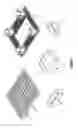
FIG. 1:—Depicts the small pieces that form the assembled plastic pallet, which are five pieces as follows:
-
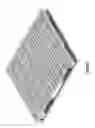
- Piece 1: This forms the upper part of the pallet and has been designed symmetrically. It has four legs (7) of equal dimensions, which have negative slots to receive the positive locks from the lower piece (2).
- Piece 2: This forms the lower part of the pallet. Care has been taken in its design to ensure strength, durability and the symmetry of its dimensions, in order to give the pallet stability when being moved on conveyor belts and during the loading process. The piece has four slots (6), in which positive locks have been placed in order to fit into the legs with negative slots in the upper piece. Thus, the process of interlocking is completed firmly.
- Piece 3: This is the connecting link in the centre of the pallet. It was designed in a rectangular shape and at a height that exactly equals the height of the slots (6) in the lower piece (2) and with an appropriate thickness, which provides it with the strength required to ensure stability, as it is the main connecting link between the pieces that form the assembled pallet.
- Piece 4: It is the first side connecting link. It was designed in a rectangular shape and at the same height and thickness of the connecting link (3), but differs in its dimensions, as it meets piece (3) to complete the fastening of the sides.
- Piece 5: It is the second side connecting link. It was designed in a rectangular shape and at the same height and thickness of the connecting link (3), but differs in its dimensions, as it meets piece (3) to complete the fastening of the sides.
FIG. 2:—Depicts the first step of the assembly method.
FIG. 3:—Depicts the second step of the assembly method.
FIG. 4:—Depicts the third step of the assembly method.
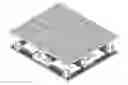
FIG. 5:—Depicts the fourth step of the assembly method and the final form of the end pallet.
DETAILED DESCRIPTION
The attached figures depict the shapes and number of small pieces that form the assembled plastic pallet. There are five pieces, as illustrated by FIG. 1, which are repeatedly assembled to form a total of 13 pieces for every pallet, as follows:
First Step: Four pieces of piece (2) are placed side by side as shown in FIG. 2. This is aided by the symmetrical design of these pieces and the presence of raised equal sides further aids their easy and quick assembly.
Second Step: The side connecting links (4 and 5) are put in place, whereby every raised slot (6) is linked together by the connecting links (4 and 5). In the centre, four slots (6) are tied together by one connecting link. This process is completed with ease and without the use of any external tools. It is aided by the stability and symmetry of the dimensions of the lower piece (2). FIG. 3 illustrates this step.
Third Step: Four of the upper pieces (1) are placed over piece 2, whereby every piece is put in place by inserting the legs (7) on piece (1) in the raised slots (6) that correspond to them in piece (2). FIG. 4 illustrates this step.
Fourth Step: Piece (1) is forcefully interlocked into piece (2) by using the hands to press down until a locking sound is heard, whereby the negative slots in (7) will meet the positive locks in (6), thereby, concluding the Positive Locking process. The pieces cannot then be separated except by being broken. At the end of the process, we will have an assembled pallet comprising of a single cohesive piece, as the connecting links have become part of the body of the pallet; and the positive locks hold the upper and lower pieces together. Diagram number 5 illustrates this step.
Claims
1. Pallet formed of 13 small pieces, which are assembled together to form the structure of the pallet, wherein the base is formed from four pieces (2) identical as to shape and dimensions, with raised slots (6); all of which are tied together by side connecting links (4 and 5), wherein every raised slot is linked together by the connecting links (4 and 5); in the centre, four slots are tied together by one connecting link (3); thus, the base of the pallet is created; thereafter, four of the upper pieces (1), which are identical in shape and dimensions and which have side legs (7), are put into place by inserting the legs (7) in the raised slots (6) in the base and pressed down until the interlocking process is complete.
2. Pallet according to claim (1), wherein most of the pieces will be produced from plastic materials or similar materials.
3. Pallet according to claim (1), wherein the legs are inserted into each corresponding slot in the base, the piece is locked and cannot be separated again.
4. Pallet according to claim (1), wherein the pallet can be made in different measurements by altering the pieces used, whether the upper, lower or connecting links.
Images & Drawings included:


Sources:
- United States Patent and Trademark Office - verify current appl. status at the USPTO↗
Similar patent applications:
Recent applications in this class:
- » 20230166885 2023-06-01
Plastic pallet with snap connection - » 20200317397 2020-10-08
COLLAPSIBLE REUSABLE PALLET - » 20190233162 2019-08-01
Collapsible reusable pallet - » 20180282017 2018-10-04
COMPOSITE PALLET - » 20180093795 2018-04-05
Composite pallet structure - » 20170107013 2017-04-20
Cargo pallet - » 20090320722 2009-12-31
Pallet assembly - » 20070256614 2007-11-08
Platform-Type Shelf and Assembling Method thereof - » 20050160949 2005-07-28
Interlocking modular tubular pallet