Ceramic substrate
US20180027653A1
2018-01-25
15/542,871
2016-01-08
✅ Patent granted
US 10,524,365 B2
2019-12-31
WO; PCT/JP2016/000081; 20160108
WO; WO2016/114120; 20160721
Seth Dumbris
Stites & Harbison, PLLC | Jeffrey A. Haeberlin | James R. Hayne
2036-10-07
Abstract:
A ceramic substrate includes a ceramic layer mainly formed of a glass ceramic and a conductor trace mainly formed of silver (Ag). In an adjacent region located adjacent to the conductor trace, the concentration of boron atoms (B) contained in the ceramic layer increases toward the conductor trace.
Inventors:
- Tatsuya KATOH 5 🇯🇵 Nagoya-shi, Japan
- Masanori ITO 5 🇯🇵 Nagoya-shi, Japan
- Masaki KUTSUNA 5 🇯🇵 Ohbu-shi, Japan
- Tatsuya Katoh 3 🇯🇵 Nagoya, Japan
- Masanori Ito 4 🇯🇵 Nagoya, Japan
- Masaki Kutsuna 3 🇯🇵 Ohbu, Japan
Assignee:
- NGK Spark Plug Co., LTD 500 🇯🇵 Nagoya, Japan
Applicant:
Interested in similar patents?
Get notified when new applications in this technology area are published.
Classification:
B32B9/005 » CPC further
Layered products comprising a layer of a particular substance not covered by groups - comprising one layer of ceramic material, e.g. porcelain, ceramic tile
H05K1/092 » CPC further
Printed circuits; Details; Use of materials for the conductive, e.g. metallic pattern Dispersed materials, e.g. conductive pastes or inks
H05K1/092 » CPC further
Printed circuits; Details; Use of materials for the conductive, e.g. metallic pattern Dispersed materials, e.g. conductive pastes or inks
H05K3/285 » CPC further
Apparatus or processes for manufacturing printed circuits; Secondary treatment of printed circuits; Applying non-metallic protective coatings Permanent coating compositions
H05K3/285 » CPC further
Apparatus or processes for manufacturing printed circuits; Secondary treatment of printed circuits; Applying non-metallic protective coatings Permanent coating compositions
H05K3/1291 » CPC further
Apparatus or processes for manufacturing printed circuits in which conductive material is applied to the insulating support in such a manner as to form the desired conductive pattern using printing techniques to apply the conductive material; After-treatment of the printed patterns, e.g. sintering or curing methods Firing or sintering at relative high temperatures for patterns on inorganic boards, e.g. co-firing of circuits on green ceramic sheets
H05K3/1291 » CPC further
Apparatus or processes for manufacturing printed circuits in which conductive material is applied to the insulating support in such a manner as to form the desired conductive pattern using printing techniques to apply the conductive material; After-treatment of the printed patterns, e.g. sintering or curing methods Firing or sintering at relative high temperatures for patterns on inorganic boards, e.g. co-firing of circuits on green ceramic sheets
B32B2307/202 » CPC further
Properties of the layers or laminate having particular electrical or magnetic properties, e.g. piezoelectric Conductive
H05K1/0296 » CPC further
Printed circuits; Details Conductive pattern lay-out details not covered by sub groups -
H05K1/0296 » CPC further
Printed circuits; Details Conductive pattern lay-out details not covered by sub groups -
C03C10/00 IPC
Devitrified glass ceramics, i.e. glass ceramics having a crystalline phase dispersed in a glassy phase and constituting at least 50% by weight of the total composition
C03C10/0054 » CPC further
Devitrified glass ceramics, i.e. glass ceramics having a crystalline phase dispersed in a glassy phase and constituting at least 50% by weight of the total composition containing PbO, SnO, BO
C04B35/6303 » CPC further
Shaped ceramic products characterised by their composition ; Ceramics compositions ; Processing powders of inorganic compounds preparatory to the manufacturing of ceramic products; Forming processes; Processing powders of inorganic compounds preparatory to the manufacturing of ceramic products; Preparing or treating the powders individually or as batches ; preparing or treating macroscopic reinforcing agents for ceramic products, e.g. fibres; mechanical aspects section using additives specially adapted for forming the products, e.g.. binder binders Inorganic additives
B32B9/00 IPC
Layered products characterised by particular substances used
B32B9/00 IPC
Layered products comprising a layer of a particular substance not covered by groups -
H05K1/0306 » CPC main
Printed circuits; Details; Use of materials for the substrate Inorganic insulating substrates, e.g. ceramic, glass
H05K1/0306 » CPC main
Printed circuits; Details; Use of materials for the substrate Inorganic insulating substrates, e.g. ceramic, glass
H05K3/28 » CPC further
Apparatus or processes for manufacturing printed circuits; Secondary treatment of printed circuits Applying non-metallic protective coatings
H05K3/28 » CPC further
Apparatus or processes for manufacturing printed circuits; Secondary treatment of printed circuits Applying non-metallic protective coatings
H05K3/46 » CPC further
Apparatus or processes for manufacturing printed circuits Manufacturing multilayer circuits
H05K3/46 » CPC further
Apparatus or processes for manufacturing printed circuits Manufacturing multilayer circuits
H05K3/12 » CPC further
Apparatus or processes for manufacturing printed circuits in which conductive material is applied to the insulating support in such a manner as to form the desired conductive pattern using printing techniques to apply the conductive material
H05K3/12 » CPC further
Apparatus or processes for manufacturing printed circuits in which conductive material is applied to the insulating support in such a manner as to form the desired conductive pattern using printing techniques to apply the conductive material
H05K3/321 » CPC further
Apparatus or processes for manufacturing printed circuits; Assembling printed circuits with electric components, e.g. with resistor electrically connecting electric components or wires to printed circuits by conductive adhesives
H05K3/321 » CPC further
Apparatus or processes for manufacturing printed circuits; Assembling printed circuits with electric components, e.g. with resistor electrically connecting electric components or wires to printed circuits by conductive adhesives
H05K3/4061 » CPC further
Apparatus or processes for manufacturing printed circuits; Forming printed elements for providing electric connections to or between printed circuits; Through-connections; Vertical interconnect access [VIA] connections by thick-film techniques for via connections in inorganic insulating substrates
H05K3/4061 » CPC further
Apparatus or processes for manufacturing printed circuits; Forming printed elements for providing electric connections to or between printed circuits; Through-connections; Vertical interconnect access [VIA] connections by thick-film techniques for via connections in inorganic insulating substrates
C03C4/14 » CPC further
Compositions for glass with special properties for electro-conductive glass
C03C2204/00 » CPC further
Glasses, glazes or enamels with special properties
C04B2237/40 » CPC further
Aspects relating to ceramic laminates or to joining of ceramic articles with other articles by heating; Composition of layers of ceramic laminates or of ceramic or metallic articles to be joined by heating, e.g. Si substrates Metallic
C04B2237/704 » CPC further
Aspects relating to ceramic laminates or to joining of ceramic articles with other articles by heating; Processing aspects relating to ceramic laminates or to the joining of ceramic articles with other articles by heating; Forming laminates or joined articles comprising layers of a specific, unusual thickness of one or more of the ceramic layers or articles
H05K3/4629 » CPC further
Apparatus or processes for manufacturing printed circuits; Manufacturing multilayer circuits by laminating two or more circuit boards characterised by the insulating layers or materials laminating inorganic sheets comprising printed circuits, e.g. green ceramic sheets
H05K3/4629 » CPC further
Apparatus or processes for manufacturing printed circuits; Manufacturing multilayer circuits by laminating two or more circuit boards characterised by the insulating layers or materials laminating inorganic sheets comprising printed circuits, e.g. green ceramic sheets
H05K2201/017 » CPC further
Indexing scheme relating to printed circuits covered by; Dielectrics; Materials Glass ceramic coating, e.g. formed on inorganic substrate
H05K2201/017 » CPC further
Indexing scheme relating to printed circuits covered by; Dielectrics; Materials Glass ceramic coating, e.g. formed on inorganic substrate
H05K2203/1126 » CPC further
Indexing scheme relating to apparatus or processes for manufacturing printed circuits covered by; Treatments characterised by their effect, e.g. heating, cooling, roughening Firing, i.e. heating a powder or paste above the melting temperature of at least one of its constituents
H05K2203/1126 » CPC further
Indexing scheme relating to apparatus or processes for manufacturing printed circuits covered by; Treatments characterised by their effect, e.g. heating, cooling, roughening Firing, i.e. heating a powder or paste above the melting temperature of at least one of its constituents
Y10T29/49163 » CPC further
Metal working; Method of mechanical manufacture; Electrical device making; Conductor or circuit manufacturing; On flat or curved insulated base, e.g., printed circuit, etc.; Manufacturing circuit on or in base with sintering of base
Y10T428/12458 » CPC further
Stock material or miscellaneous articles; All metal or with adjacent metals having composition, density, or hardness gradient
B32B5/14 IPC
Layered products characterised by the non- homogeneity or physical structure, i.e. comprising a fibrous, filamentary, particulate or foam layer; Layered products characterised by having a layer differing constitutionally or physically in different parts characterised by a layer differing constitutionally or physically in different parts, e.g. denser near its faces
H05K3/40 » CPC main
Apparatus or processes for manufacturing printed circuits Forming printed elements for providing electric connections to or between printed circuits
H05K3/40 » CPC main
Apparatus or processes for manufacturing printed circuits Forming printed elements for providing electric connections to or between printed circuits
H05K1/03 IPC
Printed circuits; Details Use of materials for the substrate
H05K1/03 IPC
Printed circuits; Details Use of materials for the substrate
H05K1/02 IPC
Printed circuits Details
H05K1/02 IPC
Printed circuits Details
H05K3/32 IPC
Apparatus or processes for manufacturing printed circuits; Assembling printed circuits with electric components, e.g. with resistor electrically connecting electric components or wires to printed circuits
H05K3/32 IPC
Apparatus or processes for manufacturing printed circuits; Assembling printed circuits with electric components, e.g. with resistor electrically connecting electric components or wires to printed circuits
H01L23/15 » CPC further
Details of semiconductor or other solid state devices; Mountings, e.g. non-detachable insulating substrates characterised by the material or its electrical properties Ceramic or glass substrates
H05K3/4664 » CPC further
Apparatus or processes for manufacturing printed circuits; Manufacturing multilayer circuits by building the multilayer layer by layer, i.e. build-up multilayer circuits Adding a circuit layer by thick film methods, e.g. printing techniques or by other techniques for making conductive patterns by using pastes, inks or powders
H05K3/4664 » CPC further
Apparatus or processes for manufacturing printed circuits; Manufacturing multilayer circuits by building the multilayer layer by layer, i.e. build-up multilayer circuits Adding a circuit layer by thick film methods, e.g. printing techniques or by other techniques for making conductive patterns by using pastes, inks or powders
C04B35/63 IPC
Shaped ceramic products characterised by their composition ; Ceramics compositions ; Processing powders of inorganic compounds preparatory to the manufacturing of ceramic products; Forming processes; Processing powders of inorganic compounds preparatory to the manufacturing of ceramic products; Preparing or treating the powders individually or as batches ; preparing or treating macroscopic reinforcing agents for ceramic products, e.g. fibres; mechanical aspects section using additives specially adapted for forming the products, e.g.. binder binders
H05K1/09 » CPC further
Printed circuits; Details Use of materials for the conductive, e.g. metallic pattern
H05K1/09 » CPC further
Printed circuits; Details Use of materials for the conductive, e.g. metallic pattern
H05K2201/0769 » CPC further
Indexing scheme relating to printed circuits covered by; Electric details; Insulation Anti metal-migration, e.g. avoiding tin whisker growth
H05K2201/0769 » CPC further
Indexing scheme relating to printed circuits covered by; Electric details; Insulation Anti metal-migration, e.g. avoiding tin whisker growth
Description
TECHNICAL FIELD
The present invention relates to a ceramic substrate.
BACKGROUND ART
There has been known a ceramic substrate having a ceramic layer mainly formed of a glass ceramic and a conductor trace containing silver (Ag) as a main component. Such a ceramic substrate is formed by applying a conductor paste which is the pre-firing form of the conductor trace to a green sheet which is the pre-firing form of the ceramic layer and then firing the green sheet carrying the conductor paste applied thereto. Such a ceramic substrate is also called a low temperature co-fired ceramic (LTCC) substrate.
When the ceramic substrate is formed by firing, a silver component of the conductor paste diffuses into the ceramic layer. This may cause, for example, formation of voids in the ceramic layer, deformation of the ceramic layer, and change of the color of the ceramic layer. It is considered that diffusion of the silver component into the ceramic layer is accelerated by oxidation of the silver component of the conductor trace.
Patent Document 1 discloses a technique of preventing diffusion of the silver component into the ceramic layer by covering the surfaces of silver powder particles contained in the conductor paste with an antimony salt. Patent Document 2 discloses a technique of preventing diffusion of the silver component into the ceramic layer by adding a silicon powder to the conductor paste.
PRIOR ART DOCUMENTS
Patent Documents
- Patent Document 1: Japanese Patent Application Laid-Open (kokai) No. H6-252524
- Patent Document 2: Japanese Patent Application Laid-Open (kokai) No. 2007-234537
SUMMARY OF THE INVENTION
Problem to be Solved by the Invention
However, the techniques disclosed in Patent Documents 1 and 2 cannot sufficiently prevent diffusion of the silver component of the conductor paste into the ceramic layer in some cases.
Means for Solving the Problem
The present invention has been accomplished to solve the above-described problem. The present invention can be realized as follows.
(1) One mode of the present invention is a ceramic substrate including a ceramic layer mainly formed of a glass ceramic and a conductor trace mainly formed of silver (Ag). In the ceramic substrate, in an adjacent region located adjacent to the conductor trace, the concentration of boron atoms (B) contained in the ceramic layer increases toward the conductor trace. According to this mode, it is possible to prevent problems caused by diffusion of the silver component, for example, formation of voids in the ceramic layer, deformation of the ceramic layer, or change of the color of the ceramic layer. Thus, the quality of the ceramic substrate can be improved.
(2) In the ceramic substrate of the above-described mode, the adjacent region may include a region in which the concentration of boron atoms (B) is at least three times that in a central region of the ceramic layer centrally located in a thickness direction. According to this mode, it is possible to sufficiently prevent problems caused by diffusion of the silver component, for example, formation of voids in the ceramic layer, deformation of the ceramic layer, or change of the color of the ceramic layer.
(3) In the ceramic substrate of the above-described mode, the conductor trace may contain at least either of lanthanum atoms (La) and titanium atoms (Ti). According to this mode, it is possible to prevent problems caused by diffusion of the silver component, for example, formation of voids in the ceramic layer, deformation of the ceramic layer, or change of the color of the ceramic layer.
(4) In the ceramic substrate of the above-described mode, the ceramic substrate may contain borosilicate glass and alumina (Al2O3). This mode can improve the quality of the borosilicate glass-based ceramic substrate.
The present invention is not limited to the ceramic substrate, and can be realized in various other forms. For example, the present invention can be realized in the form of a method of manufacturing a ceramic substrate, an apparatus including a ceramic substrate, or a manufacturing apparatus for manufacturing a ceramic substrate.
BRIEF DESCRIPTION OF THE DRAWINGS
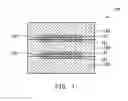
[FIG. 1] Explanatory view schematically showing a cross section of a ceramic substrate.
[FIG. 2] Flowchart showing a method of manufacturing the ceramic substrate.
[FIG. 3] Table showing the results of an evaluation test.
MODES FOR CARRYING OUT THE INVENTION
A. Embodiment
FIG. 1 is an explanatory view schematically showing a cross section of a ceramic substrate 110. The ceramic substrate 110 is a low temperature co-fired ceramic (LTCC) substrate. At least a portion of a circuit for realizing a predefined function is formed on the ceramic substrate 110. In the present embodiment, a circuit for transmitting signals among electronic components, etc. is formed in the ceramic substrate 110.
The ceramic substrate 110 includes ceramic layers 120 and conductor traces 130. The ceramic substrate 110 has a structure in which each conductor trace 130 is formed between the adjacent ceramic layers 120 laminated together. In the present embodiment, the ceramic substrate 110 has unillustrated vias and unillustrated through holes in addition to the conductor traces 130 as conductors which form the circuit. In another embodiment, the ceramic substrate 110 may include two or more conductor traces 130 which are laminated together with other ceramic layers 120.
The ceramic layers 120 of the ceramic substrate 110 have electrically insulating properties. The ceramic layers 120 are mainly formed of a glass ceramic. In this description, “mainly formed of (a component)” means that the component accounts for at least 50 mass % of the entirety. In the present embodiment, each of the ceramic layers 120 is a ceramic layer which is formed by firing a borosilicate glass powder and an alumina (Al2O3) powder. Borosilicate glass is mainly formed of silicon dioxide (SiO2), alumina (Al2O3), and boron oxide (B2O3).
The ceramic layer 120 includes adjacent regions 121 located adjacent to the conductor traces 130. In each of the adjacent regions 121, the concentration of boron atoms (B) contained in the ceramic layer 120 increases toward the corresponding conductor trace 130. In the present embodiment, each of the adjacent regions 121 includes a region in which the concentration of boron atoms (B) is at least three times that in a central region of the ceramic layer 120 centrally located in the thickness direction.
The conductor traces 130 of the ceramic substrate 110 are mainly formed of silver (Ag). In the present embodiment, the conductor traces 130 contain a silver (Ag) powder and a borosilicate glass powder, and have electrical conductivity. In the present embodiment, the conductor traces 130 contain at least either of lanthanum atoms (La) and titanium atoms (Ti). In the present embodiment, each of the conductor traces 130 has a thickness of about 10 μm.
FIG. 2 is a flowchart showing a method of manufacturing the ceramic substrate 110. First, a green sheet which is the pre-firing form of the ceramic layers 120 is prepared (step P110).
The green sheet is formed by mixing a binder, a plasticizer, a solvent, etc., into powders of inorganic components and forming the resultant mixture into the shape of a thin plate (sheet). In the present embodiment, powders of borosilicate glass and alumina which are inorganic components are weighed such that their volume ratio becomes 60:40 and the total weight becomes 1 kg. These powders are placed in a container (pot) formed of alumina. Subsequently, 120 g of acrylic resin serving as a binder, a proper amount of methyl ethyl ketone (MEK) serving as a solvent, and a proper amount of dioctyl phthalate (DOP) serving as a plasticizer are added to the materials (powders) in the pot. The materials in the pot are mixed for five hours to thereby obtain a ceramic slurry. Then, a green sheet is made from the ceramic slurry using the doctor blade method. In the present embodiment, the green sheet has a thickness of 0.15 mm. In the present embodiment, the green sheet is formed into a desired shape by means of punching.
After preparing the green sheet (step P110), a conductor paste which is the pre-firing form of the conductor traces 130 is prepared (step P120). The conductor paste which is the pre-firing form of the conductor traces 130 is prepared by adding a powder of a metal boride to a powder of silver (Ag).
From the viewpoint of preventing diffusion of silver into the ceramic layers 120, the metal boride to be added to the conductor paste is preferably at least one of lanthanum hexaboride (LaB6), silicon hexaboride (SiB6), and titanium diboride (TiB2). From the viewpoint of sufficiently preventing diffusion of silver into the ceramic layers 120, the amount of the metal boride with respect to the amount of the inorganic components of the conductor paste is preferably 3 vol. % to 9 vol. %.
In the present embodiment, for preparing the conductor paste which is the pre-firing form of the conductor traces 130, a powdery mixture of silver (Ag) which is an electrically conductive material and borosilicate glass which is common with the ceramic layers 120 is prepared as an inorganic component material of the conductor paste. Subsequently, a powder of the metal boride, ethyl cellulose serving as a binder, and terpineol serving as a solvent are added to the powdery mixture of the inorganic components. The resultant material is kneaded with a triple roll mill, whereby the conductor paste is obtained.
After preparing the conductor paste (step P120), the conductor paste is applied to the green sheet (step P130). In the present embodiment, the conductor paste is applied to the green sheet by means of screen printing.
After applying the conductor paste to the green sheet (step P130), the green sheet carrying the conductor paste applied thereto is fired (step P140). Thus, the ceramic substrate 110 is completed.
In the present embodiment, a plurality of the green sheets are laminated to form a laminate before firing the green sheet. In the present embodiment, by cutting operation, the laminate is formed into a shape suitable for firing. In the present embodiment, the laminate is exposed to an atmosphere of 250° C. for 10 hours for debindering. In the present embodiment, after debindering, the laminate is exposed to an atmosphere of 850° C. for 60 minutes for firing. After these steps, the ceramic substrate 110 is obtained.
When the laminate is fired, oxygen near the conductor paste is consumed by oxidation of the metal boride which is the additive component contained in the conductor paste. As a result, oxidation of the silver component contained in the conductor paste is prevented. Thus, diffusion of the silver component into the ceramic layers 120 is prevented.
At least a portion of the metal boride which is the additive component oxidized during firing diffuses into the adjacent regions 121 of the ceramic layers 120, which regions are located adjacent to the conductor traces 130. Therefore, in the adjacent regions 121 located adjacent to the conductor traces 130, the concentration of boron atoms (B) contained in the ceramic layers 120 increases toward the conductor traces 130. From the viewpoint of sufficiently preventing diffusion of silver into the ceramic layers 120, each of the adjacent regions 121 preferably includes a region in which the concentration of boron atoms (B) is at least three times that in a central region of the ceramic layer 120 centrally located in the thickness direction.
When lanthanum hexaboride (LaB6) is added to the conductor paste, each of the conductor traces 130 includes lanthanum atoms (La) which originate from the additive component. When titanium diboride (TiB2) is added to the conductor paste, each of the conductor traces 130 includes titanium atoms (Ti) which originate from the additive component.
FIG. 3 is a table showing the results of an evaluation test. In the evaluation test whose results are shown in FIG. 3, samples S01 to S07 of the ceramic substrate 110 were made through use of different conductor pastes. In the table of FIG. 3, the amount of the additive in the conductor paste which is the pre-firing form of the conductor traces 130 is shown as the amount (volume percent) of the additive with respect to the amount of the inorganic components of the ceramic paste.
The method of preparing the samples S01 to S06 is the same as that described with reference to FIG. 2. The method of preparing the sample S07 is the same as that described with reference to FIG. 2 except that the metal boride is not added to the conductor paste.
A cross section of each sample was observed using a scanning electron microscope (SEM) and an electron probe micro analyzer (EPMA) to measure the distance of diffusion of boron (B) and silver (Ag) into each ceramic layer 120. The concentration of boron (B) in a central region of each ceramic layer 120 centrally located in the thickness direction was used as a reference concentration, and the distance between the interface between the ceramic layer 120 and the corresponding conductor trace 130 and a position in the ceramic layer 120 at which the concentration of boron (B) becomes less than three times the reference concentration was measured at 10 points as a boron diffusion distance. The concentration of silver (Ag) at the interface between the ceramic layer 120 and the conductor trace 130 was used as a reference concentration, and the distance between the interface and a position in the ceramic layer 120 at which the concentration of silver (Ag) becomes half the reference concentration was measured at 10 points. The average of the measured distances was obtained as a silver diffusion distance.
Each sample was evaluated on the basis of the following criteria.
-
- AA (excellent): The silver diffusion distance is less than 5 μm.
- XX (poor): The silver diffusion distance is equal to or greater than 5 μm.
The evaluation results of the samples S01 to S06 and S07 show that diffusion of silver into the ceramic layers 120 can be prevented by adding one of lanthanum hexaboride (LaB6), silicon hexaboride (SiB6), and titanium diboride (TiB2), which are metal borides, to the conductor paste which is the pre-firing form of the conductor traces 130. The evaluation results also show that diffusion of silver into the ceramic layers 120 can be sufficiently prevented when the amount of the metal boride with respect to the amount of the inorganic components of the conductor paste which is the pre-firing form of the conductor traces 130 is 3 vol. % to 9 vol. %. The evaluation results also show that, when diffusion of silver into each ceramic layer 120 is sufficiently prevented, a region in which the concentration of boron atoms (B) is at least three times that in a central region of the ceramic layer 120 centrally located in the thickness direction is formed in the ceramic layer 120 as an adjacent region 121.
According to the embodiment described above, in the ceramic substrate 110, the concentration of boron atoms (B) contained in the ceramic layers 120 increases toward the conductor traces 130 in the adjacent regions 121 located adjacent to the conductor traces 130. As a result, it is possible to prevent problems caused by diffusion of the silver component, for example, formation of voids in the ceramic layers 120, deformation of the ceramic layers 120, or change of the color of the ceramic layers 120. Thus, the quality of the ceramic substrate 110 can be improved.
Each of the adjacent regions 121 includes a region in which the concentration of boron atoms (B) is at least three times that in a central region of the ceramic layer 120 centrally located in the thickness direction. As a result, it is possible to sufficiently prevent problems caused by diffusion of the silver component, for example, formation of voids in the ceramic layers 120, deformation of the ceramic layers 120, or change of the color of the ceramic layers 120.
B. Other Embodiments
The present invention is not limited to the above-described embodiment, examples, and modifications, but may be embodied in various other forms without departing from the spirit of the invention. For example, in order to solve, partially or entirely, the above-mentioned problem or yield, partially or entirely, the above-mentioned effects, technical features of the embodiments, examples, and modifications corresponding to technical features of the modes described in the section “SUMMARY OF THE INVENTION” can be replaced or combined as appropriate. Also, the technical feature(s) may be eliminated as appropriate unless the present specification mentions that the technical feature(s) is mandatory.
In another embodiment, when the conductor paste which is the pre-firing form of the conductor traces 130 is prepared (step P120), before adding a binder and a solvent to the raw material powder, the powder of the metal boride is caused to adhere to the surfaces of silver (Ag) powder particles by mixing the powder of the metal boride into the raw material powder. This prevents diffusion of the silver component from the conductor traces 130 into the ceramic layers 120 to a greater degree.
DESCRIPTION OF REFERENCE NUMERALS
110 . . . ceramic substrate
120 . . . ceramic layer
121 . . . adjacent region
130 . . . conductor trace
Claims
What is claimed is:1. A ceramic substrate comprising a ceramic layer mainly formed of a glass ceramic and a conductor trace mainly formed of silver (Ag), wherein in an adjacent region located adjacent to the conductor trace, the concentration of boron atoms (B) contained in the ceramic layer increases toward the conductor trace.
2. The ceramic substrate according to claim 1, wherein the adjacent region includes a region in which the concentration of boron atoms (B) is at least three times that in a central region of the ceramic layer centrally located in a thickness direction.
3. The ceramic substrate according to claim 1, wherein the conductor trace contains at least either of lanthanum atoms (La) and titanium atoms (Ti).
4. The ceramic substrate according to claim 1, wherein the ceramic layer contains borosilicate glass and alumina (Al2O3).
Images & Drawings included:



Sources:
- United States Patent and Trademark Office - verify current appl. status at the USPTO↗
Similar patent applications:
- » 20230326818
CERAMIC SCRIBE SUBSTRATE, CERAMIC SUBSTRATE, METHOD FOR MANUFACTURING CERAMIC SCRIBE SUBSTRATE, METHOD FOR MANUFACTURING CERAMIC SUBSTRATE, METHOD FOR MANUFACTURING CERAMIC CIRCUIT BOARD, AND METHOD FOR MANUFACTURING SEMICONDUCTOR ELEMENT - » 20060128547
Composition for ceramic substrate, ceramic substrate, process for producing ceramic substrate and glass composition - » 20080119345
Composition for ceramic substrate, ceramic substrate, method for producing ceramic substrate - » 20090105060
COMPOSITION FOR CERAMIC SUBSTRATE, CERAMIC SUBSTRATE, METHOD FOR PROCESS FOR PRODUCING CERAMIC SUBSTRATE, AND GLASS COMPOSITION - » 20170079137
Mother ceramic substrate, ceramic substrate, mother module component, module component, and method of manufacturing mother ceramic substrate - » 20230354514
CERAMIC SUBSTRATE, CERAMIC DIVIDED SUBSTRATE, AND METHOD FOR MANUFACTURING CERAMIC SUBSTRATE - » 20250113439
CERAMIC SUBSTRATE, CERAMIC CIRCUIT BOARD, SEMICONDUCTOR DEVICE, METHOD FOR MANUFACTURING CERAMIC SUBSTRATE, AND METHOD FOR MANUFACTURING CERAMIC SPLIT SUBSTRATE - » 20110057678
Ceramic substrate, functional ceramic substrate, probe card and method for manufacturing ceramic substrate - » 20080090044
Ceramic Aggregate Substrate, Ceramic Substrate And Ceramic Aggregate Substrate Fabrication Method - » 20240332123
SCRIBED CERAMIC CIRCUIT SUBSTRATE, CERAMIC CIRCUIT SUBSTRATE, METHOD FOR PRODUCING SCRIBED CERAMIC CIRCUIT SUBSTRATE, METHOD FOR PRODUCING CERAMIC CIRCUIT SUBSTRATE, AND METHOD FOR PRODUCING SEMICONDUCTOR DEVICE
Recent applications in this class:
- » 20250294675 2025-09-18
DOUBLE-SIDE ACTIVE METAL BRAZING SUBSTRATE AND METHOD FOR MANUFACTURING THE SAME - » 20250287498 2025-09-11
PRINTED CIRCUIT BOARD - » 20250267788 2025-08-21
GLASS CORE LAMINATE, GLASS CORE LAMINATE MANUFACTURING METHOD, AND GLASS CORE LAMINATE CUTTING METHOD - » 20250261305 2025-08-14
GLASS SUBSTRATE, MULTILAYER WIRING SUBSTRATE, AND METHOD FOR PRODUCING GLASS SUBSTRATE - » 20250240884 2025-07-24
METAL-CERAMIC SUBSTRATE WITH CONTACT AREA - » 20250234456 2025-07-17
PREPREG, LAMINATE, AND PRODUCTION METHODS THEREFOR, AS WELL AS PRINTED CIRCUIT BOARD AND SEMICONDUCTOR PACKAGE - » 20250212324 2025-06-26
WIRING BOARD - » 20250203769 2025-06-19
WIRING SUBSTRATE AND MANUFACTURING METHOD THEREOF - » 20250203768 2025-06-19
CERAMIC WIRING BOARD, ELECTRONIC DEVICE, AND ELECTRONIC MODULE - » 20250194004 2025-06-12
PRINTED CIRCUIT BOARD
Recent applications for this Assignee:
- » 20230268722 2023-08-24
Metallic shell for spark plug and spark plug using the same - » 20230220977 2023-07-13
Fluorescent plate, wavelength conversion member, and light source device - » 20230155354 2023-05-18
Spark plug - » 20230155353 2023-05-18
Spark plug - » 20230119721 2023-04-20
Noble metal tip for spark plug, electrode for spark plug, and spark plug - » 20230064238 2023-03-02
Spark plug - » 20230062977 2023-03-02
Spark plug - » 20230008031 2023-01-12
Spark plug - » 20220360052 2022-11-10
Spark plug - » 20220360051 2022-11-10
Spark plug