Remote control device for aircraft, aircraft system and remote control method for aircraft system
US20180033294A1
2018-02-01
15/553,735
2016-07-01
✅ Patent granted
US 10,102,741 B2
2018-10-16
WO; PCT/CN2016/088065; 20160701
WO; WO2017/000908; 20170105
Carlos E Garcia
2036-07-01
Abstract:
A remote control device for an aircraft and an aircraft system are provided. The aircraft system includes the aircraft (3) and the remote control device. The remote control device includes a first global positioning system (GPS) chip (4), a magnetometer (5), a gyroscope chip (6), a main control chip (8) and a first signal transceiver (9). The first GPS chip (4), the magnetometer (5) and the gyroscope chip (6) are respectively connected with the main control chip (8), and the first signal transceiver (9) is connected with the main control chip (8). The first GPS chip (4), the magnetometer (5) and the gyroscope chip (6) transmit three different position signals of the remote control device to the main control chip (8) respectively; the main control chip (8) transmits a control signal through the first signal transceiver (9), and the first signal transceiver (9) receives a condition signal of the aircraft and then transmits to the main control chip (8). The remote control device adopts a command remote control technology, so as to operate a flight direction and a flight distance of the aircraft (3) conveniently, have a high operation precision on the aircraft (3) and increase interest during an operation process.
Inventors:
- Yu TIAN 35 🇨🇳 Jiangsu, China
- Wenyan JIANG 34 🇨🇳 Jiangsu, China
- Wenyan JIANG 4 🇨🇳 Kunshan,Jiangsu, China
- Yu TIAN 3 🇨🇳 Kunshan,Jiangsu, China
Assignee:
- Yuneec Technology Co., Limited 10 🇨🇳 Hong Kong, China
Applicant:
Interested in similar patents?
Get notified when new applications in this technology area are published.
Classification:
A63H30/04 » CPC further
Remote-control arrangements specially adapted for toys, e.g. for toy vehicles; Electrical arrangements using wireless transmission
A63H27/02 » CPC further
Toy aircraft; Other flying toys ; Starting or launching devices therefor Model aircraft
A63H27/00 IPC
Toy aircraft; Other flying toys ; Starting or launching devices therefor
G05D1/0016 » CPC further
Control of position, course or altitude of land, water, air, or space vehicles, e.g. automatic pilot associated with a remote control arrangement characterised by the operator's input device
G08C17/02 » CPC main
Arrangements for transmitting signals characterised by the use of a wireless electrical link using a radio link
G05D1/00 IPC
Control of position, course or altitude of land, water, air, or space vehicles, e.g. automatic pilot
G01C21/20 » CPC further
Navigation; Navigational instruments not provided for in groups - Instruments for performing navigational calculations
H04L67/125 » CPC further
Network arrangements or protocols for supporting network services or applications; Protocols specially adapted for proprietary or special-purpose networking environments, e.g. medical networks, sensor networks, networks in vehicles or remote metering networks involving control of end-device applications over a network
G01C9/005 » CPC further
Measuring inclination, e.g. by clinometers, by levels specially adapted for use in aircraft
G08C2201/32 » CPC further
Transmission systems of control signals via wireless link; User interface Remote control based on movements, attitude of remote control device
G08C2201/51 » CPC further
Transmission systems of control signals via wireless link; Receiving or transmitting feedback, e.g. replies, status updates, acknowledgements, from the controlled devices Remote controlling of devices based on replies, status thereof
H04L67/12 » CPC further
Network arrangements or protocols for supporting network services or applications; Protocols specially adapted for proprietary or special-purpose networking environments, e.g. medical networks, sensor networks, networks in vehicles or remote metering networks
G01C9/00 IPC
Measuring inclination, e.g. by clinometers, by levels
G01S19/13 » CPC further
Satellite radio beacon positioning systems; Determining position, velocity or attitude using signals transmitted by such systems; Satellite radio beacon positioning systems transmitting time-stamped messages, e.g. GPS [Global Positioning System], GLONASS [Global Orbiting Navigation Satellite System] or GALILEO Receivers
Description
CROSS REFERENCE OF RELATED APPLICATION
This is a U.S. National Stage under 35 U.S.C 371 of the International Application PCT/CN2016/088065, filed Jul. 1, 2016, which claims priority under 35 U.S.C. 119(a-d) to CN 201520465841.X, filed Jul. 1, 2015. All contents of the priority document are included into this application by reference.
BACKGROUND OF THE PRESENT INVENTION
Field of Invention
The present invention relates to a remote control device for an aircraft, an aircraft system and a remote control method for the aircraft system.
Description of Related Arts
The conventional remote control device for the aircraft generally adopts the button and the rocker to control the flight direction and distance of the aircraft, in such a manner that it is difficult and inconvenient to operate the aircraft and the interest during the operation process is reduced.
SUMMARY OF THE PRESENT INVENTION
An object of the present invention is to provide a remote control device for an aircraft, an aircraft system and a remote control method for the aircraft system, so as to solve defects of a conventional remote control device for the aircraft in prior art that it is difficult and inconvenient to operate the aircraft and interest during an operation process is reduced.
Through following technical solutions, the present invention solves above technical problems.
A remote control device for an aircraft comprises a first global positioning system (GPS) chip, a magnetometer, a gyroscope chip, a main control chip and a first signal transceiver, wherein:
the first GPS chip, the magnetometer and the gyroscope chip are respectively connected with the main control chip, and the first signal transceiver is connected with the main control chip; and
the first GPS chip, the magnetometer and the gyroscope chip transmit three different position signals of the remote control device to the main control chip respectively; then the main control chip transmits a control signal through the first signal transceiver; and, the first signal transceiver receives a condition signal of the aircraft and then transmits the condition signal to the main control chip.
Preferably, the remote control device comprises a command device and an overall remote control unit, wherein: the command device comprises the first GPS chip, the magnetometer and the gyroscope chip; the overall remote control unit comprises the main control chip and the first signal transceiver; and the command device is arranged in the overall remote control unit.
Further preferably, a casing of the command device is cylindrical or cube-shaped; the first GPS chip, the magnetometer and the gyroscope chip are all arranged inside the command device; and the casing of the command device brings a more comfortable holding feeling to an operator.
Preferably, the overall remote control unit further comprises a switch component, wherein the switch component is connected between the command device and the main control chip.
Preferably, the magnetometer and the gyroscope chip are both connected to the main control chip through an inter-integrated circuit (I2C) bus.
Preferably, the first GPS chip and the first signal transceiver are both connected to the main control chip through an interface of a universal synchronous/asynchronous receiver/transmitter (USART).
An aircraft system comprises the aircraft and the remote control device for the aircraft.
Preferably, the aircraft comprises a second GPS chip and a second signal transceiver, wherein: the second GPS chip is connected with the second signal transceiver; the second signal transceiver is wirelessly connected to the first signal transceiver; the second GPS chip transmits a position signal of the aircraft through the second signal transceiver; and, the second signal transceiver and the first signal transceiver transmit the signals to each other.
Preferably, the aircraft further comprises a height sensor, wherein: the height sensor is connected with the second signal transceiver; and the height sensor transmits a height signal of the aircraft through the second signal transceiver.
Preferably, the first signal transceiver and the second signal transceiver are both radio frequency (RF) transceivers.
Positive effects of the present invention are described as follows.
The remote control device for the aircraft provided by the present invention adopts a command remote control technology, which is able to operate a flight direction and a flight distance of the aircraft conveniently, has a high operation precision on the aircraft, and increases the interest during the operation process.
BRIEF DESCRIPTION OF THE DRAWINGS
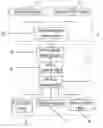
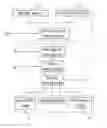
The drawing is a structural sketch view of an aircraft system according to a preferred embodiment of the present invention.
DETAILED DESCRIPTION OF THE PREFERRED EMBODIMENT
Referring to the drawing, according to a preferred embodiment of the present invention, an aircraft system comprises an aircraft 3 and a remote control device for the aircraft, wherein:
the remote control device for the aircraft comprises a command device 1 and an overall remote control unit 2, wherein: the command device 1 is arranged in the overall remote control unit 2; the command device 1 comprises a first global positioning system (GPS) chip 4, a magnetometer 5 and a gyroscope chip 6; a casing of the command device 1 is cylindrical or cube-shaped, and brings a more comfortable holding feeling to an operator; the first GPS chip 4, the magnetometer 5 and the gyroscope chip 6 are all arranged inside the command device 1; the overall remote control unit 2 comprises a main control chip 8, a first signal transceiver 9 and a switch component 7; the first GPS chip 4, the magnetometer 5 and the gyroscope chip 6 are respectively connected with the main control chip 8 through the switch component 7; the switch component 7 is for starting the command device 1; the first GPS chip 4 and the first signal transceiver 9 are both connected to the main control chip 8 through an interface of a universal synchronous/asynchronous receiver/transmitter (USART); and, the magnetometer 5 and the gyroscope chip 6 are both connected to the main control chip 8 through an inter-integrated circuit (I2C) bus; and
the aircraft 3 comprises a second GPS chip 11, a second signal transceiver 10 and a height sensor 12, wherein: the height sensor 12 and the second GPS chip 11 are respectively connected with the second signal transceiver 10; the second signal transceiver 10 is wirelessly connected to the first signal transceiver 9; and, the first signal transceiver 9 and the second signal transceiver 10 are both radio frequency (RF) transceivers.
The first GPS chip 4, the magnetometer 5 and the gyroscope chip 6 transmit respective collected position information of the command device 1 to the main control chip 8 respectively; the second GPS chip 11 and the height sensor 12 respectively transmit position information and height information of the aircraft 3 to the second signal transceiver 10; the second signal transceiver 10 transmits the position information and the height information of the aircraft 3 to the first signal transceiver 9; the first signal transceiver 9 then transmits the position information and the height information of the aircraft 3 to the main control chip 8; and the main control chip 8 transmits a control signal to the second signal transceiver 10 through the first signal transceiver 9, so as to operate a flight direction and a flight distance of the aircraft 3.
When operating the aircraft 3, after the command device 1 is started through the switch component 7, a distance L between the command device 1 and the aircraft 3 is obtained through latitude and longitude coordinates measured by the first GPS chip 4 and the second GPS chip 11; a connection line A is made between the command device 1 and the aircraft 3, and thereafter an included angle α (0-360°) between the connection line A and a true north direction is obtained; after the command device 1 is pointed to an operation direction B, an included angle β (0-360°) between the operation direction B and the true north direction is obtained through the magnetometer 5; an inclination angle γ between the command device 1 and ground is obtained through the gyroscope chip 6; after obtaining three-dimensional information of the command device 1, the overall remote control unit 2 transmits operation information to the aircraft 3, then the aircraft 3 flies with a flight angle of (α+β) and the distance of L without changing a vertical height, and thereafter the aircraft 3 flies with a specified height and direction according to a height H calculated by the inclination angle γ and the distance L; and, during a flight process, the height sensor 12 measures the flight height of the aircraft 3 in real-time, so that the flight height is more accurate. Through the command remote control of the command device 1, the flight direction and distance of the aircraft 3 can be operated conveniently, the operation precision on the aircraft 3 is high, and the interest during the operation process is increased.
The preferred embodiment of the present invention is described above. One skilled in the art should understand that the preferred embodiment is exemplary only, and various variations and modifications can be made without departing from the principle and the essence of the present invention. Thus, the protection scope of the present invention is limited by the following claims.
Claims
1. A remote control device for an aircraft, comprising a first global positioning system (GPS) chip, a magnetometer, a gyroscope chip, a main control chip and a first signal transceiver, wherein:
the first GPS chip, the magnetometer and the gyroscope chip are respectively connected with the main control chip, and the first signal transceiver is connected with the main control chip; and
the first GPS chip, the magnetometer and the gyroscope chip transmit three different position signals of the remote control device to the main control chip respectively; the main control chip transmits a control signal through the first signal transceiver; and, the first signal transceiver receives a condition signal of the aircraft and transmits the condition signal to the main control chip.
2. The remote control device for the aircraft, as recited in claim 1, wherein: the remote control device comprises a command device and an overall remote control unit; the command device comprises the first GPS chip, the magnetometer and the gyroscope chip; the overall remote control unit comprises the main control chip and the first signal transceiver; and the command device is connected with the overall remote control unit.
3. The remote control device for the aircraft, as recited in claim 2, wherein: a casing of the command device is cylindrical or cube-shaped; and, the first GPS chip, the magnetometer and the gyroscope chip are all arranged inside the command device.
4. The remote control device for the aircraft, as recited in claim 2, wherein the overall remote control unit further comprises a switch component; and the switch component is connected between the command device and the main control chip.
5. The remote control device for the aircraft, as recited in claim 1, wherein the magnetometer and the gyroscope chip are both connected to the main control chip through an inter-integrated circuit (I2C) bus.
6. The remote control device for the aircraft, as recited in claim 1, wherein the first GPS chip and the first signal transceiver are both connected to the main control chip through an interface of a universal synchronous/asynchronous receiver/transmitter (USART).
7. An aircraft system, comprising an aircraft and a remote control device for the aircraft as recited in claim 1.
8. The aircraft system, as recited in claim 7, wherein: the aircraft comprises a second GPS chip and a second signal transceiver; the second GPS chip is connected with the second signal transceiver; the second signal transceiver is wirelessly connected to the first signal transceiver; the second GPS chip transmits a position signal of the aircraft through the second signal transceiver; and, the second signal transceiver and the first signal transceiver transmit the signals to each other.
9. The aircraft system, as recited in claim 8, wherein the aircraft further comprises a height sensor; the height sensor is connected with the second signal transceiver; and the height sensor transmits a height signal of the aircraft through the second signal transceiver.
10. The aircraft system, as recited in claim 8, wherein the first signal transceiver and the second signal transceiver are both radio frequency (RF) transceivers.
11. A remote control method for an aircraft system as recited in claim 8, comprising steps of:
S1, obtaining a distance between the remote control device and the aircraft through the first GPS chip and the second GPS chip;
S2, obtaining a first included angle between a connection line and a standard direction, wherein the connection line is made between the remote control device and the aircraft;
S3, being pointed to an operation direction by the remote control device, and then obtaining a second included angle between the operation direction and the standard direction through the magnetometer;
S4, obtaining an inclination angle between the remote control device and ground through the gyroscope chip;
S5, transmitting operation information to the aircraft by the remote control device according to three-dimensional information of the remote control device; and
S6, by the aircraft, flying with a flight angle of the first included angle plus the second included angle, a height calculated through the inclination angle and the distance between the remote control device and the aircraft, and the distance from the remote control device.
12. The remote control method for the aircraft system, as recited in claim 11, wherein the standard direction is a true north direction.
Images & Drawings included:
Sources:
- United States Patent and Trademark Office - verify current appl. status at the USPTO↗
Recent applications in this class:
- » 20250259533 2025-08-14
SYSTEMS AND METHODS FOR ASSOCIATING SERVICES AND/OR DEVICES WITH A VOICE ASSISTANT - » 20250246068 2025-07-31
ELECTRONIC DEVICE FOR CONTROLLING EXTERNAL ELECTRONIC DEVICE AND METHOD THEREOF - » 20250232665 2025-07-17
MULTI-ROLE RF COMMUNICATION SYSTEM - » 20250218282 2025-07-03
VEHICLE LEVELING ASSEMBLY WITH MOBILE DEVICE - » 20250218281 2025-07-03
INTERACTIVE APPARATUS AND CONTROL METHOD THEREOF - » 20250191460 2025-06-12
SYSTEM AND METHOD FOR VOICE ACTUATED CONFIGURATION OF A CONTROLLING DEVICE - » 20250182611 2025-06-05
CONTROLLING GROUPS OF ELECTRICAL LOADS - » 20250174115 2025-05-29
FIELD DEVICE AND SYSTEM COMPRISING THE FIELD DEVICE - » 20250174114 2025-05-29
Remote Positioning System (RPS) - » 20250166494 2025-05-22
NETWORK ACCESS COORDINATION OF LOAD CONTROL DEVICES
Recent applications for this Assignee:
- » 20190101912 2019-04-04
Remote control apparatus and remote control system - » 20180155016 2018-06-07
Aerial vehicle - » 20180149479 2018-05-31
Geo-location or navigation camera, and aircraft and navigation method therefor - » 20180136650 2018-05-17
Aircraft and obstacle avoidance method and system thereof - » 20180047296 2018-02-15
Fixed-wing aircraft and flight control method and system thereof - » 20180046200 2018-02-15
Aircraft and roll method thereof - » 20180023752 2018-01-25
Gimbal handheld holder - » 20170305574 2017-10-26
Aircraft system - » 20170264796 2017-09-14
Gimbal