Protective Garment with Separate but Affixed layer
US20180070662A1
2018-03-15
15/700,138
2017-09-10
Abstract:
A protective garment consisting of an exterior clothing garment not limited in style (pants, shorts, romper, knickers, overalls, etc.) with a separate but affixed inner barrier garment layer designed to protect a child's or adult's clothing and environment from an accidental urination or bowel movement. It aids in the training of a child or adult using a waterproof garment allowing the sensation of the child or adult wetting themselves to heighten awareness of the accident while preventing the wetness from penetrating the barrier layer and keeping the exterior of protective garment dry by trapping the excrement until removed. The function is designed to promote faster orientation to using the proper facilities when excreting bodily waste while protecting the clothing and environment of the user from said waste.
Interested in similar patents?
Get notified when new applications in this technology area are published.
Classification:
A41D27/12 » CPC main
Details of garments or of their making Shields or protectors
A41D31/02 » CPC further
Materials specially adapted for outerwear Layered materials
Description
CROSS REFERENCE TO RELATED APPLICATIONS
This non-provisional patent application claims priority to provisional patent U.S. 62/385,956 filed 10 Sep. 2016 pursuant to 35 USC § 119(e).
BACKGROUND OF INVENTION
This invention relates to the field of potty-training, managing incontinence and the tools associated with those processes. This invention is an option created after using all options on the market for potty-training and those options being completely inept, costly and ill-affecting the environment.
Many parents and caregivers struggle with potty-training and managing incontinence in children of all ages as well as in adults. The problems with options currently on the market include: non-fixed padding which can move around leaving clothing susceptible to excrement and waste; non-reusable material contributing to waste and environmental challenges; current “solutions” being cost prohibitive; the focus on absorbency and lack of behavior modification invoking the senses when bladder and bowel movements are about to occur counter the training process by prohibiting the “pace of learning” during training. The current tools used in potty training are largely ineffective to the actual training process and contribute to waste by being non-biodegradable.
Protective garments for children are largely diaper-like. These absorbent protective garments protect from wetness but also can impair the sensory experience. Impairing the sensory experience needed to train can impede the orientation and expediency to go to the bathroom or potty. This, in turn, slows down the process by which the experience of the discomfort in having the bladder/bowel movement close to the skin would promote using the potty.
Protective garments are largely focused on suppressing the feeling of wetness, which means they are made of highly absorbent material which usually happens to be disposable. Disposable protective garments must be purchased over and over again leading to very costly expenses in the training process.
SUMMARY OF INVENTION
The present invention is designed to eliminate the issues of its so-called market peers. This invention is: unique, non-toxic, environmentally-friendly, reusable, cost-efficient, simple to use, sensory supported, highly effective, aids in early childhood development and can help children of all ages as well as adults to become independent of “training” garments when facing challenges this invention is positioned to address. This invention is not focused on “absorption” but works with the process where the person is ready to “go” to the bathroom using the proper facilities.
This invention is easier, more effective and a cheaper alternative to the current solutions including diapers, pads, and disposable underwear. The present invention is a protective garment worn over underwear allowing for an immediate wet sensation which will lead to a faster potty-training process. The goal is not to prevent the sensation of wetness but to prevent the occurrence of wetness by prompting the sensation of needing to empty the bladder or bowels using the proper facilities.
The embodiment of this protective garment is designed for persons, largely children, learning to use the bathroom allowing for sensations and protection to occur without thwarting the training process. The garment is comprised of an exterior garment to be worn as clothing with a separate affixed protective inner layer designed to cover undergarments. The exterior garment is a sturdy textile and the inner protective layer is an impermeable material with the purpose of separating accidental bodily fluid excretions from the exterior garment and the environment.
Other embodiments includes any exterior garment worn around the lower body by anyone using the same outer and inner layer which can be adapted into any size user. The parts of the garment are integrated in a manner with an inner impermeable layer affixed to the sturdy exterior garment both of which are designed to protect the environment and exterior garment from any accidental bodily fluids excreted into the protective garment.
DETAILED DESCRIPTION OF THE PRESENT INVENTION
This invention is an answer to effective potty-training and incontinence maintenance tools for children of all ages as well as in adults. The garment comprises an exterior garment (such as: pants, shorts, romper, knickers, overalls, pajamas, etc.) and an affixed but separate integrated inner garment layer which acts as a barrier but covers undergarments. The exterior garment is protected by the inner impermeable barrier layer garment which seals in any accidental excrement until physically removed from the child or adult. Said inner barrier garment layer is impermeable to liquid and solid excrement.
The manner in which this article of clothing is made is by first constructing the exterior garment with preferred fabric to create an article of clothing worn in some capacity around the genitals and combining with an inner garment made of a textile fabric having hydrophobic qualities used as an impermeable layer to surround undergarments. The exterior garment and its separate but impermeable inner barrier garment are joined at the waistband. This garment can be any variety of clothing item worn over the genital area integrated with an inner protective impermeable layer not limited to pants.
The inner impermeable garment layer is formed to have a front and back panel, two leg holes, and a continuous stretchable waistband integrated with the exterior garment. Said inner impermeable garment layer is designed to have a form similar to the undergarments the layer is designed to cover. Said inner impermeable garment layer is added to the exterior garment by attaching it to the inside of the stretchable waistband closest to the user's skin for discretionary protection against urine and excrement. Said inner impermeable garment layer is formatted for maximum protection and positioned to be put on to the user at the same time as the exterior garment. Said inner impermeable layer and exterior garment are integrated to protect completely during possible accidental movements of the bowel and/or bladder.
The design of said protective garment is to prevent any accidental excretions from leaking out into the environment, not to protect the user. The garment is designed to surround the user's underwear and will not prevent the discomfort of the user immediately after said accidental excretions. The major purpose of said protective garment is to aid in the training process by shortening the amount of time it normally takes to train the user. The protective garment will not protect the user from the accidental excretions which will prompt the user to alert the caregiver of an accident or need to use the bathroom. The caregiver will be able to address the situation simply changing the user into a new pair of underwear and another protective garment and teach the user to avoid the situation in the next instance. The result of the use of this garment should improve the timing by which the user becomes acclimated to noticing the sensation of having to use the bathroom and consequently using the bathroom to avoid the feeling of excrement directly on the skin.
The entire garment is sustainable being washable and reusable until the child grows out of the garment or until it is no longer needed. Both the exterior garment and the inner barrier garment layer are constructed from fairly stretchable material durable enough to last through the training phase. The exterior garment can be preferably constructed via a cotton-like material and the inner barrier garment layer can be a waterproof-type of material.
Underpants should be worn with this garment to encourage using the potty/toilet and the user will be alerted when accidents occur but still keep the exterior garment unsoiled.
Although this invention has been described in terms of a certain preferred embodiment, other embodiments apparent to those of ordinary skill in the art are also within the scope of this invention
FIELD OF INVENTION
The field of invention is protective clothing, potty-training tools and incontinence products. It is a solution for children learning to control their bladder and becoming potty-trained or for adults looking for a discrete solution for incontinence for whatever reason. A number of training options (i.e. diapers) exist but none are as effective, eco-friendly or cost effective as the present invention.
BRIEF DESCRIPTION OF THE DRAWINGS
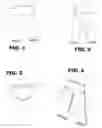
FIG. 1 is a front view of the reusable protective garment outer layer made of a sturdy textile and a depiction of the impermeable inner garment layer providing protection to the outer layer from any liquid or solid excrement. The (1) front panel of the exterior garment layer with the (2) front panel of the inner garment layer depicted and affixed to (3) the integrated waistband. The impermeable inner garment layer has two (4) openings for the user's legs which are in direct relationship adjacent the exterior garment for the legs.
FIG. 2 is the front view of the (1) front panel of the exterior garment layer with the (2) front panel of the inner garment layer pulled out of the reusable protective garment. The (2) front panel of the inner garment layer is shown affixed to the (1) front panel of the exterior garment layer by the (3) integrated waistband. The (4) openings depict a changed orientation when the inner garment layer is pulled out from the exterior garment layer to exemplify the affixed portion of the inner layer to the outer layer.
FIG. 3 is the front view of the inner garment layer separated from the exterior garment. This view depicts both the (2) front panel and (5) back panel of the inner garment layer and the (4) openings for the legs as well as a portion of the (3) integrated waistband.
FIG. 4 is the view of the reusable protective garment depicting the (1) front panel of the exterior garment layer with the (2) front panel of the inner garment layer with the (3) integrated waistband and the (4) openings for the legs. This view also depicts the (5) back panel of the inner garment layer and the (6) back panel of the exterior garment layer.
DESCRIPTION OF THE PREFERRED EMBODIMENT AND BEST MODE
Referring now specifically to the drawings, a reusable protective garment with an exterior garment layer and an inner garment layer in FIG. 1. The exterior garment layer is constructed by two panels: a (1) front panel and a (6) back panel of a breathable fabric like cotton or any type of cotton blend. The inner garment depicted in FIG. 3 is the hydrophobic layer intended to cover the user's undergarments and protect the exterior garment layer from any excrement.
The material used for the inner garment layer must be hydrophobic and impermeable to liquid and solid waste material. A polymer with these characteristics, also skin-friendly, is best. This layer will touch the user's skin at the (4) openings for the legs and should not cause irritation.
Both materials used in the construction of this protective garment should be durable to washing as this garment is reusable and must perform the function more than once.
The (3) integrated waistband is where the exterior garment layer and the inner garment layer are affixed for best mode, but it is not a limitation on other ways the two layers can be affixed.
Claims
I claim:1. A reusable, washable protective garment having a multi-layered construction where said protective garment includes an exterior garment layer formed into pants, shorts, etc. or any item of clothing to be inclusive of covering the backside and genitals and said protective garment includes an inner garment layer acting as a barrier layer protecting the environment from user's release of excrement comprising:
A first, exterior garment layer including a front panel, back panel and stretchable waistband construction made from a sturdy wearable fabric textile generally used in the construction of garments covering the backside and genitals of said users to be seen and exposed to the public eye (i.e. pants, shorts, skirts, petal pushers, capris, etc) covering the leg in part or wholly;
A second, inner garment layer forming a barrier between said user's underwear and said exterior garment layer adjacent the first exterior garment layer including a front panel, back panel and a stretchable waistband construction with leg holes fitting securely around the leg but not covering the legs made from a fabric with a hydrophobic characteristic impermeable to liquid and solid excrement to be worn to cover said user's undergarments and not to be seen by the public eye;
2. A protective garment according to claim 1, wherein said inner garment layer is not fully integrated into said exterior garment layer but is affixed to said exterior garment layer at the waistband on the interior portion of said exterior garment layer to be directly adjacent to the area closest to user's skin.
3. A protective garment according to claim 1, wherein said inner garment layer is affixed to said exterior garment layer to provide protection for said exterior garment layer and to fully cover said user's undergarments.
Images & Drawings included:
Sources:
- United States Patent and Trademark Office - verify current appl. status at the USPTO↗
Recent applications in this class:
- » 20250107583 2025-04-03
APPAREL COMPRISING A WOUND THREAD LAYER AND METHODS OF MAKING THE SAME - » 20230413932 2023-12-28
Concealment Garment - » 20220061435 2022-03-03
Cover to prevent damage to a garment - » 20200214375 2020-07-09
Burp cloth bottle holder - » 20200000163 2020-01-02
LEG WRAP GARMENT PROTECTOR SYSTEM - » 20190246720 2019-08-15
SUPPORT-PROVIDING COATING METHOD AND APPARATUS - » 20190166934 2019-06-06
Rolling surface garment - » 20190021421 2019-01-24
Apparel protecting device - » 20190014840 2019-01-17
PERSPIRATION-ABSORBING FACE PAD FOR VIRTUAL REALITY HEAD MOUNTED DISPLAY - » 20180352882 2018-12-13
FACE SHIELD FOR PROTECTING GARMENTS