Method for analyzing molecular weight of the poly-p-phenylene terephthalamide
US20180128737A1
2018-05-10
15/318,667
2016-04-07
✅ Patent granted
US 10,161,862 B2
2018-12-25
WO; PCT/CN2016/078631; 20160407
WO; WO2017/156805; 20170921
Dominic J Bologna
Raymond Y. Chan | David and Raymond Patent Firm
2036-06-23
Abstract:
A method for analyzing molecular weight of the poly-p-phenylene terephthalamide (PPTA) utilizing near infrared spectrum is provided for reducing the time required to analyze the molecular weight of PPTA. The method uses PPTA samples to build a spectrum-viscosity fitting curve. The molecular weight of an unknown PPTA is analyzed via a near infrared analysis software and the spectrum-viscosity fitting curve. The method is beneficial in that it has a short process time and high reliability.
Assignee:
- Tsinghua University 3,118 🇨🇳 Beijing, China
- SHNGDONG WANSHENGBO SCI-TECH.CO.,LTD. 1 🇨🇳 Dongying, Shangdong, China
Applicant:
Interested in similar patents?
Get notified when new applications in this technology area are published.
Classification:
G01N11/02 » CPC further
Investigating flow properties of materials, e.g. viscosity, plasticity; Analysing materials by determining flow properties by measuring flow of the material
G01N21/3563 » CPC further
Investigating or analysing materials by the use of optical means, i.e. using sub-millimetre waves, infrared, visible or ultraviolet light; Systems in which incident light is modified in accordance with the properties of the material investigated; Colour; Spectral properties, i.e. comparison of effect of material on the light at two or more different wavelengths or wavelength bands; Investigating relative effect of material at wavelengths characteristic of specific elements or molecules, e.g. atomic absorption spectrometry using infra-red light for analysing solids; Preparation of samples therefor
G01N2011/008 » CPC further
Investigating flow properties of materials, e.g. viscosity, plasticity; Analysing materials by determining flow properties; Determining flow properties indirectly by measuring other parameters of the system optical properties
G01N2021/3572 » CPC further
Investigating or analysing materials by the use of optical means, i.e. using sub-millimetre waves, infrared, visible or ultraviolet light; Systems in which incident light is modified in accordance with the properties of the material investigated; Colour; Spectral properties, i.e. comparison of effect of material on the light at two or more different wavelengths or wavelength bands; Investigating relative effect of material at wavelengths characteristic of specific elements or molecules, e.g. atomic absorption spectrometry using infra-red light for analysing solids; Preparation of samples therefor Preparation of samples, e.g. salt matrices
C08G69/32 » CPC further
Macromolecular compounds obtained by reactions forming a carboxylic amide link in the main chain of the macromolecule; Polyamides derived from amino-carboxylic acids or from polyamines and polycarboxylic acids derived from polyamines and polycarboxylic acids from aromatic diamines and aromatic dicarboxylic acids with both amino and carboxylic groups aromatically bound
G01N33/442 » CPC further
Investigating or analysing materials by specific methods not covered by groups -; Resins; rubber; leather Resins, plastics
G01N33/44 IPC
Investigating or analysing materials by specific methods not covered by groups - Resins; rubber; leather
D01F6/60 IPC
Monocomponent artificial filaments or the like of synthetic polymers; Manufacture thereof from homopolycondensation products from polyamides
D01D5/38 IPC
Formation of filaments, threads, or the like Formation of filaments, threads, or the like during polymerisation
D01D10/06 IPC
Physical treatment of artificial filaments or the like during manufacture, i.e. during a continuous production process before the filaments have been collected Washing or drying
D01F1/10 IPC
Addition of substances to the spinning solution or to the melt Other agents for modifying properties
D01F11/08 IPC
Chemical after-treatment of artificial filaments or the like during manufacture of synthetic polymers of macromolecular compounds obtained otherwise than by reactions only involving carbon-to-carbon unsaturated bonds
G01N21/359 » CPC main
Investigating or analysing materials by the use of optical means, i.e. using sub-millimetre waves, infrared, visible or ultraviolet light; Systems in which incident light is modified in accordance with the properties of the material investigated; Colour; Spectral properties, i.e. comparison of effect of material on the light at two or more different wavelengths or wavelength bands; Investigating relative effect of material at wavelengths characteristic of specific elements or molecules, e.g. atomic absorption spectrometry using infra-red light using near infra-red light
G01N11/00 IPC
Investigating flow properties of materials, e.g. viscosity, plasticity; Analysing materials by determining flow properties
D01F13/04 IPC
Recovery of starting material, waste material or solvents during the manufacture of artificial filaments or the like of synthetic polymers
Description
CROSS REFERENCE OF RELATED APPLICATION
This is the National Stage of and claims priority to international application number PCT/CN2016/078631, international filing date Apr. 7, 2016, the entire contents of each of which are expressly incorporated herein by reference.
NOTICE OF COPYRIGHT
A portion of the disclosure of this patent document contains material which is subject to copyright protection. The copyright owner has no objection to any reproduction by anyone of the patent disclosure, as it appears in the United States Patent and Trademark Office patent files or records, but otherwise reserves all copyright rights whatsoever.
BACKGROUND OF THE PRESENT INVENTION
Field of Invention
The present invention relates to a method for analyzing molecular weight, and more particularly to a method for analyzing the molecular weight of poly (p-phenylene terephthalamide) (PPTA) utilizing near infrared spectrum.
Description of Related Arts
Para-aramid fiber is a new material that possesses excellent properties including high thermal stability, solvent resistance, high strength, high modulus, and light weight. This material is used in many high tech applications, especially important in civil and defense applications. Maintaining a stable molecular weight in the para-aramid fiber is key in the production process of the material. Currently, detecting the molecular weight of the material at the same time of poly (p-phenylene terephthalamide) (PPTA) production is a difficult technical problem.
PPTA is a rigid liquid crystal composite. It is insoluble in ordinary solvent except strong acid such as concentrated sulfuric acid, nitric acid, and chlorine sulfonic acid. Thus, it is impossible to analyze the molecular weight of PPTA using gel permeation chromatography. Currently, the method to analyze the molecular weight of PPTA is based on concentrated sulfuric acid. First, the PPTA is slowly dissolved into concentrated sulfuric acid. Then, an Ubbelohde viscometer is used to measure the time of this process. An instrinsic viscosity is obtained by comparing the time with the concentration of sulfuric acid, which is then used to analyze the molecular weight of PPTA. This method, however, is time consuming, as it requires a lot of time to dissolve the PPTA into concentrated sulfuric acid. For example, it needs more than 48 hours to dissolve PPTA in 98% concentrated sulfuric acid to yield viscosity between 6.0 to 6.5 dL/g. Scientists have attempted to speed up the dissolve time by adding other chemicals, such as alkali (NaH KOH), which reduced the dissolve time to approximately 5 hours, and N-Methyl pyrrolidone, which reduced the dissolve time to approximately 3 hours. Still, the dissolve time is too long for monitoring in real-time.
SUMMARY OF THE PRESENT INVENTION
The present invention features a new method for analyzing the molecular weight of poly (p-phenylene terephthalamide) (PPTA) utilizing near infrared spectrum. The invention is advantageous in that it provides a method for reducing the time required to analyze the molecular weight of PPTA, which utilizes near infrared spectrum. The method utilizes a computer to analyze the molecular weight of PPTA in a real-time system by calculating the minor differences between before and after polymerization of near infrared electron transition from N—H bonds to amino.
Accordingly, the present invention utilizes near infrared spectroscopy that includes frequency doubling and combination band of molecular vibration spectrum such as Hydrogen containing group (O—H N—H C—H). Characteristics information of the Hydrogen containing group can be obtained from the near infrared spectrum. Particularly in the case of PPTA, only C—H and N—H are present in the molecules. In the case of C—H, polymerization would be slightly affected; but in the case of N—H, polymerization would have an obvious effect as it transitions from —NH2 to —CONH—. Thus, it is possible to analyze the molecular weight by utilizing near infrared spectrum.
Additionally, the analysis of the near infrared spectroscopy requires numerous samples uniformly distributed on a detection range to build a regression model. Thus, many samples with different viscosity are applied to ensure the degree of accuracy of the model. A viscosity value between 5 to 7 dL/g is considered acceptable, with 6 to 6.5 dL/g being exceptional.
Another advantage of the invention is to provide a method for analyzing the molecular weight of poly (p-phenylene terephthalamide) (PPTA) utilizing near infrared spectrum, wherein the method has a low cost, short process time, simple control structure, high reliability, and good practicability without destroying the samples.
Another advantage of the invention is to provide a method for analyzing the molecular weight of poly (p-phenylene terephthalamide) (PPTA) utilizing near infrared spectrum, wherein the method does not require additional chemical reagents.
Another advantage of the invention is to provide a method for analyzing the molecular weight of poly (p-phenylene terephthalamide) (PPTA) utilizing near infrared spectrum, wherein the method does not comprise harmful pollution to the environment.
Another advantage of the invention is to provide a method for analyzing the molecular weight of poly (p-phenylene terephthalamide) (PPTA) utilizing near infrared spectrum, wherein the method results in measurement that has good tradeoff between detection speed and accuracy.
Another advantage of the invention is to provide a method for analyzing the molecular weight of poly (p-phenylene terephthalamide) (PPTA) utilizing near infrared spectrum, wherein the method can be implemented to centralize analysis and control of a production process.
Additional advantages and features of the invention will become apparent from the description which follows, and may be realized by means of the instrumentalities and combinations particular point out in the appended claims.
According to the present invention, the foregoing and other objects and advantages are attained by a method for analyzing the molecular weight of poly (p-phenylene terephthalamide) (PPTA) utilizing near infrared spectrum, comprising the following steps:
(a) choosing at least 60 PPTA samples with viscosity ranging from 1 to 9 dL/g to build a fitting curve;
(b) dissolving PPTA samples in concentrated sulfuric acid and detecting the viscosity by an Ubbelohde viscometer;
(c) using a near infrared spectrometer to scan the PPTA samples at least 6 times to obtain an average spectrum;
(d) extrapolating a spectrum-viscosity fitting curve from the viscosity data of step (b) and the spectrum of the step (c) via a near infrared analysis software; and
(e) using the near infrared spectrometer to scan an unknown PPTA resin to obtain a near infrared spectrum and calculating the viscosity of the unknown PPTA by the spectrum-viscosity fitting curve.
It is worth mentioning that the PPTA viscosity data are inputted into a near infrared spectrum analysis software in order to link the viscosity data to the spectrum, wherein the near infrared spectrum analysis software will conclude a regression model.
Still further objects and advantages will become apparent from a consideration of the ensuing description and drawings.
These and other objectives, features, and advantages of the present invention will become apparent from the following detailed description, the accompanying drawings, and the appended claims.
BRIEF DESCRIPTION OF THE DRAWINGS
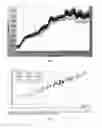
FIG. 1 is a graph illustrating the raw data of PPTA near infrared spectrum.
FIG. 2 is a graph of a contrast diagram, illustrating the presumable results based on the PPTA spectrum-weight regression equation (spot) and real results based on the Ubbelohde viscometer (circle).
DETAILED DESCRIPTION OF THE PREFERRED EMBODIMENT
The following description is disclosed to enable any person skilled in the art to make and use the present invention. Preferred embodiments are provided in the following description only as examples and modifications will be apparent to those skilled in the art. The general principles defined in the following description would be applied to other embodiments, alternatives, modifications, equivalents, and applications without departing from the spirit and scope of the present invention.
According to a first preferred embodiment of the present invention, a method for analyzing molecular weight of poly (p-phenylene terephthalamide) (PPTA) utilizing near infrared spectrum comprises the steps of:
(a) choosing approximately 60 PPTA samples with viscosity ranging from 1 to 9 dL/g to build a fitting curve;
(b) dissolving PPTA samples in concentrated sulfuric acid and detecting the viscosity by an Ubbelohde viscometer;
(c) using a near infrared spectrometer to scan the PPTA samples 6 times to obtain an average spectrum;
(d) extrapolating a spectrum-viscosity fitting curve from the viscosity data of step (b) and the spectrum of the step (c) via a near infrared analysis software; and
(e) Using the near infrared spectrometer to scan an unknown PPTA resin to obtain a near infrared spectrum and calculating the viscosity of the unknown PPTA by the spectrum-viscosity fitting curve.
It is worth mentioning that in the step (c), the model of the near infrared spectrometer is Luminar 5030; and in the step (d), the near infrared analysis software is SNAP 2.03.
It is also worth mentioning that the method for analyzing molecular weight of poly (p-phenylene terephthalamide) (PPTA) can be implemented as an ongoing analysis process for a manufacturing line.
According to a second embodiment of the present invention, a method for analyzing molecular weight of poly (p-phenylene terephthalamide) (PPTA) utilizing near infrared spectrum comprises the steps of:
(a) choosing approximately 90 PPTA samples with viscosity ranging from 1 to 9 dL/g to build a fitting curve;
(b) dissolving PPTA samples in concentrated sulfuric acid and detecting the viscosity by an Ubbelohde viscometer;
(c) using a near infrared spectrometer to scan the PPTA samples 10 times to obtain an average spectrum;
(d) extrapolating a spectrum-viscosity fitting curve from the viscosity data of step (b) and the spectrum of step (c) via a near infrared analysis software; and
(e) using the near infrared spectrometer to scan an unknown PPTA resin to obtain a near infrared spectrum and calculating the viscosity of the unknown PPTA by the spectrum-viscosity fitting curve.
According to a third embodiment of the present invention, a method for analyzing molecular weight of poly (p-phenylene terephthalamide) (PPTA) utilizing near infrared spectrum comprises the steps of:
(a) choosing approximately 70 PPTA samples with viscosity ranging from 1 to 9 dL/g to build a fitting curve;
(b) dissolving PPTA samples in concentrated sulfuric acid and detecting the viscosity by an Ubbelohde viscometer;
(c) using a near infrared spectrometer to scan the PPTA samples 7 times to obtain an average spectrum;
(d) extrapolating a spectrum-viscosity fitting curve from the viscosity data of step (b) and the spectrum of step (c) via a near infrared analysis software; and
(e) using the near infrared spectrometer to scan an unknown PPTA resin to obtain a near infrared spectrum and calculating the viscosity of the unknown PPTA by the spectrum-viscosity fitting curve.
According to a fourth embodiment of the present invention, a method for analyzing molecular weight of poly (p-phenylene terephthalamide) (PPTA) utilizing near infrared spectrum comprises the steps of:
(a) choosing approximately 80 PPTA samples with viscosity ranging from 1 to 9 dL/g to build a fitting curve;
(b) dissolving PPTA samples in concentrated sulfuric acid and detecting the viscosity by an Ubbelohde viscometer;
(c) using a near infrared spectrometer to scan the PPTA samples 8 times to obtain an average spectrum;
(d) extrapolating a spectrum-viscosity fitting curve from the viscosity data of step (b) and the spectrum of step (c) via a near infrared analysis software; and
(e) using the near infrared spectrometer to scan an unknown PPTA resin to obtain a near infrared spectrum and calculating the viscosity of the unknown PPTA by the spectrum-viscosity fitting curve.
The viscosity of four unknown PPTA groups calculated by said method of the first preferred embodiment of present invention and sulphuric acid viscosity was compared, and the specific as shown as the following table:
| Relative | |||
| No. | NIR viscosity | H2SO4 viscosity | deviation % |
| 1 | 3.94 | 3.81 | 3.35 |
| 2 | 4.83 | 4.79 | 0.73 |
| 3 | 5.94 | 5.8 | 2.37 |
| 4 | 6.92 | 6.84 | 1.18 |
| Relative deviation % | 1.91 |
One skilled in the art will understand that the embodiment of the present invention as shown in the drawings and described above is exemplary only and not intended to be limiting.
It will thus be seen that the objects of the present invention have been fully and effectively accomplished. The embodiments have been shown and described for the purpose of illustrating the functional and structural principles of the present invention and is subject to change without departure from such principles. Therefore, this invention includes all modifications encompassed within the spirit and scope of the following claims.
Claims
What is claimed is:1. A method for analyzing molecular weight of the poly-p-phenylene terephthalamide (PPTA) utilizing near infrared spectrum, comprising the following steps:
(a) preparing 60˜90PPTA samples with different molecular weight, wherein the viscosity of said PPTA samples ranges from 1 to 9 dL/g;
(b) dissolving respectively said PPTA samples in a concentrated sulfuric acid and detecting the viscosity thereof by an Ubbelohde viscometer;
(c) scanning respectively each of said PPTA samples 1˜10 times using a near infrared spectrometer to obtain corresponding spectral data thereof, and calculating an average spectral data of said spectral values;
(d) extrapolating a spectrum data-viscosity fitting curve from said viscosity data of step (b) and said spectrum data of the step (c) via a near infrared analysis software;
(e) scanning an unknown PPTA resin using said near infrared spectrometer to obtain a near infrared spectrum data and calculating the viscosity of said unknown PPTA by said spectrum-viscosity fitting curve.
Images & Drawings included:

Sources:
- United States Patent and Trademark Office - verify current appl. status at the USPTO↗
Recent applications in this class:
- » 20250224332 2025-07-10
SPECTRAL SENSING DEVICE AND METHOD FOR MEASURING OPTICAL RADIATION - » 20250198919 2025-06-19
DEVICE AND METHOD FOR MEASURING HYDROXYL CONTENT IN HYDROCARBON FUEL - » 20250180474 2025-06-05
Wideband Sensing Apparatus and Method Thereof - » 20250180473 2025-06-05
TEMPERATURE DRIFT COMPENSATION OF PHOTORESISTORS - » 20250155370 2025-05-15
Method for Determining the Quantitative Ratio of Melamine-Formaldehyde Resin and Urea-Formaldehyde Resin in at Least One Paper Layer Impregnated With a Mixture of These Resins - » 20250146934 2025-05-08
Method for Determining the Amount of At Least One Sealant Applied to a Side Edge of a Composite Wood Board - » 20250146933 2025-05-08
SPATIALLY RESOLVED NIR SPECTROMETER - » 20250102430 2025-03-27
SENSOR ASSEMBLY, AGRICULTURAL MACHINE AND ASSOCIATED METHOD - » 20250020584 2025-01-16
SYSTEM AND METHOD FOR SPECTRAL-BASED DISEASE DETECTION - » 20250003871 2025-01-02
METHOD AND APPARATUS FOR SORTING SEEDS
Recent applications for this Assignee:
- » 20250263696 2025-08-21
PROTEIN TRANSLATION SYSTEM - » 20250255183 2025-08-07
ORGANIC LIGHT-EMITTING DIODE AND DISPLAY APPARATUS - » 20250255091 2025-08-07
ORGANIC LIGHT-EMITTING DIODE AND DISPLAY APPARATUS - » 20250239854 2025-07-24
Grid-Forming Control Method with Full-State Virtual Oscillator for Photovoltaic and Energy Storage SYSTEM, and Device - » 20250233215 2025-07-17
WATER AND ACID ADSORBING BATTERY SEPARATOR AND PREPARATION METHOD THEREFOR, WATER AND ACID ADSORBING ELECTRODE PLATE, AND BATTERY - » 20250232886 2025-07-17
POWER SUPPLY MODULE AND POWER SUPPLY SYSTEM - » 20250202515 2025-06-19
SINGLE-SIDEBAND PHASE-SENSITIVE DETECTION METHOD AND SYSTEM - » 20250150619 2025-05-08
DATA STORAGE METHOD, READING METHOD, APPARATUS, STORAGE MEDIUM, AND PROGRAM PRODUCT - » 20250149667 2025-05-08
METHOD OF TARGETED RECYCLING OF WASTE BATTERIES - » 20250133304 2025-04-24
EVENT DATA PROCESSING METHOD AND RELATED DEVICE