Method for producing a pen holder notebook and notebook produced with the method
US20180141368A1
2018-05-24
15/814,591
2017-11-16
✅ Patent granted
US 10,406,846 B2
2019-09-10
-
-
Justin V Lewis
Young & Thompson
2037-11-16
Abstract:
To get from a sheet of cardboard an element including an assembly of parts suitable for forming a block with conventional detachable sheets and including a conventional pen, the die-cutting and simultaneous creasing of the sheet lead to form: a) a first rectangular or square element intended for the application of a block of paper; b) a second rectangular element on a first side of the first element and of a width equal to the thickness of the block; c) a third rectangular or square element on the adjacent side of the second element and is intended to cover notebook; d) a fourth rectangular element on a second side of the first element, contiguous and of width equal to the thickness of the block; e) a fifth rectangular element, contiguous to the fourth element and of a height suitable for covering the head of the block of paper.
Assignee:
- FIORDO SRL 2 🇮🇹 Romentino (NO), Italy
Applicant:
Interested in similar patents?
Get notified when new applications in this technology area are published.
Classification:
B42D1/007 » CPC main
Books or other bound products characterised by shape or material of the sheets Sheets or sheet blocks combined with other articles
B42B5/123 » CPC further
Permanently attaching together sheets, quires or signatures otherwise than by stitching by finger, claw or ring-like elements passing through the sheets, quires or signatures the elements being coils Devices for assembling the elements with the stack of sheets
B42D5/008 » CPC further
Sheets united without binding to form pads or blocks; Note-pads with means for engaging sheet perforations or slots
B42D5/006 » CPC further
Sheets united without binding to form pads or blocks; Note-pads; Supports for note-pads combined with auxiliary devices
B42P2241/18 » CPC further
Parts, details or accessories for books or filing appliances; Books or filing appliances combined with other articles with writing instruments
B42D1/00 IPC
Books or other bound products
B42B5/12 IPC
Permanently attaching together sheets, quires or signatures otherwise than by stitching by finger, claw or ring-like elements passing through the sheets, quires or signatures the elements being coils
B42D5/00 IPC
Sheets united without binding to form pads or blocks
B42D3/12 » CPC further
Book covers combined with other articles
Description
FIELD OF THE INVENTION
The paper industry is a field in which a flat sheet of cardboard or paperboard is treated by die-cutting, creasing and folding in order to obtain a common use object, a box, a food container, a toy of simple or complex shape.
STATE OF THE ART
The applicant does not know a pen holder notebook substantially achieved by a papermaking process and presenting the invented features.
There are known notebooks simply formed of by a detachable sheets block applied on a carrier of cardboard laterally bearing an area intended to accommodate a pen, the term pen standing for a pencil, a ballpoint pen, a fountain pen. There are also known note books comprising a cover element fixed, generally, on their left side.
OBJECT OF THE INVENTION
The object of the invention is to produce at a considerably low cost an object that provides immediate and convenient the possibility of writing.
BACKGROUND OF THE INVENTION
While in the following of the present description the term “cardboard” stands for cardboard or paperboard, the use of one or other in the method depends on the size and quality that the manufacturer want to give the product.
The method comprises the steps of:
-
- A) Die-cutting and creasing of a cardboard sheet to obtain a single element comprising an assembly of parts suitable for receiving a detachable sheets block and hold a conventional pen, where the assembly of parts is:
a—a first rectangular or square element in part intended for the application of the detachable sheets block,
b—a second rectangular element on a first side of the first element and of a width equal to the thickness of the detachable sheets block,
c—a third rectangular or square element on the adjacent side of the second element and intended as notebook cover,
d—a fourth rectangular element on a second side of the first element of width equal to the thickness of the detachable sheets block, and
e—a fifth rectangular element, contiguous to the fourth element and of height suitable for covering the head of the detachable sheets block.
B) Apply the detachable sheets block on the bottom surface of the first element,
C) Fold the above elements along the creasings to get a notebook that includes a pen within a chamber at the upper end or at a side of the block.
The produced notebook is compact, complete with the detachable sheets block, the cover and the pen.
Advantages of the Invention
The process is very fast and the structure of the product allows a user to carry a notebook with the pen readily available.
EXAMPLE OF THE INVENTION
The invention will now be described in detail with examples of embodiment and the help of the drawing in which:
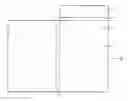
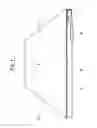
FIG. 1 is a first plan view,
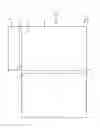
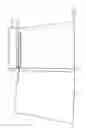
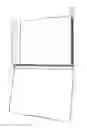
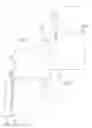
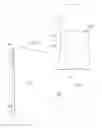
FIGS. 2-8 are perspective views.
A first alternative shows the position of a ballpoint pen on the upper end of the block:
FIG. 1 shows the assembly of parts formed by die-cutting and creasing of a cardboard sheet S which defines a first rectangular element 1 having a height of 16.3 cm and a width of 10.5 cm intended for the application of a detachable sheets block having a height of 14.8 cm and a width of 10.5 cm; a second rectangular element 2 on a first side of the first element 1 and of a width equal to the thickness of the detachable sheets block equal to 1.0 cm; a third rectangular element 3 on the adjacent side of the second element 2 and intended to cover the notebook in production; a fourth rectangular element 4 on a second side of the first element 1, of width equal to the thickness of the detachable sheets block; a fifth rectangular element 5, contiguous to the fourth element and of height suitable for covering the head of the detachable sheets block; the L lines separating these parts and carrying the crease lines which allow to bend the die-cut elements and where the fourth rectangular element 4 has a length lower than the width of the fifth element to leave visible and accessible the pen.
FIG. 2 shows a ballpoint pen 6 placed on top of the first element 1. It is understood that, once the element 4 is folded in perpendicular position with respect to the first element 1 and the element 5 is folded parallel to the element 1, a chamber is obtained adapted to receive the pen, the chamber having a window 7 created by the reduced length of the element 4 to make visible and accessible one end of the pen.
FIG. 3 shows a detachable sheets block 9, of 1.0 cm thickness, crimped to lower part of the first rectangular element 1, the fourth rectangular element 4 of 1.0 cm height covers the head 9a and the detachable sheets block 9, the window 7 created in the rectangular element 4 and the rectangular chamber 8 adapted to receive a pen, not shown.
FIG. 4 shows a notebook finished where 4 indicates the rectangular element with its window 7 in which the clip 6a appears of a pen hidden in the chamber 8 created within the elements 1, 4, and 5.
A second alternative shows the position of a ballpoint pen 60 on one side of the block:
FIG. 5 shows a cardboard sheet S1 which defines a first rectangular element 10 intended for the application of a detachable sheets block; a second rectangular element 20 on a first side of the first element 10 and of a width equal to the thickness of the detachable sheets block equal to 1.0 cm; a third rectangular element 30 on the adjacent side of the second element 20 and intended to cover the notebook in production; a fourth rectangular element 40 on a second side of the first element 10, of width equal to the thickness of the detachable sheets block; a fifth rectangular element 50, contiguous to the fourth element and of height suitable for covering the side of the detachable sheets block; the two parallel L1 lines separating these parts and carrying the crease lines which allow to bend the die-cut elements and where the fourth rectangular element 40 has a length lower than the width of the fifth element to leave visible and accessible the pen.
FIG. 6 shows a ballpoint pen 60 lying on the element 40 defined between the elements 10 and 50.
FIG. 7 shows the element 50 overturned on the element 10 to define the chamber where the ballpoint pen is held.
FIG. 8 shows the element 30 overturned to cover the block. Also the outer side of the element 40 and the pen clip 6b are visible.
Claims
1. Method for producing a pen holder notebook (N, N1) in which the parts intended to contain the detachable sheets block (9) and the pen (6. 60) are obtained by die-cutting and creasing of a sheet (S, S1) of cardboard, comprising:
A) die-cutting and creasing of a cardboard sheet (S, S1) to obtain a single element in which an assembly of parts (1-50) is suitable for forming a notebook (N, N1) holding a detachable sheets block (9) and a pen (6, 60) where the assembly of parts is:
a). a first rectangular or square element (1, 10) intended for the application of the detachable sheets block (9),
b) a second rectangular element (2, 20) on a first side of the first element (1, 10) and of width equal to the thickness of the detachable sheets block (9),
c) a third rectangular or square element (3, 30) on the adjacent side of the second element (2, 20) and intended as cover (C, C1) of the notebook (N, N1),
d) a fourth rectangular element (4, 40) on a second side of the first element (1, 10) of width equal to the thickness of the detachable sheets block (9),
e) a fifth rectangular element (5, 50) contiguous to the fourth element (4, 40) and of height suitable for covering the head or a side of the detachable sheets block (9).
B) Fix the detachable sheets block (9) on the lower part of the first element (1, 10).
C) Fold the above elements (1-50) to obtain a notebook (N, N1) which comprises a pen (6, 60) within a chamber (8) defined by the first element (1, 10) bent on the fifth element (5, 50).
2. Method according to claim 1 wherein that the fourth rectangular element (4, 20) is produced with a length lower than the width of the first element (1, 10) to create a window (7) which makes visible part of the chamber (8).
3. Notebook (N, N1) produced by the method according to claim 1, further comprising a detachable sheets block (9) fixed on a part of a base element (1. 10) in which notebook a portion remains uncovered to define a chamber (8) for a pen (6, 60), the chamber being completed by a rectangular element (5, 50) that covers the pen and part of the detachable sheets block (9), an element (C, C1) acting as a cover.
4. Notebook (N, N1) according to claim 3 wherein a window (7) is comprised on one side of the chamber (8) to make visible one end of the pen (6, 60, 6a, 6b)).
5. Notebook (N, N1) produced by the method according to claim 2 further comprising a detachable sheets block (9) fixed on a part of a base element (1. 10) in which notebook a portion remains uncovered to define a chamber (8) for a pen (6, 60), the chamber being completed by a rectangular element (5, 50) that covers the pen and part of the detachable sheets block (9), an element (C, C1) acting as a cover.
Images & Drawings included:
Sources:
- United States Patent and Trademark Office - verify current appl. status at the USPTO↗
Recent applications in this class:
- » 20240391270 2024-11-28
ILLUMINATED BOOK DEVICE - » 20240109361 2024-04-04
PHOTO BOOK WITH MEDIA PLAYBACK - » 20240066907 2024-02-29
Book Learning Tool - » 20230139349 2023-05-04
Reusable notebook including a sheet having a printed code and methods thereof - » 20200276852 2020-09-03
BOOK ARRANGEMENT AND METHOD OF USE THEREOF - » 20200238743 2020-07-30
A METHOD AND SYSTEM FOR THE PAGINATION OF A PRINTED PUBLICATION, AND PRINTED PUBLICATION OBTAINED THEREOF - » 20200230993 2020-07-23
Hinged laminated body, layout sheet for hinged laminated body, and manufacturing method for hinged laminated body - » 20190009607 2019-01-10
Hinged laminated body, layout sheet for hinged laminated body, and manufacturing method for hinged laminated body - » 20190001730 2019-01-03
DEVICE WITH QUICK-ATTACH FEATURE - » 20160368304 2016-12-22
Multi-Sensory Presentation Device
Recent applications for this Assignee:
- » 20230110892 2023-04-13
AGENDA WITH INTEGRATED HOUSING FOR WRITING INSTRUMENT AND METHOD FOR ITS MANUFACTURING