Method for reducing thermally induced stresses in a heat exchanger
US20180149089A1
2018-05-31
15/365,318
2016-11-30
✅ Patent granted
US 10,487,742 B2
2019-11-26
-
-
Davis D Hwu
Cantor Colburn LLP
2037-09-13
Abstract:
A heat exchanger core includes a rectangular core having a plurality of alternatively stacked first fluid layers and second fluid layers. The core is divided into a plurality of core subsections such that a deflection of each of the plurality of core subsections is less than a deflection of the core as a whole.
Assignee:
- HAMILTON SUNDSTRAND CORPORATION 2,631 🇺🇸 Charlotte, NC, United States
Applicant:
Interested in similar patents?
Get notified when new applications in this technology area are published.
Classification:
F02C7/185 » CPC main
Features, components parts, details or accessories, not provided for in, or of interest apart form groups - ; Air intakes for jet-propulsion plants; Cooling of plants characterised by cooling medium the medium being gaseous, e.g. air Cooling means for reducing the temperature of the cooling air or gas
F05D2220/32 » CPC further
Application in turbines in gas turbines
F05D2260/213 » CPC further
Function; Heat transfer, e.g. cooling by the provision of a heat exchanger within the cooling circuit
F28F2265/16 » CPC further
Safety or protection arrangements; Arrangements for preventing malfunction for preventing leakage
F02C7/18 » CPC further
Features, components parts, details or accessories, not provided for in, or of interest apart form groups - ; Air intakes for jet-propulsion plants; Cooling of plants characterised by cooling medium the medium being gaseous, e.g. air
F01D25/24 » CPC further
Component parts, details, or accessories, not provided for in, or of interest apart from, other groups Casings ; Casing parts, e.g. diaphragms, casing fastenings
F02C3/04 » CPC further
Gas-turbine plants characterised by the use of combustion products as the working fluid having a turbine driving a compressor
F28F3/08 » CPC further
Plate-like or laminated elements; Assemblies of plate-like or laminated elements Elements constructed for building-up into stacks, e.g. capable of being taken apart for cleaning
F28F19/00 » CPC further
Preventing the formation of deposits or corrosion, e.g. by using filters or scrapers
F28D9/0062 » CPC further
Heat-exchange apparatus having stationary plate-like or laminated conduit assemblies for both heat-exchange media, the media being in contact with different sides of a conduit wall the conduits for one heat-exchange medium being formed by spaced plates with inserted elements
F28D9/0093 » CPC further
Heat-exchange apparatus having stationary plate-like or laminated conduit assemblies for both heat-exchange media, the media being in contact with different sides of a conduit wall Multi-circuit heat-exchangers, e.g. integrating different heat exchange sections in the same unit or heat-exchangers for more than two fluids
F28D1/05375 » CPC further
Heat-exchange apparatus having stationary conduit assemblies for one heat-exchange medium only, the media being in contact with different sides of the conduit wall, in which the other heat-exchange medium is a large body of fluid, e.g. domestic or motor car radiators with heat-exchange conduits immersed in the body of fluid with tubular conduits the conduits being straight the conduits having a non-circular cross-section; Assemblies of conduits connected to common headers, e.g. core type radiators with particular pattern of flow, e.g. change of flow direction
F28D7/1692 » CPC further
Heat-exchange apparatus having stationary tubular conduit assemblies for both heat-exchange media, the media being in contact with different sides of a conduit wall the conduits being arranged in parallel spaced relation the conduits having a non-circular cross-section with particular pattern of flow of the heat exchange media, e.g. change of flow direction
F28D2021/0026 » CPC further
Heat-exchange apparatus not covered by any of the groups - ; Other heat exchangers for particular applications; Heat exchange systems not otherwise provided for for combustion engines, e.g. for gas turbines or for Stirling engines
F28D2021/0049 » CPC further
Heat-exchange apparatus not covered by any of the groups - ; Other heat exchangers for particular applications; Heat exchange systems not otherwise provided for for lubricants, e.g. oil coolers
F28D2021/0089 » CPC further
Heat-exchange apparatus not covered by any of the groups - ; Other heat exchangers for particular applications; Heat exchange systems not otherwise provided for for vehicles Oil coolers
F28F2265/26 » CPC further
Safety or protection arrangements; Arrangements for preventing malfunction for allowing differential expansion between elements
F28F2270/00 » CPC further
Thermal insulation; Thermal decoupling
F28F3/00 IPC
Plate-like or laminated elements; Assemblies of plate-like or laminated elements
F01D25/12 » CPC further
Component parts, details, or accessories, not provided for in, or of interest apart from, other groups; Cooling ; Heating; Heat-insulation Cooling
F02C7/14 » CPC further
Features, components parts, details or accessories, not provided for in, or of interest apart form groups - ; Air intakes for jet-propulsion plants; Cooling of plants of fluids in the plant, e.g. lubricant or fuel
F28D9/00 IPC
Heat-exchange apparatus having stationary plate-like or laminated conduit assemblies for both heat-exchange media, the media being in contact with different sides of a conduit wall
F02K3/115 » CPC further
Plants including a gas turbine driving a compressor or a ducted fan with supplementary heating of the working fluid; Control thereof; Heating the by-pass flow by means of indirect heat exchange
F28D1/053 IPC
Heat-exchange apparatus having stationary conduit assemblies for one heat-exchange medium only, the media being in contact with different sides of the conduit wall, in which the other heat-exchange medium is a large body of fluid, e.g. domestic or motor car radiators with heat-exchange conduits immersed in the body of fluid with tubular conduits the conduits being straight
F28D7/16 IPC
Heat-exchange apparatus having stationary tubular conduit assemblies for both heat-exchange media, the media being in contact with different sides of a conduit wall the conduits being arranged in parallel spaced relation
F28D21/00 IPC
Heat-exchange apparatus not covered by any of the groups -
F28D2021/0021 » CPC further
Heat-exchange apparatus not covered by any of the groups - ; Other heat exchangers for particular applications; Heat exchange systems not otherwise provided for for aircrafts or cosmonautics
Description
BACKGROUND
This application relates to a lubrication system of an engine, and more particularly, to an air-oil heat exchanger associated with a lubrication system of a gas turbine engine.
Gas turbine engines typically include a fan that delivers a supply of air into a compressor section. Compressed air from the compressor section is provided into a combustion section where it is mixed with fuel and ignited. Products of this combustion pass downstream over turbine rotors which are driven to rotate.
Lubrication management systems typically provide lubricant to engine bearings and other components located within the engine. As a result of gears being added to turbofan engines, additional components require cooling, thereby necessitating new cooling systems and methodologies. Heat exchangers are utilized in such systems to maintain lubricant within desired thermal limits by utilizing an airflow to cool the lubricant. However, these heat exchangers are susceptible to failure due to the deflection that occurs as a result of thermal cycling. Such failure can cause lubricant to leak from the heat exchanger, requiring not only replacement of the heat exchanger, but also maintenance of the engine.
SUMMARY
According to an embodiment, a heat exchanger core includes a rectangular core having a plurality of alternatively stacked first fluid layers and second fluid layers. The core is divided into a plurality of core subsections such that a deflection of each of the plurality of core subsections is less than a deflection of the core as a whole.
According to another embodiment, an aircraft engine includes a nacelle cowl, a core engine, and a bypass duct extending between an outer surface of an engine casing of the core engine and an inner surface of the nacelle cowl. A heat exchanger associated with the aircraft engine includes a core having a plurality of alternatively stacked first fluid layers and second fluid layers. The core is divided into a plurality of core subsections such that a deflection of each of the plurality of core subsections is less than a deflection of the core as a whole.
According to yet another embodiment, a method of relieving stress in a heat exchanger includes forming a heat exchanger core including a plurality of alternatively stacked first fluid layers and second fluid layers. The heat exchanger core is divided into at least a first subsection a second subsection such that a deflection of the first subsection and a deflection of the second subsection individually is less than a deflection of the core when considered as a whole.
BRIEF DESCRIPTION OF THE DRAWINGS
The following descriptions should not be considered limiting in any way. With reference to the accompanying drawings, like elements are numbered alike:
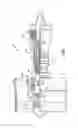
FIG. 1 is a cross-sectional diagram of an example of a gas turbine engine according to one embodiment
FIG. 2 is another cross-sectional diagram of a gas turbine engine of an aircraft according to one embodiment;
FIG. 3 is a side view of a heat exchanger for use with an engine according to one embodiment;
FIG. 4 is a perspective view of a heat exchanger core according to an embodiment;
FIG. 5 is a cross-sectional diagram of a heat exchanger core according to an embodiment; and
FIG. 6 is a cross-sectional diagram of a heat exchanger core according to another embodiment.
DETAILED DESCRIPTION
A detailed description of one or more embodiments of the disclosed system is presented herein by way of exemplification and not limitation with reference to the Figures. It is to be understood that other embodiments may be utilized and changes may be made without departing from the scope of the present disclosure.
With reference to FIG. 1, an example of a gas turbine engine 20 configured for use in the aircraft is illustrated schematically. The gas turbine engine 20 disclosed herein is a two-spool turbofan that generally incorporates a fan section 22, a compressor section 24, a combustor section 26 and a turbine section 28. Alternative engines might include an augmentor section (not shown) among other systems or features. The fan section 22 drives air along a bypass flow path while the compressor section 24 drives air along a core flow path for compression and communication into the combustor section 26 and then expansion through the turbine section 28. Although depicted as a turbofan gas turbine engine 20 in the disclosed non-limiting embodiment, it should be understood that the concepts described herein are not limited to use with turbofans as the teachings may be applied to other types of turbine engines, such as three-spool architectures for example.
The engine 20 generally includes a low spool 30 and a high spool 32 mounted for rotation about an engine central longitudinal axis A relative to an engine static structure 36 via several bearing systems 38. It should be understood that various bearing systems 38 at various locations may alternatively or additionally be provided.
The low spool 30 generally includes an inner shaft 40 that interconnects a fan 42, a low pressure compressor 44, and a low pressure turbine 46. The inner shaft 40 may be connected to the fan 42 directly or through a geared architecture 48 to drive the fan 42 at a different, typically lower, speed than the low spool 30. The high spool 32 includes an outer shaft 50 that interconnects a high pressure compressor 52 and a high pressure turbine 54. A combustor 56 is arranged between the high pressure compressor 52 and the high pressure turbine 54. The inner shaft 40 and the outer shaft 50 are concentric and rotate about the engine central longitudinal axis A which is collinear with their longitudinal axes.
The core airflow is compressed by the low pressure compressor 44 then the high pressure compressor 52, mixed and burned with fuel in the combustor 56, then expanded over the high pressure turbine 54 and the low pressure turbine 46. The turbines 54, 46 rotationally drive the respective low spook 30 and high spool 32 in response to the expansion.
A lubricating system including a pump, illustrated schematically at 60, is operably coupled to and driven by the high spool 32. Operation of the pump 60 causes a lubricating liquid, such as oil for example, to lubricate movable one or more components of the engine 20, such as gears and bearing systems 38 for example. After being supplied to one or more components of the engine 20, the lubricating liquid may be cooled before being recirculated via the pump 60. In an embodiment, a heat exchanger 70 (see FIG. 2) is used to cool the lubricating liquid by arranging a cooling liquid in a heat exchange relationship with the lubricating liquid. The cooling liquid may be an airflow of the engine 20.
With reference now to FIG. 2, an air bypass duct 62 defining the bypass flow path of the engine 20 extending between an interior of the fan housing 64 and the exterior of the engine case 66 is shown in more detail. In an embodiment, the heat exchanger 70 for cooling the lubricating liquid is positioned within the engine case 66 and is arranged in fluid communication with the air bypass duct 62 such that a portion of the air within the bypass duct 62 is directed into the heat exchanger 70 as the cooling fluid. It should be understood that the heat exchanger 70 may be located at any suitable location of the engine. Further, although the heat exchanger 70 is illustrated and described herein as being configured to use bypass air flow as the cooling fluid, embodiments where air from another portion of the engine 20 is used as the cooling fluid are also contemplated herein.
At least one of an inlet 72 and an outlet 74 associated with the cooling fluid of the heat exchanger 70 may be flush with the surface of the engine case 66. Alternatively, to increase the volume of bypass air provided to the heat exchanger 70, the inlet 72 may be scooped or raised such that the inlet 72 extends beyond the surface of the engine case 66 and into the air bypass duct 62. The heat exchanger 70 is additionally arranged in fluid communication, such as via one or more conduits, with a lubricating reservoir and/or the one or more movable component of the engine 20 to which the lubricating liquid is circulated.
Referring now to FIG. 3, an example of the air-oil heat exchanger 70 is illustrated in more detail. The air-oil heat exchanger 70 is generally rectangular in shape. An air inlet header 76, an air outlet header 78, a lubricant inlet header 80 (FIGS. 5 and 6), and a lubricant outlet header 82 (FIGS. 5 and 6) are arranged in fluid communication with a core 84 of the heat exchanger 70 such that heat is configured to transfer from the lubricant to the air within the heat exchanger 70. As illustrated, the air inlet header 76, arranged in fluid communication with the inlet 72, and the air outlet header 78, arranged in fluid communication with the outlet 74, are disposed adjacent opposite surfaces of the core 84 for example. However, in other embodiments, such as where the air flow within the heat exchanger 70 has a multi-pass configuration, the air inlet header 76 and the air outlet header 78 may be located adjacent the same surface of the core 84. Similarly, the lubricant inlet header 80 and the lubricant outlet header 82 are shown as being arranged adjacent opposing surfaces of the core 84, for example, a left and right side of the core 84, respectively. However, in other embodiments, such as where the lubricant flow path through the heat exchanger 70 has a multi-pass configuration, the lubricant inlet and outlet headers 80, 82 may be arranged on the same side of the core 84.
Details of the construction of the core 84 of the air-oil heat exchanger 70 are illustrated in FIGS. 4-6. More particularly, the core 84 of the air-oil heat exchanger 70 has a plate-fin construction with crossflow of a first warm fluid (air) and a second cool fluid there through. The core 84 of the heat exchanger 70 includes a plurality of first fluid layers 86 and second fluid layers 88. The first fluid layers 86 have a fluid pathway such that a first fluid, such as bypass air for example, flows through the core 84 in a first direction, indicated by arrow F 1. The second fluid layers 88 have a fluid pathway such that a second fluid, for example lubricant, flows through the core 84 in a second direction, indicated by arrow F2. In one embodiment, the direction of the second fluid flow is substantially perpendicular to the direction of the first fluid flow. However, embodiments where the flows have other configurations, such as counter flow, or cross-counter flow for example are also contemplated herein. The first and second fluid layers 86, 88 are alternately stacked along the height H of the core 84. In an embodiment, thin plates 89 separate adjacent fluid layers 86, 88.
With specific reference to FIGS. 5 and 6, a cross-sectional view of the heat exchanger core 84 taken in a plane perpendicular to the first fluid flow path is illustrated. As shown, each of the plurality of first fluid layers 86 includes an array of fins 90. The fins 90 may be brazed, soldered, welded, or otherwise coupled to a surface of at least one of the adjacent second fluid layers 88. The fins 90 are configured as a heat sink to increase the surface area of the second fluid layers 88 arranged in contact with the cool air flow.
As the air flows through the plurality of first fluid layers 86 extending between the air inlet header 76 and the air outlet header 78, the cool temperature of the bypass air causes the fins 90 to contact and deflect vertically towards a center of the heat exchanger core 84. To reduce this deflection and the corresponding stress placed on the layers 86, 88 of the heat exchanger 70, the core 84 is divided into a plurality of smaller core subsections 92, each subsection 92 having a reduced number of first and second fluid layers 86, 88 compared to the core 84 as a whole. The core subsections 92 may be substantially uniform, or alternatively, may vary in the number of first fluid layers 86 and second fluid layers 88 contained therein based on the anticipated stresses and deflection of the fins 90 in each subsection 92.
In an embodiment, the core subsections 92 are defined by forming one or more cuts through the heat exchanger core 84 oriented parallel to the second fluid layers 88. The plane of the cut, illustrated at P, may extend through a central portion of the fins 90 of one or more first fluid layers 86, as shown in FIG. 5. In another embodiment, the plane P of the cut may be arranged at the interface between the fins 90 and an adjacent second fluid layer 88 such that the array of fins 90 is not connected to the adjacent second fluid layer 88. Alternatively, or in addition, the fins 90 of one or more of the plurality of first fluid layers 86 may be removed, as shown in FIG. 6. By removing the fins between adjacent subsections 92 of the core 84, a clearance is provided into which each of the subsections 92 may deflect, thereby reducing the stresses within the subsection 92. It should be understood that the plurality of subsections 92 of the heat exchanger core 84 may be formed during manufacture of the heat exchanger core 84, or alternatively, after manufacturing of the heat exchanger core 84.
While the invention has been described with reference to one or more embodiments, it will be understood by those skilled in the art that various changes may be made and equivalents may be substituted for elements thereof without departing from the scope of the invention. In addition, many modifications may be made to adapt a particular situation or material to the teachings of the invention without departing from the essential scope thereof. Also, in the drawings and the description, there have been disclosed embodiments of the invention and, although specific terms may have been employed, they are unless otherwise stated used in a generic and descriptive sense only and not for purposes of limitation, the scope of the invention therefore not being so limited. Moreover, the use of the terms first, second, etc., do not denote any order or importance, but rather the terms first, second, etc. are used to distinguish one element from another. Furthermore, the use of the terms a, an, etc. do not denote a limitation of quantity, but rather denote the presence of at least one of the referenced item.
Claims
What is claimed is:1. A heat exchanger core comprising:
a rectangular core having a plurality of alternatively stacked first fluid layers and second fluid layers,
wherein the core is divided into a plurality of core subsections such that a deflection of each of the plurality of core subsections is less than a deflection of the core as a whole.
2. The heat exchanger core of claim 1, wherein a cut associated with the plurality of first fluid layers is formed in at least one plane oriented parallel to the plurality of second fluid layers, the cut dividing the core into the plurality of core sub sections.
3. The heat exchanger core according to claim 2, wherein the cut is formed at an interface between one of the plurality of first fluid layers and an adjacent second fluid layer.
4. The heat exchanger core according to claim 2, wherein the cut extends through a central portion of one of the plurality of first fluid layers.
5. The heat exchanger core of claim 1, wherein the plurality of first fluid layers further comprises an array of fins extending between and operably coupled to at least one of the adjacent second fluid layers.
6. The heat exchanger core of claim 5, wherein at least one of the plurality of first fluid layers is absent the array of fins, the at least one first fluid layer absent the arrange of fins dividing the core into the plurality of core subsections.
7. The heat exchanger core of claim 1, wherein the plurality of core subsections are substantially equal.
8. The heat exchanger core of claim 1, wherein the plurality of core subsections have a different number of first fluid layers and second fluid layers.
9. The heat exchanger core of claim 1, wherein the plurality of first fluid layers receive an airflow and the plurality of second fluid layers receive a lubricant flow.
10. The heat exchanger core of claim 9, wherein the heat exchanger core is part of a heat exchanger of an engine.
11. The heat exchanger core of claim 10, wherein the airflow is a bypass airflow of the engine.
12. An aircraft engine comprising:
a nacelle cowl;
a core engine;
a bypass duct extending between an outer surface of an engine casing of the core engine and an inner surface of the nacelle cowl; and
a heat exchanger associated with the aircraft engine, the heat exchanger including a core having a plurality of alternatively stacked first fluid layers and second fluid layers, wherein the core is divided into a plurality of core subsections such that a deflection of each of the plurality of core subsections is less than a deflection of the core as a whole.
13. The aircraft engine of claim 12, wherein an air flow within the bypass duct is provided to the heat exchanger.
14. The aircraft engine of claim 13, wherein the heat exchanger further comprises an air inlet and an air outlet, wherein at least one of the air inlet and the air outlet is generally flush with the engine casing.
15. The aircraft engine of claim 13, wherein the heat exchanger further comprises an air inlet and an air outlet and the air inlet extends beyond a surface of the engine casing into the bypass duct.
16. A method of relieving stress in a heat exchanger comprising:
forming a heat exchanger core including a plurality of alternatively stacked first fluid layers and second fluid layers; and
dividing the heat exchanger core into at least a first subsection a second subsection such that a deflection of the first subsection and a deflection of the second subsection individually is less than a deflection of the core when considered as a whole.
17. The method according to claim 16, wherein a layer of fins is arranged between the alternatively stacked first fluid layers and second fluid layers and dividing the heat exchanger core into at least the first subsection and the second subsection occurs by removing the layer of fins between the first subsection and the second subsection.
18. The method according to claim 16, wherein dividing the heat exchanger into at least the first subsection the second subsection occurs by forming one or more cuts through the heat exchanger core.
19. The method according to claim 16, wherein the first subsection and the second subsection are substantially uniform.
20. The method according to claim 16, wherein the first subsection and the second subsection have a varied number of at least one of first fluid layers and second fluid.
Images & Drawings included:



Sources:
- United States Patent and Trademark Office - verify current appl. status at the USPTO↗
Recent applications in this class:
- » 20250290451 2025-09-18
GAS TURBINE ENGINE - » 20250290450 2025-09-18
GAS TURBINE ENGINE - » 20250290449 2025-09-18
Modular Power Generation Station and Configuration - » 20250277470 2025-09-04
GAS TURBINE ENGINE - » 20250243810 2025-07-31
HEAT EXCHANGER FOR A GAS TURBINE ENGINE - » 20250215829 2025-07-03
GAS TURBINE ENGINE - » 20250163853 2025-05-22
GAS TURBINE ENGINE - » 20240301831 2024-09-12
COMBINED CYCLE POWER PLANTS WITH EXHAUST GAS RECIRCULATION INTERCOOLING - » 20240254922 2024-08-01
Gas turbine engine - » 20240183312 2024-06-06
Vehicle and propulsion system with hydrogen fuel system
Recent applications for this Assignee:
- » 20250260037 2025-08-14
SYSTEMS AND METHODS FOR ALANE-BASED POWER GENERATION - » 20250250000 2025-08-07
HYDRAULIC DRAG BRAKE - » 20250230772 2025-07-17
MULTI TEMPERATURE GENERATOR AND ENGINE SHARED OIL - » 20250227854 2025-07-10
COVERLAY AS PRINTED CIRCUIT BOARD (PCB) VOLTAGE INSULATOR UNDER CONNECTORS - » 20250226734 2025-07-10
COMPOSITE ROTORS AND METHODS OF MAKING COMPOSITE ROTORS - » 20250224141 2025-07-10
THERMOELECTRIC VORTEX TUBES - » 20250218620 2025-07-03
ISOLATION BARRIER SYSTEMS - » 20250217200 2025-07-03
DECENTRALIZED SCHEDULER OF COMPUTATION JOBS FOR UNSTABLE NETWORK OF HETEROGENOUS NODES - » 20250196039 2025-06-19
FILTER ASSEMBLY - » 20250189500 2025-06-12
AEROSOL DETECTION SYSTEMS