Conductive polymer
US20180186965A1
2018-07-05
15/738,805
2016-06-27
✅ Patent granted
US 11,339,270 B2
2022-05-24
WO; PCT/GB2016/051920; 20160627
WO; WO2016/207667; 20161229
Khanh T Nguyen
Jackson Walker LLP
2036-06-27
Abstract:
A polymer composition comprises at least one substantially non-conductive polymer binder and at least first and second electrically conductive fillers, wherein the first electrically conductive filler is comprised of particles having a void bearing structure, and the second electrically conductive filler is comprised of particles which are substantially spherical in shape.
Applicant:
Interested in similar patents?
Get notified when new applications in this technology area are published.
Classification:
G06F3/0414 » CPC further
Input arrangements for transferring data to be processed into a form capable of being handled by the computer; Output arrangements for transferring data from processing unit to output unit, e.g. interface arrangements; Input arrangements or combined input and output arrangements for interaction between user and computer; Arrangements for converting the position or the displacement of a member into a coded form; Digitisers, e.g. for touch screens or touch pads, characterised by the transducing means using force sensing means to determine a position
G06F3/041 IPC
Input arrangements for transferring data to be processed into a form capable of being handled by the computer; Output arrangements for transferring data from processing unit to output unit, e.g. interface arrangements; Input arrangements or combined input and output arrangements for interaction between user and computer; Arrangements for converting the position or the displacement of a member into a coded form Digitisers, e.g. for touch screens or touch pads, characterised by the transducing means
C08K7/18 » CPC further
Use of ingredients characterised by shape; Solid spheres inorganic
C08K2003/0862 » CPC further
Use of inorganic substances as compounding ingredients; Elements; Metals Nickel
C08K2003/2275 » CPC further
Use of inorganic substances as compounding ingredients; Oxygen-containing compounds, e.g. metal carbonyls; Oxides; Hydroxides of metals of iron Ferroso-ferric oxide (FeO)
C08K2201/001 » CPC further
Specific properties of additives Conductive additives
C08K2201/005 » CPC further
Specific properties of additives; Physical properties Additives being defined by their particle size in general
C08L27/06 » CPC further
Compositions of homopolymers or copolymers of compounds having one or more unsaturated aliphatic radicals, each having only one carbon-to-carbon double bond, and at least one being terminated by a halogen; Compositions of derivatives of such polymers not modified by chemical after-treatment containing chlorine atoms Homopolymers or copolymers of vinyl chloride
C08K3/22 » CPC main
Use of inorganic substances as compounding ingredients; Oxygen-containing compounds, e.g. metal carbonyls; Oxides; Hydroxides of metals
C08L7/00 » CPC further
Compositions of rubber or of their derivatives
C08L7/00 » CPC further
Compositions of natural rubber
C08L31/04 » CPC further
Compositions of homopolymers or copolymers of compounds having one or more unsaturated aliphatic radicals, each having only one carbon-to-carbon double bond, and at least one being terminated by an acyloxy radical of a saturated carboxylic acid, of carbonic acid or of a haloformic acid ; Compositions of derivatives of such polymers; Homopolymers or copolymers of esters of monocarboxylic acids Homopolymers or copolymers of vinyl acetate
C08L33/02 » CPC further
Compositions of homopolymers or copolymers of compounds having one or more unsaturated aliphatic radicals, each having only one carbon-to-carbon double bond, and only one being terminated by only one carboxyl radical, or of salts, anhydrides, esters, amides, imides or nitriles thereof; Compositions of derivatives of such polymers Homopolymers or copolymers of acids; Metal or ammonium salts thereof
C08L75/04 » CPC further
Compositions of polyureas or polyurethanes; Compositions of derivatives of such polymers Polyurethanes
C08L83/04 » CPC further
Compositions of macromolecular compounds obtained by reactions forming in the main chain of the macromolecule a linkage containing silicon with or without sulfur, nitrogen, oxygen or carbon only; Compositions of derivatives of such polymers Polysiloxanes
C08K3/08 » CPC further
Use of inorganic substances as compounding ingredients; Elements Metals
H01B1/22 » CPC further
Conductors or conductive bodies characterised by the conductive materials; Selection of materials as conductors; Conductive material dispersed in non-conductive organic material the conductive material comprising metals or alloys
Description
RELATED APPLICATIONS
This application is a national stage entry under 35 U.S.C. § 371 of PCT/GB2016/051920, entitled “Improved Conductive Polymer” and filed Jun. 27, 2016. The prior application is herein incorporated by reference in its entirety.
FIELD OF THE INVENTION
The present invention relates to conductive polymers and in particular to conductive polymers in which conduction is by tunnelling.
BACKGROUND OF THE INVENTION
Electrically conductive polymer compositions which exhibit changing electrical resistance when subject to compressive or tensile forces are known. Typically, these compositions comprise void bearing particles and conduct by quantum tunnelling.
Quantum tunnelling describes a conduction mechanism which occurs when the inter particle distance decreases such that the insulating barriers between adjacent conductive particles are so thin that quantum tunnelling occurs through the thin insulating barriers. The presence of spikes and voids in the filler particles amplifies the electric fields within the composites. Large resistance ranges are a consequence of field-enhanced quantum tunnelling.
Field-enhanced tunnelling occurs with filler particles that contain voids. Voids are defined by considering an imaginary closed surface tracing the protrusions on the particles. If the volume enclosed by the imaginary closed surface is larger than the volume of the filler particle this indicates the existence of protrusions on the filler particles. These protrusions are the source of field-enhanced tunnelling. The degree of field enhancement is dependent on the number and sharpness of the protrusions. It is voids between external protrusions that are referred to in this specification, not voids in hollow materials such as carbon nanotubes.
Void bearing particles are particles such as spiky nickel.
GB2450587 describes an electrically conductive polymer composition comprising a non-conductive polymer binder, first electrically conductive filler particles that are void bearing and second electrically conductive filler particles that are acicular.
The invention described in GB2450587 is said to reduce noise and to allow the relationship between compression and change in resistance to be better controlled.
Whilst the use of electrically conductive acicular particles allow the start resistance of the composite to be reduced, a start resistance nevertheless remains. Further, whilst the use of electrically conductive acicular particles may reduce noise, the electrical signal nevertheless remains noisy, since noise is associated with field enhanced quantum tunnelling.
It would be desirable to produce an electrically conductive polymer that is sensitive to changes in pressure, has a wide working range and which exhibits low noise.
Surprisingly, it has been found that by mixing electrically conductive void bearing particles, such as spiky nickel with electrically conductive particles that are spherical in shape, an electrically conductive polymer with enhanced performance characteristics can be produced.
The term, “substantially spherical” is not limited to particles only having a smooth surface. A particle that has many sides such as an octahedron or a dodecahedron for example would be considered to be substantially spherical in the context of this invention.
SUMMARY
According to the invention there is provided a polymer composition comprising at least one substantially non-conductive elastomeric polymer binder and at least first and second electrically conductive fillers, wherein the conductivity of the polymer composition in an unstressed state is related to the conductivity of the elastomeric non-conductive polymer binder and in a stressed state to the conductivity resulting from the presence of the at least first and second electrically conductive fillers in the composition, characterised in that the first electrically conductive filler is comprised of particles having a void bearing structure, and the second electrically conductive filler is comprised of particles which are substantially spherical in shape.
Preferably, the second electrically conductive filler is comprised of magnetite.
Advantageously, the magnetite is synthetic magnetite.
The magnetite may be naturally occurring magnetite processed such that the particles are substantially spherical in shape.
The magnetite may be a mixture of synthetic and naturally occurring magnetite processed such that the particles are substantially spherical in shape.
Preferably, the particle size of the magnetite, whether synthetic magnetite or processed naturally occurring magnetite is five micron or less, and more preferably less than one micron. More preferably, the magnetite particles are between 0.1 and 0.3 micron and still more preferably around 0.2 micron.
Preferably, the first electrically conductive filler is spiky nickel. Advantageously, the particle size of the spiky nickel is around 3 micron. The form of spiky nickel used may be Vale nickel 123 or nickel 255.
The polymer composition is configured such that it exhibits two modes of conduction: a standard tunnelling conduction mode at times with hopping conduction and a field assisted tunnelling conduction mode. The onset of field assisted tunnelling in these composites is detectable as it produces a characteristic change in electrical noise levels and is often accompanied by the production of radio frequency energy. Such changes can be monitored using an oscilloscope or similar device.
The particular mode of conduction exhibited by the polymer composition depends on the operating current. Below a threshold operating current the tunnelling mechanism is standard tunnelling sometimes with hopping conduction and above that threshold the tunnelling mechanism is field enhanced tunnelling.
The mode of conduction also depends on the force applied to the material and it has been found that different modes of conduction occur in three phases: a first phase where the mode of conduction is standard tunnelling with hopping conduction; a second phase where the mode of conduction is predominately field enhanced tunnelling; and a third phase where the mode of conduction reverts back to standard tunnelling with hopping conduction.
The sensitivity of the polymer composition to the application of force may be tuned by changing the relative amounts of electrically conductive filler to non-conductive binder and/or by adjusting the relative proportions of the first and second electrically conductive fillers and/or by selection of the polymer hardness and/or by selection of the polymer thickness. Polymer thickness may be selected by increasing the solvent (for example water) content of the polymer during mixing of the composition and then applying heat to drive off the solvent post mixing. Heating to dry the composition is typically conducted at a low temperature, preferably less than 100 C. and typically between 90 and 100 C.,
Where silicone is the binder typically the composition is room temperature cured.
By selecting a polymer of comparatively greater hardness, the composition will deflect less when subject to a certain force and hence the distance between electrically conductive particles within the polymer will decrease less for the same applied force, that is a harder polymer gives a smaller force response. Conversely, selecting comparatively less hard polymer results in a greater force response.
Most non-conductive elastomeric polymers would function as a suitable binder. The elastomeric binder allows the electrically conductive particles contained therein to move towards and away from each other according to the force applied to the composition. Examples of polymer binders include: polyurethane, natural rubber, polyvinyl acetate, polyvinyl chloride, acrylic polymers and silicone.
The binder thickness between particles may be controlled by controlling the proportion of binder to particles and by the selection of solvents used to provide a binder in a liquid state for mixing, and which turns to a semi-rigid state post mixing. The solvent may be selected so that it evaporates to leave a thin polymer layer around the particles. In order to evaporate the solvent, heat (up to what temperature) may be applied during and/or after the mixing phase. Where the binder is a polymer, the polymer may be subject to a cross-linking process to create a semi-rigid substance post mixing.
Advantageously, the binder forms a thin layer around each particle in the particle distribution. The layer thickness is typically in the order of tens of nano-metres.
By including electrically conductive filler of particles that are spherical in shape the whole composition is less susceptible to damage by shear forces than those compositions of the prior art discussed above.
The polymer composition of the invention provides an anisotropic response to the application of pressure, that is the application of pressure to the material at a particular location causes the resistance of the material to change at that location only. This particularly useful for touch sensors. In the absence of pressure the polymer composition is unstressed and does not conduct, that is there is no measurable start resistance.
According to another aspect of the invention there is provided a force sensor comprising a polymer composition comprising at least one substantially non-conductive elastomeric polymer binder and at least first and second electrically conductive fillers, wherein the conductivity of the polymer composition in an unstressed state is related to the conductivity of the elastomeric non-conductive polymer binder and in a stressed state to the conductivity resulting from the presence of the at least first and second electrically conductive fillers in the composition, characterised in that the first electrically conductive filler is comprised of particles having a void bearing structure, and the second electrically conductive filler is comprised of particles which are substantially spherical in shape.
The material may provide for both switching (field assisted tunnelling) and sensing (conductive tunnelling) in a single device.
The polymer composition is particularly useful as a force sensor.
The polymer composition may be utilised in the form of: thin films; sheets; filaments; filament coatings; 3D printing feedstock; textiles.
BRIEF DESCRIPTION OF THE DRAWINGS
In the Drawings, which are by way of example:
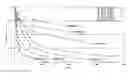
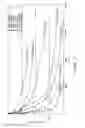
FIG. 1 is a graph showing the change in resistance with changing force for each of seven different examples (see section entitled, “Examples” below) of the material of the invention; and
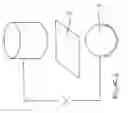
FIG. 2 is a schematic representation of the test electrode used to collect the data represented in the graphs of FIG. 1.
DETAILED DESCRIPTION OF ILLUSTRATIVE EXAMPLES
In each of the Examples Vale Nickel 123 was mixed with Bayferrox 4330 synthetic magnetite in a Witcobond 781 polyurethane binder. The minimum amount of the composite to form a spreadable coating was applied to fine organza net to form a 40 mm×40 mm sample having a thickness of 0.16 mm. The test electrode used in the Examples is illustrated in FIG. 2 and comprised an upper electrode 1 in the form of a 5 mm diameter gold plated rod conductor, a lower electrode 2 in the form of a silver plated metal disc 10 mm in diameter and the sample 3. The upper and lower electrodes are brought into contact with the sample 3, and a potential difference was applied through the electrodes 1, 2 to the sample. An increasing force was applied to the sample 3 by the electrodes 1, 2. The applied force was measured. The change in current was measured and the changing resistance calculated
Example 1
10 g Nickel 123 were mixed with 10 g synthetic magnetite and 16.0 g of polyurethane binder.
Example 2
10 g Nickel 123 were mixed with 6 g synthetic magnetite and 10.0 g of polyurethane binder.
Example 3
10 g Nickel 123 were mixed with 5 g synthetic magnetite and 8.5 g of polyurethane binder.
Example 4
10 g Nickel 123 were mixed with 4 g synthetic magnetite and 7.0 g of polyurethane binder.
Example 5
10 g Nickel 123 were mixed with 2 g synthetic magnetite and 5.5 g of polyurethane binder.
Example 6
10 g Nickel 123 were mixed with 0.6 g synthetic magnetite and 4.0 g of polyurethane binder.
Example 7
10 g Nickel 123 were mixed with 0.2 g synthetic magnetite and 3.5 g of polyurethane binder.
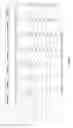
Table 1 and the graphs of FIG. 1 illustrate the effect on resistance of changing the force applied to the composites of Examples 1 to 7 when a potential difference of 5 volts is applied thereto.
As can be seen, Example 7 is most sensitive to changes in applied force, that is the resistance of the material of Example 7 changes the most per unit of force applied.
For each example where no force is applied the start resistance is substantially infinite, that is the material of each example behaves as an insulator. For the materials of each of the Examples 1 to 7, the response to the application of an increasing force is a significant reduction in resistance.
The curve for each of the Examples 1 to 7 exhibits a rapid decrease in resistance upon the initial application of force, followed by a more steady decrease in resistance as the applied force continues to increase.
It is believed that the initial rapid decrease in resistance of the composite material is due to field assisted tunnelling from the spikes of the spiky nickel particles, and that the steady decrease in resistance is due to standard tunnelling and hopping conduction associated with the synthetic magnetite particles. This is borne out by the results which show that where the composite includes the greater proportion of synthetic magnetite the more rapid the change in resistance upon application of a force occurs for a smaller range of resistance, after which the rate of change of resistance for an increasing force decreases.
In the region of the curve where the relationship between applied force and resistance is not as marked it is believed that percolative conduction predominates, percolative conduction including standard tunnelling conduction and hopping conduction.
The two distinct characteristics exhibited by the material of the invention make it suitable for different uses. In the part of the curve where resistance changes very rapidly the material may function as a switch, whereas in the part of the curve where the change in resistance is much slower the material may be used for sensing. It is conceivable that the material could be used to provide a switched sensor, that is the material may sense a parameter up to a threshold and when the threshold is exceeded switch an electric circuit on or off.
It has been found that the noise associated with signals passing through the material of the invention as compared to the material of GB2450587 is much reduced, in both parts of the curve, although noise is greater in part of the region of the curve where change in resistance is more rapid.
Noise and Phases of Conduction
The materials of the invention all exhibit a similar noise profile which is understood to relate to the conduction mechanism. Each Example exhibits the same three phases of operation and each phase of operation has a distinctive type of conduction.
Phases of Conduction
Phase 1—this phase occurs during the initial contact with the surface of the material. In this phase the contact force is very low, there is very low conduction (hence low current density) and very high resistance. The mode of conduction is understood to be standard tunnelling and hopping conduction.
Phase 2—As the force on the material increases the material operates in the second phase. In phase 2 there is a very rapid, non-linear drop in resistance (and hence an increase in current density) as the pressure increases. In phase 2 the mode of conduction is predominantly field enhanced tunnelling. The increasing force brings the particles sufficiently close together and the current density increasing sufficiently for the spikes of the spiky nickel to exhibit field enhanced tunnelling. The noise level increases as the material switches from phase 1 to phase 2 and continues to increase until a peak is reached.
Phase 3—The pressure on the material is increased still further. The increased pressure causes the conductive particles to come closer together, so close in fact that the mechanism of standard tunnelling and hopping conduction once again predominates. Noise levels fall dramatically as the mode of conduction changes from field enhanced tunnelling to standard tunnelling and hopping conduction.
The noise profile for Examples 1 and 7 was assessed by viewing a trace on an oscilloscope that was connected to the test electrode as the force on the sample was increased.
For both Examples 1 and 7, phase 1 conduction commenced above 109 ohms.
For Example 1, the change over from conduction phase 1 to conduction phase 2 occurs at about 109 ohms. The change over from phase 2 conduction to phase 3 conduction occurs at about 108 ohms.
For Example 7, the change over from conduction phase 1 to conduction phase 2 occurs at about 103 ohms. The change over from phase 2 conduction to phase 3 conduction occurs at about 101 ohms.
Claims
1. A polymer composition comprising at least one substantially non-conductive elastomeric polymer binder and at least first and second electrically conductive fillers, wherein the conductivity of the polymer composition in an unstressed state is related to the conductivity of the elastomeric non-conductive polymer binder and in a stressed state to the conductivity resulting from the presence of the at least first and second electrically conductive fillers in the composition, wherein the first electrically conductive filler is comprised of particles having a void bearing structure, and the second electrically conductive filler is comprised of particles which are substantially spherical in shape.
2. A polymer composition according to claim 1, wherein the second electrically conductive filler is comprised of magnetite.
3. A polymer composition according to claim 2, wherein the magnetite is synthetic magnetite and/or naturally occurring magnetite processed such that the particles are substantially spherical in shape.
4. A polymer composition according to claim 1, wherein the particle size of the magnetite is five micron or less.
5. A polymer composition according to claim 4, wherein the particle size of the magnetite is less than one micron.
6. A polymer composition according to claim 5, wherein the particle size of the magnetite is between 0.1 and 0.3 micron.
7. A polymer composition according to claim 6, wherein the particle size of the magnetite is around 0.2 micron.
8. A polymer composition according to claim 1, wherein the first electrically conductive filler is spiky nickel.
9. A polymer composition according to claim 8, wherein the particle size of the spiky nickel is around 3 micron.
10. A polymer composition according to claim 8, wherein the form of spiky nickel is nickel 123 or nickel 255.
11. A polymer composition according to claim 1, wherein the polymer binder is one of: polyurethane, polyvinyl acetate, polyvinyl chloride, an acrylic polymer, natural rubber and silicone.
12. A force sensor comprising a polymer composition comprising at least one substantially non-conductive elastomeric polymer binder and at least first and second electrically conductive fillers, wherein the conductivity of the polymer composition in an unstressed state is related to the conductivity of the elastomeric non-conductive polymer binder and in a stressed state to the conductivity resulting from the presence of the at least first and second electrically conductive fillers in the composition, wherein the first electrically conductive filler is comprised of particles having a void bearing structure, and the second electrically conductive filler is comprised of particles which are substantially spherical in shape and electrical connections thereto.
13. A force sensor according to claim 12, wherein the second electrically conductive filler is comprised of magnetite.
14. A force sensor according to claim 12, wherein the magnetite is synthetic magnetite and/or naturally occurring magnetite processed such that the particles are substantially spherical in shape.
15. A force sensor according to claim 12, wherein the particle size of the magnetite is five micron or less.
16. A force sensor according to claim 12, wherein the particle size of the magnetite is less than one micron.
17. A force sensor according to claim 16, wherein the particle size of the magnetite is between 0.1 and 0.3 micron.
18. A force sensor according to claim 17, wherein the particle size of the magnetite is around 0.2 micron.
19. A force sensor according to claim 12, wherein the first electrically conductive filler is spiky nickel.
20. A force sensor according to claim 19, wherein the particle size of the spiky nickel is around 3 micron.
21. A force sensor according to claim 19, wherein the form of spiky nickel is nickel 123 or nickel 255.
22. A force sensor according to claim 12, wherein the polymer binder is one of: polyurethane, polyvinyl acetate, polyvinyl chloride, an acrylic polymer, natural rubber and silicone.
Images & Drawings included:
Sources:
- United States Patent and Trademark Office - verify current appl. status at the USPTO↗
Similar patent applications:
- » 20120326094
Conductive polymer, conductive polymer composition, conductive polymer layer, and organic photoelectric device including the conductive polymer layer - » 20110253946
Conductive polymer, conductive polymer composition, conductive polymer organic film, and organic photoelectric device including the same - » 20250197554
THERMALLY CONDUCTIVE POLYMER COMPOSITION, MATERIAL FOR FORMING THERMALLY CONDUCTIVE POLYMER COMPOSITION, THERMALLY CONDUCTIVE POLYMER - » 20250223439
THERMALLY CONDUCTIVE POLYMER COMPOSITION, MATERIAL FOR FORMING THERMALLY CONDUCTIVE POLYMER COMPOSITION, AND THERMALLY CONDUCTIVE POLYMER - » 20130012655
CONDUCTIVE POLYMER, QUALITY CONTROL METHOD FOR CONDUCTIVE POLYMER AND METHOD FOR PURIFYING CONDUCTIVE POLYMER TECHNICAL FIELD - » 20110027692
Proton-conductive polymer electrolyte membrane, method of manufacturing the proton-conductive polymer electrolyte membrane, and membrane-electrode assembly and polymer electrolyte fuel cell using the proton-conductive polymer electrolyte membrane - » 20100085686
Agent serving as oxidant and dopant for conductive polymer production, an alcohol solution thereof, a conductive polymer synthesized by using the same, and a solid electrolytic capacitor using the conductive polymer as a solid electrolyte - » 20240254317
DOPANT SOLUTION FOR CONDUCTIVE POLYMER, MONOMER LIQUID FOR PRODUCING CONDUCTIVE POLYMER, CONDUCTIVE COMPOSITION AND METHOD FOR PRODUCING SAME, AND ELECTROLYTIC CAPACITOR AND METHOD FOR PRODUCING SAME - » 20160355636
Oxidant dopant agent for conductive polymer production, and a solution thereof, and a conductive polymer prepared by using either of them, as well as an electrolyte capacitor using the conductive polymer as an electrolyte - » 20060247364
Conductive polymer, conductive polymer compositions and their use
Recent applications in this class:
- » 20250250412 2025-08-07
COMPOSITE SUBSTRATE AND METHOD FOR MANUFACTURING SAME - » 20250250411 2025-08-07
POLYAMIDE MOLDING COMPOSITION AND PREPARATION METHOD AND USE THEREOF - » 20250250410 2025-08-07
SILICONE RUBBER WITH ULTRAVIOLET AGING RESISTANCE AND LOW WATER ABSORPTION, AND PREPARATION METHOD AND APPLICATION THEREOF - » 20250250409 2025-08-07
MODIFIER FOR FLUIDITY OF INORGANIC FILLER, COMPOSITION CONTAINING INORGANIC FILLER, AND HEAT-CONDUCTIVE SILICONE SHEET - » 20250243340 2025-07-31
SYNTHESIS OF MELAMINE POLYMER MODIFIED ZINC OXIDE NANOPARTICLES AS A CORROSION INHIBITOR - » 20250223422 2025-07-10
FLAME-RETARDANT RUBBER COMPOSITION AND GASKET - » 20250215191 2025-07-03
COPPER-CHROMIUM OXIDE SPINEL, AND RESIN COMPOSITION AND RESIN MOLDED ARTICLE THEREOF - » 20250206915 2025-06-26
RESIN COMPOSITION, PREPREG, RESIN SHEET, LAMINATE, METAL FOIL-CLAD LAMINATE, AND PRINTED WIRING BOARD - » 20250197598 2025-06-19
DIRECT MELT-SPUN FULL-MATTE HIGH-VISCOSITY PET/LOW-VISCOSITY PET TWO-COMPONENT ELASTIC FIBER AND PREPARATION METHOD THEREFOR - » 20250197597 2025-06-19
A PLASTIC PRODUCT