Double-working-medium expander used for two-stage organic Rankine cycle
US20180187549A1
2018-07-05
15/739,760
2015-07-24
✅ Patent granted
US 10,801,324 B2
2020-10-13
WO; PCT/CN2015/085081; 20150724
WO; WO2017/012130; 20170126
Deming Wan
George G. Wang | Bei & Ocean
2035-07-24
Abstract:
A double-working-medium expander used for a two-stage organic Rankine cycle, comprising a cylinder body, a rotor disposed inside the cylinder body and provided with a plurality of slip sheets in a radial direction of the cylinder body, and a rotary shaft fixedly connected to the center of the rotor, wherein, the cylinder body is of an annular structure formed by two semi-oval structures which are in butt joint with unequal semi-major axes and equal semi-minor axes; the outer peripheral surface of the rotor can be rotationally tangent to the inner peripheral surface of the cylinder body at the butt joint position of the two semi-oval structures of the cylinder body; a low-temperature cycle volume for expanding the low-temperature working medium with a large flow and a small expansion ratio and a high-temperature cycle volume for expanding the high-temperature working medium with a small flow and a large expansion ratio are formed among two sides of the rotor and the cylinder body, respectively; and, a first fluid inlet and a first fluid outlet, which are arranged on the wall of the cylinder body, are communicated with the low-temperature cycle volume, and a second fluid inlet and a second fluid outlet, which are arranged on the wall of the cylinder body, are both communicated with the high-temperature cycle volume. In the present invention, two working mediums in the two-stage organic Rankine cycle can do expansion work in an expansion mechanism.
Inventors:
- Gequn SHU 8 🇨🇳 Tianjin, China
- Lingfeng SHI 1 🇨🇳 Tianjin, China
- Hua TIAN 4 🇨🇳 Tianjin, China
- Guangdal HUANG 1 🇨🇳 Tianjin, China
- Xiaoya LI 1 🇨🇳 Tianjin, China
- Guangdai Huang 1 🇨🇳 Tianjin, China
Assignee:
- TIANJIN UNIVERSITY 274 🇨🇳 Tianjin, China
Applicant:
Interested in similar patents?
Get notified when new applications in this technology area are published.
Classification:
F01C1/3445 » CPC further
Rotary-piston machines or engines having the characteristics covered by two or more groups , , , or having the characteristics covered by one of these groups together with some other type of movement between co-operating members having the movement defined in group or and relative reciprocation between the co-operating members with vanes reciprocating with respect to the inner member the inner and outer member being in contact along one line or continuous surface substantially parallel to the axis of rotation the vanes having the form of rollers, slippers or the like
F04C2250/30 » CPC further
Geometry of the stator
F04C2/22 IPC
Rotary-piston machines or pumps of internal-axis type with equidirectional movement of co-operating members at the points of engagement, or with one of the co-operating members being stationary, the inner member having more teeth or tooth-equivalents than the outer member
F02B55/14 IPC
Internal-combustion aspects of rotary pistons; Outer members for co-operation with rotary pistons Shapes or constructions of combustion chambers
F01C1/44 IPC
Rotary-piston machines or engines having the characteristics covered by two or more groups , , , or having the characteristics covered by one of these groups together with some other type of movement between co-operating members having the movement defined in group or and having a hinged member with vanes hinged to the inner member
F04C11/00 IPC
Combinations of two or more machines or pumps, each being of rotary-piston or oscillating-piston type ; Pumping installations
B60T17/02 IPC
Component parts, details, or accessories of power brake systems not covered by groups , or , or presenting other characteristic features Arrangements of pumps or compressors, or control devices therefor
F04C28/22 IPC
Control of, monitoring of, or safety arrangements for, pumps or pumping installations specially adapted for elastic fluids characterised by varying the volume of the working chamber by changing the eccentricity between cooperating members
F02G5/04 IPC
Profiting from waste heat of combustion engines, not otherwise provided for; Profiting from waste heat of exhaust gases in combination with other waste heat from combustion engines
F02G1/053 IPC
Hot gas positive-displacement engine plants of closed-cycle type the engine being operated by expansion and contraction of a mass of working gas which is heated and cooled in one of a plurality of constantly communicating expansible chambers, e.g. Stirling cycle type engines Component parts or details
F01C1/3446 » CPC main
Rotary-piston machines or engines having the characteristics covered by two or more groups , , , or having the characteristics covered by one of these groups together with some other type of movement between co-operating members having the movement defined in group or and relative reciprocation between the co-operating members with vanes reciprocating with respect to the inner member the inner and outer member being in contact along more than one line or surface
F02G1/0535 » CPC further
Hot gas positive-displacement engine plants of closed-cycle type the engine being operated by expansion and contraction of a mass of working gas which is heated and cooled in one of a plurality of constantly communicating expansible chambers, e.g. Stirling cycle type engines; Component parts or details Seals or sealing arrangements
F01C1/344 IPC
Rotary-piston machines or engines having the characteristics covered by two or more groups , , , or having the characteristics covered by one of these groups together with some other type of movement between co-operating members having the movement defined in group or and relative reciprocation between the co-operating members with vanes reciprocating with respect to the inner member
F01C21/18 » CPC further
Component parts, details or accessories not provided for in groups - Arrangements for admission or discharge of the working fluid, e.g. constructional features of the inlet or outlet
F02G5/02 » CPC further
Profiting from waste heat of combustion engines, not otherwise provided for Profiting from waste heat of exhaust gases
Description
TECHNICAL FIELD
The present invention relates to a fluid expander, in particular to a double-working-medium expander used for a two-stage organic Rankine cycle by using waste heat of an internal combustion engine (hereinafter referred to as IC engine).
BACKGROUND OF THE PRESENT INVENTION
For waste heat recovery of an internal combustion engine, the organic Rankine cycle becomes one of main recovery technologies due to its advantages of high efficiency, high adaptability, stable operation and the like. In order to further improve the recovery efficiency of exhaust gas and engine coolant, two-stage organic Rankine cycle is adopted as an effective way in the IC engine, Which uses a high-temperature organic Rankine cycle to adapt to waste heat of high-grade exhaust gas and uses low-temperature organic Rankine cycle to adapt the low-grade engine coolant. In the two-stage organic Rankine cycle, both the high-temperature-cycle and the low-temperature cycle require expansion devices to convert fluid energy into mechanical work, that is, the two-stage organic Rankine cycle has a high-temperature expander and a low-temperature expander. Since automotive IC engine is the most common type of IC engine, miniaturization and light weight become important requirements for the recovery device. Furthermore, each expander requires a set of expander auxiliary systems such as lubricating systems, sealing systems, cooling systems, transmission systems, which greatly increases the complexity of the equipment and is not good for the miniaturization and light weight of the equipment. Therefore, it is necessary to propose an expansion mechanism for realizing expansion work processes of different high-temperature and low-temperature working mediums. This expansion mechanism may be referred to as a double-working-medium expander. On one hand, the double-working-medium expander of the present invention performs expansion work with different working mediums in an expansion machine, so that only one set of expander auxiliary systems such as a lubricating system, a sealing system, a cooling system, a transmission system and the like is required, and it is advantageous for the miniaturization and light weight of the device. On the other hand, high-temperature and low-temperature expansion effects can be complementary with each other, when the power generation is insufficient in one of the high-temperature and low-temperature expansion processes under particular working conditions, the output power can be still driven by the other one.
SUMMARY OF THE PRESENT INVENTION
The present invention is to provide a double-working-medium expander used for a two-stage organic Rankine cycle, which can integrate a high-temperature expander and a low-temperature expander in a two-stage organic Rankine cycle system as a whole.
The present invention employs the following technical solutions. A double-working-medium expander used for a two-stage organic Rankine cycle is provided, including a cylinder body, a rotor disposed inside the cylinder body and provided with a plurality of slip sheets in a radial direction of the cylinder body, and a rotary shaft fixedly connected to the center of the rotor, wherein the cylinder body is of an annular structure formed by two semi-oval structures which are in butt joint with unequal semi-major axes and equal semi-minor axes; the outer peripheral surface of the rotor can be rotationally tangent to the inner peripheral surface of the cylinder body at the butt joint position of the two semi-oval structures of the cylinder body; a low-temperature cycle volume for expanding the low-temperature working medium with a large flow and a small expansion ratio and a high-temperature cycle volume for expanding the high-temperature working medium with a small flow and a large expansion ratio are formed among two sides of the rotor and the cylinder body, respectively; and, a first fluid inlet and a first fluid outlet, which are arranged on the cylinder body wall, are communicated with the low-temperature cycle volume, and a second fluid inlet and a second fluid outlet, which are arranged on the cylinder body wall, are both communicated with the high-temperature cycle volume.
The rotor and the rotary shaft are fixedly connected to each other by a key structure.
A plurality of slide slots are formed on the rotor along the radial direction of the rotor, openings of the slide slots are located on the peripheral wall of the rotor, and the slip sheets can be inserted into the slide slots along the radial direction in a freely sliding manner.
Profile equations of the two semi-oval structures are respectively as follows:
ρ = r 1 ( r 1 R 1 ) 2 sin 2 Φ + cos 2 Φ and ρ = r 2 ( r 2 R 2 ) 2 sin 2 Φ + cos 2 Φ ,
where ρ is a radius vector of a curve, ϕ is a coordinate polar angle of the radius vector, r1 and r2 are major radii of the arc portions, and R1 and R2 are minor radii of the arc portions, respectively.
The diameters of the first fluid inlet and the second fluid inlet are proportional to the flow values of the working medium entering the low-temperature cycle volume and the high-temperature cycle volume.
The double-working-medium expander used for a two-stage organic Rankine cycle provided by the present invention integrates a high-temperature expander and a low-temperature expander in a two-stage organic Rankine cycle as a whole, and only requires one set of expander auxiliary systems such as a lubricating system, a sealing system, a cooling system and a transmission system; the present invention applies a slip-sheet expander to make two working mediums expanding simultaneously in a same device, so that the traditional expander having two expanders and two sets of auxiliary systems can be avoided. Consequently, the cycle components can be effectively spatial arranged, the weight of a waste heat recovery device can be reduced, and the fuel consumption by the device weight can be reduced. In the present invention, two working mediums in the two-stage organic Rankine cycle can do expansion work in an expansion mechanism, which is advantageous for the miniaturization and light weight of the device.
BRIEF DESCRIPTION OF THE DRAWINGS
FIG. 1 is an overall structural diagram of a double-working-medium expander according to the present invention;
FIG. 2 is an overall structural diagram of a cylinder body according to the present invention;
FIG. 3 is a front structural diagram of the cylinder body according to the present invention; and
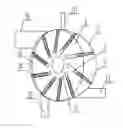
FIG. 4 is an overall structural diagram of a rotor according to the present invention; in which:
1: rotor; 2: cylinder body;
3: slide slot; 4: slip sheet;
5: rotary shaft; 6: low-temperature cycle volume;
7: high-temperature cycle volume; 8: first fluid inlet;
9: first fluid outlet; 10: second fluid inlet;
11: second fluid outlet; and, 12: key structure.
DETAILED DESCRIPTION OF THE PRESENT INVENTION
The double-working-medium expander used for a two-stage organic Rankine cycle of the present invention will be described below in detail by embodiments with reference to the accompanying drawings.
As shown in FIGS. 1, 2 and 3, the double-working-medium expander used for a two-stage organic Rankine cycle of the present invention comprises a cylinder body 2, a rotor 1 disposed inside the cylinder body 2 and provided with a plurality of slip sheets 4 in a radial direction of the cylinder body 2, and a rotary shaft 5 fixedly connected to the center of the rotor 1, and the rotor 1 and the rotary shaft 5 are fixedly connected to each other by a key structure 12. In particular, the cylinder body 2 is of an annular structure formed by two semi-oval structures which are in butt joint with unequal semi-major axes and equal semi-minor axes. Profile equations of the two semi-oval structures are respectively as follows:
ρ = r 1 ( r 1 R 1 ) 2 sin 2 Φ + cos 2 Φ and ρ = r 2 ( r 2 R 2 ) 2 sin 2 Φ + cos 2 Φ ,
Wherein, ρ is a radius vector of a curve, ϕ is a coordinate polar angle of the radius vector, r1 and r2 are major radii of the arc portions, and R1 and R2 are minor radii of the arc portions, respectively.
The outer peripheral surface of the rotor 1 can be rotationally tangent to the inner peripheral surface of the cylinder body 2 at the butt joint position of the two semi-oval structures of the cylinder body 2; a crescent-shaped low-temperature cycle volume 6 for expanding the low-temperature working medium with a large flow and a small expansion ratio and a crescent-shaped high-temperature cycle volume 7 for expanding the high-temperature working medium with a small flow and a large expansion ratio are formed among two sides of the rotor 1 and the cylinder body 2, respectively; and, a first fluid inlet 8 and a first fluid outlet 9, which are arranged on the wall of the cylinder body 2, are communicated with the low-temperature cycle volume 6, and a second fluid inlet 10 and a second fluid outlet 11, which are arranged on the wall of the cylinder body 2, are both communicated with the high-temperature cycle volume 7. The diameters of the first fluid inlet 8 and the second fluid inlet 10 are proportional to the flow values of the working medium entering the low-temperature cycle volume 6 and the high-temperature cycle volume 7. In the low-temperature cycle volume 6 and the high-temperature cycle volume 7, the high-temperature cycle volume 7 having a large volume change rate adapts to fluid having a large expansion ratio, while the low-temperature cycle volume 6 having a small volume change rate adapts to fluid having a small expansion ratio.
In a preferred working medium combination of the two-stage organic Rankine cycle, the high-temperature working medium (e.g., methylbenzene) has the characteristics of small flow and large expansion ratio, while the low-temperature working medium (e.g., R143a) has the characteristics of large flow and small expansion ratio. Therefore, the high-temperature working medium enters the second fluid inlet 10 for volume expanding, and then is discharged from the second fluid inlet 11, and the low-temperature working medium enters the first fluid inlet 8 for volume expanding, and is discharged from the first fluid outlet 9.
As shown in FIG. 4, a plurality of slide slots 3 are formed on the rotor 1 along the radial direction of the rotor, openings of the slide slots 3 are located on the peripheral wall of the rotor 1, and the slip sheets 4 can be inserted into the slide slots 3 along the radial direction in a freely sliding manner. During the rotation of the rotor 1, the slip sheets 4 are thrown out from the slide slots 3 due to a centrifugal force, and the ends of the slip sheets 4 are closely attached onto the inner surface of the cylinder body 2 so as to divide the crescent-shaped space into a plurality of sector-shaped small volumes.
As the double-working-medium expander, the present invention integrates a high-temperature expander and a low-temperature expander in a two-stage organic Rankine cycle as a whole, and only requires one set of expander auxiliary systems such as a lubricating system, a sealing system, a cooling system and a transmission system; the present invention applies a slip-sheet expander to make two working mediums expanding simultaneously in a same device, so that the traditional expander having two expanders and two sets of auxiliary systems can be avoided. Consequently, the recycling components can be effectively spatial arranged, the weight of a waste heat recovery device can be reduced, and the fuel consumption of the recovery device can be reduced. In the present invention, two working mediums in the two-stage organic Rankine cycle can do expansion work in an expansion mechanism, which is advantageous for the miniaturization and light weight of the device.
As a double-working-medium expansion device, the present invention may be specifically used in the two-stage organic Rankine cycle of a portable IC engine. In the case of the portable internal combustion engine having a limited space for a waste heat device, the present invention integrates the high-temperature and low-temperature expansion devices as a whole, and only requires one set of expander auxiliary systems such as a lubricating system, a sealing system, a cooling system and a transmission system, so that the traditional expander having two expanders and two sets of auxiliary systems can be avoided. Consequently, the cycle components can be effectively spatial arranged, the weight of a waste heat recovery device can be reduced, and the fuel consumption by the device weight can be reduced. For example, for a diesel engine having a heat source temperature of 470° C., a pair of high-temperature working medium and low-temperature working medium having good performance includes methylbenzene/R143a, and cyclohexane/R143a and the like, where the high-temperature working medium has the characteristics of small flow and large expansion ratio while the low-temperature working medium has the characteristics of large flow and small expansion ratio. In the present invention, different profile designs on two sides of the cylinder body and the design of two pairs of different inlet and outlet can well adapt to these characteristics, and the two working mediums can do expansion work in a same expansion device.
Claims
We claim:1. A double-working-medium expander used for a two-stage organic Rankine cycle, comprising a cylinder body (2), a rotor (1) disposed inside the cylinder body (2) and provided with a plurality of slip sheets (4) in a radial direction of the cylinder body (2), and a rotary shaft (5) fixedly connected to the center of the rotor (1), wherein, the cylinder body (2) is of an annular structure formed by two semi-oval structures which are in butt joint with unequal semi-major axes and equal semi-minor axes; the outer peripheral surface of the rotor (1) can be rotationally tangent to the inner peripheral surface of the cylinder body (2) at the butt joint position of the two semi-oval structures of the cylinder body (2); a low-temperature cycle volume (6) for expanding the low-temperature working medium with a large flow and a small expansion ratio and a high-temperature cycle volume (7) for expanding the high-temperature working medium with a small flow and a large expansion ratio are formed among two sides of the rotor (1) and the cylinder body (2), respectively; and, a first fluid inlet (8) and a first fluid outlet (9), which are arranged on the wall of the cylinder body (2), are communicated with the low-temperature cycle volume (6), and a second fluid inlet (10) and a second fluid outlet (11), which are arranged on the wall of the cylinder body (2), are both communicated with the high-temperature cycle volume (7).
2. The double-working-medium expander used for a two-stage organic Rankine cycle according to claim 1, wherein the rotor (1) and the rotary shaft (5) are fixedly connected to each other by a key structure (12).
3. The double-working-medium expander used for a two-stage organic Rankine cycle according to claim 1, wherein a plurality of slide slots (3) are formed on the rotor (1) along the radial direction, openings of the slide slots (3) are located on the peripheral wall of the rotor (1), and the slip sheets (4) can be inserted into the slide slots (3) along the radial direction in a freely sliding manner.
4. The double-working-medium expander used for a two-stage organic Rankine cycle according to claim 1, wherein the profile equations of the two semi-oval structures are respectively as follows:
ρ = r 1 ( r 1 R 1 ) 2 sin 2 Φ + cos 2 Φ and ρ = r 2 ( r 2 R 2 ) 2 sin 2 Φ + cos 2 Φ ,
Wherein, ρ is a radius vector of a curve, ϕ is a coordinate polar angle of the radius vector, r1 and r2 are major radii of the arc portions, and R1 and R2 are minor radii of the arc portions, respectively.
5. The double-working-medium expander used for a two-stage organic Rankine cycle according to claim 1, wherein the diameters of the first fluid inlet (8) and the second fluid inlet (10) are proportional to the flow values of the working medium entering the low-temperature-stage cycle volume (6) and the high-temperature-stage cycle volume (7).
Images & Drawings included:



Sources:
- United States Patent and Trademark Office - verify current appl. status at the USPTO↗
Recent applications in this class:
- » 20190145261 2019-05-16
Six-stroke rotary-vane internal combustion engine - » 20180106152 2018-04-19
Hydraulic machine - » 20150330219 2015-11-19
PNEUMATIC TOOL MOTOR ROTOR WITH THRUST AUGMENTATION EFFECT - » 20150118088 2015-04-30
Fluid Regulating Valve - » 20140356213 2014-12-04
Rotary machine - » 20130251583 2013-09-26
Rotor and hydraulic motor including the rotor - » 20130202471 2013-08-08
Cylinder dividing mechanism of a pneumatic tool - » 20080247897 2008-10-09
Hydrogen G-cycle rotary internal combustion engine - » 20060073031 2006-04-06
Low input torque rotor for vane pump - » 20050256512 2005-11-17
Surgical pneumatic motor
Recent applications for this Assignee:
- » 20250282927 2025-09-11
INSULATING MATERIAL, AND PREPARATION METHOD AND USE THEREOF - » 20250273962 2025-08-28
METHOD AND DEVICE FOR CONTROLLING MICROGRID OF HYDROMETALLURGICAL PLANT BASED ON ENERGY STORAGE FREQUENCY CONVERTER - » 20250273957 2025-08-28
HYBRID LOAD-ENERGY STORAGE SYSTEM APPLICABLE TO MICROGRID OF HYDROMETALLURGICAL PLANT, AND CONTROL METHOD THEREFOR - » 20250265314 2025-08-21
TARGET RECOGNITION METHODS BASED ON ELECTROENCEPHALOGRAM SIGNALS IN NATURAL READING ENVIRONMENT - » 20250261879 2025-08-21
METHOD FOR GAIT INFORMATION PROCESSING - » 20250231078 2025-07-17
PIPELINE SPANNING OR SETTLEMENT BENDING DETECTION DEVICE AND METHOD - » 20250229409 2025-07-17
ROTARY TRANSLATIONAL POSITIONER WITH MULTIPLE DEGREES OF FREEDOM - » 20250229368 2025-07-17
FULLY AUTOMATIC WELDING FORMING EQUIPMENT FOR SPECIAL-SHAPED THREE-DIMENSIONAL WORKPIECE AND WELDING METHOD - » 20250197330 2025-06-19
BISPHENOL A PREPARATION PROCESS AND DEVICE THEREOF - » 20250146435 2025-05-08
PRECOMBUSTION CHAMBER IGNITER AND COLD START CONTROL METHOD FOR METHANOL ENGINE