HYDROSILYLATION REACTION CATALYST
US20180200703A1
2018-07-19
15/744,622
2016-07-06
Abstract:
A hydrosilylation reaction catalyst prepared from: a prescribed transition metal compound such as iron pivalate, cobalt pivalate, iron acetate, cobalt acetate, or nickel acetate; a ligand comprising t-butylisocyanide or another isocyanide compound; and a borane compound, Grignard reagent, alkoxysilane, or other prescribed promoter makes it possible to promote a hydrosilylation reaction under moderate conditions, and has exceptional handling properties and storage stability.
Inventors:
- Hideo Nagashima 15 🇯🇵 Fukuoka-shi, Japan
- Koji SAKUTA 29 🇯🇵 Annaka-shi, Japan
- Yusuke SUNADA 7 🇯🇵 Fukuoka-shi, Japan
- Atsushi TAHARA 3 🇯🇵 Fukuoka-shi, Japan
- Daisuke NODA 6 🇯🇵 Fukuoka-shi, Japan
Assignee:
- SHIN-ETSU CHEMICAL CO., LTD 4,500 🇯🇵 Tokyo, Japan
- KYUSHU UNIVERSITY, NATIONAL UNIVERSITY CORPORATION 180 🇯🇵 Fukuoka-shi, Fukuoka, Japan
Interested in similar patents?
Get notified when new applications in this technology area are published.
Classification:
B01J31/2208 » CPC main
Catalysts comprising hydrides, coordination complexes or organic compounds containing coordination complexes; Organic complexes the ligands containing oxygen or sulfur as complexing atoms Oxygen, e.g. acetylacetonates
B01J31/0274 » CPC further
Catalysts comprising hydrides, coordination complexes or organic compounds containing organic compounds or metal hydrides containing elements other than those covered by - containing silicon
B01J2531/845 » CPC further
Additional information regarding catalytic systems classified in; Complexes comprising metals of Group VIII as the central metal; Metals of the iron group Cobalt
B01J2231/323 » CPC further
Catalytic reactions performed with catalysts classified in; Addition reactions at carbon centres, i.e. to either C-C or C-X multiple bonds; Addition reactions to C=C or C-C triple bonds Hydrometalation, e.g. bor-, alumin-, silyl-, zirconation or analoguous reactions like carbometalation, hydrocarbation
B01J2531/842 » CPC further
Additional information regarding catalytic systems classified in; Complexes comprising metals of Group VIII as the central metal; Metals of the iron group Iron
B01J31/22 IPC
Catalysts comprising hydrides, coordination complexes or organic compounds containing coordination complexes Organic complexes
B01J31/02 IPC
Catalysts comprising hydrides, coordination complexes or organic compounds containing organic compounds or metal hydrides
C07F7/08 IPC
Compounds containing elements of Groups 4 or 14 of the Periodic System; Silicon compounds Compounds having one or more C—Si linkages
Description
TECHNICAL FIELD
This invention relates to a hydrosilylation reaction catalyst and more particularly, to a hydrosilylation reaction catalyst formed from a metal compound serving as a catalyst precursor, an isocyanide compound serving as a ligand component, and a promoter.
BACKGROUND ART
Hydrosilylation reaction which is addition reaction of a Si—H functional compound to a compound having a carbon-carbon double bond or triple bond is a useful method for the synthesis of organosilicon compounds and an industrially important synthesis reaction.
As the catalyst for hydrosilylation reaction, Pt, Pd and Rh compounds are known. Among others, Pt compounds as typified by Speier's catalyst and Karstedt's catalyst are most commonly used.
While several problems arise with reaction in the presence of Pt compounds as the catalyst, one problem is that upon addition of a Si—H functional compound to terminal olefin, a side reaction due to internal rearrangement of olefin takes place. Since this system does not exert addition reactivity to the internal olefin, unreacted olefin is left in the addition product. To drive the reaction to completion, it is necessary to use an excess amount of olefin in advance by taking into account the left by the side reaction.
Another problem is that the selectivity of α- and β-adducts is low depending on the type of olefin.
The most serious problem is that all the center metals Pt, Pd and Rh are quite expensive noble metal elements. As metal compound catalysts which can be used at lower cost are desired, a number of research works have been made thereon.
For example, reaction in the presence of iron-carbonyl complexes (Fe(CO)5, Fe3(CO)12) is known from Non-Patent Document 1, although this reaction requires reaction conditions including as high a temperature as 160° C. or photo-irradiation (Non-Patent Document 2).
For these iron-carbonyl complexes, it is reported in Non-Patent Document 3 and Patent Document 1 that products formed by dehydrogenative silylation are obtained rather than the addition reaction.
Also, Non-Patent Document 4 and Patent Document 2 report a reaction of methylvinyldisiloxane and methylhydrogendisiloxane in the presence of an iron-carbonyl complex coordinated with a cyclopentadienyl group. Since dehydrogenative silylation reaction takes place along with the relevant reaction, the selectivity of addition reaction is low.
Non-Patent Document 5 refers to reaction in the presence of an iron catalyst having a terpyridine ligand. Although PhSiH3 and Ph2SiH2 add to olefins, more useful trialkylsilanes, alkoxysilanes and siloxanes have poor addition reactivity to olefins.
Non-Patent Document 6 reports that from reaction in the presence of an iron catalyst having a terpyridine ligand and a bistrimethylsilylmethyl group, an addition reaction product is obtained in high yields. This method needs some steps until the catalyst is synthesized, including first synthesizing a terpyridine-iron complex as a catalyst precursor and introducing a bistrimethylsilylmethyl group therein at a low temperature, which steps are not easy industrially.
Also, Non-Patent Documents 7 and 8 report iron complexes having a bisiminopyridine ligand. It is disclosed that they exhibit high reactivity to alkoxysilanes and siloxanes under mild conditions.
The reaction using the complex, however, suffers from several problems including low reactivity with internal olefin, the use of sodium amalgam consisting of water-sensitive sodium and highly toxic mercury and requiring careful handling for complex synthesis, low stability of the complex compound itself, a need for a special equipment like a glove box for handling, and a need for storage in an inert gas atmosphere such as nitrogen at low temperature.
Non-Patent Documents 9 to 14 report examples of reaction in the presence of cobalt-carbonyl complexes (e.g., Co2(CO)8), but they are unsatisfactory in the product yield and molar ratio of the catalyst per reactant. No comment is made on the addition reaction of hydrosiloxanes with alkenes.
Also an example of reaction of olefin with trialkylsilane in the presence of a cobalt-carbonyl complex having a trialkylsilyl group is reported in Non-Patent Document 15, but the yield is low and the selectivity is low.
Non-Patent Document 16 reports reaction of olefin with trialkylsilane in the presence of a cobalt-phosphite complex coordinated with a cyclopentadienyl group, and Non-Patent Document 17 reports reaction of olefin with trihydrophenylsilane in the presence of a cobalt complex coordinated with N-heterocyclic carbene. Because of low stability, these complex compounds require a special equipment like a glove box for handling and an inert gas atmosphere and a low temperature for storage.
Also Patent Documents 3 to 6 report iron, cobalt and nickel catalysts having terpyridine, bisiminopyridine and bisiminoquinoline ligands. Like the above-cited Non-Patent Documents 6 to 8, there are problems including industrial difficulty of synthesis of a catalyst precursor or synthesis of the complex catalyst from the precursor, low stability of the complex compound itself, and a need for a special equipment for handling.
Patent Document 7 discloses a method of conducting reaction in the presence of a complex catalyst having a bisiminoquinoline ligand, using Mg(butadiene).2THF or NaEt3BH as the catalyst activator. Likewise, the synthesis is industrially difficult, and the yield of the desired product is less than satisfactory.
Many examples of the nickel complex catalyst are reported. For example, a catalyst having a phosphine ligand (Non-Patent Document 18) lacks in selectivity and requires careful handling and storage.
With a vinylsiloxane-coordinated catalyst (Non-Patent Document 19), a product due to the dehydrogenative becomes predominant, indicating low selectivity of addition reaction.
With an allylphosphine-coordinated catalyst (Non-Patent Document 20), the yield is low, and trihydrophenylsilane is not a reaction substrate of industrial worth.
A metal bisamide catalyst (Non-Patent Document 21) needs careful handling and storage, and dihydrodiphenylsilane is not a reaction substrate of industrial worth.
A catalyst having N-heterocyclocarbene ligand (Non-Patent Document 22) has low selectivity of reaction, and trihydrophenylsilane is not of industrial worth.
Many rhodium complex catalysts are reported. For catalysts having a carbonyl or cyclooctadienyl (COD) group and a N-heterocyclic carbene ligand (Non-Patent Documents 23, 24), for example, there is a need for handling and storage in an inert gas atmosphere because of low stability of these complexes.
Non-Patent Document 25 discloses to conduct reaction in the presence of an ionic liquid in order to enhance reactivity. The step of separating the ionic liquid from the reaction product is necessary. Since the catalyst used therein has a COD group and a N-heterocarbene group as the ligand, the same problems as described above are left.
Also Non-Patent Document 26 reports an exemplary catalyst which allows for preferential progress of dehydrogenation silylation reaction.
Furthermore, Non-Patent Document 27 reports an example in which an aryl isocyanide compound is added to a rhodium complex to form a catalyst, which is used in hydrosilylation reaction without isolation. A study on reactivity with three types of silanes shows that the order of reactivity is from dimethylphenylsilane, which gives the highest yield (yield 81%), next triethylsilane (yield 66%), to triethoxysilane (yield 40%). The reactivity with triethoxysilane which is of the most industrial worth among the three types of silanes is not so high, while the reactivity with siloxanes is reported nowhere.
In addition, the precursor catalyst having a COD group as the ligand requires careful handling and storage.
On the other hand, Non-Patent Document 28 reports that a rhodium catalyst having an acetylacetonato or acetate group enables addition reaction of triethoxysilane in high yields.
Although this method has the advantage of easy storage and handling of the catalyst, no study is made on reactivity with siloxanes which are more useful from the industrial standpoint.
In addition, rhodium is likewise an expensive noble metal element. Its catalytic function must be further increased to a higher activity before it can be used in practice as a platinum substitute.
The catalysts with their application to organopolysiloxanes being borne in mind include a catalyst having a phosphine ligand (Patent Document 8), a catalyst having an aryl-alkyl-triazenide group (Patent Document 9), a colloidal catalyst (Patent Document 10), a catalyst coordinated with a sulfide group (Patent Document 11), and a catalyst coordinated with an amino, phosphino or sulfide group and an organosiloxane group (Patent Document 12).
However, reactivity is empirically demonstrated with respect to only platinum, palladium, rhodium and iridium which are expensive metal elements. Thus the method is not regarded cost effective.
In Examples of Patent Documents 13 and 14, only well-known platinum catalysts are demonstrated to exert a catalytic effect while the structure which is combined with another metal to exert catalytic activity is indicated nowhere.
Patent Documents 15 to 17 disclose catalysts coordinated with N-heterocyclic carbene. Patent Document 15 does not discuss whether or not the catalyst is effective to hydrosilylation reaction.
Patent Documents 16 and 17 disclose catalysts coordinated with N-heterocyclic carbene and vinylsiloxane, but describe only platinum catalysts in Examples.
In addition, the metal catalysts coordinated with N-heterocyclic carbene require careful handling because the complex compounds have low storage stability.
Patent Documents 18 and 19 disclose ruthenium catalysts coordinated with η6-arene or η6-triene. These catalysts have inferior reactivity to platinum catalysts and require careful handling because the complex compounds have low storage stability.
Patent Documents 20 to 26 disclose a method of mixing a metal salt with a compound which coordinates to the metal and using the product as a catalyst rather than the use of metal complexes as the catalyst. Although these Patent Documents describe the progress of hydrosilylation with several exemplary combinations, the yield and other data are described nowhere, and the extent to which the reaction takes place is not evident. In addition, ionic salts or hydride reducing agents are used as the activator in all examples. Nevertheless, almost all examples exhibit no catalytic activity.
PRIOR ART DOCUMENTS
Patent Documents
-
- Patent Document 1: WO 2013/081794
- Patent Document 2: WO 2010/016416
- Patent Document 3: JP-A 2012-532885
- Patent Document 4: JP-A 2012-532884
- Patent Document 5: JP-A 2013-544824
- Patent Document 6: JP-A 2014-502271
- Patent Document 7: JP-A 2014-503507
- Patent Document 8: JP-A H06-136126
- Patent Document 9: JP-A H06-263780
- Patent Document 10: JP-A H01-315344
- Patent Document 11: JP 3174616
- Patent Document 12: JP-A H07-149780
- Patent Document 13: JP-A 2001-131231
- Patent Document 14: JP 4007467
- Patent Document 15: JP 3599669
- Patent Document 16: JP 3854151
- Patent Document 17: JP 4249702
- Patent Document 18: JP 4934190
- Patent Document 19: JP 5032561
- Patent Document 20: WO 2013/043846
- Patent Document 21: WO 2013/043783
- Patent Document 22: WO 2013/043912
- Patent Document 23: WO 2014/021908
- Patent Document 24: WO 2013/081794
- Patent Document 25: WO 2013/043785
- Patent Document 26: WO 2013/043787
Non-Patent Documents
-
- Non-Patent Document 1: A. N. Nesmeyanov et al., Tetrahedron, 1962, 17, 61
- Non-Patent Document 2: M. S. Wrighton et al., J. Organomet. Chem., 1977, 128, 345
- Non-Patent Document 3: F. Kakiuchi et al., J. Organomet. Chem., 1993, 456, 45
- Non-Patent Document 4: H. Nakazawa et al., J. Am. Chem. Soc., 2012, 134, 804
- Non-Patent Document 5: H. Nakazawa et al., Organometallics, 2012, 31, 3825
- Non-Patent Document 6: P. J. Chirik et al., Organometallics, 2012, 31, 4886
- Non-Patent Document 7: P. J. Chirik et al., J. Am. Chem. Soc., 2004, 126, 13794
- Non-Patent Document 8: P. J. Chirik et al., Science, 2012, 335, 567
- Non-Patent Document 9: A. J. Chalk et al., J. Am. Chem. Soc., 1965, 87, 1133
- Non-Patent Document 10: A. J. Chalk et al., J. Am. Chem. Soc., 1967, 89, 1640
- Non-Patent Document 11: A. J. Chalk et al., J. Organomet. Chem., 1970, 21, 207
- Non-Patent Document 12: B. A. Izmailov et al., J. Organomet. Chem., 1978, 149, 29
- Non-Patent Document 13: N. Sonoda et al., J. Org. Chem., 1987, 52, 4864
- Non-Patent Document 14: S. Murai et al., Chem. Lett., 2000, 14
- Non-Patent Document 15: M. S. Wrighton et al., Inorg. Chem., 1980, 19, 3858
- Non-Patent Document 16: B. E. Grant et al., J. Am. Chem. Soc., 1993, 115, 2151
- Non-Patent Document 17: L. Deng et al., Angew. Chem. Int. Ed., 2013, 52, 10845
- Non-Patent Document 18: M. Umeno et al., J. Organomet. Chem., 1973, 50, 297
- Non-Patent Document 19: I. Kownacki et al., J. Organomet. Chem., 2000, 597, 175
- Non-Patent Document 20: P. Valerga et al., Dalton Trans., 2007, 3000
- Non-Patent Document 21: T. D. Tilley et al., Chem. Commun., 2012, 48, 7146
- Non-Patent Document 22: P. Valerga et al., Organometallics, 2012, 31, 2175
- Non-Patent Document 23: T. A. Nile et al., J. Organomet. Chem., 1977, 137, 293
- Non-Patent Document 24: M. R. Buchmeiser et al., J. Organomet. Chem., 2005, 690, 4433
- Non-Patent Document 25: X. Li et al., J. Organomet. Chem., 2011, 696, 2116
- Non-Patent Document 26: S. P. Nolan et al., Dalton Trans., 2013, 42, 270
- Non-Patent Document 27: J. M. Walters et al., J. Molecular Catalysis, 1985, 29, 201
- Non-Patent Document 28: M. F. Lappert et al., J. Organomet. Chem., 1979, 172, 153
SUMMARY OF THE INVENTION
Problems to be Solved by the Invention
An object of the invention, which has been made under the above-mentioned circumstances, is to provide a hydrosilylation reaction catalyst which helps hydrosilylation reaction take place under mild conditions and is good in handling and shelf storage; and a method for preparing an addition compound by hydrosilylation reaction using the same.
Means for Solving the Problems
Making extensive investigations to attain the above objects, the inventors have found that a catalyst which is obtained using a specific metal compound as the catalyst precursor, an isocyanide compound as the ligand component, and a specific metal or metal compound serving as the promoter exerts a high activity to hydrosilylation reaction and helps addition reaction take place under mild conditions. The invention is predicated on this finding.
The invention provides a catalyst and a method defined below.
- 1. A hydrosilylation reaction catalyst which is prepared from:
(A) at least one metal compound selected from
a neutral metal salt having the formula (1):
(M)l+{(A)m−}n (1)
wherein M is a transition metal element of Groups 7 to 11 in the Periodic Table exclusive of technetium, osmium, platinum and silver, which may be either a mononuclear species consisting of a single transition metal or a polynuclear species consisting of identical or different transition metals, when a compound consisting of an acid and a base is represented by {H+}m(A)m−, A corresponds to the conjugate base (A)m−, and where a plurality of A's are included, they may be identical or different, l is an integer of 1 to 8 and equal to the valence number of the transition metal M, m is an integer of 1 to 3, satisfying l=m×n,
an anionic complex ion having the formula (2):
{(B)j+}k(M)l+{(A)m−}n′ (2)
wherein (B)j+ is at least one selected from a typical metal ion, inorganic ammonium ion, organic ammonium ion, and organic phosphonium ion, M and A are as defined in formula (1), j is an integer of 1 to 3, l and m are as defined in formula (1), n′ is an integer of 2 to 9, satisfying j×k+l=m×n′, the overall molecule being neutral, and
a cationic complex ion having the formula (3):
(M)l+(L)p{(A)m−}n (3)
wherein M and A are as defined in formula (1), L is a neutral ligand, l, m and n are as defined in formula (1), p is an integer of 1 to 6,
(B) at least one ligand selected from isocyanide compounds having the formula (4a) and the formula (4b):
Y1—(NC)q (4a)
wherein Y1 is an optionally substituted C1-C30 monovalent organic group which may be separated by at least one atom selected from oxygen, nitrogen, sulfur and phosphorus, q is an integer of 1 to 3,
R—Si(R6)t{[(OSi(R6)2)]u—R6}v (4b)
wherein R6 is each independently a monovalent organic group selected from an optionally substituted C1-C30 alkyl group which may be separated by at least one atom selected from oxygen, nitrogen, sulfur and phosphorus, alkoxy group, alkenyl group, alkynyl group, aryl group, aralkyl group, and an organic group having the formula (4c):
—Y2—NC (4c)
wherein Y2 is an optionally substituted C1-C30 divalent organic group which may be separated by at least one atom selected from silicon, oxygen, nitrogen, sulfur and phosphorus, one, two or three of the entire groups R6 being an organic group having formula (4c), t is an integer of 0 to 3, u is an integer of 0 to 3, satisfying t+u=3, v is an integer of 1 to 300, and
(C) at least one promoter selected from a metal element selected from typical elements of Groups 1, 2, 12, 13 and 14 in the Periodic Table exclusive of hydrogen, cadmium and mercury, and transition metals of Groups 3 and 4 and silver, and an organometallic compound, metal hydride compound, metal alkoxide, and metal carboxylic acid salt containing said metal element.
- 2. The hydrosilylation reaction catalyst of 1 which is prepared in a hydrosilylation reaction system where an unsaturated aliphatic compound and/or a hydrosilane compound or organohydropolysiloxane compound having a Si—H group is present.
- 3. The hydrosilylation reaction catalyst of 1 or 2 wherein the metal compound has formula (1).
- 4. The hydrosilylation reaction catalyst of any one of 1 to 3 wherein M is at least one element selected from manganese, rhenium, iron, ruthenium, cobalt, rhodium, iridium, nickel, and palladium.
- 5. The hydrosilylation reaction catalyst of 4 wherein M is at least one element selected from manganese, iron, cobalt, and nickel.
- 6. The hydrosilylation reaction catalyst of any one of 1 to 5 wherein the compound consisting of an acid and a base: {H+}m(A)m− is at least one compound selected from hydrogen halide, nitric acid, phosphoric acid, sulfuric acid, perhalogenic acid, carbonic acid, hydrocyanic acid, carboxylic acid, dicarboxylic acid, tricarboxylic acid, sulfonic acid, dithiocarboxylic acid, dithiocarbamic acid, amidine acid, aliphatic alcohol, aromatic alcohol, heterocyclic alcohol, aliphatic thiol, aromatic thiol, organosilanol, ammonia, primary amine, secondary amine, and hydrocarbon.
- 7. The hydrosilylation reaction catalyst of any one of 1 to 5 wherein in formula (1), m is 1, and A is a halogen atom.
- 8. The hydrosilylation reaction catalyst of any one of 1 to 5 wherein in formula (1), m is 1, and A is O-D wherein D is an optionally substituted C1-C20 monovalent organic group which may be separated by at least one atom selected from oxygen, nitrogen, silicon, sulfur and phosphorus.
- 9. The hydrosilylation reaction catalyst of any one of 1 to 5 wherein in formula (1), m is 1, and A is O-E wherein E is a group having the formula (5):
wherein R1 to R3 are each independently hydrogen or an optionally substituted C1-C20 monovalent organic group which may be separated by at least one atom selected from oxygen, nitrogen, silicon, sulfur and phosphorus.
- 10. The hydrosilylation reaction catalyst of any one of 1 to 5 wherein A has the formula (6):
wherein R4 is an optionally substituted C1-C20 monovalent organic group which may be separated by at least one atom selected from oxygen, nitrogen, sulfur and phosphorus, or a monovalent organic group having the formula (6-1):
—(Z)r—R5 (6-1)
wherein Z is an optionally substituted C1-C20 divalent organic group which may be separated by at least one atom selected from oxygen, nitrogen, sulfur, silicon and phosphorus, r is an integer of 0 or 1, R5 is a silyl or polyorganosiloxane group having the formula (6-2):
—{Si(R6)2—R7}s—Si(R6)t{[(OSi(R6)2)]u—R6}v (6-2)
wherein R6 is each independently an optionally substituted C1-C20 alkyl group which may be separated by at least one atom selected from oxygen, nitrogen, sulfur and phosphorus, C1-C20 alkoxy group, C6-C20 aryl group, or C7-C20 aralkyl group, R7 is a C1-C10 divalent hydrocarbon group, s is an integer of 0 or 1, t is an integer of 0 to 3, v is an integer of 0 to 3, satisfying t+v=3, and u is an integer of 1 to 300.
- 11. The hydrosilylation reaction catalyst of any one of 1 to 5 wherein A has the formula (7):
wherein X1 is an oxygen or sulfur atom, X2 is a carbon, oxygen, sulfur or nitrogen atom, g is equal to 3 when X2 is carbon, equal to 2 when X2 is nitrogen, and equal to 1 when X2 is oxygen or sulfur, R9 is an optionally substituted C1-C20 monovalent organic group which may be separated by at least one atom selected from oxygen, nitrogen, sulfur and phosphorus.
- 12. The hydrosilylation reaction catalyst of any one of 1 to 11 wherein the promoter has the formula (8):
(M1)+{(G1)−}1 (8)
wherein M1 is a Group 1 element exclusive of hydrogen, and G1 is hydrogen or a C1-C20 monovalent hydrocarbon group which may contain an organosilicon or ether group, C1-C20 alkoxy group, C6-C20 aryloxy group, C1-C20 organosiloxy group, C1-C20 monoalkylamino group, C1-C20 dialkylamino group, C1-C20 monoalkylmonoorganosilylamino group, or C1-C20 diorganosilylamino group.
- 13. The hydrosilylation reaction catalyst of any one of 1 to 11 wherein the promoter has the formula (9):
(M2)2+{(G2)−}2 (9)
wherein M2 is a Group 2 element or zinc, and G2 is each independently hydrogen, halogen, or a C1-C20 monovalent hydrocarbon group which may contain an organosilicon or ether group, C1-C20 alkoxy group, C6-C20 aryloxy group, C1-C20 organosiloxy group, C1-C20 monoalkylamino group, C1-C20 dialkylamino group, C1-C20 monoalkylmonoorganosilylamino group, or C1-C20 diorganosilylamino group.
- 14. The hydrosilylation reaction catalyst of any one of 1 to 11 wherein the promoter has the formula (10):
(M3)3+{(G3)−}3 (10)
wherein M3 is a Group 13 element, and G3 is each independently hydrogen, halogen, or a C1-C20 monovalent hydrocarbon group which may contain an organosilicon or ether group, C1-C20 alkoxy group, C6-C20 aryloxy group, C1-C20 organosiloxy group, C1-C20 monoalkylamino group, C1-C20 dialkylamino group, C1-C20 monoalkylmonoorganosilylamino group, or C1-C20 diorganosilylamino group.
- 15. The hydrosilylation reaction catalyst of any one of 1 to 11 wherein the promoter has the formula (11):
(M4)4+{(G4)−}4 (11)
wherein M4 is a Group 4 element or Group 14 element exclusive of carbon, and G4 is each independently hydrogen, halogen, or a C1-C20 monovalent hydrocarbon group which may contain an organosilicon or ether group, C1-C20 alkoxy group, C6-C20 aryloxy group, C1-C20 organosiloxy group, C1-C20 monoalkylamino group, C1-C20 dialkylamino group, C1-C20 monoalkylmonoorganosilylamino group, or C1-C20 diorganosilylamino group.
- 16. The hydrosilylation reaction catalyst of any one of 1 to 11 wherein the promoter has the formula (12):
{(J)b+}d{(M5)a+}e{(G5)−}{(a×e)+(b×d)} (12)
wherein (J)b+ is at least one ion selected from Group 15 onium ion, typical metal ion and transition metal ion, M5 is at least one element selected from zinc and Group 13 elements, and G5 is each independently hydrogen, halogen, or a C1-C20 monovalent hydrocarbon group which may contain an organosilicon or ether group, C1-C20 alkoxy group, C6-C20 aryloxy group, C1-C20 organosiloxy group, C1-C20 monoalkylamino group, C1-C20 dialkylamino group, C1-C20 monoalkylmonoorganosilylamino group, or C1-C20 diorganosilylamino group, a is an integer of 1 to 3, b, d and e are each independently an integer of 1 to 2.
- 17. The hydrosilylation reaction catalyst of any one of 1 to 11 wherein the promoter has the formula (13):
(M6)c+(G6)−c (13)
wherein M6 is at least one element selected from Group 1 elements exclusive of hydrogen and silver, and G6 is a group: —OR8, a group: —O—(CO)—R8, or a group: —N(R9)—C(R9)═N(R9), R8 is each independently hydrogen or an optionally substituted C1-C20 monovalent organic group which may be separated by at least one atom selected from oxygen, nitrogen, silicon, sulfur and phosphorus, R9 is each independently hydrogen or an optionally substituted C1-C20 monovalent organic group which may be separated by at least one atom selected from oxygen, nitrogen, silicon, sulfur and phosphorus, and c is an integer of 1 to 2.
- 18. The hydrosilylation reaction catalyst of any one of 1 to 11 wherein the promoter has the formula (14):
M7 (14)
wherein M7 is a zero-valent metal selected from Group 1, 2 and 12 elements exclusive of hydrogen, cadmium and mercury.
- 19. The hydrosilylation reaction catalyst of 13 wherein in formula (9), M2 is magnesium, one G2 is halogen or a C1-C20 alkoxy group, and the other G2 is a C1-C20 monovalent hydrocarbon group which may contain an organosilicon or ether group.
- 20. The hydrosilylation reaction catalyst of 14 wherein in formula (10), M3 is boron or aluminum, and G3 is each independently hydrogen, a C1-C20 monovalent hydrocarbon group or C1-C20 alkoxy group, with the proviso that at least one G3 is hydrogen.
- 21. The hydrosilylation reaction catalyst of 14 wherein in formula (10), M3 is boron or aluminum, and G3 is each independently a C1-C20 monovalent hydrocarbon group, halogen or C1-C20 alkoxy group, with the proviso that at least one G3 is the monovalent hydrocarbon group.
- 22. The hydrosilylation reaction catalyst of 15 wherein in formula (11), M4 is silicon, and G4 is each independently hydrogen, a C1-C20 monovalent hydrocarbon group, C1-C20 alkoxy group, halogen, C1-C20 dialkylamino group or C6-C20 aryloxy group, with the proviso that at least one G4 is hydrogen.
- 23. The hydrosilylation reaction catalyst of any one of 1 to 22 wherein the isocyanide compound of formula (4a) is at least one compound selected from mesityl isocyanide, t-butyl isocyanide, 1-isocyanidoadamantane, cyclohexyl isocyanide, n-butyl isocyanide and xylyl isocyanide.
- 24. A method for preparing an addition compound comprising effecting hydrosilylation reaction of an unsaturated aliphatic compound with a hydrosilane compound or organohydropolysiloxane compound having a Si—H bond in the presence of the hydrosilylation reaction catalyst of any one of 1 to 23.
- 25. The method for preparing an addition compound of 24 wherein the unsaturated aliphatic compound is an organopolysiloxane having an alkenyl group.
Advantageous Effects of the Invention
The metal compound from which the hydrosilylation reaction catalyst of the invention is prepared is readily available as a commercial product or by synthesis in a well-known way. The metal compound is quite easy to handle because of no need for storage at low temperature or in an inert gas atmosphere and no need for handling (e.g., metering) in a glove box, and maintains high activity even after long-term exposure to air.
On the other hand, the isocyanide compound serving as the ligand can also be stored at room temperature, and requires no special equipment upon handling.
Furthermore, the compound serving as the promoter is readily available as a commercial product or by synthesis in a well-known way.
Also, since the inventive catalyst does not possess such a ligand as carbonyl group, η4-diene group, η5-cyclopentadienyl group, η6-arene or triene group, it has advantages including shelf stability, ease of handling and high reactivity.
The catalyst prepared from the metal compound, isocyanide compound and promoter may be used after isolation as a metal complex compound, or it may be prepared in a hydrosilylation reaction system and used therein without isolation.
If hydrosilylation reaction between a compound containing an aliphatic unsaturated group and a silane or polysiloxane having a Si—H group is carried out in the presence of the catalyst prepared from the metal compound, isocyanide compound and promoter, addition reaction is possible under such conditions as room temperature to 100° C. The catalyst allows the reaction temperature to be lowered or the reaction time to be shortened, as compared with the catalyst prepared without using the promoter. In particular, addition reaction with industrially useful polysiloxanes, trialkoxysilanes and dialkoxysilanes takes place effectively.
Although the cited documents describe that addition reaction to an unsaturated group and reaction to produce an unsaturated compound by dehydrogenative silylation reaction often take place at the same time as the relevant reaction, the use of the inventive catalyst ensures selective progress of addition reaction to an unsaturated group.
Further, in the reaction with internal olefin which is difficult with the prior art catalysts, an addition reaction product accompanied with the migration of an unsaturated group to the terminal is obtainable. The invention is thus quite useful in the silicone industry.
BRIEF DESCRIPTION OF THE DRAWINGS
FIG. 1 is a model showing the results of x-ray crystallographic analysis on Iron complex A obtained in Synthesis Example 3.
EMBODIMENT FOR CARRYING OUT THE INVENTION
Below the invention is described in more detail.
The invention provides a hydrosilylation reaction catalyst which is prepared from (A) a metal compound as a catalyst precursor, (B) an isocyanide compound as a ligand, and (C) a metal or metal compound as a promoter.
The metal compound (A) serving herein as a catalyst precursor is at least one compound selected from a neutral metal salt having the formula (1), an anionic complex ion having the formula (2), and a cationic complex ion having the formula (3). With the availability, cost and other factors of the metal compound taken into account, it is preferred to use the neutral metal salt having formula (1).
(M)l+{(A)m−}n (1)
{(B)j+}k(M)l+{(A)m−}n′ (2)
(M)l+(L)p{(A)m−}n (3)
In formulae (1) to (3), M is a transition metal element of Groups 7 to 11 in the Periodic Table exclusive of technetium, osmium, platinum and silver. Inter alia, manganese, rhenium, iron, ruthenium, cobalt, rhodium, iridium, nickel, and palladium which are transition metals of Groups 7 to 10 are preferred. With the availability and cost of the metal salt, catalytic activity and the like taken into account, manganese, iron, ruthenium, cobalt, rhodium, iridium, and nickel are more preferred, and manganese, iron, cobalt, and nickel which are first-row transition metals are even more preferred.
It is noted that each of the metal compounds of formulae (1) to (3) may be either a mononuclear species consisting of a single transition metal or a polynuclear species consisting of identical or different transition metals.
Provided that a compound consisting of an acid and a base is represented by {H+}m(A)m−, A in formulae (1) to (3) corresponds to the conjugate base. Where a plurality of A's are included, they may be identical or different.
In formula (1), l is an integer of 1 to 8 and equal to the valence number of the transition metal M, m is an integer of 1 to 3, satisfying l=m×n.
Notably, in the metal compound (metal salt) having formula (1), water or a solvent may coordinate with the metal element (M).
In formula (2), (B)j+ is at least one selected from a typical metal ion, inorganic ammonium ion (NH4+), organic ammonium ion, and organic phosphonium ion.
The subscript j is an integer of 1 to 3, l and m are as defined above, n′ is an integer of 2 to 9, satisfying (j×k)+l=m×n′, the overall molecule being neutral.
Exemplary of the organic ammonium ion are tetraalkylammonium ions, with the tetraalkylammonium ions containing C1-C5 alkyl being preferred.
Exemplary of the organic phosphonium ion are tetraalkylphosphonium ions, with the tetraalkylphosphonium ions containing C1-C5 alkyl being preferred.
It is noted that four alkyl groups on the nitrogen or phosphorus atom may be identical or different.
In formula (3), L is a neutral ligand, l, m and n are as defined above, satisfying l=m×n, and p is an integer of 1 to 6.
Examples of the neutral ligand include, but are not particularly limited to, water; heteroatom-containing organic compounds such as tetrahydrofuran, dimethoxyethane, acetonitrile and pyridine; organic compounds having arene or olefin such as benzene, toluene, p-cymene, cyclooctane, 1,5-hexadiene, 1,5-cyclooctadiene and norbornadiene; and ammonia, which are susceptible to ligand replacement reaction on metal. With the stability and cost of the catalyst precursor taken into account, water, and heteroatom-containing organic compounds such as tetrahydrofuran, dimethoxyethane, acetonitrile and pyridine are preferred.
It is noted that the metal compound having formula (1) is a neutral compound in which metal element M and conjugate base A are in a direct bond, whereas the metal compound having formula (3) is a cationic complex ion in which M and A are not in a direct bond.
In formulae (1) to (3), l represents the valence number of the metal M. Specifically, l is preferably 1 to 7, more preferably 2 to 3 when M is manganese;
l is preferably 1 to 7, more preferably 3 to 5 when M is rhenium;
l is preferably 1 to 4, more preferably 2 to 3 when M is iron;
l is preferably 1 to 4, more preferably 2 to 3 when M is ruthenium, with a mixed valence compound wherein l is 2 and 3 being acceptable;
l is preferably 1 to 3, more preferably 2 to 3 when M is cobalt;
l is preferably 1 to 3 when M is rhodium;
l is preferably 1 to 3 when M is iridium;
l is preferably 1 to 2, more preferably 2 when M is nickel;
l is preferably 1, 2 or 4, more preferably 2 when M is palladium; and
l is preferably 1 to 2 when M is copper.
In formula (1) to (3), A is a conjugate base of a mono to trifunctional acid represented by {H+}m(A)m−. Examples of {H+}m(A)m− include inorganic acids such as hydrogen halides, nitric acid, phosphoric acid, sulfuric acid, perhalogenic acids, thiocyanic acid, tetrafluoroboric acid, and hexafluorophosphoric acid; organic acids such as carbonic acid, hydrocyanic acid, carboxylic acids, dicarboxylic acids, tricarboxylic acids, sulfonic acid, dithiocarboxylic acids, dithiocarbamic acid, amidine acid; organic weak acids such as aliphatic alcohols, aromatic alcohols, aliphatic thiols, aromatic thiols, organosilanols, and heterocyclic alcohols; ammonia, primary amines, secondary amines, and hydrocarbons.
It is noted that when the compound is an acid in the form of oxide, nitride, sulfide or phosphide, it is acceptable that the ratio to the metal element is not an integral ratio. Also water or a coordinatable organic compound as mentioned above may coordinate to the metal.
Of the compounds {H+}m(A)m−, hydrogen halides of the formula wherein m is 1 and A is halogen are preferred, with hydrogen chloride or hydrogen bromide of the formula wherein A is chlorine or bromine being more preferred.
Of the compounds {H+}m(A)m−, carboxylic acids of the formula wherein m is 1 and A is a conjugate base of carboxylic acid as represented by formula (6) are also preferred.
In formula (6), R4 is an optionally substituted C1-C20 monovalent organic group which may be separated by at least one atom selected from oxygen, nitrogen, silicon, sulfur and phosphorus, or a monovalent organic group having the formula (6-1).
—(Z)r—R5 (6-1)
The C1-C20 monovalent organic groups are preferably C1-C20 monovalent hydrocarbon groups, though not limited thereto.
Suitable monovalent hydrocarbon groups include alkyl, alkenyl, alkynyl, aryl and aralkyl groups.
The alkyl groups may be straight, branched or cyclic. Examples include straight or branched alkyl groups such as methyl, ethyl, n-propyl, isopropyl, n-butyl, isobutyl, s-butyl, t-butyl, n-pentyl, n-hexyl, n-heptyl, n-octyl, n-nonyl, n-decyl, n-undecyl, n-dodecyl, n-tridecyl, n-tetradecyl, n-pentadecyl, n-hexadecyl, n-heptadecyl, n-octadecyl, n-nonadecyl, and n-eicosanyl; and cycloalkyl groups such as cyclopropyl, cyclobutyl, cyclopentyl, cyclohexyl, cycloheptyl, cyclooctyl, cyclononyl, norbornyl, and adamantyl.
Examples of the alkenyl group include ethenyl, n-1-propenyl, n-2-propenyl, 1-methylethenyl, n-1-butenyl, n-2-butenyl, n-3-butenyl, 2-methyl-1-propenyl, 2-methyl-2-propenyl, 1-ethylethenyl, 1-methyl-1-propenyl, 1-methyl-2-propenyl, n-1-pentenyl, n-1-decenyl, and n-1-eicosenyl.
Examples of the alkynyl group include ethynyl, n-1-propynyl, n-2-propynyl, n-1-butynyl, n-2-butynyl, n-3 -butynyl, 1-methyl-2-propynyl, n-1-pentynyl, n-2-pentynyl, n-3-pentynyl, n-4-pentynyl, 1-methyl-n-butynyl, 2-methyl-n-butynyl, 3-methyl-n-butynyl, 1,1-dimethyl-n-propynyl, n-1-hexynyl, n-1-decynyl, n-1-pentadecynyl, and n-1-eicosynyl.
Examples of the aryl group include phenyl, 1-naphthyl, 2-naphthyl, anthryl, phenanthryl, o-biphenylyl, m-biphenylyl, and p-biphenylyl.
Examples of the aralkyl group include benzyl, phenylethyl, phenylpropyl, naphthylmethyl, naphthylethyl, and naphthylpropyl.
It is noted that at least one atom selected from oxygen, nitrogen, silicon, sulfur, and phosphorus may intervene in these groups as long as the activity of the inventive hydrosilylation reaction catalyst is not compromised.
Also, the C1-C20 monovalent organic group may have a substituent or a plurality of identical or different substituents at an arbitrary position(s).
Examples of the substituent include halogen atoms such as fluorine, chlorine, bromine and iodine, alkoxy groups such as methoxy, ethoxy and propoxy, and amino groups such as dialkylamino.
In formula (6-1), Z is an optionally substituted C1-C20 divalent organic group which may be separated by at least one atom selected from oxygen, nitrogen, silicon, sulfur, silicon and phosphorus, and r is an integer of 0 or 1.
The C1-C20 divalent organic groups are preferably C1-C20 divalent hydrocarbon groups, but not limited thereto.
Suitable divalent hydrocarbon groups include alkylene, arylene and aralkylene groups.
The alkylene groups may be straight, branched or cyclic ones, preferably C1-C10 alkylene groups. Examples include straight or branched alkylene groups such as methylene, ethylene, propylene, trimethylene, n-butylene, isobutylene, s-butylene, n-octylene, 2-ethylhexylene, n-decylene, n-undecylene, n-dodecylene, n-tridecylene, n-tetradecylene, n-pentadecylene, n-hexadecylene, n-heptadecylene, n-octadecylene, n-nonadecylene, and n-eicosanylene; and cycloalkylene groups such as 1,4-cyclohexylene.
Examples of the arylene group include o-phenylene, m-phenylene, p-phenylene, 1,2-naphthylene, 1,8-naphthylene, 2,3-naphthylene, and 4,4′-biphenylene.
Examples of the aralkylene group include —(CH2)w—Ar— wherein Ar is a C6-C20 arylene group and w is an integer of 1 to 10, —Ar—(CH2)w— wherein Ar and w are as defined above, and —(CH2)w—Ar—(CH2)w— wherein Ar is as defined above and w is each independently as defined above.
R5 is a silyl or polyorganosiloxane group having the formula (6-2).
—{Si(R6)2—R7}s—Si(R6)t{[(OSi(R6)2)]u—R6}v (6-2)
In formula (6-2), R6 is each independently an optionally substituted C1-C20 alkyl group which may be separated by at least one atom selected from oxygen, nitrogen, sulfur and phosphorus, C1-C20 alkoxy group, C6-C20 aryl group, or C7-C20 aralkyl group, R7 is a C1-C10 divalent hydrocarbon group, s is an integer of 0 or 1, t is an integer of 0 to 3, v is an integer of 0 to 3, satisfying t+v=3, and u is an integer of 1 to 300. Preferred is a silyl or polyorganosiloxane group having the formula (6-3) corresponding to formula (6-2) wherein s=0.
—Si(R6)t{[(OSi(R6)2)]u—R6}v (6-3)
The C1-C20 alkoxy groups are preferably C1-C10 alkoxy groups. Examples include methoxy, ethoxy, n-propoxy, i-propoxy, n-butoxy, i-butoxy, s-butoxy, t-butoxy, n-pentoxy, n-hexoxy, n-heptyloxy, n-octyloxy, n-nonyloxy, and n-decyloxy.
Suitable alkyl, aryl and aralkyl groups are as exemplified above for R4.
Examples of the C1-C10 divalent hydrocarbon group represented by R7 include alkylene groups such as ethylene, trimethylene, and propylene, preferably ethylene.
Examples of the silyl or polyorganosiloxane group having formula (6-2) include, but are not limited to, trimethylsilyl, triethylsilyl, phenyldimethylsilyl, trimethoxysilyl, triethoxysilyl, pentamethyldisiloxy, bistrimethylsiloxymethylsilyl, tristrimethylsiloxysilyl, polydimethylsiloxy groups of the formula: —Si(Me)2{OSi(Me)2}t-1-OSiMe3 wherein t is as defined above, and polydimethylsiloxy groups of the formula: —Si(Me)2{OSi(Me)2}t-1-OSiMe2nBu wherein t is as defined above.
Besides the groups of formula (6-2), R5 may be a siloxane group of dendrimer type which is highly branched via silethylene groups.
Of the foregoing, R4 is preferably an optionally halo-substituted C1-C30 monovalent hydrocarbon group, more preferably an optionally halo-substituted C1-C10 alkyl group, and even more preferably an optionally halo-substituted C1-C5 alkyl group.
It is preferred that in formula (1), m is 1 and A is a conjugate base of thiocarboxylic acid, dithiocarboxylic acid, dithiocarbamic acid or xanthogenic acid as represented by the formula (7).
In formula (7), X1 is an oxygen or sulfur atom, X2 is a carbon, oxygen, sulfur or nitrogen atom, g is equal to 3 when X2 is carbon, equal to 2 when X2 is nitrogen, and equal to 1 when X2 is oxygen or sulfur, R9 is an optionally substituted C1-C20 monovalent organic group which may be separated by at least one atom selected from oxygen, nitrogen, sulfur and phosphorus. Suitable C1-C20 monovalent organic groups are as exemplified above.
Examples include conjugate bases of thioacetic acid, thiopropionic acid, thiobenzoic acid, dithioacetic acid, dithiopropionic acid, dithiobenzoic acid, N,N-dimethyldithiocarbamic acid, N,N-diethyldithiocarbamic acid, N,N-dibutyldithiocarbamic acid, N,N-dibenzyldithiocarbamic acid, N,N-ethylphenyldithiocarbamic acid, ethylxanthogenic acid, propylxanthogenic acid, butylxanthogenic acid.
Preferred as the conjugate base of formula (7) are conjugate bases of C1-C20 diorganodithiocarbamic acids, more preferably conjugate bases of C1-C5 dialkyldithiocarbamic acids.
Also preferably, A in formula (1) is a conjugate base of an aliphatic thiol or aromatic thiol which is a compound: —S-D wherein D is an optionally substituted C1-C20 monovalent organic group which may be separated by at least one atom selected from oxygen, nitrogen, silicon, sulfur, and phosphorus.
Suitable C1-C20 monovalent organic groups are as exemplified above, and preferably include alkyl groups such as methyl, ethyl, propyl and butyl and aryl groups such as phenyl, 1-naphthyl and 2-naphthyl.
Examples include methyl thiolate, ethyl thiolate, benzene thiolate, and 1,2-benzene dithiolate.
Further preferably, in formula (1), m is 1 and A is a conjugate base capable of forming a metal-oxygen bond as represented by O-D wherein D is an optionally substituted C1-C20 monovalent organic group which may be separated by at least one atom selected from oxygen, nitrogen, silicon, sulfur, and phosphorus.
Suitable C1-C20 monovalent organic groups are as exemplified above, and preferably include alkyl groups such as methyl, ethyl, propyl and butyl and aryl groups such as phenyl, 1-naphthyl and 2-naphthyl, with isopropyl or phenyl being more preferred.
It is noted that at least one atom selected from oxygen, nitrogen, silicon, sulfur, and phosphorus may intervene in these groups as long as the activity of the inventive hydrosilylation reaction catalyst is not compromised. Also, in these groups, one or more or all hydrogen atoms may be substituted by substituents. Examples of the substituent include halogen atoms such as fluorine and chlorine, alkoxy groups such as methoxy, ethoxy and propoxy, and amino groups such as dialkylamino.
Further, the salts of formula (1) wherein m is 1 and A is a conjugate base capable of forming a metal-oxygen bond as represented by O-E are advantageously used.
Herein E is a monovalent organic group providing a 1,3-diketonate structure of formula (5).
In formula (5), R1 to R3 are each independently hydrogen or an optionally substituted C1-C20 monovalent organic group which may be separated by at least one atom selected from oxygen, nitrogen, silicon, sulfur and phosphorus.
Suitable C1-C20 monovalent organic groups are as exemplified above.
R1 to R3 are preferably hydrogen or C1-C5 alkyl groups. More preferably R1 and R3 are methyl, and R2 is hydrogen, indicating that O-E is acetylacetonate.
Examples of the metal compound of formula (1) wherein (A)m− is a conjugate base of inorganic acid include FeCl2, FeBr2, FeCl3, FeBr3, FeI3, MnCl2, MnBr2, MnI2, CoCl2, CoBr2, CoI2, NiCl2, NiBr2, NiI2, RuCl2, RuCl3, PdCl2, PdBr2, PdI2, IrCl3, IrBr3, RhCl3; Mn(NO3)2, Fe(NO3)3, Co(NO3)2, Ni(NO3)2; MnPO4, FePO4, Co3(PO4)2, Ni3(PO4)2; MnSO4, FeSO4, CoSO4, Fe2(SO4)3, NiSO4; Mn(ClO4)2, Fe(ClO4)2, Fe(ClO4)3, Co(ClO4)2, Ni(ClO4)2; Co(SCN)2, Ni(SCN)2, etc.
Examples of the metal compound of formula (1) wherein (A)m− is a conjugate base of organic acid include Mn(CO3)2, Co(CO3)2, Co(CO3)2Co(OH)2, Ni(CO3)2, monocarboxylic salts such as manganese(II) acetate (abbreviated as Mn(OAc)2, hereinafter), Mn(OAc)3, manganese biscyclohexanebutyrate, Fe(OAc)2, iron(II) lactate, iron(II) pivalate, iron(III) stearate, iron(III) acrylate, Co(OAc)2, cobalt pivalate, cobalt benzoate, cobalt 2-ethylhexanoate, cobalt biscyclohexanebutyrate, nickel formate, Ni(OAc)2, nickel biscyclohexanebutyrate, nickel stearate, Ru2(OAc)4Cl, Rh2(OAc)4, and Pd(OAc)2; dicarboxylic salts such as iron(II) fumarate, iron(II) oxalate, iron(II) ammonium citrate, iron(III) oxalate, and iron(III) tartrate; tricarboxylic salts such as iron(III) citrate; 1,3-diketonates such as bis(acetylacetonato)manganese (abbreviated as Mn(acac)2, hereinafter), bis(hexafluoroacetylacetonato)manganese, Fe(acac)2, Mn(acac)3, tris(2,2,6,6-tetramethyl-3,5-heptadionato)iron, tris(hexafluoroacetylacetonato)iron, Co(acac)2, Co(acac)3, tris(2,2,6,6-tetramethyl-3,5-heptadionato)cobalt, tris(hexafluoroacetylacetonato)cobalt, Ni(acac)3, bis(2,2,6,6-tetramethyl-3,5-heptadionato)nickel, bis(hexafluoroacetylacetonato)nickel, Ru(acac)3, Rh(acac)3, Ir(acac)3, Pd(acac)3; sulfonic salts such as bis(p-toluenesulfonic acid)iron, bis(camphorsulfonic acid)iron, bis(trifluoromethanesulfonic acid)iron, tris(trifluoromethanesulfonic acid)iron, bis(benzenesulfonic acid)nickel; and dithiocarboxylic salts such as ethylene bis(dithiocarbamato)manganese, bis(diethyldithiocarbamato)manganese, tris(dimethyldithiocarbamato)iron, tris(diethyldithiocarbamato)iron.
Examples of the metal compound of formula (1) wherein (A)m− is an organic weak acid include alkoxide salts such as Mn(OMe)2, Fe(OMe)2, Fe(OEt)3, Fe(OiPr)3, and Co(OiPr)2.
It is noted that these metal salts are available as commercial products or via synthesis by the methods described in the literature (e.g., J. Cluster, Sci., 2005, 16, 331; Inorganic Chemistry, 2007, 46, 3378; Organometallics, 1993, 12, 2414; Russ. Chem. Bull., 1999, 48, 1751; J. Inorg. Nucl. Chem., 1966, 28, 2285).
Examples of the metal compound of formula (2) wherein (A)m− is a conjugate base of an inorganic acid include sodium hexacyanoferrate(II), potassium hexacyanoferrate(II), potassium hexacyanoferrate(III), potassium hexacyanocobaltate(II), potassium hexacyanocobaltate(III), potassium tetracyanonickelate(II), lithium tetrabromonickelate(II), potassium hexachlororhenate, potassium hexachlororuthenate(III), potassium hexacyanoruthnate(III), sodium hexachlororhodate(III), potassium hexachlororhodate(III), potassium pentachlororhodate(III), sodium hexachloroiridate(IV), sodium hexachloroiridate(III), lithium tetrachloropalladate(II), sodium tetrachloropalladate(II), sodium tetrabromopalladate(II), potassium tetrachloropalladate(II), potassium tetrabromopalladate(II); tetraethylammonium tetrachloromanganate(II), tetraethylammonium tetrachlorocobaltate(II), tetraethylammonium tetrachloronickelate(II), tetraethylammonium tetrachloroferrate(II), and tetra-n-butylammonium tetrachloroferrate(II).
Exemplary of the metal compound of formula (2) wherein (A)m− is a conjugate base of an organic acid is Iron complex A: sodium tris(1,1,1,3,3,3-hexafluoroisopropoxy)ferrate(II) dimer-2THF.
Examples of the oxide include lithium permanganate, potassium permanganate, lithium ferrate, lithium cobaltate, sodium rhenate, and potassium ruthenate.
Examples of the metal compound of formula (3) wherein (A)m− is a conjugate base of an inorganic acid include iron tetrafluoroborate hexahydrate, cobalt tetrafluoroborate hexahydrate, nickel tetrafluoroborate hexahydrate, bis(1,5-cyclooctadienyl)rhodium tetrafluoroborate, bis(norbornadienyl)rhodium tetrafluoroborate, bis(1,5-cyclooctadienyl)iridium tetrafluoroborate, and tetrakis(acetonitrile)palladium tetrafluoroborate.
Of these metal compounds, the halides, carboxylic salts, alkoxide salts, and 1,3-diketonate salts having formula (1) are preferred when catalytic activity, cost, and stability are taken into account.
The isocyanide compound used as the ligand (B) in the invention is at least one compound selected from isocyanide compounds having the formulae (4a) and (4b).
Y1—(NC)q (4a)
R—Si(R6)a{[(OSi(R6)2)]b—R6}c (4b)
In formula (4a), Y1 is an optionally substituted C1-C30 monovalent organic group which may be separated by at least one atom selected from oxygen, nitrogen, sulfur and phosphorus, q is an integer of 1 to 3.
Examples of the substituent on Y1 include halogen atoms such as fluorine, chlorine, bromine and iodine atoms, alkoxy groups such as methoxy, ethoxy and propoxy, and amino groups such as dialkylamino.
The preferred C1-C30 monovalent organic groups are C1-C30 monovalent hydrocarbon groups, but not limited thereto.
Suitable monovalent hydrocarbon groups include alkyl, alkenyl, alkynyl, aryl and aralkyl groups. Examples of the alkyl, alkenyl, alkynyl, aryl and aralkyl groups are as exemplified above.
Examples of the isocyanide compound having formula (4a) which can be advantageously used herein as the ligand include, but are not limited to, alkyl isocyanides such as methyl isocyanide, ethyl isocyanide, n-propyl isocyanide, cyclopropyl osocyanide, n-butyl isocyanide, isobutyl isocyanide, sec-butyl isocyanide, t-butyl isocyanide, n-pentyl isocyanide, isopentyl isocyanide, neopentyl isocyanide, n-hexyl isocyanide, cyclohexyl isocyanide, cycloheptyl isocyanide, 1,1-dimethylhexyl isocyanide, 1-adamantyl isocyanide, and 2-adamantyl isocyanide; aryl isocyanides such as phenyl isocyanide, 2-methylphenyl isocyanide, 4-methylphenyl isocyanide, 2,4-dimethylphenyl isocyanide, 2,5-dimethylphenyl isocyanide, 2,6-dimethylphenyl isocyanide, 2,4,6-trimethylphenyl isocyanide, 2,4,6-tri-t-butylphenyl isocyanide, 2,6-diisopropylphenyl isocyanide, 1-naphthyl isocyanide, 2-naphthyl isocyanide, 2-methyl-1-naphthyl isocyanide; aralkyl isocyanides such as benzyl isocyanide and phenylethyl isocyanide.
Examples of the diisocyanide compound having formula (4a) include 1,2-diisocyanoethane, 1,3-diisocyanopropane, 1,4-diisocyanobutane, 1,5-diisocyanopentane, 1,6-diisocyanohexane, 1,8-diisocyanooctane, 1,12-diisocyanododecane, 1,2-diisocyanocyclohexane, 1,3-diisocyanocyclohexane, 1,4-diisocyanocyclohexane, 1,3-diisocyano-2,2-dimethylpropane, 2,5-diisocyano-2,5-dimethylhexane, 1,2-bis(diisocyanoethoxy)ethane, 1,2-diisocyanobenzene, 1,3-diisocyanobenzene, 1,4-diisocyanobenzene, 1,1′-methylenebis(4-isocyanobenzene), 1,1′-oxybis(4-isocyanobenzene), 3-(isocyanomethyl)benzyl isocyanide, 1,2-bis(2-isocyanophenoxy)ethane, bis(2-isocyanophenyl)phenyl phosphonate, bis(2-isocyanophenyl) isophthalate, bis(2-isocyanophenyl) succinate.
Examples of the triisocyanide compound having formula (4a) include 1,3-diisocyano-2-(isocyanomethyl)-2-methylpropane, 1,5-diisocyano-3-(2-isocyanoethyl)pentane, 1,7-diisocyano-4-(3-isocyanopropyl)heptane, and 3-isocyano-N,N′-bis(3-isocyanopropyl)propane-1-amine.
These isocyanide compounds may be synthesized, for example, by the method involving formylation and dehydration reactions using an amine compound corresponding to the isocyanide, or by the method described in Organometallics, 2013, 21, 7153-7162, using a benzoxazole.
In formula (4b), R6 is each independently a monovalent organic group selected from an optionally substituted C1-C30 alkyl group which may be separated by at least one atom selected from oxygen, nitrogen, sulfur and phosphorus, alkoxy group, alkenyl group, alkynyl group, aryl group, aralkyl group, and an organic group having the formula (4c):
—Y2—NC (4c)
wherein Y2 is an optionally substituted C1-C30 divalent organic group which may be separated by at least one atom selected from silicon, oxygen, nitrogen, sulfur and phosphorus, one, two or three of the entire groups R6 being an organic group having formula (4c), t is an integer of 0 to 3, u is an integer of 0 to 3, satisfying t+u=3, v is an integer of 1 to 300, preferably 1 to 100, more preferably 1 to 50.
The preferred C1-C30 monovalent organic groups are C1-C30 monovalent hydrocarbon groups or alkoxy groups, but not limited thereto.
Suitable monovalent hydrocarbon groups include alkyl, alkenyl, alkynyl, aryl and aralkyl groups, examples of which are as exemplified above.
The preferred alkoxy groups are C1-C20 alkoxy groups, more preferably C1-C10 alkoxy groups. Examples thereof are as exemplified above.
Examples of the substituent on R include halogen atoms such as fluorine, chlorine, bromine and iodine atoms, alkoxy groups such as methoxy, ethoxy and propoxy, and amino groups such as dialkylamino.
In formula (4b), the C1-C30 divalent organic groups are preferably C1-C30, especially C2-C30 divalent hydrocarbon groups, but not limited thereto.
Suitable divalent hydrocarbon groups include alkylene, arylene and aralkylene groups.
The alkylene groups may be straight, branched or cyclic ones, preferably C1-C20, more preferably C1-C10 alkylene groups. Examples thereof are as exemplified above.
The arylene groups are preferably C6-C30, more preferably C6-C20 arylene groups. Examples thereof are as exemplified above.
The aralkylene groups are preferably C7-C30, more preferably C7-C20 aralkylene groups. Examples thereof are as exemplified above.
Examples of the substituent include halogen atoms such as fluorine, chlorine, bromine and iodine atoms, alkoxy groups such as methoxy, ethoxy and propoxy, and amino groups such as dialkylamino.
In formula (4b), one, two or three of the entire groups R6 are an organic group having formula (4c), the isocyanide compound may be a single compound or a mixture of plural compounds. Preferably one or two of the entire groups R6 are an organic group having formula (4c), and more preferably one of the entire groups R6 is an isocyanide-containing organic group having formula (4c).
In formula (4b), t is an integer of 0 to 3. The compound is a tetraorganosilane when t is 3, and an organo(poly)siloxane having a siloxane group in the molecule when t is 0 to 2.
Also, when t is 0 to 2, the monovalent organic group having formula (4c) may bond to the organo(poly)siloxane skeleton at its end or side chain.
As used herein, the term “(poly)siloxane” refers to a siloxane when only one siloxy group is included and a polysiloxane when two or more siloxy groups are included.
Examples of the silyl group or (poly)organosiloxane group which is a residue resulting from elimination of the monovalent organic group of formula (4c) include, but are not limited to, trimethylsilyl, triethylsilyl, phenyldimethylsilyl, trimethoxysilyl, triethoxysilyl, pentamethyldisiloxy, bistrimethylsiloxymethylsilyl, tristrimethylsiloxysilyl, polydimethylsiloxy group: —Si(Me)2{OSi(Me)2}(u-1)OSiMe3 wherein u is as defined above, (poly)dimethylsiloxy group: —Si(Me)2{OSi(Me)2}(u-1)OSiMe2nBu wherein u is as defined above, and (poly)dimethylsiloxy group: —Si(Me)2{OSi(Me)2}(u-1)OSiMe2— wherein u is as defined above. Also included is a polyorganosiloxy group containing a siloxane group of dendrimer type which is highly branched via silethylene groups.
Of the isocyanide compounds having formula (4b), trimethylsilylmethyl isocyanide (Me3SiCH2NC), bis(trimethylsilyl)methyl isocyanide [(Me3Si)2CHCN], and tris(trimethylsilyl)methyl isocyanide [(Me3Si)3CNC] are well-known compounds.
The remaining isocyanide compounds having formula (4b) may be synthesized by any well-known methods.
One example is a method involving forming a formyl compound from an amine compound and formic acid, and reacting the formyl compound with phosphoryl chloride in the presence of an organic amine (Synthesis Method 1, see Organometallics, 2004, 23, 3976-3981).
Known methods for obtaining a formyl compound under moderate conditions include a method for obtaining a formyl compound by forming acetic acid/formic acid anhydride from acetic anhydride and formic acid and reacting it with an amine compound is known (Synthesis Method 2, see Org. Synth., 2013, 90, 358-366). The formyl compound obtained by this method may then be converted to an isocyanide compound by Synthesis Method 1.
Also known is a method for obtaining a formyl compound by treating formamide with sodium hydride into an anion and reacting it with a halogen compound (Synthesis Method 3, see Synthetic Communications, 1986, 16, 865-869). The formyl compound thus obtained may then be converted to an isocyanide compound by Synthesis Method 1.
On the other hand, as the method not involving formylation, a method of reacting an amine compound with dichlorocarbene to form an isocyanide compound is known (Synthesis Method 4, see Tetrahedron Letters, 1972, 17, 1637-1640).
When the desired isocyanide compound has a siloxane skeleton, it is preferably prepared by formylating an amino-containing siloxane compound under moderate conditions as in Synthesis Method 2, and converting to isocyanide by Synthesis Method 1 or converting to isocyanide by Synthesis Method 4.
The amine compound or halogen compound used herein may be a compound having the formula (4b′).
R0—Si(R0)t{[(OSi(R0)2)]u—R0}v (4b′)
In formula (4b′), R0 is each independently a monovalent organic group selected from an optionally substituted C1-C30 monovalent organic group which may be separated by at least one atom selected from oxygen, nitrogen, sulfur and phosphorus and a group having the formula (4c′):
-A-X (4c′)
wherein A is an optionally substituted C1-C30 divalent organic group which may be separated by at least one atom selected from silicon, oxygen, nitrogen, sulfur and phosphorus and X is NH2 for the amine compound or halogen for the halide compound, one, two or three of the entire groups R0 being an organic group having formula (4c′), t, u and v are as defined above.
Below, conditions for synthesis from the amine compound are outlined.
- (i) Formylation by Synthesis Method 1: Formylation is achieved by adding an excess of formic acid to an amine compound and dehydrating under reflux.
- (ii) Conversion from formyl compound to isocyanide compound by Synthesis Method 1: The target compound is obtained by dissolving a formyl compound and diisopropylamine in methylene chloride, cooling at 0° C., adding phosphoryl chloride dropwise, stirring for further 2 hours, adding sodium carbonate aqueous solution, allowing to stand at room temperature overnight, and post-treatment. If necessary, the compound is purified by distillation or sublimation.
- (iii) Formylation by Synthesis Method 2: Formic acid is added to acetic anhydride (2 equivalents of formic acid relative to acetic anhydride), yielding a formylating agent (acetic/formic anhydride). On the other hand, an amine compound is dissolved in THF, which is cooled at −15° C. The formylating agent is added dropwise so that the internal temperature may not exceed −5° C., and stirred for 2 hours. The target compound is obtained by post-treatment and then converted into isocyanide.
- (iv) Formation of isocyanide compound by Synthesis Method 4: The isocyanide compound is obtained by mixing an amine compound, chloroform, phase transfer catalyst (benzyltriethylammonium chloride), and methylene chloride, adding 50 wt % sodium hydroxide aqueous solution, stirring for 2 hour under reflux of methylene chloride, and post-treatment.
Also, in the case of synthesis from the halogen compound, formylation may be conducted by Synthesis Method 3 as follows. A formyl compound is obtained by dispersing sodium hydride (60% paraffin dispersion) in DMF, adding formamide thereto, stirring at 120° C. for 45 minutes, cooling at 60° C., adding the halogen compound, stirring at 120° C. for 24 hours, filtering the salt, and distilling off the solvent (DMF). Notably, the subsequent isocyanide conversion is the same as Synthesis Method 1.
Alternatively, a formyl compound is obtained by adding formamide and hexamethyldisilazane to the halogen compound, stirring at 80° C. for 1 hour, filtering off the precipitate, and removing the solvent. The subsequent isocyanide conversion is the same as Synthesis Method 1.
Furthermore, the hydrosilylation promoter used herein is a metal compound which becomes a catalyst precursor when added to the reaction system, or a compound which reacts with a complex resulting from complex formation between a metal compound and an isocyanide ligand, to produce a catalytic active species efficiently and strengthen the catalytic action of catalytic active species to enhance its activity.
The promoter may be at least one metal or metal compound selected from among typical elements of Groups 1, 2, 12, 13 and 14 in the Periodic Table exclusive of hydrogen, cadmium and mercury, and transition metals of Groups 3 and 4 and silver, and organometallic compounds, metal hydride compounds, metal alkoxides, and metal carboxylic acid salts containing the metal element.
Among others, preference is given to a metal element selected from Group 1 exclusive of hydrogen, Group 2, Group 13, Group 14, zinc, and silver, or at least one selected from organometallic compounds, metal hydride compounds, metal alkoxides, and metal carboxylic acid salts containing the metal element. More preferred is at least one member selected from organometallic compounds, metal hydride compounds, metal alkoxides, and metal carboxylic acid salts containing lithium, magnesium, zinc, silver, boron, aluminum, silicon and tin, and zero-valent metals including lithium, magnesium and zinc.
The preferred promoters are those having the formulae (8) to (14).
(M1)+{(G1)−}1 (8)
(M2)2+{(G2)−}2 (9)
(M3)3+{(G3)−}3 (10)
(M4)4+{(G4)−}4 (11)
{(J)b+}d{(M5)a+}e{(G5)−}{(a×e)+(b×d)} (12)
(M6)c+(G6)−c (13)
M7 (14)
In formula (8), M1 is an element of Group 1 exclusive of hydrogen, preferably lithium, sodium, potassium or cesium, more preferably lithium.
G1 is hydrogen or a C1-C20 monovalent hydrocarbon group which may contain an organosilicon or ether group, C1-C20 alkoxy group, C6-C20 aryloxy group, C1-C20 organosiloxy group, C1-C20 monoalkylamino group, C1-C20 dialkylamino group, C1-C20 monoalkylmonoorganosilylamino group, or C1-C20 diorganosilylamino group. Suitable C1-C20 monovalent hydrocarbon groups are as exemplified above.
Examples of the C6-C20 aryloxy group include phenoxy and naphthoxy.
Examples of the C1-C20 organosiloxy group include trimethylsiloxy, triethylsiloxy and triphenylsiloxy.
Examples of the C1-C20 monoalkylamino group include methylamino, ethylamino, n-propylamino, isopropylamino, n-butylamino, isobutylamino, s-butylamino and t-butylamino.
Examples of the C1-C20 dialkylamino group include dimethylamino and diethylamino.
Examples of the C1-C20 monoalkylmonoorganosilylamino group include (trimethylsilyl)methylamino, (trimethylsilyl)ethylamino, s-butyltrimethylsilylamino, t-butyltrimethylsilylamino, benzyltrimethylsilylamino and (trimethylsilyl)phenylamino.
Examples of the C1-C20 diorganosilylamino group include bis(trimethylsilyl)amino, bis(ethyldimethylsilyl)amino, bis(dimethylphenylsilyl)amino and bis(methyldiphenylsilyl)amino.
Examples of the promoter having formula (8) include methyllithium, n-butyllithium, phenyllithium, lithium acetylide, lithium hydride, lithium amide, sodium amide, lithium dimethylamide, lithium diisopropylmethylamide, lithium dicyclohexylamide, lithium bis(trimethylsilyl)amide, sodium bis(trimethylsilyl)amide, potassium bis(trimethylsilyl)amide, lithium bis(trifluoromethane)sulfonimide, sodium bis(trifluoromethane)sulfonimide, and potassium bis(trifluoromethane)sulfonimide.
In formula (9), M2 is an element of Group 2 or zinc, preferably magnesium or zinc.
G2, which may be identical or different, is each independently hydrogen, halogen, or a C1-C20 monovalent hydrocarbon group which may contain an organosilicon or ether group, C1-C20 alkoxy group, C6-C20 aryloxy group, C1-C20 organosiloxy group, C1-C20 monoalkylamino group, C1-C20 dialkylamino group, C1-C20 monoalkylmonoorganosilylamino group, or C1-C20 diorganosilylamino group. Examples of the halogen, monovalent hydrocarbon, alkoxy, aryloxy, organosiloxy, monoalkylamino, dialkylamino, monoalkylmonoorganosilylamino, and diorganosilylamino groups are as exemplified above.
Preferably G2 is halogen, C1-C5 alkyl, phenyl or C1-C5 alkoxy group.
Examples of the promoter having formula (9) include methylmagnesium chloride, methylmagnesium bromide, ethylmagnesium chloride, ethylmagnesium bromide, n-butylmagnesium chloride, n-butylmagnesium bromide, phenylmagnesium chloride, phenylmagnesium bromide, diethylmagnesium, diphenylmagnesium, magnesium bis(diisopropylamide), magnesium bis(hexamethyldisilazide), dimethylzinc, diethylzinc, diisopropylzinc, diphenylzinc, methylzinc chloride, isopropylzinc bromide, propylzinc bromide, butylzinc bromide, isobutylzinc bromide, and phenylzinc bromide.
In formula (10), M3 is an element of Group 13, preferably boron or aluminum.
G3 is each independently hydrogen, halogen, or a C1-C20 monovalent hydrocarbon group which may contain an organosilicon or ether group, C1-C20 alkoxy group, C6-C20 aryloxy group, C1-C20 organosiloxy group, C1-C20 monoalkylamino group, C1-C20 dialkylamino group, C1-C20 monoalkylmonoorganosilylamino group, or C1-C20 diorganosilylamino group. Examples of the halogen, monovalent hydrocarbon, alkoxy, aryloxy, organosiloxy, monoalkylamino, dialkylamino, monoalkylmonoorganosilylamino, and diorganosilylamino groups are as exemplified above.
G3 is preferably hydrogen, halogen or C1-C20 monovalent hydrocarbon group, more preferably hydrogen, halogen, C1-C5 alkyl or phenyl.
Examples of the promoter having formula (10) include diisobutylaluminum hydride; organic boron hydrides such as borane, pinacol borane, catechol borane, 9-borabicyclo[3,3,1]nonane, 2,3-dihydro-1H-naphtho[1,8-de][1,3,2]diazaborinine; organoaluminum compounds such as trimethylaluminum, triethylaluminum, triisobutylaluminum, ethylaluminum dichloride, dimethylaluminum chloride, diethylaluminum chloride, isobutylaluminum dichloride, and polymethylaluminoxane; organic boranes such as trimethlborane, triethylborane and triphenylborane.
In formula (11), M4 is an element of Group 4 or an element of Group 14 exclusive of carbon, preferably silicon, tin, titanium or zirconium.
G4 is each independently hydrogen, halogen, or a C1-C20 monovalent hydrocarbon group which may contain an organosilicon or ether group, C1-C20 alkoxy group, C6-C20 aryloxy group, C1-C20 organosiloxy group, C1-C20 monoalkylamino group, C1-C20 dialkylamino group, C1-C20 monoalkylmonoorganosilylamino group, or C1-C20 diorganosilylamino group. Examples of these groups are as exemplified above.
Preferably, at least one of four groups G4 is hydrogen and the remaining is a C1-C20 hydrocarbon group or C1-C20 alkoxy group. More preferably, at least one G4 is hydrogen and the remaining is a C1-C5 alkyl, phenyl or C1-C5 alkoxy group.
Examples of the promoter having formula (11) include hydrosilanes such as phenylsilane, diphenylsilane, dimethylphenylsilane, ethyldimethylsilane, 1,1,3,3-hexamethyldisiloxane, 1,1,1,3,3-pentamethyldisiloxane, 1,1,1,3,5,5,5-heptamethyltrisiloxane, trimethoxysilane, triethoxysilane, dimethoxymethylsilane, diethoxymethylsilane, and ethoxydimethylsilane; tin hydrides such as tributyltin and triphenyltin; alkyltitaniums such as dimethyltitanocene; alkylzirconiums and zirconium hydrides such as dimethylzirconocene and zirconocene chloride hydride.
Of the hydrosilane promoters, alkoxysilanes such as trimethoxysilane, triethoxysilane, dimethoxymethylsilane, diethoxymethylsilane, and ethoxydimethylsilane are preferred from the standpoint of promoting ability.
Understandably, when the hydrosilane promoter is used in the practice of the invention, a hydrosilane of different type from the hydrosilane used as the substrate in hydrosilylation reaction is chosen.
In the ate complex having formula (12), (J)b+ is at least one ion selected from Group 15 onium ions, typical metal ions and transition metal ions, preferably from tetraalkylammonium ions, tetraalkylphosphonium ions, lithium ions, sodium ions, potassium ions, and zinc ions.
M5 is at least one element selected from zinc and Group 13 elements.
G5 is each independently hydrogen, halogen, or a C1-C20 monovalent hydrocarbon group which may contain an organosilicon or ether group, C1-C20 alkoxy group, C6-C20 aryloxy group, C1-C20 organosiloxy group, C1-C20 monoalkylamino group, C1-C20 dialkylamino group, C1-C20 monoalkylmonoorganosilylamino group, or C1-C20 diorganosilylamino group. Examples of these groups are as exemplified above.
The subscript a is an integer of 1 to 3, b, d and e are each independently an integer of 1 to 2.
Examples of the promoter having formula (12) include lithium trimethylzincate, dilithium tetramethylzincate, sodium tetraphenylborate, lithium tetrakis(pentafluorophenyl)borate, lithium tetrakis(3,5-bistrifluoromethylphenyl)borate, sodium tetrakis(3,5-bistrifluoromethylphenyl)borate, lithium borohydride, sodium borohydride, lithium triethylborohydride, lithium tri-sec-butylborohydride, sodium triethylborohydride, sodium tri-sec-butylborohydride, potassium triethylborohydride, potassium tri-sec-butylborohydride, zinc borohydride, lithium aluminum hydride, lithium aluminum tri-t-butoxyhydride.
In formula (13), M6 is at least one element selected from elements of Group 1 exclusive of hydrogen and silver, preferably lithium, sodium, potassium or silver.
G6 is an alkoxy group: —OR8, a carboxyl group: —O—(CO)—R8, or an amidine group: —N(R9)—C(R9)═N(R9), wherein R8 is each independently hydrogen or an optionally substituted C1-C20 monovalent organic group which may be separated by at least one atom selected from oxygen, nitrogen, silicon, sulfur and phosphorus, R9 is each independently hydrogen or an optionally substituted C1-C20 monovalent organic group which may be separated by at least one atom selected from oxygen, nitrogen, silicon, sulfur and phosphorus.
c is an integer of 1 to 2.
Preferably, R8 is a C1-C5 alkyl group which may be substituted with halogen, and R9 is hydrogen, C1-C10 alkyl group or phenyl group.
Suitable metal alkoxides include lithium methoxide, sodium methoxide, potassium methoxide, lithium t-butoxide, sodium t-butoxide, potassium t-butoxide, and potassium trimethylsiloxide; suitable metal carboxylates include lithium acetate, sodium acetate, potassium acetate, silver acetate, sodium pivalate, and potassium pivalate; suitable metal amidinates include lithium N,N′-diisopropylacetamidinate, lithium N,N′-dicyclohexylacetamidinate, lithium N,N′-diisopropylbenzamidinate, and lithium N,N′-dicyclohexylbenzamidinate.
It is noted that the metal alkoxide may also be a dialkoxide salt as well as the foregoing monoalkoxide salt, and the metal carboxylate may also be a dicarboxylic acid salt as well as the foregoing monocarboxylic acid salt.
In formula (14), M7 is a zero-valent metal selected from elements of Groups 1, 2 and 12 exclusive of hydrogen, cadmium and mercury. M7 may also be a mixture of two different metal elements.
Examples include lithium, sodium, potassium, magnesium, and zinc, but are not limited thereto.
Although the amounts of the metal compound, isocyanide compound and promoter used in preparing the hydrosilylation reaction catalyst of the invention are not particularly limited, preferably 1 equivalent of the metal compound is combined with about 0.5 to 20 equivalents of the isocyanide compound and about 1 to 50 equivalents of the promoter, more preferably about 1 to 10 equivalents of the isocyanide compound and about 1 to 20 equivalents of the promoter, even more preferably about 2 to 8 equivalents of the isocyanide compound and about 2 to 10 equivalents of the promoter.
Although no upper limit is imposed on the amount of the metal compound used, the upper limit is preferably about 10 mol %, more preferably 5 mol % of the metal compound per mole of the substrate, unsaturated aliphatic compound as viewed from the economical aspect.
When hydrosilylation reaction is performed in the presence of the inventive hydrosilylation reaction catalyst, the amount of the catalyst used is not particularly limited. In order that the reaction take place under mild conditions of the order of room temperature to about 100° C. to form the desired compound in high yields, the catalyst is preferably used in an amount of at least 0.01 mol %, more preferably at least 0.05 mol % of metal compound per mole of the substrate, unsaturated aliphatic compound.
Although no upper limit is imposed on the amount of the metal compound used, the upper limit is preferably about 10 mol %, more preferably 5 mol % of the metal compound per mole of the substrate as viewed from the economical aspect.
A well-known two-electron donative ligand may be used in combination with the inventive hydrosilylation reaction catalyst as long as the activity of the catalyst is not impaired. Although the two-electron donative ligand is not particularly limited, ligands other than carbonyl are preferred, for example, ammonia molecules, ether compounds, amine compounds, phosphine compounds, phosphite compounds, and sulfide compounds.
In a preferred embodiment, the hydrosilylation reaction catalyst is prepared from the metal compound, isocyanide compound and promoter in a reaction system where hydrosilylation reaction of an unsaturated aliphatic compound with a hydrosilane compound or organohydropolysiloxane compound having a Si—H group is carried out, and used in the reaction system.
In this embodiment, once the catalyst is prepared from the metal compound, isocyanide compound and promoter, the unsaturated aliphatic compound and the hydrosilane compound or organohydropolysiloxane compound having a Si—H group may be added thereto, or separate sets of some components may be fed, or all components may be fed at a time.
Although the hydrosilylation reaction conditions are not particularly limited, generally the reaction temperature is about 10 to about 100° C., preferably 20 to 80° C. and the reaction time is about 1 to about 48 hours.
Although catalyst preparation and hydrosilylation reaction may be conducted in a solventless system, an organic solvent may be used if necessary.
The organic solvent, if used, may be of any type as long as the reaction is not affected. Examples include aliphatic hydrocarbons such as pentane, hexane, heptane, octane, and cyclohexane, ethers such as diethyl ether (referred to as Et2O, hereinafter), diisopropyl ether, dibutyl ether, cyclopentyl methyl ether, tetrahydrofuran (referred to as THF, hereinafter), 1,4-dioxane, and dimethoxyethane (referred to as DME, hereinafter); and aromatic hydrocarbons such as benzene, toluene, xylene, and mesitylene.
In conducting hydrosilylation reaction in the presence of the inventive hydrosilylation reaction catalyst, as long as a compound having an aliphatic unsaturated bond such as an olefin, silane or organopolysiloxane compound having an aliphatic unsaturated bond and a silane or organopolysiloxane compound having a Si—H bond are used in combination, no limit is imposed on the structure of the respective compounds.
The hydrosilylation reaction in the presence of the inventive hydrosilylation reaction catalyst is applicable to all applications which are industrially implemented using prior art platinum catalysts, including silane coupling agents obtained from an olefin compound having an aliphatic unsaturated bond and a silane compound having a Si—H bond, and modified silicone oils obtained from an olefin compound having an aliphatic unsaturated bond and an organopolysiloxane having a Si—H bond, as well as silicone cured products obtained from an organopolysiloxane compound having an aliphatic unsaturated bond and an organopolysiloxane having a Si—H bond.
EXAMPLES
Synthesis Examples, Examples and Comparative Examples are given below by way of illustration and not by way of limitation.
All solvents were deoxygenated and dehydrated by well-known methods before they were used in the preparation of metal compounds.
The metal compounds obtained were stored in a nitrogen gas atmosphere at 25° C. until they were used in reaction.
Hydrosilylation reaction and solvent purification of alkenes were always carried out in an inert gas atmosphere. The solvents and other ingredients were purified, dried and deoxygenated by well-known methods before they were used in various reactions.
Analysis of 1H-NMR spectroscopy was performed by JNM-LA 400 of JEOL Ltd., IR spectroscopy by FT/IR-550 of JASCO Corp., and x-ray crystallography analysis by VariMax (MoK α-ray 0.71069 angstrom) of Rigaku Corp.
It is understood that hydrogen atoms are omitted from the chemical structural formula, shown below, according to the conventional expression. OAc stands for an acetoxy group (CH3CO2), OPv for pivaloxy group [(CH3)3CO2], acac for acetylacetonato anion, Me for methyl, iPr for isopropyl, and Ph for phenyl.
(1) Synthesis of Metal Compounds
Synthesis Example 1
Synthesis of iron pivalate
With reference to J. Cluster Sci., 2005, 16, 331, the compound was synthesized by the following procedure.
A 50 mL two-neck recovery flask equipped with a reflux tube was charged with 0.86 g (15.4 mmol) of reduced iron (Kanto Kagaku Co., Ltd.) and 3.50 g (34.3 mmol) of pivalic acid (Tokyo Chemical Industry Co., Ltd.), which were stirred at 160° C. for 12 hours. On this occasion, the reaction solution turned from colorless to green. Further 2.50 g (24.5 mmol) of pivalic acid was added to the solution, which was stirred at 160° C. for 19 hours. Thereafter, the reaction solution was filtered, and the filtrate was combined with the recovered supernatant and dried in vacuum at 80° C. The resulting solid was washed with Et2O, obtaining a green solid (2.66 g, yield 67%).
FT-IR (KBr) ν: 2963, 2930, 2868, 1583, 1523, 1485, 1457, 1427, 1379, 1362, 1229, 1031, 938, 900, 790, 608, 576, 457 cm−1
Synthesis Example 2
Synthesis of cobalt pivalate
With reference to Russ. Chem. Bull., 1999, 48, 1751, the compound was synthesized by the following procedure.
A 50 mL two-neck recovery flask equipped with a reflux tube was charged with 1.15 g (6.5 mmol) of cobalt acetate (Wako Pure Chemical Industries, Ltd.), 1.55 g (15.2 mmol) of pivalic acid, and 0.5 mL (2.5 mmol) of pivalic anhydride (Tokyo Chemical Industry Co., Ltd.), which were stirred at 160° C. for 1 hour. On this occasion, the reaction solution turned from thin purple to purple. Thereafter, the reaction solution was dried in vacuum at 80° C. The resulting solid was washed with pentane and Et2O and dried, obtaining a purple solid (1.15 g, yield 68%).
FT-IR (KBr) ν: 2963, 2929, 2868, 1599, 1524, 1485, 1457, 1420, 1379, 1363, 1229, 1032, 938, 900, 792, 613, 585, 460 cm−1
Synthesis Example 3
Synthesis of iron complex A
A 100 mL two-neck recovery flask with a stirrer was charged with 550 mg (12.6 mmol) of NaH (55%) in paraffin and 20 mL of Et2O, and cooled down to 0° C. To the flask, 2.50 mL (24.1 mmol) of 1,1,1,3,3,3-hexafluoroisopropanol was slowly added dropwise, followed by stirring at 25° C. for 1 hour. Thereafter, the reaction product was dried in vacuum and washed 3 times with hexane, obtaining 2.45 g of sodium 1,1,1,3,3,3-hexafluoroisopropoxide (abbreviated as NaHFIP, hereinafter).
In a nitrogen-blanketed glove box, 0.10 g (0.79 mmol) of FeCl2 and 5 mL of toluene were added to a screw-top vial with a stirrer. A solution of 0.33 g (1.71 mmol) of NaHFIP in 1 mL of THF was added dropwise to the vial, followed by stirring at 25° C. for 1 week. Thereafter, the solid was removed by centrifugation, and the reaction product was recrystallized at −30° C., obtaining iron complex A (78 mg, yield 15%). The result of x-ray crystallography analysis on iron complex A is depicted in FIG. 1.
Synthesis Example 4
Synthesis of iron camphorsulfonate
An argon-purged 20 mL two-neck recovery flask equipped with a reflux tube was charged with 0.99 g (17.7 mmol) of mass iron, 8.30 g (35.7 mmol) of camphorsulfonic acid, and 9 mL of distilled water, which were stirred at 150° C. for 17.5 hours. Thereafter, the solution without cooling was passed through a Celite filter to remove the iron residue, and the filtrate was cooled, allowing crystals to precipitate. The precipitate was collected by filtration, obtaining 2.26 g of yellow crystals.
The yellow crystals, 2.04 g, was placed in a 20 mL Schlenk flask and vacuum dried at 160° C. for 1 hour, obtaining a yellow solid (1.41 g, yield 15%).
Synthesis Example 5
Synthesis of cobalt carboxylate A
A 1 L flask equipped with a reflux tube was charged with 184.0 g (1.0 mol) of 10-undecylenic acid and 150.0 g of toluene and heated at 80° C. To the solution, 100.6 g (0.625 mol) of hexamethyldisilazane was added dropwise. After the addition was complete, the solution was heated at 80° C. for further 3 hours. The volatile was removed by heating at 100° C. under reduced pressure, obtaining CH2═CH(CH2)8COOSiMe3 (Silylated compound A) (254.4 g, yield 99.4%).
A 1 L flask equipped with a reflux tube was charged with 254.4 g (0.99 mol) of Silylated compound A and 100.0 g of toluene and heated at 90° C. To the solution, 0.5 g of a 0.5 wt % toluene solution of chloroplatinic acid was added, and 264.7 g (1.19 mol) of 1,1,1,3,5,5,5-heptamethyltrisiloxane was added dropwise. After the addition was complete, the solution was heated at 100° C. for further 2 hours. The volatile was removed by heating at 120° C. under reduced pressure, obtaining (Me3SiO)2MeSi(CH2)10COOSiMe3 (Addition compound B) (451.2 g, yield 95.0%).
A 1 L flask was charged with 239.0 g (0.5 mol) of Addition compound B and 140.0 g of methanol, which were stirred at room temperature for 14 hours. By distillation, the target compound: (Me3SiO)2MeSi(CH2)10COOH was obtained (b.p. 175.0-176.0° C./0.3 kPa, 162.4 g, yield 80.0%). It had a purity of 99.5% as analyzed by gas chromatography.
Then a 20 mL recovery flask was charged with 0.43 g (2.41 mmol) of cobalt acetate and 2.0 g (4.92 mmol) of the above-synthesized (Me3SiO)2MeSi(CH2)10COOH, which were stirred at 180° C. for 1 hour. Thereafter, the product was dried in vacuum at the temperature for 1 hour, obtaining Cobalt carboxylate A.
FT-IR (KBr) ν: 2958, 2924, 2583, 1555, 1413, 1257, 1078, 1049, 842, 799, 783, 754, 687
Synthesis Example 6
Synthesis of cobalt carboxylate B
A 500 mL flask equipped with a reflux tube was charged with 100.0 g (1.16 mol) of 3-butenoic acid and 80.0 g of hexane and heated at 70° C. To the solution, 117.0 g (0.73 mol) of hexamethyldisilazane was added dropwise. After the addition was complete, the solution was heated at 70° C. for further 3 hours. The reaction solution was distilled, obtaining the desired compound: CH2═CHCH2COOSiMe3 (Silylated compound B) (b.p. 60.0-62.0° C./5.3 kPa, amount 155.1 g, yield 84.6%). It had a purity of 94.4% as analyzed by gas chromatography.
A 500 mL flask equipped with a reflux tube was charged with 155.1 g (0.98 mol) of Silylated compound B and 150.0 g of toluene and heated at 90° C. To the solution, 0.5 g of a 0.5 wt % toluene solution of chloroplatinic acid was added, and 239.8 g (1.08 mol) of 1,1,1,3,5,5,5-heptamethyltrisiloxane was added dropwise. After the addition was complete, the solution was heated at 100° C. for further 2 hours. The reaction solution was distilled, obtaining the desired compound: (Me3SiO)2MeSi(CH2)3COOSiMe3 (Addition compound B) (b.p. 97.0-98.5° C./0.3 kPa, amount 253.8 g, yield 68.1%). It had a purity of 98.7% as analyzed by gas chromatography.
Next, a 500 mL flask was charged with 207.5 g (0.55 mol) of Addition compound B and 100.0 g of methanol, which were stirred at room temperature for 14 hours. By distillation, the target compound: (Me3SiO)2MeSi(CH2)3COOH was obtained (b.p. 119.5-121.0° C./0.3 kPa, amount 109.5 g, yield 64.6%). It had a purity of 98.6% as analyzed by gas chromatography.
Then a 20 mL recovery flask was charged with 0.20 g (1.13 mmol) of cobalt acetate and 0.70 g (2.28 mmol) of (Me3SiO)2MeSi(CH2)3COOH, which were stirred at 160° C. for 1 hour. Thereafter, the product was dried in vacuum at the temperature for 1 hour, obtaining Cobalt carboxylate B (amount 0.40 g).
FT-IR (KBr) ν: 2958, 2901, 2880, 1686, 1561, 1413, 1259, 1176, 1078, 1041, 842, 797, 755
Synthesis Example 7
Synthesis of Cobalt carboxylate C
A 1 L flask equipped with a reflux tube was charged with 184.0 g (1.0 mol) of 10-undecylenic acid and 150.0 g of toluene and heated at 80° C. To the solution, 100.6 g (0.625 mol) of hexamethyldisilazane was added dropwise. After the addition was complete, the solution was heated at 80° C. for further 3 hours. The volatile was removed by heating at 100° C. under reduced pressure, obtaining CH2═CH(CH2)8COOSiMe3 (same as the above Silylated compound A) (amount 254.3 g, yield 99.3%).
A 1 L flask equipped with a reflux tube was charged with 51.2 g (0.20 mol) of Silylated compound A and heated at 90° C. To the flask, 0.2 g of a 0.5 wt % toluene solution of chloroplatinic acid was added, and 94.5 g (0.23 mol) of nBu(Me2)SiO(Me2SiO)3Si(Me2)H was added dropwise. After the addition was complete, the solution was heated at 100° C. for further 2 hours. The unreacted compounds were removed by heating at 200° C. under reduced pressure, obtaining the desired compound: nBu(Me2)SiO(Me2SiO)3Si(Me2)(CH2)10COOSiMe3 (Addition compound C) (amount 127.0 g, yield 95.0%).
A 500 mL flask was charged with 127.0 g (0.19 mol) of Addition compound C and 100.0 g of methanol, which were stirred at room temperature for 14 hours. The volatiles were removed by heating at 100° C. under reduced pressure, obtaining the desired compound: nBu(Me2)SiO(Me2SiO)3Si(Me2)(CH2)10COOH (amount 111.0 g, yield 98.0%). It had a purity of 99.8% as analyzed by gas chromatography.
Then a 20 mL recovery flask was charged with 0.20 g (1.13 mmol) of cobalt acetate and 1.35 g (2.26 mmol) of nBu(Me2)SiO(Me2SiO)3Si(Me2)(CH2)10COOH, which were stirred at 160° C. for 1 hour. Thereafter, the product was dried in vacuum at the temperature for 1 hour, obtaining Cobalt carboxylate C (amount 0.93 g).
FT-IR (KBr) ν: 2960, 2924, 2854, 1560, 1457, 1412, 1259, 1088, 1037, 840, 798
Synthesis Example 8
Synthesis of Cobalt carboxylate D
A 20 mL recovery flask was charged with 0.50 g (2.87 mmol) of cobalt acetate and 1.47 g (5.74 mmol) of palmitic acid, which were stirred at 170° C. for 1 hour. Thereafter, the product was dried in vacuum at the temperature for 1 hour, obtaining Cobalt carboxylate D (amount 1.50 g).
FT-IR (KBr) ν: 2915, 2849, 1543, 1467, 141, 1317, 720 cm−1
HRMS (FAB+) m/z calcd. for C32H63O4Co: 570.4053, found 570.4056
Synthesis Example 9
Synthesis of Cobalt carboxylate E
A 20 mL recovery flask was charged with 0.50 g (2.84 mmol) of cobalt acetate and 1.46 g (5.70 mmol) of isopalmitic acid, which were stirred at 170° C. for 1 hour. Thereafter, the product was dried in vacuum at the temperature for 1 hour, obtaining Cobalt carboxylate E (amount 1.50 g).
FT-IR (KBr) ν: 2954, 1922, 2853, 1603, 1577, 1457, 1417, 1260, 1276, 765 cm−1
HRMS (FAB+) m/z calcd. for C32H63O4Co: 570.4053, found 570.4029
Synthesis Example 10
Synthesis of Cobalt carboxylate F
A 20 mL recovery flask was charged with 0.51 g (2.89 mmol) of cobalt acetate and 1.62 g (5.71 mmol) of isostearic acid (isomer mixture, Nissan Chemical Industries Ltd.), which were stirred at 170° C. for 1 hour. Thereafter, the product was dried in vacuum at the temperature for 1 hour, obtaining Cobalt carboxylate F (amount 1.50 g).
FT-IR (KBr) ν: 2952, 2867, 1618, 1576, 1457, 1424, 1363, 1276, 765 cm−1
Synthesis Example 11
Synthesis of Iron carboxylate A
First [(Fe(mesityl)(μ-mesityl)]2 was synthesized. A 100 mL Schlenk flask was charged with 2.63 g (20.7 mmol) of FeCl2, 30 mL of THF, and 10 mL of 1,4-dioxane and cooled down to −78° C. A THF solution of mesitylmagnesium bromide Grignard reagent was slowly added to the flask, followed by stirring at 25° C. for 2 hours. On this occasion, the reaction solution turned from a brown suspension to a red suspension. Thereafter, the precipitated solid was separated by centrifugation and dried in vacuum. The resulting red solid was dissolved in diethyl ether, after which the solid was separated again by centrifugation and recrystallized at −30° C., obtaining a crystal (4.36 g, yield 72%). The crystal was identified by 1H-NMR analysis in C6D6.
Next, 0.20 g (0.34 mmol) of the thus obtained [(Fe(mesityl)(μ-mesityl)]2 was fed to a vial and dissolved in 10 mL of Et2O. With stirring, 0.56 g (1.37 mmol) of (Me3SiO)2MeSi(CH2)10COOH was slowly added dropwise. This was followed by distillation under reduced pressure, obtaining brown Iron carboxylate A (amount 0.72 g).
FT-IR (KBr) ν: 2958, 2923, 2854, 1524, 1441, 1257, 1050, 843, 783, 754 cm−1
Synthesis Example 12
Synthesis of Iron carboxylate B
To a vial, 0.20 g (0.34 mmol) of [(Fe(mesityl)(μ-mesityl)]2 in Synthesis Example 11 was fed and dissolved in 10 mL of Et2O. With stirring, 0.42 g (1.37 mmol) of (Me3SiO)2MeSi(CH2)3COOH was slowly added dropwise. This was followed by distillation under reduced pressure, obtaining brown Iron carboxylate B (amount 0.60 g).
FT-IR (KBr) ν: 2957, 1609, 1576, 1542, 1457, 1406, 1257, 1038, 835, 795, 780, 751 cm−1
Synthesis Example 13
Synthesis of Iron carboxylate C
To a vial, 0.20 g (0.34 mmol) of [(Fe(mesityl)(μ-mesityl)]2 in Synthesis Example 11 was fed and dissolved in 10 mL of Et2O. With stirring, 0.82 g (1.37 mmol) of nBu(Me2)SiO(Me2SiO)3Si(Me2)(CH2)10COOH was slowly added dropwise. This was followed by distillation under reduced pressure, obtaining brown Iron carboxylate C (amount 1.02 g).
FT-IR (KBr) ν: 2959, 2922, 2853, 1558, 1542, 1457, 1417, 1276, 1258, 1057, 1029, 838, 792, 765, 750 cm−1
Synthesis Example 14
Synthesis of Iron carboxylate D
To a vial, 0.20 g (0.34 mmol) of [(Fe(mesityl)(μ-mesityl)]2 in Synthesis Example 11 was fed and dissolved in 10 mL of Et2O. With stirring, 0.35 g (1.37 mmol) of palmitic acid was slowly added dropwise. This was distilled under reduced pressure, obtaining brown Iron carboxylate D (amount 0.35 g).
FT-IR (KBr) ν: 2959, 2922, 2853, 1558, 1542, 1457, 1406, 1257, 1038, 835, 795, 780, 751 cm−1
Synthesis Example 15
Synthesis of Iron carboxylate E
To a vial, 0.20 g (0.34 mmol) of [(Fe(mesityl)(μ-mesityl)]2 in Synthesis Example 11 was fed and dissolved in 10 mL of Et2O. With stirring, 0.35 g (1.37 mmol) of isopalmitic acid was slowly added dropwise. This was distilled under reduced pressure, obtaining brown Iron carboxylate E (amount 0.52 g).
FT-IR (KBr) ν: 2954, 2922, 2853, 1560, 1523, 1456, 1418, 1276, 1260, 764, 723 cm−1
Synthesis Example 16
Synthesis of Iron carboxylate F
To a vial, 0.20 g (0.34 mmol) of [(Fe(mesityl)(μ-mesityl)]2 in Synthesis Example 11 was fed and dissolved in 10 mL of Et2O. With stirring, 0.39 g (1.36 mmol) of isostearic acid (isomer mixture, Nissan Chemical Industries Ltd.) was slowly added dropwise. This was distilled under reduced pressure, obtaining brown Iron carboxylate F (amount 0.62 g).
- FT-IR (KBr) ν: 2952, 2905, 2867, 1557, 1542, 1523, 1457, 1418, 1363, 1276, 1260, 764, 750 cm−1
Synthesis Example 17
Synthesis of Isocyanide L-1
The compound was synthesized by the following procedure while conducting N-formylation of an amine compound with reference to Org. Synth., 2013, 90, 358-366 and conversion of an N-formylated compound to isocyanide with reference to Organometallics, 2004, 23, 3976-3981.
A 300 mL flask was charged with 57.1 g (0.56 mol) of acetic anhydride and cooled to an internal temperature of 5° C. To the flask, 51.5 g (1.12 mol) of formic acid was added dropwise. The mixture was stirred for 30 minutes with the flask kept cool, further stirred for 2 hours at an internal temperature of 40° C., and cooled to room temperature.
A 500 mL flask was charged with 106.0 g (0.30 mol) of 3-aminopropyl-tristrimethylsiloxysilane and 120.0 g of tetrahydrofuran and cooled to an internal temperature of −15° C. The reaction solution prepared above was added dropwise to the flask at such a rate that the internal temperature might not exceed −5° C. After the completion of dropwise addition, stirring was continued at −15° C. for further 2 hours. Then the volatile was removed by an evaporator, obtaining 118.2 g of a N-formylated crude product.
A 2 L flask was charged with 118.2 g of the N-formylated product, 120.0 g of methylene chloride, and 109.5 g (1.08 mol) of diisopropylamine, and cooled to an internal temperature of 5° C. To the flask, 52.3 g (0.34 mol) of phosphoryl chloride was added dropwise. The mixture was stirred for 2 hours with the flask kept cool. Then 750.0 g of 20 wt % sodium carbonate aqueous solution was added dropwise such that the internal temperature might not exceed 20° C. After the completion of dropwise addition, the solution was stirred at room temperature for 15 hours. The resulting salt was filtered off and the water layer was separated. The organic layer was washed with water 3 times, dried over magnesium sulfate, filtered, and distilled, obtaining the target compound: (Me3SiO)3SiCH2CH2CH2NC (amount 62.7 g, yield 57.6%, b.p. 95.5-96.0° C./0.3 kPa). It had a purity of 99.6% as analyzed by gas chromatography.
Synthesis Example 18
Synthesis of Isocyanide L-2
The compound was synthesized by the same procedure as in Synthesis Example 17.
A 300 mL flask was charged with 26.5 g (0.26 mol) of acetic anhydride and cooled to an internal temperature of 5° C. To the flask, 23.9 g (0.52 mol) of formic acid was added dropwise. The mixture was stirred for 30 minutes with the flask kept cool, further stirred for 2 hours at an internal temperature of 40° C., and cooled to room temperature.
A 500 mL flask was charged with 65.4 g (0.14 mol) of nBu(Me2)SiO(Me2SiO)3Si(Me2)CH2CH2CH2NH2 and 100.0 g of tetrahydrofuran and cooled to an internal temperature of −15° C. The reaction solution prepared above was added dropwise to the flask at such a rate that the internal temperature might not exceed −5° C. After the completion of dropwise addition, stirring was continued at −15° C. for further 2 hours. Then the volatile was removed by an evaporator, obtaining 69.1 g of a N-formylated crude product.
A 1 L flask was charged with 69.1 g of the N-formylated product, 120.0 g of methylene chloride, and 49.3 g (0.49 mol) of diisopropylamine, and cooled to an internal temperature of 5° C. To the flask, 23.6 g (0.15 mol) of phosphoryl chloride was added dropwise. The mixture was stirred for 2 hours with the flask kept cool. Then 350.0 g of 20 wt % sodium carbonate aqueous solution was added dropwise such that the internal temperature might not exceed 20° C. After the completion of dropwise addition, the solution was stirred at room temperature for 15 hours. The resulting salt was filtered off and the water layer was separated. The organic layer was washed with water 3 times, dried over magnesium sulfate, filtered, and distilled, obtaining the target compound: nBu(Me2)SiO(Me2SiO)3Si(Me2)CH2CH2CH2NC (amount 52.2 g, yield 77.8%, b.p. 145-147° C./0.3 kPa). It had a purity of 97.2% as analyzed by gas chromatography.
Synthesis Example 19
Synthesis of Isocyanide L-3
The compound was synthesized by the same procedure as in Synthesis Example 17.
A 300 mL flask was charged with 57.1 g (0.56 mol) of acetic anhydride and cooled to an internal temperature of 5° C. To the flask, 51.5 g (1.12 mol) of formic acid was added dropwise. The mixture was stirred for 30 minutes with the flask kept cool, further stirred for 2 hours at an internal temperature of 40° C., and cooled to room temperature.
A 500 mL flask was charged with 37.2 g (0.15 mol) of H2NCH2CH2CH2(Me2)SiOSi(Me2)CH2CH2CH2NH2 and 100.0 g of tetrahydrofuran and cooled to an internal temperature of −15° C. The reaction solution prepared above was added dropwise to the flask at such a rate that the internal temperature might not exceed −5° C. After the addition was complete, stirring was continued at −15° C. for further 2 hours. Then the volatile was removed by an evaporator, obtaining 46.7 g of a N-formylated crude product.
A 2 L flask was charged with 46.7 g of the N-formylated product, 120.0 g of methylene chloride, and 106.1 g (1.05 mol) of diisopropylamine, and cooled to an internal temperature of 5° C. To the flask, 50.7 g (0.33 mol) of phosphoryl chloride was added dropwise. The mixture was stirred for 2 hours with the flask kept cool. Then 750.0 g of 20 wt % sodium carbonate aqueous solution was added dropwise such that the internal temperature might not exceed 20° C. After the addition was complete, the solution was stirred at room temperature for 15 hours. The resulting salt was filtered off and the water layer was separated. The organic layer was washed with water 3 times, dried over magnesium sulfate, filtered, and distilled, obtaining the target compound: CNCH2CH2CH2(Me2)SiOSi(Me2)CH2CH2CH2NC (amount 17.4 g, yield 43.3%, b.p. 133-134° C./0.3 kPa). It had a purity of 97.8% as analyzed by gas chromatography.
Synthesis Example 20
Synthesis of cobalt 2-ethylhexanoate
A 20 mL recovery flask was charged with 1.00 g (5.65 mmol) of cobalt acetate and 1.63 g (11.3 mmol) of 2-ethylhexanoic acid, which were stirred at 170° C. for 2 hours. The reaction product was dried under reduced pressure at the temperature for 1 hour, then at 190° C. for 2 hours, obtaining cobalt 2-ethylhexanoate (amount 1.93 g).
(2) Hydrosilylation Reaction of styrene with 1,1,3,3,3-pentamethyldisiloxane Using Iron pivalate, 1-isocyanoadamantane, and borane as Hydrosilylation Promoter
Example 1
Hydrosilylation Reaction Using pinacol borane as Promoter
A reactor was charged with 3 mg (0.01 mmol) of iron pivalate in Synthesis Example 1, 3 mg (0.02 mmol) of 1-isocyanoadamantane, and 0.1 mL of THF, which were dissolved. To the solution, 5 mg (0.04 mmol) of pinacol borane (abbreviated as HBpin, hereinafter) was added, followed by stirring at room temperature for 1 hour. On this occasion, the yellow solution turned dark red. Thereafter, 115 μL (1.0 mmol) of styrene and 254 μL (1.3 mmol) of 1,1,3,3,3-pentamethyldisiloxane were added to the solution, which was stirred at 25° C. for 3 hours. At the end of reaction, 1.0 mmol of anisole as an internal standard was added to the reaction solution and stirred. A small amount of the solution was separated from the reaction mixture, and dissolved in deuteronchloroform, passed through an alumina column to remove the catalyst, and analyzed by 1H-NMR spectroscopy to determine the structure and yield of the product. (It is noted that in the following Examples, a test sample was prepared by the same procedure and analyzed by 1H-NMR spectroscopy.) As a result, it was confirmed that the signals assigned to the reactants disappeared completely. Instead, a multiplet at 0.89 ppm indicative of the signal assigned to methylene protons adjoining the silyl group in the desired product was observed, and the yield was determined. The results are shown in Table 1.
1H-NMR (396 MHz, CDCl3) δ:
7.28 (t, J=7.2, 2H), 7.23-7.14 (m, 3H), 2.69-2.62 (m, 2H), 0.93-0.87 (m, 2H), 0.10 (s, 9H), 0.08 (s, 6H)
Example 2
Hydrosilylation Reaction Using 9-borabicyclo[3,3,1]nonane Dimer (Abbreviated as 9-BBN, Hereinafter) as Promoter
A reactor was charged with 3 mg (0.01 mmol) of iron pivalate in Synthesis Example 1, 3 mg (0.02 mmol) of 1-isocyanoadamantane, and 0.1 mL of DME, which were dissolved. To the solution, 2 mg (0.01 mmol) of 9-BBN was added, followed by stirring at room temperature for 1 hour. On this occasion, the yellow solution turned dark red. Thereafter, 115 μL (1.0 mmol) of styrene and 254 μL (1.3 mmol) of 1,1,3,3,3-pentamethyldisiloxane were added to the solution, which was stirred at 25° C. for 3 hours. At the end of reaction, the product was analyzed by 1H-NMR spectroscopy to determine its structure and yield. As a result, it was confirmed that the signals assigned to the reactants disappeared completely. Instead, a multiplet at 0.89 ppm indicative of the signal assigned to methylene protons adjoining the silyl group in the desired product was observed, and the yield was determined. The results are shown in Table 1.
Example 3
Hydrosilylation Reaction Using catechol borane as Promoter
A reactor was charged with 3 mg (0.01 mmol) of iron pivalate in Synthesis Example 1, 3 mg (0.02 mmol) of 1-isocyanoadamantane, and 0.1 mL of DME, which were dissolved. To the solution, 5 mg (0.04 mmol) of catechol borane (abbreviated as HBcat, hereinafter) was added, followed by stirring at room temperature for 1 hour. On this occasion, the yellow solution turned dark red. Thereafter, 115 μL (1.0 mmol) of styrene and 254 μL (1.3 mmol) of 1,1,3,3,3-pentamethyldisiloxane were added to the solution, which was stirred at 25° C. for 3 hours. At the end of reaction, the product was analyzed by 1H-NMR spectroscopy to determine its structure and yield. As a result, it was confirmed that the signals assigned to the reactants disappeared completely. Instead, a multiplet at 0.89 ppm indicative of the signal assigned to methylene protons adjoining the silyl group in the desired product was observed, and the yield was determined. The results are shown in Table 1.
Comparative Example 1
Hydrosilylation Reaction Without Addition of Promoter
A reactor was charged with 3 mg (0.01 mmol) of iron pivalate in Synthesis Example 1, 3 mg (0.02 mmol) of 1-isocyanoadamantane, and 0.1 mL of THF, which were dissolved. Thereafter, 115 μL (1.0 mmol) of styrene and 254 μL (1.3 mmol) of 1,1,3,3,3-pentamethyldisiloxane were added to the solution, which was stirred at 25° C. for 3 hours. At the end of reaction, the product was analyzed by 1H-NMR spectroscopy to determine its structure and yield. As a result, substantially only the signals assigned to the reactants were observed. The results are shown in Table 1.
| TABLE 1 | |||||
| x | Conversion | Yield | |||
| Borane | (mol %) | Solvent | (%) | (%) | |
| Example 1 | HBpin | 4 | THF | >99 | >99 |
| Example 2 | 9-BBN | 1 | DME | >99 | >99 |
| Example 3 | HBcat | 4 | DME | 13 | 13 |
| Comparative | — | — | THF | 2 | 2 |
| Example 1 | |||||
(3) Hydrosilylation Reaction in Solventless System of styrene with 1,1,3,3,3-pentamethyldisiloxane Using iron pivalate, Various isocyanide Ligands, and HBpin as Hydrosilylation Promoter
Example 4
Hydrosilylation Reaction of Example 1 in Solventless System
A reactor was charged with 3 mg (0.01 mmol) of iron pivalate in Synthesis Example 1, 3 mg (0.02 mmol) of 1-isocyanoadamantane, 5 mg (0.04 mmol) of HBpin, 521 mg (5.0 mmol) of styrene, and 964 mg (6.5 mmol) of 1,1,3,3,3-pentamethyldisiloxane, which were stirred at 25° C. for 3 hours. At the end of reaction, the product was analyzed by 1H-NMR spectroscopy to determine its structure and yield. As a result, it was confirmed that the signals assigned to the reactants disappeared completely. Instead, a multiplet at 0.89 ppm indicative of the signal assigned to methylene protons adjoining the silyl group in the desired product was observed, and the yield was determined. The results are shown in Table 2.
Example 5
Hydrosilylation Reaction Using t-butyl isocyanide as isocyanide ligand
Reaction was carried out by the same procedure as in Example 4 aside from using 2 mg (0.02 mmol) of t-butyl isocyanide as the isocyanide ligand. At the end of reaction, the product was analyzed by 1H-NMR spectroscopy to determine its structure and yield. As a result, it was confirmed that the signals assigned to the reactants disappeared completely. Instead, a multiplet at 0.89 ppm indicative of the signal assigned to methylene protons adjoining the silyl group in the desired product was observed, and the yield was determined. The results are shown in Table 2.
Example 6
Hydrosilylation Reaction Using n-butyl isocyanide as isocyanide ligand
Reaction was carried out by the same procedure as in Example 4 aside from using 2 mg (0.02 mmol) of n-butyl isocyanide as the isocyanide ligand. At the end of reaction, the product was analyzed by 1H-NMR spectroscopy to determine its structure and yield. As a result, it was confirmed that the signals assigned to the reactants disappeared completely. Instead, a multiplet at 0.89 ppm indicative of the signal assigned to methylene protons adjoining the silyl group in the desired product was observed, and the yield was determined. The results are shown in Table 2.
Example 7
Hydrosilylation Reaction Using cyclohexyl isocyanide as isocyanide ligand
Reaction was carried out by the same procedure as in Example 4 aside from using 2 mg (0.02 mmol) of cyclohexyl isocyanide as the isocyanide ligand. At the end of reaction, the product was analyzed by 1H-NMR spectroscopy to determine its structure and yield. As a result, it was confirmed that the signals assigned to the reactants disappeared completely. Instead, a multiplet at 0.89 ppm indicative of the signal assigned to methylene protons adjoining the silyl group in the desired product was observed, and the yield was determined. The results are shown in Table 2.
| TABLE 2 | |||
| Conversion | Yield | ||
| Isocyanide | (%) | (%) | |
| Example 4 | 1-isocyanoadamantane | >99 | >99 | |
| Example 5 | t-butyl isocyanide | >99 | >99 | |
| Example 6 | n-butyl isocyanide | >99 | >99 | |
| Example 7 | cyclohexyl isocyanide | >99 | >99 | |
(4) Hydrosilylation Reaction of styrene with 1,1,3,3,3-pentamethyldisiloxane Using Various iron salts, 1-isocyanoadamantane, and 9-BBN as Hydrosilylation Promoter
Example 8
Hydrosilylation Reaction Using FeCl2 as iron catalyst
A reactor was charged with 1 mg (0.01 mmol) of FeCl2 (Aldrich), 3 mg (0.02 mmol) of 1-isocyanoadamantane, and 0.1 mL of DME, which were dissolved. To the solution, 2 mg (0.01 mmol) of 9-BBN was added, followed by stirring at room temperature for 1 hour. On this occasion, the yellow solution turned dark red. Thereafter, 115 μL (1.0 mmol) of styrene and 254 μL (1.3 mmol) of 1,1,3,3,3-pentamethyldisiloxane were added to the solution, which was stirred at 25° C. for 3 hours. At the end of reaction, the product was analyzed by 1H-NMR spectroscopy to determine its structure and yield. As a result, it was confirmed that the signals assigned to the reactants diminished. Instead, a multiplet at 0.89 ppm indicative of the signal assigned to methylene protons adjoining the silyl group in the desired product was observed, and the yield was determined. The results are shown in Table 3.
Example 9
Hydrosilylation Reaction Using FeBr2 as Catalyst
Reaction was carried out by the same procedure as in Example 8 aside from using 2 mg (0.01 mmol) of FeBr2 (Aldrich) as the catalyst. At the end of reaction, the product was analyzed by 1H-NMR spectroscopy to determine its structure and yield. As a result, it was confirmed that the signals assigned to the reactants disappeared completely. Instead, a multiplet at 0.89 ppm indicative of the signal assigned to methylene protons adjoining the silyl group in the desired product was observed, and the yield was determined. The results are shown in Table 3.
| TABLE 3 | |||
| Conversion | Yield | ||
| Iron salt | (%) | (%) | |
| Example 8 | FeCl2 | 80 | 80 | |
| Example 9 | FeBr2 | >99 | >99 | |
(5) Hydrosilylation Reaction of α-methylstyrene with 1,1,3,3,3-pentamethyldisiloxane Using cobalt pivalate, 1-isocyanoadamantane, and borane as Hydrosilylation Promoter
Example 10
Hydrosilylation Reaction Using HBpin as Promoter
A reactor was charged with 3 mg (0.01 mmol) of cobalt pivalate in Synthesis Example 2, 3 mg (0.02 mmol) of 1-isocyanoadamantane, and 0.1 mL of DME, which were dissolved. To the solution, 4 mg (0.04 mmol) of HBpin was added, followed by stirring at room temperature for 1 hour. On this occasion, the purple solution turned dark brown. Thereafter, 130 μL (1.0 mmol) of α-methylstyrene and 254 μL (1.3 mmol) of 1,1,3,3,3-pentamethyldisiloxane were added to the solution, which was stirred at 50° C. for 3 hours. At the end of reaction, the product was analyzed by 1H-NMR spectroscopy to determine its structure and yield. As a result, it was confirmed that the signals assigned to the reactants diminished. Instead, a multiplet at 0.96 ppm indicative of the signal assigned to methylene protons adjoining the silyl group in the desired product was observed, and the yield was determined. The results are shown in Table 4.
1H-NMR (396 MHz, CDCl3) δ:
7.30-7.26 (m, 2H), 7.23-7.21 (m, 2H), 7.19-7.14 (m, 1H), 2.97-2.88 (m, 1H), 1.29 (d, J=6.8, 3H), 0.91-1.02 (m, 2H), 0.07 (s, 9H), −0.04 (s, 3H), −0.05 (s, 3H)
Example 11
Hydrosilylation Reaction Using 9-BBN as Promoter
Reaction was carried out by the same procedure as in Example 10 aside from using 2 mg (0.01 mmol) of 9-BBN as the promoter. At the end of reaction, the product was analyzed by 1H-NMR spectroscopy to determine its structure and yield. As a result, it was confirmed that the signals assigned to the reactants disappeared completely. Instead, a multiplet at 0.96 ppm indicative of the signal assigned to methylene protons adjoining the silyl group in the desired product was observed, and the yield was determined. The results are shown in Table 4.
Example 12
Hydrosilylation Reaction Using HBcat as Promoter
Reaction was carried out by the same procedure as in Example 10 aside from using 5 mg (0.04 mmol) of HBcat as the promoter. At the end of reaction, the product was analyzed by 1H-NMR spectroscopy to determine its structure and yield. As a result, it was confirmed that the signals assigned to the reactants diminished. Instead, a multiplet at 0.96 ppm indicative of the signal assigned to methylene protons adjoining the silyl group in the desired product was observed, and the yield was determined. The results are shown in Table 4.
Comparative Example 2
Hydrosilylation Reaction Without Addition of Promoter
A reactor was charged with 3 mg (0.01 mmol) of cobalt pivalate in Synthesis Example 2, 3 mg (0.02 mmol) of 1-isocyanoadamantane, 130 μL (1.0 mmol) of α-methylstyrene, and 254 μL (1.3 mmol) of 1,1,3,3,3-pentamethyldisiloxane, which were stirred at 50° C. for 3 hours. At the end of reaction, the product was analyzed by 1H-NMR spectroscopy to determine its structure and yield. As a result, substantially only the signals assigned to the reactants were observed. The results are shown in Table 4.
| TABLE 4 | |||||
| x | Conversion | Yield | |||
| Borane | (mol %) | Solvent | (%) | (%) | |
| Example 10 | HBpin | 4 | DME | 10 | 10 |
| Example 11 | 9-BBN | 1 | DME | >99 | >99 |
| Example 12 | HBcat | 4 | THF | 36 | 36 |
| Comparative | — | — | — | 9 | 9 |
| Example 2 | |||||
(6) Hydrosilylation Reaction in Solventless System of Octene with 1,1,3,3,3-pentamethyldisiloxane Using Cobalt Pivalate, Various Isocyanide Ligands, and HBpin as Hydrosilylation Promoter
Example 13
Hydrosilylation Reaction of 1-octene Using cobalt pivalate, 1-isocyanoadamantane, and HBpin as Promoter
A reactor was charged with 8 mg (0.03 mmol) of cobalt pivalate in Synthesis Example 2, 10 mg (0.06 mmol) of 1-isocyanoadamantane, 8 mg (0.06 mmol) of HBpin, 157 μL (1.0 mmol) of 1-octene, and 254 μL (1.3 mmol) of 1,1,3,3,3-pentamethyldisiloxane, which were stirred at 25° C. for 3 hours. At the end of reaction, the product was analyzed by 1H-NMR spectroscopy to determine its structure and yield. As a result, it was confirmed that the signals assigned to the reactants disappeared completely. Instead, a multiplet near 0.50 ppm indicative of the signal assigned to methylene protons adjoining the silyl group in the desired product was observed, and the yield was determined. The results are shown in Table 5.
1H-NMR (396 MHz, CDCl3) δ:
1.34-1.19 (m, 12H), 0.88 (t, J=6.8, 3H), 0.50 (t, J=7.7, 2H), 0.06 (s, 9H), 0.03 (s, 6H)
Example 14
Hydrosilylation Reaction of Example 13 Using 2-octene as alkene
Reaction was carried out by the same procedure as in Example 13 aside from using 157 μL (1.0 mmol) of 2-octene as the alkene. At the end of reaction, the product was analyzed by 1H-NMR spectroscopy to determine its structure and yield. As a result, it was confirmed that the signals assigned to the reactants diminished. Instead, a multiplet at 0.50 ppm indicative of the signal assigned to methylene protons adjoining the silyl group in the desired product was observed, and the yield was determined. The results are shown in Table 5.
Example 15
Hydrosilylation Reaction Using a 4-Fold Amount of HBpin as Promoter
Reaction was carried out by the same procedure as in Example 13 aside from using 15 mg (0.12 mmol) of HBpin. At the end of reaction, the product was analyzed by 1H-NMR spectroscopy to determine its structure and yield. As a result, it was confirmed that the signals assigned to the reactants diminished. Instead, a multiplet at 0.50 ppm indicative of the signal assigned to methylene protons adjoining the silyl group in the desired product was observed, and the yield was determined. The results are shown in Table 5.
Example 16
Hydrosilylation Reaction of 1-octene Using cobalt pivalate, t-butyl isocyanide, and HBpin as Promoter
Reaction was carried out by the same procedure as in Example 13 aside from using 5 mg (0.06 mmol) of t-butyl isocyanide as the isocyanide ligand. At the end of reaction, the product was analyzed by 1H-NMR spectroscopy to determine its structure and yield. As a result, it was confirmed that the signals assigned to the reactants disappeared completely. Instead, a multiplet at 0.50 ppm indicative of the signal assigned to methylene protons adjoining the silyl group in the desired product was observed, and the yield was determined. The results are shown in Table 5.
Example 17
Hydrosilylation Reaction of 1-octene Using Cobalt Pivalate, N-Butyl Isocyanide, and HBpin as Promoter
Reaction was carried out by the same procedure as in Example 13 aside from using 5 mg (0.06 mmol) of n-butyl isocyanide as the isocyanide ligand. At the end of reaction, the product was analyzed by 1H-NMR spectroscopy to determine its structure and yield. As a result, it was confirmed that the signals assigned to the reactants disappeared completely. Instead, a multiplet at 0.50 ppm indicative of the signal assigned to methylene protons adjoining the silyl group in the desired product was observed, and the yield was determined. The results are shown in Table 5.
Example 18
Hydrosilylation Reaction of 1-octene Using cobalt pivalate, cyclohexyl isocyanide, and HBpin as Promoter
Reaction was carried out by the same procedure as in Example 13 aside from using 7 mg (0.06 mmol) of cyclohexyl isocyanide as the isocyanide ligand. At the end of reaction, the product was analyzed by 1H-NMR spectroscopy to determine its structure and yield. As a result, it was confirmed that the signals assigned to the reactants disappeared completely. Instead, a multiplet at 0.50 ppm indicative of the signal assigned to methylene protons adjoining the silyl group in the desired product was observed, and the yield was determined. The results are shown in Table 5.
| TABLE 5 | |||||
| x | Conver- | ||||
| (mol | sion | Yield | |||
| Alkene | %) | Isocyanide | (%) | (%) | |
| Example 13 | 1-octene | 6 | 1-isocyanoadamantane | >99 | 52 |
| Example 14 | 2-octene | 6 | 1-isocyanoadamantane | 50 | 50 |
| Example 15 | 1-octene | 12 | 1-isocyanoadamantane | >99 | 81 |
| Example 16 | 1-octene | 12 | t-butyl isocyanide | >99 | >99 |
| Example 17 | 1-octene | 12 | n-butyl isocyanide | >99 | 12 |
| Example 18 | 1-octene | 12 | cyclohexyl isocyanide | >99 | 43 |
(7) Hydrosilylation Reaction of α-methylstyrene with 1,1,3,3,3-pentamethyldisiloxane Using Various cobalt Catalysts, 1-isocyanoadamantane Ligand, and borane as Hydrosilylation Promoter
Example 19
Hydrosilylation Reaction Using cobalt acetate as cobalt Catalyst and 9-BBN as Promoter
A reactor was charged with 2 mg (0.01 mmol) of cobalt acetate, 3 mg (0.02 mmol) of 1-isocyanoadamantane, and 0.1 mL of DME, which were dissolved. To the solution, 2 mg (0.01 mmol) of 9-BBN was added, followed by stirring at room temperature for 1 hour. On this occasion, the purple solution turned dark red. Thereafter, 130 μL (1.0 mmol) of α-methylstyrene and 254 μL (1.3 mmol) of 1,1,3,3,3-pentamethyldisiloxane were added to the solution, which was stirred at 50° C. for 3 hours. At the end of reaction, the product was analyzed by 1H-NMR spectroscopy to determine its structure and yield. As a result, it was confirmed that the signals assigned to the reactants diminished. Instead, a multiplet at 0.96 ppm indicative of the signal assigned to methylene protons adjoining the silyl group in the desired product was observed, and the yield was determined. The results are shown in Table 6.
Example 20
Hydrosilylation Reaction Using cobalt benzoate as cobalt Catalyst and 9-BBN as Promoter
Reaction was carried out by the same procedure as in Example 19 aside from using 3 mg (0.01 mmol) of cobalt benzoate instead of cobalt acetate. At the end of reaction, the product was analyzed by 1H-NMR spectroscopy to determine its structure and yield. As a result, it was confirmed that the signals assigned to the reactants diminished. Instead, a multiplet at 0.96 ppm indicative of the signal assigned to methylene protons adjoining the silyl group in the desired product was observed, and the yield was determined. The results are shown in Table 6.
Example 21
Hydrosilylation Reaction Using cobalt chloride as cobalt catalyst and 9-BBN as Promoter
Reaction was carried out by the same procedure as in Example 19 aside from using 1 mg (0.01 mmol) of cobalt chloride instead of cobalt acetate. At the end of reaction, the product was analyzed by 1H-NMR spectroscopy to determine its structure and yield. As a result, it was confirmed that the signals assigned to the reactants diminished. Instead, a multiplet at 0.96 ppm indicative of the signal assigned to methylene protons adjoining the silyl group in the desired product was observed, and the yield was determined. The results are shown in Table 6.
Example 22
Hydrosilylation Reaction Using bisacetylacetonatocobalt as cobalt Catalyst and 9-BBN as Promoter
Reaction was carried out by the same procedure as in Example 19 aside from using 3 mg (0.01 mmol) of bisacetylacetonatocobalt (abbreviated as Co(acac)2, hereinafter) instead of cobalt acetate. At the end of reaction, the product was analyzed by 1H-NMR spectroscopy to determine its structure and yield. As a result, it was confirmed that the signals assigned to the reactants diminished. Instead, a multiplet at 0.96 ppm indicative of the signal assigned to methylene protons adjoining the silyl group in the desired product was observed, and the yield was determined. The results are shown in Table 6.
Example 23
Hydrosilylation Reaction Using Cobalt Diisopropoxide as Cobalt Catalyst and HBpin as Promoter
A reactor was charged with 2 mg (0.01 mmol) of cobalt diisopropoxide (abbreviated as Co(OiPr)2, hereinafter), 3 mg (0.02 mmol) of 1-isocyanoadamantane, and 0.1 mL of DME, which were dissolved. To the solution, 5 mg (0.04 mmol) of HBpin was added, followed by stirring at room temperature for 1 hour. On this occasion, the purple solution turned dark yellow. Thereafter, 130 μL (1.0 mmol) of α-methylstyrene and 254 μL (1.3 mmol) of 1,1,3,3,3-pentamethyldisiloxane were added to the solution, which was stirred at 50° C. for 3 hours. At the end of reaction, the product was analyzed by 1H-NMR spectroscopy to determine its structure and yield. As a result, it was confirmed that the signals assigned to the reactants disappeared completely. Instead, a multiplet at 0.96 ppm indicative of the signal assigned to methylene protons adjoining the silyl group in the desired product was observed, and the yield was determined. The results are shown in Table 6.
| TABLE 6 | |||||
| x | Conversion | Yield | |||
| Cobalt catalyst | Borane | (mol %) | (%) | (%) | |
| Example 19 | cobalt acetate | 9-BBN | 1 | 20 | 20 |
| Example 20 | cobalt benzoate | 9-BBN | 1 | 33 | 33 |
| Example 21 | cobalt chloride | 9-BBN | 1 | 2 | 2 |
| Example 22 | Co(acac)2 | 9-BBN | 1 | 7 | 7 |
| Example 23 | Co(OiPr)2 | HBpin | 4 | >99 | >99 |
(8) Hydrosilylation Reaction of styrene with 1,1,3,3,3-pentamethyldisiloxane Using iron pivalate, 1-isocyanoadamantane, and hydrosilane as Hydrosilylation Promoter
Example 24
Hydrosilylation Reaction Using trimethoxysilane as Promoter
A reactor was charged with 3 mg (0.01 mmol) of iron pivalate in Synthesis Example 1, 3 mg (0.02 mmol) of 1-isocyanoadamantane, and 0.1 mL of THF, which were dissolved. To the solution, 5 mg (0.04 mmol) of trimethoxysilane was added, followed by stirring at room temperature for 1 hour. On this occasion, the yellow solution turned reddish brown. Thereafter, 115 μL (1.0 mmol) of styrene and 254 μL (1.3 mmol) of 1,1,3,3,3-pentamethyldisiloxane were added to the solution, which was stirred at 25° C. for 3 hours. At the end of reaction, the product was analyzed by 1H-NMR spectroscopy to determine its structure and yield. As a result, it was confirmed that the signals assigned to the reactants diminished. Instead, a multiplet at 0.89 ppm indicative of the signal assigned to methylene protons adjoining the silyl group in the desired product was observed, and the yield was determined. The results are shown in Table 7.
Example 25
Hydrosilylation Reaction Using triethoxysilane as Promoter
Reaction was carried out by the same procedure as in Example 24 aside from using 7 mg (0.04 mmol) of triethoxysilane instead of trimethoxysilane. At the end of reaction, the product was analyzed by 1H-NMR spectroscopy to determine its structure and yield. As a result, it was confirmed that the signals assigned to the reactants diminished. Instead, a multiplet at 0.89 ppm indicative of the signal assigned to methylene protons adjoining the silyl group in the desired product was observed, and the yield was determined. The results are shown in Table 7.
Example 26
Hydrosilylation Reaction Using dimethoxymethylsilane as Promoter
Reaction was carried out by the same procedure as in Example 24 aside from using 4 mg (0.04 mmol) of dimethoxymethylsilane instead of trimethoxysilane. At the end of reaction, the product was analyzed by 1H-NMR spectroscopy to determine its structure and yield. As a result, it was confirmed that the signals assigned to the reactants disappeared completely. Instead, a multiplet at 0.89 ppm indicative of the signal assigned to methylene protons adjoining the silyl group in the desired product was observed, and the yield was determined. The results are shown in Table 7.
Example 27
Hydrosilylation Reaction Using diethoxymethylsilane as Promoter
Reaction was carried out by the same procedure as in Example 24 aside from using 5 mg (0.04 mmol) of diethoxymethylsilane instead of trimethoxysilane. At the end of reaction, the product was analyzed by 1H-NMR spectroscopy to determine its structure and yield. As a result, it was confirmed that the signals assigned to the reactants disappeared completely. Instead, a multiplet at 0.89 ppm indicative of the signal assigned to methylene protons adjoining the silyl group in the desired product was observed, and the yield was determined. The results are shown in Table 7.
| TABLE 7 | |||
| Conversion | Yield | ||
| Hydrosilane | (%) | (%) | |
| Example 24 | trimethoxysilane | 37 | 37 | |
| Example 25 | triethoxysilane | 81 | 81 | |
| Example 26 | dimethoxymethylsilane | >99 | >99 | |
| Example 27 | diethoxymethylsilane | >99 | 93 | |
(9) Hydrosilylation Reaction of α-methylstyrene with 1,1,3,3,3-pentamethyldisiloxane Using cobalt pivalate, 1-isocyanoadamantane, and hydrosilane as Hydrosilylation Promoter
Example 28
Hydrosilylation Reaction Using trimethoxysilane as Promoter
A reactor was charged with 3 mg (0.01 mmol) of cobalt pivalate in Synthesis Example 2, 3 mg (0.02 mmol) of 1-isocyanoadamantane, and 0.1 mL of THF, which were dissolved. To the solution, 5 mg (0.04 mmol) of trimethoxysilane was added, followed by stirring at room temperature for 1 hour. On this occasion, the purple solution turned blackish yellow. Thereafter, 130 μL (1.0 mmol) of α-methylstyrene and 254 μL (1.3 mmol) of 1,1,3,3,3-pentamethyldisiloxane were added to the solution, which was stirred at 50° C. for 3 hours. At the end of reaction, the product was analyzed by 1H-NMR spectroscopy to determine its structure and yield. As a result, it was confirmed that the signals assigned to the reactants disappeared completely. Instead, a multiplet at 0.96 ppm indicative of the signal assigned to methylene protons adjoining the silyl group in the desired product was observed, and the yield was determined. The results are shown in Table 8.
Example 29
Hydrosilylation Reaction Using triethoxysilane as Promoter
Reaction was carried out by the same procedure as in Example 28 aside from using 7 mg (0.04 mmol) of triethoxysilane instead of trimethoxysilane. At the end of reaction, the product was analyzed by 1H-NMR spectroscopy to determine its structure and yield. As a result, it was confirmed that the signals assigned to the reactants disappeared completely. Instead, a multiplet at 0.96 ppm indicative of the signal assigned to methylene protons adjoining the silyl group in the desired product was observed, and the yield was determined. The results are shown in Table 8.
Example 30
Hydrosilylation Reaction Using dimethoxymethylsilane as Promoter
Reaction was carried out by the same procedure as in Example 28 aside from using 4 mg (0.04 mmol) of dimethoxymethylsilane instead of trimethoxysilane. At the end of reaction, the product was analyzed by 1H-NMR spectroscopy to determine its structure and yield. As a result, it was confirmed that the signals assigned to the reactants diminished. Instead, a multiplet at 0.96 ppm indicative of the signal assigned to methylene protons adjoining the silyl group in the desired product was observed, and the yield was determined. The results are shown in Table 8.
Example 31
Hydrosilylation Reaction Using diethoxymethylsilane as Promoter
Reaction was carried out by the same procedure as in Example 28 aside from using 5 mg (0.04 mmol) of diethoxymethylsilane instead of trimethoxysilane. At the end of reaction, the product was analyzed by 1H-NMR spectroscopy to determine its structure and yield. As a result, it was confirmed that the signals assigned to the reactants disappeared completely. Instead, a multiplet at 0.96 ppm indicative of the signal assigned to methylene protons adjoining the silyl group in the desired product was observed, and the yield was determined. The results are shown in Table 8.
| TABLE 8 | |||
| Conversion | Yield | ||
| Hydrosilane | (%) | (%) | |
| Example 28 | trimethoxysilane | >99 | >99 | |
| Example 29 | triethoxysilane | >99 | >99 | |
| Example 30 | dimethoxymethylsilane | 74 | 74 | |
| Example 31 | diethoxymethylsilane | >99 | >99 | |
(10) Hydrosilylation Reaction of styrene with 1,1,3,3,3-pentamethyldisiloxane Using iron(II) chloride, 1-isocyanoadamantane, and metal alkoxide or metal amidinate as Hydrosilylation Promoter
Example 32
Hydrosilylation Reaction Using lithium methoxide as Promoter
A reactor was charged with 1 mg (0.01 mmol) of FeCl2, 3 mg (0.02 mmol) of 1-isocyanoadamantane, and 0.1 mL of THF, which were dissolved. To the solution, 2 mg (0.04 mmol) of lithium methoxide was added, followed by stirring at room temperature for 1 hour. On this occasion, the clear solution turned yellow. Thereafter, 115 μL (1.0 mmol) of styrene and 254 μL (1.3 mmol) of 1,1,3,3,3-pentamethyldisiloxane were added to the solution, which was stirred at 50° C. for 3 hours. At the end of reaction, the product was analyzed by 1H-NMR spectroscopy to determine its structure and yield. As a result, it was confirmed that the signals assigned to the reactants disappeared completely. Instead, a multiplet at 0.89 ppm indicative of the signal assigned to methylene protons adjoining the silyl group in the desired product was observed, and the yield was determined. The results are shown in Table 9.
Example 33
Hydrosilylation Reaction Using Sodium T-Butoxide as Promoter
Reaction was carried out by the same procedure as in Example 32 aside from using 4 mg (0.04 mmol) of sodium t-butoxide instead of sodium methoxide. At the end of reaction, the product was analyzed by 1H-NMR spectroscopy to determine its structure and yield. As a result, it was confirmed that the signals assigned to the reactants diminished. Instead, a multiplet at 0.89 ppm indicative of the signal assigned to methylene protons adjoining the silyl group in the desired product was observed, and the yield was determined. The results are shown in Table 9.
Example 34
Hydrosilylation Reaction Using lithium N,N′-diisopropylacetamidinate as Promoter
A 20 mL Schlenk flask was charged with 0.50 g (3.97 mmol) of diisopropylcarbodiimide and 7 mL of Et2O and cooled down to −78° C. To the solution, 3.4 mL of a 1.14M solution of methyllithium in Et2O was added dropwise, followed by stirring at room temperature for 1 hour. This was dried under reduced pressure, obtaining lithium N,N′-diisopropylacetamidinate.
A reactor was charged with 1 mg (0.01 mmol) of FeCl2, 3 mg (0.02 mmol) of 1-isocyanoadamantane, and 0.1 mL of THF, which were dissolved. To the solution, 3 mg (0.02 mmol) of lithium N,N′-diisopropylacetamidinate was added, followed by stirring at room temperature for 1 hour. On this occasion, the clear solution turned yellow. Thereafter, 115 μL (1.0 mmol) of styrene and 254 μL (1.3 mmol) of 1,1,3,3,3-pentamethyldisiloxane were added to the solution, which was stirred at 50° C. for 3 hours. At the end of reaction, the product was analyzed by 1H-NMR spectroscopy to determine its structure and yield. As a result, it was confirmed that the signals assigned to the reactants diminished. Instead, a multiplet at 0.89 ppm indicative of the signal assigned to methylene protons adjoining the silyl group in the desired product was observed, and the yield was determined. The results are shown in Table 9.
| TABLE 9 | |||
| Conversion | Yield | ||
| Metal alkoxide | (%) | (%) | |
| Example 32 | lithium methoxide | >99 | 96 |
| Example 33 | sodium t-butoxide | 7 | 7 |
| Example 34 | lithium N,N′- | 3 | 3 |
| diisopropylacetamidinate | |||
(11) Hydrosilylation Reaction of styrene with 1,1,3,3,3-pentamethyldisiloxane Using iron(II) chloride, 1-isocyanoadamantane, and hydrosilane and metal carboxylate or metal alkoxide as Hydrosilylation Promoter
Example 35
Hydrosilylation Reaction Using trimethoxysilane and silver acetate as Promoter
A reactor was charged with 1 mg (0.01 mmol) of FeCl2, 3 mg (0.02 mmol) of 1-isocyanoadamantane, and 0.1 mL of THF, which were dissolved. To the solution, 3 mg (0.02 mmol) of silver acetate and 5 mg (0.04 mmol) of trimethoxysilane were added, followed by stirring at room temperature for 1 hour. On this occasion, the yellow solution turned dark brown. Thereafter, 115 μL (1.0 mmol) of styrene and 254 μL (1.3 mmol) of 1,1,3,3,3-pentamethyldisiloxane were added to the solution, which was stirred at 25° C. for 3 hours. At the end of reaction, the product was analyzed by 1H-NMR spectroscopy to determine its structure and yield. As a result, it was confirmed that the signals assigned to the reactants disappeared completely. Instead, a multiplet at 0.89 ppm indicative of the signal assigned to methylene protons adjoining the silyl group in the desired product was observed, and the yield was determined. The results are shown in Table 10.
Example 36
Hydrosilylation Reaction Using trimethoxysilane and sodium t-butoxide as Promoter
Reaction was carried out by the same procedure as in Example 35 aside from using 4 mg (0.04 mmol) of sodium t-butoxide and 5 mg (0.04 mmol) of trimethoxysilane instead of silver acetate and trimethoxysilane. At the end of reaction, the product was analyzed by 1H-NMR spectroscopy to determine its structure and yield. As a result, it was confirmed that the signals assigned to the reactants disappeared completely. Instead, a multiplet at 0.89 ppm indicative of the signal assigned to methylene protons adjoining the silyl group in the desired product was observed, and the yield was determined. The results are shown in Table 10.
| TABLE 10 | |||||
| Metal | Reaction | Conver- | |||
| carboxylate | temperature | sion | Yield | ||
| Hydrosilane | or alkoxide | (° C.) | (%) | (%) | |
| Exam- | trimethoxysilane | silver | 25 | >99 | >99 |
| ple 35 | acetate | ||||
| Exam- | trimethoxysilane | sodium | 50 | >99 | 96 |
| ple 36 | t-butoxide | ||||
(12) Hydrosilylation Reaction in Solventless System of α-methylstyrene with 1,1,3,3,3-pentamethyldisiloxane Using Various cobalt catalysts, 1-isocyanoadamantane, and hydrosilane as Hydrosilylation Promoter
Example 37
Hydrosilylation Reaction Using cobalt pivalate as Catalyst and dimethoxymethylsilane as Promoter
A reactor was charged with 3 mg (0.01 mmol) of cobalt pivalate in Synthesis Example 2, 3 mg (0.02 mmol) of 1-isocyanoadamantane, 130 μL (1.0 mmol) of α-methylstyrene, and 4 mg (0.04 mmol) of dimethoxymethylsilane, which were stirred for several minutes. On this occasion, the pale purple solution turned dark brown. Then 254 μL (1.3 mmol) of 1,1,3,3,3-pentamethyldisiloxane was added to the solution, which was stirred at 50° C. for 3 hours. At the end of reaction, the product was analyzed by 1H-NMR spectroscopy to determine its structure and yield. As a result, it was confirmed that the signals assigned to the reactants disappeared completely. Instead, a multiplet near 0.96 ppm indicative of the signal assigned to methylene protons adjoining the silyl group in the desired product was observed, and the yield was determined. The results are shown in Table 11.
Example 38
Hydrosilylation Reaction Using cobalt benzoate as Catalyst and dimethoxymethylsilane as Promoter
Reaction was carried out by the same procedure as in Example 37 aside from using 3 mg (0.01 mmol) of cobalt benzoate instead of cobalt pivalate and extending the reaction time to 6 hours. At the end of reaction, the product was analyzed by 1H-NMR spectroscopy to determine its structure and yield. As a result, it was confirmed that the signals assigned to the reactants diminished. Instead, a multiplet near 0.96 ppm indicative of the signal assigned to methylene protons adjoining the silyl group in the desired product was observed, and the yield was determined. The results are shown in Table 11.
| TABLE 11 | |||||
| Reaction | Conver- | ||||
| Cobalt | time | sion | Yield | ||
| catalyst | Hydrosilane | (hr) | (%) | (%) | |
| Exam- | cobalt | dimethoxymethylsilane | 3 | >99 | >99 |
| ple 37 | pivalate | ||||
| Exam- | cobalt | dimethoxymethylsilane | 6 | 78 | 78 |
| ple 38 | benzoate | ||||
(13) Hydrosilylation Reaction of styrene with 1,1,3,3,3-pentamethyldisiloxane Using Various iron Catalysts, 1-isocyanoadamantane, and Grignard Reagent as Hydrosilylation Promoter
Example 39
Hydrosilylation Reaction Using FeCl2 as iron catalyst and ethylmagnesium bromide as Promoter
A 20 mL Schlenk flask was charged with 4 mg (0.03 mmol) of FeCl2, 10 mg (0.06 mmol) of 1-isocyanoadamantane, 115 μL (1.0 mmol) of styrene, and 254 μL (1.3 mmol) of 1,1,3,3,3-pentamethyldisiloxane and cooled to 0° C. Then 60 μL (0.06 mmol) of a 1.0M solution of ethylmagnesium bromide (abbreviated as EtMgBr, hereinafter) in THF was added dropwise to the solution, which was stirred at 50° C. for 6 hours. On this occasion, the clear solution turned brown. At the end of reaction, the product was analyzed by 1H-NMR spectroscopy to determine its structure and yield. As a result, it was confirmed that the signals assigned to the reactants disappeared completely. Instead, a multiplet at 0.89 ppm indicative of the signal assigned to methylene protons adjoining the silyl group in the desired product was observed, and the yield was determined. The results are shown in Table 12.
Example 40
Hydrosilylation Reaction Using FeBr2 as iron catalyst and EtMgBr as Promoter
Reaction was carried out by the same procedure as in Example 39 aside from using 6 mg (0.03 mmol) of FeBr2 instead of FeCl2. At the end of reaction, the product was analyzed by 1H-NMR spectroscopy to determine its structure and yield. As a result, it was confirmed that the signals assigned to the reactants disappeared completely. Instead, a multiplet near 0.89 ppm indicative of the signal assigned to methylene protons adjoining the silyl group in the desired product was observed, and the yield was determined. The results are shown in Table 12.
Example 41
Hydrosilylation Reaction Using Fe(OAc)2 as iron catalyst and EtMgBr as Promoter
Reaction was carried out by the same procedure as in Example 39 aside from using 5 mg (0.03 mmol) of Fe(OAc)2 instead of FeCl2. At the end of reaction, the product was analyzed by 1H-NMR spectroscopy to determine its structure and yield. As a result, it was confirmed that the signals assigned to the reactants disappeared completely. Instead, a multiplet near 0.89 ppm indicative of the signal assigned to methylene protons adjoining the silyl group in the desired product was observed, and the yield was determined. The results are shown in Table 12.
Example 42
Hydrosilylation Reaction Using Fe(acac)2 as iron catalyst and EtMgBr as Promoter
Reaction was carried out by the same procedure as in Example 39 aside from using 8 mg (0.03 mmol) of Fe(acac)2 instead of FeCl2. At the end of reaction, the product was analyzed by 1H-NMR spectroscopy to determine its structure and yield. As a result, it was confirmed that the signals assigned to the reactants disappeared completely. Instead, a multiplet near 0.89 ppm indicative of the signal assigned to methylene protons adjoining the silyl group in the desired product was observed, and the yield was determined. The results are shown in Table 12.
Example 43
Hydrosilylation Reaction Using FeCl3 as iron catalyst and EtMgBr as Promoter
Reaction was carried out by the same procedure as in Example 39 aside from using 5 mg (0.03 mmol) of FeCl3 instead of FeCl2 and 90 μL (0.09 mmol) of a 1.0M solution of EtMgBr in THF. At the end of reaction, the product was analyzed by 1H-NMR spectroscopy to determine its structure and yield. As a result, it was confirmed that the signals assigned to the reactants disappeared completely. Instead, a multiplet near 0.89 ppm indicative of the signal assigned to methylene protons adjoining the silyl group in the desired product was observed, and the yield was determined. The results are shown in Table 12.
Example 44
Hydrosilylation Reaction Using Fe(acac)3 as iron catalyst and EtMgBr As Promoter
Reaction was carried out by the same procedure as in Example 39 aside from using 11 mg (0.03 mmol) of Fe(acac)3 instead of FeCl2 and 90 μL (0.09 mmol) of a 1.0M solution of EtMgBr in THF. At the end of reaction, the product was analyzed by 1H-NMR spectroscopy to determine its structure and yield. As a result, it was confirmed that the signals assigned to the reactants disappeared completely. Instead, a multiplet near 0.89 ppm indicative of the signal assigned to methylene protons adjoining the silyl group in the desired product was observed, and the yield was determined. The results are shown in Table 12.
Example 45
Hydrosilylation Reaction Using Iron N,N-dimethyldithiocarbamate as iron catalyst and EtMgBr as Promoter
Reaction was carried out by the same procedure as in Example 39 aside from using 12 mg (0.03 mmol) of iron N,N-dimethyldithiocarbamate (abbreviated as Ferbam, hereinafter) instead of FeCl2. At the end of reaction, the product was analyzed by 1H-NMR spectroscopy to determine its structure and yield. As a result, it was confirmed that the signals assigned to the reactants disappeared completely. Instead, a multiplet near 0.89 ppm indicative of the signal assigned to methylene protons adjoining the silyl group in the desired product was observed, and the yield was determined. The results are shown in Table 12.
| TABLE 12 | |||||
| Grignard | x | Conversion | Yield | ||
| Iron catalyst | reagent | (mol %) | (%) | (%) | |
| Example 39 | FeCl2 | EtMgBr | 6 | >99 | 94 |
| Example 40 | FeBr2 | EtMgBr | 6 | >99 | 96 |
| Example 41 | Fe(OAc)2 | EtMgBr | 6 | >99 | 94 |
| Example 42 | Fe(acac)2 | EtMgBr | 6 | >99 | 96 |
| Example 43 | FeCl3 | EtMgBr | 9 | >99 | 95 |
| Example 44 | Fe(acac)3 | EtMgBr | 9 | >99 | 95 |
| Example 45 | Ferbam | EtMgBr | 9 | >99 | 97 |
(14) Hydrosilylation Reaction of α-methylstyrene with 1,1,3,3,3-pentamethyldisiloxane Using Various cobalt catalysts, 1-isocyanoadamantane, and Organic Grignard Reagent as Hydrosilylation Promoter
Example 46
Hydrosilylation Reaction Using CoCl2 as cobalt catalyst and EtMgBr as Promoter
A 20 mL Schlenk flask was charged with 1 mg (0.01 mmol) of CoCl2, 3 mg (0.02 mmol) of 1-isocyanoadamantane, 0.01 mL of THF, 130 μL (1.0 mmol) of α-methylstyrene, and 254 μL (1.3 mmol) of 1,1,3,3,3-pentamethyldisiloxane and cooled down to −78° C. Then 40 μL (0.04 mmol) of a 1.0M solution of EtMgBr in THF was added dropwise to the solution, which was stirred at 25° C. for 3 hours. On this occasion, the clear solution turned dark brown. At the end of reaction, the product was analyzed by 1H-NMR spectroscopy to determine its structure and yield. As a result, it was confirmed that the signals assigned to the reactants diminished. Instead, a multiplet at 0.96 ppm indicative of the signal assigned to methylene protons adjoining the silyl group in the desired product was observed, and the yield was determined. The results are shown in Table 13.
Example 47
Hydrosilylation Reaction Using cobalt pivalate as cobalt catalyst and EtMgBr as Promoter
Reaction was carried out by the same procedure as in Example 46 aside from using 3 mg (0.01 mmol) of cobalt pivalate in Synthesis Example 2 instead of CoCl2. At the end of reaction, the product was analyzed by 1H-NMR spectroscopy to determine its structure and yield. As a result, it was confirmed that the signals assigned to the reactants disappeared completely. Instead, a multiplet near 0.96 ppm indicative of the signal assigned to methylene protons adjoining the silyl group in the desired product was observed, and the yield was determined. The results are shown in Table 13.
Example 48
Hydrosilylation Reaction Using Co(acac)2 as cobalt catalyst and EtMgBr as Promoter
Reaction was carried out by the same procedure as in Example 46 aside from using 3 mg (0.01 mmol) of Co(acac)2 instead of CoCl2. At the end of reaction, the product was analyzed by 1H-NMR spectroscopy to determine its structure and yield. As a result, it was confirmed that the signals assigned to the reactants diminished. Instead, a multiplet near 0.96 ppm indicative of the signal assigned to methylene protons adjoining the silyl group in the desired product was observed, and the yield was determined. The results are shown in Table 13.
| TABLE 13 | ||||
| Conversion | Yield | |||
| Cobalt catalyst | Grignard reagent | (%) | (%) | |
| Example 46 | CoCl2 | EtMgBr | 52 | 51 |
| Example 47 | cobalt pivalate | EtMgBr | 99 | 98 |
| Example 48 | Co(acac)2 | EtMgBr | 39 | 37 |
(15) Hydrosilylation Reaction of styrene with 1,1,3,3,3-pentamethyldisiloxane Using manganese cCatalyst, 1-isocyanoadamantane, and Organic Grignard Reagent as Hydrosilylation Promoter
Example 49
Hydrosilylation Reaction Using manganese chloride as manganese catalyst and EtMgBr as Promoter
A 20 mL Schlenk flask was charged with 4 mg (0.03 mmol) of manganese chloride, 10 mg (0.06 mmol) of 1-isocyanoadamantane, 115 μL (1.0 mmol) of styrene, and 254 μL (1.3 mmol) of 1,1,3,3,3-pentamethyldisiloxane and cooled to 0° C. Then 60 μL (0.06 mmol) of a 1.0M solution of EtMgBr in THF was added dropwise to the solution, which was stirred at 80° C. for 4 hours. On this occasion, the clear solution turned pale brown. At the end of reaction, the product was analyzed by 1H-NMR spectroscopy to determine its structure and yield. As a result, it was confirmed that the signals assigned to the reactants diminished. Instead, a multiplet at 0.89 ppm indicative of the signal assigned to methylene protons adjoining the silyl group in the desired product was observed, and the yield was determined. The results are shown in Table 14.
Example 50
Hydrosilylation Reaction Using manganese acetate as manganese catalyst and EtMgBr as Promoter
Reaction was carried out by the same procedure as in Example 49 aside from using 5 mg (0.03 mmol) of manganese acetate instead of manganese chloride. At the end of reaction, the product was analyzed by 1H-NMR spectroscopy to determine its structure and yield. As a result, it was confirmed that the signals assigned to the reactants diminished. Instead, a multiplet near 0.89 ppm indicative of the signal assigned to methylene protons adjoining the silyl group in the desired product was observed, and the yield was determined. The results are shown in Table 14.
| TABLE 14 | ||||
| Grignard | Conversion | Yield | ||
| Manganese catalyst | reagent | (%) | (%) | |
| Example 49 | manganese chloride | EtMgBr | 7 | 7 |
| Example 50 | manganese acetate | EtMgBr | 19 | 19 |
(16) Hydrosilylation Reaction of Styrene with 1,1,3,3,3-pentamethyldisiloxane Using iron catalyst, 1-isocyanoadamantane, and Organic aluminum Reagent as Hydrosilylation Promoter
Example 51
Hydrosilylation Reaction Using triethylaluminum as Promoter
A 20 mL Schlenk flask was charged with 8 mg (0.03 mmol) of Fe(acac)2, 10 mg (0.06 mmol) of 1-isocyanoadamantane, 115 μL (1.0 mmol) of styrene, and 254 μL (1.3 mmol) of 1,1,3,3,3-pentamethyldisiloxane and cooled to 0° C. Then 60 μL (0.06 mmol) of a 1.0M solution of triethylaluminum in hexane was added dropwise to the solution, which was stirred at 80° C. for 4 hours. On this occasion, the red solution turned pale brown. At the end of reaction, the product was analyzed by 1H-NMR spectroscopy to determine its structure and yield. As a result, it was confirmed that the signals assigned to the reactants disappeared completely. Instead, a multiplet at 0.89 ppm indicative of the signal assigned to methylene protons adjoining the silyl group in the desired product was observed, and the yield was determined. The results are shown in Table 15.
| TABLE 15 | ||||
| Organic aluminum | Conversion | Yield | ||
| Iron catalyst | reagent | (%) | (%) | |
| Example 51 | Fe(acac)2 | triethylaluminum | >99 | 98 |
(17) Hydrosilylation Reaction of styrene with 1,1,3,3,3-pentamethyldisiloxane Using iron pivalate, 1-isocyanoadamantane, and Various Hydrosilylation Promoters
Example 52
Hydrosilylation Reaction Using methyllithium as Promoter
A reactor was charged with 3 mg (0.01 mmol) of iron pivalate in Synthesis Example 1, 3 mg (0.02 mmol) of 1-isocyanoadamantane, and 0.06 mL of THF and cooled down to −78° C. Then 38 μL (0.04 mmol) of a 1.06M solution of methyllithium (abbreviated as MeLi, hereinafter) in Et2O was added dropwise to the solution, which was stirred at room temperature for 1 hour. On this occasion, the yellow solution turned dark brown. Then 115 μL (1.0 mmol) of styrene and 254 μL (1.3 mmol) of 1,1,3,3,3-pentamethyldisiloxane were added to the solution, which was stirred at 25° C. for 3 hours. At the end of reaction, the product was analyzed by 1H-NMR spectroscopy to determine its structure and yield. As a result, it was confirmed that the signals assigned to the reactants diminished. Instead, a multiplet at 0.89 ppm indicative of the signal assigned to methylene protons adjoining the silyl group in the desired product was observed, and the yield was determined. The results are shown in Table 16.
Example 53
Hydrosilylation Reaction Using diethylzinc as Promoter
Reaction was carried out by the same procedure as in Example 52 aside from using 19 μL (0.02 mmol) of a 1.07M solution of diethylzinc (abbreviated as Et2Zn, hereinafter) in hexane instead of methyllithium. At the end of reaction, the product was analyzed by 1H-NMR spectroscopy to determine its structure and yield. As a result, it was confirmed that the signals assigned to the reactants diminished. Instead, a multiplet near 0.89 ppm indicative of the signal assigned to methylene protons adjoining the silyl group in the desired product was observed, and the yield was determined. The results are shown in Table 16.
Example 54
Hydrosilylation Reaction Using lithium triethylborohydride as Promoter
Reaction was carried out by the same procedure as in Example 52 aside from using 40 μL (0.04 mmol) of a 1.0M solution of lithium triethylborohydride (abbreviated as LiTEBH, hereinafter) in THF instead of methyllithium. At the end of reaction, the product was analyzed by 1H-NMR spectroscopy to determine its structure and yield. As a result, it was confirmed that the signals assigned to the reactants diminished. Instead, a multiplet near 0.89 ppm indicative of the signal assigned to methylene protons adjoining the silyl group in the desired product was observed, and the yield was determined. The results are shown in Table 16.
Example 55
Hydrosilylation Reaction Using sodium borohydride as Promoter
Reaction was carried out by the same procedure as in Example 52 aside from using 2 mg (0.04 mmol) of sodium borohydride (NaBH4) instead of methyllithium and adding 0.10 mL of THF. At the end of reaction, the product was analyzed by 1H-NMR spectroscopy to determine its structure and yield. As a result, it was confirmed that the signals assigned to the reactants diminished. Instead, a multiplet near 0.89 ppm indicative of the signal assigned to methylene protons adjoining the silyl group in the desired product was observed, and the yield was determined. The results are shown in Table 16.
Example 56
Hydrosilylation Reaction Using diisobutylaluminum Hydride as Promoter
Reaction was carried out by the same procedure as in Example 52 aside from using 40 μL (0.04 mmol) of a 1.0M solution of diisobutylaluminum hydride (abbreviated as DIBAL, hereinafter) in toluene instead of methyllithium. At the end of reaction, the product was analyzed by 1H-NMR spectroscopy to determine its structure and yield. As a result, it was confirmed that the signals assigned to the reactants diminished. Instead, a multiplet near 0.89 ppm indicative of the signal assigned to methylene protons adjoining the silyl group in the desired product was observed, and the yield was determined. The results are shown in Table 16.
Example 57
Hydrosilylation Reaction Using lithium aluminum hydride as Promoter
Reaction was carried out by the same procedure as in Example 52 aside from using 40 μL (0.04 mmol) of a 1.0M solution of lithium aluminum hydride (abbreviated as LAH, hereinafter) in THF instead of methyllithium. At the end of reaction, the product was analyzed by 1H-NMR spectroscopy to determine its structure and yield. As a result, it was confirmed that the signals assigned to the reactants diminished. Instead, a multiplet near 0.89 ppm indicative of the signal assigned to methylene protons adjoining the silyl group in the desired product was observed, and the yield was determined. The results are shown in Table 16.
| TABLE 16 | |||||
| x | Conversion | Yield | |||
| Promoter | (mol %) | Solvent | (%) | (%) | |
| Example 52 | MeLi | 4 | THF + Et2O | 8 | 8 |
| Example 53 | Et2Zn | 2 | THF + hexane | 3 | 3 |
| Example 54 | LiTEBH | 4 | THF | 5 | 5 |
| Example 55 | NaBH4 | 4 | THF | 10 | 10 |
| Example 56 | DIBAL | 4 | THF + toluene | 3 | 3 |
| Example 57 | LAH | 4 | THF | 6 | 5 |
(18) Hydrosilylation Reaction of styrene with 1,1,3,3,3-pentamethyldisiloxane Using cobalt chloride, 1-isocyanoadamantane, and magnesium as Hydrosilylation Promoter
Example 58
Hydrosilylation Reaction Using cobalt chloride as cobalt catalyst and magnesium as Promoter
A reactor was charged with 4 mg (0.03 mmol) of cobalt chloride, 10 mg (0.06 mmol) of 1-isocyanoadamantane, 0.1 mL of THF, and 2 mg (0.10 mmol) of magnesium, which were stirred at room temperature for 1 hour. Then 130 μL (1.0 mmol) of α-methylstyrene and 254 μL (1.3 mmol) of 1,1,3,3,3-pentamethyldisiloxane were added to the solution, which was stirred at 50° C. for 3 hours. At the end of reaction, the product was analyzed by 1H-NMR spectroscopy to determine its structure and yield. As a result, it was confirmed that the signals assigned to the reactants diminished. Instead, a multiplet at 0.96 ppm indicative of the signal assigned to methylene protons adjoining the silyl group in the desired product was observed, and the yield was determined. The results are shown in Table 17.
| TABLE 17 | ||||
| Conversion | Yield | |||
| Metal catalyst | Promoter | (%) | (%) | |
| Example 58 | cobalt chloride | magnesium | 50 | 50 |
(19) Hydrosilylation Reaction of alkene with 1,1,3,3,3-pentamethyldisiloxane Using metal salt, 1-isocyanoadamantane, and Various Hydrosilylation Promoters
Example 59
Hydrosilylation Reaction Using ruthenium chloride trihydrate as Catalyst and EtMgBr as Promoter
A 20 mL Schlenk flask was charged with 2 mg (0.01 mmol) of ruthenium chloride trihydrate, 3 mg (0.02 mmol) of 1-isocyanoadamantane, 115 μL (1.0 mmol) of styrene, and 254 μL (1.3 mmol) of 1,1,3,3,3-pentamethyldisiloxane and cooled to 0° C. Then 140 μL (0.14 mmol) of a 1.0M solution of EtMgBr in THF was added to the solution, which was stirred at 50° C. for 3 hours. On this occasion, the clear solution turned dark brown. At the end of reaction, the product was analyzed by 1H-NMR spectroscopy to determine its structure and yield. As a result, it was confirmed that the signals assigned to the reactants disappeared completely. Instead, a multiplet at 0.89 ppm indicative of the signal assigned to methylene protons adjoining the silyl group in the desired product was observed, and the yield was determined. The results are shown in Table 18.
Comparative Example 3
Hydrosilylation Reaction in the Absence of Promoter
A 20 mL Schlenk flask was charged with 2 mg (0.01 mmol) of ruthenium chloride trihydrate, 3 mg (0.02 mmol) of 1-isocyanoadamantane, 115 μL (1.0 mmol) of styrene, and 254 μL (1.3 mmol) of 1,1,3,3,3-pentamethyldisiloxane, which were stirred at 50° C. for 3 hours. At the end of reaction, the product was analyzed by 1H-NMR spectroscopy to determine its structure and yield. As a result, it was confirmed that only the signals assigned to the reactants were observed, i.e., no reaction took place.
| TABLE 18 | ||||
| Conversion | Yield | |||
| Metal catalyst | Promoter | (%) | (%) | |
| Example 59 | ruthenium chloride | EtMgBr | >99 | 26 |
| trihydrate | ||||
| Comparative | ruthenium chloride | — | 0 | 0 |
| Example 3 | trihydrate | |||
Example 60
Hydrosilylation Reaction Using palladium chloride as Catalyst and LiTEBH as Promoter
A 20 mL Schlenk flask was charged with 5 mg (0.03 mmol) of palladium chloride, 10 mg (0.06 mmol) of 1-isocyanoadamantane, 115 μL (1.0 mmol) of styrene, and 254 μL (1.3 mmol) of 1,1,3,3,3-pentamethyldisiloxane and cooled to 0° C. Then 60 μL (0.06 mmol) of a 1.0M solution of LiTEBH in THF was added to the solution, which was stirred at 50° C. for 4 hours. On this occasion, the clear solution turned black. At the end of reaction, the product was analyzed by 1H-NMR spectroscopy to determine its structure and yield. As a result, it was confirmed that the signals assigned to the reactants diminished. Instead, a multiplet at 0.89 ppm indicative of the signal assigned to methylene protons adjoining the silyl group in the desired product was observed, and the yield was determined. The results are shown in Table 19.
Comparative Example 4
Hydrosilylation Reaction in the Absence of Promoter
Reaction was carried out by the same procedure as in Example 60 aside from omitting the steps of cooling to 0° C. and adding LiTEBH. At the end of reaction, the product was analyzed by 1H-NMR spectroscopy to determine its structure and yield. As a result, it was confirmed that only the signals assigned to the reactants were observed, i.e., no reaction took place.
| TABLE 19 | ||||
| Conversion | Yield | |||
| Metal catalyst | Promoter | (%) | (%) | |
| Example 60 | palladium chloride | LiTEBH | 28 | 5 |
| Comparative | palladium chloride | — | 0 | 0 |
| Example 4 | ||||
Example 61
Hydrosilylation Reaction Using nickel acetate as Catalyst and potassium pivalate as Promoter
A reactor was charged with 5 mg (0.03 mmol) of nickel acetate, 10 mg (0.06 mmol) of 1-isocyanoadamantane, 115 μL (1.0 mmol) of styrene, 254 μL (1.3 mmol) of 1,1,3,3,3-pentamethyldisiloxane, and 8 mg (0.06 mmol) of potassium pivalate, which were stirred at 80° C. for 23 hours. At the end of reaction, the product was analyzed by 1H-NMR spectroscopy to determine its structure and yield. As a result, it was confirmed that the signals assigned to the reactants diminished. Instead, a multiplet at 0.50 ppm indicative of the signal assigned to methylene protons adjoining the silyl group in the desired product was observed, and the yield was determined. The results are shown in Table 20.
Comparative Example 5
Hydrosilylation Reaction in the Absence of Promoter
Reaction was carried out by the same procedure as in Example 61 aside from omitting potassium pivalate. At the end of reaction, the product was analyzed by 1H-NMR spectroscopy to determine its structure and yield. As a result, it was confirmed that only the signals assigned to the reactants were observed, i.e., no reaction took place.
| TABLE 20 | ||||
| Conversion | Yield | |||
| Metal catalyst | Promoter | (%) | (%) | |
| Example 61 | nickel acetate | potassium pivalate | 88 | 48 |
| Comparative | nickel acetate | — | 0 | 0 |
| Example 5 | ||||
Example 62
Hydrosilylation Reaction Using iron Complex A as Catalyst and dimethoxymethylsilane as Promoter
A reactor was charged with 7 mg (0.01 mmol) of Iron complex A in Synthesis Example 3, 3 mg (0.02 mmol) of 1-isocyanoadamantane, and 0.1 mL of THF, which were dissolved. Then 5 μL (0.04 mmol) of dimethoxymethylsilane was added to the solution, which was stirred at room temperature for 1 hour. Then 115 μL (1.0 mmol) of styrene and 254 μL (1.3 mmol) of 1,1,3,3,3-pentamethyldisiloxane were added to the solution, which was stirred at 25° C. for 24 hours. At the end of reaction, the product was analyzed by 1H-NMR spectroscopy to determine its structure and yield. As a result, it was confirmed that the signals assigned to the reactants disappeared completely. Instead, a multiplet at 0.50 ppm indicative of the signal assigned to methylene protons adjoining the silyl group in the desired product was observed, and the yield was determined. The results are shown in Table 21.
Comparative Example 6
Hydrosilylation Reaction in the Absence of Promoter
Reaction was carried out by the same procedure as in Example 62 aside from omitting dimethoxymethylsilane. At the end of reaction, the product was analyzed by 1H-NMR spectroscopy to determine its structure and yield. As a result, it was confirmed that only the signals assigned to the reactants were observed, i.e., no reaction took place.
| TABLE 21 | ||||
| Conversion | Yield | |||
| Metal catalyst | Promoter | (%) | (%) | |
| Example 62 | Iron complex A | dimethoxymethyl- | >99 | >99 |
| silane | ||||
| Comparative | Iron complex A | — | 0 | 0 |
| Example 6 | ||||
Example 63
Hydrosilylation Reaction Using iron sulfate heptahydrate as Catalyst and EtMgBr as Promoter
A 20 mL Schlenk flask was charged with 3 mg (0.01 mmol) of iron sulfate heptahydrate, 3 mg (0.02 mmol) of 1-isocyanoadamantane, 0.1 mL of THF, 115 μL (1.0 mmol) of styrene, and 254 μL (1.3 mmol) of 1,1,3,3,3-pentamethyldisiloxane and cooled to 0° C. Then 160 μL (0.16 mmol) of a 1.0M solution of EtMgBr in THF was added to the solution, which was stirred at 50° C. for 3 hours. At the end of reaction, the product was analyzed by 1H-NMR spectroscopy to determine its structure and yield. As a result, it was confirmed that the signals assigned to the reactants diminished. Instead, a multiplet at 0.89 ppm indicative of the signal assigned to methylene protons adjoining the silyl group in the desired product was observed, and the yield was determined. The results are shown in Table 22.
| TABLE 22 | ||||
| Conversion | Yield | |||
| Metal catalyst | Promoter | (%) | (%) | |
| Example 63 | iron sulfate heptahydrate | EtMgBr | 1 | 1 |
Example 64
Hydrosilylation Reaction Using iron camphorsulfonate as Catalyst and HBpin as Promoter
A reactor was charged with 5 mg (0.01 mmol) of iron camphorsulfonate in Synthesis Example 4, 3 mg (0.02 mmol) of 1-isocyanoadamantane, 0.1 mL of THF, and 5 mg (0.04 mmol) of HBpin, which were stirred at room temperature for 1 hour. Then 115 μL (1.0 mmol) of styrene and 254 μL (1.3 mmol) of 1,1,3,3,3-pentamethyldisiloxane were added to the solution, which was stirred at 50° C. for 3 hours. At the end of reaction, the product was analyzed by 1H-NMR spectroscopy to determine its structure and yield. As a result, it was confirmed that the signals assigned to the reactants diminished. Instead, a multiplet at 0.89 ppm indicative of the signal assigned to methylene protons adjoining the silyl group in the desired product was observed, and the yield was determined. The results are shown in Table 23.
| TABLE 23 | ||||
| Conversion | Yield | |||
| Metal catalyst | Promoter | (%) | (%) | |
| Example 64 | iron camphorsulfonate | HBpin | 4 | 4 |
(20) Hydrosilylation Reaction in Solventless System of α-methylstyrene with 1,1,3,3,3-pentamethyldisiloxane Using cobalt pivalate, Various diisocyanide Ligands, and pinacol borane as Hydrosilylation Promoter
Example 65
Hydrosilylation Reaction Using 1,6-diisocyanohexane as diisocyanide ligand
A reactor was charged with 3 mg (0.01 mmol) of cobalt pivalate in Synthesis Example 2, 1 mg (0.01 mmol) of 1,6-diisocyanohexane, 5 mg (0.04 mmol) of HBpin, 131 μL (1.0 mmol) of α-methylstyrene, and 255 μL (1.3 mmol) of 1,1,3,3,3-pentamethyldisiloxane, which were stirred at 80° C. for 3 hours. At the end of reaction, the product was analyzed by 1H-NMR spectroscopy to determine its structure and yield. As a result, it was confirmed that the signals assigned to the reactants diminished. Instead, a multiplet at 0.96 ppm indicative of the signal assigned to methylene protons adjoining the silyl group in the desired product was observed, and the yield was determined. The results are shown in Table 24.
Example 66
Hydrosilylation Reaction Using 1,8-diisocyanooctane as Diisocyanide Ligand
Reaction was carried out by the same procedure as in Example 65 aside from using 2 mg (0.01 mmol) of 1,8-diisocyanooctane as the diisocyanide ligand. At the end of reaction, the product was analyzed by 1H-NMR spectroscopy to determine its structure and yield. As a result, it was confirmed that the signals assigned to the reactants disappeared completely. Instead, a multiplet at 0.96 ppm indicative of the signal assigned to methylene protons adjoining the silyl group in the desired product was observed, and the yield was determined. The results are shown in Table 24.
Comparative Example 7
Hydrosilylation Reaction of Example 65 Without Using HBpin
Reaction was carried out by the same procedure as in Example 65 aside from omitting HBpin. At the end of reaction, the product was analyzed by 1H-NMR spectroscopy to determine its structure and yield. As a result, it was confirmed that only the signals assigned to the reactants were observed, i.e., no reaction took place. The results are shown in Table 24.
Comparative Example 8
Hydrosilylation Reaction of Example 66 Without Using HBpin
Reaction was carried out by the same procedure as in Example 66 aside from omitting HBpin. At the end of reaction, the product was analyzed by 1H-NMR spectroscopy to determine its structure and yield. As a result, it was confirmed that only the signals assigned to the reactants were observed, i.e., no reaction took place. The results are shown in Table 24.
| TABLE 24 | |||
| Conversion | Yield | ||
| Diisocyanide | (%) | (%) | |
| Example 65 | 1,6-diisocyanohexane | 11 | 11 | |
| Example 66 | 1,8-diisocyanooctane | 8 | 8 | |
| Comparative | 1,6-diisocyanohexane | 0 | 0 | |
| Example 7 | ||||
| Comparative | 1,8-diisocyanooctane | 0 | 0 | |
| Example 8 | ||||
(21) Hydrosilylation Reaction of α-methylstyrene with 1,1,3,3,3-pentamethyldisiloxane Using cobalt carboxylate A, 1-isocyanoadamantane, and borane or hydrosilane as hydrosilylation Promoter
Example 67
Hydrosilylation Reaction Using 9-BBN as Hydrosilylation Promoter
A reactor was charged with 9 mg (0.01 mmol) of Cobalt carboxylate A in Synthesis Example 5, 5 mg (0.03 mmol) of 1-isocyanoadamantane, 2 mg (0.01 mmol) of 9-BBN, 254 μL (1.3 mmol) of 1,1,3,3,3-pentamethyldisiloxane, and 130 μL (1.0 mmol) of α-methylstyrene, which were stirred at 50° C. for 3 hours. After cooling, the product was analyzed by 1H-NMR spectroscopy to determine its structure and yield. As a result, it was confirmed that the signals assigned to the reactants diminished. Instead, a multiplet near 0.96 ppm indicative of the signal assigned to methylene protons adjoining the silyl group in the desired product was observed, and the yield was determined. The results are shown in Table 25.
Example 68
Hydrosilylation Reaction Using dimethoxymethylsilane as Hydrosilylation Promoter
Reaction was carried out by the same procedure as in Example 67 aside from using 4 mg (0.04 mmol) of dimethoxymethylsilane instead of 9-BBN. At the end of reaction, the product was analyzed by 1H-NMR spectroscopy to determine its structure and yield. As a result, it was confirmed that the signals assigned to the reactants diminished. Instead, a multiplet at 0.96 ppm indicative of the signal assigned to methylene protons adjoining the silyl group in the desired product was observed, and the yield was determined. The results are shown in Table 25.
Example 69
Hydrosilylation Reaction Using diethoxymethylsilane as Hydrosilylation Promoter
Reaction was carried out by the same procedure as in Example 67 aside from using 5 mg (0.04 mmol) of diethoxymethylsilane instead of 9-BBN. At the end of reaction, the product was analyzed by 1H-NMR spectroscopy to determine its structure and yield. As a result, it was confirmed that the signals assigned to the reactants diminished. Instead, a multiplet at 0.96 ppm indicative of the signal assigned to methylene protons adjoining the silyl group in the desired product was observed, and the yield was determined. The results are shown in Table 25.
Comparative Example 9
Hydrosilylation Reaction Without Using Promoter
Reaction was carried out by the same procedure as in Example 67 aside from omitting 9-BBN. At the end of reaction, the product was analyzed by 1H-NMR spectroscopy to determine its structure and yield. As a result, it was confirmed that the signals assigned to the reactants were observed and substantially no signals assigned to the product observed. The results are shown in Table 25.
| TABLE 25 | ||||
| x | Conversion | Yield | ||
| Promoter | (mol %) | (%) | (%) | |
| Example 67 | 9-BBN | 1 | 68 | 68 |
| Example 68 | dimethoxymethylsilane | 4 | 75 | 75 |
| Example 69 | diethoxymethylsilane | 4 | 96 | 96 |
| Comparative | — | — | 2 | 2 |
| Example 9 | ||||
(22) Hydrosilylation Reaction of styrene with Various hydrosilanes Using iron pivalate, 1-isocyanoadamantane, and pinacol borane as Hydrosilylation Promoter
Example 70
Hydrosilylation Reaction with dimethylphenylsilane
A reactor was charged with 3 mg (0.01 mmol) of iron pivalate in Synthesis Example 1, 3 mg (0.02 mmol) of 1-isocyanoadamantane, 5 mg (0.04 mmol) of HBpin, 115 μL (1.0 mmol) of styrene, and 202 μL (1.3 mmol) of dimethylphenylsilane, which were stirred at 25° C. for 3 hours. At the end of reaction, the product was analyzed by 1H-NMR spectroscopy to determine its structure and yield. As a result, it was confirmed that the signals assigned to the reactants disappeared completely. Instead, a multiplet at 1.15 ppm indicative of the signal assigned to methylene protons adjoining the silyl group in the desired product was observed, and the yield was determined. The results are shown in Table 26.
1H-NMR (396 MHz, CDCl3) δ:
7.57-7.53 (m, 2H), 7.40-7.36 (m, 3H), 7.30-7.14 (m, 5H), 2.68-2.62 (m, 2H), 1.18-1.11 (m, 2H), 0.30 (s, 6H)
Example 71
Hydrosilylation Reaction with 1,1,1,3,5,5,5-heptamethyltrisiloxane
A reactor was charged with 3 mg (0.01 mmol) of iron pivalate in Synthesis Example 1, 3 mg (0.02 mmol) of 1-isocyanoadamantane, 5 mg (0.04 mmol) of HBpin, 115 μL (1.0 mmol) of styrene, and 353 μL (1.3 mmol) of 1,1,1,3,5,5,5-heptamethyltrisiloxane, which were stirred at 25° C. for 24 hours. At the end of reaction, the product was analyzed by 1H-NMR spectroscopy to determine its structure and yield. As a result, it was confirmed that the signals assigned to the reactants diminished. Instead, a multiplet at 0.83 ppm indicative of the signal assigned to methylene protons adjoining the silyl group in the desired product was observed, and the yield was determined. The results are shown in Table 26.
1H-NMR (396 MHz, CDCl3) δ:
7.30-7.25 (m, 2H), 7.21-7.14 (m, 3H), 2.66-2.61 (m, 2H), 0.86-0.80 (m, 2H), 0.11 (s, 18H), 0.03 (s, 3H)
| TABLE 26 | ||||
| Reaction | ||||
| Hydrosilane | time | Conversion | Yield | |
| (mmol) | (hr) | (%) | (%) | |
| Example 70 | dimethylphenylsilane | 3 | >99 | 95 |
| Example 71 | 1,1,1,3,5,5,5- | 24 | 22 | 10 |
| heptamethyltrisiloxane | ||||
(23) Hydrosilylation Reaction of alkene with Various Hydrosilanes Using cobalt pivalate, 1-isocyanoadamantane, and borane as Hydrosilylation Promoter
Example 72
Hydrosilylation Reaction with dimethylphenylsilane
A reactor was charged with 8 mg (0.03 mmol) of cobalt pivalate in Synthesis Example 2, 10 mg (0.06 mmol) of 1-isocyanoadamantane, 15 mg (0.12 mmol) of HBpin, 157 μL (1.0 mmol) of 1-octene, and 202 μL (1.3 mmol) of dimethylphenylsilane, which were stirred at 25° C. for 3 hours. At the end of reaction, the product was analyzed by 1H-NMR spectroscopy to determine its structure and yield. As a result, it was confirmed that the signals assigned to the reactants disappeared completely. Instead, a triplet at 0.73 ppm indicative of the signal assigned to methylene protons adjoining the silyl group in the desired product was observed, and the yield was determined. The results are shown in Table 27.
1H-NMR (396 MHz, CDCl3) δ:
7.57-7.47 (m, 2H), 7.36-7.32 (m, 3H), 1.35-1.16 (br, 12H), 0.87 (t, J=6.8, 3H), 0.73 (t, J=7.7, 2H), 0.25 (s, 6H)
Example 73
Hydrosilylation Reaction with 1,1,1,3,5,5,5-heptamethyltrisiloxane
A reactor was charged with 8 mg (0.03 mmol) of cobalt pivalate in Synthesis Example 2, 10 mg (0.06 mmol) of 1-isocyanoadamantane, 15 mg (0.12 mmol) of HBpin, 157 μL (1.0 mmol) of 1-octene, and 353 μL (1.3 mmol) of 1,1,1,3,5,5,5-heptamethyltrisiloxane, which were stirred at 25° C. for 3 hours. At the end of reaction, the product was analyzed by 1H-NMR spectroscopy to determine its structure and yield. As a result, it was confirmed that the signals assigned to the reactants disappeared completely. Instead, a multiplet at 0.46 ppm indicative of the signal assigned to methylene protons adjoining the silyl group in the desired product was observed, and the yield was determined. The results are shown in Table 27.
1H-NMR (396 MHz, CDCl3) δ:
1.35-1.23 (m, 12H), 0.90 (t, J=6.9, 3H), 0.48-0.44 (m, 2H), 0.10 (s, 18H), 0.01 (s, 3H)
Example 74
Hydrosilylation Reaction with triethylsilane
A reactor was charged with 8 mg (0.03 mmol) of cobalt pivalate in Synthesis Example 2, 10 mg (0.06 mmol) of 1-isocyanoadamantane, 15 mg (0.12 mmol) of HBpin, 157 μL (1.0 mmol) of 1-octene, and 207 μL (1.3 mmol) of triethylsilane, which were stirred at 25° C. for 3 hours. At the end of reaction, the product was analyzed by 1H-NMR spectroscopy to determine its structure and yield. As a result, it was confirmed that the signals assigned to the reactants disappeared completely. Instead, a quartet at 0.50 ppm indicative of the signal assigned to methylene protons adjoining the silyl group in the desired product was observed, and the yield was determined. The results are shown in Table 27.
1H-NMR (396 MHz, CDCl3) δ:
1.40-1.17 (m, 12H), 0.93 (t, J=7.7, 9H), 0.89 (t, J=7.7, 3H), 0.50 (q, J=7.7, 8H)
Example 75
Hydrosilylation Reaction with triethoxysilane
A reactor was charged with 8 mg (0.03 mmol) of cobalt pivalate in Synthesis Example 2, 10 mg (0.06 mmol) of 1-isocyanoadamantane, 15 mg (0.12 mmol) of HBpin, 157 μL (1.0 mmol) of 1-octene, and 237 μL (1.3 mmol) of triethoxysilane, which were stirred at 25° C. for 3 hours. At the end of reaction, the product was analyzed by 1H-NMR spectroscopy to determine its structure and yield. As a result, it was confirmed that the signals assigned to the reactants disappeared completely. Instead, a multiplet at 0.63 ppm indicative of the signal assigned to methylene protons adjoining the silyl group in the desired product was observed, and the yield was determined. The results are shown in Table 27.
1H-NMR (396 MHz, CDCl3) δ:
3.89-3.77 (m, 6H), 1.43-1.20 (m, 21H), 0.93-0.84 (m, 3H), 0.66-0.61 (m, 2H)
| TABLE 27 | |||
| Conversion | Yield | ||
| Hydrosilane | (%) | (%) | |
| Example 72 | dimethylphenylsilane | >99 | >99 |
| Example 73 | 1,1,1,3,5,5,5-heptamethyltrisiloxane | >99 | 79 |
| Example 74 | triethylsilane | >99 | 11 |
| Example 75 | triethoxysilane | >99 | 8 |
Example 76
Hydrosilylation Reaction with 1,1,1,3,5,5,5-heptamethyltrisiloxane
A reactor was charged with 3 mg (0.01 mmol) of cobalt pivalate in Synthesis Example 2, 3 mg (0.02 mmol) of 1-isocyanoadamantane, 0.1 mL of DME, and 2 mg (0.01 mmol) of 9-BBN, which were stirred at room temperature for 1 hour. Then 130 μL (1.0 mmol) of α-methylstyrene and 353 μL (1.3 mmol) of 1,1,1,3,5,5,5-heptamethyltrisiloxane were added to the solution, which was stirred at room temperature for 23 hours. At the end of reaction, the product was analyzed by 1H-NMR spectroscopy to determine its structure and yield. As a result, it was confirmed that the signals assigned to the reactants disappeared completely. Instead, a multiplet at 0.87 ppm indicative of the signal assigned to methylene protons adjoining the silyl group in the desired product was observed, and the yield was determined. The results are shown in Table 28.
1H-NMR (396 MHz, CDCl3) δ:
7.32-7.12 (m, 5H), 2.91 (tq, J=6.8, J=7.3, 1H), 1.27 (d, J=7.3, 3H), 0.94-0.81 (m, 2H), 0.08 (s, 9H), 0.07 (s, 9H), −0.12 (s, 3H)
| TABLE 28 | |||
| Conversion | Yield | ||
| Hydrosilane | (%) | (%) | |
| Example 76 | 1,1,1,3,5,5,5-heptamethyltrisiloxane | >99 | >99 |
(24) Hydrosilylation Reaction of alkene with Dual End hydrosilane-capped polydimethylsiloxane (Degree of polymerization 27) Using borane or hydrosilane as Hydrosilylation Promoter
Example 77
Hydrosilylation Reaction of styrene with Dual End hydrosilane-capped polydimethylsiloxane (DOP 27) Using iron pivalate, 1-isocyanoadamantane, and HBpin as Promoter
A reactor was charged with 3 mg (0.01 mmol) of iron pivalate in Synthesis Example 1, 3 mg (0.02 mmol) of 1-isocyanoadamantane, 0.1 mL of DME, and 5 mg (0.04 mmol) of HBpin, which were dissolved. Then 115 μL (1.0 mmol) of styrene and 1.30 g (0.65 mmol) of dual end hydrosilane-capped polydimethylsiloxane (DOP 27) were added to the solution, which was stirred at 50° C. for 3 hours. At the end of reaction, the product was analyzed by 1H-NMR spectroscopy to determine its structure and yield. As a result, it was confirmed that the signals assigned to the reactants disappeared completely. Instead, a multiplet at 0.83 ppm indicative of the signal assigned to methylene protons adjoining the silyl group in the desired product was observed, and the yield was determined. The results are shown in Table 29.
1H-NMR (396 MHz, CDCl3) δ:
0.07 (br), 0.88-0.95 (m, 4H), 2.62-2.69 (m, 4H), 7.13-7.33 (m, 10H)
Example 78
Hydrosilylation Reaction of styrene with Dual End hydrosilane-capped polydimethylsiloxane (DOP 27) Using iron pivalate, 1-isocyanoadamantane, and dimethoxmethylsilane as Promoter
A reactor was charged with 3 mg (0.01 mmol) of iron pivalate in Synthesis Example 1, 3 mg (0.02 mmol) of 1-isocyanoadamantane, 0.1 mL of DME, and 4 mg (0.04 mmol) of dimethoxymethylsilane, which were stirred. Then 115 μL (1.0 mmol) of styrene and 1.30 g (0.65 mmol) of dual end hydrosilane-capped polydimethylsiloxane (DOP 27) were added to the solution, which was stirred at 50° C. for 3 hours. At the end of reaction, the product was analyzed by 1H-NMR spectroscopy to determine its structure and yield. As a result, it was confirmed that the signals assigned to the reactants disappeared completely. Instead, a multiplet at 0.83 ppm indicative of the signal assigned to methylene protons adjoining the silyl group in the desired product was observed, and the yield was determined. The results are shown in Table 29.
Example 79
Hydrosilylation Reaction of α-methylstyrene with Dual End hydrosilane-capped polydimethylsiloxane (DOP 27) Using cobalt pivalate, 1-isocyanoadamantane, and HBpin as Promoter
A reactor was charged with 3 mg (0.01 mmol) of cobalt pivalate in Synthesis Example 2, 3 mg (0.02 mmol) of 1-isocyanoadamantane, 0.1 mL of DME, and 5 mg (0.04 mmol) of HBpin, which were dissolved. Then 130 μL (1.0 mmol) of α-methylstyrene and 1.30 g (0.65 mmol) of dual end hydrosilane-capped polydimethylsiloxane (DOP 27) were added to the solution, which was stirred at 80° C. for 3 hours. At the end of reaction, the product was analyzed by 1H-NMR spectroscopy to determine its structure and yield. As a result, it was confirmed that the signals assigned to the reactants diminished. Instead, a multiplet at 0.96 ppm indicative of the signal assigned to methylene protons adjoining the silyl group in the desired product was observed, and the yield was determined. The results are shown in Table 29.
1H-NMR (396 MHz, CDCl3) δ:
7.30-7.14 (m, 10H), 2.95-2.90 (m, 2H), 1.28 (d, J=6.8, 6H), 1.02-0.90 (m, 4H), 0.07 (br), 0.04 (s), −0.03 (s), −0.06 (s)
Example 80
Hydrosilylation Reaction of α-methylstyrene with Dual End hydrosilane-capped polydimethylsiloxane (DOP 27) Using cobalt pivalate, 1-isocyanoadamantane, and 9-BBN as Promoter
A reactor was charged with 3 mg (0.01 mmol) of cobalt pivalate in Synthesis Example 2, 3 mg (0.02 mmol) of 1-isocyanoadamantane, 0.1 mL of DME, and 2 mg (0.01 mmol) of 9-BBN, which were dissolved. Then 130 μL (1.0 mmol) of α-methylstyrene and 1.30 g (0.65 mmol) of dual end hydrosilane-capped polydimethylsiloxane (DOP 27) were added to the solution, which was stirred at 80° C. for 3 hours. At the end of reaction, the product was analyzed by 1H-NMR spectroscopy to determine its structure and yield. As a result, it was confirmed that the signals assigned to the reactants diminished. Instead, a multiplet at 0.96 ppm indicative of the signal assigned to methylene protons adjoining the silyl group in the desired product was observed, and the yield was determined. The results are shown in Table 29.
Example 81
Hydrosilylation Reaction of α-methylstyrene with Dual End hydrosilane-capped polydimethylsiloxane (DOP 27) Using cobalt pivalate, 1-isocyanoadamantane, and dimethoxymethylsilane as Promoter
A reactor was charged with 3 mg (0.01 mmol) of cobalt pivalate in Synthesis Example 2, 3 mg (0.02 mmol) of 1-isocyanoadamantane, 0.1 mL of DME, and 4 mg (0.04 mmol) of dimethoxymethylsilane, which were stirred. Then 130 μL (1.0 mmol) of α-methylstyrene and 1.30 g (0.65 mmol) of dual end hydrosilane-capped polydimethylsiloxane (DOP 27) were added to the solution, which was stirred at 80° C. for 3 hours. At the end of reaction, the product was analyzed by 1H-NMR spectroscopy to determine its structure and yield. As a result, it was confirmed that the signals assigned to the reactants disappeared completely. Instead, a multiplet at 0.96 ppm indicative of the signal assigned to methylene protons adjoining the silyl group in the desired product was observed, and the yield was determined. The results are shown in Table 29.
Comparative Example 10
Hydrosilylation Reaction of styrene with Dual End hydrosilane-capped polydimethylsiloxane (DOP 27) Using iron pivalate and 1-isocyanoadamantane, but Not Promoter
A reactor was charged with 3 mg (0.01 mmol) of iron pivalate in Synthesis Example 1, 3 mg (0.02 mmol) of 1-isocyanoadamantane, 115 μL (1.0 mmol) of styrene, and 1.30 g (0.65 mmol) of hydrosilane-endcapped polydimethylsiloxane (DOP 27), which were stirred at 50° C. for 3 hours. At the end of reaction, the product was analyzed by 1H-NMR spectroscopy to determine its structure and yield. As a result, only the signals assigned to the reactants were observed. The results are shown in Table 29.
Comparative Example 11
Hydrosilylation Reaction with Dual End hydrosilane-capped polydimethylsiloxane (DOP 27) Without Using Promoter
A reactor was charged with 3 mg (0.01 mmol) of cobalt pivalate in Synthesis Example 2, 3 mg (0.02 mmol) of 1-isocyanoadamantane, 130 μL (1.0 mmol) of α-methylstyrene, and 1.30 g (0.65 mmol) of dual end hydrosilane-capped polydimethylsiloxane (DOP 27), which were stirred at 80° C. for 3 hours. At the end of reaction, the product was analyzed by 1H-NMR spectroscopy to determine its structure and yield. As a result, only the signals assigned to the reactants were observed. The results are shown in Table 29.
| TABLE 29 | ||||||
| Reaction | ||||||
| temperature | Conversion | Yield | ||||
| Catalyst | Alkene | Promoter | (° C.) | (%) | (%) | |
| Example 77 | Fe(OPv)2 | styrene | HBpin | 50 | >99 | >99 |
| Example 78 | Fe(OPv)2 | styrene | dimethoxymethylsilane | 50 | >99 | >99 |
| Example 79 | Co(OPv)2 | α-methylstyrene | HBpin | 80 | 51 | 51 |
| Example 80 | Co(OPv)2 | α-methylstyrene | 9-BBN | 80 | >99 | >99 |
| Example 81 | Co(OPv)2 | α-methylstyrene | dimethoxymethylsilane | 80 | >99 | >99 |
| Comparative | Fe(OPv)2 | styrene | — | 50 | 0 | 0 |
| Example 10 | ||||||
| Comparative | Co(OPv)2 | α-methylstyrene | — | 80 | 0 | 0 |
| Example 11 | ||||||
(25) Hydrosilylation Reaction of Allyl Glycidyl Ether with 1,1,3,3,3-pentamethylsiloxane Using cobalt pivalate, 1-isocyanoadamantane, and hydrosilane as Hydrosilylation Promoter
Example 82
Hydrosilylation Reaction Using diethoxymethylsilane as Promoter
A reactor was charged with 2 mg (0.01 mmol) of cobalt pivalate in Synthesis Example 2, 3 mg (0.02 mmol) of 1-isocyanoadamantane, and 0.1 mL of DME, which were dissolved. Then 5 mg (0.04 mmol) of diethoxymethylsilane was added to the solution, which was stirred at room temperature for 1 hour. On this occasion, the purple solution turned blackish yellow. Then, 118 μL (1.0 mmol) of allyl glycidyl ether and 254 μL (1.3 mmol) of 1,1,3,3,3-pentamethyldisiloxane were added to the solution, which was stirred at room temperature for 23 hours. At the end of reaction, the product was analyzed by 1H-NMR spectroscopy to determine its structure and yield. As a result, it was confirmed that the signals assigned to the reactants disappeared completely. Instead, a multiplet at 0.51 ppm indicative of the signal assigned to methylene protons adjoining the silyl group in the desired product was observed, and the yield was determined. The results are shown in Table 30.
1H-NMR (396 MHz, CDCl3) δ:
3.72-3.69 (m, 1H), 3.51-3.38 (m, 3H), 3.18-3.13 (m, 1H), 2.80 (t, J=4.8, 1H), 2.62-2.60 (m, 1H), 1.61 (quin, J=7.7, 2H), 0.53-0.49 (m, 2H), 0.06 (s, 9H), 0.06 (s, 6H)
Comparative Example 12
Hydrosilylation Reaction Without Using Promoter
A reactor was charged with 2 mg (0.01 mmol) of cobalt pivalate in Synthesis Example 2, 3 mg (0.02 mmol) of 1-isocyanoadamantane, and 0.1 mL of DME, which were dissolved. Then, 118 μL (1.0 mmol) of allyl glycidyl ether and 254 μL (1.3 mmol) of 1,1,3,3,3-pentamethyldisiloxane were added to the solution, which was stirred at room temperature for 23 hours. At the end of reaction, the product was analyzed by 1H-NMR spectroscopy to determine its structure and yield. As a result, only the signals assigned to the reactants were observed. The results are shown in Table 30.
| TABLE 30 | |||
| Conversion | Yield | ||
| Promoter | (%) | (%) | |
| Example 82 | diethoxymethylsilane | >99 | >99 | |
| Comparative | — | 0 | 0 | |
| Example 12 | ||||
(26) Hydrosilylation Reaction of alkene with 1,1,3,3,3-pentamethyldisiloxane Using iron pivalate, 1-isocyanoadamantane, and diethoxymethylsilane as Hydrosilylation Promoter
Example 83
Hydrosilylation Reaction of allyl glycidyl ether Using diethoxymethylsilane as Promoter
A reactor was charged with 2 mg (0.01 mmol) of iron pivalate in Synthesis Example 1, 3 mg (0.02 mmol) of 1-isocyanoadamantane, and 0.1 mL of DME, which were dissolved. Then 5 mg (0.04 mmol) of diethoxymethylsilane was added to the solution, which was stirred at room temperature for 1 hour. On this occasion, the yellow solution turned orange. Then, 118 μL (1.0 mmol) of allyl glycidyl ether and 254 μL (1.3 mmol) of 1,1,3,3,3-pentamethyldisiloxane were added to the solution, which was stirred at 50° C. for 3 hours. At the end of reaction, the product was analyzed by 1H-NMR spectroscopy to determine its structure and yield. As a result, it was confirmed that the signals assigned to the reactants disappeared completely. Instead, a multiplet at 0.51 ppm indicative of the signal assigned to methylene protons adjoining the silyl group in the desired product was observed, and the yield was determined. The results are shown in Table 31.
Example 84
Hydrosilylation Reaction of N,N-diethylallylamine Using diethoxymethylsilane as Promoter
A reactor was charged with 2 mg (0.01 mmol) of iron pivalate in Synthesis Example 1, 3 mg (0.02 mmol) of 1-isocyanoadamantane, and 0.1 mL of DME, which were dissolved. Then 5 mg (0.04 mmol) of diethoxymethylsilane was added to the solution, which was stirred at room temperature for 1 hour. On this occasion, the orange solution turned red. Then, 113 mg (1.0 mmol) of N,N-diethylallylamine and 254 μL (1.3 mmol) of 1,1,3,3,3-pentamethyldisiloxane were added to the solution, which was stirred at 50° C. for 24 hours. At the end of reaction, the product was analyzed by 1H-NMR spectroscopy to determine its structure and yield. As a result, it was confirmed that the signals assigned to the reactants disappeared completely. Instead, a multiplet at 0.46 ppm indicative of the signal assigned to methylene protons adjoining the silyl group in the desired product was observed, and the yield was determined. The results are shown in Table 31.
1H-NMR (396 MHz, CDCl3) δ:
2.46-2.42 (m, 2H), 2.54-2.51 (m, 4H), 1.50-1.43 (m, 2H), 1.02 (t, J=5.8, 6H), 0.47-0.44 (m, 2H), 0.06 (s, 15H)
Example 85
Hydrosilylation Reaction of N-allylaniline Using diethoxymethylsilane as Promoter
A reactor was charged with 2 mg (0.01 mmol) of iron pivalate in Synthesis Example 1, 3 mg (0.02 mmol) of 1-isocyanoadamantane, and 0.1 mL of DME, which were dissolved. Then 5 mg (0.04 mmol) of diethoxymethylsilane was added to the solution, which was stirred at room temperature for 1 hour. On this occasion, the orange solution turned red. Then, 133 mg (1.0 mmol) of N-allylaniline and 254 μL (1.3 mmol) of 1,1,3,3,3-pentamethyldisiloxane were added to the solution, which was stirred at 25° C. for 24 hours. At the end of reaction, the product was analyzed by 1H-NMR spectroscopy to determine its structure and yield. As a result, it was confirmed that the signals assigned to the reactants disappeared completely. Instead, a multiplet at 0.59 ppm indicative of the signal assigned to methylene protons adjoining the silyl group in the desired product was observed, and the yield was determined. The results are shown in Table 31.
1H-NMR (396 MHz, CDCl3) δ:
7.17 (t, J=7.7, 2H), 6.68 (t, J=7.7, 1H), 6.60 (d, J=7.7, 2H), 3.67 (br, 1H), 3.10 (q, J=5.8, 2H), 1.67-1.60 (m, 2H), 0.61-0.57 (m, 2H), 0.07 (s, 15H)
13C-NMR (99 MHz, CDCl3) δ: 148.4, 129.2, 117.0, 112.7, 47.0, 23.4, 15.7, 2.0, 0.3
29Si-NMR (119 MHz, CDCl3) δ: 7.67, 7.48
Example 86
Hydrosilylation Reaction of 9-vinylcarbazole Using diethoxymethylsilane as Promoter
A reactor was charged with 2 mg (0.01 mmol) of iron pivalate in Synthesis Example 1, 3 mg (0.02 mmol) of 1-isocyanoadamantane, and 0.1 mL of DME, which were dissolved. Then 5 mg (0.04 mmol) of diethoxymethylsilane was added to the solution, which was stirred at room temperature for 1 hour. On this occasion, the orange solution turned red. Then, 193 mg (1.0 mmol) of 9-vinylcarbazole and 254 μL (1.3 mmol) of 1,1,3,3,3-pentamethyldisiloxane were added to the solution, which was stirred at 25° C. for 3 hours. At the end of reaction, the product was analyzed by 1H-NMR spectroscopy to determine its structure and yield. As a result, it was confirmed that the signals assigned to the reactants disappeared completely. Instead, a multiplet at 1.14 ppm indicative of the signal assigned to methylene protons adjoining the silyl group in the desired product was observed, and the yield was determined. The results are shown in Table 31.
1H-NMR (396 MHz, CDCl3) δ:
8.11 (t, J=7.7, 2H), 7.47 (t, J=7.7, 2H), 7.39 (d, J=7.7, 2H), 7.23 (t, J=7.7, 2H), 4.41-4.36 (m, 2H), 1.14-1.19 (m, 2H), 0.17 (s, 6H), 0.16 (s, 9H)
| TABLE 31 | |||||
| Reaction | Reaction | Conver- | |||
| temperature | time | sion | Yield | ||
| Alkene | (° C.) | (hr) | (%) | (%) | |
| Example 83 | allyl glycidyl | 50 | 3 | 67 | 40 |
| ether | |||||
| Example 84 | N,N-diethyl- | 50 | 24 | 88 | 6 |
| allylamine | |||||
| Example 85 | N-allylaniline | 25 | 24 | >99 | 97 |
| Example 86 | N-vinylcarba- | 25 | 3 | >99 | >99 |
| zole | |||||
Example 87
Hydrosilylation Reaction of N,N-dimethylallylamine Using diethoxymethylsilane as Promoter
A reactor was charged with 8 mg (0.03 mmol) of iron pivalate in Synthesis Example 1, 10 mg (0.06 mmol) of 1-isocyanoadamantane, and 0.1 mL of DME, which were dissolved. Then 11 mg (0.08 mmol) of diethoxymethylsilane was added to the solution, which was stirred at room temperature for 1 hour. On this occasion, the orange solution turned red. Then, 118 μL (1.0 mmol) of N,N-dimethylallylamine and 254 μL (1.3 mmol) of 1,1,3,3,3-pentamethyldisiloxane were added to the solution, which was stirred at 80° C. for 24 hours. At the end of reaction, the product was analyzed by 1H-NMR spectroscopy to determine its structure and yield. As a result, it was confirmed that the signals assigned to the reactants disappeared completely. Instead, a multiplet at 0.48 ppm indicative of the signal assigned to methylene protons adjoining the silyl group in the desired product was observed, and the yield was determined. The results are shown in Table 32.
1H-NMR (396 MHz, CDCl3) δ:
2.42-2.38 (m, 2H), 2.38 (s, 6H), 1.52-1.46 (m, 2H), 0.50-0.46 (m, 2H), 0.06 (s, 15H)
Example 88
Hydrosilylation Reaction of 3-(2-methoxyethoxy)-1-propene Using diethoxymethylsilane as Promoter
A reactor was charged with 8 mg (0.03 mmol) of iron pivalate in Synthesis Example 1, 10 mg (0.06 mmol) of 1-isocyanoadamantane, and 0.1 mL of DME, which were dissolved. Then 11 mg (0.08 mmol) of diethoxymethylsilane was added to the solution, which was stirred at room temperature for 1 hour. On this occasion, the orange solution turned red. Then, 116 mg (1.0 mmol) of 3-(2-methoxyethoxy)-1-propene and 254 μL (1.3 mmol) of 1,1,3,3,3-pentamethyldisiloxane were added to the solution, which was stirred at room temperature for 24 hours. At the end of reaction, the product was analyzed by 1H-NMR spectroscopy to determine its structure and yield. As a result, it was confirmed that the signals assigned to the reactants disappeared completely. Instead, a multiplet at 0.49 ppm indicative of the signal assigned to methylene protons adjoining the silyl group in the desired product was observed, and the yield was determined. The results are shown in Table 32.
1H-NMR (396 MHz, CDCl3) δ:
3.60-3.53 (m, 4H), 3.45-3.41 (m, 2H), 3.39 (s, 3H), 1.66-1.58 (m, 2H), 0.49-0.52 (m, 2H), 0.06 (s, 9H), 0.05 (s, 6H)
13C-NMR (99 MHz, CDCl3) δ: 74.3, 72.0, 69.9, 59.1, 23.4, 14.2, 1.9, 0.2
- 29Si-NMR (119 MHz, CDCl3) δ: 7.63, 7.36
Example 89
Hydrosilylation Reaction of CH2═CHCH2—(OCH2CH2)8—OMe Using diethoxymethylsilane as Promoter
A reactor was charged with 8 mg (0.03 mmol) of iron pivalate in Synthesis Example 1, 10 mg (0.06 mmol) of 1-isocyanoadamantane, and 0.1 mL of DME, which were dissolved. Then 11 mg (0.08 mmol) of diethoxymethylsilane was added to the solution, which was stirred at room temperature for 1 hour. On this occasion, the orange solution turned red. A ⅓ portion of the solution was taken out, and 43 mg (0.10 mmol) of CH2═CHCH2—(OCH2CH2)8—OMe and 19 mg (0.13 mmol) of 1,1,3,3,3-pentamethyldisiloxane were added to that portion, which was stirred at room temperature for 24 hours. At the end of reaction, the product was analyzed by 1H-NMR spectroscopy to determine its structure and yield. As a result, it was confirmed that the signals assigned to the reactants disappeared completely. Instead, a multiplet at 0.49 ppm indicative of the signal assigned to methylene protons adjoining the silyl group in the desired product was observed, and the yield was determined. The results are shown in Table 32.
1H-NMR (396 MHz, CDCl3) δ:
3.66-3.60 (br, 24H), 3.60-3.56 (m, 2H), 3.55-3.53 (m, 2H), 3.41-3.37 (m, 5H), 1.65-1.53 (m, 2H), 0.52-0.46 (m, 2H), 0.05 (s, 9H), 0.04 (s, 6H)
| TABLE 32 | ||||
| Reaction | ||||
| temperature | Conversion | Yield | ||
| Alkene | (° C.) | (%) | (%) | |
| Example 87 | N,N-dimethylallylamine | 80 | >99 | 7 |
| Example 88 | 3-(2-methoxyethoxy)-1-propene | room temperature | 67 | 42 |
| Example 89 | CH2═CHCH2—(OCH2CH2)8—OMe | room temperature | 89 | 62 |
(27) Hydrosilylation Reaction of alkene with 1,1,1,3,3-pentamethyldisiloxane Using cobalt pivalate, 1-isocyanoadamantane, and triethoxysilane as Hydrosilylation Promoter
Example 90
Hydrosilylation Reaction of N,N-dimethylallylamine Using triethoxysilane as Promoter
A reactor was charged with 2 mg (0.01 mmol) of cobalt pivalate in Synthesis Example 2, 5 mg (0.03 mmol) of 1-isocyanoadamantane, and 0.1 mL of DME, which were dissolved. Then 7 mg (0.04 mmol) of triethoxysilane was added to the solution, which was stirred at room temperature for 1 hour. On this occasion, the blue solution turned dark yellow. Then, 118 μL (1.0 mmol) of N,N-dimethylallylamine and 254 μL (1.3 mmol) of 1,1,3,3,3-pentamethyldisiloxane were added to the solution, which was stirred at 80° C. for 24 hours. At the end of reaction, the product was analyzed by 1H-NMR spectroscopy to determine its structure and yield. As a result, it was confirmed that the signals assigned to the reactants disappeared completely. Instead, a multiplet at 0.48 ppm indicative of the signal assigned to methylene protons adjoining the silyl group in the desired product was observed, and the yield was determined. The results are shown in Table 33.
| TABLE 33 | |||||
| Reaction | Reaction | Conver- | |||
| temp. | time | sion | Yield | ||
| Alkene | (° C.) | (hr) | (%) | (%) | |
| Example 90 | N,N-dimethyl- | 80 | 24 | >99 | 17 |
| allylamine | |||||
Example 91
Hydrosilylation Reaction of cyclopentene Using triethoxysilane as Promoter
A reactor was charged with 8 mg (0.03 mmol) of cobalt pivalate in Synthesis Example 2, 15 mg (0.09 mmol) of 1-isocyanoadamantane, and 25 μL of DME, which were dissolved. Then 12 mg (0.07 mmol) of triethoxysilane was added to the solution, which was stirred at 50° C. for 1 hour. On this occasion, the blue solution turned dark yellow. Then, 68 mg (1.0 mmol) of cyclopentene and 254 μL (1.3 mmol) of 1,1,3,3,3-pentamethyldisiloxane were added to the solution, which was stirred at 50° C. for 24 hours. At the end of reaction, the product was analyzed by 1H-NMR spectroscopy to determine its structure and yield. As a result, it was confirmed that the signals assigned to the reactants disappeared completely. Instead, a multiplet at 0.85 ppm indicative of the signal assigned to methylene protons adjoining the silyl group in the desired product was observed, and the yield was determined. The results are shown in Table 34.
1H-NMR (396 MHz, CDCl3) δ:
1.75-1.67 (m, 2H), 1.58-1.45 (m, 4H), 1.34-1.25 (m, 2H), 0.90-0.81 (m, 1H), 0.06 (s, 9H), 0.01 (s, 6H)
Example 92
Hydrosilylation Reaction of cyclohexene Using triethoxysilane as Promoter
A reactor was charged with 8 mg (0.03 mmol) of cobalt pivalate in Synthesis Example 2, 15 mg (0.09 mmol) of 1-isocyanoadamantane, and 50 μL of DME, which were dissolved. Then 12 mg (0.07 mmol) of triethoxysilane was added to the solution, which was stirred at 50° C. for 1 hour. On this occasion, the blue solution turned dark yellow. Then, 82 mg (1.0 mmol) of cyclohexene and 254 μL (1.3 mmol) of 1,1,3,3,3-pentamethyldisiloxane were added to the solution, which was stirred at 50° C. for 24 hours. At the end of reaction, the product was analyzed by 1H-NMR spectroscopy to determine its structure and yield. As a result, it was confirmed that the signals assigned to the reactants disappeared completely. Instead, a multiplet at 0.54 ppm indicative of the signal assigned to methylene protons adjoining the silyl group in the desired product was observed, and the yield was determined. The results are shown in Table 34.
1H-NMR (396 MHz, CDCl3) δ:
1.72-1.66 (m, 5H), 1.22-1.05 (m, 5H), 0.58-0.50 (m, 1H), 0.06 (s, 9H), 0.01 (s, 6H)
| TABLE 34 | |||||
| Reaction | Reaction | Conver- | |||
| temperature | time | sion | Yield | ||
| Alkene | (° C.) | (hr) | (%) | (%) | |
| Example 91 | cyclopentene | 50 | 24 | 97 | 95 |
| Example 92 | cyclohexene | 50 | 24 | 55 | 54 |
(28) Hydrosilylation Reaction of α-methylstyrene with 1,1,1,3,3-pentamethyldisiloxane Using cobalt carboxylate, 1-isocyanoadamantane, and hydrosilane as Hydrosilylation Promoter
Example 93
Hydrosilylation Reaction Using cobalt carboxylate B as Catalyst
A reactor was charged with 7 mg (0.01 mmol) of Cobalt carboxylate B in Synthesis Example 6, 5 mg (0.03 mmol) of 1-isocyanoadamantane, 7 mg (0.04 mmol) of (EtO)3SiH, 254 μL (1.3 mmol) of 1,1,3,3,3-pentamethyldisiloxane, and 130 μL (1.0 mmol) of α-methylstyrene, which were stirred at 80° C. for 24 hours. After cooling, the product was analyzed by 1H-NMR spectroscopy to determine its structure and yield. As a result, it was confirmed that the signals assigned to the reactants diminished. Instead, a multiplet near 0.96 ppm indicative of the signal assigned to methylene protons adjoining the silyl group in the desired product was observed, and the yield was determined. The results are shown in Table 35.
Example 94
Hydrosilylation Reaction Using cobalt carboxylate D as Catalyst
A reactor was charged with 6 mg (0.01 mmol) of Cobalt carboxylate D in Synthesis Example 8, 5 mg (0.03 mmol) of 1-isocyanoadamantane, 7 mg (0.04 mmol) of (EtO)3SiH, 254 μL (1.3 mmol) of 1,1,3,3,3-pentamethyldisiloxane, and 130 μL (1.0 mmol) of α-methylstyrene, which were stirred at 80° C. for 24 hours. After cooling, the product was analyzed by 1H-NMR spectroscopy to determine its structure and yield. As a result, it was confirmed that the signals assigned to the reactants diminished. Instead, a multiplet near 0.96 ppm indicative of the signal assigned to methylene protons adjoining the silyl group in the desired product was observed, and the yield was determined. The results are shown in Table 35.
Example 95
Hydrosilylation Reaction Using cobalt carboxylate E as Catalyst
A reactor was charged with 6 mg (0.01 mmol) of Cobalt carboxylate E in Synthesis Example 9, 5 mg (0.03 mmol) of 1-isocyanoadamantane, 7 mg (0.04 mmol) of (EtO)3SiH, 254 μL (1.3 mmol) of 1,1,3,3,3-pentamethyldisiloxane, and 130 μL (1.0 mmol) of α-methylstyrene, which were stirred at 50° C. for 3 hours. After cooling, the product was analyzed by 1H-NMR spectroscopy to determine its structure and yield. As a result, it was confirmed that the signals assigned to the reactants diminished. Instead, a multiplet near 0.96 ppm indicative of the signal assigned to methylene protons adjoining the silyl group in the desired product was observed, and the yield was determined. The results are shown in Table 35.
Example 96
Hydrosilylation Reaction Using cobalt carboxylate F as Catalyst
A reactor was charged with 6 mg (0.01 mmol) of Cobalt carboxylate F in Synthesis Example 10, 5 mg (0.03 mmol) of 1-isocyanoadamantane, 7 mg (0.04 mmol) of (EtO)3SiH, 254 μL (1.3 mmol) of 1,1,3,3,3-pentamethyldisiloxane, and 130 μL (1.0 mmol) of α-methylstyrene, which were stirred at 50° C. for 3 hours. After cooling, the product was analyzed by 1H-NMR spectroscopy to determine its structure and yield. As a result, it was confirmed that the signals assigned to the reactants diminished. Instead, a multiplet near 0.96 ppm indicative of the signal assigned to methylene protons adjoining the silyl group in the desired product was observed, and the yield was determined. The results are shown in Table 35.
| TABLE 35 | |||||
| Reaction | |||||
| temperature | Reaction time | Conversion | Yield | ||
| Catalyst | (° C.) | (hr) | (%) | (%) | |
| Example 93 | Cobalt carboxylate B | 80 | 24 | >99 | >99 |
| Example 94 | Cobalt carboxylate D | 80 | 24 | >99 | >99 |
| Example 95 | Cobalt carboxylate E | 50 | 3 | >99 | >99 |
| Example 96 | Cobalt carboxylate F | 50 | 3 | >99 | >99 |
Example 97
Hydrosilylation Reaction Using cobalt carboxylate E as Catalyst and 2,6-diisopropylphenylisocyanide
A 100 mL three-neck flask was charged with 142 mg (0.25 mmol) of Cobalt carboxylate E in Synthesis Example 9, 281 mg (1.5 mmol) of 2,6-diisopropylphenylisocyanide as isocyanide ligand, 2.5 mL of toluene, and 159 mg (1.5 mmol) of (MeO)2MeSiH as promoter, which were stirred at room temperature for 1 hour. On this occasion, the solution turned from dark purple to brown. The toluene was fully removed at room temperature and reduced pressure, after which the pressure was restored with argon gas. Thereafter, 14.43 g (65 mmol) of 1,1,1,3,5,5,5-heptamethyltrisiloxane and 5.60 g (50 mmol) of 1-octene were added to the solution, which was stirred at 120° C. for 10 hours. After cooling, analysis was made by gas chromatography, from which a reaction rate was computed according to the following formula.
Reaction rate ( % ) = peak area of target compound ( overall peak area - peak area of unreacted hydrosiloxane ) × 100 [ Mathematical Formula 1 ]
The results are shown in Table 36. It was confirmed that on 1H-NMR and gas chromatography analyses, the retention time of the target compound as isolated by distillation was identical with that of the product separately synthesized using a platinum catalyst. Notably, in the subsequent Examples, the determination of reaction rate by gas chromatography is similarly performed by this procedure.
| TABLE 36 | ||||
| Conversion | Reaction rate | |||
| Catalyst | Isocyanide | (%) | (%) | |
| Example 97 | Cobalt carboxylate E | 2,6-diisopropylphenylisocyanide | >99 | 72 |
(29) Hydrosilylation Reaction of styrene with 1,1,1,3,3-pentamethyldisiloxane Using iron carboxylate, 1-isocyanoadamantane, and hydrosilane as Hydrosilylation Promoter
Example 98
Hydrosilylation Reaction Using Iron carboxylate A as Catalyst
A reactor was charged with 9 mg (0.01 mmol) of Iron carboxylate A in Synthesis Example 11, 5 mg (0.03 mmol) of 1-isocyanoadamantane, 5 mg (0.04 mmol) of (EtO)2MeSiH, 254 μL (1.3 mmol) of 1,1,3,3,3-pentamethyldisiloxane, and 115 μL (1.0 mmol) of styrene, which were stirred at 25° C. for 3 hours. After cooling, the product was analyzed by 1H-NMR spectroscopy to determine its structure and yield. As a result, it was confirmed that the signals assigned to the reactants diminished. Instead, a multiplet near 0.89 ppm indicative of the signal assigned to methylene protons adjoining the silyl group in the desired product was observed, and the yield was determined. The results are shown in Table 37.
Example 99
Hydrosilylation Reaction Using Iron carboxylate B as Catalyst
A reactor was charged with 7 mg (0.01 mmol) of Iron carboxylate B in Synthesis Example 12, 5 mg (0.03 mmol) of 1-isocyanoadamantane, 5 mg (0.04 mmol) of (EtO)2MeSiH, 254 μL (1.3 mmol) of 1,1,3,3,3-pentamethyldisiloxane, and 115 μL (1.0 mmol) of styrene, which were stirred at 25° C. for 3 hours. After cooling, the product was analyzed by 1H-NMR spectroscopy to determine its structure and yield. As a result, it was confirmed that the signals assigned to the reactants diminished. Instead, a multiplet near 0.89 ppm indicative of the signal assigned to methylene protons adjoining the silyl group in the desired product was observed, and the yield was determined. The results are shown in Table 37.
Example 100
Hydrosilylation Reaction Using Iron carboxylate C as Catalyst
A reactor was charged with 13 mg (0.01 mmol) of Iron carboxylate C in Synthesis Example 13, 5 mg (0.03 mmol) of 1-isocyanoadamantane, 5 mg (0.04 mmol) of (EtO)2MeSiH, 254 μL (1.3 mmol) of 1,1,3,3,3-pentamethyldisiloxane, and 115 μL (1.0 mmol) of styrene, which were stirred at 25° C. for 3 hours. After cooling, the product was analyzed by 1H-NMR spectroscopy to determine its structure and yield. As a result, it was confirmed that the signals assigned to the reactants diminished. Instead, a multiplet near 0.89 ppm indicative of the signal assigned to methylene protons adjoining the silyl group in the desired product was observed, and the yield was determined. The results are shown in Table 37.
Example 101
Hydrosilylation Reaction Using Iron carboxylate D as Catalyst
A reactor was charged with 6 mg (0.01 mmol) of Iron carboxylate D in Synthesis Example 14, 5 mg (0.03 mmol) of 1-isocyanoadamantane, 5 mg (0.04 mmol) of (EtO)2MeSiH, 254 μL (1.3 mmol) of 1,1,3,3,3-pentamethyldisiloxane, and 115 μL (1.0 mmol) of styrene, which were stirred at 50° C. for 24 hours. After cooling, the product was analyzed by 1H-NMR spectroscopy to determine its structure and yield. As a result, it was confirmed that the signals assigned to the reactants diminished. Instead, a multiplet near 0.89 ppm indicative of the signal assigned to methylene protons adjoining the silyl group in the desired product was observed, and the yield was determined. The results are shown in Table 37.
Example 102
Hydrosilylation Reaction Using Iron carboxylate E as Catalyst
A reactor was charged with 6 mg (0.01 mmol) of Iron carboxylate E in Synthesis Example 15, 5 mg (0.03 mmol) of 1-isocyanoadamantane, 5 mg (0.04 mmol) of (EtO)2MeSiH, 254 μL (1.3 mmol) of 1,1,3,3,3-pentamethyldisiloxane, and 115 μL (1.0 mmol) of styrene, which were stirred at 25° C. for 3 hours. After cooling, the product was analyzed by 1H-NMR spectroscopy to determine its structure and yield. As a result, it was confirmed that the signals assigned to the reactants diminished. Instead, a multiplet near 0.89 ppm indicative of the signal assigned to methylene protons adjoining the silyl group in the desired product was observed, and the yield was determined. The results are shown in Table 37.
Example 103
Hydrosilylation Reaction Using iron carboxylate F as Catalyst
A reactor was charged with 6 mg (0.01 mmol) of iron carboxylate F in Synthesis Example 16, 5 mg (0.03 mmol) of 1-isocyanoadamantane, 5 mg (0.04 mmol) of (EtO)2MeSiH, 254 μL (1.3 mmol) of 1,1,3,3,3-pentamethyldisiloxane, and 115 μL (1.0 mmol) of styrene, which were stirred at 25° C. for 3 hours. After cooling, the product was analyzed by 1H-NMR spectroscopy to determine its structure and yield. As a result, it was confirmed that the signals assigned to the reactants diminished. Instead, a multiplet near 0.89 ppm indicative of the signal assigned to methylene protons adjoining the silyl group in the desired product was observed, and the yield was determined. The results are shown in Table 37.
| TABLE 37 | |||||
| Reaction | |||||
| temperature | Reaction time | Conversion | Yield | ||
| Catalyst | (° C.) | (hr) | (%) | (%) | |
| Example 98 | Iron carboxylate A | 25 | 3 | >99 | >99 |
| Example 99 | Iron carboxylate B | 25 | 3 | 13 | 5 |
| Example 100 | Iron carboxylate C | 25 | 3 | 12 | 4 |
| Example 101 | Iron carboxylate D | 50 | 24 | >99 | >99 |
| Example 102 | Iron carboxylate E | 25 | 3 | 15 | 5 |
| Example 103 | Iron carboxylate F | 25 | 3 | 13 | 10 |
(30) Hydrosilylation Reaction of α-methylstyrene with 1,1,1,3,3-pentamethyldisiloxane Using cobalt catalyst, isocyanide, and hydrosilane as Hydrosilylation Promoter
Example 104
Hydrosilylation Reaction Using cobalt pivalate as Catalyst and Isocyanide L-1
A screw-top vial was charged with 3 mg (0.01 mmol) of cobalt pivalate in Synthesis Example 2 as catalyst, 11 mg (0.03 mmol) of Isocyanide L-1 in Synthesis Example 17 as isocyanide ligand, 0.1 mL of DME, and 5 mg (0.04 mmol) of (EtO)2MeSiH as promoter, which were stirred at room temperature for 1 hour. On this occasion, the purple solution turned blackish yellow. Then, 254 μL (1.3 mmol) of 1,1,1,3,3-pentamethyldisiloxane as hydrosiloxane and 130 μL (1.0 mmol) of α-methylstyrene were added to the solution, which was stirred at 50° C. for 3 hours. After cooling, the product was analyzed by 1H-NMR spectroscopy to determine its yield. The results are shown in Table 38.
Example 105
Hydrosilylation Reaction Using cobalt pivalate as Catalyst and Isocyanide L-2
A screw-top vial was charged with 3 mg (0.01 mmol) of cobalt pivalate in Synthesis Example 2 as catalyst, 14 mg (0.03 mmol) of Isocyanide L-2 in Synthesis Example 18 as isocyanide ligand, 0.1 mL of DME, and 5 mg (0.04 mmol) of (EtO)2MeSiH as promoter, which were stirred at room temperature for 1 hour. On this occasion, the purple solution turned blackish yellow. Then, 254 μL (1.3 mmol) of 1,1,1,3,3-pentamethyldisiloxane as hydrosiloxane and 130 μL (1.0 mmol) of α-methylstyrene were added to the solution, which was stirred at 50° C. for 3 hours. After cooling, the product was analyzed by 1H-NMR spectroscopy to determine its yield. The results are shown in Table 38.
Example 106
Hydrosilylation Reaction Using cobalt pivalate as Catalyst and Isocyanide L-3
A screw-top vial was charged with 3 mg (0.01 mmol) of cobalt pivalate in Synthesis Example 2 as catalyst, 4 mg (0.015 mmol) of Isocyanide L-3 in Synthesis Example 19 as isocyanide ligand, 0.1 mL of DME, and 5 mg (0.04 mmol) of (EtO)2MeSiH as promoter, which were stirred at room temperature for 1 hour. On this occasion, the purple solution turned blackish yellow. Then, 254 μL (1.3 mmol) of 1,1,1,3,3-pentamethyldisiloxane as hydrosiloxane and 130 μL (1.0 mmol) of α-methylstyrene were added to the solution, which was stirred at 50° C. for 3 hours. After cooling, the product was analyzed by 1H-NMR spectroscopy to determine its yield. The results are shown in Table 38.
Example 107
Hydrosilylation Reaction Using Cobalt carboxylate A as Catalyst and Isocyanide L-1
A screw-top vial was charged with 9 mg (0.01 mmol) of Cobalt carboxylate A in Synthesis Example 5 as catalyst, 11 mg (0.03 mmol) of Isocyanide L-1 in Synthesis Example 17 as isocyanide ligand, 0.1 mL of DME, and 5 mg (0.04 mmol) of (EtO)2MeSiH as promoter, which were stirred at room temperature for 1 hour. On this occasion, the purple solution turned blackish yellow. Then, 254 μL (1.3 mmol) of 1,1,1,3,3-pentamethyldisiloxane as hydrosiloxane and 130 μL (1.0 mmol) of α-methylstyrene were added to the solution, which was stirred at 50° C. for 3 hours. After cooling, the product was analyzed by 1H-NMR spectroscopy to determine its yield. The results are shown in Table 38.
Example 108
Hydrosilylation Reaction Using cobalt pivalate as Catalyst and mesityl isocyanide
A screw-top vial was charged with 3 mg (0.01 mmol) of cobalt pivalate in Synthesis Example 2 as catalyst, 4 mg (0.03 mmol) of mesityl isocyanide as isocyanide ligand, 0.1 mL of DME, and 5 mg (0.04 mmol) of (EtO)2MeSiH as promoter, which were stirred at room temperature for 1 hour. On this occasion, the purple solution turned brown. Then, 254 μL (1.3 mmol) of 1,1,1,3,3-pentamethyldisiloxane as hydrosiloxane and 130 μL (1.0 mmol) of α-methylstyrene were added to the solution, which was stirred at 80° C. for 3 hours. After cooling, the product was analyzed by 1H-NMR spectroscopy to determine its yield. The results are shown in Table 38.
| TABLE 38 | |||||
| Temperature | Conversion | Yield | |||
| Catalyst | Isocyanide | (° C.) | (%) | (%) | |
| Example 104 | cobalt pivalate | Isocyanide L-1 | 50 | 92 | 92 |
| Example 105 | cobalt pivalate | Isocyanide L-2 | 50 | 55 | 50 |
| Example 106 | cobalt pivalate | Isocyanide L-3 | 50 | 29 | 22 |
| Example 107 | Cobalt carboxylate A | Isocyanide L-1 | 50 | 34 | 34 |
| Example 108 | cobalt pivalate | mesityl isocyanide | 80 | 80 | 80 |
(31) Hydrosilylation Reaction of 1-octene with 1,1,1,3,5,5,5-heptamethyltrisiloxane Using Cobalt carboxylate E, Isocyanide and Hydrosilane as Hydrosilylation Promoter
Example 109
Hydrosilylation Reaction Using N-octyl isocyanide as isocyanide Ligand
A 100 mL three-neck flask was charged with 57 mg (0.10 mmol) of Cobalt carboxylate E in Synthesis Example 9, 80 mg (0.57 mmol) of n-octyl isocyanide as isocyanide ligand, 1.0 mL of DME, and 54 mg (0.40 mmol) of (EtO)2MeSiH as promoter, which were stirred at 50° C. for 1 hour. On this occasion, the purple solution turned yellowish green. Thereafter, 5.78 g (26 mmol) of 1,1,1,3,5,5,5-heptamethyltrisiloxane as hydrosiloxane and 2.28 g (20 mmol) of 1-octene were added to the solution, which was stirred at 80° C. for 9 hours. After cooling, the product was analyzed by 1H-NMR spectroscopy to determine its yield. The results are shown in Table 39.
Example 110
Hydrosilylation Reaction Using 2-ethylhexyl isocyanide as isocyanide Ligand
A 100 mL three-neck flask was charged with 57 mg (0.10 mmol) of Cobalt carboxylate E in Synthesis Example 9, 92 mg (0.66 mmol) of 2-ethylhexyl isocyanide as isocyanide ligand, 1.0 mL of DME, and 54 mg (0.40 mmol) of (EtO)2MeSiH as promoter, which were stirred at 50° C. for 1 hour. On this occasion, the purple solution turned yellowish green. Thereafter, 5.78 g (26 mmol) of 1,1,1,3,5,5,5-heptamethyltrisiloxane as hydrosiloxane and 2.28 g (20 mmol) of 1-octene were added to the solution, which was stirred at 80° C. for 9 hours. After cooling, the product was analyzed by 1H-NMR spectroscopy to determine its yield. The results are shown in Table 39.
Example 111
Hydrosilylation Reaction Using stearyl isocyanide as isocyanide Ligand
A 100 mL three-neck flask was charged with 57 mg (0.10 mmol) of Cobalt carboxylate E in Synthesis Example 9, 167 mg (0.60 mmol) of stearyl isocyanide as isocyanide ligand, 1.0 mL of DME, and 54 mg (0.40 mmol) of (EtO)2MeSiH as promoter, which were stirred at 50° C. for 1 hour. On this occasion, the purple solution turned yellowish green. Thereafter, 5.81 g (26 mmol) of 1,1,1,3,5,5,5-heptamethyltrisiloxane as hydrosiloxane and 2.24 g (20 mmol) of 1-octene were added to the solution, which was stirred at 80° C. for 9 hours. After cooling, the product was analyzed by 1H-NMR spectroscopy to determine its yield. The results are shown in Table 39.
| TABLE 39 | ||||
| Conversion | Yield | |||
| Catalyst | Isocyanide | (%) | (%) | |
| Example 109 | Cobalt | n-octyl isocyanide | >99 | 36 |
| carboxylate F | ||||
| Example 110 | Cobalt | 2-ethylhexyl | >99 | 42 |
| carboxylate F | isocyanide | |||
| Example 111 | Cobalt | stearyl isocyanide | >99 | 32 |
| carboxylate F | ||||
(32) Hydrosilylation Reaction of styrene with 1,1,1,3,3-pentamethyldisiloxane Using iron catalyst, Isocyanide L-1 to L-3, and hydrosilane as Hydrosilylation Promoter
Example 112
Hydrosilylation Reaction Using iron pivalate as Catalyst and Isocyanide L-1
A reactor was charged with 3 mg (0.01 mmol) of iron pivalate in Synthesis Example 1, 7 mg (0.02 mmol) of Isocyanide L-1 in Synthesis Example 17 as isocyanide ligand, 0.1 mL of DME, and 5 mg (0.04 mmol) of (EtO)2MeSiH as promoter, which were stirred at room temperature for 1 hour. Thereafter, 254 μL (1.3 mmol) of 1,1,1,3,3-pentamethyldisiloxane as hydrosiloxane and 115 μL (1.0 mmol) of styrene were added to the solution, which was stirred at 25° C. for 3 hours. After cooling, the product was analyzed by 1H-NMR spectroscopy to determine its yield. The results are shown in Table 40.
Example 113
Hydrosilylation Reaction Using iron pivalate as Catalyst and Isocyanide L-2
A reactor was charged with 3 mg (0.01 mmol) of iron pivalate in Synthesis Example 1, 9 mg (0.02 mmol) of Isocyanide L-2 in Synthesis Example 18 as isocyanide ligand, 0.1 mL of DME, and 5 mg (0.04 mmol) of (MeO)3SiH as promoter, which were stirred at room temperature for 1 hour. Thereafter, 254 μL (1.3 mmol) of 1,1,1,3,3-pentamethyldisiloxane as hydrosiloxane and 115 μL (1.0 mmol) of styrene were added to the solution, which was stirred at 25° C. for 3 hours. After cooling, the product was analyzed by 1H-NMR spectroscopy to determine its yield. The results are shown in Table 40.
Example 114
Hydrosilylation Reaction Using iron pivalate as Catalyst and isocyanide L-3
A reactor was charged with 3 mg (0.01 mmol) of iron pivalate in Synthesis Example 1, 3 mg (0.01 mmol) of Isocyanide L-3 in Synthesis Example 19 as isocyanide ligand, 0.1 mL of DME, and 5 mg (0.04 mmol) of (MeO)3SiH as promoter, which were stirred at room temperature for 1 hour. Thereafter, 254 μL (1.3 mmol) of 1,1,1,3,3-pentamethyldisiloxane as hydrosiloxane and 115 μL (1.0 mmol) of styrene were added to the solution, which was stirred at 25° C. for 3 hours. After cooling, the product was analyzed by 1H-NMR spectroscopy to determine its yield. The results are shown in Table 40.
Example 115
Hydrosilylation Reaction Using Iron carboxylate A as Catalyst and Isocyanide L-1
A reactor was charged with 9 mg (0.01 mmol) of Iron carboxylate A in Synthesis Example 11, 7 mg (0.02 mmol) of Isocyanide L-1 in Synthesis Example 17 as isocyanide ligand, 0.1 mL of DME, and 5 mg (0.04 mmol) of (MeO)3SiH as promoter, which were stirred at room temperature for 1 hour. Thereafter, 254 μL (1.3 mmol) of 1,1,1,3,3-pentamethyldisiloxane as hydrosiloxane and 130 μL (1.0 mmol) of styrene were added to the solution, which was stirred at 25° C. for 3 hours. After cooling, the product was analyzed by 1H-NMR spectroscopy to determine its yield. The results are shown in Table 40.
| TABLE 40 | |||||
| Conversion | Yield | ||||
| Catalyst | Isocyanide | Promoter | (%) | (%) | |
| Example 112 | iron pivalate | Isocyanide L-1 | (EtO)2MeSiH | >99 | >99 |
| Example 113 | iron pivalate | Isocyanide L-2 | (MeO)3SiH | 67 | 67 |
| Example 114 | iron pivalate | Isocyanide L-3 | (MeO)3SiH | 11 | 7 |
| Example 115 | Iron carboxylate A | Isocyanide L-1 | (MeO)3SiH | >99 | >99 |
(33) Hydrosilylation Reaction of styrene with 1,1,1,3,5,5,5-heptamethyltrisiloxane Using iron pivalate and hydrosilane as Hydrosilylation Promoter
Example 116
Hydrosilylation Reaction Using Isocyanide L-1 as isocyanide Ligand
A reactor was charged with 3 mg (0.01 mmol) of iron pivalate in Synthesis Example 1, 7 mg (0.02 mmol) of Isocyanide L-1 in Synthesis Example 17 as isocyanide ligand, 0.1 mL of DME, and 7 mg (0.04 mmol) of (EtO)3SiH as promoter, which were stirred at room temperature for 1 hour. Thereafter, 353 μL (1.3 mmol) of 1,1,1,3,5,5,5-heptamethyltrisiloxane as hydrosiloxane and 115 μL (1.0 mmol) of styrene were added to the solution, which was stirred at 25° C. for 24 hours. After cooling, the product was analyzed by 1H-NMR spectroscopy to determine its yield. The results are shown in Table 41.
Example 117
Hydrosilylation Reaction Using N-Butyl isocyanide as isocyanide Ligand
A reactor was charged with 3 mg (0.01 mmol) of iron pivalate in Synthesis Example 1, 2 μL (0.02 mmol) of n-butyl isocyanide as isocyanide ligand, 0.1 mL of DME, and 7 mg (0.04 mmol) of (EtO)3SiH as promoter, which were stirred at room temperature for 1 hour. Thereafter, 353 μL (1.3 mmol) of 1,1,1,3,5,5,5-heptamethyltrisiloxane as hydrosiloxane and 115 μL (1.0 mmol) of styrene were added to the solution, which was stirred at 25° C. for 24 hours. After cooling, the product was analyzed by 1H-NMR spectroscopy to determine its yield. The results are shown in Table 41.
| TABLE 41 | |||
| Conversion | Yield | ||
| Isocyanide | (%) | (%) | |
| Example 116 | Isocyanide L-1 | >99 | 88 | |
| Example 117 | n-butyl isocyanide | >99 | 94 | |
(34) Hydrosilylation Reaction of styrene with 1,1,3,3,3-pentamethyldisiloxane Using iron(II) chloride, 1-isocyanoadamantane, and metal alkoxide as Hydrosilylation Promoter
Example 118
Hydrosilylation Reaction Using lithium trimethylsiloxide as Promoter
A reactor was charged with 1 mg (0.01 mmol) of FeCl2, 3 mg (0.02 mmol) of 1-isocyanoadamantane, and 0.1 mL of THF, which were dissolved. Then 2 mg (0.02 mmol) of lithium trimethylsiloxide was added to the solution, which was stirred at room temperature for 1 hour. On this occasion, the clear solution turned yellow. Thereafter, 115 μL (1.0 mmol) of styrene and 254 μL (1.3 mmol) of 1,1,3,3,3-pentamethyldisiloxane were added to the solution, which was stirred at 50° C. for 3 hours. After cooling, the product was analyzed by 1H-NMR spectroscopy to determine its yield. The results are shown in Table 42.
Example 119
Hydrosilylation Reaction Using sodium phenoxide as Promoter
A reactor was charged with 1 mg (0.01 mmol) of FeCl2, 3 mg (0.02 mmol) of 1-isocyanoadamantane, and 0.1 mL of THF, which were dissolved. Then 2 mg (0.02 mmol) of sodium phenoxide was added to the solution, which was stirred at room temperature for 1 hour. Thereafter, 115 μL (1.0 mmol) of styrene and 254 μL (1.3 mmol) of 1,1,3,3,3-pentamethyldisiloxane were added to the solution, which was stirred at 50° C. for 3 hours. After cooling, the product was analyzed by 1H-NMR spectroscopy to determine its yield. The results are shown in Table 42.
| TABLE 42 | |||
| Conversion | Yield | ||
| Metal alkoxide | (%) | (%) | |
| Example 118 | lithium trimethylsiloxide | 57 | 44 |
| Example 119 | sodium phenoxide | >99 | 98 |
(35) Hydrosilylation Reaction of α-methylstyrene with 1,1,3,3,3-pentamethyldisiloxane Using cobalt(II) chloride, 1-isocyanoadamantane, and metal alkoxide as Hydrosilylation Promoter
Example 120
Hydrosilylation Reaction Using lithium methoxide as Promoter
A reactor was charged with 1 mg (0.01 mmol) of CoCl2, 3 mg (0.02 mmol) of 1-isocyanoadamantane, and 0.1 mL of THF, which were dissolved. Then 1 mg (0.02 mmol) of lithium methoxide was added to the solution, which was stirred at room temperature for 1 hour. On this occasion, the green solution turned dark yellow. Thereafter, 130 μL (1.0 mmol) of α-methylstyrene and 254 μL (1.3 mmol) of 1,1,3,3,3-pentamethyldisiloxane were added to the solution, which was stirred at 80° C. for 3 hours. After cooling, the product was analyzed by 1H-NMR spectroscopy to determine its yield. The results are shown in Table 43.
Example 121
Hydrosilylation Reaction Using lithium t-butoxide as Promoter
A reactor was charged with 1 mg (0.01 mmol) of CoCl2, 3 mg (0.02 mmol) of 1-isocyanoadamantane, and 0.1 mL of THF, which were dissolved. Then 2 mg (0.02 mmol) of lithium t-butoxide was added to the solution, which was stirred at room temperature for 1 hour. On this occasion, the green solution turned dark yellow. Thereafter, 130 μL (1.0 mmol) of α-methylstyrene and 254 μL (1.3 mmol) of 1,1,3,3,3-pentamethyldisiloxane were added to the solution, which was stirred at 80° C. for 3 hours. After cooling, the product was analyzed by 1H-NMR spectroscopy to determine its yield. The results are shown in Table 43.
Example 122
Hydrosilylation Reaction Using sodium t-butoxide as Promoter
A reactor was charged with 1 mg (0.01 mmol) of CoCl2, 3 mg (0.02 mmol) of 1-isocyanoadamantane, and 0.1 mL of THF, which were dissolved. Then 2 mg (0.02 mmol) of sodium t-butoxide was added to the solution, which was stirred at room temperature for 1 hour. On this occasion, the yellow solution turned dark yellow. Thereafter, 130 μL (1.0 mmol) of α-methylstyrene and 254 μL (1.3 mmol) of 1,1,3,3,3-pentamethyldisiloxane were added to the solution, which was stirred at 80° C. for 3 hours. After cooling, the product was analyzed by 1H-NMR spectroscopy to determine its yield. The results are shown in Table 43.
Example 123
Hydrosilylation Reaction Using sodium phenoxide as Promoter
A reactor was charged with 1 mg (0.01 mmol) of CoCl2, 3 mg (0.02 mmol) of 1-isocyanoadamantane, and 0.1 mL of THF, which were dissolved. Then 2 mg (0.02 mmol) of sodium phenoxide was added to the solution, which was stirred at room temperature for 1 hour. On this occasion, the green solution turned dark yellow. Thereafter, 130 μL (1.0 mmol) of α-methylstyrene and 254 μL (1.3 mmol) of 1,1,3,3,3-pentamethyldisiloxane were added to the solution, which was stirred at 80° C. for 3 hours. After cooling, the product was analyzed by 1H-NMR spectroscopy to determine its yield. The results are shown in Table 43.
Example 124
Hydrosilylation Reaction Using lithium trimethylsiloxide as Promoter
A reactor was charged with 1 mg (0.01 mmol) of CoCl2, 3 mg (0.02 mmol) of 1-isocyanoadamantane, and 0.1 mL of THF, which were dissolved. Then 2 mg (0.02 mmol) of lithium trimethylsiloxide was added to the solution, which was stirred at room temperature for 1 hour. On this occasion, the green solution turned dark yellow. Thereafter, 130 μL (1.0 mmol) of α-methylstyrene and 254 μL (1.3 mmol) of 1,1,3,3,3-pentamethyldisiloxane were added to the solution, which was stirred at 80° C. for 3 hours. After cooling, the product was analyzed by 1H-NMR spectroscopy to determine its yield. The results are shown in Table 43.
| TABLE 43 | |||
| Conversion | Yield | ||
| Metal alkoxide | (%) | (%) | |
| Example 120 | lithium methoxide | 42 | 42 |
| Example 121 | lithium t-butoxide | 78 | 78 |
| Example 122 | sodium t-butoxide | >99 | >99 |
| Example 123 | sodium phenoxide | 95 | 95 |
| Example 124 | lithium trimethylsiloxide | 46 | 46 |
(36) Hydrosilylation Reaction of styrene with Dual End hydrosilyl-capped polydimethylsiloxane (Degree of polymerization 27) Using iron catalyst and hydrosilane as Hydrosilylation Promoter
Example 125
Hydrosilylation Reaction Using Iron carboxylate F, 1-isocyanoadamantane, and diethoxymethylsilane as Promoter
A reactor was charged with 6.2 mg (0.01 mmol) of Iron carboxylate F in Synthesis Example 16, 3 mg (0.02 mmol) of 1-isocyanoadamantane, 0.1 mL of DME, and 5 mg (0.04 mmol) of diethoxymethylsilane, which were stirred at room temperature for 1 hour. Then 115 μL (1.3 mmol) of styrene and 1.07 g (0.50 mmol) of dual end dimethylhydrosilyl-capped dimethylpolysiloxane (DOP 27) were added to the solution, which was stirred at room temperature for 24 hours. At the end of reaction, the product was analyzed by 1H-NMR spectroscopy to determine its structure and yield. As a result, it was confirmed that the signals assigned to Si—H on the reactant diminished. Instead, a multiplet at 0.83 ppm indicative of the signal assigned to methylene protons adjoining the silyl group in the desired product was observed, and the yield was determined. The results are shown in Table 44.
Example 126
Hydrosilylation Reaction Using Iron Pivalate, Isocyanide L-1, and Diethoxymethylsilane as Promoter
A reactor was charged with 3 mg (0.01 mmol) of iron pivalate in Synthesis Example 1, 7 mg (0.02 mmol) of Isocyanide L-1 in Synthesis Example 17, and 5 mg (0.04 mmol) of diethoxymethylsilane, which were stirred. Then 115 μL (1.3 mmol) of styrene and 1.07 g (0.50 mmol) of dual end dimethylhydrosilyl-capped dimethylpolysiloxane (DOP 27) were added to the solution, which was stirred at 50° C. for 3 hours. At the end of reaction, the product was analyzed by 1H-NMR spectroscopy to determine its structure and yield. As a result, it was confirmed that the signals assigned to Si—H on the reactant diminished. Instead, a multiplet at 0.83 ppm indicative of the signal assigned to methylene protons adjoining the silyl group in the desired product was observed, and the yield was determined. The results are shown in Table 44.
Example 127
Hydrosilylation Reaction Using Iron carboxylate B, Isocyanide L-1, and diethoxymethylsilane as Promoter
A reactor was charged with 7 mg (0.01 mmol) of Iron carboxylate B in Synthesis Example 12, 7 mg (0.02 mmol) of Isocyanide L-1, and 5 mg (0.04 mmol) of diethoxymethylsilane, which were stirred. Then 115 μL (1.3 mmol) of styrene and 1.07 g (0.50 mmol) of dual end dimethylhydrosilyl-capped dimethylpolysiloxane (DOP 27) were added to the solution, which was stirred at 50° C. for 24 hours. At the end of reaction, the product was analyzed by 1H-NMR spectroscopy to determine its structure and yield. As a result, it was confirmed that the signals assigned to Si—H on the reactant diminished. Instead, a multiplet at 0.83 ppm indicative of the signal assigned to methylene protons adjoining the silyl group in the desired product was observed, and the yield was determined. The results are shown in Table 44.
Example 128
Hydrosilylation Reaction Using Iron carboxylate E, Isocyanide L-1, and diethoxymethylsilane as Promoter
A reactor was charged with 6 mg (0.01 mmol) of Iron carboxylate E in Synthesis Example 15, 7 mg (0.02 mmol) of Isocyanide L-1, and 5 mg (0.04 mmol) of diethoxymethylsilane, which were stirred. Then 115 μL (1.3 mmol) of styrene and 1.07 g (0.50 mmol) of dual end dimethylhydrosilyl-capped dimethylpolysiloxane (DOP 27) were added to the solution, which was stirred at 50° C. for 24 hours. At the end of reaction, the product was analyzed by 1H-NMR spectroscopy to determine its structure and yield. As a result, it was confirmed that the signals assigned to Si—H on the reactant diminished. Instead, a multiplet at 0.83 ppm indicative of the signal assigned to methylene protons adjoining the silyl group in the desired product was observed, and the yield was determined. The results are shown in Table 44.
| TABLE 44 | ||||||
| Reaction | Reaction | |||||
| temperature | time | Conversion | Yield | |||
| Catalyst | Isocyanide | (° C.) | (hr) | (%) | (%) | |
| Example 125 | Iron carboxylate F | CNAd | room | 24 | 6 | 6 |
| temperature | ||||||
| Example 126 | iron pivalate | Isocyanide L-1 | 50 | 3 | 98 | 98 |
| Example 127 | Iron carboxylate B | Isocyanide L-1 | 50 | 24 | 97 | 92 |
| Example 128 | Iron carboxylate E | Isocyanide L-1 | 50 | 24 | 97 | 92 |
(37) Hydrosilylation Reaction of α-methylstyrene with Dual End hydrosilyl-capped polydimethylsiloxane (n=27) Using cobalt catalyst and hydrosilane as Hydrosilylation Promoter
Example 129
Hydrosilylation Reaction Using Cobalt carboxylate A, 1-isocyanoadamantane, and triethoxysilane as Promoter
A reactor was charged with 9 mg (0.01 mmol) of Cobalt carboxylate A in Synthesis Example 5, 5 mg (0.03 mmol) of 1-isocyanoadamantane, and 7 mg (0.04 mmol) of triethoxysilane, which were stirred. Then 168 μL (1.3 mmol) of α-methylstyrene and 1.07 g (0.50 mmol) of dual end dimethylhydrosilyl-capped dimethylpolysiloxane (DOP 27) were added to the solution, which was stirred at 80° C. for 3 hours. At the end of reaction, the product was analyzed by 1H-NMR spectroscopy to determine its structure and yield. As a result, it was confirmed that the signals assigned to Si—H on the reactant diminished. Instead, a multiplet at 0.96 ppm indicative of the signal assigned to methylene protons adjoining the silyl group in the desired product was observed, and the yield was determined. The results are shown in Table 45.
Example 130
Hydrosilylation Reaction Using cobalt pivalate, Isocyanide L-1, and triethoxysilane as Promoter
A reactor was charged with 3 mg (0.01 mmol) of cobalt pivalate in Synthesis Example 2, 11 mg (0.03 mmol) of Isocyanide L-1, and 7 mg (0.04 mmol) of triethoxysilane, which were stirred. Then 168 μL (1.3 mmol) of α-methylstyrene and 1.07 g (0.50 mmol) of dual end dimethylhydrosilyl-capped dimethylpolysiloxane (DOP 27) were added to the solution, which was stirred at 80° C. for 3 hours. At the end of reaction, the product was analyzed by 1H-NMR spectroscopy to determine its structure and yield. As a result, it was confirmed that the signals assigned to Si—H on the reactant diminished. Instead, a multiplet at 0.96 ppm indicative of the signal assigned to methylene protons adjoining the silyl group in the desired product was observed, and the yield was determined. The results are shown in Table 45.
Example 131
Hydrosilylation Reaction Using Cobalt carboxylate A, Isocyanide L-1, and triethoxysilane as Promoter
A reactor was charged with 9 mg (0.01 mmol) of Cobalt carboxylate A in Synthesis Example 5, 11 mg (0.03 mmol) of Isocyanide L-1, and 7 mg (0.04 mmol) of triethoxysilane, which were stirred. Then 168 μL (1.3 mmol) of α-methylstyrene and 1.07 g (0.50 mmol) of dual end dimethylhydrosilyl-capped dimethylpolysiloxane (DOP 27) were added to the solution, which was stirred at 80° C. for 3 hours. At the end of reaction, the product was analyzed by 1H-NMR spectroscopy to determine its structure and yield. As a result, it was confirmed that the signals assigned to Si—H on the reactant diminished. Instead, a multiplet at 0.96 ppm indicative of the signal assigned to methylene protons adjoining the silyl group in the desired product was observed, and the yield was determined. The results are shown in Table 45.
Example 132
Hydrosilylation Reaction Using cobalt carboxylate E, 1-isocyanoadamantane, and Triethoxysilane as Promoter
A reactor was charged with 6 mg (0.01 mmol) of Cobalt carboxylate E in Synthesis Example 9, 5 mg (0.02 mmol) of 1-isocyanoadamantane, 0.1 mL of DME, and 7 mg (0.04 mmol) of triethoxysilane, which were stirred at room temperature for 1 hour. Then 168 μL (1.3 mmol) of α-methylstyrene and 1.07 g (0.50 mmol) of dual end dimethylhydrosilyl-capped dimethylpolysiloxane (DOP 27) were added to the solution, which was stirred at 50° C. for 3 hours. At the end of reaction, the product was analyzed by 1H-NMR spectroscopy to determine its structure and yield. As a result, it was confirmed that the signals assigned to Si—H on the reactant diminished. Instead, a multiplet at 0.96 ppm indicative of the signal assigned to methylene protons adjoining the silyl group in the desired product was observed, and the yield was determined. The results are shown in Table 45.
| TABLE 45 | ||||||
| Reaction | Reaction | |||||
| temperature | time | Conversion | Yield | |||
| Catalyst | Isocyanide | (° C.) | (hr) | (%) | (%) | |
| Example 129 | Cobalt carboxylate A | CNAd | 80 | 3 | 97 | 97 |
| Example 130 | cobalt pivalate | Isocyanide L-1 | 80 | 3 | 76 | 76 |
| Example 131 | Cobalt carboxylate A | Isocyanide L-1 | 80 | 3 | 78 | 78 |
| Example 132 | Cobalt carboxylate E | CNAd | 50 | 3 | 97 | 97 |
(38) Hydrosilylation Reaction of α-methylstyrene with Dual End hydrosilyl-capped polydimethylsiloxane (DOP 48 or 65) Using cobalt catalyst and hydrosilane as hydrosilylation Promoter
Example 133
Hydrosilylation Reaction Using Cobalt carboxylate E, 1-isocyanoadamantane, and dimethoxymethylsilane as Promoter
A reactor was charged with 6 mg (0.01 mmol) of Cobalt carboxylate E in Synthesis Example 9, 5 mg (0.03 mmol) of 1-isocyanoadamantane, and 5 mg (0.04 mmol) of dimethoxymethylsilane, which were stirred. Then 168 μL (1.3 mmol) of α-methylstyrene and 1.846 g (0.50 mmol) of dual end dimethylhydrosilyl-capped dimethylpolysiloxane (DOP 48) were added to the solution, which was stirred at 80° C. for 24 hours. At the end of reaction, the product was analyzed by 1H-NMR spectroscopy to determine its structure and yield. As a result, it was confirmed that the signals assigned to Si—H on the reactant diminished. Instead, a multiplet at 0.96 ppm indicative of the signal assigned to methylene protons adjoining the silyl group in the desired product was observed, and the yield was determined. The results are shown in Table 46.
Example 134
Hydrosilylation Reaction Using Cobalt carboxylate E, 1-isocyanoadamantane, and dimethoxymethylsilane as Promoter
A reactor was charged with 6 mg (0.01 mmol) of Cobalt carboxylate E in Synthesis Example 9, 5 mg (0.03 mmol) of 1-isocyanoadamantane, and 5 mg (0.04 mmol) of dimethoxymethylsilane, which were stirred. Then 115 μL (1.3 mmol) of α-methylstyrene and 2.48 g (0.50 mmol) of dual end dimethylhydrosilyl-capped dimethylpolysiloxane (DOP 65) were added to the solution, which was stirred at 80° C. for 24 hours. At the end of reaction, the product was analyzed by 1H-NMR spectroscopy to determine its structure and yield. As a result, it was confirmed that the signals assigned to Si—H on the reactant diminished. Instead, a multiplet at 0.96 ppm indicative of the signal assigned to methylene protons adjoining the silyl group in the desired product was observed, and the yield was determined. The results are shown in Table 46.
| TABLE 46 | |||
| Conversion | Yield | ||
| Hydrosilane | (%) | (%) | |
| Example 133 | dual end | >99 | >99 | |
| hydrosilane-capped | ||||
| polydimethylsiloxane | ||||
| (DOP 48) | ||||
| Example 134 | dual end | 88 | 88 | |
| hydrosilane-capped | ||||
| polydimethylsiloxane | ||||
| (DOP 65) | ||||
(39) Hydrosilylation Reaction of α-methylstyrene with hydromethylsiloxy-containing polydimethylsiloxane Using cobalt catalyst and hydrosilane as Hydrosilylation Promoter
Example 135
Hydrosilylation Reaction Using Cobalt carboxylate F, 1-isocyanoadamantane, and diethoxymethylsilane as Promoter
A reactor was charged with 6 mg (0.01 mmol) of Cobalt carboxylate F in Synthesis Example 10, 5 mg (0.03 mmol) of 1-isocyanoadamantane, and 5 mg (0.04 mmol) of diethoxymethylsilane, which were stirred. Then 168 μL (1.3 mmol) of α-methylstyrene and 1.14 g (0.50 mmol) of dual end trimethylsilyl-capped poly(dimethylsiloxane-methylhydrosiloxane) copolymer were added to the solution, which was stirred at 80° C. for 24 hours. At the end of reaction, the product was analyzed by 1H-NMR spectroscopy to determine its structure and yield. As a result, it was confirmed that the signals assigned to the reactants disappeared completely. Instead, a multiplet at 0.93 ppm indicative of the signal assigned to methylene protons adjoining the silyl group in the desired product was observed, and the yield was determined. The results are shown in Table 47.
1H-NMR (396 MHz, CDCl3) δ:
7.30-7.14 (m, 10H), 2.99-2.93 (m, 1H), 1.28 (d, J=7.7, 3H), 0.98-0.87 (m, 2H), 0.07 (br), 0.05 (s), −0.09 (s)
Example 136
Hydrosilylation Reaction Using cobalt pivalate, Isocyanide L-1, and diethoxymethylsilane as Promoter
A reactor was charged with 3 mg (0.01 mmol) of cobalt pivalate in Synthesis Example 2, 11 mg (0.03 mmol) of Isocyanide L-1, and 5 mg (0.04 mmol) of diethoxymethylsilane, which were stirred. Then 168 μL (1.3 mmol) of α-methylstyrene and 1.14 g (0.50 mmol) of dual end trimethylsilyl-capped poly(dimethylsiloxane-methylhydrosiloxane) copolymer were added to the solution, which was stirred at 80° C. for 24 hours. At the end of reaction, the product was analyzed by 1H-NMR spectroscopy to determine its structure and yield. As a result, it was confirmed that the signals assigned to Si—H on the reactant diminished. Instead, a multiplet at 0.93 ppm indicative of the signal assigned to methylene protons adjoining the silyl group in the desired product was observed, and the yield was determined. The results are shown in Table 47.
Example 137
Hydrosilylation Reaction Using Cobalt carboxylate A, 1-isocyanoadamantane, and diethoxymethylsilane as Promoter
A reactor was charged with 9 mg (0.01 mmol) of Cobalt carboxylate A in Synthesis Example 5, 5 mg (0.03 mmol) of 1-isocyanoadamantane, and 5 mg (0.04 mmol) of diethoxymethylsilane, which were stirred. Then 168 μL (1.3 mmol) of α-methylstyrene and 1.14 g (0.50 mmol) of dual end trimethylsilyl-capped poly(dimethylsiloxane-methylhydrosiloxane) copolymer were added to the solution, which was stirred at 80° C. for 24 hours. At the end of reaction, the product was analyzed by 1H-NMR spectroscopy to determine its structure and yield. As a result, it was confirmed that the signals assigned to Si—H on the reactant diminished. Instead, a multiplet at 0.93 ppm indicative of the signal assigned to methylene protons adjoining the silyl group in the desired product was observed, and the yield was determined. The results are shown in Table 47.
Example 138
Hydrosilylation Reaction Using Cobalt carboxylate E, Isocyanide L-1, and diethoxymethylsilane as Promoter
A reactor was charged with 6 mg (0.01 mmol) of Cobalt carboxylate E in Synthesis Example 9, 5 mg (0.03 mmol) of isocyanide L-1, and 5 mg (0.04 mmol) of diethoxymethylsilane, which were stirred. Then 168 μL (1.3 mmol) of α-methylstyrene and 1.14 g (0.50 mmol) of dual end trimethylsilyl-capped poly(dimethylsiloxane-methylhydrosiloxane) copolymer were added to the solution, which was stirred at 80° C. for 24 hours. At the end of reaction, the product was analyzed by 1H-NMR spectroscopy to determine its structure and yield. As a result, it was confirmed that the signals assigned to Si—H on the reactant diminished. Instead, a multiplet at 0.93 ppm indicative of the signal assigned to methylene protons adjoining the silyl group in the desired product was observed, and the yield was determined. The results are shown in Table 47.
| TABLE 47 | ||||
| Conversion | Yield | |||
| Catalyst | Isocyanide | (%) | (%) | |
| Example 135 | Cobalt carboxylate F | CNAd | >99 | >99 |
| Example 136 | cobalt pivalate | Isocyanide | 89 | 89 |
| L-1 | ||||
| Example 137 | Cobalt carboxylate A | CNAd | 94 | 94 |
| Example 138 | Cobalt carboxylate E | Isocyanide | 90 | 90 |
| L-1 | ||||
(40) Hydrosilylation Reaction of styrene with hydromethylsiloxy-containing polydimethylsiloxane Using Iron Catalyst and Hydrosilane as Hydrosilylation Promoter
Example 139
Hydrosilylation Reaction Using iron pivalate, Isocyanide L-1, and diethoxymethylsilane as Promoter
A reactor was charged with 3 mg (0.01 mmol) of iron pivalate in Synthesis Example 1, 7 mg (0.02 mmol) of Isocyanide L-1, 0.1 mL of DME, and 5 mg (0.04 mmol) of diethoxymethylsilane, which were stirred. Then 115 μL (1.0 mmol) of styrene and 1.49 g (0.65 mmol) of dual end trimethylsilyl-capped poly(dimethylsiloxane-methylhydrosiloxane) copolymer were added to the solution, which was stirred at 25° C. for 24 hours. At the end of reaction, the product was analyzed by 1H-NMR spectroscopy to determine its structure and yield. As a result, it was confirmed that the signals assigned to the reactants diminished. Instead, a multiplet at 0.88 ppm indicative of the signal assigned to methylene protons adjoining the silyl group in the desired product was observed, and the yield was determined. The results are shown in Table 48.
1H-NMR (396 MHz, CDCl3) δ:
7.30-7.14 (m, 10H), 2.63-2.69 (m, 2H), 0.91-0.85 (m, 4H), 0.07 (br), 0.05 (s), −0.08 (s)
| TABLE 48 | ||||
| Conversion | Yield | |||
| Catalyst | Isocyanide | (%) | (%) | |
| Example 139 | iron pivalate | Isocyanide L-1 | 16 | 9 |
(41) Hydrosilylation Reaction of allyl glycidyl ether with Dual End hydrosilyl-capped polydimethylsiloxane (DOP 27) Using cobalt catalyst and hydrosilane as Hydrosilylation Promoter
Example 140
Hydrosilylation Reaction Using cobalt pivalate, 1-isocyanoadamantane, and diethoxymethylsilane as Promoter
A reactor was charged with 3 mg (0.01 mmol) of cobalt pivalate in Synthesis Example 2, 5 mg (0.03 mmol) of 1-isocyanoadamantane, 0.1 mL of DME, and 7 mg (0.04 mmol) of diethoxymethylsilane, which were stirred at room temperature for 1 hour. Then 153 μL (1.3 mmol) of allyl glycidyl ether and 1.07 g (0.50 mmol) of dual end dimethylhydrosilyl-capped dimethylpolysiloxane (DOP 27) as hydrosilane were added to the solution, which was stirred at 50° C. for 24 hours. At the end of reaction, the product was analyzed by 1H-NMR spectroscopy to determine its structure and yield. As a result, it was confirmed that the signals assigned to Si—H on the reactant diminished. Instead, a multiplet at 0.54 ppm indicative of the signal assigned to methylene protons adjoining the silyl group in the desired product was observed, and the yield was determined. The results are shown in Table 49.
1H-NMR (396 MHz, CDCl3) δ:
3.70 (m, 1H), 2.95-2.90 (m, 2H), 3.45 (m, 3H), 3.15 (m, 1H), 2.80 (m, 1H), 2.61 (m, 1H), 1.62 (m, 2H), 0.54 (m, 2H), 0.08 (br), 0.05 (s), −0.08 (s)
| TABLE 49 | ||||
| Conversion | Yield | |||
| Catalyst | Isocyanide | (%) | (%) | |
| Example 140 | cobalt pivalate | CNAd | 88 | 88 |
(42) Hydrosilylation Reaction of α-methylstyrene with hydromethylsiloxy-containing polydimethylsiloxane Using cobalt catalyst and hydrosilane as Hydrosilylation Promoter
Example 141
Hydrosilylation Reaction Using Cobalt carboxylate E, Isocyanide L-1, and diethoxymethylsilane as Promoter
A reactor was charged with 6 mg (0.01 mmol) of Cobalt carboxylate E in Synthesis Example 9, 11 mg (0.03 mmol) of Isocyanide L-1, and 5 mg (0.04 mmol) of diethoxymethylsilane, which were stirred at room temperature for 1 hour. Then 151 μL (1.3 mmol) of allyl glycidyl ether and 1.14 g (0.50 mmol) of dual end trimethylsilyl-capped poly(dimethylsiloxane-methylhydrosiloxane) copolymer were added to the solution, which was stirred at 80° C. for 24 hours. At the end of reaction, the product was analyzed by 1H-NMR spectroscopy to determine its structure and yield. As a result, it was confirmed that the signals assigned to Si—H on the reactant diminished. Instead, a multiplet at 0.54 ppm indicative of the signal assigned to methylene protons adjoining the silyl group in the desired product was observed, and the yield was determined. The results are shown in Table 50.
1H-NMR (396 MHz, CDCl3) δ:
3.70 (m, 1H), 2.95-2.90 (m, 2H), 3.45 (m, 3H), 3.15 (m, 1H), 2.80 (m, 1H), 2.61 (m, 1H), 1.62 (m, 2H), 0.54 (m, 2H), 0.08 (br), 0.05 (s), −0.08 (s)
| TABLE 50 | ||||
| Conversion | Yield | |||
| Catalyst | Isocyanide | (%) | (%) | |
| Example 141 | Cobalt carboxylate E | Isocyanide | 45 | 45 |
| L-1 | ||||
Example 142
Hydrosilylation Reaction Using cobalt 2-ethylhexanoate as Catalyst
A 100 mL three-neck flask was charged with 86 mg (0.25 mmol) of cobalt 2-ethylhexanoate in Synthesis Example 20 as catalyst, 242 mg (1.5 mmol) of 1-isocyanoadamantane as isocyanide ligand, 2.5 mL of toluene, and 159 mg (1.5 mmol) of (MeO)2MeSiH as promoter, which were stirred at room temperature for 1 hour. On this occasion, the solution turned from dark purple to brown. The toluene was fully removed at room temperature and reduced pressure, after which the pressure was restored with argon gas. Thereafter, 14.43 g (65 mmol) of 1,1,1,3,5,5,5-heptamethyltrisiloxane and 5.60 g (50 mmol) of 1-octene were added to the solution, which was stirred at 80° C. for 10 hours. After cooling, analysis was made by gas chromatography, from which a reaction rate was computed. The results are shown in Table 51.
| TABLE 51 | ||||
| Conversion | Reaction rate | |||
| Catalyst | Isocyanide | (%) | (%) | |
| Example 142 | cobalt 2-ethylhexanoate | 1-isocyanoadamantane | >99 | 86 |
Claims
1. A hydrosilylation reaction catalyst which is prepared from:
(A) at least one metal compound selected from
a neutral metal salt having the formula (1):
(M)l+{(A)m−}n (1)
wherein M is a transition metal element of Groups 7 to 11 in the Periodic Table exclusive of technetium, osmium, platinum and silver, which may be either a mononuclear species consisting of a single transition metal or a polynuclear species consisting of identical or different transition metals, when a compound consisting of an acid and a base is represented by {H+}m(A)m−, A corresponds to the conjugate base (A)m−, and where a plurality of A's are included, they may be identical or different, l is an integer of 1 to 8 and equal to the valence number of the transition metal M, m is an integer of 1 to 3, satisfying l=m×n,
an anionic complex ion having the formula (2):
{(B)j+}k(M)l+{(A)m−}n′ (2)
wherein (B)j+ is at least one selected from a typical metal ion, inorganic ammonium ion, organic ammonium ion, and organic phosphonium ion, M and A are as defined in formula (1), j is an integer of 1 to 3, l and m are as defined in formula (1), n′ is an integer of 2 to 9, satisfying j×k+1=m×n′, the overall molecule being neutral, and
a cationic complex ion having the formula (3):
(M)l+(L)p{(A)m−}n (3)
wherein M and A are as defined in formula (1), L is a neutral ligand, l, m and n are as defined in formula (1), p is an integer of 1 to 6,
(B) at least one ligand selected from isocyanide compounds having the formula (4a) and the formula (4b):
Y1—(NC)q (4a)
wherein Y1 is an optionally substituted C1-C30 monovalent organic group which may be separated by at least one atom selected from oxygen, nitrogen, sulfur and phosphorus, q is an integer of 1 to 3,
R—Si(R6)t{[(OSi(R6)2)]u—R6}v (4b)
wherein R6 is each independently a monovalent organic group selected from an optionally substituted C1-C30 alkyl group which may be separated by at least one atom selected from oxygen, nitrogen, sulfur and phosphorus, alkoxy group, alkenyl group, alkynyl group, aryl group, aralkyl group, and an organic group having the formula (4c):
—Y2—NC (4c)
wherein Y2 is an optionally substituted C1-C30 divalent organic group which may be separated by at least one atom selected from silicon, oxygen, nitrogen, sulfur and phosphorus, one, two or three of the entire groups R6 being an organic group having formula (4c), t is an integer of 0 to 3, u is an integer of 0 to 3, satisfying t+u=3, v is an integer of 1 to 300, and
(C) at least one promoter selected from a metal element selected from typical elements of Groups 1, 2, 12, 13 and 14 in the Periodic Table exclusive of hydrogen, cadmium and mercury, and transition metals of Groups 3 and 4 and silver, and an organometallic compound, metal hydride compound, metal alkoxide, and metal carboxylic acid salt containing said metal element.
2. The hydrosilylation reaction catalyst of claim 1 which is prepared in a hydrosilylation reaction system where an unsaturated aliphatic compound and/or a hydrosilane compound or organohydropolysiloxane compound having a Si—H group is present.
3. The hydrosilylation reaction catalyst of claim 1 wherein the metal compound has formula (1).
4. The hydrosilylation reaction catalyst of claim 1 wherein M is at least one element selected from manganese, rhenium, iron, ruthenium, cobalt, rhodium, iridium, nickel, and palladium.
5. The hydrosilylation reaction catalyst of claim 4 wherein M is at least one element selected from manganese, iron, cobalt, and nickel.
6. The hydrosilylation reaction catalyst of claim 1 wherein the compound consisting of an acid and a base: {H+}m(A)m− is at least one compound selected from hydrogen halide, nitric acid, phosphoric acid, sulfuric acid, perhalogenic acid, carbonic acid, hydrocyanic acid, carboxylic acid, dicarboxylic acid, tricarboxylic acid, sulfonic acid, dithiocarboxylic acid, dithiocarbamic acid, amidine acid, aliphatic alcohol, aromatic alcohol, heterocyclic alcohol, aliphatic thiol, aromatic thiol, organosilanol, ammonia, primary amine, secondary amine, and hydrocarbon.
7. The hydrosilylation reaction catalyst of claim 1 wherein in formula (1), m is 1, and A is a halogen atom.
8. The hydrosilylation reaction catalyst of claim 1 wherein in formula (1), m is 1, and A is O-D wherein D is an optionally substituted C1-C20 monovalent organic group which may be separated by at least one atom selected from oxygen, nitrogen, silicon, sulfur and phosphorus.
9. The hydrosilylation reaction catalyst of claim 1 wherein in formula (1), m is 1, and A is O-E wherein E is a group having the formula (5):
wherein R1 to R3 are each independently hydrogen or an optionally substituted C1-C20 monovalent organic group which may be separated by at least one atom selected from oxygen, nitrogen, silicon, sulfur and phosphorus.
10. The hydrosilylation reaction catalyst of claim 1 wherein A has the formula (6):
wherein R4 is an optionally substituted C1-C20 monovalent organic group which may be separated by at least one atom selected from oxygen, nitrogen, sulfur and phosphorus, or a monovalent organic group having the formula (6-1):
—(Z)r—R5 (6-1)
wherein Z is an optionally substituted C1-C20 divalent organic group which may be separated by at least one atom selected from oxygen, nitrogen, sulfur, silicon and phosphorus, r is an integer of 0 or 1, R5 is a silyl or polyorganosiloxane group having the formula (6-2):
—{Si(R6)2—R7}s—Si(R6)t{[(OSi(R6)2)]u—R6}v (6-2)
wherein R6 is each independently an optionally substituted C1-C20 alkyl group which may be separated by at least one atom selected from oxygen, nitrogen, sulfur and phosphorus, C1-C20 alkoxy group, C6-C20 aryl group, or C7-C20 aralkyl group, R7 is a C1-C10 divalent hydrocarbon group, s is an integer of 0 or 1, t is an integer of 0 to 3, v is an integer of 0 to 3, satisfying t+v=3, and u is an integer of 1 to 300.
11. The hydrosilylation reaction catalyst of claim 1 wherein A has the formula (7):
wherein X1 is an oxygen or sulfur atom, X2 is a carbon, oxygen, sulfur or nitrogen atom, g is equal to 3 when X2 is carbon, equal to 2 when X2 is nitrogen, and equal to 1 when X2 is oxygen or sulfur, R9 is an optionally substituted C1-C20 monovalent organic group which may be separated by at least one atom selected from oxygen, nitrogen, sulfur and phosphorus.
12. The hydrosilylation reaction catalyst of claim 1 wherein the promoter has the formula (8):
(M1)+{(G1)−}1 (8)
wherein M1 is a Group 1 element exclusive of hydrogen, and G1 is hydrogen or a C1-C20 monovalent hydrocarbon group which may contain an organosilicon or ether group, C1-C20 alkoxy group, C6-C20 aryloxy group, C1-C20 organosiloxy group, C1-C20 monoalkylamino group, C1-C20 dialkylamino group, C1-C20 monoalkylmonoorganosilylamino group, or C1-C20 diorganosilylamino group.
13. The hydrosilylation reaction catalyst of claim 1 wherein the promoter has the formula (9):
(M2)2+{(G2)−}2 (9)
wherein M2 is a Group 2 element or zinc, and G2 is each independently hydrogen, halogen, or a C1-C20 monovalent hydrocarbon group which may contain an organosilicon or ether group, C1-C20 alkoxy group, C6-C20 aryloxy group, C1-C20 organosiloxy group, C1-C20 monoalkylamino group, C1-C20 dialkylamino group, C1-C20 monoalkylmonoorganosilylamino group, or C1-C20 diorganosilylamino group.
14. The hydrosilylation reaction catalyst of claim 1 wherein the promoter has the formula (10):
(M3)3+{(G3)−}3 (10)
wherein M3 is a Group 13 element, and G3 is each independently hydrogen, halogen, or a C1-C20 monovalent hydrocarbon group which may contain an organosilicon or ether group, C1-C20 alkoxy group, C6-C20 aryloxy group, C1-C20 organosiloxy group, C1-C20 monoalkylamino group, C1-C20 dialkylamino group, C1-C20 monoalkylmonoorganosilylamino group, or C1-C20 diorganosilylamino group.
15. The hydrosilylation reaction catalyst of claim 1 wherein the promoter has the formula (11):
(M4)4+{(G4)−}4 (11)
wherein M4 is a Group 4 element or Group 14 element exclusive of carbon, and G4 is each independently hydrogen, halogen, or a C1-C20 monovalent hydrocarbon group which may contain an organosilicon or ether group, C1-C20 alkoxy group, C6-C20 aryloxy group, C1-C20 organosiloxy group, C1-C20 monoalkylamino group, C1-C20 dialkylamino group, C1-C20 monoalkylmonoorganosilylamino group, or C1-C20 diorganosilylamino group.
16. The hydrosilylation reaction catalyst of claim 1 wherein the promoter has the formula (12):
{(J)b+}d{(M5)a+}e{(G5)−}{(a×e)+(b×d)} (12)
wherein (J)b+ is at least one ion selected from Group 15 onium ion, typical metal ion and transition metal ion, M5 is at least one element selected from zinc and Group 13 elements, and G5 is each independently hydrogen, halogen, or a C1-C20 monovalent hydrocarbon group which may contain an organosilicon or ether group, C1-C20 alkoxy group, C6-C20 aryloxy group, C1-C20 organosiloxy group, C1-C20 monoalkylamino group, C1-C20 dialkylamino group, C1-C20 monoalkylmonoorganosilylamino group, or C1-C20 diorganosilylamino group, a is an integer of 1 to 3, b, d and e are each independently an integer of 1 to 2.
17. The hydrosilylation reaction catalyst of claim 1 wherein the promoter has the formula (13):
(M6)c+(G6)−c (13)
wherein M6 is at least one element selected from Group 1 elements exclusive of hydrogen and silver, and G6 is a group: —OR8, a group: —O—(CO)—R8, or a group: —N(R9)—C(R9)═N(R9), R8 is each independently hydrogen or an optionally substituted C1-C20 monovalent organic group which may be separated by at least one atom selected from oxygen, nitrogen, silicon, sulfur and phosphorus, R9 is each independently hydrogen or an optionally substituted C1-C20 monovalent organic group which may be separated by at least one atom selected from oxygen, nitrogen, silicon, sulfur and phosphorus, and c is an integer of 1 to 2.
18. The hydrosilylation reaction catalyst of claim 1 wherein the promoter has the formula (14):
M7 (14)
wherein M7 is a zero-valent metal selected from Group 1, 2 and 12 elements exclusive of hydrogen, cadmium and mercury.
19. The hydrosilylation reaction catalyst of claim 13 wherein in formula (9), M2 is magnesium, one G2 is halogen or a C1-C20 alkoxy group, and the other G2 is a C1-C20 monovalent hydrocarbon group which may contain an organosilicon or ether group.
20. The hydrosilylation reaction catalyst of claim 14 wherein in formula (10), M3 is boron or aluminum, and G3 is each independently hydrogen, a C1-C20 monovalent hydrocarbon group or C1-C20 alkoxy group, with the proviso that at least one G3 is hydrogen.
21. The hydrosilylation reaction catalyst of claim 14 wherein in formula (10), M3 is boron or aluminum, and G3 is each independently a C1-C20 monovalent hydrocarbon group, halogen or C1-C20 alkoxy group, with the proviso that at least one G3 is the monovalent hydrocarbon group.
22. The hydrosilylation reaction catalyst of claim 15 wherein in formula (11), M4 is silicon, and G4 is each independently hydrogen, a C1-C20 monovalent hydrocarbon group, C1-C20 alkoxy group, halogen, C1-C20 dialkylamino group or C6-C20 aryloxy group, with the proviso that at least one G4 is hydrogen.
23. The hydrosilylation reaction catalyst of claim 1 wherein the isocyanide compound of formula (4a) is at least one compound selected from mesityl isocyanide, t-butyl isocyanide, 1-isocyanidoadamantane, cyclohexyl isocyanide, n-butyl isocyanide and xylyl isocyanide.
24. A method for preparing an addition compound comprising effecting hydrosilylation reaction of an unsaturated aliphatic compound with a hydrosilane compound or organohydropolysiloxane compound having a Si—H bond in the presence of the hydrosilylation reaction catalyst of claim 1.
25. The method for preparing an addition compound of claim 24 wherein the unsaturated aliphatic compound is an organopolysiloxane having an alkenyl group.
Images & Drawings included:
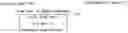


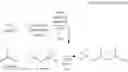


Sources:
- United States Patent and Trademark Office - verify current appl. status at the USPTO↗
Similar patent applications:
- » 20170233417
Hydrosilylation reaction catalyst - » 20170260215
Hydrosilylation reaction catalyst - » 20140296468
Hydrosilylation reaction catalysts and curable compositions and methods for their preparation and use - » 20140231703
Molybdenum Containing Hydrosilylation Reaction Catalysts and Compositions Containing the Catalysts - » 20200165274
Isocyanide compound and hydrosilylation reaction catalyst - » 20230241594
Catalyst for hydrosilylation reaction, hydrogenation reaction, and hydrosilane reduction reaction - » 20150051357
High activity catalyst for hydrosilylation reactions and methods of making the same - » 20180036724
Ligand components, associated reaction products, activated reaction products, hydrosilylation catalysts and hydrosilylation curable compositions including the ligand components, and associated methods for preparing same - » 20200001285
CATALYST FOR HYDROSILYLATION REACTION, HYDROGENATION REACTION, AND HYDROSILANE REDUCTION REACTION - » 20200247957
COBALT COMPLEX, PRODUCTION METHOD THEREFOR, AND CATALYST FOR HYDROSILYLATION REACTION
Recent applications in this class:
- » 20240399350 2024-12-05
GOLD CONTAINING CATALYST, METHOD OF PREPARATION AND USE - » 20240238771 2024-07-18
SUPPORTED RARE EARTH CATALYSTS AND CATALYTIC CH BORYLATION OF HYDROCARBONS - » 20240116039 2024-04-11
RUTHENIUM-BASED METATHESIS CATALYSTS, PRECURSORS FOR THEIR PREPARATION AND THEIR USE - » 20230149911 2023-05-18
Ruthenium-based metathesis catalysts, precursors for their preparation and their use - » 20220118434 2022-04-21
Ruthenium-based metathesis catalysts, precursors for their preparation and their use - » 20190314799 2019-10-17
Halogen-containing metathesis catalysts and methods thereof - » 20180297019 2018-10-18
Ruthenium-based metathesis catalysts, precursors for their preparation and their use - » 20160325274 2016-11-10
CATALYST COMPOSITIONS FOR ETHYLENE DIMERIZATION - » 20150273456 2015-10-01
Catalytic composition and process for oligomerizing ethylene into 1-hexene - » 20150266009 2015-09-24
RUTHENIUM-BASED METATHESIS CATALYSTS, PRECURSORS FOR THEIR PREPARATION AND THEIR USE
Recent applications for this Assignee:
- » 20250172875 2025-05-29
POLYMER, CHEMICALLY AMPLIFIED RESIST COMPOSITION, AND PATTERN FORMING PROCESS - » 20250172870 2025-05-29
POSITIVE RESIST COMPOSITION AND PATTERN FORMING PROCESS - » 20250172862 2025-05-29
REFLECTIVE MASK BLANK AND MANUFACTURING METHOD THEREOF - » 20250171673 2025-05-29
THERMAL CONDUCTIVE ADDITION-CURABLE SILICONE COMPOSITION AND CURED PRODUCT THEREOF - » 20250171636 2025-05-29
TWO-COMPONENT THERMALLY-CONDUCTIVE ADDITION-CURABLE SILICONE COMPOSITION AND CURED PRODUCT THEREOF - » 20250171471 2025-05-29
HYDROXYL GROUP-CONTAINING ORGANOSILICON COMPOUND - » 20250171326 2025-05-29
PREPARING METHOD OF RARE EARTH COMPOSITE OXIDE PARTICLES - » 20250166999 2025-05-22
Patterning Process - » 20250164882 2025-05-22
POSITIVE RESIST COMPOSITION AND PATTERN FORMING PROCESS - » 20250164878 2025-05-22
RESIST COMPOSITION AND PATTERN FORMING PROCESS