ALUMINUM DEPOSITION AND ANODIZATION ON A METAL SUBSTRATE
US20180245232A1
2018-08-30
15/758,114
2015-10-29
Abstract:
A method is provided, in which an aluminum layer is deposited on a metal substrate, wherein, in the depositing process, aluminum powders are added into an aqueous polymer medium to form a suspension, the metal substrate and a counter electrode are immersed in the suspension, and a pulsed current is applied between the metal substrate and the counter electrode; and, the aluminum layer deposited on the metal substrate is anodized.
Inventors:
- KUAN-TING WU 168 🇹🇼 TAIPEI CITY, Taiwan
- CHIEN-TING LIN 19 🇹🇼 TAIPEI CITY, Taiwan
- CHI HAO CHANG 60 🇹🇼 TAIPEI CITY, Taiwan
Interested in similar patents?
Get notified when new applications in this technology area are published.
Classification:
C25D5/48 » CPC further
Electroplating characterised by the process; Pretreatment or after-treatment of workpieces After-treatment of electroplated surfaces
C25D11/024 » CPC further
Electrolytic coating by surface reaction, i.e. forming conversion layers; Anodisation Anodisation under pulsed or modulated current or potential
C25D11/16 » CPC main
Electrolytic coating by surface reaction, i.e. forming conversion layers; Anodisation of aluminium or alloys based thereon Pretreatment, e.g. desmutting
C25D11/02 IPC
Electrolytic coating by surface reaction, i.e. forming conversion layers Anodisation
Description
BACKGROUND
Metals or metal alloys have been widely used in electronic devices, such as computers, cell phones, and portable media devices. Metals or metal alloys may be used as, for example, housing or support members of electronic devices. Some metals or metal alloys for example magnesium or magnesium alloy have a poor chemical stability, low hardness and wear resistance, and a corrosion issue, and lots of surface treatment processes may be required to perform on the metal or metal alloy surface due to high reactivity and high porosity on its surface.
BRIEF DESCRIPTION OF THE DRAWINGS
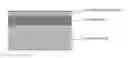
FIG. 1 is a cross-sectional view of an example structure according to the disclosure.
FIG. 2 is a flowchart for an example process for making the structure according to the disclosure.
DETAILED DESCRIPTION
Referring to FIG. 1, an illustrative structure is provided according to the disclosure, comprising metal substrate 100, aluminum layer 110, and anodized aluminum layer 120.
The metal substrate 100 may be constructed of any suitable metal materials. For example, the substrate 100 can be selected from magnesium, magnesium alloy, aluminum, aluminum alloy, steel alloy, or any combination thereof. In some examples, the substrate can be magnesium or magnesium alloy. The substrate 100 may have any size and shapes suitable for its intended use. For example, the substrate 100 may have curved surfaces, planar surfaces, edges, cavities, through-holes, or any combination thereof. The metal substrate may also have any suitable thickness. In some examples, the thickness of the metal substrate can vary between 0.5 mm and 2 mm, between 1.0 mm and 1.5 mm, or between 1.2 mm and 1.5 mm. The metal substrate may be used as a part of an electronic device, for example, laptop computer, pocket camera, mobile phone, GPS system, PDA, flash drives, mp3 players, radio, portable game system, etc.
The aluminum layer 110 is a layer of aluminum or alloy thereof that is deposited on the surface of the metal substrate according to the process of the disclosure, which will be explained in detail below. The aluminum layer 110 can have any suitable thickness. In some examples, the thickness of the aluminum layer can vary between 10 and 50 μm, or between 25 and 35 μm.
The anodized aluminum layer 120 may be a layer wherein at least a portion of the aluminum layer 110 is anodized. Anodizing can increase corrosion resistance, wear resistance, mechanical strength, and metallic luster of the aluminum layer 110. In addition, anodizing can allow dyeing of the aluminum layer 110 to obtain a cosmetic appearance. The anodized aluminum layer 120 can have any suitable thickness. In some examples, the thickness of the anodized aluminum layer 120 can vary between 5 and 25 μm, or between 15 and 20 μm. Aluminum anodizing is an electrochemical process in which the aluminum surface is converted to aluminum oxide and an aluminum oxide layer is chemically built on the surface of the aluminum. During the anodizing process, the aluminium oxide is grown down into the surface and out from the surface of aluminum. Therefore, the aluminum layer 110 may need to have an initially applied thickness at least equal to or greater than the desired thickness of the layer 120, so that sufficient aluminum is available for the conversion.
FIG. 2 shows an illustrative process for making a structure according to the disclosure. Referring to FIG. 2, the process begins at step 210. At step 210, a metal substrate can be provided. As discussed above, the metal substrate may have any suitable sizes or shapes, and can be consisted of magnesium, magnesium alloy, aluminum, aluminum alloy, steel alloy, or any combination thereof. In some examples, the metal substrate may be pretreated to prepare for the subsequent deposition step. The pretreatment may include polishing, grinding, degreasing, and/or cleaning. Degreasing may consist of either dipping the metal substrate in organic solvents, such as trichloroethylene or perchloroethylene, or using the vapors from organic solvents to remove surface grease in alkaline condition including caustic soda, silicates and/or phosphates. In some examples, to prepare the metal substrate, an existing oxide layer present on the metal substrate may be removed by cleaning, for example, plasma cleaning, or any other suitable chemical process, for example, electro-polishing process. Cleaning power may be enhanced by the use of ultrasonic equipment during cleaning processes.
At step 220, aluminum or alloy thereof can be deposited onto the surface of the metal substrate, to form an aluminum layer. According to the disclosure, the deposition process is a process of coating the metal substrate with aluminum particles suspended in a fluid dispersion under the influence of an electric field pulse applied between the metal substrate and a counter electrode.
The deposition can comprise forming a stable suspension by adding aluminum powders in an aqueous polymer medium, immersing the metal substrate and a counter electrode in the suspension, and applying a pulsed current between the metal substrate and the counter electrode in the suspension.
The aluminum powders have an average particle size of from 0.1 to 10 μm. In some examples, the average particle size of the aluminum powders can range from 0.1 to 5 μm, or from 0.5 to 2 μm. The polymer can be water soluble, and can be selected from an anionic polymer and a cationic polymer. In some examples, the anionic polymer can be acrylic or maleic-acid based polymers, polymethacrylates, hydrolyzed polyacrylamide, acrylic acid/acrylamide copolymers, or any combination of the above polymers. In some examples, the cationic polymer can be diallyldimethylammonium chloride (DADMAC).
The concentration of the aluminum particles in the suspension can be from 5 wt % to 15 wt %, or from 10 to 15 wt %.
As the counter electrode, any inert electrode may be used. In some examples, platinum, carbon, or lead can be used as the counter electrode. In some examples, graphite can be used as the counter electrode.
The applied pulsed current can have any suitable waveforms. In some examples, the pulsed current can be embodied in the form of square wave pulses. In some examples, the pulsed current can be embodied in the form of pulses superimposition on DC. The duty cycle of the pulsed current can be from 3% to 50%. In some examples, the duty cycle can be from 5% to 30%. The frequency of the pulsed current can be from 50 Hz to 1000 Hz. In some examples, the frequency can be from 100 Hz to 500 Hz, or from 200 Hz to 500 Hz. The pulsed current can have an average current density ranging from 3 to 15 A/cm2. In some examples, the average current density can be from 5 to 12 A/cm2.
The deposition process can be carried out at a temperature of from ambient temperature to 40° C. The pulsed current can be applied for 3 to 10 minutes. It is understood that the process can be regulated by controlling a variety of parameters, including the pulse duty cycle, pulse frequency, processing time, and concentration of aluminum particles in the suspension. The aluminum layer initially deposited on the metal substrate by the process may have any suitable thickness. In some examples, the aluminum layer initially deposited by the process can have a thickness ranging from 15 μm to 60 μm. In some examples, the aluminum layer initially deposited by the process can have a thickness ranging from 30 μm to 40 μm.
By the deposition process according to the disclosure, a highly dense and uniform aluminum coating is deposited on the metal substrate. The deposition process can have a high production yield and short processing time, and is also environment friendly.
During the deposition process, the aluminum particles in the suspension are adsorbed by the polymers, for example, anionic polymers or cationic polymers, and gain a surface charge as a result of an electrostatic interaction with the polymer molecules, and the charged aluminum particles are capable of moving in the suspension towards the metal substrate under the influence of a voltage imposed between the metal substrate and the counter electrode. At the surface areas of the substrate, the aluminum particles lose their charges by removing the polymer molecules at an instantaneous high temperature generated by the current pulse, and adhere to the surface of the substrate. As a result, a uniform and dense film forms over the whole substrate surface including the surface of cavities, edges and corners.
At step 230, the deposited aluminum layer may be anodized. The anodizing is an electrolytic passivation process used to increase resistance to corrosion and wear, increase surface hardness, and provide cosmetic and functional properties of the aluminum layer. The anodizing may be performed by any suitable process, for example, chromic acid anodization, sulfuric acid anodization, or sulfuric acid hardcoat anodization. In some examples, the anodizing process may include dyeing and/or sealing. The anodizing processes may produce a porous surface which can accept dyes easily. The corrosion and wear resistance of the aluminum layer can be further improved by applying suitable sealing substances.
The anodized aluminum layer can have any suitable thickness and hardness. In some examples, the anodized aluminum layer can have a pencil hardness of 6-7H, measured according to ASTM D3363. It should be understood that the thickness and hardness can be controlled by the anodizing conditions such as electrolyte concentration, pH value, temperature, processing time, and current.
It is understood that additional steps may be added before, among, or after the steps 210, 220, and 230. For example, a cleaning step may be added before and/or after the step 230.
The process according to the disclosure can produce a dense and uniform high-quality aluminum layer on the metal substrate at a relatively low thickness, to thereby obtain a cost-effective structure, which is suitable for use as a housing or supporting members of electronic devices. In the process, high-value raw materials may be used more sparingly due to a lower layer thickness.
The following examples further illustrate the process according to the disclosure. The examples are given by way of illustration only, and are not intended to limit the scope of the disclosure in any manner.
Examples
The metal substrate used in the examples is a magnesium alloy workpiece (MgAZ91: 90% magnesium/9% aluminum/1% zinc).
A suspension made up of 1,000 g aluminum powders having an average particle size of 1-5 μm, 60 g/L anionic polyacrylate dispersant (weight-average molecular weight at the range of 4,000-15,000, commercially available from Akzo Nobel or BASF), 6,000 g water was prepared. Before the deposition, the magnesium alloy workpiece was subjected to electro-polishing and cleaning, to remove the natural surface oxide layer and to improve the adhesion of aluminum on the magnesium alloy. Deposition of aluminum was on magnesium alloy anode, along with graphite as a cathode. The pulse powder conditions in Example 1, 2 and 3 were listed in the table below. The deposition process was carried out at room temperature for 3-10 minutes.
A uniform and dense aluminum layer was formed on the magnesium alloy workpiece. After cleaning, the magnesium alloy workpiece was anodized, cleaned and dried.
| Proc- | Initially | Thick- | ||||
| Aver- | essing | applied | ness | |||
| age | time for | thickness | of | |||
| Fre- | current | the | of | anodized | ||
| Duty | quency | density | deposition | aluminum | aluminum | |
| cycle | (Hz) | (A/cm2) | (min) | layer (μm) | layer (μm) | |
| Exam- | 10% | 100 | 5 | 7 | 30 | 10 |
| ple 1 | ||||||
| Exam- | 30% | 800 | 12 | 3 | 60 | 90 |
| ple 2 | ||||||
| Exam- | 10% | 500 | 7 | 5 | 40 | 15 |
| ple 3 | ||||||
Anti-Corrosion Test:
The magnesium alloy workpiece finally obtained in the Examples was subjected to natural salt spray test according to MIL-STD-810F.
After 96 hours, no corrosion was observed on the surface of the magnesium alloy workpiece.
Claims
1. A method, comprising:
depositing an aluminum layer on a metal substrate, the depositing comprising:
adding aluminum powders into an aqueous polymer medium to form a suspension,
immersing the metal substrate and a counter electrode in the suspension; and
applying a pulsed current between the metal substrate and the counter electrode, and,
anodizing the aluminum layer deposited on the metal substrate.
2. The method of claim 1, wherein the metal substrate is selected from magnesium, magnesium alloy, aluminum, aluminum alloy, steel alloy, or any combination thereof.
3. The method of claim 1, wherein the aluminum layer initially deposited on the metal substrate has a thickness ranging from 15 to 60 μm.
4. The method of claim 3, wherein the aluminum layer initially deposited on the metal substrate has a thickness ranging from 30 to 40 μm.
5. The method of claim 1, wherein the aluminum powers have an average particle size of from 0.1 to 10 μm.
6. The method of claim 1, wherein the polymer is selected from an anionic polymer and a cationic polymer.
7. The method of claim 6, wherein the anionic polymer is selected from acrylic- or maleic-acid based polymers, polymethacrylates, hydrolyzed polyacrylamide, acrylic acid/acrylamide copolymers, or any combination of the above polymers.
8. The method of claim 1, wherein the pulsed current has a duty cycle ranging from 3% to 50%.
9. The method of claim 1, wherein the pulsed current has a frequency ranging from 50 Hz to 1000 Hz.
10. The method of claim 1, wherein the pulsed current has an average current density ranging from 3 to 15 A/cm2.
11. The method of claim 1, wherein the concentration of the aluminum powders in the suspension is from 5 to 15 wt %.
12. The method of claim 1, wherein the counter electrode is an inert electrode, such as platinum, lead or carbon.
13. The method of claim 1, further comprising dye coloring and/or sealing.
14. A structure, which is obtainable by a method of claim 1, comprising
a metal substrate,
an aluminum layer deposited on the metal substrate, and
an anodized aluminum layer,
wherein the anodized aluminum layer has a thickness ranging between 5 and 25 μm, and the anodized aluminum layer has a pencil hardness of 6-7H.
15. The structure of claim 14, wherein the metal substrate is selected from magnesium, magnesium alloy, aluminum, aluminum alloy, steel alloy, or any combination thereof.
Images & Drawings included:

Sources:
- United States Patent and Trademark Office - verify current appl. status at the USPTO↗
Recent applications in this class:
- » 20250019856 2025-01-16
SURFACE PREPARATION FOR ELECTROLYTIC INORGANIC FINISHES - » 20240229286 2024-07-11
A PROCESS TO PROTECT LIGHT METAL SUBSTRATES - » 20240133073 2024-04-25
A PROCESS TO PROTECT LIGHT METAL SUBSTRATES - » 20230033674 2023-02-02
VALVE BLOCK FOR HYDROGEN GAS, AND METHOD FOR PRODUCING SAME - » 20210108328 2021-04-15
Susceptor having CF coating - » 20200370195 2020-11-26
Heat insulation coat, coated member, and method of manufacturing coated member - » 20200181793 2020-06-11
Surface treatment method for aluminum exterior part of vehicle - » 20200165741 2020-05-28
CHEMICAL CONVERSION TREATMENT AGENT, COATING PRE-TREATMENT METHOD, AND METAL MEMBER - » 20200109484 2020-04-09
SUSCEPTOR AND SUSCEPTOR COATING METHOD - » 20190032237 2019-01-31
ANODIZABLE ALUMINUM ALLOY PLATE AND METHOD OF MANUFACTURING THE SAME