WATERPROOF SPONGE WITH DISPOSABLE COVER SLEEVES
US20180256007A1
2018-09-13
15/453,876
2017-03-08
Abstract:
A cleaning sponge system which includes a sponge formed of open celled foamed plastic and a water impermeable layer encasing the sponge to form a waterproof sponge assembly and a plurality of disposable cleaning sleeves, formed of a fibrous material configured in size and shape to removably receive the waterproof sponge assembly.
Interested in similar patents?
Get notified when new applications in this technology area are published.
Classification:
A47L17/00 » CPC main
Apparatus or implements used in manual washing or cleaning of crockery, table-ware, cooking-ware or the like
Description
TECHNICAL FIELD
The presently disclosed technology relates to a waterproof sponge with disposable cleaning sleeves.
BACKGROUND
Household cleaning sponges are a ubiquitous commodity and they are used for a variety of different applications ranging from cleaning dishes in the kitchen sink to cleaning bathroom surfaces and spilled food on tables or other eating surfaces.
Some common sponges even have a surface on one side of the sponge formed of an abrasive loop type material that can be used for cleaning stubborn deposits of food from pots and pans or stains on bathroom fixtures.
All sponges suffer from one common defect and that is that they collect and hold, in the cavities of the typical sponge food particles and dirt which have been cleaned up using the sponge. This provides a moisture-rich and nutrient-rich environment for microbial growth, including harmful bacteria, yeasts and fungus. As a result, most kitchen sponges will quickly become contaminated and will no longer pass the household sniff test for a sanitary sponge. There are a variety of homegrown remedies for this, which include rinsing the sponge in a water solution containing bleach, microwaving the sponge to sanitize it, and even tossing it into an automatic dishwasher in the kitchen to wash it along with other soiled dishes, glasses, and pots and pans.
In the end though, nearly all sponges are routinely discarded and new replacements are added to the inventory of cleaning supplies in the typical home. Accordingly, what is needed is a system which preserves and extends the life of the sponge by minimizing the amount of contamination it is subjected to.
SUMMARY OF THE DISCLOSURE
The purpose of the Summary is to enable the public, and especially the scientists, engineers, and practitioners in the art who are not familiar with patent or legal terms or phraseology, to determine quickly from a cursory inspection, the nature and essence of the technical disclosure of the application. This Summary is neither intended to define the inventive concept of the application, which is measured by the claims, nor is it intended to be limiting as to the scope of the inventive concept in any way.
In this description, the term sponge is intended to represent the typical chemical sponge made from traditional production materials that include polyurethane, ethylene vinyl acetate copolymer, and nitrile butadiene rubber. All of these materials may be fabricated to form soft foam rubber with sponge-like properties.
The open cell cavities in the typical sponge quickly fill with water and cleaning solutions in everyday applications such as cleaning dishes in the kitchen sink or bathroom surfaces.
However, the waterproof sponge of this invention is comprised of a conventional sponge further encased within a self-skinning polyurethane paint or paints, including ethylene-vinyl acetate copolymer paint so as to provide a water impervious surface for the sponge. In effect, the interior of the sponge always remains dry or naturally moist.
The waterproof sponge is intended for a use as a supporting body for a disposable cleaning sleeve, which is formed either of paper or cloth material, and is intended for either use until it is thoroughly soiled, or a single onetime use after which, it is disposed of. The disposable cleaning sleeves can be made of a variety of materials, including fibrous materials and even fibrous materials having closed loop abrasive properties on one side or multiple sides of the cleaning sleeve for use in scrubbing stubborn food stains and other deposits from surfaces to be cleaned, such as pots and pans. The remaining surfaces can be far more absorbent and soft and provide an adequate surface with which to clean dishes, pots and pans, and other surfaces that need cleaning. While the preferred embodiment for disposable sleeve is a sleeve that is open at one end, it should be apparent that the sleeve could easily be designed to close, either by folding, or some sort of a fastener, including adhesives.
Once the sleeve becomes soiled and no longer can be rinsed out, it is simply disposed of and another one is substituted in its place.
Still other features and advantages of the presently disclosed and claimed inventive concept will become readily apparent to those skilled in this art from the following detailed description describing preferred embodiments of the inventive concept, simply by way of illustration of the best mode contemplated by carrying out the inventive concept. As will be realized, the inventive concept is capable of modification in various obvious respects all without departing from the inventive concept. Accordingly, the drawings and description of the preferred embodiments are to be regarded as illustrative in nature, and not as restrictive in nature.
BRIEF DESCRIPTION OF THE DRAWINGS
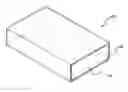
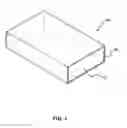
FIG. 1 is the perspective representational view of an assembled cleaning sponge system.
FIG. 2 is a sectional side view of the waterproof sponge taken along the plane of A-A as shown and indicated in FIG. 1.
FIG. 3 is a perspective representation of a disposable cleaning sleeve.
DETAILED DESCRIPTION OF THE PREFERRED EMBODIMENTS
While the presently disclosed inventive concept is susceptible of various modifications and alternative constructions, certain illustrated embodiments thereof have been shown in the drawings and will be described below in detail. It should be understood, however, that there is no intention to limit the inventive concept to the specific form disclosed, but, on the contrary, the presently disclosed and claimed inventive concept is to cover all modifications, alternative constructions, and equivalents falling within the spirit and scope of the inventive concept as defined in the claims.
Referring to FIGS. 1, 2, and 3 there are shown and described my new cleaning sponge system 10,” which is comprised of waterproof sponge 12 and disposable cleaning sleeve 18.
Natural sponges are expensive, hard to come by, and are generally not available for use as every day commodity items and in this detailed description, the term sponge is intended to represent the typical chemical sponge made from traditional production materials that include polyurethane, ethylene vinyl acetate copolymer, and nitrile butadiene rubber. All of these materials may be fabricated to form soft foam rubber with sponge-like properties.
The open cell cavities in the typical sponge quickly fill with water and cleaning solutions in everyday applications such as cleaning dishes in the kitchen sink or bathroom surfaces.
However, the waterproof sponge 12 in this embodiment is comprised of a conventional sponge 14 further encased within a self-skinning polyurethane paint or paints, including ethylene-vinyl acetate copolymer paint so as to provide a water impervious surface 16 to the sponge 12. In effect, the interior of the sponge always remains dry and free of food particles or other contaminents.
The waterproof sponge 12 is intended for a use as a supporting body for a disposable cleaning sleeve 18, which is formed either of paper or cloth material, and is intended for either use until it is thoroughly soiled, or a single onetime use after which, it is disposed of. The disposable cleaning sleeves 18 can be made of a variety of materials, including fibrous materials and even fibrous materials having closed loop abrasive properties on one side or multiple sides of the cleaning sleeve for use in scrubbing stubborn food stains and other deposits from surfaces to be cleaned, such as pots and pans. The remaining surfaces can be far more absorbent and soft and provide an adequate surface with which to clean dishes, pots and pans, and other surfaces that need cleaning. While the preferred embodiment for disposable sleeve 18 is a sleeve that is open at one end, it should be apparent that the sleeve could easily be designed to close, either by folding, or some sort of a fastener, including adhesives.
Once the sleeve 18 becomes soiled and no longer can be rinsed out, it is simply disposed of and another one is substituted in its place.
While certain preferred embodiments are shown in the figures and described in this disclosure, it is to be distinctly understood that the presently disclosed inventive concept(s) is not limited thereto but may be variously embodied to practice within the scope of the following claims. From the foregoing description, it will be apparent that various changes may be made without departing from the spirit and scope of the disclosure as defined by the following claims.
Claims
I claim:1. A cleaning sponge system which comprises:
a sponge formed of open celled foamed plastic;
a water impermeable layer encasing the sponge to form a waterproof sponge assembly; and
a cleaning sleeve configured in size and shape to removably receive said waterproof sponge assembly.
2. The cleaning sponge system of claim 1 wherein said cleaning sleeve is disposable.
3. The cleaning sponge system of claim 1 wherein said cleaning sleeve is formed of a fibrous material.
4. The cleaning sponge system of claim 3 wherein said cleaning sleeve is disposable.
5. The cleaning sponge system of claim 1 wherein said cleaning sleeve is formed of a plastic material.
6. The cleaning sponge system of claim 5 wherein said cleaning sleeve is disposable.
7. A cleaning sponge system which comprises:
a sponge formed of open celled foamed plastic;
a water impermeable layer encasing the sponge to form a waterproof sponge assembly; and
a plurality of disposable cleaning sleeves configured in size and shape to removably receive said waterproof sponge assembly.
8. The cleaning sponge system of claim 7 wherein said cleaning sleeves are formed of a fibrous material.
9. The cleaning sponge system of claim 7 wherein said cleaning sleeves are formed of a plastic material.
Images & Drawings included:

Sources:
- United States Patent and Trademark Office - verify current appl. status at the USPTO↗
Recent applications in this class:
- » 20250143536 2025-05-08
CLEANING DEVICE WITH SLOTTED FOAM PAD IN CONTAINER - » 20250120567 2025-04-17
Cleaning Device - » 20240335090 2024-10-10
CLEARING DEVICE - » 20240122441 2024-04-18
Vessel rinsing apparatus, drain receptacle, interchangeable nozzle assembly, and faucet system including same - » 20230355075 2023-11-09
SOAP DISPENSING DISH WAND HOLDER ASSEMBLY - » 20220354339 2022-11-10
WATER-DISPERSIBLE ARTICLE INCLUDING WATER-DISPERSIBLE CORE CONSTRUCTION - » 20220183536 2022-06-16
Knife Cleaning Device - » 20210259513 2021-08-26
Cleaning device for food vessels - » 20210052131 2021-02-25
VESSEL RINSING APPARATUS, DRAIN RECEPTACLE, INTERCHANGEABLE NOZZLE ASSEMBLY, AND FAUCET SYSTEM INCLUDING SAME - » 20200253458 2020-08-13
STEMWARE CLEANING DEVICE