Automatic access point deployment method and device thereof
US20180263077A1
2018-09-13
15/621,361
2017-06-13
✅ Patent granted
US 10,375,762 B2
2019-08-06
-
-
Ronald B Abelson
Winston Hsu
2037-07-25
Abstract:
An automatic access point deployment method executed within an indoor environment by an automatic access point deployment device comprises: building a coordinate map of the indoor environment; setting a request information, wherein the wireless access points at least include one Wi-Fi access point and one Bluetooth access point respectively corresponding to some Wi-Fi AP chromosomes and some of Bluetooth AP chromosomes; calculating a fitness value for each Wi-Fi AP chromosome and each Bluetooth AP chromosome; calculating an overall fitness value, and determining whether the overall fitness value is satisfied with a convergence condition; exchanging the possible individuals of at least two Wi-Fi AP chromosomes and at least two Bluetooth AP chromosomes; and changing at least one possible individual of at least one Wi-Fi AP and at least one Bluetooth AP chromosome and again calculating the fitness value for each Wi-Fi AP chromosome and each Bluetooth AP chromosome.
Assignee:
- U-MEDIA Communications, Inc. 4 🇹🇼 Hsinchu, Taiwan
Applicant:
Interested in similar patents?
Get notified when new applications in this technology area are published.
Classification:
H04W36/06 » CPC further
Hand-off or reselection arrangements Reselecting a communication resource in the serving access point
H04W72/04 » CPC further
Local resource management, e.g. wireless traffic scheduling or selection or allocation of wireless resources Wireless resource allocation
H04W88/08 » CPC further
Devices specially adapted for wireless communication networks, e.g. terminals, base stations or access point devices Access point devices
H04W16/10 » CPC further
Network planning, e.g. coverage or traffic planning tools; Network deployment, e.g. resource partitioning or cells structures; Resource partitioning among network components, e.g. reuse partitioning Dynamic resource partitioning
H04W16/20 » CPC further
Network planning, e.g. coverage or traffic planning tools; Network deployment, e.g. resource partitioning or cells structures; Network planning tools for indoor coverage or short range network deployment
H04W92/10 » CPC main
Interfaces specially adapted for wireless communication networks; Interfaces between hierarchically different network devices between terminal device and access point, i.e. wireless air interface
H04W84/18 » CPC further
Network topologies Self-organising networks, e.g. ad-hoc networks or sensor networks
Description
BACKGROUND OF THE INVENTION
1. Field of the Invention
The present disclosure relates to an automatic access point deployment method and a device thereof; in particular, to an automatic Wi-Fi access point deployment method and an automatic Wi-Fi access point deployment device.
2. Description of Related Art
Within an indoor environment, if all wireless access points are well deployed, it will be easy to monitor this indoor environment by using these wireless access points to accurately position a portable device within this indoor environment.
Usually, to position a portable device in an indoor environment or to monitor an indoor environment, a plurality of Wi-Fi access points should be deployed within the indoor environment. However, since the Wi-Fi signal strength and the Wi-Fi signal coverage are large, it may not be precise to position a portable device in an indoor environment or to monitor an indoor environment by using the Wi-Fi access points randomly deployed within the indoor environment. Alternatively, Bluetooth access points can also be used for positioning a portable device in an indoor environment or for monitoring an indoor environment. However, compared with a signal from a Wi-Fi access point, the signal from a Bluetooth access point is weaker and unstable. Thus, in this case, a large number of Bluetooth access points should be configured in this indoor environment for positioning a portable device or for monitoring this indoor environment, which is costly to achieve.
Thus, it is necessary to provide a way of improving the performance of wirelessly monitoring an indoor environment and increasing the accuracy of positioning a portable device within an indoor environment with a limited number of physical access points.
SUMMARY OF THE INVENTION
The present disclosure provides an automatic access point deployment method and an automatic access point deployment device for deploying Wi-Fi access points and Bluetooth access points within an indoor environment. Even though the number of the wireless access points may be restricted because of a cost-aware policies, these Wi-Fi access points and Bluetooth access points can be automatically deployed at the most suitable position coordinates of the coordinate map in an indoor environment by using the automatic access point deployment method and the automatic access point deployment device provided by the present disclosure. By doing so, the performance of wirelessly monitoring the indoor environment can be improved and the accuracy of positioning an electronic device within the indoor environment can be increased.
The automatic access point deployment method provided by the present disclosure is used for deploying a plurality of access points according to different position coordinates within an indoor environment by using an automatic access point deployment device. This automatic access point deployment method includes: step 1: building a coordinate map of the indoor environment, wherein the coordinate map includes a plurality of rows and columns, and a plurality of position coordinates are defined by the rows and columns; step 2: setting a request information, wherein the request information includes a number of the wireless access points, the wireless access points at least include one Wi-Fi access point and one Bluetooth access point, the Wi-Fi access point and the Bluetooth access point respectively correspond to a plurality of Wi-Fi AP chromosomes and a plurality of Bluetooth AP chromosomes, and each of the Wi-Fi AP chromosomes and the Bluetooth AP chromosomes has a plurality of possible individuals, and wherein the possible individuals of each Wi-Fi AP chromosome indicate the likely position coordinates of the Wi-Fi access points within the indoor environment, and the possible individuals of each Bluetooth AP chromosome indicate the likely position coordinates of the Bluetooth access points within the indoor environment; step 3: calculating a fitness value for each Wi-Fi AP chromosome and each Bluetooth AP chromosome according to the request information; step 4: calculating an overall fitness value according to the fitness values, and determining whether the overall fitness value is satisfied with a convergence condition; step 5: exchanging the possible individuals of at least two Wi-Fi AP chromosomes and exchanging the possible individuals of at least two Bluetooth AP chromosomes when the overall fitness value is not satisfied with the convergence condition; and step 6: changing at least one possible individual of at least one Wi-Fi AP chromosome, changing at least one possible individual of at least one Bluetooth AP chromosome and again calculating the fitness value for each Wi-Fi AP chromosome and each Bluetooth AP chromosome, wherein the possible individual of the one Wi-Fi AP chromosome has not yet been exchanged and the possible individual of the one Bluetooth AP chromosome has not yet been exchanged.
The automatic access point deployment device provided by the present disclosure includes a storage device and a processor. The storage device stores a request information. The request information includes a number of the wireless access points, and the wireless access points at least include one Wi-Fi access point and one Bluetooth access point. The processor is electrically connected to the storage device. The processor is configured to execute steps including: step 1: building a coordinate map of the indoor environment, wherein the coordinate map includes a plurality of rows and columns, and a plurality of position coordinates are defined by the rows and columns; step 2: setting a request information, wherein the request information includes a number of the wireless access points, the wireless access points at least include one Wi-Fi access point and one Bluetooth access point, the Wi-Fi access point and the Bluetooth access point respectively correspond to a plurality of Wi-Fi AP chromosomes and a plurality of Bluetooth AP chromosomes, and each of the Wi-Fi AP chromosomes and the Bluetooth AP chromosomes has a plurality of possible individuals, and wherein the possible individuals of each Wi-Fi AP chromosome indicate the likely position coordinates of the Wi-Fi access points within the indoor environment, and the possible individuals of each Bluetooth AP chromosome indicate the likely position coordinates of the Bluetooth access points within the indoor environment; step 3: calculating a fitness value for each Wi-Fi AP chromosome and each Bluetooth AP chromosome according to the request information; step 4: calculating an overall fitness value according to the fitness values, and determining whether the overall fitness value is satisfied with a convergence condition; step 5: exchanging the possible individuals of at least two Wi-Fi AP chromosomes and exchanging the possible individuals of at least two Bluetooth AP chromosomes when the overall fitness value is not satisfied with the convergence condition; and step 6: changing at least one possible individual of at least one Wi-Fi AP chromosome, changing at least one possible individual of at least one Bluetooth AP chromosome and again calculating the fitness value for each Wi-Fi AP chromosome and each Bluetooth AP chromosome, wherein the possible individual of the one Wi-Fi AP chromosome has not yet been exchanged and the possible individual of the one Bluetooth AP chromosome has not yet been exchanged.
By using the automatic access point deployment method and the automatic access point deployment device provided by the present disclosure, even though the number of the wireless access points may be restricted because of cost-aware policies, these wireless access points (including the Wi-Fi access points and the Bluetooth access points) can be automatically deployed at the most suitable position coordinates of the coordinate map in an indoor environment. Therefore, the performance of wirelessly monitoring the indoor environment by using these wireless access points can be effectively improved, and the accuracy of positioning a portable device within the indoor environment by using these wireless access points can be increased.
For further understanding of the present disclosure, reference is made to the following detailed description illustrating the embodiments of the present disclosure. The description is only for illustrating the present disclosure, not for limiting the scope of the claim.
BRIEF DESCRIPTION OF THE DRAWINGS
Embodiments are illustrated by way of example and not by way of limitation in the figures of the accompanying drawings, in which like references indicate similar elements and in which:
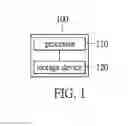
FIG. 1 shows a schematic diagram of an automatic access point deployment device according to one embodiment of the present disclosure;
FIG. 2 shows a flow chart of an automatic access point deployment method according to one embodiment of the present disclosure;
FIG. 3 shows a relationship between Wi-Fi access points and the coordinate map and shows a relationship between Bluetooth access points and the coordinate map according to one embodiment of the present disclosure;
FIG. 4 shows a relationship between Wi-Fi access points and the coordinate map and shows a relationship between Bluetooth access points and the coordinate map according to another embodiment of the present disclosure;
FIG. 5 shows a schematic diagram demonstrating the possible individuals of at least two Wi-Fi AP chromosomes and the possible individuals of at least two Bluetooth AP chromosomes according to one embodiment of the present disclosure;
FIG. 6 shows a schematic diagram demonstrating how the possible individuals of at least two Wi-Fi AP chromosomes are exchanged and how the possible individuals of at least two Bluetooth AP chromosomes are exchanged according to one embodiment of the present disclosure; and
FIG. 7 shows a schematic diagram demonstrating how the possible individuals of the Wi-Fi AP chromosome, which have not yet been exchanged, are changed and how the possible individuals of the Bluetooth AP chromosome, which have not yet been exchanged, are changed according to one embodiment of the present disclosure.
DETAILED DESCRIPTION OF EXEMPLARY EMBODIMENTS
The aforementioned illustrations and following detailed descriptions are exemplary for the purpose of further explaining the scope of the present disclosure. Other objectives and advantages related to the present disclosure will be illustrated in the subsequent descriptions and appended drawings. In these drawings, like references indicate similar elements.
Referring to FIG. 1, a schematic diagram of an automatic access point deployment according to one embodiment of the present disclosure is shown. The automatic access point deployment device 100 is configured to deploy a plurality of wireless access points, including at least one Wi-Fi access point and at least one Bluetooth access point, within an indoor environment. The automatic access point deployment device 100 assigns a position coordinate of the indoor environment to each wireless access point so that the wireless access points can be well deployed within the indoor environment. FIG. 3 shows a relationship between Wi-Fi access points and the coordinate map and shows a relationship between Bluetooth access points and the coordinate map in one embodiment of the present disclosure. In FIG. 3, a coordinate map MP is built for an indoor environment. The coordinate map MP includes four rows and four columns, and thus 16 position coordinates are defined by these rows and columns, which are 0, 1, 2, 3, 4, 5, 6, 7, 8, 9, 10, 11, 12, 13, 14 and 15. The automatic access point deployment device 100 deploys at least one Wi-Fi access point and at least one Bluetooth access point by assigning each of them a position coordinate 0˜15 of the coordinate map according to an automatic access point deployment method. This automatic access point deployment method will be illustrated later, and in this embodiment the automatic access point deployment device 100 can be implemented by a smart phone, a personal computer, a laptop or the like.
The automatic access point deployment device 100 includes a processor 110 and a storage device 120, and the processor 110 is electrically connected to the storage device 120. The storage device 120 is configured to store the request information. The request information includes the number of wireless access points, and these wireless access points include at least one Wi-Fi access point and at least one Bluetooth access point. Details about how the automatic access point deployment device 100 stores the request information in its storage device 120 should be easily understood by those skilled in the art, and thus is not reiterated herein. In this embodiment, the storage device 120 can be implemented by a volatility memory chip or a non-volatility memory, such as a flash memory chip, a read only memory chip or a random access memory chip.
The processor 110 plays the role of the operating center of the automatic access point deployment device 100, responsible for each kind of analysis, calculations and controls. For example, the processor 110 can be a central processing unit, a microcontroller or an embedded controller. The processor 110 can execute the following steps to deploy at least one Wi-Fi access point and at least one Bluetooth access point by assigning each of them a position coordinate of the coordinate map MP.
Referring to FIG. 2, a flow chart of an automatic access point deployment according to one embodiment of the present disclosure is shown. In step S210, the processor 110 builds a coordinate map MP of an indoor environment. For example, in FIG. 3, the coordinate map MP includes four rows and four columns, and a plurality of position coordinates 0˜15 are defined by these rows and columns. In other words, in the coordinate map MP of the indoor environment, there are 16 position coordinates 0˜15.
In step S220, the processor 110 sets the request information. The request information includes a number of the wireless access points, and the wireless access points at least include one Wi-Fi access point and one Bluetooth access point. A user can use the processor 110 to set the request information according to his needs. For example, the number of the Wi-Fi access points can be set to be two and the number of the Bluetooth access points can be set to be one (as shown in FIG. 3, there are two Wi-Fi access points W1 and W2 and one Bluetooth access point BL). Further, the user can set rules for deploying the Wi-Fi access points and the Bluetooth access points. For example, in FIG. 4, the Wi-Fi access points W1 and W2 can only be deployed at two of the position coordinates 0, 3, 12 and 15 of the coordinate map MP1, and the Bluetooth access point BL can be deployed at one of the position coordinates 0˜15 of the coordinate map MP1.
Specifically, when the processor 110 is deploying the Wi-Fi access points and the Bluetooth access points, each of the Wi-Fi access points corresponds to a plurality of Wi-Fi AP chromosomes and each of the Bluetooth access points corresponds to a plurality of Bluetooth AP chromosomes. Each of the Wi-Fi AP chromosomes has a plurality of possible individuals, and also each of the Bluetooth AP chromosomes has a plurality of possible individuals. The possible individuals of each Wi-Fi AP chromosome may become the position coordinates where the Wi-Fi access points will be deployed within the indoor environment, and the possible individuals of each Bluetooth AP chromosome may become the position coordinates where the Bluetooth access points will be deployed within the indoor environment.
In FIG. 4, the Wi-Fi access points W1 and W2 can only be deployed at two of the position coordinates 0, 3, 12 and 15 of the coordinate map MP1, and the Bluetooth access point BL can be deployed at one of the position coordinates 0˜15 of the coordinate map MP1. Referring to FIG. 5, a schematic diagram demonstrating the possible individuals of at least two Wi-Fi AP chromosomes and the possible individuals of at least two Bluetooth AP chromosomes in one embodiment of the present disclosure is shown. In FIG. 5, the processor 110 assigns four Wi-Fi AP chromosomes wAP1, wAP2, wAP3 and wAP4 to the Wi-Fi access points W1 and W2, and the processor 110 assigns four Bluetooth AP chromosomes bAP1, bAP2, bAP3 and bAP4 to the Bluetooth access point BL.
These four Wi-Fi AP chromosomes wAP1˜wAP4 indicate how the Wi-Fi access points W1 and W2 may be deployed according to the coordinate map MP1, and thus the four Wi-Fi AP chromosomes wAP1˜wAP4 are respectively represented by a plurality of possible individuals. In one example, the Wi-Fi AP chromosome wAP1 is [1001 0000 0000 0000], which indicates that the Wi-Fi access points W1 and W2 can be deployed at the position coordinates 0 and 3; the Wi-Fi AP chromosome wAP2 is [0000 0000 0000 1001], which indicates that the Wi-Fi access points W1 and W2 can be deployed at the position coordinates 12 and 15; the Wi-Fi AP chromosome wAP3 is [1000 0000 0000 0001], which indicates that the Wi-Fi access points W1 and W2 can be deployed at the position coordinates 0 and 15; and the Wi-Fi AP chromosome wAP4 is [0001 0000 0000 1000], which indicates that the Wi-Fi access points W1 and W2 can be deployed at the position coordinates 3 and 12.
Similarly, the four Bluetooth AP chromosomes bAP1˜bAP4 indicate how the Bluetooth access point BL may be deployed according to the coordinate map MP1, and thus the four Bluetooth AP chromosomes bAP1˜bAP4 are respectively represented by a plurality of possible individuals. In one example, the Bluetooth AP chromosome bAP1 is [0000 0000 1000 0000], which indicates that the Bluetooth access point BL can be deployed at the position coordinate 8; the Bluetooth AP chromosome bAP2 is [0000 0000 0100 0000], which indicates that the Bluetooth access point BL can be deployed at the position coordinate 9; the Bluetooth AP chromosome bAP3 is [0000 0000 0010 0000], which indicates that the Bluetooth access point BL can be deployed at the position coordinate 10; and the Bluetooth AP chromosome bAP4 is [0000 0000 0001 0000], which indicates that the Bluetooth access point BL can be deployed at the position coordinate 11.
In this embodiment, the number of the Wi-Fi AP chromosomes and the number of the Bluetooth AP chromosomes can be previously stored in the storage device 120, or can be freely set by a user by using the processor 110.
In step S230, the processor 110 calculates a fitness value for each Wi-Fi AP chromosome wAP1˜wAP4 and each Bluetooth AP chromosome bAP1˜bAP4 according to the request information to deploy the Wi-Fi access points and the Bluetooth access points at suitable position coordinates. Specifically, for each Wi-Fi AP chromosome, according to a Wi-Fi signal strength corresponding to each possible individual, the processor 110 calculates a Wi-Fi signal coverage and a Wi-FiWi-Fi throughput. Further, according to the Wi-Fi signal coverage and the Wi-Fi throughput, the processor 110 calculates a fitness value for each Wi-Fi AP chromosome. Additionally, for each Bluetooth AP chromosome, according to a Bluetooth signal strength corresponding to each possible individual, the processor 110 calculates an amount of the Bluetooth signal coverage and a non-overlapping percentage of the Bluetooth access points. Further, according to the amount of the Bluetooth signal coverage and the non-overlapping percentage of the Bluetooth access points, the processor 110 calculates a fitness value for each Bluetooth access point. It should be noted that, the larger the non-overlapping percentage of the Bluetooth access points is, the lower the possibility of incorrectly determining the proper position coordinates of the Bluetooth access points will be.
The following description illustrates how the Wi-Fi signal coverage and the Wi-Fi throughput for the Wi-Fi AP chromosome wAP1 are calculated. As shown in FIG. 4 and FIG. 5, the Wi-Fi AP chromosome wAP1 is [1001 0000 0000 0000], and thus the Wi-Fi AP chromosome wAP1 indicates that the Wi-Fi access points W1 and W2 can be deployed at the position coordinates 0 and 3. For the position coordinates 0˜15, if the Wi-Fi signal strengths of a signal received at position coordinates 0˜11 from the Wi-Fi access points W1 and W2 are larger than or equal to a predetermined signal strength and the Wi-Fi signal strengths of a signal received at position coordinates 12˜15 from the Wi-Fi access points W1 and W2 are smaller than the predetermined signal strength, the Wi-Fi signal coverage is calculated to be 0.75 (12/16=0375). The Wi-Fi throughput is the sum of the Wi-Fi signal strengths of the signals received at each of the position coordinates 0˜15 from the Wi-Fi access points W1 and W2. For example, the Wi-Fi throughput can be calculated to be −30 dbm. After that, according to the Wi-Fi signal coverage and the Wi-Fi throughput, the processor 110 calculates a fitness value for each Wi-Fi AP chromosome. In this case, the fitness value fv of the Wi-Fi AP chromosome wAP1 equals (w1*0.75)+(w2*−30), which is 0.3, wherein “w1” is an adjustment parameter of the Wi-Fi signal coverage and “w2” is an adjustment parameter of the Wi-Fi throughput.
The following description illustrates how the amount of the Bluetooth signal coverage and the non-overlapping percentage of the Bluetooth AP points for the Bluetooth AP chromosome bAP1 are calculated. As shown in FIG. 4 and FIG. 5, the Bluetooth AP chromosome bAP1 is [0000 0000 1000 0000], and thus the Bluetooth AP chromosome bAP1 indicates that the Bluetooth access point BL can be deployed at the position coordinate 8. For the position coordinates 0˜15, if the Bluetooth signal strengths of a signal received at position coordinates 0˜2 and 4˜14 from the Bluetooth access point BL are larger than or equal to a predetermined signal strength and the Bluetooth signal strengths of a signal received at position coordinates 3 and 15 from the Bluetooth access point BL are smaller than the predetermined signal strength, the amount of the Bluetooth signal coverage equals to 14 (16−2). This indicates that the Bluetooth signal coverage covers 14 position coordinates including the position coordinates 0˜2 and 4˜14. For the Bluetooth AP chromosome bAP1, the number of the Bluetooth access point is only one. Thus, the non-overlapping percentage of the Bluetooth access points equals 1 (1−0/16). After that, according to the amount of the Bluetooth signal coverage and the non-overlapping percentage of the Bluetooth access points, the processor 110 calculates a fitness value for each Bluetooth AP chromosome. In this case, the fitness value fv of the Bluetooth AP chromosome bAP1 equals to w3 (w3*1), wherein “w3” is an adjustment parameter.
However, the way of calculating the Wi-Fi signal coverage and the Wi-Fi throughput for a Wi-Fi AP chromosome and the way of calculating the amount of the Bluetooth signal coverage and the non-overlapping percentage of the Bluetooth AP points for a Bluetooth AP chromosome are not restricted by the above mentioned ways. In the above instance, according to the request information, the processor 110 can calculate a fitness value fv for each Wi-Fi AP chromosome wAP1˜wAP4 and can calculate a fitness value fv for each Bluetooth AP chromosome bAP1˜bAP4 as shown in the following Table 1.
| TABLE 1 | ||||
| Wi-Fi AP | fitness value | Bluetooth AP | fitness value | |
| chromosome | (fv) | chromosome | (fv) | |
| wAP1 | 0.30 | bAP1 | 0.20 | |
| wAP2 | 0.25 | bAP2 | 0.30 | |
| wAP3 | 0.20 | bAP3 | 0.25 | |
| wAP4 | 0.10 | bAP4 | 0.10 | |
In step S240, according to these fitness values shown in Table 1, the processor 110 calculates an overall fitness value to determine whether the overall fitness value is satisfied with a convergence condition. After the overall fitness value is calculated by the processor 110, which is 0.75, the processor 110 further determines whether “0.75” is satisfied with the convergence condition. If the processor 110 determines that “0.75” is not satisfied with the convergence condition, the method proceeds to step S250. On the other hand, if the processor 110 determines that “0.75” is satisfied with the convergence condition, the method proceeds to step S270.
In step S250, the processor 110 exchanges the possible individuals of at least two Wi-Fi AP chromosomes and exchanges the possible individuals of at least two Bluetooth AP chromosomes. The request information stored in the storage device 120 includes a number of the Wi-Fi AP chromosomes of which the possible individuals have to be exchanged (such as, two Wi-Fi AP chromosomes) and a number of the Bluetooth AP chromosomes of which the possible individuals have to be exchanged (such as, three Bluetooth AP chromosomes). Accordingly, the processor 110 can determine how many of the Wi-Fi AP chromosomes should have their possible individuals exchanged and how many of the Bluetooth AP chromosomes should have their possible individuals exchanged.
The request information stored in the storage device 120 can also include an exchanging ratio. According to this exchanging ratio, the processor 110 can determine how many of the Wi-Fi AP chromosomes should have their possible individuals exchanged and how many of the Bluetooth AP chromosomes should have their possible individuals exchanged. If the exchanging ratio is 50%, in the above case, the processor 110 will choose two Wi-Fi AP chromosomes (50% of four Wi-Fi AP chromosomes) to exchange their possible individuals, and choose two Bluetooth AP chromosomes (50% of four Bluetooth AP chromosomes) to exchange their possible individuals. Referring to FIG. 6, a schematic diagram demonstrating how the possible individuals of at least two Wi-Fi AP chromosomes are exchanged and how the possible individuals of at least two Bluetooth AP chromosomes are exchanged in one embodiment of the present disclosure is shown. In FIG. 6, the processor 110 randomly chooses the Wi-Fi AP chromosomes wAP1 and wAP2 to exchange their possible individuals and randomly chooses the Bluetooth AP chromosomes bAP2 and bAP32 to exchange their possible individuals.
Additionally, the processor 110 can make the AP chromosomes exchange their possible individuals according to the exchanging ratio. If the exchanging ratio is 50%, the processor 110 will make two chosen Wi-Fi AP chromosomes exchange 50% of their possible individuals and make two chosen Bluetooth AP chromosomes exchange 50% of their possible individuals. Take the embodiment shown by FIG. 6 for example, the processor 110 makes the Wi-Fi AP chromosomes wAP1 and wAP2 exchange the second half of their possible individuals, and thus the new Wi-Fi AP chromosomes wAP1n and wAP2n are generated. As shown in FIG. 6, the Wi-Fi AP chromosome wAP1n is [1001 0000 0000 1001] and the Wi-Fi AP chromosome wAP2n is [0000 0000 0000 0000]. Similarly, the processor 110 makes the Bluetooth AP chromosomes bAP2 and bAP3 exchange the second half of their possible individuals, and thus the new Bluetooth AP chromosomes bAP2n and bAP3n are generated. As shown in FIG. 6, the Bluetooth AP chromosome bAP2n is [0000 0000 0010 0000] and the Bluetooth AP chromosome bAP3n is [0000 0000 0100 0000].
Alternatively, the user can freely determine how many Wi-Fi AP chromosomes should have their possible individuals exchanged, how many Bluetooth AP chromosomes should have their possible individuals exchanged, and which possible individuals of the chosen Wi-Fi AP chromosomes or the chosen Bluetooth AP chromosomes should be exchanged by using the processor 110.
In step S260, the processor 110 changes at least one possible individual of at least one Wi-Fi AP chromosome and changes at least one possible individual of at least one Bluetooth AP chromosome, wherein the possible individuals of the one Wi-Fi AP chromosome have not yet been exchanged and the possible individuals of the one Bluetooth AP chromosome have not yet been exchanged. The request information stored in the storage device 120 can include a number of the Wi-Fi AP chromosomes of which the possible individuals have to be changed (such as one Wi-Fi AP chromosome) and a number of the Bluetooth AP chromosomes of which the possible individuals have to be changed (such as one Bluetooth AP chromosome), wherein the possible individuals of these Wi-Fi AP chromosomes and the possible individuals of these Bluetooth AP chromosomes have not been exchanged yet. Accordingly, the processor 110 can determine how many Wi-Fi AP chromosomes should have their possible individuals changed and how many Bluetooth AP chromosomes should have their possible individuals changed, wherein the possible individuals of these Wi-Fi AP chromosomes and the possible individuals of these Bluetooth AP chromosomes have not been exchanged yet.
Moreover, the request information can include a number of possible individuals that should be exchanged. Accordingly, the processor 110 can determine how many possible individuals of the Wi-Fi AP chromosome should be changed and how many possible individuals of the Bluetooth AP chromosome should be changed. For a Bluetooth AP chromosome or for a Wi-Fi AP chromosome, if the number of the possible individuals that have to be changed is two, the processor 110 will change two of the possible individuals of the Wi-Fi AP chromosome and change two of the possible individuals of the Bluetooth AP chromosome.
The request information can include a rate of change. In one example, the rate of change is 40%, and the processor 110 randomly generates a possibility value, such as 20%. In this example, the possibility value is smaller than the rate of change (20% is smaller than 40%), so that the processor 110 changes at least one possible individual of at least one Wi-Fi AP chromosome of which the possible individuals have not been changed yet, and also the processor 110 changes at least one possible individual of at least one Bluetooth AP chromosome of which the possible individuals have not been changed yet. FIG. 7 shows a schematic diagram demonstrating how the possible individuals of the Wi-Fi AP chromosome, which have not yet been exchanged, are changed and how the possible individuals of the Bluetooth AP chromosome, which have not yet been exchanged, are changed in one embodiment of the present disclosure. In FIG. 7, the possibility value randomly generated by the processor 110 is smaller than the rate of change (20% is smaller than 40%), so that the processor 110 chooses the Wi-Fi AP chromosome wAP3 and changes four possible individuals of the Wi-Fi AP chromosome wAP3, and thus a new Wi-Fi AP chromosome AP3n is generated. In an exemplary configuration, the Wi-Fi AP chromosome AP3n is [0000 0001 0000 1000]. Similarly, the processor 110 chooses the Bluetooth AP chromosome bAP1 and changes two possible individuals of the Bluetooth AP chromosome bAP1, thus a new Bluetooth AP chromosome bAP1n is generated. In an exemplary configuration, the Bluetooth AP chromosome bAP1n is [0000 0000 0100 0000].
On the other hand, if the possibility value randomly generated by the processor 110 is larger than or equal to the rate of change, the processor 110 does not change any possible individual of the Wi-Fi AP chromosome of which the possible individuals have not been changed yet, and does not change any possible individual of the Bluetooth chromosome of which the possible individuals have not been changed yet.
After the step S260 is finished, the method returns to step S230 to again calculate the fitness value for each Wi-Fi AP chromosome and each Bluetooth AP chromosome. The processor 110 repeatedly executes steps S230˜S260 until the overall fitness value is satisfied with the convergence condition. When the overall fitness value is satisfied with the convergence condition, proceeds to step S270. In step S270, the processor 110 determines the Wi-Fi AP chromosome having the largest fitness value and determines the Bluetooth AP chromosome having the largest fitness value. After that, in order to find the most suitable position coordinates for the Wi-Fi access point W1, the Wi-Fi access point W2 and the Bluetooth access point BL of the coordinate map MP in the indoor environment, the processor 110 associates the possible individuals of the determined Wi-Fi AP chromosome and the possible individuals of the determined Bluetooth AP chromosome with the position coordinates of the coordinate map MP in the indoor environment.
It is worth mentioning that, the convergence condition may indicate a predetermined times of executing steps S230˜S260, such as 100 times. Alternatively, the convergence condition may indicate that the overall fitness value is larger than or equal to a predetermined fitness value, such as 0.9 (the overall fitness value)≥0.7 (the predetermined fitness value). However, the user can freely set the convergence condition by using the processor 110, which is not limited herein.
Assuming that the processor 110 calculates the overall fitness value according to the fitness values fv in Table 1 and that this overall fitness value is satisfied with the convergence condition, the processor 110 determines the Wi-Fi AP chromosomes having the largest fitness value among the Wi-Fi AP chromosomes wAP1˜wAP4 and determines the Bluetooth AP chromosome having the largest fitness value among the Bluetooth AP chromosomes bAP1˜bAP4. As shown in FIG. 5, the possible individual of the Wi-Fi AP chromosome wAP1 is [1001 0000 0000 0000], and the possible individual of the Bluetooth AP chromosome bAP2 is [0000 0000 0100 0000]. Thus, the most suitable position coordinate of the Wi-Fi access point W1 is found to be 0, the most suitable position coordinate of the Wi-Fi access point W2 is found to be 3, and the most suitable position coordinate of the Bluetooth access point BL is found to be 9.
In the present disclosure, by repeatedly executing steps S230˜S260, the processor 110 can select Wi-Fi AP chromosomes and Bluetooth AP chromosomes which are not suitable to make the overall fitness value be gradually satisfied with the convergence condition. As a result, the most suitable position coordinates for the Wi-Fi access points and the Bluetooth access points can be found according to the possible individuals of the eventually determined Wi-Fi AP chromosome and the eventually determined Bluetooth AP chromosome.
By using the automatic access point deployment method and the automatic access point deployment device provided by the present disclosure, even though the number of the wireless access points may be restricted because of cost-aware policies, these wireless access points (including the Wi-Fi access points and the Bluetooth access points) can be automatically deployed at the most suitable position coordinates of the coordinate map in an indoor environment. Therefore, the performance of wirelessly monitoring the indoor environment by using these wireless access points can be effectively improved and the accuracy of positioning a portable device within the indoor environment by using these wireless access points can be increased.
The descriptions illustrated supra set forth simply the preferred embodiments of the present disclosure; however, the characteristics of the present disclosure are by no means restricted thereto. All changes, alterations, or modifications conveniently considered by those skilled in the art are deemed to be encompassed within the scope of the present disclosure delineated by the following claims.
Claims
What is claimed is:1. An automatic access point deployment method, for deploying a plurality of wireless access points according to different position coordinates within an indoor environment by using an automatic access point deployment device, comprising:
step 1: building a coordinate map of the indoor environment, wherein the coordinate map includes a plurality of rows and columns, and a plurality of position coordinates are defined by the rows and columns;
step 2: setting a request information, wherein the request information includes a number of the wireless access points, the wireless access points at least include one Wi-Fi access point and one Bluetooth access point, the Wi-Fi access point and the Bluetooth access point respectively correspond to a plurality of Wi-Fi AP chromosomes and a plurality of Bluetooth AP chromosomes, and each of the Wi-Fi AP chromosomes and the Bluetooth AP chromosomes has a plurality of possible individuals, and wherein the possible individuals of each Wi-Fi AP chromosome indicate the position coordinates of the Wi-Fi access points within the indoor environment, and the possible individuals of each Bluetooth AP chromosome indicate the position coordinates of the Bluetooth access points within the indoor environment;
step 3: calculating a fitness value for each Wi-Fi AP chromosome and each Bluetooth AP chromosome according to the request information;
step 4: calculating an overall fitness value according to the fitness values, and determining whether the overall fitness value is satisfied with a convergence condition;
step 5: exchanging the possible individuals of at least two Wi-Fi AP chromosomes and exchanging the possible individuals of at least two Bluetooth AP chromosomes when the overall fitness value is not satisfied with the convergence condition; and
step 6: changing at least one possible individual of at least one Wi-Fi AP chromosome, changing at least one possible individual of at least one Bluetooth AP chromosome and again calculating the fitness value for each Wi-Fi AP chromosome and each Bluetooth AP chromosome, wherein the possible individual of the one Wi-Fi AP chromosome has not yet been exchanged and the possible individual of the one Bluetooth AP chromosome has not yet been exchanged.
2. The automatic access point deployment method according to claim 1, further comprising:
determining the Wi-Fi AP chromosome having the largest fitness value and determining the Bluetooth AP chromosome having the largest fitness value when the overall fitness value is satisfied with the convergence condition.
3. The automatic access point deployment method according to claim 1, wherein the step of calculating the fitness value for each Wi-Fi AP chromosome and each Bluetooth AP chromosome further includes:
calculating a Wi-Fi signal coverage and a Wi-Fi throughput according to a Wi-Fi signal strength corresponding to each possible individual of each Wi-Fi AP chromosome, and calculating the fitness value of each Wi-Fi AP chromosome according to the Wi-Fi signal coverage and the Wi-Fi throughput; and
4. calculating an amount of the Bluetooth signal coverage and a non-overlapping percentage of the Bluetooth access points according to a Bluetooth signal strength corresponding to each possible individual of each Bluetooth AP chromosome, and calculating the fitness value of each Bluetooth AP chromosome according to the amount of the Bluetooth signal coverage and the non-overlapping percentage of the Bluetooth signal coverage. The automatic access point deployment method according to claim 1, wherein the request information includes a number of the Wi-Fi AP chromosomes corresponding to each Wi-Fi access point and a number of the Bluetooth AP chromosomes corresponding to each Bluetooth access point.
5. The automatic access point deployment method according to claim 1, wherein in the step of setting the request information, the request information includes a number of the Wi-Fi AP chromosomes of which the possible individuals have to be exchanged and a number of the Bluetooth AP chromosomes of which the possible individuals have to be exchanged.
6. The automatic access point deployment method according to claim 1, wherein in the step of exchanging the possible individuals of at least two Wi-Fi AP chromosomes and exchanging the possible individuals of at least two Bluetooth AP chromosomes, a number of the Wi-Fi AP chromosomes of which the possible individuals have to be exchanged and a number of the Bluetooth AP chromosomes of which the possible individuals have to be exchanged are determined according to an exchanging ratio, and accordingly at least two Wi-Fi AP chromosomes and at least two Bluetooth AP chromosomes are randomly selected for exchanging their possible individuals.
7. The automatic access point deployment method according to claim 1, wherein in the step of exchanging the possible individuals of at least two Wi-Fi AP chromosomes, the possible individuals of at least two Wi-Fi AP chromosomes are exchanged according to an exchanging ratio.
8. The automatic access point deployment method according to claim 1, wherein in the step of exchanging the possible individuals of at least two Bluetooth AP chromosomes, the possible individuals of at least two Bluetooth AP chromosomes are exchanged according to an exchanging ratio.
9. The automatic access point deployment method according to claim 1, wherein the request information includes a number of the Wi-Fi AP chromosomes of which the possible individuals have to be changed and a number of the Bluetooth AP chromosomes of which the possible individuals have to be changed, and wherein the possible individuals of these Wi-Fi AP chromosomes and the possible individuals of these Bluetooth AP chromosomes have not been exchanged yet.
10. The automatic access point deployment method according to claim 1, wherein the request information includes a number of the possible individuals to be changed.
11. The automatic access point deployment method according to claim 1, wherein the request information includes a rate of change, and in the step of changing at least one possible individual of at least one Wi-Fi AP chromosome and changing at least one possible individual of at least one Bluetooth AP chromosome, the automatic access point deployment method further comprises:
randomly generating a possibility value;
changing at least one possible individual of at least one Wi-Fi AP chromosome, changing at least one possible individual of at least one Bluetooth AP chromosome and again calculating a fitness value for each Wi-Fi AP chromosome and each Bluetooth AP chromosome if the possibility value is less than the rate of change, wherein the one Wi-Fi AP chromosome and the one Bluetooth AP chromosome have not yet been exchanged; and
again calculating a fitness value for each Wi-Fi AP chromosome and each Bluetooth AP chromosome if the possibility value is larger than or equal to the rate of change.
12. The automatic access point deployment method according to claim 1, wherein the convergence condition indicates a predetermined times of executing the steps from step 3 to step 6.
13. The automatic access point deployment method according to claim 1, wherein the convergence condition indicates that the overall fitness value is larger than or equal to a predetermined fitness value.
14. An automatic access point deployment device for automatically deploying wireless access points, comprising:
a storage device, storing a request information, wherein the request information includes a number of the wireless access points, and the wireless access points at least include one Wi-Fi access point and one Bluetooth access point; and
a processor, electrically connected to the storage device and configured to execute steps including:
step 1: building a coordinate map of the indoor environment, wherein the coordinate map includes a plurality of rows and columns, and a plurality of position coordinates are defined by the rows and columns;
step 2: setting a request information, wherein the request information includes a number of the wireless access points, the wireless access points at least include one Wi-Fi access point and one Bluetooth access point, the Wi-Fi access point and the Bluetooth access point respectively correspond to a plurality of Wi-Fi AP chromosomes and a plurality of Bluetooth AP chromosomes, and each of the Wi-Fi AP chromosomes and the Bluetooth AP chromosomes has a plurality of possible individuals, and wherein the possible individuals of each Wi-Fi AP chromosome indicate the position coordinates of the Wi-Fi access points within the indoor environment, and the possible individuals of each Bluetooth AP chromosome indicate the position coordinates of the Bluetooth access points within the indoor environment;
step 3: calculating a fitness value for each Wi-Fi AP chromosome and each Bluetooth AP chromosome according to the request information;
step 4: calculating an overall fitness value according to the fitness values, and determining whether the overall fitness value is satisfied with a convergence condition;
step 5: exchanging the possible individuals of at least two Wi-Fi AP chromosomes and exchanging the possible individuals of at least two Bluetooth AP chromosomes when the overall fitness value is not satisfied with the convergence condition; and
step 6: changing at least one possible individual of at least one Wi-Fi AP chromosome, changing at least one possible individual of at least one Bluetooth AP chromosome and again calculating the fitness value for each Wi-Fi AP chromosome and each Bluetooth AP chromosome, wherein the possible individual of the one Wi-Fi AP chromosome has not yet been exchanged and the possible individual of the one Bluetooth AP chromosome has not yet been exchanged.
15. The automatic access point deployment device according to claim 14, wherein the processor determines the Wi-Fi AP chromosome having the largest fitness value and determines the Bluetooth AP chromosome having the largest fitness value when the overall fitness value is satisfied with the convergence condition.
16. The automatic access point deployment device according to claim 14, wherein the processor calculates the fitness value for each Wi-Fi AP chromosome and each Bluetooth AP chromosome by executing steps including:
calculating a Wi-Fi signal coverage and a Wi-Fi throughput according to a Wi-Fi signal strength corresponding to each possible individual of each Wi-Fi AP chromosome, and calculating the fitness value of each Wi-Fi AP chromosome according to the Wi-Fi signal coverage and the Wi-Fi throughput; and
calculating an amount of the Bluetooth signal coverage and a non-overlapping percentage of the Bluetooth access points according to a Bluetooth signal strength corresponding to each possible individual of each Bluetooth AP chromosome, and calculating the fitness value of each Bluetooth AP chromosome according to the amount of the Bluetooth signal coverage and the non-overlapping percentage of the Bluetooth signal coverage.
Images & Drawings included:



Sources:
- United States Patent and Trademark Office - verify current appl. status at the USPTO↗
Recent applications in this class:
- » 20200022221 2020-01-16
Information processing method and device - » 20200022220 2020-01-16
INFORMATION TRANSMISSION METHOD, PROCESSING METHOD, AND APPARATUS - » 20190364617 2019-11-28
Method and device for wireless communication in UE and base station - » 20180338348 2018-11-22
Legacy Modbus communication devices - » 20180220489 2018-08-02
Data transmissions without connections - » 20150016397 2015-01-15
Method and device for allocating air interface resource - » 20140313977 2014-10-23
METHOD AND APPARATUS FOR INTERFACING AMONG MOBILE TERMINAL, BASE STATION AND CORE NETWORK IN MOBILE TELECOMMUNICATIONS SYSTEM - » 20130225187 2013-08-29
Method and apparatus for interfacing among mobile terminal, base station and core network in mobile telecommunications system - » 20100081424 2010-04-01
Method and appratus for controlling signal transmission - » 20090296672 2009-12-03
METHODS FOR WIRELESSLY COMMUNICATING INFORMATION BETWEEN A CLIENT DEVICE AND AN INFRASTRUCTURE DEVICE
Recent applications for this Assignee:
- » 20180184354 2018-06-28
Dynamic crossband link method and wireless extender - » 20160277996 2016-09-22
Dynamic crossband link method and wireless extender - » 15622174 2018-07-31
Wireless positioning method and wireless positioning device in indoor environment