Electrochemical devices with current collector having an increased resistance to corrosion
US20180266003A1
2018-09-20
15/762,693
2016-09-19
✅ Patent granted
US 10,501,861 B2
2019-12-10
WO; PCT/EP2016/072180; 20160919
WO; WO2017/055126; 20170406
Scott J. Chmielecki
Ipsilon USA, LLP
2036-11-29
Abstract:
Electrochemical device or photo-electrochemical device comprising an electrolyte containing a bistriflimide anion, hereafter named as TFSI—, at least two electrodes, each of these electrodes being in contact with a current collector comprising a metal support characterized in that at least one electrode has a current collector the metal support of which comprises an electro-active surface which is functionalized with linear or branched fluorinated carbon chains, such as perfluoroalkyl chains, in the form of a molecular layer which improves the corrosion resistance of said functionalized surface compared to a non-functionalized surface, wherein not impairing the passage of electrons between said electrode and its current collector, the functionalized surface being at the interface between said electrode and its current collector.
Inventors:
- Thierry Brousse 7 🇫🇷 La Chapelle Sur Erdre, France
- Cedric MARTIN 1 🇫🇷 SUCE-SUR-ERDRE, France
- Anne-Lise BRISSE 1 🇫🇷 NANTES, France
Assignee:
- UNIVERSITE DE NANTES 145 🇫🇷 Nantes, France
Applicant:
Interested in similar patents?
Get notified when new applications in this technology area are published.
Classification:
H01G11/32 » CPC further
Hybrid capacitors, i.e. capacitors having different positive and negative electrodes; Electric double-layer [EDL] capacitors; Processes for the manufacture thereof or of parts thereof; Electrodes characterised by their material Carbon-based
C25D7/00 » CPC further
Electroplating characterised by the article coated
H01G11/06 » CPC further
Hybrid capacitors, i.e. capacitors having different positive and negative electrodes; Electric double-layer [EDL] capacitors; Processes for the manufacture thereof or of parts thereof; Hybrid capacitors with one of the electrodes allowing ions to be reversibly doped thereinto, e.g. lithium-ion capacitors [LICs]
C25D5/44 » CPC further
Electroplating characterised by the process; Pretreatment or after-treatment of workpieces; Pretreatment of metallic surfaces to be electroplated of light metals Aluminium
H01G11/50 » CPC further
Hybrid capacitors, i.e. capacitors having different positive and negative electrodes; Electric double-layer [EDL] capacitors; Processes for the manufacture thereof or of parts thereof; Electrodes characterised by their material specially adapted for lithium-ion capacitors, e.g. for lithium-doping or for intercalation
H01G11/56 » CPC further
Hybrid capacitors, i.e. capacitors having different positive and negative electrodes; Electric double-layer [EDL] capacitors; Processes for the manufacture thereof or of parts thereof; Electrolytes Solid electrolytes, e.g. gels; Additives therein
H01G11/62 » CPC further
Hybrid capacitors, i.e. capacitors having different positive and negative electrodes; Electric double-layer [EDL] capacitors; Processes for the manufacture thereof or of parts thereof; Electrolytes; Liquid electrolytes characterised by the solute, e.g. salts, anions or cations therein
H01G11/68 » CPC further
Hybrid capacitors, i.e. capacitors having different positive and negative electrodes; Electric double-layer [EDL] capacitors; Processes for the manufacture thereof or of parts thereof; Current collectors characterised by their material
H01G11/86 » CPC further
Hybrid capacitors, i.e. capacitors having different positive and negative electrodes; Electric double-layer [EDL] capacitors; Processes for the manufacture thereof or of parts thereof; Processes for the manufacture of hybrid or EDL capacitors, or components thereof specially adapted for electrodes
H01M4/131 » CPC further
Electrodes; Electrodes composed of, or comprising, active material; Electrodes for accumulators with non-aqueous electrolyte, e.g. for lithium-accumulators; Processes of manufacture thereof Electrodes based on mixed oxides or hydroxides, or on mixtures of oxides or hydroxides, e.g. LiCoOx
H01M10/0525 » CPC further
Secondary cells; Manufacture thereof; Accumulators with non-aqueous electrolyte; Li-accumulators Rocking-chair batteries, i.e. batteries with lithium insertion or intercalation in both electrodes; Lithium-ion batteries
H01M4/661 » CPC further
Electrodes; Electrodes composed of, or comprising, active material; Carriers or collectors; Selection of materials Metal or alloys, e.g. alloy coatings
H01M14/00 IPC
Electrochemical current or voltage generators not provided for in groups - ; Manufacture thereof
H01M4/667 » CPC further
Electrodes; Electrodes composed of, or comprising, active material; Carriers or collectors; Selection of materials; Composites in the form of layers, e.g. coatings
H01M10/0427 » CPC further
Secondary cells; Manufacture thereof; Construction or manufacture in general; Cells or battery with cylindrical casing Button cells
H01M4/505 » CPC further
Electrodes; Electrodes composed of, or comprising, active material; Selection of substances as active materials, active masses, active liquids of inorganic oxides or hydroxides of manganese of mixed oxides or hydroxides containing manganese for inserting or intercalating light metals, e.g. LiMnO or LiMnOxFy
H01M2300/0037 » CPC further
Electrolytes; Non-aqueous electrolytes; Organic electrolyte characterised by the solvent Mixture of solvents
H01G11/28 » CPC further
Hybrid capacitors, i.e. capacitors having different positive and negative electrodes; Electric double-layer [EDL] capacitors; Processes for the manufacture thereof or of parts thereof; Electrodes characterised by their structure, e.g. multi-layered, porosity or surface features arranged or disposed on a current collector; Layers or phases between electrodes and current collectors, e.g. adhesives
H01M10/04 IPC
Secondary cells; Manufacture thereof Construction or manufacture in general
H01M4/66 IPC
Electrodes; Electrodes composed of, or comprising, active material; Carriers or collectors Selection of materials
C25D9/02 » CPC main
Electrolytic coating other than with metals with organic materials
H01M14/005 » CPC further
Electrochemical current or voltage generators not provided for in groups - ; Manufacture thereof Photoelectrochemical storage cells
H01M10/0568 » CPC further
Secondary cells; Manufacture thereof; Accumulators with non-aqueous electrolyte characterised by the materials used as electrolytes, e.g. mixed inorganic/organic electrolytes the electrolyte being constituted of organic materials only; Liquid materials characterised by the solutes
H01M4/525 » CPC further
Electrodes; Electrodes composed of, or comprising, active material; Selection of substances as active materials, active masses, active liquids of inorganic oxides or hydroxides of nickel, cobalt or iron of mixed oxides or hydroxides containing iron, cobalt or nickel for inserting or intercalating light metals, e.g. LiNiO, LiCoO or LiCoOxFy
H01M10/54 » CPC further
Secondary cells; Manufacture thereof Reclaiming serviceable parts of waste accumulators
H01G11/60 » CPC further
Hybrid capacitors, i.e. capacitors having different positive and negative electrodes; Electric double-layer [EDL] capacitors; Processes for the manufacture thereof or of parts thereof; Electrolytes; Liquid electrolytes characterised by the solvent
H01M4/133 » CPC further
Electrodes; Electrodes composed of, or comprising, active material; Electrodes for accumulators with non-aqueous electrolyte, e.g. for lithium-accumulators; Processes of manufacture thereof Electrodes based on carbonaceous material, e.g. graphite-intercalation compounds or CFx
H01M4/663 » CPC further
Electrodes; Electrodes composed of, or comprising, active material; Carriers or collectors; Selection of materials containing carbon or carbonaceous materials as conductive part, e.g. graphite, carbon fibres
H01M4/587 » CPC further
Electrodes; Electrodes composed of, or comprising, active material; Selection of substances as active materials, active masses, active liquids of inorganic compounds other than oxides or hydroxides, e.g. sulfides, selenides, tellurides, halogenides or LiCoF; of polyanionic structures, e.g. phosphates, silicates or borates; Carbonaceous material, e.g. graphite-intercalation compounds or CFx for inserting or intercalating light metals
Y02E60/13 » CPC further
Enabling technologies; Technologies with a potential or indirect contribution to GHG emissions mitigation Energy storage using capacitors
Y02E60/13 » CPC further
Enabling technologies; Technologies with a potential or indirect contribution to GHG emissions mitigation Energy storage using capacitors
H01G11/84 » CPC further
Hybrid capacitors, i.e. capacitors having different positive and negative electrodes; Electric double-layer [EDL] capacitors; Processes for the manufacture thereof or of parts thereof Processes for the manufacture of hybrid or EDL capacitors, or components thereof
H01M10/0565 » CPC further
Secondary cells; Manufacture thereof; Accumulators with non-aqueous electrolyte characterised by the materials used as electrolytes, e.g. mixed inorganic/organic electrolytes the electrolyte being constituted of organic materials only Polymeric materials, e.g. gel-type or solid-type
Y02W30/84 » CPC further
Technologies for solid waste management; Reuse, recycling or recovery technologies Recycling of batteries or fuel cells
Y02W30/84 » CPC further
Technologies for solid waste management; Reuse, recycling or recovery technologies Recycling of batteries or fuel cells
H01G2/12 » CPC further
Details of capacitors not covered by a single one of groups - Protection against corrosion
H01M10/052 » CPC further
Secondary cells; Manufacture thereof; Accumulators with non-aqueous electrolyte Li-accumulators
H01M4/13 IPC
Electrodes; Electrodes composed of, or comprising, active material Electrodes for accumulators with non-aqueous electrolyte, e.g. for lithium-accumulators; Processes of manufacture thereof
Description
FIELD OF THE INVENTION
The present invention relates to the field of energy storage devices, lithium-ion, sodium-ion, magnesium-ion, calcium-ion or aluminum ion batteries, electrochemical capacitors so called supercapacitors, lithium-ion or sodium-ion capacitors, hybrid devices which are intermediate between batteries and supercapacitors, photo-batteries, or electro-chromic devices.
It applies more particularly to the field of the current collectors which are included in such batteries or devices.
BACKGROUND OF THE INVENTION
In such devices or batteries the current collector generally comprises a sheet of metal, mostly based on Aluminum, to provide electrical connection to the electrolyte.
A current collector is a metallic support, the function of which is to provide to or harvest electrons from an electrode inside an electrochemical device or a photo-electrochemical device.
In devices or batteries, especially rechargeable lithium batteries, where the solid or liquid electrolyte includes a highly conductive salt such as the trifluorosulfonimide anion (TFSI−), corrosion is often observed after several cycling or at high potentials. This is mainly a localized corrosion named pitting corrosion, which induces small holes in the metal of the current collector, modifying its properties and impairing its efficiency, and consequently impairing the efficiency of the battery or device.
In order to attenuate, or at least limit, the pitting corrosion several approaches have been proposed yet.
A first approach is to modify the electrolyte composition in contact with the current collector. Numerous attempts have been made, among others:
- Increasing the concentration of LiTFSI in the electrolyte of lithium-ion batteries (Kazuaki Inoue et al., “Suppression of aluminum corrosion by using high concentration of LiTFSI” in Journal of Power Sources, vol. 231, pp. 234-238, 2013);
- Incorporating nanoparticles in the LiTFSI electrolyte, for instance silica fume nanoparticles (Yangxing Li et al. “Attenuation of aluminum current collector corrosion in LiTFSI electrolytes using fumed silica nanoparticles” in Electrochemical and Solid-State Letters, vol. 7, pp. A228-A230, 2004);
- Adding a small amount of LiPF6 in an electrolyte containing mainly LiTFSI as lithium salt (Mouad Dahbi et al. “Comparative study of EC/DMC LiTFSI and LiPF6 electrolytes for electrochemical storage” in Journal of Power Sources, vol. 196, pp. 9743-9750, 2011);
- Using ionic liquid instead of the classical organic carbonates solvents (Ethylene carbonate EC, diethylcarbonate DEC, dimethylcarbonate DMC) in the electrolyte (C. Peng et al. “Anodic behavior of Al current collector in 1-alkyl-3-methylimidazolium bis [(trifluoromethyl) sulfonyl] amide ionic liquid electrolytes” in Journal of Power Sources, no. 173, pp. 510-517, 2007).
The technical solutions brought by this first approach modify the environment of the current collector. Such modifications or incorporation of additives lead to increased costs of the electrolyte.
Another approach is to replace the aluminum current collector by a new material, for instance a flexible film made of pyrolytic polyimide graphite as disclosed by P. Han et al. “Anticorrosive flexible pyrolytic polyimide graphite film as a cathode current collector in lithium bis(trifluoromethane sulfonyl)” in Electrochemistry Communications, pp. 70-73, 2014. This material is more expensive than aluminum sheet and less easy to process. Its use severely limits the number of possible applications.
Still another approach is to coat the aluminum current collector surface with a protective layer as disclosed in WO 2005/089390 and in US 2012/0121974 which describe a lithium-ion electrochemical cell, where the cathode current collector comprising aluminum or aluminum alloy has a protective, electronically conductive coating on its surface, made of substantially pure carbon or graphite or mixed with a polymer for good mechanical properties of the coating and good adhesion of the coating to the surface of the metal foil, this last embodiment being preferred in the art. In this case (carbon+polymer), the thickness of the coating is from 0.1 μm to 10 μm. However, example 1 of US 2012/0121974 demonstrates that the protective, conductive carbon coating by itself is not sufficient to prevent corrosion of aluminum current collector, and consequently disclose in further examples the addition of LiBOB or LiPF6 to the electrolyte solution to inhibit corrosion.
Therefore the main objective of the present invention is to provide an electrochemical device or a photo-electrochemical device having a current collector with improved anti-corrosion properties, preferably without modifying the electrolyte in contact with such current collector.
Another objective of the invention is to provide an electrochemical device or a photo-electrochemical device having a current collector for electrochemical cells with improved corrosion resistance, in particular to pitting corrosion, and therefore extending the life of the device.
Another objective of the invention is to provide an electrochemical device or a photo-electrochemical device having a current collector which will be corrosion resistant and heat resistant, of low cost and easily processable.
BRIEF SUMMARY OF THE INVENTION
The above drawbacks of the prior art current collectors in electrochemical devices comprising an electrolyte containing a TFSI ion electrochemical device or photo-electrochemical device are overcome by the device of the present invention.
According to the invention, the electrochemical device or photo-electrochemical device comprising an electrolyte containing a bistriflimide anion, hereafter named as TFSI−, at least two electrodes, each of these electrodes being in contact with a current collector comprising a metal support is characterized in that at least one electrode has a current collector the metal support of which comprises an electro-active surface which is functionalized with linear or branched fluorinated carbon chains, such as perfluoroalkyl chains, in the form of a molecular layer which improves the corrosion resistance of said functionalized surface compared to a non-functionalized surface, wherein not impairing the passage of electrons between said electrode and its_current collector, the functionalized surface being at the interface between said electrode and its current collector, that is in direct contact with the metal support.
The bistriflimide anion which is systematically known as bis(trifluoromethane)sulfonimide anion and colloquially known as TFSI−, is), a non-coordinating anion with the chemical formula [(CF3SO2)2N]− and developed formula:
In a preferred embodiment, the fluorinated carbon chains of the functionalized electro-active surface comprise perfluoroalkyl aryl moieties.
In particular, the perfluoroalkyl aryl moiety is preferably an aromatic cycle which is mono- or di-substituted by respectively one or two linear or branched perfluoroalkyl chain(s), preferably linear or branched perfluoro C1 to C20 alkyl chain(s), more preferably linear or branched perfluoro C1 to C10 alkyl chain(s).
For instance, the linear or branched fluorinated carbon chain may be a perfluoroalkyl chain chosen among the following groups: trifluoromethyl, perfluorohexyl and perfluorooctyl group.
The metal support of the current collector may be an aluminum alloy or an aluminum substrate having a purity above 95%, preferably a purity equal or above 99%, or an aluminum alloy comprising more than 95% Al, preferably more than 99% Al.
In a first embodiment of the invention, the TFSI− containing electrolyte is a liquid electrolyte, preferably an organic or ionic liquid electrolyte.
For instance, the TFSI− electrolyte may be a mixture of a salt containing said TFSI− anion (such as LiTFSI, NaTFSI and/or NH4TFSI), and an organic solvent or mixture of organic solvents (such as propylene carbonate, dimethyl carbonate, ethyl carbonate, x-butyrolactone), optionally containing additives (such as vinylene carbonate).
The TFSI− electrolyte may also be a mixture of a salt containing said TFSI− anion (such as LiTFSI, NaTFSI and/or NH4TFSI) dissolved in pure or diluted molten salts, systematically know as ionic liquids (such salts may be chosen among 1-Ethyl-3-methylimidazolium bis-(trifluoromethylsulfonyl)-imide, N-Propyl-N-methylpyrrolidinium bis(trifluoromethanesulfonyl)imide, 1-Butyl-1-methylpyrrolidinium bis(trifluoromethanesulfonyl)imide).
The above list is not limitative and other solvents or ionic liquids that can dissolved TFSI− based salts may be employed.
In a second embodiment of the invention, the TFSI— containing electrolyte is a solid electrolyte, preferably a polymer based electrolyte, or a physical ionogel, or a chemical ionogel.
As example of said solid electrolyte is preferably a mixture of a TFSI− anion containing salt, such as LiTFSI, NaTFSI, or NH4TFSI, and a polymer or mixture of polymer, such as poly(ethylene) oxide, and/or polyvinylidene fluoride.
As example of ionogel is preferably a mixture of a TFSI− containing ionic liquid or an ionic liquid and a TFSI− containing salt, such as LiTFSI, NaTFSI, or NH4TFSI, and a silica matrix or a mixture of silica and a polymer matrix.
Of course the above list is not limitative and any polymer exhibiting solvating properties or any ionogel in which TFSI− based salt can be added may be employed.
As will be seen in the examples below, the molecular functionalized current collector of the electrochemical devices of the present invention provides improved anti-corrosion properties, without requiring the use of an anti-corrosion additive in the electrolyte. This leads to improved life of the devices using said current collector.
Moreover this kind of current collector is a low cost current collector, which is easily processable, non toxic and heat resistant (up to 400° C.).
The electrochemical device or photo-electrochemical device of the present invention is chosen among: an energy storage device, a lithium-ion, a sodium-ion, a magnesium-ion, a calcium-ion or an aluminum ion battery (including metal-air batteries using one of the corresponding metal), an electrochemical capacitor so called supercapacitor, a lithium-ion or a sodium-ion capacitor, a hybrid device which is intermediate between battery and supercapacitor, a photo-battery, or an electro-chromic device.
As an example, the electrochemical device of the invention is a lithium-ion battery, comprising
-
- a graphite anode with a copper current collector,
- a Nickel Manganese Cobalt cathode with a functionalized aluminum current collector, and
- LiTFSI 0.75M in Ethylene carbonate:Diethylcarbonate as electrolyte.
The present invention also relates to a process for preparing the above functionalized current collector, comprising the following main steps:
-
- Providing a current collector for electrochemical devices, said current collector comprising a support with a metallic surface;
- Polishing said metallic surface with a fine abrasive to remove any oxide layer, then washing said surface with an organic solvent under ultra-sonication to obtain a polished electro-active surface;
- Functionalizing the polished electro-active surface by dipping said surface of the current collector in a solution comprising a diazonium salt of a perfluoroalkyl moiety, preferably a perfluoroalkyl aryl moiety, under reducing conditions of the diazonium salt, and obtaining an electro-active surface functionalized with the perfluoroalkyl aryl moiety,
- Optionally washing the functionalized surface with an organic solvent under ultra-sonication, to remove the non-functionalized molecules from the electro-active surface of the support.
Preferably in the process according to the invention, the functionalized step is performed in an electrochemical cell, a photochemical cell, a heated cell or a sonicated cell and/or with the help of a chemical reducer in said solution.
The polishing step is preferably a dry polishing step. For instance, as will be shown in comparative example 3 below, better results are obtained with a dry polishing step when the metal support comprises aluminum.
The functionalizing step may be performed in a chronoamperometric cell containing a solution comprising a diazonium salt of the functionalizing perfluoroalkyl aryl moiety, an auxiliary electrode, a reference electrode and said metallic support as working electrode, at a potential under the redox potential of said diazonium salt of the functionalizing perfluoroalkyl aryl moiety.
Preferably, the auxiliary electrode is an electronically conductive plate, such as platinum, and the working electrode is said metallic support made of an aluminum substrate having a purity above 95%, preferably a purity equal or above 99%, or made of an aluminum alloy comprising more than 95% Al, preferably more than 99% Al.
The reference electrode may be Ag/Ag Cl, wherein the preferred potential for the chronoamperometric functionalizing step is then of −0.9 V vs. Ag/AgCl.
These and other embodiments of the present invention will be more apparent when read with the following description of the examples in relationship with the attached following drawings:
BRIEF DESCRIPTION OF THE DRAWINGS
FIG. 1 presents Nyquist diagrams, before cycling, of a unfunctionalized (non-treated) aluminum current collector and of a functionalized (treated) aluminum current collector according to the present invention;
FIG. 2 is a schematic diagram equivalent electric circuit for interfaces of a unfunctionalized current collector;
FIG. 3 is a schematic diagram equivalent electric circuit for interfaces of the functionalized current collector;
FIG. 4 are linear sweep voltammetry curves of the functionalized and unfunctionalized aluminum substrates;
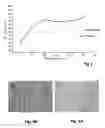
FIG. 5A and FIG. 5B are scanning electron microscopy (SEM) pictures of respectively unfunctionalized (non-treated) aluminum substrate, and functionalized (treated) aluminum substrate according to the invention;
FIG. 6 shows curves of galvanostatic cycling at cycle 1 (C/10) of functionalized and unfunctionalized current collectors;
FIG. 7 shows curves of galvanostatic cycling at cycle 10 (C/10) of functionalized and unfunctionalized current collectors;
FIG. 8 are linear sweep voltammetry curves of unfunctionalized and functionalized aluminum substrates of the comparative example 2.
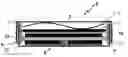
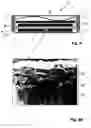
FIG. 9 is a schematic cross section of a lithium ion battery in the shape of a button cell.
FIG. 9A is a SEM cross section image of the interface between cathode and functionalized current collector.
FIG. 10 shows curves of second galvanostatic cycle (voltage versus time) for battery of example 4 with functionalized (G) aluminum current collector compared to same battery with unfunctionalized (NG) aluminum current collector.
FIG. 11 shows the evolution of discharge capacity during the first 10 cycles for batteries of example 4 with functionalized (G) aluminum current collector compared to same battery with unfunctionalized (NG) aluminum current collector.
DETAILED DESCRIPTION OF THE INVENTION
Example 1
I/ Functionalization Procedure of a Current Collector
I-a) Chemicals
All standard chemicals were purchased from Sigma Aldrich. In the examples the aniline precursor for preparing the diazonium salt was 4-(heptadecafluorooctyl) aniline, the reducing agent tert-butylnitrite and the electrolyte was tetraethylammonium tetrafluoroborate dissolved in acetonitrile. All those reactants were used as received.
I-b) Preparation of Aluminum Substrates
A sheet (foil of 125 μm thickness) of non-allied aluminum was chosen with a purity of 99%. Before doing any functionalizing on this current collector the surface was dry polished using a finer abrasive (preferably grade 500) to remove the aluminum oxide layer, and then washed in a bath with acetone and ethanol using ultra-sonication.
I-c) Functionalization
Typical functionalizing experiments were carried out in open air at room temperature (20-25° C.) and atmospheric pressure.
A first electrolyte solution of 0.1M tetraethylammonium tetrafluoroborate in acetonitrile was prepared. Then a second solution of diazonium salts (10 mM) was prepared by adding 4-(heptadecafluorooctyl) aniline and 3 equivalents of tert-butylnitrite to the first solution. This “diazonium solution” was kept under stirring for 30 minutes around.
Electrochemical functionalizing experiments were carried out in a three-electrode cell containing the “diazonium solution” and comprising a working electrode at which the functionalizing reaction takes place (aluminum sheet), an auxiliary electrode (platinum plate) and a reference electrode (Ag/AgCl). Chronoamperometry (CA) permitted to reduce the diazonium cations on the aluminum substrate to form a functionalized surface. The working electrode was polarized at −0.9V vs. Ag/AgCl for different periods of time (preferably at least 1 minute) according to the desired degree of functionalizing. At the end of the functionalizing process, the modified current collector was washed by dipping in acetone under ultrasonication to remove the unfunctionalized molecules from the aluminum surface.
II/ Characterisation of the Functionalized Surface
II-a) Surface Modification
In order to measure the surface tension and also to observe the shape of a water drop on the substrate, the contact angles of each sample were measured 5 times using the sessile-drop method by dispensing 1 mL droplets on the sample surfaces. All of the contact angle measurements were taken under ambient laboratory conditions with a temperature of ˜20° C. and a relative humidity of ˜45%.
In addition, the surface was watched with a scanning electron microscope and analyzed by X-ray dispersive spectroscopy. Results are presented in Table 1 below:
| TABLE 1 | |||
| X-ray | |||
| micro | |||
| Water | Surface energy (mN m−1) | analysis |
| Functionalizing | Contact | Polar | Dispersive | (% mass | ||
| Substrate | by CA | Angle | Total | component | component | fluorine) |
| Aluminum | no | 63 | 43 | 12 | 31 | 0.05 ± 0.06 |
| 99% - foil | yes | 92 | 20 | 5 | 15 | 0.30 ± 0.06 |
| 125 μm | ||||||
| CA = chrono amperometry | ||||||
| % mass fluorine given for a 100 × 100 × 1 μm3 |
A drastic increase of the % mass fluorine is observed and is assigned to the presence of perfluoroalkyl groups on the functionalized surface.
The contact angle of the water drop is higher for modified aluminum and the value of the polar component of surface energy decreases when the substrate is functionalized. All these results enable to conclude on the modification of aluminum surface samples by functionalizing a hydrophobic molecular layer.
II-b) Impedance Spectroscopy
The impedance spectroscopy (see Nyquist's diagram on FIG. 1) permits mainly to determine that the current collector surface has been modified by the functionalizing procedure. After establishment of a model (see FIGS. 2 and 3 and respective calculated values presented in tables 2 and 3) it is possible to notice a new input due to the functionalized layer.
| TABLE 2 | ||||
| Index i | Ri (Ω) | Qi (F · s−1/ai) | ai | |
| 0 | 6 | — | — | |
| 1 | — | — | — | |
| 2 | 309 | 33 10−6 | 0.73 | |
| 3 | 459 | 0.7 10−3 | 0.66 | |
| TABLE 3 | ||||
| Index i | Ri (Ω) | Qi (F · s−1/ai) | ai | |
| 0 | 6 | — | — | |
| 1 | 14 | 2 10−6 | 0.1 | |
| 2 | 423 | 29 10−6 | 0.75 | |
| 3 | 264 | 0.9 10−3 | 0.68 | |
This new input has a low resistance (14Ω) and a constant phase element (CPE) of 2.10−6 F s−1/a. The calculated values indicate that this new input (due to the functionalized molecular layer) is weak and has little influence on the electron transfer. Therefore, it would not alter the basic requirements for a current collector.
III/ Effect of Functionalizing
III-a) Linear Sweep Voltammetry
Electrochemical cell (SwageLock cell):
-
- Reference and counter electrode=lithium metal;
- Working electrode=aluminum (functionalized or non-functionalized surface);
- Electrolyte=LiTFSI 0.75M in EC:DEC (3:7).
(EC=Ethylene carbonate/DEC=Diethylcarbonate)
Parameters:
-
- Speed rate=1 mV s−1;
- Electrode surface=1.13 cm2;
- Emin=Eoc (open-circuit voltage);
- Emax=5 V vs. Li/Li+.
In this voltammetric method the current at a working electrode is measured while the potential between the working electrode and a reference electrode is swept linearly with time, from Emin to Emax at a determined speed rate. The selected area analyzed by this method is 1.2 cm2 for all the samples. There are two phenomena to observe on FIG. 4.
First of all the maximum current measured at 5V vs. Li/Li+ is totally different when the aluminum is functionalized or not. An impressive decrease of the maximum current of 80% is observed when the aluminum current collector is functionalized by the functionalized molecules. Since the current is proportional to the corrosion rate this clearly indicates that the functionalizing treatment according to the present invention reduces aluminum pitting by a factor of at least 3.
The second interesting parameter is the potential value at which the current begins to raise, which corresponds to the potential at which the corrosion phenomenon begins. It is shown on the graph that the curve corresponding to the functionalized current collector begins to raise after the non-coated one.
So the functionalized surface according to the present invention increases the corrosion potential of the current collector from 3.9 V vs. Li/Li+ up to 4.2V vs. Li/Li+. This means that the functionalized current collector can be used at a higher potential than the unfunctionalized one, thus enabling to reach higher cell voltage when this functionalized current collector will be integrated in a real device. For an energy storage device, this would imply working with higher energy density in the device using the functionalized current collectors.
III-b) Scanning Electron Microscopy
SEM images were taken with secondary electron imaging mode and are presented in FIGS. 5A and 5B.
The corrosion of aluminum generally appears in the form of localized corrosions called pitting, i.e.: small holes created in the metal surface. Holes (5 to 20 μm diameter) seen on the right picture (FIG. 5A) are evidencing that the untreated current collector is quickly degraded by corrosion. The picture on the left (FIG. 5B) shows the efficiency of the functionalized aluminum substrate according to the present invention with virtually no holes (no corrosion) thus confirming the electrochemical results presented above.
III-c) Galvanostatic Cycling
Electrochemical Cell:
-
- Reference and counter electrode=lithium metal;
- Working electrode=NMC (Nickel Manganese Cobalt) cathode (LiNi1/3Mn1/3Co1/3O2) casted on unfunctionalized or functionalized aluminum; this material is a standard material classically used as positive electrode in Li-ion batteries;
- Electrolyte=LiTFSI 0.75M in EC:DEC (3:7).
(EC=Ethylene carbonate/DEC=Diethylcarbonate)
Parameters:
-
- Average mass of active material=5 mg cm2;
- Average current=±136 pA;
- Emin=2.7 V VS. Li/Li+;
- Emax=4.2 V VS. Li/Li+;
- C/10.
The galvanostating cycling curves are presented on FIGS. 6 and 7 respectively corresponding to cycle 1 (C/10) and cycle 10 (C/10).
It can be noticed that the NMC electrode operates in the same manner whether the current collector surface is functionalized or not, which means that, as expected, the functionalizing treatment according to the present invention does not change the electrochemical behavior of the NMC cathode material.
The polarization is also an interesting phenomenon to look at. Indeed the potential width observed between the charge and the discharge is the same for all the batteries tested. The NMC cathode operates as usual when deposed on a treated current collector. Thus the functionalizing treatment prevents corrosion of the aluminum current collector without inhibiting the electrochemical performance of the NMC electrode.
Example 2 (Comparative)
IV/ Functionalizing Procedure of a Non-Fluorinated Molecule
IV-a) Preparation of Aluminum Substrates
A sheet (foil of 125 μm thickness) of non allied aluminum was chosen with a purity of 99%. Before doing any functionalizing on this current collector the surface was dry polished using a finer abrasive (500 grade) and then washed with acetone and ethanol under ultrasonication.
IV-b) Functionalizing
Typical functionalizing experiments were carried out in open air at room temperature (20-25° C.) and atmospheric pressure.
A first solution of an electrolyte of 0.1M tetraethylammonium tetrafluoroborate in acetonitrile was prepared. Then a second solution of diazonium salts (10 mM) was prepared by adding 4-dodecyl aniline and 3 equivalents of tert-butyl nitrite to the first solution. This “diazonium solution” was kept under stirring for 30 minutes.
Electrochemical functionalizing experiments were carried out in a three-electrode cell containing the “diazonium solution” comprising a working electrode at which the functionalizing reaction takes place (aluminum sheet), an auxiliary electrode (platinum plate) and a reference electrode (Ag/AgCl). Chronoamperometry (CA) permitted to reduce the diazonium cations on the aluminum substrate to form a film functionalized surface. The working electrode was polarized at −1.2V vs. Ag/AgCl for different periods of time according to the desired degree of functionalizing. At the end of the functionalizing process, the modified current collector was dipped in acetone under ultrasonication.
IV-c) Characterisation of Functionalized Surface
In order to measure the surface tension and also to observe the shape of a water drop on the substrate, the contact angles of each sample were measured 5 times using the sessile-drop method by dispensing 1 mL droplets on the sample surfaces. All of the contact angle measurements were taken under ambient laboratory conditions with a temperature of ˜20° C. and a relative humidity of ˜45%.
Results are presented in Table 4 below:
| TABLE 4 | |||
| Functionalizing | Water | Surface energies (mN m−1) |
| Functionalizing | time | Contact | Polar | Dispersive | ||
| Substrate | step by CA | (min) | angle | Total | component | component |
| Aluminum | no | — | 63 | 43 | 12 | 31 |
| 99% - foil | yes | 5 | 88 | 28 | 4 | 24 |
| 125 μm | 1 | 93 | 34 | 1 | 32 | |
| CA = chronoamperometry |
The contact angle of the water drop is higher for functionalized aluminum and the value of the polar component of surface energy decrease when the substrate is functionalized.
All these results permit to conclude on the modification of aluminum surface samples by functionalizing a hydrophobic molecule layer.
IV-d) Effect of Coating
Electrochemical Cell:
-
- Reference and counter electrode=lithium metal;
- Working electrode=aluminum (functionalized or non-functionalized);
- Electrolyte=LiTFSI 0.75M in EC:DEC (3:7).
Parameters:
-
- Speed rate=1 mV s−1;
- Electrode surface=1.13 cm2;
- Emin=Eoc (open-circuit voltage);
- Emax=5 V vs. Li/Li+.
In this voltammetric method the current at a working electrode is measured while the potential between the working electrode and a reference electrode is swept linearly from Emin to Emax at a fixed speed rate. The curves are really similar: there is no reduction of the corrosion current at 5V vs. Li/Li+ and no rise decrease in the corrosion potential. The non-fluorinated molecule functionalized on the aluminum surface does not prevent the corrosion of the current collector.
Example 3 (Comparative)
The influence of the polishing step has been tested. The support is an Aluminum Goodfellow sheet with a purity of 99%.
The surface of aluminum has been polished with an abrasive paper 800.
The functionalizing treatment has then been performed by chronoamperometry according to the conditions described in example 1 (step I-c).
Comparative tests have been made, before and after functionalization, with the aluminum sheet without polishing, after polishing under water lubrification or with dry polishing. The results are presented in table 5 below:
| TABLE 5 | |||
| Contact angle (°) | Contact angle (°) | ||
| of a water drop | of a water drop | ||
| BEFORE | AFTER | ||
| FUNCTIONN- | FUNCTIONN- | ||
| Polishing step | ALIZATION | ALIZATION | |
| Without polishing | 31 ± 2 | 36 ± 2 | |
| Water polishing | 33 ± 2 | 48 ± 2 | |
| Dry polishing | 35 ± 2 | 100 ± 2 | |
It appears that the polishing step is an important step in the to functionalization treatment of the present invention, in particular for aluminum substrates. In fact the aluminum support surface needs to be polished without lubricant, more specifically without water. The polishing step aims to remove all or part of oxide layer and obtain an electro-active surface. If water is used during this step the oxide layer seems to be reformed instantly. Therefore dry polishing is much preferred.
Example 4
A full electrochemical device like a lithium ion battery could be in the shape of a button cell as shown in FIG. 9. Assembly of such button cell battery is described hereafter.
The button cell case 1 comprises a cathode shell 2 and an anode shell 3, both made of stainless steel, separated by an insulating gasket 4.
Assembly of the respective parts of the button cell comprises the superposition of the following components from bottom (cathode shell) to top (anode shell) as shown on FIG. 9:
-
- on top of the cathode shell is placed the current collector with its functionalized surface turned upwards, in contact with the cathode 21 material
- on to the cathode 21 is deposited a porous separator 6 either soaked with the liquid electrolyte comprising LITFSI or made of a solid electrolyte containing LITFSI
- on top of the separator 6 is laid the anode 31 material (usually graphite) casted in the anode current collector 32, usually in copper
- then is placed a stainless steel spacer 5 and a spring 7 is interposed between the spacer 5 and the anode shell 3 to ensure a sufficient pressure between all the components of the button cell
- after having positioned the anode shell 3 on top of all the components, the button cell is sealed using an automatic press.
The SEM image of the enlarged cross section of FIG. 9A shows the cathode current collector 22 with its functionalized surface 23 (too thin to be clearly observed) on top of which is laid the cathode electrode 21.
More precisely, as a specific example of the cell of FIG. 9, the electrochemical cell is made of:
-
- a graphite anode casted onto a copper current collector;
- a NMC (Nickel Manganese Cobalt) cathode (LiNi1/3Mn1/3Co1/3O2) casted on unfunctionalized aluminum (for comparative tests) or functionalized aluminum; this cathode material is a standard material classically used as positive electrode in Li-ion batteries;
- the electrolyte is LiTFSI 0.75M in EC:DEC (3:7).
(EC=Ethylene carbonate/DEC=Diethylcarbonate)
The parameters of the above electrochemical cell are as follows:
-
- Average mass of active material (cathode)=7.5 mg cm2;
- Average mass of active material (anode)=3.3 mg cm2;
- Average current=26 mA·g−1;
- Emin=2.8 V;
- Emax=4.0 V;
- C/5.
With the above electrochemical cell have been performed several galvanostatic cycles (voltage versus time):
FIG. 10 presents a comparison between the second galvanostatic cycle with a functionalized (NG) aluminum current collector.
It is noted that the capacitance of the battery is similar for both cells. The presence of a functionalized surface between the current collector and the cathode have therefore no negative influence on the battery capacity.
FIG. 11 shows that the functionalized surface of the cathode current collector have also no negative influence on cyclability of the electrochemical cell.
Claims
1. Electrochemical device or photo-electrochemical device comprising:
an electrolyte containing a bistriflimide anion, hereafter named as TFSI″, at least two electrodes, each of these electrodes being in contact with a current collector comprising a metal support
wherein at least one electrode has a current collector the metal support of which comprises an electro-active surface which is functionalized with linear or branched fluorinated carbon chains, such as perfluoroalkyl chains, in the form of a molecular layer which improves the corrosion resistance of said functionalized surface compared to a non-functionalized surface, wherein not impairing the passage of electrons between said electrode and its current collector, the functionalized surface being at the interface between said electrode and its current collector.
2. Electrochemical device or photo-electrochemical device according to claim 1, wherein the fluorinated carbon chains of the functionalized electro-active surface comprise perfluoroalkyl aryl moieties.
3. Electrochemical device or photo-electrochemical device according to claim 1, wherein the perfluoroalkyl aryl moiety is an aromatic cycle which is mono- or di-substituted by respectively one or two linear or branched perfluoroalkyl chain(s), preferably linear or branched perfluoro C1 to C20 alkyl chain(s), more preferably linear or branched perfluoro C1 to C10 alkyl chain(s).
4. Electrochemical device or photo-electrochemical device according to claim 1, wherein the linear or branched fluorinated carbon chain is a perfluoroalkyl chain chosen among the following groups: trifluoromethyl, perfluorohexyl and perfluorooctyl group.
5. Electrochemical device or photo-electrochemical device according to claim 1, wherein the metal support of the current collector is an aluminum substrate having a purity above 95%, preferably a purity equal or above 99% or an aluminum alloy comprising more than 95% Al, preferably more than 99% Al.
6. Electrochemical device or photo-electrochemical device according to claim 1, wherein the TFSI″ containing electrolyte is a liquid electrolyte, preferably a mixture of a salt containing the TFSI″ anion, such as LiTFSI, NaTFSI, or NH4TFSI, and an organic solvent or mixture of organic solvents or the former salts dissolved in pure or diluted molten salt, known as ionic liquids.
7. Electrochemical device or photo-electrochemical device according to claim 1, wherein the TFSI″ containing electrolyte is a solid electrolyte, preferably a polymer based electrolyte, preferably a mixture of a salt containing this anion, such as LiTFSI, NaTFSI, or NH4TFSI, and a polymer or mixture of polymer or a physical ionogel or a chemical ionogel comprising a silica matrix or a mixture of silica and a polymer matrix.
8. Electrochemical device or photo-electrochemical device according to claim 1 wherein said device is chosen among: an energy storage device, a lithium-ion, sodium-ion, magnesium-ion, a calcium-ion or an aluminum battery, an electrochemical capacitor so called supercapacitor, a lithium-ion or a sodium-ion capacitor, a hybrid device intermediate between battery and supercapacitor, a photo-battery, or an electro-chromic device.
9. Electrochemical device according to claim 1 wherein said device is a lithium-ion battery comprising
a graphite anode with a copper current collector,
a Nickel Manganese Cobalt cathode with a functionalized aluminum current collector, and
LiTFSI 0.75M in Ethylene carbonate:Diethylcarbonate as electrolyte.
10. Process for preparing the functionalized current collector of the electrochemical device or photo-electrochemical device of claim 1 comprising the following main steps:
Providing a current collector for electrochemical devices, said current collector comprising a support with a metallic surface;
Polishing said metallic surface with a fine abrasive to remove any oxide layer, then washing said surface with an organic solvent under ultra-sonication to obtain a polished electro-active surface;
Functionalizing the polished electro-active surface by dipping said surface of the current collector in a solution comprising a diazonium salt of a perfluoroalkyl moiety, preferably a perfluoroalkyl aryl moiety, under reducing conditions of the diazonium salt, and obtaining an electro-active surface functionalized with the perfluoroalkyl aryl moiety,
Optionally washing the functionalized surface with an organic solvent under ultra-sonication, to remove the non-functionalized molecules from the electro-active surface of the support.
11. Process according to claim 10 wherein the functionalized step is performed in an any one of an electrochemical cell, a photochemical cell, a heated cell or a sonicated cell,
and/or with the help of a chemical reducer in said solution.
12. Process according to claim 10 wherein the polishing step is a dry polishing step.
13. Process according to claim 10 wherein the functionalizing step is performed in a chronoamperometric cell containing a solution comprising a diazonium salt of the functionalizing perfluoroalkyl aryl moiety, an auxiliary electrode, a reference electrode and said metallic support as working electrode, at a potential under the redox potential of said diazonium salt of the functionalizing perfluoroalkyl aryl moiety.
14. Process according to claim 13 wherein the auxiliary electrode of the chronoamperometric cell is an electronically conductive plate, and the working electrode of the chronoamperometric cell is said metallic support of the current collector made of an aluminum substrate having a purity above 95%, or made of an aluminum alloy comprising than 95% Al.
15. Process according to claim 14 wherein said aluminum substrate having a purity above 99%.
16. Process according to claim 14 wherein said aluminum alloy comprising than 99% Al.
Images & Drawings included:



Sources:
- United States Patent and Trademark Office - verify current appl. status at the USPTO↗
Recent applications in this class:
- » 20250270727 2025-08-28
ELECTRODEPOSITION COATING COMPOSITION, COATING, COATED ARTICLE, COATED ELECTRIC WIRE AND PRINTED BOARD - » 20250101627 2025-03-27
PREPARATION METHOD OF COLLAGEN MATERIAL STRIPPED FROM ELECTRODE AND USE OF COLLAGEN MATERIAL - » 20250003106 2025-01-02
FUNCTIONALIZING CARBON NANOSTRUCTURES - » 20240426018 2024-12-26
TITANIUM MATERIAL AND COATED TITANIUM MATERIAL - » 20240410074 2024-12-12
ELECTRODEPOSITION COATING COMPOSITION AND ITS PREPARATION - » 20240344228 2024-10-17
FLIMS, METHODS OF PREPARING THE SAME, AND DISPLAY PANELS - » 20240344227 2024-10-17
METHOD OF MAKING SUPERCAPACITOR VIA ELECTRODEPOSITION - » 20240218550 2024-07-04
CARBON FIBER REINFORCED COMPOSITES AND METHOD FOR MAKING SAME - » 20240150922 2024-05-09
FORMATION OF ORGANIC ELECTRO-GRAFTED FILMS ON THE SURFACE OF ELECTRICALLY CONDUCTIVE OR SEMI-CONDUCTIVE SURFACES - » 20230151506 2023-05-18
TITANIUM SURFACE TREATMENT METHOD
Recent applications for this Assignee:
- » 20240400695 2024-12-05
METHODS FOR PROMOTING T CELLS RESPONSE - » 20240150721 2024-05-09
Use of a Laminin for Differentiating Pluripotent Cells into Hepatocyte Lineage Cells - » 20230074459 2023-03-09
Rechargeable non-aqueous lithium-air battery cell comprising a solid organic catalyst - » 20220323639 2022-10-13
PHOSPHOCALCIC CEMENT COMPOSITION COMPRISING BLOOD - » 20220281983 2022-09-08
Method of promoting a t-cell response or treating cancer by administering an antagonist to human c-type lectin-like receptor-1 (CLEC-1) - » 20220273841 2022-09-01
BONE CEMENT WITH HYALURONIC ACID - » 20220193252 2022-06-23
RAAV WITH CHEMICALLY MODIFIED CAPSID - » 20220105203 2022-04-07
CAPPED AND UNCAPPED RNA MOLECULES AND BLOCK COPOLYMERS FOR INTRACELLULAR DELIVERY OF RNA - » 20220098705 2022-03-31
Nickel-based superalloy having high mechanical strength at a high temperature - » 20220098618 2022-03-31
RECOMBINANT ADENO-ASSOCIATED VIRUS PARTICLE PURIFICATION WITH MULTIPLE-STEP ANION EXCHANGE CHROMATOGRAPHY