Heat-dissipating ceramic foam containing carbonized cellulose particles and method for producing the same
US20180282232A1
2018-10-04
15/764,057
2016-03-29
✅ Patent granted
US 10,584,071 B2
2020-03-10
WO; PCT/KR2016/003191; 20160329
WO; WO2017/082487; 20170518
Noah S Wiese
Norton Rose Fulbright US LLP
2036-03-29
Abstract:
The present disclosure provides a method for producing a heat-dissipating ceramic foam containing carbonized cellulose particles, the method including: mixing particles of carbonized cellulose or carbonized cellulose-containing substance, ceramic powders, silicate, and water to form slurry; adding a foaming agent to the slurry to form foamed slurry; and drying the foamed slurry.
Assignee:
- PUKYONG NATIONAL UNIVERSITY INDUSTRY-UNIVERSITY COOPERATION FOUNDATION 139 🇰🇷 Busan, South Korea
- OSANG M&ET CO., LTD 1 🇰🇷 Busan, South Korea
Applicant:
Interested in similar patents?
Get notified when new applications in this technology area are published.
Classification:
C04B35/52 IPC
Shaped ceramic products characterised by their composition ; Ceramics compositions ; Processing powders of inorganic compounds preparatory to the manufacturing of ceramic products based on non-oxide ceramics based on carbon, e.g. graphite
H01L33/64 IPC
Semiconductor devices with at least one potential-jump barrier or surface barrier specially adapted for light emission; Processes or apparatus specially adapted for the manufacture or treatment thereof or of parts thereof; Details thereof characterised by the semiconductor body packages Heat extraction or cooling elements
C04B18/248 » CPC further
Use of agglomerated or waste materials or refuse as fillers for mortars, concrete or artificial stone ; Treatment of agglomerated or waste materials or refuse, specially adapted to enhance their filling properties in mortars, concrete or artificial stone; Waste materials; Refuse organic; Vegetable refuse, e.g. rice husks, maize-ear refuse; Cellulosic materials, e.g. paper, cork from specific plants, e.g. hemp fibres
C04B28/26 » CPC further
Compositions of mortars, concrete or artificial stone, containing inorganic binders or the reaction product of an inorganic and an organic binder, e.g. polycarboxylate cements containing alkyl, ammonium or metal silicates; containing silica sols Silicates of the alkali metals
C04B33/04 » CPC further
Clay-wares; Preparing or treating the raw materials individually or as batches Clay; Kaolin
C04B33/132 » CPC further
Clay-wares; Preparing or treating the raw materials individually or as batches; Compounding ingredients Waste materials; Refuse
C04B33/135 » CPC further
Clay-wares; Preparing or treating the raw materials individually or as batches; Compounding ingredients; Waste materials; Refuse Combustion residues, e.g. fly ash, incineration waste
C04B35/14 » CPC further
Shaped ceramic products characterised by their composition ; Ceramics compositions ; Processing powders of inorganic compounds preparatory to the manufacturing of ceramic products based on oxide ceramics based on silica
C04B35/18 » CPC further
Shaped ceramic products characterised by their composition ; Ceramics compositions ; Processing powders of inorganic compounds preparatory to the manufacturing of ceramic products based on oxide ceramics based on silicates other than clay rich in aluminium oxide
C04B35/522 » CPC further
Shaped ceramic products characterised by their composition ; Ceramics compositions ; Processing powders of inorganic compounds preparatory to the manufacturing of ceramic products based on non-oxide ceramics based on carbon, e.g. graphite Graphite
C04B35/6365 » CPC further
Shaped ceramic products characterised by their composition ; Ceramics compositions ; Processing powders of inorganic compounds preparatory to the manufacturing of ceramic products; Forming processes; Processing powders of inorganic compounds preparatory to the manufacturing of ceramic products; Preparing or treating the powders individually or as batches ; preparing or treating macroscopic reinforcing agents for ceramic products, e.g. fibres; mechanical aspects section using additives specially adapted for forming the products, e.g.. binder binders; Organic additives; Polysaccharides or derivatives thereof Cellulose or derivatives thereof
C09K5/14 » CPC further
Heat-transfer, heat-exchange or heat-storage materials, e.g. refrigerants; Materials for the production of heat or cold by chemical reactions other than by combustion; Materials not undergoing a change of physical state when used Solid materials, e.g. powdery or granular
F28F13/003 » CPC further
Arrangements for modifying heat-transfer, e.g. increasing, decreasing by using permeable mass, perforated or porous materials
F28F21/02 » CPC further
Constructions of heat-exchange apparatus characterised by the selection of particular materials of carbon, e.g. graphite
F28F21/04 » CPC further
Constructions of heat-exchange apparatus characterised by the selection of particular materials of ceramic; of concrete; of natural stone
H05K7/2039 » CPC further
Constructional details common to different types of electric apparatus; Modifications to facilitate cooling, ventilating, or heating characterised by the heat transfer by conduction from the heat generating element to a dissipating body
H05K7/2039 » CPC further
Constructional details common to different types of electric apparatus; Modifications to facilitate cooling, ventilating, or heating characterised by the heat transfer by conduction from the heat generating element to a dissipating body
C04B2235/40 » CPC further
Aspects relating to ceramic starting mixtures or sintered ceramic products; Composition of constituents of the starting material or of secondary phases of the final product; Constituents and secondary phases not being of a fibrous nature Metallic constituents or additives not added as binding phase
C04B2235/402 » CPC further
Aspects relating to ceramic starting mixtures or sintered ceramic products; Composition of constituents of the starting material or of secondary phases of the final product; Constituents and secondary phases not being of a fibrous nature; Metallic constituents or additives not added as binding phase Aluminium
C04B2235/405 » CPC further
Aspects relating to ceramic starting mixtures or sintered ceramic products; Composition of constituents of the starting material or of secondary phases of the final product; Constituents and secondary phases not being of a fibrous nature; Metallic constituents or additives not added as binding phase Iron group metals
C04B2235/408 » CPC further
Aspects relating to ceramic starting mixtures or sintered ceramic products; Composition of constituents of the starting material or of secondary phases of the final product; Constituents and secondary phases not being of a fibrous nature; Metallic constituents or additives not added as binding phase Noble metals
C04B2235/80 » CPC further
Aspects relating to ceramic starting mixtures or sintered ceramic products; Aspects relating to sintered or melt-casted ceramic products Phases present in the sintered or melt-cast ceramic products other than the main phase
F28F2255/06 » CPC further
Heat exchanger elements made of materials having special features or resulting from particular manufacturing processes composite, e.g. polymers with fillers or fibres
H01L33/641 » CPC further
Semiconductor devices with at least one potential-jump barrier or surface barrier specially adapted for light emission; Processes or apparatus specially adapted for the manufacture or treatment thereof or of parts thereof; Details thereof characterised by the semiconductor body packages; Heat extraction or cooling elements characterized by the materials
C04B38/02 » CPC main
Porous mortars, concrete, artificial stone or ceramic ware; Preparation thereof by adding chemical blowing agents
C04B18/24 IPC
Use of agglomerated or waste materials or refuse as fillers for mortars, concrete or artificial stone ; Treatment of agglomerated or waste materials or refuse, specially adapted to enhance their filling properties in mortars, concrete or artificial stone; Waste materials; Refuse organic Vegetable refuse, e.g. rice husks, maize-ear refuse; Cellulosic materials, e.g. paper, cork
C04B35/636 IPC
Shaped ceramic products characterised by their composition ; Ceramics compositions ; Processing powders of inorganic compounds preparatory to the manufacturing of ceramic products; Forming processes; Processing powders of inorganic compounds preparatory to the manufacturing of ceramic products; Preparing or treating the powders individually or as batches ; preparing or treating macroscopic reinforcing agents for ceramic products, e.g. fibres; mechanical aspects section using additives specially adapted for forming the products, e.g.. binder binders; Organic additives Polysaccharides or derivatives thereof
F28F13/00 IPC
Arrangements for modifying heat-transfer, e.g. increasing, decreasing
H05K7/20 IPC
Constructional details common to different types of electric apparatus Modifications to facilitate cooling, ventilating, or heating
H05K7/20 IPC
Constructional details common to different types of electric apparatus Modifications to facilitate cooling, ventilating, or heating
Description
FIELD
The present disclosure relates to a heat-dissipating ceramic foam containing particles of carbonized cellulose or carbonized cellulose-containing substance such as coffee grounds and a method for producing the same.
BACKGROUND
With weight reduction, thinning, miniaturization and multi-functionalization of electronic devices, an integration degree thereof increases. Thus, much heat is generated therefrom, and, thus, problems such as malfunction caused by heat. Hence, there is interest and research on the heat release of the electronic devices.
A heat sink is used for heat dissipation. The heat sink may use a principle that when two substances contact each other, the substances distribute heat energy thereof to each other and eventually reach a thermal equilibrium. Thus, the heat sink may receive a strong heat of a heat source and lower the temperature of the heat source. In general, the heat sink is made of aluminum, which has a good thermal conductivity, and is formed into a shape of a fin to maximize a conducting surface area to enable maximum contact with a surrounding air to dissipate the heat by natural convection. However, there is a problem in that it takes a lot of time and cost to fabricate the heat sink. The heat sink may have a heavy weight depending on the metal and a limitation of the surface area size due to manufacturing limitations.
A ceramic foam is widely used as a heat insulating material based on excellent properties of ceramics such as thermal stability, superior mechanical strength, low density, light weight and ability to contain air in pores. However, even with the excellent properties of ceramics and the large surface area thereof, the ceramic foam has not served as the heat dissipating means because of the low thermal conductivity of the ceramic.
SUMMARY
The present inventor has recognized the above-mentioned conventional problems and thus provided a ceramic foam which may be used as the heat dissipating means, and a method for producing the foam.
In one aspect, the present disclosure provides a method for producing a heat-dissipating ceramic foam containing carbonized cellulose particles including: mixing particles of carbonized cellulose or carbonized cellulose-containing substance, ceramic powders, silicate, and water to form slurry; adding a foaming agent to the slurry to form foamed slurry; and drying the foamed slurry.
The cellulose is a major constituent of vegetable cell walls and is found in wood, cotton, and grains. The present disclosure uses particles of carbonized cellulose or carbonized cellulose-containing substance rather than cellulose or cellulose-containing substance itself. The particles of carbonized cellulose or carbonized cellulose-containing substance refer to particles of cellulose or carbonized cellulose-containing substance as carbonized by heat.
The particles of the carbonized cellulose or carbonized cellulose-containing substance include coffee grounds. In this connection, the coffee grounds refer to residues of roasted coffee beans after coffee is extracted therefrom. An example thereof may be coffee puck of espresso.
The ceramic powders, for example, include at least one selected from a group consisting of elvan, ocher stone, olivine, kaolin, silica mineral, diatomite, wollastonite, pyrophyllite, dolomite, lithium minerals, magnesite, bauxite, bentonite, pumice, borate, serpentine, acid clay, iron oxide, garnet, carbonate minerals, attapulgite, sepiolite, nephrite, apatite, illite-mica, feldspar, perlite, vermiculite, zeolite, barite, talc, diatomaceous earth, graphite, hectorite, clay minerals, zirconium minerals, titanium minerals, tourmaine, fume silica, aerogel, fly ash, and blast furnace slag. However, the present disclosure is not limited thereto.
The silicate may include at least one selected from a group consisting of sodium silicate, powdered sodium silicate, potassium silicate, lithium silicate, and sodium alumino-silicate. The present invention is not limited thereto.
The foaming agent may be calcium carbonate, sodium bicarbonate or hydrogen peroxide. As long as the foaming agent is added in the slurry and forms pores in the slurry, the foaming agent is not limited to the above-listed material.
Mixing the particles of carbonized cellulose or carbonized cellulose-containing substance, ceramic powder, silicate, and water may include mixing the particles of carbonized cellulose or carbonized cellulose-containing substance, ceramic powder, silicate, water, and metal powders, wherein the metal powders include at least one selected from a group consisting of Au, Ag, Zn, Al, Fe, Mg and Sn.
Mixing the particles of carbonized cellulose or carbonized cellulose-containing substance, ceramic powder, silicate, and water may include mixing the particles of carbonized cellulose or carbonized cellulose-containing substance, ceramic powder, silicate, water, and activated carbons. The activated carbon may include activated charcoal. The activated carbon may be added to the ceramic foam of the present disclosure to improve mechanical strength and thermal conductivity of the foam.
In another aspect, the present disclosure provides a heat-dissipating ceramic foam including particles of carbonized cellulose or carbonized cellulose-containing substance.
The particles of carbonized cellulose or carbonized cellulose-containing substance may include coffee grounds.
The foam may further include metal powders, wherein the metal powers may include at least one selected from a group consisting of gold, silver, Zn, Al, Fe, Mg, and Sn.
The foam may further include activated carbons.
The ceramic foam in accordance with the present disclosure has a surface area that is much larger than that of a conventional heat-dissipating material, thereby to have a spacious contact area with air. In addition, the present ceramic foam has superior heat conduction characteristics to the conventional ceramic foam. Thus, the present foam may provide excellent heat dissipation.
Further, in order to improve the heat conduction property, cellulose carbides such as coffee grounds are contained in the foam rather than thermally conductive particles such as general metal particles or carbon particles. Thus, the present foam has sufficient mechanical strength while having compact pores.
In addition, when the coffee grounds are used as the cellulose carbide, the coffee grounds that otherwise only is used for deodorizing purposes might be recycled. The coffee grounds may be obtained by roasting of coffee beans including carbonization and granulation by pulverization, and by removal of unnecessary components by extraction. In this way, any separate process for forming the carbonized cellulose particles may be removed.
BRIEF DESCRIPTION OF THE DRAWINGS
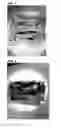
FIG. 1 to FIG. 4 are photographs illustrating foaming agents prepared in Example 1 to Example 4, respectively.
FIG. 5A to FIG. 8B are photographs of the foams as taken by a thermal imaging camera, wherein the foams prepared in Example 1 to Example 4 are attached to LED chips respectively.
DETAILED DESCRIPTIONS
Examples of various embodiments are illustrated and described further below. It is intended to cover alternatives, modifications, and equivalents as may be included within the spirit and scope of the present disclosure as defined by the appended claims. Examples of various embodiments are illustrated and described further below. It will be understood that the description herein is not intended to limit the claims to the specific embodiments described. The same reference numbers in different figures denote the same or similar elements, and as such work similar functionality.
The terminology used herein is for the purpose of describing particular embodiments only and is not intended to be limiting of the present disclosure. As used herein, the singular forms “a” and “an” are intended to include the plural forms as well, unless the context clearly indicates otherwise. It will be further understood that the terms “comprises”, “comprising”, “includes”, and “including” when used in this specification, specify the presence of the stated features, integers, operations, elements, and/or components, but do not preclude the presence or addition of one or more other features, integers, operations, elements, components, and/or portions thereof. As used herein, the term “and/or” includes any and all combinations of one or more of the associated listed items. Expression such as “at least one of” when preceding a list of elements may modify the entire list of elements and may not modify the individual elements of the list.
Unless otherwise defined, all terms including technical and scientific terms used herein have the same meaning as commonly understood by one of ordinary skill in the art to which this inventive concept belongs. It will be further understood that terms, such as those defined in commonly used dictionaries, should be interpreted as having a meaning that is consistent with their meaning in the context of the relevant art and will not be interpreted in an idealized or overly formal sense unless expressly so defined herein.
1. Preparation and Physical Properties Evaluation of Foam
Example 1
5 g of silica, 2 g of aluminum powder, 12.5 g of PVA, 20 ml of liquid silicate, and 15 ml of water were mixed to form slurry. 1 ml of hydrogen peroxide was added to the slurry to foam the slurry. The foamed slurry was heated at 100° C. for 10 hours and dried to obtain a foam as shown in FIG. 1.
The foam obtained in Example 1 was easily broken and has small pores and large pores coexisted therein. Thus, the pores were not uniform or dense. A large pore region in which particle-to-particle bonds were not formed was observed.
Example 2
A foam was prepared in the same manner as in Example 1 except that 12.5 g of graphite was added for slurry preparation. The thus-prepared foam is shown in FIG. 2.
In the foam obtained in Example 2, only large pores were present. The foam was easily broken when it was pressed down strongly. From this, it was found that the foam having sufficient strength and sufficient porosity could not be prepared only when the carbon particles were added to increase the thermal conductivity.
Example 3
A foam was prepared in the same manner as in Example 2 except that 12.5 g of activated carbons were added instead of graphite. The thus-prepared foam is shown in FIG. 3.
It was confirmed that the foam obtained in Example 3 had insufficient pores as a whole. The foam had a strong strength so that it did not break even when it was thrown down.
Example 4
A foam was prepared in the same manner as in Example 2 except that 12.5 g of coffee grounds were added instead of graphite. The thus-prepared foam is shown in FIG. 4.
The foam obtained in Example 4 had a small pore size and a uniform pores distribution. The pore size was about 2 mm. The foam had enough strength not to be broken even when it was dropped down from 80 cm height above.
2. Evaluation of Heat Sink Characteristics of Prepared Foam
The heat sink characteristics of the foams as prepared in the above Examples were evaluated. After the foams prepared in the above Examples were attached to the LED chips respectively, the temperature of the foams and the LED chips 15 minutes after supply of power to the LED chips were measured with a thermal imaging camera.
FIG. 5A to FIG. 8B correspond to the foams of Example 1 to Example 4, respectively.
FIG. 5B shows the temperature of the LED chip which is attached to the foam prepared in Example 1 as measured by the thermal imaging camera. The measured temperature was 86.6° C. FIG. 6B shows the temperature of the LED chip which is attached to the foam prepared in Example 2 as measured by the thermal imaging camera. The measured temperature was 80.0° C. FIG. 7B shows the temperature of the LED chip which is attached to the foam prepared in Example 3 as measured by the thermal imaging camera. The measured temperature was 78.4° C. FIG. 8B shows the temperature of the LED chip which is attached to the foam prepared in Example 4 as measured by the thermal imaging camera. The measured temperature was 75.2° C. From those, it was confirmed that the foam prepared in Example 4 containing coffee grounds exhibits the optimal performance as the heat sink.
In particular, the optimal performance is proven by the measurements of the temperatures of the foams. FIG. 5A illustrates a temperature measurement of the foam of Example 1 with the thermal imaging camera. The temperature measurement thereof is 29.5° C. FIG. 6A illustrates a temperature measurement of the foam of Example 2 with the thermal imaging camera. The temperature measurement thereof is 36.8° C. FIG. 7A illustrates a temperature measurement of the foam of Example 3 with the thermal imaging camera. The temperature measurement thereof is 43.4° C. FIG. 8A illustrates a temperature measurement of the foam of Example 4 with the thermal imaging camera. The temperature measurement thereof is 52.7° C. From those, it was confirmed that the foam prepared in Example 4 containing coffee grounds exhibits a highest heat dissipation rate from the LED chip.
Claims
What is claimed is:1. A method for producing a heat-dissipating ceramic foam containing carbonized cellulose particles, the method comprising:
mixing particles of carbonized cellulose or carbonized cellulose-containing substance, ceramic powders, silicate, and water to form slurry;
adding a foaming agent to the slurry to form foamed slurry; and
drying the foamed slurry.
2. The method of claim 1, wherein the particles of the carbonized cellulose or carbonized cellulose-containing substance include coffee grounds.
3. The method of claim 1, wherein the ceramic powder includes at least one selected from a group consisting of elvan, ocher stone, olivine, kaolin, silica mineral, diatomite, wollastonite, pyrophyllite, dolomite, lithium minerals, magnesite, bauxite, bentonite, pumice, borate, serpentine, acid clay, iron oxide, garnet, carbonate minerals, attapulgite, sepiolite, nephrite, apatite, illite-mica, feldspar, perlite, vermiculite, zeolite, barite, talc, diatomaceous earth, graphite, hectorite, clay minerals, zirconium minerals, titanium minerals, tourmaine, fume silica, aerogel, fly ash, and blast furnace slag.
4. The method of claim 1, wherein the silicate includes at least one selected from a group consisting of sodium silicate, powdered sodium silicate, potassium silicate, lithium silicate, and sodium alumino-silicate.
5. The method of claim 1, wherein the foaming agent includes calcium carbonate, sodium bicarbonate, or hydrogen peroxide.
6. The method of claim 1, wherein mixing the particles of carbonized cellulose or carbonized cellulose-containing substance, ceramic powder, silicate, and water includes mixing the particles of carbonized cellulose or carbonized cellulose-containing substance, ceramic powder, silicate, water, and metal powders, wherein the metal powders include at least one selected from a group consisting of Au, Ag, Zn, Al, Fe, Mg and Sn.
7. The method of claim 1, wherein mixing the particles of carbonized cellulose or carbonized cellulose-containing substance, ceramic powder, silicate, and water includes mixing the particles of carbonized cellulose or carbonized cellulose-containing substance, ceramic powder, silicate, water, and activated carbons.
8. A heat-dissipating ceramic foam comprising particles of carbonized cellulose or carbonized cellulose-containing substance.
9. The foam of claim 8, wherein the particles of the carbonized cellulose or carbonized cellulose-containing substance includes coffee grounds.
10. The foam of claim 8, further comprising metal powders, wherein the metal powders include at least one selected from a group of Au, Ag, Zn, Al, Fe, Mg and Sn.
11. The foam of claim 8, further comprising activated carbons.
Images & Drawings included:


Sources:
- United States Patent and Trademark Office - verify current appl. status at the USPTO↗
Recent applications in this class:
- » 20250100942 2025-03-27
Expandable Ready Mix Joint Compound Formulation and Method of Making Same - » 20240059618 2024-02-22
METHOD OF MANUFACTURING LIGHTWEIGHT THERMAL INSULATING CELLULAR CEMENT-BASED MATERIALS - » 20220267222 2022-08-25
PRESTRESSED CONCRETE - » 20200354280 2020-11-12
Non-oxide inorganic pore-formers for cordierite ceramic articles - » 20200299202 2020-09-24
CORE-SHELL EXPANDING AGENTS AND THEIR USE IN CEMENTITIOUS SYSTEMS - » 20200024201 2020-01-23
Inorganic foam based on calcium sulfoaluminate - » 20200017415 2020-01-16
HIGH STRENGTH POROUS MATERIAL - » 20190039960 2019-02-07
Aerated composite materials, methods of production and uses thereof - » 20170349498 2017-12-07
Method for the continuous production of a low-density mineral foam - » 20160221883 2016-08-04
Sintered porous material and filter element using same
Recent applications for this Assignee:
- » 20250285000 2025-09-11
PERMANENT DEFECT QUBIT REPAIR SYSTEM AND METHOD USING BUILT-IN-SELF-REPAIR MODEL AT QUANTUM CIRCUIT LEVEL - » 20250219059 2025-07-03
COMPOSITE ANODE ACTIVE MATERIAL INCLUDING A DOUBLE LAYER AND A METHOD OF MANUFACTURING SAME - » 20250214351 2025-07-03
HIGH-SPEED MONITORING SYSTEM FOR INKJET INK DROPLETS WITH 1D AND 2D IMAGE ACQUISITION DEVICES AND HIGH-SPEED MONITORING METHOD USING THE SAME - » 20250204250 2025-06-19
NOVEL ORGANIC MONOMOLECULAR COMPOUND WITH MODIFIED ELECTRON TRANSPORT CHARACTERISTICS, AND DEVICE INCLUDING SAME - » 20250187120 2025-06-12
METHOD AND APPARATUS FOR INSPECTING QUALITY OF WELDING USING SENSORS AND IMAGES - » 20250124184 2025-04-17
SYSTEM FOR ESTIMATING GROWTH OF FISH BASED ON DYNAMIC FISH GROWTH MODEL, METHOD FOR ESTIMATING GROWTH OF FISH USING THE SAME - » 20250055129 2025-02-13
POLYMER SEPARATOR WITH IMPROVED CHARGE/DISCHARGE PERFORMANCE AND THERMAL STABILITY, METHOD FOR FABRICATING THE SAME, AND ELECTROCHEMICAL DEVICE COMPRISING THE SAME - » 20250051511 2025-02-13
INDANEDIONE-BASED CONJUGATED POLYMER FOR POLYMER SOLAR CELL DONOR, AND POLYMER SOLAR CELL COMPRISING SAME - » 20250025523 2025-01-23
COMPOSITION FOR PREVENTING OR TREATING MUSCLE DISEASE COMPRISING SARGASSUM SERRATIFOLIUM EXTRACT - » 20250018344 2025-01-16
HYDROPHILIC MODIFIED POLYMER MEMBRANE AND FABRICATION METHOD THEREFOR