Method of forming patterned metal unit, and patterned article formed with the same
US20180282871A1
2018-10-04
15/967,041
2018-04-30
✅ Patent granted
US 10,443,131 B2
2019-10-15
-
-
Sonya M Sengupta
Young Basile Hanlon & MacFarlane, P.C.
2038-04-30
Abstract:
A method of forming a patterned metal unit on an article. The method includes the steps of: providing an article that has an insulating surface; transferring a catalyst layer onto the insulating surface of the article, the catalyst layer including a catalytic material; removing a part of the catalyst layer to form a patterned catalyst layer; and forming a patterned metal layer on the patterned catalyst layer by an electroless plating technique to obtain a patterned metal unit that is constituted by the patterned catalyst layer and the patterned metal layer.
Inventors:
- Pen-Yi LIAO 35 🇹🇼 Taichung City, Taiwan
- Pen-Yi Liao 23 🇹🇼 Taichung, Taiwan
- Yao-Tsung Ho 3 🇹🇼 Taichung City, Taiwan
- Hui-Ching CHUANG 12 🇹🇼 Taichung City, Taiwan
- Wen-Chia TSAI 10 🇹🇼 Taichung City, Taiwan
- Chih-Hao CHEN 9 🇹🇼 Taichung City, Taiwan
- Jing-Yi YANG 6 🇹🇼 Taichung City, Taiwan
- Hui-Ching Chuang 8 🇹🇼 Taichung, Taiwan
- Wen-Chia Tsai 6 🇹🇼 Taichung, Taiwan
- Chih-Hao Chen 5 🇹🇼 Taichung, Taiwan
- Jing-Yi Yang 5 🇹🇼 Taichung, Taiwan
- Yao-Tsung Ho 2 🇹🇼 Taichung, Taiwan
Assignee:
- TAIWAN GREEN POINT ENTERPRISES CO., LTD. 61 🇹🇼 Taichung City, Taiwan
- TAIWAN GREEN POINT ENTERPRISES CO., LTD. 41 🇹🇼 Taichung, Taiwan
Applicant:
Interested in similar patents?
Get notified when new applications in this technology area are published.
Classification:
C23C18/1657 » CPC further
Chemical coating by decomposition of either liquid compounds or solutions of the coating forming compounds, without leaving reaction products of surface material in the coating; Contact plating by reduction or substitution, e.g. electroless plating; Process or apparatus; Process of electroless plating; Process features Electroless forming, i.e. substrate removed or destroyed at the end of the process
B01J37/0215 » CPC further
Processes, in general, for preparing catalysts; Processes, in general, for activation of catalysts; Impregnation, coating or precipitation Coating
C23C18/1608 » CPC further
Chemical coating by decomposition of either liquid compounds or solutions of the coating forming compounds, without leaving reaction products of surface material in the coating; Contact plating by reduction or substitution, e.g. electroless plating; Process or apparatus coating on selected surface areas by direct patterning from pretreatment step, i.e. selective pre-treatment
C23C18/1612 » CPC further
Chemical coating by decomposition of either liquid compounds or solutions of the coating forming compounds, without leaving reaction products of surface material in the coating; Contact plating by reduction or substitution, e.g. electroless plating; Process or apparatus coating on selected surface areas by direct patterning through irradiation means
C23C18/1879 » CPC further
Chemical coating by decomposition of either liquid compounds or solutions of the coating forming compounds, without leaving reaction products of surface material in the coating; Contact plating by reduction or substitution, e.g. electroless plating; Pretreatment of the material to be coated of surfaces of non-metallic or semiconducting in organic material by chemical pretreatment only one step pretreatment Use of metal, e.g. activation, sensitisation with noble metals
B01J35/002 » CPC further
Catalysts, in general, characterised by their form or physical properties Catalysts characterised by their physical properties
B41M5/38207 » CPC further
Duplicating or marking methods; Sheet materials for use therein; Thermography Marking by high energetic means, e.g. laser otherwise than by burning, and characterised by the material used; Contact thermal transfer or sublimation processes characterised by aspects not provided for in groups -
B41M2205/38 » CPC further
Printing methods or features related to printing methods; Location or type of the layers Intermediate layers; Layers between substrate and imaging layer
H05K3/182 » CPC further
Apparatus or processes for manufacturing printed circuits in which conductive material is applied to the insulating support in such a manner as to form the desired conductive pattern using precipitation techniques to apply the conductive material by electroless plating characterised by the patterning method
H05K3/182 » CPC further
Apparatus or processes for manufacturing printed circuits in which conductive material is applied to the insulating support in such a manner as to form the desired conductive pattern using precipitation techniques to apply the conductive material by electroless plating characterised by the patterning method
H05K2203/0528 » CPC further
Indexing scheme relating to apparatus or processes for manufacturing printed circuits covered by; Patterning and lithography; Masks; Details of resist; Patterning and lithography Patterning during transfer, i.e. without preformed pattern, e.g. by using a die, a programmed tool or a laser
H05K2203/0528 » CPC further
Indexing scheme relating to apparatus or processes for manufacturing printed circuits covered by; Patterning and lithography; Masks; Details of resist; Patterning and lithography Patterning during transfer, i.e. without preformed pattern, e.g. by using a die, a programmed tool or a laser
H05K2203/107 » CPC further
Indexing scheme relating to apparatus or processes for manufacturing printed circuits covered by; Using electric, magnetic and electromagnetic fields; Using laser light Using laser light
H05K2203/107 » CPC further
Indexing scheme relating to apparatus or processes for manufacturing printed circuits covered by; Using electric, magnetic and electromagnetic fields; Using laser light Using laser light
C23C18/31 » CPC main
Chemical coating by decomposition of either liquid compounds or solutions of the coating forming compounds, without leaving reaction products of surface material in the coating; Contact plating by reduction or substitution, e.g. electroless plating Coating with metals
C23C18/16 IPC
Chemical coating by decomposition of either liquid compounds or solutions of the coating forming compounds, without leaving reaction products of surface material in the coating; Contact plating by reduction or substitution, e.g. electroless plating
C23C18/20 IPC
Chemical coating by decomposition of either liquid compounds or solutions of the coating forming compounds, without leaving reaction products of surface material in the coating; Contact plating by reduction or substitution, e.g. electroless plating; Pretreatment of the material to be coated of organic surfaces, e.g. resins
C23C18/18 IPC
Chemical coating by decomposition of either liquid compounds or solutions of the coating forming compounds, without leaving reaction products of surface material in the coating; Contact plating by reduction or substitution, e.g. electroless plating Pretreatment of the material to be coated
B01J37/02 IPC
Processes, in general, for preparing catalysts; Processes, in general, for activation of catalysts Impregnation, coating or precipitation
H05K3/04 IPC
Apparatus or processes for manufacturing printed circuits in which the conductive material is applied to the surface of the insulating support and is thereafter removed from such areas of the surface which are not intended for current conducting or shielding the conductive material being removed mechanically, e.g. by punching
H05K3/04 IPC
Apparatus or processes for manufacturing printed circuits in which the conductive material is applied to the surface of the insulating support and is thereafter removed from such areas of the surface which are not intended for current conducting or shielding the conductive material being removed mechanically, e.g. by punching
H05K3/18 IPC
Apparatus or processes for manufacturing printed circuits in which conductive material is applied to the insulating support in such a manner as to form the desired conductive pattern using precipitation techniques to apply the conductive material
H05K3/18 IPC
Apparatus or processes for manufacturing printed circuits in which conductive material is applied to the insulating support in such a manner as to form the desired conductive pattern using precipitation techniques to apply the conductive material
B41M5/382 IPC
Duplicating or marking methods; Sheet materials for use therein; Thermography Marking by high energetic means, e.g. laser otherwise than by burning, and characterised by the material used Contact thermal transfer or sublimation processes
B01J35/00 IPC
Catalysts, in general, characterised by their form or physical properties
H05K3/046 » CPC further
Apparatus or processes for manufacturing printed circuits in which the conductive material is applied to the surface of the insulating support and is thereafter removed from such areas of the surface which are not intended for current conducting or shielding the conductive material being removed mechanically, e.g. by punching by selective transfer or selective detachment of a conductive layer
H05K3/046 » CPC further
Apparatus or processes for manufacturing printed circuits in which the conductive material is applied to the surface of the insulating support and is thereafter removed from such areas of the surface which are not intended for current conducting or shielding the conductive material being removed mechanically, e.g. by punching by selective transfer or selective detachment of a conductive layer
Description
CROSS REFERENCE TO RELATED APPLICATIONS
This application is a division of U.S. patent application Ser. No. 14/885,509, filed Oct. 16, 2015, which claims priority of Taiwanese Patent Application No. 103136009, filed on Oct. 17, 2014, which is incorporated by reference as if fully set forth.
FIELD OF INVENTION
Embodiments of the invention generally relate to a method of forming a patterned metal unit, and a patterned article formed with the patterned metal unit.
BACKGROUND
U.S. Pat. No. 7,927,454 B2 discloses a method of forming a metallic material on a receptor, and an article made therefrom. The method includes the steps of: placing a donor element proximate a receptor, the donor element including a donor substrate and a thermal transfer layer that includes a catalytic material and that is placed proximate the receptor; thermally transferring a portion of the thermal transfer layer from the donor element to the receptor; and electrolessly depositing a metallic material on the receptor by growth of the metallic material on the catalytic material. In the step of thermally transferring the portion of the thermal transfer layer, thermal energy may be conducted to the other portion of the thermal transfer layer adjacent to the portion of the thermal transfer layer to be transferred, which may result in poor resolution of the metallic material and short circuiting.
Moreover, it is desirable to form the metallic material with a precise pattern on a non-planar surface, such as a concave surface, a circular surface, a curved surface, etc.
SUMMARY
In certain embodiments of the disclosure, a method of forming a patterned metal unit on an article includes the steps of: providing an article that has an insulating surface; transferring a catalyst layer onto the insulating surface of the article, the catalyst layer including a catalytic material; removing a part of the catalyst layer to form a patterned catalyst layer on the insulating surface of the article; and forming a patterned metal layer on the patterned catalyst layer by an electroless plating technique to obtain a patterned metal unit that is constituted by the patterned catalyst layer and the patterned metal layer.
In certain embodiments of the disclosure, a method of forming a patterned metal unit on an article includes the steps of: providing an article that has an insulating surface; transferring a catalyst layer onto the insulating surface of the article, the catalyst layer including a catalytic material; forming a conductive metal layer on the catalyst layer by an electroless plating technique; and removing a part of the conductive metal layer and a part of the catalyst layer from the article to form a patterned metal layer and a patterned catalyst layer that constitute a patterned metal unit.
In certain embodiments of the disclosure, a patterned article formed with a patterned metal unit includes an article, an adhesive layer, a patterned catalyst layer and a patterned metal layer. The article has an insulating surface formed with a non-planar portion. The adhesive layer is disposed on the insulating surface of the article. The patterned catalyst layer includes a catalytic material and is disposed on the adhesive layer. The patterned metal layer is disposed on the patterned catalyst layer and has a pattern identical to that of the patterned catalyst layer.
BRIEF DESCRIPTION OF THE DRAWING(S)
Other features and advantages of the disclosure will become apparent in the following detailed description of the exemplary embodiments with reference to the accompanying drawings, of which:
FIG. 1 is a flow chart showing a first embodiment of a method of forming a patterned metal unit on an article according to the present disclosure;
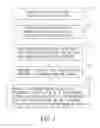
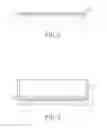
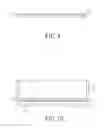
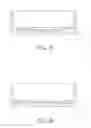
FIGS. 2 to 6 show consecutive steps of the first embodiment;
FIG. 7 is a perspective view of a patterned article formed by the first embodiment;
FIG. 8 is a flow chart showing a second embodiment of a method of forming a patterned metal unit on an article according to the present disclosure;
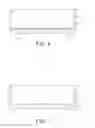
FIGS. 9 to 12 show consecutive steps of the second embodiment;
FIGS. 13 to 17 show consecutive steps of the third embodiment of a method of forming a patterned metal unit on an article according to the present disclosure;
FIG. 18 is a perspective view of a patterned article formed by the third embodiment; and
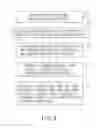
FIGS. 19 and 20 show consecutive steps of a fourth embodiment of a method of forming a patterned metal unit on an article according to the present disclosure.
DETAILED DESCRIPTION OF THE PREFERRED EMBODIMENT(S)
It may be noted that like elements are denoted by the same reference numerals throughout the disclosure.
FIGS. 1 to 7 illustrate a first embodiment of a method of forming a patterned metal unit on an article according to the present disclosure. The method includes the following steps:
Step 101: providing an article 3 that has an insulating surface 31 (see FIG. 3);
Step 102: providing a substrate 1 that is formed with a catalyst layer 2′ including a catalytic material (see FIG. 2);
Step 103: transferring the catalyst layer 2′ onto the insulating surface 31 of the article 3, followed by removing the substrate 1 (see FIGS. 3 and 4);
Step 104: removing a part of the catalyst layer 2′ to form a patterned catalyst layer 2 on the insulating surface 31 of the article 3 (see FIG. 5); and
forming a patterned metal layer 4 on the patterned catalyst layer 2 by an electroless plating technique to obtain a patterned metal unit that is constituted by the patterned catalyst layer 2 and the patterned metal layer 4 (Step 105). As shown in FIG. 7, a patterned article is thus obtained.
As shown in FIG. 3, in certain embodiments, the article 3 is non-planar and includes a base 33 and a sidewall 32 surrounding the base 33. The base 33 includes a metal layer (not shown) and an insulating layer (not shown) that is formed on the metal layer and that has the insulating surface 31. The sidewall 32 surrounds the insulating surface 31. The article 3 may be a lamp holder for a car (see FIG. 7). The insulating layer may be made of an epoxy resin or a ceramic material coated on the metal layer. In certain embodiments, the article 3 may be directly made of an insulating material, so that the metal layer can be dispensed with and the procedure of forming the insulating layer on the metal layer can be omitted.
As shown in FIG. 2, the substrate 1 includes a base layer 11 and a release film 12 that is formed between the base layer 11 and the catalyst layer 2′ and that facilitates removal of the base layer 11 from the catalyst layer 2′ in Step 103. In certain embodiments, the base layer 11 is flexible and may be made of polyethylene terephthalate (PET), propylene oxide (PO), etc. The release film 12 may be made of a silicone material such as silicone resin, silicone oil, etc. Since the base layer 11 is flexible, the catalyst layer 2′ can be transferred and fittingly attached onto the article 3.
Note that, since the base layer 11 is flexible and can be attached to a non-planar surface, the insulating surface 31 of the article 3 may be a non-planar surface and may be formed with a non-planar portion (i.e., at least a part of the insulating surface 31 is non-planar) that has a curved shape (see FIGS. 14 to 18).
The catalyst layer 2′ may be made of ink that contains a catalytic material capable of catalyzing an electroless plating process. The catalytic material may be metal, a metal salt, a metal complex or combinations thereof. Examples of the metal include, but are not limited to, palladium, thallium, aluminum, scandium, titanium, vanadium, manganese and combinations thereof. Examples of the metal salt include, but are not limited to, a palladium salt, a platinum salt, a silver salt and combinations thereof. The ink containing the catalytic material may be applied to the substrate 1 by a spray coating technique or a screen printing technique to form the catalyst layer 2′, which may have a thickness ranging from 15 μm to 60 μm. Note that the technique for applying the ink to the substrate 1 is not limited to spray coating or screen printing, and may be changed according to practical requirements.
As shown in FIGS. 3 and 4, in Step 103, an assembly of the substrate 1 and the catalyst layer 2′ is pressed against the article 3 with the catalyst layer 2′ in contact with the insulating surface 31 of the article 3. The entire catalyst layer 2′ is then thermally transferred onto the insulating surface 31 of the article 3. The thermal transfer process of the catalyst layer 2′ may be conducted by a hot pressing machine (not shown), under a pressure ranging from 6 Kg to 6.5 Kg, and a temperature ranging from 130° C. to 140° C. Then, the substrate 1 is removed.
In Step 104, the part of the catalyst layer 2′ is removed by laser cutting to form a patterned catalyst layer 2. Specifically, as shown in FIG. 5, the catalyst layer 2′ may be defined to have a plating region 24 on which the patterned metal layer 4 is to be formed. Step 104 is performed by removing the catalyst layer 2′ other than the plating region 24. A laser cutting machine (not shown) used in Step 104 may have a minimum resolution of 0.3 mm line-spacing and 0.2 mm line-width. Note that the size of the laser beam used in the laser cutting process may be adjusted according to the width of the patterned metal layer 4, thereby achieving precise definition of the patterned metal layer 4. Moreover, the energy of the laser may also be adjusted according to the material of the catalyst layer 2′, thereby ensuring complete and precise removal of the part of the catalyst layer 2′. In addition, the use of laser would prevent formation of burr. Alternatively, in certain embodiments, Step 104 may be conducted by a computerized numerical control (CNC) cutting machine.
In Step 105, the patterned metal layer 4 may be made of copper, nickel, gold, silver, palladium, rhodium, tin, cobalt, etc., and has a pattern identical to that of the patterned catalyst layer 2 (see FIG. 6). Note that, after the patterned metal layer 4 is electrolessly formed, the thickness of the patterned metal layer 4 may be increased by a subsequent electroplating process according to practical requirements.
According to the first embodiment of the present disclosure, the patterned metal unit may be formed on the article 3 with the non-planar surface 31.
FIGS. 8 to 12 illustrate a second embodiment of a method of forming a patterned metal unit on an article according to the present disclosure. The method includes the following steps:
Step 201: providing an article 3 that has an insulating surface 31 (see FIG. 10);
Step 202: providing a substrate 1 that is formed with a catalyst layer 2′ including a catalytic material (see FIG. 9);
Step 203: transferring the catalyst layer 2′ onto the insulating surface 31 of the article 3, followed by removing the substrate 1 (see FIG. 10);
Step 204: forming a conductive metal layer 4′ on the catalyst layer 2′ by the electroless plating technique (see FIG. 11); and
Step 205: removing a part of the conductive metal layer 4′ and a part of the catalyst layer 2′ from the article 3 to form a patterned metal layer 4 and a patterned catalyst layer 2 that constitute a patterned metal unit on the article 3 (see FIG. 12).
The second embodiment is similar to the first embodiment except for the differences described below. In the first embodiment, the catalyst layer 2′ is first treated to form the patterned catalyst layer 2, followed by forming the patterned metal layer 4 on the patterned catalyst layer 2. In contrast, in the second embodiment, the conductive metal layer 4′ is first formed on the untreated catalyst layer 2′, followed by removing the part of the conductive metal layer 4′ and the part of the catalyst layer 2′ so as to form the patterned metal layer 4 and the patterned catalyst layer 2.
FIGS. 13 to 18 illustrate a third embodiment of the method of forming the patterned metal unit on the article according to the present disclosure. The third embodiment is similar to the first embodiment, with the differences residing in that, in step 102 of the third embodiment, an adhesive layer 5 is provided on the catalyst layer 2′ (see FIG. 13) opposite to the substrate 1, and, in Step 103 of the third embodiment, the catalyst layer 2′ is transferred and adhered to the insulating surface 31 of the article 3 via the adhesive layer 5 (see FIG. 14). Removal of the substrate 1 (FIG. 15), removal of the part of the catalyst layer 2′ (FIG. 16), and formation of the patterned metal layer 4 (FIG. 17) in the third embodiment are the same as those of the first embodiment. The adhesive layer 5 can be used in the circumstance that the catalyst layer 2′ is incapable of thermally transferring onto the article 3.
As shown in FIGS. 17 and 18, a patterned article made by the method of the third embodiment includes the article 3, the adhesive layer 5, the patterned catalyst layer 2 and the patterned metal layer 4. The article 3 has the insulating surface 31 formed with the non-planar portion, and includes a sidewall 32 surrounding the insulating surface 31. In this embodiment, the non-planar portion has a curved shape. The adhesive layer 5 is disposed on the insulating surface 31 of the article 3. The patterned catalyst layer 2 includes catalyst metal and is disposed on the adhesive layer 5. The patterned metal layer 4 is disposed on the patterned catalyst layer and has the pattern identical to that of the patterned catalyst layer 2.
FIGS. 19 and 20 illustrate a fourth embodiment of the method of forming the patterned metal unit on the article according to the present disclosure. The fourth embodiment is similar to the first embodiment, with the differences residing in that, in Step 104 of the fourth embodiment, the part of the catalyst layer 2′ is removed to form an isolation channel 21 dividing the remainder of the catalyst layer 2′ into the first plating region 22 and a second plating region 23 that is separated from the first plating region 22 by the isolation channel 21 (see FIG. 19). In Step 105, the patterned metal layer 4 is formed on the first and second plating region 22, 23, and the patterned metal layer 4 on the first plating region 22 is separated and electrically insulated from the patterned metal layer 4 on the second plating region 23 by the isolation channel 21. Therefore, the patterned metal layer 4 on the second plating region 23 would not affect the function (e.g., function as an electrical wiring structure) of the patterned metal layer 4 on the first plating region 22, and does not need to be removed, thereby saving manufacturing time.
The four embodiments described above are all capable of forming the patterned metal unit on the article 3, and provide alternatives that can be chosen based on actual requirements.
To sum up, with the transferring and removing steps of the method of this disclosure, the patterned metal layer 4 can be formed with a precise pattern and on the non-planar surface 31 of the article 3.
While the disclosure has been described in connection with what are considered the exemplary embodiments, it is understood that this disclosure is not limited to the disclosed embodiments but is intended to cover various arrangements included within the spirit and scope of the broadest interpretation so as to encompass all such modifications and equivalent arrangements.
Claims
1.-11. (canceled)
12. A method of forming a patterned metal unit on an article, comprising the steps of:
providing an article that has an insulating surface;
transferring a catalyst layer onto the insulating surface of the article, the catalyst layer including a catalytic material;
forming a conductive metal layer on the catalyst layer by an electroless plating technique; and
removing a part of the conductive metal layer and a part of the catalyst layer from the article to form a patterned metal layer and a patterned catalyst layer that constitute a patterned metal unit.
13. The method as claimed in claim 12, further comprising a step of, before the transferring step, providing a substrate that is formed with the catalyst layer,
wherein, in the transferring step, the substrate is removed after the catalyst layer is transferred onto the insulating surface of the article.
14. The method as claimed in claim 13, wherein the substrate includes a base layer and a release film that is formed between the base layer and the catalyst layer and that facilitates removal of the base layer from the catalyst layer in the transferring step.
15. The method as claimed in claim 13, wherein at least a part of the insulating surface of the article is non-planar, the substrate being flexible.
16. The method as claimed in claim 12, wherein, in the removing step, the part of the catalyst layer is removed by laser cutting.
17. The method as claimed in claim 12, further comprising a step of, before the transferring step, providing the catalyst layer and an adhesive layer that is formed on the catalyst layer,
wherein, in the transferring step, the catalyst layer is transferred and adhered to the insulating surface of the article via the adhesive layer.
18.-20. (canceled)
21. The method as claimed in claim 12, wherein the article includes a sidewall surrounding the insulating surface.
22. The method as claimed in claim 12, wherein the catalyst layer has a thickness ranging from 15 μm to 60 μm.
23. The method as claimed in claim 12, further comprising a step of, before the transferring step, providing the catalyst layer and an adhesive layer that is formed on the catalyst layer,
wherein, in the transferring step, the catalyst layer is transferred and adhered to the insulating surface of the article via the adhesive layer.
24. The method as claimed in claim 12, wherein the article includes a metal layer, and an insulating layer that is formed on the metal layer and that has the insulating surface.
25. The method as claimed in claim 12, wherein the catalyst layer is defined to have a plating region on which the patterned metal layer is to be formed.
26. A method of forming a patterned metal unit on an article, comprising the steps of:
providing an article that has an insulating surface, at least a part of the insulating surface of the article being non-planar;
transferring a catalyst layer onto the insulating surface of the article, the catalyst layer including a catalytic material;
forming a conductive metal layer on the catalyst layer by an electroless plating technique; and
removing a part of the conductive metal layer and a part of the catalyst layer from the article to form a patterned metal layer and a patterned catalyst layer that constitute a patterned metal unit.
27. The method as claimed in claim 26, further comprising a step of, before the transferring step, providing a substrate that is formed with the catalyst layer,
wherein, in the transferring step, the substrate is removed after the catalyst layer is transferred onto the insulating surface of the article.
28. The method as claimed in claim 27, wherein the substrate includes a base layer and a release film that is formed between the base layer and the catalyst layer and that facilitates removal of the base layer from the catalyst layer in the transferring step.
29. The method as claimed in claim 27, wherein the substrate is flexible.
30. The method as claimed in claim 26, wherein, in the removing step, the part of the catalyst layer is removed by laser cutting.
31. The method as claimed in claim 26, further comprising a step of, before the transferring step, providing the catalyst layer and an adhesive layer that is formed on the catalyst layer,
wherein, in the transferring step, the catalyst layer is transferred and adhered to the insulating surface of the article via the adhesive layer.
Images & Drawings included:






Sources:
- United States Patent and Trademark Office - verify current appl. status at the USPTO↗
Similar patent applications:
Recent applications in this class:
- » 20250171905 2025-05-29
Steel Wire and Spring with Excellent Antibacterial Properties and Corrosion Resistance and Method for Manufacturing the Same - » 20240158919 2024-05-16
METHOD FOR ALUMINUM ELECTROLESS DEPOSITION - » 20240044007 2024-02-08
ELECTROLESS PLATING APPARATUS - » 20230086290 2023-03-23
Graphene reinforced aluminum matrix composite with high electrical conductivity and preparation method thereof - » 20230044020 2023-02-09
Methods and systems for electroless plating a first metal onto a second metal in a molten salt bath, and surface pretreatments therefore - » 20220396883 2022-12-15
Methods and systems for electroless plating a first metal onto a second metal in a molten salt bath, and surface pretreatments therefore - » 20220025520 2022-01-27
Coating of nano-scaled cavities - » 20220002877 2022-01-06
METHOD FOR ALUMINUM ELECTROLESS DEPOSITION - » 20210317582 2021-10-14
COMPOSITION FOR METAL PLATING COMPRISING SUPPRESSING AGENT FOR VOID FREE SUBMICRON FEATURE FILLING - » 20200248311 2020-08-06
Coating of nano-scaled cavities
Recent applications for this Assignee:
- » 20240327614 2024-10-03
METHOD FOR MANUFACTURING PLAY-OF-COLOR ARTICLE, PLAY-OF-COLOR ARTICLE, AND PLAY-OF-COLOR PRODUCT INCLUDING THE SAME - » 20240100743 2024-03-28
SEPARATION APPARATUS AND METHOD FOR SEPARATING PLASTIC AND SILICONE IN A COMPOSITE MATERIAL - » 20230356549 2023-11-09
SENSOR DEVICE - » 20220040691 2022-02-10
Substrate assembly and method of bonding substrates - » 20220040691 2022-02-10
Substrate assembly and method of bonding substrates - » 20210061961 2021-03-04
Composition for Preparing Polyamide Powders - » 20200197933 2020-06-25
METHOD OF MANUFACTURING MICROFLUIDIC CHIP AND A MICROFLUIDIC CHIP MADE THEREBY - » 20200153118 2020-05-14
Conformal array antenna - » 20200153118 2020-05-14
Conformal array antenna - » 20200010626 2020-01-09
Method and composition for preparing polyamide powders