Multi-functional activity management system for elderly
US20180338591A1
2018-11-29
16/055,022
2018-08-03
✅ Patent granted
US 10,342,726 B2
2019-07-09
-
-
David R Dunn | Danielle Jackson
Cheng-Ju Chiang
2038-08-03
Abstract:
A multi-functional activity management system for elderly utilizes prior art walking sticks to manage big data related to activity of elderly persons. In addition, new improvements have been made upon prior art walking sticks. By incorporating umbrella function into the walking stick, the stem portion becomes narrower and shorter, thereby making it easy to be inserted into the thin walking stick.
Assignee:
- SHENZHEN LERUAN TECHNOLOGY CO., LTD. 2 🇨🇳 Shenzhen, Guangdong Province, China
Applicant:
Interested in similar patents?
Get notified when new applications in this technology area are published.
Classification:
A45B3/08 » CPC main
Sticks combined with other objects with measuring or weighing appliances
A45B3/04 » CPC further
Sticks combined with other objects with illuminating devices electrical
G01S19/14 » CPC further
Satellite radio beacon positioning systems; Determining position, velocity or attitude using signals transmitted by such systems; Satellite radio beacon positioning systems transmitting time-stamped messages, e.g. GPS [Global Positioning System], GLONASS [Global Orbiting Navigation Satellite System] or GALILEO; Receivers specially adapted for specific applications
A45B2009/005 » CPC further
Details Shafts
A61B5/00 IPC
Measuring for diagnostic purposes ; Identification of persons
A61B5/0022 » CPC further
Measuring for diagnostic purposes ; Identification of persons; Remote monitoring of patients using telemetry, e.g. transmission of vital signals via a communication network characterised by features of the telemetry system Monitoring a patient using a global network, e.g. telephone networks, internet
A61B5/1112 » CPC further
Measuring for diagnostic purposes ; Identification of persons; Detecting, measuring or recording devices for testing the shape, pattern, colour, size or movement of the body or parts thereof, for diagnostic purposes; Measuring movement of the entire body or parts thereof, e.g. head or hand tremor, mobility of a limb Global tracking of patients, e.g. by using GPS
A61B5/1118 » CPC further
Measuring for diagnostic purposes ; Identification of persons; Detecting, measuring or recording devices for testing the shape, pattern, colour, size or movement of the body or parts thereof, for diagnostic purposes; Measuring movement of the entire body or parts thereof, e.g. head or hand tremor, mobility of a limb Determining activity level
A61B5/11 IPC
Measuring for diagnostic purposes ; Identification of persons; Detecting, measuring or recording devices for testing the shape, pattern, colour, size or movement of the body or parts thereof, for diagnostic purposes Measuring movement of the entire body or parts thereof, e.g. head or hand tremor, mobility of a limb
H04W4/029 » CPC further
Services specially adapted for wireless communication networks; Facilities therefor; Services making use of location information Location-based management or tracking services
A45B9/02 » CPC further
Details Handles or heads
A45B21/00 » CPC further
Umbrellas convertible into walking sticks
A45B3/02 IPC
Sticks combined with other objects with illuminating devices
A61H3/06 » CPC further
Appliances for aiding patients or disabled persons to walk about Walking aids for blind persons
H04B1/0346 » CPC further
Details of transmission systems, not covered by a single one of groups - ; Details of transmission systems not characterised by the medium used for transmission; Transmitters; Constructional details, e.g. casings, housings; Portable transmitters Hand-held transmitters
H04W4/02 IPC
Services specially adapted for wireless communication networks; Facilities therefor Services making use of location information
H04B1/034 IPC
Details of transmission systems, not covered by a single one of groups - ; Details of transmission systems not characterised by the medium used for transmission; Transmitters; Constructional details, e.g. casings, housings Portable transmitters
A45B9/00 IPC
Details
A61H3/00 » CPC main
Appliances for aiding patients or disabled persons to walk about
A61B2503/08 » CPC further
Evaluating a particular growth phase or type of persons or animals Elderly
Description
CROSS REFERENCE TO RELATED APPLICATIONS
The present application is a continuation in part of U.S. patent application Ser. No. 15/396,418, filed on Dec. 30, 2016, which further claims benefit of Chinese Patent Application No. 201611227476.4, filed on Dec. 27, 2016, the disclosure of which is incorporated by reference herein.
FIELD OF THE INVENTION
The present disclosure relates to a big data management system and more particularly, to a multi-functional activity management system for elderly.
BACKGROUND OF THE INVENTION
Currently, it comes time of a large population of elderly persons. On one hand, it has become a critical issue on how to effectively provide service to elderly through big data. On the other hand, there are increasing needs of elderly-related products with various functions. Walking sticks used by elderly in their everyday life only have a single function and therefore no longer meet requirements of elderly. Though kinds of novel walking sticks are seen in the marketplace, they are only combination of kinds of separate products. These combined walking sticks fail to comply with situations of actual production and usage. They are inconvenient in use and operation for elderly.
SUMMARY OF THE INVENTION
The technical problem to be solved by the current invention is to provide a multi-functional activity management system for elderly for real time collecting and monitoring big data related to activities of elderly such that the elderly can conveniently use and operate the system.
To solve the above-mentioned technical problem, the following technical solution is proposed.
A multi-functional activity management system for elderly includes a plurality of walking stick activity data-collecting terminals and a data management center.
Each walking stick activity data-collecting terminal comprises a handle and a stem portion; a positioning module, an activity data collection module, and an activity data transmission module are disposed inside the handle.
The positioning module is configured to track geographical location of the elderly in real time;
The activity data collection module is configured to collect information of current geographical location of the elderly.
The activity data transmission module is configured to transmit the information of current geographical location of the elderly to the data management center.
The data management center includes an activity data receiving module for receiving information of geographical location of the elderly sent from respective walking stick activity data-collecting terminals; and an activity data processing module for determining big data information of activity of elderly according to geographical location information of respective elderly, and for analyzing and thereby obtaining activity data of elderly using said big data information of activity of elderly.
Preferably, the positioning module is realized by GPS or mobile base station information.
Preferably, the activity data of elderly comprises spots where an elderly person frequently goes and traveling lines along which an elderly person often walks.
Preferably, for each walking stick activity data-collecting terminal,
a top end of the stem portion is opened and recessed downwardly to form a first receiving chamber; a plurality of holding hole are defined evenly circumferentially in the stem portion at its top end; a downwardly faced second receiving chamber is defined in the handle at a location where the handle is connected to the stem portion;
a plurality of spherical embossments are extended from an inner wall of the second receiving chamber;
a plurality of guiding grooves is defined in the inner wall of the first receiving chamber; a closed umbrella is formed in the first receiving chamber along said guiding grooves; the umbrella has a canopy that is foldable and an umbrella rod configured for supporting the canopy; a lower end of the umbrella rod is provided with a number of resilient hook. When the umbrella is to be opened, the resilient hook on the lower end of the umbrella rod are inserted into corresponding holding hole to form a bottom support of the umbrella; and when the canopy is to be folded, the umbrella are guided by the guiding grooves and received into the first receiving chamber, and the spherical embossments on the inner wall of the second receiving chamber of the handle of the walking stick are located into corresponding holding hole to form an integral walking stick.
Preferably, a bottom of the first receiving chamber is a V-shaped or U-shaped bottom; and the downmost portion of the V-shaped or U-shaped bottom is provided with a draining hole communicated with outside environment.
Preferably, a lighting lamp is disposed at a front end of the handle, and a switch for the lamp is disposed on a rear end of the handle.
Preferably, the number of the spherical embossments is less than that of the holding hole, and there are same numbers of resilient hook and holding hole.
Correspondingly, also proposed is a walking stick activity data-collecting terminal, which includes a handle and a stem portion.
A positioning module, an activity data collection module, and an activity data transmission module are disposed inside the handle.
The positioning module is configured to track geographical location of the elderly in real time.
The activity data collection module is configured to collect information of current geographical location of the elderly.
The activity data transmission module is configured to transmit the information of current geographical location of the elderly to a data management center.
Preferably, the positioning module is realized by GPS or mobile base station information.
A top end of the stem portion is opened and recessed downwardly to form a first receiving chamber; a plurality of holding hole are defined evenly circumferentially in the stem portion at its top end; a downwardly faced second receiving chamber is defined in the handle at a location where the handle is connected to the stem portion.
A plurality of spherical embossments is extended from an inner wall of the second receiving chamber.
A plurality of guiding grooves is defined in the inner wall of the first receiving chamber; a closed umbrella is formed in the first receiving chamber along said guiding grooves; the umbrella has a canopy which is foldable and an umbrella rod configured for supporting the canopy; a lower end of the umbrella rod is provided with a number of resilient hook. When the umbrella is to be opened, the resilient hook on the lower end of the umbrella rod are inserted into corresponding holding hole to form a bottom support of the umbrella; and when the canopy of the umbrella is to be folded, the umbrella are guided by the guiding grooves and received into the first receiving chamber, and the spherical embossments on the inner wall of the second receiving chamber of the handle of the walking stick are located into corresponding holding hole to form an integral walking stick.
Compared with prior art, the current invention brings the following good effects.
The multi-functional activity management system for elderly of the invention utilizes prior art walking sticks to manage big data related to activity of elderly persons. A number of walking stick activity data-collecting terminals collect activity big data information of the elderly persons. The information is then analyzed by the data management center to obtain elderly activity regular data, thus realizing providing effective services to elderly persons.
In addition, new functions are developed from prior art walking sticks. In other words, a top end of the stem portion is opened and recessed downwardly to form a first receiving chamber; a plurality of holding hole are defined evenly circumferentially in the stem portion at its top end; and a downwardly faced second receiving chamber is defined in the handle at a location where the handle is connected to the stem portion. A plurality of spherical embossments is extended from an inner wall of the second receiving chamber.
A plurality of guiding grooves is defined in the inner wall of the first receiving chamber; a closed umbrella is formed in the first receiving chamber along said guiding grooves; the umbrella has a foldable canopy and an umbrella rod configured for supporting the foldable canopy; a lower end of the rod is provided with a number of resilient hook. When the umbrella is to be opened, the resilient hook on the lower end of the umbrella rod are inserted into corresponding holding hole to form a bottom support of the umbrella; and when the canopy of umbrella is to be folded, the umbrella are guided by the guiding grooves and received into the first receiving chamber, and the spherical embossments on the inner wall of the second receiving chamber of the handle of the walking stick are located into corresponding holding hole to form an integral walking stick. Using this structure, only part of the entire length of the umbrella rod corresponding to the umbrella is required to be contained in the first receiving chamber without need of inserting the whole length of the umbrella rod. In other words, the length of the umbrella rod is only required to be at substantially equal to or less than the length of the folded canopy. Moreover, as only the umbrella rod with the length of the folded canopy is utilized, there is no need of contractive the umbrella rod. As such, the umbrella rod can be narrower and shorter in diameter, thereby making it easy to be inserted into the thin walking stick.
BRIEF DESCRIPTION OF THE DRAWINGS
FIG. 1 shows a block diagram of a multi-functional activity management system for elderly in accordance with an embodiment of the invention;
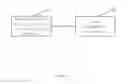
FIG. 2 shows a functional block diagram illustrating activity data collection performed by a walking stick activity data-collecting terminal of the multi-functional activity management system of the invention;
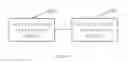
FIG. 3 denotes structure of a data management center of the multi-functional activity management system in accordance with an embodiment of the invention;
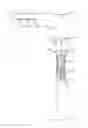
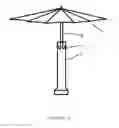
FIG. 4 depicts a construction of the walking stick activity data-collecting terminal of the multi-functional activity management system according to one embodiment of the invention;
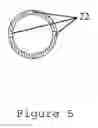
FIG. 5 shows distribution of a plurality of holding hole of the walking stick activity data-collecting terminal of the multi-functional activity management system according to one embodiment of the invention;
FIG. 6 shows a schematic diagram of a resilient hook of the walking stick activity data-collecting terminal of the multi-functional activity management system according to one embodiment of the invention.
FIG. 7 shows a sectional view from A-A of FIG. 6.
FIG. 8 shows a schematic diagram of the resilient hook of the walking stick activity data-collecting terminal according to one embodiment of the invention.
FIG. 9 shows a schematic diagram of the umbrella rod engaging with the stick for supporting the opened umbrella according to one embodiment of the invention.
DETAILED DESCRIPTION OF THE INVENTION
With reference to FIG. 1 showing a block diagram of a multi-functional activity management system for elderly in accordance with an embodiment of the invention, the multi-functional activity management system for elderly includes a plurality of walking stick activity data-collecting terminals S1 and a data management center S2. Specifically, this is realized by normally available walking stick and therefore, it can be used by elderly with convenience. Refer to FIG. 2, to realize activity data collection, each walking stick activity data-collecting terminal S1 in this embodiment includes a handle 1 and a stem portion 2. Inside the handle 1 are a positioning module S11, an activity data collection module S12, and an activity data transmission module S13. Here, the positioning module S11 tracks geographical location of the elderly in real time and this can be embodied by GPS or mobile base station information or the like. Detailed description thereof is omitted herefrom.
The activity data collection module S12 collects information of current geographical location of the elderly.
The activity data transmission module S13 transmits the information of current geographical location of the elderly to the data management center S2.
In addition, referring also to FIG. 3, the data management center S2 in this embodiment may include an activity data receiving module S21 for receiving information of geographical location of the elderly sent from respective walking stick activity data-collecting terminals S1; and an activity data processing module S22 for determining big data information of activity of elderly according to geographical location information of respective elderly, and for analyzing and thereby obtaining activity data of elderly using said big data information of activity of elderly. Specifically, the activity data of elderly obtained by analyzing the big data information of activity may include spots where an elderly person frequently go and traveling lines along which an elderly person often walks and the like.
Moreover, to facilitate operation of the walking stick activity data-collecting terminals, in this embodiment, similar improvements have been made upon prior art walking sticks. As shown in FIGS. 4-9, a multi-functional activity management system for elderly according to this embodiment includes a handle 1 and a stem portion 2. A top end of the stem portion 2 is opened and recessed downwardly to form a first receiving chamber 21. A plurality of holding hole 22 are defined circumferentially in the stem portion 2 at its top end. A downwardly faced second receiving chamber 11 is defined in the handle 1 at a location where the handle 1 is connected to the stem portion 2. A plurality of spherical embossments 12 are extended from an inner wall of the second receiving chamber 11.
In general, when folding a canopy or putting the umbrella into an umbrella bag, normally it requires patience for a person to sequentially fold the canopy and it is time-consuming. The canopy is irregular and it will be difficult to place the umbrella into the umbrella bag if operation is wrong, especially for elderly persons who have weak eyesight and vigor. To address this problem, in this embodiment, a plurality of guiding grooves 23 may be defined in the inner wall of the first receiving chamber 21. In particular, when the umbrella is closed/the canopy is folded, ribs of the umbrella can be considered as an outer threaded along the umbrella rod while the guiding grooves can be considered as an inner thread of the first receiving chamber 21. The engagement of the canopy and the guiding grooves is therefore similar as a threaded connection which can be engaged together by rotation. The ribs of the umbrella will match with the guiding grooves, and then slide into the first receiving chamber 21 along the guiding grooves in a clockwise or counter clockwise direction with the umbrella being forced into the receiving chamber 21. It is conceivable that the insertion of the umbrella makes the ribs of the umbrella gathered and then canopy folded.
A closed umbrella is formed in the first receiving chamber 21 along said guiding grooves 23. By this manner, when the umbrella is placed into the first receiving chamber 21, the canopy 7 of the umbrella can be guided by the guiding grooves 23 in a clockwise or counter clockwise direction and then be folded. This operation is simple and convenient. Furthermore, different from prior art techniques, in this embodiment, the umbrella further comprises an umbrella rod 8 configured for supporting the canopy 7. A lower end of the umbrella rod 8 is provided with a number of resilient hooks 3 (See FIGS. 7 and 8). When being used, pull out the umbrella from the first receiving chamber 21 completely and open the canopy, then insert the lower end of the umbrella rod 8 into the first receiving chamber 21 again. The resilient hooks 3 on the lower end of the umbrella rod 8 will move along the first receiving chamber 21 till hook the corresponding holding hole. When the resilient hooks 3 arrives at the holding hole, the resilient hooks 3 will resiliently expand and insert into the corresponding holding hole to form a bottom support of the umbrella, referring to FIGS. 7 and 9. When the umbrella not being used and the canopy is to be folded, compress the resilient hook 3 and makes it contract inwardly and detach from the holding hole. Once the resilient hooks 3 detaches from the holding hole, the lower end of the umbrella rod will be free to remove from the first receiving chamber 21. Reverse the umbrella, and insert the umbrella into the first receiving chamber 21 with the handle 1 of the umbrella rod 8 being top. The umbrella, including the umbrella rod 8 and the canopy 7, then is able to be contained in the first receiving chamber 21. The spherical embossments on the inner wall of the second receiving chamber of the handle of the walking stick are located into corresponding holding hole to form an integral walking stick.
It is noted that rainwater may remain inside the stick when the umbrella is contained in the stick. To quick get rid of rainwater, in this embodiment, a bottom of the first receiving chamber 11 may be a V-shaped or U-shaped bottom. In addition, the downmost portion of the V-shaped or U-shaped bottom is provided with a draining hole 5 communicated with outside environment.
Furthermore, in this embodiment, the number of the spherical embossments may be less than that of the holding hole. It is preferable that there are same number of resilient hook and holding hole to better support the umbrella. Specifically, there may be 3 holding hole. For example, as shown in FIG. 5, there are 3 holding holes which may be distributed on the circumference of the top of the stem portion 2. In fact, 4 or more holding holes are also possible.
In addition, the elderly often has weak eyesight, to help him see the road clearly in darker environment, the functions of the walking stick may be further enhanced. For instance, a lighting lamp 6 may be disposed at a front end of the handle 1, and correspondingly, a switch 4 for the lamp 6 may be disposed on a rear end of the handle 1.
Finally, it is emphasized that the above description is only for preferred embodiments of the invention but not to limit the scope of the invention. Any equivalent of or modification upon the invention are within the scope of the invention.
Claims
What is claimed is:1. A multi-functional activity management system for elderly, comprising a plurality of walking stick activity data-collecting terminals and a data management center, wherein:
each walking stick activity data-collecting terminal comprises a handle and a stem portion; a positioning module, an activity data collection module, and an activity data transmission module are disposed inside the handle;
the positioning module is configured to track geographical location of the elderly in real time;
the activity data collection module is configured to collect information of current geographical location of the elderly;
the activity data transmission module is configured to transmit the information of current geographical location of the elderly to the data management center;
the data management center comprises an activity data receiving module for receiving information of geographical location of the elderly sent from respective walking stick activity data-collecting terminals; and an activity data processing module for determining big data information of activity of elderly according to geographical location information of respective elderly, and for analyzing and thereby obtaining activity data of elderly using said big data information of activity of elderly;
wherein for each walking stick activity data-collecting terminal:
a top end of the stem portion is opened and recessed downwardly to form a first receiving chamber;
a plurality of holding hole are defined evenly circumferentially in the stem portion at its top end; a downwardly faced second receiving chamber is defined in the handle at a location where the handle is connected to the stem portion;
a plurality of spherical embossments are extended from an inner wall of the second receiving chamber;
a plurality of guiding grooves is defined in the inner wall of the first receiving chamber;
an umbrella in a closed state is formed in the first receiving chamber along said guiding grooves; the umbrella comprises a foldable canopy and an umbrella rod configured for supporting the canopy; a lower end of the umbrella rod is provided with a number of resilient hooks; when the umbrella is being used, the resilient hooks on the lower end of the umbrella rod are inserted into corresponding holding holes of the stem portion to forma bottom support for the umbrella; and when the canopy is to be folded, the umbrella are guided by the guiding grooves and received into the first receiving chamber, and the spherical embossments on the inner wall of the second receiving chamber of the handle of the walking stick are located into corresponding holding holes to form an integral walking stick.
2. The system as recited in claim 1, wherein the positioning module is realized by GPS or mobile base station information.
3. The system as recited in claim 1, wherein the activity data of elderly comprises spots where an elderly person frequently goes and traveling lines along which an elderly person often walks.
4. The system as recited in claim 1, wherein a bottom of the first receiving chamber is a V-shaped or U-shaped bottom; and the downmost portion of the V-shaped or U-shaped bottom is provided with a draining hole communicated with outside environment.
5. The system as recited in claim 1, wherein a lighting lamp is disposed at a front end of the handle, and a switch for the lamp is disposed on a rear end of the handle.
6. The system as recited in claim 1, wherein the number of the spherical embossments is less than that of the holding hole, and there are same numbers of resilient hook and holding hole.
7. A walking stick activity data-collecting terminal comprising: a handle and a stem portion;
Wherein a positioning module, an activity data collection module, and an activity data transmission module are disposed inside the handle;
the positioning module is configured to track geographical location of the elderly in real time;
the activity data collection module is configured to collect information of current geographical location of the elderly; and
the activity data transmission module is configured to transmit the information of current geographical location of the elderly to a data management center;
wherein for each walking stick activity data-collecting terminal:
a top end of the stem portion is opened and recessed downwardly to form a first receiving chamber;
a plurality of holding hole are defined evenly circumferentially in the stem portion at its top end; a downwardly faced second receiving chamber is defined in the handle at a location where the handle is connected to the stem portion;
a plurality of spherical embossments are extended from an inner wall of the second receiving chamber;
a plurality of guiding grooves is defined in the inner wall of the first receiving chamber;
an umbrella in a closed state is formed in the first receiving chamber along said guiding grooves; the umbrella comprises a foldable canopy and an umbrella rod configured for supporting the canopy; a lower end of the umbrella rod is provided with a number of resilient hooks; when the umbrella is being used, the resilient hooks on the lower end of the umbrella rod are inserted into corresponding holding holes of the stem portion to form a bottom support for the umbrella; and when the canopy is to be folded, the umbrella are guided by the guiding grooves and received into the first receiving chamber, and the spherical embossments on the inner wall of the second receiving chamber of the handle of the walking stick are located into corresponding holding holes to form an integral walking stick.
8. The terminal as recited in claim 7, wherein the positioning module is realized by GPS or mobile base station information.
Images & Drawings included:



Sources:
- United States Patent and Trademark Office - verify current appl. status at the USPTO↗
Similar patent applications:
Recent applications in this class:
- » 20250261730 2025-08-21
Smart Walking Cane - » 20240180303 2024-06-06
A SET FOR MOTOR ACTIVITIES AND A SYSTEM FOR ACQUISITION AND PROCESSING OF DATA DETECTED BY THE SET FOR MOTOR ACTIVITIES AND CORRESPONDING OPERATING METHOD - » 20230143646 2023-05-11
Device, system, and method for promoting patient compliance with a prescribed lower extremity partial weight-bearing rehabilitation program - » 20230079064 2023-03-16
MOBILITY DEVICES WITH EMBEDDED SENSORS AND ASSOCIATED APPLICATION - » 16220495 2020-04-14
Cane and proximity alert bracelet assembly
Recent applications for this Assignee:
- » 20190204410 2019-07-04
Intelligent vehicle-mounted radar device for reducing polarization loss