Cesium tungsten bronze-based self-cleaning nano heat-insulation coating material and preparation method thereof
US20180340082A1
2018-11-29
15/909,079
2018-03-01
✅ Patent granted
US 10,913,863 B2
2021-02-09
-
-
C Melissa Koslow
BakerHostetler
2039-02-27
Abstract:
The present disclosure provides a cesium tungsten bronze-based self-cleaning nano heat-insulation coating material, and method of preparing the same. Cesium tungsten bronze nanoparticles are prepared by hydrothermal method using WCl6 and CsOH.5H2O as raw materials, PVP as a surfactant and acetic acid as an acid catalyst. TiO2 nanoparticles are prepared from TiCl4. Subsequently ball milling and dispersing of the cesium tungsten bronze nanoparticles, the TiO2 nanoparticles, and a silane coupling agent with water to obtain an aqueous slurry containing cesium tungsten bronze/TiO2 composite particles is performed. The concentration of the aqueous slurry containing cesium tungsten bronze/TiO2 composite particles is adjusted to obtain a self-cleaning nano heat-insulation coating material.
Inventors:
- Lin LU 1 🇨🇳 Kowloon (HK), China
- Yuanhao WANG 1 🇨🇳 Kowloon (HK), China
- Hong ZHONG 1 🇨🇳 Kowloon (HK), China
- Yan HU 1 🇨🇳 Hung Hom (HK), China
- Lin Lu 1 🇨🇳 Kowloon, China
- Yuanhao Wang 1 🇨🇳 Kowloon, China
- Hong Zhong 1 🇨🇳 Kowloon, China
- Yan Hu 1 🇨🇳 Hung Hom, China
Assignee:
- The Hong Kong Polytechnic University 12 🇨🇳 Kowloon, China
Applicant:
Interested in similar patents?
Get notified when new applications in this technology area are published.
Classification:
C09D7/67 » CPC further
Features of coating compositions, not provided for in group ; Processes for incorporating ingredients in coating compositions; Additives characterised by particle size Particle size smaller than 100 nm
C23C24/08 » CPC further
Coating starting from inorganic powder by application of heat or pressure and heat
C09D7/40 IPC
Features of coating compositions, not provided for in group ; Processes for incorporating ingredients in coating compositions Additives
B22F2009/043 » CPC further
Making metallic powder or suspensions thereof using physical processes starting from solid material, e.g. by crushing, grinding or milling by ball milling
C09D5/16 IPC
Coating compositions, e.g. paints, varnishes or lacquers, characterised by their physical nature or the effects produced ; Filling pastes Antifouling paints; Underwater paints
C09D5/1681 » CPC main
Coating compositions, e.g. paints, varnishes or lacquers, characterised by their physical nature or the effects produced ; Filling pastes; Antifouling paints; Underwater paints Antifouling coatings characterised by surface structure, e.g. for roughness effect giving superhydrophobic coatings or Lotus effect
B22F9/24 » CPC further
Making metallic powder or suspensions thereof using chemical processes with reduction of metal compounds starting from liquid metal compounds, e.g. solutions
C22C1/045 » CPC further
Making alloys by powder metallurgy Alloys based on refractory metals
C22C32/0031 » CPC further
Non-ferrous alloys containing at least 5% by weight but less than 50% by weight of oxides, carbides, borides, nitrides, silicides or other metal compounds, e.g. oxynitrides, sulfides whether added as such or formed with only oxides with only single oxides as main non-metallic constituents Matrix based on refractory metals, W, Mo, Nb, Hf, Ta, Zr, Ti, V or alloys thereof
C22C32/00 IPC
Non-ferrous alloys containing at least 5% by weight but less than 50% by weight of oxides, carbides, borides, nitrides, silicides or other metal compounds, e.g. oxynitrides, sulfides whether added as such or formed
B22F2301/20 » CPC further
Metallic composition of the powder or its coating Refractory metals
B22F2304/05 » CPC further
Physical aspects of the powder Submicron size particles
B22F2998/10 » CPC further
Supplementary information concerning processes or compositions relating to powder metallurgy Processes characterised by the sequence of their steps
C09D1/00 » CPC further
Coating compositions, e.g. paints, varnishes or lacquers, based on inorganic substances
B22F1/00 IPC
Metallic powder; Treatment of metallic powder, e.g. to facilitate working or to improve properties
B22F9/04 » CPC further
Making metallic powder or suspensions thereof using physical processes starting from solid material, e.g. by crushing, grinding or milling
C22C1/04 IPC
Making alloys by powder metallurgy
C22C27/04 » CPC further
Alloys based on rhenium or a refractory metal not mentioned in groups or Alloys based on tungsten or molybdenum
B22F7/04 » CPC further
Manufacture of composite layers, workpieces, or articles, comprising metallic powder, by sintering the powder, with or without compacting wherein at least one part is obtained by sintering or compression of composite layers with one or more layers not made from powder, e.g. made from solid metal
Description
CROSS REFERENCE TO RELATED APPLICATIONS
This application claims priority under 35 U.S.C. § 119 to Chinese Patent Application No. 201710395687.7, filed on May 25, 2017, the entire disclosure of which is hereby incorporated by reference.
TECHNICAL FIELD
The present disclosure relates to the field of coating materials, and in particular to a cesium tungsten bronze-based self-cleaning nano heat-insulation coating material and method of preparing same.
BACKGROUND
It is reported that building energy consumption accounts for 40% of the global energy consumption, and more than 50% of the building energy consumption comes from the energy consumption of air conditioners. Particularly in China, heating, air conditioners, fans and household appliances account for 95% of the building energy consumption. Therefore, heat insulation is of great significance in reducing building energy consumption. In order to ensure adequate indoor lighting and aesthetic appearance of the buildings, large-area windows or glass curtain walls are increasingly common in modern buildings to replace the previous concrete structures. As such, cooling in summer and heating in winter will inevitably cause extra energy consumption. Without reducing the area of building glass, the goal of energy saving can be achieved by improving the heat insulation performance of glass. A lot of attempts and researches have been made on glass insulation in China and abroad. At present, mainstream energy-saving and heat-insulation products include heat reflective coated glass, vacuum glass, hollow glass and so on. Heat reflective coated glass has a notable heat insulation performance, but causes problem of light pollution due to its high reflectivity of visible light. Though the hollow glass achieves a certain heat insulation effect, the heat insulation performance is unsatisfactory. On the basis of hollow glass, vacuum glass achieves thermal insulation by removing the air in the gap between the glasses. This kind of glass requires good airtightness and is expensive. Filmed glass is glass with a film made from an infrared shielding material attached onto its surface. This technology provides a good solution to the problem associated with the heat insulation of glass; however, the cost is extremely high, and thus this technology cannot be widely used.
Cesium tungsten bronze has good visible light transmittance and infrared absorption characteristics, and thus receives extensive attentions. Novel transparent heat-insulation coating material, which may be prepared with cesium tungsten bronze, is currently not available in the market. Its poor dispersibility is a main factor limiting its application. Moreover, most of the heat-insulation coating materials currently available in the market are oil-based heat-insulation coating materials having a high content of volatile organic compounds (VOCs), which causes hazards to the health of construction workers and users. Therefore, there is a need for developing a water-based transparent heat-insulation coating material having excellent visible light transmittance and good dispersibility.
SUMMARY
In view of the above technical problems, the present disclosure provides a cesium tungsten bronze-based self-cleaning nano heat-insulation coating material and method of preparing the same.
The present disclosure provides a method for preparing a cesium tungsten bronze-based self-cleaning nano heat-insulation coating material, which comprises:
preparing cesium tungsten bronze nanoparticles by hydrothermal method using WCl6 and CsOH.5H2O as raw materials, PVP as a surfactant and acetic acid as an acid catalyst;
preparing TiO2 nanoparticles from TiCl4; and
ball milling and dispersing the cesium tungsten bronze nanoparticles, the TiO2 nanoparticles, a silane coupling agent and water to obtain an aqueous slurry containing cesium tungsten bronze/TiO2 composite particles; and adjusting the concentration of the aqueous slurry containing cesium tungsten bronze/TiO2 composite particles, to obtain a self-cleaning nano heat insulation coating material.
In the preparation method according to the present disclosure, preparing cesium tungsten bronze nanoparticles comprises:
stirring 10-15 parts by weight of WCl6, 2-4 parts by weight of CsOH.5H2O, 30-40 parts by weight of acetic acid, and 15-20 parts by weight of PVP together, to obtain a first mixture; and
heating the first mixture to 70° C.-80° C., and maintaining this temperature for 1 h-2 h; and then heating the first mixture further to 220° C.-240° C., and reacting for 20 h-30 h at this temperature, followed by centrifugation and oven drying to obtain the cesium tungsten bronze nanoparticles.
In the preparation method according to the present disclosure , preparing TiO2 nanoparticles comprises:
mixing 10-15 parts by weight of TiCl4 and 30-40 parts by weight of anhydrous ethanol, to obtain a second mixture; and
then reacting the second mixture at 180° C. for 8 h, followed by centrifuging and oven drying, to obtain TiO2 nanoparticles.
In the preparation method according to the present disclosure, ball milling and dispersing may comprises:
ball milling 40-50 parts by weight of cesium tungsten bronze nanoparticles, 5-10 parts by weight of TiO2 nanoparticles, 1-2 parts by weight of SN5040 coupling agent and 40-50 parts by weight of deionized water, to obtain an aqueous slurry containing cesium tungsten bronze/TiO2 composite particles.
In the preparation method according to the present disclosure, the rotation speed of the ball mill machine for ball milling is 500 r/min-5000 r/min, and the ball milling time is 4 h-12 h.
The present disclosure further provides a self-cleaning nano heat-insulation coating material prepared from the method described above.
In the present disclosure, cesium tungsten bronze nanoparticles and TiO2 nanoparticles are prepared through hydrothermal method.
The cesium tungsten bronze nanoparticles have a large specific surface area, thus having a positive effect on the improvement of infrared absorptivity. The TiO2 nanoparticles have good dispersibility in water, and virtually do not block visible light.
Further, in the present disclosure, an aqueous slurry containing cesium tungsten bronze/TiO2 composite particles may be prepared by ball milling and dispersing, in which the well-dispersed cesium tungsten bronze nanoparticles and TiO2 nanoparticles are beneficial to the improvement of the visible light transmittance and the infrared blocking performance of the coating.
A coating obtained by applying the self-cleaning nano heat-insulation coating material of the present disclosure has a good hydrophilicity, which effectively prevents contamination of the nano-coating by organic oils and inorganic dusts, thereby greatly enhancing the anti-fouling performance and extending the service life of the coating.
The self-cleaning nano heat-insulation coating material of the present disclosure is a water-based heat-insulation coating material, which has low content of volatile organic compounds (VOCs) and causes no hazards to the environment and the health of construction workers and users.
BRIEF DESCRIPTION OF THE DRAWINGS
The present disclosure will be further described in connection with embodiments with reference to the accompanying drawings, in which
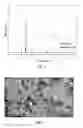
FIG. 1 shows the XRD spectrum of cesium tungsten bronze nanoparticles prepared according to the present disclosure;
FIG. 2 shows the TEM image of cesium tungsten bronze nanoparticles prepared according to the present disclosure;
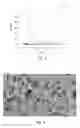
FIG. 3 shows the XRD spectrum of TiO2 nanoparticles prepared according to the present disclosure;
FIG. 4 shows the TEM image of TiO2 nanoparticles prepared according to the present disclosure;
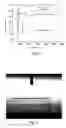
FIG. 5 is the light transmittance curve of a self-cleaning nano heat-insulation coating; and
FIG. 6 is a contact angle image of a self-cleaning nano heat-insulation coating.
DETAILED DESCRIPTION
Novel transparent heat-insulation coating material prepared with cesium tungsten bronze is currently not available in the market due its poor dispersibility which limits its application. However, the present disclosure provides a cesium tungsten bronze-based self-cleaning nano heat-insulation coating material and method of preparing the same. The heat-insulation coating material is a water-based coating material having excellent light transmittance and good dispersibility.
The method for preparing the self-cleaning nano heat-insulation coating material provided comprises preparing cesium tungsten bronze nanoparticles by hydrothermal method using WCl6 and CsOH.5H2O as raw materials, polyvinyl pyrrolidone (PVP) as a surfactant and acetic acid as an acid catalyst; then preparing TiO2 nanoparticles by hydrothermally hydrolyzing TiCl4 which acts as a major raw material; and finally, ball milling and dispersing the cesium tungsten bronze nanoparticles, the TiO2 nanoparticles, a silane coupling agent, and water to obtain an aqueous slurry containing cesium tungsten bronze/TiO2 composite particles, and adjusting the concentration of the aqueous slurry containing cesium tungsten bronze/TiO2 composite particles, to obtain a self-cleaning nano heat-insulation coating material. Herein, the aqueous slurry containing cesium tungsten bronze/TiO2 composite particles is dispersed by high-speed shearing and ultrasonically.
In a further embodiment, the preparation process for cesium tungsten bronze nanoparticles comprises:
stirring 10-15 parts by weight of WCl6, 2-4 parts by weight of CsOH.5H2O, 30-40 parts by weight of acetic acid, and 15-20 parts by weight of PVP together, to obtain a first mixture; and
heating the first mixture to 70° C.-80° C., and maintaining this temperature for 1 h-2 h; and then heating the first mixture further to 220° C.-240° C., and reacting for 20 h-30 h at this temperature, followed by centrifugation and oven drying, to obtain the cesium tungsten bronze nanoparticles.
Herein, suitable amount of water may be added to the first mixture. The first mixture is heated in a reactor having an internal lining made with a material that does not react with the first mixture. Preferably, the internal lining of the reactor is made from p-polyphenol (PPL). It should be understood that polytetrafluoroethylene (PTFE) may also be used as the internal lining of the reactor.
In a further embodiment, the preparation process of TiO2 particles comprises:
mixing 10-15 parts by weight of TiCl4 and 30-40 parts by weight of anhydrous ethanol, to obtain a second mixture; and
then reacting the second mixture at 180° C. for 8 h, followed by centrifuging and oven drying, to obtain TiO2 nanoparticles.
Herein, the second mixture is also heated in a reactor having an internal lining made with a material that does not react with the second mixture. Preferably, the internal lining of the reactor is made with p-polyphenol (PPL). It should be understood that polytetrafluoroethylene (PTFE) may also be used as the internal lining of the reactor.
Further, the preparation process for the aqueous slurry containing cesium tungsten bronze/TiO2 composite particles comprises
ball milling 40-50 parts by weight of cesium tungsten bronze nanoparticles, 5-10 parts by weight of TiO2 nanoparticles, 1-2 parts by weight of SN5040 coupling agent and 40-50 parts by weight of deionized water, to obtain an aqueous slurry containing cesium tungsten bronze/TiO2 composite particles.
During the preparation of the aqueous slurry containing the cesium tungsten bronze/TiO2 composite particles, the rotation speed of the ball mill machine for ball milling is 500 r/min-5000 r/min, and the ball milling time is 4 h-12 h.
The concentration of the aqueous slurry containing cesium tungsten bronze/TiO2 composite particles can be adjusted through evaporation using a rotary evaporator, or by adjusting the amount of water used in the preparation of the aqueous slurry containing cesium tungsten bronze/TiO2 composite particles, or through other methods.
In order to make the technical objectives, technical solutions and technical effects of the present disclosure clearer so that those skilled in the art can understand and implement the present disclosure, the present disclosure will be further described in detail below with reference to the accompanying drawings and specific embodiments.
FIRST EXAMPLE
10 parts by weight of WCl6, 2 parts by weight of CsOH.5H2O, 35 parts by weight of acetic acid and 15 parts by weight of PVP were stirred together to obtain a first mixture. The first mixture was heated to 80° C. and maintained at this temperature for 2 h. Then, the first mixture was further heated to 220° C., reacted for 20 h at this temperature, then centrifuged and oven dried, to obtain cesium tungsten bronze nanoparticles. The cesium tungsten bronze nanoparticles were analyzed by XRD, as shown in FIG. 1, and by TEM, as shown in FIG. 2. It can be seen that the average diameter is 20 nm.
10 parts by weight of TiCl4 and 30 parts by weight of anhydrous ethanol were mixed, to obtain a second mixture. Then, the second mixture was reacted at 180° C. for 8 h, and then centrifuged and oven dried, to obtain TiO2 nanoparticles. The TiO2 particles were analyzed by XRD, as shown in FIG. 3, and by TEM, as shown in FIG. 4. It can be seen that the average diameter is 12 nm.
40 parts by weight of the cesium tungsten bronze nanoparticles, 5 parts by weight of the TiO2 nanoparticles, 1 parts by weight of SN5040 coupling agent and 40 parts by weight of deionized water were ball milled, to obtain an aqueous slurry containing cesium tungsten bronze/TiO2 composite particles, which is used as a self-cleaning nano heat-insulation coating material.
The self-cleaning nano heat-insulation coating material is uniform and stable.
A self-cleaning nano heat-insulation coating was formed with the self-cleaning nano heat-insulation coating material using a spin coater. Then, light transmittance curve of the self-cleaning nano heat-insulation coating was measured, as shown in FIG. 5. From FIG. 5, it can be seen that the self-cleaning nano heat-insulation coating has a visible light transmittance of about 80%, and an infrared blocking rate of about 85%.
A drop of water was dripped on the self-cleaning nano heat-insulation coating, and a photo of the contact angle was taken. As shown in FIG. 6, it can be seen that the contact angle is almost 0°. Thus the self-cleaning nano heat-insulation coating has a super-hydrophilic self-cleaning effect.
SECOND EXAMPLE
13 parts by weight of WCl6, 2 parts by weight of CsOH.5H2O, 40 parts by weight of acetic acid and 20 parts by weight of PVP were stirred together to obtain a first mixture. The first mixture was heated to 70° C. and maintained at this temperature for 1.5 h. Then, the first mixture was further heated to 220° C., reacted for 20 h at this temperature, then centrifuged and oven dried, to obtain cesium tungsten bronze nanoparticles.
15 parts by weight of TiCl4 and 40 parts by weight of anhydrous ethanol were mixed, to obtain a second mixture. Then, the second mixture was reacted at 180° C. for 8 h, and then centrifuged and oven dried, to obtain TiO2 nanoparticles.
50 parts by weight of cesium tungsten bronze nanoparticles, 10 parts by weight of TiO2 nanoparticles, 2 parts by weight of SN5040 coupling agent and 40 parts by weight of deionized water were ball milled, to obtain an aqueous slurry containing cesium tungsten bronze/TiO2 composite particles, which can be used as a self-cleaning nano heat-insulation coating material.
The self-cleaning nano heat-insulation coating material is uniform and stable.
THIRD EXAMPLE
15 parts by weight of WCl6, 4 parts by weight of CsOH.5H2O, 30 parts by weight of acetic acid and 15 parts by weight of PVP were stirred together to obtain a first mixture. The first mixture was heated to 70° C. and maintained at this temperature for 1 h. Then, the first mixture was further heated to 240° C., reacted for 30 h at this temperature, then centrifuged and oven dried, to obtain cesium tungsten bronze nanoparticles.
12 parts by weight of TiCl4 and 30 parts by weight of anhydrous ethanol were mixed, to obtain a second mixture. Then, the second mixture was reacted at 180° C. for 8 h, and then centrifuged and oven dried, to obtain TiO2 nanoparticles.
45 parts by weight of cesium tungsten bronze nanoparticles, 8 parts by weight of TiO2 nanoparticles, 2 parts by weight of SN5040 coupling agent and 50 parts by weight of deionized water were ball milled, to obtain an aqueous slurry containing cesium tungsten bronze/TiO2 composite particles, which can be used as a self-cleaning nano heat-insulation coating material. The self-cleaning nano heat-insulation coating material is uniform and stable.
In the present disclosure, cesium tungsten bronze nanoparticles and TiO2 nanoparticles are prepared through hydrothermal method. The cesium tungsten bronze nanoparticles have a large specific surface area, thus is beneficial to improving infrared absorptivity. TiO2 nanoparticles have a good dispersibility in water, and virtually does not block visible light.
Further, in the present disclosure, an aqueous slurry containing cesium tungsten bronze/TiO2 composite particles is prepared by ball milling and dispersing, in which the well-dispersed cesium tungsten bronze nanoparticles and TiO2 nanoparticles are beneficial to improving visible light transmittance and infrared blocking performance of the coating.
A coating obtained by applying the self-cleaning nano heat-insulation coating material of the present disclosure has a good hydrophilicity which prevents contamination of the nano-coating by organic oils and inorganic dusts, thereby greatly enhancing the anti-fouling performance and extending the service life of the coating.
The self-cleaning nano heat-insulation coating material of the present disclosure is a water-based heat-insulation coating material, which has low content of volatile organic compounds (VOCs) and causes no hazards to the environment and the health of construction workers and users.
It should be understood that improvements or replacements can be made by those skilled in the art based on the above description, and all such improvements and replacements shall fall within the protection scope of the appended claims of the present disclosure
Claims
1. A method for preparing a cesium tungsten bronze-based self-cleaning nano heat-insulation coating material, comprising:
preparing cesium tungsten bronze nanoparticles by hydrothermal method using WCl6 and CsOH.5H2O as raw materials, PVP as a surfactant and acetic acid as an acid catalyst;
preparing TiO2 nanoparticles from TiCl4; and
ball milling and dispersing the cesium tungsten bronze nanoparticles, the TiO2 nanoparticles, a silane coupling agent, and water so as to obtain an aqueous slurry containing cesium tungsten bronze/TiO2 composite particles; and
adjusting the concentration of said aqueous slurry to obtain a self-cleaning nano heat-insulation coating material.
2. The preparation method according to claim 1, wherein preparing the cesium tungsten bronze nanoparticles comprises:
stirring 10-15 parts by weight of WCl6, 2-4 parts by weight of CsOH.5H2O, 30-40 parts by weight of acetic acid, and 15-20 parts by weight of PVP together, to obtain a first mixture; and
heating the first mixture to 70-80° C., and maintaining the first mixture at this temperature for 1 h-2 h; and then heating the first mixture further to 220-240° C., and reacting the first mixture for 20 h-30 h at this temperature, followed by centrifugation and oven drying, to obtain the cesium tungsten bronze nanoparticles.
3. The preparation method according to claim 1, wherein preparing TiO2 nanoparticles from TiCl4 comprises:
mixing 10-15 parts by weight of TiCl4 and 30-40 parts by weight of anhydrous ethanol, to obtain a second mixture; and
then reacting the second mixture at 180° C. for 8 h, followed by centrifuging and oven drying the second mixture to obtain TiO2 nanoparticles.
4. The preparation method according to claim 1, wherein ball milling and dispersing comprises:
ball milling 40-50 parts by weight of cesium tungsten bronze nanoparticles, 5-10 parts by weight of TiO2 nanoparticles, 1-2 parts by weight of SN5040 coupling agent and 40-50 parts by weight of deionized water, to obtain an aqueous slurry containing cesium tungsten bronze/TiO2 composite particles.
5. The preparation method according to claim 4, wherein the rotation speed of ball mill machine for the ball milling is 500 r/min-5000 r/min, and the ball milling time is 4 h-12 h.
6. A self-cleaning nano heat-insulation coating material, prepared by the preparation method according to claim 1.
7. A self-cleaning nano heat-insulation coating material, prepared by the preparation method according to claim 2.
8. A self-cleaning nano heat-insulation coating material, prepared by the preparation method according to claim 3.
9. A self-cleaning nano heat-insulation coating material, prepared by the preparation method according to claim 4.
10. A self-cleaning nano heat-insulation coating material, prepared by the preparation method according to claim 5.
Images & Drawings included:
Sources:
- United States Patent and Trademark Office - verify current appl. status at the USPTO↗
Recent applications in this class:
- » 20240327654 2024-10-03
HYDROPHOBIC PROTECTIVE COATING FOR PAINTED AND NON-PAINTED METALLIC SURFACES - » 20240240036 2024-07-18
SOLID-INFUSED SURFACES, ARTICLES INCORPORATING SOLID-INFUSED SURFACES, METHODS OF MAKING, AND METHODS OF USE THEREOF - » 20240228797 2024-07-11
LIQUID REPELLENT SLIPPERY SURFACES AND METHODS OF PREPARATION THEREOF - » 20240209220 2024-06-27
ICEPHOBIC SURFACES AND METHODS OF PRODUCING THE SAME - » 20240110068 2024-04-04
Parylene-in-Oil Hydrophobic Coating - » 20240076507 2024-03-07
HYDROPHOBIC PROTECTIVE COATING FOR PAINTED AND NON-PAINTED METALLIC SURFACES - » 20230203321 2023-06-29
ANTIFOULING MATERIALS - » 20230203320 2023-06-29
Methods for making antifouling materials - » 20230084928 2023-03-16
LIQUIDS AND VISCOELASTIC MATERIAL REPELLENT AND ANTI-BIOFOULING COATINGS - » 20220348772 2022-11-03
Substrates having superhydrophobic surfaces, methods of producing the same and the use thereof
Recent applications for this Assignee:
- » 20200397384 2020-12-24
Predictive knee joint loading system - » 20150308653 2015-10-29
Optical lens and lighting device - » 20140309979 2014-10-16
System and method for generating an electromagnetic field model - » 20140255242 2014-09-11
COMPOSITE STEEL PLATE - » 20100227192 2010-09-09
Method of making a composite steel plate - » 20090197943 2009-08-06
Flavonoid dimers and methods of making and using such - » 20090165688 2009-07-02
Method for manufacturing smart pressure monitored suits - » 20080220185 2008-09-11
Fabric simulating the plant structure for moisture management - » 20060276761 2006-12-07
Storage and delivery vessel for two-part medicament - » 20060253008 2006-11-09
Method for predicting the blood glucose level of a person