Substituted benzenesulfonamides as sodium channel blockers
US20180346459A1
2018-12-06
15/771,775
2016-11-11
✅ Patent granted
US 10,227,338 B2
2019-03-12
WO; PCT/KR2016/013029; 20161111
WO; WO2017/082688; 20170518
Douglas M Willis
Marshall, Gerstein & Borun LLP
2036-11-11
Abstract:
The present invention relates to a compound represented by Chemical Formula, or a pharmaceutically acceptable salt thereof. The compound according to the present invention can be usefully used for the prevention or treatment of sodium channel blocker-related diseases.
Inventors:
- Chun-Ho Lee 13 🇰🇷 Seoul, South Korea
- Hyo-Shin Kim 4 🇰🇷 Incheon, South Korea
- Sun Ah Jun 8 🇰🇷 Gyeonggi-do, South Korea
- Hyung Geun Lee 4 🇰🇷 Gyeonggi-do, South Korea
- Ji Sung Yoon 3 🇰🇷 Gyeonggi-do, South Korea
- Il-Hwan KIM 2 🇰🇷 Chungcheongbuk-do, South Korea
- Myunggi JUNG 3 🇰🇷 Gyeonggi-do, South Korea
- Sung-Young KIM 1 🇰🇷 Gyeonggi-do, South Korea
Assignee:
- DAEWOONG PHARMACEUTICAL CO., LTD. 44 🇰🇷 Gyeonggi-do, South Korea
Applicant:
Interested in similar patents?
Get notified when new applications in this technology area are published.
Classification:
C07D417/12 » CPC main
Heterocyclic compounds containing two or more hetero rings, at least one ring having nitrogen and sulfur atoms as the only ring hetero atoms, not provided for by group containing two hetero rings linked by a chain containing hetero atoms as chain links
C07D417/14 » CPC further
Heterocyclic compounds containing two or more hetero rings, at least one ring having nitrogen and sulfur atoms as the only ring hetero atoms, not provided for by group containing three or more hetero rings
C07D277/52 » CPC further
Heterocyclic compounds containing 1,3-thiazole or hydrogenated 1,3-thiazole rings not condensed with other rings having two or three double bonds between ring members or between ring members and non-ring members with hetero atoms or with carbon atoms having three bonds to hetero atoms with at the most one bond to halogen, e.g. ester or nitrile radicals, directly attached to ring carbon atoms; Nitrogen atoms; Nitrogen atoms bound to hetero atoms to sulfur atoms, e.g. sulfonamides
A61K31/18 IPC
Medicinal preparations containing organic active ingredients; Amides, e.g. hydroxamic acids Sulfonamides
C07C311/21 IPC
Amides of sulfonic acids, i.e. compounds having singly-bound oxygen atoms of sulfo groups replaced by nitrogen atoms, not being part of nitro or nitroso groups; Sulfonamides having sulfur atoms of sulfonamide groups bound to carbon atoms of six-membered aromatic rings having the nitrogen atom of at least one of the sulfonamide groups bound to a carbon atom of a six-membered aromatic ring
A61K31/427 » CPC further
Medicinal preparations containing organic active ingredients; Heterocyclic compounds having nitrogen as a ring hetero atom, e.g. guanethidine or rifamycins having five-membered rings with two or more ring hetero atoms, at least one of which being nitrogen, e.g. tetrazole; Thiazoles not condensed and containing further heterocyclic rings
A61K31/497 » CPC further
Medicinal preparations containing organic active ingredients; Heterocyclic compounds having nitrogen as a ring hetero atom, e.g. guanethidine or rifamycins having six-membered rings with two nitrogen atoms as the only ring heteroatoms, e.g. piperazine; Non-condensed pyrazines containing further heterocyclic rings
Description
TECHNICAL FIELD
The present invention relates to a compound having sodium ion channel blocking activity, a process for preparing the same and use thereof.
BACKGROUND ART
Voltage-gated sodium (Nav) channels are found in all excitable cells, including muscle and nerve cells of the central and peripheral nervous systems. The sodium channels are essential for the initiation and propagation of electrical signals in the nervous system. Therefore, proper function of the sodium channels is essential to the normal function of the nerves. Ultimately, abnormal Nav channels play an important role in various diseases such as epilepsy, arrhythmia, myotonia, ataxia, multiple sclerosis, irritable bowel syndrome, urinary incontinence, visceral pain, depression, and pains. Currently, ten types of Nav channels are found in Human (Nav 1.1-1.9, Nax). Among them, four channels of Nav1.3, Nav1.7, Nav1.8 and Nav 1.9 are known to have a close connection with pain signaling, and thus are recognized as an important analgesic drug target.
A total of 10 types of Nav channels are found so far as summarized in Table 1 below. Among the 10 types, 9 types of Nav 1.1 to Nav1.9 form channels, among which NG 1.3, Nav 1.6, Nav 1.7, Nav 1.8 and Nav 1.9 are expressed in DRG.
| TABLE 1 | ||||
| Distribution | TTX | |||
| Type | Gene | tissue | IC-50 nM | Indications |
| Nav1.1 | SCN1A | CNS/PNS | 10 | Pain, epilepsy, |
| neurodegeneration | ||||
| Nav1.2 | SCN2A | CNS | 10 | neurodegeneration, |
| epilepsy | ||||
| Nav1.3 | SCN3A | CNS | 15 | Pain, epilepsy |
| Nav1.4 | SCN4A | Sk. muscle | 25 | myotonia |
| Nav1.5 | SCN5A | Heart | 2000 | arrhythmia |
| Nav1.6 | SCN6A | CNS/PNS | 6 | pain, motor disorder |
| Nav1.7 | SCN7A | PNS | 25 | pain, |
| neuroenedocrine | ||||
| disorder | ||||
| Nav1.8 | SCN8A | PNS | 50000 | pain |
| Nav1.9 | SCN9A | PNS | 1000 | pain |
In particular, Nav1.7 is known to be preferentially expressed in dorsal root ganglia (DRG) and sympathetic ganglia. In the sensory ganglia DRG, Nav1.7 channel is expressed in A- or C-fiber neurons, but frequently distributed in small neurons having a deep connection with pain. In particular, 85% of DRG are present in cells defined as nociceptors. This fact indicates that Nav1.7 has a close connection with pain.
The fact that Nav1.7 channel has a close connection with pain is well demonstrated in the results of not only animal studies but also human disease studies. The results of animal studies indicated that, when inflammation occurs, the gene transcript of Nav1.7 significantly increases and the expression of proteins also increases. This increase in transcript is believed to be attributable to an increase in NGF. The increased expression of Nav1.7 is believed to be the direct cause of an increase in excitability of sensory cells. In particular, when the gene of the Nav1.7 channel is removed or reduced, inflammatory pain is greatly reduced. However, animal studies do not indicate that the removal or reduction of the Nav1.7 channel gene reduces neuropathic pain. However, there are many evidences that Nav1.7 is involved in neuropathic pain in humans.
Survey results for lineages that feel severe pain or no pain give many answers to pain studies. Particularly, these results directly indicate the importance of Nav1.7 in causing pain. There are two types of inherited diseases that cause severe pain. In the case of erythromelalgia or erythermalgia among these diseases, severe pain is sometimes felt for a few hours when the body is slightly warm or takes exercises. In some cases, the skin becomes red, and the hand, the foot or the face swell. The results of genetic research indicated that SCN9A (the human gene name of Nav1.7) is present at chromosomal sites associated with diseases. Nine mutations of Nav1.7 were found until now. These mutations lower activation threshold or result in slow deactivation of the channel. Thus, these mutations can easily generate action potential even upon depolarization of some neurons (see Dib-Hajj, S D. et al., Trends in Neurosci., 30, 555-563:(2007)).
In the case of paroxysmal extreme pain disorder (PEPD) that is another inherited disease, pain is felt through life and caused when the bowels are evacuated or the anal region is stimulated. In addition to pain, the leg becomes red. As is known in the art, in PEPD, eight mutations occur in Nav1.7. These mutations occur mainly in sites that cause inactivation. The Nav channel has an inactivation ball in the linker between domains III and IV, and a peptide receiving region in the linker between the S5 and S6 segments of domains III and IV. Interestingly, mutations that cause PEPD all occur in these two regions. It appears that these cause a problem in the inactivation of Nav1.7. As expected, these mutations cause a problem in the inactivation of Nav1.7, resulting in slow deactivation of the channel (see Fertleman, C. R. et al., Neuron, 52, 767-774 (2006)). Thus, the amount of electric current that enters through the channel increases.
Still another inherited disease is congenital indifference to pain (CIP). This disease results from mutation of the Nav1.7 channel and exist in Pakistani and Chinese lineages. Persons suffering from this disease feel no pain (see Cox, J. J. et al., Nature, 444, 894-898 (2006)). CIP causes the loss of function of the Nav1.7 channel. Particularly, a mutation in this channel inhibits the expression of this channel. Thus, this channel is not expressed (see Cox, J. J. et al., Nature, 444, 894-898 (2006)). Interestingly, the knock-out of Nav1.7 does not influence other sensations. However, it influences the olfactory sensation. This fact directly indicates that Nav1.7 does not overlap with other channels in pain transmission and the function thereof is not compensated for by other Nav channels.
As described above for the above diseases, when a mutation in the Nav1.7 channel causes a gain of function, severe pain is felt, and when it causes a loss of function, pain is relieved. This is a good clinical example that directly shows that the Nav1.7 channel is the major cause of pain. Thus, it is considered that an antagonist that inhibits this channel will naturally result in a pain-relieving effect.
However, if the Nav1.7 channel antagonist inhibits a plurality of Nav channels including the Nav1.7 channel, it can show adverse effects of various CNS disturbances, such as blurring of vision, dizziness, vomiting and depression. Particularly, if it inhibits the Nav1.5 channel, it can cause cardiac arrhythmia and heart failure, which threaten life. For these reasons, selective inhibition of the Nav1.7 channels is very important.
Pains can be largely classified into three: acute pain, inflammatory pain, and neuropathic pain. Acute pain plays an important protective function of maintaining the safety of organisms from stimuli that can cause tissue injury. Thus, it is generally temporary and intense. On the other hand, inflammatory pain can be longer lasting, and the intensity thereof further increases. Inflammatory pain is mediated by various substances that are released during inflammation, including substance P, histamine, acids, prostaglandin, bradykinin, CGRP, cytokines, ATP and other substances. The third pain is neuropathic and involves nerve injury or a nerve injury caused by viral infection. It causes reconstitution of circuits with neuron proteins to cause pathological “sensitization”, which can result in chronic pain that is lasting for several years. This type of pain does not provide an advantage of adaptability and is difficult to treat by current therapy.
Particularly, neuropathic pain and intractable pain are great medical problems that have not been solved. Several hundred million patients are suffering from severe pain that is not well inhibited by current therapeutic methods. Drugs that are currently used for the treatment of pain include NSAIDS, COX-2 inhibitors, opioids, tricyclic antidepressants and anticonvulsants. Neuropathic pain is particularly difficult to treat, because it does not well respond to opioids until a high dose is reached. Currently, gabapentin is most widely used as a therapeutic agent against neuropathic pain, but it is effective for 60% of the patients and is not greatly effective. This drug is generally safe, but is problematic in terms of sedative action at high doses.
Accordingly, studies on the discovery of new regulators of the Nav1.7 channel and the use thereof for the treatment of acute pain, chronic acute, inflammatory pain and neuropathic pain have been actively conducted by global pharmaceutical companies, including Merck, AstraZeneca and the like (see US2010-0197655; US2012-0010183; WO2013-086229; WO2013-177224; US2012-0238579; WO2007-145922).
In view of the above, as a result of studying novel compounds, the present inventors has found that a compound having a chemical structure different from sodium channel blockers reported so far not only has excellent sodium channel blocking effects, thereby completing the present invention. The compounds belonging to the present invention mainly have sodium channel inhibitory activity on their own, but do not exclude a possibility of exhibiting a pharmacological action as an efficacious agent by a special body environment or by products of metabolic process, after absorption into the body.
DETAILED DESCRIPTION OF THE INVENTION
Technical Problem
It is one object of the present invention to provide a compound having a blocking effect against sodium ion channels, particularly Nav 1.7, a process for its preparation and its use.
Technical Solution
In order to achieve the above objects, the present invention provides a compound represented by Chemical Formula 1 below, or a pharmaceutically acceptable salt thereof:
in Chemical Formula 1,
R1 is hydrogen, C1-4 alkyl, C1-4 alkoxy, C1-4 haloalkyl, C1-4 haloalkoxy, halogen, or cyano,
R2 and R3 are each independently hydrogen, or halogen,
R4 is C5-10 heteroaryl containing one or two elements each independently selected from the group consisting of N, S and O,
-
- wherein the C5-10 heteroaryl is unsubstituted or substituted with C1-4 alkyl or halogen,
R5 is —CH2CH2—N(R7)(R8), or —CH2CH2CH2—N(R7)(R8), R6 is hydrogen, or C1-4 alkyl; or R5 and R6 together form C3-5 alkylene, (C2-4 alkylene)-N(R9)—(C2-4 alkylene), or (C2-4 alkylene)-O—(C2-4 alkylene),
-
- wherein the C3-5 alkylene, or C2-4 alkylene is each independently unsubstituted or substituted with one or two R10,
R7, R8, and R9 are each independently hydrogen, or C1-4 alkyl,
R10 is C1-4 alkyl, C1-4 alkoxy, halogen, amino, NH(C1-4 alkyl), N(C1-4 alkyl)2, NHCO(C1-4 alkyl), or pyrrolidinyl,
X1 is C—R′, or N, wherein R′ is hydrogen, or halogen,
X2 is CH, or N, and
X3 is N—R″, wherein R″ is hydrogen, or C1-4 alkyl.
Preferably, the compound represented by Chemical Formula 1 is represented by Chemical Formula 1′ below:
wherein,
R1 is hydrogen, C1-4 alkyl, C1-4 alkoxy, C1-4 haloalkyl, C1-4 haloalkoxy, halogen, or cyano,
R2 and R3 are each independently hydrogen, or halogen,
R4 is C5-10 heteroaryl containing one or two elements each independently selected from the group consisting of N, S and O,
R11 is hydrogen, or C1-4 alkyl,
R12 is hydrogen, C1-4 alkyl, C1-4 alkoxy, halogen, amino, NH(C1-4 alkyl), N(C1-4 alkyl)2, NHCO(C1-4 alkyl), or pyrrolidinyl,
X1 is C—R′, or N, wherein R′ is hydrogen, or halogen,
X2 is CH, or N, and
X3 is N—R″, wherein R″ is hydrogen, or C1-4 alkyl,
X4 is a bond, NH, N(C1-4 alkyl), or o (oxygen), and
n is an integer of 1 to 4.
Preferably, R1 is hydrogen, methyl, methoxy, trifluoromethyl, difluoromethoxy, trifluoromethoxy, fluoro, chloro, or cyano.
Preferably, R2 and R3 are each independently hydrogen, fluoro, or chloro.
Preferably, R4 is thiazolyl, isoxazolyl, oxazolyl, pyrazinyl, pyrazolyl, pyridinyl, pyrimidinyl, or thiadiazolyl, wherein the R4 is unsubstituted or substituted with C1-4 alkyl, or halogen.
Preferably, R5 and R6 together form C3-5 alkylene, (C2-4 alkylene)-N(R9)—(C2-4 alkylene), or (C2-4 alkylene)-O—(C2-4 alkylene), wherein the C3-5 alkylene or C2-4 alkylene is each independently unsubstituted or substituted with methyl, methoxy, fluoro, amino, NHCH3, N(CH3)2, N(CH2CH3)2, NHCOCH3, or pyrrolidinyl.
Preferably, R5, R6, and R5 and R6 together with the nitrogen to which they are attached form any one selected from the group consisting of:
wherein, R10 is as defined above.
Preferably, R5 is —CH2CH2—NH—CH3, —CH2CH2CH2—NH—CH3, or —CH2CH2—N(CH3)2, and R6 is hydrogen, or methyl.
Preferably, X1 is CH, CF, or N, X2 is CH, or N, provided that both X1 and X2 are not N.
Preferably, X3 is NH.
Representative examples of the compound represented by Chemical Formula 1 or a pharmaceutically acceptable salt thereof are as follows:
1) 5-chloro-2-fluoro-4-((4-fluoro-2-(3-(methylamino)pyrrolidin-1-yl)phenyl)amino)-N-(thiazol-4-yl)benzenesulfonamide,
2) 5-chloro-4-((4-chloro-2-(3-(methylamino)pyrrolidin-1-yl)phenyl)amino)-2-fluoro-N-(thiazol-4-yl)benzenesulfonamide,
3) (R)-5-chloro-4-((4-chloro-2-(2-methylpiperazin-1-yl)phenyl)amino)-2-fluoro-N-(thiazol-4-yl)benzenesulfonamide,
4) (R)-5-chloro-4-((4-chloro-2-(3-(methylamino)piperidin-1-yl)phenyl)amino)-2-fluoro-N-(thiazol-4-yl)benzenesulfonamide,
5) (R)—N-(1-(5-chloro-2-((2-chloro-5-fluoro-4-(N-(thiazol-4-yl)sulfamoyl)phenyl)amino)phenyl)pyrrolidin-3-yl)acetamide,
6) 5-chloro-4-((4-chloro-2-(3-(diethylamino)pyrrolidin-1-yl)phenyl)amino)-2-fluoro-N-(thiazol-4-yl)benzenesulfonamide,
7) 4-((2-([1,3′-bipyrrolidin]-1′-yl)-4-chlorophenyl)amino)-5-chloro-2-fluoro-N-(thiazol-4-yl)benzenesulfonamide,
8) 5-chloro-2-fluoro-4-((4-methyl-2-(3-(methylamino)pyrrolidin-1-yl)phenyl)amino)-N-(thiazol-4-yl)benzenesulfonamide,
9) (S)-5-chloro-4-((4-chloro-2-(3-methylpiperazin-1-yl)phenyl)amino)-2-fluoro-N-(thiazol-4-yl)benzenesulfonamide,
10) 4-((4-fluoro-2-(3-(methylamino)pyrrolidin-1-yl)phenyl)amino)-N-(thiazol-4-yl)benzenesulfonamide,
11) 3-chloro-4-((4-fluoro-2-(3-(methylamino)pyrrolidin-1-yl)phenyl)amino)-N-(thiazol-4-yl)benzenesulfonamide,
12) 3,5-difluoro-4-((4-fluoro-2-(3-(methylamino)pyrrolidin-1-yl)phenyl)amino)-N-(thiazol-4-yl)benzenesulfonamide,
13) 2-fluoro-4-((4-fluoro-2-(3-(methylamino)pyrrolidin-1-yl)phenyl)amino)-N-(thiazol-4-yl)benzenesulfonamide,
14) 4-((2-(3-(methylamino)pyrrolidin-1-yl)-4-(trifluoromethoxy)phenyl)amino)-N-(thiazol-4-yl)benzenesulfonamide,
15) 3,5-difluoro-4-((2-(3-(methylamino)pyrrolidin-1-yl)-4-(trifluoromethoxy)phenyl)amino)-N-(thiazol-4-yl)benzenesulfonamide,
16) 2-fluoro-4-((2-(3-(methylamino)pyrrolidin-1-yl)-4-(trifluoromethoxy)phenyl)amino)-N-(thiazol-4-yl)benzenesulfonamide,
17) 5-chloro-2-fluoro-4-((2-(3-(methylamino)pyrrolidin-1-yl)-4-(trifluoromethoxy)phenyl)amino)-N-(thiazol-4-yl)benzenesulfonamide,
18) 5-chloro-4-((5-chloro-3-(3-(methylamino)pyrrolidin-1-yl)pyridin-2-yl)amino)-2-fluoro-N-(thiazol-4-yl)benzenesulfonamide,
19) 5-chloro-4-((6-chloro-2-(3-(methylamino)pyrrolidin-1-yl)pyridin-3-yl)amino)-2-fluoro-N-(thiazol-4-yl)benzenesulfonamide,
20) 5-chloro-2-fluoro-4-((2-(3-(methylamino)pyrrolidin-1-yl)-4-(trifluoromethyl)phenyl)amino)-N-(thiazol-4-yl)benzenesulfonamide,
21) 5-chloro-4-((4-(difluoromethoxy)-2-(3-(methylamino)pyrrolidin-1-yl)phenyl)amino)-2-fluoro-N-(thiazol-4-yl)benzenesulfonamide,
22) (R)-4-((4-fluoro-2-(3-(methylamino)piperidin-1-yl)phenyl)amino)-N-(thiazol-4-yl)benzenesulfonamide,
23) (R)-2-fluoro-4-((4-fluoro-2-(3-(methylamino)piperidin-1-yl)phenyl)amino)-N-(thiazol-4-yl)benzenesulfonamide,
24) (R)-3-chloro-4-((4-fluoro-2-(3-(methylamino)piperidin-1-yl)phenyl)amino)-N-(thiazol-4-yl)benzenesulfonamide,
25) (R)-3,5-difluoro-4-((4-fluoro-2-(3-(methylamino)piperidin-1-yl)phenyl)amino)-N-(thiazol-4-yl)benzenesulfonamide,
26) (R)-5-chloro-2-fluoro-4-((4-fluoro-2-(3-(methylamino)piperidin-1-yl)phenyl)amino)-N-(thiazol-4-yl)benzenesulfonamide,
27) (R)-4-((4-fluoro-2-(3-(methylamino)pyrrolidin-1-yl)phenyl)amino)-N-(thiazol-4-yl)benzenesulfonamide,
28) (R)-2-fluoro-4-((4-fluoro-2-(3-(methylamino)pyrrolidin-1-yl)phenyl)amino)-N-(thiazol-4-yl)benzenesulfonamide,
29) (R)-3-chloro-4-((4-fluoro-2-(3-(methylamino)pyrrolidin-1-yl)phenyl)amino)-N-(thiazol-4-yl)benzenesulfonamide,
30) (R)-3,5-difluoro-4-((4-fluoro-2-(3-(methylamino)pyrrolidin-1-yl)phenyl)amino)-N-(thiazol-4-yl)benzenesulfonamide,
31) (R)-5-chloro-2-fluoro-4-((4-fluoro-2-(3-(methylamino)pyrrolidin-1-yl)phenyl)amino)-N-(thiazol-4-yl)benzenesulfonamide,
32) 5-chloro-2-fluoro-4-((4-fluoro-2-(3-(methylamino)pyrrolidin-1-yl)phenyl)amino)-N-(thiazol-4-yl)benzenesulfonamide,
33) 4-((2-(3-aminopyrrolidin-1-yl)-4-fluorophenyl)amino)-2-fluoro-N-(thiazol-4-yl)benzenesulfonamide,
34) 4-((2-(3-aminopyrrolidin-1-yl)-4-fluorophenyl)amino)-3-chloro-N-(thiazol-4-yl)benzenesulfonamide,
35) 4-((2-(3-aminopyrrolidin-1-yl)-4-fluorophenyl)amino)-5-chloro-2-fluoro-N-(thiazol-4-yl)benzenesulfonamide,
36) 4-((2-(3-(methylamino)pyrrolidin-1-yl)phenyl)amino)-N-(thiazol-4-yl)benzenesulfonamide,
37) 2-fluoro-4-((2-(3-(methylamino)pyrrolidin-1-yl)-4-(trifluoromethyl)phenyl)amino)-N-(thiazol-4-yl)benzenesulfonamide,
38) 3-chloro-4-((2-(3-(methylamino)pyrrolidin-1-yl)-4-(trifluoromethyl)phenyl)amino)-N-(thiazol-4-yl)benzenesulfonamide,
39) 4-((4-(difluoromethoxy)-2-(3-(methylamino)pyrrolidin-1-yl)phenyl)amino)-2-fluoro-N-(thiazol-4-yl)benzenesulfonamide,
40) 3-chloro-4-((4-(difluoromethoxy)-2-(3-(methylamino)pyrrolidin-1-yl)phenyl)amino)-N-(thiazol-4-yl)benzenesulfonamide,
41) (R)-4-((4-fluoro-2-(3-fluoropyrrolidin-1-yl)phenyl)amino)-N-(thiazol-4-yl)benzenesulfonamide,
42) (R)-2-fluoro-4-((4-fluoro-2-(3-fluoropyrrolidin-1-yl)phenyl)amino)-N-(thiazol-4-yl)benzenesulfonamide,
43) (R)-3-chloro-4-((4-fluoro-2-(3-fluoropyrrolidin-1-yl)phenyl)amino)-N-(thiazol-4-yl)benzenesulfonamide,
44) (R)-3,5-difluoro-4-((4-fluoro-2-(3-fluoropyrrolidin-1-yl)phenyl)amino)-N-(thiazol-4-yl)benzenesulfonamide,
45) (R)-5-chloro-2-fluoro-4-((4-fluoro-2-(3-fluoropyrrolidin-1-yl)phenyl)amino)-N-(thiazol-4-yl)benzenesulfonamide,
46) 2-fluoro-4-((3-fluoro-2-(3-(methylamino)pyrrolidin-1-yl)phenyl)amino)-N-(thiazol-4-yl)benzenesulfonamide,
47) 3-chloro-4-((3-fluoro-2-(3-(methylamino)pyrrolidin-1-yl)phenyl)amino)-N-(thiazol-4-yl)benzenesulfonamide,
48) 5-chloro-2-fluoro-4-((3-fluoro-2-(3-(methylamino)pyrrolidin-1-yl)phenyl)amino)-N-(thiazol-4-yl)benzenesulfonamide,
49) 2-fluoro-4-((2-(3-(methylamino)pyrrolidin-1-yl)phenyl)amino)-N-(thiazol-4-yl)benzenesulfonamide,
50) 3-chloro-4-((2-(3-(methylamino)pyrrolidin-1-yl)phenyl)amino)-N-(thiazol-4-yl)benzenesulfonamide,
51) 3,5-difluoro-4-((2-(3-(methylamino)pyrrolidin-1-yl)phenyl)amino)-N-(thiazol-4-yl)benzenesulfonamide,
52) 5-chloro-2-fluoro-4-((2-(3-(methylamino)pyrrolidin-1-yl)phenyl)amino)-N-(thiazol-4-yl)benzenesulfonamide,
53) 2-fluoro-4-((4-methoxy-2-(3-(methylamino)pyrrolidin-1-yl)phenyl)amino)-N-(thiazol-4-yl)benzenesulfonamide,
54) 3-chloro-4-((4-methoxy-2-(3-(methylamino)pyrrolidin-1-yl)phenyl)amino)-N-(thiazol-4-yl)benzenesulfonamide,
55) 5-chloro-2-fluoro-4-((4-methoxy-2-(3-(methylamino)pyrrolidin-1-yl)phenyl)amino)-N-(thiazol-4-yl)benzenesulfonamide,
56) (R)-4-((4-methoxy-2-(3-(methylamino)piperidin-1-yl)phenyl)amino)-N-(thiazol-4-yl)benzenesulfonamide,
57) (R)-2-fluoro-4-((4-methoxy-2-(3-(methylamino)piperidin-1-yl)phenyl)amino)-N-(thiazol-4-yl)benzenesulfonamide,
58) (R)-3-chloro-4-((4-methoxy-2-(3-(methylamino)piperidin-1-yl)phenyl)amino)-N-(thiazol-4-yl)benzenesulfonamide,
59) (R)-3,5-difluoro-4-((4-methoxy-2-(3-(methylamino)piperidin-1-yl)phenyl)amino)-N-(thiazol-4-yl)benzenesulfonamide,
60) (R)-5-chloro-2-fluoro-4-((4-methoxy-2-(3-(methylamino)piperidin-1-yl)phenyl)amino)-N-(thiazol-4-yl)benzenesulfonamide,
61) 3-chloro-4-((4-fluoro-2-(4-methylpiperazin-1-yl)phenyl)amino)-N-(thiazol-4-yl)benzenesulfonamide,
62) 5-chloro-2-fluoro-4-((4-fluoro-2-(4-methylpiperazin-1-yl)phenyl)amino)-N-(thiazol-4-yl)benzenesulfonamide,
63) (S)-5-chloro-4-((2-(3-(dimethylamino)pyrrolidin-1-yl)-4-fluorophenyl)amino)-2-fluoro-N-(thiazol-4-yl)benzenesulfonamide,
64) (S)-5-chloro-4-((2-(3-(dimethylamino)pyrrolidin-1-yl)-4-(trifluoromethyl)phenyl)amino)-2-fluoro-N-(thiazol-4-yl)benzenesulfonamide,
65) 5-chloro-2-fluoro-4-((2-(4-methylpiperazin-1-yl)-4-(trifluoromethyl)phenyl)amino)-N-(thiazol-4-yl)benzenesulfonamide,
66) 5-chloro-4-((4-(difluoromethoxy)-2-(4-methylpiperazin-1-yl)phenyl)amino)-2-fluoro-N-(thiazol-4-yl)benzenesulfonamide,
67) 5-chloro-2-fluoro-4-((2-(4-methylpiperazin-1-yl)-4-(trifluoromethoxy)phenyl)amino)-N-(thiazol-4-yl)benzenesulfonamide,
68) (S)-3-chloro-4-((2-(3-(dimethylamino)pyrrolidin-1-yl)-4-(trifluoromethyl)phenyl)amino)-N-(thiazol-4-yl)benzenesulfonamide,
69) (S)-2-fluoro-4-((4-fluoro-2-(3-(methylamino)pyrrolidin-1-yl)phenyl)amino)-N-(thiazol-4-yl)benzenesulfonamide,
70) (S)-5-chloro-2-fluoro-4-((4-fluoro-2-(3-(methylamino)pyrrolidin-1-yl)phenyl)amino)-N-(thiazol-4-yl)benzenesulfonamide,
71) (S)-5-chloro-4-((2-(3-(dimethylamino)pyrrolidin-1-yl)-4-methoxyphenyl)amino)-2-fluoro-N-(thiazol-4-yl)benzenesulfonamide,
72) (S)-5-chloro-4-((4-(difluoromethoxy)-2-(3-(dimethylamino)pyrrolidin-1-yl)phenyl)amino)-2-fluoro-N-(thiazol-4-yl)benzenesulfonamide,
73) (R)-5-chloro-4-((2-(3-(dimethylamino)pyrrolidin-1-yl)-4-fluorophenyl)amino)-2-fluoro-N-(thiazol-4-yl)benzenesulfonamide,
74) (R)-5-chloro-4-((2-(3-(dimethylamino)pyrrolidin-1-yl)-4-(trifluoromethyl)phenyl)amino)-2-fluoro-N-(thiazol-4-yl)benzenesulfonamide,
75) (R)-5-chloro-4-((4-(difluoromethoxy)-2-(3-(dimethylamino)pyrrolidin-1-yl)phenyl)amino)-2-fluoro-N-(thiazol-4-yl)benzenesulfonamide,
76) 4-((2-(1,4-diazepan-1-yl)-4-fluorophenyl)amino)-5-chloro-2-fluoro-N-(thiazol-4-yl)benzenesulfonamide,
77) 5-chloro-4-((4-cyano-2-(3-(methylamino)pyrrolidin-1-yl)phenyl)amino)-2-fluoro-N-(thiazol-4-yl)benzenesulfonamide,
78) (R)—N-(1-(2-((2-chloro-5-fluoro-4-(N-(thiazol-4-yl)sulfamoyl)phenyl)amino)-5-(trifluoromethyl)phenyl)pyrrolidin-3-yl)acetamide,
79) (R)—N-(1-(2-((2-chloro-4-(N-(thiazol-4-yl)sulfamoyl)phenyl)amino)-5-(trifluoromethyl)phenyl)pyrrolidin-3-yl)acetamide,
80) (S)-3-chloro-4-((2-(3-(methylamino)pyrrolidin-1-yl)-4-(trifluoromethyl)phenyl)amino)-N-(thiazol-4-yl)benzenesulfonamide,
81) (S)-5-chloro-2-fluoro-4-((2-(3-(methylamino)pyrrolidin-1-yl)-4-(trifluoromethyl)phenyl)amino)-N-(thiazol-4-yl)benzenesulfonamide,
82) 5-chloro-2-fluoro-4-((4-fluoro-2-(3-(methylamino)azetidin-1-yl)phenyl)amino)-N-(thiazol-4-yl)benzenesulfonamide,
83) 4-((2-(3-aminoazetidin-1-yl)-4-fluorophenyl)amino)-5-chloro-2-fluoro-N-(thiazol-4-yl)benzenesulfonamide,
84) 5-chloro-4-((2-(3-(dimethylamino)azetidin-1-yl)-4-fluorophenyl)amino)-2-fluoro-N-(thiazol-4-yl)benzenesulfonamide,
85) N-(1-(2-((2-chloro-5-fluoro-4-(N-(thiazol-4-yl)sulfamoyl)phenyl)amino)-5-fluorophenyl)azetidin-3-yl)acetamide,
86) 5-chloro-2-fluoro-4-((4-fluoro-2-(3-methoxypyrrolidin-1-yl)phenyl)amino)-N-(thiazol-4-yl)benzenesulfonamide,
87) 5-chloro-2-fluoro-4-((2-(3-methoxypyrrolidin-1-yl)-4-(trifluoromethyl)phenyl)amino)-N-(thiazol-4-yl)benzenesulfonamide,
88) (R)—N-(1-(2-((2-chloro-5-fluoro-4-(N-(thiazol-4-yl)sulfamoyl)phenyl)amino)-5-fluorophenyl)pyrrolidin-3-yl)acetamide,
89) 3-chloro-4-((4-fluoro-2-(3-methoxypyrrolidin-1-yl)phenyl)amino)-N-(thiazol-4-yl)benzenesulfonamide,
90) 3-chloro-4-((2-(3-methoxypyrrolidin-1-yl)-4-(trifluoromethyl)phenyl)amino)-N-(thiazol-4-yl)benzenesulfonamide,
91) (R)—N-(1-(2-((2-chloro-4-(N-(thiazol-4-yl)sulfamoyl)phenyl)amino)-5-fluorophenyl)pyrrolidin-3-yl)acetamide,
92) 5-chloro-2-fluoro-4-((4-fluoro-2-(methyl(2-(methylamino)ethyl)amino)phenyl)amino)-N-(thiazol-4-yl)benzenesulfonamide,
93) 3-chloro-4-((2-((2-(dimethylamino)ethyl)(methyl)amino)-4-fluorophenyl)amino)-N-(thiazol-4-yl)benzenesulfonamide,
94) 5-chloro-4-((2-((2-(dimethylamino)ethyl)(methyl)amino)-4-fluorophenyl)amino)-2-fluoro-N-(thiazol-4-yl)benzenesulfonamide,
95) 5-chloro-2-fluoro-4-((2-(methyl(2-(methylamino)ethyl)amino)-4-(trifluoromethyl)phenyl)amino)-N-(thiazol-4-yl)benzenesulfonamide,
96) 5-chloro-2-fluoro-4-((4-fluoro-2-(methyl(2-(methylamino)ethyl)amino)phenyl)amino)-N-(5-fluoropyrimidin-2-yl)benzenesulfonamide,
97) 5-chloro-2-fluoro-N-(5-fluoropyrimidin-2-yl)-4-((2-(methyl(2-(methylamino)ethyl)amino)-4-(trifluoromethyl)phenyl)amino)benzenesulfonamide,
98) 5-chloro-4-((4-(difluoromethoxy)-2-(methyl(2-(methylamino)ethyl)amino)phenyl)amino)-2-fluoro-N-(thiazol-4-yl)benzenesulfonamide,
99) 5-chloro-4-((4-cyano-2-(methyl(2-(methylamino)ethyl)amino)phenyl)amino)-2-fluoro-N-(thiazol-4-yl)benzenesulfonamide,
100) 5-chloro-4-((4-cyano-2-(methyl(2-(methylamino)ethyl)amino)phenyl)amino)-2-fluoro-N-(5-fluoropyrimidin-2-yl)benzenesulfonamide,
101) 5-chloro-4-((4-(difluoromethoxy)-2-(methyl(2-(methylamino)ethyl)amino)phenyl)amino)-2-fluoro-N-(5-fluoropyrimidin-2-yl)benzenesulfonamide,
102) 5-chloro-2-fluoro-N-(5-fluoropyrimidin-2-yl)-4-((2-(methyl(2-(methylamino)ethyl)amino)phenyl)amino)benzenesulfonamide,
103) 5-chloro-2-fluoro-4-((4-fluoro-2-(methyl(2-(methylamino)ethyl)amino)phenyl)amino)-N-(5-fluoropyridin-2-yl)benzenesulfonamide,
104) 5-chloro-2-fluoro-4-((4-fluoro-2-(methyl(2-(methylamino)ethyl)amino)phenyl)amino)-N-(pyridin-2-yl)benzenesulfonamide,
105) 5-chloro-2-fluoro-4-((4-fluoro-2-(methyl(2-(methylamino)ethyl)amino)phenyl)amino)-N-(thiazol-2-yl)benzenesulfonamide,
106) 5-chloro-4-((4-cyano-2-(methyl(2-(methylamino)ethyl)amino)phenyl)amino)-2-fluoro-N-(5-fluoropyridin-2-yl)benzenesulfonamide,
107) 5-chloro-4-((4-cyano-2-(methyl(2-(methylamino)ethyl)amino)phenyl)amino)-2-fluoro-N-(pyridin-2-yl)benzenesulfonamide,
108) 5-chloro-4-((4-cyano-2-(methyl(2-(methylamino)ethyl)amino)phenyl)amino)-2-fluoro-N-(thiazol-2-yl)benzenesulfonamide,
109) 5-chloro-2-fluoro-N-(5-fluoropyridin-2-yl)-4-((2-(methyl(2-(methylamino)ethyl)amino)-4-(trifluoromethyl)phenyl)amino)benzenesulfonamide,
110) 5-chloro-2-fluoro-4-((2-(methyl(2-(methylamino)ethyl)amino)-4-(trifluoromethyl)phenyl)amino)-N-(pyridin-2-yl)benzenesulfonamide,
111) 5-chloro-2-fluoro-4-((2-(methyl(2-(methylamino)ethyl)amino)-4-(trifluoromethyl)phenyl)amino)-N-(thiazol-2-yl)benzenesulfonamide,
112) 5-chloro-2-fluoro-N-(5-fluoropyridin-2-yl)-4-((2-(methyl(2-(methylamino)ethyl)amino)phenyl)amino)benzenesulfonamide,
113) 5-chloro-2-fluoro-4-((2-(methyl(2-(methylamino)ethyl)amino)phenyl)amino)-N-(pyridin-2-yl)benzenesulfonamide,
114) 5-chloro-2-fluoro-4-((2-(methyl(2-(methylamino)ethyl)amino)phenyl)amino)-N-(thiazol-2-yl)benzenesulfonamide,
115) 5-chloro-4-((4-(difluoromethoxy)-2-(methyl(2-(methylamino)ethyl)amino)phenyl)amino)-2-fluoro-N-(5-fluoropyridin-2-yl)benzenesulfonamide,
116) 5-chloro-4-((4-(difluoromethoxy)-2-(methyl(2-(methylamino)ethyl)amino)phenyl)amino)-2-fluoro-N-(thiazol-2-yl)benzenesulfonamide,
117) 5-chloro-4-((4-(difluoromethoxy)-2-(methyl(2-(methylamino)ethyl)amino)phenyl)amino)-2-fluoro-N-(pyridin-2-yl)benzenesulfonamide,
118) 5-chloro-2-fluoro-N-(5-fluoropyridin-2-yl)-4-((4-methoxy-2-(methyl(2-(methylamino)ethyl)amino)phenyl)amino)benzenesulfonamide,
119) 5-chloro-2-fluoro-4-((4-methoxy-2-(methyl(2-(methylamino)ethyl)amino)phenyl)amino)-N-(thiazol-2-yl)benzenesulfonamide,
120) 5-chloro-2-fluoro-4-((4-methoxy-2-(methyl(2-(methylamino)ethyl)amino)phenyl)amino)-N-(thiazol-4-yl)benzenesulfonamide,
121) 5-chloro-2-fluoro-4-((2-(methyl(2-(methylamino)ethyl)amino)phenyl)amino)-N-(thiazol-4-yl)benzenesulfonamide,
122) 5-chloro-2-fluoro-N-(5-fluoropyrimidin-2-yl)-4-((4-methoxy-2-(methyl(2-(methylamino)ethyl)amino)phenyl)amino)benzenesulfonamide,
123) 5-chloro-4-((4-chloro-2-(methyl(2-(methylamino)ethyl)amino)phenyl)amino)-2-fluoro-N-(thiazol-4-yl)benzenesulfonamide,
124) 5-chloro-4-((4-chloro-2-(methyl(2-(methylamino)ethyl)amino)phenyl)amino)-2-fluoro-N-(5-fluoropyrimidin-2-yl)benzenesulfonamide,
125) 5-chloro-4-((4-chloro-2-(methyl(2-(methylamino)ethyl)amino)phenyl)amino)-2-fluoro-N-(5-fluoropyridin-2-yl)benzenesulfonamide,
126) 5-chloro-4-((4-chloro-2-(methyl(2-(methylamino)ethyl)amino)phenyl)amino)-2-fluoro-N-(thiazol-2-yl)benzenesulfonamide,
127) 5-chloro-N-(5-chlorothiazol-2-yl)-2-fluoro-4-((4-fluoro-2-(methyl(2-(methylamino)ethyl)amino)phenyl)amino)benzenesulfonamide,
128) 5-chloro-2-fluoro-4-((4-fluoro-2-(methyl(2-(methylamino)ethyl)amino)phenyl)amino)-N-(5-fluorothiazol-2-yl)benzenesulfonamide,
129) 5-chloro-N-(5-chlorothiazol-2-yl)-2-fluoro-4-((2-(methyl(2-(methylamino)ethyl)amino)phenyl)amino)benzenesulfonamide,
130) 5-chloro-N-(5-chlorothiazol-2-yl)-2-fluoro-4-((4-methoxy-2-(methyl(2-(methylamino)ethyl)amino)phenyl)amino)benzenesulfonamide,
131) 5-chloro-2-fluoro-N-(5-fluorothiazol-2-yl)-4-((2-(methyl(2-(methylamino)ethyl)amino)phenyl)amino)benzenesulfonamide,
132) 5-chloro-2-fluoro-N-(5-fluorothiazol-2-yl)-4-((4-methoxy-2-(methyl(2-(methylamino)ethyl)amino)phenyl)amino)benzenesulfonamide,
133) 5-chloro-2-fluoro-4-((4-fluoro-2-(methyl(2-(methylamino)ethyl)amino)phenyl)amino)-N-(5-methylisoxazol-3-yl)benzenesulfonamide,
134) 5-chloro-2-fluoro-4-((2-(methyl(2-(methylamino)ethyl)amino)phenyl)amino)-N-(5-methylisoxazol-3-yl)benzenesulfonamide,
135) 5-chloro-2-fluoro-4-((4-fluoro-2-(methyl(2-(methylamino)ethyl)amino)phenyl)amino)-N-(5-methyl-1H-pyrazol-3-yl)benzenesulfonamide,
136) 5-chloro-2-fluoro-4-((2-(methyl(2-(methylamino)ethyl)amino)phenyl)amino)-N-(5-methyl-1H-pyrazol-3-yl)benzenesulfonamide,
137) 5-chloro-4-((2-((2-(dimethylamino)ethyl)(methyl)amino)-4-fluorophenyl)amino)-2-fluoro-N-(5-fluoropyridin-2-yl)benzenesulfonamide,
138) 5-chloro-4-((2-((2-(dimethylamino)ethyl)(methyl)amino)-4-fluorophenyl)amino)-2-fluoro-N-(thiazol-2-yl)benzenesulfonamide,
139) 5-chloro-N-(5-chlorothiazol-2-yl)-4-((2-((2-(dimethylamino)ethyl)(methyl)amino)-4-fluorophenyl)amino)-2-fluorobenzenesulfonamide,
140) 5-chloro-N-(5-chlorothiazol-2-yl)-4-((2-((2-(dimethylamino)ethyl)(methyl)amino)phenyl)amino)-2-fluorobenzenesulfonamide,
141) 5-chloro-2-fluoro-4-((4-fluoro-2-(methyl(2-(methylamino)ethyl)amino)phenyl)amino)-N-(5-methylthiazol-2-yl)benzenesulfonamide,
142) 5-chloro-2-fluoro-4-((4-fluoro-2-(methyl(2-(methylamino)ethyl)amino)phenyl)amino)-N-(oxazol-2-yl)benzenesulfonamide,
143) N-(5-(tert-butyl)isoxazol-3-yl)-5-chloro-2-fluoro-4-((4-fluoro-2-(methyl(2-(methylamino)ethyl)amino)phenyl)amino)benzenesulfonamide,
144) N-(5-(tert-butyl)isoxazol-3-yl)-5-chloro-2-fluoro-4-((2-(methyl(2-(methylamino)ethyl)amino)phenyl)amino)benzenesulfonamide,
145) 5-chloro-2-fluoro-4-((4-fluoro-2-(3-(methylamino)pyrrolidin-1-yl)phenyl)amino)-N-(1,2,4-thiadiazol-5-yl)benzenesulfonamide,
146) 5-chloro-2-fluoro-4-((4-fluoro-2-(3-(methylamino)pyrrolidin-1-yl)phenyl)amino)-N-(1-methyl-1H-pyrazol-3-yl)benzenesulfonamide,
147) 5-chloro-2-fluoro-4-((4-fluoro-2-(3-(methylamino)pyrrolidin-1-yl)phenyl)amino)-N-(pyrimidin-4-yl)benzenesulfonamide,
148) 5-chloro-2-fluoro-4-((4-fluoro-2-(3-(methylamino)pyrrolidin-1-yl)phenyl)amino)-N-(5-fluoropyrimidin-2-yl)benzenesulfonamide,
149) 5-chloro-2-fluoro-4-((4-fluoro-2-(3-(methylamino)pyrrolidin-1-yl)phenyl)amino)-N-(pyrazin-2-yl)benzenesulfonamide,
150) 5-chloro-2-fluoro-4-((4-fluoro-2-(3-(methylamino)pyrrolidin-1-yl)phenyl)amino)-N-(5-methylisoxazol-3-yl)benzenesulfonamide,
151) 5-chloro-2-fluoro-4-((4-fluoro-2-(3-(methylamino)pyrrolidin-1-yl)phenyl)amino)-N-(pyrimidin-5-yl)benzenesulfonamide,
152) 5-chloro-2-fluoro-4-((4-fluoro-2-((2-(methylamino)ethyl)amino)phenyl)amino)-N-(thiazol-4-yl)benzenesulfonamide,
153) 5-chloro-4-((2-((2-(dimethylamino)ethyl)amino)-4-fluorophenyl)amino)-2-fluoro-N-(thiazol-4-yl)benzenesulfonamide, and
154) 5-chloro-2-fluoro-4-((4-fluoro-2-(methyl(3-(methylamino)propyl)amino)phenyl)amino)-N-(thiazol-4-yl)benzenesulfonamide.
In addition, the compounds of the present invention may exist in the form of salts, especially pharmaceutically acceptable salts. As salts, salts commonly used in the art, such as acid addition salts formed by pharmaceutically acceptable free acids can be used without limitation. The term “pharmaceutically acceptable salt” as used herein refers to any organic or inorganic addition salt of the compound represented by Chemical Formula 1, whose concentration is relatively non-toxic and harmless to a patient and activates effectively and whose side effects do not degrade the beneficial efficacy of the above compound.
As the free acid, an organic acid and an inorganic acid can be used. Examples of the inorganic acids include hydrochloric acid, phosphoric acid, sulfuric acid, nitric acid, tartaric acid and the like. Examples of the organic acids include methanesulfonic acid, p-toluenesulfonic acid, acetic acid, trifluoroacetic acid, maleic acid, succinic acid, oxalic acid, benzoic acid, tartaric acid, fumaric acid, mandelic acid, propionic acid, citric acid, lactic acid, glycollic acid, gluconic acid, galacturonic acid, glutamic acid, glutaric acid, glucuronic acid, aspartic acid, ascorbic acid, carbonic acid, vanillic acid, hydroiodic acid and the like, but are not limited thereto.
In addition, a pharmaceutically acceptable metal salt can be obtained by a conventional method using a base. For example, a compound represented by Chemical Formula 1 is dissolved in an excessive amount of an alkali metal hydroxide or an alkaline earth metal hydroxide solution, the non-soluble salt is filtered, and the filtrate is evaporated and dried to obtain a pharmaceutically acceptable metal salt. At this time, it is particularly preferable to prepare a sodium salt, a potassium salt or a calcium salt as the metal salt.
A pharmaceutically unacceptable salt or solvate of the compound of Chemical Formula 1 may be used as an intermediate when preparing the compound of Chemical Formula 1, or the pharmaceutically acceptable salt or the solvate thereof.
Further, the compound of Chemical Formula 1 according to the present invention includes not only pharmaceutically acceptable salts thereof, but also solvates such as hydrates that can be prepared therefrom, and includes all possible stereoisomers, but are not limited thereto. The solvate and the stereoisomer of the compound of Chemical Formula 1 may be prepared from the compound of Chemical Formula 1 using common methods known in the art.
In addition, the compound of Chemical Formula 1 according to the present invention may be prepared either in a crystalline form or in a non-crystalline form, and when the compound of Chemical Formula 1 is prepared in a crystalline form, it may be optionally hydrated or solvated. In the present invention, the compound of Chemical Formula 1 may not only include a stoichiometric hydrate, but also include a compound containing various amounts of water. The solvate of the compound of Chemical Formula 1 according to the present invention includes both stoichiometric solvates and non-stoichiometric solvates.
Furthermore, as an example, the present invention can produce the compound represented by Chemical Formula 1 through Reaction Scheme 1 below.
in Reaction Scheme 1, X1 to X4, R1 to R6, and n are as previously defined in Chemical Formula 1.
According to the steps i, ii and iii, the respective compounds represented by Chemical Formulas 1-3 and 1-6 can be prepared as intermediates. The step i is preferably reacted at 50 to 60° C. in the presence of potassium carbonate, and the solvent is preferably dimethylformamide. The step ii is preferably carried out at 50 to 60° C. in the presence of sodium hyposulfite, and as the solvent, a mixed solvent of ethanol and water (1:1) is preferably used. The step iii is preferably carried out at −78° C. in the presence of lithium hexamethyldisilylamide, and the solvent is preferably tetrahydrofuran.
The intermediate represented by Chemical Formula 1-7 can be prepared according to the step iv. The above step is a step of reacting the compound represented by Chemical Formula 1-3 with the compound represented by Chemical Formula 1-6. The reaction is preferably carried out at 120° C. in the presence of palladium diacetate, bis(diphenylphosphino)binaphthyl and cesium carbonate, and the solvent is preferably dioxane.
The compound represented by Chemical Formula 1 can be obtained according to the step v. The reaction is preferably carried out at 60 to 80° C. in the presence of hydrochloric acid, and the solvent is preferably methanol. Also, depending on the type of substituent of R1 to R6, if it is necessary to protect in the reaction of the steps i to iv, the steps i to iv may be carried out in a state of being protected with a protective group, which can be then removed in the step v.
Further, the present invention provides a pharmaceutical composition for preventing or treating diseases, which is effective for sodium channel blocking activity, comprising the compound represented by Chemical Formula 1, or a pharmaceutically acceptable salt, hydrate, solvate or isomer thereof as an active ingredient.
In this case, the disease includes acute pain, chronic pain, neuropathic pain, postoperative pain, migraine, arthralgia, neuropathy, nerve damage, diabetic neuropathy, neuropathic disease, epilepsy, arrhythmia, myotonia, ataxia, multiple sclerosis, irritable bowel syndrome, urinary incontinence, visceral pain, depression, erythralgia, PEPD (paroxysmal extreme pain disorder) or the like.
As used herein, the term “prevention” refers to any act to delay or inhibit occurrence, spread or recurrence of the above-mentioned diseases by administration of the composition of the present invention, and “treatment” refers to any act to improve or change the symptoms of the above diseases for the better by administration of the composition of the present invention.
The pharmaceutical composition according to the present invention can be formulated in types for oral or parenteral administrations according to a standard pharmaceutical practice. These formulations may contain additives such as pharmaceutically acceptable carrier, adjuvant or diluent in addition to the active ingredient.
Suitable carriers include, for example, physiological saline, polyethylene glycol, ethanol, vegetable oil, and isopropyl myristate and the like. Diluents include, for example, lactose, dextrose, sucrose, mannitol, sorbitol, cellulose and/or glycine and the like, but are not limited thereto. Further, the compounds of the present invention can be dissolved in oils, propylene glycol or other solvents commonly used in the preparation of injection solutions. Furthermore, the compounds of the present invention can be formulated in ointments or creams for topical application.
A preferred dose of the compound of the present invention may be varied according to the condition and weight of a patient, the severity of a disease, the type of a drug, and the route and duration of administration, but it may be suitably selected by those skilled in the art. In order to achieve the desirable effects, however, the compound of the present invention may be administrated daily at a dose of 0.0001 to 100 mg/kg (body weight), and preferably 0.001 to 100 mg/kg (body weight). The administration may be performed once a day or in divided doses each day through an oral or parenteral route.
Depending on the method of administration, the Pharmaceutical composition may contain the compound of the present invention in an amount of 0.001 to 99% by weight, preferably 0.01 to 60% by weight.
The pharmaceutical composition according to the present invention may be administered to mammals such as a rat, a mouse, a domestic animal, a human, through various routes. The administration may be carried out through all possible methods, for example, oral, rectal, intravenous, intramuscular, subcutaneous, intra-endometrial, intracerebroventricular injection.
Advantageous Effects
The compound represented by Chemical Formula 1 according to the present invention or a pharmaceutically acceptable salt, hydrate, solvate or isomer thereof can be usefully used for the prevention or treatment of sodium channel blocker-related diseases.
DETAILED DESCRIPTION OF THE EMBODIMENTS
Below, the present invention will be described in more detail by way of examples. However, these examples are provided for illustrative purposes only, and should not be construed as limiting the scope of the present invention to these examples.
EXAMPLE 1
Preparation of 5-chloro-2-fluoro-4-((4-fluoro-2-(3-(methylamino)pyrrolidin-1-yl)phenyl)amino)-N-(thiazol-4-yl)benzenesulfonamide hydrochloride
Step 1) Preparation of tert-butyl(1-(2-amino-5-fluorophenyl)pyrrolidin-3-yl)(methyl)carbamate
2,4-difluoro-1-nitrobenzene (2.0 g, 12.6 mmol) and tert-butylmethyl(pyrrolidin-3-yl)carbamate (2.5 g, 1.0 eq.) were dissolved in DMF (20 mL), and then K2CO3 (2.6 g, 1.5 eq.) was added thereto. While maintaining the internal temperature at 60 to 70° C., the reaction mixture was stirred for 2 hours. When the reaction solution became dark yellow, the completion of the reaction was confirmed by TLC. After cooling to room temperature, ethyl acetate (EA)/H20 was added and stirred, and then the layers were separated. MgSO4 was added to the separated organic layer, which was stirred, dried and then filtered. The filtrate was concentrated under reduced pressure, and the residue was dissolved in EtOH (10 mL) and distilled water (10 mL), to which Na2S2O4 (13.0 g, 6 eq.) was added. While maintaining the internal temperature at 60 to 70° C., the reaction mixture was stirred for 2 hours. When the yellow color of the reaction solution faded and became almost colorless, the completion of the reaction was confirmed by TLC. After cooling to room temperature, distilled water (50 mL) was added and extracted twice with EA (100 mL). MgSO4 was added to the organic layer, which was stirred, dried and then filtered. The filtrate was concentrated under reduced pressure, and the resulting residue was separated by column chromatography (n-Hexane/EA=3/1) to obtain the title compound (2.0 g, 51.1%).
1H NMR (MeOD): 6.73(m, 1H), 6.57(t, 1H), 3.23(m, 1H), 3.10(m, 2H), 2.94(m, 1H), 2.91(s, 3H), 2.25(m, 1H), 1.99(m, 1H)
Step 2) Preparation of tert-butyl thiazol-4-yl carbamate
Thiazol-4-carboxylic acid (5.0 g, 38.8 mmol) was dissolved in t-BuOH (100 mL), and then TEA (8.1 mL, 1.5 eq.) and DPPA (7.1 mL, 1.5 eq.) were added thereto. While maintaining the internal temperature at 90 to 100° C., the reaction mixture was stirred for 3 days, and then the completion of the reaction was confirmed by TLC. The product was concentrated under reduced pressure, distilled water (50 mL) was added, and extracted twice with EA (100 mL). MgSO4 was added to the organic layer, which was stirred, dried and then filtered. The filtrate was concentrated under reduced pressure, and the residue was added to a small amount of EA and slurried. The resulting solid was filtered to obtain a white title compound (4.0 g, 51.5%).
1H NMR (MeOD): 8.73(s, 1H), 7.24(s, 1H), 1.52(s, 9H)
Step 3) Preparation of tert-butyl((4-bromo-5-chloro-2-fluorophenyl)sulfonyl)(thiazol-4-yl)carbamate
Tert-butyl thiazol-4-yl carbamate (4.0 g, 20.0 mmol) prepared in the step 2) was added to a reaction vessel and the inside of the vessel was replaced with nitrogen gas. After dissolving in THF (32 mL), the solution was cooled to −78° C. using dry ice-acetone. After cooling, LiHMDS (22.4 mL, 1.5 eq.) was slowly added and the reaction mixture was stirred for 30 minutes. 4-Bromo-5-chloro-2-fluorobenzenesulfonyl chloride (6.0 g, 1.0 eq.) was dissolved in THF (10 mL) and then slowly added to the reaction solution. The reaction mixture was stirred overnight and the completion of the reaction was confirmed by TLC. Distilled water (50 mL) was added and extracted twice with EA (100 mL). MgSO4 was added to the organic layer, which was stirred, dried and then filtered. The filtrate was concentrated under reduced pressure, and the residue was crystallized with THF/n-Hexane to obtain the title compound (4.4 g, 59.0%).
1H NMR (MeOD): 9.00(s, 1H), 8.22(d, 1H), 7.90(d, 1H), 7.78(s, 1H), 1.35(s, 9H)
Step 4) Preparation of tert-butyl(1-(2-((4-(N-(tert-butoxycarbonyl)-N-(thiazol-4-yl)sulfamoyl)-2-chloro-5-fluorophenyl)amino)-5-fluorophenyl)pyrrolidin-3-yl)(methyl)carbamate
Tert-butyl (1-(2-amino-5-fluorophenyl)pyrrolidin-3-yl)(methyl)carbamate (0.5 g, 1.1 mmol) prepared in the step 1) and tert-butyl ((4-bromo-5-chloro-2-fluorophenyl)sulfonyl)(thiazol-4-yl)carbamate (0.9 g, 1.2 eq.) prepared in the step 3) were dissolved in 1,4-dioxane (10 mL). Pd(OAc)2(0.03 g, 0.1 eq), rac-BINAP (0.19 g, 0.2 eq.) and Cs2CO3(1.5 g, 3.0 eq.) were added to the reaction solution. After reacting at 120° C. for 30 minutes using a microwave initiator, the completion of the reaction was confirmed by TLC. Distilled water (50 mL) was added and extracted twice with EA (100 mL). MgSO4 was added to the organic layer, which was stirred, filtered and then dried. The filtrate was concentrated under reduced pressure, and the residue was separated by column chromatography (EA/n-Hexane=1/1). This procedure was repeated twice to obtain the title compound (2.0 g, 88.2%).
1H NMR (MeOD): 8.95(s, 1H), 7.94(d, 1H), 7.65(s, 1H), 7.14(t, 1H), 6.70(d, 1H), 6.64(t, 1H), 6.07(d, 1H), 3.40(m, 1H), 3.28(m, 2H), 3.16(m, 1H), 2.64(s, 3H), 2.06(m, 1H), 1.89(m, 1H), 1.41(s, 9H), 1.36(s, 9H)
Step 5) Preparation of 5-chloro-2-fluoro-4-((4-fluoro-2-(3-(methylamino)pyrrolidin-1-yl)phenyl)amino)-N-(thiazol-4-yl)benzenesulfonamide hydrochloride
To tert-butyl (1-(2-((4-(N-(tert-butoxycarbonyl)-N-(thiazol-4-yl)sulfamoyl)-2-chloro-5-fluorophenyl)amino)-5-fluorophenyl)pyrrolidin-3-yl)(methyl)carbamate (2.0 g, 2.9 mmol) prepared in the step 4) was added 1.25 M HCl in MeOH (15 mL). After stirring the mixture overnight while heating to 40 to 50° C., the completion of the reaction was confirmed by TLC. The product was concentrated, methylene chloride (15 mL) was added to the obtained residue, stirred for 1 hour, and the produced solid was filtered to give the title compound (0.9 g, 58.8%).
1H NMR (MeOD): 8.73(s, 1H), 7.75(d, 1H), 7.12(t, 1H), 7.00(s, 1H), 6.69(d, 1H), 6.67(t, 1H), 6.05(d, 1H), 3.73(m, 1H), 3.54(m, 1H), 3.45(m, 1H), 3.38(m, 1H), 3.26(m, 1H), 2.63(s, 3H), 2.31(m, 1H), 1.96(m, 1H)
Hereinafter, the compounds of Examples 2 to 9 were prepared in the same manner as described in Example 1, except that the reactants corresponding to the structures of the compounds to be produced were used.
EXAMPLE 2
Preparation of 5-chloro-4-((4-chloro-2-(3-(methylamino)pyrrolidin-1-yl)phenyl)amino)-2-fluoro-N-(thiazol-4-yl)benzenesulfonamide hydrochloride
1H NMR (500 MHz, MeOD): 8.79(s, 1H), 7.74(d, 1H), 7.09(d, 1H), 7.02(s, 1H), 6.98(s, 1H), 6.92(d, 1H), 6.13(d, 1H), 3.76(m, 1H), 3.53(m, 3H), 2.64(s, 3H), 2.31(m, 1H), 2.01(m, 1H), 1.27(m, 1H)
EXAMPLE 3
Preparation of (R)-5-chloro-4-((4-chloro-2-(2-methylpiperazin-1-yl)phenyl)amino)-2-fluoro-N-(thiazol-4-yl)benzenesulfonamide hydrochloride
1H NMR (500 MHz, MeOD): 8.73(d, 1H), 7.84(d, 1H), 7.38(d, 1H), 7.30(d, 1H), 7.28(d, 1H), 7.04(d, 1H), 6.99(d, 1H), 3.40(m, 3H), 3.15(m, 2H), 3.07(m, 1H), 2.86(m, 1H), 0.93(m, 3H)
EXAMPLE 4
Preparation of (R)-5-chloro-4-((4-chloro-2-(3-(methylamino)piperidin-1-yl)phenyl)amino)-2-fluoro-N-(thiazol-4-yl)benzenesulfonamide hydrochloride
1H NMR (500 MHz, MeOD): 8.75(d, 1H), 7.80(d, 1H), 7.28(d, 1H), 7.20(d, 1H), 7.17(m, 1H), 7.03(d, 1H), 6.58(d, 1H), 3.44(m, 1H), 3.02(m, 1H), 2.94(m, 1H), 2.78(m, 1H), 2.67(s, 3H), 2.08(m, 1H), 1.79(m, 1H), 1.50(m, 1H), 1.41(m, 1H), 0.87(m, 1H)
EXAMPLE 5
Preparation of (R)—N-(1-(5-chloro-2-((2-chloro-5-fluoro-4-(N-(thiazol-4-yl)sulfamoyl)phenyl)amino)phenyl)pyrrolidin-3-yl)acetamide hydrochloride
1H NMR (500 MHz, MeOD): 8.78(m, 1H), 7.76(d, 1H), 7.17(d, 1H), 7.08(m, 1H), 7.02(s, 1H), 6.92(m, 1H), 6.15(t, 1H), 4.26(m, 1H), 3.55(m, 1H), 3.35(m, 1H), 3.25(m, 1H), 2.27(m, 1H), 1.93(m, 1H), 1.90(s, 3H)
EXAMPLE 6
Preparation of 5-chloro-4-((4-chloro-2-(3-(diethylamino)pyrrolidin-1-yl)phenyl)amino)-2-fluoro-N-(thiazol-4-yl)benzenesulfonamide hydrochloride
1H NMR (500 MHz, MeOD): 8.78(d, 1H), 7.77(d, 1H), 7.12(d, 1H), 7.03(m, 1H), 6.99(dd, 1H), 6.03(d, 1H), 4.08(m, 1H), 3.52(m, 3H), 3.17(m, 4H), 3.05(m, 1H), 2.39(m, 1H), 2.01(m, 1H), 1.26(m, 6H)
EXAMPLE 7
Preparation of 4-((2-([1,3′-bipyrrolidin]-1′-yl)-4-chlorophenyl)amino)-5-chloro-2-fluoro-N-(thiazol-4-yl)benzenesulfonamide hydrochloride
1H NMR (500 MHz, MeOD): 8.76(d, 1H), 7.77(d, 1H), 7.11(d, 1H), 7.02(m, 2H), 6.97(m, 1H), 6.07(d, 1H), 3.91(m, 1H), 3.50(m, 5H), 3.22(m, 1H), 3.05(m, 2H), 2.36(m, 1H), 1.97(m, 5H)
EXAMPLE 8
Preparation of 5-chloro-2-fluoro-4-((4-methyl-2-(3-(methylamino)pyrrolidin-1-yl)phenyl)amino)-N-(thiazol-4-yl)benzenesulfonamide hydrochloride
1H NMR (500 MHz, MeOD): 8.76(d, 1H), 7.74(d, 1H), 7.02(m, 2H), 6.91(s, 1H), 6.85(d, 1H), 6.16(d, 1H), 3.78(m, 1H), 3.45(m, 3H), 3.23(m, 1H), 2.65(s, 3H), 2.35(s, 3H), 2.34(m, 1H), 2.01(m, 1H)
EXAMPLE 9
Preparation of (S)-5-chloro-4-((4-chloro-2-(3-methylpiperazin-1-yl)phenyl)amino)-2-fluoro-N-(thiazol-4-yl)benzenesulfonamide hydrochloride
1H NMR (500 MHz, MeOD): 8.73(d, 1H), 7.79(d, 1H), 7.29(d, 1H), 7.20(m, 2H), 7.03(d, 1H), 6.54(d, 1H), 3.88(m, 1H), 3.44(s, 3H), 3.04(m, 1H), 2.97(m, 1H), 2.80(m, 1H), 1.27(m, 3H)
EXAMPLE 10
Preparation of 4-((4-fluoro-2-(3-(methylamino)pyrrolidin-1-yl)phenyl)amino)-N-(thiazol-4-yl)benzenesulfonamide
Intermediate tert-butyl (1-(2-((4-(N-(tert-butoxycarbonyl)-N-(thiazole-4-yl)sulfamoyl)phenyl)amino)-5-fluorophenyl)pyrrolidin-3-yl)(methyl)carbamate was prepared in the same manner as described in the steps 1 to 4 of Example 1, except that 4-bromobenzenesulfonyl chloride was used instead of 4-bromo-5-chloro-2-fluorobenzenesulfonyl chloride in the step 3 of Example 1.
To the obtained intermediate was added 1.25 M HCl in MeOH (15 mL). After stirring the mixture overnight while heating to 40 to 50° C., the completion of the reaction was confirmed by TLC. The product was concentrated, and the obtained residue was separated and purified by PLC to obtain 0.05 g of the target compound (yield: 48%).
1H NMR (500 MHz, MeOD): 8.68(s, 1H), 7.57(d, 2H), 7.07(t, 1H), 6.92(s, 1H), 6.66-6.54(m, 4H), 3.42-3.30(m, 4H), 3.14-3.13(m, 1H), 2.42(s, 3H), 2.18-2.16(m, 1H), 1.84-1.40(m, 1H)
Hereinafter, the compounds of Examples 11 to 91 were prepared in the same manner as described in Example 10, except that the reactants corresponding to the structures of the compounds to be produced were used.
EXAMPLE 11
Preparation of 3-chloro-4-((4-fluoro-2-(3-(methylamino)pyrrolidin-1-yl)phenyl)amino)-N-(thiazol-4-yl)benzenesulfonamide
1H NMR (500 MHz, MeOD): 8.69(s, 1H), 7.74(s, 1H), 7.47(d, 1H), 7.05(t, 1H), 6.93(s, 1H), 6.63(d, 1H), 6.54(t, 1H), 6.33(d, 1H), 3.40-3.37(m, 2H), 3.17-3.11(m, 3H), 2.31(s, 3H), 2.08-2.00(m, 1H), 1.72-1.68(m, 1H)
EXAMPLE 12
Preparation of 3,5-difluoro-4-((4-fluoro-2-(3-(methylamino)pyrrolidin-1-yl)phenyl)amino)-N-(thiazol-4-yl)benzenesulfonamide
1H NMR (500 MHz, MeOD): 8.73(s, 1H), 7.43(d, 2H), 7.04(s, 1H), 6.63(t, 1H), 6.75(d, 1H), 6.60(t, 1H), 3.66-3.63(m, 1H), 3.49-3.35(m, 3H), 3.08-3.04(m, 1H), 2.63(s, 3H), 2.31-2.28(m, 1H), 1.96-1.93(m, 1H)
EXAMPLE 13
Preparation of 2-fluoro-4-((4-fluoro-2-(3-(methylamino)pyrrolidin-1-yl)phenyl)amino)-N-(thiazol-4-yl)benzenesulfonamide
1H NMR (500 MHz, MeOD): 8.68(s, 1H), 7.56(t, 1H), 7.03(t, 1H), 6.84(s, 1H), 6.63(d, 1H), 6.55(t, 1H), 6.40(d, 1H), 6.23(d, 1H), 3.35-3.30(m, 3H), 3.18-3.16(m, 2H), 2.36(s, 3H), 2.11-2.05(m, 1H), 1.78-1.75(m, 1H)
EXAMPLE 14
Preparation of 4-((2-(3-(methylamino)pyrrolidin-1-yl)-4-(trifluoromethoxy)phenyl)amino)-N-(thiazol-4-yl)benzenesulfonamide
1H NMR (500 MHz, MeOD): 8.68(s, 1H), 7.60(d, 2H), 7.16(d, 1H), 6.92(s, 1H),6.77-6.68(m, 4H), 3.38-3.61(m, 1H), 3.35-3.33(m, 2H), 3.28-3.27(m 1H), 3.09-3.06(m, 1H), 2.36(s, 3H), 2.36-2.35(m, 1H), 1.85-1.83(m, 1H)
EXAMPLE 15
Preparation of 3,5-difluoro-4-((2-(3-(methylamino)pyrrolidin-1-yl)-4-(trifluoromethoxy)phenyl)amino)-N-(thiazol-4-yl)benzenesulfonamide
1H NMR (500 MHz, MeOD): 8.62(s, 1H), 7.41(d, 2H), 6.87(s, 1H), 6.76-6.75(m, 1H), 6.69-6.67(m, 2H), 3.59(s, 1H), 3.49-3.47(m, 2H), 3.25-3.23(m, 1H), 2.99-2.98(m, 1H), 2.59(s, 3H), 2.29-2.27(m, 1H), 1.99-1.97(m, 1H)
EXAMPLE 16
Preparation of 2-fluoro-4-((2-(3-(methylamino)pyrrolidin-1-yl)-4-(trifluoromethoxy)phenyl)amino)-N-(thiazol-4-yl)benzenesulfonamide
1H NMR (500 MHz, MeOD): 8.68(s, 1H), 7.58(t, 1H), 7.16(d, 1H), 6.84(s, 1H), 6.84-6.83(m, 2H), 6.49(d, 1H), 6.35(d, 1H), 3.38-3.34(m, 3H), 3.23-3.21(m, 1H), 3.12-3.10(m, 1H), 2.41(s, 3H), 2.18-2.16(m, 1H), 1.85-1.83(m, 1H)
EXAMPLE 17
Preparation of 5-chloro-2-fluoro-4-((2-(3-(methylamino)pyrrolidin-1-yl)-4-(trifluoromethoxy)phenyl)amino)-N-(thiazol-4-yl)benzenesulfonamide
1H NMR (500 MHz, MeOD): 8.68(s, 1H), 7.74(d, 1H), 7.15(d, 1H), 6.85(s, 1H), 6.75-6.74(m, 2H), 6.04(d, 1H), 3.45-3.38(m, 3H), 3.19-3.17(m, 2H), 2.40(s, 3H), 2.13-2.12(m, 1H), 1.80-1.79(m, 1H)
EXAMPLE 18
Preparation of 5-chloro-4-((5-chloro-3-(3-(methylamino)pyrrolidin-1-yl)pyridin-2-yl)amino)-2-fluoro-N-(thiazol-4-yl)benzenesulfonamide
1H NMR (500 MHz, MeOD): 8.68(d, 1H), 8.30(d, 1H), 7.96(d, 1H), 7.84(d, 1H), 7.53(d, 1H), 6.87(d, 1H), 3.44(m, 3H), 3.10(m, 2H), 2.50(s, 3H), 2.36(m, 1H), 1.95(m, 1H)
EXAMPLE 19
Preparation of 5-chloro-4-((6-chloro-2-(3-(methylamino)pyrrolidin-1-yl)pyridin-3-yl)amino)-2-fluoro-N-(thiazol-4-yl)benzenesulfonamide
1H NMR (500 MHz, MeOD): 8.69(s, 1H), 7.76(s, 1H), 7.34(s, 1H), 6.90(m, 2H), 6.70(s, 1H), 6.01(d, 1H), 3.45(m, 3H), 2.99(m, 2H), 2.49(s,3H), 2.11(m, 2H)
EXAMPLE 20
Preparation of 5-chloro-2-fluoro-4-((2-(3-(methylamino)pyrrolidin-1-yl)-4-(trifluoromethyl)phenyl)amino)-N-(thiazol-4-yl)benzenesulfonamide
1H NMR (500 MHz, MeOD): 8.67(d, 1H), 7.78(d, 1H), 7.26(d, 1H), 7.16(m, 2H), 6.81(d, 1H), 6.21(d, 1H), 3.39(m, 3H), 3.17(m, 2H), 2.43(s, 3H), 2.13(m, 1H), 1.94(m, 1H)
EXAMPLE 21
Preparation of 5-chloro-4-((4-(difluoromethoxy)-2-(3-(methylamino)pyrrolidin-1-yl)phenyl)amino)-2-fluoro-N-(thiazol-4-yl)benzenesulfonamide
1H NMR (500 MHz, MeOD): 8.63(d, 1H), 7.73(d, 1H), 7.07(d, 1H), 6.70(t, 2H), 6.62(t, 2H), 6.03(d, 1H), 3.40(m, 3H), 3.23(m, 2H), 2.42(s, 3H), 2.11(m, 1H), 1.83(m, 1H)
EXAMPLE 22
Preparation of (R)-4-((4-fluoro-2-(3-(methylamino)piperidin-1-yl)phenyl)amino)-N-(thiazol-4-yl)benzenesulfonamide
1H NMR (500 MHz, MeOD): 8.68(s, 1H), 7.61(d, 2H), 7.17(t, 1H), 6.89(s, 1H), 6.77-6.75(m, 3H), 6.74-6.73(m, 1H), 3.34-3.30(m, 1H), 2.88-2.59(m, 4H), 2.32(s, 3H), 1.82-1.70(m, 2H), 1.45-1.44(m, 2H)
EXAMPLE 23
Preparation of (R)-2-fluoro-4-((4-fluoro-2-(3-(methylamino)piperidin-1-yl)phenyl)amino)-N-(thiazol-4-yl)benzenesulfonamide
1H NMR (500 MHz, MeOD): 8.68(s, 1H), 7.61(t, 1H), 7.20(t, 1H), 6.87(d, 1H), 6.85-6.81(m, 2H), 6.78(d, 1H), 6.67(d, 1H), 3.34(s, 1H), 2.92-2.79(m, 4H), 2.48(s, 3H), 1.89-1.87(m, 2H), 1.79-1.78(m, 1H), 1.47-1.46(m, 1H)
EXAMPLE 24
Preparation of (R)-3-chloro-4-((4-fluoro-2-(3-(methylamino)piperidin-1-yl)phenyl)amino)-N-(thiazol-4-yl)benzenesulfonamide
1H NMR (500 MHz, MeOD): 8.69(s, 1H), 7.80(s, 1H), 7.54(s, 1H), 7.24-7.21(m, 1H), 6.89-6.77(m, 4H), 3.01-2.97(m, 1H), 2.68-2.41(m, 3H), 2.30(s, 3H), 1.86-1.84(m, 1H), 1.68-1.66(m, 1H), 1.40-1.35(m, 2H)
EXAMPLE 25
Preparation of (R)-3,5-difluoro-4-((4-fluoro-2-(3-(methylamino)piperidin-1-yl)phenyl)amino)-N-(thiazol-4-yl)benzenesulfonamide
1H NMR (500 MHz, MeOD): 8.64(s, 1H), 7.41(d, 2H), 6.85(d, 1H), 6.75-6.66(m, 3H), 3.26-3.24(m, 1H), 2.88-2.78(m, 4H), 2.55(s, 3H), 1.87-1.86(m, 1H) 1.85-1.83(m, 1H), 1.74-1.72(m, 1H), 1.37-1.35(m, 1H)
EXAMPLE 26
Preparation of (R)-5-chloro-2-fluoro-4-((4-fluoro-2-(3-(methylamino)piperidin-1-yl)phenyl)amino)-N-(thiazol-4-yl)benzenesulfonamide
1H NMR (500 MHz, MeOD): 8.66(s, 1H), 7.77(d, 1H), 7.22(t, 1H), 6.89-6.84(m, 2H), 6.81(s, 1H), 6.35(d, 1H), 3.38-3.36(m, 1H), 3.03-3.01(m, 1H), 2.63-2.61(m, 1H), 2.48-2.44(m, 2H), 2.37(s, 3H), 1.89-1.87(m, 1H), 1.68-1.66(m, 1H), 1.32-1.32(m, 2H)
EXAMPLE 27
Preparation of (R)-4-((4-fluoro-2-(3-(methylamino)pyrrolidin-1-yl)phenyl)amino)-N-(thiazol-4-yl)benzenesulfonamide
1H NMR (500 MHz, MeOD): 8.68(s, 1H), 7.56(d, 2H), 7.04(t, 1H), 6.92(s, 1H), 6.63-6.53(m, 4H), 3.24-3.21(m, 3H), 3.14-3.10(m, 2H), 2.31(s, 3H), 2.11-2.08(m, 1H), 1.73-1.70(m, 1H)
EXAMPLE 28
Preparation of (R)-2-fluoro-4-((4-fluoro-2-(3-(methylamino)pyrrolidin-1-yl)phenyl)amino)-N-(thiazol-4-yl)benzenesulfonamide
1H NMR (500 MHz, MeOD): 8.68(s, 1H), 7.57-7.53(m, 1H), 7.05-7.03(m, 1H), 6.83(s, 1H), 6.62(d, 1H), 6.55-6.53(m, 1H), 6.40(d, 1H), 6.23(d, 1H), 3.34-3.30(m, 2H), 3.28-3.27(m, 1H), 3.18-3.15(m, 2H), 2.36(s, 3H), 2.13-2.10(m, 1H), 1.76-1.74(m, 1H)
EXAMPLE 29
Preparation of (R)-3-chloro-4-((4-fluoro-2-(3-(methylamino)pyrrolidin-1-yl)phenyl)amino)-N-(thiazol-4-yl)benzenesulfonamide
1H NMR (500 MHz, MeOD): 8.68(s, 1H), 7.75(s, 1H), 7.47-7.45(m, 1H), 7.06-7.04(m, 1H), 6.92(s, 1H), 6.62(d, 1H), 6.54(d, 1H), 6.32(d, 1H), 3.40-3.37(m, 2H), 3.17-3.11(m, 3H), 2.33(s, 3H), 2.08-2.05(m, 1H), 1.72-1.69(m, 1H)
EXAMPLE 30
Preparation of (R)-3,5-difluoro-4-((4-fluoro-2-(3-(methylamino)pyrrolidin-1-yl)phenyl)amino)-N-(thiazol-4-yl)benzenesulfonamide
1H NMR (500 MHz, MeOD): 8.65(s, 1H), 7.37(d, 2H), 6.77-6.74(m, 2H), 6.69(d, 1H), 6.56-6.52(m, 1H), 3.41-3.26(m, 3H), 3.26-3.24(m, 1H), 3.05-3.02(m, 1H), 2.48(s, 3H), 2.20-2.18(m, 1H), 1.83-1.81(m, 1H)
EXAMPLE 31
Preparation of (R)-5-chloro-2-fluoro-4-((4-fluoro-2-(3-(methylamino)pyrrolidin-1-yl)phenyl)amino)-N-(thiazol-4-yl)benzenesulfonamide
1H NMR (500 MHz, MeOD): 8.67(s, 1H), 7.72(d, 1H), 7.04(t, 1H), 6.81(d, 1H), 6.62(t, 1H), 5.98(d, 1H), 5.48(s, 1H), 3.43-3.36(m, 2H), 3.39-3.36(m, 1H), 3.30-3.26(m, 2H), 2.36(s, 3H), 2.36-2.10(m, 1H), 1.77-1.73(m, 1H)
EXAMPLE 32
Preparation of 5-chloro-2-fluoro-4-((4-fluoro-2-(3-(methylamino)pyrrolidin-1-yl)phenyl)amino)-N-(thiazol-4-yl)benzenesulfonamide
1H NMR (500 MHz, MeOD): 8.68(s, 1H), 7.73(d, 1H), 7.06(t, 1H), 6.83(s, 1H), 6.64(d, 1H), 6.57(t, 1H), 6.01(d, 1H), 3.50-3.40(m, 3H), 3.28-3.23(m, 2H), 2.48(s, 3H), 2.20-2.19(m, 1H), 1.95-1.93(m, 1H)
EXAMPLE 33
Preparation of 4-((2-(3-aminopyrrolidin-1-yl)-4-fluorophenyl)amino)-2-fluoro-N-(thiazol-4-yl)benzenesulfonamide
1H NMR (500 MHz, MeOD): 8.72(s, 1H), 7.58(t, 1H), 7.10(t, 1H), 6.93(m, 1H), 6.68(d, 1H), 6.62(d, 1H), 6.45(d, 1H), 6.33(d, 1H), 3.79(m, 1H), 3.50(m, 2H), 3.30(m, 1H), 3.20(m, 1H), 2.29(m, 1H), 1.95(m, 1H)
EXAMPLE 34
Preparation of 4-((2-(3-aminopyrrolidin-1-yl)-4-fluorophenyl)amino)-3-chloro-N-(thiazol-4-yl)benzenesulfonamide
1H NMR (500 MHz, MeOD): 8.70(d, 1H), 7.75(s, 1H), 7.47(d, 1H), 7.07(t, 1H), 7.07(t, 1H), 6.64(d, 1H), 6.58(t, 1H), 6.37(d, 1H), 3.71(m, 1H), 3.59(m, 2H), 3.25(m, 1H), 3.13(m, 1H), 2.13(m, 1H), 1.77(m, 1H)
EXAMPLE 35
Preparation of 4-((2-(3-aminopyrrolidin-1-yl)-4-fluorophenyl)amino)-5-chloro-2-fluoro-N-(thiazol-4-yl)benzenesulfonamide
1H NMR (500 MHz, MeOD): 8.72(s, 1H), 7.74(d, 1H), 7.10(t, 1H), 6.98(d, 1H), 6.68(d, 1H), 6.63(t, 1H), 6.06(d, 1H), 3.73(m, 1H), 3.53(m, 2H), 3.24(m, 2H), 2.23(m, 1H), 1.87(m, 1H)
EXAMPLE 36
Preparation of 4-((2-(3-(methylamino)pyrrolidin-1-yl)phenyl)amino)-N-(thiazol-4-yl)benzenesulfonamide
1H NMR (500 MHz, MeOD): 8.68(s, 1H), 7.58(d, 2H), 7.14(d, 1H), 7.05(t, 1H), 6.96(d, 1H), 6.91-6.87(m, 2H), 6.75(d, 2H), 3.34-3.30(m, 2H), 3.18-3.15(m, 2H), 3.00-2.97(m, 1H), 2.35(s, 3H), 2.15-2.12(m, 1H), 1.75-1.71(m, 1H)
EXAMPLE 37
Preparation of 2-fluoro-4-((2-(3-(methylamino)pyrrolidin-1-yl)-4-(trifluoromethyl)phenyl)amino)-N-(thiazol-4-yl)benzenesulfonamide
1H NMR (500 MHz, MeOD): 8.69(d, 1H), 7.65(t, 1H), 7.35(d, 1H), 7.20(m, 2H), 6.87(d, 1H), 6.74(d, 1H), 6.66(d, 1H), 3.65(m, 1H), 3.47(m, 1H), 3.37(m, 2H), 3.03(m, 1H), 2.60(s, 3H), 2.30(m, 1H), 2.02(m, 1H)
EXAMPLE 38
Preparation of 3-chloro-4-((2-(3-(methylamino)pyrrolidin-1-yl)-4-(trifluoromethyl)phenyl)amino)-N-(thiazol-4-yl)benzenesulfonamide
1H NMR (500 MHz, MeOD): 8.67(d, 1H), 7.80(d, 1H), 7.53(d, 1H), 7.25(d, 1H), 7.17(s, 1H), 7.13(d, 1H), 6.89(d, 1H), 6.59(d, 1H), 3.35(m, 2H), 3.28(m, 1H), 3.12(m, 2H), 2.37(s, 3H), 2.11(m, 1H), 1.75(m, 1H)
EXAMPLE 39
Preparation of 4-((4-(difluoromethoxy)-2-(3-(methylamino)pyrrolidin-1-yl)phenyl)amino)-2-fluoro-N-(thiazol-4-yl)benzenesulfonamide
1H NMR (500 MHz, MeOD): 8.69(s, 1H), 7.58(t, 1H), 7.12(d, 1H), 6.70(t, 1H), 6.66(m, 2H), 6.50(d, 1H), 6.38(d, 1H), 3.59(m, 1H), 3.41(m, 2H), 3.32(m, 1H), 3.12(m, 1H), 2.54(s, 3H), 2.24(m, 1H), 1.93(m, 1H)
EXAMPLE 40
Preparation of 3-chloro-4-((4-(difluoromethoxy)-2-(3-(methylamino)pyrrolidin-1-yl)phenyl)amino)-N-(thiazol-4-yl)benzenesulfonamide
1H NMR (500 MHz, MeOD): 8.69(s, 1H), 7.76(s, 1H), 7.47(d, 1H), 7.09(d, 1H), 6.81(t, 2H), 6.65(m, 2H), 6.39(d, 1H), 3.40(m, 3H), 3.18(m, 2H), 2.44(s, 3H), 2.15(m, 1H), 1.81(m, 1H)
EXAMPLE 41
Preparation of (R)-4-((4-fluoro-2-(3-fluoropyrrolidin-1-yl)phenyl)amino)-N-(thiazol-4-yl)benzenesulfonamide
1H NMR (500 MHz, MeOD): 8.68(s, 1H), 7.54(d, 2H), 7.02(t, 1H), 6.92(s, 1H), 6.60(d, 1H), 6.52-6.49(m, 3H), 3.57-3.53(m, 1H), 3.49-3.46(m, 1H), 3.26-3.21(m, 3H), 2.10-2.06(m, 1H), 2.00-1.94(m, 1H)
EXAMPLE 42
Preparation of (R)-2-fluoro-4-((4-fluoro-2-(3-fluoropyrrolidin-1-yl)phenyl)amino)-N-(thiazol-4-yl)benzenesulfonamide
1H NMR (500 MHz, MeOD): 8.69(s, 1H), 7.54(t, 1H), 7.01(t, 1H), 6.90(d, 1H), 6.59(t, 1H), 6.50(d, 1H), 6.32(d, 1H), 6.17(d, 1H), 3.43-3.41(m, 2H), 3.26-3.21(m, 2H), 2.21-1.94(m, 3H)
EXAMPLE 43
Preparation of (R)-3-chloro-4-((4-fluoro-2-(3-fluoropyrrolidin-1-yl)phenyl)amino)-N-(thiazol-4-yl)benzenesulfonamide
1H NMR (500 MHz, MeOD): 8.69(s, 1H), 7.73(s, 1H), 7.44(d, 1H), 7.04(t, 1H), 6.92(s, 1H), 6.61(d, 1H), 6.53(t, 1H), 6.28(d, 1H), 3.47-3.41(m, 3H), 3.26-3.24(m, 2H), 2.12-1.97(m, 2H)
EXAMPLE 44
Preparation of (R)-3,5-difluoro-4-((4-fluoro-2-(3-fluoropyrrolidin-1-yl)phenyl)amino)-N-(thiazol-4-yl)benzenesulfonamide
1H NMR (500 MHz, MeOD): 8.73(s, 1H), 7.34(d, 2H), 7.04(s, 1H), 6.92(t, 1H), 6.57(d, 1H), 6.47(t, 1H), 3.56-3.25(m, 4H), 3.13-3.11(m, 1H), 2.04-1.99(m, 2H)
EXAMPLE 45
Preparation of (R)-5-chloro-2-fluoro-4-((4-fluoro-2-(3-fluoropyrrolidin-1-yl)phenyl)amino)-N-(thiazol-4-yl)benzenesulfonamide
1H NMR (500 MHz, MeOD): 8.70(s, 1H), 7.70(d, 1H), 7.04(t, 1H), 6.96(d, 1H), 6.65(d, 1H), 6.55(t, 1H), 5.92(d, 1H), 3.46-3.40(m, 3H), 3.37-3.33(m, 2H), 2.15-1.96(m, 2H)
EXAMPLE 46
Preparation of 2-fluoro-4-((3-fluoro-2-(3-(methylamino)pyrrolidin-1-yl)phenyl)amino)-N-(thiazol-4-yl)benzenesulfonamide
1H NMR (500 MHz, MeOD): 8.69(d, 1H), 7.65(t, 1H), 7.08(lm, 2H), 6.88(m, 3H), 6.74(m, 1H), 3.56(m, 1H), 3.37(m, 2H), 3.34(m, 1H), 3.17(m, 1H), 3.16(s, 3H), 2.35(m, 1H), 2.05(m, 1H)
EXAMPLE 47
Preparation of 3-chloro-4-((3-fluoro-2-(3-(methylamino)pyrrolidin-1-yl)phenyl)amino)-N-(thiazol-4-yl)benzenesulfonamide
1H NMR (500 MHz, MeOD): 8.67(d, 1H), 7.84(d, 1H), 7.63(d, 1H), 7.19(d, 1H), 7.05(m, 2H), 6.87(s, 1H), 6.79(m, 1H), 3.60(m, 1H), 3.52(m, 1H), 3.33(m, 1H), 3.26(m, 1H), 3.20(m, 1H), 2.56(s, 3H), 2.27(m, 1H), 1.90(m, 1H)
EXAMPLE 48
Preparation of 5-chloro-2-fluoro-4-((3-fluoro-2-(3-(methylamino)pyrrolidin-1-yl)phenyl)amino)-N-(thiazol-4-yl)benzenesulfonamide,
1H NMR (500 MHz, MeOD): 8.65(s, 1H), 7.81(d, 1H), 7.10(m, 1H), 7.05(m, 1H), 6.84(m, 3H), 3.53(m, 3H), 3.25(m, 2H), 2.56(s, 3H), 2.26(m, 1H), 1.91(m, 1H)
EXAMPLE 49
Preparation of 2-fluoro-4-((2-(3-(methylamino)pyrrolidin-1-yl)phenyl)amino)-N-(thiazol-4-yl)benzenesulfonamide
1H NMR (500 MHz, MeOD): 8.68(s, 1H), 7.57(t, 1H), 7.14-7.09(m, 2H), 6.97(d, 1H), 6.92-6.90(m, 1H), 6.84(s, 1H), 6.55(d, 1H), 6.40(d, 1H), 3.42-3.41(m, 1H), 3.34-3.30(m, 1H), 3.26-3.21(m, 2H), 3.04-3.02(m, 1H), 2.42(s, 3H), 2.20-2.17(m, 1H), 1.85-1.81(m, 1H)
EXAMPLE 50
Preparation of 3-chloro-4-((2-(3-(methylamino)pyrrolidin-1-yl)phenyl)amino)-N-(thiazol-4-yl)benzenesulfonamide
1H NMR (500 MHz, MeOD): 8.66(s, 1H), 7.76(s, 1H), 7.48(d, 1H), 7.15-7.10(m, 2H), 6.96(d, 1H), 6.89-6.86(m, 1H), 6.83(s, 1H), 6.52(d 1H), 3.30-3.25(m, 3H), 3.11-3.07(m, 2H), 2.34(s, 3H), 2.10-2.07(m, 1H), 1.73-1.69(m, 1H)
EXAMPLE 51
Preparation of 3,5-difluoro-4-((2-(3-(methylamino)pyrrolidin-1-yl)phenyl)amino)-N-(thiazol-4-yl)benzenesulfonamide
1H NMR (500 MHz, MeOD): 8.65(s, 1H), 7.43(d, 2H), 7.04(d, 1H), 6.93-6.87(m, 2H), 6.75(s, 1H), 6.64(d, 1H), 3.63-3.60(m, 1H), 3.45-3.43(m, 2H), 3.19-3.17(m, 1H), 2.96-2.92(m, 1H), 2.61(s, 3H), 2.32-2.28(m, 1H), 1.98-1.95(m, 1H)
EXAMPLE 52
Preparation of 5-chloro-2-fluoro-4-((2-(3-(methylamino)pyrrolidin-1-yl)phenyl)amino)-N-(thiazol-4-yl)benzenesulfonamide
1H NMR (500 MHz, MeOD): 8.66(s, 1H), 7.74(d, 1H), 7.20(t, 1H), 7.12(d, 1H), 6.96(d, 1H), 6.92-6.89(m, 1H), 6.79(s, 1H), 6.12(d, 1H), 3.30(s, 3H), 3.16-3.11(m, 2H), 2.40(s, 3H), 2.15-2.12(m, 1H), 1.79-1.78(m, 1H)
EXAMPLE 53
Preparation of 2-fluoro-4-((4-methoxy-2-(3-(methylamino)pyrrolidin-1-yl)phenyl)amino)-N-(thiazol-4-yl)benzenesulfonamide
1H NMR (500 MHz, MeOD): 8.71(s, 1H), 7.55(t, 1H), 7.02(d, 1H), 6.89(s, 1H), 6.49(m, 3H), 6.33(d, 1H), 3.78(s, 3H), 3.67(m, 1H), 3.42(m, 1H), 3.38(m, 2H), 3.10(m, 1H), 2.58(s, 3H), 2.27(m, 1H), 1.99(m, 1H)
EXAMPLE 54
Preparation of 3-chloro-4-((4-methoxy-2-(3-(methylamino)pyrrolidin-1-yl)phenyl)amino)-N-(thiazol-4-yl)benzenesulfonamide
1H NMR (500 MHz, MeOD): 8.70(d, 1H), 7.74(d, 1H), 7.45(d, 1H), 7.00(d, 1H), 6.94(d, 1H), 6.49(m, 2H), 6.37(d, 1H), 3.78(s, 3H), 3.47(m, 1H), 3.38(m, 2H), 3.27(m, 1H), 3.16(m, 1H), 2.46(s, 3H), 2.17(m, 1H), 1.83(m, 1H)
EXAMPLE 55
Preparation of 5-chloro-2-fluoro-4-((4-methoxy-2-(3-(methylamino)pyrrolidin-1-yl)phenyl)amino)-N-(thiazol-4-yl)benzenesulfonamide
1H NMR (500 MHz, MeOD): 8.71(d, 1H), 7.72(d, 1H), 7.01(d, 1H), 6.89(d, 1H), 6.51(m, 2H), 6.48(d, 1H), 3.81(s, 3H), 3.67(m, 1H), 3.45(m, 3H), 3.20(m, 1H), 2.59(s, 3H), 2.27(m, 1H), 1.96(m, 1H)
EXAMPLE 56
Preparation of (R)-4-((4-methoxy-2-(3-(methylamino)piperidin-1-yl)phenyl)amino)-N-(thiazol-4-yl)benzenesulfonamide
1H NMR (500 MHz, MeOD): 8.68(s, 1H), 7.59(d, 2H), 7.13(d, 1H), 6.93(s, 1H), 6.78(d, 2H), 6.62(d, 2H), 3.77(s, 3H), 3.25(m, 1H), 2.87-2.65(m, 4H), 2.39(s, 3H), 1.85(m, 1H), 1.70(m, 1H), 1.54(m, 2H)
EXAMPLE 57
Preparation of (R)-2-fluoro-4-((4-methoxy-2-(3-(methylamino)piperidin-1-yl)phenyl)amino)-N-(thiazol-4-yl)benzenesulfonamide
1H NMR (500 MHz, MeOD): 8.70(s, 1H), 7.58(t, 1H), 7.12(d, 1H), 6.88(s, 1H), 6.65-6.58(m, 3H), 6.49(d, 1H), 3.78(s, 3H), 3.25(m, 1H), 2.89-2.77(m, 4H), 2.47(s, 3H), 1.88(m, 2H), 1.46(m, 2H)
EXAMPLE 58
Preparation of (R)-3-chloro-4-((4-methoxy-2-(3-(methylamino)piperidin-1-yl)phenyl)amino)-N-(thiazol-4-yl)benzenesulfonamide
1H NMR (500 MHz, MeOD): 8.68(s, 1H), 7.77(s, 1H), 7.51(d, 1H), 7.17(d, 1H), 6.90(s, 1H), 6.72(d, 1H), 6.67(d, 2H), 3.78(s, 3H), 2.96-2.94(m, 1H), 2.70-2.45(m, 3H), 2.33(s, 3H), 1.88(m, 1H), 1.68(m, 1H), 1.44-1.37(m, 3H)
EXAMPLE 59
Preparation of (R)-3,5-difluoro-4-((4-methoxy-2-(3-(methylamino)piperidin-1-yl)phenyl)amino)-N-(thiazol-4-yl)benzenesulfonamide
1H NMR (500 MHz, MeOD): 8.68(s, 1H), 7.40(d, 2H), 6.80(t, 2H), 6.63(s, 1H), 6.56(d, 1H), 3.74(s, 3H), 2.90-2.70(m, 4H), 2.53(s, 3H), 1.86-1.28(m, 5H)
EXAMPLE 60
Preparation of (R)-5-chloro-2-fluoro-4-((4-methoxy-2-(3-(methylamino)piperidin-1-yl)phenyl)amino)-N-(thiazol-4-yl)benzenesulfonamide
1H NMR (500 MHz, MeOD): 8.68(s, 1H), 7.74(d, 1H), 7.15(d, 1H), 6.81(s, 1H), 6.69(d, 2H), 6.31(d, 1H), 3.79(s, 3H), 2.99(m, 1H), 2.67-2.49(m, 3H), 2.39(s, 3H), 1.88(m, 1H), 1.68(m, 1H), 1.35-1.28(m, 3H)
EXAMPLE 61
Preparation of 3-chloro-4-((4-fluoro-2-(4-methylpiperazin-1-yl)phenyl)amino)-N-(thiazol-4-yl)benzenesulfonamide
1H NMR (500 MHz, MeOD): 8.70(s, 1H), 7.81(s, 1H), 7.54(d, 1H), 7.24(d, 1H), 7.00(s, 1H), 6.89-6.79(m, 3H), 2.98-2.92(m, 4H), 2.37(m, 4H), 2.20(s, 3H)
EXAMPLE 62
Preparation of 5-chloro-2-fluoro-4-((4-fluoro-2-(4-methylpiperazin-1-yl)phenyl)amino)-N-(thiazol-4-yl)benzenesulfonamide
1H NMR (500 MHz, MeOD): 8.71(s, 1H), 7.77(d, 1H), 7.24(t, 1H), 6.98(s, 1H), 6.91-6.82(m, 2H), 6.40(d, 1H), 2.96(m, 4H), 2.36(m, 4H), 2.15(s, 3H)
EXAMPLE 63
Preparation of (S)-5-chloro-4-((2-(3-(dimethylamino)pyrrolidin-1-yl)-4-fluorophenyl)amino)-2-fluoro-N-(thiazol-4-yl)benzenesulfonamide
1H NMR (500 MHz, CDCl3): 8.62(d, 1H), 7.79(d, 1H), 6.98(m, 2H), 6.52(m, 2H), 6.23(m, 2H), 3.22(m, 3H), 3.14(m, 1H), 2.70(m, 1H), 2.23(s, 6H), 1.78(m, 2H)
EXAMPLE 64
Preparation of (S)-5-chloro-4-((2-(3-(dimethylamino)pyrrolidin-1-yl)-4-(trifluoromethyl)phenyl)amino)-2-fluoro-N-(thiazol-4-yl)benzenesulfonamide
1H NMR (500 MHz, CDCl3): 8.63(s, 1H), 7.83(d, 1H), 7.17(m, 3H), 6.99(s, 1H), 6.64(s, 1H), 6.56(d, 1H), 3.25(m, 4H), 2.81(m, 1H), 2.24(s, 6H), 1.85(m, 2H)
EXAMPLE 65
Preparation of 5-chloro-2-fluoro-4-((2-(4-methylpiperazin-1-yl)-4-(trifluoromethyl)phenyl)amino)-N-(thiazol-4-yl)benzenesulfonamide
1H NMR (500 MHz, MeOD): 8.71(s, 1H), 7.72(d, 1H), 7.28(m, 3H), 6.06(s, 1H), 6.06(d, 1H), 3.37(m, 4H), 2.66(m, 4H), 2.37(s, 3H)
EXAMPLE 66
Preparation of 5-chloro-4-((4-(difluoromethoxy)-2-(4-methylpiperazin-1-yl)phenyl)amino)-2-fluoro-N-(thiazol-4-yl)benzenesulfonamide
1H NMR (500 MHz, MeOD): 8.72(s, 1H), 7.78(s, 1H), 7.28(d, 1H), 6.98-6.82(m, 4H), 6.49(d, 1H), 3.39-3.30(m, 4H), 2.97(m, 4H), 2.25(s, 3H)
EXAMPLE 67
Preparation of 5-chloro-2-fluoro-4-((2-(4-methylpiperazin-1-yl)-4-(trifluoromethoxy)phenyl)amino)-N-(thiazol-4-yl)benzenesulfonamide
1H NMR (500 MHz, MeOD): 8.71(s, 1H), 7.81(d, 1H), 7.35(d, 1H), 7.03-6.98(m, 3H), 6.59(d, 1H), 4.09(d, 1H), 2.97(m, 4H), 2.42(m, 4H), 2.22(s, 3H)
EXAMPLE 68
Preparation of (S)-3-chloro-4-((2-(3-(dimethylamino)pyrrolidin-1-yl)-4-(trifluoromethyl)phenyl)amino)-N-(thiazol-4-yl)benzenesulfonamide
1H NMR (500 MHz, CDCl3): 8.66(d, 1H), 7.80(d, 1H), 7.52(dd, 1H), 7.28(s, 1H), 7.14(m, 2H), 7.05(d, 1H), 6.89(d, 1H), 6.64(s, 1H), 3.22(m, 2H), 3.16(m, 2H), 2.79(m, 1H), 2.23(s, 6H), 2.10(m, 1H), 2.06(m, 1H)
EXAMPLE 69
Preparation of (S)-2-fluoro-4-((4-fluoro-2-(3-(methylamino)pyrrolidin-1-yl)phenyl)amino)-N-(thiazol-4-yl)benzenesulfonamide
1H NMR (500 MHz, MeOD): 8.70(d, 1H), 7.56(t, 1H), 7.06(t, 1H), 6.90(d, 1H), 6.65(d, 1H), 6.57(t, 1H), 6.43(d, 1H), 6.30(d, 1H), 3.37(m, 3H),I 3.24(m, 1H), 3.13(m, 1H), 2.44(S, 3H), 2.18(m, 1H), 2.00(m, 1H)
EXAMPLE 70
Preparation of (S)-5-chloro-2-fluoro-4-((4-fluoro-2-(3-(methylamino)pyrrolidin-1-yl)phenyl)amino)-N-(thiazol-4-yl)benzenesulfonamide
1H NMR (500 MHz, MeOD): 8.71(s, 1H), 7.73(d, 1H), 7.07(t, 1H), 6.92(s, 1H), 6.67(d, 1H), 6.59(t, 1H), 6.01(d, 1H), 3.45(m, 3H), 3.23(m, 2H), 2.46(s, 3H), 2.17(m, 1H), 1.83(m, 1H)
EXAMPLE 71
Preparation of (S)-5-chloro-4-((2-(3-(dimethylamino)pyrrolidin-1-yl)-4-methoxyphenyl)amino)-2-fluoro-N-(thiazol-4-yl)benzenesulfonamide
1H NMR (500 MHz, CDCl3): 8.58(d, 1H), 7.76(d, 1H), 6.99(m, 2H), 6.37(m, 2H), 6.26(m, 2H), 3.80(s, 3H), 3.25-3.21(m, 5H), 2.76(m, 1H), 2.21(s, 6H), 2.05(m, 1H)
EXAMPLE 72
Preparation of (S)-5-chloro-4-((4-(difluoromethoxy)-2-(3-(dimethylamino)pyrrolidin-1-yl)phenyl)amino)-2-fluoro-N-(thiazol-4-yl)benzenesulfonamide
1H NMR (500 MHz, CDCl3): 8.63(d, 1H), 7.79(d, 1H), 7.04(m, 1H), 6.96(d, 1H), 6.57(m, 2H), 6.50(d, 1H), 6.29(m, 2H), 3.22(m, 4H), 2.75(m, 1H), 2.22(s, 6H), 2.05(m, 1H), 1.78(m, 1H)
EXAMPLE 73
Preparation of (R)-5-chloro-4-((2-(3-(dimethylamino)pyrrolidin-1-yl)-4-fluorophenyl)amino)-2-fluoro-N-(thiazol-4-yl)benzenesulfonamide
1H NMR (500 MHz, CDCl3): 8.64(s, 1H), 7.79(d, 1H), 7.01(t, 1H), 6.98(s, 1H), 6.51(m, 2H), 6.23(m, 2H), 3.24(m, 5H), 2.71(m, 1H), 2.20(s, 6H), 1.77(m, 1H)
EXAMPLE 74
Preparation of (R)-5-chloro-4-((2-(3-(dimethylamino)pyrrolidin-1-yl)-4-(trifluoromethyl)phenyl)amino)-2-fluoro-N-(thiazol-4-yl)benzenesulfonamide
1H NMR (500 MHz, CDCl3): 8.64(d, 1H), 7.84(d, 1H), 7.24(d, 1H), 7.12(m, 2H), 6.98(d, 1H), 6.66(s, 1H), 6.54(d, 1H), 3.23(m, 4H), 2.83(m, 1H), 2.23(s, 6H), 1.90(m, 2H)
EXAMPLE 75
Preparation of (R)-5-chloro-4-((4-(difluoromethoxy)-2-(3-(dimethylamino)pyrrolidin-1-yl)phenyl)amino)-2-fluoro-N-(thiazol-4-yl)benzenesulfonamide
1H NMR (500 MHz, CDCl3): 8.62(d, 1H), 7.79(d, 1H), 7.05(d, 1H), 6.98(d, 1H), 6.57(s, 1H), 6.50(t, 1H), 6.31(m, 2H), 3.24(m, 3H), 3.15(m, 1H), 2.74(m, 1H), 2.21(s, 6H), 1.77(m, 2H)
EXAMPLE 76
Preparation of 4-((2-(1,4-diazepan-1-yl)-4-fluorophenyl)amino)-5-chloro-2-fluoro-N-(thiazol-4-yl)benzenesulfonamide
1H NMR (500 MHz, MeOD): 8.69(s, 1H), 7.76(d, 1H), 7.20(m, 1H), 6.97(d, 1H), 6.92(s, 1H), 6.82(t, 1H), 6.22(d, 1H), 3.30(m, 2H), 3.20(t, 2H), 3.10(m, 4H), 1.95(m, 2H)
EXAMPLE 77
Preparation of 5-chloro-4-((4-cyano-2-(3-(methylamino)pyrrolidin-1-yl)phenyl)amino)-2-fluoro-N-(thiazol-4-yl)benzenesulfonamide
1H NMR (500 MHz, MeOD): 8.69(s, 1H), 7.80(d, 1H), 7.29(s, 1H), 7.24(m, 2H), 6.90(s, 1H), 6.33(d, 1H), 3.42(m, 3H), 3.16(m, 2H), 2.47(s, 3H), 2.18(m, 1H), 1.85(m, 1H)
EXAMPLE 78
Preparation of (R)—N-(1-(2-((2-chloro-5-fluoro-4-(N-(thiazol-4-yl)sulfamoyl)phenyl)amino)-5-(trifluoromethyl)phenyl)pyrrolidin-3-yl)acetamide
1H NMR (500 MHz, CDCl3): 9.25(broad, 1H), 8.64(d, 1H), 7.84(d, 1H), 7.18(m, 2H), 7.02(d, 1H), 6.69(s, 1H), 6.52(d, 1H), 5.60(d, 1H), 4.50(m, 1H), 3.37(m, 1H), 3.27(m, 1H), 3.09(m, 2H), 2.27(m, 1H), 1.95(s, 3H), 1.77(m, 1H)
EXAMPLE 79
Preparation of (R)—N-(1-(2-((2-chloro-4-(N-(thiazol-4-yl)sulfamoyl)phenyl)amino)-5-(trifluoromethyl)phenyl)pyrrolidin-3-yl)acetamide
1H NMR (500 MHz, CDCl3): 9.34(s, 1H), 8.69(d, 1H), 7.79(d, 1H), 7.52(d, 1H), 7.28(d, 1H), 7.18(m, 2H), 7.07(s, 1H), 6.86(d, 1H), 6.69(s, 1H), 5.59(d, 1H), 4.51(m, 1H), 3.49(s, 3H), 3.33(m, 1H), 3.26(m, 1H), 3.06(m, 2H), 2.27(m, 1H), 1.94(s, 3H), 1.75(m, 1H)
EXAMPLE 80
Preparation of (S)-3-chloro-4-((2-(3-(methylamino)pyrrolidin-1-yl)-4-(trifluoromethyl)phenyl)amino)-N-(thiazol-4-yl)benzenesulfonamide
1H NMR (500 MHz, MeOD): 8.70(s, 1H), 7.82(s, 1H), 7.55(d, 1H), 7.23(m, 3H), 6.95(s, 1H), 6.69(d, 1H), 3.60(m, 1H), 3.44(m, 2H), 3.30(m, 1H), 3.15(m, 1H), 2.57(s, 3H), 2.24(m, 1H), 1.94(m, 1H
EXAMPLE 81
Preparation of (S)-5-chloro-2-fluoro-4-((2-(3-(methylamino)pyrrolidin-1-yl)-4-(trifluoromethyl)phenyl)amino)-N-(thiazol-4-yl)benzenesulfonamide
1H NMR (500 MHz, MeOD): 8.65(s, 1H), 7.77(d, 1H), 7.24(d, 1H), 7.19(s, 1H), 7.16(d, 1H), 6.74s, 1H), 6.24(d, 1H), 3.57(m, 1H), 3.45(m, 2H), 3.30(m, 1H), 3.17(m, 1H), 2.54(s, 3H), 2.22(m, 1H), 1.93(m, 1H)
EXAMPLE 82
Preparation of 5-chloro-2-fluoro-4-((4-fluoro-2-(3-(methylamino)azetidin-1-yl)phenyl)amino)-N-(thiazol-4-yl)benzenesulfonamide
1H NMR (500 MHz, MeOD): 8.86(s, 1H), 8.17(s, 1H), 7.07(d, 1H), 6.84(d, 1H), 6.79(d, 1H), 6.40(m, 1H), 6.33(s, 1H), 3.93-3.70 (m, 4H), 3.35(m, 1H), 3.23(s, 3H)
EXAMPLE 83
Preparation of 4-((2-(3-aminoazetidin-1-yl)-4-fluorophenyl)amino)-5-chloro-2-fluoro-N-(thiazol-4-yl)benzenesulfonamide
1H NMR (500 MHz, MeOD): 8.84(s, 1H), 8.07(s, 1H), 7.11(d, 1H), 6.85(d, 1H), 6.81(d, 1H), 6.40(m, 1H), 6.33(s, 1H), 4.03-3.82 (m, 4H), 3.42(m, 1H)
EXAMPLE 84
Preparation of 5-chloro-4-((2-(3-(dimethylamino)azetidin-1-yl)-4-fluorophenyl)amino)-2-fluoro-N-(thiazol-4-yl)benzenesulfonamide
1H NMR (500 MHz, MeOD): 8.76(s, 1H), 8.10(s, 1H), 7.07(d, 1H), 6.84(d, 1H), 6.79(d, 1H), 6.40(m, 1H), 6.33(s, 1H), 3.99-3.65 (m, 4H), 3.33(m, 1H), 3.12(s, 6H)
EXAMPLE 85
Preparation of N-(1-(2-((2-chloro-5-fluoro-4-(N-(thiazol-4-yl)sulfamoyl)phenyl)amino)-5-fluorophenyl)azetidin-3-yl)acetamide
1H NMR (500 MHz, MeOD): 8.56(s, 1H), 8.00(s, 1H), 7.00(d, 1H), 6.77(d, 1H), 6.71(d, 1H), 6.30(m, 1H), 6.29(s, 1H), 3.91-3.55 (m, 4H), 3.35(m, 1H), 2.13(s, 3H)
EXAMPLE 86
Preparation of 5-chloro-2-fluoro-4-((4-fluoro-2-(3-methoxypyrrolidin-1-yl)phenyl)amino)-N-(thiazol-4-yl)benzenesulfonamide
1H NMR (500 MHz, CDCl3): 10.93(s, 1H), 8.74(d, 1H), 7.81(d, 1H), 6.99(t, 1H), 6.50(m, 2H), 6.24(m, 2H), 3.92(t, 1H), 3.32(m, 2H), 3.26(s, 3H), 3.11(m, 2H), 2.01(m, 1H), 1.92(m, 1H), 1.69(m, 1H)
EXAMPLE 87
Preparation of 5-chloro-2-fluoro-4-((2-(3-methoxypyrrolidin-1-yl)-4-(trifluoromethyl)phenyl)amino)-N-(thiazol-4-yl)benzenesulfonamide
1H NMR (500 MHz, CDCl3): 10.79(s, 1H), 8.74(d, 1H), 7.85(d, 1H), 7.25(m, 2H), 7.15(s, 1H), 7.11(d, 1H), 6.94(d, 1H), 6.66(s, 1H), 6.56(d, 1H), 3.97(t, 1H), 3.31(m, 2H), 3.30(s, 3H), 3.12(m, 2H), 2.04(m, 2H)
EXAMPLE 88
Preparation of (R)—N-(1-(2-((2-chloro-5-fluoro-4-(N-(thiazol-4-yl)sulfamoyl)phenyl)amino)-5-fluorophenyl)pyrrolidin-3-yl)acetamide
1H NMR (500 MHz, CDCl3): 10.63(s, 1H), 8.70(d, 1H), 7.78(d, 1H), 7.01(m, 1H), 6.94(d, 1H), 6.51(m, 2H), 6.30(s, 1H), 6.17(d, 1H), 5.78(d, 1H), 4.44(m, 1H), 3.38(m, 1H), 3.27(m, 1H), 3.10(m, 1H), 3.03(m, 1H), 2.15(m, 1H), 1.90(s, 3H), 1.75(m, 1H)
EXAMPLE 89
Preparation of 3-chloro-4-((4-fluoro-2-(3-methoxypyrrolidin-1-yl)phenyl)amino)-N-(thiazol-4-yl)benzenesulfonamide
1H NMR (500 MHz, CDCl3): 10.74(s, 1H), 8.77(s, 1H), 7.72(s, 1H), 7.42(d, 1H), 7.01(m, 2H), 6.53(m, 3H), 6.18(s, 1H), 3.90(s, 1H), 3.34(m, 2H), 3.25(s, 3H), 3.12(m, 2H), 1.99(m, 1H), 1.89(m, 1H)
EXAMPLE 90
Preparation of 3-chloro-4-((2-(3-methoxypyrrolidin-1-yl)-4-(trifluoromethyl)phenyl)amino)-N-(thiazol-4-yl)benzenesulfonamide
1H NMR (500 MHz, CDCl3): 10.38(s, 1H), 8.76(s, 1H), 7.78(s, 1H), 7.50(d, 1H), 7.26(d, 1H), 7.14(m, 2H), 7.02(s, 1H), 6.91(d, 1H), 6.65(s, 1H), 3.97(s, 1H), 3.33(m, 5H), 3.12(m, 2H), 2.03(m, 2H)
EXAMPLE 91
Preparation of (R)—N-(1-(2-((2-chloro-4-(N-(thiazol-4-yl)sulfamoyl)phenyl)amino)-5-fluorophenyl)pyrrolidin-3-yl)acetamide
1H NMR (500 MHz, CDCl3): 10.43(broad, 1H), 8.76(s, 1H), 7.71(s 1H), 7.41(s, 1H), 7.03(s, 2H), 6.54(m, 3H), 6.25(s, 1H), 5.90(s, 1H), 4.40(s, 1H), 3.28(m, 2H), 2.98(m, 3H), 2.15(m, 1H), 2.03-1.74(m, 3H)
EXAMPLE 92
Preparation of 5-chloro-2-fluoro-4-((4-fluoro-2-(methyl(2-(methylamino)ethyl)amino)phenyl)amino)-N-(thiazol-4-yl)benzenesulfonamide hydrochloride
Step 1) Preparation of tert-butyl(2-((2-amino-5-fluorophenyl)(methyl)amino)ethyl)(methyl)carbamate (iii)
2,4-difluoro-1-nitrobenzene (i, 2.0 g, 12.6 mmol) and tert-butylmethyl(2-(methylamino)ethyl)carbamate (ii, 2.4 g, 1.0 eq.) were dissolved in DMF (20 mL), and then K2CO3 (2.6 g, 1.5 eq.) was added thereto. While maintaining the internal temperature at 60 to 70° C., the reaction mixture was stirred for 2 hours. When the reaction solution became dark yellow, the completion of the reaction was confirmed by TLC. After cooling to room temperature, EA/H20 was added and stirred, and then the layers were separated. MgSO4 was added to the separated organic layer, which was stirred, filtered and then dried. The filtrate was concentrated under reduced pressure, and the residue was dissolved in MeOH (0.13 g, 0.1 eq.) and then Pd/C (0.13 g, 0.1 eq.) was added. The inside was replaced with hydrogen gas, and the reaction mixture was stirred at room temperature for 6 hours. When the yellow color of the reaction solution faded and became almost colorless, the completion of the reaction was confirmed by TLC. The metal catalyst was filtered through Celite. The filtrate was concentrated under reduced pressure, and the obtained residue was separated by column chromatography (Hx/EA=3/1) to obtain the target compound (iii, 2.5 g, 66.9%).
1H NMR (500 MHz, CDCl3): 6.76(d, 1H), 6.64(m, 2H),3.36(m, 2H), 2.94(m, 2H), 2.86(m, 3H), 2.68(s, 3H), 1.45(s, 9H)
Step 2) Preparation of tert-butyl thiazol-4-yl carbamate (v)
Thiazol-4-carboxylic acid (iv, 5.0 g, 38.8 mmol) was dissolved in t-BuOH (100 mL), and then TEA (8.1 mL, 1.5 eq.) and DPPA (7.1 mL, 1.5 eq.) were added thereto. While maintaining the internal temperature at 90 to 100° C., the reaction mixture was stirred for 3 days, and then the completion of the reaction was confirmed by TLC. The reaction was concentrated under reduced pressure, to which H2O (50 mL) was added and extracted twice with ethyl acetate (EA, 100 mL). MgSO4 was added to the organic layer, which was stirred, filtered and dried. The filtrate was concentrated under reduced pressure, and the residue was added to a small amount of EA and slurried. The resulting solid was filtered to obtain a white title compound (v, 4.0 g, 51.5%).
1H NMR (500 MHz, MeOD): 8.73(s, 1H), 7.24(s, 1H), 1.52(s, 9H)
Step 3) Preparation of tert-butyl((4-bromo-5-chloro-2-fluorophenyl)sulfonyl)(thiazol-4-yl)carbamate (vii)
Tert-butyl thiazol-4-yl carbamate (v, 4.0 g, 20.0 mmol) was added to a reaction vessel and the inside of the vessel was replaced with nitrogen gas. After dissolving in THF (32 mL), the solution was cooled to −78° C. using dry ice-acetone. After cooling, LiHMDS (22.4 mL, 1.5 eq.) was slowly added and the reaction mixture was stirred for 30 minutes. Then, 4-bromo-5-chloro-2-fluorobenzenesulfonyl chloride (vi, 6.0 g, 1.0 eq.) was dissolved in THF (10 mL) and then slowly added to the reaction solution. The reaction mixture was stirred overnight and the completion of the reaction was confirmed by TLC. H2O (50 mL) was added and extracted twice with ethyl acetate (EA, 100 mL). MgSO4 was added to the organic layer, which was stirred, filtered and dried. The filtrate was concentrated under reduced pressure, and the residue was crystallized with THF/n-hexane to obtain the title compound (vii, 4.4 g, 59.0%).
1H NMR (500 MHz, MeOD): 9.00(s, 1H), 8.22(d, 1H), 7.90(d, 1H), 7.78(s, 1H), 1.35(s, 9H)
Step 4) Preparation of tert-butyl(2-((2-((4-(N-(tert-butoxycarbonyl)-N-(thiazol-4-yl)sulfamoyl)-2-chloro-5-fluorophenyl)amino)-5-fluorophenyl)(methyl)amino)ethyl(methyl)carbamate (viii)
Tert-butyl (2-((2-amino-5-fluorophenyl)(methyl)amino)ethyl(methyl)carbamate (iii, 10.0 g, 33.7 mmol) and tert-butyl ((4-bromo-5-chloro-2-fluorophenyl)sulfonyl)(thiazol-4-yl)carbamate (vii, 13.0 g, 1.0 eq.) were dissolved in 1,4-dioxane (200 mL). Pd(OAc)2 (0.7 g, 0.1 eq), rac-BINAP (4.11 g, 0.2 eq.), and Cs2CO3 (21.2 g, 2.0 eq.) were added to the reaction solution. While maintaining the internal temperature at 90 to 100° C., the reaction mixture was stirred for 5 hours, and then the completion of the reaction was confirmed by TLC. H2O (100 mL) was added and extracted twice with ethyl acetate (EA, 1000 mL). MgSO4 was added to the organic layer, which was stirred, filtered and then dried. The filtrate was concentrated under reduced pressure, and the residue was separated by column chromatography using a mobile phase of EA/Hex=1/4 to obtain the title compound (16.0 g, 69.1%).
1H NMR (500 MHz, MeOD): 8.95(d, 1H), 7.96(d, 1H), 7.68(s, 1H), 7.26(s, 1H), 6.95(t, 1H), 6.8(s, 1H), 6.39(s, 1H), 3.27(s, 2H), 3.14(s, 2H), 2.79(s, 3H), 2.70(d, 3H), 1.40(s, 9H), 1.37(s, 9H)
Step 5) Preparation of 5-chloro-2-fluoro-4-((4-fluoro-2-(methyl(2-(methylamino)ethyl)amino)phenyl)amino)-N-(thiazol-4-yl)benzenesulfonamide hydrochloride
To tert-butyl (2-((2-((4-(N-(tert-butoxycarbonyl)-N-(thiazol-4-yl)sulfamoyl)-2-chloro-5-fluorophenyl)amino)-5-fluorophenyl)(methyl)amino)ethyl(methyl)carbamate (vii, 14.0 g, 20.3 mmol) was added 1 M HCl in ethyl acetate (200 mL). After stirring the mixture stirred overnight while heating to 50 to 60° C., the completion of the reaction was confirmed by TLC. The reaction solution was filtered, and MC (200 mL) was added to the obtained residue and stirred for 1 hour. The resulting solid was filtered to obtain the target compound (9.1 g, 85.3%).
1H NMR (500 MHz, MeOD): 8.73(d, 1H), 7.79(d, 1H), 7.26(dd, 1H), 7.03(m, 2H), 6.90(td, 1H), 6.43(d, 1H), 3.26(t, 2H), 3.09(t, 2H), 2.70(s, 3H), 2.65(s, 3H)
EXAMPLE 93
Preparation of 3-chloro-4-((2-((2-(dimethylamino)ethyl)(methyl)amino)-4-fluorophenyl)amino)-N-(thiazol-4-yl)benzenesulfonamide
An intermediate was prepared in the same manner as described in Example 92, except that N,N,N′-trimethylethane-1,2-diamine was used instead of tert-butyl methyl(2-(methylamino)ethyl)carbamate (ii) and 4-bromo-5-chlorobenzene sulfonyl chloride was used instead of 4-bromo-5-chloro-2-fluorobenzenesulfonnyl chloride (vi). To the obtained intermediate tert-butyl ((3-chloro-4-((2-((-(dimethylamino)ethyl)(methyl)amino)-4-fluorophenyl)amino)phenyl)sulfonyl)(thiazol-4-yl)carbamate (0.05 g, 0.09 mmol) was added 1 M HCl in ethyl acetate (5 mL). After stirring the mixture stirred overnight while heating to 50 to 60° C., the completion of the reaction was confirmed by TLC. The reaction solution was filtered to obtain the target compound (0.02 g, 48.0%).
1H NMR (500 MHz, MeOD): 8.73(s, 1H), 7.81(s, 1H), 7.54(d, 1H), 7.21(dd, 1H), 7.00(m, 2H), 6.82(dd, 1H), 6.75(d, 1H), 3.20(t, 2H), 2.93(t, 2H), 2.70(s, 3H), 2.55(s, 3H)
EXAMPLE 94
Preparation of 5-chloro-4-((2-((2-(dimethylamino)ethyl)(methyl)amino)-4-fluorophenyl)amino)-2-fluoro-N-(thiazol-4-yl)benzenesulfonamide
An intermediate was prepared in the same manner as described in Example 92, except that N,N,N′-trimethylethane-1,2-diamine was used instead of tert-butyl methyl(2-(methylamino)ethyl)carbamate (ii). To the obtained intermediate tert-butyl ((5-chloro-4-((2-(dimethylamino)ethyl)(methyl)amino)-4-fluorophenyl)amino)-2-fluorophenyl)sulfonyl)(thiazol-4-yl)carbamate (0.05 g, 0.08 mmol) was added 1 M HCl in ethyl acetate (5 mL). After stirring the mixture stirred overnight while heating to 50 to 60° C., the completion of the reaction was confirmed by TLC. The reaction solution was filtered to obtain the target compound (0.02 g, 49.8%).
1H NMR (500 MHz, MeOD): 8.72(s, 1H), 7.76(d, 1H), 7.2(t, 1H), 6.95(m, 2H), 6.80(t, 1H), 6.38(d, 1H), 3.01(t, 2H), 2.68(s, 3H), 2.40(t, 2H), 2.15(s, 3H)
EXAMPLE 95
Preparation of 5-chloro-2-fluoro-4-((2-(methyl(2-(methylamino)ethyl)amino)-4-(trifluoromethyl)phenyl)amino)-N-(thiazol-4-yl)benzenesulfonamide hydrochloride
An intermediate was prepared in the same manner as described in Example 92, except that 2-fluoro-1-nitro-4-(trifluoromethyl)benzene was used instead of 2,4-difluoro-1-nitrobenzene (i). To the obtained intermediate tert-butyl (2-((2-((4-(N-(tert-butoxycarbonyl)-N-(thiazol-4-yl)sulfamoyl)-2-chloro-5-fluorophenyl)amino)-5-(trifluoromethyl)phenyl)(methyl)amino)ethyl)(methyl) carbamate (0.05 g, 0.07 mmol) was added 1 M HCl in ethyl acetate (5 mL). After stirring the mixture stirred overnight while heating to 50 to 60° C., the completion of the reaction was confirmed by TLC. The reaction solution was filtered to obtain the target compound (0.02 g, 55.5%).
1H NMR (500 MHz, MeOD): 8.74(s, 1H), 7.88(d, 1H), 7.54(s, 1H), 7.42(m, 2H), 7.06(s, 1H), 7.02(d, 1H), 3.35(t, 2H), 3.16(t, 2H), 2.73(s, 3H), 2.70(s, 3H)
EXAMPLE 96
Preparation of 5-chloro-2-fluoro-4-((4-fluoro-2-(methyl(2-(methylamino)ethyl)amino)phenyl)amino)-N-(5-fluoropyrimidin-2-yl)benzenesulfonamide hydrochloride
N-(2,4-dimethoxybenzyl)-5-fluoropyrimidin-2-amine (v) was prepared instead of the step 2 of Example 92. Specifically, 2-chloro-5-fluoropyrimidine (iv, 0.48 g, 3.62 mmol), (2,4-dimethoxyphenyl)methaneamine (0.60 g, 1.0 eq.) and trimethylamine (0.76 mL, 1.5 eq.) were dissolved in EtOH (10 mL). After stirring the mixture stirred overnight while heating to 70 to 80° C., the completion of the reaction was confirmed by TLC. The solution was concentrated under reduced pressure, and the obtained residue was separated by column chromatography using a mobile phase of EA/Hex=1/2 to obtain 0.32 g (yield 34%) of the target compound (v).
1H NMR (500 MHz, MeOD): 8.20(s, 2H), 7.13(d, 1H), 6.51(s, 1H), 6.41(d, 1H), 4.44(s, 2H), 3.82(s, 3H), 3.76(s, 3H)
The target compound was prepared in the same manner as described in steps 1, 3, 4 and 5 of Example 92, except that N-(2,4-dimethoxybenzyl)-5-fluoropyrimidin-2-amine prepared above was used instead of tert-butylthiazol-4-ylcarbamate (v) in Example 92.
1H NMR (500 MHz, MeOD): 8.43(m, 2H), 7.99(t, 1H), 7.27(dd, 1H), 7.03(d, 1H), 6.88(t, 1H), 6.45(d, 1H), 3.20(t, 2H), 3.10(t, 2H), 2.71(s, 3H), 2.67(s, 3H)
EXAMPLE 97
Preparation of 5-chloro-2-fluoro-N-(5-fluoropyrimidin-2-yl)-4-((2-(methyl(2-(methylamino)ethyl)amino)-4-(trifluoromethyl)phenyl)amino)benzenesulfonamide hydrochloride
An intermediate was prepared in the same manner as described in Example 96, except that 2-fluoro-1-nitro-4-(trifluoromethyl)benzene was used instead of 2,4-difluoro-1-nitrobenzene (i). To the obtained intermediate tert-butyl (2-((2-((2-chloro-4-(N-(2,4-dimethoxybenzyl)-N-(5-fluoropyrimidin-2-yl)sulfamoyl)-5-fluorophenyl)amino)-5-(trifluoromethyl)phenyl)(methyl)amino)ethyl)(methyl) carbamate (0.05 g, 0.06 mmol) was added 1 M HCl in ethyl acetate (5 mL). After stirring the mixture stirred overnight while heating to 50 to 60° C., the completion of the reaction was confirmed by TLC. The reaction solution was filtered to obtain the target compound (0.02 g, 58.3%).
1H NMR (500 MHz, MeOD): 8.47(s, 1H), 8.29(s, 1H), 8.05(m, 1H), 7.53(d, 1H), 7.41(m, 2H), 7.01(t, 1h), 3.45(t, 2H), 3.16(t, 2H), 2.74(s, 3H), 2.69(s, 3H)
EXAMPLE 98
Preparation of 5-chloro-4-((4-(difluoromethoxy)-2-(methyl(2-(methylamino)ethyl)amino)phenyl)amino)-2-fluoro-N-(thiazol-4-yl)benzenesulfonamide hydrochloride
An intermediate was prepared in the same manner as described in Example 92, except that 4-(difluoromethoxy)-2-fluoro-1-nitrobenzene was used instead of 2,4-difluoro-1-nitrobenzene (i). To the obtained intermediate tert-butyl (2-((2-((4-(N-(tert-butoxycarbonyl)-N-(thiazol-4-yl)sulfamoyl)-2-chloro-5-fluorophenyl)amino)-5-(difluoromethoxy)phenyl)(methyl)amino)ethyl)(methyl) carbamate (0.05 g, 0.07 mmol) was added 1 M HCl in ethyl acetate (5 mL). After stirring the mixture stirred overnight while heating to 50 to 60° C., the completion of the reaction was confirmed by TLC. The reaction solution was filtered to obtain the target compound (0.02 g, 55.7%).
1H NMR (500 MHz, MeOD): 8.73(s, 1H), 7.80(d, 1H), 7.29(d, 1H), 7.02(s, 2H), 6.94(d, 1H), 6.85(t, 1H), 6.55(d, 1H), 3.25(t, 2H), 3.10(t, 2H), 2.70(s, 3H), 2.66(s, 3H)
EXAMPLE 99
Preparation of 5-chloro-4-((4-cyano-2-(methyl(2-(methylamino)ethyl)amino)phenyl)amino)-2-fluoro-N-(thiazol-4-yl)benzenesulfonamide hydrochloride
An intermediate was prepared in the same manner as described in Example 92, except that 3-fluoro-4-nitrobenzonitrile was used instead of 2,4-difluoro-1-nitrobenzene (i). To the obtained intermediate tert-butyl (2-((2-((4-(N-(tert-butoxycarbonyl)-N-(thiazol-4-yl)sulfamoyl)-2-chloro-5-fluorophenyl)amino)-5-cyanophenyl)(methyl)amino)ethyl)(methyl)carbamate (0.05 g, 0.07 mmol) was added 1 M HCl in ethyl acetate (5 mL). After stirring the mixture stirred overnight while heating to 50 to 60° C., the completion of the reaction was confirmed by TLC. The reaction solution was filtered to obtain the target compound (0.02 g, 56.1%).
1H NMR (500 MHz, MeOD): 8.75(s, 1H), 7.91(d, 1H), 7.62(d, 1H), 7.47(t, 1H), 7.32(d, 1H), 7.17(d, 1H), 7.07(d, 1H), 3.28(t, 2H), 3.17(t, 2H), 2.71(s, 3H), 2.70(s, 3H)
EXAMPLE 100
Preparation of 5-chloro-4-((4-cyano-2-(methyl(2-(methylamino)ethyl)amino)phenyl)amino)-2-fluoro-N-(5-fluoropyrimidin-2-yl)benzenesulfonamide hydrochloride
An intermediate was prepared in the same manner as described in Example 96, except that 3-fluoro-4-nitrobenzonitrile was used instead of 2,4-difluoro-1-nitrobenzene (i). To the obtained intermediate tert-butyl (2-((2-((2-chloro-4-(N-(2,4-dimethoxybenzyl)-N-(5-fluoropyrimidin-2-yl)sulfamoyl)-5-fluorophenyl)amino)-5-cyanophenyl)(methyl)amino)ethyl)(methyl)carbamate (0.05 g, 0.07 mmol) was added 1 M HCl in ethyl acetate (5 mL). After stirring the mixture stirred overnight while heating to 50 to 60° C., the completion of the reaction was confirmed by TLC. The reaction solution was filtered to obtain the target compound (0.02 g, 59.7%).
1H NMR (500 MHz, MeOD): 8.43(s, 2H), 8.10(d, 1H), 7.63(s, 1H), 7.48(d, 1H), 7.36(d, 1H), 7.17(d, 1H), 3.34-3.32(m, 2H), 3.19-3.16(m, 2H), 2.72(s, 3H), 2.71(s, 3H)
EXAMPLE 101
Preparation of 5-chloro-4-((4-(difluoromethoxy)-2-(methyl(2-(methylamino)ethyl)amino)phenyl)amino)-2-fluoro-N-(5-fluoropyrimidin-2-yl)benzenesulfonamide hydrochloride
An intermediate was prepared in the same manner as described in Example 96, except that 4-(difluoromethoxy)-2-fluoro-1-nitrobenzene was used instead of 2,4-difluoro-1-nitrobenzene (i). To the obtained intermediate tert-butyl (2-((2-((2-chloro-4-(N-(2,4-dimethoxybenzyl)-N-(5-fluoropyrimidin-2-yl)sulfamoyl)-5-fluorophenyl)amino)-5-(difluoromethoxy)phenyl)(methyl)amino)ethyl)(methyl)carbamate (0.05 g, 0.06 mmol) was added 1 M HCl in ethyl acetate (5 mL). After stirring the mixture stirred overnight while heating to 50 to 60° C., the completion of the reaction was confirmed by TLC. The reaction solution was filtered to obtain the target compound (0.02 g, 58.2%).
1H NMR (500 MHz, MeOD): 8.42(s, 2H), 8.01(d, 1H), 7.33-7.17(m, 3H), 6.71(d, 1H), 3.35-3.32(m, 2H), 3.13-3.10(m, 2H), 2.68(s, 3H), 2.67(s, 3H)
EXAMPLE 102
Preparation of 5-chloro-2-fluoro-N-(5-fluoropyrimidin-2-yl)-4-((2-(methyl(2-(methylamino)ethyl)amino)phenyl)amino)benzenesulfonamide hydrochloride
An intermediate was prepared in the same manner as described in Example 96, except that 1-fluoro-2-nitrobenzene was used instead of 2,4-difluoro-1-nitrobenzene (i). To the obtained intermediate tert-butyl (2-((2-((2-chloro-4-(N-(2,4-dimethoxybenzyl)-N-(5-fluoropyrimidin-2-yl)sulfamoyl)-5-fluorophenyl)amino)phenyl)(methyl)amino)ethyl)(methyl) carbamate (0.05 g, 0.07 mmol) was added 1 M HCl in ethyl acetate (5 mL). After stirring the mixture stirred overnight while heating to 50 to 60° C., the completion of the reaction was confirmed by TLC. The reaction solution was filtered to obtain the target compound (0.02 g, 60.7%).
1H NMR (500 MHz, MeOD): 8.42(s, 2H), 8.00(d, 1H), 7.30(d, 1H), 7.03(d, 1H), 6.94(d, 1H), 6.69(s, 1H), 6.52(d, 1H), 3.34-3.32(m, 2H), 3.12-3.10(m, 2H), 2.70(s, 3H), 2.67(s, 3H)
EXAMPLE 103
Preparation of 5-chloro-2-fluoro-4-((4-fluoro-2-(methyl(2-(methylamino)ethyl)amino)phenyl)amino)-N-(5-fluoropyridin-2-yl)benzenesulfonamide hydrochloride
N-(2,4-dimethoxybenzyl)-5-fluoropyridin-2-amine (v) was prepared instead of the step 2 of Example 92. Specifically, 5-fluoropyridin-2-amine (iv, 0.55 g, 0.01 mmol) and 2,4-dimethoxybenzalhehyde (0.45 g, 0.9 eq.) were dissolved in DCM (10 mL). After stirring at room temperature for 1 hour, sodium triacetoxyborohydride (1.0 g, 1 eq.) was added three times at 15 minute intervals. After stirring the mixture stirred overnight, the completion of the reaction was confirmed by TLC. H2O (10 mL) was added and extracted twice with dichloromethane (10 mL). MgSO4 was added to the organic layer, which was stirred, filtered and dried. The filtrate was concentrated under reduced pressure, and then the resulting residue was separated by column chromatography using a mobile phase of EA/Hex=1/4 to obtain 0.65 g (yield 51%) of N-(2,4-dimethoxybenzyl)-5-fluoropyridin-2-amine (v).
1H NMR (500 MHz, CDCl3): 7.90(d, 1H), 7.16(m, 2H), 6.46(d, 1H), 6.41(d, 1H), 6.34(m, 1H), 4.36(s, 2H), 3.81(s, 3H), 3.77(s, 3H)
The target compound was prepared in the same manner as described in steps 1, 3, 4 and 5 of Example 92, except that N-(2,4-dimethoxybenzyl)-5-fluoropyridin-2-amine prepared above was used instead of tert-butylthiazol-4-ylcarbamate (v) in Example 92.
1H NMR (500 MHz, MeOD): 8.05(d, 1H), 7.89(d, 1H), 7.51(d, 1H), 7.26-6.87(m, 4H), 6.42(d, 1H), 3.38-3.25(m, 2H), 3.10-3.09(m, 2H), 2.69(s, 3H), 2.65(s, 3H)
EXAMPLE 104
Preparation of 5-chloro-2-fluoro-4-((4-fluoro-2-(methyl(2-(methylamino)ethyl)amino)phenyl)amino)-N-(pyridin-2-yl)benzenesulfonamide hydrochloride
An intermediate was prepared in the same manner as described in Example 103, except that pyridine-2-amine was used instead of 5-fluoropyridin-2-amine (iv). To the obtained intermediate tert-butyl (2-((5-chloro-2-((2-chloro-4-(N-(2,4-dimethoxybenzyl)-N-(pyridin-2-yl)sulfamoyl)-5-fluorophenyl)amino)phenyl)(methyl)amino)ethyl)(methyl) carbamate (0.05 g, 0.07 mmol) was added 1 M HCl in ethyl acetate (5 mL). After stirring the mixture stirred overnight while heating to 50 to 60° C., the completion of the reaction was confirmed by TLC. The reaction solution was filtered to obtain the target compound (0.02 g, 60.0%).
1H NMR (500 MHz, MeOD): 8.01-7.92(m, 2H), 7.29-7.24(m, 3H), 7.03(d, 2H), 6.87(d, 1H), 6.46(d, 1H), 3.42-3.40(m, 2H), 3.11-3.08(m, 2H), 2.70(s, 3H), 2.66(s, 3H)
EXAMPLE 105
Preparation of 5-chloro-2-fluoro-4-((4-fluoro-2-(methyl(2-(methylamino)ethyl)amino)phenyl)amino)-N-(thiazol-2-yl)benzenesulfonamide hydrochloride
An intermediate was prepared in the same manner as described in Example 103, except that thiazole-2-amine was used instead of 5-fluoropyridin-2-amine (iv). To the obtained intermediate tert-butyl (2-((5-chloro-2-((2-chloro-4-(N-(2,4-dimethoxybenzyl)-N-(thiazol-2-yl)sulfamoyl)-5-fluorophenyl)amino)phenyl)(methyl)amino)ethyl)(methyl)carbamate (0.05 g, 0.07 mmol) was added 1 M HCl in ethyl acetate (5 mL). After stirring the mixture stirred overnight while heating to 50 to 60° C., the completion of the reaction was confirmed by TLC. The reaction solution was filtered to obtain the target compound (0.02 g, 59.8%).
1H NMR (500 MHz, MeOD): 7.84(d, 2H), 7.28-7.04(m, 3H), 6.89(d, 1H), 6.74(d, 1H), 6.46(d, 1H), 3.26-3.24(m, 2H), 3.11-3.08(m, 2H), 2.71(s, 3H), 2.66(s, 3H)
EXAMPLE 106
Preparation of 5-chloro-4-((4-cyano-2-(methyl(2-(methylamino)ethyl)amino)phenyl)amino)-2-fluoro-N-(5-fluoropyridin-2-yl)benzenesulfonamide hydrochloride
An intermediate was prepared in the same manner as described in Example 103, except that 3-fluoro-4-nitrobenzonitrile was used instead of 2,4-difluoro-1-nitrobenzene (i). To the obtained intermediate tert-butyl (2-((2-((2-chloro-4-(N-(2,4-dimethoxybenzyl)-N-(5-fluoropyridin-2-yl)sulfamoyl)-5-fluorophenyl)(methyl)amino)ethyl)(methyl)carbamate (0.05 g, 0.07 mmol) was added 1 M HCl in ethyl acetate (5 mL). After stirring the mixture stirred overnight while heating to 50 to 60° C., the completion of the reaction was confirmed by TLC. The reaction solution was filtered to obtain the target compound (0.02 g, 56.0%).
1H NMR (500 MHz, MeOD): 8.05-8.01(m, 2H), 7.62(s, 1H), 7.55-7.46(m, 2H), 7.33(d, 1H), 7.14(d, 1H), 3.34-3.32(m, 2H), 3.18-3.17(m, 2H), 2.72(s, 3H), 2.71(s, 3H)
EXAMPLE 107
Preparation of 5-chloro-4-((4-cyano-2-(methyl(2-(methylamino)ethyl)amino)phenyl)amino)-2-fluoro-N-(pyridin-2-yl)benzenesulfonamide hydrochloride
An intermediate was prepared in the same manner as described in Example 103, except that 3-fluoro-4-nitrobenzonitrile was used instead of 2,4-difluoro-1-nitrobenzene (i), and pyridine-2-amine was used instead of 5-fluoropyridin-2-amine (iv). To the obtained intermediate tert-butyl (2-((2-((2-chloro-4-(N-(2,4-dimethoxybenzyI)-N-(pyridin-2-yl)sulfamoyl)-5-fluorophenyl)amino)-5-cyanophenyl)(methyl)amino)ethyl)(methyl)carbamate (0.05 g, 0.07 mmol) was added 1 M HCl in ethyl acetate (5 mL). After stirring the mixture stirred overnight while heating to 50 to 60° C., the completion of the reaction was confirmed by TLC. The reaction solution was filtered to obtain the target compound (0.02 g, 57.2%).
1H NMR (500 MHz, MeOD): 8.05(d, 1H), 7.97-7.86(s, 2H), 7.62(s, 1H), 7.46(d, 1H), 7.33-7.19(m, 3H), 7.01-6.97(m, 1H), 3.32-3.31(m, 2H), 3.19-3.16(m, 2H), 2.72(s, 3H), 2.71(s, 3H)
EXAMPLE 108
Preparation of 5-chloro-4-((4-cyano-2-(methyl(2-(methylamino)ethyl)amino)phenyl)amino)-2-fluoro-N-(thiazol-2-yl)benzenesulfonamide hydrochloride\
An intermediate was prepared in the same manner as described in Example 103, except that 3-fluoro-4-nitrobenzonitrile was used instead of 2,4-difluoro-1-nitrobenzene (i), and thiazole-2-amine was used instead of 5-fluoropyridin-2-amine (iv). To the obtained intermediate tert-butyl (2-((2-((2-chloro-4-(N-(2,4-dimethoxybenzyl)-N-(thiazol-2-yl)sulfamoyl)-5-fluorophenyl)amino)-5-cyanophenyl)(methyl)amino)ethyl)(methyl)carbamate (0.05 g, 0.07 mmol) was added 1 M HCl in ethyl acetate (5 mL). After stirring the mixture stirred overnight while heating to 50 to 60° C., the completion of the reaction was confirmed by TLC. The reaction solution was filtered to obtain the target compound (0.02 g, 60.2%).
1H NMR (500 MHz, MeOD): 7.96(d, 1H), 7.62(s, 1H), 7.46(d, 1H), 7.28-7.14(m, 3H), 6.77(d, 1H), 3.32-3.30(m, 2H), 3.20-3.17(m, 2H), 2.72(s, 3H), 2.71(s, 3H)
EXAMPLE 109
Preparation of 5-chloro-2-fluoro-N-(5-fluoropyridin-2-yl)-4-((2-(methyl(2-(methylamino)ethyl)amino)-4-(trifluoromethyl)phenyl)amino)benzenesulfonamide hydrochloride
An intermediate was prepared in the same manner as described in Example 103, except that 2-fluoro-1-nitro-4-(trifluoromethyl)benzene was used instead of 2,4-difluoro-1-nitrobenzene (i). To the obtained intermediate tert-butyl (2-((2-((2-chloro-4-(N-(2,4-dimethoxybenzyl)-N-(5-fluoropyridin-2-yl)sulfamoyl)-5-fluorophenyl)amino)-5-(trifluoromethyl)phenyl)(methyl)amino)ethyl)(methyl)carbamate (0.05 g, 0.06 mmol) was added 1 M HCl in ethyl acetate (5 mL). After stirring the mixture stirred overnight while heating to 50 to 60° C., the completion of the reaction was confirmed by TLC. The reaction solution was filtered to obtain the target compound (0.02 g, 58.2%).
1H NMR (500 MHz, MeOD): 8.05(d, 1H), 7.99(d, 1H), 7.53(m, 2H), 7.43(s, 2H), 7.17(m, 1H), 7.02(d, 1H), 3.47(t, 2H), 3.17(t, 2H), 2.74(s, 3H), 2.70(s, 3H)
EXAMPLE 110
Preparation of 5-chloro-2-fluoro-4-((2-(methyl(2-(methylamino)ethyl)amino)-4-(trifluoromethyl)phenyl)amino)-N-(pyridin-2-yl)benzenesulfonamide hydrochloride
An intermediate was prepared in the same manner as described in Example 103, except that 2-fluoro-1-nitro-4-(trifluoromethyl)benzene was used instead of 2,4-difluoro-1-nitrobenzene (i) and pyridin-2-amine was used instead of 5-fluoropyridin-2-amine (iv). To the obtained intermediate tert-butyl (2-((2-((2-chloro-4-(N-(2,4-dimethoxybenzyl)-N-(pyridin-2-yl)sulfamoyl-5-fluorophenyl)amino)-5-(trifluoromethyl)phenyl)(methyl)amino)ethyl)(methyl)carbamate (0.05 g, 0.06 mmol) was added 1 M HCl in ethyl acetate (5 mL). After stirring the mixture stirred overnight while heating to 50 to 60° C., the completion of the reaction was confirmed by TLC. The reaction solution was filtered to obtain the target compound (0.02 g, 58.8%).
1H NMR (500 MHz, MeOD): 8.02(d, 1H), 7.98(t, 1H), 7.86(t 1H), 7.53(s, 1H), 7.40(m, 2H), 7.31(d, 1H), 7.05(d, 1H), 6.99(m, 1H), 3.34(t, 2H), 3.17(t, 2H), 2.74(s, 3H), 2.71(s, 3H)
EXAMPLE 111
Preparation of 5-chloro-2-fluoro-4-((2-(methyl(2-(methylamino)ethyl)amino)-4-(trifluoromethyl)phenyl)amino)-N-(thiazol-2-yl)benzenesulfonamide hydrochloride
An intermediate was prepared in the same manner as described in Example 103, except that 2-fluoro-1-nitro-4-(trifluoromethyl)benzene was used instead of 2,4-difluoro-1-nitrobenzene (i) and thiazol-2-amine was used instead of 5-fluoropyridin-2-amine (iv). To the obtained intermediate tert-butyl (2-((2-((2-chloro-4-(N-(2,4-dimethoxybenzyl)-N-(thiazol-2-yl)sulfamoyl)-5-fluorophenyl)amino)-5-(trifluoromethyl)phenyl)(methyl)amino) ethyl)(methyl)carbamate (0.05 g, 0.06 mmol) was added 1 M HCl in ethyl acetate (5 mL). After stirring the mixture stirred overnight while heating to 50 to 60° C., the completion of the reaction was confirmed by TLC. The reaction solution was filtered to obtain the target compound (0.02 g, 58.6%).
1H NMR (500 MHz, MeOD): 7.93(d, 1H), 7.53(s, 1H), 7.41(m, 2H), 7.13(d, 1H), 7.07(d, 1H), 6.77(d, 1H), 3.34(t, 2H), 3.18(t, 2H), 2.75(s, 3H), 2.71(s, 3H)
EXAMPLE 112
Preparation of 5-chloro-2-fluoro-N-(5-fluoropyridin-2-yl)-4-((2-(methyl(2-(methylamino)ethyl)amino)phenyl)amino)benzenesulfonamide hydrochloride
An intermediate was prepared in the same manner as described in Example 103, except that 1-fluoro-2-nitrobenzene was used instead of 2,4-difluoro-1-nitrobenzene (i). To the obtained intermediate tert-butyl (2-((2-((2-chloro-4-(N-(2,4-dimethoxybenzyl)-N-(5-fluoropyridin-2-yl)sulfamoyl)-5-fluorophenyl)amino)phenyl)(methyl)amino)ethyl)(methyl)carbamate (0.05 g, 0.07 mmol) was added 1 M HCl in ethyl acetate (5 mL). After stirring the mixture stirred overnight while heating to 50 to 60° C., the completion of the reaction was confirmed by TLC. The reaction solution was filtered to obtain the target compound (0.02 g, 61.3%).
1H NMR (500 MHz, MeOD): 8.06(d, 1H), 7.91(d, 1H), 7.51(m, 1H), 7.30(m, 2H), 7.22(t, 1H), 7.15(m, 2H), 6.70(d, 1H), 3.26(t, 2H), 3.11(t, 2H), 2.67(s, 6H)
EXAMPLE 113
Preparation of 5-chloro-2-fluoro-4-((2-(methyl(2-(methylamino)ethyl)amino)phenyl)amino)-N-(pyridin-2-yl)benzenesulfonamide hydrochloride
An intermediate was prepared in the same manner as described in Example 103, except that 1-fluoro-2-nitrobenzene was used instead of 2,4-difluoro-1-nitrobenzene (i) and pyridine-2-amine was used instead of 5-fluoropyridin-2-amine (iv). To the obtained intermediate tert-butyl (2-((2-((2-chloro-4-(N-(2,4-dimethoxybenzyl)-N-(pyridin-2-yl)sulfamoyl)-5-fluorophenyl)amino)phenyl)(methyl)amino)ethyl)(methyl)carbamate (0.05 g, 0.07 mmol) was added 1 M HCl in ethyl acetate (5 mL). After stirring the mixture stirred overnight while heating to 50 to 60° C., the completion of the reaction was confirmed by TLC. The reaction solution was filtered to obtain the target compound (0.02 g, 61.6%).
1H NMR (500 MHz, MeOD): 8.03(d, 1H), 7.96(d, 1H), 7.90(d, 1H), 7.30(t, 3H), 7.23(t, 1H), 7.17(t, 1H), 7.04(m, 1H), 6.73(d, 1H), 3.26(t, 2H), 3.12(t, 2H), 2.68(s, 3H), 2.67(s, 3H)
EXAMPLE 114
Preparation of 5-chloro-2-fluoro-4-((2-(methyl(2-(methylamino)ethyl)amino)phenyl)amino)-N-(thiazol-2-yl)benzenesulfonamide hydrochloride
An intermediate was prepared in the same manner as described in Example 103, except that 1-fluoro-2-nitrobenzene was used instead of 2,4-difluoro-1-nitrobenzene (i) and thiazol-2-amine was used instead of 5-fluoropyridin-2-amine (iv). To the obtained intermediate tert-butyl (2-((2-((2-chloro-4-(N-(2,4-dimethoxybenzyl)-N-(thiazol-2-yl)sulfamoyl)-5-fluorophenyl)amino)phenyl)(methyl)amino)ethyl)(methyl)carbamate (0.05 g, 0.07 mmol) was added 1 M HCl in ethyl acetate (5 mL). After stirring the mixture stirred overnight while heating to 50 to 60° C., the completion of the reaction was confirmed by TLC. The reaction solution was filtered to obtain the target compound (0.02 g, 61.3%).
1H NMR (500 MHz, MeOD): 7.86(d, 1H), 7.30(m, 2H), 7.20(m, 2H), 7.12(d, 1H), 6.75(m, 2H), 3.26(t, 2H), 3.12(t, 2H), 2.70(s, 3H), 2.68(s, 3H)
EXAMPLE 115
Preparation of 5-chloro-4-((4-(difluoromethoxy)-2-(methyl(2-(methylamino)ethyl)amino)phenyl)amino)-2-fluoro-N-(5-fluoropyridin-2-yl)benzenesulfonamide hydrochloride
An intermediate was prepared in the same manner as described in Example 103, except that 4-(difluoromethoxy)-2-fluoro-1-nitrobenzene was used instead of 2,4-difluoro-1-nitrobenzene (i). To the obtained intermediate tert-butyl (2-((2-((2-chloro-4-(N-(2,4-dimethoxybenzyl)-N-(5-fluoropyridin-2-yl)sulfamoyl)-5-fluorophenyl)amino)-5-(difluoromethyl)phenyl)(methyl)amino)ethyl)(methyl)carbamate (0.05 g, 0.06 mmol) was added 1 M HCl in ethyl acetate (5 mL). After stirring the mixture stirred overnight while heating to 50 to 60° C., the completion of the reaction was confirmed by TLC. The reaction solution was filtered to obtain the target compound (0.02 g, 58.2%).
1H NMR (500 MHz, MeOD): 8.06(d, 1H), 7.90(d, 1H), 7.52(m, 1H), 7.29(d, 1H), 7.16(m, 1H), 7.02(d, 1H), 6.94(m, 1H), 6.84(t, 1H), 6.53(d, 1H), 3.26(t, 2H), 3.10(t, 2H), 2.70(s, 3H), 2.66(s, 3H)
EXAMPLE 116
Preparation of 5-chloro-4-((4-(difluoromethoxy)-2-(methyl(2-(methylamino)ethyl)amino)phenyl)amino)-2-fluoro-N-(thiazol-2-yl)benzenesulfonamide hydrochloride
An intermediate was prepared in the same manner as described in Example 103, except that 4-(difluoromethoxy)-2-fluoro-1-nitrobenzene was used instead of 2,4-difluoro-1-nitrobenzene (i) and thiazol-2-amine was used instead of 5-fluoropyridin-2-amine (iv). To the obtained intermediate tert-butyl (2-((2-((2-chloro-4-(N-(2,4-dimethoxybenzyl)-N-(thiazol-2-yl)sulfamoyl)-5-fluorophenyl)amino)-5-(difluoromethoxy)phenyl)(methyl)amino)ethyl)(methyl)carbamate (0.05 g, 0.06 mmol) was added 1 M HCl in ethyl acetate (5 mL). After stirring the mixture stirred overnight while heating to 50 to 60° C., the completion of the reaction was confirmed by TLC. The reaction solution was filtered to obtain the target compound (0.02 g, 58.7%).
1H NMR (500 MHz, MeOD): 7.85(d, 1H), 7.29(d, 1H), 7.11(d, 1H), 7.03(d, 1H), 6.94(d, 1H), 6.85(t, 1H), 6.75(d, 1H), 6.58(d, 1H), 3.23(t, 2H), 3.12(t, 2H), 2.72(s, 3H), 2.67(s, 3H)
EXAMPLE 117
Preparation of 5-chloro-4-((4-(difluoromethoxy)-2-(methyl(2-(methylamino)ethyl)amino)phenyl)amino)-2-fluoro-N-(pyridin-2-yl)benzenesulfonamide hydrochloride
An intermediate was prepared in the same manner as described in Example 103, except that 4-(difluoromethoxy)-2-fluoro-1-nitrobenzene was used instead of 2,4-difluoro-1-nitrobenzene (i) and pyridine-2-amine was used instead of 5-fluoropyridin-2-amine (iv). To the obtained intermediate tert-butyl (2-((2-((2-chloro-4-(N-(2,4-dimethoxybenzyl)-N-(pyridine-2-yl)sulfamoyl)-5-fluorophenyl)amino)-5-(difluoromethoxy)phenyl)(methyl)amino)ethyl)(methyl)carbamate (0.05 g, 0.06 mmol) was added 1 M HCl in ethyl acetate (5 mL). After stirring the mixture stirred overnight while heating to 50 to 60° C., the completion of the reaction was confirmed by TLC. The reaction solution was filtered to obtain the target compound (0.02 g, 59.3%).
1H NMR (500 MHz, MeOD): 8.04(d, 1H), 7.95(d, 1H), 7.90(t, 1H), 7.30(m, 2H), 7.06(m, 2H), 6.93(d, 1H), 6.84(t, 1H), 6.56(d, 1H), 3.26(t, 2H), 3.11(t, 2H), 2.70(s, 3H), 2.67(s, 3H)
EXAMPLE 118
Preparation of 5-chloro-2-fluoro-N-(5-fluoropyridin-2-yl)-4-((4-methoxy-2-(methyl(2-(methylamino)ethyl)amino)phenyl)amino)benzenesulfonamide hydrochloride
An intermediate was prepared in the same manner as described in Example 103, except that 2-fluoro-4-methoxy-1-nitrobenzene was used instead of 2,4-difluoro-1-nitrobenzene (i). To the obtained intermediate tert-butyl (2-((2-((2-chloro-4-(N-(2,4-dimethoxybenzyl)-N-(5-fluoropyridin-2-yl)sulfamoyl)-5-fluorophenyl)amino)-5-(methoxyphenyl)(methyl)amino)ethyl)(methyl)carbamate (0.05 g, 0.07 mmol) was added 1 M HCl in ethyl acetate (5 mL). After stirring the mixture stirred overnight while heating to 50 to 60° C., the completion of the reaction was confirmed by TLC. The reaction solution was filtered to obtain the target compound (0.02 g, 59.5%).
1H NMR (500 MHz, MeOD): 8.05(d, 1H), 7.86(d, 1H), 7.53-7.50(m, 1H), 7.18-7.14(m, 2H), 6.80-6.73(m, 2H), 6.35(d, 1H), 3.82(s, 3H), 3.25-3.23(m, 2H), 3.09-3.07(m, 2H), 2.67(s, 3H), 2.64(s, 3H)
EXAMPLE 119
Preparation of 5-chloro-2-fluoro-4-((4-methoxy-2-(methyl(2-(methylamino)ethyl)amino)phenyl)amino)-N-(thiazol-2-yl)benzenesulfonamide hydrochloride
An intermediate was prepared in the same manner as described in Example 103, except that 2-fluoro-4-methoxy-1-nitrobenzene was used instead of 2,4-difluoro-1-nitrobenzene (i) and thiazol-2-amine was used instead of 5-fluoropyridin-2-amine (iv). To the obtained intermediate tert-butyl (2-((2-((2-chloro-4-(N-(2,4-dimethoxybenzyl)-N-(thiazol-2-yl)sulfamoyl)-5-fluorophenyl)amino)-5-methoxyphenyl)(methyl)amino)ethyl)(methyl)carbamate (0.05 g, 0.07 mmol) was added 1 M HCl in ethyl acetate (5 mL). After stirring the mixture stirred overnight while heating to 50 to 60° C., the completion of the reaction was confirmed by TLC. The reaction solution was filtered to obtain the target compound (0.02 g, 60.0%).
1H NMR (500 MHz, MeOD): 7.81(d, 1H), 7.20(d, 1H), 7.11(d, 1H), 6.81-6.73(m, 3H), 6.40(d, 1H), 3.82(s, 3H), 3.30-3.28(m, 2H), 3.25-3.24(m, 2H), 2.69(s, 3H), 2.66(s, 3H)
EXAMPLE 120
Preparation of 5-chloro-2-fluoro-4-((4-methoxy-2-(methyl(2-(methylamino)ethyl)amino)phenyl)amino)-N-(thiazol-4-yl)benzenesulfonamide hydrochloride
An intermediate was prepared in the same manner as described in Example 92, except that 2-fluoro-4-methoxy-1-nitrobenzene was used instead of 2,4-difluoro-1-nitrobenzene (i). To the obtained intermediate tert-butyl (2-((2-((4-(N-(tert-butoxycarbonyl)-N-(thiazol-4-yl)sulfamoyl)-2-chloro-5-fluorophenyl)amino)-5-methoxyphenyl)(methyl)amino)ethyl)(methyl)carbamate (0.05 g, 0.07 mmol) was added 1 M HCl in ethyl acetate (5 mL). After stirring the mixture stirred overnight while heating to 50 to 60° C., the completion of the reaction was confirmed by TLC. The reaction solution was filtered to obtain the target compound (0.02 g, 55.5%).
1H NMR (500 MHz, MeOD): 8.73(d, 1H), 7.76(d, 1H), 7.18(d, 1H), 7.02(d, 1H), 6.82(d, 1H), 6.75(d, 1H), 6.36(d, 1H), 3.85(s, 3H), 3.26-3.24(m, 2H), 3.09-3.07(m, 2H), 2.69(s, 3H), 2.64(s, 3H)
EXAMPLE 121
Preparation of 5-chloro-2-fluoro-4-((2-(methyl(2-(methylamino)ethyl)amino)phenyl)amino)-N-(thiazol-4-yl)benzenesulfonamide hydrochloride
An intermediate was prepared in the same manner as described in Example 92, except that 1-fluoro-2-nitrobenzene was used instead of 2,4-difluoro-1-nitrobenzene (i). To the obtained intermediate tert-butyl (2-((2-((4-(N-(tert-butoxycarbonyl)-N-(thiazol-4-yl)sulfamoyl)-2-chloro-5-fluorophenyl)amino)phenyl(methyl)amino)ethyl)(methyl)carbamate (0.05 g, 0.07 mmol) was added 1 M HCl in ethyl acetate (5 mL). After stirring the mixture stirred overnight while heating to 50 to 60° C., the completion of the reaction was confirmed by TLC. The reaction solution was filtered to obtain the target compound (0.02 g, 57.5%).
1H NMR (500 MHz, MeOD): 8.74(d, 1H), 7.81(d, 1H), 7.33-7.18 (m, 4H), 7.04(d, 1H), 6.70(d, 1H), 3.26-3.24(m, 2H), 3.12-3.09(m, 2H), 2.69(s, 3H), 2.66(s, 3H)
EXAMPLE 122
Preparation of 5-chloro-2-fluoro-N-(5-fluoropyrimidin-2-yl)-4-((4-methoxy-2-(methyl(2-(methylamino)ethyl)amino)phenyl)amino)benzenesulfonamide hydrochloride
An intermediate was prepared in the same manner as described in Example 96, except that 2-fluoro-4-methoxy-1-nitrobenzene was used instead of 2,4-difluoro-1-nitrobenzene (i). To the obtained intermediate tert-butyl (2-((2-((2-chloro-4-(N-(2,4-dimethoxybenzyl)-N-(5-fluoropyrimidin-2-yl)sulfamoyl)-5-fluorophenyl)amino)-5-methoxyphenyl)(methyl)amino)ethyl)(methyl)carbamate (0.05 g, 0.06 mmol) was added 1 M HCl in ethyl acetate (5 mL). After stirring the mixture stirred overnight while heating to 50 to 60° C., the completion of the reaction was confirmed by TLC. The reaction solution was filtered to obtain the target compound (0.02 g, 59.5%).
1H NMR (500 MHz, MeOD): 8.42(s, 2H), 7.96(d, 1H), 7.18 (d, 1H), 6.82(d, 1H), 6.76(d, 1H), 6.36(d, 1H), 3.81(s, 3H), 3.27-3.25(m, 2H), 3.17-3.08(m, 2H), 2.70(s, 3H), 2.65(s, 3H)
EXAMPLE 123
Preparation of 5-chloro-4-((4-chloro-2-(methyl(2-(methylamino)ethyl)amino)phenyl)amino)-2-fluoro-N-(thiazol-4-yl)benzenesulfonamide hydrochloride
An intermediate was prepared in the same manner as described in Example 92, except that 4-chloro-2-fluoro-1-nitrobenzene was used instead of 2,4-difluoro-1-nitrobenzene (i). To the obtained intermediate tert-butyl (2-((2-((4-(N-(tert-butoxycarbonyl)-N-(thiazol-4-yl)sulfamoyl)-2-chloro-5-fluorophenyl)amino)-5-chlorophenyl)(methyl)amino)ethyl)(methyl)carbamate (0.05 g, 0.07 mmol) was added 1 M HCl in ethyl acetate (5 mL). After stirring the mixture stirred overnight while heating to 50 to 60° C., the completion of the reaction was confirmed by TLC. The reaction solution was filtered to obtain the target compound (0.02 g, 55.8%).
1H NMR (500 MHz, MeOD): 8.74(s, 1H), 7.81(d, 1H), 7.31-7.14 (m, 3H), 7.04(d, 1H), 6.64(d, 1H), 3.26-3.24(m, 2H), 3.11-3.10(m, 2H), 2.69(s, 3H), 2.66(s, 3H)
EXAMPLE 124
Preparation of 5-chloro-4-((4-chloro-2-(methyl(2-(methylamino)ethyl)amino)phenyl)amino)-2-fluoro-N-(5-fluoropyrimidin-2-yl)benzenesulfonamide hydrochloride
An intermediate was prepared in the same manner as described in Example 96, except that 4-chloro-2-fluoro-1-nitrobenzene was used instead of 2,4-difluoro-1-nitrobenzene (i). To the obtained intermediate tert-butyl (2-((5-chloro-2-((2-chloro-4-(N-(2,4-dimethoxybenzyl)-N-(5-fluoropyrimidin-2-yl)sulfamoyl)-5-fluorophenyl)amino)phenyl)(methyl)amino)ethyl)(methyl)carbamate (0.05 g, 0.06 mmol) was added 1 M HCl in ethyl acetate (5 mL). After stirring the mixture stirred overnight while heating to 50 to 60° C., the completion of the reaction was confirmed by TLC. The reaction solution was filtered to obtain the target compound (0.02 g, 59.3%).
1H NMR (500 MHz, MeOD): 8.42(s, 2H), 8.01(d, 1H), 7.27(d, 2H), 7.15-7.13(m, 1H), 6.64(d, 1H), 3.27-3.25(m, 2H), 3.13-3.11(m, 2H), 2.70(s, 3H), 2.67(s, 3H)
EXAMPLE 125
Preparation of 5-chloro-4-((4-chloro-2-(methyl(2-(methylamino)ethyl)amino)phenyl)amino)-2-fluoro-N-(5-fluoropyridin-2-yl)benzenesulfonamide hydrochloride
An intermediate was prepared in the same manner as described in Example 103, except that 4-chloro-2-fluoro-1-nitrobenzene was used instead of 2,4-difluoro-1-nitrobenzene (i). To the obtained intermediate tert-butyl (2-((5-chloro-2-((2-chloro-4-(N-(2,4-dimethoxybenzyl)-N-(5-fluoropyridin-2-yl)sulfamoyl)-5-fluorophenyl)amino)phenyl)(methyl)amino)ethyl)(methyl)carbamate (0.05 g, 0.07 mmol) was added 1 M HCl in ethyl acetate (5 mL). After stirring the mixture stirred overnight while heating to 50 to 60° C., the completion of the reaction was confirmed by TLC. The reaction solution was filtered to obtain the target compound (0.02 g, 59.3%).
1H NMR (500 MHz, MeOD): 8.06(d, 1H), 7.91(d, 1H), 7.54-7.50(m, 2H), 7.27-7.13(m, 4H), 6.63(d, 1H), 3.27-3.25(m, 2H), 3.11-3.09(m, 2H), 2.69(s, 3H), 2.66(s, 3H)
EXAMPLE 126
Preparation of 5-chloro-4-((4-chloro-2-(methyl(2-(methylamino)ethyl)amino)phenyl)amino)-2-fluoro-N-(thiazol-2-yl)benzenesulfonamide hydrochloride
An intermediate was prepared in the same manner as described in Example 103, except that 4-chloro-2-fluoro-1-nitrobenzene was used instead of 2,4-difluoro-1-nitrobenzene (i) and thiazole-2-amine was used instead of 5-fluoropyridin-2-amine (iv). To the obtained intermediate tert-butyl (2-((5-chloro-2-((2-chloro-4-(N-(2,4-dimethoxybenzyl)-N-(thiazol-2-yl)sulfamoyl)-5-fluorophenyl)amino)phenyl)(methyl)amino)ethyl)(methyl) carbamate (0.05 g, 0.07 mmol) was added 1 M HCl in ethyl acetate (5 mL). After stirring the mixture stirred overnight while heating to 50 to 60° C., the completion of the reaction was confirmed by TLC. The reaction solution was filtered to obtain the target compound (0.02 g, 59.8%).
1H NMR (500 MHz, MeOD): 7.87(d, 1H), 7.27(d, 2H), 7.15-7.12(m, 2H), 6.75-6.68(m, 2H), 3.26-3.25(m, 2H), 3.13-3.10(m, 2H), 2.71(s, 3H), 2.68(s, 3H)
EXAMPLE 127
Preparation of 5-chloro-N-(5-chlorothiazol-2-yl)-2-fluoro-4-((4-fluoro-2-(methyl(2-(methylamino)ethyl)amino)phenyl)amino)benzenesulfonamide hydrochloride
An intermediate was prepared in the same manner as described in Example 103, except that 5-chlorothiazol-2-amine was used instead of 5-fluoropyridin-2-amine (iv). To the obtained intermediate tert-butyl (2-((2-((2-chloro-4-(N-(5-chlorothiazol-2-yl)-N-(2,4-dimethoxybenzyl)sulfamoyl)-5-fluorophenyl)amino)-5-fluorophenyl)(methyl)amino)ethyl)(methyl)carbamate (0.05 g, 0.06 mmol) was added 1 M HCl in ethyl acetate (5 mL). After stirring the mixture stirred overnight while heating to 50 to 60° C., the completion of the reaction was confirmed by TLC. The reaction solution was filtered to obtain the target compound (0.02 g, 59.2%).
1H NMR (500 MHz, MeOD): 7.82(d, 1H), 7.29(d, 1H), 7.27(s, 1H), 7.05(d, 1H), 6.90(t, 1H), 6.48(d, 1H), 3.27-3.25(m, 2H), 3.12-3.09(m, 2H), 2.71(s, 3H), 2.67(s, 3H)
EXAMPLE 128
Preparation of 5-chloro-2-fluoro-4-((4-fluoro-2-(methyl(2-(methylamino)ethyl)amino)phenyl)amino)-N-(5-fluorothiazol-2-yl)benzenesulfonamide hydrochloride
An intermediate was prepared in the same manner as described in Example 103, except that 5-fluorothiazol-2-amine was used instead of 5-fluoropyridin-2-amine (iv). To the obtained intermediate tert-butyl (2-((2-((2-chloro-4-(N-(2,4-dimethoxybenzyl)-N-(5-fluorothiazol-2-yl)sulfamoyl)-5-fluorophenyl)amino)-5-fluorophenyl)(methyl)amino)ethyl)(methyl)carbamate (0.05 g, 0.07 mmol) was added 1 M HCl in ethyl acetate (5 mL). After stirring the mixture stirred overnight while heating to 50 to 60° C., the completion of the reaction was confirmed by TLC. The reaction solution was filtered to obtain the target compound (0.02 g, 59.8%).
1H NMR (500 MHz, MeOD): 7.82(t, 1H), 7.30(t, 1H), 7.05-6.91(m, 3H), 6.48(d, 1H), 3.27-3.25(m, 2H), 3.12-3.10(m, 2H), 2.72(s, 3H), 2.67(s, 3H)
EXAMPLE 129
Preparation of 5-chloro-N-(5-chlorothiazol-2-yl)-2-fluoro-4-((2-(methyl(2-(methylamino)ethyl)amino)phenyl)amino)benzenesulfonamide hydrochloride
An intermediate was prepared in the same manner as described in Example 103, except that 5-chlorothiazol-2-amine was used instead of 5-fluoropyridin-2-amine (iv) and 1-fluoro-2-nitrobenzene was used instead of 2,4-difluoro-1-nitrobenzene (i). To the obtained intermediate tert-butyl (2-((2-((2-chloro-4-(N-(5-chlorothiazol-2-yl)-N-(2,4-dimethoxybenzyl)sulfamoyl)-5-fluorophenyl)amino)phenyl)(methyl)amino)ethyl)(methyl)carbamate (0.05 g, 0.07 mmol) was added 1 M HCl in ethyl acetate (5 mL). After stirring the mixture stirred overnight while heating to 50 to 60° C., the completion of the reaction was confirmed by TLC. The reaction solution was filtered to obtain the target compound (0.02 g, 59.8%).
1H NMR (500 MHz, MeOD): 7.84(d, 1H), 7.33(d, 1H), 7.40(d, 1H), 7.19(m, 3H), 6.75(d, 1H), 3.26(t, 2H), 3.13(t, 2H), 2.70(s, 3H), 2.69(s, 3H)
EXAMPLE 130
Preparation of 5-chloro-N-(5-chlorothiazol-2-yl)-2-fluoro-4-((4-methoxy-2-(methyl(2-(methylamino)ethyl)amino)phenyl)amino)benzenesulfonamide hydrochloride
An intermediate was prepared in the same manner as described in Example 103, except that 5-chlorothiazol-2-amine was used instead of 5-fluoropyridin-2-amine (iv) and 2-fluoro-4-methoxy-1-nitrobenzene was used instead of 2,4-difluoro-1-nitrobenzene (i). To the obtained intermediate tert-butyl (2-((2-((2-chloro-4-(N-(5-chlorothiazol-2-yl)-N-(2,4-dimethoxybenzyl)sulfamoyl)-5-fluorophenyl)amino)-5-methoxyphenyl)(methyl)amino)ethyl)(methyl)carbamate (0.05 g, 0.06 mmol) was added 1 M HCl in ethyl acetate (5 mL). After stirring the mixture stirred overnight while heating to 50 to 60° C., the completion of the reaction was confirmed by TLC. The reaction solution was filtered to obtain the target compound (0.02 g, 58.7%).
1H NMR (500 MHz, MeOD): 7.79(d, 1H), 7.20(d, 1H), 7.19(s, 1H), 6.80(d, 1H), 6.75(dd, 1H), 6.41(d, 1H), 3.82(s, 3H), 3.26(t, 2H), 3.10(t, 2H), 2.70(s, 3H), 2.68(s, 3H)
EXAMPLE 131
Preparation of 5-chloro-2-fluoro-N-(5-fluorothiazol-2-yl)-4-((2-(methyl(2-(methylamino)ethyl)amino)phenyl)amino)benzenesulfonamide hydrochloride
An intermediate was prepared in the same manner as described in Example 103, except that 5-fluorothiazol-2-amine was used instead of 5-fluoropyridin-2-amine (iv) and 1-fluoro-2-nitrobenzene was used instead of 2,4-difluoro-1-nitrobenzene (i). To the obtained intermediate tert-butyl (2-((2-((2-chloro-4-(N-(2,4-dimethoxybenzyl)-N-(5-fluorothiazol-2-yl)sulfamoyl)-5-fluorophenyl)amino)phenyl)(methyl)amino)ethyl)(methyl) carbamate (0.05 g, 0.07 mmol) was added 1 M HCl in ethyl acetate (5 mL). After stirring the mixture stirred overnight while heating to 50 to 60° C., the completion of the reaction was confirmed by TLC. The reaction solution was filtered to obtain the target compound (0.02 g, 60.5%).
1H NMR (500 MHz, MeOD): 7.84(d, 1H), 7.31(m, 2H), 7.22(m, 2H), 7.00(s, 1H), 6.76(d, 1H), 3.27(t, 2H), 3.13(t, 2H), 2.70(s, 3H), 2.69(s, 3H)
EXAMPLE 132
Preparation of 5-chloro-2-fluoro-N-(5-fluorothiazol-2-yl)-4-((4-methoxy-2-(methyl(2-(methylamino)ethyl)amino)phenyl)amino)benzenesulfonamide hydrochloride
An intermediate was prepared in the same manner as described in Example 103, except that 5-fluorothiazol-2-amine was used instead of 5-fluoropyridin-2-amine (iv) and 2-fluoro-4-methoxy-1-nitrobenzene was used instead of 2,4-difluoro-1-nitrobenzene (i). To the obtained intermediate tert-butyl (2-((2-((2-chloro-4-(N-(2,4-dimethoxybenzyl)-N-(5-fluorothiazol-2-yl)sulfamoyl)-5-fluorophenyl)amino)-5-methoxyphenyl)(methyl)amino)ethyl)(methyl)carbamate (0.05 g, 0.07 mmol) was added 1 M HCl in ethyl acetate (5 mL). After stirring the mixture stirred overnight while heating to 50 to 60° C., the completion of the reaction was confirmed by TLC. The reaction solution was filtered to obtain the target compound (0.02 g, 59.3%).
1H NMR (500 MHz, MeOD): 7.79(t, 1H), 7.22(t, 1H), 6.99(s, 1H), 6.86(d, 1H), 6.78(dd, 1H), 6.40(d, 1H), 3.83(s, 3H), 3.34(t, 2H), 3.11(t, 2H), 2.75(s, 3H), 2.67(s, 3H)
EXAMPLE 133
Preparation of 5-chloro-2-fluoro-4-((4-fluoro-2-(methyl(2-(methylamino)ethyl)amino)phenyl)amino)-N-(5-methylisoxazol-3-yl)benzenesulfonamide hydrochloride
Tert-butyl ((4-bromo-5-chloro-2-fluorophenyl)sulfonyl)(5-methylisoxazol-3-yl)carbamate (vii) was prepared instead of steps 2 and 3 of Example 92. Specifically, 5-methylisoxazol-3-amine (iv, 1.00 g, 10.19 mmol), (4-bromo-5-chloro-2-fluorobenzenesulfonyl chloride (vi, 3.14 g, 1.0 eq.) and pyridine (2.4 mL, 3.0 eq.) were dissolved in DCM (25 mL). After stirring the mixture stirred overnight, the completion of the reaction was confirmed by TLC. H2O (30 mL) was added and extracted twice with dichloromethane (10 mL). MgSO4 was added to the reaction and extracted twice with ethyl acetate. MgSO4, was added to the organic layer, which was stirred, filtered and then dried. The filtrate was concentrated under reduced pressure, and then the resulting residue was separated by column chromatography using a mobile phase of EA/Hex=1/1 to obtain 1.0 g (yield 27%) of the target compound (v).
1H NMR (500 MHz, CDCl3): 8.66(d, 1H), 7.96(d, 1H), 7.44(d, 1H), 5.88(broad, 1H), 2.33(s, 3H)
The above-prepared 4-bromo-5-chloro-2-fluoro-N-(5-methylisoxazol-3-yl)benzenesulfonamide (v, 1.00 g, 2.71 mmol), N,N-dimethylaminopyridine (0.06 g, 0.2 eq.) and di-tert-butyl dicarbonate (1.1 mL, 2.0 eq.) were dissolved in tetrahydrofuran (20 mL). After stirring the reaction solution overnight at room temperature, and the completion of the reaction was confirmed by TLC. H2O (30 mL) was added to the reaction product, and the mixture was extracted twice with ethyl acetate. MgSO4 was added to the organic layer, which was stirred, filtrated and then dried. The filtrate was concentrated under reduced pressure, and the obtained residue was separated by column chromatography using a mobile phase of EA/Hex=1/2 to obtain 0.40 g (yield 31%) of the target compound (vii).
1H NMR (500 MHz, MeOD): 8.19(d, 1H), 7.93(d, 1H), 6.34(s, 1H), 2.49(s, 3H), 1.36(s, 9H)
The target compounds were prepared in the same manner as described in steps 1, 4 and 5 of Example 1, except that the above-prepared tert-butyl ((4-bromo-5-chloro-2-fluorophenyl)sulfonyl)(5-methylisoxazol-3-yl)carbamate (vii) was used.
1H NMR (500 MHz, MeOD): 7.8(d, 1H), 7.34-7.31(m, 2H), 7.25(t, 1H), 7.21-7.19(m, 1H), 6.71(d, 1H), 6.07(s, 1H), 2.70(s, 3H), 2.67(s, 3H), 2.32(s, 3H)
EXAMPLE 134
Preparation of 5-chloro-2-fluoro-4-((2-(methyl(2-(methylamino)ethyl)amino)phenyl)amino)-N-(5-methylisoxazol-3-yl)benzenesulfonamide hydrochloride
An intermediate was prepared in the same manner as described in Example 133, except that 1-fluoro-2-nitrobenzene was used instead of 2,4-difluoro-1-nitrobenzene (i). To the obtained intermediate tert-butyl (2-((2-((4-(N-(tert-butoxycarbonyl)-N-(5-methylisoxazol-3-yl)sulfamoyl)-2-chloro-5-fluorophenyl)amino)phenyl)(methyl)amino)ethyl)(methyl)carbamate (0.05 g, 0.07 mmol) was added 1 M HCl in ethyl acetate (5 mL). After stirring the mixture stirred overnight while heating to 50 to 60° C., the completion of the reaction was confirmed by TLC. The reaction solution was filtered to obtain the target compound (0.02 g, 65.6%).
1H NMR (500 MHz, MeOD): 7.79(d, 1H), 7.21(t, 1H), 7.00(d, 1H), 6.98(t, 1H), 6.41(d, 1H), 5.85(s, 1H), 3.24-3.23(m, 2H), 3.05-3.03(m, 2H), 2.69(s, 3H), 2.58(s, 3H), 2.22(s, 3H)
EXAMPLE 135
Preparation of 5-chloro-2-fluoro-4-((4-fluoro-2-(methyl(2-(methylamino)ethyl)amino)phenyl)amino)-N-(5-methyl-1H-pyrazol-3-yl)benzenesulfonamide hydrochloride
An intermediate was prepared in the same manner as described in Example 133, except that tert-butyl 3-amino-5-methyl-1H-pyrazole-1-carboxylate was used instead of 5-methylisoxazol-3-amine (iv). To the obtained intermediate tert-butyl 3-((N-(tert-butoxycarbonyl)-4-(2-(2-((tert-butoxycarbonyl) (methyl)amino)ethyl)(methyl)amino)-4-fluorophenyl)amino)-5-chloro-2-fluorophenyl)sulfonamido)-5-methyl-1H-pyrazole-1-carboxylate (0.05 g, 0.07 mmol) was added 1 M HCl in ethyl acetate (5 mL). After stirring the mixture stirred overnight while heating to 50 to 60° C., the completion of the reaction was confirmed by TLC. The reaction solution was filtered to obtain the target compound (0.02 g, 64.7%).
1H NMR (500 MHz, MeOD): 7.86(1H), 7.27(t, 1H), 7.06(d, 1H), 6.89(t, 1H), 6.47(d, 1H), 6.08(d, 1H), 3.15-3.12(m, 2H), 2.71(s, 3H), 2.67(s, 3H), 2.34(s, 3H)
EXAMPLE 136
Preparation of 5-chloro-2-fluoro-4-((2-(methyl(2-(methylamino)ethyl)amino)phenyl)amino)-N-(5-methyl-1H-pyrazol-3-yl)benzenesulfonamide hydrochloride
An intermediate was prepared in the same manner as described in Example 133, except that tert-butyl 3-amino-5-methyl-1H-pyrazole-1-carboxylate was used instead of 5-methylisoxazol-3-amine (iv), and 1-fluoro-2-nitrobenzene was used instead of 2,4-difluoro-1-nitrobenzene (i). To the obtained intermediate tert-butyl 3-((N-(tert-butoxycarbonyl)-4-(2-(2-((tert-butoxycarbonyl)(methyl)amino)ethyl)(methyl)amino)phenyl)amino)-5-chloro-2-fluorophenyl)sulfonamido)-5-methyl-1H-pyrazole-1-carboxylate (0.05 g, 0.07 mmol) was added 1 M HCl in ethyl acetate (5 mL). After stirring the mixture stirred overnight while heating to 50 to 60° C., the completion of the reaction was confirmed by TLC. The reaction solution was filtered to obtain the target compound (0.02 g, 65.7%).
1H NMR (500 MHz, MeOD): 7.88(d, 1H), 7.35-7.21(m, 4H), 6.72(d, 1H), 6.08(s, 1H), 3.35-3.33(m, 2H), 3.14-3.11(m, 2H), 2.72(s, 3H), 2.68(s, 3H), 2.34(s, 3H)
EXAMPLE 137
Preparation of 5-chloro-4-((2-((2-(dimethylamino)ethyl)(methyl)amino)-4-fluorophenyl)amino)-2-fluoro-N-(5-fluoropyridin-2-yl)benzenesulfonamide hydrochloride
An intermediate (viii) was prepared in the same manner as described in Example 103, except that N,N,N′-trimethylethane-1,2-diamine was used instead of tert-butylmethyl(2-(methylamino)ethyl)carbamate (ii). To the obtained intermediate 5-chloro-N-(2,4-dimethoxybenzyl)-4-((2-(dimethylamino)ethyl)(methyl)amino)-4-fluorophenyl)amino)-2-fluoro-N-(5-fluoropyridine-2-yl)benzene sulfonamide (viii, 0.05 g, 0.08 mmol) was added 1 M HCl in ethyl acetate (5 mL). After stirring the mixture stirred overnight while heating to 50 to 60° C., the completion of the reaction was confirmed by TLC. The reaction solution was filtered to obtain the target compound (0.02 g, 48.3%).
1H NMR (500 MHz, MeOD): 8.06(d, 1H), 7.88(d, 1H), 7.53(m, 1H), 7.25(dd, 1H), 7.16(dd, 1H), 7.04(m, 1H), 6.88(m, 1H), 6.35(d, 1H), 3.33(t, 2H), 3.20(t, 2H), 2.92(s, 6H), 2.71(s, 3H)
EXAMPLE 138
Preparation of 5-chloro-4-((2-((2-(dimethylamino)ethyl)(methyl)amino)-4-fluorophenyl)amino)-2-fluoro-N-(thiazol-2-yl)benzenesulfonamide hydrochloride
An intermediate was prepared in the same manner as described in Example 137, except that thiazol-2-amine was used instead of 5-fluoropyridine-2-amine (iv). To the obtained intermediate 5-chloro-N-(2,4-dimethoxybenzyl)-4-((2-(dimethylamino)ethyl)(methyl)amino)-4-fluorophenyl)amino)-2-fluoro-N-(thiazol-2-yl)benzene sulfonamide (0.05 g, 0.08 mmol) was added 1 M HCl in ethyl acetate (5 mL). After stirring the mixture stirred overnight while heating to 50 to 60° C., the completion of the reaction was confirmed by TLC. The reaction solution was filtered to obtain the target compound (0.02 g, 48.4%).
1H NMR (500 MHz, MeOD): 7.83(d, 1H), 7.27(m, 1H), 7.12(t, 1H), 7.04(m, 1H), 6.90(t, 1H), 6.75(d, 1H), 6.40(d, 1H), 3.34(t, 2H), 3.22(t, 2H), 2.83(s, 6H), 2.73(s, 3H)
EXAMPLE 139
Preparation of 5-chloro-N-(5-chlorothiazol-2-yl)-4-((2-((2-(dimethylamino)ethyl)(methyl)amino)-4-fluorophenyl)amino)-2-fluorobenzenesulfonamide hydrochloride
An intermediate was prepared in the same manner as described in Example 137, except that 5-chlorothiazol-2-amine was used instead of 5-fluoropyridine-2-amine (iv). To the obtained intermediate 5-chloro-N-(5-chlorothiazol-2-yl)-N-(2,4-dimethoxybenzyl)-4-((2-((2-(dimethylamino)ethyl)(methyl)amino)-4-fluorophenyl)amino)-2-fluorobenzene sulfonamide (0.05 g, 0.07 mmol) was added 1 M HCl in ethyl acetate (5 mL). After stirring the mixture stirred overnight while heating to 50 to 60° C., the completion of the reaction was confirmed by TLC. The reaction solution was filtered to obtain the target compound (0.02 g, 47.9%).
1H NMR (500 MHz, MeOD): 7.82(d, 1H), 7.28(t, 1H), 7.19(d, 1H), 7.05(d, 1H), 6.89(t, 1H), 6.41(d, 1H), 3.30(t, 2H), 3.23(t, 2H), 2.84(s, 6H), 2.74(s, 3H)
EXAMPLE 140
Preparation of 5-chloro-N-(5-chlorothiazol-2-yl)-4-((2-((2-(dimethylamino)ethyl)(methyl)amino)phenyl)amino)-2-fluorobenzenesulfonamide hydrochloride
An intermediate was prepared in the same manner as described in Example 137, except that 5-chlorothiazol-2-amine was used instead of 5-fluoropyridine-2-amine (iv) and 2-fluoro-1-nitrobenzene was used instead of 2,4-difluoro-1-nitrobenzene (i). To the obtained intermediate 5-chloro-N-(5-chlorothiazol-2-yl)-N-(2,4-dimethoxybenzyl)-4-((2-((2-(dimethylamino)ethyl)(methyl)amino)phenyl)amino)-2-fluorobenzene sulfonamide (0.05 g, 0.07 mmol) was added 1 M HCl in ethyl acetate (5 mL). After stirring the mixture stirred overnight while heating to 50 to 60° C., the completion of the reaction was confirmed by TLC. The reaction solution was filtered to obtain the target compound (0.02 g, 48.2%).
1H NMR (500 MHz, MeOD): 7.84(d, 1H), 7.31(t, 2H), 7.25(t, 1H), 7.20(t, 2H), 6.40(d, 1H), 3.36(t, 2H), 3.24(t, 2H), 2.86(s, 6H), 2.72(s, 3H)
EXAMPLE 141
Preparation of 5-chloro-2-fluoro-4-((4-fluoro-2-(methyl(2-(methylamino)ethyl)amino)phenyl)amino)-N-(5-methylthiazol-2-yl)benzenesulfonamide hydrochloride
An intermediate was prepared in the same manner as described in Example 103, except that 5-methylthiazol-2-amine was used instead of 5-fluoropyridine-2-amine (iv). To the obtained intermediate tert-butyl 2-((2-((2-chloro-4-(N-(2,4-dimethoxybenzyl)-N-(5-methylthiazol-2-yl)sulfamoyl)-5-fluorophenyl)amino)-5-fluorophenyl)(methyl)amino)ethyl)(methyl)carbamate (0.05 g, 0.06 mmol) was added 1 M HCl in ethyl acetate (5 mL). After stirring the mixture stirred overnight while heating to 50 to 60° C., the completion of the reaction was confirmed by TLC. The reaction solution was filtered to obtain the target compound (0.02 g, 53.0%).
1H NMR (500 MHz, MeOD): 7.83(d, 1H), 7.29(dd, 1H), 7.05(dd, 1H), 6.89(t, 1H), 6.82(s, 1H), 6.47(d, 1H), 3.27(t, 2H), 2.11(t, 2H), 2.72(s, 3H), 2.67(s, 3H), 2.24(s, 3H)
EXAMPLE 142
Preparation of 5-chloro-2-fluoro-4-((4-fluoro-2-(methyl(2-(methylamino)ethyl)amino)phenyl)amino)-N-(oxazol-2-yl)benzenesulfonamide hydrochloride
An intermediate was prepared in the same manner as described in Example 133, except that oxazole-2-amine was used instead of 5-methylisoxazole-3-amine (iv). To the obtained intermediate tert-butyl (2-((2-((4-(N-(tert-butoxycarbonyl)-N-(oxazol-2-yl)sulfamoyl)-2-chloro-5-fluorophenyl)amino)-5-fluorophenyl)(methyl)amino)ethyl)(methyl)carbamate (0.03 g, 0.05 mmol) was added 1 M HCl in ethyl acetate (5 mL). After stirring the mixture stirred overnight while heating to 50 to 60° C., the completion of the reaction was confirmed by TLC. The reaction solution was filtered to obtain the target compound (0.01 g, 47.5%).
1H NMR (500 MHz, MeOD): 1H NMR (500 MHz, MeOD): 7.87(d, 1H), 7.25-7.22(m, 2H), 7.01 (d, 1H), 6.85-6.84(m, 1H), 6.42(d, 1H), 5.48(s, 1H), 3.25-3.24(m, 2H), 3.09-3.07(m, 2H), 2.71(s, 3H), 2.61(s, 3H)
EXAMPLE 143
Preparation of N-(5-(tert-butyl)isoxazol-3-yl)-5-chloro-2-fluoro-4-((4-fluoro-2-(methyl(2-(methylamino)ethyl)amino)phenyl)amino)benzenesulfonamide hydrochloride
An intermediate was prepared in the same manner as described in Example 133, except that 5-(tert-butyl) isoxazole-3-amine was used instead of 5-methylisoxazole-3-amine (iv). To the obtained intermediate tert-butyl (2-((2-((4-(N-(tert-butoxycarbonyl)-N-(5-tert-butyl)isoxazol-3-yl)sulfamoyl)-2-chloro-5-fluorophenyl)amino)-5-fluorophenyl)(methyl)amino)ethyl)(methyl)carbamate (0.03 g, 0.04 mmol) was added 1 M HCl in ethyl acetate (5 mL). After stirring the mixture stirred overnight while heating to 50 to 60° C., the completion of the reaction was confirmed by TLC. The reaction solution was filtered to obtain the target compound (0.01 g, 46.4%).
1H NMR (500 MHz, MeOD): 7.78(d, 1H), 7.19-7.16(m, 1H), 6.97(d, 1H), 6.82-6.79(m, 1H), 6.42(d, 1H), 5.87(s, 1H), 3.30-3.29(m, 2H), 2.67(s, 3H), 2.64(s, 3H), 1.23(s, 9H)
EXAMPLE 144
Preparation of N-(5-(tert-butyl)isoxazol-3-yl)-5-chloro-2-fluoro-4-((2-(methyl(2-(methylamino)ethyl)amino)phenyl)amino)benzenesulfonamide hydrochloride
An intermediate was prepared in the same manner as described in Example 133, except that 5-(tert-butyl)isoxazole-3-amine was used instead of 5-methylisoxazole-3-amine (iv) and 1-fluoro-2-nitrobenzene was used instead of 2,4-difluoro-1-nitrobenzene (i). To the obtained intermediate tert-butyl (2-((2-((4-(N-(tert-butoxycarbonyl)-N-(5-tert-butyl)isoxazol-3-yl)sulfamoyl)-2-chloro-5-fluorophenyl)amino)phenyl)(methyl)amino)ethyl)(methyl)carbamate (0.03 g, 0.04 mmol) was added 1 M HCl in ethyl acetate (5 mL). After stirring the mixture stirred overnight while heating to 50 to 60° C., the completion of the reaction was confirmed by TLC. The reaction solution was filtered to obtain the target compound (0.01 g, 46.0%).
1H NMR (500 MHz, MeOD): 7.83(d, 1H), 7.23(d, 2H), 7.14-7.10(m, 2H), 6.70(d, 1H), 5.89(s, 1H), 3.30-3.27(m, 2H), 3.13-3.11(m, 2H), 2.66(s, 6H), 1.23(s, 9H)
EXAMPLE 145
Preparation of 5-chloro-2-fluoro-4-((4-fluoro-2-(3-(methylamino)pyrrolidin-1-yl)phenyl)amino)-N-(1,2,4-thiadiazol-5-yl)benzenesulfonamide hydrochloride
An intermediate was prepared in the same manner as described in Example 133, except that 1,2,4-thiadiazol-5-amine was used instead of 5-methylisoxazole-3-amine (iv) and tert-butyl methyl(pyrrolidin-3-yl)carbamate was used instead of tert-butyl methyl(2-(methylamino)ethyl)carbamate (ii). To the obtained intermediate tert-butyl (1-(2-((4-(N-(tert-butoxycarbonyl)-N-(1,2,4-thiadiazol-5-yl)sulfamoyl)-2-chloro-5-fluorophenyl)amino)-5-fluorophenyl)pyrrolidin-3-yl)(methyl)carbamate (0.05 g, 0.07 mmol) was added 1 M HCl in ethyl acetate (5 mL). After stirring the mixture stirred overnight while heating to 50 to 60° C., the completion of the reaction was confirmed by TLC. The reaction solution was filtered to obtain the target compound (0.02 g, 56.0%).
1H NMR (500 MHz, MeOD): 8.39(s, 1H), 7.80(d, 1H), 7.14(t, 1H), 6.73(d, 1H), 6.68(t, 1H), 6.08(d, 1H), 3.78(t, 1H), 3.58(dd, 1H), 3.48(m, 1H), 3.40(dd, 1H), 2.67(s, 3H), 2.34(m, 1H), 1.99(m, 1H)
EXAMPLE 146
Preparation of 5-chloro-2-fluoro-4-((4-fluoro-2-(3-(methylamino)pyrrolidin-1-yl)phenyl)amino)-N-(1-methyl-1H-pyrazol-3-yl)benzenesulfonamide hydrochloride
An intermediate was prepared in the same manner as described in Example 133, except that 1-methyl-1H-pyrazol-3-amine was used instead of 5-methylisoxazole-3-amine (iv) and tert-butyl methyl(pyrrolidin-3-yl)carbamate was used instead of tert-butyl methyl(2-(methylamino)ethyl)carbamate (ii). To the obtained intermediate tert-butyl (1-(2-((4-(N-(tert-butoxycarbonyl)-N-(1-methyl-1H-pyrazol-3-yl)sulfamoyl)-2-chloro-5-fluorophenyl)amino)-5-fluorophenyl)pyrrolidin-3-yl)(methyl)carbamate (0.05 g, 0.07 mmol) was added 1 M HCl in ethyl acetate (5 mL). After stirring the mixture stirred overnight while heating to 50 to 60° C., the completion of the reaction was confirmed by TLC. The reaction solution was filtered to obtain the target compound (0.02 g, 56.1%).
1H NMR (500 MHz, MeOD): 7.68(d, 1H), 7.38(s, 1H), 7.13(t, 1H), 6.75(dd, 1H), 6.86(t, 1H), 6.06(d, 1H), 6.00(s, 1H), 3.78(t, 1H), 3.70(s, 3H), 3.56(dd, 1H), 3.48(m, 1H), 3.41(dd, 1H), 3.39(s. 3H), 2.36(m, 1H), 1.98(m, 1H)
EXAMPLE 147
Preparation of 5-chloro-2-fluoro-4-((4-fluoro-2-(3-(methylamino)pyrrolidin-1-yl)phenyl)amino)-N-(pyrimidin-4-yl)benzenesulfonamide hydrochloride
An intermediate was prepared in the same manner as described in Example 133, except that pyrimidin-4-amine was used instead of 5-methylisoxazole-3-amine (iv) and tert-butyl methyl(pyrrolidin-3-yl)carbamate was used instead of tert-butyl methyl(2-(methylamino)ethyl)carbamate (ii). To the obtained intermediate tert-butyl ((4-((2-(3-((tert-butoxycarbonyl)(methyl)amino)pyrrolidin-1-yl)-4-fluorophenyl)amino)-5-chloro-2-fluorophenyl)sulfonyl)(pyrimidin-4-yl)carbamate (0.05 g, 0.07 mmol) was added 1 M HCl in ethyl acetate (5 mL). After stirring the mixture stirred overnight while heating to 50 to 60° C., the completion of the reaction was confirmed by TLC. The reaction solution was filtered to obtain the target compound (0.02 g, 56.2%).
1H NMR (500 MHz, MeOD): 8.45(s, 1H), 8.44(s, 1H), 7.95(d, 1H), 7.12(d, 1H), 7.00(t, 1H), 6.72(dd, 1H), 6.66(td, 1H), 6.04(d, 1H), 3.78(t, 1H), 3.56(dd, 1H), 3.47(m, 1H), 3.40(dd, 1H), 2.65(s, 3H), 2.31(m, 1H), 1.98(m, 1H)
EXAMPLE 148
Preparation of 5-chloro-2-fluoro-4-((4-fluoro-2-(3-(methylamino)pyrrolidin-1-yl)phenyl)amino)-N-(5-fluoropyrimidin-2-yl)benzenesulfonamide hydrochloride
An intermediate was prepared in the same manner as described in Example 96, except that tert-butyl methyl(pyrrolidin-3-yl)carbamate was used instead of tert-butyl methyl(2-(methylamino)ethyl)carbamate (ii). To the obtained intermediate tert-butyl (1-(2-((2-chloro-4-(N-(2,4-dimethoxybenzyl)-N-(5-fluoropyrimidin-2-yl)sulfamoyl)-5-fluorophenyl)amino)-5-fluorophenyl)pyrrolidin-3-yl)(methyl)carbamate (0.05 g, 0.06 mmol) was added 1 M HCl in ethyl acetate (5 mL). After stirring the mixture stirred overnight while heating to 50 to 60° C., the completion of the reaction was confirmed by TLC. The reaction solution was filtered to obtain the target compound (0.02 g, 59.8%).
1H NMR (500 MHz, MeOD): 8.46(s, 2H), 7.94(d, 1H), 7.11(td, 1H), 6.72(d, 1H), 6.66(td, 1H), 6.04(d, 1H), 3.77(t, 1H), 3.57(dd, 1H), 3.48(m, 1H), 3.41(dd, 1H), 2.66(s, 3H), 2.33(m, 1H), 1.99(m, 1H)
EXAMPLE 149
Preparation of 5-chloro-2-fluoro-4-((4-fluoro-2-(3-(methylamino)pyrrolidin-1-yl)phenyl)amino)-N-(pyrazin-2-yl)benzenesulfonamide hydrochloride
An intermediate was prepared in the same manner as described in Example 96, except that 2-chloropyrazine was used instead of 2-chloro-5-fluoropyrimidine (iv) and tert-butyl methyl(pyrrolidin-3-yl)carbamate was used instead of tert-butyl methyl(2-(methylamino)ethyl)carbamate (ii). To the obtained intermediate tert-butyl (1-(2-((2-chloro-4-(N-(2,4-dimethoxyphenyl)-N-(pyrazin-2-yl)sulfamoyl)-5-fluorophenyl)amino)-5-fluorophenyl)pyrrolidin-3-yl)(methyl)carbamate (0.05 g, 0.06 mmol) was added 1 M HCl in ethyl acetate (5 mL). After stirring the mixture stirred overnight while heating to 50 to 60° C., the completion of the reaction was confirmed by TLC. The reaction solution was filtered to obtain the target compound (0.02 g, 60.9%).
1H NMR (500 MHz, MeOD): 8.29(s, 1H), 8.15(s, 1H), 8.09(s, 1H), 7.88(d, 1H), 7.09(dd, 1H), 6.70(dd, 1H), 6.64(t, 1H), 6.05(d, 1H), 5.45(d, 1H), 3.76(m, 1H), 3.54(dd, 1H), 3.44(m, 2H), 2.67(s, 3H), 2.29(m, 1H), 1.90(m, 1H)
EXAMPLE 150
Preparation of 5-chloro-2-fluoro-4-((4-fluoro-2-(3-(methylamino)pyrrolidin-1-yl)phenyl)amino)-N-(5-methylisoxazol-3-yl)benzenesulfonamide hydrochloride
An intermediate was prepared in the same manner as described in Example 133, except that tert-butyl methyl(pyrrolidin-3-yl)carbamate was used instead of tert-butyl methyl(2-(methylamino)ethyl)carbamate (ii). To the obtained intermediate tert-butyl (1-(2-((4-(N-(tert-butoxycarbonyl)-N-(5-methylisoxazol-3-yl)sulfamoyl)-2-chloro-5-fluorophenyl)amino)-5-fluorophenyl)pyrrolidin-3-yl)(methyl)carbamate (0.05 g, 0.06 mmol) was added 1 M HCl in ethyl acetate (5 mL). After stirring the mixture stirred overnight while heating to 50 to 60° C., the completion of the reaction was confirmed by TLC. The reaction solution was filtered to obtain the target compound (0.02 g, 56.1%).
1H NMR (500 MHz, MeOD): 7.80(d, 1H), 7.14(dd, 1H), 6.73(d, 1H), 6.69(dd, 1H), 6.09(d, 1H), 6.07(s, 1H), 3.76(t, 1H), 3.58(m, 2H), 3.43(m, 2H), 2.66(s, 3H), 2.32(s, 3H), 2.05(m, 2H)
EXAMPLE 151
Preparation of 5-chloro-2-fluoro-4-((4-fluoro-2-(3-(methylamino)pyrrolidin-1-yl)phenyl)amino)-N-(pyrimidin-5-yl)benzenesulfonamide hydrochloride
An intermediate was prepared in the same manner as described in Example 133, except that pyrimidin-5-amine was used instead of 5-methylisoxazol-3-amine (iv) and tert-butyl methyl(pyrrolidin-3-yl)carbamate was used instead of tert-butyl methyl(pyrrolidin-3-yl)carbamate (ii). To the obtained intermediate tert-butyl (1-(2-((4-(N-(tert-butoxycarbonyl)(pyrimidin-5-yl)sulfamoyl)-2-chloro-5-fluorophenyl)amino)pyrrolidin-3-yl)(methyl)carbamate (0.05 g, 0.07 mmol) was added 1 M HCl in ethyl acetate (5 mL). After stirring the mixture stirred overnight while heating to 50 to 60° C., the completion of the reaction was confirmed by TLC. The reaction solution was filtered to obtain the target compound (0.02 g, 56.2%).
1H NMR (500 MHz, MeOD): 8.87(s, 1H), 8.59(d, 2H), 7.79(d, 1h), 7.12(td, 1H), 6.73(d, 1H), 6.67(td, 1H), 6.07(d, 1H), 3.76(t, 1H), 3.50(m, 2H), 3.54(m, 2H), 2.67(s, 3H), 2.32(m, 1H), 1.98(m, 1H)
EXAMPLE 152
Preparation of 5-chloro-2-fluoro-4-((4-fluoro-2-((2-(methylamino)ethyl)amino)phenyl)amino)-N-(thiazol-4-yl)benzenesulfonamide hydrochloride
An intermediate was prepared in the same manner as described in Example 92, except that tert-butyl (2-aminoethyl)(methyl)carbamate was used instead of tert-butyl methyl(2-(methylamino)ethyl)carbamate (ii). To the obtained intermediate tert-butyl (2-((2-((4-(N-(tert-butoxycarbonyl)-N-(thiazol-4-yl)sulfamoyl)-2-chloro-5-fluorophenyl)amino)-5-fluorophenyl)amino)ethyl)(methyl)carbamate (0.05 g, 0.07 mmol) was added 1 M HCl in ethyl acetate (5 mL). After stirring the mixture stirred overnight while heating to 50 to 60° C., the completion of the reaction was confirmed by TLC. The reaction solution was filtered to obtain the target compound (0.02 g, 56.9%).
1H NMR (500 MHz, MeOD): 8.72(s, 1H), 7.75(d, 1H), 7.07(t, 1H), 7.00(s, 1H), 6.63(d, 1H), 6.49(t, 1H), 6.05(d, 1H), 3.46(t, 2H), 3.17(t, 2H), 2.70(s, 3H)
EXAMPLE 153
Preparation of 5-chloro-4-((2-((2-(dimethylamino)ethyl)amino)-4-fluorophenyl)amino)-2-fluoro-N-(thiazol-4-yl)benzenesulfonamide hydrochloride
An intermediate was prepared in the same manner as described in Example 92, except that N,N-dimethylethane-1,2-diamine(3-(methylamino)propyl)carbamate was used instead of tert-butyl methyl(2-(methylamino)ethyl)carbamate (ii). To the obtained intermediate tert-butyl (2-((4-(N-(tert-butoxycarbonyl)-N-(thiazol-4-yl)sulfamoyl)-2-chloro-5-fluorophenyl)amino)-5-fluorophenyl)(2-(dimethylamino)ethyl)carbamate (0.02 g, 0.0003 mmol) was added 1 M HCl in ethyl acetate (5 mL). After stirring the mixture stirred overnight while heating to 50 to 60° C., the completion of the reaction was confirmed by TLC. The reaction solution was filtered to obtain the target compound (0.01 g, 70.5%).
1H NMR (500 MHz, MeOD): 8.73(s, 1H), 7.75(d, 1H), 7.08(t, 1H), 7.01(s, 1H), 6.66(d, 1H), 6.50(t, 1H), 6.04(d, 1H), 3.53(t, 2H), 3.30(t, 2H), 2.90(s, 6H)
EXAMPLE 154
Preparation of 5-chloro-2-fluoro-4-((4-fluoro-2-(methyl(3-(methylamino)propyl)amino)phenyl)amino)-N-(thiazol-4-yl)benzenesulfonamide hydrochloride
An intermediate was prepared in the same manner as described in Example 92, except that tert-butyl methyl(3-(methylamino)propyl)carbamate was used instead of tert-butyl methyl(2-(methylamino)ethyl)carbamate (ii). To the obtained intermediate tert-butyl (3-((2-((4-(N-(tert-butoxycarbonyl)-N-(thiazol-4-yl)sulfamoyl)-2-chloro-5-fluorophenyl)amino)-5-fluorophenyl)(methyl)amino)propyl)(methyl)carbamate (0.05 g, 0.7 mmol) was added 1 M HCl in ethyl acetate (5 mL). After stirring the mixture stirred overnight while heating to 50 to 60° C., the completion of the reaction was confirmed by TLC. The reaction solution was filtered to obtain the target compound (0.02 g, 55.9%).
1H NMR (500 MHz, MeOD): 8.74(s, 1H), 7.78(d, 1h), 7.25(m, 1H), 7.03(m, 2H), 6.88(m, 1H), 6.29(d, 1H), 3.06(d, 2H), 2.80(d, 2H), 2.70(s, 3H), 2.60(s, 3H), 1.81(d, 2H)
Experimental Example
In order to measure the activities of the inventive compounds as antagonists, an experiment of blocking effect against sodium ion channel 1.7 (Nav1.7) and sodium ion channel 1.5 (Nav1.5) was carried out as follows.
1) Cell Culture
The hNav 1.7 HEK 293 cell line was a cell line in which a human sodium ion channel 1.7 gene (type IX voltage-gated sodium channel alpha subunit) was stably expressed in human embryonic kidney (HEK) 293 cells, and was purchased from Millipore. The culture medium used was prepared by adding 1% 100× NEAA and 10% heat-inactivated FBS to DMEM F-12, and then adding 1% P/S as an antibiotic thereto. G-418 as a restriction enzyme was added during subculture. The hNav1.7 HEK293 cells were cultured at a confluence of about 80% in a 5% CO2 incubator at 37° C. in a T75 flask for 2 or 3 days, and detached from the flask by treatment with 0.05% trypsin solution. Then, the cells were collected by centrifugation and used in the experiment.
The hNav 1.5 HEK 293 cell line was a cell line in which a human sodium ion channel 1.5 gene (Homo sapiens sodium channel, voltage-gated, type V, alpha subunit (SCN 5 A)) was stably expressed in human embryonic kidney (HEK) 293 cells, and was purchased from Creacell. The culture medium used was prepared by mixing 2% 100× L-glutamine and 10% heat-inactivated FBS to DMEM, and then adding 1% P/S as an antibiotic thereto. G-418 as a restriction enzyme was added during subculture, and the hNav1.5 HEK293 cells were cultured at a confluence of about 80% in a 5% CO2 incubator at 37° C. in a T75 flask for 2 or 3 days, and detached from the flask by treatment with 0.05% trypsin solution. Then, the cells were collected by centrifugation and used in the experiment.
2) Preparation of Compound Samples
The compounds prepared in the Examples of the present invention were dissolved in dimethyl sulfoxide (DMSO) and used in the experiment. 90 mM and 10 mM DMSO stock solutions were prepared from each of the compounds and diluted in an extracellular solution (4 mM KCl, 138 mM NaCl, 1 mM MgCl2, 1.8 mM CaCl2, 5.6 mM Glucose, 10 mM HEPES, pH 7.45) at various concentrations, so that the final concentration of DMSO was 0.3% or less.
3) Measurement of Sodium Ion Channel Blocking Effects
In order to measure the sodium ion channel blocking effect, an IonFlux16 Auto patch clamp system (Fluxion, Inc.) and a plate for exclusive use were used. The cells were distributed in an extracellular solution (4 mM KCl, 138 mM NaCl, 1 mM MgCl2, 1.8 mM CaCl2, 5.6 mM glucose, 10 mM HEPES, pH 7.45), and then dispensed in the specified region of the plate, and each of the prepared compound samples was diluted at various concentrations, and then dispensed in the specified region of the plate. After the dispensation of the cells, the compound samples and an intracellular solution (100 mM CsF, 45 mM CsCl, 5 mM NaCl, 5 mM EGTA, 10 mM HEPES, pH 7.2) in the plate has been completed, the plate was mounted in the patch clamp system, and whether the compounds inhibited the ion channel was measured according to a set program.
Specifically, eight concentrations per compound were set, and percent inhibition was determined by calculating the percentage of inhibition of the peak current, generated after treating the cells with each concentration of the compound for 50 seconds, relative to the peak current generated before treatment with the compound, and the IC50 value was calculated using the Sigma plot program. The results of the calculation are shown in Tables 2 to 5 below.
| TABLE 2 | ||
| Nav1.7 | ||
| Example | (IC50) | |
| 1 | 0.035 | |
| 2 | 0.026 | |
| 3 | 0.103 | |
| 4 | 0.044 | |
| 5 | 0.120 | |
| 6 | 0.182 | |
| 7 | 0.125 | |
| 8 | 0.489 | |
| 9 | 1.505 | |
| 10 | 0.396 | |
| 11 | 1.007 | |
| 12 | 0.412 | |
| 13 | 0.372 | |
| 14 | 0.447 | |
| 15 | 0.369 | |
| 16 | 0.108 | |
| 17 | 0.053 | |
| 18 | >1 | |
| 19 | >1 | |
| 20 | 0.021 | |
| 21 | 0.066 | |
| 22 | >1 | |
| 23 | 0.357 | |
| 24 | 0.049 | |
| 25 | n/a | |
| 26 | 0.066 | |
| 27 | >1 | |
| 28 | >0.3 | |
| 29 | 0.362 | |
| 30 | >1 | |
| 31 | 0.044 | |
| 32 | 0.017 | |
| 33 | >1 | |
| 34 | 0.241 | |
| 35 | 0.205 | |
| 36 | 0.051 | |
| 37 | 0.058 | |
| 38 | 0.027 | |
| 39 | 0.053 | |
| 40 | 0.013 | |
| 41 | >1 | |
| 42 | >1 | |
| 43 | >1 | |
| 44 | >1 | |
| 45 | 0.236 | |
| 46 | 0.686 | |
| 47 | 0.375 | |
| 48 | 0.086 | |
| 49 | 0.609 | |
| 50 | 0.328 | |
| 51 | n/a | |
| 52 | 0.061 | |
| 53 | >1 | |
| 54 | >1 | |
| 55 | 0.012 | |
| 56 | >1 | |
| 57 | >1 | |
| 58 | >1 | |
| 59 | >1 | |
| 60 | 0.073 | |
| 61 | >1 | |
| 62 | >1 | |
| 63 | >10 | |
| 64 | 1.174 | |
| 65 | 0.541 | |
| 66 | 0.160 | |
| 67 | 0.028 | |
| 68 | 0.103 | |
| 69 | 0.241 | |
| 70 | 0.050 | |
| 71 | 0.435 | |
| 72 | 0.046 | |
| 73 | 0.100 | |
| 74 | 0.278 | |
| 75 | 0.126 | |
| 76 | 0.149 | |
| 77 | 0.032 | |
| 78 | 0.212 | |
| 79 | 0.216 | |
| 80 | 0.028 | |
| TABLE 3 | ||
| Nav1.7 | ||
| Example | (IC50) | |
| 81 | 0.023 | |
| 82 | ||
| 83 | ||
| 84 | ||
| 85 | ||
| 86 | 0.277 | |
| 87 | 0.140 | |
| 88 | 1.929 | |
| 89 | 1.216 | |
| 90 | 0.352 | |
| 91 | 6.581 | |
| 92 | 0.04 | |
| 93 | 0.35 | |
| 94 | 0.10 | |
| 95 | 0.03 | |
| 96 | 0.08 | |
| 97 | 0.06 | |
| 98 | 0.04 | |
| 99 | 0.12 | |
| 100 | 1.09 | |
| 101 | 0.10 | |
| 102 | 0.11 | |
| 103 | 0.04 | |
| 104 | 0.11 | |
| 105 | 0.02 | |
| 106 | 0.23 | |
| 107 | 0.46 | |
| 108 | 0.02 | |
| 109 | 0.05 | |
| 110 | 0.07 | |
| 111 | 0.01 | |
| 112 | 0.22 | |
| 113 | 0.59 | |
| 114 | 0.02 | |
| 115 | 0.07 | |
| 116 | 0.05 | |
| 117 | 0.12 | |
| 118 | 0.20 | |
| 119 | 0.02 | |
| 120 | 0.14 | |
| 121 | 0.06 | |
| 122 | 0.47 | |
| 123 | 0.05 | |
| 124 | 0.12 | |
| 125 | 0.08 | |
| 126 | 0.02 | |
| 127 | 0.008 | |
| 128 | 0.009 | |
| 129 | 0.004 | |
| 130 | 0.006 | |
| 131 | 0.027 | |
| 132 | 0.184 | |
| 133 | 0.67 | |
| 134 | 0.02 | |
| 135 | 0.24 | |
| 136 | >10 | |
| 137 | 0.30 | |
| 138 | 0.24 | |
| 139 | 0.06 | |
| 140 | 3.67 | |
| 141 | 0.05 | |
| 142 | 0.36 | |
| 143 | 0.19 | |
| 144 | >10 | |
| 145 | 1.40 | |
| 146 | 0.39 | |
| 147 | 0.25 | |
| 148 | 0.11 | |
| 149 | 0.30 | |
| 150 | 0.36 | |
| 151 | >10 | |
| 152 | ||
| 153 | ||
| 154 | ||
| TABLE 4 | ||
| Example | Nav1.5(IC50) | |
| 1 | >10 | |
| 2 | >10 | |
| 3 | 6.723 | |
| 9 | >10 | |
| 10 | >10 | |
| 21 | >3 | |
| 24 | >10 | |
| 26 | >10 | |
| 32 | >10 | |
| 36 | >10 | |
| 37 | >10 | |
| 39 | >10 | |
| 40 | >10 | |
| 48 | >10 | |
| 52 | >10 | |
| 55 | >10 | |
| 67 | >10 | |
| TABLE 5 | ||
| Example | Nav1.5(IC50) | |
| 92 | 25.03 | |
| 95 | 8.2 | |
| 96 | >10 | |
| 97 | >10 | |
| 98 | >10 | |
| 99 | >10 | |
| 100 | >10 | |
| 101 | >10 | |
| 102 | >10 | |
| 103 | >10 | |
| 104 | >10 | |
| 105 | >10 | |
| 106 | >10 | |
| 127 | 5.54 | |
| 128 | 1.83 | |
| 148 | >10 | |
| 149 | >10 | |
| 150 | >10 | |
| 151 | >10 | |
Claims
1. A compound represented by Chemical Formula 1 below, or a pharmaceutically acceptable salt thereof:
in Chemical Formula 1,
R1 is hydrogen, C1-4 alkyl, C1-4 alkoxy, C1-4 haloalkyl, C1-4 haloalkoxy, halogen, or cyano,
R2 and R3 are each independently hydrogen, or halogen,
R4 is C5-10 heteroaryl containing one or two elements each independently selected from the group consisting of N, S and O,
wherein the C5-10 heteroaryl is unsubstituted or substituted with C1-4 alkyl, or halogen,
R5 is —CH2CH2—N(R7)(R8), or —CH2CH2CH2—N(R7)(R8), R6 is hydrogen, or C1-4 alkyl; or R5 and R6 together form C3-5 alkylene, (C2-4 alkylene)-N(R9)—(C2-4 alkylene), or (C2-4 alkylene)-O—(C2-4 alkylene),
wherein the C3-5 alkylene, or C2-4 alkylene is each independently unsubstituted or substituted with one or two R10,
R7, R8, and R9 are each independently hydrogen, or C1-4 alkyl,
R10 is C1-4 alkyl, C1-4 alkoxy, halogen, amino, NH(C1-4 alkyl), N(C1-4 alkyl)2, NHCO(C1-4 alkyl), or pyrrolidinyl,
X1 is C—R′, or N, wherein R′ is hydrogen, or halogen,
X2 is CH, or N, and
X3 is N—R″, wherein R″ is hydrogen, or C1-4 alkyl.
2. The compound or pharmaceutically acceptable salt thereof according to claim 1, wherein
the compound represented by Chemical Formula 1 is represented by Chemical Formula 1′ below:
wherein,
R1 is hydrogen, C1-4 alkyl, C1-4 alkoxy, C1-4 haloalkyl, C1-4 haloalkoxy, halogen, or cyano,
R2 and R3 are each independently hydrogen, or halogen,
R4 is C5-10 heteroaryl containing one or two elements each independently selected from the group consisting of N, S and O,
R11 is hydrogen, or C1-4 alkyl,
R12 is hydrogen, C1-4 alkyl, C1-4 alkoxy, halogen, amino, NH(C1-4 alkyl), N(C1-4 alkyl)2, NHCO(C1-4 alkyl), or pyrrolidinyl,
X1 is C—R′, or N, wherein R′ is hydrogen, or halogen,
X2 is CH, or N, and
X3 is N—R″, wherein R″ is hydrogen, or C1-4 alkyl,
X4 is a bond, NH, N(C1-4 alkyl), or O (oxygen), and
n is an integer of 1 to 4.
3. The compound or pharmaceutically acceptable salt thereof according to claim 1, wherein R1 is hydrogen, methyl, methoxy, trifluoromethyl, difluoromethoxy, trifluoromethoxy, fluoro, chloro, or cyano.
4. The compound or pharmaceutically acceptable salt thereof according to claim 1, wherein R2 and R3 are each independently hydrogen, fluoro, or chloro.
5. The compound or pharmaceutically acceptable salt thereof according to claim 1, wherein
R4 is thiazolyl, isoxazolyl, oxazolyl, pyrazinyl, pyrazolyl, pyridinyl, pyrimidinyl, or thiadiazolyl, and
the R4 is unsubstituted or substituted with C1-4 alkyl, or halogen.
6. The compound or pharmaceutically acceptable salt thereof according to claim 1, wherein
R5 and R6 together form C3-5 alkylene, (C2-4 alkylene)-N(R9)—(C2-4 alkylene), or (C2-4 alkylene)-O—(C2-4 alkylene), and
the C3-5 alkylene or C2-4 alkylene is each independently unsubstituted or substituted with methyl, methoxy, fluoro, amino, NHCH3, N(CH3)2, N(CH2CH3)2, NHCOCH3, or pyrrolidinyl.
7. The compound or pharmaceutically acceptable salt thereof according to claim 1, wherein R5, R6, and R5 and R6 together with the nitrogen to which they are attached form any one selected from the group consisting of the following:
8. The compound or pharmaceutically acceptable salt thereof according to claim 1, wherein
R5 is —CH2CH2—NH—CH3, —CH2CH2CH2—NH—CH3, or —CH2CH2—N(CH3)2, and
R6 is hydrogen, or methyl.
9. The compound or pharmaceutically acceptable salt thereof according to claim 1, wherein X1 is CH, CF, or N, X2 is CH, or N, provided that both X1 and X2 are not N.
10. The compound or pharmaceutically acceptable salt thereof according to claim 1, wherein X3 is NH.
11. The compound or pharmaceutically acceptable salt thereof according to claim 1, wherein the compound is any one selected from the group consisting of:
1) 5-chloro-2-fluoro-4-((4-fluoro-2-(3-(methylamino)pyrrolidin-1-yl)phenyl)amino)-N-(thiazol-4-yl)benzenesulfonamide,
2) 5-chloro-4-((4-chloro-2-(3-(methylamino)pyrrolidin-1-yl)phenyl)amino)-2-fluoro-N-(thiazol-4-yl)benzenesulfonamide,
3) (R)-5-chloro-4-((4-chloro-2-(2-methylpiperazin-1-yl)phenyl)amino)-2-fluoro-N-(thiazol-4-yl)benzenesulfonamide,
4) (R)-5-chloro-4-((4-chloro-2-(3-(methylamino)piperidin-1-yl)phenyl)amino)-2-fluoro-N-(thiazol-4-yl)benzenesulfonamide,
5) (R)—N-(1-(5-chloro-2-((2-chloro-5-fluoro-4-(N-(thiazol-4-yl)sulfamoyl)phenyl)amino)phenyl)pyrrolidin-3-yl)acetamide,
6) 5-chloro-4-((4-chloro-2-(3-(diethylamino)pyrrolidin-1-yl)phenyl)amino)-2-fluoro-N-(thiazol-4-yl)benzenesulfonamide,
7) 4-((2-([1,3′-bipyrrolidin]-1′-yl)-4-chlorophenyl)amino)-5-chloro-2-fluoro-N-(thiazol-4-yl)benzenesulfonamide,
8) 5-chloro-2-fluoro-4-((4-methyl-2-(3-(methylamino)pyrrolidin-1-yl)phenyl)amino)-N-(thiazol-4-yl)benzenesulfonamide,
9) (S)-5-chloro-4-((4-chloro-2-(3-methylpiperazin-1-yl)phenyl)amino)-2-fluoro-N-(thiazol-4-yl)benzenesulfonamide,
10) 4-((4-fluoro-2-(3-(methylamino)pyrrolidin-1-yl)phenyl)amino)-N-(thiazol-4-yl)benzenesulfonamide,
11) 3-chloro-4-((4-fluoro-2-(3-(methylamino)pyrrolidin-1-yl)phenyl)amino)-N-(thiazol-4-yl)benzenesulfonamide,
12) 3,5-difluoro-4-((4-fluoro-2-(3-(methylamino)pyrrolidin-1-yl)phenyl)amino)-N-(thiazol-4-yl)benzenesulfonamide,
13) 2-fluoro-4-((4-fluoro-2-(3-(methylamino)pyrrolidin-1-yl)phenyl)amino)-N-(thiazol-4-yl)benzenesulfonamide,
14) 4-((2-(3-(methylamino)pyrrolidin-1-yl)-4-(trifluoromethoxy)phenyl)amino)-N-(thiazol-4-yl)benzenesulfonamide,
15) 3,5-difluoro-4-((2-(3-(methylamino)pyrrolidin-1-yl)-4-(trifluoromethoxy)phenyl)amino)-N-(thiazol-4-yl)benzenesulfonamide,
16) 2-fluoro-4-((2-(3-(methylamino)pyrrolidin-1-yl)-4-(trifluoromethoxy)phenyl)amino)-N-(thiazol-4-yl)benzenesulfonamide,
17) 5-chloro-2-fluoro-4-((2-(3-(methylamino)pyrrolidin-1-yl)-4-(trifluoromethoxy)phenyl)amino)-N-(thiazol-4-yl)benzenesulfonamide,
18) 5-chloro-4-((5-chloro-3-(3-(methylamino)pyrrolidin-1-yl)pyridin-2-yl)amino)-2-fluoro-N-(thiazol-4-yl)benzenesulfonamide,
19) 5-chloro-4-((6-chloro-2-(3-(methylamino)pyrrolidin-1-yl)pyridin-3-yl)amino)-2-fluoro-N-(thiazol-4-yl)benzenesulfonamide,
20) 5-chloro-2-fluoro-4-((2-(3-(methylamino)pyrrolidin-1-yl)-4-(trifluoromethyl)phenyl)amino)-N-(thiazol-4-yl)benzenesulfonamide,
21) 5-chloro-4-((4-(difluoromethoxy)-2-(3-(methylamino)pyrrolidin-1-yl)phenyl)amino)-2-fluoro-N-(thiazol-4-yl)benzenesulfonamide,
22) (R)-4-((4-fluoro-2-(3-(methylamino)piperidin-1-yl)phenyl)amino)-N-(thiazol-4-yl)benzenesulfonamide,
23) (R)-2-fluoro-4-((4-fluoro-2-(3-(methylamino)piperidin-1-yl)phenyl)amino)-N-(thiazol-4-yl)benzenesulfonamide,
24) (R)-3-chloro-4-((4-fluoro-2-(3-(methylamino)piperidin-1-yl)phenyl)amino)-N-(thiazol-4-yl)benzenesulfonamide,
25) (R)-3,5-difluoro-4-((4-fluoro-2-(3-(methylamino)piperidin-1-yl)phenyl)amino)-N-(thiazol-4-yl)benzenesulfonamide,
26) (R)-5-chloro-2-fluoro-4-((4-fluoro-2-(3-(methylamino)piperidin-1-yl)phenyl)amino)-N-(thiazol-4-yl)benzenesulfonamide,
27) (R)-4-((4-fluoro-2-(3-(methylamino)pyrrolidin-1-yl)phenyl)amino)-N-(thiazol-4-yl)benzenesulfonamide,
28) (R)-2-fluoro-4-((4-fluoro-2-(3-(methylamino)pyrrolidin-1-yl)phenyl)amino)-N-(thiazol-4-yl)benzenesulfonamide,
29) (R)-3-chloro-4-((4-fluoro-2-(3-(methylamino)pyrrolidin-1-yl)phenyl)amino)-N-(thiazol-4-yl)benzenesulfonamide,
30) (R)-3,5-difluoro-4-((4-fluoro-2-(3-(methylamino)pyrrolidin-1-yl)phenyl)amino)-N-(thiazol-4-yl)benzenesulfonamide,
31) (R)-5-chloro-2-fluoro-4-((4-fluoro-2-(3-(methylamino)pyrrolidin-1-yl)phenyl)amino)-N-(thiazol-4-yl)benzenesulfonamide,
32) 5-chloro-2-fluoro-4-((4-fluoro-2-(3-(methylamino)pyrrolidin-1-yl)phenyl)amino)-N-(thiazol-4-yl)benzenesulfonamide,
33) 4-((2-(3-aminopyrrolidin-1-yl)-4-fluorophenyl)amino)-2-fluoro-N-(thiazol-4-yl)benzenesulfonamide,
34) 4-((2-(3-aminopyrrolidin-1-yl)-4-fluorophenyl)amino)-3-chloro-N-(thiazol-4-yl)benzenesulfonamide,
35) 4-((2-(3-aminopyrrolidin-1-yl)-4-fluorophenyl)amino)-5-chloro-2-fluoro-N-(thiazol-4-yl)benzenesulfonamide,
36) 4-((2-(3-(methylamino)pyrrolidin-1-yl)phenyl)amino)-N-(thiazol-4-yl)benzenesulfonamide,
37) 2-fluoro-4-((2-(3-(methylamino)pyrrolidin-1-yl)-4-(trifluoromethyl)phenyl)amino)-N-(thiazol-4-yl)benzenesulfonamide,
38) 3-chloro-4-((2-(3-(methylamino)pyrrolidin-1-yl)-4-(trifluoromethyl)phenyl)amino)-N-(thiazol-4-yl)benzenesulfonamide,
39) 4-((4-(difluoromethoxy)-2-(3-(methylamino)pyrrolidin-1-yl)phenyl)amino)-2-fluoro-N-(thiazol-4-yl)benzenesulfonamide,
40) 3-chloro-4-((4-(difluoromethoxy)-2-(3-(methylamino)pyrrolidin-1-yl)phenyl)amino)-N-(thiazol-4-yl)benzenesulfonamide,
41) (R)-4-((4-fluoro-2-(3-fluoropyrrolidin-1-yl)phenyl)amino)-N-(thiazol-4-yl)benzenesulfonamide,
42) (R)-2-fluoro-4-((4-fluoro-2-(3-fluoropyrrolidin-1-yl)phenyl)amino)-N-(thiazol-4-yl)benzenesulfonamide,
43) (R)-3-chloro-4-((4-fluoro-2-(3-fluoropyrrolidin-1-yl)phenyl)amino)-N-(thiazol-4-yl)benzenesulfonamide,
44) (R)-3,5-difluoro-4-((4-fluoro-2-(3-fluoropyrrolidin-1-yl)phenyl)amino)-N-(thiazol-4-yl)benzenesulfonamide,
45) (R)-5-chloro-2-fluoro-4-((4-fluoro-2-(3-fluoropyrrolidin-1-yl)phenyl)amino)-N-(thiazol-4-yl)benzenesulfonamide,
46) 2-fluoro-4-((3-fluoro-2-(3-(methylamino)pyrrolidin-1-yl)phenyl)amino)-N-(thiazol-4-yl)benzenesulfonamide,
47) 3-chloro-4-((3-fluoro-2-(3-(methylamino)pyrrolidin-1-yl)phenyl)amino)-N-(thiazol-4-yl)benzenesulfonamide,
48) 5-chloro-2-fluoro-4-((3-fluoro-2-(3-(methylamino)pyrrolidin-1-yl)phenyl)amino)-N-(thiazol-4-yl)benzenesulfonamide,
49) 2-fluoro-4-((2-(3-(methylamino)pyrrolidin-1-yl)phenyl)amino)-N-(thiazol-4-yl)benzenesulfonamide,
50) 3-chloro-4-((2-(3-(methylamino)pyrrolidin-1-yl)phenyl)amino)-N-(thiazol-4-yl)benzenesulfonamide,
51) 3,5-difluoro-4-((2-(3-(methylamino)pyrrolidin-1-yl)phenyl)amino)-N-(thiazol-4-yl)benzenesulfonamide,
52) 5-chloro-2-fluoro-4-((2-(3-(methylamino)pyrrolidin-1-yl)phenyl)amino)-N-(thiazol-4-yl)benzenesulfonamide,
53) 2-fluoro-4-((4-methoxy-2-(3-(methylamino)pyrrolidin-1-yl)phenyl)amino)-N-(thiazol-4-yl)benzenesulfonamide,
54) 3-chloro-4-((4-methoxy-2-(3-(methylamino)pyrrolidin-1-yl)phenyl)amino)-N-(thiazol-4-yl)benzenesulfonamide,
55) 5-chloro-2-fluoro-4-((4-methoxy-2-(3-(methylamino)pyrrolidin-1-yl)phenyl)amino)-N-(thiazol-4-yl)benzenesulfonamide,
56) (R)-4-((4-methoxy-2-(3-(methylamino)piperidin-1-yl)phenyl)amino)-N-(thiazol-4-yl)benzenesulfonamide,
57) (R)-2-fluoro-4-((4-methoxy-2-(3-(methylamino)piperidin-1-yl)phenyl)amino)-N-(thiazol-4-yl)benzenesulfonamide,
58) (R)-3-chloro-4-((4-methoxy-2-(3-(methylamino)piperidin-1-yl)phenyl)amino)-N-(thiazol-4-yl)benzenesulfonamide,
59) (R)-3,5-difluoro-4-((4-methoxy-2-(3-(methylamino)piperidin-1-yl)phenyl)amino)-N-(thiazol-4-yl)benzenesulfonamide,
60) (R)-5-chloro-2-fluoro-4-((4-methoxy-2-(3-(methylamino)piperidin-1-yl)phenyl)amino)-N-(thiazol-4-yl)benzenesulfonamide,
61) 3-chloro-4-((4-fluoro-2-(4-methylpiperazin-1-yl)phenyl)amino)-N-(thiazol-4-yl)benzenesulfonamide,
62) 5-chloro-2-fluoro-4-((4-fluoro-2-(4-methylpiperazin-1-yl)phenyl)amino)-N-(thiazol-4-yl)benzenesulfonamide,
63) (S)-5-chloro-4-((2-(3-(dimethylamino)pyrrolidin-1-yl)-4-fluorophenyl)amino)-2-fluoro-N-(thiazol-4-yl)benzenesulfonamide,
64) (S)-5-chloro-4-((2-(3-(dimethylamino)pyrrolidin-1-yl)-4-(trifluoromethyl)phenyl)amino)-2-fluoro-N-(thiazol-4-yl)benzenesulfonamide,
65) 5-chloro-2-fluoro-4-((2-(4-methylpiperazin-1-yl)-4-(trifluoromethyl)phenyl)amino)-N-(thiazol-4-yl)benzenesulfonamide,
66) 5-chloro-4-((4-(difluoromethoxy)-2-(4-methylpiperazin-1-yl)phenyl)amino)-2-fluoro-N-(thiazol-4-yl)benzenesulfonamide,
67) 5-chloro-2-fluoro-4-((2-(4-methylpiperazin-1-yl)-4-(trifluoromethoxy)phenyl)amino)-N-(thiazol-4-yl)benzenesulfonamide,
68) (S)-3-chloro-4-((2-(3-(dimethylamino)pyrrolidin-1-yl)-4-(trifluoromethyl)phenyl)amino)-N-(thiazol-4-yl)benzenesulfonamide,
69) (S)-2-fluoro-4-((4-fluoro-2-(3-(methylamino)pyrrolidin-1-yl)phenyl)amino)-N-(thiazol-4-yl)benzenesulfonamide,
70) (S)-5-chloro-2-fluoro-4-((4-fluoro-2-(3-(methylamino)pyrrolidin-1-yl)phenyl)amino)-N-(thiazol-4-yl)benzenesulfonamide,
71) (S)-5-chloro-4-((2-(3-(dimethylamino)pyrrolidin-1-yl)-4-methoxyphenyl)amino)-2-fluoro-N-(thiazol-4-yl)benzenesulfonamide,
72) (S)-5-chloro-4-((4-(difluoromethoxy)-2-(3-(dimethylamino)pyrrolidin-1-yl)phenyl)amino)-2-fluoro-N-(thiazol-4-yl)benzenesulfonamide,
73) (R)-5-chloro-4-((2-(3-(dimethylamino)pyrrolidin-1-yl)-4-fluorophenyl)amino)-2-fluoro-N-(thiazol-4-yl)benzenesulfonamide,
74) (R)-5-chloro-4-((2-(3-(dimethylamino)pyrrolidin-1-yl)-4-(trifluoromethyl)phenyl)amino)-2-fluoro-N-(thiazol-4-yl)benzenesulfonamide,
75) (R)-5-chloro-4-((4-(difluoromethoxy)-2-(3-(dimethylamino)pyrrolidin-1-yl)phenyl)amino)-2-fluoro-N-(thiazol-4-yl)benzenesulfonamide,
76) 4-((2-(1,4-diazepan-1-yl)-4-fluorophenyl)amino)-5-chloro-2-fluoro-N-(thiazol-4-yl)benzenesulfonamide,
77) 5-chloro-4-((4-cyano-2-(3-(methylamino)pyrrolidin-1-yl)phenyl)amino)-2-fluoro-N-(thiazol-4-yl)benzenesulfonamide,
78) (R)—N-(1-(2-((2-chloro-5-fluoro-4-(N-(thiazol-4-yl)sulfamoyl)phenyl)amino)-5-(trifluoromethyl)phenyl)pyrrolidin-3-yl)acetamide,
79) (R)—N-(1-(2-((2-chloro-4-(N-(thiazol-4-yl)sulfamoyl)phenyl)amino)-5-(trifluoromethyl)phenyl)pyrrolidin-3-yl)acetamide,
80) (S)-3-chloro-4-((2-(3-(methylamino)pyrrolidin-1-yl)-4-(trifluoromethyl)phenyl)amino)-N-(thiazol-4-yl)benzenesulfonamide,
81) (S)-5-chloro-2-fluoro-4-((2-(3-(methylamino)pyrrolidin-1-yl)-4-(trifluoromethyl)phenyl)amino)-N-(thiazol-4-yl)benzenesulfonamide,
82) 5-chloro-2-fluoro-4-((4-fluoro-2-(3-(methylamino)azetidin-1-yl)phenyl)amino)-N-(thiazol-4-yl)benzenesulfonamide,
83) 4-((2-(3-aminoazetidin-1-yl)-4-fluorophenyl)amino)-5-chloro-2-fluoro-N-(thiazol-4-yl)benzenesulfonamide,
84) 5-chloro-4-((2-(3-(dimethylamino)azetidin-1-yl)-4-fluorophenyl)amino)-2-fluoro-N-(thiazol-4-yl)benzenesulfonamide,
85) N-(1-(2-((2-chloro-5-fluoro-4-(N-(thiazol-4-yl)sulfamoyl)phenyl)amino)-5-fluorophenyl)azetidin-3-yl)acetamide,
86) 5-chloro-2-fluoro-4-((4-fluoro-2-(3-methoxypyrrolidin-1-yl)phenyl)amino)-N-(thiazol-4-yl)benzenesulfonamide,
87) 5-chloro-2-fluoro-4-((2-(3-methoxypyrrolidin-1-yl)-4-(trifluoromethyl)phenyl)amino)-N-(thiazol-4-yl)benzenesulfonamide,
88) (R)—N-(1-(2-((2-chloro-5-fluoro-4-(N-(thiazol-4-yl)sulfamoyl)phenyl)amino)-5-fluorophenyl)pyrrolidin-3-yl)acetamide,
89) 3-chloro-4-((4-fluoro-2-(3-methoxypyrrolidin-1-yl)phenyl)amino)-N-(thiazol-4-yl)benzenesulfonamide,
90) 3-chloro-4-((2-(3-methoxypyrrolidin-1-yl)-4-(trifluoromethyl)phenyl)amino)-N-(thiazol-4-yl)benzenesulfonamide,
91) (R)—N-(1-(2-((2-chloro-4-(N-(thiazol-4-yl)sulfamoyl)phenyl)amino)-5-fluorophenyl)pyrrolidin-3-yl)acetamide,
92) 5-chloro-2-fluoro-4-((4-fluoro-2-(methyl(2-(methylamino)ethyl)amino)phenyl)amino)-N-(thiazol-4-yl)benzenesulfonamide,
93) 3-chloro-4-((2-((2-(dimethylamino)ethyl)(methyl)amino)-4-fluorophenyl)amino)-N-(thiazol-4-yl)benzenesulfonamide,
94) 5-chloro-4-((2-((2-(dimethylamino)ethyl)(methyl)amino)-4-fluorophenyl)amino)-2-fluoro-N-(thiazol-4-yl)benzenesulfonamide,
95) 5-chloro-2-fluoro-4-((2-(methyl(2-(methylamino)ethyl)amino)-4-(trifluoromethyl)phenyl)amino)-N-(thiazol-4-yl)benzenesulfonamide,
96) 5-chloro-2-fluoro-4-((4-fluoro-2-(methyl(2-(methylamino)ethyl)amino)phenyl)amino)-N-(5-fluoropyrimidin-2-yl)benzenesulfonamide,
97) 5-chloro-2-fluoro-N-(5-fluoropyrimidin-2-yl)-4-((2-(methyl(2-(methylamino)ethyl)amino)-4-(trifluoromethyl)phenyl)amino)benzenesulfonamide,
98) 5-chloro-4-((4-(difluoromethoxy)-2-(methyl(2-(methylamino)ethyl)amino)phenyl)amino)-2-fluoro-N-(thiazol-4-yl)benzenesulfonamide,
99) 5-chloro-4-((4-cyano-2-(methyl(2-(methylamino)ethyl)amino)phenyl)amino)-2-fluoro-N-(thiazol-4-yl)benzenesulfonamide,
100) 5-chloro-4-((4-cyano-2-(methyl(2-(methylamino)ethyl)amino)phenyl)amino)-2-fluoro-N-(5-fluoropyrimidin-2-yl)benzenesulfonamide,
101) 5-chloro-4-((4-(difluoromethoxy)-2-(methyl(2-(methylamino)ethyl)amino)phenyl)amino)-2-fluoro-N-(5-fluoropyrimidin-2-yl)benzenesulfonamide,
102) 5-chloro-2-fluoro-N-(5-fluoropyrimidin-2-yl)-4-((2-(methyl(2-(methylamino)ethyl)amino)phenyl)amino)benzenesulfonamide,
103) 5-chloro-2-fluoro-4-((4-fluoro-2-(methyl(2-(methylamino)ethyl)amino)phenyl)amino)-N-(5-fluoropyridin-2-yl)benzenesulfonamide,
104) 5-chloro-2-fluoro-4-((4-fluoro-2-(methyl(2-(methylamino)ethyl)amino)phenyl)amino)-N-(pyridin-2-yl)benzenesulfonamide,
105) 5-chloro-2-fluoro-4-((4-fluoro-2-(methyl(2-(methylamino)ethyl)amino)phenyl)amino)-N-(thiazol-2-yl)benzenesulfonamide,
106) 5-chloro-4-((4-cyano-2-(methyl(2-(methylamino)ethyl)amino)phenyl)amino)-2-fluoro-N-(5-fluoropyridin-2-yl)benzenesulfonamide,
107) 5-chloro-4-((4-cyano-2-(methyl(2-(methylamino)ethyl)amino)phenyl)amino)-2-fluoro-N-(pyridin-2-yl)benzenesulfonamide,
108) 5-chloro-4-((4-cyano-2-(methyl(2-(methylamino)ethyl)amino)phenyl)amino)-2-fluoro-N-(thiazol-2-yl)benzenesulfonamide,
109) 5-chloro-2-fluoro-N-(5-fluoropyridin-2-yl)-4-((2-(methyl(2-(methylamino)ethyl)amino)-4-(trifluoromethyl)phenyl)amino)benzenesulfonamide,
110) 5-chloro-2-fluoro-4-((2-(methyl(2-(methylamino)ethyl)amino)-4-(trifluoromethyl)phenyl)amino)-N-(pyridin-2-yl)benzenesulfonamide,
111) 5-chloro-2-fluoro-4-((2-(methyl(2-(methylamino)ethyl)amino)-4-(trifluoromethyl)phenyl)amino)-N-(thiazol-2-yl)benzenesulfonamide,
112) 5-chloro-2-fluoro-N-(5-fluoropyridin-2-yl)-4-((2-(methyl(2-(methylamino)ethyl)amino)phenyl)amino)benzenesulfonamide,
113) 5-chloro-2-fluoro-4-((2-(methyl(2-(methylamino)ethyl)amino)phenyl)amino)-N-(pyridin-2-yl)benzenesulfonamide,
114) 5-chloro-2-fluoro-4-((2-(methyl(2-(methylamino)ethyl)amino)phenyl)amino)-N-(thiazol-2-yl)benzenesulfonamide,
115) 5-chloro-4-((4-(difluoromethoxy)-2-(methyl(2-(methylamino)ethyl)amino)phenyl)amino)-2-fluoro-N-(5-fluoropyridin-2-yl)benzenesulfonamide,
116) 5-chloro-4-((4-(difluoromethoxy)-2-(methyl(2-(methylamino)ethyl)amino)phenyl)amino)-2-fluoro-N-(thiazol-2-yl)benzenesulfonamide,
117) 5-chloro-4-((4-(difluoromethoxy)-2-(methyl(2-(methylamino)ethyl)amino)phenyl)amino)-2-fluoro-N-(pyridin-2-yl)benzenesulfonamide,
118) 5-chloro-2-fluoro-N-(5-fluoropyridin-2-yl)-4-((4-methoxy-2-(methyl(2-(methylamino)ethyl)amino)phenyl)amino)benzenesulfonamide,
119) 5-chloro-2-fluoro-4-((4-methoxy-2-(methyl(2-(methylamino)ethyl)amino)phenyl)amino)-N-(thiazol-2-yl)benzenesulfonamide,
120) 5-chloro-2-fluoro-4-((4-methoxy-2-(methyl(2-(methylamino)ethyl)amino)phenyl)amino)-N-(thiazol-4-yl)benzenesulfonamide,
121) 5-chloro-2-fluoro-4-((2-(methyl(2-(methylamino)ethyl)amino)phenyl)amino)-N-(thiazol-4-yl)benzenesulfonamide,
122) 5-chloro-2-fluoro-N-(5-fluoropyrimidin-2-yl)-4-((4-methoxy-2-(methyl(2-(methylamino)ethyl)amino)phenyl)amino)benzenesulfonamide,
123) 5-chloro-4-((4-chloro-2-(methyl(2-(methylamino)ethyl)amino)phenyl)amino)-2-fluoro-N-(thiazol-4-yl)benzenesulfonamide,
124) 5-chloro-4-((4-chloro-2-(methyl(2-(methylamino)ethyl)amino)phenyl)amino)-2-fluoro-N-(5-fluoropyrimidin-2-yl)benzenesulfonamide,
125) 5-chloro-4-((4-chloro-2-(methyl(2-(methylamino)ethyl)amino)phenyl)amino)-2-fluoro-N-(5-fluoropyridin-2-yl)benzenesulfonamide,
126) 5-chloro-4-((4-chloro-2-(methyl(2-(methylamino)ethyl)amino)phenyl)amino)-2-fluoro-N-(thiazol-2-yl)benzenesulfonamide,
127) 5-chloro-N-(5-chlorothiazol-2-yl)-2-fluoro-4-((4-fluoro-2-(methyl(2-(methylamino)ethyl)amino)phenyl)amino)benzenesulfonamide,
128) 5-chloro-2-fluoro-4-((4-fluoro-2-(methyl(2-(methylamino)ethyl)amino)phenyl)amino)-N-(5-fluorothiazol-2-yl)benzenesulfonamide,
129) 5-chloro-N-(5-chlorothiazol-2-yl)-2-fluoro-4-((2-(methyl(2-(methylamino)ethyl)amino)phenyl)amino)benzenesulfonamide,
130) 5-chloro-N-(5-chlorothiazol-2-yl)-2-fluoro-4-((4-methoxy-2-(methyl(2-(methylamino)ethyl)amino)phenyl)amino)benzenesulfonamide,
131) 5-chloro-2-fluoro-N-(5-fluorothiazol-2-yl)-4-((2-(methyl(2-(methylamino)ethyl)amino)phenyl)amino)benzenesulfonamide,
132) 5-chloro-2-fluoro-N-(5-fluorothiazol-2-yl)-4-((4-methoxy-2-(methyl(2-(methylamino)ethyl)amino)phenyl)amino)benzenesulfonamide,
133) 5-chloro-2-fluoro-4-((4-fluoro-2-(methyl(2-(methylamino)ethyl)amino)phenyl)amino)-N-(5-methylisoxazol-3-yl)benzenesulfonamide,
134) 5-chloro-2-fluoro-4-((2-(methyl(2-(methylamino)ethyl)amino)phenyl)amino)-N-(5-methylisoxazol-3-yl)benzenesulfonamide,
135) 5-chloro-2-fluoro-4-((4-fluoro-2-(methyl(2-(methylamino)ethyl)amino)phenyl)amino)-N-(5-methyl-1H-pyrazol-3-yl)benzenesulfonamide,
136) 5-chloro-2-fluoro-4-((2-(methyl(2-(methylamino)ethyl)amino)phenyl)amino)-N-(5-methyl-1H-pyrazol-3-yl)benzenesulfonamide,
137) 5-chloro-4-((2-((2-(dimethylamino)ethyl)(methyl)amino)-4-fluorophenyl)amino)-2-fluoro-N-(5-fluoropyridin-2-yl)benzenesulfonamide,
138) 5-chloro-4-((2-((2-(dimethylamino)ethyl)(methyl)amino)-4-fluorophenyl)amino)-2-fluoro-N-(thiazol-2-yl)benzenesulfonamide,
139) 5-chloro-N-(5-chlorothiazol-2-yl)-4-((2-((2-(dimethylamino)ethyl)(methyl)amino)-4-fluorophenyl)amino)-2-fluorobenzenesulfonamide,
140) 5-chloro-N-(5-chlorothiazol-2-yl)-4-((2-((2-(dimethylamino)ethyl)(methyl)amino)phenyl)amino)-2-fluorobenzenesulfonamide,
141) 5-chloro-2-fluoro-4-((4-fluoro-2-(methyl(2-(methylamino)ethyl)amino)phenyl)amino)-N-(5-methylthiazol-2-yl)benzenesulfonamide,
142) 5-chloro-2-fluoro-4-((4-fluoro-2-(methyl(2-(methylamino)ethyl)amino)phenyl)amino)-N-(oxazol-2-yl)benzenesulfonamide,
143) N-(5-(tert-butyl)isoxazol-3-yl)-5-chloro-2-fluoro-4-((4-fluoro-2-(methyl(2-(methylamino)ethyl)amino)phenyl)amino)benzenesulfonamide,
144) N-(5-(tert-butyl)isoxazol-3-yl)-5-chloro-2-fluoro-4-((2-(methyl(2-(methylamino)ethyl)amino)phenyl)amino)benzenesulfonamide,
145) 5-chloro-2-fluoro-4-((4-fluoro-2-(3-(methylamino)pyrrolidin-1-yl)phenyl)amino)-N-(1,2,4-thiadiazol-5-yl)benzenesulfonamide,
146) 5-chloro-2-fluoro-4-((4-fluoro-2-(3-(methylamino)pyrrolidin-1-yl)phenyl)amino)-N-(1-methyl-1H-pyrazol-3-yl)benzenesulfonamide,
147) 5-chloro-2-fluoro-4-((4-fluoro-2-(3-(methylamino)pyrrolidin-1-yl)phenyl)amino)-N-(pyrimidin-4-yl)benzenesulfonamide,
148) 5-chloro-2-fluoro-4-((4-fluoro-2-(3-(methylamino)pyrrolidin-1-yl)phenyl)amino)-N-(5-fluoropyrimidin-2-yl)benzenesulfonamide,
149) 5-chloro-2-fluoro-4-((4-fluoro-2-(3-methylamino)pyrrolidin-1-yl)phenyl)amino)-N-(pyrazin-2-yl)benzenesulfonamide,
150) 5-chloro-2-fluoro-4-((4-fluoro-2-(3-(methylamino)pyrrolidin-1-yl)phenyl)amino)-N-(5-methylisoxazol-3-yl)benzenesulfonamide,
151) 5-chloro-2-fluoro-4-((4-fluoro-2-(3-(methylamino)pyrrolidin-1-yl)phenyl)amino)-N-(pyrimidin-5-yl)benzenesulfonamide,
152) 5-chloro-2-fluoro-4-((4-fluoro-2-((2-(methylamino)ethyl)amino)phenyl)amino)-N-(thiazol-4-yl)benzenesulfonamide,
153) 5-chloro-4-((2-((2-(dimethylamino)ethyl)amino)-4-fluorophenyl)amino)-2-fluoro-N-(thiazol-4-yl)benzenesulfonamide, and
154) 5-chloro-2-fluoro-4-((4-fluoro-2-(methyl(3-(methylamino)propyl)amino)phenyl)amino)-N-(thiazol-4-yl)benzenesulfonamide.
12. A pharmaceutical composition for preventing or treating sodium channel blocker-related diseases comprising the compound or pharmaceutically acceptable salt thereof according to claim 1 as an active ingredient.
13. The pharmaceutical composition according to claim 12, wherein the sodium channel blocker-related diseases are acute pain, chronic pain, neuropathic pain, postoperative pain, migraine, arthralgia, neuropathy, nerve damage, diabetic neuropathy, neuropathic disease, epilepsy, arrhythmia, myotonia, ataxia, multiple sclerosis, irritable bowel syndrome, urinary incontinence, visceral pain, depression, erythralgia, or PEPD (paroxysmal extreme pain disorder).
14. The compound or pharmaceutically acceptable salt thereof according to claim 2, wherein R1 is hydrogen, methyl, methoxy, trifluoromethyl, difluoromethoxy, trifluoromethoxy, fluoro, chloro, or cyano.
15. The compound or pharmaceutically acceptable salt thereof according to claim 2, wherein R2 and R3 are each independently hydrogen, fluoro, or chloro.
16. The compound or pharmaceutically acceptable salt thereof according to claim 2, wherein
R4 is thiazolyl, isoxazolyl, oxazolyl, pyrazinyl, pyrazolyl, pyridinyl, pyrimidinyl, or thiadiazolyl, and
the R4 is unsubstituted or substituted with C1-4 alkyl, or halogen.
17. The compound or pharmaceutically acceptable salt thereof according to claim 2, wherein X1 is CH, CF, or N, X2 is CH, or N, provided that both X1 and X2 are not N.
18. The compound or pharmaceutically acceptable salt thereof according to claim 2, wherein X3 is NH.
Images & Drawings included:
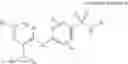

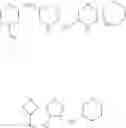

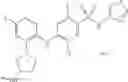
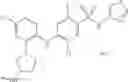
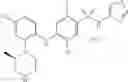
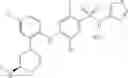


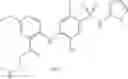


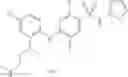


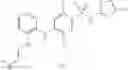
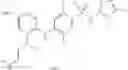


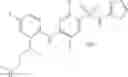

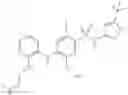


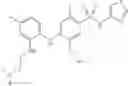


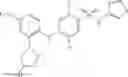


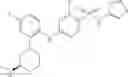


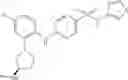
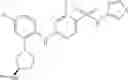

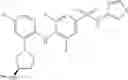


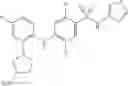
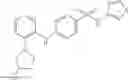

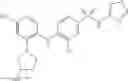
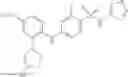
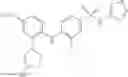
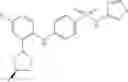
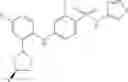
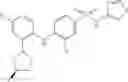
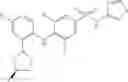


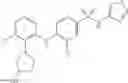
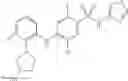


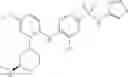
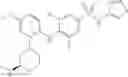
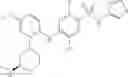

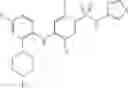

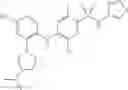

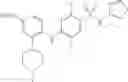
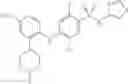

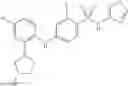
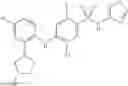
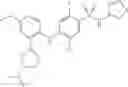

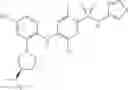
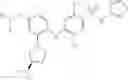

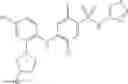
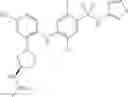


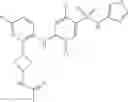


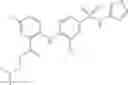
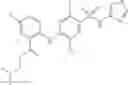
Sources:
- United States Patent and Trademark Office - verify current appl. status at the USPTO↗
Recent applications in this class:
- » 20250263407 2025-08-21
Compounds - » 20250263406 2025-08-21
DEUTERATED DERIVATIVES OF LANIFIBRANOR - » 20250250265 2025-08-07
BENZOTHIAZOLE-PHENYLSULFONYL-PIPERIDINE ANALOGS AS ACTIVATORS OF NACYLPHOSPHATIDYLETHANOLAMINE HYDROLYZING PHOSPHOLIPASE D - » 20250243192 2025-07-31
CRYSTALLINE FORM OF LANIFIBRANOR - » 20250214987 2025-07-03
THIOBENZIMIDAZOLE DERIVATIVE PREPARATION METHOD AND NOVEL INTERMEDIATE THEREFOR - » 20250214986 2025-07-03
P2X3 INHIBITOR COMPOUND, SALT THEREOF, POLYMORPH THEREOF AND USE THEREOF - » 20250206731 2025-06-26
COMPOUND, POLYMERIZABLE COMPOSITION, POLYMER, HOLOGRAPHIC RECORDING MEDIUM, OPTICAL MATERIAL, AND OPTICAL COMPONENT - » 20250206730 2025-06-26
THIAZOLE DERIVATIVE COMPOUND AND USES THEREOF - » 20250197387 2025-06-19
BCL-XL DEGRADERS AND USES THEREOF - » 20250179061 2025-06-05
RIP1 MODULATORS, PREPARATIONS, AND USES THEREOF
Recent applications for this Assignee:
- » 20230159454 2023-05-25
Crystalline form of 1-(5-(2,4-Difluorophenyl)-1-((3-fluorophenyl)sulfonyl)-4-methoxy-1H-pyrrol-3-yl)-n-methylmethanamine salt - » 20220125889 2022-04-28
COMPOSITION COMPRISING ALBUMIN-COUPLED SLIT3 LRRD2 FOR PREVENTION OR TREATMENT OF MUSCLE DISEASE - » 20220125879 2022-04-28
ALBUMIN-BOUND COMPOSITION INCLUDING LRRD2 OF SLIT3 PROTEIN FOR PREVENTION OR TREATMENT OF BONE-RELATED DISEASES - » 20220064155 2022-03-03
Heterocyclic amine derivative and pharmaceutical composition comprising same - » 20220008662 2022-01-13
Syringe safety cap and safety syringe including the same - » 20210309710 2021-10-07
Method for producing active form of long-acting insulin analogue derivative using clostripain - » 20210300984 2021-09-30
Long-acting insulin analogues and derivatives thereof - » 20210221770 2021-07-22
Manufacturing method for 4-methoxypyrrole derivatives - » 20210188854 2021-06-24
Substituted piperidines as kinase inhibitors - » 20210171963 2021-06-10
RECOMBINANT YEAST STRAIN HAVING STEROL PRODUCTIVITY, PREPARATION METHOD THEREFOR AND USE THEREOF