Filling machine and a method for filling a package of a web of packaging material with a food product
US20180361605A1
2018-12-20
16/060,973
2017-01-17
✅ Patent granted
US 10,974,407 B2
2021-04-13
WO; PCT/EP2017/050867; 20170117
WO; WO2017/125377; 20170727
Valentin Neacsu
Finnegan Henderson, Farabow, Garrett & Dunner LLP
2037-05-01
Abstract:
The disclosure relates to a filling machine (1) for filling a package (2) of a web of packaging material with a food product. The filling machine (1) comprises a jaw system (3) adapted to seal the package (2) after being filled with the food product. The jaw system (3) is equipped with means (4) for providing a unique mark (5) on the package (2). The filling machine (1) further comprises a sensor (7) arranged downstream of the jaw system (3) which is adapted to detect the mark (5) on the package (2), and a cutting knife (8) adapted to cut the package (2) from the web of packaging material. The cutting knife (8) is movably arranged in the filling machine (1), such that the cutting knife (8) can be adjusted in relation to the package (2) based on the detected mark (5) before cutting the package (2) from the web of packaging material. The disclosure also relates to a method for filling a package (2) of a web of packaging material with a food product.
Inventors:
- Göran HERMODSSON 7 🇸🇪 Staffanstorp, Sweden
- Ulf Mossberg 3 🇸🇪 Löddeköpinge, Sweden
- Tobias Wegbrant 1 🇸🇪 Malmö, Sweden
- Jimmy Liljenberg 2 🇸🇪 Skurup, Sweden
Assignee:
- TETRA LAVAL HOLDINGS &FINANCE S.A. 976 🇨🇭 Pully, Switzerland
Applicant:
Interested in similar patents?
Get notified when new applications in this technology area are published.
Classification:
B26D1/365 » CPC main
Cutting through work characterised by the nature or movement of the cutting member or particular materials not otherwise provided for ; Apparatus or machines therefor; Cutting members therefor involving a cutting member which does not travel with the work having a cutting member moving about an axis with a non-circular cutting member moving about an axis parallel to the line of cut and rotating continuously in one direction during cutting, e.g. mounted on a rotary cylinder for thin material, e.g. for sheets, strips or the like
B26D1/626 » CPC further
Cutting through work characterised by the nature or movement of the cutting member or particular materials not otherwise provided for ; Apparatus or machines therefor; Cutting members therefor involving a cutting member which travels with the work otherwise than in the direction of the cut , i.e. flying cutter and is rotating about an axis parallel to the line of cut, e.g. mounted on a rotary cylinder for thin material, e.g. for sheets, strips or the like
B26D5/34 » CPC further
Arrangements for operating and controlling machines or devices for cutting, cutting-out, stamping-out, punching, perforating, or severing by means other than cutting with interrelated action between the cutting member and work feed having the cutting member controlled by scanning a record carrier scanning being effected by a photosensitive device
B26D5/36 » CPC further
Arrangements for operating and controlling machines or devices for cutting, cutting-out, stamping-out, punching, perforating, or severing by means other than cutting with interrelated action between the cutting member and work feed having the cutting member controlled by scanning a record carrier scanning being effected by magnetic means
B29C65/00 IPC
Joining of preformed parts ; Apparatus therefor
B29C65/745 » CPC further
Joining of preformed parts ; Apparatus therefor by welding and severing, or by joining and severing, the severing being performed in the area to be joined, next to the area to be joined, in the joint area or next to the joint area using a single unit having both a severing tool and a welding tool
B29C65/7817 » CPC further
Joining of preformed parts ; Apparatus therefor; Means for handling the parts to be joined, e.g. for making containers or hollow articles, e.g. means for handling sheets, plates, web-like materials, tubular articles, hollow articles or elements to be joined therewith; Means for discharging the joined articles from the joining apparatus; Positioning the parts to be joined, e.g. aligning, indexing or centring the parts to be joined comprising positioning features in the form of positioning marks
B29C65/7894 » CPC further
Joining of preformed parts ; Apparatus therefor; Means for handling the parts to be joined, e.g. for making containers or hollow articles, e.g. means for handling sheets, plates, web-like materials, tubular articles, hollow articles or elements to be joined therewith; Means for discharging the joined articles from the joining apparatus characterised by the feeding movement of the parts to be joined; Means for handling of moving sheets or webs of continuously moving sheets or webs
B29C65/74 IPC
Joining of preformed parts ; Apparatus therefor by welding and severing, or by joining and severing, the severing being performed in the area to be joined, next to the area to be joined, in the joint area or next to the joint area
B29C66/0326 » CPC further
General aspects of processes or apparatus for joining preformed parts; General aspects dealing with the joint area or with the area to be joined; After-treatments in the joint area; Mechanical after-treatments Cutting, e.g. by using waterjets, or perforating
B29C66/306 » CPC further
General aspects of processes or apparatus for joining preformed parts; General aspects dealing with the joint area or with the area to be joined; Particular design of joint configurations Applying a mark during joining
B29C66/849 » CPC further
General aspects of processes or apparatus for joining preformed parts; General aspects of machine operations or constructions and parts thereof; Specific machine types or machines suitable for specific applications Packaging machines
B65B51/30 IPC
Devices for, or methods of, sealing or securing package folds or closures; Devices for gathering or twisting wrappers, or necks of bags; Applying or generating heat or pressure or combinations thereof; Devices specially adapted for producing transverse or longitudinal seams in webs or tubes Devices, e.g. jaws, for applying pressure and heat, e.g. for subdividing filled tubes
B65B51/306 » CPC further
Devices for, or methods of, sealing or securing package folds or closures; Devices for gathering or twisting wrappers, or necks of bags; Applying or generating heat or pressure or combinations thereof; Devices specially adapted for producing transverse or longitudinal seams in webs or tubes; Devices, e.g. jaws, for applying pressure and heat, e.g. for subdividing filled tubes Counter-rotating devices
B65B61/08 » CPC further
Auxiliary devices, not otherwise provided for, for operating on sheets, blanks, webs, binding material, containers or packages for severing webs, or for separating joined packages by cutting using rotary cutters
B65B57/02 » CPC further
Automatic control, checking, warning, or safety devices responsive to absence, presence, abnormal feed, or misplacement of binding or wrapping material, containers, or packages
B29C2793/009 » CPC further
Shaping techniques involving a cutting or machining operation after shaping
B29L2031/7128 » CPC further
Other particular articles; Containers; Packaging elements or accessories, Packages Bags, sacks, sachets
B26D1/36 IPC
Cutting through work characterised by the nature or movement of the cutting member or particular materials not otherwise provided for ; Apparatus or machines therefor; Cutting members therefor involving a cutting member which does not travel with the work having a cutting member moving about an axis with a non-circular cutting member moving about an axis parallel to the line of cut and rotating continuously in one direction during cutting, e.g. mounted on a rotary cylinder
B26D1/62 IPC
Cutting through work characterised by the nature or movement of the cutting member or particular materials not otherwise provided for ; Apparatus or machines therefor; Cutting members therefor involving a cutting member which travels with the work otherwise than in the direction of the cut , i.e. flying cutter and is rotating about an axis parallel to the line of cut, e.g. mounted on a rotary cylinder
B26D5/32 » CPC further
Arrangements for operating and controlling machines or devices for cutting, cutting-out, stamping-out, punching, perforating, or severing by means other than cutting with interrelated action between the cutting member and work feed having the cutting member controlled by scanning a record carrier with the record carrier formed by the work itself
B29C65/78 IPC
Joining of preformed parts ; Apparatus therefor Means for handling the parts to be joined, e.g. for making containers or hollow articles, e.g. means for handling sheets, plates, web-like materials, tubular articles, hollow articles or elements to be joined therewith; Means for discharging the joined articles from the joining apparatus
B65B41/18 » CPC further
Supplying or feeding container-forming sheets or wrapping material Registering sheets, blanks, or webs
B29C66/1122 » CPC further
General aspects of processes or apparatus for joining preformed parts; General aspects dealing with the joint area or with the area to be joined; Particular design of joint configurations particular design of the joint cross-sections; Joint cross-sections comprising a single joint-segment, i.e. one of the parts to be joined comprising a single joint-segment in the joint cross-section; Single lapped joints Single lap to lap joints, i.e. overlap joints
B29C66/4312 » CPC further
General aspects of processes or apparatus for joining preformed parts; General aspects of joining substantially flat articles, e.g. plates, sheets or web-like materials; Making flat seams in tubular or hollow articles; Joining single elements to substantially flat surfaces; Joining substantially flat articles ; Making flat seams in tubular or hollow articles; Joining a relatively small portion of the surface of said articles; Joining the articles to themselves for making flat seams in tubular or hollow articles, e.g. transversal seams
B29C66/83521 » CPC further
General aspects of processes or apparatus for joining preformed parts; General aspects of machine operations or constructions and parts thereof characterised by the movement of the joining or pressing tools moving with the parts to be joined; Jaws mounted on rollers, cylinders, drums, bands, belts or chains; Flying jaws jaws mounted on bands or belts
B26D2001/0066 » CPC further
Cutting through work characterised by the nature or movement of the cutting member or particular materials not otherwise provided for ; Apparatus or machines therefor; Cutting members therefor; Cutting members therefor having shearing means, e.g. shearing blades, abutting blades
B29C66/71 » CPC further
General aspects of processes or apparatus for joining preformed parts characterised by the composition, physical properties or the structure of the material of the parts to be joined; Joining with non-plastics material characterised by the composition of the plastics material of the parts to be joined
B29C66/72321 » CPC further
General aspects of processes or apparatus for joining preformed parts characterised by the composition, physical properties or the structure of the material of the parts to be joined; Joining with non-plastics material characterised by the structure of the material of the parts to be joined being multi-layered comprising a non-plastics layer consisting of metals or their alloys
B29C66/72328 » CPC further
General aspects of processes or apparatus for joining preformed parts characterised by the composition, physical properties or the structure of the material of the parts to be joined; Joining with non-plastics material characterised by the structure of the material of the parts to be joined being multi-layered comprising a non-plastics layer consisting of natural products or their composites, not provided for in - Paper
B29C66/73921 » CPC further
General aspects of processes or apparatus for joining preformed parts characterised by the composition, physical properties or the structure of the material of the parts to be joined; Joining with non-plastics material characterised by the intensive physical properties of the material of the parts to be joined, by the optical properties of the material of the parts to be joined, by the extensive physical properties of the parts to be joined, by the state of the material of the parts to be joined or by the material of the parts to be joined being a thermoplastic or a thermoset characterised by the material of the parts to be joined being a thermoplastic or a thermoset characterised by the material of at least one of the parts being a thermoplastic characterised by the materials of both parts being thermoplastics
B29C66/8412 » CPC further
General aspects of processes or apparatus for joining preformed parts; General aspects of machine operations or constructions and parts thereof; Specific machine types or machines suitable for specific applications; Machines or tools adaptable for making articles of different dimensions or shapes or for making joints of different dimensions of different length, width or height
B26D1/00 IPC
Cutting through work characterised by the nature or movement of the cutting member or particular materials not otherwise provided for ; Apparatus or machines therefor; Cutting members therefor
Description
TECHNICAL FIELD
The invention relates to a filling machine and a method for filling a package of a web of packaging material with a food product.
BACKGROUND ART
In filling machines for liquid food packages, such as e.g. sold by Tetra Pak under the name Tetra Pak A1, a web of packaging material is sterilized, and is subsequently formed into a tube by making the longitudinal edges of the web overlap each other and sealing the overlap area. This tube is filled with liquid food continually, and the tube of packaging material is transversally sealed and cut such that separate packages with liquid food are formed.
The transversally seal procedure is typically carried out by a sealing jaw arrangement. The sealing jaw arrangement often comprises a pressure jaw assembly and a heating jaw assembly, wherein the portion of the tube subject to receive a transversal seal is arranged in between the pressure jaw assembly and heating jaw assembly during the formation of the seal. The pressure jaw assembly is arranged to provide means for allowing the sealing jaw arrangement to press the packaging material of the tube during the formation of the seal, and the heating jaw assembly is arranged to provide sufficient heat to the packaging material of the tube needed for the formation of the seal.
After the transversal seal the packaging material of the tube is cut by means of a cutting device in order to create a package. A problem that might arise during the cutting process is that the packaging material may vary a bit in size and shape due to filling variations and due to design corrections performed by the jaw system. Such variations will complicate the cutting process and impair the precision of the cut.
SUMMARY OF THE INVENTION
It is an object of the present invention to mitigate, alleviate or eliminate one or more of the above-identified deficiencies in the art and disadvantages singly or in any combination and solve at least the above mentioned problem.
According to a first aspect, these and other objects are achieved in full, or at least in part, by a filling machine for filling a package of a web of packaging material with a food product. The filling machine comprises a jaw system adapted to seal the package after being filled with the food product. The jaw system is equipped with means for providing a unique mark on the package. The filling machine further comprises a sensor arranged downstream of the jaw system and adapted to detect the mark on the package, and a cutting knife arranged downstream of said sensor and adapted to cut the package from the web of packaging material. The cutting knife is movably arranged in the filling machine, such that the cutting knife can be adjusted in relation to the package based on the detected mark before cutting the package from the web of packaging material. This way, the precision of the cut will be increased and in turn it will be possible to increase the feeding speed of the web of packaging material through the filling machine. Also, due to the precision of the cut, the usage of packaging material will be reduced since only one sealing is needed unlike with the conventional cutting devices where the cut is made between two individual sealings.
The means for providing the unique mark on the package may comprise a magnet such as Neodymium based magnet (e.g. NdFeB) or Samarium based magnet (e.g. Sm2Co17). Further, the unique mark may be created on the package by means of magnetisable paint or printed thereon. This is a simple yet efficient example of the present disclosure.
In order for the overall process of sealing and cutting the package to be as accurate as possible, the means for providing the unique mark on the package may be provided on a jaw of said jaw system.
The filling machine may further comprise a control unit connected to the sensor and to the cutting knife or a movable part of the filling machine to which the cutting knife is attached. The control unit is then used to control the adjustment of the cutting knife based on information received from the sensor. Basically, the following cutting process may be performed for each package. The sensor reads the unique mark on the package and sends that information to the control unit. The control unit calculates the positioning of the package based on the information received from the sensor and in turn sends instructions to the cutting knife or (if any) the means for adjusting the cutting knife which performs the adjustment in relation to the specific package. In one example, the cutting knife is arranged on a movable part in the filling machine. The movable part is movable in a first direction for cutting the package from the web of packaging material and in a second direction for adjusting in relation to said package.
The filling machine may further comprise a gear wheel connected to said cutting knife for adjustment of the same. The gear wheel may in turn be a servo drive also comprised by the filling machine. This is a simple and effective way for making the adjustment of the cutting knife completely automated.
In another example, the filling machine may further comprise a cutting unit. The cutting unit has a first gear wheel and a second gear wheel arranged opposite to the first gear wheel. The cutting knife is connected to the first gear wheel and an anvil is connected to the second gear wheel. Also here, the filling machine further comprises a drive, such as a servo drive, which is connected to the first gear wheel and the second gear wheel in order to control the movements of the same.
According to a second aspect, the objects are achieved in full, or at least in part, by a method for filling a package of a web of packaging material with a food product. The method comprises the steps of sealing the package after being filled with the food product by means of a jaw system, providing a unique mark on the package in the jaw system, detecting the mark downstream of the jaw system, if necessary, adjusting a cutting knife in relation to the package based on said detected mark, and cutting the package from the web of packaging material.
Generally, all terms used in the claims are to be interpreted according to their ordinary meaning in the technical field, unless explicitly defined otherwise herein. All references to “a/an/the [element, device, component, means, step, etc.]” are to be interpreted openly as referring to at least one instance of the element, device, component, means, step, etc., unless explicitly stated otherwise.
BRIEF DESCRIPTION OF THE DRAWINGS
The above objects, as well as additional objects, features and advantages of the present disclosure, will be more fully appreciated by reference to the following illustrative and non-limiting detailed description of preferred examples of the present disclosure, when taken in conjunction with the accompanying drawings, wherein:
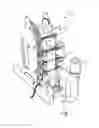
FIG. 1 is a perspective view of a filling machine according to one example of the disclosure.
FIG. 2 is a perspective view of a cutting unit and a servo drive of the filling machine.
FIG. 3 is a cross section of the cutting unit in FIG. 2.
DETAILED DESCRIPTION
FIG. 1 illustrates a filling machine 1 for filling a package 2 of a web of packaging material with a food product according to one possible example of the disclosure. The filling machine 1 comprises a jaw system 3 (only partly illustrated) for sealing the package 2 after being filled with the food product. The jaw system 3 is equipped with means 4 for providing a unique mark 5 on the package 2. In this example, that means 4 is provided one of the jaws 6 in the jaw system 3 and comprises a magnet. The filling machine 1 further comprises a sensor 7 which is arranged downstream the said jaw system 3 and which is adapted to detect the mark 5 provided on the package 2 in the jaw system 3, and a cutting knife 8 used to cut the package 2 from the web of packaging material downstream of the jaw system 3 and the sensor 7. The cutting knife 8 is movably arranged in the filling machine 1 in such a way that it can be adjusted in relation to the package 2. The adjustment of the cutting knife 8 is based on the detected mark 5 and is performed just before cutting the package 2 from said web of packaging material.
In an example of the disclosure, the unique mark 5 is provided on the package 2 using so-called information carrier technology. When the package material is manufactured, in the converting factory, a magnetisable ink is printed on the board. The magnetisable ink is not visible but can be magnetised, for example through a permanent magnet, to create a unique mark 5 on the packaging material to track a specific feature. In this case, the magnetisable ink is magnetised by means of a magnet 4 present in the jaw 6 in order to create a unique mark 5 in the area where the package 2 is to be cut.
In an example, the filling machine 1 further comprises a control unit (not shown) which is connected to the sensor 7 and to the cutting knife 8. The control unit 8 is adapted to adjust the cutting knife 8 based on information received from the sensor 7.
FIG. 2 and FIG. 3 illustrate a cutting unit 9 and a servo drive 10 connected to the cutting unit 9. This is one possible solution on how to drive, control and, if necessary, adjust the cutting knife 8 in relation to each package 2 passing though the filling machine 1. Here, as stated above, a complete cutting unit 9 is provided. The cutting unit 9 comprises a first gear wheel 11 and a second gear wheel 12 arranged opposite to the first gear wheel 11. The cutting knife 8 is connected to the first gear wheel 10 and an anvil 13 is connected to the second gear wheel 12. In turn, the first gear wheel 11 and the second gear wheel 12 are connected to the servo drive 10. The adjustment process of the cutting knife could for example be conducted according to the following. When the package 2 is transversely sealed in the jaw system 3, it is provided with a unique mark 5 by activating the magnetisable paint using the magnet 4 provided in one of the jaws 6 of the jaw system 3. Downstream thereof, the sensor 7 will read the unique mark 5 on the package 2 and send information about the same to the control unit. The control unit will then be able to calculate the positioning of the package 2 in the filling machine 1 based on the information received from the sensor 7. Thereafter, the control unit will send instructions to the servo drive 10 which in turn will adjust the first and second gear wheel 11, 12 accordingly so that the cutting knife 8 and the anvil 13 are properly aligned with the package 2 before it is cut away from the web of packaging material. In this example, the cutting knife 8 is in a fixed position with respect to the machine frame of the filling machine 1 and the rotation speed of the gear wheels 11, 12 are adjusted so as to synchronize the cutting knife 8 and the anvil 13 with the package 2.
It should be understood that the control or adjustment process of the cutting knife 8 may differ.
In another example, the cutting knife 8 is movable and thus adjustable in relation to the actual machine frame of the filling machine 1. It is understood that other variations in the present disclosure are contemplated and in some instances, some features of the disclosure can be employed without a corresponding use of other features. Accordingly, it is appropriate that the appended claims be construed broadly in a manner consistent with the scope of the disclosure.
For instance, the sensor may be a magnetic sensor. Naturally, the components described above and comprised in the filling machine may be varied and have any suitable size and shape.
The cutting knife may be part of a complete cutting unit but other possibilities are also possible. The cutting knife alone could for example be directly connected of a drive means which would control the same based on information received from the control unit.
Claims
1-12. (canceled)
13. A filling machine for filling a package of a web of packaging material with a food product, comprising:
a jaw system configured to seal the package after being filled with the food product, the jaw system having a marking element configured to provide a unique mark on the package;
a sensor arranged downstream of the jaw system and configured to detect the mark on the package; and
a cutting knife configured to cut the package from the web of packaging material and configured, before cutting the package from the web of packaging material, to move to a first position relative to the package based on the mark detected by the sensor.
14. The filling machine according to claim 13, wherein the marking element uses magnetizable paint to provide the unique mark on the package.
15. The filling device according to claim 13, wherein the marking element is part of a jaw of the jaw system.
16. The filling machine according to claim 13, wherein the marking element comprises a magnet configured to provide the marking on the package by interacting with a magnetizable medium on the package.
17. The filling machine according to claim 13, further comprising a control unit connected to the sensor and to the cutting knife, wherein the control unit is configured to adjust a position of the cutting knife based on information received from the sensor.
18. The filling machine according to claim 13, further comprising a gear wheel connected to the cutting knife and configured to adjust the cutting knife upon rotation of the gear wheel.
19. The filling machine according to claim 18, further comprising a servo drive connected to the gear wheel that controllably rotates the gear wheel during a cutting operation.
20. The filling machine according to claim 13, further comprising a cutting unit, the cutting unit comprising a first gear wheel and a second gear wheel arranged opposite to the first gear wheel, wherein the cutting knife is connected to the first gear wheel and an anvil is connected to the second gear wheel, wherein the cutting occurs when the web of packaging material is between the cutting knife and the anvil.
21. The filling machine according to claim 20, further comprising a servo drive, connected to the first gear wheel and the second gear wheel, that controllably rotates the first and second gear wheels during a cutting operation.
22. The filling machine according to claim 13, wherein the cutting knife is adjusted in relation to the package before the cut of the web of packaging material conducted by the cutting knife.
23. The filling machine according to claim 13, wherein the sensor is a magnetic sensor that is configured to sense the mark formed of magnetic material.
24. A method for filling a package of a web of packaging material with a food product, comprising:
sealing the package, after being filled with the food product, by a jaw system;
providing, via the jaw system, a unique mark on the package;
detecting the mark downstream of the jaw system;
determining whether to adjust a cutting knife in relation to the package based on the detected mark; and
using the cutting knife, based on the determination, to cut the package from the web of packaging material.
25. A filling machine for filling a package of a web of packaging material with a food product, wherein the web of packaging material moves from an upstream location to a downstream location, the machine comprising:
a jaw system configured to seal the package after being filled with the food product, the jaw system having a marking element configured to provide a unique mark on the package;
a sensor, arranged downstream of the jaw system, that is configured to detect the mark on the package;
a rotatable cutting knife configured to cut the package from the web of packaging material when rotated to a cutting position; and
a control unit configured to determine, based on the detected mark on the package, a position of package relative to the cutting knife, wherein the control unit is configured to adjust, prior to cutting of the package from the web of packaging material, a rotational speed of the cutting knife in order to align the cutting knife at the cutting position with the package.
Images & Drawings included:



Sources:
- United States Patent and Trademark Office - verify current appl. status at the USPTO↗
Recent applications in this class:
- » 20190016004 2019-01-17
THERMAL COMPENSATING MOUNT FOR A KNIFE ROLL IN A WEB PROCESSING MACHINE - » 20160332315 2016-11-17
SUPER ABSORBENT RESIN CUTTING DEVICE AND SUPER ABSORBENT RESIN MANUFACTURING METHOD USING SAME - » 20140260851 2014-09-18
FLEXIBLE DIE RETAINING SYSTEM AND METHOD
Recent applications for this Assignee:
- » 20250282520 2025-09-11
OPENING DEVICE FOR A PACKAGE AND PACKAGE THEREWITH - » 20250276298 2025-09-04
A VALVE, A MIXING UNIT AND A METHOD FOR MIXING A LIQUID FOOD PRODUCT WITH A POWDER FOOD PRODUCT - » 20250275563 2025-09-04
A METHOD AND A MIXER FOR COOKING A FOOD PRODUCT THAT CONTAINS STARCH - » 20250269996 2025-08-28
PACKAGING BLANK, METHOD FOR MOLDING A LID-SPOUT ASSEMBLY ONTO A PACKAGING BLANK, LID SPOUT ASSEMBLY, PACKAGE HAVING A LID-SPOUT ASSEMBLY AND METHOD AND APPARATUS FOR FORMING A PACKAGING BLANK - » 20250256885 2025-08-14
OPENING DEVICE FOR A PACKAGE AND PACKAGE THEREWITH - » 20250256879 2025-08-14
VIRTUAL SENSING SYSTEM FOR CONDITION MONITORING OF A CONTAINER PACKAGING MACHINE - » 20250256467 2025-08-14
A METHOD FOR ASSESSING A SEALING OF A CARTON PACKAGE AND AN APPARATUS THEREOF - » 20250250057 2025-08-07
PACKAGING BLANK AND PACKAGE - » 20250214122 2025-07-03
A CLEANING IN PLACE UNIT, A CLEANING IN PLACE SYSTEM AND A METHOD THEREOF - » 20250206005 2025-06-26
A LAMINATED PACKAGING MATERIAL AND PACKAGING CONTAINER MANUFACTURED THEREFROM