Semiconducting polymer
US20190048015A1
2019-02-14
16/080,166
2017-02-27
✅ Patent granted
US 10,815,236 B2
2020-10-27
WO; PCT/EP2017/054507; 20170227
WO; WO2017/148864; 20170908
Shane Fang
Oblon, McClelland, Maier & Neustadt, L.L.P.
2037-02-27
Abstract:
Compounds of formula (I) and polymers comprising at least a structure of formula (II), wherein T1 or T2 are independently of each other a group of Formula (III), Formula (iv) Qa, Qb, Qc, Qd, Qe or Qf are independently of each other O, S or NR1.
Inventors:
- Iain MCCULLOCH 7 🇬🇧 Eastleigh, United Kingdom
- Jean-Charles FLORES 1 🇨🇭 Basel, Switzerland
- Pascal HAYOZ 4 🇨🇭 Basel, Switzerland
- Nkechinyerem ONWUBIKO 1 🇬🇧 London, United Kingdom
- Daniel KAELBLEIN 9 🇩🇪 Ludwigshafen, Germany
- Wan YUE 1 🇨🇳 Guangzhou, China
- Hung-Yang CHEN 4 🇺🇸 Somerset, NJ, United States
- Astrid-Caroline KNALL 1 🇬🇧 London, United Kingdom
Assignee:
- BASF SE 1,406 🇩🇪 Ludwigshafen am Rhein, Germany
Applicant:
Interested in similar patents?
Get notified when new applications in this technology area are published.
Classification:
C09B57/004 » CPC further
Other synthetic dyes of known constitution Diketopyrrolopyrrole dyes
H01L51/0034 » CPC further
Solid state devices using organic materials as the active part, or using a combination of organic materials with other materials as the active part; Processes or apparatus specially adapted for the manufacture or treatment of such devices, or of parts thereof; Selection of organic semiconducting materials, e.g. organic light sensitive or organic light emitting materials Organic polymers or oligomers
H01L51/0508 » CPC further
Solid state devices using organic materials as the active part, or using a combination of organic materials with other materials as the active part; Processes or apparatus specially adapted for the manufacture or treatment of such devices, or of parts thereof specially adapted for rectifying, amplifying, oscillating or switching, or capacitors or resistors with at least one potential- jump barrier or surface barrier multistep processes for their manufacture the devices being controllable only by the electric current supplied or the electric potential applied, to an electrode which does not carry the current to be rectified, amplified or swiched, e.g. three-terminal devices Field-effect devices, e.g. TFTs
C08G2261/3223 » CPC further
Macromolecular compounds obtained by reactions forming a carbon-to-carbon link in the main chain of the macromolecule; Monomer units or repeat units incorporating structural elements in the main chain incorporating heteroaromatic structural elements in the main chain non-condensed containing one or more sulfur atoms as the only heteroatom, e.g. thiophene
C07D487/04 » CPC main
Heterocyclic compounds containing nitrogen atoms as the only ring hetero atoms in the condensed system, not provided for by groups - in which the condensed system contains two hetero rings Ortho-condensed systems
C09B69/10 IPC
Dyes not provided for by a single group of this subclass Polymeric dyes; Reaction products of dyes with monomers or with macromolecular compounds
C09B69/109 » CPC further
Dyes not provided for by a single group of this subclass; Polymeric dyes; Reaction products of dyes with monomers or with macromolecular compounds containing other specific dyes
H01L51/00 IPC
Solid state devices using organic materials as the active part, or using a combination of organic materials with other materials as the active part; Processes or apparatus specially adapted for the manufacture or treatment of such devices, or of parts thereof
H01L51/05 IPC
Solid state devices using organic materials as the active part, or using a combination of organic materials with other materials as the active part; Processes or apparatus specially adapted for the manufacture or treatment of such devices, or of parts thereof specially adapted for rectifying, amplifying, oscillating or switching, or capacitors or resistors with at least one potential- jump barrier or surface barrier multistep processes for their manufacture
C09B57/00 » CPC further
Other synthetic dyes of known constitution
Description
The present invention relates to polymers, to a process for the preparation of these polymers, to intermediates, to electronic devices comprising these polymers, as well as to the use of these polymers as semiconducting material.
Organic semiconducting materials can be used in electronic devices such as organic photovoltaic devices (OPVs), organic field-effect transistors (OFETs), organic light emitting diodes (OLEDs), organic photodiodes (OPDs) and organic electrochromic devices (ECDs).
It is desirable that the organic semiconducting materials are compatible with liquid processing techniques such as spin coating as liquid processing techniques are convenient from the point of processability, and thus allow the production of low cost organic semiconducting material-based electronic devices. In addition, liquid processing techniques are also compatible with plastic substrates, and thus allow the production of light weight and mechanically flexible organic semiconducting material-based electronic devices.
For application in organic photovoltaic devices (OPVs), organic field-effect transistors (OFETs), and organic photodiodes (OPDs), it is further desirable that the organic semiconducting materials show high charge carrier mobility.
For application in organic photovoltaic devices (OPVs) and organic photodiodes (OPDs), the organic semiconducting materials should also show a strong absorption of the visible light and of the near infra-red light.
G. Kossmehl and G. Manecke, Die Makromolekulare Chemie 176 (1975), pp. 333-340 discloses the following structures
which have coplanar conjugated π-electron systems.
WO 2009/053291 describes semiconducting polymers comprising the following units
and organic field effect transistors comprising these polymers.
WO 2014/071524 discloses monomers, oligomers and polymers comprising a fused ring moiety of the following structure
where X is independently O, S or NR and R is independently hydrogen, or an optionally substituted hydrocarbon.
WO 2016/005891 discloses polymers comprising at least one unit of formulae
as semiconducting materials for electronic devices.
It was the object of the present invention to provide organic semiconducting materials.
It was a second object of the present invention to provide semiconducting polymers which can be synthesized without the need of noble metal catalysts.
The problem is solved by compounds of formula (I)
and polymers comprising at least a structure of formula (II)
and preferably polymers comprising at least a structure of formula (II′)
wherein
n is 3 to 1000,
T1 or T2 are independently of each other a group of formulae ═O, ═S, ═NR1a, ═CR4R4′,
Qa, Qb, Qc, Qd, Qe or Qf are independently of each other O, S or NR1, preferably O or NR1, Hal is halogen, preferably Cl or Br, especially Cl.
T1 or T2 are preferably independently of each other a group of formulae ═O, ═CR4R4′,
T1 or T2 are more preferably independently of each other a group of formulae
T1 or T2 are even more preferably independently of each other a group of formulae
T1 or T2 are most preferably independently of each other a group of formula;
The polymers comprising a structure of formula (II) or (II′) can be linked to other moieties by double bonds, e.g. to other groups of formula (II) or (II′), or e.g. to end groups T1 or T2.
Ar, Ar′, Are and Arf are independently of each other a 5- to 6-membered ring, or a ring system comprising from 2 to 6 fused 5- to 6-membered rings, wherein at least one of the rings is an aromatic or heteroaromatic ring.
Ar and Ar′ are preferably independently of each other selected from the group consisting of
wherein Ar or Ar′ is bound via the single bonds and to the moieties
wherein Q is O, S or NR1, preferably O or NR1,
Ar and Ar′ are more preferably independently of each other selected from the group consisting of
wherein Ar or Ar′ is bound via the single bonds and to the moieties
wherein Q is O, S or NR1, preferably O or NR1,
Ar and Ar′ are even more preferably independently of each other selected from
Ar and Ar′ are most preferably independently of each other selected from
Are is preferably selected from
where Are is bound via the bonds and to the moiety
Are is more preferably selected from
Are is even more preferably selected from
Are is most preferably
Arf is preferably selected from the group consisting of
Arf is more preferably selected from
Arf is most preferably selected from
wherein Ar, Ar′, Are, Arf can be substituted by one or more substituents R2.
Y, Y′, Y″ and Y* are at each occurrence O, S, NR1a, Se, Te, preferably O, S, NR1a, Se, more preferably O, S, Se, still more preferably S, Se and most preferably S.
RW is at each occurrence H, C1-30-alkyl, C1-30-alkoxy, or a moiety
preferably H, C1-30-alkyl, or C1-30-alkoxy, more preferably H or C1-30-alkoxy, most preferably H, wherein Rs1, Rs2, Rs3 are independently of each other H, C1-20-alkyl, C2-20-alkenyl, or phenyl, preferably C1-20-alkyl.
R1, R1a are at each occurrence selected from the group consisting of H, C1-100-alkyl, C2-100-alkenyl, C2-100-alkynyl, C5-12-cycloalkyl, C6-18-aryl, a 5 to 20 membered heteroaryl, C(O)—C1-100-alkyl, C(O)—C5-12-cycloalkyl and C(O)—OC1-100-alkyl,
- wherein
- C1-100-alkyl, C2-100-alkenyl and C2-100-alkynyl can be substituted with one to forty substituents independently selected from the group consisting of C5-8-cycloalkyl, C6-14-aryl, 5 to 14 membered heteroaryl, ORa, OC(O)—Ra, C(O)—ORa, C(O)—Ra, NRaRb, NRa—C(O)Rb, C(O)NRaRb, N[C(O)Ra][C(O)Rb], SRa, Si(RSia)(RSib)(RSic), —O—Si(RSia)(RSib)(RSic), halogen, CN, and NO2; and at least two CH2-groups, but not adjacent CH2-groups, of C1-100-alkyl, C2-100-alkenyl and C2-100-alkynyl can be replaced by O or S,
- C5-12-cycloalkyl can be substituted with one to six substituents independently selected from the group consisting of C1-60-alkyl, C2-60-alkenyl, C2-60-alkynyl, C5-8-cycloalkyl, C6-14-aryl, 5 to 14 membered heteroaryl, ORa, OC(O)—Ra, C(O)—ORa, C(O)—Ra, NRaRb, NRa—C(O)Rb, C(O)—NRaRb, N[C(O)Ra][C(O)Rb], SRa, Si(RSia)(RSib)(RSic), —O—Si(RSia)(RSib)(RSic), halogen, CN, and NO2; and one or two CH2-groups, but not adjacent CH2-groups, of C5-12-cycloalkyl can be replaced by O, S, OC(O), CO, NRa or NRa—CO,
- C6-18-aryl and 5 to 20 membered heteroaryl can be substituted with one to six substituents independently selected from the group consisting of C1-60-alkyl, C2-60-alkenyl, C2-60-alkynyl, C5-8-cycloalkyl, C6-14-aryl, 5 to 14 membered heteroaryl, ORa, OC(O)—Ra, C(O)—ORa, C(O)Ra, NRaRb, NRa—C(O)Rb, C(O)—NRaRb, N[C(O)Ra][C(O)Rb], SRa, Si(RSia)(RSib)(RSic), —O—Si(RSia)(RSib)(RSic), halogen, CN, and NO2,
- wherein
- Ra and Rb are independently selected from the group consisting of H, C1-60-alkyl, C2-60-alkenyl, C2-60-alkynyl, C5-8-cycloalkyl, C6-14-aryl and 5 to 14 membered heteroaryl,
- RSia, RSib and RSic are independently selected from the group consisting of H, C1-60-alkyl, C2-60-alkenyl, C2-60-alkynyl, C5-8-cycloalkyl, C6-14-aryl, 5 to 14 membered heteroaryl, O—C1-60-alkyl, O—C2-60-alkenyl, O—C2-60-alkynyl, O—C5-8-cycloalkyl, O—C6-14-aryl, O-5 to 14 membered heteroaryl, —[O—SiRSidRSie]o—RSif, NR5R6, halogen and O—C(O)—R5,
- wherein
- o is an integer from 1 to 50,
- RSid, RSie, RSif are independently selected from the group consisting of H, C1-60-alkyl, C2-60-alkenyl, C2-60-alkynyl, C5-8-cycloalkyl, C6-14-aryl, 5 to 14 membered heteroaryl, O—C1-60-alkyl, O—C2-60-alkenyl, O—C2-60-alkynyl, O—C5-8-cycloalkyl, O—C6-14-aryl, O-5 to 14 membered heteroaryl, —[O—SiRSigRSih]p—RSii, NR50R60, halogen and O—C(O)—R50;
- wherein
- p is an integer from 1 to 50,
- RSig RSih, RSii are independently selected from the group consisting of H, C1-30-alkyl, C2-30-alkenyl, C2-30-alkynyl, C5-6-cycloalkyl, C6-10-aryl, 5 to 10 membered heteroaryl, O—C1-30-alkyl, O—C2-30-alkenyl, O—C2-30-alkynyl, O—C5-6-cycloalkyl, OC6-10-aryl, O-5 to 10 membered heteroaryl, O—Si(CH3)3, NR500R600, halogen and O—C(O)—R500,
- R5, R6, R50, R60, R500 and R600 are independently selected from the group consisting of H, C1-60-alkyl, C2-60-alkenyl, C2-60-alkynyl, C5-8-cycloalkyl, C6-14-aryl, and 5 to 14 membered heteroaryl,
- C1-60-alkyl, C2-60-alkenyl and C2-60-alkynyl can be substituted with one to twenty substituents selected from the group consisting of C5-6-cycloalkyl, C6-10-aryl, ORc, OC(O)—Rc, C(O)—ORc, C(O)—Rc, NRcRd, NRc—C(O)Rd, C(O)—NRcRd, N[C(O)Rc][C(O)Rd], SRc, Si(RSij)(RSik)(RSil), —O—Si(RSij)(RSik)(RSil), halogen, CN, and NO2; and at least two CH2-groups, but not adjacent CH2-groups, of C1-60-alkyl, C2-60-alkenyl and C2-60-alkynyl can be replaced by O or S,
- C5-8-cycloalkyl can be substituted with one to five substituents selected from the group consisting of C1-30-alkyl, C2-30-alkenyl, C2-30-alkynyl, C5-6-cycloalkyl, C6-10-aryl, ORc, OC(O)—Rc, C(O)—ORc, C(O)—Rc, NRcRd, NRc—C(O)Rd, C(O)—NRcRd, N[C(O)Rc][C(O)Rd], SRc, Si(RSij)(RSik)(RSil), —O—Si(RSij)(RSik)(RSil), halogen, CN, and NO2; and one or two CH2-groups, but not adjacent CH2-groups, of C5-8-cycloalkyl can be replaced by O, S, OC(O), CO, NRc or NRc—CO,
- C6-14-aryl and 5 to 14 membered heteroaryl can be substituted with one to five substituents independently selected from the group consisting of C1-30-alkyl, C2-30-alkenyl, C2-30-alkynyl, C5-6-cycloalkyl, C6-10-aryl, ORc, OC(O)—Rc, C(O)—ORc, C(O)—Rc, NRcRd, NRc—C(O)Rd, C(O)—NRcRd, N[C(O)Rc][C(O)Rd], SRc, Si(RSij)(RSik)(RSil), —O—Si(RSij)(RSik)(RSil), halogen, CN and NO2,
- wherein
- Rc and Rd are independently selected from the group consisting of H, C1-30-alkyl, C2-30-alkenyl and C2-30-alkynyl,
- RSij, RSik and RSil are independently selected from the group consisting of H, C1-30-alkyl, C2-30-alkenyl, C2-30-alkynyl, C5-6-cycloalkyl, C6-10-aryl, 5 to 10 membered heteroaryl, O—C1-30-alkyl, O—C2-30-alkenyl, O—C2-30-alkynyl, O—C5-6-cycloalkyl, O—C6-10-aryl, O-5 to 10 membered heteroaryl, —[O—SiRSimRSin]q—RSio, NR7R8, halogen, and O—C(O)—R7,
- wherein
- q is an integer from 1 to 50,
- RSim, RSin, RSio are independently selected from the group consisting of H, C1-30-alkyl, C2-30-alkenyl, C2-30-alkynyl, C5-6-cycloalkyl, C6-10-aryl, 5 to 10 membered heteroaryl, O—C1-30-alkyl, O—C2-30-alkenyl, O—C2-30-alkynyl, O—C5-6-cycloalkyl, O—C6-10-aryl, O-5 to 10 membered heteroaryl, —[O—SiRSipRSiq]r—RSir, NR70R80, halogen, and O—C(O)—R70,
- wherein
- r is an integer from 1 to 50,
- RSip, RSiq, RSir are independently selected from the group consisting of H, C1-30-alkyl, C2-30-alkenyl, C2-30-alkynyl, C5-6-cycloalkyl, C6-10-aryl, 5 to 10 membered heteroaryl, O—C1-30-alkyl, O—C2-30-alkenyl, O—C2-30-alkynyl, O—C5-6-cycloalkyl, O—C6-10-aryl, O-5 to 10 membered heteroaryl, O—Si(CH3)3, NR700R800, halogen and O—C(O)—R700,
- R7, R8, R70, R80, R700 and R800 are independently selected from the group consisting of H, C1-30-alkyl, C2-30-alkenyl, C2-30-alkynyl, C5-6-cycloalkyl, C6-10-aryl, and 5 to 10 membered heteroaryl,
- C1-30-alkyl, C2-30-alkenyl and C2-30-alkynyl can be substituted with one to ten substituents selected from the group consisting of halogen, CN and NO2.
- R1, R1a are preferably at each occurrence selected from the group consisting of H, C1-100-alkyl, C3-100-alkenyl, C3-100-alkynyl,
- wherein
- C1-100-alkyl, C3-100-alkenyl and C3-100-alkynyl can be substituted with one to forty substituents independently selected from the group consisting of C5-8-cycloalkyl, ORa, OC(O)—Ra, C(O)—ORa, C(O)—Ra, Si(RSia)(RSib)(RSic), and halogen; and at least two CH2-groups, but not adjacent CH2-groups, of C1-100-alkyl, C3-100-alkenyl and C3-100-alkynyl can be replaced by O or S,
- wherein
- Ra is selected from the group consisting of H, C1-60-alkyl, C3-60-alkenyl, C3-60-alkynyl, C5-8-cycloalkyl,
- RSia, RSib and RSic are independently selected from the group consisting of H, C1-60-alkyl, C2-60-alkenyl, C2-60-alkynyl, C5-8-cycloalkyl, —[O—Si RSidRSie]o—RSif,
- wherein
- o is an integer from 1 to 50,
- RSid, RSie, RSif are independently selected from the group consisting of H, C1-60-alkyl, C2-60-alkenyl, C2-60-alkynyl, C5-8-cycloalkyl and —[O—SiRSigRSih]p—RSii;
- wherein
- p is an integer from 1 to 50,
- RSig RSih, RSii are independently selected from the group consisting of H, C1-30-alkyl, C2-30-alkenyl, C2-30-alkynyl, C5-6-cycloalkyl, O—Si(CH3)3,
- R1, R1a are more preferably at each occurrence selected from the group consisting of H, C1-50-alkyl, C3-50-alkenyl, C3-50-alkynyl,
- wherein
- C1-50-alkyl, C3-50-alkenyl and C3-50-alkynyl can be substituted with one to twenty substituents independently selected from the group consisting of ORa, OC(O)—Ra, C(O)—ORa, Si(RSia)(RSib)(RSic), and halogen; and at least two CH2-groups, but not adjacent CH2-groups, of C1-50-alkyl, C3-50-alkenyl and C3-50-alkynyl can be replaced by O or S,
- wherein
- Ra is selected from the group consisting of H, C1-20-alkyl, C3-20-alkenyl, C3-20-alkynyl,
- RSia, RSib and RSic are independently selected from the group consisting of H, C1-20-alkyl, C2-20-alkenyl, —[O—SiRSidRSie]o—RSif,
- wherein
- o is an integer from 1 to 20,
- RSid, RSie, RSif are independently selected from the group consisting of H, C1-20-alkyl, C2-20-alkenyl, and —[O—SiRSigRSih]p—RSii;
- wherein
- p is an integer from 1 to 20,
- RSig RSih, RSii are independently selected from the group consisting of H, C1-20-alkyl, C2-20-alkenyl, O—Si(CH3)3,
- R1, R1a are even more preferably at each occurrence selected from the group consisting of C1-50-alkyl, C3-50-alkenyl, C3-50-alkynyl,
- wherein
- C1-50-alkyl, C3-50-alkenyl and C3-50-alkynyl can be substituted with one to twenty substituents independently selected from the group consisting of ORa, and halogen; and at least two CH2-groups, but not adjacent CH2-groups, of C1-50-alkyl, C3-50-alkenyl and C3-50-alkynyl can be replaced by O or S,
- wherein
- Ra is selected from the group consisting of H, C1-20-alkyl, C3-20-alkenyl, C3-20-alkynyl,
- R1, R1a are much more preferably at each occurrence selected from the group consisting of C1-50-alkyl,
- wherein
- C1-50-alkyl can be substituted with one to twenty substituents independently selected from the group consisting of ORa, and halogen; and at least two CH2-groups, but not adjacent CH2-groups, of C1-50-alkyl can be replaced by O or S,
- wherein
- Ra is selected from the group consisting of H, or C1-20-alkyl,
- R1, R1a are especially preferably at each occurrence selected from the group consisting of C1-50-alkyl,
- wherein
- C1-50-alkyl can be substituted with one to twenty halogens;
- R1, R1a are most preferably C1-50-alkyl,
- R2 is at each occurrence selected from the group consisting of C1-30-alkyl, C2-30-alkenyl, C2-30-alkynyl, C5-12-cycloalkyl, C6-18-aryl, 5 to 20 membered heteroaryl, OR21, OC(O)—R21, C(O)OR21, C(O)—R21, NR21R22, NR21—C(O)R22, C(O)—NR21R22, N[C(O)R21][C(O)R22], SR21, halogen, CN, SiRSisRSitRSiu and OH,
- wherein
- R21 and R22 and are independently selected from the group consisting of H, C1-30-alkyl, C2-30-alkenyl, C2-30-alkynyl, C5-12-cycloalkyl, C6-18-aryl and 5 to 20 membered heteroaryl, and
- C1-30-alkyl, C2-30-alkenyl and C2-30-alkynyl can be substituted with one to ten substituents independently selected from the group consisting of C5-8-cycloalkyl, C6-14-aryl, 5 to 14 membered heteroaryl, ORe, OC(O)—Re, C(O)—ORe, C(O)—Re, NReRf, NRe—C(O)Rf, C(O)NReRf, N[C(O)Re][C(O)Rf], SRe, halogen, CN, SiRSisRSitRSiu and NO2; and at least two CH2-groups, but not adjacent CH2-groups, of C1-30-alkyl, C2-30-alkenyl and C2-30-alkynyl can be replaced by O or S,
- C5-12-cycloalkyl can be substituted with one to six substituents independently selected from the group consisting of C1-20-alkyl, C2-20-alkenyl and C2-20-alkynyl, C5-8-cycloalkyl, C6-14-aryl, 5 to 14 membered heteroaryl, ORe, OC(O)—Re, C(O)—ORe, C(O)—Re, NReRf, NRe—C(O)Rf, C(O)—NReRf, N[C(O)Re][C(O)Rf], SRe, halogen, CN, SiRSisRSitRSiu and NO2; and one or two CH2-groups, but not adjacent CH2-groups, of C5-12-cycloalkyl can be replaced by O, S, OC(O), CO, NRe or NRe—CO,
- C6-18-aryl and 5 to 20 membered heteroaryl can be substituted with one to six substituents independently selected from the group consisting of C1-20-alkyl, C2-20-alkenyl, C2-20-alkynyl, C5-8-cycloalkyl, C6-14-aryl, 5 to 14 membered heteroaryl, ORe, OC(O)—Re, C(O)—ORe, C(O)Re, NReRf, NRe—C(O)Rf, C(O)—NReRf, N[C(O)Re][C(O)Rf], SRe, halogen, CN, SiRSisRSitRSiu and NO2,
- wherein
- RSis, RSit and RSiu are independently from each other selected from the group consisting of H, C1-20-alkyl, C2-20-alkenyl, C2-20-alkynyl, C5-6-cycloalkyl, phenyl and O—Si(CH3)3,
- Re and Rf are independently selected from the group consisting of H, C1-20-alkyl, C2-20-alkenyl, C2-20-alkynyl, C5-8-cycloalkyl, C6-14-aryl, and 5 to 14 membered heteroaryl,
- wherein
- C1-20-alkyl, C2-20-alkenyl and C2-20-alkynyl can be substituted with one to five substituents selected from the group consisting of C5-6-cycloalkyl, C6-10-aryl, 5 to 10 membered heteroaryl, ORg, OC(O)—Rg, C(O)—ORg, C(O)—Rg, NRgRh, NRg—C(O)Rh, C(O)NRgRh, N[C(O)Rg][C(O)Rh], SRg, halogen, CN, and NO2,
- C5-8-cycloalkyl can be substituted with one to five substituents selected from the group consisting of C1-10-alkyl, C2-10-alkenyl, C2-10-alkynyl, C5-6-cycloalkyl, C6-10-aryl, 5 to 10 membered heteroaryl, ORg, OC(O)—Rg, C(O)—ORg, C(O)—Rg, NRgRh, NRgC(O)Rh, C(O)—NRgRh, N[C(O)Rg][C(O)Rh], SRg, halogen, CN, and NO2,
- C6-14-aryl and 5 to 14 membered heteroaryl can be substituted with one to five substituents independently selected from the group consisting of C1-10-alkyl, C2-10-alkenyl, C2-10-alkynyl, C5-6-cycloalkyl, C6-10-aryl, 5 to 10 membered heteroaryl, ORg, OC(O)—Rg, C(O)—ORg, C(O)—Rg, NRgRh, NRg—C(O)Rh, C(O)—NRgRh, N[C(O)Rg][C(O)Rh], SRg, halogen, CN, and NO2,
- wherein
- Rg and Rh are independently selected from the group consisting of H, C1-10-alkyl, C2-10-alkenyl and C2-10-alkynyl,
- wherein
- C1-10-alkyl, C2-10-alkenyl and C2-10-alkynyl can be substituted with one to five substituents selected from the group consisting of halogen, CN and NO2.
- R2 is preferably at each occurrence selected from the group consisting of C1-30-alkyl, C2-30-alkenyl, C2-30-alkynyl, OR21, C(O)—OR21, C(O)—R21, halogen, and CN,
- wherein
- R21 is selected from the group consisting of H, C1-30-alkyl, C3-30-alkenyl, C3-30-alkynyl, and
- C1-30-alkyl, C3-30-alkenyl and C3-30-alkynyl can be substituted with one to ten substituents independently selected from the group consisting of ORe, OC(O)—Re, C(O)—ORe, C(O)—Re, and halogen; and at least two CH2-groups, but not adjacent CH2-groups, of C1-30-alkyl, C3-30-alkenyl and C3-30-alkynyl can be replaced by O or S,
- wherein
- Re is selected from the group consisting of H, C1-20-alkyl, C3-20-alkenyl, C3-20-alkynyl.
- R2 is more preferably at each occurrence selected from the group consisting of C1-30-alkyl, OR21, and halogen,
- wherein
- R21 is C1-30-alkyl, and
- C1-30-alkyl can be substituted with one to ten substituents independently selected from the group consisting of ORe, and halogen; and at least two CH2-groups, but not adjacent CH2-groups, of C1-30-alkyl can be replaced by O or S,
- wherein Re is independently selected from the group consisting of H, or C1-20-alkyl.
- R2 is even more preferably at each occurrence selected from the group consisting of C1-20-alkyl, OR21, and halogen,
- wherein R21 is C1-20-alkyl, and
- C1-20-alkyl can be substituted with one to ten halogens; and at least two CH2-groups, but not adjacent CH2-groups, of C1-20-alkyl can be replaced by O or S.
- R2 is much more preferably at each occurrence selected from the group consisting of C1-20-alkyl, OR21, and halogen,
- wherein
- R21 is C1-20-alkyl, which can optionally be substituted with one to ten halogens.
- R2 is especially preferably at each occurrence selected from the group consisting of C1-20-alkyl, OR21, and halogen,
- wherein
- R21 is C1-20-alkyl.
- R2 is most preferably at each occurrence selected from the group consisting of OR21, and halogen,
- wherein R21 is C1-20-alkyl.
- R4 and R4′ are independently and at each occurrence selected from the group consisting of H, C1-30-alkyl, C2-30-alkenyl, C2-30-alkynyl, C5-12-cycloalkyl, C6-18-aryl and 5 to 20 membered heteroaryl, C(O)—R41, C(O)—NR41R42, C(O)—OR41 and CN,
- wherein
- R41 und R42 are independently from each other and at each occurrence selected from the group consisting of H, C1-30-alkyl, C2-30-alkenyl, C2-30-alkynyl, C5-12-cycloalkyl, C6-18-aryl and 5 to 20 membered heteroaryl, and
- wherein
- C1-30-alkyl, C2-30-alkenyl and C2-30-alkynyl can be substituted with one to ten substituents independently selected from the group consisting of C5-8-cycloalkyl, C6-14-aryl, 5 to 14 membered heteroaryl, ORi, OC(O)—Rj, C(O)—ORi, C(O)—Ri, NRiRj, NRi—C(O)Rj, C(O)—NRiRj, N[C(O)Ri][C(O)Rj], SRi, halogen, CN, and NO2; and at least two CH2-groups, but not adjacent CH2-groups of C1-30-alkyl, C2-30-alkenyl and C2-30-alkynyl can be replaced by O or S,
- C5-12-cycloalkyl can be substituted with one to six substituents independently selected from the group consisting of C1-20-alkyl, C2-20-alkenyl and C2-20-alkynyl, C5-8-cycloalkyl, C6-14-aryl, 5 to 14 membered heteroaryl, ORi, OC(O)—Rj, C(O)—ORi, C(O)—Ri, NRiRj, NRi—C(O)Rj, C(O)—NRiRj, N[C(O)Ri][C(O)Rj], SRi, halogen, CN, and NO2; and one or two CH2-groups, but not adjacent CH2-groups, of C5-12-cycloalkyl can be replaced by O, S, OC(O), CO, NRi or NRi—CO,
- C6-18-aryl and 5 to 20 membered heteroaryl can be substituted with one to six substituents independently selected from the group consisting of C1-20-alkyl, C2-20-alkenyl, C2-20-alkynyl, C5-8-cycloalkyl, C6-14-aryl, 5 to 14 membered heteroaryl, ORi, OC(O)—Rj, C(O)—ORi, C(O)—Ri, NRiRj, NRi—C(O)Rj, C(O)—NRiRj, N[C(O)Ri][C(O)Rj], SRi, halogen, CN, and NO2,
- Ri and Rj are independently selected from the group consisting of H, C1-20-alkyl, 20 C2-20-alkenyl, C2-20-alkynyl, C5-8-cycloalkyl,
- R4 and R4′ are preferably independently and at each occurrence selected from the group consisting of H, C1-30-alkyl, C2-30-alkenyl, C2-30-alkynyl, C6-18-aryl and 5 to 20 membered heteroaryl, C(O)—R41, C(O)—NR41R42, C(O)—OR41 and CN,
- wherein
- R41 und R42 are independently from each other and at each occurrence selected from the group consisting of H, C1-30-alkyl, C2-30-alkenyl, C2-30-alkynyl, and
- wherein
- C1-30-alkyl, C2-30-alkenyl and C2-30-alkynyl can be substituted with one to ten substituents independently selected from the group consisting of ORi, and halogen; and at least two CH2-groups, but not adjacent CH2-groups of C1-30-alkyl, C2-30-alkenyl and C2-30-alkynyl can be replaced by O or S,
- C6-18-aryl and 5 to 20 membered heteroaryl can be substituted with one to six substituents independently selected from the group consisting of C1-20-alkyl, ORi, halogen,
- Ri is selected from the group consisting of H, C1-20-alkyl,
- 20 C2-20-alkenyl, C2-20-alkynyl, C5-8-cycloalkyl,
- R4 and R4′ are more preferably independently and at each occurrence selected from the group consisting of H, C1-30-alkyl, C(O)—R41, C(O)—NR41R42, C(O)—OR41 and CN,
- wherein
- R41 und R42 are independently from each other and at each occurrence selected from the group consisting of H, or C1-30-alkyl,
- R4 and R4′ are most preferably independently and at each occurrence selected from the group consisting of C(O)—R41, C(O)—NR41R42, C(O)—OR41 and CN,
- wherein
- R41 und R42 are independently from each other and at each occurrence selected from the group consisting of H, or C1-30-alkyl,
- R2 is at each occurrence selected from the group consisting of C1-30-alkyl, C2-30-alkenyl, C2-30-alkynyl, C5-12-cycloalkyl, C6-18-aryl, 5 to 20 membered heteroaryl, OR21, OC(O)—R21, C(O)OR21, C(O)—R21, NR21R22, NR21—C(O)R22, C(O)—NR21R22, N[C(O)R21][C(O)R22], SR21, halogen, CN, SiRSisRSitRSiu and OH,
- R200 is hydrogen, C1-C36alkyl, C2-C36alkenyl, C2-C36alkinyl, Ar200, CN, COOR201, CONR202R203, COR204.
- R201, R202, R203 and R204 are independently of each other hydrogen, C1-C36alkyl, C2-C36alkenyl, C2-C36alkinyl, or phenyl;
- Ar200 has the meaning of Arf;
- Halogen can be F, Cl, Br and I.
C1-4-alkyl, C1-10-alkyl, C1-20-alkyl, C1-30-alkyl, C1-36-alkyl, C1-50-alkyl, C1-60-alkyl and C1-100-alkyl can be branched or unbranched. Examples of C1-4-alkyl are methyl, ethyl, n-propyl, isopropyl, n-butyl, sec-butyl, isobutyl and tert-butyl. Examples of C1-10-alkyl are C1-4-alkyl, n-pentyl, neopentyl, isopentyl, n-(1-ethyl)propyl, n-hexyl, n-heptyl, n-octyl, n-(2-ethyl)hexyl, n-nonyl and n-decyl. Examples of C1-20-alkyl are C1-10-alkyl and n-undecyl, n-dodecyl, n-undecyl, n-dodecyl, n-tridecyl, n-tetradecyl, n-pentadecyl, n-hexadecyl, n-heptadecyl, n-octadecyl, n-nonadecyl and n-icosyl (C20). Examples of C1-30-alkyl, C1-36-alkyl, C1-50-alkyl, C1-60-alkyl and C1-100-alkyl are C1-20-alkyl and n-docosyl (C22), n-tetracosyl (C24), n-hexacosyl (C26), n-octacosyl (C28) and n-triacontyl (C30).
C2-10-alkenyl, C2-20-alkenyl, C2-30-alkenyl, C2-60-alkenyl and C2-100-alkenyl can be branched or unbranched. Examples of C1-20-alkenyl are vinyl, propenyl, cis-2-butenyl, trans-2-butenyl, 3-butenyl, cis-2-pentenyl, trans-2-pentenyl, cis-3-pentenyl, trans-3-pentenyl, 4-pentenyl, 2-methyl-3-butenyl, hexenyl, heptenyl, octenyl, nonenyl and docenyl. Examples of C2-20-alkenyl, C2-60-alkenyl and C2-100-alkenyl are C2-10-alkenyl and linoleyl (C18), linolenyl (C18), oleyl (C18), and arachidonyl (C20). Examples of C2-30-alkenyl are C2-20-alkenyl and erucyl (C22).
C2-10-alkynyl, C2-20-alkynyl, C2-30-alkynyl, C2-60-alkynyl and C2-100-alkynyl can be branched or unbranched. Examples of C2-10-alkynyl are ethynyl, 2-propynyl, 2-butynyl, 3-butynyl, pentynyl, hexynyl, heptynyl, octynyl, nonynyl and decynyl. Examples of C2-20-alkynyl, C2-30-alkenyl, C2-60-alkynyl and C2-100-alkynyl are undecynyl, dodecynyl, undecynyl, dodecynyl, tridecynyl, tetradecynyl, pentadecynyl, hexadecynyl, heptadecynyl, octadecynyl, nonadecynyl and icosynyl (C20).
Examples of C5-6-cycloalkyl are cyclopentyl and cyclohexyl. Examples of C5-8-cycloalkyl are C5-6-cycloalkyl and cycloheptyl and cyclooctyl. C5-12-cycloalkyl are C5-8-cycloalkyl and cyclononyl, cyclodecyl, cycloundecyl and cyclododecyl.
Examples of C6-10-aryl are phenyl,
Examples of C6-14-aryl are C6-10-aryl and
Examples of C6-18-aryl are C6-14-aryl and
Preferred aryl moieties are phenyl,
Most preferred is phenyl.
5 to 10 membered heteroaryl are 5 to 10 membered monocyclic or polycyclic, such as dicyclic, tricyclic or tetracyclic, ring systems, which comprise at least one heteroaromatic ring, and which may also comprise non-aromatic rings, which may be substituted by ═O.
5 to 14 membered heteroaryl are 5 to 14 membered monocyclic or polycyclic, such as dicyclic, tricyclic or tetracyclic, ring systems, which comprise at least one heteroaromatic ring, and which may also comprise non-aromatic rings, which may be substituted by ═O.
5 to 20 membered heteroaryl are 5 to 20 membered monocyclic or polycyclic, such as dicyclic, tricyclic or tetracyclic, ring systems, which comprise at least one heteroaromatic ring, and which may also comprise non-aromatic rings, which may be substituted by ═O.
Examples of 5 to 10 membered heteroaryl are
examples of 5 to 14 membered heteroaryl are the examples given for the 5 to 10 membered heteroaryl and
examples of 5 to 20 membered heteroaryl are the examples given for the 5 to 14 membered heteroaryl and
-
- wherein
- R100 and R101 are independently and at each occurrence selected from the group consisting of H, C1-20-alkyl, C2-20-alkenyl, C2-20-alkynyl, C5-8-cycloalkyl, C6-14-aryl, and 5 to 14 membered heteroaryl, or R100 and R101, if attached to the same atom, together with the atom, to which they are attached, form a 5 to 12 membered ring system,
- wherein
- C1-20-alkyl, C2-20-alkenyl and C2-20-alkynyl can be substituted with one to five substituents selected from the group consisting of C5-6-cycloalkyl, C6-10-aryl, 5 to 10 membered heteroaryl, ORq, OC(O)—Rq, C(O)—ORq, C(O)—Rq, NRqRr, NRq—C(O)Rr, C(O)—NRgRr, N[C(O)Rq][C(O)Rr], SRq, halogen, CN, and NO2;
- C5-8-cycloalkyl can be substituted with one to five substituents selected from the group consisting of C1-10-alkyl, C2-10-alkenyl, C2-10-alkynyl, C5-6-cycloalkyl, C6-10-aryl, 5 to 10 membered heteroaryl, ORq, OC(O)—Rq, C(O)—ORq, C(O)—Rq, NRqRr, NRq—C(O)Rr, C(O)NRqRr, N[C(O)Rq][C(O)Rr], SRq, halogen, CN, and NO2;
- C6-14-aryl and 5 to 14 membered heteroaryl can be substituted with one to five substituents independently selected from the group consisting of C1-10-alkyl, C2-10-alkenyl, C2-10-alkynyl, C5-6-cycloalkyl, C6-10-aryl, 5 to 10 membered heteroaryl, ORq, OC(O)—Rq, C(O)—ORq, C(O)—Rq, NRqRr, NRq—C(O)Rr, C(O)—NRqRr, N[C(O)Rq][C(O)Rr], SRq, halogen, CN, and NO2;
- 5 to 12 membered ring system can be substituted with one to five substituents selected from the group consisting of C1-10-alkyl, C2-10-alkenyl, C2-10-alkynyl, C5-6-cycloalkyl, C6-10-aryl, 5 to 10 membered heteroaryl, ORq, OC(O)—Rq, C(O)—ORq, C(O)—Rq, NRqRr, NRqC(O)Rr, C(O)—NRqRr, N[C(O)Rq][C(O)Rr], SRq, halogen, CN, and NO2;
- wherein
- Rq and Rr are independently selected from the group consisting of H, C1-10-alkyl, C2-10-alkenyl and C2-10-alkynyl,
- wherein
- C1-10-alkyl, C2-10-alkenyl and C2-10-alkynyl can be substituted with one to five substituents selected from the group consisting of halogen, CN and NO2.
C6-18-arylene is a 6 to 18 membered monocyclic or polycyclic, such as dicyclic, tricyclic or tetracyclic, ring system, which comprises at least one C-aromatic ring, and which may also comprise non-aromatic rings, which may be substituted by ═O.
Preferred heteroaryl moieties are
More preferred heteroaryl moieties are
Even more preferred heteroaryl moieties are
Most preferred heteroaryl moiety is
Preferred polymers comprise at least a structure of formula (II′)
where n is an integer of 4 to 500, more preferably n is 5 to 400, more preferably n is 6 to 300, even more preferably n is 7 to 200 and most preferably n is 8 to 100, especially 10 to 50.
Preferably the polymers contain more than 10% by weight groups of formula (II′), more preferably contain more than 30% by weight groups of formula (II′), even more preferably contain more than 50% by weight groups of formula (II′), much more preferably contain more than 70% by weight groups of formula (II′), and most preferably contain more than 90% by weight groups of formula (II′).
Preferred polymers comprise at least one group of formula 1, 2 or 3, wherein groups of formulas 1 and 2 are especially preferred.
More preferably polymers comprise at least one group of formula 1′, 2′ or 3′, wherein groups of formulas 1′ and 2′ are especially preferred and n is defined above or below.
Ar and Ar′ can be the same.
R1a and R1b can be the same.
R1c and R1d can be the same.
R1a, R1b, R1c and R1d can be the same.
R1b, R1c and R1d are defined as R1a above, including the preferred ranges.
The polymers can e.g. be end-capped by moieties T1 or T2.
Very preferred polymers e.g. comprise at least a group
where n is an integer from 3 to 1000 and m is an integer from 3 to 1000.
m is preferably an integer of 4 to 500, more preferably m is 5 to 400, more preferably m is 6 to 300, even more preferably m is 7 to 200 and most preferably m is 8 to 100, especially 10 to 50.
Polymers comprising the formula (II′) can be synthesized e.g. via the following synthesis route 1 by condensation of a tetraone A with a dione B:
In the case of tetraones A, Qa and Qb are preferably substituted nitrogen atoms.
In the case of diones B, Qc and Qd are preferably oxygen or substituted nitrogen atoms.
The condensation can be effected in a solvent like acetic acid, toluene, xylene etc. by the application of heat (room temperature up to reflux temperature of the used solvents). Bases or acids, preferably acids can be added as catalysts.
Such bases can be e.g. sodium acetate and sodium hydroxide.
Such acids can be e.g. protic acids like formic acid, acetic acid, propionic acid, trifluoroacetic acid, HCl, H2SO4, HPF6, para-toluenesulfonic acid, or Lewis acids like AlCl3, preferably protic acids, especially para-toluenesulfonic acid.
The water obtained by the condensation reaction can be removed e.g. by azeotropic distillation with e.g. toluene as solvent, or e.g. with 4 Å molecular sieves. The ends of these polymers are determined by the starting materials A and B. Special end-cappers might be added during the synthesis like e.g.:
preferably
where R210 and R211 are independently of each other hydrogen, C1-30-alkyl, C2-30-alkenyl, C2-30-alkynyl or C5-12-cycloalkyl, preferably C1-30-alkyl.
The starting materials A1, A2, B1, B2 wherein Qa, Qb, Qc and Qd are substituted nitrogen atoms can e.g. be synthesized as follows by synthesis routes 2 or 3:
Synthesis Route 2:
Synthesis Route 3:
Starting materials B where Qc and Qd are oxygen atoms can e.g. be synthesized according to the following methods described in J. Am. Chem. Soc., 1944, 66 (9), pp 1540-1542 for
and Chem. Commun., 2015, 51, 13515-13518 for
Synthesis Route 4
The polymers can be synthesized as well via homo-polymerization of a tetraone A, e.g. by mixing a monomer A with the reagent P(NEt2)3 in a solvent, e.g. in toluene:
where m is an integer from 3 to 1000.
The invention also relates to electronic devices comprising the compounds or the polymers of the invention, especially organic field effect transistors.
The invention is illustrated by the following non-limiting examples.
EXAMPLES
The scheme for the synthetic route to 1,5-bis(2-decyltetradecyl)-5,7-dihydropyrrolo[2,3-f]indole-2,6(1H,3H)-dione and 1,5-bis(2-decyltetradecyl)-1,5-dihydropyrrolo[2,3-f]indole-2,3,6,7-tetraone is shown below.
Example 1 Synthesis of 1-bromo-2-decyltetradecane (1)
Under argon, triphenylphosphine (27.8 g, 70.5 mmol) was suspended in a flask with DCM (47 ml). The mixtures was cooled to 0° C. before 2-decyltetradecan-1-ol (29.8 ml, 105.8 mmol) was introduced. After 5 minutes stirring, N-bromosuccinimide (18.8 g, 105.8 mmol) was added portion wise to the flask. The reaction mixture immediately turned yellow and continued to darken to orange. The reaction was stirred for 16 hours after which the solvent was removed by vacuum evaporation. The brown residue was diluted with petroleum ether and the solution flushed through a silica plug. The filtrate was evaporated to give a clear oil. Yield: 28.7 g, 98%. 1H NMR (400 MHz, Chloroform-d) δ 3.44 (d, J=4.7 Hz, 2H), 1.66-1.47 (m, 2H), 1.44-1.15 (m, 40H), 0.88 (t, J=6.6 Hz, 7H). 13C NMR (101 MHz, CDCl3) δ 39.72, 39.70, 32.75, 32.10, 29.97, 29.82, 29.77, 29.53, 26.74, 22.86, 14.26.
Example 2 Synthesis of 2-(2-decyltetradecyl)isoindoline-1,3-dione
A solution of 1-bromo-2-decyltetradecane (20.0 g, 48.0 mmol) and potassium phthalimide (9.98 g, 52.8 mmol) in DMF (57.2 ml) was refluxed for 16 hours. The reaction mixture was cooled to room temperature and poured into water. The aqueous phase was extracted with DCM three times. The combined organic phase was washed with 0.2 M KOH, followed by H2O and NH4Cl. After drying the organic phase with MgSO4 and filtering the salt, the solvent was removed under vacuum. The residue was subjected to a silica plug using 10% EtOAc in petroleum ether, the yellow oil (14.4 g, 62%) obtained was used immediately.
Example 3 Synthesis of 2-decyltetradecan-1-amine (2)
51% Hydrazine hydrate in water (5.00 ml, 3.1 mmol) was introduced to a solution of 2-(2-decyltetradecyl)isoindoline-1,3-dione (14.40 g, 29.80 mmol) in methanol (10 ml) and refluxed for 16 hours. After cooling, the solvent was removed under vacuum before DCM and 10% KOH solution was added to the residue. The phases were separated and the aqueous phase further extracted with DCM three times. The combined organic phase was washed with brine, dried over MgSO4, filtered and the solvent removed under reduced pressure. Pale yellow oil, yield 10.0 g, 94% was obtained. 1H NMR (400 MHz, Chloroform-d) δ 3.51 (d, J=5.5 Hz, 2H), 1.54-1.38 (m, 1H), 1.37-1.17 (m, 40H), 0.94-0.78 (m, 6H). 13C NMR (101 MHz, CDCl3) δ 150.50, 108.43, 45.34, 41.01, 36.21, 32.06, 31.67, 30.25, 29.82, 29.49, 27.96, 26.92, 22.82, 14.23. MS TOF ES+: calculated 354.4100, [M+H]+, C24H51N, found 354.4111.
Example 4 Synthesis of N,N′-bis(2-decyltetradecyl)benzene-1,4-diamine (3)
1,4-Cyclohexanedione (0.6 g, 5.0 mmol) was dissolved in ethanol and 2-decyltetradecan-1-amine added to the solution. Air was bubbled through the reaction mixture for 2 hours before the solvent was removed under reduced pressure. The red residue was purified on basified silica gel using 3% EtOAc in petroleum ether to yield 1.8 g, 46% brown oil. 1H NMR (400 MHz, Chloroform-d) δ 6.54 (s, 4H), 3.24-2.71 (m, 4H), 1.57 (s, 2H), 1.26 (s, 80H), 0.88 (t, J=6.7 Hz, 12H). 13C NMR (101 MHz, CDCl3) δ 141.18, 114.77, 49.07, 37.95, 32.33, 32.09, 30.25, 29.82, 29.52, 26.90, 22.85, 14.27. MS TOF ES+: calculated 781.8278 [M+H]+, C54H104N2, found 781.8269.
Example 5 Synthesis of benzene-1,4-diylbis{[(2-decyltetradecyl)imino]-2-oxoethane-2,1-diyl} diacetate (4)
Triethylamine (0.70 ml, 4.99 mmol) was added to N,N′-bis(2-decyltetradecyl)benzene-1,4-diamine (1.77 g, 2.27 mmol) dissolved in dry DCM (22.70 ml) at O ° C. Acetoxyacetyl chloride (0.54 ml, 4.99 mmol) was injected into the flask drop wise before the reaction was allowed to warm to room temperature and stirred for 16 hours. The reaction was quenched with NaHCO3 and EtOAc added. The phases were separated and the aqueous phase extracted three times with EtOAc. The combined organic phase was washed with brine dried over MgSO4, the salts filtered and the solvent removed under pressure to give pale yellow solid, 2.00 g, 96%. 1H NMR (400 MHz, Chloroform-d) δ 7.32 (s, 4H), 4.33 (s, 4H), 3.64 (d, J=7.0 Hz, 4H), 2.12 (s, 6H), 1.53-1.41 (m, 2H), 1.37-1.02 (m, 80H), 0.94-0.79 (m, 12H). 13C NMR (101 MHz, CDCl3) δ 170.61, 166.56, 141.13, 129.79, 61.79, 53.41, 36.25, 32.06, 31.23, 30.15, 29.82, 29.75, 29.50, 26.39, 22.83, 20.65, 14.25. MS TOF LD+: C62H112N2O6 [M+H]+ found 980.9.
Example 6 Synthesis of N,N′-benzene-1,4-diylbis[N-(2-decyltetradecyl)-2-hydroxyacetamide] (5)
Benzene-1,4-diylbis{[(2-decyltetradecyl)imino]-2-oxoethane-2,1-diyl} diacetate (3.6 g, 3.7 mmol) in THF (200 ml) and MeOH/water mixture (180 ml, 20 ml). The reaction mixture was stirred in the presence of excess K2CO3 at room temperature for 16 hours before the salt was filtered off. The mixture was concentrated under reduced pressure and water and ethyl acetate added to the residue. The phases were separated and the aqueous phase is extracted three times with ethyl acetate. The combined organic phases were washed with brine dried over MgSO4, filtered and the solvent removed in the rotary evaporator to furnish light yellow, 3.1 g, 94%. 1H NMR (400 MHz, Chloroform-d) δ 7.24 (s, 4H), 3.76 (s, 4H), 3.70 (d, J=7.1 Hz, 4H), 3.47-3.30 (m, 2H), 1.52-1.37 (m, 2H), 1.36-1.04 (m, 80H), 0.86 (t, J=6.7 Hz, 12H). 13C NMR (101 MHz, CDCl3) δ 171.98, 140.31, 129.69, 60.73, 53.47, 36.21, 32.04, 31.23, 30.11, 29.77, 29.71, 29.47, 26.38, 22.80, 14.22. MS TOF LD+: C58H108N2O4, [M+H]+ found 898.00.
Example 7 Synthesis of N,N′-(1,4-phenylene)bis(N-(2-decyltetradecyl)-2-oxoacetamide) (6)
Under argon atmosphere, oxalyl chloride (0.31 ml, 3.89 mmol) was diluted with DCM (4 ml) and cooled to −78° C. A solution of DMSO (0.28 ml) in DCM (4.2 ml) was added to the reaction flask at −78° C. The reaction flask was stirred for 20 minutes before N,N′-benzene-1,4-diylbis[N-(2-decyltetradecyl)-2-hydroxyacetamide] (1.45 g, 1.62 mmol) diluted in 7 ml DCM was injected dropwise into the flask. The reaction mixture turns aqua green. After 1.5 hours at −78° C., trimethylamine (2.26 ml, 16.2 mmol) was added slowly. The reaction was then stirred at −78° C. for 4 hours before it was allowed to warm to room temperature slowly. The reaction was stirred for 16 hours before it was quenched with saturated NaHCO3 solution. The phases were separated and the aqueous phase extracted three times with DCM. The combined organic phases were dried with MgSO4, filtered and the solvent removed under vacuum to yield brown oil, 0.61 g, which was used immediately.
Example 8 Synthesis of 1,5-bis(2-decyltetradecyl)-3,7-bis(phenylthio)-5,7-dihydropyrrolo[2,3-f]indole-2,6(1H,3H)-dione (7)
Crude N,N′-(1,4-phenylene)bis(N-(2-decyltetradecyl)-2-oxoacetamide) (1.44 g, 1.61 mmol) was diluted with DCM (6 ml) before thiophenol (0.33 ml, 3.23 mml) was added to flask. The reaction mixture was then stirred for 16 hours at room temperature. Following this, TFAA (2.01 ml, 14.50 mmol) was added slowly to the reaction and stirred for 1 hour 30 minutes, after which, BF3.Et2O (0.99 ml, 8.05 mmol) was added to the flask cautiously. Following further stirring for 3 hours, the reaction was cooled to 0° C. before it was quenched with NaHCO3. The aqueous phase was extracted with DCM three times and the organic phases combined and washed with brine and dried over MgSO4. The solvent was removed under reduced pressure to furnish red/brown residue as the crude product, which was used without further purification. Yield (1.32 g, 76%) MS (TOF ES+): calculated 1077.8244 C70H112N2O2S2, [M+H]+ found 1077.8278.
Example 9 Synthesis of 1,5-bis(2-decyltetradecyl)-1,5-dihydropyrrolo[2,3-f]indole-2,3,6,7-tetraone (9)
Cerium ammonium nitrate (9.48 g, 17.8 mmol) was added to the solution of 1,5-bis(2-decyltetradecyl)-3,7-bis(phenylthio)-5,7-dihydropyrrolo[2,3-f]indole-2,6(1H,3H)-dione (2.40 g, 2.22 mmol) dissolved in a 6:1 ratio of THF/water (42 ml) mixture. Following 30 minutes stirring at room temperature the reaction mixture takes a deep purple colouration. After 3 hours stirring the reaction mixture was reduced under vacuum. The crude residue was purified by column chromatography at a gradient of 3-10% ethyl acetate in petroleum ether 40-60° C. to furnish the titled compound, yield: 300 mg, 15%. 1H NMR (400 MHz, Chloroform-d) δ 7.12 (s, ArH, 2H), 3.62 (d, J=7.5 Hz, NCH2, 4H), 1.84 (d, J=9.9 Hz, CH, 2H), 1.40-1.12 (m, CH2, 80H), 0.88 (t, J=6.7 Hz, CH3, 12H). 13C NMR (101 MHz, CDCl3) δ 183.36, 157.15, 147.85, 123.24, 106.99, 77.16, 45.49, 36.15, 32.06, 31.52, 30.12, 29.79, 29.76, 29.69, 29.47, 26.40, 22.82, 14.25. MS TOF LD+: C58H100N2O4, [M+H]+ found 890.0.
Example 10 Synthesis of 1,5-bis(2-decyltetradecyl)-5,7-dihydropyrrolo[2,3-f]indole-2,6(1H,3H)-dione (8)
1,5-bis(2-decyltetradecyl)-3,7-bis(phenylthio)-5,7-dihydropyrrolo[2,3-f]indole-2,6(1H,3H)-dione was dissolved in dry THF (37.0 ml) and 0.1 M SmI2 in THF (40.0 ml, 4.0 mol) added to the solution at room temperature. Following 16 hours, saturated NaHCO3 (200 ml) was introduced into the reaction mixture and the aqueous phase extracted with ethyl acetate three times. The organic layer was washed with brine, dried over MgSO4, filtered and the solvent removed under reduced pressure. Purification by column chromatography in 15% ethyl acetate in 40-60° C. petroleum ether afforded 800 mg beige solid; yield: 28%. 1H NMR (400 MHz, Chloroform-d) δ 6.73 (s, 2H), 3.56 (d, J=7.9 Hz, ArH 4H), 3.54 (s, CH2, 4H), 1.91-1.76 (m, CH, 2H), 1.24 (s, CH2, 80H), 0.87 (t, CH3, J=6.7 Hz, 12H). 13C NMR (101 MHz, CDCl3) δ 174.85, 140.24, 123.92, 106.05, 44.85, 36.41, 36.25, 32.06, 31.68, 30.20, 29.81, 29.49, 26.60, 22.83, 14.26. MS TOF LD+: C58H104N2O2 [M+H]+ found 860.9.
Example 11 Polymerization to Give pDPID P1
A microwave vial was charged with 1,5-bis(2-decyltetradecyl)-5,7-dihydropyrrolo[2,3-f]indole-2,6(1H,3H)-dione (8) (50.0 mg, 0.06 mmol), 1,5-bis(2-decyltetradecyl)-1,5-dihydropyrrolo[2,3-f]indole-2,3,6,7-tetraone (9) (51.6 mg, 0.06 mmol), p-toluene sulfonic acid (3.3 mg, 0.02 mmol) and 4 Å molecular sieves. The vial was sealed and dry toluene (2 ml), already degassed for 30 minutes was injected into the vial. The reaction was heated at 120° C. for 21 hours followed by 10 hours at 180° C. in the dark. The reaction mixture changed colour from blue to red/brown to dark purple over the polymerization period. The crude polymer was precipitated in methanol and purified by Soxhlet extraction with methanol, acetone, and hexane. The hexane fraction was collected and reduced under vacuum and the polymer precipitated into methanol. The polymer was filtered and dried. Yield of P1: 83 mg, 82% dark purple solid. 1H NMR (400 MHz, Chloroform-d) δ 9.30 (d, J=8.2 Hz, 2H), 8.93 (s, 2H), 7.11 (d, J=8.2 Hz, 2H), 3.75 (dd, J=13.6, 7.3 Hz, 8H), 2.02 (dt, J=12.8, 6.1 Hz, 4H), 1.66-1.12 (m, 150H), 0.91-0.79 (m, J=3.7 Hz, 24H).
Mn=18 400 g/mol, Mw=29 900 g/mol, PDI=1.6
Example 12
Fabrication and Electrical Characterization of an Organic Field-Effect Transistor (OFET) Based on Compound P1
Preparation of Back-Contact, Top-Gate FETs
Compound P1 is dissolved at a concentration of 0.75 wt % in toluene. The transistors have been fabricated on a PET-substrate with lithographically prepatterned gold contacts, serving as Source and Drain contact of the FET. Before the deposition of the semiconductor, the substrate been immersed in a 1 wt % solution of 4-methoxybenzenethiol in ethanol for 2 minutes. Afterwards the substrate has been rinsed with ethanol and blown dry using nitrogen. Next, the semiconductor formulation was applied by spin coating (1,000 rpm, 15 seconds). After the coating is completed, the substrate is immediately transferred onto a preheated hotplate and heated for 30 s at 90° C. Next the gate dielectric layer consisting of Cytop CTL-809 M is spincoated on top of the organic semiconductor (1250 rpm, 30 s). After Spincoating, the substrate is again transferred to the hotplate and annealed for another 5 Min at 90° C. The thickness of the dielectric layer is 500 nm measured by profilometer. Finally 50 nm thick shadow-mask patterend gold gate electrodes are deposited by vacuum evaporation to complete FETs in the BCTG-configuration.
Electrical Characterization
The devices obtained are showing n-type characteristics. The mobility is calculated from the root representation of the transfer characteristic curve (solid grey curve) calculated in the saturation region. The slope m is determined from the dashed black line in FIG. 1. The dashed black line in FIG. 1 is fitted to a region of the root representation of the current characteristic ID such that a good correlation to the linear slope of the root representation is obtained. The threshold voltage UTh can be taken from the intersection of black dashed line in FIG. 1 with the X-axis portion (VGS).
In order to calculate the electrical properties of the OFET, the following equations are employed:
μ = m 2 * 2 L C G * W C G = ɛ 0 * ɛ r 1 d U Th = - 1 * m b ON / OFF = I D max I D min
where ε0 is the vacuum permittivity of 8.85×10⁻¹² As/Vm, εr=2.1 for Cytop, the thickness of the dielectric d=500 nm, and W/L=25.
The following mobility has been calculated for the respective compound:
| Field-effect mobility | Threshold voltage | ON/OFF | |
| Compound | μ [cm2/Vs] | UTH [V] | ratio |
| P1 | 9E−5 | 15 | 2E2 |
FIG. 1 shows a representative transfer characteristics of a FET fabricated from compound P1 with VGS=−10 V to +30 V at 0.5V step size with VDS=+30V. Drain current (black solid curve), Gate current (dotted grey curve), Square root of drain current (grey solid curve), and fitted slope of square root (dashed black curve).
Example 13
Compound 12 was synthesized according to the reference (J. Mater. Chem. A. 2016, 4, 6940-6945), which was used as crude product without purification.
The crude bisisatin 12 (300 mg, 1.13 mmol) and dry K2CO3 (660 mg, 4.78 mmol) and the alkyliodide [1639798-42-7] (2.2 g, 3.26 mmol) were dissolved in 10 mL of dry DMF. The reaction mixture was heated to 100° C. for 4 hours. After cooling down, the reaction mixture was poured over 20 mL H2O. The aqueous layer was extracted with CHCl3. The organic layers were dried over MgSO4 and concentrated to yield the crude reside. The crude product was purified by column chromatography on silica gel (CHCl3:hexane: 2:1) to get the compound 13. Recrystallization with dichloromethane and methanol, collected and dried in vacuum. Total yield: 230 mg (15%). 1H NMR (400 MHz, CDCl3, rt): δ=7.99 (d, J=8.7 Hz, 2H), 7.67 (d, J=8.6 Hz, 2H), 4.28-4.24 (m, 4H), 1.79-1.74 (m, 4H), 1.59-1.12 (M, 152H), 0.91-0.88 (m, 12H). 13C NMR (100 MHz, CDCl3, rt): δ=182.76, 158.96, 152.24, 127.21, 120.08, 119.64, 116.27, 42.12, 35.90, 33.46, 33.16, 31.94, 29.99, 29.72, 29.68, 29.37, 26.63, 22.70, 14.12. Calculated: C92H162N2O. 1359.25, Found: [M+H]: 1360.6.
Example 14 Polymerization to Give pDPID P9
Compound 14 was synthesized according to ref: J. Am. Chem. Soc. 2014, 136, 2135-2141. Polymer P9: To a vial was added 13 (71.82 mg, 0.053 mmol, 1 equiv) and bisoxindole 14 (10.04 mg, 0.053 mmol, 1 equiv), PTSA (2 mg). The tube was sealed and flushed with Argon, and then 0.5 ml degassed toluene was added. The mixture was thoroughly degassed under Argon for half an hour, and then the argon inlet was removed. The vial was heated at 120° C. for 3 days. After cooling to RT, the polymer was precipitated into methanol, and filtered through a Soxhlet thimble. The polymer was extracted using Soxhlet apparatus with methanol, acetone, hexane and chloroform. The hexane and chloroform fractions were concentrated and precipitated into methanol. The precipitates were filtered and dried under vacuum to afford P9 as a dark solid (59 mg, 73%). GPC (chlorobenzene, 80° C.): Mn: 25.2 KDa, Mw: 44.3 KDa, PDI=1.76. 1H-NMR (TCE-d2, 403 K, 400 Hz): δ=9.04 (broad), 7.76 (broad), 4.34 (broad), 2.18-0.85 (m).
Example 15 Polymerization to Give pDPID P10
Compound 15 was synthesized according to the ref: Chem. Commun., 2015, 51, 13515. Polymer P10: To a vial was added 13 (52.78 mg, 0.039 mmol, 1 equiv.) and bisoxindole 15 (9.32 mg, 0.039 mmol, 1 equiv), PTSA (2 mg). The tube was sealed and flushed with Argon, and then 0.5 ml degassed toluene was added. The mixture was thoroughly degassed under Argon for half an hour, and then the argon inlet was removed. The vial was heated at 120° C. for 3 days. After cooling to RT, the polymer was precipitated into methanol, and filtered through a Soxhlet thimble. The polymer was extracted using Soxhlet apparatus with methanol, acetone, hexane and chloroform. The hexane and chloroform fractions were concentrated and precipitated into methanol. The precipitates were filtered and dried under vacuum to afford P10 as a dark solid (47 mg, 77%). GPC (chlorobenzene, 80° C.): Mn: 10.5 k, Mw: 15.7 K, PDI: 1.49. 1HNMR (TCE-d2, 403 K, 400 Hz): δ=9.33 (d), 9.20 (d), 9.10 (d), 8.05-7.94 (m), 7.71 (d), 7.64 (d), 4.41-4.27 (m), 1.98-1.82 (m), 1.38-0.94 (m).
Example 16 Polymerization to Give pDPID P11
Compound 16 was synthesized according to the ref: Organic Electronics 37 (2016) 190-196. Polymer P11: To a vial was added 13 (80.95 mg, 0.0595 mmol, 1 equiv.) and bisoxindole 16 (24.39 mg, 0.04 mmol, 1 equiv), PTSA (4 mg). The tube was sealed and flushed with Argon, and then 0.7 ml degassed toluene was added. The mixture was thoroughly degassed under Argon for half an hour, and then the argon inlet was removed. The vial was heated at 120° C. for 3 days. After cooling to RT, the polymer was precipitated into methanol, and filtered through a Soxhlet thimble. The polymer was extracted using Soxhlet apparatus with methanol, acetone, hexane and chloroform. The hexane and chloroform fractions were concentrated and precipitated into methanol. The precipitates were filtered and dried under vacuum to afford P11 as a dark solid (65 mg, 70%). GPC (chlorobenzene, 80° C.): Mn=21.1 K, Mw=31.2 K, PDI=1.48. 1HNMR (TCE-d2, 403 K, 400 Hz): δ=8.71 (broad), 8.01 (broad), 7.57 (broad), 4.33 (broad), 2.12-0.76 (m).
Example 17
Compound 17 was synthesized according to compound 13 in example 13 with [1044598-79-9] as alkyl iodide instead of [1639798-42-7].
Example 18 Polymerization to Give pDPID P12
To a microwave vial was added the respective bisisatin 17 (0.1 mmol, 1.0 e.q.) and then sealed. The sealed vial was degassed via vacuum and then purged with argon for three cycles. Anhydrous degassed toluene was added under argon and then tris(diethylamino)phosphine P(NEt2)3 (0.22 mmol, 2.2 e.q.) was added to the mixture at room temperature under bubbling of argon. The mixture turned dark green and then the temperature increased to 100° C. After reaction for 3 hours, the reaction mixture turned dark purple and was then poured into methanol. The resulting polymeric precipitate was filtered via thimble and then purified by Soxhlet extraction in a sequence of methanol, hexane, ethyl acetate, and finally chloroform. The chloroform fraction was concentrated by rotary evaporation, suspended in methanol and filtered to afford the polymer as a metallic dark green solid. GPC (Chlorobenzene at 80° C.): Mn=20.2 kDa, Mw=72.5 kDa, PDI=3.59.
Example 19 Synthesis of Thieno[3,2-b]thiophene Bisisatin 23
Compound 18 was synthesized according to the literature: Adv. Mater. 28, 6921-6925 (2016).
Synthesis of Compound 19:
To a mixture of dimethyl thieno[3,2-b]thiophene-3,6-dicarboxylate (18) (0.77 g, 3.0 mmol, 1.0 e.q.) in ethanol/tetrahydrofuran/water (50 mL/50 mL/5 mL) was added sodium hydroxide (1.5 g, 37.5 mmol, 12.5 e.q.). After the reaction mixture was refluxed overnight, the solvent was evaporated under vacuum to about half of its original volume. Water (50 mL) was added to the mixture and the solution was treated with concentrated hydrochloric acid until white precipitates formed. The precipitate was filtered and then washed with water to give thieno[3,2-b]thiophene-3,6-dicarboxylic acid (19) as a white solid which was dried in a vacuum oven and then used in the next step without further purifications (0.61 g, 2.67 mmol, 89% yield).
Synthesis of Compound 20:
Thieno[3,2-b]thiophene-3,6-dicarboxylic acid (19) (0.55 g, 2.4 mmol, 1.0 e.q.), diphenylphosphoryl azide DPPA (0.56 mL, 2.6 mmol, 1.08 e.q.) and triethylamine (0.36 mL, 2.6 mmol, 1.08 e.q.) were combined in anhydrous tert-butanol (4.5 mL) and the resulting mixture was heated to reflux. After reaction overnight, the solution was cooled and then concentrated in vacuum to remove solvent. The residue was taken up in diethyl ether and washed with 5% aqueous citric acid, water and brine, dried with MgSO4, and concentrated. The crude product was purified by silica gel column chromatography with ethyl acetate/petroleum ether (1:4) as the eluent to give di-tert-butyl thieno[3,2-b]thiophene-3,6-diyldicarbamate (20) as a light brown solid. (0.60 g, 1.61 mmol, 67% yield). 1H NMR (400 MHz, CDCl3) δ 7.38 (s, 2H), 6.60 (s, 2H), 1.57 (s, 18H).
Synthesis of Compound 21:
Di-tert-butyl thieno[3,2-b]thiophene-3,6-diyldicarbamate (20) (0.93 g, 2.5 mmol, 1.0 e.q.) was dissolved in DMF (25 mL) and cooled to 0° C. Sodium hydride (0.40 g, 60% dispersion in mineral oil, 10.0 mmol, 4.0 e.q.) was added and the solution was stirred at room temperature for 1 hour. 7-(bromomethyl)pentadecane (2.29 g, 7.5 mmol, 3.0 e.q.) was added to the mixture and the solution was stirred at 80° C. for 3 hours. After the solution cooled to room temperature, the mixture was poured into iced water, followed by extraction with ethyl acetate for three times. The organic layers were combined, washed with water, brine and then dried over MgSO4, concentrated. The resulting brown oil was purified via silica gel column chromatography with dichloromethane/petroleum ether (1:1) as the eluent to give di-tert-butyl thieno[3,2-b]thiophene-3,6-diylbis((2-hexyldecyl)carbamate) as a light brown oil (21) (1.64 g, 2.0 mmol, 80% yield). 1H NMR (400 MHz, CDCl3) δ 7.04 (s, 2H), 3.62 (d, J=7.2 Hz, 4H), 1.58-1.48 (m, 2H), 1.34-1.11 (m, 48H), 0.87 (q, J=6.8 Hz, 12H). 13C NMR (101 MHz, CDCl3) δ 154.13, 134.76, 133.70, 119.18, 80.64, 53.38, 36.93, 31.90, 31.77, 31.21, 30.03, 29.68, 29.52, 29.29, 28.15, 26.31, 26.25, 22.66, 22.62, 14.08.
Synthesis of Compound 22:
Di-tert-butylthieno[3,2-b]thiophene-3,6-diylbis((2-hexyldecyl)carbamate) (21) (1.64 g, 2.0 mmol, 1.0 e.q.) was dissolved in dichloromethane (20 mL) and cooled to 0° C. Trifluoroacetic acid (2.7 mL) was added and the reaction mixture was allowed to warm to room temperature and stirred for overnight. The mixture was poured into water, washed with sodium bicarbonate, brine, dried over MgSO4 and then concentrated to afford N3,N6-bis(2-hexyldecyl)thieno[3,2-b]thiophene-3,6-diamine (22) a light brown oil. The product is unstable in air and used immediately without further purifications in the next step (1.1 g, 1.78 mmol, 89% yield). 1H NMR (400 MHz, CDCl3) δ 5.97 (s, 2H), 3.53 (s, 2H), 3.10 (d, J=6.1 Hz, 4H), 1.72-1.63 (m, 2H), 1.50-1.16 (m, 48H), 0.91 (t, J=6.6 Hz, 12H).
Synthesis of Compound 23:
N3,N6-bis(2-hexyldecyl)thieno[3,2-b]thiophene-3,6-diamine (22) (1.1 g, 1.78 mmol, 1.0 e.q.) in anhydrous dichloromethane (5 mL) was added dropwise to a stirring solution of oxalyl chloride (0.39 mL, 4.63 mmol, 2.6 e.q.) in anhydrous dichloromethane (10 mL) at 0° C. The mixture was allowed to warm to room temperature and stirred for one hour. Triethylamine (2.23 mL, 16.02 mmol, 9.0 e.q.) in anhydrous dichloromethane (5 mL) was added dropwise at room temperature and the solution was stirred for overnight. The mixture was poured into water and then extracted with dichloromethane for three times. The organic layers were combined, washed with water, brine and then dried over MgSO4, concentrated. The crude product was purified via silica gel column chromatography with dichloromethane/petroleum ether (3:2) as the eluent and then recrystallized with dichloromethane/methanol to the product (23) as a purple solid. 1H NMR (400 MHz, CDCl3) δ 3.70 (d, J=7.7 Hz, 4H), 1.87 (q, J=6.4 Hz, 2H), 1.47-1.20 (m, 48H), 0.93-0.86 (m, 12H). 13C NMR (101 MHz, CDCl3) δ 173.02, 160.00, 157.06, 134.45, 116.98, 47.23, 38.99, 31.86, 31.73, 31.28, 29.97, 29.64, 29.49, 29.28, 26.24, 26.19, 22.67, 22.64, 14.13, 14.09.
Example 20 Polymerization to Give pDPID P14
Polymer P14 was synthesized from compound 23 according to the procedure for polymer P12 in example 18.
Claims
1-20. (canceled)
21: A polymer comprising a structure of formula (II′)
wherein Qa, Qb, Qc and Qd are independently O, S or an NR1 group,
wherein Ar and Ar′ are independently selected from the group consisting of
wherein each Y, Y′, Y″ and Y* is independently O, S, an NR1a group, Se, or Te, and
wherein each RW is independently H, a C1-30-alkyl group, a C1-30-alkoxy group, or a moiety
wherein Rs1, Rs2 and Rs3 are independently H, a C1-20-alkyl group, a C2-20-alkenyl group, or a phenyl group,
wherein Ar or Ar′ is bound via the single bonds and to the moieties
wherein Q is Qa, Qb, Qc or Qd,
wherein Ar and/or Ar′ optionally comprise a substituent R2,
wherein each R1 and R1a is independently selected from the group consisting of H, a C1-100-alkyl group, a C2-100-alkenyl group, a C2-100-alkynyl group, a C5-12-cycloalkyl group, a C6-18-aryl group, a 5 to 20 membered heteroaryl group, a C(O)—C1-100-alkyl group, a C(O)—C5-12-cycloalkyl group and a C(O)—OC1-100-alkyl group,
wherein the C1-100-alkyl group, the C2-100-alkenyl group and the C2-100-alkynyl group optionally comprise one to forty substituents independently selected from the group consisting of a C5-8-cycloalkyl group, a C6-14-aryl group, a 5 to 14 membered heteroaryl group, an ORa group, an OC(O)—Ra group, a C(O)—ORa group, a C(O)—Ra group, an NRaRb group, an NRa—C(O)Rb group, a C(O)—NRaRb group, an N[C(O)Ra][C(O)Rb] group, an SRa group, an Si(RSia)(RSib)(RSic) group, an —O—Si(RSia)(RSib)(RSic) group, a halogen, CN, and NO2,
wherein at least two CH2-groups, but not adjacent CH2-groups, of the C1-100-alkyl group, the C2-100-alkenyl group and/or the C2-100-alkynyl group can be replaced by O or S,
wherein the C5-12-cycloalkyl group optionally comprises one to six substituents independently selected from the group consisting of a C1-60-alkyl group, a C2-60-alkenyl group, a C2-60-alkynyl group, a C5-8-cycloalkyl group, a C6-14-aryl group, a 5 to 14 membered heteroaryl group, an ORa group, an OC(O)—Ra group, a C(O)—ORa group, a C(O)—Ra group, an NRaRb group, an NRa—C(O)Rb group, a C(O)—NRaRb group, an N[C(O)Ra][C(O)Rb] group, an SRa group, an Si(RSia)(RSib)(RSic) group, an —O—Si(RSia)(RSib)(RSic) group, a halogen, CN, and NO2,
wherein one or two CH2-groups, but not adjacent CH2-groups, of the C5-12-cycloalkyl group can be replaced by O, S, OC(O), CO, an NRa group or an NRa—CO group, and
wherein the C6-18-aryl group and the 5 to 20 membered heteroaryl group optionally comprise one to six substituents independently selected from the group consisting of a C1-60-alkyl group, a C2-60-alkenyl group, a C2-60-alkynyl group, a C5-8-cycloalkyl group, a C6-14-aryl group, a 5 to 14 membered heteroaryl group, an ORa group, an OC(O)—Ra group, a C(O)—ORa group, a C(O)—Ra group, an NRaRb group, an NRa—C(O)Rb group, a C(O)—NRaRb group, an N[C(O)Ra][C(O)Rb] group, an SRa group, an Si(RSia)(RSib)(RSic) group, an —O—Si(RSia)(RSib)(RSic) group, a halogen, CN, and NO2,
wherein Ra and Rb are independently selected from the group consisting of H, a C1-60-alkyl group, a C2-60-alkenyl group, a C2-60-alkynyl group, a C5-8-cycloalkyl group, a C6-14-aryl group and a 5 to 14 membered heteroaryl group, and
wherein RSia, RSib and RSic are independently selected from the group consisting of H, a C1-60-alkyl group, a C2-60-alkenyl group, a C2-60-alkynyl group, a C5-8-cycloalkyl group, a C6-14-aryl group, a 5 to 14 membered heteroaryl group, an O—C1-60-alkyl group, an O—C2-60-alkenyl group, an O—C2-60-alkynyl group, an O—C5-8-cycloalkyl group, an O—C6-14-aryl group, an O-5 to 14 membered heteroaryl group, an —[O—SiRSidRSie]o—RSif group, an NR5R6 group, a halogen and an O—C(O)—R5 group,
wherein o is an integer from 1 to 50,
wherein RSid, RSie, RSif are independently selected from the group consisting of H, a C1-60-alkyl group, a C2-60-alkenyl group, a C2-60-alkynyl group, a C5-8-cycloalkyl group, a C6-14-aryl group, a 5 to 14 membered heteroaryl group, an O—C1-60-alkyl group, an O—C2-60-alkenyl group, an O—C2-60-alkynyl group, an O—C5-8-cycloalkyl group, an O—C6-14-aryl group, an O-5 to 14 membered heteroaryl group, an —[O—SiRSigRSih]p—RSii group, an NR50R60 group, a halogen and an O—C(O)—R50 group,
wherein p is an integer from 1 to 50, and
wherein RSig RSih, RSii are independently selected from the group consisting of H, a C1-30-alkyl group, a C2-30-alkenyl group, a C2-30-alkynyl group, a C5-6-cycloalkyl group, a C6-10-aryl group, a 5 to 10 membered heteroaryl group, an O—C1-30-alkyl group, an O—C2-30-alkenyl group, an O—C2-30-alkynyl group, an O—C5-6-cycloalkyl group, an O—C6-10-aryl group, an O-5 to 10 membered heteroaryl group, an O—Si(CH3)3 group, an NR500R600 group, a halogen and an O—C(O)—R500 group, and
wherein R5, R6, R50, R60, R500 and R600 are independently selected from the group consisting of H, a C1-60-alkyl group, a C2-60-alkenyl group, a C2-60-alkynyl group, a C5-8-cycloalkyl group, a C6-14-aryl group, and a 5 to 14 membered heteroaryl group,
wherein the C1-60-alkyl group, the C2-60-alkenyl group and the C2-60-alkynyl group optionally comprise one to twenty substituents selected from the group consisting of a C5-6-cycloalkyl group, a C6-10-aryl group, an ORc group, an OC(O)—Rc group, a C(O)—ORc group, a C(O)—Rc group, an NRcRd group, an NRc—C(O)Rd group, a C(O)—NRcRd group, an N[C(O)Rc][C(O)Rd] group, an SRc group, an Si(RSij)(RSik)(RSil) group, an —O—Si(RSij)(RSik)(RSil) group, a halogen, CN, and NO2,
wherein at least two CH2-groups, but not adjacent CH2-groups, of the C1-60-alkyl group, the C2-60-alkenyl group and/or the C2-60-alkynyl group can be replaced by O or S,
wherein the C5-8-cycloalkyl group optionally comprises one to five substituents selected from the group consisting of a C1-30-alkyl group, a C2-30-alkenyl group, a C2-30-alkynyl group, a C5-6-cycloalkyl group, a C6-10-aryl group, an OR group, an OC(O)—Rc group, a C(O)—ORc group, an C(O)—Rc group, an NRcRd group, an NRc—C(O)Rd group, a C(O)—NRcRd group, an N[C(O)Rc][C(O)Rd] group, an SRc group, an Si(RSij)(RSik)(RSil) group, an —O—Si(RSij)(RSik)(RSil) group, a halogen, CN, and NO2,
wherein one or two CH2-groups, but not adjacent CH2-groups, of the C5-8-cycloalkyl group can be replaced by O, S, OC(O), CO, an NR group or an NRc—CO group, and
wherein the C6-14-aryl group and the 5 to 14 membered heteroaryl group optionally comprise one to five substituents independently selected from the group consisting of a C1-30-alkyl group, a C2-30-alkenyl group, a C2-30-alkynyl group, a C5-6-cycloalkyl group, a C6-10-aryl group, an OR group, an OC(O)—Rc group, a C(O)—ORc group, a C(O)—Rc group, an NRcRd group, an NRc—C(O)Rd group, a C(O)—NRcRd group, an N[C(O)Rc][C(O)Rd] group, an SRc group, an Si(RSij)(RSik)(RSil) group, an —O—Si(RSij)(RSik)(RSil) group, a halogen, CN and NO2,
wherein Rc and Rd are independently selected from the group consisting of H, a C1-30-alkyl group, a C2-30-alkenyl group and a C2-30-alkynyl group,
wherein RSij, RSik and RSil are independently selected from the group consisting of H, a C1-30-alkyl group, a C2-30-alkenyl group, a C2-30-alkynyl group, a C5-6-cycloalkyl group, a C6-10-aryl group, a 5 to 10 membered heteroaryl group, an O—C1-30-alkyl group, an O—C2-30-alkenyl group, an OC2-30-alkynyl group, an O—C5-6-cycloalkyl group, an O—C6-10-aryl group, an O-5 to 10 membered heteroaryl group, an —[O—SiRSimRSin]q—RSio group, an NR7R8 group, a halogen, and an O—C(O)—R7 group,
wherein q is an integer from 1 to 50,
wherein RSim, RSin, RSio are independently selected from the group consisting of H, a C1-30-alkyl group, a C2-30-alkenyl group, a C2-30-alkynyl group, a C5-6-cycloalkyl group, a C6-10-aryl group, a 5 to 10 membered heteroaryl group, an O—C1-30-alkyl group, an O—C2-30-alkenyl group, an O—C2-30-alkynyl group, an O—C5-6-cycloalkyl group, an OC6-10-aryl group, an O-5 to 10 membered heteroaryl group, an —[O—SiRSipRSiq]r—RSir group, an NR70R80 group, a halogen, and an O—C(O)—R70 group,
wherein r is an integer from 1 to 50, and
wherein RSip, RSiq, RSir are independently selected from the group consisting of H, a C1-30-alkyl group, a C2-30-alkenyl group, a C2-30-alkynyl group, a C5-6-cycloalkyl group, a C6-10-aryl group, a 5 to 10 membered heteroaryl group, an O—C1-30-alkyl group, an OC2-30-alkenyl group, an O—C2-30-alkynyl group, an O—C5-6-cycloalkyl group, an O—C6-10-aryl group, an O-5 to 10 membered heteroaryl group, an O—Si(CH3)3 group, an NR700R800 group, a halogen and an O—C(O)—R700 group, and
wherein R7, R8, R70, R80, R700 and R800 are independently selected from the group consisting of H, a C1-30-alkyl group, a C2-30-alkenyl group, a C2-30-alkynyl group, a C5-6-cycloalkyl group, a C6-10-aryl group, and a 5 to 10 membered heteroaryl group, and
wherein the C1-30-alkyl group, the C2-30-alkenyl group and the C2-30-alkynyl group optionally comprise one to ten substituents selected from the group consisting of a halogen, CN and NO2,
wherein each R2 is selected from the group consisting of a C1-30-alkyl group, a C2-30-alkenyl group, a C2-30-alkynyl group, a C5-12-cycloalkyl group, a C6-18-aryl group, a 5 to 20 membered heteroaryl group, an OR21 group, an OC(O)—R21 group, a C(O)—OR21 group, a C(O)—R21 group, an NR21R22 group, an NR21—C(O)R22 group, a C(O)—NR21R22 group, an N[C(O)R21][C(O)R22] group, an SR21 group, a halogen, CN, an SiRSisRSitRSin group and OH,
wherein R21 and R22 and are independently selected from the group consisting of H, a C1-30-alkyl group, a C2-30-alkenyl group, a C2-30-alkynyl group, a C5-12-cycloalkyl group, a C6-18-aryl group and a 5 to 20 membered heteroaryl group,
wherein the C1-30-alkyl group, the C2-30-alkenyl group and the C2-30-alkynyl group optionally comprise one to ten substituents independently selected from the group consisting of a C5-8-cycloalkyl group, a C6-14-aryl group, a 5 to 14 membered heteroaryl group, an ORe group, an OC(O)—Re group, a C(O)—ORe group, a C(O)—Re group, an NReRf group, an NRe—C(O)Rf group, a C(O)—NReRf group, an N[C(O)Re][C(O)Rf] group, an SRe group, a halogen, CN, an SiRSisRSitRSiu group and NO2,
wherein at least two CH2-groups, but not adjacent CH2-groups, of the C1-30-alkyl group, the C2-30-alkenyl group and/or the C2-30-alkynyl group can be replaced by O or S,
wherein the C5-12-cycloalkyl optionally comprises one to six substituents independently selected from the group consisting of a C1-20-alkyl group, a C2-20-alkenyl group, a C2-20-alkynyl group, a C5-8-cycloalkyl group, a C6-14-aryl group, a 5 to 14 membered heteroaryl group, an ORe group, an OC(O)—Re group, a C(O)—ORe group, a C(O)—Re group, an NReRf group, an NRe—C(O)Rf group, a C(O)—NReRf group, an N[C(O)Re][C(O)Rf] group, an SRe group, a halogen, CN, an SiRSisRSitRSiu group and NO2,
wherein one or two CH2-groups, but not adjacent CH2-groups, of the C5-12-cycloalkyl group can be replaced by O, S, OC(O), CO, an NRe group or an NRe—CO group, and
wherein the C6-18-aryl group and the 5 to 20 membered heteroaryl group optionally comprise one to six substituents independently selected from the group consisting of a C1-20-alkyl group, a C2-20-alkenyl group, a C2-20-alkynyl group, a C5-8-cycloalkyl group, a C6-14-aryl group, a 5 to 14 membered heteroaryl group, an ORe group, an OC(O)—Re group, a C(O)—ORe group, a C(O)—Re group, an NReRf group, an NRe—C(O)Rf group, a C(O)—NReRf group, an N[C(O)Re][C(O)Rf] group, an SRe group, a halogen, CN, an SiRSisRSitRSiu group and NO2,
wherein RSis, RSit and RSiu are independently selected from the group consisting of H, a C1-20-alkyl group, a C2-20-alkenyl group, a C2-20-alkynyl group, a C5-6-cycloalkyl group, a phenyl group and an O—Si(CH3)3 group, and
wherein Re and Rf are independently selected from the group consisting of H, a C1-20-alkyl group, a C2-20-alkenyl group, a C2-20-alkynyl group, a C5-8-cycloalkyl group, a C6-14-aryl group, and a 5 to 14 membered heteroaryl group,
wherein the C1-20-alkyl group, the C2-20-alkenyl group and the C2-20-alkynyl group optionally comprise one to five substituents selected from the group consisting of a C5-6-cycloalkyl group, a C6-10-aryl group, a 5 to 10 membered heteroaryl group, an ORg group, an OC(O)—Rg group, a C(O)—ORg group, a C(O)—Rg group, an NRgRh group, an NRg—C(O)Rh group, a C(O)—NRgRh group, an N[C(O)Rg][C(O)Rh] group, an SRg group, a halogen, CN, and NO2,
wherein the C5-8-cycloalkyl group optionally comprises one to five substituents selected from the group consisting of a C1-10-alkyl group, a C2-10-alkenyl group, a C2-10-alkynyl group, a C5-6-cycloalkyl group, a C6-10-aryl group, a 5 to 10 membered heteroaryl group, an ORg group, an OC(O)—Rg group, a C(O)—OR group, a C(O)—R group, an NRgRh group, an NRg—C(O)Rh group, a C(O)—NRgRh group, an N[C(O)Rg][C(O)Rh] group, an SRg group, a halogen, CN, and NO2, and
wherein the C6-14-aryl group and the 5 to 14 membered heteroaryl group optionally comprise one to five substituents independently selected from the group consisting of a C1-10-alkyl group, a C2-10-alkenyl group, a C2-10-alkynyl group, a C5-6-cycloalkyl group, a C6-10-aryl group, a 5 to 10 membered heteroaryl group, an ORg group, an OC(O)—R group, a C(O)—ORg group, a C(O)—R group, an NRgRh group, an NRg—C(O)Rh group, a C(O)—NRgRh group, an N[C(O)Rg][C(O)Rh] group, an SRg group, a halogen, CN, and NO2,
wherein Rg and Rh are independently selected from the group consisting of H, a C1-10-alkyl group, a C2-10-alkenyl group and a C2-10-alkynyl group,
wherein the C1-10-alkyl group, the C2-10-alkenyl group and the C2-10-alkynyl group optionally comprise one to five substituents selected from the group consisting of a halogen, CN and NO2,
wherein each R100 and R101 is independently selected from the group consisting of H, a C1-20-alkyl group, a C2-20-alkenyl group, a C2-20-alkynyl group, a C5-8-cycloalkyl group, a C6-14-aryl group, and a 5 to 14 membered heteroaryl group; or wherein R100 and R101, if attached to a same atom, together with the same atom, form a 5 to 12 membered ring system,
wherein the C1-20-alkyl group, the C2-20-alkenyl group and the C2-20-alkynyl group optionally comprise one to five substituents selected from the group consisting of a C5-6-cycloalkyl group, a C6-10-aryl group, a 5 to 10 membered heteroaryl group, an ORq group, an OC(O)—Rq group, a C(O)—ORq group, a C(O)—Rq group, an NRqRr group, an NRqC(O)Rr group, a C(O)—NRgRr group, an N[C(O)Rq][C(O)Rr] group, an SRq group, a halogen, CN, and NO2,
wherein the C5-8-cycloalkyl group optionally comprises one to five substituents selected from the group consisting of a C1-10-alkyl group, a C2-10-alkenyl group, a C2-10-alkynyl group, a C5-6-cycloalkyl group, a C6-10-aryl group, a 5 to 10 membered heteroaryl group, an ORq group, an OC(O)—Rq group, a C(O)—ORq group, a C(O)—Rq group, an NRqRr group, an NRq—C(O)Rr group, a C(O)—NRqRr group, an N[C(O)Rq][C(O)Rr] group, an SRq group, a halogen, CN, and NO2,
wherein the C6-14-aryl group and the 5 to 14 membered heteroaryl group optionally comprise one to five substituents independently selected from the group consisting of a C1-10-alkyl group, a C2-10-alkenyl group, a C2-10-alkynyl group, a C5-6-cycloalkyl group, a C6-10-aryl group, a 5 to 10 membered heteroaryl group, an ORq group, an OC(O)—Rg group, a C(O)—ORg group, a C(O)—Rg group, an NRqRr group, an NRq—C(O)Rr group, a C(O)—NRqRr group, an N[C(O)Rq][C(O)Rr] group, a SRq group, a halogen, CN, and NO2, and
wherein the 5 to 12 membered ring system optionally comprises one to five substituents selected from the group consisting of a C1-10-alkyl group, a C2-10-alkenyl group, a C2-10-alkynyl group, a C5-6-cycloalkyl group, a C6-10-aryl group, a 5 to 10 membered heteroaryl group, an ORq group, an OC(O)—Rg group, a C(O)—ORg group, a C(O)—Rg group, an NRqRr group, an NRq—C(O)Rr group, a C(O)—NRqRr group, an N[C(O)Rq][C(O)Rr] group, an SRq group, a halogen, CN, and NO2,
wherein Rq and Rr are independently selected from the group consisting of H, a C1-10alkyl group, a C2-10-alkenyl group and a C2-10-alkynyl group,
wherein the C1-10-alkyl group, the C2-10-alkenyl group and the C2-10-alkynyl group optionally comprise one to five substituents selected from the group consisting of a halogen, CN and NO2, and
wherein n is in a range from 3 to 1000.
22: The polymer of claim 21, wherein Ar and Ar′ are independently selected from the group consisting of
23: The polymer of claim 21, wherein Ar and Ar′ are independently selected from the group consisting of
24: The polymer of claim 21, comprising a structure of formula 1′, 2′ or 3′
wherein R1b, R1c and R1d are independently defined as R1a.
25: A polymer comprising a structure of formula II″
wherein Qa, Qb, and Ar are as defined in claim 21, and
wherein m is in a range from 3 to 1000.
26: The polymer of claim 25, comprising a structure of formula 4′
wherein R1b is independently defined as R1a, and
wherein m is in a range from 3 to 1000.
27: A process for preparing the polymer of claim 21, the process comprising condensing a tetraone A and a dione B:
wherein Qa, Qb, Qc, Qd, Ar and Ar′ are as defined in claim 21.
28: The process of claim 27, wherein Qa and Qb are an NR1 group, and
wherein Qc and Qd are O or an NR1 group.
29: A process for preparing the polymer of claim 25, the process comprising homopolymerizing a tetraone A:
30: An electronic device comprising the polymer of claim 21.
31: The electronic device of claim 30, wherein the electronic device is an organic field effect transistor.
Images & Drawings included:
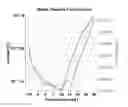


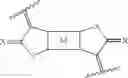
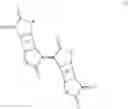
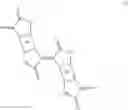


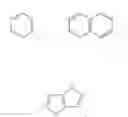


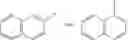



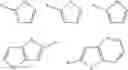
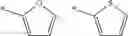
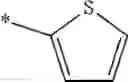
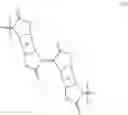








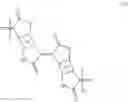


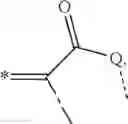





Sources:
- United States Patent and Trademark Office - verify current appl. status at the USPTO↗
Similar patent applications:
- » 20060121670
Memory device having a semiconducting polymer film - » 10229280
Elastic member of semiconductive polymer and OA equipment using the same - » 10223917
Visible light emitting diodes fabricated from soluble semiconducting polymers - » 20050017370
Memory device having a semiconducting polymer film - » 20050045856
Electrically conductive polymer, semiconductive composition using the same and semiconductive member for electrophotographic equipment - » 20050073245
White electrophosphorescence from semiconducting polymer blends - » 20050240011
Method for the production of monomers useful in the manufacture of semiconductive polymers - » 10320933
Increased mobility from organic semiconducting polymers field-effect transistors - » 20050280020
Visible light emitting diodes fabricated from soluble semiconducting polymers - » 20060128053
Increased mobility from organic semiconducting polymers field-effect transistors
Recent applications in this class:
- » 20250289825 2025-09-18
COMPOUNDS THAT INTERACT WITH RAS SUPERFAMILY PROTEINS FOR TREATMENT OF CANCERS, INFLAMMATORY DISEASES, RASOPATHIES, AND FIBROTIC DISEASE - » 20250289824 2025-09-18
EGFR INHIBITOR FOR THE TREATMENT OF CANCER - » 20250289823 2025-09-18
USE OF PYRAZOLOPYRIMIDINE DERIVATIVES FOR THE TREATMENT OF PI3K-DELTA RELATED DISORDERS - » 20250282788 2025-09-11
BICYCLIC KETONE COMPOUNDS AND METHODS OF USE THEREOF - » 20250282787 2025-09-11
SUBSTITUTED IMIDAZO[1,2-c]PYRIMIDINES AS PRC2 INHIBITORS - » 20250282786 2025-09-11
Tricyclic TLR7 Agonists and Uses Thereof - » 20250282785 2025-09-11
PYRROLIDINONE DERIVATIVES AS INHIBITORS OF NF KAPPA B INDUCING KINASE - » 20250282784 2025-09-11
CYTOCHROME BD OXIDASE INHIBITORS AND USES THEREOF - » 20250282783 2025-09-11
PROTEIN STABILIZING COMPOUNDS CONTAINING USP28 AND/OR USP25 TARGETING LIGANDS - » 20250282782 2025-09-11
PYRAZOLOPYRAZINE COMPOUNDS AS SHP2 INHIBITORS
Recent applications for this Assignee:
- » 20250287942 2025-09-18
FORMULATIONS FOR REPELLING BEES AND OTHER INSECTS - » 20250282951 2025-09-11
LIGNIN BASED TPU COMPOSITION, METHOD OF PREPARING THEREOF AND USES THEREOF - » 20250277149 2025-09-04
ETCHING COMPOSITION AND METHOD FOR MANUFACTURING SEMICONDUCTOR DEVICE USING THE SAME - » 20250250403 2025-08-07
PROCESS FOR MANUFACTURING OF POLYISOBUTENE SUCCINIC ANHYDRIDES - » 20250250382 2025-08-07
PROCESS FOR MANUFACTURING OF POLYISOBUTENE SUCCINIC ANHYDRIDES - » 20250243421 2025-07-31
EMULSIFIER PACKAGE WITH QUATERNARY AMMONIUM SURFACTANT FOR FUEL EMULSION - » 20250237288 2025-07-24
LOAD MANAGEMENT STRIKER CAP - » 20250236804 2025-07-24
PROCESS FOR REDUCTION OF ASPHALTENES FROM MARINE FUELS - » 20250234861 2025-07-24
LACTONES FOR ENHANCING THE ACTIVITY OF ANTIMICROBIAL AGENTS - » 20250223443 2025-07-10
SILICONE EMULSION