ACTIVE SWITCH ARRAY SUBSTRATE, MANUFACTURING METHOD THERFOR, AND DISPLAY PANEL
US20190049804A1
2019-02-14
15/555,422
2017-07-03
Abstract:
This application provides an active switch array substrate, manufacturing method therefor, and a display panel. The active switch array substrate includes: a first substrate, having an outer surface; a plurality of gate lines, formed on the first substrate; a gate covering layer, formed on the first substrate and covering the gate lines; a plurality of data lines, formed on the gate covering layer; a first protection layer, formed on the gate covering layer and covering the data lines; a pixel electrode layer, formed on the first protection layer; a plurality of light spacers, formed on the first protection layer; an opaque matrix layer, formed on the first protection layer, and a material of the opaque matrix layer is the same as materials of the light spacers; and a plurality of color filters (CFs), formed on the outer surface of the first substrate and including a plurality of photoresist layers disposed in parallel.
Interested in similar patents?
Get notified when new applications in this technology area are published.
Classification:
G02F1/136286 » CPC main
Devices or arrangements for the control of the intensity, colour, phase, polarisation or direction of light arriving from an independent light source, e.g. switching, gating or modulating; Non-linear optics for the control of the intensity, phase, polarisation or colour based on liquid crystals, e.g. single liquid crystal display cells; Constructional arrangements; Operation of liquid crystal cells; Circuit arrangements; Liquid crystal cells structurally associated with a semi-conducting layer or substrate, e.g. cells forming part of an integrated circuit; Active matrix addressed cells Wiring, e.g. gate line, drain line
G02F1/1362 IPC
Devices or arrangements for the control of the intensity, colour, phase, polarisation or direction of light arriving from an independent light source, e.g. switching, gating or modulating; Non-linear optics for the control of the intensity, phase, polarisation or colour based on liquid crystals, e.g. single liquid crystal display cells; Constructional arrangements; Operation of liquid crystal cells; Circuit arrangements; Liquid crystal cells structurally associated with a semi-conducting layer or substrate, e.g. cells forming part of an integrated circuit Active matrix addressed cells
H01L27/1288 » CPC further
Devices consisting of a plurality of semiconductor or other solid-state components formed in or on a common substrate including semiconductor components specially adapted for rectifying, oscillating, amplifying or switching and having at least one potential-jump barrier or surface barrier; including integrated passive circuit elements with at least one potential-jump barrier or surface barrier the substrate being other than a semiconductor body, e.g. an insulating body comprising a plurality of TFTs formed on a non-semiconducting substrate, e.g. driving circuits for AMLCDs; Multistep manufacturing methods employing particular masking sequences or specially adapted masks, e.g. half-tone mask
G02F2201/123 » CPC further
Constructional arrangements not provided for in groups - electrode pixel
H01L27/124 » CPC further
Devices consisting of a plurality of semiconductor or other solid-state components formed in or on a common substrate including semiconductor components specially adapted for rectifying, oscillating, amplifying or switching and having at least one potential-jump barrier or surface barrier; including integrated passive circuit elements with at least one potential-jump barrier or surface barrier the substrate being other than a semiconductor body, e.g. an insulating body comprising a plurality of TFTs formed on a non-semiconducting substrate, e.g. driving circuits for AMLCDs with a particular composition, shape or layout of the wiring layers specially adapted to the circuit arrangement, e.g. scanning lines in LCD pixel circuits
H01L27/12 IPC
Devices consisting of a plurality of semiconductor or other solid-state components formed in or on a common substrate including semiconductor components specially adapted for rectifying, oscillating, amplifying or switching and having at least one potential-jump barrier or surface barrier; including integrated passive circuit elements with at least one potential-jump barrier or surface barrier the substrate being other than a semiconductor body, e.g. an insulating body
G02F1/1343 IPC
Devices or arrangements for the control of the intensity, colour, phase, polarisation or direction of light arriving from an independent light source, e.g. switching, gating or modulating; Non-linear optics for the control of the intensity, phase, polarisation or colour based on liquid crystals, e.g. single liquid crystal display cells; Constructional arrangements; Operation of liquid crystal cells; Circuit arrangements; Constructional arrangements; Manufacturing methods Electrodes
G02F1/1335 IPC
Devices or arrangements for the control of the intensity, colour, phase, polarisation or direction of light arriving from an independent light source, e.g. switching, gating or modulating; Non-linear optics for the control of the intensity, phase, polarisation or colour based on liquid crystals, e.g. single liquid crystal display cells; Constructional arrangements; Operation of liquid crystal cells; Circuit arrangements; Constructional arrangements; Manufacturing methods Structural association of cells with optical devices, e.g. polarisers or reflectors
G02F1/1368 » CPC further
Devices or arrangements for the control of the intensity, colour, phase, polarisation or direction of light arriving from an independent light source, e.g. switching, gating or modulating; Non-linear optics for the control of the intensity, phase, polarisation or colour based on liquid crystals, e.g. single liquid crystal display cells; Constructional arrangements; Operation of liquid crystal cells; Circuit arrangements; Liquid crystal cells structurally associated with a semi-conducting layer or substrate, e.g. cells forming part of an integrated circuit; Active matrix addressed cells in which the switching element is a three-electrode device
G02F1/1339 » CPC further
Devices or arrangements for the control of the intensity, colour, phase, polarisation or direction of light arriving from an independent light source, e.g. switching, gating or modulating; Non-linear optics for the control of the intensity, phase, polarisation or colour based on liquid crystals, e.g. single liquid crystal display cells; Constructional arrangements; Operation of liquid crystal cells; Circuit arrangements; Constructional arrangements; Manufacturing methods Gaskets; Spacers; Sealing of cells
Description
BACKGROUND
Technical Field
This application relates to a manufacturing manner, and in particular, to an active switch array substrate, manufacturing method therefor, and a display panel.
Related Art
With the development of technologies, liquid crystal displays (LCD) having advantages such as power saving, no radiation, small volume, low power consumption, rectangular plane, high resolution, stable image quality become more popular. In particular, as various information products such as mobile phones, laptop computers, digital cameras, PDAs, liquid crystal screens become more popular, a demand on LCDs increases to a large extent. Therefore, active switch array liquid crystal displays (Thin Film Transistor Liquid Crystal Display, TFT-LCD) having a pixel design of high resolution and having advantages such as high image quality, high space-using efficiency, low power consumption, no radiation have gradually become a main stream of the market. An active switch array substrate is an important component for constructing an LCD.
The active switch array substrate includes an opposite substrate having a photoresist layer of red, green, and blue colors (RGB on CF), an active switch array substrate having an RGB photoresist layer on an in-plane switching liquid crystal panel (RGB on Array/In-Plane Switching, IPS mode), and an active switch array substrate having an RGB photoresist layer on a vertical alignment liquid crystal panel (RGB on Array/Vertical Alignment, VA mode). In this way, a pixel structure design of the active switch array substrate plays a key role to improve a pixel design of a resolution. In an LCD process of the related art, an RGB photoresist layer is disposed on a glass end of a color filter (CF), and movable mura (MM) of an image occurs as a result of frequent misalignment of upper and lower glasses. Therefore, MM of an image in an active switch array substrate process may be reduced by using an RGB photoresist layer, and cable load may be effectively reduced and an aperture ratio is improved. Advantages of the RGB photoresist layer are easily presented by being applied to a curved television.
SUMMARY
To resolve the foregoing technical problem, an objective of this application is to provide an active switch array substrate, a method for manufacturing an active switch array substrate, and a display panel, to reduce MM of a displayed image, an alignment accuracy error of upper and lower substrate glasses, and vacuum foaming.
The objective of this application is achieved and the technical problem of this application is resolved by using the following technical solutions. An active switch array substrate provided according to this application comprises: a first substrate, having an outer surface; a plurality of gate lines, formed on the first substrate; a gate covering layer, formed on the first substrate and covering the gate lines; a plurality of data lines, formed on the gate covering layer; a first protection layer, formed on the gate covering layer and covering the data lines; a pixel electrode layer, formed on the first protection layer; a plurality of light spacers, formed on the first protection layer; an opaque matrix layer, formed on the first protection layer, where a material of the opaque matrix layer is the same as materials of the light spacers; and a plurality of CFs, formed on the outer surface of the first substrate and comprising a plurality of photoresist layers disposed in parallel.
The technical problem of this application may further be resolved by using the following technical solutions.
In an embodiment of this application, a material of the CFs is an RGB adhesive material, or the material of the CFs may comprise a white or yellow adhesive material.
In an embodiment of this application, the light spacer has a protrusion shape with a narrow top and a wide bottom.
In an embodiment of this application, the active switch array substrate further comprises a plurality of dummy light spacers formed on the pixel electrode layer and an opaque matrix layer formed on the pixel electrode layer.
In an embodiment of this application, a material of the opaque matrix layer is the same as a material of the dummy light spacer.
Another objective of this application is to provide a method for manufacturing an active switch array substrate, comprising: providing a first substrate; forming a plurality of gate lines on the first substrate; forming a gate covering layer on the first substrate and covering the gate lines; forming a plurality of data lines on the gate covering layer; forming a first protection layer on the gate covering layer and covering the data lines; forming a pixel electrode layer on the first protection layer; forming a plurality of light spacers and an opaque matrix layer on the first protection layer at the same time, and a material of the opaque matrix layer is the same as materials of the light spacers; and sequentially forming a plurality of photoresist layers disposed in parallel on an outer surface of the first substrate, to complete a plurality of CFs.
In an embodiment of this application, in the manufacturing method, the step of forming a plurality of photoresist layers disposed in parallel comprises: coating the RGB adhesive material by means of an ink-jetting process; curing the RGB adhesive material by using ultraviolet light; and forming the photoresist layers on the outer surface of the first substrate.
In an embodiment of this application, in the manufacturing method, the step of forming a plurality of light spacers and an opaque matrix layer on the first protection layer at the same time, and a material of the opaque matrix layer is the same as materials of the light spacers comprises: forming a light shielding material layer on the first protection layer, to cover the first protection layer; disposing a mask on the light shielding material layer, where the mask has a transparent region, an opaque region, and a semi-transparent region; and performing exposure manufacturing and development manufacturing, to pattern the light shielding material layer to form the light spacers and the opaque matrix layer.
In an embodiment of this application, in the manufacturing method, the light spacers all comprise at least two types of steps formed by using a same mask.
In an embodiment of this application, in the manufacturing method, the mask is a halftone mask.
Still another objective of this application is to provide an LCD panel, comprising an active switch array substrate, an opposite substrate, and a liquid crystal layer. The active switch array substrate comprises: a first substrate, having an outer surface, where the outer surface has an RGB adhesive material; a plurality of gate lines, formed on the first substrate; a gate covering layer, formed on the first substrate and covering the gate lines; a plurality of data lines, formed on the gate covering layer; a first protection layer, formed on the gate covering layer and covering the data lines; a pixel electrode layer, formed on the first protection layer; a plurality of light spacers, formed on the first protection layer; an opaque matrix layer, formed on the first protection layer, where a material of the opaque matrix layer is the same as materials of the light spacers; and a plurality of CFs, formed on the outer surface of the first substrate and comprising a plurality of photoresist layers disposed in parallel. The opposite substrate comprises: a second substrate, where the active switch array substrate is disposed opposite to the opposite substrate, and the light spacers are located between the opposite substrate and the active switch array substrate, to define a liquid crystal separation space; and a transparent electrode layer, disposed on the second substrate. The liquid crystal layer is located between the active switch array substrate and the opposite substrate and fills the liquid crystal separation space. The LCD panel further comprises a fiber material layer, disposed between the active switch array substrate and the opposite substrate.
Yet another objective of this application is to provide an LCD device, comprising a backlight module, and further comprising the LCD panel.
In this application, MM of a displayed image, an alignment accuracy error of upper and lower substrate glasses, and vacuum foaming may be reduced.
BRIEF DESCRIPTION OF THE DRAWINGS
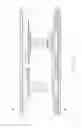
FIG. 1a is a schematic cross-sectional view of an exemplary liquid crystal panel including an opposite substrate having an RGB photoresist layer and an opaque matrix layer;
FIG. 1b is a schematic cross-sectional view of an exemplary in-plane switching liquid crystal panel including an active switch array substrate having an RGB photoresist layer;
FIG. 1c is another schematic cross-sectional view of an exemplary vertical alignment liquid crystal panel including an active switch array substrate having an RGB photoresist layer;
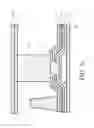
FIG. 2a is an schematic cross-sectional view of an active switch array substrate applied to a peripheral region of an LCD panel according to a method of this application;
FIG. 2b is a schematic cross-sectional view of an active switch array substrate applied to a display region of an LCD panel according to a method of this application;
FIG. 2c is a schematic cross-sectional view of an active switch array substrate applied to another peripheral region of an LCD panel according to a method of this application;
FIG. 2d is a schematic cross-sectional view of an active switch array substrate applied to an LCD panel according to a method of this application;
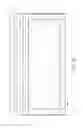
FIG. 3a is a schematic diagram of a glass surface of a CF substrate in an exemplary LCD;
FIG. 3b is a schematic diagram of an active switch array substrate applied to an LCD and having an opaque matrix layer and an RGB adhesive material in a backside according to a method of this application; and
FIG. 3c is a schematic diagram of attaching an RGB adhesive material to a backside of an active switch array substrate by means of ink jetting or ultraviolet irradiation.
DETAILED DESCRIPTION
The following embodiments are described with reference to the accompanying drawings, which are used to exemplify specific embodiments for implementation of this application. Terms about directions mentioned in this application, such as “on”, “below”, “front”, “back”, “left”, “right”, “in”, “out”, and “side surface” merely refer to directions in the accompanying drawings. Therefore, the used terms about directions are used to describe and understand this application, and are not intended to limit this application.
The accompanying drawings and the description are considered to be essentially exemplary, rather than limitative. In the figures, units with similar structures are represented by using the same reference number. In addition, for understanding and ease of description, the size and the thickness of each component shown in the accompanying drawings are arbitrarily shown, but this application is not limited thereto.
In the accompanying drawings, for clarity, thicknesses of a layer, a film, a panel, an area, and the like are enlarged. In the accompanying drawings, for understanding and ease of description, thicknesses of some layers and areas are enlarged. It should be understood that when a component such as a layer, a film, an area, or a base is described to be “on” “another component”, the component may be directly on the another component, or there may be an intermediate component.
In addition, in this specification, unless otherwise explicitly described to have an opposite meaning, the term “include” is understood as including the component, but not excluding any other component. In addition, in this specification, “on” means that a component is located on or below a target component, but does not mean that the component needs to be located on top of the gravity direction.
To further describe the technical means adopted in this application to achieve the intended application objective and effects thereof, specific implementations, structures, features, and effects of an active switch array substrate, a method for manufacturing an active switch array substrate, and a display panel provided according to this application are described below in detail with reference to the drawings and preferred embodiments.
An LCD panel in this application may include: an active switch array (Thin Film Transistor, TFT) substrate, a CF substrate, and a liquid crystal layer formed between the two substrates.
In an embodiment, the LCD panel in this application may be a curved display panel.
In an embodiment, the active switch array (TFT) and the CF in this application may be formed on a same substrate.
FIG. 1a is a schematic cross-sectional view of an exemplary liquid crystal panel including an opposite substrate having an RGB photoresist layer and an opaque matrix layer. Referring to FIG. 1a, a liquid crystal panel including an opposite substrate having an RGB photoresist layer and an opaque matrix layer includes: an opposite substrate 20, an active switch array substrate 10, and a liquid crystal layer. The opposite substrate 20 includes: a second substrate 200; a CF 212, disposed on the second substrate 200 and including a plurality of photoresist layers (such as a red photoresist, a green photoresist, and a blue photoresist) disposed in parallel; an opaque matrix layer 210, disposed on the second substrate 200; a transparent electrode layer 214, disposed on the CF 212; and a plurality of light spacers 216 and 218, disposed on the transparent electrode layer 214. The active switch array substrate 10 includes: a first substrate 100, where the active switch array substrate 10 is disposed opposite to the opposite substrate 20, and the light spacers 216 and 218 are located between the opposite substrate 20 and the active switch array substrate 10, to define a liquid crystal separation space; a plurality of gate lines 106, formed on the first substrate 100; a gate covering layer 110, formed on the first substrate 100 and covering the gate lines 106; a plurality of data lines 108, formed on the gate covering layer 110, where the data lines 108 and the gate lines 106 define a plurality of pixel regions; a first protection layer 112, formed on the gate covering layer 110 and covering the data lines 108; and a pixel electrode layer 114, formed on the first protection layer 112. The liquid crystal layer (not shown in the figure) is located between the opposite substrate 20 and the active switch array substrate 10 and fills the liquid crystal separation space.
FIG. 1b is a schematic cross-sectional view of an exemplary in-plane switching liquid crystal panel including an active switch array substrate having an RGB photoresist layer. Referring to FIG. 1b, an in-plane switching liquid crystal panel including an active switch array substrate having an RGB photoresist layer includes: an active switch array substrate 11, an opposite substrate 21, and a liquid crystal layer. The active switch array substrate 11 includes: a first substrate 100; a plurality of gate lines 106, formed on the first substrate 100; a gate covering layer 110, formed on the first substrate 100 and covering the gate lines 106; a plurality of data lines 108, formed on the gate covering layer 110, where the data lines 108 and the gate lines 106 define a plurality of pixel regions; a first protection layer 112, formed on the gate covering layer 110 and covering the data lines 108; a CF 212, formed on the first protection layer 112 and including a plurality of photoresist layers (such as a red photoresist, a green photoresist, and a blue photoresist) disposed in parallel; a second protection layer 113, formed on the CF 212 and covering the first protection layer 112; and a pixel electrode layer 114, formed on the second protection layer 113. The opposite substrate 21 includes: a second substrate 200; an opaque matrix layer 210, disposed on the second substrate 200; a transparent electrode layer 214, disposed on the second substrate 200 and covering the opaque matrix layers 210; and a plurality of light spacers 217 and 219, disposed on the transparent electrode layer 214, where the active switch array substrate 11 is disposed opposite to the opposite substrate 21, and the light spacers 217 and 219 are located between the opposite substrate 21 and the active switch array substrate 11, to define a liquid crystal separation space. The liquid crystal layer (not shown in the figure) is located between the opposite substrate 21 and the active switch array substrate 11 and fills the liquid crystal separation space.
FIG. 1c is another schematic cross-sectional view of an exemplary vertical alignment liquid crystal panel including an active switch array substrate having an RGB photoresist layer. Referring to FIG. 1c, a vertical alignment liquid crystal panel including an active switch array substrate having an RGB photoresist layer includes: an active switch array substrate 12, an opposite substrate 22, and a liquid crystal layer. The active switch array substrate 12 includes: a first substrate 100; a plurality of gate lines 106, formed on the first substrate 100; a gate covering layer 110, formed on the first substrate 100 and covering the gate lines 106; a plurality of data lines 108, formed on the gate covering layer 110, where the data lines 108 and the gate lines 106 define a plurality of pixel regions; a first protection layer 112, formed on the gate covering layer 110 and covering the data lines 108; a CF 212, formed on the first protection layer 112 and including a plurality of photoresist layers (such as a red photoresist, a green photoresist, and a blue photoresist) disposed in parallel; a second protection layer 113, formed on the CF 212 and covering the first protection layer 112; a pixel electrode layer 114, formed on the second protection layer 113; and a plurality of light spacers 213 and 215, formed on the second protection layer 113 and connected to the second protection layer 113. The opposite substrate 22 includes: a second substrate 200; an opaque matrix layer 210, disposed on the second substrate 200; and a transparent electrode layer 214, disposed on the second substrate 200 and covering the opaque matrix layers 210, where the active switch array substrate 12 is disposed opposite to the opposite substrate 22, and the light spacers 213 and 215 are located between the opposite substrate 22 and the active switch array substrate 12, to define a liquid crystal separation space. The liquid crystal layer (not shown in the figure) is located between the opposite substrate 22 and the active switch array substrate 12 and fills the liquid crystal separation space.
FIG. 2a is a schematic cross-sectional view of an active switch array substrate applied to a peripheral region of an LCD panel according to a method of this application. FIG. 2b is a schematic cross-sectional view of an active switch array substrate applied to a display region of an LCD panel according to a method of this application. FIG. 2c is a schematic cross-sectional view of an active switch array substrate applied to another peripheral region of an LCD panel according to a method of this application. FIG. 2d is a schematic cross-sectional view of an active switch array substrate applied to an LCD panel according to a method of this application. Referring to FIG. 2a, FIG. 2b, FIG. 2c, and FIG. 2d, in an embodiment of this application, an active switch array substrate 13 includes: a first substrate 100, having an outer surface; a plurality of gate lines 106, formed on the first substrate 100; a gate covering layer 110, formed on the first substrate 100 and covering the gate lines 106; a plurality of data lines 108, formed on the gate covering layer 110, where the data lines 108 and the gate lines 106 define a plurality of pixel regions; a first protection layer 112, formed on the gate covering layer 110 and covering the data lines 108; a pixel electrode layer 114, formed on the first protection layer 112; a plurality of light spacers 232 and 234, formed on the first protection layer 112; an opaque matrix layer 115, formed on the first protection layer 112, where a material of the opaque matrix layer is the same as materials of the light spacers 232 and 234; and a CF 212, formed on the outer surface of the first substrate 100 and including a plurality of photoresist layers (such as a red photoresist, a green photoresist, and a blue photoresist) disposed in parallel.
In an embodiment, a material of the CF 212 is, for example, an RGB adhesive material. In some embodiments, the material of the CF 212 may include, for example, a white and/or yellow adhesive material.
In an embodiment, the light spacers 232 and 234 have a protrusion shape with a narrow top and a wide bottom.
In an embodiment, an RGB adhesive material of the outer surface of the first substrate 100 is cured by means of ultraviolet light irradiation, to form the CF 212 to attach to a backside of a glass of the active switch array substrate 13.
In an embodiment, a peripheral region of the active switch array substrate 13 includes a fiber material layer 220 located between the active switch array substrate 13 and the opposite substrate 23.
In an embodiment, the peripheral region of the active switch array substrate 13 further includes a plurality of dummy light spacers 236 formed on the pixel electrode layer 114 and an opaque matrix layer 115 formed on the pixel electrode layer 114, and a material of the opaque matrix layer 115 is the same as materials of the dummy light spacers 236.
In an embodiment, the peripheral region of the active switch array substrate 13 further includes a second protection layer 113, formed on the first protection layer 112.
Referring to FIG. 2a, FIG. 2b, FIG. 2c, and FIG. 2d, in an embodiment of this application, an LCD panel includes: an active switch array substrate 13, an opposite substrate 23, and a liquid crystal layer. The active switch array substrate 13 includes: a first substrate 100, having an outer surface; a plurality of gate lines 106, formed on the first substrate 100; a gate covering layer 110, formed on the first substrate 100 and covering the gate lines 106; a plurality of data lines 108, formed on the gate covering layer 110, where the data lines 108 and the gate lines 106 define a plurality of pixel regions; a first protection layer 112, formed on the gate covering layer 110 and covering the data lines 108; a pixel electrode layer 114, formed on the first protection layer 112; a plurality of light spacers 232 and 234, formed on the first protection layer 112; an opaque matrix layer 115, formed on the first protection layer 112, where a material of the opaque matrix layer 115 is the same as materials of the light spacers 232 and 234; and a CF 212, formed on the outer surface of the first substrate 100 and including a plurality of photoresist layers (such as a red photoresist, a green photoresist, and a blue photoresist) disposed in parallel. The opposite substrate 23 includes: a second substrate 200, where the active switch array substrate 13 is disposed opposite to the opposite substrate 23, and the light spacers 232 and 234 are located between the opposite substrate 23 and the active switch array substrate 13, to define a liquid crystal separation space; and a transparent electrode layer 214, disposed on the second substrate 200. The liquid crystal layer is located between the active switch array substrate 13 and the opposite substrate 23 and fills the liquid crystal separation space.
In an embodiment, a material of the CF 212 is, for example, an RGB adhesive material. In some embodiments, the material of the CF 212 may include, for example, a white and/or yellow adhesive material.
In an embodiment, the light spacers 232 and 234 have a protrusion shape with a narrow top and a wide bottom.
In an embodiment, an RGB adhesive material of the outer surface of the first substrate 100 is cured by means of ultraviolet light irradiation, to form the CF 212 to attach to a backside of a glass of the active switch array substrate 13.
In an embodiment, a peripheral region of the active switch array substrate 13 includes a fiber material layer 220 located between the active switch array substrate 13 and the opposite substrate 23.
In an embodiment, the peripheral region of the active switch array substrate 13 further includes a plurality of dummy light spacers 236 formed on the pixel electrode layer 114 and an opaque matrix layer 115 formed on the pixel electrode layer 114, and a material of the opaque matrix layer 115 is the same as materials of the dummy light spacers 236.
In an embodiment, the peripheral region of the active switch array substrate 13 further includes a second protection layer 113, formed on the first protection layer 112.
Referring to FIG. 2a, FIG. 2b, FIG. 2c, and FIG. 2d, in an embodiment of this application, an LCD device includes a backlight module, and further includes: an active switch array substrate 13, an opposite substrate 23, and a liquid crystal layer. The active switch array substrate 13 includes: a first substrate 100, having an outer surface; a plurality of gate lines 106, formed on the first substrate 100; a gate covering layer 110, formed on the first substrate 100 and covering the gate lines 106; a plurality of data lines 108, formed on the gate covering layer 110, where the data lines 108 and the gate lines 106 define a plurality of pixel regions; a first protection layer 112, formed on the gate covering layer 110 and covering the data lines 108; a pixel electrode layer 114, formed on the first protection layer 112; a plurality of light spacers 232 and 234, formed on the first protection layer 112; an opaque matrix layer 115, formed on the first protection layer 112, where a material of the opaque matrix layer 115 is the same as materials of the light spacers 232 and 234; and a CF 212, formed on the outer surface of the first substrate 100 and including a plurality of photoresist layers (such as a red photoresist, a green photoresist, and a blue photoresist) disposed in parallel. The opposite substrate 23 includes: a second substrate 200, where the active switch array substrate 13 is disposed opposite to the opposite substrate 23, and the light spacers 232 and 234 are located between the opposite substrate 23 and the active switch array substrate 13, to define a liquid crystal separation space; and a transparent electrode layer 214, disposed on the second substrate 200. The liquid crystal layer is located between the active switch array substrate 13 and the opposite substrate 23 and fills the liquid crystal separation space.
In an embodiment, a material of the CF 212 is, for example, an RGB adhesive material. In some embodiments, the material of the CF 212 may include, for example, a white and/or yellow adhesive material.
In an embodiment, the light spacers 232 and 234 have a protrusion shape with a narrow top and a wide bottom.
In an embodiment, an RGB adhesive material of the outer surface of the first substrate 100 is cured by means of ultraviolet light irradiation, to form the CF 212 to attach to a backside of a glass of the active switch array substrate 13.
In an embodiment, a peripheral region of the active switch array substrate 13 includes a fiber material layer 220 located between the active switch array substrate 13 and the opposite substrate 23.
In an embodiment, the peripheral region of the active switch array substrate 13 further includes a plurality of dummy light spacers 236 formed on the pixel electrode layer 114 and an opaque matrix layer 115 formed on the pixel electrode layer 114, and a material of the opaque matrix layer 115 is the same as materials of the dummy light spacers 236.
In an embodiment, the peripheral region of the active switch array substrate 13 further includes a second protection layer 113, formed on the first protection layer 112.
Referring to FIG. 2a, FIG. 2b, FIG. 2c, and FIG. 2d, in an embodiment of this application, a method for manufacturing an active switch array substrate 13 includes: providing a first substrate 100; forming a plurality of gate lines 106 on the first substrate 100; forming a gate covering layer 110 on the first substrate 100 and covering the gate lines 106; forming a plurality of data lines 108 on the gate covering layer 110, where the data lines 108 and the gate lines 106 define a plurality of pixel regions; forming a first protection layer 112 on the gate covering layer 110 and covering the data lines 108; forming a pixel electrode layer 114 on the first protection layer 112; forming a plurality of light spacers 232 and 234 and an opaque matrix layer 115 on the first protection layer 112 at the same time, where a material of the opaque matrix layer 115 is the same as materials of the light spacers 232 and 234; and sequentially forming a plurality of photoresist layers (such as a red photoresist, a green photoresist, and a blue photoresist) disposed in parallel on an outer surface of the first substrate 100, to complete a CF 212.
In an embodiment of this application, a material of the CF 212 is, for example, an RGB adhesive material. In some embodiments, the material of the CF 212 may include, for example, a white and/or yellow adhesive material.
In an embodiment of this application, the step of forming a plurality of photoresist layers (such as a red photoresist, a green photoresist, and a blue photoresist) disposed in parallel includes: coating the RGB adhesive material by means of an ink-jetting process; curing the RGB adhesive material by using ultraviolet light; and forming the photoresist layers (such as a red photoresist, a green photoresist, and a blue photoresist) on the outer surface of the first substrate.
In an embodiment, in the manufacturing method, the step of forming a plurality of light spacers 232 and 234 and an opaque matrix layer 115 on the first protection layer 112 at the same time, and a material of the opaque matrix layer 115 is the same as materials of the light spacers 232 and 234 includes: forming a light shielding material layer on the first protection layer 112, to cover the first protection layer 112; disposing a mask on the light shielding material layer, where the mask has a transparent region, an opaque region, and a semi-transparent region; and performing exposure manufacturing and development manufacturing, to pattern the light shielding material layer to form the light spacers 232 and 234 and the opaque matrix layer 115.
In an embodiment, in the manufacturing method, the light spacers 232 and 234 all include at least two types of steps formed by using a same mask.
In an embodiment, in the manufacturing method, the mask is a half tone mask.
FIG. 3a is a schematic diagram of a glass surface of a CF substrate in an exemplary LCD. Referring to FIG. 3a, an LCD 300 includes: a black photoresist material 310, a CF substrate glass 312, a base 314, and a support 316. The support 316 is connected to the base 314, and the black photoresist material 310 is attached to an edge 303 of the CF substrate glass 312.
In an embodiment, the CF substrate glass 312 faces upward.
FIG. 3b is a schematic diagram of an active switch array substrate applied to an LCD and having an opaque matrix layer and an RGB adhesive material in a backside according to a method of this application. Referring to FIG. 2a, FIG. 2b, FIG. 2c, FIG. 2d, and FIG. 3b, in an embodiment of this application, a bezel-less LCD 301 includes: an RGB adhesive material 311, a black adhesive material (an opaque matrix layer) 313, a glass 315 of an active switch array substrate 13, a base 314, and a support 316. The support 316 is connected to the base 314, the black adhesive material (the opaque matrix layer) 313 is attached to an edge 303 (a frame circuit) of the glass 315 of the active switch array substrate 13, the RGB adhesive material 311 is attached to a backside 307 of the glass 315 of the active switch array substrate 13, and a display region of the glass 315 of the active switch array substrate 13 has a CF 212.
In an embodiment, the glass 315 of the active switch array substrate 13 faces upward.
In an embodiment, a glass of the opposite substrate (the CF substrate) 23 faces a backlight module.
FIG. 3c is a schematic diagram of attaching an RGB adhesive material to a backside of an active switch array substrate by means of ink jetting or ultraviolet irradiation. Referring to FIG. 2a, FIG. 2b, FIG. 2c, FIG. 2d, FIG. 3b, and FIG. 3c, in an embodiment of this application, an ink jetting device 400 includes: a unit 403 for allocating an RGB adhesive material, an ultraviolet irradiation light emitting unit 405, an ultraviolet beam 410, and an RGB adhesive material 407. The unit 403 for allocating an RGB adhesive material coats the RGB adhesive material 407 on a backside 307 of the glass 315 of the active switch array substrate 13 by means of an ink-jetting process, the RGB adhesive material 407 is cured on the CF 212 or the backside 307 of the glass 315 of active switch array substrate 13 by using the ultraviolet beam 410 emitted by the ultraviolet irradiation light emitting unit 405.
A multi-tone mask may include a gray-tone mask and a half tone mask. The gray-tone mask manufactures a silt lower than a resolution of an exposure device, and covers a part of a light source by using the silt part, to achieve half exposure. On the other hand, the half tone mask performs half exposure by using a “translucent” film. Because in the foregoing two manners, three exposure levels; exposed part, half-exposed part and unexposed part may be presented after one exposure process, photoresists having two types of thicknesses can be formed after development (by using such a thickness difference of the photoresists, a graphic may be transferred onto a panel substrate of a quantity less than a usual quantity, and production efficiency of the panel is improved) is performed. If the multi-tone mask is a half tone mask, costs of the mask are slightly higher than costs of a common mask.
In this application, MM of a displayed image, an alignment accuracy error of upper and lower substrate glasses, and vacuum foaming may be reduced.
The terms such as “in some embodiments” and “in various embodiments” are repeatedly used. The terms usually refer to different embodiments, but they may also refer to a same embodiment. The terms such as “comprising”, “having” and “including” are synonyms, unless other meanings are indicated by the context.
Descriptions above are merely preferred embodiments of this application, and are not intended to limit this application. Although this application has been disclosed above through the preferred embodiments, the embodiments are not intended to limit this application. A person skilled in the art can make some equivalent variations, alterations or modifications to the above-disclosed technical content without departing from the scope of the technical solutions of this application to obtain equivalent embodiments. Any simple alteration, equivalent change or modification made to the above embodiments according to the technical essence of this application without departing from the content of the technical solutions of this application shall fall within the scope of the technical solutions of this application.
Claims
What is claimed is:1. An active switch array substrate, comprising:
a first substrate, having an outer surface;
a plurality of gate lines, formed on the first substrate;
a gate covering layer, formed on the first substrate and covering the gate lines;
a plurality of data lines, formed on the gate covering layer;
a first protection layer, formed on the gate covering layer and covering the data lines;
a pixel electrode layer, formed on the first protection layer;
a plurality of light spacers, formed on the first protection layer;
an opaque matrix layer, formed on the first protection layer, wherein a material of the opaque matrix layer is the same as materials of the light spacers; and
a plurality of color filters (CFs), formed on the outer surface of the first substrate and comprising a plurality of photoresist layers disposed in parallel.
2. The active switch array substrate according to claim 1, wherein a material of the CF is an RGB adhesive material.
3. The active switch array substrate according to claim 1, wherein a material of the CF comprises a white or yellow adhesive material.
4. The active switch array substrate according to claim 1, wherein the light spacer has a protrusion shape with a narrow top and a wide bottom.
5. The active switch array substrate according to claim 1, further comprising a plurality of dummy light spacers formed on the pixel electrode layer and an opaque matrix layer formed on the pixel electrode layer.
6. The active switch array substrate according to claim 1, wherein a material of the opaque matrix layer is the same as a material of the dummy light spacer.
7. A method for manufacturing an active switch array substrate, comprising:
providing a first substrate;
forming a plurality of gate lines on the first substrate;
forming a gate covering layer on the first substrate and covering the gate lines;
forming a plurality of data lines on the gate covering layer;
forming a first protection layer on the gate covering layer and covering the data lines;
forming a pixel electrode layer on the first protection layer;
forming a plurality of light spacers and an opaque matrix layer on the first protection layer at the same time, wherein a material of the opaque matrix layer is the same as materials of the light spacers; and
sequentially forming a plurality of photoresist layers disposed in parallel on an outer surface of the first substrate, to complete a plurality of color filters (CFs).
8. The method for manufacturing an active switch array substrate according to claim 7, wherein a material of the CF is an RGB adhesive material.
9. The method for manufacturing an active switch array substrate according to claim 8, wherein the step of forming a plurality of photoresist layers disposed in parallel comprises:
coating the RGB adhesive material by means of an ink-jetting process;
curing the RGB adhesive material by using ultraviolet light; and
forming the photoresist layers on the outer surface of the first substrate.
10. The method for manufacturing an active switch array substrate according to claim 7, wherein a material of the CF comprises a white or yellow adhesive material.
11. The method for manufacturing an active switch array substrate according to claim 7, wherein the step of forming a plurality of light spacers and an opaque matrix layer on the first protection layer at the same time, and a material of the opaque matrix layer is the same as materials of the light spacers comprises:
forming a light shielding material layer on the first protection layer, to cover the first protection layer;
disposing a mask on the light shielding material layer, wherein the mask has a transparent region, an opaque region, and a semi-transparent region; and
performing exposure manufacturing and development manufacturing, to pattern the light shielding material layer to form the light spacers and the opaque matrix layer.
12. The method for manufacturing an active switch array substrate according to claim 7, wherein the light spacers all comprise at least two types of steps formed by using a same mask.
13. The method for manufacturing an active switch array substrate according to claim 12, wherein the mask is a half tone mask.
14. A liquid crystal display (LCD) panel, comprising:
an active switch array substrate, comprising:
a first substrate, having an outer surface, wherein the outer surface has an RGB adhesive material;
a plurality of gate lines, formed on the first substrate;
a gate covering layer, formed on the first substrate and covering the gate lines;
a plurality of data lines, formed on the gate covering layer;
a first protection layer, formed on the gate covering layer and covering the data lines;
a pixel electrode layer, formed on the first protection layer;
a plurality of light spacers, formed on the first protection layer;
an opaque matrix layer, formed on the first protection layer, wherein a material of the opaque matrix layer is the same as materials of the light spacers; and
a plurality of color filters (CFs), formed on the outer surface of the first substrate and comprising a plurality of photoresist layers disposed in parallel;
an opposite substrate, comprising: a second substrate, wherein the active switch array substrate is disposed opposite to the opposite substrate, and the light spacers are located between the opposite substrate and the active switch array substrate, to define a liquid crystal separation space;
a transparent electrode layer, disposed on the second substrate; and
a liquid crystal layer, located between the active switch array substrate and the opposite substrate and filling the liquid crystal separation space.
15. The LCD according to claim 14, further comprising a fiber material layer, disposed between the active switch array substrate and the opposite substrate.
Images & Drawings included:






Sources:
- United States Patent and Trademark Office - verify current appl. status at the USPTO↗
Recent applications in this class:
- » 20250172843 2025-05-29
ELECTRODE STRUCTURE, DISPLAY PANEL, AND ELECTRONIC DEVICE - » 20250172842 2025-05-29
ARRAY SUBSTRATE AND DISPLAY DEVICE - » 20250164842 2025-05-22
Display Panel - » 20250155761 2025-05-15
Displays with Data Lines that Accommodate Openings - » 20250155760 2025-05-15
DISPLAY DEVICE - » 20250155759 2025-05-15
TRANSPARENT DISPLAY APPARATUS - » 20250147368 2025-05-08
DISPLAY DEVICE - » 20250130472 2025-04-24
DISPLAY DEVICE, METHOD OF MANUFACTURING THE SAME, AND ELECTRONIC DEVICE - » 20250130471 2025-04-24
ARRAY SUBSTRATE AND METHOD FOR MANUFACTURING SAME, DISPLAY PANEL, AND DISPLAY DEVICE - » 20250130470 2025-04-24
ARRAY SUBSTRATE AND DISPLAY PANEL