DISPLAY PANEL AND MANUFACTURING METHOD THEREOF AND DISPLAY DEVICE
US20190067388A1
2019-02-28
15/740,728
2017-10-20
Abstract:
This application provides a display panel and a manufacturing method thereof and a display device. The display panel includes: a first substrate; gate lines formed on the first substrate; a gate coverage layer formed on the first substrate, and covering the gate lines; data lines formed on the gate coverage layer; a passivation layer, formed on the gate coverage layer; an outer coating layer, formed on the passivation layer; an anode electrode layer, formed on the outer coating layer; an embankment layer, formed on the outer coating layer, and covering the anode electrode layer; a pixel definition layer, formed on the embankment layer, and covering the anode electrode layer; and a cathode electrode layer, formed on the pixel definition layer, wherein the pixel definition layer includes an organic light emitting diode and a sensor.
Interested in similar patents?
Get notified when new applications in this technology area are published.
Classification:
H01L51/0096 » CPC further
Solid state devices using organic materials as the active part, or using a combination of organic materials with other materials as the active part; Processes or apparatus specially adapted for the manufacture or treatment of such devices, or of parts thereof Substrates
H01L27/3246 » CPC main
Devices consisting of a plurality of semiconductor or other solid-state components formed in or on a common substrate including components using organic materials as the active part, or using a combination of organic materials with other materials as the active part with components specially adapted for light emission, e.g. flat-panel displays using organic light-emitting diodes [OLED]; Matrix-type displays; Active matrix displays Pixel defining structures, e.g. banks
H01L27/3276 » CPC further
Devices consisting of a plurality of semiconductor or other solid-state components formed in or on a common substrate including components using organic materials as the active part, or using a combination of organic materials with other materials as the active part with components specially adapted for light emission, e.g. flat-panel displays using organic light-emitting diodes [OLED]; Matrix-type displays; Active matrix displays Wiring lines
H01L27/322 » CPC further
Devices consisting of a plurality of semiconductor or other solid-state components formed in or on a common substrate including components using organic materials as the active part, or using a combination of organic materials with other materials as the active part with components specially adapted for light emission, e.g. flat-panel displays using organic light-emitting diodes [OLED]; Multi-colour light emission using colour filters or colour changing media [CCM]
H01L51/5206 » CPC further
Solid state devices using organic materials as the active part, or using a combination of organic materials with other materials as the active part; Processes or apparatus specially adapted for the manufacture or treatment of such devices, or of parts thereof specially adapted for light emission, e.g. organic light emitting diodes [OLED] or polymer light emitting devices [PLED]; Details of devices; Electrodes Anodes, i.e. with high work-function material
H01L51/5253 » CPC further
Solid state devices using organic materials as the active part, or using a combination of organic materials with other materials as the active part; Processes or apparatus specially adapted for the manufacture or treatment of such devices, or of parts thereof specially adapted for light emission, e.g. organic light emitting diodes [OLED] or polymer light emitting devices [PLED]; Details of devices; Passivation; Containers; Encapsulation, e.g. against humidity Protective coatings
H01L27/3272 » CPC further
Devices consisting of a plurality of semiconductor or other solid-state components formed in or on a common substrate including components using organic materials as the active part, or using a combination of organic materials with other materials as the active part with components specially adapted for light emission, e.g. flat-panel displays using organic light-emitting diodes [OLED]; Matrix-type displays; Active matrix displays Shielding, e.g. of TFT
H01L27/3269 » CPC further
Devices consisting of a plurality of semiconductor or other solid-state components formed in or on a common substrate including components using organic materials as the active part, or using a combination of organic materials with other materials as the active part with components specially adapted for light emission, e.g. flat-panel displays using organic light-emitting diodes [OLED]; Matrix-type displays; Active matrix displays Including photosensors to control luminance
H01L51/00 IPC
Solid state devices using organic materials as the active part, or using a combination of organic materials with other materials as the active part; Processes or apparatus specially adapted for the manufacture or treatment of such devices, or of parts thereof
H01L51/5221 » CPC further
Solid state devices using organic materials as the active part, or using a combination of organic materials with other materials as the active part; Processes or apparatus specially adapted for the manufacture or treatment of such devices, or of parts thereof specially adapted for light emission, e.g. organic light emitting diodes [OLED] or polymer light emitting devices [PLED]; Details of devices; Electrodes Cathodes, i.e. with low work-function material
H01L27/32 IPC
Devices consisting of a plurality of semiconductor or other solid-state components formed in or on a common substrate including components using organic materials as the active part, or using a combination of organic materials with other materials as the active part with components specially adapted for light emission, e.g. flat-panel displays using organic light-emitting diodes [OLED]
H01L51/52 IPC
Solid state devices using organic materials as the active part, or using a combination of organic materials with other materials as the active part; Processes or apparatus specially adapted for the manufacture or treatment of such devices, or of parts thereof specially adapted for light emission, e.g. organic light emitting diodes [OLED] or polymer light emitting devices [PLED] Details of devices
H01L51/56 » CPC further
Solid state devices using organic materials as the active part, or using a combination of organic materials with other materials as the active part; Processes or apparatus specially adapted for the manufacture or treatment of such devices, or of parts thereof specially adapted for light emission, e.g. organic light emitting diodes [OLED] or polymer light emitting devices [PLED] Processes or apparatus specially adapted for the manufacture or treatment of such devices or of parts thereof
Description
BACKGROUND
Technical Field
This application relates to a manufacturing mode, and specifically, to a display panel and a manufacturing method thereof and a display device.
Related Art
Flat panel display equipment of various types is developed recently to replace bulky cathode ray tubes. The flat panel display equipment includes a liquid crystal display, a plasma display panel, an electrophoretic display and an organic light emitting display. At present, a high-pixel flat display panel is a market trend, an AMOLED (Active Matrix/Organic Light Emitting Diode) panel attracts everyone's attention, the AMOLED (Active Matrix/Organic Light Emitting Diode) panel dominates in a market of small-and-medium sized 200 ppi-pixel panels, a 200 ppi AMOLED WVGA (Wide Video Graphics Array) has a current mainstream resolution of 800*480, higher than the resolution of a VGA, and high-pixel 250 ppi, 300 ppi and 350 ppi will be a future development trend. A conventional AMOLED panel production mode is dominated by a side-by-side technology, but the technology has a certain difficulty in production of products of 300 ppi and above. Therefore, in the industry, the AMOLED panel may be manufactured in another implementation manner: a manner of WOLED (White Organic Light Emitting Diode) plus CF (Color Filter). The WOLED may be evaporated by using a totally-opened metal shield, so that high-pixel picture quality may be achieved. An OLED (Organic Light Emitting Device) has a great application potential because of the advantages of self-illumination, no view dependency, power saving, simple process, low cost, low temperature operating range, high response speed, full color and the like, and is expected to become a mainstream illumination source for a new-generation flat panel display.
A self-illumination display screen is characterized in high contrast, wide color gamut, high response speed and the like. Because of no need of a backlight panel, the self-illumination display screen can be lighter and thinner or even softer than the liquid crystal display. The ON-OFF and luminance of illumination devices are controlled and adjusted by means of a specific active switch array, and a self-illumination display mainly displays a picture after the proportion of three primary colors is adjusted. Herein, the active switch array for control often adopts a metal oxide semiconductor, not only having a higher ON state current and a lower OFF state current, but also having the characteristics of high uniformity and stability. A basic structure of an OLED (Organic Light Emitting Diode) is a sandwich structure formed by connecting a thin-and-transparent ITO (Indium-Tin Oxide) having semiconductor properties to an anode of electric power and adding another metal cathode, where a whole structure layer at least includes: an HIL (Hole Injection Layer), an HTL (Hole Transport Layer), an EL (Emitting Layer), an EIL (Electron Injection Layer) and an ETL (Electron Transport Layer). When the electric power is supplied to an appropriate voltage, an anode hole and a cathode charge will be combined in the emitting layer to emit light, and three primary colors, namely red, green and blue, are generated according to different recipes to form a basic color. However, it is often necessary to increase optical sensor processes, so as to make the manufacturing cost too high.
SUMMARY
To resolve the foregoing technical problems, an objective of this application is to provide a display panel and a manufacturing method thereof and a display device, capable of integrating optical sensor equipment to save space, thus reducing the manufacturing cost.
The objective of this application and the solution to the technical problems are implemented by using the following technical solutions. A display panel provided according to this application includes: a first substrate; a plurality of gate lines, formed on the first substrate; a gate coverage layer, formed on the first substrate, and covering the plurality of gate lines; a plurality of data lines, formed on the gate coverage layer, wherein intersected parts of the plurality of data lines and the plurality of gate lines form a plurality of active switch arrays, and each of the active switch array has active layers of a channel region and a source and drain region, and a gate used to provide a signal for the channel region; a passivation layer, formed on the gate coverage layer, and covering a source and a drain in the source and drain region; an outer coating layer, formed on the passivation layer; an anode electrode layer, formed on the outer coating layer, and connected to the source and the drain in the source and drain region and the gate separately; an embankment layer, formed on the outer coating layer, and covering the anode electrode layer; a pixel definition layer, formed on the embankment layer, and covering the anode electrode layer; and a cathode electrode layer, formed on the pixel definition layer, where the pixel definition layer includes an organic light emitting diode and a sensor, the organic light emitting diode and the sensor being in arrayed arrangement.
This application provides a manufacturing method of a display panel of another objective, including: providing a first substrate; forming a plurality of gate lines on the first substrate; forming a gate coverage layer on the first substrate, and covering the plurality of gate lines; forming a plurality of data lines on the gate coverage layer, where intersected parts of the plurality of data lines and the plurality of gate lines form a plurality of active switch arrays, and each of the active switch array has active layers of a channel region and a source and drain region, and a gate used to provide a signal for the channel region; forming a passivation layer on the gate coverage layer, and covering a source and a drain in the source and drain region; forming an outer coating layer on the passivation layer; forming an anode electrode layer on the outer coating layer, and connecting to the source and the drain in the source and drain region and the gate separately; forming an embankment layer on the outer coating layer, and covering the anode electrode layer; forming a pixel definition layer on the embankment layer, and covering the anode electrode layer; and forming a cathode electrode layer on the pixel definition layer.
This application provides a display device of a further objective, including: a control component, and further including the display panel.
The solution of this application to the technical problems may also be further implemented by using the following technical measures.
In one embodiment of this application, the source and the drain include at least one of titanium, titanium alloy, tantalum and tantalum alloy.
In one embodiment of this application, the active layer includes polycrystalline silicon.
In one embodiment of this application, the outer coating layer includes a color filter.
In one embodiment of this application, the anode electrode layer is an indium-tin oxide.
In one embodiment of this application, according to the manufacturing method, the source and the drain include at least one of titanium, titanium alloy, tantalum and tantalum alloy.
In one embodiment of this application, according to the manufacturing method, the active layer includes polycrystalline silicon.
In one embodiment of this application, according to the manufacturing method, the outer coating layer includes a color filter; and the anode electrode layer is an indium-tin oxide.
This application has an embedded optical sensor to improve the functions of display equipment, and has a pixel definition layer, so that the picture quality of a display color can be improved. Optical sensor equipment is integrated to save space, thus reducing the manufacturing cost.
BRIEF DESCRIPTION OF THE DRAWINGS
FIG. 1a is an exemplary schematic diagram of a cross section of an active switch array liquid crystal display device.
FIG. 1b is an exemplary schematic diagram of a cross section of an active matrix display panel.
FIG. 1c is an exemplary schematic diagram of an organic light emitting diode.
FIG. 1d is an exemplary structural diagram of an organic light emitting diode in the display-related art.
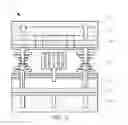
FIG. 2a is a schematic diagram of a cross section of a display panel having a pixel definition layer according to one embodiment of this application.
FIG. 2b is a schematic diagram of a cross section of a display panel having a color filter according to one embodiment of this application.
FIG. 2c is a schematic diagram of a pixel definition layer according to one embodiment of this application.
FIG. 3a is a flowchart of a manufacturing method of a display panel according to one embodiment of this application.
FIG. 3b is a flowchart of a manufacturing method of a display panel according to another embodiment of this application.
DETAILED DESCRIPTION
The following description for each embodiment is intended to exemplify a specific embodiment available to implementation in this application with reference to additional drawings. Nouns of locality mentioned in this application, such as “up”, “down”, “front”, “back”, “left”, “right”, “inside”, “outside” and “lateral”, are merely directions with reference to the additional drawings. Therefore, the adopted nouns of locality are intended to describe and understand this application, not intended to limit this application.
The drawings and description are regarded for showing instead of limitation in essence. In the drawings, structurally similar units are expressed with identical mark numbers. In addition, for convenience of understanding and description, the size and thickness of each assembly shown in the drawings are randomly shown, but this application is not limited thereto.
In the drawings, for clarity, a layer, a film, a panel, a region and the like are exaggerated in thickness. In the drawings, for convenience of understanding and description, some layers and regions are exaggerated in thickness. It will be appreciated that when an assembly of a layer, a film, a region or a substrate is called, for example, to be located “on” another assembly, the assembly may be directly located on the another assembly, or a middle assembly may exist.
In addition, in the specification, unless being definitely described to be contrary, the term “including” will be interpreted as including the assembly, but not excluding any other assemblies. Besides, in the specification, “on” refers to being above or below a target assembly, and does not refer to being necessarily located at the top based on a direction of gravity.
To further elaborate the technical means and functions adopted in this application for achieving a predetermined application objective, the detailed description, structures, characteristics and functions of a display panel and a manufacturing method thereof and a display device provided according to this application will be described in detail hereinafter with the drawings and preferred embodiments.
FIG. 1a is an exemplary schematic diagram of a cross section of an active switch array liquid crystal display device. Referring to FIG. 1a, active switch array liquid crystal display equipment 10 includes: a backlight module 100; an active switch array glass substrate 120; a first polarizer 110, disposed on an outer surface of the active switch array glass substrate 120; a color filter layer glass substrate 150, opposite to the active switch array glass substrate 120; a color filter layer 160, formed on the color filter layer glass substrate 150; a liquid crystal layer 130, formed between the active switch array glass substrate 120 and the color filter layer glass substrate 150; and a second polarizer 140, disposed on an outer surface of the color filter layer glass substrate 150, where polarization directions of the first polarizer 110 and the second polarizer 140 are parallel to each other.
FIG. 1b is an exemplary schematic diagram of a cross section of an active matrix display panel. Referring to FIG. 1b, an active matrix display panel 11 includes: an active switch array glass substrate 120; a color filter layer glass substrate 150, opposite to the active switch array glass substrate 120; an organic material layer 165, disposed between the active switch array glass substrate 120 and the color filter layer glass substrate 150; and a polarizer 140, disposed on an outer surface of the color filter layer glass substrate 150.
FIG. 1c is an exemplary schematic diagram of an organic light emitting diode and FIG. 1d is an exemplary structural diagram of an organic light emitting diode in the display-related art. Referring to FIG. 1c and FIG. 1d, an organic light emitting diode 12 includes: a glass substrate 170; and a thin-and-transparent ITO (Indium-Tin Oxide) having semiconductor properties, connected to an anode 172 of electric power 185 as well as another metal cathode 180 to form a sandwich structure, where the whole structure layer at least includes: an HIL (Hole Injection Layer) 177, an HTL (Hole Transport Layer) 174, an EL (Emitting Layer) 176, an EIL (Electron Injection Layer) (not shown in the figures) and an ETL (Electron Transport Layer) 178. When the electric power 185 is supplied to an appropriate voltage, a hole 182 of the anode 172 and a charge 181 of the cathode 180 will be combined in the emitting layer 176 to emit light 194, and three primary colors, namely red, green and blue, are generated according to different recipes to form a basic color.
FIG. 2a is a schematic diagram of a cross section of a display panel having a pixel definition layer according to one embodiment of this application, FIG. 2b is a schematic diagram of a cross section of a display panel having a color filter according to one embodiment of this application, and FIG. 2c is a schematic diagram of a pixel definition layer according to one embodiment of this application. Referring to FIG. 2a, a display panel 20 includes: a first substrate 200; a plurality of gate lines 216, formed on the first substrate 200; a gate coverage layer 218, formed on the first substrate 200, and covering the plurality of gate lines 216; a plurality of data lines 215, formed on the gate coverage layer 218, where intersected parts of the plurality of data lines 215 and the plurality of gate lines 216 form a plurality of active switch arrays 210, and each of the active switch array 210 has active layers 212, 214 of a channel region and a source 214 and drain 212 region, and a gate 216 used to provide a signal for the channel region; a passivation layer 220, formed on the gate coverage layer 218, and covering a source 214 and a drain 212 in the source 214 and drain 212 region; an outer coating layer 230, formed on the passivation layer 220; an anode electrode layer 240, 245, formed on the outer coating layer 230, and connected to the source 214 and the drain 212 in the source 214 and drain 212 region and the gate 216 separately; an embankment layer 250, formed on the outer coating layer 230, and covering the anode electrode layer 240, 245; a pixel definition layer 260, formed on the embankment layer 250, and covering the anode electrode layer 240; and a cathode electrode layer 270, formed on the pixel definition layer 260, where (as shown in FIG. 2a, FIG. 2b and FIG. 2c) the pixel definition layer 260 includes an organic light emitting diode 265 and a sensor 260, the organic light emitting diode 265 and the sensor 260 being in arrayed arrangement.
In one embodiment, the source 214 and the drain 212 include at least one of titanium, titanium alloy, tantalum and tantalum alloy.
In one embodiment, the active layer 212, 214 includes polycrystalline silicon.
In one embodiment, the anode electrode layer 240, 245 is an indium-tin oxide.
Referring to FIG. 2a and FIG. 2b, a display panel 21 includes: a first substrate 200; a plurality of gate lines 216, formed on the first substrate 200; a gate coverage layer 218, formed on the first substrate 200, and covering the plurality of gate lines 216; a plurality of data lines 215, formed on the gate coverage layer 218, where intersected parts of the plurality of data lines 215 and the plurality of gate lines 216 form a plurality of active switch arrays 210, and each of the active switch array 210 having active layers 212, 214 of a channel region and a source 214 and drain 212 region, and a gate 216 used to provide a signal for the channel region; a passivation layer 220, formed on the gate coverage layer 218, and covering a source 214 and a drain 212 in the source 214 and drain 212 region; an outer coating layer 230, formed on the passivation layer 220; an anode electrode layer 240, 245, formed on the outer coating layer 230, and connected to the source 214 and the drain 212 in the source 214 and drain 212 region and the gate 216 separately; an embankment layer 250, formed on the outer coating layer 230, and covering the anode electrode layer 240, 245; an organic light emitting diode layer 265, formed on the embankment layer 250, and covering the anode electrode layer 240; and a cathode electrode layer 270, formed on the organic light emitting diode layer 265. Herein, differences lie in that the display panel 21 includes the organic light emitting diode layer 265 (as shown in FIG. 2b) and the display panel 20 includes the pixel definition layer 260 (as shown in FIG. 2a).
In one embodiment, the source 214 and the drain 212 include at least one of titanium, titanium alloy, tantalum and tantalum alloy.
In one embodiment, the active layer 212, 214 includes polycrystalline silicon.
In one embodiment, the outer coating layer 230 includes a color filter 235.
In one embodiment, the anode electrode layer 240, 245 is an indium-tin oxide.
Referring to FIG. 2a, in one embodiment of this application, a manufacturing method of a display panel 20 includes: providing a first substrate 200; forming a plurality of gate lines 216 on the first substrate 200; forming a gate coverage layer 218 on the first substrate 200, and covering the plurality of gate lines 216; forming a plurality of data lines 215 on the gate coverage layer 218, where intersected parts of the plurality of data lines 215 and the plurality of gate lines 216 form a plurality of active switch arrays 210, and each of the active switch array 210 has active layers 212, 214 of a channel region and a source 214 and drain 212 region, and a gate 216 used to provide a signal for the channel region; forming a passivation layer 220 on the gate coverage layer 218, and covering a source 214 and a drain 212 in the source 214 and drain 212 region; forming an outer coating layer 230 on the passivation layer 220; forming an anode electrode layer 240, 245 on the outer coating layer 230, and connecting to the source 214 and the drain 212 in the source 214 and drain 212 region and the gate 216 separately; forming an embankment layer 250 on the outer coating layer 230, and covering the anode electrode layer 240, 245; forming a pixel definition layer 260 on the embankment layer 250, and covering the anode electrode layer 240; and forming a cathode electrode layer 270 on the pixel definition layer 260.
In one embodiment, according to the manufacturing method, the source 214 and the drain 212 include at least one of titanium, titanium alloy, tantalum and tantalum alloy.
In one embodiment, according to the manufacturing method, the active layer 212, 214 includes polycrystalline silicon.
In one embodiment, according to the manufacturing method, the anode electrode layer 240, 245 is an indium-tin oxide.
FIG. 3a is a flowchart of a manufacturing method of a display panel according to one embodiment of this application. Referring to FIG. 3a, in a flow S311, a first substrate is provided.
Referring to FIG. 3a, in a flow S312, a plurality of gate lines is formed on the first substrate.
Referring to FIG. 3a, in a flow S313, a gate coverage layer is formed on the first substrate, and covers the plurality of gate lines.
Referring to FIG. 3a, in a flow S314, a plurality of data lines is formed on the gate coverage layer, where intersected parts of the plurality of data lines and the plurality of gate lines form a plurality of active switch arrays, and each of the active switch array has active layers of a channel region and a source and drain region, and a gate used to provide a signal for the channel region.
Referring to FIG. 3a, in a flow S315, a passivation layer is formed on the gate coverage layer, and covers a source and a drain in the source and drain region.
Referring to FIG. 3a, in a flow S316, an outer coating layer is formed on the passivation layer.
Referring to FIG. 3a, in a flow S317, an anode electrode layer is formed on the outer coating layer, and is connected to the source and the drain in the source and drain region and the gate separately.
Referring to FIG. 3a, in a flow S318, an embankment layer is formed on the outer coating layer, and covers the anode electrode layer.
Referring to FIG. 3a, in a flow S319, a pixel definition layer is formed on the embankment layer, and covers the anode electrode layer.
Referring to FIG. 3a, in a flow S320, a cathode electrode layer is formed on the pixel definition layer.
Referring to FIG. 2b, in one embodiment of this application, a manufacturing method of a display panel 21 includes: providing a first substrate 200; forming a plurality of gate lines 216 on the first substrate 200; forming a gate coverage layer 218 on the first substrate 200, and covering the plurality of gate lines 216; forming a plurality of data lines 215 on the gate coverage layer 218, where intersected parts of the plurality of data lines 215 and the plurality of gate lines 216 form a plurality of active switch arrays 210, and each of the active switch array 210 has active layers 212, 214 of a channel region and a source 214 and drain 212 region, and a gate 216 used to provide a signal for the channel region; forming a passivation layer 220 on the gate coverage layer 218, and covering a source 214 and a drain 212 in the source 214 and drain 212 region; forming an outer coating layer 230 on the passivation layer 220; forming an anode electrode layer 240, 245 on the outer coating layer 230, and connecting to the source 214 and the drain 212 in the source 214 and drain 212 region and the gate 216 separately; forming an embankment layer 250 on the outer coating layer 230, and covering the anode electrode layer 240, 245; forming an organic light emitting diode layer 265 on the embankment layer 250, and covering the anode electrode layer 240; and forming a cathode electrode layer 270 on the organic light emitting diode layer 265.
In one embodiment, according to the manufacturing method, the source 214 and the drain 212 include at least one of titanium, titanium alloy, tantalum and tantalum alloy.
In one embodiment, according to the manufacturing method, the active layer 212, 214 includes polycrystalline silicon.
In one embodiment, according to the manufacturing method, the outer coating layer 230 includes a color filter 235.
In one embodiment, according to the manufacturing method, the anode electrode layer 240, 245 is an indium-tin oxide.
FIG. 3b is a flowchart of a manufacturing method of a display panel according to another embodiment of this application. Referring to FIG. 3b, in a flow S331, a first substrate is provided.
Referring to FIG. 3b, in a flow S332, a plurality of gate lines is formed on the first substrate.
Referring to FIG. 3b, in a flow S333, a gate coverage layer is formed on the first substrate, and covers the plurality of gate lines.
Referring to FIG. 3b, in a flow S334, a plurality of data lines is formed on the gate coverage layer, where intersected parts of the plurality of data lines and the plurality of gate lines form a plurality of active switch arrays, and each of the active switch array has active layers of a channel region and a source and drain region, and a gate used to provide a signal for the channel region.
Referring to FIG. 3b, in a flow S335, a passivation layer is formed on the gate coverage layer, and covers a source and a drain in the source and drain region.
Referring to FIG. 3b, in a flow S336, an outer coating layer is formed on the passivation layer, and covers a color filter.
Referring to FIG. 3b, in a flow S337, an anode electrode layer is formed on the outer coating layer, and is connected to the source and the drain in the source and drain region and the gate separately.
Referring to FIG. 3b, in a flow S338, an embankment layer is formed on the outer coating layer, and covers the anode electrode layer.
Referring to FIG. 3b, in a flow S339, an organic light emitting diode layer is formed on the embankment layer, and covers the anode electrode layer.
Referring to FIG. 3b, in a flow S340, a cathode electrode layer is formed on the organic light emitting diode layer.
In one embodiment of this application, a display device includes: a control component (for example, a multi-band antenna) (not shown in the figure), and further includes the display panel 20, 21 (for example, QLED or OLED).
This application has an embedded optical sensor to improve the functions of display equipment, and has a pixel definition layer, so that the picture quality of a display color can be improved. Optical sensor equipment is integrated to save space, thus reducing the manufacturing cost.
Phases “in some embodiments”, “in various embodiments” and the like are repeatedly used. The phases do not refer to the same embodiment usually, but may refer to the same embodiment. Words “containing”, “having”, “including” and the like are synonyms unless other meanings are shown contextually.
The foregoing descriptions are merely preferred embodiments of this application, and are not intended to limit this application in any form. Although this application has been disclosed above through the preferred embodiments, the embodiments are not intended to limit this application. Any person skilled in the art can make some variations or modifications, namely, equivalent changes, according to the foregoing disclosed technical content to obtain equivalent embodiments without departing from the scope of the technical solutions of this application. Any simple amendment, equivalent change, or modification made to the foregoing embodiments according to the technical essence of this application without departing from the content of the technical solutions of this application shall fall within the scope of the technical solutions of this application.
Claims
What is claimed is:1. A display panel, comprising:
a first substrate;
a plurality of gate lines, formed on the first substrate;
a gate coverage layer, formed on the first substrate, and covering the plurality of gate lines;
a plurality of data lines, formed on the gate coverage layer, wherein intersected parts of the plurality of data lines and the plurality of gate lines form a plurality of active switch arrays, and each of the active switch array has active layers of a channel region and a source and drain region, and a gate used to provide a signal for the channel region;
a passivation layer, formed on the gate coverage layer, and covering a source and a drain in the source and drain region;
an outer coating layer, formed on the passivation layer;
an anode electrode layer, formed on the outer coating layer, and connected to the source and the drain in the source and drain region and the gate separately;
an embankment layer, formed on the outer coating layer, and covering the anode electrode layer;
a pixel definition layer, formed on the embankment layer, and covering the anode electrode layer; and
a cathode electrode layer, formed on the pixel definition layer,
wherein the pixel definition layer comprises an organic light emitting diode and a sensor, the organic light emitting diode and the sensor being in arrayed arrangement.
2. The display panel according to claim 1, wherein the source comprises at least one of titanium, titanium alloy, tantalum and tantalum alloy.
3. The display panel according to claim 1, wherein the drain comprises at least one of titanium, titanium alloy, tantalum and tantalum alloy.
4. The display panel according to claim 1, wherein the active layer comprises polycrystalline silicon.
5. The display panel according to claim 1, wherein the outer coating layer comprises a color filter.
6. The display panel according to claim 1, wherein the anode electrode layer is an indium-tin oxide.
7. A manufacturing method of a display panel, comprising:
providing a first substrate;
forming a plurality of gate lines on the first substrate;
forming a gate coverage layer on the first substrate, and covering the plurality of gate lines;
forming a plurality of data lines on the gate coverage layer, wherein intersected parts of the plurality of data lines and the plurality of gate lines form a plurality of active switch arrays, and each of the active switch array has active layers of a channel region and a source and drain region, and a gate used to provide a signal for the channel region;
forming a passivation layer on the gate coverage layer, and covering a source and a drain in the source and drain region;
forming an outer coating layer on the passivation layer;
forming an anode electrode layer on the outer coating layer, and connecting to the source and the drain in the source and drain region and the gate separately;
forming an embankment layer on the outer coating layer, and covering the anode electrode layer;
forming a pixel definition layer on the embankment layer, and covering the anode electrode layer; and
forming a cathode electrode layer on the pixel definition layer.
8. The manufacturing method of a display panel according to claim 7, wherein the source comprises at least one of titanium, titanium alloy, tantalum and tantalum alloy.
9. The manufacturing method of a display panel according to claim 7, wherein the drain comprises at least one of titanium, titanium alloy, tantalum and tantalum alloy.
10. The manufacturing method of a display panel according to claim 7, wherein the active layer comprises polycrystalline silicon.
11. The manufacturing method of a display panel according to claim 7, wherein the outer coating layer comprises a color filter.
12. The manufacturing method of a display panel according to claim 7, wherein the anode electrode layer is an indium-tin oxide.
13. The manufacturing method of a display panel according to claim 7, wherein the pixel definition layer comprises an organic light emitting diode.
14. The manufacturing method of a display panel according to claim 13, wherein the pixel definition layer comprises a sensor.
15. The manufacturing method of a display panel according to claim 14, wherein the organic light emitting diode and the sensor are in arrayed arrangement.
16. A display device, comprising: a control component, and
a display panel, comprising:
a first substrate;
a plurality of gate lines, formed on the first substrate;
a gate coverage layer, formed on the first substrate, and covering the plurality of gate lines;
a plurality of data lines, formed on the gate coverage layer, wherein intersected parts of the plurality of data lines and the plurality of gate lines form a plurality of active switch arrays, and each of the active switch array has active layers of a channel region and a source and drain region, and a gate used to provide a signal for the channel region;
a passivation layer, formed on the gate coverage layer, and covering a source and a drain in the source and drain region;
an outer coating layer, formed on the passivation layer;
an anode electrode layer, formed on the outer coating layer, and connected to the source and the drain in the source and drain region and the gate separately;
an embankment layer, formed on the outer coating layer, and covering the anode electrode layer;
a pixel definition layer, formed on the embankment layer, and covering the anode electrode layer; and
a cathode electrode layer, formed on the pixel definition layer,
wherein the pixel definition layer comprises an organic light emitting diode and a sensor, the organic light emitting diode and the sensor being in arrayed arrangement.
17. The display device according to claim 16, wherein the source and the drain comprise at least one of titanium, titanium alloy, tantalum and tantalum alloy.
18. The display device according to claim 16, wherein the active layer comprises polycrystalline silicon.
19. The display device according to claim 16, wherein the outer coating layer comprises a color filter.
20. The display device according to claim 16, wherein the anode electrode layer is an indium-tin oxide.
Images & Drawings included:



Sources:
- United States Patent and Trademark Office - verify current appl. status at the USPTO↗
Similar patent applications:
- » 20200028109
Organic light emitting diode device, manufacturing method thereof, display panel and display device - » 20170199419
Array substrate and manufacturing method thereof, display panel, display device - » 20140375610
Touch panel, manufacturing method thereof, display device, and electronic apparatus - » 20180046280
Touch panel, manufacturing method thereof, display device, and electronic apparatus - » 20160260371
Color filter and manufacturing method thereof, display panel, display device and driving method thereof - » 20170110587
ARRAY SUBSTRATE AND MANUFACTURING METHOD THEREOF, DISPLAY PANEL, DISPLAY DEVICE - » 20160208393
Display panel and manufacturing method, panel display device thereof - » 20140072729
Display panel and manufacturing method, panel display device thereof - » 20130187871
Touch panel, manufacturing method thereof, display device, and electronic apparatus - » 20180107055
Color film substrate and manufacturing method thereof, display panel, display device
Recent applications in this class:
- » 20240179953 2024-05-30
DISPLAY PANEL AND ELECTRONIC DEVICE - » 20240114724 2024-04-04
DISPLAY PANEL - » 20240114723 2024-04-04
ORGANIC LIGHT-EMITTING DIODE DISPLAY PANEL AND METHOD OF MANUFACTURING SAME - » 20240040841 2024-02-01
DISPLAY PANEL AND DISPLAY DEVICE - » 20230397457 2023-12-07
DISPLAY PANEL AND DISPLAY DEVICE - » 20230354649 2023-11-02
OLED panel with trench overhang structures - » 20230320138 2023-10-05
LIGHT EMITTING DISPLAY APPARATUS - » 20230301140 2023-09-21
DISPLAY DEVICE - » 20230292554 2023-09-14
METHOD FOR MANUFACTURING A DISPLAY PANEL - » 20230263011 2023-08-17
DISPLAY PANEL AND ELECTRONIC DEVICE INCLUDING THE SAME