Plastic tank
US20190091978A1
2019-03-28
16/137,401
2018-09-20
✅ Patent granted
US 10,926,508 B2
2021-02-23
-
-
Walter Aughenbaugh
Jordan IP Law, LLC | Todd A. Vaughn
2039-07-06
Abstract:
A plastic tank for a motor vehicle and a method for producing such a plastic tank for a motor vehicle. The tank shell has a multi-layered structure, including at least one layer composed of high-density polyethylene, at least one barrier layer, and at least one regrind layer composed of recycled plastic arranged between the at least one layer composed of high-density polyethylene and the at least one barrier layer. The at least one regrind layer and/or the at least one layer composed of high-density polyethylene contains spherical fillers or fibrous fillers.
Inventors:
- Bernd KAHLER 9 🇦🇹 Graz, Austria
- Rainer Puchleitner 19 🇦🇹 Graz, Austria
- Harald HUMENBERGER 5 🇦🇹 St. Ruprecht, Austria
Assignee:
- MAGNA Energy Storage Systems GesmbH 28 🇦🇹 Sinabelkirchen, Austria
Applicant:
Interested in similar patents?
Get notified when new applications in this technology area are published.
Classification:
B60K15/03 » CPC further
Arrangement in connection with fuel supply of combustion engines or other fuel consuming energy converters, e.g. fuel cells ; Mounting or construction of fuel tanks Fuel tanks
B60K15/03177 » CPC further
Arrangement in connection with fuel supply of combustion engines or other fuel consuming energy converters, e.g. fuel cells ; Mounting or construction of fuel tanks; Fuel tanks made of non-metallic material, e.g. plastics, or of a combination of non-metallic and metallic material
B32B27/08 » CPC further
Layered products comprising synthetic resin as the main or only constituent of a layer, next to another layer of a of synthetic resin
B32B27/20 » CPC main
Layered products comprising synthetic resin characterised by the use of special additives using fillers, pigments, thixotroping agents
B32B27/32 » CPC further
Layered products comprising synthetic resin comprising polyolefins
B32B7/12 » CPC further
Layered products characterised by the relation between layers; Layered products characterised by the relative orientation of features between layers, or by the relative values of a measurable parameter between layers, i.e. products comprising layers having different physical, chemical or physicochemical properties; Layered products characterised by the interconnection of layers; Interconnection of layers using interposed adhesives or interposed materials with bonding properties
B32B27/306 » CPC further
Layered products comprising synthetic resin comprising vinyl (co)polymers; comprising acrylic (co)polymers comprising vinyl acetate or vinyl alcohol (co)polymers
B32B37/12 » CPC further
Methods or apparatus for laminating, e.g. by curing or by ultrasonic bonding characterised by using adhesives
B32B27/30 » CPC further
Layered products comprising synthetic resin comprising vinyl (co)polymers; comprising acrylic (co)polymers
B32B2250/246 » CPC further
Layers arrangement; All layers being polymeric All polymers belonging to those covered by groups and
B32B2262/101 » CPC further
Composition or structural features of fibres which form a fibrous or filamentary layer or are present as additives; Inorganic fibres Glass fibres
B32B2264/101 » CPC further
Composition or properties of particles which form a particulate layer or are present as additives; Inorganic particles Glass
B32B2605/00 » CPC further
Vehicles
B60K2015/03046 » CPC further
Arrangement in connection with fuel supply of combustion engines or other fuel consuming energy converters, e.g. fuel cells ; Mounting or construction of fuel tanks; Fuel tanks; Manufacturing of fuel tanks made from more than one layer
B60K2015/03493 » CPC further
Arrangement in connection with fuel supply of combustion engines or other fuel consuming energy converters, e.g. fuel cells ; Mounting or construction of fuel tanks; Fuel tanks characterised by the materials the tank or parts thereof are essentially made from made of plastics
B32B1/02 » CPC main
Layered products having a general shape other than plane Receptacles, i.e. rigid containers , e.g. tanks
B32B2250/05 » CPC further
Layers arrangement 5 or more layers
B65D1/28 » CPC further
Containers having bodies formed in one piece, e.g. by casting metallic material, by moulding plastics, by blowing vitreous material, by throwing ceramic material, by moulding pulped fibrous material, by deep-drawing operations performed on sheet material; Boxes or like containers with side walls of substantial depth for enclosing contents; Thin-walled containers, e.g. formed by deep-drawing operations formed of laminated material
B32B27/302 » CPC further
Layered products comprising synthetic resin comprising vinyl (co)polymers; comprising acrylic (co)polymers comprising aromatic vinyl (co)polymers, e.g. styrenic (co)polymers
B65D1/0215 » CPC further
Containers having bodies formed in one piece, e.g. by casting metallic material, by moulding plastics, by blowing vitreous material, by throwing ceramic material, by moulding pulped fibrous material, by deep-drawing operations performed on sheet material; Bottles or similar containers with necks or like restricted apertures, designed for pouring contents characterised by material, e.g. composition, physical features multilayered
B65D1/0223 » CPC further
Containers having bodies formed in one piece, e.g. by casting metallic material, by moulding plastics, by blowing vitreous material, by throwing ceramic material, by moulding pulped fibrous material, by deep-drawing operations performed on sheet material; Bottles or similar containers with necks or like restricted apertures, designed for pouring contents characterised by shape
Y10T428/1352 » CPC further
Stock material or miscellaneous articles; Hollow or container type article [e.g., tube, vase, etc.] Polymer or resin containing [i.e., natural or synthetic]
Y10T428/1372 » CPC further
Stock material or miscellaneous articles; Hollow or container type article [e.g., tube, vase, etc.]; Polymer or resin containing [i.e., natural or synthetic] Randomly noninterengaged or randomly contacting fibers, filaments, particles, or flakes
Y10T428/1379 » CPC further
Stock material or miscellaneous articles; Hollow or container type article [e.g., tube, vase, etc.]; Polymer or resin containing [i.e., natural or synthetic] Contains vapor or gas barrier, polymer derived from vinyl chloride or vinylidene chloride, or polymer containing a vinyl alcohol unit
Y10T428/1383 » CPC further
Stock material or miscellaneous articles; Hollow or container type article [e.g., tube, vase, etc.]; Polymer or resin containing [i.e., natural or synthetic]; Contains vapor or gas barrier, polymer derived from vinyl chloride or vinylidene chloride, or polymer containing a vinyl alcohol unit Vapor or gas barrier, polymer derived from vinyl chloride or vinylidene chloride, or polymer containing a vinyl alcohol unit is sandwiched between layers [continuous layer]
B65D1/02 IPC
Containers having bodies formed in one piece, e.g. by casting metallic material, by moulding plastics, by blowing vitreous material, by throwing ceramic material, by moulding pulped fibrous material, by deep-drawing operations performed on sheet material Bottles or similar containers with necks or like restricted apertures, designed for pouring contents
B29C49/04 » CPC further
Blow-moulding, i.e. blowing a preform or parison to a desired shape within a mould; Apparatus therefor; Combined blow-moulding and manufacture of the preform or the parison Extrusion blow-moulding
Description
CROSS-REFERENCE TO RELATED APPLICATIONS
The present application claims priority to European Patent Publication No. EP17193121.5 (filed on Sep. 26, 2017), which is hereby incorporated by reference in its entirety.
TECHNICAL FIELD
Embodiments relate to a plastic tank for a motor vehicle and a method for producing such a plastic tank for a motor vehicle,
BACKGROUND
Plastic tanks for motor vehicles are presently frequently used as fuel tanks, i.e., to accommodate the fuel for operating the motor vehicle.
Since such plastic tanks have to meet various mechanical and chemical requirements, equipping plastic tanks with tank shells, which consist of multiple layers of various materials, is already known. In particular, for example, a barrier layer can be used to reduce the passage of hydrocarbons. Such a barrier layer can be formed, for example, as an inner layer of a tank shell and can be composed of ethylene vinyl alcohol copolymer (EVOH).
It is also already known that plastic can be used not only in newly produced, primary form, but rather also, for example, in reprocessed recycled form, as so-called “regrind.” In this case, plastic wastes and/or plastic residues, which are often provided in the form of a mixture of various plastics, are ground into a ground material, the regrind, and supplied in this granular form to a further processing process, in particular, a production process.
The use of such regrinds is also desirable from an ecological viewpoint for plastic tanks of the above-described type, but tank shells composed of regrind can hardly have the properties required for a fuel tank in a motor vehicle, in particular, with respect to pressure and temperature stability.
SUMMARY
Embodiments relate to an enhanced structure for a plastic tank for a motor vehicle and, a corresponding method for producing such a plastic tank.
Embodiments relate to such a plastic tank that has good mechanical and chemical properties and, at the same time, may be produced ecologically and economically.
In accordance with embodiments, a plastic tank for a motor vehicle, may comprise a tank shell having a multi-layered structure including a plurality of layers that include at least one layer composed of high-density polyethylene (HDPE), at least one barrier layer, and at least one regrind layer, wherein the regrind layer and/or the HDPE layer contains spherical or fibrous fillers.
In accordance with embodiments, a plastic tank may be constructed having a plurality of layers, wherein the base of the tank and the production method is substantially high-density polyethylene, i.e., HDPE. In addition to a barrier layer for hydrocarbons, a regrind layer is used, i.e., a layer composed of a recycled plastic, in particular, a plastic mixture which has been ground to form a plastic granulate, and in this form, is processed into a layer of the tank shell of the plastic tank.
In accordance with embodiments, in order to achieve the required mechanical stability of the tank shell in spite of properties of the regrind which are modestly suitable per se, a regrind having spherical or fibrous fillers may be used. Alternatively or additionally, spherical or fibrous fillers may also be added to the primary HDPE layer in order to achieve the desired mechanical properties for the overall layer structure of the tank shell. In particular, the regrind may be produced from production residues of the same multi-layered plastic tank. For example, the regrind may therefore comprise a high proportion of HDPE, and may in itself be obtained from regrind in addition to the primary HDPE, and the regrind can comprise EVOH from a barrier layer. The regrind layer may be produced from a regrind material, i.e., from a recycled plastic granulate.
In accordance with embodiments, the tank shell may comprise, from the inside to the outside: a layer composed of HDPE, a regrind layer, a barrier layer, a further regrind layer, a further layer composed of HDPE. In this case, the further regrind layer preferably, like the regrind layer, contains spherical or fibrous fillers. Alternatively or additionally, the further HDPE layer can also contain spherical or fibrous fillers. Such fillers may, for example, comprise glass beads, perlite, and/or glass fibres.
In accordance with embodiments, the barrier layer may be connected to the regrind layer via an intervening adhesion promoter layer. If a further regrind layer is provided, it may also be connected to the barrier layer via an adhesion promoter layer.
In accordance with embodiments, a method for producing a plastic tank for a motor vehicle may comprise at least one of: selectively adding fillers in a targeted manner to a regrind material of the regrind layer. The fillers may be added to the regrind material before the processing to form a plastic tank. The fillers may be introduced exclusively into the regrind layer or into the regrind layers. The remaining layers of the plastic tank preferably do not have fillers.
In accordance with embodiments, the regrind layer may be produced with the aid of an extruder from a regrind material, i.e., from a recycled plastic granulate.
In accordance with embodiments, the fillers may be admixed to the regrind material before the extrusion and subsequently the regrind material, already comprising the fillers, is supplied to the extruder.
In accordance with embodiments, during the extrusion, the fillers may be supplied to the regrind material through a channel of the extruder, in particular, a color channel.
DRAWINGS
Embodiments will be illustrated by way of example in the drawings and explained in the description below.
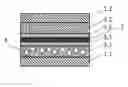
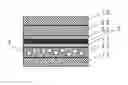
FIG. 1 illustrates a schematic sectional view of a tank shell of a plastic tank for a motor vehicle, in accordance with embodiments.
DESCRIPTION
As illustrated in FIG. 1, a plastic tank for a motor vehicle is provided having a multi-layered structure. The tank shell of the plastic tank has a plurality of layers, including from the inside (shown on the bottom of FIG. 1) to the outside (shown on the top of FIG. 1), an outermost layer 1.1 composed of HDPE, a first intermediary layer 3.1 composed of a regrind material, a first adhesion promoter layer 5.1, a barrier layer 2 composed of EVOH, a second adhesion promoter layer 5.2, a second intermediary layer 3.2 composed of a regrind material, and an innermost layer 1.2 composed of HDPE.
In accordance with embodiments, the first regrind layer 3.1 contains spherical or fibrous fillers 4, for example, glass beads, perlite, and/or glass fibres. The second regrind layer 3.2 may also contain such fibrous fillers 4. One or both of the HDPE layers 1.1, 1.2 may also contain the same fibrous fillers 4. Alternatively, the first regrind layer 3.1 and the second regrind layer 3.2 may exclusively contain spherical or fibrous fillers 4 such that the remaining layers of the plastic tank do not contain fibrous fillers.
In accordance with embodiments, the proportion of the fibrous fillers 4 in a layer, such as, for example, the first regrind layer 3.1 and the second regrind layer 3.2, may be between 1% and 80%, and particularly, between 10% to 50%.
In accordance with embodiments, the layer thicknesses may be allocated as follows: the first HDPE layer 1.1 and the second HDPE layer 1.2 may each occupy approximately 22% of the overall tank shell thickness, the first regrind layer 3.1 and the second regrind layer 3.2 may each occupy approximately 25% of the overall tank shell thickness, the harrier layer 2 may occupy approximately 3% of the overall tank shell thickness, and the first adhesion promoter layer 5.1 and the second adhesion promoter layer 5.2 may each approximately 1.5% of the overall tank shell thickness.
The terms “coupled,” “attached,” or “connected” may be used herein to refer to any type of relationship, direct or indirect, between the components in question, and may apply to electrical, mechanical, fluid, optical, electromagnetic, electromechanical or other connections. In addition, the terms “first,” “second,” etc. are used herein only to facilitate discussion, and carry no particular temporal or chronological significance unless otherwise indicated.
Those skilled in the art will appreciate from the foregoing description that the broad techniques of the embodiments can be implemented in a variety of forms. Therefore, while the embodiments have been described in connection with particular examples thereof, the true scope of the embodiments should not be so limited since other modifications will become apparent to the skilled practitioner upon a study of the drawings, specification, and following claims.
LIST OF REFERENCE SIGNS
1.1 Inner HDPE layer
1.2 Outer HDPE layer
2 Barrier layer
3.1 First regrind layer
3.2 Second regrind layer
4 Fillers
5.1 First adhesion promoter layer
5.2 Second adhesion promoter layer
Claims
What is claimed is:1. A tank for a motor vehicle, the tank comprising:
a tank shell having a multi-layered structure, including at least one layer composed of high-density polyethylene, at least one barrier layer, and at least one regrind layer composed of recycled plastic arranged between the at least one layer composed of high-density polyethylene and the at least one barrier layer,
wherein the at least one regrind layer and/or the at least one layer composed of high-density polyethylene contains spherical fillers or fibrous fillers.
2. The tank of claim 1, further comprising an adhesion promoter layer to connect the at least one barrier layer to the at least one regrind layer.
3. The tank of claim 1, wherein the fibrous fillers comprise glass beads, perlite, and/or glass fibres.
4. The tank of claim 1, wherein the spherical fillers comprise glass beads, perlite, and/or glass fibres.
5. A method for producing a tank for a motor vehicle, the method comprising:
forming at least one layer composed of high-density polyethylene;
forming at least one barrier layer;
forming at least one regrind layer composed of recycled plastic;
selectively adding spherical fillers or fibrous fillers into the at least one regrind layer and/or the at least one layer composed of high-density polyethylene; and
forming a multi-layered structure by arranging the at least one regrind layer between the at least one layer composed of high-density polyethylene and the at least one barrier layer.
6. The method of claim 5, wherein forming the at least one regrind layer comprises extruding a recycled plastic granulate.
7. The method of claim 5, wherein forming the at least one regrind layer comprises:
admixing the spherical fillers or the fibrous fillers to a recycled plastic granulate; and
extruding the admixed recycled plastic granulate and the spherical fillers or the fibrous fillers.
8. The method of claim 7, wherein the extruding comprises supplying the spherical fillers or the fibrous fillers to the recycled plastic granulate through a color channel of an extruder during the extrusion.
9. The method of claim 7, further comprising connecting the at least one barrier layer to the at least one regrind layer via an adhesion promoter layer.
10. A tank for a motor vehicle, the tank comprising, a multi-layered structure that includes:
an outermost layer composed of high-density polyethylene;
an innermost layer composed of high-density polyethylene;
a first regrind layer composed of recycled plastic arranged on the outermost layer;
a second regrind layer composed of recycled plastic arranged on the innermost layer; and
a barrier layer arranged between the first regrind layer and the second regrind layer,
wherein the first regrind layer contains spherical fillers or fibrous fillers and the second regrind layer contains spherical fillers or fibrous fillers.
11. The tank of claim 10, further comprising a first adhesion promoter layer to connect the barrier layer to the first regrind layer.
12. The tank of claim 11, further comprising a second adhesion promoter layer to connect the barrier layer to the second regrind layer.
13. The tank of claim 10, wherein the barrier layer is composed of ethylene vinyl alcohol copolymer.
14. The tank of claim 10, wherein the fibrous fillers comprise glass beads, perlite, and/or glass fibres.
15. The tank of claim 10, wherein the spherical fillers comprise glass beads, perlite, and/or glass fibres.
Images & Drawings included:
Sources:
- United States Patent and Trademark Office - verify current appl. status at the USPTO↗
Similar patent applications:
- » 20210078762
Plastic tank and method of manufacturing a plastic tank - » 20150014307
Tie rod, plastic tank and method for manufacturing a plastic tank - » 20190016062
Heat welding apparatus for combining plastic fuel tank and plastic parts and method of combining plastic fuel tank and plastic parts using the apparatus - » 20100147847
METHOD OF CONTROLLING OPERATIONAL VENTING OF A PLASTICS FUEL TANK AND PLASTICS FUEL TANK - » 20060032854
Plastic tank for liquids - » 13412406
Plastic tank having a clamped joint - » 20060037695
Method for producing plastic tanks for liquids - » 15413247
Plastic tank having a welded frusto-conical flange joint - » 17181324
Multi-piece plastic tank having an integrated connection means and a method for implementing same - » 15413219
Making a plastic tank with an integrity-verifiable weld joint
Recent applications in this class:
- » 20250229514 2025-07-17
METHOD OF MANUFACTURING A BUILDING ELEMENT AND A BUILDING ELEMENT - » 20250214328 2025-07-03
DIRECTED THERMAL CONDUCTION ARTICLE, COMPOSITE AND METHOD - » 20250178325 2025-06-05
BULK NANOCOMPOSITE MATERIALS AND METHODS FOR MAKING THESE - » 20250170810 2025-05-29
VACUUM INFUSION PROCESS INTO IN-SITU POWDER - » 20250170809 2025-05-29
Decorative Anti-Slip Floor Covering Element and Decorative Anti-Slip Floor Covering - » 20250153477 2025-05-15
DECORATIVE SHEET AND DECORATIVE PLATE - » 20250128504 2025-04-24
THERMOPLASTIC ROOFING MEMBRANES ADAPTED FOR ADHESION TO POLAR ADHESIVES - » 20250128503 2025-04-24
DECORATIVE PANEL AND PROCESS FOR PRODUCING A PANEL - » 20250108589 2025-04-03
GAS BARRIER LAMINATE AND METHOD FOR MANUFACTURING SAME - » 20250100258 2025-03-27
Molded Parts with Reduced Microwave Reflections and Transmission
Recent applications for this Assignee:
- » 20240280220 2024-08-22
CRYOGENIC TANK DEVICE WITH A BOIL-OFF MANAGEMENT SYSTEM - » 20240240762 2024-07-18
Cryogenic tank comprising a withdrawal device - » 20240181868 2024-06-06
VEHICLE TANK - » 20230366511 2023-11-16
CRYOGENIC STORAGE SYSTEM - » 20230313949 2023-10-05
BOIL-OFF MANAGEMENT SYSTEM - » 20230272875 2023-08-31
Thermally insulated transfer line with coupling element - » 20230272874 2023-08-31
THERMALLY INSULATED TRANSFER LINE - » 20220281313 2022-09-08
Plastic tank - » 20220227222 2022-07-21
Fuel filler cap - » 20220219372 2022-07-14
Method of producing a hollow body