Dry, Non-pressurized Personal Defense Device
US20190168952A1
2019-06-06
16/231,525
2018-12-23
Abstract:
The present invention seeks to provide a solution to the problem of personal security by providing a hand-held device that can be legally taken anywhere which will allow a user to effectively deliver a non-pressurized, dry, irritating, non-lethal powder to the eyes of the attacker. Anti-caking material and organic projection material assists with effective delivery. Descriptive labels assure that security officers recognize it as an innocent, food-grade item.
Interested in similar patents?
Get notified when new applications in this technology area are published.
Classification:
B65D83/06 » CPC main
Containers or packages with special means for dispensing contents for dispensing powdered or granular material
Description
REFERENCES
1—Transportation Security Administration
2—18 U.S.C. § 930: Possession of Firearms and Dangerous Weapons in Federal Facilities.
3—9/11 MEMORIAL & MUSEUM VISITOR RULES & REGULATIONS
4—Section 5(1)(b) of the Firearms Act 1968
BACKGROUND OF THE INVENTION
1. Field of the Invention
The present invention relates to a hand-held Personal Self-defense Device which can be legally carried anywhere and allows the user to deliver a substance that is irritating to the eyes of an attacker.
2. Description of the Related Art
One need not look far to find justification for wanting a method of self-defense. Scanning for metal and examining handbags has become common in public gatherings such as sporting events and concerts.
There are a number of devices and methods available for self-defense. They include tasers, knives, fire arms, flashlights, self-defense classes, martial arts and pepper spray—also called “OC Spray” for Oleoresin Capsicum, the pepper extract that causes burning in the eyes.
As shown in the attached listing of patent citations, there are a variety of non-lethal, spray devices available for personal defense. Along with the other weapons cited above, they all have one major, limiting characteristic: they cannot be carried everywhere.
It is currently illegal to carry liquid, pressurized pepper spray in a number of settings including airplanes (1), US federal buildings (2) and national monuments (3).
Also, in a number of countries, the United Kingdom for example (4), the purchase, ownership and possession of pepper spray is illegal.
What's more, pepper spray can fail due to age or a clogged nozzle.
Fire arms, knives and other self-defense aids are even more restricted than pepper spray. Further, there is a segment of the population that finds lethal weapons undesirable from a moral and/or legal perspective.
Fire arms can require specialized training and registration, discouraging those looking for simplified self-defense.
Martial arts and self-defense classes also require significant time and expense for training and are of questionable effectiveness at the earlier levels.
The result is that innocent people can be left vulnerable to attack with no options for self-defense.
Culinary spice containers are designed to deliver small amounts of spice with limited range. They are not practical delivery vehicles for self-defense and are not designed for storage in a pocket or handbag.
Therefore, a need exists in the field for a hand-held device that can be carried anywhere and can stop an attacker with a non-lethal substance allowing the carrier to escape danger.
BRIEF SUMMARY OF THE INVENTION AND ADVANTAGES
The present invention seeks to provide a solution to this problem by providing a hand-held device which can be legally taken anywhere and will allow the user to effectively deliver a non-pressurized, dry, non-lethal, irritating powder to the eyes of the attacker. Anti-caking material and food-grade projection material assists with effective delivery. Descriptive labels assure that security officers recognize it as an innocent, food-grade item.
BRIEF SUMMARY OF THE PRESENT INVENTION
The hand-held, pocket-sized container has a food-grade irritating powder that can be thrown in to an attacker's eyes. The user removes the top from the device and throws the irritating powder into the face of the attacker.
The thin, oval container allows for easy storing in a pocket or handbag and a comfortable feel in the hand. The width of the device helps assure a wide application of the irritating powder.
The cylindrical, non-tapered shape of the container assures that there is no resistance to the outward movement of the irritating powder.
The release lever is easy to find by feel. The pop-top is firm enough to prevent accidental opening in a pocket or handbag, but loose enough to be opened with the thumb. The force level needed to open it would be between 20 and 40 Newtons. It opens and is cast away from the device allowing the powder to be delivered with a throwing action by the user.
A food-grade, moisture absorbing substance is mixed with the pepper to prevent caking and assure an effective application.
Additional, food-grade substances are added to enhance the range of the device.
The pepper is food-grade and legally carried anywhere including airplanes and countries in which pressurized pepper spray is banned.
A product label indicates the contents as non-ballistic, food-grade material which is legal to carry anywhere.
This low-tech design simplifies the storage and delivery of the device.
BRIEF DESCRIPTION OF THE DRAWINGS
Some embodiments of the present invention are illustrated as an example and are not limited by the figures of the accompanying drawings, in which like references may indicate similar elements and in which:
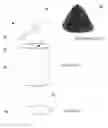
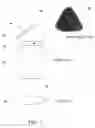
FIG. 1 depicts front and top perspective views of the present invention with the components separated for identification according to various embodiments described herein.
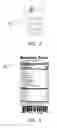
FIG. 2 is an example of the front label of the device indicating a food product.
FIG. 3 lists the nutritional facts for food products required by US law.
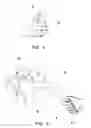
FIG. 4 illustrates the action of preparing the device for deployment by popping off the top with the thumb according to various embodiments described herein.
FIG. 5 depicts the delivery of the irritating powder to the face of the attacker according to various embodiments described herein.
| REFERENCE NUMERALS IN THE DRAWINGS |
| 10 | pocket-sized container | 12 | anchor for the removable lid |
| 14 | custom removable lid | 16 | thumb release |
| 18 | food-grade irritant and | 20 | front label |
| projection material | |||
| 22 | nutritional facts label | 24 | attacker |
DETAILED DESCRIPTION OF THE INVENTION
The terminology used herein is for the purpose of describing particular embodiments only and is not intended to be limiting of the invention. As used herein, the term “and/or” includes any and all combinations of one or more of the associated listed items. As used herein, the singular forms “a”, “an” and “the” are intended to include the plural forms as well as the singular forms, unless the context clearly indicates otherwise. It will be further understood that the terms “comprises” and/or “comprising,” when used in this specification, specify the presence of stated features, steps, operations, elements, and/or components, but do not preclude the presence or addition of one or more other features, steps, operations, elements, components, and/or groups thereof.
Unless otherwise defined, all terms (including technical and scientific terms) used herein have the same meaning as commonly understood by one having ordinary skill in the art to which this invention belongs. It will be further understood that terms, such as those defined in commonly used dictionaries, should be interpreted as having a meaning that is consistent with their meaning in the context of the relevant art and the present disclosure and will not be interpreted in an idealized or overly formal sense unless expressly so defined herein.
In describing the invention, it will be understood that a number of techniques and steps are disclosed. Each of these has individual benefit and each can also be used in conjunction with one or more, or in some cases all, of the other disclosed techniques. Accordingly, for the sake of clarity, this description will refrain from repeating every possible combination of the individual steps in an unnecessary fashion. Nevertheless, the specification and claims should be read with the understanding that such combinations are entirely within the scope of the invention and the claims.
The present invention will now be described by referencing the appended figures representing preferred embodiments. FIG. 1 depicts an exploded perspective view of the elements that may comprise the non-pressurized personal defense device (the “device”) according to various embodiments of the present invention.
The pocket-sized container 10 is designed to be easily held in the hand—wider in height and length, and narrower in width. The length will provide space for enough powder to cover sufficient area of the attacker. The narrow width will allow easy storage in a pocket or handbag. The edges are contoured to be easy on clothing.
The anchor 12 is a stronger material than the container 10 and is designed to work with the lid 14 to provide a removable opening that is sturdy enough to prevent accidental opening yet easy enough to open with a thumb or finger—between 20 and 40 Newtons—using the integrated thumb release 16. The anchor 12 is of equal or greater size than the container 10 so as to not impede the delivery of the content.
The powder 18 is a combination of food-grade substances that provide 3 key characteristics:
-
- 1. Irritation to the eyes of the attacker.
- 2. Anti-caking to assure consistent delivery.
- 3. Propellant that enhances the range of the powder and also aids with irritation.
FIG. 2 pictures the label 20 indicating the food-grade material and possible use. Additional, food-grade text such as “non-GMO” and “gluten free” can be added to the label to clarify the contents as food-grade.
FIG. 3 lists the nutritional facts required of all food products sold in the U.S. to assure that security personnel know the contents. Both the label and nutritional facts are in English and French so that personnel at airports and elsewhere can identify the material as food-grade.
FIG. 4 shows how the lid 14 is discharged from the anchor 12 of the container 10. Unlike many container lids, it is designed to detach completely from the anchor so as to not interfere with the delivery of the content.
FIG. 5 illustrates the arm-hand motion of delivering the content 18 to the face of the attacker 24 with the lid 14 safely out of the way.
| PATENT CITATIONS |
| Filing | Publication | |||
| Cited Patent | date | date | Applicant | Title |
| U.S. Pat. No. | Apr. 27, | Jan. 11, | Stanzel George A | Defense weapon |
| 3,228,565 * | 1964 | 1966 | ||
| U.S. Pat. No. | Mar. 21, | Jun. 4, | Risdon Mfg Co | Actuator-overcap with slidably |
| 3,386,631 | 1967 | 1968 | retracting side-projecting nozzle | |
| U.S. Pat. No. | Oct. 4, | Feb. 13, | Daco Safety Prod | Chemical ejecting flashlight |
| 3,716,170 * | 1971 | 1973 | ||
| U.S. Pat. No. | Jun. 23, | May 1, | Tear Gas Products Corp | Aerosol gun |
| 3,730,390 | 1971 | 1973 | ||
| U.S. Pat. No. | May 25, | Aug. 30, | Bordelon Lewis O | Protective device |
| 4,044,922 * | 1976 | 1977 | ||
| U.S. Pat. No. | Oct. 11, | Sep. 2, | Caruso Albert P | Combined holder for keys and |
| 4,220,263 * | 1977 | 1980 | protective spray | |
| U.S. Pat. No. | Apr. 30, | Sep. 23, | Morris Bob H | Personal defense device |
| 4,223,804 * | 1979 | 1980 | ||
| U.S. Pat. No. | Apr. 3, | May 8, | David J. Stevenson | Self-defense spray device |
| 4,446,990 * | 1982 | 1984 | ||
| U.S. Pat. No. | Aug. 13, | May 22, | Suzi Stone Enterprises, Inc. | Personal security device |
| 4,449,474 * | 1982 | 1984 | ||
| U.S. Pat. No. | Nov. 27, | Jun. 19, | Hicks Sonja L | Aerosol dispenser case |
| 4,454,966 * | 1981 | 1984 | ||
| U.S. Pat. No. | Sep. 21, | Jan. 21, | Primary Delivery Systems, | Child resistant slide box |
| 5,082,137 * | 1990 | 1992 | Inc. | |
| U.S. Pat. No. | Apr. 26, | Dec. 8, | Photofinish Cosmetics, Inc. | Two-stroke fluid dispenser with |
| 5,169,039 * | 1991 | 1992 | actuator-operated valve for controlling | |
| fluid flow between internal fluid | ||||
| chamber | ||||
| U.S. Pat. No. | Apr. 14, | Jul. 13, | Valois (Societe Anonyme) | Device for spraying or dispensing a |
| 5,226,563 * | 1992 | 1993 | fluid, with improved actuating security | |
| U.S. Pat. No. | Jul. 29, | Sep. 7, | Reiff Meredith G | Arm exercise apparatus |
| 5,242,349 * | 1992 | 1993 | ||
| U.S. Pat. No. | May 27, | May 10, | Helmut Julinot | Method and apparatus for automatically |
| 5,310,086 * | 1993 | 1994 | disarming self-defense spray device | |
| U.S. Pat. No. | Jul. 13, | Jul. 5, | Washington Kenneth E | Combined hand weight and protective |
| 5,325,997 * | 1993 | 1994 | spray device | |
| U.S. Pat. No. | Apr. 30, | Nov. 22, | Guardian Personal Security | Dispenser for aerosol device |
| 5,366,118 * | 1993 | 1994 | Products, Inc. | |
| U.S. Pat. No. | Sep. 10, | Dec. 13, | Mclean; Roderick G. | Dispenser with source of illumination |
| 5,373,427 * | 1993 | 1994 | for self-defense spray canister | |
| U.S. Pat. No. | Nov. 2, | Sep. 5, | Motedo Co., Ltd. | Flash light combined with a tear gas |
| 5,446,985 * | 1994 | 1995 | injector | |
| U.S. Pat. No. | Oct. 7, | Oct. 17, | Guardian Royalty | Dispenser for aerosol device |
| 5,458,263 * | 1994 | 1995 | Corporation | |
| U.S. Pat. No. | Aug. 9, | Apr. 23, | Armament Systems And | Chemical irritant dispenser |
| 5,509,581 * | 1994 | 1996 | Procedures | |
| U.S. Pat. No. | Nov. 25, | Jul. 2, | Guardian Royalty | Holder for personal protection devices |
| 5,531,359 * | 1994 | 1996 | Corporation | |
| U.S. Pat. No. | Oct. 11, | Jan. 20, | Hyak Corporation | Exercise hand weights with self-defense |
| 5,709,635 * | 1995 | 1998 | spray container | |
| U.S. Pat. No. | Oct. 28, | Dec. 1, | Pierpoint; James W. | Combination night stick and irritant |
| 5,842,601 | 1997 | 1998 | dispenser | |
| U.S. Pat. No. | Feb. 19, | Feb. 2, | David D. Harding | Hand weight self-defense spray |
| 5,865,348 | 1997 | 1999 | ||
| U.S. Pat. No. | Jul. 1, | Sep. 7, | Masi; J. Roger | Personal protection device |
| 5,949,338 | 1997 | 1999 | ||
| U.S. Pat. No. | Mar. 25, | Apr. 18, | Option Safety, Llc | Non-lethal fluid delivery device |
| 6,050,454 | 1999 | 2000 | ||
| U.S. Pat. No. | May 11, | Mar. 13, | Vermillion Corporation | Chemical irritant dispenser |
| 6,199,726 | 1999 | 2001 | ||
| U.S. Pat. No. | Aug. 25, | Jan. 28, | Square D Company | Captive slidable access cover |
| 6,510,960 | 2000 | 2003 | ||
| U.S. Pat. No. | Oct. 22, | Aug. 16, | Gw Pharma Limited | Secure dispensing apparatus |
| 6,929,154 | 2001 | 2005 | ||
| U.S. Pat. No. | Nov. 14, | Nov. 28, | Vermilion Corporation | Manually manipulable actuator |
| 7,140,515 | 2003 | 2006 | mechanism having constrained range of | |
| motion | ||||
| U.S. Pat. No. | Oct. 15, | Jul. 14, | Lightstick Partners, Llc | Self-defense and safety tool |
| 7,559,439 | 2003 | 2009 | ||
| U.S. Pat. No. | Jul. 18, | Nov. 10, | Summit Packaging Systems, | Aerosol can holder |
| 7,614,526 | 2006 | 2009 | Inc | |
| U.S. Pat. No. | Sep. 18, | Jul. 13, | Pepperball Technologies, Inc. | Systems, methods and apparatus for use |
| 7,752,974 | 2008 | 2010 | in distributing irritant powder | |
| U.S. Pat. No. | Jul. 28, | Oct. 19, | Joseph S Kanfer | Personal squeeze bottle dispenser |
| 7,815,075 | 2005 | 2010 | ||
| U.S. Pat. No. | Sep. 3, | Oct. 4, | Liestman Richard E | Key chain holder with clock and alarm |
| 8,031,078 | 2008 | 2011 | ||
| US20010001202 | Jan. 12, | May 17, | Cardwell Walter Wilcox | Chemical irritant dispenser |
| 2001 | 2001 | |||
| US20050103806 | Nov. 14, | May 19, | Vermillion Corporation | Manually manipulable actuator |
| 2003 | 2005 | D/B/A Vermillion | mechanism having constrained range of | |
| Corporation | motion | |||
| US20060016833 | Jul. 13, | Jan. 26, | Juergen Greiner-Perth | Actuating device for a medium |
| 2005 | 2006 | dispenser | ||
| US20070062982 | May 5, | Mar. 22, | Thorsten Blum | Container with a device to discharge |
| 2006 | 2007 | product | ||
| US20090120962 | Mar. 13, | May 14, | Sergio Malorni | Dispenser for Delivering Medicament |
| 2006 | 2009 | |||
| US20110210146 | Sep. 13, | Sep. 1, | Dapper Charles P | Portable, non-lethal, self-defense device |
| 2010 | 2011 | with disabling mechanism | ||
| USD470212 | Jan. 12, | Feb. 11, | Vermillion Corporation | Spray dispenser |
| 2001 | 2003 | |||
| USD619196 | Jul. 23, | Jul. 6, | Spitfire Ltd. | Dispenser |
| 2009 | 2010 | |||
Claims
1. An irritant delivery device consisting of:
a. A hand-held, pocket-sized container;
b. A food-grade, dry irritant material kept inside the container;
Images & Drawings included:
Sources:
- United States Patent and Trademark Office - verify current appl. status at the USPTO↗
Recent applications in this class:
- » 20250171219 2025-05-29
POWDER SUPPLY CONTAINER - » 20250011071 2025-01-09
MULTI-PURPOSE FOOD CONTAINER DEVICE - » 20240417155 2024-12-19
FRESH-KEEPING VACUUM BOTTLE WITH TWO COMPARTMENTS - » 20240391682 2024-11-28
CLOUD COMPUTER SYSTEM FOR CONTROLLING REMOTE DEVICES - » 20240359900 2024-10-31
RESEALABLE SUBSTANCE DISPENSING BAG - » 20240228151 2024-07-11
Capsule for Metered Powder Dispensing - » 20240166424 2024-05-23
PET FEEDING-TRAINING DEVICE - » 20240083662 2024-03-14
Cloud computer system for controlling clusters of remote devices - » 20240010417 2024-01-11
CARTRIDGE DISPENSER - » 20230219737 2023-07-13
Multipurpose Lid and Container