THEMED ELECTRONIC TABLET WITH FRONT AND BACK SCREEN
US20190171309A1
2019-06-06
16/210,169
2018-12-05
Abstract:
An electronic tablet includes a housing having a front surface having a front periphery and a rear surface having a rear periphery. The front periphery is an outline of a design and the rear periphery is an outline of a mirror image of the design. The tablet further includes a computing system coupled to and disposed within the housing. The computing system includes a processor, a memory, a communications interface, and a user interface including a first touch screen interface disposed on the front surface, and a second touch screen interface disposed on the rear surface. A power button may be coupled to the housing and electrically connected to the computing system.
Interested in similar patents?
Get notified when new applications in this technology area are published.
Classification:
G06F3/041 » CPC main
Input arrangements for transferring data to be processed into a form capable of being handled by the computer; Output arrangements for transferring data from processing unit to output unit, e.g. interface arrangements; Input arrangements or combined input and output arrangements for interaction between user and computer; Arrangements for converting the position or the displacement of a member into a coded form Digitisers, e.g. for touch screens or touch pads, characterised by the transducing means
Description
CROSS-REFERENCE TO RELATED APPLICATION
This application claims the benefit of priority of U.S. provisional application No. 62/594,759, filed Dec. 5, 2017, the contents of which are herein incorporated by reference.
BACKGROUND OF THE INVENTION
The present invention relates to electronic tablets and, more particularly, to a themed electronic tablet with a front and back screen.
Alzheimer's and dementia patients have an inability to keep past and present memories. Patient's further deal with ongoing confusion, a lack of understanding of who their families and friends are, forgetfulness, loneliness, and lack enjoyment due to these ailments. Current tablets are overly complicated to use to perform simple tasks for those with Alzheimer's and dementia.
As can be seen, there is a need for an easy to use themed electronic tablet with a front and back screen for Alzheimer's and dementia patients.
SUMMARY OF THE INVENTION
In one aspect of the present invention, an electronic tablet comprises: a housing comprising a front surface having a front periphery and a rear surface having a rear periphery, wherein the front periphery is an outline of a design, and the rear periphery is an outline of a mirror image of the design; and a computing system coupled to and disposed within the housing, the computing system comprising: a processor; a memory a communications interface; and a user interface comprising at least a first touch screen interface disposed on the front surface, and a second touch screen interface disposed on the rear surface.
These and other features, aspects and advantages of the present invention will become better understood with reference to the following drawings, description and claims.
BRIEF DESCRIPTION OF THE DRAWINGS
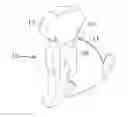
FIG. 1 is a front perspective view of an embodiment of the present invention;
FIG. 2 is a rear perspective view of an embodiment of the present invention;
FIG. 3 is a front view of an embodiment of the present invention;
FIG. 4 is a front view of an embodiment of the present invention;
FIG. 5 is a front view of an embodiment of the present invention;
FIG. 6 is a front view of an embodiment of the present invention;
FIG. 7 is a front view of an embodiment of the present invention;
FIG. 8 is a front view of an embodiment of the present invention;
FIG. 9 is a front view of an embodiment of the present invention;
FIG. 10 is a front view of an embodiment of the present invention;
FIG. 11 is a front view of an embodiment of the present invention;
FIG. 12 is a front view of an embodiment of the present invention;
FIG. 13 is a front view of an embodiment of the present invention;
FIG. 14 is a front view of an embodiment of the present invention; and
FIG. 15 is a front view of an embodiment of the present invention.
DETAILED DESCRIPTION OF THE INVENTION
The following detailed description is of the best currently contemplated modes of carrying out exemplary embodiments of the invention. The description is not to be taken in a limiting sense, but is made merely for the purpose of illustrating the general principles of the invention, since the scope of the invention is best defined by the appended claims.
The present invention includes a collection of tablet devices that have different shapes and include a front and back touchscreen. The tablets may be in the shape of sports equipment, animals, accessories, and the like. The tablets may further include a variety of different colors for the user to choose.
Referring to FIGS. 1 through 15, the present invention includes an electronic tablet 10. The tablet 10 includes a housing 13 having a front surface having a front periphery and a rear surface having a rear periphery. The front periphery is an outline of a design 11 and the rear periphery is an outline of a mirror image of the design 11. The tablet 10 further includes a computing system coupled to and disposed within the housing 13. The computing system includes a processor, a memory, a communications interface, and a user interface including a first touch screen interface 38 disposed on the front surface, and a second touch screen interface 42 disposed on the rear surface. The touch screen interfaces 38, 42 may be disposed along parallel planes. A power button 40 may be coupled to the housing and electrically connected to the computing system.
The design of the tablet 10 may be a 3-dimensional shape. For example, the outer shape of the housing 13 may be of sports equipment, animals, accessories, and the like. As illustrated in the Figures, the design is an outer shape of a basketball 22, a soccer ball 18, a football 20, a baseball 24, a cat 12, a dog 15, a fish 14, a purse 26, a can of corn 34, a can of tuna 36, a ladybug 16, a school bus 32, a briefcase 30, and a lunchbox 28.
As mentioned above, the electronic tablet 10 of the present invention includes a computing system. The computing system is at least the processor and the memory. The computing system may execute on any suitable operating system such as IBM's zSeries/Operating System (z/OS), MS-DOS, PC-DOS, MAC-iOS, WINDOWS, UNIX, OpenVMS, ANDROID, an operating system based on LINUX, or any other appropriate operating system, including future operating systems.
In particular embodiments, the computing system includes a processor, memory, a user interface, and a communication interface. In particular embodiments, the processor includes hardware for executing instructions, such as those making up a computer program. The memory includes main memory for storing instructions such as computer program(s) for the processor to execute, or data for processor to operate on. The memory may include an HDD, a floppy disk drive, flash memory, an optical disc, a magneto-optical disc, magnetic tape, a Universal Serial Bus (USB) drive, a solid-state drive (SSD), or a combination of two or more of these. The memory may include removable or non-removable (or fixed) media, where appropriate. The memory may be internal or external to computing system, where appropriate. In particular embodiments, the memory is non-volatile, solid-state memory.
The user interface includes hardware and software for providing one or more interfaces for user communication with the computing system. As mentioned above, the user interface includes a front touchscreen 38 and a rear touchscreen 42, each having display interconnect. The user interface may also include a keyboard, keypad, microphone, monitor, mouse, printer, scanner, speaker, still camera, stylus, trackball, video camera, another user interface or a combination of two or more of these.
The communication interface includes hardware, software, or both providing one or more interfaces for communication (e.g., packet-based communication) between the computing system and one or more other computing systems or one or more networks. As an example, and not by way of limitation, communication interface may include a network interface controller (NIC) or network adapter for communicating with an Ethernet or other wire-based network or a wireless NIC (WNIC) or wireless adapter for communicating with a wireless network, such as a WI-FI network. This disclosure contemplates any suitable network and any suitable communication interface. As an example, and not by way of limitation, the computing system may communicate with an ad hoc network, a personal area network (PAN), a local area network (LAN), a wide area network (WAN), a metropolitan area network (MAN), or one or more portions of the Internet or a combination of two or more of these. One or more portions of one or more of these networks may be wired or wireless. As an example, the computing system may communicate with a wireless PAN (WPAN) (e.g., a BLUETOOTH WPAN), a WI-FI network, a WI-MAX network, a cellular telephone network (e.g., a Global System for Mobile Communications (GSM) network), or other suitable wireless network or a combination of two or more of these. The computing system may include any suitable communication interface for any of these networks, where appropriate.
An exemplary embodiment of the present invention may include the following elements:
-
- Main PCB/Single Board Computer/Circuit Board located in the rear of tablet connects parts and components to operate devices
- Daughter Board, located on Main PCB/Single Board computer/Circuit Board EMI Shield, Logic Board found in rear of tablets protecting main board secured with glue or adhesive or screws sizes 2.5 mm, 3.5 mm, 3 mm, 4 mm, 4.1 mm, 1.2 mm.
- Processor, CoProcessor
- Two Full size 7 inch-10.7 inches of Touchscreens Displays Front and Back of each Device
- LCD Panel
- Digitizer
- Parallel Interface
- Left and Right antennas/carriers,
- Microphone printed circuit board (PCB) located in each device,
- Home Button
- Headphone Socket 3.5 mm located on the top right of the devices
- Loudspeaker Assembly/Carrier Left/Right located on inside on the bottom of each device on the left and right
- Power Flex Volume
- Speaker left and right located on top left and right of Antennas
- Primary Rear facing Camera Secondary Front Facing Camera located in the top middle of devices connected to main board
- Rear Camera lens located on the back of each device up above back touchscreen display
- Communications interface
- 3G Module, I/O Connector
- Sim Card PCB, Sim Card
- Wifi, Bluetooth, Wlan, GPS antenna
- Display InterConnect
- Power Management Sensor
- battery/battery pack lithium located in the rear of each device connected to the single board computer
- Charge Port Flex located inside of devices connected to SBC, USB2, USB3 located on right bottom side view of devices. USB Charging Dock located on Bottom middle
- Wireless Transmitter Coil, Inductive Charging Coil
- Audio Interface PCB, Audio Jack PCB
- Temperature/Humidity Sensor
- Barometer
- Clock Generator
- Audio Codec
- Battery Charger
- Accelerometer
- Gyroscope
- Wireless Chips
- LTE
- Touchscreen Controllers
- Camera Flash PCB
- Speaker AMP
- Flash EMMD
- Camera Core
- VCC RAM
- LED Flashing Alert Sensor
- FR Transceiver
- Camera AVDD
- HDMI VDD
- Nand 16 GB
- Microphone Element
- Transmit Module
- Embedded Controller
- Regulator
- LNA-WCDMA
- Keyboard Controller
- Touchscreen IC
- Flash Nor 8 Mb SPI Interface
- Filter inducter
- Filter Capacitor
- USB Protocol Resistors
- Speaker IC
- NFC Antenna
- Output Diode
- Connector Dock
- Platform Controller Hub
- CPU, 1.1 GHZ 400 MZ Cache
- PCB Antenna
- USB Switch
- Image Sensor
- Power Management IC
- RF Module
- Baseband
- I/O Connector
- WIFI VCC
- Multimedia Application Processor
- USB 2.0 Card Reader Controller
- Video Encoder
- Wire Harness
- DCDC Controller
- Internal Antenna
- Ethernet Controller
- Demodulator
- Electronic Compass
- GPS Receiver
- Step-Up/Step-Down Converter
- Antenna Switch Module
- VGA Video Interface
- Camera REF
- Voice Processor
- Crystals
- RF Tuner
- SD RAM MOBILE DDRS
- BLUETOOTH™
- Wifi
- GPS
- Flash
- Nand and Ram
- Keyboard Controller
- Memory
- Expandable Storage Sim Card and Tray
- Sim Card Connector
- Audio Jack PCB
- Ambient Light Sensor
- Operating system
- HD Video/Playback 1080p
- Network Connectivity
- GPS Antenna
- Wifi Antenna
- Interconnect PCB
- Usb2 Port2, Usb3 Port3 Lower right side of device
- LED PCB
- Speakers
- Sensors
- NFC Controller
- Main Clock
- Backlight
- LCD Power
- 3G Module
- SD RAM MOBILE DDR3
- Dual Apps Processor
- Optical Proximity Sensor
- Digital Compass
- Motherboard Top and Bottom
- Bi Directional High side Power Switch
- USB-OTG Combined Application
- Dual supply Translating Transceiver
- Multiplexer/Demultiplexer switch
- mating connectors
- mounting screws
- external flash cards
- MCP
- Magnetomer
- Battery Charger
- memory card reader
- automation sensors
- SD Ram LPDDR3
- Cell Antenna
- Controller
- main PCB top and bottom
- 2×4-lane MIPI DSI
- 2×4 lane MIPI CSI
- WLAN PCB connecting to SBC
- Power Flex/Volume l& 2
- Volume buttons located on the right side top of devices
- Wireless Charging Transmitter/Inductive charging Coil
- Lightning port
- Display Module 7 in-10.7 inches Capacitive Touchscreen directly on back of each device
- Bottom closure Digitizer/Touchscreen Assembly fused with Brackets, adhesive, conductive adhesive, glue, tape (insulating), pull tabs, ZIF connectors, screws foam tape, cable connectors, digital cable connectors, ribbon cable connectors, connector latches, display cable connectors, flexible cable connector, fit connector, auxiliary port, electrical connector, wire strips—connectors, Chassis, USB port shield
A method of using the present invention may include the following. Press the power on button 40 at the top of tablet 10. Use the home button on the bottom front or back to get to applications and press and play. For Alzheimer's Dementia Patients the present invention may include an Automatic Alarm Settings, an Automatic alarm power on and off, an Automatic alarm slideshow format, an Automatic wireless charge. The present invention includes an easy mode for dementia patients designed for stimulation and mobility of viewing on both sides using sight method, same mode, different mode, a digital single frame slideshow format, fun shapes, favorite colors, twin screens front and back, built in apps, hot spot, GPS Location, and three USB Ports.
It should be understood, of course, that the foregoing relates to exemplary embodiments of the invention and that modifications may be made without departing from the spirit and scope of the invention as set forth in the following claims.
Claims
What is claimed is:1. An electronic tablet comprising:
a housing comprising a front surface having a front periphery and a rear surface having a rear periphery, wherein the front periphery is an outline of a design, and the rear periphery is an outline of a mirror image of the design; and
a computing system coupled to and disposed within the housing, the computing system comprising:
a processor;
a memory;
a communications interface; and
a user interface comprising at least a first touch screen interface disposed on the front surface, and a second touch screen interface disposed on the rear surface.
2. The electronic tablet of claim 1, wherein the first touch screen interface and the second touchscreen interface are disposed along parallel planes.
3. The electronic tablet of claim 1, wherein the design is an outer shape of an animal.
4. The electronic tablet of claim 1, wherein the design is an outer shape of one of a basketball, a soccer ball, a football, a baseball, a cat, a dog, a fish, a purse, a cube, a ladybug, a school bus, a briefcase, and a lunchbox.
Images & Drawings included:




Sources:
- United States Patent and Trademark Office - verify current appl. status at the USPTO↗
Recent applications in this class:
- » 20250156000 2025-05-15
DEVICE WITH A TOUCHSCREEN WHICH COMPRISES A SELF-SUPPORTING PLATE - » 20250155999 2025-05-15
NEXT Hub - » 20250147611 2025-05-08
TOUCH PANEL AND METHOD FOR MANUFACTURING TOUCH PANEL - » 20250130656 2025-04-24
Electronic device - » 20250093984 2025-03-20
DIGITAL JUKEBOX DEVICE WITH IMPROVED USER INTERFACES, AND ASSOCIATED METHODS - » 20250085797 2025-03-13
SENSOR DEVICE - » 20250036225 2025-01-30
DIGITAL JUKEBOX DEVICE WITH IMPROVED USER INTERFACES, AND ASSOCIATED METHODS - » 20240419272 2024-12-19
ELECTRONIC DEVICE - » 20240419271 2024-12-19
TOUCH COMPONENT, TOUCH CHIP, AND TERMINAL DEVICE - » 20240385707 2024-11-21
CONDUCTIVE FILM AND TOUCH SENSOR