Construction method of mode-division multiplexing fiber-optic communication system and a constructed fiber-optic communication system
US20190253176A1
2019-08-15
15/768,015
2017-05-18
✅ Patent granted
US 10,868,631 B2
2020-12-15
WO; PCT/CN2017/084815; 20170518
WO; WO2018/196056; 20181101
Li Liu
JCIPRNET
2037-05-31
Abstract:
The present invention relates to a construction method of a mode-division multiplexing fiber-optic communication system, which includes following contents: converting multiple-input optical signals into optical propagation modes supported by a graded-index ring-core optical fiber at a transmitting end, after being multiplexed by a mode multiplexer, injecting the optical signals into the graded-index ring-core optical fiber for transmission; using a mode de-multiplexer to separate optical signals of different mode groups at a receiving end firstly; and for the separation of internal modes of the same mode group, adopting a multi-channel reception and a digital signal processing method based on a multiple-input multiple-output equalization for processing: for the separation of modes in a base mode group and a high-order mode group, using a digital signal processing algorithm including a 2×2 multiple-input multiple-output equalization and a digital signal processing algorithm including a 4×4 multiple-input multiple-output equalization for recovery processing, respectively. The method according to the present invention only needs to add an optical receiver and a digital signal processing module based on the 4×4 multiple-input multiple-output equalization repeatedly while adding the mode group to expand communication capacity. Compared with the prior art, the present invention has the characteristics of low complexity, high scalability and easy upgrading.
Inventors:
- JIE LIU 30 🇨🇳 GUANGDONG, China
- Guoxuan ZHU 1 🇨🇳 Guangdong, China
- Xiong WU 1 🇨🇳 Guangdong, China
- Yujie CHEN 3 🇨🇳 Guangdong, China
- Jiangbo ZHU 1 🇨🇳 Guangdong, China
- Siyuan YU 4 🇨🇳 Guangdong, China
Assignee:
- Sun Yat-Sen University 69 🇨🇳 Guangdong, China
Applicant:
Interested in similar patents?
Get notified when new applications in this technology area are published.
Classification:
H04L25/03057 » CPC further
Baseband systems; Details ; arrangements for supplying electrical power along data transmission lines; Shaping networks in transmitter or receiver, e.g. adaptive shaping networks; Arrangements for removing intersymbol interference operating in the time domain adaptive, i.e. capable of adjustment during data reception with a recursive structure
H04L25/03 IPC
Baseband systems; Details ; arrangements for supplying electrical power along data transmission lines Shaping networks in transmitter or receiver, e.g. adaptive shaping networks
H04B10/614 » CPC further
Transmission systems employing electromagnetic waves other than radio-waves, e.g. infrared, visible or ultraviolet light, or employing corpuscular radiation, e.g. quantum communication; Receivers; Coherent receivers comprising one or more polarization beam splitters, e.g. polarization multiplexed [PolMux] X-PSK coherent receivers, polarization diversity heterodyne coherent receivers
H04B10/532 » CPC further
Transmission systems employing electromagnetic waves other than radio-waves, e.g. infrared, visible or ultraviolet light, or employing corpuscular radiation, e.g. quantum communication; Transmitters; Details of coding or modulation Polarisation modulation
H04B10/616 » CPC further
Transmission systems employing electromagnetic waves other than radio-waves, e.g. infrared, visible or ultraviolet light, or employing corpuscular radiation, e.g. quantum communication; Receivers; Coherent receivers Details of the electronic signal processing in coherent optical receivers
H04B10/6161 » CPC further
Transmission systems employing electromagnetic waves other than radio-waves, e.g. infrared, visible or ultraviolet light, or employing corpuscular radiation, e.g. quantum communication; Receivers; Coherent receivers; Details of the electronic signal processing in coherent optical receivers Compensation of chromatic dispersion
H04B10/6164 » CPC further
Transmission systems employing electromagnetic waves other than radio-waves, e.g. infrared, visible or ultraviolet light, or employing corpuscular radiation, e.g. quantum communication; Receivers; Coherent receivers; Details of the electronic signal processing in coherent optical receivers Estimation or correction of the frequency offset between the received optical signal and the optical local oscillator
H04B10/6165 » CPC further
Transmission systems employing electromagnetic waves other than radio-waves, e.g. infrared, visible or ultraviolet light, or employing corpuscular radiation, e.g. quantum communication; Receivers; Coherent receivers; Details of the electronic signal processing in coherent optical receivers Estimation of the phase of the received optical signal, phase error estimation or phase error correction
H04J14/06 » CPC further
Optical multiplex systems Polarisation multiplex systems
H04L2025/03426 » CPC further
Baseband systems; Details ; arrangements for supplying electrical power along data transmission lines; Shaping networks in transmitter or receiver, e.g. adaptive shaping networks; Arrangements for removing intersymbol interference characterised by the type of transmission transmission using multiple-input and multiple-output channels
H04J14/04 » CPC main
Optical multiplex systems Mode multiplex systems
H04B10/61 IPC
Transmission systems employing electromagnetic waves other than radio-waves, e.g. infrared, visible or ultraviolet light, or employing corpuscular radiation, e.g. quantum communication; Receivers Coherent receivers
H04B10/2581 » CPC further
Transmission systems employing electromagnetic waves other than radio-waves, e.g. infrared, visible or ultraviolet light, or employing corpuscular radiation, e.g. quantum communication; Arrangements specific to fibre transmission Multimode transmission
Description
BACKGROUND
Technical Field
The present invention relates to the field of fiber-optic communication, and more specifically, relates to a construction method of a mode-division multiplexing fiber-optic communication system and a constructed fiber-optic communication system.
Description of Related Art
In recent years, a mode-division multiplexing technology based on a multimode optical fiber has received widespread attentions, as it can further improve the spectral efficiency. However, the complexity of a multiple-input multiple-output equalization algorithm used in such systems has become a major factor in limiting system expansion. As with an expansion of system capacity, the number of multiplexing mode groups increases, and the multiple-input multiple-output algorithm with greater complexity is needed to equalize the crosstalk among the modes of the same mode group. In recent years, a mode-division multiplexing system based on a weak coupling few-mode optical fiber is proposed to reduce the complexity of the multiple-input multiple-output algorithm in the system. Only a 2×2 or 4×4 multiple-input multiple-output algorithm is required in these solutions to equalize the crosstalk among internal linear polarization (LP) modes in the same mode group; but as with the expansion of system capacity and the increase of the number of mode groups, for higher order mode groups such as LP41 and LP32, each mode group contains more than four degenerate modes, and it is difficult to equalize the crosstalk among internal modes by using the 4×4 multiple-input multiple-output algorithm.
At the same time, a mode-division multiplexing communication system based on orbital angular momentum (OAM) has drawn many attentions because it has an infinite number of mutual orthogonal eigenmodes in principle. In recent years, the mode-division multiplexing fiber-optic communication system based on OAM has been reported one after another, and the adopted multiplexing methods are mainly divided into two types: the first type is trying to maintain orthogonality among all OAM modes, and thus a multiplexing and a de-multiplexing of all modes are physically implemented by a mode de-multiplexer. Due to such methods are affected by factors such as system defect and instability of transmission environment, the orthogonality among the OAM modes in a long-distance transmission is difficult to guarantee, and thus a transmission distance of the system is limited; and the second type is to compensate the crosstalk among the modes caused by non-orthogonality between the OAM modes by using a multi-input multi-output equalized digital signal processing at a receiving end. However, similar to the few-mode optical fiber, as the system capacity and transmission modes increase, the complexity of the multiple-input multiple-output equalization will also increase.
SUMMARY OF THE INVENTION
In order to solve a deficiency that the complexity of a multiple-input multiple-output algorithm in a communication system provided by above prior art increases with the number of mode channels, the present invention provides a construction method of a mode-division multiplexing fiber-optic communication system.
In order to achieve the above object, an adopted technical solution of the present invention is as follows:
a construction method of a mode-division multiplexing fiber-optic communication system includes following contents:
converting multiple-input optical signals into optical propagation modes supported by a graded-index ring-core optical fiber at a transmitting end, after being multiplexed by a mode multiplexer, injecting the optical signal into the graded-index ring-core optical fiber for transmission;
using a mode de-multiplexer to separate different mode groups at a receiving end, then transmitting mode optical signals in each mode group to corresponding mode converters to be converted into Gaussian mode optical signals capable of supporting a single-mode optical fiber transmission which are then detected and received by coherent optical receivers to extract corresponding complex electrical signals;
for a 2-way complex optical signal output after a base mode group or a zero-order mode groups is received by the coherent optical receiver, using a digital signal processing algorithm including a 2×2 multiple-input multiple-output equalization for recovery processing; and
for a 4-way complex optical signal output after a high-order mode group or a non-zero-order mode group is received by the coherent optical receiver, using a digital signal processing algorithm including a 4×4 multiple-input multiple-output equalization for recovery processing. In the above-described solution, when the construction method of the communication system provided by the present invention expands a communication capacity, the receiving end only needs to add the digital signal processing module of the digital signal processing algorithm including the 4×4 multiple-input multiple-output equalization besides adding the corresponding mode converter and coherent optical receiver, so the complexity of the multiple-input multiple-output algorithm of the communication system will not increase with the capacity expansion.
Compared with the prior art, the beneficial effects of the present invention are as follows:
the present invention utilizes characteristics that an isolation among the graded-index ring-core optical fiber mode groups is high and the mode degenerates in the mode group, and except for the base modes (including two modes), the number of modes in other mode groups are four, and an internal mode separation of the mode groups only requires a 2×2 or a 4×4 multiple-input multiple-output equalization, which reduces the complexity of the digital signal processing algorithm. In addition, when increasing the number of transmission mode groups to expand the communication capacity, only the digital signal processing module of the digital signal processing algorithm based on the 4×4 multiple-input multiple-output equalization needs to be added, and it has relatively high scalability. The method provided by present invention avoids a problem that the complexity of the multiple-input multiple-output algorithm increases with the number of mode channels, and it has the characteristics of low complexity, high expansibility, and can be used to upgrade based on the existing commercial optical communication technologies.
BRIEF DESCRIPTION OF THE DRAWINGS
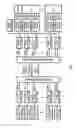
FIG. 1 is a schematic diagram of construction of a system.
FIG. 2 is a schematic diagram containing a 2×2 multiple-input multiple-output equalization digital signal processing algorithm/a 2×2 digital signal processing module.
FIG. 3 is a schematic diagram containing a 4×4 multiple-input multiple-output equalization digital signal processing algorithm/a 4×4 digital signal processing module.
DETAILED DESCRIPTION OF THE EMBODIMENTS
The accompanying drawings are only for the purpose of illustration and are not to be construed as limiting the present invention;
The present invention is further described below in combination with the accompanying drawings and embodiments.
Embodiment 1
An orbital angular momentum (OAM) mode-division multiplexing fiber-optic communication is taken as an example, as shown in FIG. 1. The present invention provides a construction method of a mode-division multiplexing optical fiber communication system, which includes following contents:
multiple-input optical signals are converted into optical propagation modes supported by a graded-index ring-core optical fiber at a transmitting end, after being multiplexed by a mode multiplexer, the optical signals are injected into the graded-index ring-core optical fiber for transmission;
a mode de-multiplexer is used to separate different mode groups at a receiving end, then mode optical signals in each mode group are transmitted to corresponding mode converters to be converted into Gaussian mode optical signals capable of supporting a single-mode optical fiber transmission which are then detected and received by coherent optical receivers to extract corresponding complex electrical signals;
for a 2-way complex optical signal output after a base mode group or a zero-order mode group is received by the coherent optical receiver, a digital signal processing algorithm including a 2×2 multiple-input multiple-output equalization is used for recovery processing; and
for a 4-way complex optical signal output after a high-order mode group or non-zero-order mode group is received by the coherent optical receiver, a digital signal processing algorithm including a 4×4 multiple-input multiple-output equalization is used for recovery processing.
In particular, the modes included among the mode group that are injected into the graded-index ring-core optical fiber or received at the receiving end are any one of orbital angular momentum modes, linear polarization modes or graded-index ring-core optical fiber eigenmodes.
In a detailed implementation, as shown in FIG. 2, the digital signal processing algorithm including the 2×2 multiple-input multiple-output equalization comprised steps as follows: de-resampling and in-phase and quadrature (IQ) imbalance compensation, chromatic dispersion compensation, timing phase recovery, 2×2 multiple-input and multiple-output self-adaptive equalization, frequency offset estimation and compensation, carrier phase recovery, forward error correction, and signal demodulation and decision.
In a detailed implementation, as shown in FIG. 3, the digital signal processing algorithm including the 4×4 multiple-input multiple-output equalization comprised steps as follows: de-resampling and IQ imbalance compensation, chromatic dispersion compensation, timing phase recovery, 4×4 multiple-input and multiple-output self-adaptive equalization, frequency offset estimation and compensation, carrier phase recovery, forward error correction, and signal demodulation and decision.
In a detailed implementation, according to differences in a specific network environment and an optical fiber transmission distance, the digital signal processing algorithm including the 2×2 or 4×4 multiple-input multiple-output equalization is any one of a time-domain blind equalization algorithm, a frequency-domain blind equalization algorithm, a mixed time-domain and frequency-domain blind equalization algorithm, and a frequency domain equalization algorithm based on a training sequence. According to a difference in a modulation format of a specific transmission signal, the digital signal processing algorithm including the 2×2 or 4×4 multiple-input multiple-output equalization is any one of a constant modulus algorithm, a cascade multi-mode algorithm, a radius guidance algorithm, or a least mean square algorithm.
Embodiment 2
An orbital angular momentum (OAM) mode-division multiplexing fiber-optic communication is taken as an example. The present embodiment provides a system applying the method in Embodiment 1. As shown in FIG. 1, a specific solution is as follows:
the system includes a mode multiplexer, a graded-index ring-core optical fiber, a mode de-multiplexer, (2n+1) mode converters B, (2n+1) coherent optical receivers, a 2×2 digital signal processing module and a 4×4 digital signal processing module; and n is the number of high-order mode groups or non-zero-order mode groups;
wherein an output end of the mode multiplexer is connected with an input end of the graded-index ring-core optical fiber, an output end of the graded-index ring-core optical fiber is connected with an input end of the mode de-multiplexer, an output end of the mode de-multiplexer is connected with input ends of the (2n+1) mode converters B respectively, output ends of the (2n+1) mode converters B are connected with second input ends of the (2n+1) coherent optical receivers respectively, first input ends of the (2n+1) coherent optical receivers are connected with a local oscillator, output ends of the (2n+1) coherent optical receivers are connected with the 2×2 digital signal processing module or the 4×4 digital signal processing module.
In particular, a working process of the above system is as follows: multiple-input optical signals are converted into optical propagation modes supported by a graded-index ring-core optical fiber and after being multiplexed by a mode multiplexer, the optical signals are injected into the graded-index ring-core optical fiber for transmission; at a receiving end, a mode de-multiplexer is used to separate the received signals into (2n+1) different mode groups. After that, the modes in the (2n+1) different mode groups are transmitted respectively to the (2n+1) mode converters B to be converted into Gaussian mode optical signals capable of supporting a single-mode optical fiber transmission which are then received by the (2n+1) coherent optical receivers, the (2n+1) coherent optical receivers extracted corresponding complex electrical signals. For a 2-way complex optical signal output after a zero-order mode group is received by the coherent optical receiver, a digital signal processing algorithm including a 2×2 multiple-input multiple-output equalization is used for recovery processing; and for a 4-way complex optical signal output after a non-zero-order mode group is received by the coherent optical receiver, a digital signal processing algorithm including a 4×4 multiple-input multiple-output equalization is used for recovery processing.
In a detailed implementation, as shown in FIG. 1, the optical communication system further included (2n+1) mode converters A and (2n+1) polarization division multiplexing optical transmitters, wherein output ends of the (2n+1) polarization division multiplexing optical transmitters are connected to input ends of the (2n+1) mode converters A respectively, and output ends of the (2n+1) mode converters A are connected to an input end of the mode multiplexer.
In particular, the (2n+1) polarization division multiplexing optical transmitters are used to generate the multiple-input optical signal, and the (2n+1) mode converters A are used to convert the multiple-input optical signal into the optical propagation mode supported by the index-graded ring-core optical fiber.
In a detailed implementation, as shown in FIG. 1, the number of the 2×2 digital signal processing modules (DSP-0) is one, and the number of the 4×4 digital signal processing modules (DSP-L) is n; wherein an input end of the 2×2 digital signal processing module is connected with the output end of the coherent optical receiver corresponding to the zero-order mode group; and an input end of one 4×4 digital signal processing module is connected to the output end of coherent optical receiver corresponding to two non-zero-order modes having the same absolute value of order.
In a detailed implementation, as shown in FIG. 2, the 2×2 digital signal processing module (DSP-0) included a resampling and IQ imbalance compensation sub-module, a chromatic dispersion compensation sub-module, a timing phase recovery sub-module, a 2×2 multiple input multiple output self-adaptive equalization sub-module, a frequency offset estimation and compensation sub-module, a carrier phase recovery sub-module, and a forward error correction and demodulation and decision sub-module, which are connected in turn.
In a detailed implementation, as shown in FIG. 3, the 4×4 digital signal processing module (DSP-L) included a resampling and IQ imbalance compensation sub-module, a chromatic dispersion compensation sub-module, a timing phase recovery sub-module, a 4×4 multiple input multiple output self-adaptive equalization sub-module, a frequency offset estimation and compensation sub-module, a carrier phase recovery sub-module, and a forward error correction and demodulation and decision sub-module, which are connected in turn.
Obviously, the above embodiments of the present invention are merely examples for clearly illustrating the present invention, and are not intended to limit the implementations of the present invention. For those of ordinary skill in the art, other different forms of changes or modifications may also be made based on the above description. There is no need or exhaustiveness for all the implementations to be illustrated herein. Any modification, equivalent replacement and improvement made within the spirit and principle of the present invention should be included in the scope of protection of the present invention.
Claims
1. A construction method of a mode-division multiplexing fiber-optic communication system, the construction method comprises following contents:
converting multiple-input optical signals into optical propagation modes supported by a graded-index ring-core optical fiber at a transmitting end, after being multiplexed by a mode multiplexer, injecting the optical signals into the graded-index ring-core optical fiber for transmission;
using a mode de-multiplexer to separate different mode groups at a receiving end, then transmitting mode optical signals in each mode group to corresponding mode converters to be converted into Gaussian mode optical signals capable of supporting a single-mode optical fiber transmission which are then detected and received by coherent optical receivers to extract corresponding complex electrical signal;
for a 2-way complex optical signal output after a base mode group or a zero-order mode group is received by the coherent optical receiver, using a digital signal processing algorithm including a 2×2 multiple-input multiple-output equalization for recovery processing; and
for a 4-way complex optical signal output after a high-order mode group or a non-zero-order mode group is received by the coherent optical receiver, using a digital signal processing algorithm including a 4×4 multiple-input multiple-output equalization for recovery processing.
2. The construction method of the mode-division multiplexing fiber-optic communication system according to claim 1, wherein the modes included among the mode group that are injected into the graded-index ring-core optical fiber or received at the receiving end are any one of orbital angular momentum modes, linear polarization modes or graded-index ring-core optical fiber eigenmodes.
3. The construction method of the mode-division multiplexing fiber-optic communication system according to claim 1, wherein the digital signal processing algorithm including the 2×2 multiple-input multiple-output equalization comprises de-resampling and in-phase and quadrature (IQ) imbalance compensation, chromatic dispersion compensation, timing phase recovery, 2×2 multiple-input and multiple-output self-adaptive equalization, frequency offset estimation and compensation, carrier phase recovery, forward error correction, and signal demodulation and decision.
4. The construction method of the mode-division multiplexing fiber-optic communication system according to claim 1, wherein the digital signal processing algorithm including the 4×4 multiple-input multiple-output equalization comprises de-resampling and in-phase and quadrature (IQ) imbalance compensation, chromatic dispersion compensation, timing phase recovery, 4×4 multiple-input and multiple-output self-adaptive equalization, frequency offset estimation and compensation, carrier phase recovery, forward error correction, and signal demodulation and decision.
5. The construction method of the mode-division multiplexing fiber-optic communication system according to claim 1, wherein according to differences in a specific network environment and an optical fiber transmission distance, the digital signal processing algorithm including the 2×2 or 4×4 multiple-input multiple-output equalization is any one of a time-domain blind equalization algorithm, a frequency-domain blind equalization algorithm, a mixed time-domain and frequency-domain blind equalization algorithm, and a frequency domain equalization algorithm based on a training sequence; and according to a difference in a modulation format of a specific transmission signal, the digital signal processing algorithm including the 2×2 or 4×4 multiple-input multiple-output equalization is any one of a constant modulus algorithm, a cascade multi-mode algorithm, a radius guidance algorithm, or a least mean square algorithm.
6. A fiber-optic communication system constructed according to claim 1, comprising:
a mode multiplexer, a graded-index ring-core optical fiber, a mode de-multiplexer, (2n+1) first mode converters, (2n+1) coherent optical receivers, a 2×2 digital signal processing module and a 4×4 digital signal processing module; n is the number of high-order mode groups or non-zero-order mode groups;
wherein an output end of the mode multiplexer is connected with an input end of the graded-index ring-core optical fiber, an output end of the graded-index ring-core optical fiber is connected with an input end of the mode de-multiplexer, an output end of the mode de-multiplexer is connected with input ends of the (2n+1) first mode converters respectively, output ends of the (2n+1) first mode converters are connected with second input ends of the (2n+1) coherent optical receivers respectively, first input ends of the (2n+1) coherent optical receivers are connected with a local oscillator, output ends of the (2n+1) coherent optical receivers are connected with the 2×2 digital signal processing module or the 4×4 digital signal processing module.
7. The fiber-optic communication system according to claim 6, wherein the optical communication system further includes (2n+1) second mode converters and (2n+1) polarization division multiplexing optical transmitters, wherein output ends of the (2n+1) polarization division multiplexing optical transmitters are connected to input ends of the (2n+1) second mode converters respectively, and output ends of the (2n+1) second mode converters are connected to an input end of the mode multiplexer.
8. The fiber-optic communication system according to claim 6, wherein the number of the 2×2 digital signal processing modules is one, the number of the 4×4 digital signal processing modules is n; wherein an input end of the 2×2 digital signal processing module is connected with the output end of the coherent optical receiver corresponding to a base mode group or a zero-order mode group; and an input end of one 4×4 digital signal processing module is connected to the output end of the coherent optical receiver corresponding to one high-order mode group or non-zero-order mode group.
9. The fiber-optic communication system according to claim 6, wherein the 2×2 digital signal processing module includes a resampling and in-phase and quadrature (IQ) imbalance compensation sub-module, a chromatic dispersion compensation sub-module, a timing phase recovery sub-module, a 2×2 multiple input multiple output self-adaptive equalization sub-module, a frequency offset estimation and compensation sub-module, a carrier phase recovery sub-module, and a forward error correction and demodulation and decision sub-module, which are connected in turn.
10. The fiber-optic communication system according to claim 6, wherein the 4×4 digital signal processing module includes a resampling and in-phase and quadrature (IQ) imbalance compensation sub-module, a chromatic dispersion compensation sub-module, a timing phase recovery sub-module, a 4×4 multiple input multiple output self-adaptive equalization sub-module, a frequency offset estimation and compensation sub-module, a carrier phase recovery sub-module, and a forward error correction and demodulation and decision sub-module, which are connected in turn.
11. A fiber-optic communication system constructed according to claim 2, comprising:
a mode multiplexer, a graded-index ring-core optical fiber, a mode de-multiplexer, (2n+1) first mode converters, (2n+1) coherent optical receivers, a 2×2 digital signal processing module and a 4×4 digital signal processing module; n is the number of high-order mode groups or non-zero-order mode groups;
wherein an output end of the mode multiplexer is connected with an input end of the graded-index ring-core optical fiber, an output end of the graded-index ring-core optical fiber is connected with an input end of the mode de-multiplexer, an output end of the mode de-multiplexer is connected with input ends of the (2n+1) first mode converters respectively, output ends of the (2n+1) first mode converters are connected with second input ends of the (2n+1) coherent optical receivers respectively, first input ends of the (2n+1) coherent optical receivers are connected with a local oscillator, output ends of the (2n+1) coherent optical receivers are connected with the 2×2 digital signal processing module or the 4×4 digital signal processing module.
12. A fiber-optic communication system constructed according to claim 3, comprising:
a mode multiplexer, a graded-index ring-core optical fiber, a mode de-multiplexer, (2n+1) first mode converters, (2n+1) coherent optical receivers, a 2×2 digital signal processing module and a 4×4 digital signal processing module; n is the number of high-order mode groups or non-zero-order mode groups;
wherein an output end of the mode multiplexer is connected with an input end of the graded-index ring-core optical fiber, an output end of the graded-index ring-core optical fiber is connected with an input end of the mode de-multiplexer, an output end of the mode de-multiplexer is connected with input ends of the (2n+1) first mode converters respectively, output ends of the (2n+1) first mode converters are connected with second input ends of the (2n+1) coherent optical receivers respectively, first input ends of the (2n+1) coherent optical receivers are connected with a local oscillator, output ends of the (2n+1) coherent optical receivers are connected with the 2×2 digital signal processing module or the 4×4 digital signal processing module.
13. A fiber-optic communication system constructed according to claim 4, comprising:
a mode multiplexer, a graded-index ring-core optical fiber, a mode de-multiplexer, (2n+1) first mode converters, (2n+1) coherent optical receivers, a 2×2 digital signal processing module and a 4×4 digital signal processing module; n is the number of high-order mode groups or non-zero-order mode groups;
wherein an output end of the mode multiplexer is connected with an input end of the graded-index ring-core optical fiber, an output end of the graded-index ring-core optical fiber is connected with an input end of the mode de-multiplexer, an output end of the mode de-multiplexer is connected with input ends of the (2n+1) first mode converters respectively, output ends of the (2n+1) first mode converters are connected with second input ends of the (2n+1) coherent optical receivers respectively, first input ends of the (2n+1) coherent optical receivers are connected with a local oscillator, output ends of the (2n+1) coherent optical receivers are connected with the 2×2 digital signal processing module or the 4×4 digital signal processing module.
14. A fiber-optic communication system constructed according to claim 5, comprising:
a mode multiplexer, a graded-index ring-core optical fiber, a mode de-multiplexer, (2n+1) first mode converters, (2n+1) coherent optical receivers, a 2×2 digital signal processing module and a 4×4 digital signal processing module; n is the number of high-order mode groups or non-zero-order mode groups;
wherein an output end of the mode multiplexer is connected with an input end of the graded-index ring-core optical fiber, an output end of the graded-index ring-core optical fiber is connected with an input end of the mode de-multiplexer, an output end of the mode de-multiplexer is connected with input ends of the (2n+1) first mode converters respectively, output ends of the (2n+1) first mode converters are connected with second input ends of the (2n+1) coherent optical receivers respectively, first input ends of the (2n+1) coherent optical receivers are connected with a local oscillator, output ends of the (2n+1) coherent optical receivers are connected with the 2×2 digital signal processing module or the 4×4 digital signal processing module.
Images & Drawings included:



Sources:
- United States Patent and Trademark Office - verify current appl. status at the USPTO↗
Recent applications in this class:
- » 20240413922 2024-12-12
OPTICAL TRANSMISSION SYSTEM, TRANSMITTER, AND CONTROL METHOD - » 20240388376 2024-11-21
SIGNAL DETECTION DEVICE, SIGNAL DETECTION METHOD, AND PROGRAM - » 20240250771 2024-07-25
OPTOELECTRONIC MODULE CONFIGURED TO OPERATE SIMULTANEOUSLY AT HIGH-SPEED BIT RATE AND LOW SPEED BIT RATE - » 20240063936 2024-02-22
SYSTEMS AND METHODS FOR UTILIZING PHOTONIC DEGREES OF FREEDOM IN A PHOTONIC PROCESSOR - » 20230403095 2023-12-14
SPATIAL DIVERSITY IN CO-AXIAL MULTI-CIRCLE ORBITAL ANGULAR MOMENTUM MULTIPLEXING BASED COMMUNICATION - » 20230318733 2023-10-05
OPTICAL AMPLIFICATION APPARATUS, AND MODE DIVISION MULTIPLEXING SYSTEM INCLUDING OPTICAL AMPLIFICATION APPARATUS - » 20230318732 2023-10-05
Control apparatus, OAM mode-multiplexing transmitting apparatus, OAM mode-multiplexing receiving apparatus, control method, and non-transitory computer readable medium - » 20230231643 2023-07-20
OPTICAL SIGNAL TRANSMITTING DEVICE, OPTICAL SIGNAL RECEIVING DEVICE, AND OPTICAL SIGNAL TRANSMISSION SYSTEM - » 20230054203 2023-02-23
Optical transmission system, optical transmission apparatus and optical transmission method - » 20220360358 2022-11-10
Optical transmission system
Recent applications for this Assignee:
- » 20250142043 2025-05-01
DENSE-VIEWPOINT THREE-DIMENSIONAL DISPLAY SYSTEM AND DISPLAY METHOD THEREOF - » 20250135070 2025-05-01
HYALURONIC ACID-BASED HYDROGEL PRECURSOR SOLUTION, HYALURONIC ACID-BASED HYDROGEL AND REPAIR MATERIAL THEREOF - » 20250076536 2025-03-06
METHOD AND SYSTEM FOR ANALYZING SPATIAL PROBABILITY BASED ON CORRESPONDENCE RELATIONSHIP BETWEEN PRECIPITATION FORECAST AND TELECONNECTION - » 20250041254 2025-02-06
USE OF SODIUM FORMATE IN PREPARATION OF AN ANTI-INFECTIVE DRUG - » 20250021617 2025-01-16
METHOD AND SYSTEM FOR ANALYZING PRECIPITATION NORMALIZATION BY GRADIENT-BASED PARAMETER OPTIMIZATION - » 20240353926 2024-10-24
FLEXIBLE VIBRATION MOTOR FOR PROVIDING TACTILE FEEDBACK, TACTILE FEEDBACK SYSTEM AND ELECTRONIC DEVICE - » 20240353487 2024-10-24
MULTI-ORDER OPTICAL MODULATOR AND MODULATION METHOD FOR ON-CHIP OPTICAL MATRIX CALCULATION - » 20240295747 2024-09-05
DISPLAY MODULE BASED ON DIVERGENT BEAMS WITH AN ASYMMETRICAL DIVERGENCE ANGLE - » 20240230950 2024-07-11
METHOD FOR ASSOCIATING PRECIPITATION FORECAST CAPABILITY WITH TELECONNECTION EFFECT BASED ON COEFFICIENTS OF DETERMINATION - » 20240228541 2024-07-11
COMBINATION OF PEPTIDE LINKERS FOR PROTEIN COVALENT SELF-ASSEMBLY USING SPONTANEOUS ISOPEPTIDE BOND