2-mercaptobenzothiazole modified graphene oxide anti-corrosion coating and method for preparation thereof
US20190276318A1
2019-09-12
16/463,771
2017-11-23
✅ Patent granted
US 10,843,926 B2
2020-11-24
WO; PCT/CN2017/112586; 20171123
WO; WO2018/095364; 20180531
Kregg T Brooks
Cooper Legal Group, LLC
2037-12-14
Abstract:
Provided are a 2-mercaptobenzothiazole modified graphene oxide anti-corrosion coating and a preparation method thereof, the raw materials of which comprising, by mass ratio: 2-mercaptobenzothiazole modified graphene oxide 5-20; a matrix resin 30-70; a leveling agent 0.5-1.0; a defoamant 0.5-1.0; a dispersant 0.5-1.0; a film-forming additive 0.5-1.0; a diluent 20-35. The method for the 2-mercaptobenzothiazole modified graphene oxide comprises first reacting graphene oxide with cyanuric chloride, then reacting with 2-mercaptobenzothiazole.
Inventors:
- Lizong Dai 13 🇨🇳 Xiamen, China
- Conghui Yuan 8 🇨🇳 Xiamen, China
- Yiting Xu 13 🇨🇳 Xiamen, China
- Birong Zeng 12 🇨🇳 Xiamen, China
- Wei'ang Luo 12 🇨🇳 Xiamen, China
- Ting Chen 6 🇨🇳 Xiamen, China
- Lizong DAI 4 🇨🇳 Xiamen City, Fujian, China
- Shicheng WANG 3 🇨🇳 Xiamen City, Fujian, China
- Zhiheng SHAO 1 🇨🇳 Xiamen City, Fujian, China
- Ting CHEN 3 🇨🇳 Xiamen City, Fujian, China
- Conghui YUAN 3 🇨🇳 Xiamen City, Fujian, China
- Birong ZENG 4 🇨🇳 Xiamen City, Fujian, China
- Yiting XU 4 🇨🇳 Xiamen City, Fujian, China
- Wei'ang LUO 4 🇨🇳 Xiamen City, Fujian, China
- Shicheng Wang 3 🇨🇳 Xiamen, China
- Zhiheng Shao 1 🇨🇳 Xiamen, China
Assignee:
- XIAMEN UNIVERSITY 101 🇨🇳 XIAMEN, China
Applicant:
Interested in similar patents?
Get notified when new applications in this technology area are published.
Classification:
C09D167/00 » CPC further
Coating compositions based on polyesters obtained by reactions forming a carboxylic ester link in the main chain ; Coating compositions based on derivatives of such polymers
C09D161/20 » CPC further
Coating compositions based on condensation polymers of aldehydes or ketones ; Coating compositions based on derivatives of such polymers Condensation polymers of aldehydes or ketones with only compounds containing hydrogen attached to nitrogen
C09D127/12 » CPC further
Coating compositions based on homopolymers or copolymers of compounds having one or more unsaturated aliphatic radicals, each having only one carbon-to-carbon double bond, and at least one being terminated by a halogen; Coating compositions based on derivatives of such polymers not modified by chemical after-treatment containing fluorine atoms
C09D175/04 » CPC further
Coating compositions based on polyureas or polyurethanes; Coating compositions based on derivatives of such polymers Polyurethanes
C09D133/00 » CPC further
Coating compositions based on homopolymers or copolymers of compounds having one or more unsaturated aliphatic radicals, each having only one carbon-to-carbon double bond, and at least one being terminated by only one carboxyl radical, or of salts, anhydrides, esters, amides, imides, or nitriles thereof; Coating compositions based on derivatives of such polymers
C08K5/375 » CPC further
Use of organic ingredients; Sulfur-, selenium-, or tellurium-containing compounds; Thiols containing six-membered aromatic rings
C09D167/08 » CPC further
Coating compositions based on polyesters obtained by reactions forming a carboxylic ester link in the main chain ; Coating compositions based on derivatives of such polymers Polyesters modified with higher fatty oils or their acids, or with natural resins or resin acids
C08K5/378 » CPC further
Use of organic ingredients; Sulfur-, selenium-, or tellurium-containing compounds; Thiols containing heterocyclic rings
C08K3/04 » CPC further
Use of inorganic substances as compounding ingredients; Elements Carbon
C09D7/63 » CPC further
Features of coating compositions, not provided for in group ; Processes for incorporating ingredients in coating compositions; Additives non-macromolecular organic
C08K3/042 » CPC further
Use of inorganic substances as compounding ingredients; Elements; Carbon Graphene or derivatives, e.g. graphene oxides
C09D163/00 » CPC further
Coating compositions based on epoxy resins; Coating compositions based on derivatives of epoxy resins
C08K9/04 » CPC further
Use of pretreated ingredients Ingredients treated with organic substances
C01P2002/20 » CPC further
Crystal-structural characteristics Two-dimensional structures
C01P2002/72 » CPC further
Crystal-structural characteristics defined by measured X-ray, neutron or electron diffraction data by d-values or two theta-values, e.g. as X-ray diagram
C01P2002/82 » CPC further
Crystal-structural characteristics defined by measured data other than those specified in group by IR- or Raman-data
C01P2004/03 » CPC further
Particle morphology depicted by an image obtained by SEM
C01B32/194 » CPC main
Carbon; Compounds thereof; Nano-sized carbon materials; Graphene After-treatment
C01B32/198 » CPC further
Carbon; Compounds thereof; Nano-sized carbon materials; Graphene Graphene oxide
C09D5/08 » CPC further
Coating compositions, e.g. paints, varnishes or lacquers, characterised by their physical nature or the effects produced ; Filling pastes Anti-corrosive paints
C09D7/62 » CPC further
Features of coating compositions, not provided for in group ; Processes for incorporating ingredients in coating compositions; Additives non-macromolecular inorganic modified by treatment with other compounds
Description
TECHNICAL FIELD
The invention relates to an anti-corrosion coating, in particular to a 2-mercaptobenzothiazole modified graphene oxide composite anti-corrosion coating and a preparation method thereof.
BACKGROUND ART
Metal corrosion is widespread, causing serious losses to the national economy. Over the years, various technologies and methods have been developed to solve the problem. As one of the common means of anti-corrosion, surface coating protection has become the major anti-corrosion because of its simple construction, convenient maintenance, wide adaptability and low cost.
Graphene is a novel two-dimensional material, and its many excellent physical and chemical properties have attracted wide attention. Compared with graphene, graphene oxide has more oxygen-containing organic functional groups on the surface. These oxygen-containing organic functional groups can make it have excellent compatibility and joint surface structure with some organic resins such as epoxy resin. The role of graphene oxide as a reinforcing phase in the continuous phase resin is fully exploited, and the strong hydrophilicity exhibited by these oxygen-containing functional groups allows the graphene oxide to be stably dispersed in some solvents. 2-mercaptobenzothiazole is a special corrosion inhibitor. It has been found that atoms with larger electronegativity such as nitrogen, oxygen and sulfur can satisfy the needs for electrons in metal vacant orbits. Most of the compounds containing these atoms are efficient corrosion inhibitors for carbon steel. These characteristics enable graphene oxide and 2-mercaptobenzothiazole to be used in coatings.
In order to improve the anti-corrosion coating process and reduce pollution, there is therefore a need for novel doped coating is needed. The patent (CN 101108947 A, CN 1221768 A) has introduced coatings with inorganic fillers as fillers. These coatings need to add a large amount of inorganic conductive fillers, and the inorganic fillers have poor compatibility with the resin, which makes the mechanical properties of the paint film decrease. The patent (CN 102604533 A) introduced the anti-corrosion coatings based on polyaniline and graphene composites. The invention believed that graphene was beneficial to improve the physical anti-corrosion performance of the paint film, but it was easy to agglomerate and disperse unstably in the dispersion process. The patent (CN 102978625 A) introduces a 2-mercaptobenzothiazole corrosion inhibitor, but it is just simply physically mixed with the matrix resin, and the degree of dispersion is difficult to guarantee.
SUMMARY OF THE INVENTION
The aim of this invention is to provide a modified graphene oxide anti-corrosion coating and a preparation method by combining the characteristics of 2-mercaptobenzothiazole and graphene oxide, which have both corrosion inhibition and physical barrier property.
The modified graphene oxide anti-corrosion coating, by mass ratio comprising:
| 2-mercaptobenzothiazole modified graphene oxide | 5-20 parts |
| matrix resin | 30-70 parts |
| leveling agent | 0.5-1.0 parts |
| defoamant | 0.5-1.0 parts |
| dispersant | 0.5-1.0 parts |
| film-forming additive | 0.5-1.0 parts |
| diluent | 20-35 parts |
The 2-mercaptobenzothiazole modified graphene oxide is synthesized by graphene oxide, cyanuric chloride and 2-mercaptobenzothiazole.
The matrix resin can be selected from one of epoxy resin, fluorocarbon resin, amino resin, acrylic resin, polyurethane resin, alkyd resin, polyester resin, etc.
The leveling agent can be selected from one of organosilicon, acrylic acid and monobutyl ether.
The defoamant can be selected from one of the organosilicon defoamant, inorganic silicon defoamant and non-organosilicon defoamant, such as BYK302, BYK065, BYK20, BYK011, BYK053 produced by Germany BYK Company, or Efka 2018 produced by Efka Company.
The dispersant can be self-fluxing dispersant or wetting dispersant, such as BYK101, BYK161, BYK163 produced by Germany BYK Company, or Efka5044 produced by Efka Company.
The film-forming additive can be selected from one of butyl benzyl alcohol acetate, ethylene glycol butyl ether alkyd ester, ethylene glycol phenyl ether, dibasic acid dimethyl esters, propylene glycol propyl ether, dibasic acid diethyl ester, etc.
The diluent can be selected from at least one of 1, 4-butanediol diglycidyl ether, ethylene glycol diglycidyl ether, acetone, xylene, n-butanol, methyl isobutyl ketone, absolute ethanol, ethyl acetate, butyl acetate, etc.
The 2-mercaptobenzothiazole modified graphene oxide has a structure such as (I)
The preparation method of 2-mercaptobenzothiazole modified graphene oxide is as follows:
Step 1: a certain amount of graphene oxide, cyanuric chloride and sodium bicarbonate are taken into a flask, a certain volume of N, N-dimethylformamide is taken to disperse it, stirred for 0.5-4 hours at room temperature, heated to 50° C. and stirred for 10-24 hours, then cooled and filtered to obtain the precipitation. Wherein graphene oxide, cyanuric chloride and sodium bicarbonate are graphene oxide:cyanuric chloride:sodium bicarbonate=1-30 g:1-8 mol:1-20 mol according to the feed ratio, and the volume of N, N-dimethylformamide is 100-2000 ml.
Step 2: The precipitation in step 1, 2-mercaptobenzothiazole and potassium hydroxide are taken into a flask, a certain amount of acetone is taken to disperse them and react for 6-10 hours, cooled and filtered. Wherein the precipitation, 2-mercaptobenzothiazole and potassium hydroxide are precipitation:2-mercaptobenzothiazole:potassium hydroxide=1˜30 g:1˜8 mol:1˜8 mol according to the feed ratio, the volume of acetone is 100-2000 ml.
The synthetic route of 2-mercaptobenzothiazole modified graphene oxide is as follows:
The preparation method of 2-mercaptobenzothiazole modified graphene oxide composite anti-corrosion coating:
After dispersing and mixing the components for 1 to 4 hours, 2-mercaptobenzothiazole modified graphene oxide composite anti-corrosion coating is obtained after filtration.
Firstly, a 2-mercaptobenzothiazole modified graphene oxide is prepared. According to the anti-corrosion coating component ratio, 5-20 parts of modified graphene oxide, 30-70 parts of matrix resin, 0.5-1.0 parts of leveling agent, 0.5-1.0 parts of defoamant, 0.5-1.0 parts of dispersant, 0.5-1.0 parts of film-forming additive and 20-35 parts of diluent are taken, disperse evenly by the disperser and filtered to obtain the anti-corrosion coating.
On the basis of molecular design, 2-mercaptobenzothiazole is grafted onto the surface of graphene oxide through surface functional groups of graphene oxide. The synthesized material has both the physical barrier property of graphene oxide and the corrosion inhibition of 2-mercaptobenzothiazole. At the same time, the oxygen-containing functional groups on the surface of graphene oxide can make it have excellent compatibility and joint surface structure with epoxy resin and other organic resins. As a filler, its dispersion in epoxy resin is improved, and the corrosion resistance is improved obviously. At the same time, the addition of graphene oxide can effectively improve the mechanical properties of anti-corrosion coating.
DRAWINGS
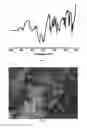
FIG. 1 shows the infrared spectra of 2-mercaptobenzothiazole modified graphene oxide in embodiment 1.
FIG. 2 is a scanning electron micrograph of 2-mercaptobenzothiazole modified graphene oxide in embodiment 1.
FIG. 3 is XRD spectra of 2-mercaptobenzothiazole modified graphene oxide in embodiment 1.
DETAILED DESCRIPTION
The contents of the present invention are described in detail below with embodiments.
Embodiment 1
(1) Preparation of 2-Mercaptobenzothiazole Modified Graphene Oxide
A. 10 g of graphene oxide, 2 mol of cyanuric chloride and 6 mol of sodium bicarbonate were taken to disperse in 1000 ml of N, N-dimethylformamide, and filled it with nitrogen for protection, stirred for 2 hours at room temperature, heated to 50° C., stirred for 22 hours. After the reaction, precipitation was obtained by washing 5 times with N, N-dimethylformamide, washing 2 times with water and drying for 24 hours in vacuum.
B. 10 g of precipitation in A was taken, 2 mol of 2-mercaptobenzothiazole and 2 mol of potassium hydroxide were dispersed in 1000 ml of acetone, and filled it with nitrogen for protection, and stirred at 45° C. for 8 h, after the reaction was finished, the precipitation was obtained by washing with acetone five times, washing with water twice and drying in vacuum for 24 hours. The infrared spectra of 2-mercaptobenzothiazole modified graphene oxide were shown in FIG. 1, corresponding to the characteristic peaks of functional groups. Scanning electron micrograph (SEM) was shown in FIG. 2, there are obvious folds in the lamellae. The XRD spectra of the 2-mercaptobenzothiazole modified graphene oxide were shown in FIG. 3. The peak of graphene oxide is obviously weakened and characteristic peak of graphitization appears after the modified graphene oxide.
(2) Preparation of 2-Mercaptobenzothiazole Modified Graphene Oxide Composite Anti-Corrosion Coating
5 parts of modified graphene oxide, 30 parts of epoxy resin, 0.5 parts of organosilicon, 0.5 parts of defoamant BYK302, 0.5 parts of dispersant BYK101, 0.5 parts of ethylene glycol phenyl ether and 20 parts of 1,4-butanediol glycidyl ether were mixed and dispersed evenly by the disperser for 4 hours. After filtration, 2-mercaptobenzothiazole modified graphene oxide composite anti-corrosion coating was obtained. Its anticorrosive properties were shown in Table 1.
Embodiment 2
(1) Preparation of 2-Mercaptobenzothiazole Modified Graphene Oxide
A. 20 g of graphene oxide, 4 mol of cyanuric chloride and 12 mol of sodium bicarbonate were dispersed in 1500 ml of N, N-dimethylformamide, and filled it with nitrogen for protection, stirred for 3 hours at room temperature, heated to 50° C., and stirred for 24 hours. After the reaction, the precipitation was obtained by washing 5 times with N, N-dimethylformamide, washing twice with water and drying for 24 hours in vacuum.
B. 20 g of precipitation in A was taken, 4 mol of 2-mercaptobenzothiazole and 4 mol of potassium hydroxide were dispersed in 1500 ml of acetone, and filled it with nitrogen for protection, and stirred at 45° C. for 10 h, after the reaction was finished, the precipitation was obtained by washing with acetone five times, washing with water twice and drying in vacuum for 24 hours.
(2) Preparation of 2-Mercaptobenzothiazole Modified Graphene Oxide Composite Anti-Corrosion Coating
10 parts of modified graphene oxide, 50 parts of epoxy resin, 0.8 parts of organosilicon, 0.6 parts of defoamant BYK302, 0.6 parts of dispersant BYK101, 0.8 parts of ethylene glycol phenyl ether and 30 parts of 1,4-butanediol glycidyl ether were mixed and dispersed evenly by the disperser for 4 hours. After filtration, 2-mertozobenthiazole modified graphene oxide composite anti-corrosion coating was obtained. Its anticorrosive properties were shown in Table 1.
Embodiment 3
(1) Preparation of 2-Mercaptobenzothiazole Modified Graphene Oxide
A. 30 g of graphene oxide, 6 mol of cyanuric chloride and 18 mol of sodium bicarbonate were dispersed in 2000 ml of N, N-dimethylformamide, and filled it with nitrogen for protection, stirred for 4 hours at room temperature, heated to 50° C., and stirred for 24 hours. After the reaction, the precipitation was obtained by washing 5 times with N, N-dimethylformamide, washing 2 times with water and drying for 24 hours in vacuum.
B. 30 g of precipitation in A was taken, 6 mol of 2-mercaptobenzothiazole and 6 mol of potassium hydroxide were dispersed in 2000 ml of acetone, and filled it with nitrogen for protection, and stirred at 50° C. for 10 h, after the reaction was finished, the precipitation was obtained by washing with acetone five times, washing with water twice and drying in vacuum for 24 hours.
(2) Preparation of 2-Mercaptobenzothiazole Modified Graphene Oxide Composite Anti-Corrosion Coating
20 parts of modified graphene oxide, 70 parts of acrylic resin, 0.8 parts of organosilicon, 1 parts of defoamant BYK302, 1 parts of dispersant BYK101, 0.8 parts of ethylene glycol phenyl ether and 20 parts of ethyl acetate were mixed and dispersed evenly by disperser for 4 hours. After filtration, 2-mercaptobenzothiazole modified graphene oxide composite anti-corrosion coating was obtained. Its anticorrosive properties were shown in Table 1.
| TABLE 1 |
| The corrosion test of anti-corrosion coating in embodiments 1 to 3 |
| Index name | Embodiment 1 | Embodiment 2 | Embodiment 3 | Test method |
| acid | paint film does not foam and rust for 700 h | GB/T 9274 |
| resistance (5% H2SO4, 25° C.) | ||
| alkali resistance (3% NaOH, | paint film does not foam and rust for 900 h | GB/T 9274 |
| 25° C.) | ||
| salt solution | paint film does not foam and rust for 1000 h | GB/T 1763 |
| resistance (3% NaCl, 25° C.) | ||
| salt spray resistance | paint film does not foam and rust for 1000 h | GB/T 1771 |
As mentioned above, these are only preferred embodiments of the present invention, so the scope of implementation of the present invention cannot be limited accordingly. That is, the equivalent changes and modifications made according to the patent scope and description content of the present invention should still be within the scope of the present invention.
Claims
1. (canceled)
2. A method for preparing 2-mercaptobenzothiazole modified graphene oxide, wherein:
step 1: a certain amount of graphene oxide, cyanuric chloride and sodium bicarbonate are taken into a flask, a certain volume of N, N-dimethylformamide is taken to disperse it, stirred for 0.5-4 hours at room temperature, heated to 50° C. and stirred for 10-24 hours, then cooled and filtered to obtain the precipitation; wherein graphene oxide, cyanuric chloride and sodium bicarbonate are graphene oxide:cyanuric chloride:sodium bicarbonate=1-30 g:1-8 mol:1-20 mol according to the feed ratio, and the volume of N, N-dimethylformamide is 100-2000 ml;
step 2: the precipitation in step 1, 2-mercaptobenzothiazole and potassium hydroxide are taken into a flask, a certain volume amount of acetone is taken to disperse them and react for 6-hours, cooled and filtered and
is obtained; wherein the precipitation, 2-mercaptobenzothiazole and potassium hydroxide are precipitation:2-mercaptobenzothiazole:potassium hydroxide=1˜30 g:1˜8 mol:1˜8 mol according to the feed ratio, the volume of acetone is 100-2000 ml.
3. A 2-mercaptobenzothiazole modified graphene oxide anti-corrosion coating, wherein the raw materials of which comprises, by mass ratio:
| 2-mercaptobenzothiazole modified graphene oxide | 5-20 parts |
| matrix resin | 30-70 parts |
| leveling agent | 0.5-1.0 parts |
| defoamant | 0.5-1.0 parts |
| dispersant | 0.5-1.0 parts |
| film-forming additive | 0.5-1.0 parts |
| diluent | 20-35 parts |
4. The 2-mercaptobenzothiazole modified graphene oxide anti-corrosion coating according to claim 3, wherein the matrix resin is selected from at least one of epoxy resin, fluorocarbon resin, amino resin, acrylic resin, polyurethane resin, alkyd resin and polyester resin.
5. The 2-mercaptobenzothiazole modified graphene oxide anti-corrosion coating according to claim 3, wherein the leveling agent is selected from one of organosilicon, acrylic acid and monobutyl ether.
6. The 2-mercaptobenzothiazole modified graphene oxide anti-corrosion coating according to claim 3, wherein the defoamant is selected from one of organosilicon defoamants, inorganic silicon defoamants and non-organosilicon defoamants.
7. The 2-mercaptobenzothiazole modified graphene oxide anti-corrosion coating according to claim 6, wherein the defoamant comprises one of BYK302, BYK065, BYK20, BYK011, BYK053 produced by Germany BYK Company, or Efka 2018 produced by Efka Company.
8. The 2-mercaptobenzothiazole modified graphene oxide anti-corrosion coating according to claim 3, wherein the dispersants can be self-fluxing dispersant or wetting dispersant, comprising BYK101, BYK161, BYK163 produced by Germany BYK Company, or Efka5044 produced by Efka Company.
9. The 2-mercaptobenzothiazole modified graphene oxide anti-corrosion coating according to claim 3, wherein the film-forming additive is selected from one of butyl benzyl alcohol acetate, ethylene glycol butyl ether glycolic acid ester, ethylene glycol phenyl ether, dibasic acid dimethyl esters, propylene glycol propyl ether and dibasic acid diethyl ester.
10. The 2-mercaptobenzothiazole modified graphene oxide anti-corrosion coating according to claim 3, wherein the diluent is selected from one of 1,4-butanediol diglycidyl ether, ethylene glycol diglycidyl ether, acetone, xylene, n-butanol and methyl isobutyl ketone, absolute ethanol, ethyl acetate, butyl acetate.
Images & Drawings included:



Sources:
- United States Patent and Trademark Office - verify current appl. status at the USPTO↗
Recent applications in this class:
- » 20250282624 2025-09-11
CHEMICAL-FREE PRODUCTION OF GRAPHENE-REINFORCED CEMENT AND CONCRETE - » 20250270094 2025-08-28
PROCESS FOR OBTAINING A PRODUCT WHICH COMPRISES GRAPHENE, AND PRODUCT - » 20250223173 2025-07-10
METHOD FOR PREPARING GRAPHENE NANOPLATELETS BASED SOLUBLE OIL FOR AAC BLOCK - » 20250223172 2025-07-10
CARBON COMPOSITE MATERIAL AND DISPERSION LIQUID - » 20250223171 2025-07-10
ALLOTROPE OF CARBON HAVING INCREASED ELECTRON DELOCALIZATION - » 20250145466 2025-05-08
LASER-INDUCED GRAPHENE COMPOSITES AND METHODS OF MAKING SAME - » 20250026645 2025-01-23
APPLICATIONS OF ENGINEERED GRAPHENE - » 20240425375 2024-12-26
DISPERSIONS CONTAINING GRAPHENIC CARBON NANOPARTICLES AND DISPERSANT RESINS - » 20240400396 2024-12-05
GRAPHENE TRANSFER SYSTEM USING HEAT TREATMENT MODULE AND GRAPHENE TRANSFER METHOD USING SAME - » 20240351883 2024-10-24
POLYALKYLENE OXIDES AS DISPERSANT FOR GRAPHENE MATERIAL
Recent applications for this Assignee:
- » 20250276302 2025-09-04
SMART CATALYST SUPPORT WITH IN-SITU TEMPERATURE FIELD MONITORING AND DYNAMIC REGULATION - » 20240409621 2024-12-12
ANTIBODY FOR RECOGNIZING RSV PRE-F PROTEIN AND USE THEREOF - » 20240408594 2024-12-12
MICROFLUIDIC CHIP AND MICROFLUIDIC CHIP DETECTION SYSTEM - » 20240328946 2024-10-03
FLUORESCENCE ANALYSIS METHOD FOR LITHIUM ION DETERMINATION USING FREE-BASE PHTHALOCYANINE (FBPc) AS MOLECULAR PROBE - » 20240237763 2024-07-18
REUSABLE PROTECTIVE CLOTHING - » 20230348354 2023-11-02
POLYARYL CARBOXYLIC FULLERENE DERIVATIVE AND USE THEREOF IN ANTI-CORONAVIRUS INFECTION - » 20230346992 2023-11-02
Engineered radioactive polymeric microsphere, and preparation and application thereof - » 20230324396 2023-10-12
POLYPEPTIDE ENCODED BY EB VIRUS BNLF2B GENE AND USE THEREOF IN DETECTION - » 20230323369 2023-10-12
SCREENING MODEL AND METHOD FOR HBV CCCDNA-TARGETING DRUG - » 20230273318 2023-08-31
System and method of capturing three-dimensional human motion capture with LiDAR