FARADAY ROTATOR, OPTICAL ISOLATOR, AND METHOD OF MANUFACTURING FARADAY ROTATOR
US20190309440A1
2019-10-10
16/372,407
2019-04-02
Abstract:
Provided are a Faraday rotator having a high light transmittance and a high Verdet constant and an optical isolator using the same. The Faraday rotator of the present invention contains a garnet type crystal represented by (Tb3-x-yRxBiy)Al5O12 (R represents one or more elements selected from Y, Er, Yb, or Lu, 0<x, and 0≤y). It is preferable that the Faraday rotator contains a garnet type crystal represented by (Tb3-x-yRxBiy)Al5O12 (R is one or more elements selected from Y or a lanthanoid (La, Ce, Pr, Nd, Pm, Sm, Eu, Gd, Tb, Dy, Ho, Er, Tm, Yb, or Lu), 0≤x, and 0<y)).
Interested in similar patents?
Get notified when new applications in this technology area are published.
Classification:
G02F1/093 » CPC further
Devices or arrangements for the control of the intensity, colour, phase, polarisation or direction of light arriving from an independent light source, e.g. switching, gating or modulating; Non-linear optics for the control of the intensity, phase, polarisation or colour based on magneto-optical elements, e.g. exhibiting Faraday effect used as non-reciprocal devices, e.g. optical isolators, circulators
C01P2006/60 » CPC further
Physical properties of inorganic compounds Optical properties, e.g. expressed in CIELAB-values
C01P2006/42 » CPC further
Physical properties of inorganic compounds Magnetic properties
C30B29/28 » CPC main
Single crystals or homogeneous polycrystalline material with defined structure characterised by the material or by their shape; Inorganic compounds or compositions; Oxides; Complex oxides with formula AMeO wherein A is a rare earth metal and Me is Fe, Ga, Sc, Cr, Co or Al, e.g. garnets
G02F1/09 IPC
Devices or arrangements for the control of the intensity, colour, phase, polarisation or direction of light arriving from an independent light source, e.g. switching, gating or modulating; Non-linear optics for the control of the intensity, phase, polarisation or colour based on magneto-optical elements, e.g. exhibiting Faraday effect
C30B19/00 » CPC further
Liquid-phase epitaxial-layer growth
C01F17/00 » CPC further
Compounds of rare earth metals
Description
CROSS-REFERENCE TO RELATED APPLICATION
This non-provisional application claims priority under 35 U.S.C. § 119(a) from Japanese Patent Application No. 2018-074723, filed on Apr. 9, 2018, the entire contents of which are incorporated herein by reference.
BACKGROUND
Technical Field
The present invention relates to a Faraday rotator, an optical isolator using the same, a manufacturing method of a garnet type crystal to be used in a Faraday rotator or the like.
Background Art
In the opto-processing technology or the light measuring technology using laser light, the laser oscillation is unstable when the laser light is reflected from the surface of the optical parts provided in the propagation path and the reflected light returns to the laser light source. In order to block such reflected and returned light, an optical isolator using a Faraday rotator which non-reciprocally rotates the polarization plane is used.
In recent years, opto-processing machines using Yb-doped fiber lasers have increased. In the Yb-doped fiber lasers, the output of the laser light is amplified by a fiber amplifier. For this reason, parts such as optical isolators and the materials thereof are required to exhibit resistance to amplified light with high power of 1 W or more.
As a material for a Faraday rotator exhibiting relatively high resistance to light with high power, Tb3Ga5O12 (terbium-gallium-garnet: TGG) single crystal has been developed and put to practical use (see, for example, W. Zhang et al., Journal of Crystal Growth, 306, 2007, 195-199).
In addition, Tb3Sc2Al5O12 (terbium-scandium-aluminum-garnet: TSAG) single crystal having a greater Verdet constant than TGG has also been investigated (see, for example, WO 2011/132668 A), but Sc2O3 as a raw material is expensive and there is thus a problem that the cost is high.
SUMMARY OF THE INVENTION
Problems to be Solved by the Invention
Tb3Al5O12 (terbium-aluminum-garnet: TAG) single crystal has a greater Verdet constant than TGG and does not use expensive raw materials such as Sc2O3 but is an incongruent melting type compound and thus cannot be manufactured by a single crystal growth method such as the Czochralski method, and it has not been reported the crystal has successfully grown to a practical level.
In addition, TAG also has advantages of having a higher thermal conductivity and smaller thermal lens effect than TGG and TSAG as a Faraday rotator.
However, a Faraday rotator is required to have excellent properties such as Verdet constant and light transmittance, particularly, a Faraday rotator adapted to light with high power is required to have a high light transmittance. This is because the light energy absorbed in the Faraday rotator is converted into thermal energy to generate heat when the light transmittance is low, as a result, the Faraday rotation angle changes and this leads to deterioration of isolation and also problems such as deterioration of isolation caused as the scattered light hits peripheral parts such as the holding material and magnet of the Faraday rotator and heat generation in the peripheral parts are particularly concerned in the case of light with high power.
Accordingly, an object of the present invention is to provide a practical method for manufacturing a TAG single crystal, a Faraday rotator having a high light transmittance and a high Verdet constant, and an optical isolator using the same.
Means for Solving the Problems
In order to solve the above problem, the Faraday rotator of the present invention contains a garnet type crystal represented by (Tb3-x-yRxBiy)Al5O12 (R represents one or more elements selected from Y, Er, Yb, or Lu, 0<x, and 0≤y).
In the present invention, it is preferable that the Faraday rotator contains a garnet type crystal represented by (Tb3-x-yRxBiy)Al5O12 (R is one or more elements selected from Y or a lanthanoid (La, Ce, Pr, Nd, Pm, Sm, Eu, Gd, Tb, Dy, Ho, Er, Tm, Yb, or Lu), 0≤x, and 0<y)).
In the present invention, it is preferable that 0<y in the garnet type crystal.
In the present invention, it is preferable that the garnet type crystal is manufactured by bringing a raw material solution into contact with a substrate formed of a Dy3Al5O12 crystal and performing liquid phase epitaxial growth.
In the present invention, it is preferable that the garnet type crystal has a greater light transmittance than a garnet type crystal represented by Tb3Al5O12.
In the present invention, it is preferable that x≤2.0 in the garnet type crystal.
In the present invention, it is preferable that y≤1.0 in the garnet type crystal.
In order to solve the above problem, the optical isolator of the present invention uses any of the Faraday rotators.
In order to solve the above problem, the method of manufacturing a Faraday rotator of the present invention includes a step of growing a garnet type crystal represented by (Tb3-x-yRxBiy)Al5O12 (R represents one or more elements selected from Y, Er, Yb, or Lu, 0<x, and 0<y) by adjusting raw materials and a step of subjecting the garnet type crystal to processing.
In the present invention, it is preferable that the garnet type crystal is grown by bringing a raw material solution into contact with a substrate formed of a Dy3Al5O12 crystal and performing liquid phase epitaxial growth in the step of growing a garnet type crystal.
Effect of the Invention
According to the present invention, it is possible to easily manufacture a garnet type crystal represented by (Tb3-x-yRxBiy)Al5O12 (R is one or more elements selected from Y or a lanthanoid (La, Ce, Pr, Nd, Pm, Sm, Eu, Gd, Tb, Dy, Ho, Er, Tm, Yb, or Lu), 0≤x, and 0≤y)).
In addition, it is possible to obtain a Faraday rotator having a high light transmittance and a high Verdet constant and to fabricate an optical isolator adapted to light with high power.
BRIEF DESCRIPTION OF THE DRAWINGS
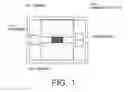
FIG. 1 is a schematic diagram which illustrates the structure of a general optical isolator.
DETAILED DESCRIPTION OF THE EMBODIMENTS
The Faraday rotator of the present invention contains a garnet type crystal represented by (Tb3-x-yRxBiy)Al5O12 (R represents one or more elements selected from Y, Er, Yb, or Lu, 0<x, and 0≤y).
In addition, the Faraday rotator of the present invention contains a garnet type crystal represented by (Tb3-x-yRxBiy)Al5O12 (R is one or more elements selected from Y or a lanthanoid (La, Ce, Pr, Nd, Pm, Sm, Eu, Gd, Tb, Dy, Ho, Er, Tm, Yb, or Lu), 0≤x, and 0<y)).
It is possible to improve the light transmittance by substituting part of Tb in Tb3Al5O12 with one or more elements selected from Er, Yb, Lu, or Y.
In addition, it is possible to improve the Verdet constant by substituting part of Tb in Tb3Al5O12 with Bi.
At this time, x is preferably 2.0 or less, more preferably 1.5 or less, and still more preferably 1.0 or less. The light transmittance increases while the Verdet constant decreases when x is increased. The Verdet constant decreases to be about ½ of that in a case in which x=0 when x is set to 1.5 or more. In addition, the light transmittance is very slightly improved as compared with a decrease in the Verdet constant when x is set to 1.0 or more.
In addition, it is preferable to substitute part of Tb in Tb3Al5O12 with one or more elements selected from Er, Yb, Lu, or Y and to substitute part of Tb in Tb3Al5O12 with Bi (0<x and 0<y). In this manner, it is possible to improve the light transmittance without greatly decreasing the Verdet constant.
At this time, y is preferably 1.0 or less, more preferably 0.5 or less, and still more preferably less than 0.3. The light transmittance may be lower than that in a case in which x=0 in some cases depending on the kind and substituted amount of R when y is 0.3 or more, but the light transmittance can be increased to be higher than that in a case in which x=0 regardless of the kind and substituted amount of R when y is less than 0.3.
It is preferable that the light transmittance of the garnet type crystal represented by (Tb3-x-yRxBiy)Al5O12 (R represents one or more elements selected from Y, Er, Yb, or Lu, 0<x, and 0<y) is set to be higher than the light transmittance of the garnet type crystal which is represented by Tb3Al5O12 and is fabricated by the same method as that for this garnet type crystal represented by (Tb3-x-yRxBiy)Al5O12 by such a configuration.
In addition, the Verdet constant of the garnet type crystal is desirably as great as possible and is preferably a value to be at least 60% or more of the Verdet constant of the garnet type crystal which is represented by Tb3Al5O12 and is fabricated by the same method as that for this garnet type crystal represented by (Tb3-x-yRxBiy)Al5O12. The Verdet constant is more preferably a value to be 70% or more and still more preferably a value to be 80% or more.
Here, the light transmittance is a light transmittance to be applied when the garnet type crystal is used as a Faraday rotator. As described above, TAG is assumed to be applied to a rare earth element-doped fiber laser, and the light transmittance is preferably a transmittance for light in the wavelength region (450 nm to 2150 nm) thereof and more preferably a transmittance for light in the wavelength region (1030 nm to 1100 nm) of an Yb-doped fiber laser.
In the same manner, the Verdet constant is a Verdet constant for light to be applied when the garnet type crystal is used as a Faraday rotator, and the Verdet constant is preferably a Verdet constant for light in the wavelength region (450 nm to 2150 nm) of the rare earth element-doped fiber laser and more preferably a Verdet constant for light in the wavelength region (1030 nm to 1100 nm) of a Yb-doped fiber laser.
The Faraday rotator of the present invention can be obtained by processing the garnet type crystal into a desired shape. The shape at that time is not particularly limited and can be a cylindrical shape, a prismatic shape, a rectangular parallelepiped shape, a flat plate shape, or the like.
By use of this Faraday rotator, it is possible to construct an optical isolator adapted to light with high power.
The optical isolator can have, for example, a structure as illustrated in FIG. 1.
In FIG. 1, a polarizer 104 and an analyzer 105 are disposed at both sides of a Faraday rotator 102 inside a casing 101. At this time, the polarization oscillation plane of the polarizer 104 and the polarization oscillation plane of the analyzer 105 are set so that the relative angle is 45°. In addition, a magnet 103 for applying a magnetic field to the Faraday rotator 102 is disposed around the Faraday rotator 102.
The light incident in the forward direction is polarized by the polarizer 104 and is incident on the Faraday rotator 102. Subsequently, the polarized light is rotated by 45° by the Faraday rotator 102 and is incident on the analyzer 105. The light is emitted as it is since the polarized transmission direction of the polarizer 104 and the polarized transmission direction of the analyzer 105 have a relative angle of 45°.
On the other hand, among the light incident from the opposite direction, polarized light which can pass through the analyzer 105 is incident on the Faraday rotator 102. In the Faraday rotator 102, the polarized light is rotated by 45° in the direction opposite to the forward direction with respect to the traveling direction. Here, the polarized light reached the polarizer 104 is at an angle of 90° with respect to the polarized transmission direction of the polarizer 104, and thus light incident from the opposite direction cannot pass through the optical isolator.
Incidentally, the optical isolator of the present invention is not particularly limited except the Faraday rotator to be used, and the structure, parts, and materials thereof can be arbitrarily selected as long as the functions as an optical isolator are exhibited.
The garnet type crystal represented by (Tb3-x-yRxBiy)Al5O12 (R is one or more elements selected from Y or a lanthanoid (La, Ce, Pr, Nd, Pm, Sm, Eu, Gd, Tb, Dy, Ho, Er, Tm, Yb, or Lu), 0≤x, and 0≤y)) can be manufactured by bringing a raw material solution into contact with a substrate formed of a Y3Al5O12 (YAG) crystal or a Dy3Al5O12 (DAG) crystal and performing liquid phase epitaxial growth.
Liquid phase epitaxial growth (LPE) is a method in which crystals are deposited and grown on a substrate by bringing a raw material solution into contact with a substrate and gradually lowering the temperature of the solution to set a supersaturated state, and it is an advantageous method for growing a single crystal film having a large area and high quality. For the liquid phase epitaxial growth, there are methods such as a gradient method, a dipping method, and a sliding boat method, and a specific method is not particularly limited, but a dipping method is preferable since a thick film having a thickness of several hundred μm or more is easily grown.
The present invention is suitable for growing a crystal having a film thickness of several hundred μm or more, preferably 300 μm or more, more preferably 500 μm or more, and still more preferably 800 μm or more.
Specific examples of this manufacturing method are described below, but the present invention is not limited thereto.
First, raw materials are placed in a crucible at desired ratios and heated to be melted. At this time, Tb4O7, R2O3(R is one or more elements selected from Y or a lanthanoid (La, Ce, Pr, Nd, Pm, Sm, Eu, Gd, Tb, Dy, Ho, Er, Tm, Yb, or Lu)), Al2O3, Bi2O3 and the like can be used as raw materials.
In addition, BaCo3, B2O3, Bi2O3 and the like can be used as a flux. Bi is eventually incorporated into the grown crystal in a case in which Bi2O3 is used as a flux. When using Bi2O3, the Bi content in the grown crystal can be adjusted by concurrently using Bi2O3 with other fluxes. In addition, it is preferable to use B2O3 since the viscosity of flux increases and miscellaneous crystals are hardly generated.
The raw material solution is preferably one in which Tb4O7 and Al2O3 are dissolved at ratios of from 1.0 to 5.0 mol % and from 30.0 to 40.0 mol %, respectively, and it is preferable that an Al element is present in the raw material solution in an amount to be from 3.0 to 20.0 times the amount of a Tb element. In this manner, it is possible to grow a garnet type crystal represented by (Tb3-x-yRxBiy)Al5O12 by the LPE method.
It is preferable that the Al element is present in the raw material solution in an amount to be from 3.6 to 12.7 times the amount of the Tb element by containing Tb4O7 and Al2O3 in the raw material solution at from 1.5 to 4.6 mol % and from 34.0 to 38.0 mol %, respectively.
It is preferable to further contain R2O3 and Bi2O3 in the raw material solution at 3.0 mol % or less and 70.0 mol % or less, respectively, and it is preferable that an R element and a Bi element are present in the raw material solution in amounts to be 1.5 times or less and 35.0 times or less the amount of the Tb element, respectively.
It is preferable that the R element and Bi element are present in the raw material solution in amounts to be from 0.005 to 0.84 time and from 2.1 to 20.0 times the amount of the Tb element, respectively by containing R2O3 and Bi2O3 in the raw material solution at from 0.05 to 2.5 mol % and from 20.0 to 60.0 mol %.
This raw material solution is brought into contact with a substrate formed of a YAG crystal or DAG crystal, and a crystal is epitaxially grown while lowering the solution temperature. Between the lattice constants of the DAG crystal (lattice constant: 12.038 Å) and YAG crystal (lattice constant: 12.000 Å), the lattice constant of the DAG crystal is closer to that of the TAG crystal (lattice constant: 12.074 Å), and it is possible to grow a crystal having high quality and a high light transmittance particularly when it is attempted to grow a relatively thick crystal. In addition, the Tb content in the grown crystal tends to increase when the DAG crystal is used as the substrate.
The crystal epitaxially grown on a substrate can be used as a Faraday rotator and the like by being subjected to the removal of the substrate and to desired processing.
EXAMPLES
Example 1
The raw materials and fluxes were placed in a platinum crucible at ratios of Tb4O7: 3.9 mol %, Lu2O3: 0.1 mol %, Al2O3: 37.0 mol %, BaCo3: 38.0 mol %, and B2O3: 21.0 mol %, melted at 1300° C., and stirred. Thereafter, the temperature was lowered to 1040° C., a substrate which was formed of a Y3Al5O12 (YAG) crystal and had a diameter of 3 inches and a thickness of 1.0 mm was immersed in the liquid surface of the raw material solution, and a crystal was epitaxially grown while lowering the temperature from 1040° C. to 1020° C.
A crystal having a thickness of 1.2 mm was obtained on the YAG substrate. This crystal was subjected to composition analysis by ICP-AES (inductively coupled plasma atomic emission spectrophotometry), and as a result, the composition of the grown crystal was Tb2.8Lu0.2Al5O12.
After the YAG substrate was ground and removed from the crystal, both surfaces of this crystal were polished to obtain a Tb2.8Lu0.2Al5O12 crystal having a thickness of 1.1 mm. This crystal was cut into a plate of 20 mm×20 mm×1.1 mm, and the polished surfaces of two crystal plates were bonded together by inorganic bonding. The inorganic bonding can be performed by activating the surfaces of crystals subjected to optical polishing (flatness of λ/8 or more, λ=633 nm) with an argon atomic beam and pressurizing the crystals in a vacuum chamber at room temperature.
The crystal of 20 mm×20 mm×2.2 mm thus obtained was further processed to obtain a crystal of 2.2 mm×2.2 mm×20 mm and then fabricated into a Faraday rotator having a diameter (φ) of 2.0 mm×a length (L) of 18 mm.
The Verdet constant of this Faraday rotator measured using laser light having a wavelength of 1064 nm and an output of 1 W was 15 min/Oe·m, and the linear light transmittance thereof (without antireflection film on both end faces) was 78%.
A Faraday rotator was constructed by inserting a Faraday rotator (light transmittance: 94%) having both end faces coated with an antireflection film against air into a cylindrical Nd—Fe—B permanent magnet and disposing a polarizer at both ends. The insertion loss of this Faraday rotator was 0.6 dB and the isolation was 28 dB in the case of using laser light having a wavelength of 1064 nm and an output of 1 W.
Examples 2 to 37 and Reference Examples 1 to 9
A crystal was grown by liquid phase epitaxial growth and the Verdet constant and light transmittance thereof were measured in the same manner as in Example 1. The various conditions for crystal growth and the measurement results of Verdet constant and light transmittance are presented in Tables 1 to 5.
In addition, optical isolators were constructed using part of the crystals fabricated and the insertion loss and isolation thereof were evaluated in the same manner as in Example 1.
| TABLE 1 | |||
| Temperature | |||
| Temperature | for crystal | ||
| Molar ratio of raw material [mol %] | for melting | growth |
| Substrate | Tb4O7 | R2O3 | Al2O3 | BaCo3 | B2O3 | Bi2O3 | [° C.] | [° C.] | |
| Example 1 | YAG | 3.9 | 0.1 | 37.0 | 38.0 | 21.0 | — | 1300 | 1040→1020 |
| Example 2 | YAG | 3.6 | 0.4 | 37.0 | 38.0 | 21.0 | — | 1300 | 1033→1016 |
| Example 3 | YAG | 3.2 | 0.8 | 37.0 | 38.0 | 21.0 | — | 1300 | 1030→1016 |
| Example 4 | YAG | 2.8 | 1.2 | 37.0 | 38.0 | 21.0 | — | 1300 | 1029→1015 |
| Example 5 | YAG | 3.0 | 1.0 | 36.0 | 40.0 | 20.0 | — | 1300 | 1033→1017 |
| Example 6 | YAG | 2.7 | 1.3 | 36.0 | 40.0 | 20.0 | — | 1300 | 1032→1015 |
| Example 7 | YAG | 1.9 | 2.1 | 36.0 | 40.0 | 20.0 | — | 1300 | 1040→1020 |
| Example 8 | YAG | 3.3 | 0.7 | 35.0 | 41.0 | 20.0 | — | 1300 | 1040→1025 |
| Example 9 | YAG | 2.7 | 1.3 | 34.0 | 42.0 | 20.0 | — | 1300 | 1043→1028 |
| Example 10 | YAG | 1.5 | 2.5 | 34.0 | 42.0 | 20.0 | — | 1300 | 1045→1028 |
| Reference | YAG | 4.0 | — | 36.0 | 40.0 | 20.0 | — | 1300 | 1040→1020 |
| Example 1 | |||||||||
| Length | |||||||
| of | Verdet | Light | Insertion | ||||
| Composition | sample | constant | transmittance | loss | Isolation | ||
| of crystal | [mm] | [min/Oe · m] | [%] | [dB] | [dB] | ||
| Example 1 | (Tb2.8Lu0.2)Al5O12 | 17.0 | 15 | 78 | 0.6 | 28 | |
| Example 2 | (Tb2.5Lu0.5)Al5O12 | 18.0 | 14 | 82 | 0.2 | 33 | |
| Example 3 | (Tb2.0Lu1.0)Al5O12 | 18.0 | 11 | 84 | — | — | |
| Example 4 | (Tb1.5Lu1.5)Al5O12 | 18.0 | 8 | 84 | — | — | |
| Example 5 | (Tb2.1Yb0.9)Al5O12 | 18.0 | 12 | 80 | — | — | |
| Example 6 | (Tb1.8Yb1.2)Al5O12 | 18.0 | 11 | 84 | — | — | |
| Example 7 | (Tb1.4Er1.6)Al5O12 | 18.0 | 8 | 79 | — | — | |
| Example 8 | (Tb2.5Y0.5)Al5O12 | 18.0 | 14 | 82 | 0.3 | 32 | |
| Example 9 | (Tb2.0Y1.0)Al5O12 | 18.0 | 11 | 78 | — | — | |
| Example 10 | (Tb1.0Y2.0)Al5O12 | 18.0 | 5 | 80 | — | — | |
| Reference | Tb3Al5O12 | 16.0 | 16 | 76 | 0.7 | 31 | |
| Example 1 | |||||||
| TABLE 2 | |||
| Temperature | |||
| Temperature | for crystal | ||
| Molar ratio of raw material [mol %] | for melting | growth |
| Substrate | Tb4O7 | R2O3 | Al2O3 | BaCo3 | B2O3 | Bi2O3 | [° C.] | [° C.] | |
| Example 11 | DAG | 3.95 | 0.05 | 38.0 | 37.0 | 21.0 | — | 1300 | 1030→1013 |
| Example 12 | DAG | 3.9 | 0.1 | 37.0 | 38.0 | 21.0 | — | 1300 | 1029→1013 |
| Example 13 | DAG | 3.2 | 0.8 | 37.0 | 38.0 | 21.0 | — | 1300 | 1027→1010 |
| Example 14 | DAG | 3.5 | 0.5 | 37.0 | 38.0 | 21.0 | — | 1300 | 1035→1020 |
| Example 15 | DAG | 2.9 | 1.1 | 37.0 | 38.0 | 21.0 | — | 1300 | 1033→1017 |
| Example 16 | DAG | 3.4 | 0.6 | 36.0 | 40.0 | 20.0 | — | 1300 | 1035→1020 |
| Example 17 | DAG | 2.8 | 1.2 | 36.0 | 40.0 | 20.0 | — | 1300 | 1033→1018 |
| Example 18 | DAG | 3.3 | 0.7 | 36.0 | 40.0 | 20.0 | — | 1300 | 1038→1028 |
| Example 19 | DAG | 2.6 | 1.4 | 36.0 | 40.0 | 20.0 | — | 1300 | 1042→1027 |
| Reference | DAG | 4.0 | — | 36.0 | 40.0 | 20.0 | — | 1300 | 1035→1015 |
| Example 2 | |||||||||
| Reference | DAG | 3.9 | 0.3 | 35.8 | 40.0 | 20.0 | — | 1300 | 1036→1017 |
| Example 3 | |||||||||
| Reference | DAG | 3.6 | 0.6 | 35.8 | 40.0 | 20.0 | — | 1300 | 1036→1018 |
| Example 4 | |||||||||
| Reference | DAG | 3.8 | 0.4 | 35.8 | 40.0 | 20.0 | — | 1300 | 1037→1015 |
| Example 5 | |||||||||
| Length | |||||||
| of | Verdet | Light | Insertion | ||||
| Composition | sample | constant | transmittance | loss | Isolation | ||
| of crystal | [mm] | [min/Oe · m] | [%] | [dB] | [dB] | ||
| Example 11 | (Tb2.9Lu0.1)Al5O12 | 15.0 | 16 | 81 | 0.3 | 31 | |
| Example 12 | (Tb2.8Lu0.2)Al5O12 | 17.0 | 15 | 82 | 0.3 | 33 | |
| Example 13 | (Tb2.0Lu1.0)Al5O12 | 18.0 | 11 | 84 | — | — | |
| Example 14 | (Tb2.5Yb0.5)Al5O12 | 18.0 | 14 | 84 | 0.1 | 32 | |
| Example 15 | (Tb2.0Yb1.0)Al5O12 | 18.0 | 12 | 84 | — | — | |
| Example 16 | (Tb1.8Er0.5)Al5O12 | 18.0 | 13 | 82 | 0.3 | 33 | |
| Example 17 | (Tb1.8Er1.2)Al5O12 | 18.0 | 9 | 84 | — | — | |
| Example 18 | (Tb2.5Y0.5)Al5O12 | 20.0 | 13 | 82 | 0.3 | 34 | |
| Example 19 | (Tb2.0Y1.0)Al5O12 | 18.0 | 11 | 83 | — | — | |
| Reference | Tb3Al5O12 | 16.0 | 16 | 80 | 0.4 | 31 | |
| Example 2 | |||||||
| Reference | (Tb2.8Gd0.2)Al5O12 | 17.0 | 15 | 80 | 0.4 | 33 | |
| Example 3 | |||||||
| Reference | (Tb2.6Gd0.4)Al5O12 | 18.0 | 14 | 76 | 0.7 | 32 | |
| Example 4 | |||||||
| Reference | (Tb2.8Eu0.2)Al5O12 | 17.0 | 15 | 68 | 0.9 | 30 | |
| Example 5 | |||||||
From the results of Tables 1 and 2, it can be seen that the light transmittance is improved by substituting part of Tb in Tb3Al5O12 with one or more elements selected from Er, Yb, Lu, or Y. In addition, the insertion loss when being fabricated into an optical isolator is also improved, and the isolation is improved in some cases.
| TABLE 3 | |||
| Temperature | |||
| Temperature | for crystal | ||
| Molar ratio of raw material [mol %] | for melting | growth |
| Substrate | Tb4O7 | R2O3 | Al2O3 | BaCo3 | B2O3 | Bi2O3 | [° C.] | [° C.] | |
| Example 20 | DAG | 4.0 | — | 36.0 | 12.0 | 3.0 | 45.0 | 1180 | 920→905 |
| Example 21 | DAG | 4.0 | — | 36.0 | — | — | 60.0 | 1150 | 865→850 |
| Example 22 | DAG | 3.9 | 0.2 | 35.9 | 12.0 | 3.0 | 45.0 | 1180 | 916→900 |
| Example 23 | DAG | 4.0 | 0.2 | 35.8 | — | — | 60.0 | 1150 | 863→848 |
| Reference | DAG | 4.0 | — | 36.0 | 40.0 | 20.0 | — | 1300 | 1035→1015 |
| Example 2 | |||||||||
| Reference | DAG | 3.9 | 0.3 | 35.8 | 40.0 | 20.0 | — | 1300 | 1036→1017 |
| Example 3 | |||||||||
| Reference | DAG | 3.6 | 0.6 | 35.8 | 40.0 | 20.0 | — | 1300 | 1036→1018 |
| Example 4 | |||||||||
| Reference | DAG | 3.8 | 0.4 | 35.8 | 40.0 | 20.0 | — | 1300 | 1037→1015 |
| Example 5 | |||||||||
| Length | |||||||
| of | Verdet | Light | Insertion | ||||
| Composition | sample | constant | transmittance | loss | Isolation | ||
| of crystal | [mm] | [min/Oe · m] | [%] | [dB] | [dB] | ||
| Example 20 | (Tb2.9Bi0.1)Al5O12 | 13.0 | 17 | 79 | 0.5 | 35 | |
| Example 21 | (Tb2.8Bi0.2)Al5O12 | 12.0 | 18 | 74 | 0.6 | 34 | |
| Example 22 | (Tb2.8Gd0.1Bi0.1)Al5O12 | 15.0 | 16 | 81 | 0.4 | 35 | |
| Example 23 | (Tb2.8Eu0.1Bi0.1)Al5O12 | 15.0 | 16 | 80 | 0.4 | 36 | |
| Reference | Tb3Al5O12 | 16.0 | 16 | 80 | 0.4 | 31 | |
| Example 2 | |||||||
| Reference | (Tb2.8Gd0.2)Al5O12 | 17.0 | 15 | 80 | 0.4 | 33 | |
| Example 3 | |||||||
| Reference | (Tb2.6Gd0.4)Al5O12 | 18.0 | 14 | 76 | 0.7 | 32 | |
| Example 4 | |||||||
| Reference | (Tb2.8Eu0.2)Al5O12 | 17.0 | 15 | 68 | 0.9 | 30 | |
| Example 5 | |||||||
From the results in Table 3, it can be seen that the Verdet constant is improved by substituting part of Tb in Tb3Al5O12 with Bi.
| TABLE 4 | |||
| Temperature | |||
| Temperature | for crystal | ||
| Molar ratio of raw material [mol %] | for melting | growth |
| Substrate | Tb4O7 | R2O3 | Al2O3 | BaCo3 | B2O3 | Bi2O3 | [° C.] | [° C.] | |
| Example 24 | YAG | 4.3 | 0.2 | 38.0 | 10.0 | 2.5 | 45.0 | 1180 | 923→908 |
| Example 25 | YAG | 3.8 | 0.2 | 38.0 | 28.0 | 10.0 | 20.0 | 1220 | 965→950 |
| Example 26 | YAG | 4.1 | 0.4 | 38.0 | 10.0 | 2.5 | 45.0 | 1180 | 925→912 |
| Example 27 | YAG | 3.2 | 1.3 | 37.0 | 10.0 | 2.5 | 46.0 | 1180 | 924→910 |
| Example 28 | YAG | 2.9 | 1.1 | 37.0 | — | — | 59.0 | 1150 | 868→852 |
| Example 29 | YAG | 2.9 | 1.3 | 36.0 | 9.8 | 3.0 | 47.0 | 1180 | 923→908 |
| Example 30 | YAG | 2.7 | 1.5 | 36.0 | 9.8 | 3.0 | 47.0 | 1180 | 924→912 |
| Reference | YAG | 4.0 | — | 36.0 | 40.0 | 20.0 | — | 1300 | 1040→1020 |
| Example 1 | |||||||||
| Reference | YAG | 3.2 | 0.8 | 36.0 | — | — | 60.0 | 1150 | 870→855 |
| Example 6 | |||||||||
| Reference | YAG | 3.1 | 0.9 | 36.0 | — | — | 60.0 | 1150 | 867→854 |
| Example 7 | |||||||||
| Reference | YAG | 2.9 | 1.1 | 37.0 | — | — | 59.0 | 1150 | 866→855 |
| Example 8 | |||||||||
| Reference | YAG | 3.0 | 1.0 | 37.0 | — | — | 59.0 | 1150 | 868→855 |
| Example 9 | |||||||||
| Length | |||||||
| of | Verdet | Light | Insertion | ||||
| Composition | sample | constant | transmittance | loss | Isolation | ||
| of crystal | [mm] | [min/Oe · m] | [%] | [dB] | [dB] | ||
| Example 24 | (Tb2.6Lu0.3Bi0.1)Al5O12 | 17.0 | 15 | 78 | 0.5 | 35 | |
| Example 25 | (Tb2.55Lu0.3Bi0.05)Al5O12 | 17.0 | 15 | 80 | 0.4 | 34 | |
| Example 26 | (Tb2.4Lu0.5Bi0.1)Al5O12 | 18.0 | 14 | 79 | 0.4 | 33 | |
| Example 27 | (Tb1.8Yb1.1Bi0.1)Al5O12 | 18.0 | 11 | 84 | 0.2 | 35 | |
| Example 28 | (Tb1.7Yb1.0Bi0.3)Al5O12 | 18.0 | 12 | 83 | — | — | |
| Example 29 | (Tb2.0Er0.9Bi0.1)Al5O12 | 20.0 | 13 | 84 | 0.1 | 34 | |
| Example 30 | (Tb1.9Er1.0Bi0.1)Al5O12 | 18.0 | 10 | 82 | — | — | |
| Reference | Tb3Al5O12 | 16.0 | 16 | 76 | 0.7 | 31 | |
| Example 1 | |||||||
| Reference | (Tb2.4Lu0.3Bi0.3)Al5O12 | 0.7 | 14 | 68 | — | — | |
| Example 6 | |||||||
| Reference | (Tb2.2Lu0.3Bi0.5)Al5O12 | 20.0 | 13 | 60 | — | — | |
| Example 7 | |||||||
| Reference | (Tb2.0Lu0.5Bi0.5)Al5O12 | 20.0 | 13 | 72 | 0.8 | 32 | |
| Example 8 | |||||||
| Reference | (Tb1.5Yb0.9Bi0.5)Al5O12 | 20.0 | 13 | 61 | — | — | |
| Example 9 | |||||||
| TABLE 5 | |||
| Temperature | |||
| Temperature | for crystal | ||
| Molar ratio of raw material [mol %] | for melting | growth |
| Substrate | Tb4O7 | R2O3 | Al2O3 | BaCo3 | B2O3 | Bi2O3 | [° C.] | [° C.] | |
| Example 31 | DAG | 4.4 | 0.1 | 37.0 | — | — | 58.5 | 1150 | 862→850 |
| Example 32 | DAG | 3.8 | 0.7 | 37.0 | — | — | 58.5 | 1150 | 860→848 |
| Example 33 | DAG | 3.9 | 0.5 | 37.0 | — | — | 58.6 | 1150 | 857→840 |
| Example 34 | DAG | 4.6 | 0.4 | 36.0 | — | — | 59.0 | 1150 | 862→850 |
| Example 35 | DAG | 3.9 | 1.1 | 36.0 | — | — | 59.0 | 1150 | 863→850 |
| Example 36 | DAG | 3.4 | 1.6 | 36.0 | — | — | 59.0 | 1150 | 860→847 |
| Example 37 | DAG | 2.8 | 1.2 | 36.0 | 12.0 | 3.0 | 45.0 | 1180 | 926→910 |
| Reference | DAG | 4.0 | — | 36.0 | 40.0 | 20.0 | — | 1300 | 1035→1015 |
| Example 2 | |||||||||
| Length | |||||||
| of | Verdet | Light | Insertion | ||||
| Composition | sample | constant | transmittance | loss | Isolation | ||
| of crystal | [mm] | [min/Oe · m] | [%] | [dB] | [dB] | ||
| Example 31 | (Tb2.8Lu0.1Bi0.3)Al5O12 | 15.0 | 16 | 81 | 0.3 | 31 | |
| Example 32 | (Tb2.0Lu0.7Bi0.3)Al5O12 | 20.0 | 13 | 84 | 0.4 | 36 | |
| Example 33 | (Tb2.0Lu0.5Bi0.5)Al5O12 | 18.0 | 14 | 84 | 0.2 | 35 | |
| Example 34 | (Tb2.5Yb0.3Bi0.2)Al5O12 | 17.0 | 15 | 82 | 0.3 | 34 | |
| Example 35 | (Tb2.0Yb0.8Bi0.2)Al5O12 | 20.0 | 13 | 84 | 0.2 | 33 | |
| Example 36 | (Tb1.8Er1.0Bi0.2)Al5O12 | 18.0 | 10 | 84 | — | — | |
| Example 37 | (Tb2.0Y0.9Bi0.1)Al5O12 | 20.0 | 13 | 83 | 0.3 | 32 | |
| Reference | Tb3Al5O12 | 16.0 | 16 | 80 | 0.4 | 31 | |
| Example 2 | |||||||
From the results of Tables 4 and 5, it can be seen that the light transmittance and Verdet constant are relatively high and the insertion loss and isolation are excellent when being fabricated into an optical isolator by substituting part of Tb in Tb3Al5O12 with one or more elements selected from Er, Yb, Lu, or Y and Bi. It can be seen that it is particularly preferable to use DAG as the substrate.
It should be noted that embodiments of the present invention have been described above but the present invention is not limited to these examples. In addition, those obtained by appropriately subjecting the above-described embodiments to addition, deletion, and design change of the constituent elements and those obtained by appropriately combining the features of the respective embodiments by those skilled in the art are also included in the scope of the present invention as long as the gist of the present invention is equipped.
Claims
What is claimed is:1. A Faraday rotator comprising a garnet type crystal represented by (Tb3-x-yRxBiy)Al5O12 (R represents one or more elements selected from Y, Er, Yb, or Lu, 0<x, and 0≤y).
2. A Faraday rotator comprising a garnet type crystal represented by (Tb3-x-yRxBiy)Al5O12 (R is one or more elements selected from Y or a lanthanoid (La, Ce, Pr, Nd, Pm, Sm, Eu, Gd, Tb, Dy, Ho, Er, Tm, Yb, or Lu), 0≤x, and 0<y)).
3. A Faraday rotator comprising the garnet type crystal according to claim 1, wherein 0<y.
4. The Faraday rotator according to claim 3, wherein the garnet type crystal is manufactured by bringing a raw material solution into contact with a substrate formed of a Dy3Al5O12 crystal and performing liquid phase epitaxial growth.
5. A Faraday rotator comprising the garnet type crystal according to claim 3 having a greater light transmittance than a garnet type crystal represented by Tb3Al5O12.
6. A Faraday rotator comprising the garnet type crystal according to claim 1, wherein x≤2.0.
7. A Faraday rotator comprising the garnet type crystal according to claim 1, wherein y≤1.0.
8. An optical isolator comprising the Faraday rotator according to claim 1.
9. A method of manufacturing a Faraday rotator, comprising:
a step of growing a garnet type crystal represented by (Tb3-x-yRxBiy)Al5O12 (R represents one or more elements selected from Y, Er, Yb, or Lu, 0<x, and 0<y) by adjusting raw materials; and
a step of subjecting the garnet type crystal to processing.
10. The method of manufacturing a Faraday rotator according to claim 9, wherein, in the step of growing the garnet type crystal, the garnet type crystal is grown by bringing a raw material solution into contact with a substrate formed of a Dy3Al5O12 crystal and performing liquid phase epitaxial growth.
Images & Drawings included:

Sources:
- United States Patent and Trademark Office - verify current appl. status at the USPTO↗
Recent applications in this class:
- » 20250019862 2025-01-16
METHODS AND DEVICES FOR GROWING SCINTILLATION CRYSTALS WITH MULTI-COMPONENT GARNET STRUCTURE - » 20230287595 2023-09-14
Method for increasing luminescence uniformity and reducing afterglow of Ce-doped gadolinium-aluminum-gallium garnet structure scintillation crystal, crystal material and detector - » 20230250554 2023-08-10
BISMUTH-SUBSTITUTED RARE EARTH IRON GARNET SINGLE CRYSTAL FILM PRODUCTION METHOD, FARADAY ROTATOR, AND OPTICAL ISOLATOR - » 20230212783 2023-07-06
Bismuth-substituted rare earth iron garnet single crystal, faraday rotator, optical isolator, and method for producing bismuth-substituted rare earth iron garnet single crystal - » 20210230767 2021-07-29
Methods and devices for growing scintillation crystals with multi-component garnet structure - » 20180171508 2018-06-21
Method of making a single crystal wavelength conversion element, single crystal wavelength conversion element, and light source containing same - » 20170121849 2017-05-04
Modified bismuth-substituted synthetic garnets for electronic applications - » 20160326667 2016-11-10
Monolithic heterogeneous single crystals with multiple regimes for solid state laser applications - » 20120200920 2012-08-09
Single crystal, production process of same, optical isolator, and optical processor using same - » 20110175028 2011-07-21
Garnet-type single crystal, optics using same and related apparatus thereof