Method and device for lateral stabilization for a single-tracked motor vehicle at a standstill
US20200004271A1
2020-01-02
16/452,216
2019-06-25
✅ Patent granted
US 11,175,678 B2
2021-11-16
-
-
Peter D Nolan | Tanya C Sienko
Norton Rose Fulbright US LLP | Gerard Messina
2040-03-11
Abstract:
A method for laterally stabilizing a single-tracked motor vehicle, driven with the aid of an electric motor, that is in a vertically aligned state and at a standstill. The front wheel of the motor vehicle has a steering angle in which the electric motor is controlled in such a way that it exerts drive torques on the motor vehicle that act in alternation in the forward direction and in the reverse direction.
Inventors:
- Jochen Fassnacht 29 🇩🇪 Calw, Germany
- Klaus Beulich 4 🇩🇪 Weil Der Stadt, Germany
- Alessandro Moia 11 🇩🇪 Holzgerlingen, Germany
- Georg Widmaier 5 🇩🇪 Leonberg, Germany
- Silas Klug 8 🇩🇪 Magstadt, Germany
Assignee:
- Robert Bosch GMBH 19,123 🇩🇪 Stuttgart, Germany
Applicant:
Interested in similar patents?
Get notified when new applications in this technology area are published.
Classification:
G05D1/0891 » CPC main
Control of position, course or altitude of land, water, air, or space vehicles, e.g. automatic pilot; Control of attitude, i.e. control of roll, pitch, or yaw specially adapted for land vehicles
G05D1/08 IPC
Control of position, course or altitude of land, water, air, or space vehicles, e.g. automatic pilot Control of attitude, i.e. control of roll, pitch, or yaw
B62K11/00 » CPC further
Motorcycles, engine-assisted cycles or motor scooters with one or two wheels
B62J45/4151 » CPC further
Electrical equipment arrangements specially adapted for use as accessories on cycles, not otherwise provided for; Sensor arrangements ; Mounting thereof characterised by the type of sensor; Inclination sensors for sensing lateral inclination of the cycle
B62J45/415 IPC
Electrical equipment arrangements specially adapted for use as accessories on cycles, not otherwise provided for; Sensor arrangements ; Mounting thereof characterised by the type of sensor Inclination sensors
Description
RELATED APPLICATION INFORMATION
The present application claims priority to and the benefit of German patent application no. 10 2018 210 465.4, which was filed in Germany on Jun. 27, 2018, the disclosure of which is incorporated herein by reference.
FIELD OF THE INVENTION
The present invention relates to a method for laterally stabilizing a single-tracked motor vehicle, driven with the aid of an electric motor.
BACKGROUND INFORMATION
Patent document DE 10 2005 059 361 A1 relates to a two-wheeled, battery-operated vehicle for a person who is standing on a platform of the vehicle and is holding the platform in an angular position corresponding to the body position via a structure situated on the platform, in which, based on a sensor device that ascertains the angular position of the platform with respect to the horizontal, a wheel drive is controlled in such a way that the wheel drive holds the vehicle together with the person in equilibrium by acceleration and deceleration, and in which a separate left-right control to be actuated by different drive speeds of the two wheels is provided.
SUMMARY OF THE INVENTION
The present invention relates to a method for laterally stabilizing a single-tracked motor vehicle, driven with the aid of an electric motor, that is in a vertically aligned state and at a standstill, the front wheel of the motor vehicle having a steering angle in which the electric motor is controlled in such a way that it exerts drive torques on the motor vehicle that act in alternation in the forward direction and in the reverse direction. This allows the rider to remain seated on the vehicle without having to use the legs to support the vehicle against tipping over, as is the case, for example, when stopped at a traffic light.
One advantageous embodiment of the present invention is characterized in that the lateral tilt direction of the motor vehicle is ascertained with the aid of a sensor system, and when the tilt direction points in the direction of the steering angle, the electric motor is controlled in such a way that it exerts a drive torque that acts on the motor vehicle in the forward direction, and when the tilt direction points in the opposite direction of the steering angle, the electric motor is controlled in such a way that it exerts a drive torque that acts on the motor vehicle in the reverse direction. Balancing of the vehicle is ensured in this way.
One advantageous embodiment of the present invention is characterized in that the method is deactivated when the rider signals an intent to start and at the same time actuates the steering by actuating a motor torque request element.
One advantageous embodiment of the present invention is characterized in that the single-tracked motor vehicle is an electric scooter.
One advantageous embodiment of the present invention is characterized in that in the vertically aligned state of the motor vehicle the value of the roll angle is zero, and the motor vehicle is laterally stabilized by regulating the roll angle to the value zero. The roll angle is the lateral inclination angle of the vehicle. The roll angle assumes the value zero for a vertically aligned vehicle, and increases with an increasingly inclined position until it has the approximate value of 90 degrees for a tipped-over vehicle.
One advantageous embodiment of the present invention is characterized in that the tilt direction is ascertained with the aid of an inertial sensor system.
Moreover, the present invention encompasses a device containing an arrangement/stabilizing device that are configured for carrying out the method according to the present invention. The arrangement/stabilizing device in particular is a control unit in which the program code for carrying out the method according to the present invention is stored.
The drawings encompass FIGS. 1 through 3.
BRIEF DESCRIPTION OF THE DRAWINGS
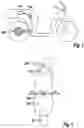
FIG. 1 illustrates an electric scooter in a side view.
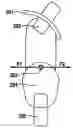
FIG. 2 illustrates an electric scooter at a standstill in a top view.
FIG. 3 illustrates a controller structure for carrying out the self-stabilization function.
DETAILED DESCRIPTION
The present invention relates to a self-stabilization function for an electric scooter or some other single-tracked motor vehicle at a standstill, the stabilization function being intended to be implemented without additional components. The present invention allows the rider to sit on the scooter, even when it is at a standstill, without having to place the feet on the ground. This is suitable, for example, when stopped at a traffic light, in that the scooter, similarly as with a Segway, stabilizes itself. However, the stabilization takes place in the transverse direction, whereas with a Segway it takes place in the longitudinal direction of travel.
FIG. 1 shows a side view of one possible vehicle in which the present invention may be applied. In the electric scooter illustrated, reference numeral 100 denotes the electric motor driving the rear wheel, reference numeral 101 denotes an inertial sensor system that is used, for example, for ascertaining the roll angle, and reference numeral 102 denotes a control unit in which the program code for carrying out the present invention is contained and runs. The vehicle illustrated by way of example in FIG. 1 is an electric scooter with an electric motor 100 at the rear axle. This electric motor 100 is controlled by control unit 102. Control unit 102 is connected to an inertial sensor system 101 which may measure the roll speeds and the accelerations about the relevant axes. The roll speed is understood to mean the angular velocity about the longitudinal axis of the vehicle. The roll angle is the rotational angle about the longitudinal axis of the vehicle.
In order to balance the electric scooter, the drive torque exerted by drive motor 100 must at the same time be expressed as lateral forces that occur. For this reason, when the vehicle is at a standstill the rider must hold the handlebar at a lateral steering angle, as illustrated in FIG. 2. In the figure, handlebar 201 and thus front wheel 202 are steered to the right. FIG. 2 shows an electric scooter in a top view; the scooter is at a standstill, and in the diagram handlebar 201 is held at the right limit stop. The rider is sitting on seat 204. Reference numeral 205 denotes the rear wheel of the electric scooter. In this situation the following takes place:
-
- When the electric motor provides a positive torque, which moves the electric scooter in the forward direction, a force F1 acting to the left acts on center of gravity 203.
- When the electric motor provides a negative torque, which moves the electric scooter in the reverse direction, a force F2 acting to the right acts on center of gravity 203.
As a result of this effect, it is possible to modulate the lateral forces acting on the center of gravity, in that the motor torque of the electric motor is always selected in such a way that a beginning tendency to tip over is counteracted by changing the direction of transverse forces F1 or F2 that arise.
FIG. 3 illustrates a controller structure that is suitable for the self-stabilization of a single-tracked motor vehicle. The controller may be used in the following steps:
- 1) The presence of a standstill of the single-tracked motor vehicle is detected.
- 2) The motor torque is slightly modulated, and the output signals of the inertial sensor system are evaluated to ascertain whether the brake is no longer actuated, and to determine the direction of the steering angle.
- 3) If the roadway has a longitudinal inclination, the motor acts as a hillholder and holds the scooter at a standstill, without the rider having to keep the brake actuated.
- 4) The parameters of the controller are adapted to the situation, for example to the direction of the handlebar, the roadway inclination, or the weight of the rider.
- 5) The controller is switched on and the scooter is held in the upright position, i.e., ϕsetpoint=0, where ϕsetpoint is the setpoint value of the roll angle. Setpoint value ϕsetpoint is compared to actual value ϕactual of the roll angle, ascertained by inertial sensor system 301, in block 302, and the deviation is supplied to controller 303, which requests motor torque M necessary for keeping the two-wheeled vehicle stable.
The longitudinal movement of the two-wheeled vehicle, similarly as with a Segway, is modulated very gently so that there is little or no perception of same by the rider.
- 6) The controller recognizes when the rider once again moves the handlebar, and accelerates the vehicle to move it forward, and then switches off.
- 7) Step 1) is repeated at the next stop situation.
Claims
What is claimed is:1. A method for laterally stabilizing a single-tracked motor vehicle, driven with the aid of an electric motor, that is in a vertically aligned state and at a standstill, the method comprising:
controlling the electric motor, a front wheel of the motor vehicle having a steering angle, so that it exerts drive torques on the motor vehicle that act in alternation in a forward direction and in a reverse direction.
2. The method of claim 1, wherein a lateral tilt direction of the motor vehicle is ascertained with a sensor system, and when the tilt direction points in the direction of the steering angle, the electric motor is controlled so that it exerts a drive torque that acts on the motor vehicle in the forward direction, and when the tilt direction points in the opposite direction of the steering angle, the electric motor is controlled so that it exerts a drive torque that acts on the motor vehicle in the reverse direction.
3. The method of claim 1, wherein the method is deactivated when the rider signals an intent to start and at the same time actuates the steering by actuating a motor torque request element.
4. The method of claim 1, wherein the single-tracked motor vehicle is an electric scooter.
5. The method of claim 1, wherein in the vertically aligned state of the motor vehicle the value of the roll angle is zero, and the motor vehicle is laterally stabilized by regulating the roll angle to the value zero.
6. The method of claim 2, wherein the tilt direction is ascertained with an inertial sensor system.
7. A stabilizing device for laterally stabilizing a single-tracked motor vehicle, driven with the aid of an electric motor, that is in a vertically aligned state and at a standstill, comprising:
a device configured to perform the following method:
controlling the electric motor, a front wheel of the motor vehicle having a steering angle, so that it exerts drive torques on the motor vehicle that act in alternation in a forward direction and in a reverse direction.
8. The stabilizing device of claim 7, wherein a lateral tilt direction of the motor vehicle is ascertained with a sensor system, and when the tilt direction points in the direction of the steering angle, the electric motor is controlled so that it exerts a drive torque that acts on the motor vehicle in the forward direction, and when the tilt direction points in the opposite direction of the steering angle, the electric motor is controlled so that it exerts a drive torque that acts on the motor vehicle in the reverse direction.
9. The stabilizing device of claim 7, wherein the method is deactivated when the rider signals an intent to start and at the same time actuates the steering by actuating a motor torque request element.
10. The stabilizing device of claim 7, wherein the single-tracked motor vehicle is an electric scooter.
11. The stabilizing device of claim 7, wherein in the vertically aligned state of the motor vehicle the value of the roll angle is zero, and the motor vehicle is laterally stabilized by regulating the roll angle to the value zero.
12. The stabilizing device of claim 8, wherein the tilt direction is ascertained with an inertial sensor system.
Images & Drawings included:

Sources:
- United States Patent and Trademark Office - verify current appl. status at the USPTO↗
Recent applications in this class:
- » 20240319730 2024-09-26
MOBILE BODY AND METHOD FOR CONTROLLING SAME - » 20240192692 2024-06-13
HEADING AND ATTITUDE CORRECTION METHOD AND HEADING AND ATTITUDE CORRECTION SYSTEM - » 20240126272 2024-04-18
ROBOT AND CONTROL METHOD THEREOF - » 20230409052 2023-12-21
Posture estimation device, sensor module, measurement system, moving object, and posture estimation method - » 20230409051 2023-12-21
Apparatus for controlling robot and method thereof - » 20230400865 2023-12-14
Selectively adjusting a position of an implement of a machine based on changes to a roll angle of a chassis of the machine - » 20230266773 2023-08-24
Vehicle attitude estimation method, electronic device and storage medium - » 20230176591 2023-06-08
Vehicle with communicative behaviors - » 20230168693 2023-06-01
Motion state control method and apparatus, device, and readable storage medium - » 20230004173 2023-01-05
MOBILE OBJECT AND METHOD OF CONTROLLING THE SAME
Recent applications for this Assignee:
- » 20250154889 2025-05-15
PRESSURE CONTROL IN AN EXHAUST AFTERTREATMENT SYSTEM - » 20250154580 2025-05-15
ENZYME TRANSLOCATORS IN NANOGAP WITH 3' -ESTERS - » 20250147582 2025-05-08
METHOD FOR DETERMINING AN EYE DISTANCE IN A PAIR OF DATA GLASSES, AND DATA GLASSES - » 20250146568 2025-05-08
DRIVE ASSEMBLY AND VEHICLE HAVING SUCH A DRIVE ASSEMBLY - » 20250146495 2025-05-08
Flexible Pump Assembly for Use in a Fan Drive - » 20250140882 2025-05-01
FUEL CELL SYSTEM HAVING ENERGY RECUPERATION - » 20250137810 2025-05-01
METHOD FOR MATCHING A DIGITAL ROAD MAP - » 20250137033 2025-05-01
DNA UNFOLDING USING A FREE-END TAG FLOW MODIFIER - » 20250119751 2025-04-10
A BLUETOOTH COMMUNICATION METHOD AND SYSTEM - » 20250118116 2025-04-10
Diagnostic Protocol Search With Improved Efficiency