Patent Applications published on Jan 2, 2020
Explore the 8,336 U.S. Patent Applications published on the 01st week of 2020, including 6,635 applications that subsequently received a Patent Grant.
Featured patent applications from Jan 2, 2020
US20200000469A1
Human necessities
End effector including different tissue gaps
An end effector of a surgical stapling instrument is disclosed. The end effector comprises a staple cartridge and an anvil jaw comprising a tissue compression surface. The staple cartridge jaw comprises a deck, staple cavities, and staples stored in the staple cavities. The deck comprises first and second deck portions. A first tissue gap is defined between the first deck portion and the tissue compression surface when the end effector is in a closed configuration. A second tissue gap is defined between the second deck portion and the tissue compression surface when the end effector is in the closed configuration. The second tissue qap is larger than the first tissue gap. The second deck portion at least partially surrounds the staple cavities and is positioned vertically below the first deck portion. A distinct gap is defined between the first and second deck portions.
Published: 2020-01-02 Assignee: Cilag GmbH International.US20200000531A1
Human necessities
Surgical instrument with wireless communication
A surgical instrument for use with a robotic system that has a control unit and a shaft portion that includes an electrically conductive elongated member that is attached to a portion of the robotic system. The elongated member is configured to transmit control motions from the robotic system to an end effector.
Published: 2020-01-02 Assignee: Cilag GmbH International.US20200000461A1
Human necessities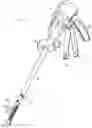
Motor-driven surgical cutting instrument
A surgical cutting and fastening device is disclosed including a handle assembly, a power supply, and a control circuit. The handle assembly includes a motor configured to drive a cutting member. The control circuit operably couples the power supply and the motor. A firing switch allows the power supply to provide power to the motor in a first energizing direction. A forward control circuit is configured to control current flow from the power supply to the motor. The forward control circuit includes a first flow path and a second flow path including a power control switch. The power control switch prevents current from flowing through the second flow path. The power control switch allows current to flow through the first flow path and the second flow path. A reverse flow path is configured to allow the power supply to provide power to the motor in a second energizing direction.
Published: 2020-01-02 Assignee: Ethicon LLC.US20200000468A1
Human necessities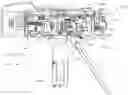
Surgical instrument with multiple program responses during a firing motion
A surgical instrument comprising a housing, an elongate shaft, a stapling attachment, a motor-driven system, and a control system is disclosed. The stapling attachment comprises a first jaw, a second jaw movable relative to the first jaw from an open position toward a closed position to capture patient tissue, and a staple cartridge comprising staples. The motor-driven system comprises a drive member configured to eject the staples from the staple cartridge during a firing stroke. The drive member comprises a first portion configured to engage the first jaw and a second portion configured to engage the second jaw during the firing stroke. The control system is configured to prevent the drive member from performing the firing stroke when a thickness of tissue captured exceeds a threshold thickness and prevent the drive member from performing the firing stroke when a current draw of the motor-driven system exceeds a threshold value.
Published: 2020-01-02 Assignee: Cilag GmbH International.US20200000471A1
Human necessities
Mechanisms for compensating for drivetrain failure in powered surgical instruments
A method for assessing performance of a surgical instrument including one or more drivetrains is disclosed. The method includes sensing via one or more vibration sensors vibrations generated during operation of the one or more drivetrains of the surgical instrument, generating an output signal based on the sensed vibrations, filtering the output signal to generate a filtered signal of the sensed vibrations from the one or more drivetrains, processing the filtered signal to generate a processed signal of the sensed vibrations from the one or more drivetrains, and comparing predetermined threshold values for each of an acceptable status, a marginal status, and a critical status of the surgical instrument to corresponding values of the processed signal.
Published: 2020-01-02 Assignee: ASM IP Holding B.V..US20200002811A1
Chemistry; metallurgy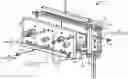
Temperature-controlled flange and reactor system including same
A flange, flange assembly, and reactor system including the flange and flange assembly are disclosed. An exemplary flange assembly includes heated and cooled sections to independently control temperatures of sections of the flange. Methods of using the flange, flange assembly and reactor system are also disclosed.
Published: 2020-01-02 Assignee: ASM IP Holding B.V..US20200002812A1
Chemistry; metallurgy
Thin-film deposition method and manufacturing method of semiconductor device
A method of depositing a thin film having a desired etching characteristic while improving a loss amount and loss uniformity of a lower film includes, on the semiconductor substrate and the pattern structure: a first operation of depositing a portion of the thin film by repeating a first cycle comprising (a1) a source gas supply operation, (b1) a reactant gas supply operation, and (c1) a plasma supply operation for a certain number of times; a second operation of depositing a remaining portion of the thin film by repeating a second cycle comprising (a2) a source gas supply operation, (b2) a reactant gas supply operation, and (c2) a plasma supply operation for a certain number of times after the first operation, wherein a supply time of the source gas supply operation (a1) is longer than a supply time of the source gas supply operation (a2).
Published: 2020-01-02 Assignee: University of Utah Research Foundation, BATTELLE ENERGY ALLIANCE, LLC.US20200007249A1
Electricity
Wireless signal monitoring and analysis, and related methods, systems, and devices
Wireless signal classifiers and systems that incorporate the same may include an energy-based detector configured to analyze an entire set of measurements and generate a first signal classification result, a cyclostationary-based detector configured to analyze less than the entire set of measurements and generate a second signal classification result; and a classification merger configured to merge the first signal classification result and the second signal classification result. Ensemble wireless signal classification and systems and devices the incorporate the same are disclosed. Some ensemble wireless signal classification may include energy-based classification processes and machine learning-based classification processes. In some embodiments, incremental machine learning techniques may be incorporated to add new machine learning-based classifiers to a system or update existing machine learning-based classifiers.
Published: 2020-01-02 Assignee: Auris Health, Inc..US20200000530A1
Human necessities
Systems and techniques for providing multiple perspectives during medical procedures
Provided are systems and techniques for providing multiple perspectives during medical procedures. In one aspect, a method includes positioning a plurality of cannulas in a plurality of anatomical quadrants of a patient, inserting first and second surgical tools coupled to corresponding robotic arms into the respective cannulas. The method may include inserting an articulatable camera coupled to another robotic arm into another of the cannulas, where the articulatable camera is capable of showing a first view including the first surgical tool in a first anatomical quadrant and articulating to show a second view including the second surgical tool in a second anatomical quadrant. The method may further involve performing a surgical procedure in at least one of the first anatomical quadrant or the second anatomical quadrant.
Published: 2020-01-02 Assignee: Auris Health, Inc..US20200000533A1
Human necessities
Medical systems incorporating pulley sharing
Provided is a robotic system that includes a surgical instrument with a wrist that allows N degrees of freedom of movement. The N degrees of freedom can be controlled by N+1 cable segments. The wrist can include a first set pulleys configured to rotate about a first axis and a second set of pulleys configured to rotate about a second axis. The wrist can further comprise one or more pulleys configured to engage two of the cable segments, wherein at least one of the pulleys is shared by a first cable segment and a second cable segment. The first cable segment and the second cable segment that share the pulley can be independent from one another. In some circumstances, the surgical instrument can be actuated in N+1 degrees of movement by advancing or retracting at least two of N+1 cable segments.